Invisible People now available for preorder!

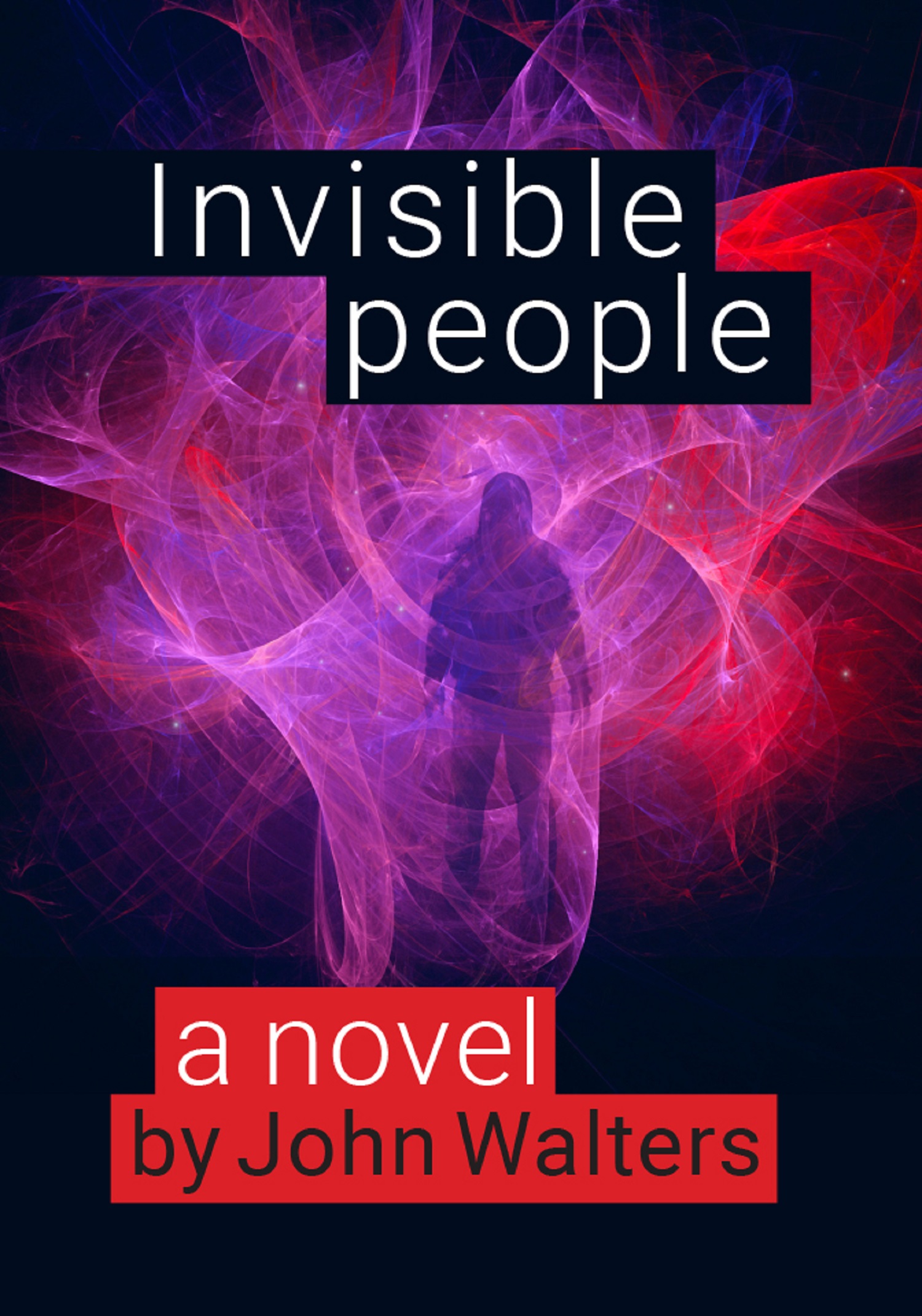
The Kindle edition of my tenth novel and thirty-second book, Invisible People, is now available for preorder on Amazon. Its release date is September 15th, and at that time it will also be available on Amazon in trade paperback. Shortly afterwards it will appear in digital form at other online sales outlets. Here’s a brief synopsis:

In the near future, a member of an elite rescue unit stumbles upon a conspiracy that involves time travel, sightings of alien vessels, portals to distant worlds, and the disappearance of refugees, the homeless, and other disenfranchised people. As he and his team investigate further, he uncovers truths that cause him to question his worldview, loyalties, and the code by which he lives.

To find out more, click on this link.

Posted in Uncategorized | Tagged , , , , , | Leave a comment

Book Review:  The Best Short Stories 2021: The O. Henry Prize Winners Edited by Chimamanda Ngozi Adichie and Jenny Minton Quigley

I was in the mood for reading some short fiction, and so I searched for the newest literary collection the library had. I knew it was likely to be a mixed bag, and that’s exactly what it was. Appreciation for short stories is subjective, of course, but for me these selections ranged from knock-it-out-of-the-park brilliant to barely readable.

It got off to a slow start, in my estimation. Not that the stories were all bad, but in the first half of the book they are almost all depressing tragedies, so much so that I almost set the collection aside. There’s enough tragedy in the real world; in literature I expect to read about the negative things, sure, but I also look for transcendence, for creative moments that help me rise above the vast darkness around us.

“Malliga Homes” by Sindya Bhanoo tells of a retirement home for the upper middle class in India, and how the elderly are abandoned there by their offspring. “From Far Around They Saw Us Burn,” based on a true story, tells of a fire in an Irish orphanage that costs the lives of many children. “Scissors” by Karina Sainz Borgo tells of starving women at a border crossing who have to sell their hair so they and their children can eat. These stories are all beautifully told, but they all leave readers in a dark pit of despair.

As I said, it wasn’t until I was about halfway through the book that I came across a story that supercharged me, imbued me with its energy, and reminded me why I read short stories. “The Master’s Castle” by Anthony Doerr concerns a somewhat mediocre man who becomes an optometrist and bounces from Bakersfield to Hawaii to Eugene to Pocatello. He eventually marries an alcoholic woman, and they have a son together. This all sounds like it has the makings of another tragedy, but Doerr rises above this by unexpectedly forging a strong relationship between father and son that helps them endure their hardships and make sense of their world.

Another unlikely story that turned out to be strangely absorbing is “White Noise” by Emma Cline. It is a character study of Harvey Weinstein just before his sexual harassment sentence was announced. While staying at a friend’s house in Connecticut, he finds out that Don DeLillo, author of the novel White Noise, lives next door, and as his days of freedom are about to come to an end, he imagines how he could adapt White Noise into a film.

Although many literary sources are listed in the back of the book, the twenty stories in this volume only come from ten different publications, especially The New Yorker and Granta.

And now I feel compelled to say a few words about some of those other magazines. I was dismayed to see that among the publications read each year for the O. Henry awards are many that have begun charging writers for submissions. Unable to draw enough readers, they have begun to rely on aspiring writers for their income. I wrote about this in length in the essay “The Egregious Practice of Charging Reading Fees,” which first appeared on the website of the Science Fiction Writers of America (now known as the Science Fiction Writers Association) and then on my website. In the essay I explain that the best magazines do not charge reading fees, only those who are faced with declining readership and financial difficulties. A side effect of the practice is that these publications will attract only privileged writers who can afford to pay to see their work in print and not struggling writers who can’t afford to pay magazines to look at their work. It seems this oppressive habit has only hit literary magazines; genre magazines have not succumbed to it. In fact, the Science Fiction Writers Association will not acknowledge or support any publication that charges reading fees. Prestigious awards such as the O. Henry prizes should certainly do the same. Let’s hope they get the message and see the damage being done to writers through this practice.

Posted in Book Reviews | Tagged , , | Leave a comment

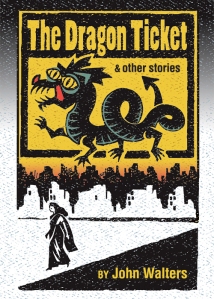
Another Look: The Dragon Ticket and Other Stories

High in the Himalayas a young woman receives an extraordinary gift.  Beneath the streets of Calcutta a man discovers a terrifying presence.  In a palace full of sybaritic pleasures a demigod incurs terrible retribution.  On a far desert planet teeming with venomous creatures a woman searches for ultimate truth. 

In these and other strange and wondrous tales John Walters explores the ramifications of human/alien encounter. 

This is my first short story collection and first book. Since I had been publishing novelettes and short stories in magazines and anthologies for several years before it came out, all but one of the stories are previously published reprints. Notice the beautiful cover crafted by one of my brothers-in-law, an accomplished and imaginative illustrator. As the image implies, most of the stories are set in India.

Click to buy from these distributors:

Trade Paperback

Amazon Kindle

Barnes and Noble

Kobo

Posted in Reading | Tagged , , , , , , | Leave a comment

Book Review:  Stolen Focus: Why You Can’t Pay Attention – and How to Think Deeply Again by Johann Hari

I came across Stolen Focus in the library and was instantly fascinated by its premise. I already had enough books in arms, though, and so I saved it for later. Then I made the mistake of reading the article on Hari in Wikipedia, which accuses him of various journalistic misdeeds in an extremely virulent way. He has probably made errors in his citations and stretched the truth now and then, as most nonfiction writers do, but the virulence of some of the Wikipedia comments made me wonder whether someone was deliberately attempting to smear him.

Anyway, I’m glad I came back to this book, because it is a compelling and fascinating read. Hari circled the globe to interview experts on why we collectively seem to have lost much of our ability to focus attention for prolonged periods of time, and at least some of the reasons he came up with have a clear ring of truth. Take it with a grain of salt if you want, but his ideas are at least worth considering.
The first reason he gives for lost focus is the addiction of people to their mobile phones. You can see this as you observe crowds in almost any public place; many have their eyes glued on screens, oblivious of the real wonders around them. Later he emphasizes this phone fascination with a deep look at what social media companies are really trying to accomplish. In the guise of connecting people, they are really trying to make us watch our screens for as much time as possible, because the more we stare at our screens, the more money they make from advertisers. Additionally, while we like, dislike, and comment on things seemingly for fun, the tech companies are compiling information about us, which they then sell to companies so that they can hit us with product advertisements specifically selected for us. Hari refers to this as “surveillance capitalism,” and his description of it is truly terrifying.
Other factors that cause stolen focus are multitasking, rapid switching from post to post, and related behaviors. These include the diminishment of our “flow states,” by which Hari means the ability to focus on things that fascinate us such as artistic pursuits for long periods of time, the lack of patience for sustained reading, the disruption of mind wandering, which Hari insists is essential for our well-being, and sheer physical and mental exhaustion in the modern era.

Hari also discusses “cruel optimism,” which refers to surface level wellness cures that do not address deeper problems, the increase in stress, diets that rely heavily on chemicals and additives instead of natural foods, and the ubiquitous pollution that negatively impacts our health and concentration. In the final few chapters, he delves into the paranoia that causes parents to keep their kids at home instead of letting them play, and the rigid school requirements that curtail creativity, experimentation, and flexibility necessary for children to have space to grow.

Hari’s solution is a social movement with the aim of banning surveillance capitalism, living more healthily, and getting our focus back. Whether you agree with everything he concludes and proposes in the book or not, Stolen Focus is well-written and thought-provoking and I recommend it.

Posted in Book Reviews | Tagged , , , , | Leave a comment

Check Out My YouTube Channel!

I have recently been posting videos and slideshows based on my books on YouTube, Instagram, and TikTok. When I tried to post some of them here on my blog, I discovered that hosting videos is an advanced function of which my website is incapable (at least in its present iteration). No matter. If you proceed to my YouTube channel, aptly named johnwalterswriter, you can watch them all. Note that the sound on the early ones is not the best because I recorded them used the microphone on my computer. Now I have obtained a better mic, and you can hear the difference on my latest video, “World Without Pain: The Story of a Search – The Lure of the Road.” Subscribe to my channel and enjoy!

Posted in Uncategorized | Tagged , , , , , , | Leave a comment

Book Review:  Slaughterhouse-Five, or, The Children’s Crusade: A Duty-Dance with Death by Kurt Vonnegut, Jr.

I came to Slaughterhouse-Five in a roundabout way, specifically after reading The Writer’s Crusade: Kurt Vonnegut and the Many Lives of Slaughterhouse-Five by Tom Roston. I happened upon the Roston volume by chance in the new book section of the library. There was a collection of Vonnegut novels owned by one of my brothers in my parents’ house where I grew up, but I never got into them at the time even though I was an avid science fiction and fantasy enthusiast. My tastes leaned more towards what was termed the New Wave of speculative fiction of the late sixties and early seventies, which included such writers as Harlan Ellison, Roger Zelazny, Samuel Delaney, and James Tiptree, Jr. Vonnegut, on the other hand, was considered more a member of the mainstream literary community than of the science fictional field.

No matter. My past oversight has allowed me the keen pleasure of discovering a work of literary genius now for the first time. It’s not often in recent years that I make such a discovery. When I was young, I would come across wonderful new books and authors right and left, but nowadays… It’s probably a combination of becoming jaded, raising my standards, and having already found many of the writings of the past that are most important to me, but I don’t get that “Wow!” feeling so often anymore. Slaughterhouse-Five, however, gave it.

When Vonnegut was a soldier during World War II, he was captured by Germans at the Battle of the Bulge, taken to the city of Dresden in Germany, and put to work with other prisoners of war as slave labor. He and his fellow POWs were housed in a building that was formerly used for slaughtering animals known as Slaughterhouse Five. Vonnegut was ensconced with other prisoners and some of their guards in a concrete cellar beneath the slaughterhouse during the horrific Allied firebombing of Dresden. The city center, according to Vonnegut, became a moonscape, and tens of thousands of civilians were killed. After the air raid, Vonnegut and his fellow prisoners were put to work excavating bodies from the ruins.

As Vonnegut struggled in his early career as a writer, he kept coming back to his experience in Dresden, attempting to shape it as a novel. He spent over two decades writing draft after draft until he finally hit on the right style for the material.

In The Writer’s Crusade, Roston claims that Slaughterhouse-Five is a result of Vonnegut attempting to deal with his war trauma, currently known as post-traumatic stress disorder, or PTSD. After reading the novel, it is clear to me that this is true. Despite the satire and sometimes laugh-out-loud humor, at no point does Vonnegut glorify war in any way. It is brutal, ugly, sordid, frightening, and debilitating. According to Vonnegut, there is no upside to war. At the same time, the novel is funny as hell. Somehow it all works. The first chapter is a sort of prologue in which Vonnegut explains his difficulties in writing the book. In chapter two, he introduces his protagonist, Billy Pilgrim, who has become unstuck in time. The story has continuity in that it follows Billy’s capture in the forest, transport in an overcrowded train car to Dresden, and experiences as a prisoner before and after the bombing. However, mixed throughout are flashbacks to his past, flash-forwards to his future as a prosperous optometrist, and details of his abduction by extraterrestrials called Tralfamadorians, who put him on display in their zoo along with a porn star named Montana Wildhack.

I could go on and on, but I don’t want to give away too much. It’s better that I allow you the keen pleasure of discovering it for yourself. Slaughterhouse-Five is an example of the only good that can come out of what is otherwise a purely horrific experience: the creation of a profound work of art.

Posted in Book Reviews | Tagged , , , , | Leave a comment

Book Review:  The Writer’s Crusade: Kurt Vonnegut and the Many Lives of Slaughterhouse-Five by Tom Roston

Let’s start with the title of this fascinating book, with its reference to the “many lives” of Slaughterhouse-Five by Kurt Vonnegut. This is an allusion to the multiple drafts that Vonnegut wrote over two decades before he was satisfied with his novel. According to Roston, Vonnegut struggled with this book more than the many others that he wrote because it was so personal to him. He was attempting to deal with his experiences during World War II, when he was captured by the Germans, interred as a POW in a facility called Slaughterhouse-Five, witnessed the horrendous Allied firebombing of the city of Dresden, and afterwards was forced to help clean up the many corpses.

I must pause and preface this by stating that I have never read Slaughterhouse-Five. In fact, I have never read any of Vonnegut’s novels. I have read several of his short stories, which I enjoyed, but that’s about it. One of my brothers was a fan and I remember seeing Vonnegut books around the house when I was young, but for some reason, although I read a lot of science fiction and fantasy back then, Vonnegut’s work never appealed to me. Soon after I started reading this book by Roston, though, I arranged to borrow a copy of Slaughterhouse-Five, which I will read forthwith and give you my reaction soon.

Roston’s book has a single overwhelming focus. He wants to equate the writing of Slaughterhouse-Five with the war trauma, now known as PTSD, which Vonnegut presumably brought back from his horrendous experiences during his time as a prisoner. To accomplish this, Roston follows a progression of background information leading up to the questions that are the crux of the book.

After introducing his topic, Roston begins with a brief biography of Vonnegut, including his childhood and youth, his experiences during the war, and his early struggles as a writer until Slaughterhouse-Five became a bestseller and made him a wealthy celebrity. He then looks at the phenomenon of war trauma throughout history. It has always been there, of course, but it has been called by different names and dealt with in various ways. Only recently, beginning with World War I but especially in the decades since the Vietnam War, has the U.S. military been willing to admit that it exists and do anything about it. The term “post traumatic stress disorder,” or PTSD, was coined in the 1970s as an alternative to the term “post Vietnam syndrome,” which referred to the inability of many Vietnam veterans to readapt to civilian life; instead, they experienced guilt, rage, confusion, alienation, and other symptoms.

After tracing the history of war trauma and PTSD, Roston circles back to the questions he posed at the beginning of the book: Does Billy Pilgrim, the protagonist of Slaughterhouse-Five, have PTSD? And did Vonnegut have it? There are chapters near the end devoted to each of these questions.

One of the absorbing aspects of this book is how Roston compares Vonnegut’s experience of a veteran writing about war with that of other well-known writers. He solicits the opinions of Tim O’Brien, author of The Things They Carried, Karl Marlantes, author of Matterhorn: A Novel of the Vietnam War, and others, about Vonnegut’s work and about PTSD as it influences the work of ex-military authors, and the results of these interviews add depth and insight to a complex subject. The way that Roston approaches his research material takes it beyond the analysis of a single book into the devastating effects of war and how writers deal with the resulting trauma and use it to create works of art.

Posted in Book Reviews, On Writing | Tagged , , , , , | Leave a comment

Book Review:  River of the Gods: Genius, Courage, and Betrayal in the Search for the Source of the Nile by Candice Millard

River of the Gods is a powerful, well-written book about some fascinating historical characters on adventurous journeys. Although the central focus is the expedition of Richard Burton, John Hanning Speke, and Sidi Mubarak Bombay through East Africa from Zanzibar to Lake Tanganyika in an attempt to discover the source of the White Nile, it also offers a comprehensive look at what happens before and after.

Richard Burton was a famous explorer and author, a linguist who knew almost thirty languages, who disguised himself as a Muslim so he could go on a Hajj to the city of Mecca. He spoke fluent Arab and even got circumcised so he could play the part of a devout pilgrim. He wrote a well-received book about his experience.

When he returned, the Royal Geographic Society approved a journey to interior East Africa to search for the Nile’s source. The first attempt ended in disaster. Shortly after landing in Somaliland, he and his men were attacked by a large band of Somali warriors and were forced to retreat. Burton was impaled by a spear through his jaw and thereafter bore a large facial scar.

The second expedition to find Africa’s central lakes left from Zanzibar with Burton in command, Speke as second in command, and Bombay, a former slave, playing a key role in holding the expedition together and keeping morale up. They fought horrific diseases, difficult terrain, and lack of supplies on their journey, but their biggest problem was a lack of unity. Speke thought that he should have been chosen as leader, resented Burton, and took every opportunity to undermine Burton’s authority. When he returned to England ahead of Burton, with the issue of the Nile’s source still undecided, he persuaded the Geographic Society that he had been the leader in all but name and had singlehandedly kept the expedition from collapsing.

The Royal Geographic Society fell for Speke’s deceptions and authorized a new expedition with him in charge. He did, on this journey, discover that Lake Nyanza, which he renamed Lake Victoria, was the principle source of the White Nile. Burton, a much stronger and more intelligent man, was disgraced.

The power of this book is not only in its telling of these exciting adventures, but also in the insight into its complex characters. Burton was both a man of action and a scholar. Speke was also an avid adventurer, but he was a poor writer and linguist, and he irreparably damaged his friendship with Burton and ultimately his public reputation with his egotism, lust for recognition, distortions of the truth, and perennial antagonistic attitude. In the end, just before a widely publicized debate with Burton was supposed to take place, he took his own life with a shotgun.

The real hero in the African adventures turned out to be Bombay, who was ever positive, encouraging, cheerful, and hard-working. Besides assisting Burton and Speke on their expeditions, he traveled with David Livingstone and later with the American journalist Henry Morton Stanley in his successful search for Livingstone.

Another key character in the book is Isabel Arundell, who fell in love with and married Burton, and accompanied him to his consular posts in Brazil, Syria, and Trieste. One of the great strengths of the book, in fact, is its characterizations. Isabel was a staunch Catholic and Burton was agnostic, but she remained ever faithful and devoted to him until his death.

Millard clearly points out the injustice in early histories of ignoring the role the African guides and porters played in the success of European journeys of exploration. European white men took all the credit and glory, but without the assistance of their African employees, who often did most or all of the hard work, the expeditions would undoubtedly have met with failure.

This is an excellent work of history, full of adventure, excitement, pathos, triumph, tragedy, and even romance. Highly recommended.

Posted in Book Reviews, Travel | Tagged , , , , , | Leave a comment

Book Review: Brooklyn by Colm Toibin

My interest in the novel Brooklyn stems from seeing the movie a few years ago and considering it one of the best films of the year. I decided to re-watch the movie recently and I came up with the idea that this time I would read the book first.

Even before I settled into the novel, it came to me that in some ways the story was similar to The Namesake by Jhumpa Lahiri. Both books deal with the immigration experience. In The Namesake, Bengalis from Calcutta immigrate to New England, where they must learn to adapt to a vastly different lifestyle. Eventually they assimilate into American culture and raise a family there. In Brooklyn, a young Irish woman immigrates to the United States, where she initially has a difficult time so far from home. Eventually, though, she gets used to American ways, and when she meets a kind Italian man their relationship helps her adapt to her new country. In both books the call of the homeland waxes and wanes but it ultimately has a strong pull on the minds and hearts of the immigrants.

There is one other similarity between these two books: in my opinion, the movie versions transcend the book versions of the stories. Don’t get me wrong: I think that Lahiri is an amazing writer. When I discovered her collection Interpreter of Maladies, I was totally blown away. However, The Namesake was her first novel, and I felt that it meandered a bit. It is understandable that it is not quite as tight as her stories. As for Brooklyn, it is a good novel; it held my interest from start to finish. It is told in spare, matter of fact prose, though, and lacks some of the emotional impact of the film. (I may have a few more words to say about this when I watch the film in a few days.) In the film, Saoirse Ronan is so emotionally charged in the lead that I could not help but picture her in the role as I read the book. Additionally, the film contains a final scene that is missing from the book, and that final scene adds great power to the ending.

Still, as I said, Brooklyn is a fine, well-written novel, and the calm, plain cadence of the language disconcerts readers and slips them subtly into the story. Some writers display ostentatious verbiage so that the words and turns of phrase used to describe things become more important than the characters and the plot. Toibin allows what happens to predominate, and the story is compelling enough to carry readers along without all the other extraneous trappings. It takes place in the 1950s, when Brooklyn was a vastly different place than it is now, when it was full of immigrants from various nations seeking a foothold in post-World War II America. The novel works well as history, character study, and romance, and I recommend it as a thoughtful, heart-tugging blend of all these genres.

*     *     *

After re-watching the movie, I will reaffirm that the film transcends the book, and the added ending is one of my favorite cinematic experiences.

Posted in Book Reviews | Tagged , , , , | Leave a comment

Book Review:  Rocket Men: The Daring Odyssey of Apollo 8 and the Astronauts Who Made Man’s First Journey to the Moon by Robert Kurson

I have read numerous books about NASA and the space program, and Rocket Men is one of the more interesting and illuminating ones. Before I read this, I was unaware of the extreme danger and urgency of Apollo 8. What was supposed to be a relatively routine jaunt around the Earth became a desperate Cold War race to see whether the Americans or the Soviets could first have a crew make it to the Moon. An official at NASA came up with the idea of fast-tracking Apollo 8 – of getting it ready for a moon launch before the end of 1968.

Many observers of the space program consider Apollo 8 to be even more risky and significant than Apollo 11, the flight that actually placed the first man on the moon’s surface. It happened at a crucial time – when it appeared as if the Soviets might pull ahead in astronomical achievement and in prestige in the eyes of the world.

This book reads like an adventure novel. It presents the urgency of the problem and then how NASA went about making Apollo 8 successful. It goes into the background of the astronauts who went on the flight and of their wives. It follows the drama of the flight and all its dangers from the perspectives of the astronauts and also their wives and the ground crew anxiously tracking their spacecraft.

One thing that I like about this book is that it goes into all the little details of spaceflight that I always wondered about but no author ever mentioned. For instance, while contemplating a six-day journey through space, one of my concerns is how I would manage to urinate and defecate. The procedures are explained in this book. It also describes Frank Borman, the commander of the flight, getting sick enroute to the moon and spewing vomit and diarrhea in tiny globules all over the interior of the tiny cabin. After splashdown, when the first diver reached the spacecraft and opened the hatch, he recoiled from the terrible smell of the interior. One of the astronauts, Bill Anders, managed to avoid defecating for the entire flight, but when he reached the aircraft carrier that picked up the capsule, he had to make a beeline for a toilet. President Johnson chose that time to give the astronauts a call, and Anders had to speak to the president from the bathroom.

I tell you these somewhat disgusting stories not because I like to dwell on such things, but because I want to emphasize that Kurson in this book shares details that we wonder about but no one else ever addressed.

One of the strengths of the book is the author’s ability to help readers see and feel the story from multiple perspectives. We feel the astronauts’ tension and discomfort, the stress their wives go through, and the concern at mission control. By the end we are so invested in the characters that the epilog telling of what happened to the astronauts and their families afterwards is imperative. Another interesting aspect of the Apollo 8 flight that the author brings out is its relevance at that point in history. The United States was being torn apart by internal conflict, by cultural wars waged over the Vietnam War, the ongoing struggle against racism, and other domestic traumas. Apollo 8 closed out a tumultuous year with a resounding bright moment of triumph.

Rocket Men is well-written, exciting, and illuminating. Highly recommended.

Posted in Book Reviews | Tagged , , , , , | Leave a comment