A Spray of Short Stories for Summer Stimulation

This article was originally written and posted in January of 2019. I have updated it to include my latest short story collections. Relax and enjoy the excitement of some great short stories while you bask in the summer sun.

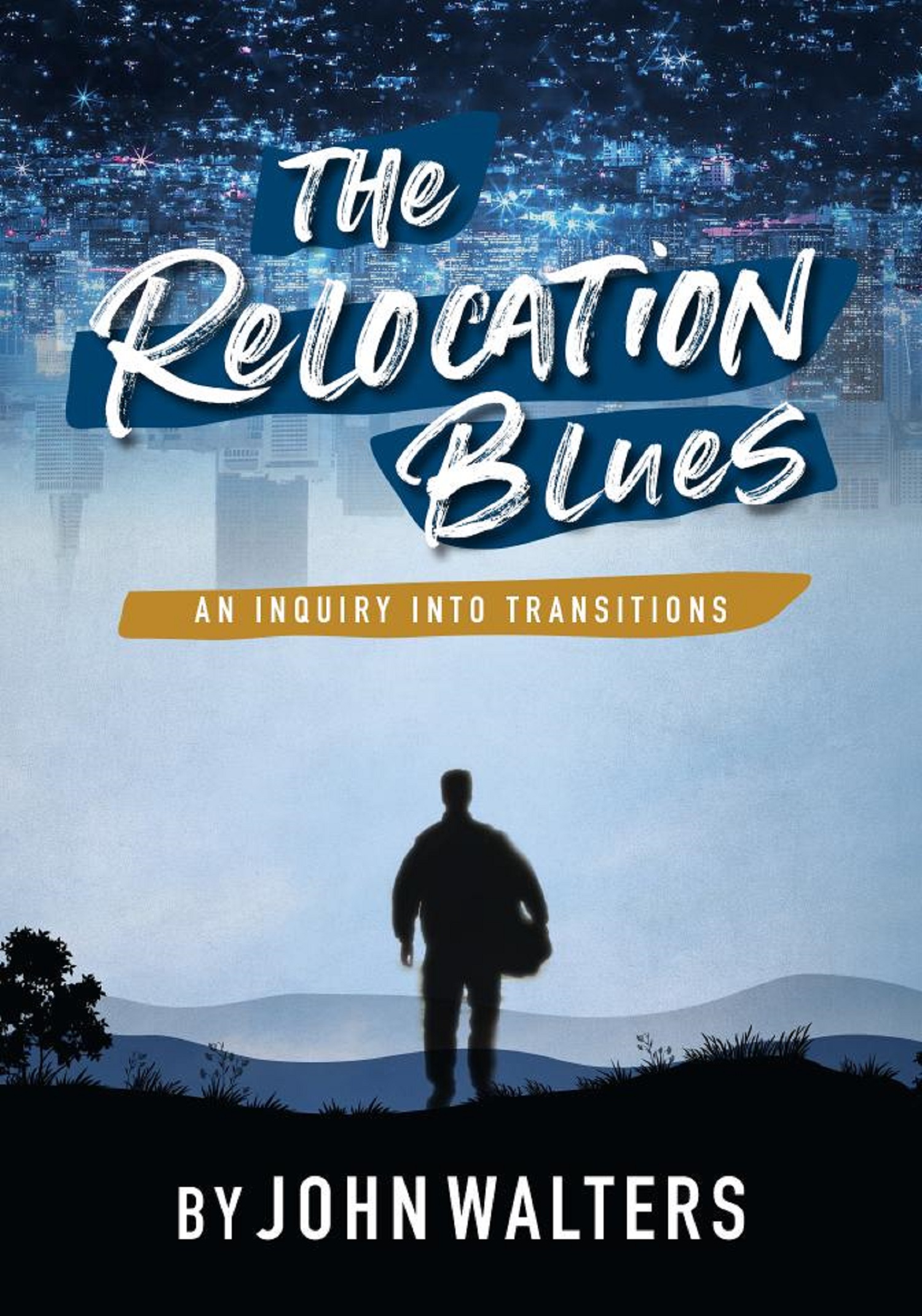
I mean the word “spray” in the title both as a powerful expulsion of metaphorical liquid and as an attractive display of flamboyant flowers. I’ve written a blog post called “Books Make Great Gifts” about some of my available full-length works, so I thought why not highlight some short stories? So here they are, volume by volume, some of my personal favorites from among my own short stories. Note that there are links to entire collections or to individual stories.

To check out some promotional videos of my short story collections, click on the Instagram icon on the upper right of this page.

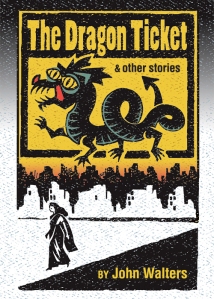
From The Dragon Ticket and Other Stories:

The Dragon Ticket“: Presented with an extraordinary gift by an alien artifact high in the remote Himalayas, a young woman named Michelle must learn how to use her new power as nuclear war plunges the world into chaos.

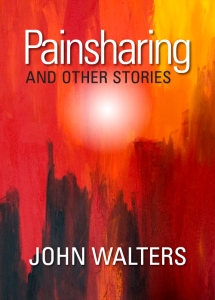
From Painsharing and Other Stories:

Beyond Purgatory“: On a far planet the ultimate civil punishment is to be genetically deformed into a monstrous beast and forced to live in the forbidden compound called Purgatory as a slave of the State.  When authorities arrest and condemn the woman he loves, Justus determines to find and save her, even if he must search Purgatory itself. 

From Dark Mirrors: Dystopian Tales:

Dark Mirrors“: The people of Earth are losing a war with aliens that they themselves provoked.  Every able-bodied person is being called up to fight, even prisoners; those who refuse are threatened with dismemberment to provide spare parts for wounded soldiers.  A battle-hardened general enters a prison to recruit a woman who refuses to fight, but who may have a most unusual special ability that can turn the tide of the war.

From Fear or Be Feared: Fantasies:

Fear or Be Feared“: A teenage Greek girl climbs Mount Olympus with some of her friends.  Lost in a lightning storm, she discovers the spirit of an ancient Greek god which possesses her and uses her against her will as an instrument of vengeance.

The Customs Shed“: Those who wish to cross the river of death must first be purged in the customs shed; but within await the mysterious customs agents.  What will they require as the price of passage?

From Opting Out and Other Departures: Stories:

Opting Out“: It is the near future, and due to easier availability of alternative energy, fossil fuels are becoming outlawed.  Fleeing south along the coastal highway from a state government that threatens to confiscate the gasoline-fueled camper-van he lives in, a homeless man comes across a seemingly-idyllic communal refuge for homeless people set up by a philanthropic dot-com billionaire.

Opting In“: An old man, feeling useless, leaves his daughter’s home to go live in a homeless shelter. Following up on a tip from a fellow vagrant, he finds an alien being preparing to leave Earth who invites him on a journey from which he can never return.

From Heroes and Other Illusions: Stories:

Matchmaker“: From a future bereft of emotion, a time traveler journeys to Thessaloniki, Greece, in 1917 to find a legendary matchmaker and learn the lost secret of true marriage. Although aware that the city is about to become decimated by fire, he becomes betrothed to a local woman and must choose between remaining in the past or returning to the future with the desperately needed knowledge he has acquired.

Katabasis“: After traveling to India to take advantage of cutting-edge psychiatric technology, a jaded ailing old man embarks on a guided journey through his memories to locate and correct errant decisions that shaped his life.

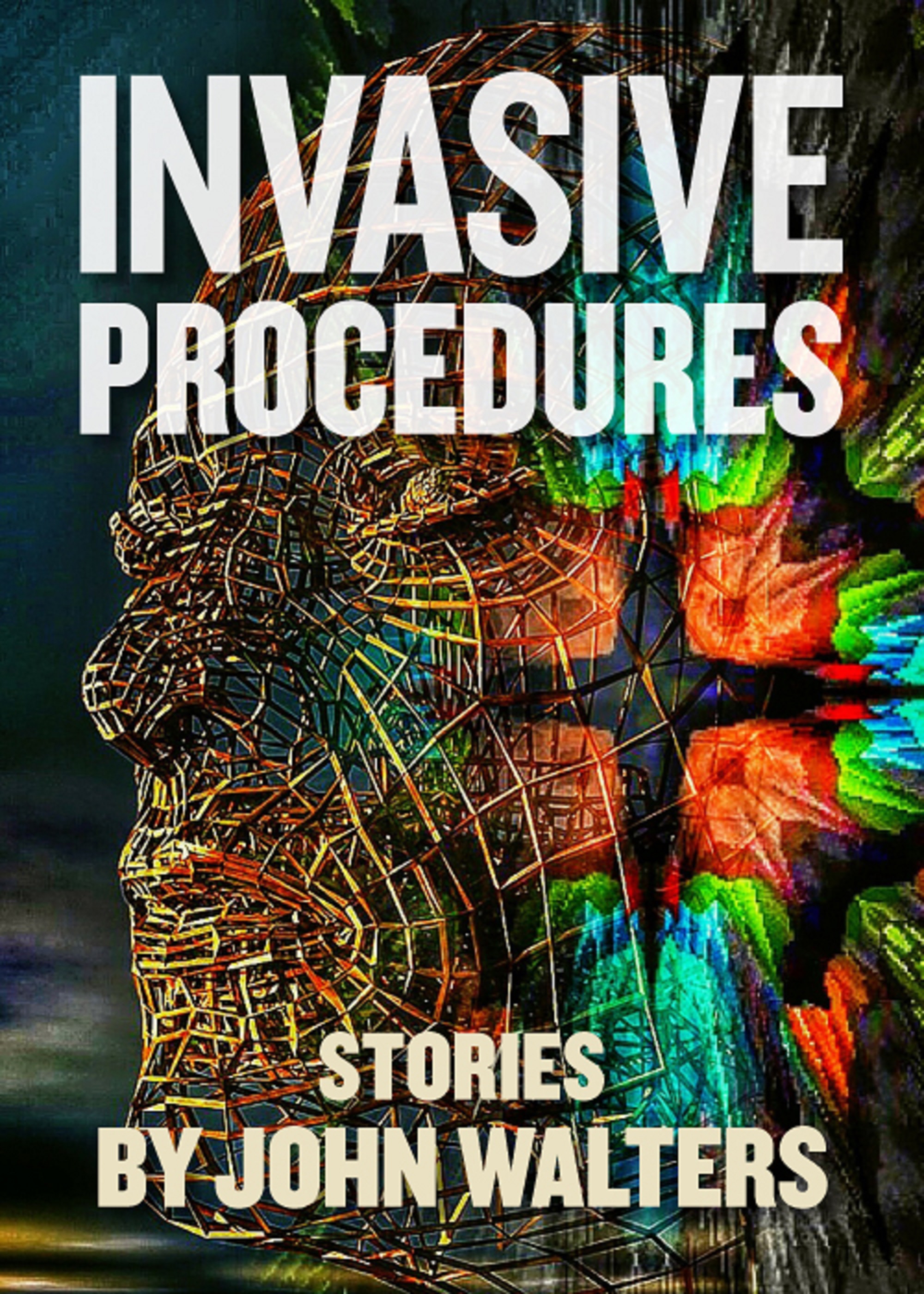
From Invasive Procedures: Stories:

The Beatification of Lady Poverty“: A government operative recruits a young woman with a very special power of self defense for a mission to help end a war in Europe. However, once she unleashes them, her mysterious abilities provoke changes beyond anything her handlers intended or imagined.

Camp College“: In the near future, as societies continue to erode and the gap between rich and poor widens, inexpensive college camps spring up around the country as an alternative form of higher education. At one such camp, a partially dysfunctional veteran and a woman alienated from her family meet and attempt to make sense out of the rapidly changing world.

From Apocalypse Bluff and Other Stories:

Connecting the Dots in Pointillist Paintings“: A recently divorced woman joins a virtual community in search of social acceptance and companionship. After fashioning a new identity for herself, she sets off to explore the meticulously created landscapes of this new world, unaware that the beautiful environments are rife with human predators.

Apocalypse Bluff“: As invading aliens unleash monsters resembling mutated Earth carnivores to devour humankind, an extended family gathers together in a mansion on an isolated bluff for a last stand. To survive, they must fight together against ravenous beasts attacking from land and sea.

From The Woman Who Fell Backwards and Other Stories:

The Woman Who Fell Backwards“: A woman agrees to take part in a research program that will propel her backwards in time on a one-way, never-ending journey. On one of her pauses during her tumble into the past, she meets someone who seems to know her, and they initiate an unusual and enigmatic romance.

The Magic Debit Card“: An elderly homeless man suddenly discovers that his debit card, which is usually almost empty, has been filled with thousands of dollars, and whenever he spends money, by the next morning it has somehow reappeared. He uses this inexplicable bounty to get off the streets, clean himself up, and attain a measure of personal security. The source of the magical largesse is something he never would have imagined.

Posted in Reading | Tagged , , , , , | 2 Comments

Book Review:  Wild Horses of the Summer Sun: A Memoir of Iceland by Tory Bilski

I picked up this book at the library because it struck me as an unusual memoir and travel tale. It concerns a group of women who for over a decade journeyed to Iceland every year to get away from their stateside situations and ride the indigenous Icelandic horses on a remote ranch.

I don’t know much about Iceland, and I thought that it would be interesting to learn more. The only time I set foot in Iceland was back in my footloose hippy traveling days. I booked a round-trip ticket on Icelandic Airlines from New York to Luxembourg and back for the grand total of one hundred dollars. The plane stopped over in Iceland and we disembarked for a short time. That’s my only in-person experience in Iceland.

My experience with horses is limited as well. Apart from guided pony rides at Woodland Park Zoo in Seattle when I was a young child, I only rode a horse once, in Mexico. My travel buddy and I had journeyed to visit a missionary hospital in the jungles of southeastern Mexico because my father sometimes did some voluntary dental work there, and the nuns in charge persuaded us to help them out by painting the exterior of the main building. It took us a few days. When we finished, one of the local doctors took us to his nearby ranch house for a meal and a horse ride. My friend handled the ride okay, and I did fine too as long as the horses maintained a leisurely pace. However, at a certain point the doctor’s stead broke into a gallop and the other horses, including mine, followed. I had negligible control as I clung to the reins and desperately tried not to fall off. That I didn’t have a horrific accident was purely a matter of chance.

The riders in this memoir, though, are extremely skilled. The author recounts how she fell in love with Icelandic horses when she came across a photo on the internet. A friend of hers invited her to come along on a yearly excursion to a horse ranch owned by a woman named Helga, and thereafter dropping her responsibilities as a wife and mother and heading off to Iceland became a summertime ritual. The memoir drags a bit when Bilski recounts the sometimes petty bickering of the six to eight women who stayed together in an isolated guesthouse and rode every day, but it picks up as she describes the awesome beauty of the stark countryside lit by the perpetual summer sun, the customs and peculiarities of the Icelandic people, and interesting tidbits of Icelandic history.

The beginning few chapters set the tone for the rest. The first long chapter takes place during the first van ride the women take on their way to the farm. They get lost, bicker, and stop multiple times for food. I almost set the book aside. But then they arrive at their destination. The tone changes as we meet Helga and the horses, encounter the grandeur of the open landscape, and learn more about the unique island to which these women are drawn every year.

In conclusion, I would say that if you manage to get past the first chapter, you will find yourself drawn into the narrative as you accompany an idiosyncratic group of travelers to a cold, moody, mystic, far-flung, and fascinating part of the world.

Posted in Book Reviews, Travel | Tagged , , , | Leave a comment

Book Review:  The Bridge of San Luis Rey by Thornton Wilder

I recently encountered an evaluation of the Pulitzer-Prize-winning novel The Bridge of San Luis Rey by a well-known author on a Facebook feed. The author compared it to the novels of Gabriel Garcia Marquez. I could not agree or disagree because I have not read enough of Marquez’s work. However, the post itself and subsequent comments got me thinking about the novel and how I had read it long ago in high school and had comprehended nothing. Having just finished reading it now as an adult steeped in literature, I have to venture the opinion that The Bridge of San Luis Rey is not an appropriate work to be assigned to high school students because few of them would be able to understand it, or at least grasp its nuances. Despite its brevity (it is more a novella than a full novel) it is extremely complex, although always beautifully written.

The story concerns a fictional event that occurs near Lima, Peru, in 1714. An Incan rope bridge breaks, plummeting five travelers into a deep gorge to their deaths. A Franciscan friar named Brother Juniper witnesses the event and wonders why this disaster happened to these five people in particular. He spends years tracking down everyone he can find who knew them and eventually writing a thick book detailing his findings. The church condemns Brother Juniper as a heretic and burns him along with his book (although a secret duplicate copy survives in a museum), but the novel’s narrator claims “to know so much more” and sets down the stories of the five victims of the accident.

The Marquesa de Montemayor is a wealthy old woman who writes long letters to her estranged daughter in Spain. After her death, the letters are discovered and become renowned as great works of literature. She dies in the disaster along with her teenage companion Pepita. The incident occurs just after the Marquesa has experienced a profound change in her attitude towards life. Esteban is a laborer and jack-of-all-trades who was very close to his twin brother Manuel. They were orphans raised in a convent by a kind abbess. When Manuel dies, Esteban is inconsolably grief-stricken, and in this state he falls into the gorge and is killed. Uncle Pio is a mentor and patron of a famous stage actress. After the actress retires, she and Uncle Pio have a falling out, but then she agrees to let Pio take her son Jaime for training in Lima. On the way there Uncle Pio and Jaime are both killed.

At first the story is somewhat confusing, but as it proceeds we understand that the lives of these five people are intricately entwined. After the narrator has finished relating their stories, he tells of the demise of Brother Juniper and what becomes of the abbess, the actress, and the Marquesa’s daughter. The ending is elegant and emotionally satisfying, and I will not give it away so you can have the pleasure of reading this extraordinary story for yourself. I found it slow going at first, but it soon reaches a point where connections begin to form; once that point is reached, reading this rich, well-written tale is extremely rewarding. Highly recommended.

Posted in Book Reviews | Tagged , , | Leave a comment

Book Review:  Red Paint: The Ancestral Autobiography of a Coast Salish Punk by Sasha LaPointe

Red Paint is an intense, well-written, and touching autobiography by a Native American writer from the Pacific Northwest. As the biographical paragraph in the back of the book says, she is “a Coast Salish author from the Nooksack and Upper Skagit Indian tribes.” Her middle name is also listed on the cover, but it is written in the Lushootseed language and my keyboard cannot cope with some of the characters.

Much of the power of this book (and it is very powerful) comes from LaPointe’s perspective as a Native American. Her childhood and youth are traumatic. Her parents move from one makeshift shelter to another. At the age of ten she is abused by an older man. When she is fourteen she runs away from home and drifts from place to place. Right after she gets married, even before their already-planned honeymoon, her husband, a musician, leaves her to go on tour with his band. They never reconcile and eventually separate. She gets pregnant and then loses the baby to a miscarriage. All of this sounds like one tragic episode after another, and a lot of tragic events do take place in this book, but the tragedy only sets the background for the triumph.

Despite the turmoil of her past and present, LaPointe continues to do graduate work in poetry and nonfiction. A comment by one of her teachers causes her to focus on her ancestry. The stabilizing power that runs through her narrative is the inner strength she discovers as she researches the lives of the women from whom she is descended: her mother, her grandmother, her great-grandmother, and her great-great-grandmother. From them she inherits and draws on the spiritual power to endure and prosper despite her many setbacks. She seeks healing from the spirit sickness she suffers throughout much of the book in her ancestry, specifically in the stories passed down to her from her female progenitors.

Red Paint is a fairly short book; it almost reads like a prose poem. Its brevity gives it strength. It stays on track; it does not meander off on side paths. Every word and every sentence is composed with precision. The amazing thing about it is that despite everything that LaPointe goes through, despite the assaults and betrayals she endures, she does not tell her story out of a perspective of bitterness, but rather from a position of having sought and found healing.

Thanks to the author’s formidable talent, this book is one of those rare treasures that opens a portal into another world, the world the author inhabits. LaPointe’s blatant honesty lets readers into her heart and allows us to temporarily share it with her. This empathetic link causes us to feel her pains, dread her fears, become uplifted by her joys, and achieve a measure of peace as she embraces the perspectives, culture, and rituals of her forebears.

In conclusion, Red Paint is a powerful memoir of breaking through to serenity after surviving extreme physical and spiritual turmoil. Highly recommended.

Posted in Book Reviews | Tagged , , , | 1 Comment

Book Review:  The Last Winter: The Scientists, Adventurers, Journeymen, and Mavericks Trying to Save the World by Porter Fox

I discovered this book after recently reading Fox’s travel memoir Northland: A 4,000-Mile Journey Along America’s Forgotten Border. Like Northland, The Last Winter is divided into several sections, each of which describes a journey the author makes to a far-flung corner of the north. While telling of his own adventures, Fox frequently deviates into stories of the people he meets along the way and famous historical figures whose exploits helped define the regions he is exploring. However, The Last Winter has an added focus on the rapidly advancing juggernaut of climate change.

The first section, “The Fires,” takes place in the North Cascade mountains in the state of Washington. Here Fox studies the relationship between the ever more virulent wildfires hitting larger and larger areas of North America and Earth’s ever warming temperatures. The wildfires exacerbate the warming, and the warming increases the wildfires.

In part two, “The Icefield,” Fox travels to science camps on an Alaskan glacier run by the Juneau Icefield Research Program, which Fox refers to as “the second-oldest glacial monitoring program in the world.” Monitoring glaciers and how fast they are receding (and around the world they are receding very rapidly) provides clues to the rate of climate change and what we can anticipate in the future.

In the next section, “The Alps,” the author travels to Italy to assess the havoc that warming temperatures and vanishing snow is wreaking on the Alpine tourist industry, and in a broader sense, the many people throughout Europe who depend on Alpine snow melt to feed their river systems and their commerce.

Finally, in the section called “White Earth,” Fox takes a trip via dog sled along the frozen coast of Greenland, whose vast reserves of snow are melting more rapidly than anyone anticipated. The historical tales in this part are the most fascinating, because Fox delves into the journeys of the Inuit people, Fridtjof Nansen, Knud Rasmussen, and Peter Freuchen as they explored the far north of the North American continent and the forbidding frozen interior of Greenland. Near the end of his Greenland adventure, Fox receives word that the United States border is being shut down due to COVID, and the dog sled expedition makes a frantic dash back to base so its guests can find a way out of Greenland before borders close. When Fox returns to New York, he and his family leave the city and retire to a cabin in the woods to wait out the pandemic.
The added danger of the COVID pandemic at the end of the book puts an exclamation point on Fox’s message of extreme danger due to climate change. Existence throws variables at us that are sometimes difficult to cope with. As Fox points out, humans generally confront emergencies as they arise and do not have a tendency to look too far ahead. Scientists had been warning of a pandemic for at least half a century, but nobody did anything until it was upon us. Now scientists warn of climate change and shrinking winters, but the message of this book is to do something about it before an uncomfortable situation turns into a catastrophe.

The Last Winter is somewhat uneven. Some parts are better told than others, and some stories are vastly more interesting than others. Overall, however, it must be stated that it is an important book and an effective introduction for non-scientists to the important topic of global climate change.

Posted in Book Reviews | Tagged , , , , , | Leave a comment

Book Review:  First Person Singular: Stories by Haruki Murakami

I have read several of Murakami’s books, including the novels Colorless Tsukuru Tazaki and His Years of Pilgrimage and Kafka on the Shore and his short story collection Men Without Women. Murakami has a distinctively spare style, a sort of matter-of-fact approach that leads you along until you plummet into one of his unique surrealistic rabbit holes. So it is with several of the stories in this collection.

As the title indicates, all of the stories in First Person Singular are told by a narrator who seems to be none other than Murakami himself. Sometimes he even identifies himself by name. This reminds me of the approach of none other than Jorge Luis Borges; in many of his stories there is a narrator (often named Borges) who is more or less an observer to the character or characters and the story as it unfolds.

In this book of Murakami’s, at no time do any of the narrators of the stories deviate from the rather abstract voice of the observer. In several of them, the narrator is out doing something or other and comes across an individual who then tells him a story. In “Cream,” it is an old man sitting on a bench in a park who attempts to explain life as a circle with many centers. In “On a Stone Pillow,” it is a one-night-stand lover who sends him a volume of her self-published poetry. In “With the Beatles,” it is a girlfriend’s brother who experiences intermittent memory loss. In “Confessions of a Shinagawa Monkey,” it is an aged, intelligent, talking monkey who tells the narrator his life story. In “Carnaval,” it is an unattractive woman who shares the narrator’s taste in classical music. “The Yakult Swallows Poetry Collection” seems to be a straightforward memoir about Murakami’s attraction to baseball, except that sprinkled throughout are poems that he wrote while sitting in the stands watching games. In the title story, “First Person Singular,” the narrator describes how he sometimes gets the urge to dress up in nice suits and take walks; by the end, though, he meets a strange woman in a bar and Murakami drops readers into one of those dimension-shattering rabbit holes.

This is a fairly short collection and a fairly easy read. It is as if you are relaxing with the narrator and he is telling you tales of interesting people and unusual events from his past. The voice does not change from one story to the next, but it is a pleasant voice, absorbing, enthralling, and easy to listen to. I mentioned Borges earlier, but though these stories sometimes dip into the surreal, they do not have the metaphysical complexity of Borges’s tales. Instead, they maintain a veneer of the mundane and simple aspects of everyday life and merely hint at the unsolvable conundrums and poetical significances that lie beneath. As for the constant voice of the narrator, he is every person – or any person – taking his journey through life. On the way, he often encounters that which is strange and fascinating, and when he does, he tells us about it – not only to clarify it in his own mind, but also so that we as readers can share in his sense of wonder.

Posted in Book Reviews | Tagged , , , | 1 Comment

Look for Me on Pinterest

Recently I have been studying and experimenting with various forms of social media with a view to more effectively promoting my books. One of the platforms I found interesting, fun, and easy to use is Pinterest. Like Instagram, Pinterest focuses on images and videos, but unlike Instagram, which offers a more immediate but ephemeral experience, Pinterest allows you to create boards with image pins on permanent display.

The learning curve for picking up skills on Pinterest was short. I had to putter around a bit to figure out how to post images, descriptions, and accompanying links. (Clicking on my pins will take you either to my website or to book pages on Amazon.com.) Once I got the hang of it, though, it was absorbing and enjoyable.

I created boards on which I could highlight my book covers, of course, including “Novels,” “Short Story Collections,” “Memoirs,” “The One Thousand Series,” and “Writing and Reading.” I also created a board with photos of some of the far-flung places in the world I have visited and set stories in, and a board with photos of the Mercedes-Benz camper van that my wife, three young sons, and I lived in full time while traveling in Italy and Greece.

Come by and have a look! To reach my Pinterest page, simply click on the Pinterest icon (the white P in the red circle) near the top of the right column of my website’s home page, or click here.

Posted in Uncategorized | Leave a comment

Book Review:  Between Two Kingdoms: A Memoir of a Life Interrupted by Suleika Jaouad

When Suleika Jaouad was only twenty-two years old, she was diagnosed with leukemia, and she was told that she had only a thirty-five percent chance of survival. It began with a maddening itch on her legs shortly after she moved to Paris to take a job. She was flown back to New York, and spent the next few years in and out of hospitals, enduring multiple bouts of chemotherapy and a bone marrow transplant. In the midst of this, she pitched a column to the New York Times about her struggles with her illness. The column, Life Interrupted (whose film version won an Emmy award), attracted a multitude of readers, many of whom wrote to her detailing their own life-and-death struggles with illness. After Jaouad survived against all odds, she decided to reconnect with life by making a cross-country road trip to visit some of the pen-friends who had supported her in her illness.

To be honest, I picked up the book because I thought that it focused on her road journey, and I love memoirs about road trips. However, at least the first three-quarters of the book tell of her gradually worsening illness; her struggle to survive; her relationships with her parents, boyfriend, and other cancer patients; and her mental state as she wavered between hope and despair. I don’t know if I would have started the book if I had known how much of it is about sickness and hospitals, but once I got going, I found it very hard to put down. Somehow Jaouad manages to avoid allowing the story to become maudlin or disgusting, despite her frequent setbacks, brushes with death, and descriptions of debilitation. As the first-person narrator, she becomes such a sympathetic character that all you want to do is cheer her on and keep reading to find out what happens next.

In fact, it is the writing that saves her. It allows her to turn an objective and analytical eye on what she is going through, even in the midst of a rollercoaster of emotions. It truly is heartbreaking when doctors announce she has to do another months-long round of chemotherapy after she thought it was all over, when she breaks up with her boyfriend Will after he spends years as her primary caregiver just as it looks like she’s going to make it after all, and when she forms close friendships with other cancer victims and then one by one they die when they are still very young. I feel no shame in admitting that I wept frequently as I read this book, but I have to emphasize that despite its subject matter it is not a tearjerker in the negative sense of the term. The tears are tears of empathy. What Jaouad makes clear throughout her narrative is that there are no easy answers and no quick cures to many of the traumas of life. And even when she is pronounced cured and is able to make her cross-country odyssey, her past illness haunts her. She never knows when it might recur, and after spending several of her young adult years in hospitals and under threat of death, she has a difficult time coping with life and relationships in the outside world.

One of the last people she visits on her tour is a prisoner who has spent much of his adult life on death row in Texas. He was one of the first people to correspond with her when her column appeared in the New York Times. As they write to each other, Jaouad realizes that there is an eerie similarity between being in isolation in a prison cell and being trapped in a dysfunctional body within the four walls of a hospital room.

Don’t be put off by the subject matter of this book. As I mentioned, I had an aversion to reading a memoir set mainly in hospitals before I started it too. However, its spirit rises far above the sordid details of medications, needles, surgeries, bedpans, hair loss, open sores, and struggles to breathe. That’s there too, but despite all of that it is a heartfelt, heartbreaking, inspirational, and illuminating story; it shows us that even in the midst of suffering there are glimmers of beauty. This book is a good example; the author has transcended her pain to create a work of art.

Posted in Book Reviews | Tagged , , , , , , | 3 Comments

Book Review:  The Sentence by Louise Erdrich

This book is a fantasy that includes a ghost haunting a bookstore and a book that seems to bring death to those who read it. However, these elements are peripheral for much of the story, although they prove to be important as the main character achieves emotional resolution near the end. Despite its fantastical trappings, though, The Sentence is extremely relevant. At its heart are current events such as the COVID pandemic, the killing of George Floyd, and the riots that occurred in the aftermath of Floyd’s death.

The title of the book has multiple meanings. Its narrator, a Native American woman nicknamed Tookie, goes through a long prison sentence at the beginning of the book. A journal that she discovers has a sentence in it that seemed to have caused the death of Flora, the woman who haunts the bookshop. Additionally, Erdrich places a quote from Sun Yung Shin at the beginning of the book that says, “From the time of birth to the time of death, every word you utter is part of one long sentence.”

After he arrests Tookie, the tribal policeman who arrested her, a man named Pollax, quits his job. When she is released after several years in prison, he asks her to marry him and she accepts. Their devotion to each other no matter what is happening in the world around them is one of the poignant highlights of the novel.

Tookie loves books and works at a small independent bookstore that has a large selection of Native American literature. These aspects of Tookie’s character reflect the author’s own background. Erdrich owns an independent bookstore called Birchbark Books in Minnesota, where the story is set. We all went through the physical and social changes brought about by COVID, but Erdrich also saw firsthand the aftermath of the tragedy of George Floyd’s murder, as it happened in Minneapolis, where she lives and her bookstore is situated.

A great strength of this novel is Tookie’s complex character and strong narrative voice. She is flawed, vulnerable, but deeply heroic in her own way. When her husband Pollax gets COVID and has to spend a long time in the hospital, she is unable to visit or even directly communicate with him. In frustration, she sleeps in her car in a parking lot next to the hospital even though the weather is sub-freezing, just so that she can be near him. She and her family want to get involved in the protests that occur in the wake of Floyd’s murder, but they have to reckon with not only often-violent police suppression, but also the rapidly spreading pandemic. While all this is going on, Flora’s haunting of the bookstore begins to affect Tookie more personally and traumatically.

Erdrich is a writer of elegant simplicity. Her word choices, the cadence of her sentences, and her style are always spot-on. The story never drags, even when it focuses on Tookie’s reactions to the weather, the landscape, or the feeling of holding and observing her stepdaughter’s baby. This is a wonderful novel: a fantasy that also focuses intensely on the reality of our times. Highly recommended.

Posted in Book Reviews | Tagged , , , , | Leave a comment

Book Review:  Northland: A 4,000-Mile Journey Along America’s Forgotten Border by Porter Fox

I love a good travel book, and I am grateful for the serendipitous discovery of this one on the library shelves. In it, the author writes of his journeys from east to west along the northern border of the United States. He does not do it on a single trip but in five separate sections over the course of three years. He describes the landscapes and people he encounters and also delves into the history of each region.

In the first section, called “The Dawnland,” he journeys mainly by canoe along rivers and lakes in northern Maine, following the U.S.-Canadian border as closely as he can. He tells of the situation of commercial fishermen in Maine and of Champlain and other early French explorers and their attempts to explore, claim, colonize, and exploit the northland, especially in relation to the fur trade.

The second section is called “The Sweet-Water Seas.” It concerns the Great Lakes, which straddle the U.S.-Canadian border. For this leg of the journey, Fox books a cruise on a freighter traversing the Great Lakes. He boards in Montreal; the freighter travels up the St. Lawrence River and crosses Lake Ontario, Lake Erie, Lake Huron, and Lake Superior. The author finally disembarks at Thunder Bay on the northwest shore of Lake Superior. As he journeys, Fox regales readers with stories about the exploration of the lakes and early shipping history.

Next, in the section called “Boundary Waters,” Fox writes about the trackless wilderness of forests and a thousand lakes in northern Minnesota. To explore this wild country, he hires a professional guide and goes on a three-day canoeing and camping expedition. He writes of the Indians who first arrived in the area and explorers and trappers called voyageurs who traversed this wilderness in search of furs as early as the seventeenth century.

The section called “Seven Fires” takes place in North Dakota. Here the author mainly travels by car, and his focus is on Native American protests of oil pipelines fouling the waters that their reservations depend on. He follows the history of the tribes of the northlands, particularly the Sioux.

Section five is called “The Medicine Line.” This is in reference to a phrase Indians used when they were being pursued by troops. When they reached the U.S.-Canadian border, the U.S. troops would stop chasing them and the Indians would be safe, at least for a time. The western stretch of U.S.-Canadian border that runs along the forty-ninth parallel is the longest straight stretch of border in the world. Although it runs through rugged wilderness, much of it is delineated by a physical line in which the trees and other foliage have been clear-cut and markers have been laid. Here Fox writes about the politics of establishing the border and the rigors expeditions went through while surveying and marking it.

The combination of history and travelogue balances very well in Northlands, making it an entertaining read. The author is highly observant and has a simple but intensely descriptive style. If you like travel, history, and adventure, you are sure to enjoy this book.

Posted in Book Reviews, Travel | Tagged , , , , , , , | Leave a comment