Invisible People Still Available for Preorder!

As a reminder:

The Kindle edition of my tenth novel and thirty-second book, Invisible People, is now available for preorder on Amazon. Its release date is September 15th, and at that time it will also be available on Amazon in trade paperback. Shortly afterwards it will appear in digital form at other online sales outlets. Here’s a brief synopsis:
In the near future, a member of an elite rescue unit stumbles upon a conspiracy that involves time travel, sightings of alien vessels, portals to distant worlds, and the disappearance of refugees, the homeless, and other disenfranchised people. As he and his team investigate further, he uncovers truths that cause him to question his worldview, loyalties, and the code by which he lives.

To find out more, click on this link.

Posted in Uncategorized | Leave a comment

An Appreciation of Bruce Taylor, aka Mr. Magic Realism

It may seem odd to interrupt the posting of a lengthy three-part book review for an essay on another subject, but I have just received the disheartening news that my friend Bruce Taylor died a few days ago, and this situation has priority.

Bruce Taylor was a science fiction and fantasy writer who became known by the nickname Mr. Magic Realism because he specialized in the magic realism genre. One of his collections was even called Mr. Magic Realism, and I have reviewed it in this blog. His stories were generally light, fun, and fascinating.

I met Bruce at a summer party held for Clarion West students and graduates, and I also ran into him fairly frequently at other parties and science fiction conventions. He usually attended these events dressed in the costume in the photo on the back cover of Mr. Magic Realism: white shoes, white pants, white shirt, white jacket, and white top hat. Along with his white hair and white beard, the effect was perfect.

As we kept meeting by chance, Bruce and I would spend longer and longer periods of time sipping beers and talking together. It turned out that career-wise we had a lot in common. He attended Clarion West in 1972, and I attended in 1973. Both of us had published numerous books as well as short stories in magazines and anthologies, and both were frustrated that despite our efforts we were not better known. However, we also both had the conviction that despite our anonymity compared to other writers in the field, there was nothing better for us to be doing in this great and grand universe than writing. It was always a lot of fun to run into each other and share our most recent accomplishments. It seemed that the two of us always had new publications going and found great joy in the ongoing creative process.

A few years ago I decided not to wait until the next possible meeting at a party or other gathering. I wrote Bruce an email and suggested that we should get together somewhere for a drink and a talk. He enthusiastically agreed, and so I took a bus to Seattle’s Central District not far from Bruce’s condo and we met at a bar over big mugs of craft beer. We talked for a long time, Bruce and I, mainly about science fiction and fantasy, writing, publishing, and other things that were going on in our lives.

It was the last time I ever saw Bruce.

You see, shortly after that meeting the COVID storm broke and everyone went into isolation. Clarion West classes and gatherings and science fiction conventions were abruptly canceled. Bruce had to be especially careful because of his health issues, and because of my age I was considered highly vulnerable to the virus as well. We continued to communicate about our publications and our general situations. Bruce moved around a bit because mold and other concerns were giving him problems at the condo. Eventually he found a new home in a small town north of Seattle called La Connor. After he made the move, he invited me to come out and visit him there, and I had that visit on my radar. However, I do not own a car, so I was waiting for the right opportunity to take him up on the offer. It was always in the back of my mind, though. Alas; I waited too long. Now it is too late.

At least we managed that last meeting at the bar. The thing is: I think I felt closer to Bruce than to any of the other Clarion West instructors and students I met. We bonded over our similar instructional backgrounds, love of writing, and efforts to achieve greater recognition. Losing him is like losing my two closest Clarion West classmates, Paul Bond and Russell Bates. Paul died a long time ago; his health was poor and when he attended Clarion West he’d already had open heart surgery. He showed us the scars. Russell, a Kiowa Native American who wrote an Emmy-winning episode for the animated Star Trek series, died a few years back. I came across his obituary while looking for an address to get back in touch with him.

And now Bruce. I’m losing my people, one by one. It’s a lonely feeling to think of good friends and then to realize that we can never phone, email, or raise a glass together again.

Rest in peace, Bruce my friend. May we meet someday in those magical lands we have written about!

Posted in On Writing | Tagged , , , | Leave a comment

Book Review:  Lost in the Valley of Death: A Story of Obsession and Danger in the Himalayas by Harley Rustad – Part Two

In my previous essay about Lost in the Valley of Death, I came down somewhat hard on the author’s negative attitude concerning spiritual quests that lead people to the Indian Subcontinent and other exotic locales. As I continued to read and ponder the story with respect to my own journeys in the East, though, I began to realize that Justin, the protagonist, was an exceptional traveler that might well have been prone to extremes of behavior. Rustad points out the abuse that Justin suffered from a guardian as a child and the physical discomfort he constantly experienced due to an accident that broke his back as a youth. By the time he made it to the Parvati Valley he was still seeking peace but was also confused and disoriented. It certainly couldn’t have helped at all that he habitually smoked the strong local hashish.

This caused me to remember certain people I met on my own travels who began as simple seekers of truth but later fell prey to beliefs and practices that caused them to deteriorate physically and mentally. For instance, in Katmandu, Nepal, I met an Australian traveler who, after an intense trip on psychedelic mushrooms in Southeast Asia, became convinced that humankind could return to an Eden-like state if they forsook eating anything except fruit and mushrooms. By the time I came across him he had already been following this diet for months; he had lost so much weight that he was skeletal. He told me (and anyone else who would listen) that if he was sufficiently purified by this diet he could endure any temperature of cold without it affecting him. One of my roommates found him one night outside the traditional house we had rented; he was shivering violently and near death. We brought him inside and warmed him up, but he perceived our intercession as his own personal failure. He wasn’t pure enough yet, he decided. Later I met him again in Delhi, India. He was even skinnier and so weak he had to be supported by two friends when he walked, but he was adamant in exclaiming that fruit and mushrooms were life’s answer.

Another example is the pair of German travelers I met by the lakeshore near Pokhara in Nepal. It was just before my own solitary trek into the Himalayas. I was so poor I couldn’t afford the few rupees to get a dormitory bed in a hostel, but the Germans were there by choice. They had set up a stone altar to Shiva and were praying to the Hindu god as they smoked chillums full of hashish. I partook of the hashish; it helped to mitigate the excessive cold by the lakeside, but I was wary of their plans to roam the Subcontinent as they got stoned and worshiped Shiva.

I met an even more extreme example on another occasion on a street in Katmandu. I’m not sure what nationality this man was, although he was definitely a white European. He had completely discarded western garb and wore only a dirty lungi around his waist. He had a long beard and his hair was matted and filthy. As I observed him, he ignored the people around him and intently studied a wriggling worm on the ground. He carefully picked up the worm, tied it to his walking stick with a piece of string, and strode off with a look of triumph.

I mention these people to show the extremes that travelers can come to when they get off the track. Before his disappearance, Justin seemed to be keeping it together but he was weakening. One thing he had, though, that these people I referred to did not was a significant online presence. Back when I traveled alone on the Subcontinent, since I couldn’t afford phone calls the only contact I had with friends and relatives were aerograms – thin pieces of paper that could be folded into letter shape and then mailed very cheaply. I sent and received these every few weeks, but otherwise those I left behind in the West had no way of knowing where I was and no way of tracking me if I got lost. At least when Justin disappeared, his social media accounts offered clues as to where he might be. (To be continued.)

Posted in Book Reviews, Travel | Tagged , , , , , | 2 Comments

Book Review:  Lost in the Valley of Death: A Story of Obsession and Danger in the Himalayas by Harley Rustad – Part One

Usually I wait until I have finished or almost finished a book before I write a review of it, but I am just over halfway through Lost in the Valley of Death, and it has already provoked so many thoughts and emotions that I feel I have to address them. This book seems to be part of a growing sub-genre of travel literature, several examples of which I have read recently, of a lone traveler on a journey of adventure and spiritual fulfillment getting lost or killed before he completes his quest. A famous example of this is Into the Wild, Jon Krakauer’s account of Chris McCandless, who embarked upon a journey of self-fulfillment but then starved to death in the Alaskan wilderness. Another is The Adventurer’s Son by Roman Dial, about a young traveler who dies in the jungles of Costa Rica. Yet another is Riverman by Ben McGrath, about a homeless man who explores the waterways of the United States by canoe until he dies off the coast of North Carolina.

Lost in the Valley of Death tells the story of Justin Alexander Shetler, a traveler and adventurer who amassed a large following on social media but then abruptly disappeared while exploring the Parvati Valley in the Himalayas in northwestern India. The Parvati Valley has gained a reputation as India’s Bermuda Triangle because so many backpacking travelers have disappeared there. In the course of his story, Rustad chronicles numerous examples of these disappearances. Still, the lure of the spiritual in the remote valleys and peaks of the Himalayas is strong, and travelers continue to be drawn to that region.

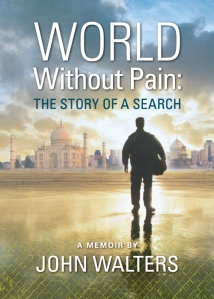
When I began this book I was able to deeply empathize with Justin’s quest, because I undertook a similar journey back in the 1970s when I was on the road in the United States, Europe, the Middle East, and the Indian Subcontinent, as I relate in my book World Without Pain: The Story of a Search. My first trip to the East culminated in a hike from Pokhara in Nepal up into the Himalayan Mountains along unmarked footpaths without a map. Unlike Justin, I made it back down safely; I mention this, though, to demonstrate that I can understand his thought processes and how he felt as he wandered off into the wilderness alone.

This book is fascinating, but one thing that I object to is Rustad’s dark, gloomy narrative that demeans the value of Justin’s spiritual quest. It begins with the garish, negative title. Justin became lost, yes, in that he disappeared and was never found. However, that does not diminish the value of his journey of discovery, which the title dismisses as an “obsession.” Well, okay, in a sense we can call any search for self-fulfillment and meaning an obsession, I suppose, but the word carries such negative weight that it is not completely accurate. Justin took a chance in exploring the Parvati Valley alone, but that doesn’t mean that there was something psychologically wrong with him because he did so. It simply means that the world is a dangerous place, and some places are more dangerous than others. What he was trying to accomplish, though, still has validity.

This brings me to another section of the book that was painful to read. Rustad writes of something an obscure French writer labeled the “India Syndrome.” This refers to the allure of India as a spiritual haven for westerners. In this context, though, the author seems to suggest that it is an aberrant psychosis, and that westerners who venture to India in their quests for meaning in life are somehow sick and deranged. He writes of embassies and opportunistic psychiatrists forcibly abducting young westerners from schools and ashrams in India and returning them to the dysfunctional families and situations that they had fled from in the first place – as if this forced relocation is acceptable behavior. It almost sounds as if the psychiatrists involved believe that embarking on a spiritual quest is by nature deviant psychotic behavior.

When I traveled the Hippie Trail, the overland route from Europe to India, back in the mid-seventies, I met numerous young travelers from many countries. Most of them were on a sort of extended adventurous holiday, taking months off to explore new lands and sample drugs and experiences. There were definitely some who took their spiritual journeys to the extreme, who adopted eastern garb and wandered barefoot, penniless, and befuddled, but there were many others who enjoyed their trip and returned to their homelands enriched and satisfied. I think that there are many more lost and lonely travelers currently in homeless encampments in the United States than there ever were on the Indian Subcontinent, even during the height of the hippie migration to the east. The so-called India Syndrome is really an international condition. It refers to people who are intent on changing their lives for the better; some inevitably get lost along the way. (To be continued.)

Posted in Book Reviews, Travel | Tagged , , , , , | 2 Comments

Another Look: World Without Pain: The Story of a Search

In the 1970s, after the Altamont Rock Festival, the Manson Family cult murders, and the fiasco of the Vietnam War many young people, disillusioned by the hippy movement, began to leave their homelands and travel to the far places of the world.  Hoping to find drugs, sex, freedom, and excitement, they more often were confronted with destitution, despair, disease, loneliness, and culture shock.

As a young writer wishing to break out of the familiar rut in which he was stagnating, Walters hit the road during this time, first to Europe, then onward to the Indian Subcontinent.  He sampled Buddhism and radical Christianity; he wandered alone in the Himalayas; he listened to strange gurus spouting stranger doctrines; he watched the people around him deteriorating and dying in the lands of the East.  As he traveled onward he became fascinated with the road itself, and determined to discover its secrets. He wondered what it was that gave the road its alluring power, and he forsook everything else to find out.

His story will appeal to those who lived through the turmoil of the 60s and 70s, to those who are hungering after spiritual fulfillment, to writers and other artists in search of their voice and their inspiration, and to anyone who loves a true story of adventure and excitement set in unfamiliar lands.

This is my first memoir. Recently I have been looking back on the times I write about in this book, and I am amazed at where I went and the dangerous and unsettling situations I encountered. Now my temerity astonishes me, but back then I took it in stride, considering it all a glorious and grand adventure. You don’t hear about people stepping out onto the road like this anymore. Give this book a read; you won’t be disappointed.

Click to buy from these distributors:

Trade Paperback

Amazon Kindle

Barnes and Noble

Kobo

Posted in Travel | Tagged , , , , , , , | Leave a comment

Book Review:  The Sun Is a Compass: A 4,000-Mile Journey into the Alaskan Wilds by Caroline Van Hemert

The Sun Is a Compass is a wonderful book. I enjoyed it through and through. In it, a young couple travel by rowboat from Bellingham, Washington up the Inside Passage to a town called Haines, hike and canoe through the Yukon all the way to the Arctic Sea, follow the seacoast on foot, plunge inland and travel southwest through the Brooks Range, and finally take the Noatak River to a town called Kotzebue on the Alaskan west coast. They leave Bellingham in early spring and reach their destination in early fall just as the icy grip of winter is beginning to spread over the Arctic.

On the way, Caroline and her husband Pat encounter many difficulties: storm winds on the Inside Passage, a frigid swollen river they have to swim across with all their gear, a capsized raft in the Arctic Ocean, and swarms of ravaging mosquitoes. They are charged by a grizzly bear and stalked by a black bear. To top it all off, their last food drop, which is supposed to be flown to them by a bush pilot, is delayed by inclement weather, and they have to fast for four days before the pilot finally shows up.

Despite these difficulties, though, for Caroline and Pat the trip is a glorious adventure. Caroline is an ornithologist and delights in identifying and describing the many wild birds they encounter, but her descriptions never lapse into dry scientific commentary; they are more in the nature of poetry as she marvels about the migratory journeys the birds are able to make from Canada or Alaska to the far corners of the globe. At the end of their journey is another natural high point as they witness a herd of thousands of caribous making their way south across the Noatak River.

Caroline and Pat are alone for most of their journey, but they occasionally meet benevolent people in some of the most remote areas of the Arctic who are happy to share what they have. I also found this to be true on my travels through the United States, Europe, the Middle East, and the Indian Subcontinent: often when I was in need, strangers helped me out and asked nothing in return.

One thing I liked about this travel book in contrast to other famous travel books I have read recently such as Riverman, Into the Wild, and The Adventurer’s Son, is that in this book, the protagonists survive until the end. It seems to be a trend with popular travel books in recent years that they deal with journeys ending in tragedy and disaster. It is refreshing to read about some adventurers who set an ambitious goal and achieve it. They had numerous difficulties along the way, yes, but they ultimately overcame them and triumphed. I can relate to that in my own adventures too; as I look back and consider some of the dangers I encountered, I marvel not only that I went to some of those places and did some of those things, but that I lived to tell the tale.

In its culmination, the book parallels my story as well. Caroline and Pat have a child, and when he is only ten weeks old they are off on another hiking adventure, babe in arms. My five sons were born in five different cities and three different countries as my wife and I continued our far-flung travels.

All in all, The Sun Is a Compass is fun, exciting, heart-touching, and very well-written. Highly recommended.

Posted in Book Reviews, Travel | Tagged , , , , | Leave a comment

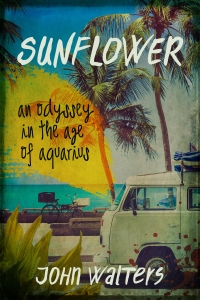
Another Look:   Sunflower: A Novel

A sequel of sorts to The Misadventures of Mama Kitchen:

In early 1970 a new era, the Age of Aquarius, seems to be dawning. Penny, who adopted the name of Sunflower on the way to the Woodstock Music and Arts Festival, attends another rock concert touted as Woodstock West, at Altamont Speedway near San Francisco. Seeking to enhance the transcendent Woodstock experience, she instead comes away covered in the blood of a man brutally stabbed to death in front of the stage.

Has the new youth experience descended from idealism to anarchy? To find out Sunflower, confused and disillusioned, embarks upon an odyssey across an America torn by violent Vietnam War protests, racial tension, and gangs of hard drug dealers. From a search for a shared social experience it becomes a personal quest for fulfillment that leads her on a journey across continents.

Click to buy from these distributors:

Trade paperback

Amazon Kindle

Barnes and Noble

Kobo

Apple iBooks

Posted in Uncategorized | Tagged , , , , , | Leave a comment

Book Review:  The Kaiju Preservation Society by John Scalzi

Although John Scalzi is a best-selling author in the science fiction field, I have never read any of his novels until now. I remember reading and enjoying the occasional short story or novelette I encountered in an anthology, but that’s about it. I came across The Kaiju Preservation Society, though, on a new arrivals book shelf of the library, read the cover blurbs, and thought: why not?

This is a short, light, fun novel with an outrageous premise that never promises to be anything more than it is: an homage to Japanese monster flicks such as Godzilla liberally sprinkled with pop culture references from science fiction and fantasy books and films. The story commences with the outbreak of COVID in early 2020; a tech worker is fired from his office job and demoted to delivery boy. When he is about to be sacked from his delivery position too, he meets an old acquaintance who offers him a position with the KPS (the Kaiju Preservation Society).

It turns out that the KPS operates in a parallel world to our own that is populated by monsters of Godzilla stature (complete with internal biological nuclear reactors) called kaiju and a host of other nasty creatures intent on devouring anything that moves, especially humans. The KPS outposts on this world have existed for decades, and their purpose is scientific research and yes – protecting and keeping healthy the enormous Kaiju creatures. The narrator fits right in with the rest of the eclectic team, which is composed mainly of scientists and administrators.

Scalzi does some fun world-building here in creating a deadly ecosystem as well as the technology to keep humans alive while they observe and protect its inhabitants. However, one frustrating thing about this novel is that Scalzi makes this wild world so intensely fascinating but never really directly describes it. Most of the book is advanced through dialog, as characters discuss the world and their knowledge and impressions of it, so readers are only allowed to develop a picture of it that is slightly out of focus and filtered through various points of view. There are no real descriptions of the kaiju, other than that they are really huge monsters kind of like Godzilla, or of the other predators in the ubiquitous jungles, other than that they are frighteningly dangerous. I would like to have learned more about exactly what these beasts and their environment look like. Instead, the story moves rapidly along and we learn of situations and events, as I said, mainly through dialog.

I’m not saying that it’s not a lot of fun, because it is, in the same way that comics or some of the modern fast-paced action films are fun. I’m just saying that I would have loved some lush, complex descriptions of the world and its denizens. We don’t really learn much about the various characters either, except for what they do; it would have been nice to know something of their backgrounds, motivations, what resonates with them emotionally, and so on. For instance, I kept wondering where the supporting characters are from on our Earth, but this information is not provided, except for the narrator and one or two others.

Still, it is the outlandish premise that drives the novel. It reminded me of The Lost World by Arthur Conan Doyle, another loosely plotted story in which the unique and fascinating strange world that the protagonists encounter is the real main character. Another example is Rendezvous with Rama by Arthur C. Clarke, in which the characters are secondary to the immense internal world of the alien spacecraft.

Despite the lack of focused description and character details, though, The Kaiju Preservation Society works because it is similar to old-school science fiction in which the ideas are preeminent. As I advanced through the story, I found myself looking forward to each reading session. Escapism is what it is, and as escapism it is very well executed.

Posted in Book Reviews | Tagged , , , , | Leave a comment

The Misadventures of Mama Kitchen is now on sale!

I have discovered that for some reason (unbeknownst to me) Amazon has drastically marked down the price of the paperback edition of my novel The Misadventures of Mama Kitchen. Pick up a copy quick while it’s on sale! In my opinion it’s one of my best books, deeply resonating with my background in the counterculture of the late 60s and early 70s. Here’s a brief synopsis:

Sarah Tabitha Jones, a twenty-year-old fascinated by the youth culture of the late 1960s, leaves her middle-class home and wanders to a wilderness commune and then to the Haight/Ashbury in search of truth. On the way she encounters many strange characters: bikers, draft dodgers, Vietnam War veterans, peyote worshippers, heroin dealers, Jesus people, feminists, violent anarchists, Black Panthers, and science fiction fans. She experiments with drugs and sex, but at the same time helps out those she can; though often disillusioned, she believes that hippies should unite to create a better world. In the midst of all this she finds herself pregnant. Eight and a half months later, undaunted, belly bulging, she travels to Woodstock for one last attempt at finding the love and unity she seeks.

The Misadventures of Mama Kitchen will appeal not only to those who lived through the disconcerting era of the 60s and 70s but to those younger who are curious about what took place back then. It will also resonate with anyone who is idealistic and in search of personal fulfillment, as well as those who simply enjoy a wild tale: sometimes comic, sometimes tragic, sometimes violent, sometimes sexy, always extreme.

Click to buy from Amazon:

Trade paperback

Amazon Kindle

Posted in Uncategorized | Tagged , , , , , , | Leave a comment

Book Review:  Riverman: An American Odyssey by Ben McGrath

Riverman tells the story of Dick Conant, an itinerant canoeing enthusiast. Self-describing as homeless, he might have been like many other wandering vagabonds, albeit with a preference for waterways rather than dry land, had he not bumped into McGrath, a writer for the New Yorker, beside the Hudson River in New York. McGrath found Conant enigmatic and his travel stories interesting and wrote an article about him for the New Yorker. Months later, he received a call from a law officer in North Carolina saying that Conant’s canoe and some of his belongings were found in the water along the shore of Albemarle Sound, but there was no trace of Conant.

I like tales of travel adventure, but one reason I put off reading Riverman was that I already knew that it culminates with the tragic disappearance of Conant. This book is similar in a way to another travel tragedy I read not long ago called The Adventurer’s Son, about a young man who disappears in a forest in Costa Rica and his father’s search for him. Both involve a complex search for threads of information about the missing person, and both end in the discovery of the protagonist’s death.

The phone calls sets McGrath off on the trail of Conant’s past, and Riverman is a compilation of his research. Part of it is told in first person as McGrath travels the country interviewing people from Conant’s past as well as those who encountered him on his wanderings, and part of it is told in story form based on manuscripts Conant left behind. If truth be told, parts of the book are a bit confusing when McGrath focuses on the complex stories of people that Conant met along the way.

Often when I read of the journeys of other travelers, I envy them and feel a longing to be back on the road myself, but not in the case of Riverman. McGrath makes it clear that Conant’s homeless wanderings were not easy. His canoe, for instance, was loaded with garbage bags full of his belongings, making it look like the aquatic equivalent of the shopping carts that you see homeless people pushing around in cities. It was often arduous and dangerous on some of the rivers and coastlines that Conant traversed, and he had to continually be on the lookout for safe and clandestine places to camp.

I sympathize with Conant’s hunger for the freedom he felt during his river journeys because I had that same hunger during the years I spent on the road, hitchhiking and taking cheap local transport from the United States to Central America to Europe to the Middle East to the Indian Subcontinent, as I relate in my memoir World Without Pain: The Story of a Search.

As I read Riverman, I couldn’t help but feel a pang of regret that Conant was never able to turn the thousands of manuscript pages he’d written about his journeys into a first person memoir. McGrath describes him as quite a raconteur, and his personal account probably would have been fascinating. I mentioned above that Conant’s story never would have been told if he had not had the chance encounter with McGrath, and that made me wonder how many other wanderers there are out there on our highways and byways and waterways whose stories have not been told. I have no doubt that most if not all of society’s outcasts, those you see out of the corner of your eye in homeless camps or along the roadside or along the shores of rivers, have gripping stories to tell. In fact, their lives may be far more interesting than those who remain in one place and work most of their lives so that during their down times they can live in sedentary comfort and gratify the cravings of their flesh.

Posted in Book Reviews, Travel | Tagged , , , , | 2 Comments