Book Review:  A Savage Dreamland: Journeys in Burma by David Eimer

It is oddly appropriate that I am writing this during a rare power cut of several hours (and counting) in my apartment complex – appropriate because normally we here in Seattle can count on having electricity and other utilities twenty-four-seven, and if we don’t, we panic. Most of Burma, on the other hand, as described by Eimer in this fascinating memoir/travelogue, is used to going without electricity and other amenities. It exists as a sort of pocket in time, several decades behind the rest of the world. Some of the author’s descriptions even of Yangon (Rangoon), the largest and most westernized city, remind me of India when I visited it back in the 1970s. India at that time forbade western companies from establishing franchises. As a result, there was no Coca Cola or MacDonald’s or any of the other ubiquitous international brands we have come to expect everywhere in the modern era. Eimer explains that Burma is like this now. No foreign businesses such as Starbucks are allowed.

But not being able to grab a fast-food burger or a frappe at every corner is the least of Burma’s problems. The nation has been crippled by a sordid history of oppression: international wars, wars for independence, civil wars, and misguided selfish governance almost nonstop for as long as it has been a nation. First the British came in with the purpose of extracting its jade, opium, and other treasures. Then the Japanese invaded during World War II. Then the British returned. Then soon after independence a military junta took over, enriched themselves, and further impoverished everyone else. Finally (in 2015) there were free elections, but so far (this book was published in 2019) little has changed. The poverty described is all the more shocking to me as I contrast it with the mega-yachts and estates the size of small countries that the world’s richest people waste their money on, oblivious or uncaring about the destitution of so many people in the rest of the world.

Eimer makes a knowledgeable and erudite tour guide to modern Burma. He begins in Yangon, contrasting Golden Valley, the haunt of the country’s millionaires and diplomats, with one of the city’s largest slums. But it is when he travels outside Yangon that his account becomes truly fascinating. The majority Buddhist population mainly lives along the banks of the Ayeyarwady (Irrawady) River, while the vast bulk of Burma’s landmass consists of outlands inhabited by a multitude of persecuted minorities. Eimer travels to as many of these locales as he is able (some are strictly forbidden to foreigners) and describes the land and the people who live there.

For instance, he spends Christmas in Chin, an underdeveloped Christian territory in the far west. Below Chin is Rakhine, a territory along the coast, where the Muslim population is being driven out and exterminated. Eimer explores the Myeik Archipelago in the far south and tells tales of pirate exploits and conquests in the islands. He goes to Shan state and writes of the various militias that are fighting each other; this state is in the heart of the Golden Triangle so they also war over dominance of the lucrative smuggling of heroin and methamphetamines to China and Thailand. To visit some of these areas in Shan state and in Kachin state in the far north, Eimer had to enter Burma illegally at remote crossings from China and Thailand. Few writers would have been able to accomplish this, but Eimer has a lot of experience as a journalist in China and Southeast Asia and plenty of courage to go along with his local knowledge.

This is a fascinating book about a part of the world that has been all but forgotten compared to splashier, more flamboyant events happening in other countries. However, as the world becomes increasingly globalized, in our hubris we should not neglect people like the Burmese, who have so many positive qualities (as we all do) but need assistance in catching up.

Posted in Book Reviews, Travel | Tagged , , , | Leave a comment

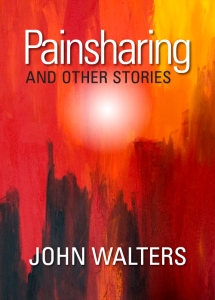
Another Look: Painsharing and Other Stories

After nuclear war, a survivor of the monster-populated ruins of Oakland California joins the crew of a clipper ship sailing the waters of the Pacific.  A typhoon shipwrecks him on a tropical island whose inhabitants share a bizarre secret.

Visitors from Earth on a far planet discover that a group of white tigers with enhanced intelligence are terrorizing the locals.  As one of the visitors escorts a young crippled girl back to her village the tigers begin to hunt them.

At the edge of the solar system an interstellar spacecraft is ordered by an unknown power to change course and fly to Pluto; when it refuses to comply the entire crew is mysteriously killed.  An unlikely team goes to investigate and are confronted with a life-or-death conundrum stranger than anything they could have imagined.

On a distant planet the ultimate civil punishment is to be genetically deformed into a monstrous beast and forced to live in the forbidden compound called Purgatory as slaves of the State.  When authorities arrest and condemn the woman he loves, a man determines to find and save her, even if he must descend into Purgatory itself. 

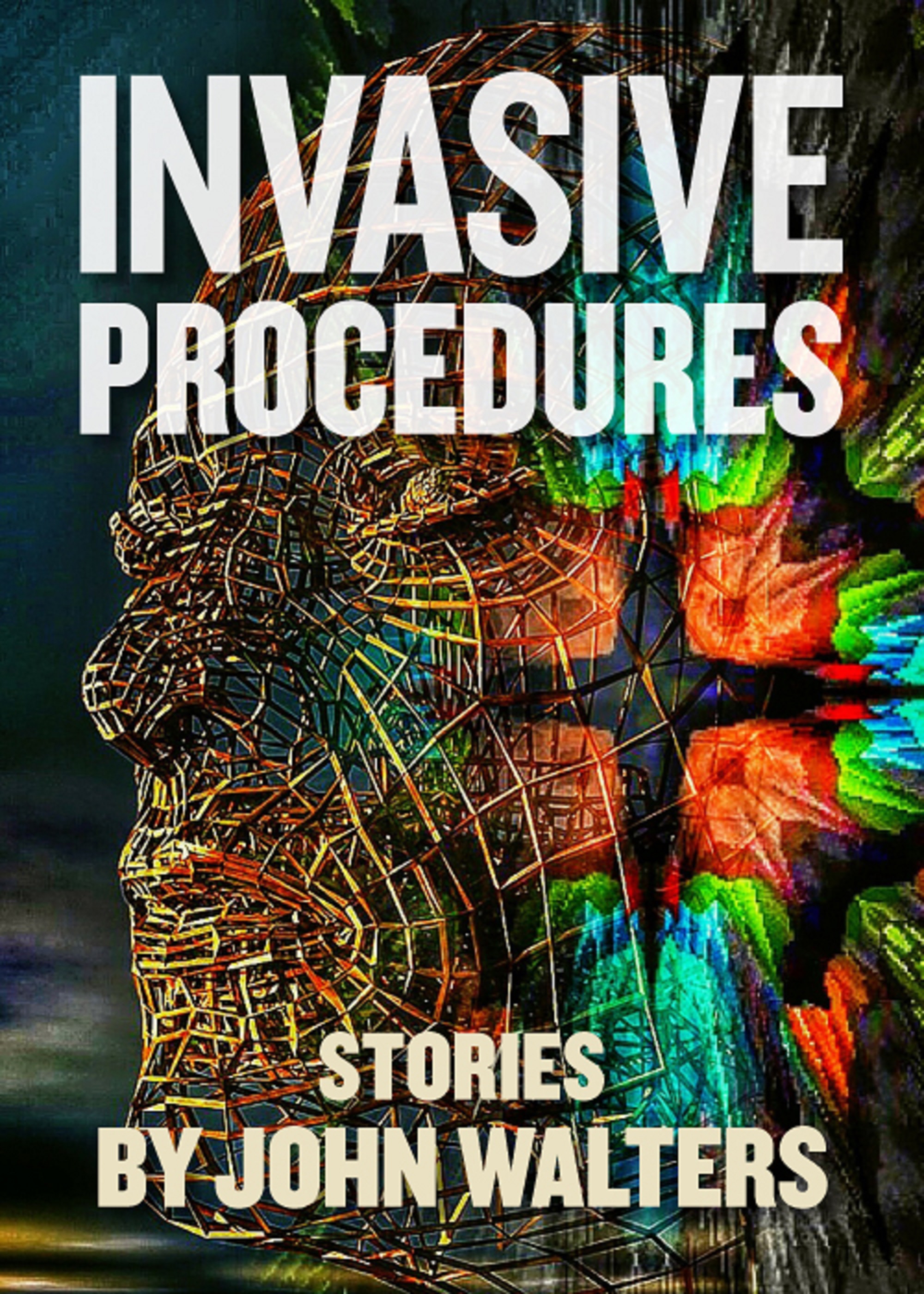
In these and other gripping science fiction tales John Walters explores possible futures on Earth and other worlds.

Click to buy from these distributors:

Trade Paperback

Amazon Kindle

Barnes and Noble

Kobo

Smashwords

Posted in Uncategorized | Tagged , , , , , , | Leave a comment

Book Review:  From Strength to Strength: Finding Success, Happiness, and Deep Purpose in the Second Half of Life by Arthur C. Brooks

I hesitated before writing this review because I have mixed feelings about this book. I don’t like to write reviews of books I dislike out of respect for fellow authors in general; however, this book makes some good points that are worth discussing before proffering somewhat one-size-fits-all solutions to the dilemmas that older people face. I should say wealthy older people, because besides offering too-trite solutions, Brooke directs his advice primarily to successful people who need to cope with a diminishment of their success as they age. Still, as I said, there is some good food for thought herein.

Brooks starts off with the depressing declaration that for everyone, whether successful or not, decline is inevitable, and to corroborate this fact he offers the examples of well-known classical musicians such as Bach and Beethoven. However, he points out that there are ultimately two kinds of intelligence: fluid intelligence, which manifests when young and propels spectacular achievements, and crystallized intelligence, which is wisdom accumulated through experience. In other words, when you are young you have raw smarts, but when you become older you are able to benefit from drawing on a store of wisdom and knowledge. Brooks insists that at a certain point you have to repurpose your life to rely more on crystallized intelligence, to switch from innovative activities to instruction, teaching, service, and counsel.

According to Brooks, there are two curves in life: the fluid intelligence curve, which tracks early success and plays out and starts to decline around age forty, and the crystallized intelligence curve, which begins later but continues on into old age. All you have to do is jump from one curve to the other and you’ll be fine.

A profound difficulty to this approach, of course, is that everyone is different and cookie-cutter solutions such as these are unable to account for anomalies. Not to mention in the present tragic economic environ there are fewer and fewer people who are able to live the idyllic rapid-climb-to-success life that Brooks seems to suggest is common to so many. He assumes that his readers have taken the traditional route to success and are financially secure. My life has been anything but normal and I have never possessed an abundance of finances, so it was hard for me to relate to some of the advice he was giving.

Nevertheless, there are enough useful suggestions in the book that I kept reading. For instance, it is good to come to accept that you will ultimately decline and die, because it gives you better perspective in deciding what to do with the remainder of your time. Brooks brings out the value of human relationships and how they become even more important as you age. This is certainly true, and yet for many people solitude in old age is inevitable. Kids become adults and move out, and friends die. In my case, all of my closest friends from my youth, from Clarion West, and from my writing career have died. Not much I can do about that. On the downside, though, the spiritual advice Brooks offers is very surface-level and insubstantial, like slapping a Band-Aid on a mortal wound.

In conclusion, don’t expect to find a formula on “finding success, happiness, and deep purpose in the second half of life” in this book or you will be disappointed. However, it is for the most part an entertaining read, and you may be able to glean some useful tips and strategies that will help you along your way.

Posted in Book Reviews | Tagged , , , | Leave a comment

Book Review:  The Last Wilderness: A History of the Olympic Peninsula by Murray Morgan

Murray Morgan was a journalist based in the Pacific Northwest who penned the entertaining history called Skid Road: An Informal Portrait of Seattle. The Last Wilderness, which focuses on the history of the settlement and exploitation of the Olympic Peninsula, is no less entertaining.

It has its limitations, to be sure; for instance, it mentions the Native Americans who lived on the peninsula long before white settlers arrived only in passing, and Morgan writes from the perspective of the 1950s, when the book was first published. Nevertheless, it is full of fun anecdotes and fascinating facts about the European explorers who first encountered the peninsula, the establishment of customs posts at Port Townsend and Port Angeles, the ravaging of the towering primeval forests by rapacious lumber mills, the attempts to run train lines into the wilderness, the establishment of Olympic National Park, and the loneliness of the crews of the lighthouses on the islands off the west coast.

Amidst this broader history, Morgan zooms in to highlight the lives of idiosyncratic individuals. For example, he tells of John Huelsdonk, also known as the Iron Man, who established a farm in a valley deep in the wilderness on the western side of the mountains. Huelsdonk made money as a cougar hunter and also by carrying incredibly heavy loads for other people through thick forests and over steep hills. He tells of Bill Gohl, who would brag about the many murders he committed in the bars frequented by workers from the lumber mills in the Grays Harbor area. And he tells of Home, an anarchist community established in a remote part of Puget Sound; eventually its free-spirited approach to life and lack of law enforcement drew the ire of the powers-that-be.

For me personally, the Olympic Peninsula has always been a place of beauty and wonder. When I was very young, my parents made yearly visits with my siblings and I to Lake Crescent Lodge on the north end of the peninsula. The lake was far too cold to swim in, but we kids would play at the water’s edge. My older sister and I once decided that we would construct a path across the lake with rocks and pebbles we found on the shore. We named our creation Walters Walk. We kept at it for hours but didn’t make much progress, which isn’t surprising considering that it is over a thousand feet deep, one of the deepest lakes in the state. Our trips to Lake Crescent ceased when my parents bought a beach cabin on the eastern shore of Hood Canal from which we could see the magnificent Olympic Mountains.

When I was a young teen, one of my brothers and I joined a CYO hiking trip into the Olympics. We rented backpacks and filled them with food and other items we’d need, and then with the rest of the group we hiked through forests and over foothills for about a week. At one point we slid down a snowfield, and at another point, while I had wandered ahead of everyone else on the trail, I came face to face with a black bear.

Later, when I was about nineteen or twenty or so, I decided that I would hike solo back into the forests I’d explored with the group as a youth. My dad dropped me off at a trailhead and I hiked for hours, eventually coming to a campsite in a meadow at the base of the foothills. As I stood there, though, instead of exultation I was overcome with a feeling of loneliness and dread. What if I encountered a bear then when I was all alone? I changed my plans and hiked back out, spending only one night in the wilderness. (I later did get over my trepidation about exploring mountains all alone when I trekked into the Himalayas along unmarked footpaths without map or guide.)

Anyway, back to the book. Morgan has an intimate, informal style that works well as he shares tales of the early history of the Olympic Peninsula. This book is recommended for armchair explorers, but be warned: it may cause you to long to come and see this incomparably gorgeous wilderness for yourselves.

Posted in Book Reviews | Tagged , , , , , , | Leave a comment

Another Look: Love Children: A Novel

It is the mid-1970s.  The Summer of Love and the Woodstock Music Festival have come and gone.  Into the atmosphere of cynicism and doubt following the wild optimism of the youth revolution the Love Children, raised from birth by benevolent aliens, come home to Earth.  Sexually free, telepathic, and honest to the extreme, they are appalled to find that the world they left behind is full of darkness and deceit. As they set about using their extraordinary powers to bring light and unity back to their world, they run up against a sinister alien force intending to keep it in darkness.

This is my first novel, a science fiction tale that contrasts the telepathically advanced and pacifistic alien culture human orphans are brought up in with the selfish and violent societies on Earth to which they return to search for their parents. It’s a fast-paced science fiction adventure set in exotic locales such as Nepal, India, Pakistan, Afghanistan, Thailand, Greece, the San Francisco Bay area, and a spacecraft orbiting Earth.

Click to buy from these distributors:

Trade Paperback

Amazon Kindle

Barnes and Noble

Kobo

Posted in Reading | Tagged , , , , , , , | Leave a comment

Book Review:  The Power of Regret: How Looking Backward Moves Us Forward by Daniel H. Pink

This book starts out strong. The author points out the fallacy of the expression “no regrets” because, well, everyone has regrets. To find out what these regrets are, Pink undertook a massive international survey and also delved deeply into past research findings. He discovered that the regrets people expressed from all over the world can be divided into four main categories: foundation regrets, which have to do with health, education, finance, and other essential matters; boldness regrets, or not taking chances when presented with opportunities for growth; moral regrets, which include cheating, deceiving, swindling, and other negative behaviors; and connection regrets, or failure to recognize and love important people in our lives.

He devotes a chapter to each of these “core regrets,” as he calls them. Explanations throughout the book are liberally sprinkled with examples from Pink’s surveys and research. Recognizing regrets, whether those that comprise things we did or things we failed to do, insists the author, can help us to use them as opportunities for growth.

As I read, I found myself wondering what the greatest regrets in my own life were. Through the descriptions and examples I was able to pinpoint several. One of the deepest and most important was the destruction of my early manuscripts. I had set out on the road to find my voice as a writer. My quest took me across the United States, around Europe, across the Middle East, and around the Indian Subcontinent. In my duffle bag, I always carried a notebook and pen. I remember clearly when the pure words started pouring out. It was in Goa, India, and I was sitting under a palm tree at the beach. They were clear, honest, insightful words. As I traveled, I filled that notebook, and then another, and then another. When I got back to the States, I stored those notebooks, along with some typewritten manuscripts I had composed in Seattle when I got back, in a box in the basement of my mother’s house. I was still traveling at the time, and I couldn’t carry them with me. At some point after I had returned to India, I felt I needed a fresh start and wrote to my mother that she should destroy that box of manuscripts. What the hell was I thinking? Wonderful pure insightful words were lost forever! Yes, a great regret indeed. And I have compensated for that loss by being more careful with my writings since then. I always back up my work – even first drafts as soon as I complete them. And when my writings are as perfect as I can make them, I publish them rather than have them languish in a drawer. After all, that’s why I write them: so that they can be read by others.

Some other important regrets have to do with personal relationships. I met some wonderful women on the road and did not always give them the respect and attention they deserved. When I got married and we began to have children, I sometimes got too busy with work and maintaining the household and didn’t spend enough time with the family. On one of my forays to the States when we were living in Greece, I had a chance to take a side trip from Seattle to California to visit my brother Jeff, who I hadn’t seen in many years. I didn’t do it, deciding that I was short of time and money. Soon after I returned to Greece he died. It is forever too late to remedy that error. But later on, I did not make the same mistake. A few years ago, one of my sons and I were on a road trip from the San Francisco Bay area to Seattle. I debated internally whether we should take the time to make a side trip to Vancouver, Washington, to visit another of my brothers. We did take the time, and it’s a good thing we did, because a few months after that visit this brother also died.

Yes, regrets are real things, and this book helps you focus on your own regrets, which can initiate a healing process. Unfortunately, the last part of the book, the part I was looking forward to the most, in which Pink supposedly offers remedies to the pain of regret, kind of falls apart. He gets into a lot of analytical reasoning that is the antithesis of the personal approach in most of the book, and it becomes rather dry, overly structured, and uninteresting. Nevertheless, the first two-thirds are very well-written and well-presented, and I recommend the book as a useful guide to identifying and mitigating the regrets in your own life.

Posted in Book Reviews | Tagged , , , | 1 Comment

Book Review:  This Is How You Lose Her by Junot Diaz

I read and enjoyed Diaz’s Pulitzer Prize-winning novel The Brief Wondrous Life of Oscar Wao when I was still living in Greece shortly before I moved back to the United States in 2012. It has taken me this long to get around to another Diaz offering, the short story collection: This Is How You Lose Her. The main character in the stories, most of which are told either in first person or second person, is Diaz’s autobiographical alter-ego Yunior. As the title of the book promises, the stories mainly deal with Yunior’s multitudinous affairs; each story features a different woman and his relationship with her. As constants in the background are Yunior’s relationships with his mother and with his older brother, who becomes debilitated and then dies of cancer.

Diaz is a virtuoso with language, and the stories abound in English street dialect with a lot of expletives, graphic sexual descriptions, and interjections in Spanish. This is all part of what makes them work. They are composed in a sort of rough, abrasive prose poetry that is beautiful in its own idiosyncratic way.

I think my favorite story in the collection is the last one, “The Cheater’s Guide to Love,” because it presents the most comprehensive picture of Yunior. His girlfriend, who he sincerely loves, finds out he has been cheating on her and breaks up with him. He begins to have all sorts of physical ailments. On top of that, he has trouble with his teaching job, with his writing, and with racist Bostonians shouting insults at him. He attempts to strike up relationships with other women but they don’t go well. In the end, his redemption comes as he begins to effectively write again, and the writing helps to exorcise his despair. He considers that the writing “feels like hope, like grace,” and that “sometimes a start is all we ever get.” I can empathize with those sentiments. Sometimes the writing is the only thing that pulls me through too.

As for the stories about the women in Yunior’s life, they caused me to think back and recall the various women I have known and loved. Oddly enough, or perhaps serendipitously enough, I was considering writing stories based on some of my past relationships just before I found this book on the library shelf. Before I met the woman I would marry and raise five sons with, there were several relationships I would call extraordinary and that involved real love. At those times, though, the circumstances simply weren’t right to continue in the long term. In writing about his ephemeral past relationships, Diaz is able to tap into profound emotional veins that are sometimes sweet, sometimes bitter, sometimes painful, sometimes confusing, and sometimes irresolvable. Just like in real life. Stories don’t always have happy endings, and sometimes wounds don’t quickly heal. Sometimes the only answer is to pick yourself up and try to keep carrying on somehow. For writers, the act of writing serves that purpose.

Posted in Book Reviews | Tagged , | Leave a comment

Invisible People Is Now Available!

My latest novel Invisible People is now available in paperback and as an ebook at various online outlets. Links to these are below.

In the near future, a member of an elite rescue unit stumbles upon a conspiracy that involves time travel, sightings of alien vessels, portals to distant worlds, and the disappearance of refugees, the homeless, and other disenfranchised people. As he and his team investigate further, he uncovers truths that cause him to question his worldview, loyalties, and the code by which he lives.

Trade Paperback

Amazon Kindle

Barnes and Noble

Kobo

Apple iBooks

Posted in Uncategorized | Leave a comment

Book Review:  Whole Earth: The Many Lives of Stewart Brand by John Markoff

I’m always on the lookout for good books on the counterculture of the 1960s and early 1970s. The title of this biography emphasizes Brand’s main contribution to that era, The Whole Earth Catalog. Though it delves into the making of the catalog, it tells the story of Brand’s entire life, of which The Whole Earth Catalog is but a part, albeit the part for which he is best known.

Markoff points out that Brand is often associated with the hippy counterculture, but he was never really an integral part of it. He existed on the periphery as a journalist, photographer, filmmaker, and multimedia event organizer. Although he knew Ken Kesey and many other radical figures of the time, he was not a member of the Merry Pranksters; he was not “on the bus,” so to speak, as they made their epic cross-country journey that Tom Wolfe documented in The Electric Kool-Aid Acid Test. He did assist the Pranksters in putting on the acid tests, though, and got to know many of them.

Brand’s greatest and most enduring contribution to popular culture was The Whole Earth Catalog, which was actually a series of catalogs and supplements that were published between 1968 and 1972 and occasionally thereafter. Steve Jobs referred to it as a prelude to the Google search engine. It was full of product reviews and articles intended to make it easier for those in the “back to the land” movement to have access to the tools they needed, but its functionality and impact ultimately went far beyond its initial goals.

While reading this book, I got out my own copy of The Last Whole Earth Catalog (the 1971 edition that won the National Book Award), which I had obtained while conducting some research for my hippy-era novel The Misadventures of Mama Kitchen. Back then, over a decade ago, I bought a good used copy for ten or fifteen dollars. Now, I couldn’t find used copies on Amazon for less than two hundred dollars. As I browsed the pages, I could imagine the lure of this multifaceted volume for people in the times before the internet.

The Whole Earth Catalog was only one of many projects that Brand conceived and worked on in the decades since his initial America Needs Indians! multimedia presentations. In fact, as Markoff points out, he was primarily an idea man and eventually tired of even the most dynamic of the projects he undertook. For instance, he left The Whole Earth Catalog at the height of its popularity. He later became interested in the early development of personal computers and the rise of the Silicon Valley computer culture, creating one of the first social media sites for idea exchange, which he called the Whole Earth ‘Lectronic Link, or WELL.

Later, Brand became deeply enmeshed in the cultures of large corporations, working as a consultant for Shell Oil and other companies. He helped to found the Global Business Network and became a proponent of nuclear energy and genetically modified organisms, thus alienating many of the environmentalists that he had inspired in the past.

In short, Brand was (and is) an anomaly, a peripheral figure for various movements. He came from a position of privilege; his parents supported his early endeavors so he did not have to struggle or work for a living. In later life he became quite wealthy and aligned himself with the rich and powerful. At one point he even considered writing a book on the advantages and power associated with being rich. While reading this book, I kept coming back to a comparison with Steve Jobs, who also began in the counterculture but later rose to a respected corporate position. Both Jobs and Brand led (or lead) fascinating, multifaceted lives but had (or have) deep flaws as well as amazing talents. Neither is what one would call uplifting or moral role models, but both profoundly shaped the eras in which they accomplished their most important work.

In conclusion, this is a very well-written, well-researched biography that sheds light on the hippy era of the sixties and seventies, the early years of Silicon Valley, and some of the controversies in the environmental movement. Sometimes I felt as if Markoff introduces too many historical characters at once without adequate explanation and I had trouble keeping them all straight. Otherwise, though, it is an important book and is well worth reading. Recommended.

Posted in Book Reviews | Tagged , , , , , , , , | 2 Comments

Book Review:  Lost in the Valley of Death: A Story of Obsession and Danger in the Himalayas by Harley Rustad – Part Three

(For the background to this article, see Part One and Part Two below.)

Except for major classical works of literature, usually I only write one review per book. However, Lost in the Valley of Death evokes so many memories and thoughts that I have to keep writing about it. This one should wind up the series, though.

Soon after Justin disappeared in the Parvati Valley, his friends and family became aware that something might be wrong because he did not reconnect to his social media accounts. Many people offered their opinions. Some thought that he was simply off somewhere on his own living as a sadhu in the mountains, while others had a premonition that something was wrong. Those closest to him investigated online as much as they could and then started a GoFundMe account to raise money for a search. A friend named Jonathan Skeels and Justin’s mother flew to India to investigate in person. Suspicion fell on a sadhu that Justin had befriended and accompanied on a hike into the mountains.

Many foreigners go to India to look for religious teachers. On my own journeys on the Subcontinent I came across several of these. There were the teachers at the Buddhist camp in the hills outside Bombay where I spent a week studying meditation, for instance. However, the strangest teacher/student situation I encountered was in Sri Lanka, where one evening some foreigners invited another traveler and I to visit the home where they lived with their guru. He was supposedly about two hundred years old and had lived alone in the jungle for decades. Upon coming out of the wild, he drew a following of acolytes, particularly foreigners who flew from the United States and Europe specifically to stay with him and absorb his teachings. They emphasized that it was a special privilege for us to meet him. He sat cross-legged on a raised platform in the living room wearing nothing but a loin cloth; every few minutes he would hock a loogie into a spittoon at his side. He spoke in Sinhala or Tamil (I’m not sure which), a Sri Lankan would translate, and all his followers would ooh and ah. He extended my friend and I an invitation to stay, which the faithful insisted was a great honor, but we declined. We were each on our own paths; mine eventually led me to my solitary trek in the Himalayas.

Evidently Justin had become enthralled by a sadhu, whose name was Rawat. The investigation into Rawat’s possible involvement in Justin’s disappearance, though, remained inconclusive because soon after he was incarcerated he was found dead in his cell in an apparent suicide. Rustad strongly implies that the police may have been responsible.

Eventually Skeels found some of Justin’s belongings along the raging Parvati River but no trace of Justin. The search had to be called off. For awhile the Internet buzzed with news of the disappearance and opinions about what might have become of him. I couldn’t help but compare Justin’s situation with my own when I roamed the Middle East and the Indian Subcontinent back in the 1970s. Justin was a celebrity of sorts and recorded his journeys on his social media sites. If I had got lost in a remote place, I was unknown, and the only notice that I was gone would have been a faint ripple amongst my relatives. It made me wonder how many travelers simply vanish somewhere in the lands they are visiting and no one ever finds out.

In the end, though, Justin’s life was an inspiration to those who knew him personally or through his online posts. The thing to remember is how much he valued the freedom to pursue the truths of life as he saw them. Occasionally I get together with a group of travel enthusiasts here in Seattle and we all talk about where we’ve been and where we’d like to go. Some of the attendees are casual travelers, retirees or those who take advantage of breaks from work to roam the world. Others, though, have embraced the nomadic spirit and travel as a lifestyle. Either way, it’s worth remembering that venturing forth into the unknown is inherently risky. Justin knew the risks, but he was willing to take them because he also knew the value of the rewards. It brings to mind once again Walt Whitman’s classic poem “The Song of the Open Road.”

All parts away for the progress of souls,

All religion, all solid things, arts, governments – all that was or is apparent upon this globe or any globe, falls into niches and corners before the procession of souls along the grand roads of the universe.

Justin was one of those souls along that glorious path. One can only hope that before the end he found the peace and serenity that he sought.

Posted in Book Reviews, Travel | Tagged , , , , | 1 Comment