Book Review: Postwar: A History of Europe Since 1945 by Tony Judt

It is a measure of the worth of this book that I begin writing the review before I have even finished it.  It is also a measure of the length.  It is over 850 pages of small print.  When I first picked it up from the library I balked, not because of the length but because the print was so small I didn’t want to strain my already very weak eyes.  However, I persisted, and I’m glad I did.  Tony Judt, the author, is a hell of a writer.  He makes the very complex history of Europe both East and West after the Second World War read like a novel.  He is erudite and his material is well-organized and he has an amazing vocabulary besides.  He begins right after the war when Europe was divided; he chronicles the West’s dependence on American aid and its struggle to rebuild shattered societies and cities, and the East’s takeover by the dark shadow of the Communist USSR.  He describes the amazingly rapid growth of the West, and the equally amazing stagnation and decay of the East.

But one very striking part is the section on the decay of the Communist regimes of the East, their downfall, and the opening up of the East to freedom of travel and expression.  It almost brought tears to my eyes.  He leads up to it masterfully, so that when it happens its inevitability is clear.  I empathize with those people, so long oppressed and then suddenly free.  It is truly one of the great eras of modern history.

To anyone who can handle the length I highly recommend this book.  It is one of the best history books I have ever read, right up there with “The Best and the Brightest”, and “A Bright Shining Lie: John Paul Vann and America in Vietnam” and the trilogy on Martin Luther King and his times by Taylor Branch.  Of course part of its relevance to me stems from the fact that I have been living in Europe for the past twenty years or so, but that aside I think I would have enjoyed it just as much anyway, for the brilliant piece of work that it is.

The book carries the story up until 2005, and I realize that it has clarified for me many things I have noticed while living here – things I saw and sensed but didn’t fully understand.

Something that affects me personally is the ubiquitous study of the English language by the younger generation.  I didn’t grasp what a continental phenomenon it was; it is one of the forces that binds the European Union.  Here in Greece, for example, students are required to learn English all through primary school and high school; however, due to the mediocre level of teaching in the public schools private language schools are everywhere, in every village and on every street corner of every major city.  An English language certificate is a prerequisite for many jobs, and students study for many years and often make multiple attempts to pass the tests necessary to acquire these certificates.  That’s where I come in:  I teach English as a second language as my day job.

Another phenomenon that is widespread across Europe is its anti-American sentiment.  This, too, I have seen firsthand, in the bullying and persecution my kids have sometimes received at school.  Don’t get me wrong; it is not as if it is unsafe to walk down the street if you are from the USA.  Most people are polite to me as an individual, but will nevertheless have no qualms about railing against the American government.  One of the main events that brought this about was Bush’s post 9/11 invasion of Iraq, which many Europeans balked at, though they reluctantly, after being strong-armed, offered their assistance.  It isn’t my intention to get into a political discussion here, but merely to recount what Judt expresses is one of the triggers that has exacerbated an already prevalent mood.

In closing, I want to reiterate that I highly recommend this book to anyone who is interesting in understanding modern Europe and how it has become the way it is.  Whether you live here or not, it’s good to experience, at least vicariously, a culture other than your own.  That’s one thing that drove me out of the States in the first place:  despite all the material comforts, despite all the high technology, despite all the military might, I felt that the viewpoint of most of its people was overwhelmingly provincial, introverted, self-absorbed.  Break out of the rut:  read this book.
And then come for a visit.

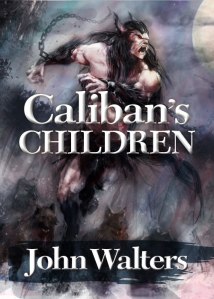
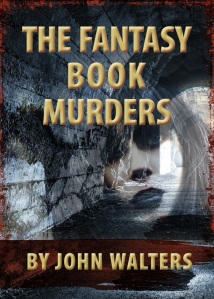
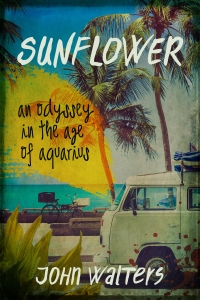
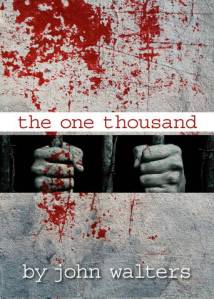
I’m a professional writer; I make my living by my words.  I’m happy to share these essays with you, but at the same time, financial support makes the words possible.  If you’d like to become a patron of the arts and support my work, buy a few of my available books or available stories.  Thanks!

Posted in Book Reviews, Travel | Tagged , , , , , , , , | Leave a comment

Stranded

Sunday, December 19th, was one of the most stressful days my wife and I have had in a long time.  As any parent knows, there is no paucity of anxiety when you are raising kids, but this situation was extreme even by parenting standards.

Two of our sons were on their way here to Greece for the holiday season, one from New Jersey and another from England.  The one studying at an English university left first, at six in the morning his time, walked to his bus because there was no taxi, and managed to get to Heathrow Airport in plenty of time for his flight only to find out it was canceled due to adverse weather conditions.  After cooling his heels for a long time he went to another airport in the London area where he heard there was a flight to Greece, only to find not only that it was full but that buses back to Heathrow were not running because of the snow.  After they cleared the roads he finally caught a bus to Heathrow and then went into London to stay with a friend.  We were trying all day to help him out by checking conditions online, looking for tickets, and so on, but then the situation began to look grim when his phone began to run out of batteries and we found out that due to antiquated laws concerning working on Sunday here in Greece we were unable to send him the extra money he needed.

My other son successfully flew from Newark to Frankfurt, Germany, but then due to snowfall about half the flights were canceled.  His was not, but it was delayed several times and we were all in a state of uncertainty until finally he was able to board and travel onward after a wait of about twelve hours at the airport.

Other travelers were not so fortunate, I know; evidently hundreds of thousands have been affected by this freezing weather all across northern Europe.

When you are going through it these experiences seem traumatic and unendurable, but in aftermath they can morph into adventures.  I ought to know; I have been through plenty of extreme situations myself.  Once I was turned away at the border of Iran and Turkey because they no longer issued visas at the border.  I had hitchhiked there and was almost broke and had to return a day’s travel back into Turkey to get the visa.  Something similar happened on another occasion at the border of Pakistan and India; at that time I was absolutely flat broke and had to raise some money in Lahore and then journey halfway across the country to Islamabad.  Once my passport was stolen in a remote part of Iran and I had to return to Tehran to get a new one at the American Embassy; you can read about that in the essay “The Lost Poem”.  I have any number of other stories of delayed flights and roadside ordeals in inclement weather where no one would pick me up hitchhiking.  But you know what?  Though sometimes it was very uncomfortable and even dangerous, for me it was always part of the adventure.

The hard part is knowing that someone you love is going through difficulties and being helpless to do much else other than wait.  Many times yesterday I wished that I was the one stranded.  It’s happened to me before, as I said, and I know what to do.  I would gladly have taken their place, if they could only have been delivered safe and sound without all the fuss and bother.

But then – that’s not the point of it all, is it?  We all, when it comes right down to it, have to experience some of these things for ourselves.  I can tell about it but it’s not the same as actually going through it, and going through it is valuable.  There’s nothing like the school of hard knocks.

Don’t get me wrong.  I don’t apply this to everyone who is stranded this holiday season.  My heart especially goes out to families with young children.  I have traveled long distances with three or four children at once and I know what it’s like.  Alone or with other adults you can relax and eat and drink and read or whatever, but with kids in tow it’s a whole other ball game, as they say – never a dull (or restful) moment.

So if anyone reads this on your laptop while cooling your heels waiting for a flight out, or in between spells of chasing your kids around the crowded terminal, take heart.  It will be over sooner or later, and you’ll look back and while sipping coffee or brandy in a warm comfortable place tell the story as an interesting interlude to your children or grandchildren who will most likely eventually have to go through the same thing themselves.

Posted in Parenting, Travel | Tagged , , | Leave a comment

Book Review: The Year’s Best Science Fiction, 26th Annual Collection, edited by Gardner Dozois

I have a confession to make.  Though I write a lot of science fiction and fantasy, I read very little of it.  Many years ago I existed almost solely on a diet of SF and F, but not anymore.  First of all, there is so much else to read:  mainstream fiction, history, general nonfiction, memoirs, and so on.  But apart from that, when I have read science fiction of the sort that has been published in the last decade or so, even award-winning stuff, I have been generally disappointed.

Notwithstanding, I do write it, so I figured I should have some sort of idea what is happening in the genre – that is, what sort of stories are considered the best.  Gardner Dozois as both a writer and an editor I greatly admire, especially as a writer.  He has an elegant writing style, every word expressed with absolute precision.  So if there were anyone I would trust as a judge of what is best in the field, it would be him.

Well, I read the book and overall I was – sigh – disappointed.  Don’t get me wrong.  With very few exceptions the stories are well-crafted and adequate.  But that is all.  They are not exceptional.  They are not stories that set the heart pounding and the blood coursing through the veins – stories, in other words, that change your life.  They are merely good stories.  The one I remember most clearly as exceptional was “The Egg Man” by Mary Rosenblum, not so much that it was original but that the setting in futuristic Mexico was very nicely portrayed.  The story itself reminded me of “Of Mist, and Grass, and Sand” by Vonda McIntyre.  Both stories posit super-creatures that dispense pharmaceuticals to heal disease; I have to admit, though, that it is cooler for the healing animals to be snakes rather than chickens.  A couple of other stand-out stories were “The Political Prisoner” by Charles Coleman Finley, and “G-Men”, by Kristine Kathryn Rusch.

Here I have a further confession to make:  I was spoiled by the late sixties and seventies, by the so-called “new wave” in science fiction, by Harlan Ellison and Samuel Delaney and Roger Zelazny and James Tiptree Jr and Robert Silverberg and Cordwainer Smith and other writers who wrote back then, (not to mention editors like Damon Knight and his incomparable “Orbit” series of anthologies) who thrilled me with attempts to expand the genre, to burst out of convention, to create literature and not just cheap thrills.  I felt a vitality in their work that I did not feel as I read these modern stories.  There’s nothing wrong with telling a good story; actually, telling a good story is vital, but I want more.  I want dynamic explosions of the mind and heart.  I want to be intellectually and emotionally thrilled.  I want writers to attempt great things, even if they fail.

So, yes, I was disappointed.  But perhaps it’s partly my fault.  Perhaps I set my expectations too high.  As I said, these stories were readable and entertaining.  But let’s get back to life-changing, as well as world-shaping.

Posted in Book Reviews, On Writing | Tagged , , , , | Leave a comment

One True Reader

It is to Henry Miller that I turn in my confusion: Henry Miller, who made an art form out of despair.  I haven’t read him in years.  Well, let me qualify that.  I recently re-read “Reflections on Writing”, which is one of my favorite essays.  Four or five years ago I re-read “Tropic of Cancer” and “Sexus”.  But when I first discovered Henry Miller, back in the early 70s, I dove in.  I read everything by him I could find.  I started with “Tropic of Cancer”, if I remember correctly, and then went on to “Tropic of Capricorn”, “Black Spring”, “Sexus”, “Plexus”, “Nexus”, “The Colossus of Maroussi”, “Big Sur and the Oranges of Hieronymus Bosch”, and so on.  I couldn’t get enough of Miller.  He set me free as a writer as no other writer ever had.  I filled notebook after notebook with Miller-esque prose, as I’m sure many a young writer has.

But I digress.  What brought on this reminiscence is the fact that I got discouraged by the lack of interest in my new blog.  Of course it is logical that it takes time to become known, to develop an audience.  But still I couldn’t help but look at the stats every day and get glum because I didn’t surge into sudden popularity.

Then I remembered what Henry Miller once wrote.  I can’t recall where it’s found, but he said that he fully expected that most people wouldn’t understand his intentions as an artist, and that he would be satisfied if he had only a few readers, or even one, who would fully appreciate what he was getting at.  This realization liberated him from having to pander to those who would never grasp the crux of it anyway, and would demand he turn this way or that to satisfy what they thought he should write, rather than what he had to write.

In the last few days one person has been checking out my blog.  Just one.  I thought it must have been my oldest son, until I asked him and he denied it.  Now I think I don’t want to know.  It might be that one true reader; who knows?  It might be another of my sons, or a more distant relative – but who says they can’t be true readers as well?  I had been contemplating cutting back on the number of posts.  After all, why write if nobody is listening?  But someone is listening.  And some days there are several hits.  And more will come.

It is for you, lone reader, that I compose this today.

As the voice says in “Field of Dreams”:  “If you build it they will come.”

One other thought, this time from none other than Mark Twain.  In one of his lesser-known works,  “Captain Stormfield’s Visit to Heaven”, he writes about those unknowns who were as brilliant as any of the celebrities on Earth:  “That’s the heavenly justice of it – they warn’t rewarded according to their deserts on earth, but here they get their rightful rank.  That tailor Billings, from Tennessee, wrote poetry that Homer and Shakespeare couldn’t begin to come up to; but nobody would print it, nobody read it but his neighbors, an ignorant lot, and they laughed at it.”  The story goes on that they mocked him to his death, but then when he arrived in heaven he was surprised that he had made it there at all, much less that a fuss was made over him.  When I read that for the first time it made such an impression on me that I never forgot it, and I wondered how many amazing writers and poets there were all over the world, working away at menial jobs, their rejected masterpieces moldering away on shelves or in drawers.  Thank God for the Internet.  By posting this I have a potential audience of millions.  But it will not have been in vain if I have but a few true readers.

Or even one.

Posted in On Writing | Tagged , , , , | Leave a comment

Book Review: Inherent Vice by Thomas Pynchon

Thomas Pynchon can write; there’s no doubt about that.  He can spin a sentence as well as anyone.  It’s a pleasure to read this novel just for the word-craft.  But looking deeper, I think what I object to most is the novel’s flippancy.  It’s light – almost a piece of fluff – despite the plot complexity.  The characters are shallow – not characters, in fact, but caricatures.  They appear “cool” on the outside, with their casual joint-toking and pill-popping, but inside they are hollow; nobody’s home.

That’s the trouble with other “hippy” novels too, or at least novels that I have looked to in hopes of finding something to reflect my own experience in the late 60s and early 70s, the last sad dying days of the hippy era.  “Another Roadside Attraction”, for example, is absurd – but then, it never tries to be anything else.  “Dog Soldiers” deals with the dark fringes of the drug world but never attempts to go into the mainstream.  I have been searching for good novels that deal with the hippy experience in depth but have so far been disappointed.  That’s one reason, in fact, that I wrote my own, of which I will speak no more here, as it is now making the rounds of the New York publishers.

The thing is – in my experience hippies were not cool at all.  They were lost individuals.  Some just jumped on the bandwagon for the party; they would have been just as happy swilling beer or whiskey in another era, and indeed many switched to alcoholic highs further down the road when their paranoia got the better of them and they decided to stick to something legal.  Others were sincere searchers, but looking in the wrong place.  Fragmenting your psyche is not one of the roads to enlightenment, but one of the side-paths to destruction.  Others went along because they saw their friends or those they admired doing it, and became lost, disappointed, confused; these often fared far worse than the rest in the hippy milieu, because they came into it not knowing what to expect and by the time they realized that drugs were not the purported cure-all people claimed them to be, it was too late and they were even more lost than when they had begun the journey; they were confused, delusional, unable to cope with reality.

I fall into the last category.  Smoking too much pot, and then by extension taking too many psychedelics, disturbed me for years, made me listless, rudderless, unable to focus on anything worthwhile, even the writing career I had realized by then that I wanted.

So, no – taking drugs is not a joke and what happened in the hippy era is far more complex and relevant to what the world is today than Pynchon gives it credit for.  I wish he had created real characters that we could weep for and empathize with.

That said, I have to admit that “Inherent Vice” is good entertainment, in the same way that a comic book, or as they call them today, a graphic novel, entertains.  Just don’t expect much more.  That’s the mistake I made:  I did.

Posted in Book Reviews | Tagged , , , , , | Leave a comment

Writers as Parents

On September 22nd, 2010, in response to John Scalzi’s post on the Science Fiction Writers of America website called:  “Writer and Parent?  Tips For Finding Your New Balance” I wrote the following:

“I have five sons and my wife and I both work full time. The economic situation being what it is here in Greece we are also both looking for extra private teaching lessons to do in whatever “spare” time we have. Though she works in the morning and I work in the afternoon and evening, so much needs to be done in such a complex household that there are long stretches during which I cannot write a thing. This does not mean that my calling as a writer is in question but that my creative energy must be temporarily channeled into other concerns – for example, helping teenagers with their multifarious problems, school and medical emergencies, and so on. In the past I would read about other writers doing their thousand words a day or five hundred or even two hundred and I would schedule myself likewise, and sometimes it would work and sometimes it wouldn’t. Sometimes I would have only two or three hours a week free for literary pursuits, and then during those times too something would come up.  I have had to come to the realization that parenting is a creative endeavor as well and, since I am responsible for a number of people’s lives and welfare, I have to be willing to forsake the writing temporarily to be sure I am doing the best job I can at it. However, when I am given a block of time I go full speed ahead. I am a teacher and so don’t work during the summer. Two summers ago I did my thousand to thousand and a half words a day and wrote a novel. This past summer I put a push on and turned out a number of stories. Now work has started and writing time has constricted again. To sum up, the main thing I want to say to all you other parents out there is, don’t feel condemned or less of a writer than anyone else because you can’t devote the time to writing that other people can. You are no less a writer because of the time you have to devote to the lives of others in your care. I have to look at it this way or I get no peace of mind.”

Cut forward to early December 2010.  Why do I reprint this here?  Basically, it comes in the form of an apology in advance.  Life intervenes sometimes even in the best-laid plans, and I cannot guarantee that my posts here will be regular.  My family comes first, then the job which unfortunately I must continue with to keep food on the table and bills paid, then my fiction and creative non-fiction writing, and then this blog and other writing endeavors.  Entertainment and recreation are far lower on the list, seldom to be seen.  No matter.  And in saying this, I do not mean to minimize the importance of this blog, but only to prioritize.  I hope that the blog points you to the stories.  Try them.  You’ll like them.

That disclaimer out of the way, I want to emphasize that I will try to have two new posts a week, probably on Sunday or Monday and on Thursday or Friday.  But if I am not able to do so, have mercy.

Posted in On Writing, Parenting | Tagged , , | Leave a comment

Introduction: Where I Blog and What I Blog For

What prompted this blog was my decision to take matters into my own hands.  For this I have to thank Dean Wesley Smith and his online book “Killing the Sacred Cows of Publishing” and Kristine Kathryne Rusch and her online book “The Freelancer’s Survival Guide”, and other blogs on similar themes.  I have always, as long as I had any goal or vision in life at all, considered myself a writer.  I attended Clarion West science fiction writing workshop way back in 1973, and was submitting to the magazines back then too, though nothing came of it.  Then during and after my initial travels to Europe and India I submitted what I had written to many venues, again with no success.  Then life intervened and there was a huge gap in my output.  About fifteen years ago I started writing and submitting again, and have sold about a story a year average since then, though the amount varies from year to year.  Several years ago I was able to join Science Fiction Writers of America, which was always a dream of mine.

The problem is twofold:  the glacial pace of modern traditional publishing, and the fact that I am approaching sixty years old (though I don’t look it or feel it).  How long should I wait to get “discovered” by those that do the discovering?  At this rate I’ll be eighty before I am really “established” – whatever that means and if there really is such a thing.  If I were twenty I might be patient and bide my time.  But then again, I might not.

Why not?  Simply put, the face of publishing is changing.  The Internet has busted things wide open.  It’s exciting and I want to be a part of it.

This blog is a manifestation of my liberation.  I will share articles on writing, on my travels, on what it’s like to live in Greece, on books I’m reading, and on whatever else strikes my fancy.

As I explained above, time is short.

Hope you enjoy yourselves.

Posted in On Writing | Tagged , , | Leave a comment