Book Review: Matterhorn: A Novel of the Vietnam War by Karl Marlantes

The Vietnam War was the defining war for my generation, just as the Mideast wars in Iraq and Afghanistan are for the present generation.  There are differences, of course.  Young people today do not feel as threatened by the current war, as it is fought by professional soldiers, and though the situation could change, at least right now there is no risk that they could be arbitrarily called up to serve.  In my time, though, the early 70s, the draft was in effect, and young men were wrenched out of whatever they were doing in the homeland, under threat of imprisonment, and sent off to fight and die in a war that they often either did not believe in or had no idea what it was about.

Personally, my initial, “W”, came up number 13 in the draft lottery and it looked like I’d be grabbed, but just a few weeks before I would have been called for enlistment the draft was abolished and the military became voluntary again.  I don’t know what would have happened if I’d gone, or if I would have survived, but I was glad I didn’t have to find out.

Because Vietnam was so important to me, and such a significant part of the era in which I lived, I have always sought out books, both fiction and nonfiction, that would help me understand it better.  Two of the best nonfiction books I have ever read on the Vietnam War are “The Best and the Brightest” by David Halberstam, and “A Bright Shining Lie: John Paul Vann and America in Vietnam” by Neil Sheehan.  It has been harder to find spot-on fiction.  I eagerly read “Tree of Smoke” by Denis Johnson a few years ago; it’s a great book, very well-written, but it deals mainly with intelligence agency subterfuge and not so much with the situation for the grunts on the ground.

Then along came “Matterhorn”.  I first heard of it through a major review in Time Magazine.  I did some further research online, read some more reviews, and then decided I had to read it and ordered it as soon as I could.  Does it live up to all the hype it has received?  Yes, and then some.  It is one of the best novels I have read in years.  It is the Vietnam novel I always looked for but never found.

It gets right down into the nitty-gritty of a Marine Corps company in the north near the borders of Laos and North Vietnam.  They are ordered to vacate a hill called Matterhorn, and then after a long march through the jungle to headquarters are ordered to re-take it.  The novel details not only the dirt and blood and horror the men on the ground experience, but also the insanity of the decision-making process on up the chain of command.  Oh, it’s a hell of a book all right, and it takes you, the reader, on a journey through hell.

The author served as a Marine in Vietnam.  It is said that it took him thirty years to write the book, but at no time was he a full-time writer; he had a family and a career and one can imagine the novel slowly taking shape in whatever time was available to him.  But what is obvious is that it is a labor of love, and an effort to tell what must be told, that is, what would eat up the guts if it were not told; equally obvious is the fact that Marlantes is a very talented novelist.

Dark though the subject matter is, while reading “Matterhorn” I didn’t want the experience to end; so it is with great art.  I highly recommend this book.

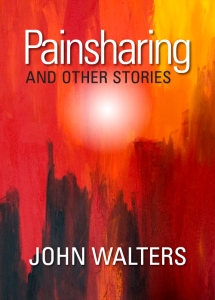
I’m a professional writer; I make my living by my words.  I’m happy to share these essays with you, but at the same time, financial support makes the words possible.  If you’d like to become a patron of the arts and support my work, buy a few of my available books or available stories.  Thanks!

Posted in Book Reviews | Tagged , , | 1 Comment

On Exercise

Since today is one of my exercise days, I thought I would say a few words on how I exercise and why.

I have to confess that until I was forty I never did any sort of sustained organized exercise.  I dabbled in it, played sports for fun (especially basketball), and walked a lot, but I have one of those metabolisms that allowed me to eat as much as I wanted of anything I wanted without it showing.  At forty, though, the spread did start to show.  I didn’t like it and decided to do something about it.

Since I worked nights, during the day I took care of whatever son was currently too young to go to school, so stroller before me I would head for a park, both for his well-being and mine.  While he was playing around on the outdoor toys, I would work out on the overhead bars – the kind that allow you to walk hand over hand from one end to the other.  I figured out all sorts of tricks to keep me going:  how many times I could go back and forth without stopping, using the outside bars instead of the inside, hopping along by moving both hands at the same time, and so on.  After a while, I noticed my shirts getting tighter as my shoulders got broader.  Alas, once I tried it without warming up at all, and tore a rotor cuff in my shoulder.  I had to go to the States to have it looked at, and that put an end to my playground exercise time.

But I didn’t give up.  After I recovered full use of my shoulder, I came across a book written by a Navy Seal outlining the Navy Seal exercise program of sit-ups, leg-lifts, pushups, pull-ups, etc., and decided to try it.  I got fanatical about it, doing it six days a week for an hour or more a day.  I was in great shape.  My older sons credit their own diligence at exercise from my example during this period.  Alas again, disaster struck.  I was so into it that I overdid, and I got a hernia.  Ouch.  I had it operated on here in Greece.  My health insurance put me low man on the totem pole at the public hospital, and instead of keyhole surgery which would have had me up and around in a day, they did the old fashioned slash-and-open style.  I was three days at the hospital (a horrific experience) and months recovering.  Sigh.  No more Navy Seal stuff for me.

After I was well enough to start getting back in shape, I asked one of my brothers who has studied sports medicine for a recommendation of what I should do.  He said I should try either Tai-Chi, or yoga.  I researched both.  Tai-Chi appealed to me, but I felt it was too complicated to do without a teacher.  So I got some yoga books from the library and worked out a routine for myself.  It evolved along the way to include some careful calisthenics like pushups, balancing practice during which I stand on one leg in various poses, an extended headstand, but most of it is what would be called power yoga.  I do it three times a week for about an hour and twenty minutes each time.  During this time, I practice power breathing as well; every breath is counted, even between poses.  I know that many enjoy music as they exercise, but as for me, I concentrate better in silence, so the only sound is the sound of my breathing.

As far as I am concerned, exercise is important for everyone, but it is essential for a writer.  It reminds me of something I read about Jack London early in his career.  He was spending so many hours in front of the typewriter that he felt himself getting flabby, and when his body got flabby, he felt his thoughts getting flabby as well.  So he bought some weights and forced himself to take time off to get himself back in shape, and his intellectual vigor returned as well.

For me, too, I write best if I am whole and healthy in body, mind, and spirit.

Posted in On Writing | Tagged , , , | Leave a comment

Book Review: The Best American Short Stories 2007, edited by Stephen King

My motivation for reading this book was the same one I had for reading the recent collection of best science fiction stories edited by Gardner Dozois:  I write and submit to the magazines, so I wanted to be familiar with what was considered the best in the field.  I have to admit that I write and publish a lot more of what is considered science fiction and fantasy (for those who must categorize such things)than what is referred to as mainstream fiction.  As yet I have sold but one story to a literary magazine.  But I submit to such mags and I was curious.  I chose the anthology edited by Stephen King because I trust the man’s judgment.  His book “On Writing” is one of the most brilliant on the craft that I have ever read.  I don’t agree with everything therein, but so what?  King is an expert and a success at what he does by anyone’s standards, and his advice is worth heeding.

In my review of the Dozois collection I said that overall I was disappointed in the quality of the stories.  I was not so disappointed in this collection, but I believe that part of the reason at least was that my expectation was not so high.  As in the other collection, there were some duds, some so-so stories, and some that shone.  But it seems to me that the three or four real duds were even worse than the mediocre science fiction stories because they had nothing to commend them, not even a sense of wonder; they were boring, flat, lifeless.  The so-so stories were okay to read but okay to not have read.  But the best stories in the collection, the ones that shone, the ones that left me with a WOW feeling – I have to say that these stories impressed me more than the best stories in the science fiction collection.  Perhaps it was because they spoke of real things happening to real people and there was more emotional resonance, but I don’t think that was it, at least not completely.  They were just brilliant stories.  In fact, there were a few fantasies in this collection, but to my mind they fell into the mediocre category.  No, the stories that touched me did so because they were great stories, and I wish that literature were not so boxed in according to genre – that literary magazines would accept more science fiction and fantasy, and that genre magazines would accept more stories that didn’t rely so much on quick-start action adventure but slow-paced character buildup.

Anyway, to give credit where it is due, these are the stories in the collection I enjoyed most:  “Toga Party” by John Barth; “Balto” by T. C. Boyle; “My Brother Eli” by Joseph Epstein; “L. DeBard and Aliette: A Love Story” by Lauren Groff; “Wake” by Beverly Jensen; “The Bris” by Eileen Pollack; and “Horseman” by Richard Russo.  That’s in alphabetical order, not order of quality.

Would I recommend this book?  Sure, why not?  Overall it was a good read, and even the so-so stories – even the duds for that matter – had their moments. 

As a bonus, at the end, there are brief paragraphs about the authors, and also author’s comments on each of the stories.  I gleaned a few gems from there too.  For example, the Groff story was pulled out of the slush pile of “The Atlantic Monthly” and it is one of her first published stories.  The Jensen story was published posthumously, the first of several sent out by friends after her death.  Little snippets of reality like these encourage struggling writers like me; they tell me that each and every published piece of work has a history and a human heart behind it, and that none are merely cogs in a great publishing machine.

Posted in Book Reviews | Tagged , , , , | Leave a comment

The Loneliness of the Long-Distance Writer

I had planned to write a completely different blog post today, but something that I read intervened.  It was a post by an editor detailing how he got started in editing and what it was like.  He described the collaborative effort by writer and editor to bring a book to publication, and said that no book, even by a master writer, remained unchanged by the process.

Though I have not yet published a novel, I have encountered this writer/editor collaboration when preparing short stories for publication in magazines and anthologies – though I have to admit that several of my stories were published as-is, and the others needed minimal correcting.  This may have something to do with the fact that I am a perfectionist, and proofread my stories quite a few times before I am willing to send them out.

I know there are many writers out there who can compose a story and get it off into the mail or publish it online in a single day, but that’s not how I work.  When I have finished a story I might read over it again, but then I always set it aside for a minimum of a week or two, and then carefully proofread it.  I realize that many writers would claim that I am sacrificing prolificacy for perfection, but I don’t see it that way.  My words will never be perfect; I realize that.  And there is a point when I just have to let them go.  But before I do, I want them the best they can be – for you, the reader.  These same writers who would deride me for my lengthy proofreading process extol the necessity of having a reader, or a number of readers, trusted advisors who can catch errors that the writer is too close to the material to see.  I do not have such readers.  I would like to have them, but there is no one in sight willing to do the job – or, let me qualify that – there is no one with the time to do the job.  So I have to perform all the various tasks myself, of writer, then editor, then copyeditor, and so on.  That’s why I distance myself from the project by time before I change hats:  I want to be sure I have the objectivity to go on to the next stage of the project.

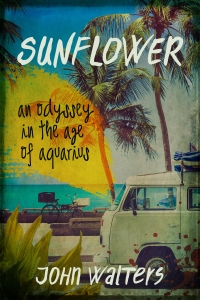
What caused me to take this so seriously was my current project:  preparing the memoir of my time on the road in the mid-seventies for publication.  I wrote the first draft about fifteen years ago, and since then I have been working on it – not constantly, of course, but in fits:  adding new material, proofreading, proofreading again, proofreading yet again, and so on.  I have finally decided to stop tinkering with it and get it into print.  When it arrives (in a month or two I hope) it will not be perfect; there will still be mistakes – but they will be my mistakes, no one else’s.  You’re going to get the raw, naked truth.  After all, what is perfect in this world anyway?  The main thing is the story.

To be honest, I catch errors in almost every book I read, even by the most well-regarded writer, even by the most esteemed publishing company.  Who cares?  To paraphrase Shakespeare (apologies in advance, Will):  “The story’s the thing, wherein we’ll catch the conscience of the king.”

Posted in On Writing | Tagged , | Leave a comment

Bullying as Alien Encounter

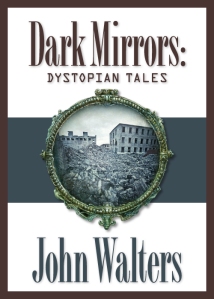
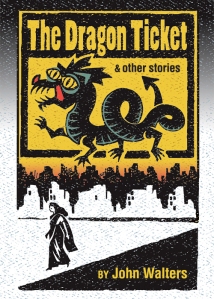
With the launch of my new book, “The Dragon Ticket and Other Stories”, I have been thinking a lot about the subject of alien contact.  And because my youngest son has been daily coming out of the school gate in tears due to incessant bullying, I have been giving that a lot of thought too.

What is the reason my son has been getting harassed?  We live in Greece, but he is half American.  It is the same old story that happens around the world all the time:  persecution of the different, the unknown, the alien, we might say.

All my sons got it, of course.  It didn’t matter how amiable they were, how good at their subjects, how hard they tried to please.  It didn’t matter whether the teachers saw it or not either, as in many cases the teachers supported the bullies.  After all, where did the bullies’ attitudes come from?  Parents and other authority figures, of course.  The teachers regarded my sons with suspicion as well, and sometimes bullied them after their own fashion, such as blaming them for fights they didn’t start.  They only managed to break out of the cycle of endless conflict as they grew older and bigger.  My oldest son studied three or four or five hours a day, won a scholarship to an elite private high school where they had a more reasonable concept of discipline, and then got accepted to Princeton University and moved to the States.  In addition, he worked out and became strong and fit so that anyone would think twice before messing with him.  My second son devoted hours and hours to physical training, weights and Ty Kwon Do, until he had the physique of a superhero; he, too, eventually moved to the States, sensing a lack of future for himself here.

But I must interject that the problem they faced, the problem of otherness, of alienness, is universal.  It happens in every country; only the victims change.

I received a lot of bullying when I was young too.  My crime?  I was smaller and younger than everyone else.  I had had a somewhat strained relationship with my teacher in third grade, and so the school authorities and my parents thought that the solution was for me to skip the fourth grade (where she would be teaching again) and move on to the fifth.  Intellectually that was no problem for me, but the social situation was another thing.  I was ripped from my peers and placed with a group of larger, stronger strangers.  How long did it take me to adjust?  To be honest I never really did.  Perhaps it had something to do with my personality; I was quiet, bookish, shy.  But entering fifth grade as an alien, as a stranger among strangers, certainly didn’t help me break out of my introversion.

I still occasionally daydream of an alternate universe in which I had been stronger and had beaten the crap out of my tormentors.

In the long run, the bullying didn’t harm my older sons; if anything, it might have taught them empathy for the underdogs of the world.  But still, it breaks my heart every day when I see my youngest son’s tears.  And his crime?  He is half American, a condition over which he has no control.  It makes me consider alienness around the world, in other societies and under other conditions, and wish that all those prejudices would go away and we could learn to get along.  It seems, however, that even as adults many of us don’t learn our lessons, and international politics is just an extension of the same principle:  just one incident of bullying after another.  You’d think we would learn.  But we don’t.

Such considerations gave rise to many of the ideas in my book on encounters between humans and aliens.

First Postscript:

The above I wrote a few weeks ago but haven’t had a chance to post yet, and circumstances necessitate adding a postscript.  I was called in to school again today to deal with an incident of anti-American behavior, this time with a twist:  my son didn’t put up with it and lashed back.  Some idiotic kid (high school level) made a ridiculous comment that the victims of the Twin Towers got what they deserved.  As I mentioned in my “Postwar” book review, such attitudes are not uncommon throughout Europe, including here in Greece.  My son smoldered until the bell rang, then sprang at the kid and began pummeling him.  It took four students and the teacher to get him off him.  Of course he was wrong to assault the kid right there in the classroom, but at the same time I can sympathize with why he did.  One can only take so much.  I might have done the same.  Of course I had to go down and work things out with the principal, and in the end there was a stern warning and nothing more.

But damn, I wish so much that there were not such attitudes in this world of ours.

Second Postscript:

A further postscript, on the brighter side.  When the principal of my youngest son’s school found out about the bullying, he called together the teachers and parents and let them know he would not put up with it at his school and there had better be a change.  Things indeed did change, and my son is back to his bright cheerful self again when he leaves the school gates.

So if we can conquer our apathy, evil can be overcome.  Sometimes, at least.

Posted in Parenting | Tagged , , | Leave a comment

Book Review: Deep River by Shusaku Endo

While searching for the novel “Silence” by Shusaku Endo at the local library I came across one of his later novels, “Deep River”.  “Silence” is better-known and considered by many to be his masterpiece; Martin Scorsese is planning to film it soon.  However, since the library didn’t have “Silence” I decided to give “Deep River” a try, and I’m glad I did.  It’s mainly set in India, after all, which is always a draw for me, as I spent so many years there, and it deals with disparate people seeking spiritual truth, which is another theme that interests me.

It’s a fairly short novel, and concerns five Japanese drawn for different personal reasons to Varanasi, the city on the river Ganges where Hindus come to die or dispose of their dead.  It begins by giving the background of each character, highlighting the key moments of their lives that lead them to the river.  Then it brings them together in a tour group as they work out their various destinies.  It’s an elegant book, and what struck me about it was the writer’s courage.  It’s obvious that in this novel Endo is struggling with his own inner battles, and his own attempts to reconcile the truths of the religions of Christianity, Buddhism, and Hinduism.  What I have read about his life suggests that it is shot through with autobiographical references.  But even more, I was struck by his intensely personal, noncommercial method of plotting.  I fear I have been too concerned with commercial fiction of late; that is, the necessity of an early hook, drawing the reader in with action, and so on.  I admire Endo’s sincerity, which shines through on every page.  It is something I have always aspired to but need much more of.

The only problem I had with the book was the translation, which was rudimentary and did not do justice to the elegance of the work.  It was obvious in places that the translator was struggling to express what Endo had written.  That aside though, I highly recommend the book.

I’m a professional writer; I make my living by my words.  I’m happy to share these essays with you, but at the same time, financial support makes the words possible.  If you’d like to become a patron of the arts and support my work, buy a few of my available books or available stories.  Thanks!

Posted in Book Reviews, On Writing | Tagged , , , , , | Leave a comment

A Slap in the Face

Something slapped me in the face a few days ago, and it took me a while to figure out what it was – no, I am still figuring it out.  Maybe writing down my thoughts will help.

Well, one obvious thing is that I have not been working on my writing enough.  I have been (contrary to copious advice) obsessing over my blog stats and the miniscule sales figures of my print and electronic short story collection and individual short stories.  I intend to rectify that situation.  I am preparing the memoir of my time on the road in the mid-70s for publication, and I hope it will be ready in a month or two.  It’s not just a travelogue; it’s a radical piece of writing documenting my thoughts as I courted danger and diversity for the sake of art.  Afterwards, there will be another short story collection, at least by summer I hope – possibly sooner.  And then, we shall see.

One problem is that I have been equating sales numbers with quality.  That doesn’t work.  There are too many stories of great writers who were unknown in their lifetimes, or only became known near the end of their lives.  I am not saying that I am great.  But I am unique.

That’s another thing.  Because I have not sold much or become well-known I have considered myself a fledgling.  But it isn’t true.  I have paid my dues.  I have traveled the world and have put myself into bizarre situations, to say the least, for the sake of my art.  I started writing back in the early seventies, and though there was a large gap in time during a very confusing period in my life, I have been back at the keyboard for fifteen years or so.  I am not a neophyte.

Of course, I am not a success either, and that’s part of what bothers me, but it shouldn’t.  Success matters little in the pursuit of truth.  I’m not after quantity but quality, but I have so much I want to say that quantity shouldn’t be a problem either.

So what slapped me in the face?  A reality check that said:  get busy.  I do have a lot to say, and less time than most.  I think about my mortality often, something I am fairly sure that younger writers do not do.  So be it.  It’s another prod to spur me onward.  I will not make any empty promises such as New Year’s resolutions, but I will get busy.  Now.  Today.  And every day possible.  Stay tuned.

Posted in On Writing, Travel | Tagged , | Leave a comment

Book Review: Dangerously Funny: The Uncensored Story of The Smothers Brothers Comedy Hour by David Bianculli

If I had to pick a decade that was germinal for me I would probably not pick the sixties but the seventies.  I was a teen in the sixties, true, but I was a late bloomer.  I didn’t really absorb the sixties counterculture until the early seventies.

But I was there, and I was awake, if naïve, and I saw what was happening around me.  And one thing that was happening in the late sixties was The Smothers Brothers Comedy Hour. 

The show was not my first exposure to this dynamic comedy team, though.  When I was a child we had a number of their records (that’s right – old vinyl LPs) and listened to them frequently.  But when their show began I was a young teen, and as their show matured and became more radical so did I along with it.

This book describes the background of the rise of the Smothers Brothers as a popular comic team, but focuses mainly on the Comedy Hour show, and the battles with the censors at CBS as the show became more and more cutting edge as far as the youth culture was concerned.  It’s fast paced and well-written and researched.  Actually, Tom and Dick Smothers asked the writer to do the book and cooperated fully with interviews and information, as did most of the writers and other personnel.

But the book is not just about an old TV show that ran three seasons and then was forced off the air.  It epitomizes an era.  It was shown Sunday nights from 9:00 to 10:00 opposite Bonanza, the old stalwart, and nobody expected it to survive in that brutal time slot.  Instead it lasted from 1967 to 1969, that is, from the Summer of Love to Woodstock – a point that the writer of the book brings out.  And as time passed the Smothers tried to get more and more new and fresh ideas past the obdurate narrow-minded network censors. 

It was a losing battle; in the end they were fired for their trouble.  But it was a temporary loss, as is related in the final chapter of the legacy of the Smothers Brothers Comedy Hour.  They have been enormously influential on entertainers that followed them.

I highly recommend this book.  For one thing, it gave me a great feeling of nostalgia.  As the important moments of the show were described I remembered every one of them.  But even if you are too young to have seen the show way back then, it’s an exciting story about entertainers who stuck to their principles in the face of great opposition by the powers that be.

The shows are now available on DVD.  At the first opportunity, I gotta have them.

Posted in Book Reviews | Tagged , , , , , , , | Leave a comment

Happy New Year

I started this post this morning, and then changed it.  And I think that exemplifies the coming year:  there will be changes.

Things are changing rapidly, not only in politics and economics and the arts but also in my own life.  My sons keep growing of course, and now most of them, I say without shame, are taller and stronger than I am.  That’s as it should be.

But it is my writing life to which I refer.  A lot has happened in the last year.  My first story collection is out both in print and electronic versions, and you can find links to it here.  All the individual stories within are available separately online too.  More books are in the works.  In addition, some of my original stories appeared in 2010 in anthologies such as “Patented DNA” (Pill Hill Press) and “Warrior Wisewoman 3” (Norilana Press) and got good reviews.  I also launched this blog/website near the end of last year.

There is a lot to look forward to.  Publishing is changing rapidly.  The percentage of e-books sold continues to rise.  More and more writers are going indie, making for a lot of mediocrity, true, but also a lot of originality and freedom.

Where will it all take us?  Who can say?  But the world of the arts is an exciting place to be in 2011.  As traditional outlets wither, creativity finds new ways to manifest itself.  If people can’t write on paper they will write on walls – digital walls, that is – or find some other way to express themselves.  Let’s hope that the world of Web publishing continues to be free and continues to grow, and that many more artists find in it a vehicle in which to pursue their talents.

As far as this blog is concerned, I will continue to post about writing, parenting, literature, my travels, Greece, and so on.  In addition, I’m sure new subjects will present themselves.  Last year, major events happened which I could in no way foresee; this year, hopefully, will surprise us all again.

As it is said:  May you live in interesting times.

Happy New Year.

Posted in Uncategorized | Leave a comment

Whatever Happened To Christmas?

For me, Christmas passed by in a haze.  There were legitimate reasons, of course.  I had many hours of teaching work right up until the 23rd, and so had little time to contemplate much else.  Two of our sons got stranded in northern Europe in the midst of ice and snow, enroute to here, and the interim, during which we sought for ways to speed them on their ways, was exceedingly stressful – but it was more than that.  What it is, I’m not sure.

I’ve always been the Christmassy sort.  Not to the extreme, as some are, and I’ve never had much money to spend on it – but I look forward to it as a time of rest and peace.  I even like all the garish lights on the houses; energy wastage notwithstanding, they brighten up the otherwise drab city.  When I was young, growing up in a Catholic household, Christmas was a big deal indeed, with LPs of carols, stockings, a huge natural tree, piles of presents, plenty of food and drink, and of course the obligatory trips to mass that I eventually rebelled against.

Then, later, when I was on my own, details changed due to circumstances but I still retained that impression that something was special about it – and I must emphasize that that feeling had nothing to do with the commercial aspects of the holiday, which I did and do despise.  I think the most important aspect of Christmas that abides for me is the feeling of family.  It’s nice to get together with family at Christmas.  And at times when I was far away from any other relative – for example, one Christmas when I cooled my heels in Malaysia waiting for a visa to enter Thailand – the feeling was strongest of all because the longing for companionship gave it increased poignancy.

I have a large family, my father, four brothers and three sisters, and I miss them at Christmas.  They all live on the west coast of the US and here I am halfway around the world in Greece.  But this year some of my sons have come from their far wanderings, and we have a tree, and a few lights outside, and a few other trimmings, and yet – Christmas passed by in a haze.

Have I outgrown it?  I speak not as a Scrooge-type here.  My sons and I have fun together now that they are here, but we would have had similar fun at any other time.  And when I am alone, the most joyous occasions are when I am working on my latest project:  that is, proofreading and formatting and preparing covers for the stories in my recent collection, to put them up online as individual e-stories.

Times change.  What gives us joy this year may not do the same next year.  No matter.  Apart from the writing and the visits from my sons, what I most appreciate about the holiday this year is the chance to rest up and recharge my batteries for the balance of the school year yet ahead.  So be it.  Times change; people change.

Merry Christmas.

Posted in Parenting | Tagged , , , | Leave a comment