Greece: A Memoir; Part 1: Introduction

(This is an excerpt of a memoir-in-progress of my life in Greece.)

For years I have had a fantasy of getting hold of a camper somehow and traveling around Greece and writing about the experience.  In my mind it was always tied to some sort of mythical affluence – you know, the kind we always have in the not-too-distant future whenever we are daydreaming.  I would do the job right, not missing any of the important locations, staying at campgrounds long enough to take in the sights and absorb the local atmosphere and write it all down.  In this fantasy sometimes I traveled alone and sometimes I had company, but that was not the important thing.  What was important that my muse directed my path, and I had enough leisure time and wealth to let it do so.

Recently I woke up.  It didn’t take a slap in the face; it just occurred to me that such a trip was unnecessary.  I have already lived in Greece for over fifteen years.  I have lived in both Athens and Thessaloniki and in a small village in Halkidiki.  I have hitchhiked over many of its roads, and I have traveled by camper over many of them too.  I have journeyed by plane, boat, car, taxi, on foot and on the backs of motorcycles.  I don’t have to do all of that again.  It would be nice to, of course, but all I really have to do is remember and write about it.  And when I get down to it, I don’t really want to write a travelogue anyway.  What Greece is to me is not what it is to you or to anyone else.  Experience is shaped and filtered through individual minds and hearts, so that by the time it comes out it is flavored with unique personality.

This is my impression of Greece.  Hope you like it.

Currently I live with my Greek wife and two of my five sons in a village in the hills east of Thessaloniki.  From the hill on which we live you can see the white arc of the city spread around the dark waters of the Thermaic Gulf.  We live in a residential area between two villages; in a sense it is a suburb of Thessaloniki.  A few years ago there was a housing boom and it looked like the city would spread right up into the hills, but then Greece’s economy crashed and the villages are riddled with fully- and half-constructed housing that nobody can afford to buy.  By car or by bus the city can be reached in about twenty minutes; nevertheless it is far enough away for us to avoid the confusion, noise, and smog.  Our village is quiet, peaceful, clean, and orderly.

But stunning though the view is of Thessaloniki and the bay, it is not the most awe-inspiring view in the area.  If you walk or drive up over the top of the hill and look down the other side, you can see across the Gulf to majestic Mount Olympus.  On a clear day when the sky is deep blue and the cobalt-blue waters of the Gulf are still, the sight of the home of the gods is stunning, breathtaking, uplifting, whether it is summer and the craggy summit is stark brown, or winter and it is covered in blinding white snow.  The green hills that drop down to the waters of the Gulf are speckled with houses, and I have often wished I could live on that side so every day I could observe the mountain and its changes; but that is beyond our means just now.  Instead I can relish the sight every time I drive by, which is often.  I just have to be careful I don’t get too enthralled and go off the road.

Just a twenty-minute drive to the east are beautiful sandy beaches; in the summer the sea water is bath-warm.  An hour or so of driving to the southwest takes you to a mountainous area where there are ski resorts and hiking trails.

Well, it all sounds idyllic but honestly I don’t intend this as some sort of travel brochure.  Living here has its ups and downs, its pros and cons, just like living anywhere else.  Greeks can be generous and magnanimous and hospitable, but they can also be narrow-minded and bull-headed and petty.  My kids have benefited greatly from being brought up in a bilingual and bicultural environment, being taught in Greek at school but having an English-speaking home life, but they have all received intense bullying at schools due to anti-American sentiments.  I mentioned the financial crash earlier; it has hit us hard, as it has most Greek families.  Nevertheless, we have managed to carve out a life here, and generally, though always hand-to-mouth in economic terms in spite of the fact that my wife and I both have full-time jobs, it is a good life.

Before I ever visited, two literary experiences colored my impression of Greece.

The first was “Zorba the Greek” by Nikos Kazantzakis.  As I recall I came across the book even before I saw the movie.  I enjoyed the film, but it was the book that was the illuminating experience for me.  I read it over and over in the days after my new birth as a writer.  I was like the narrator, of course, the timid writer who was terrified of stepping out and experiencing life.  I wanted to but I was afraid.  I had no Zorba figure to urge me on, to poke and prod in the spirit and encourage me by example, but the Zorba in the book, among other literary influences, filled that role for me.  I knew I had to bust out of my rut and dance the dance of life, and this book helped me to do that.  I don’t think I was ever naive enough to think that Zorba represented all Greeks; even in the book he is presented as an anomaly.  But he gave me an ideal picture of how I imagined Greeks should be, most of which, in retrospect, was unrealistic.

The second and even greater influence was “The Colossus of Maroussi” by Henry Miller.  Shortly before I set out on the road I discovered Henry Miller, and became enthralled with his work.  After devouring “Tropic of Cancer”, “Tropic of Capricorn”, and “Black Spring”, I came across this memoir of his time in Greece after leaving Paris just at the start of World War II.  He paints an idyllic picture of Greece; it seems to have saved and resuscitated and invigorated him.  His experiences are blown up into grand mythic proportions, and the Greeks he meets, most of whom were the literary lights of the era, are presented as far greater than mere mortals.  It’s a robust, full-throated, energetic, invigorating song of praise.  Greece isn’t like that for most people.  For one thing, we don’t hang out with people of such stature as Nobel-prize winning poets; to be honest I have no access to literary circles in Greece at all, and I am unaware of the current state of the arts.  Miller approached Greece from a privileged position; he was initially invited to Corfu by Lawrence Durell, and was wined and dined regally as he traveled from place to place.  Nevertheless, he gives that unique Milleresque twist to his impressions of Greece.  Nobody writes like Henry Miller, and there are portions of “The Colossus of Maroussi” that are unsurpassed in pure descriptive brilliance.  As a writer I learned a lot from Miller, mainly that the writing and the man are inseparable, that one’s life is a base component of one’s work.  And Greece definitely changed Miller’s life, and I think that as I approached it for the first time I had the feeling that it might change mine as well.

Posted in Greece: A Memoir | Tagged , , , , , , | Leave a comment

Adventures in Wonderland: The Inestimable Value of Libraries

This post came about after reading a comment on another blog by a well-intentioned writer, who said that libraries sap income from a writer and are therefore counterproductive.  I disagree.

What are libraries for anyway?  They serve many purposes; for example, they are a path of education for the poor.  They enable those who cannot afford to buy all the books they need to have access to them.  They allow students and other researchers to browse through a multitude of volumes for information.  Look at some of the bibliographies in university thesis papers or works of nonfiction:  can you imagine having to buy all those books, some of which may have been only necessary for a paragraph or two?

But libraries are much more than that.  Libraries are mystical portals to other worlds.

I was very young when I got my first library card, and very soon afterwards the weekly or biweekly trip to the library to browse around and then come home with a stack of books was one of the highlights of my life.  I looked forward to it much more than, for example, going to the cinema from time to time.  I was a voracious reader; my family never could have afforded to buy all those books.  So should I have been deprived?  Should only the wealthy have access to reading material?  The education I got from those trips to the library was at least as important as the education I got at school, and now that I think about it, probably much more.  At the library I could choose what I wanted; my mind could roam whithersoever it would.  I read all sorts of books that the school would never have assigned.  A very special feeling always came over me whenever I entered the library.  I never knew what I might find.

After my catastrophic first year at university, when I discovered writing and science fiction, I found that the library I frequented had copies of all the Nebula award volumes that had come out until then.  What better education could I have hoped for than to read the works of the masters?  By then I had moved out of my parents house and was on my own, and could even less afford to buy books.  But I needed those books; I needed to immerse myself in them.

What goes around comes around though, and later when I could afford to I bought books by those great writers I had read in my leaner years; in some cases I bought everything I could find of their writings.  But there was a time when I never would have read anything by them at all if I had not been introduced to their work at the local library.

I still go to the library.  I buy a lot of books, but my appetite is still voracious and my family still struggles financially and so I still supplement what I buy with trips to the library at a local Greek/American high school, one of the few English language libraries here in Thessaloniki.  I am very thankful for that library.

In conclusion, I guess the point is that it’s not all about the money.  It’s about readers.  It’s about communication.  It’s about realizing that there other others out there like I was(and am) – hungry to absorb knowledge but unable to afford to buy it.  I empathize with those readers, and I would be honored if my books someday find their way into libraries, financial remuneration or no.

Posted in On Writing | Tagged , , | Leave a comment

Book Review: Never Let Me Go by Kazuo Ishiguro

There are clues hidden in the first few paragraphs of this novel as to what will follow, but they are cryptic, understandable only in hindsight after you have made it almost to the end.  Therefore, to me at least, the beginning is so slow that I almost put it down, and I almost never put a book down once I have started it.  That said, I persevered, and I’m glad I did.  After about seventy or eighty pages it got thoroughly absorbing and hard to stop reading.

It’s a quiet little horror story, a science fiction story actually, although it is not marketed as such.  That’s the advantage of being primarily known as a literary author – and Ishiguro certainly is, having won the Booker Prize for his earlier novel, “The Remains of the Day”.  But science fiction it is.  However, it is a slow burn, and the science fictional premise of raising cloned kids to harvest their organs for transplants though, as I said, alluded to in the first few paragraphs, is introduced in depth slowly and subtly as the characters live out their short sad little lives.

I suppose I’ve committed the indiscretion of revealing too much of the plot to you, but there are two reasons for doing so.  First of all, the main point of the story is not a buildup to reveal (surprise, surprise) that the kids are clones and will be cut up for the sake of others.  It is to delve deeply into the lives of the three main characters, to show what it would be like to be human but to be put into a position like that where you are treated as less than human and disposable.  Analogies to reality and our present timeline and recent history resonate throughout, though the story is presented as a sort of alternate history in which these programs were begun shortly after the second world war.  Secondly, the book has been made into a well-received film, and many will already be familiar with the plot.  Personally, I haven’t seen the movie; to my knowledge it never made it here to Greece.  I’m waiting now for the DVD to hit the shops.  I’m glad, actually, that I read the book first, as I might have thought, if I had first seen the film, that it was not worth it to take the time to read the book as well.

I would have been wrong.  The book is excellent.  The only fault I find is the slow start, which bordered on boring but in hindsight was necessary to build up to all that follows.

I highly recommend the book.  I have been contemplating writing something on the fact that science fiction and fantasy editors, as a rule, demand that a story start and build quickly, with a bang, so as not to lose the readers interest.  Sometimes I prefer a slow start, to just saunter along with the writer and let him take me where he will.   This book put that idea to the test.  I couldn’t help thinking that superlative though this novel is, had it been written by an unpublished writer and submitted through the slush pile, that is, the unsolicited manuscripts that arrive at an editor’s office, it never would have made it into print.  But it did, and the world of literature is richer for it.

Posted in Book Reviews | Tagged , , , | 2 Comments

My Favorite Fiction Books: The Runners-Up

A few weeks ago I posted a list of my five favorite fiction books.  They are:

1.  “The Lord of the Rings” by J.R.R. Tolkien

2.  “On the Road” by Jack Kerouac

3.  “Tropic of Cancer” by Henry Miller

4.  “Stranger in a Strange Land” by Robert A. Heinlein

5.  “Her Smoke Rose Up Forever” by James Tiptree, Jr.

At that time I promised to follow up with a list of books that did not make the top five but were among my favorite fiction books of all time.  The five books above I put more or less in order, but the books below are presented alphabetically to show that I don’t necessarily prefer one above another; all are unique in their own way.  So here’s the list:

“American Pastoral” by Philip Roth.  This devastating look at the American dream gone wrong is elegantly written, and once begun is very hard to put down.  The character known as “The Swede” has a seemingly flawless middle-class lifestyle and then things begin to unravel, exposing the ugly reality underneath.  The awards and accolades this book received were well-deserved.

“Fictions” by Jorge Luis Borges.  Borges is a master of the puzzle, the maze, the conundrum, and is also a virtuoso stylist.  This book is a compilation of several of his shorter fiction books.  They are presented chronologically, and from the beginning to the end the stories are marvelous.  Many of the best are fables of the surreal that leave contemporary fantasy writers in the dust.  It’s a wonderful book.

“Interpreter of Maladies” by Jhumpa Lahiri.  I had never heard of this writer when a librarian I knew pointed the book out to me and said she thought I might be interested in it.  And indeed I was.  The stories speak of the Bengali/American experience; they juxtapose the two cultures and accentuate the alienation and culture shock of moving from one to the other, but at the same time the characters are starkly human, real and emotional and empathetic.  Having lived in West Bengal myself, I was deeply sympathetic to the plight of the immigrants to America Lahiri describes and their difficulties in adjusting to such a profoundly different culture.

“Kim” by Rudyard Kipling.  Okay, okay, I’ve heard all the arguments about Kipling being an imperialist and so on, but all that does not detract from the fact that his masterpiece, “Kim”, is a terrific book.  It plunges you into the heart of the India of the late 1800s with such exquisite detail and description that you feel you are actually there.  I have traveled extensively in India and I relished the reading experience.  It is a book written by a man who knew and deeply loved the land and its people.  Some of Kipling’s other work I find dated and trivial by today’s standards, but this book is different.  It’s a terrific read and a great adventure.

“Matterhorn” by Karl Marlantes.  This is the newest, most recently written book on this list, and in fact I have written a review of it elsewhere on this website, but I wanted to include it here as one of my favorite books of all time because I had been searching for so long for a truly great work of fiction on the Vietnam War, and in this book I found it.

“The Old Man and the Sea” by Ernest Hemingway.  I could read this book over and over.  There’s not a word out of place.  It is precise and elegant and poetic and plain all at the same time.  The relationship between the old man and the boy is beautifully rendered, and at the end when the boy finds the exhausted old man sleeping in his hut and bursts into tears, invariably so do I.  It’s one of the most perfect stories I have ever read.  Its deceptive simplicity hides great depth.

“Phases of the Moon” by Robert Silverberg.  This is a collection of some of Silverberg’s best stories.  All of my favorites are here, like “Sundance” and “Passengers” and “Good News From the Vatican”.  To top it off, each story has an accompanying essay in which Silverberg writes about how he came to write it and what was happening in his life when he did.  Silverberg is a master of the science fiction short story, and the level of ingenuity and craftsmanship these stories display has seldom been equaled since.  

“The Road” by Cormac McCarthy.  In a post-apocalyptic landscape beset with cannibals a father and his son struggle to survive.  This short book, once begun, is very difficult to put down.  The language is both spare and poetic.  The relationship between the father and son is deeply touching.  McCarthy manages, in his prose, to create great beauty out of a situation beset with despair.  There is a movie based on the book which follows the basic plot quite closely, but though it is touching in parts it is a pale imitation.  Read the book.

“Zen and the Art of Motorcycle Maintenance” by Robert Pirsig.  This is another father and son story, this time of a motorcycle journey across the States.  On the way the father explores his personal study of philosophy and the thoughts that led to his nervous breakdown and recovery.  It alternates between the father/son story and a detailed description of various philosophical theories, but it manages somehow to make it all seem like a great intellectual adventure.

Posted in Book Reviews, Reading | Tagged , , , , , , , , , , , , , , , , , , | Leave a comment

Book Review: The Freelancer’s Survival Guide by Kristine Kathryn Rusch

I can’t remember how it happened or what led me to it, but by fortuitous chance I came across a blog called “Killing the Sacred Cows of Publishing” by Dean Wesley Smith.  Every few days a new post would appear, and it was fascinating reading.  It addressed a lot of what I had been wondering about concerning the state of modern publishing, and went beyond to things it had never occurred to me to wonder about.  Then from Smith’s blog I went to Rusch’s blog.  At the time “The Freelancer’s Survival Guide” (hereafter TFSG) was being offered for free on her website as soon as it was being completed.  Apart from whatever paper books I was reading these became my daily fare in the summer of 2010.  Almost every other day there was a new entry in one or the other, and along with the multitudes of comments they generated it turned into a detailed lesson on writing as a business.

However, I am primarily a reader of books I can hold in my hands.  I haven’t yet acquired an electronic reader.  Not that I am averse to it, but here in Greece the taxes on electronic downloads, as well as the fact that available content is only a fraction of what is available elsewhere makes it impractical.  Apart from that though, I like the feel of the book in my hands.  So as soon as TFSG became available in print I ordered a copy, and recently I re-read it and studied it at my leisure.

Rusch takes pains to explain in the Guide that it is intended not only for freelance writers and artists but for any small business owners, and that is certainly true.  There is a wealth of information available to anyone who wants to strike out on their own in business.  But it is as a writer I must address this advice.  After all, it is the only business I have ever wanted to become involved in.  And Rusch herself is also a writer, primarily of fiction, and though she gives examples of many different small business models it is inevitably to writing and publishing that she returns.  That is where her primary experience is, though it must be said that she has been involved in many small business undertakings, and has gotten a lot of advice from other freelancers in the writing of the guide.

Rusch presents the advice in TFSG in a casual, conversational style that I find very appealing.  It is almost as if you sat in her kitchen with a cup of coffee having a friendly chat.  Indeed, when the initial version of the Guide came out online Rusch welcomed comments, responded to them, and allowed the comments to shape the final version of the printed guide.

The Guide touches on many aspects of a freelancer’s life, such as when you know you’re ready to quit your day job, time and money management, negotiating, networking, risks and setbacks, how to deal with failure and success, and goals and dreams and staying positive through it all.  Every chapter is inspiring and illuminating and informative.  I don’t agree with all of her advice, but so what?  I certainly agree with most of it, and even that with which I disagree causes me to ponder whatever point she is making.

Overall I highly recommend this book.  It’s still available for free in chapters on her website, www.kriswrites.com (there is a donation button), but if like me you relish holding the physical book in your hands, or if you want to download it for your electronic reading device, it is available at Amazon as well as other online outlets.

To all you writers out there, aspiring or beginners or veterans, I can’t recommend this book enough.  It’s well worth the price of the purchase.  And be sure to check out Kris and Dean’s websites; every week they still publish cutting-edge essays on the current state of publishing and advice to writers.

One more thing:  for a long time I was a lurker; that is, I went to the sites to read but was too shy to say anything myself.  Then I began posting questions and comments and the response was always inviting, friendly, and helpful.  After each essay there is a lively discussion with well-informed people, many of whom are also professional writers.  So don’t miss the comments either; they are well worth the read.

Posted in Book Reviews, On Writing | Tagged , , , , , | Leave a comment

Reality Check

I set goals.

Maybe you do too; I don’t know.  A lot of people do and a lot of people don’t.  Most of the goals that I set for myself have to do with writing.

I have a full-time job here in Greece of teaching English as a second language.  I also treat my writing as a second full-time job.  Due to circumstances I have to give priority to the job that makes more money, which at the moment is the teaching.  I hope that situation will change in the future, but in the meantime I set goals that will help me realize the vision I have for my writing.

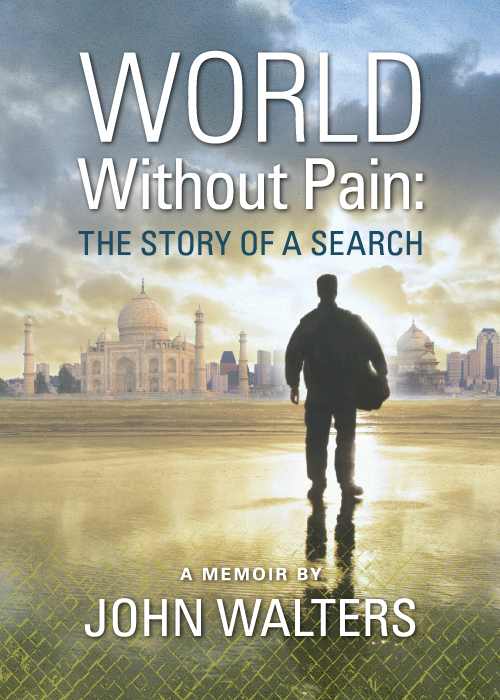
Some goals work, and some don’t.  A case in point:  I set a goal around the middle of January concerning how many stories I would like to write, as a minimum, during 2011.  The first story I finished, no problem, but the second has been a problem.  It’s not that the premise isn’t sound; the idea is dynamite.  The problem is that the story turned out to be much more complicated, and therefore longer, than I had thought it would be, and I don’t really have the time now to work on something long.  During the summer, maybe, but not now.  Too many things interrupt.  For example, I just got a note from an editor who is interested in one of my stories for an anthology; he requested a rewrite, and so I had to drop what I was doing and take care of that.  In addition, I am in the final stages of preparing the memoir of my time on the road for publication, and I have to work on that.  Then there are stories that have to be sent out due to deadlines in various markets.

It’s not that I don’t want to write; it’s just that I can’t get my mind on a long project right now.  So I am putting it aside.  I am not abandoning it.  I have often stopped stories half-finished and come back to them when the time is right, and they have turned out to be some of my best stories.  But if I continue to slog away half-heartedly at a story just to get the work count in, that story will be crap, and I don’t want to waste my time writing crap.  I want to write good stuff, spot-on stuff.

Sometimes, I have to admit, it’s hard to know the difference when you are in the midst of the fray.  I have persevered through some stories when I felt it wasn’t going well and when I came to the end I found out that they were just fine.

But other times, you have to pause, analyze the situation, and see if you are really following the right course of action, or if you should re-set goals and follow an even better path.  This is true not just in writing but in any worthwhile endeavor. 

That’s what I had to do recently:  reassess.

Postscript:

After writing the above, I did some of the business that had been pending:  I did the rewrite the editor had requested and sent it off, I wrote a blog post, I took care of some other things – and you know what?  I went back to that story I thought I would have to set aside renewed, and I was able to continue with it in joy and not with a sense of oppression.  The difference was attitude.  Before, I felt the burden of my self-imposed word count and the fact that I had so many other things to do and could not enjoy the task of the writing.  Afterwards, the burden was lifted and I realized that circumstances were not to blame – I was.  That story might get finished this month after all.

Posted in On Writing | Tagged | Leave a comment

My Five Favorite Fiction Books

Lists of favorite books are fun, aren’t they?  Sometimes they give me ideas on what to read next, and I am always on the lookout for good books, as I am always reading something.  Usually I alternate between fiction and nonfiction, because there is so much I want to read in each category.

At first I was going to list my ten favorite fiction books, but then I realized that there were a few that were more important than the others.  So I will list the top five here, and list five or six or seven runners-up in another post.

These books that I have chosen as my favorites are not necessarily what I would choose to read now, but at the time I read (and re-read) them they were tremendously influential for me personally in some way.  So here they are:

1.  “The Lord of the Rings” by J.R.R. Tolkien.  No contest.  The boxed trilogy was given to me by one of my grandmothers, my mother’s mother, when I was in my early or mid- teens.  At the time I had never heard of the book or the author.  But before the end of the first chapter I was deeply hooked, and by the time the dark riders were stalking the hobbits through the Shire I knew that I had stumbled upon a unique literary experience.  In the next few years after I read this for the first time I read it at least a dozen times more.  I remember once I read the whole trilogy, appendixes and all, three times in a row, nonstop, starting again as soon as I had finished.  In recent years I have read the trilogy a few times more, and each time it has been a wonderful experience.  No other work of fiction has influenced me so profoundly.

2.  “On the Road” by Jack Kerouac.  This is the only book on the list that I think is dated and I have little interest in reading now, though at the time I read and re-read and re-re-read it I was profoundly changed by the experience.  I discovered it in a book of descriptions of famous American novels and read it because it seemed an interesting story.  It was far more than that.  It made me long to be out on the road myself, and eventually I did hit the road.

3.  “Tropic of Cancer” by Henry Miller.  I can’t remember how I found out about Henry Miller, but I know that “Tropic of Cancer” was the first book of his I read.  Passionate, poetic, brazen, ribald, blatantly honest Henry Miller came along just at the right time.  He made writing seem a wondrous glory of an experience, and life itself a celebration that was richer when the art of prose was added to the mix.  After I read “Tropic of Cancer” I read as many of Miller’s other books I could get my hands on, but I came back to “Tropic of Cancer” again and again, and I think it’s his masterpiece, his breathtaking shattering of convention, a wonderful piece of wild exuberant prose, entertaining and moving and wacky and intense and precise all at the same time.

4.  “Stranger in a Strange Land” by Robert Heinlein.  That same grandmother who gave me “The Lord of the Rings” also gave me a boxed set of Heinlein novels one Christmas.  I don’t think this one was included, but because I enjoyed the others I found and read this, and it was far above and beyond anything else I had read by Heinlein, and most other writers as well.  It starts deceptively simply as a science fiction adventure but quickly becomes much more – a counter-cultural event that satirizes everything conventional in established social systems.  Coming as it did when the youth revolution hit its stride in the late sixties, it was quickly adopted as a sort of irreverent banner around which to rally, but for me it was a wonderful thoughtful piece of prose that caused me to question everything I had been taught of the right way to think and perform.

5.  “Her Smoke Rose Up Forever” by James Tiptree, Jr.  When you see the list of runners-up you will see that several short story collections are included.  I’m a great fan of short stories; I love to read them as well as write them, and James Tiptree, Jr., alias Alice Shelton, was one of the greatest short story writers of all.  It’s hard to pick out any favorites because so many of her stories are so brilliant, but some of my favorites are “The Girl Who Was Plugged In”, “The Women Men Don’t See”, “Houston, Houston, Do You Read?”, and “The Screwfly Solution”.

Stay tuned for the fiction book runners-up.  And if you have your own list I’d love to hear it; as I said, I’m always looking for a good read.

Posted in Book Reviews, Reading | Tagged , , , , , , , , , , , | Leave a comment

Savoring the Unsavory, or, the Metaphysics of the Mundane

I spent years on the road not worrying about anyone else’s schedule at all:  I slept when I wanted, woke up when I wanted, stayed in one place or moved on, and so on.  There were hardships, sure; you can never predict what will happen on the road.  I’d spend hours trying to hitch a ride in bad weather, or waiting at border crossings, or searching for a suitable little space whereon to spread out my sleeping bag.  But generally what I did and where I did it was my decision and mine alone.

There was a time for that.  However, since then I have made major life-changing decisions and no longer can afford to live in such a selfish, hedonistic manner.  For one thing, I got married.  As soon as you commit yourself to another person the whole equation changes.  And then, we started having kids.  It’s not possible to understand the total responsibility of children unless you are in the position yourself.  Your life is not your own, in a sense – though in another sense it still is, as you made the major decisions and commitments necessary to put yourself into that situation.

But what I wanted to bring out is that because of those commitments I can’t do whatever I want anymore.  Actually, in a strict sense, I can do very little of what I want, or what I would choose to do were I on my own.

For one thing, I would spend a lot more time writing, and studying about writing, and marketing my stories, and so on.  I would read more and watch more films.  I would definitely travel much more than I am able to do now.

However, I can’t.  So what do I do?  I used to live for the times when I could do the activities I enjoyed, and wished that the things I did as a matter of obligation would be over as soon as possible.

But…  I’m not getting any younger, and I have begun to realize that the times I spend doing things I would not choose to do, such as my teaching job, household chores, exercise, business obligations, and so on, is time that I can never get back.  And if my only attitude while doing these things is to get them over with as quickly as I can, then I get no benefit from the experience.

So I have begun to try to enjoy those things I previously derived no enjoyment from.  It reminds me of the old Stephen Stills song, “If You Can’t Be with the One You Love, Love the One You’re With”.  I’ve tried to do that with these sometimes unsavory tasks, and…  You know what?  It works.

It takes time, though.  You don’t make the decision and then instantly enjoy washing the dishes or taking out the trash or going to your job.  But once the attitude shift has been initiated, if you are faithful to keep reminding yourself, the change will come.

It’s so much more fun to enjoy everything you do instead of only your primary activity.

Don’t get me wrong.  I still love the writing first and I don’t think that will ever change.  But life is short, and I’m going to savor as much of it as I can while I have it.  Even the unsavory parts.

Posted in On Writing, Parenting | Tagged , , | Leave a comment

Staying Put

Since I just wrote a post about the importance of a writer getting out and seeing and experiencing life, I figured I had better balance it out with the imperative of a writer returning to the desk, planting butt in chair, and actually writing.  After a point has been reached experience is redundant if it does not get converted into prose. 

That’s one thing I didn’t grasp during my first forays out onto the road.  I carried notebooks with me but seldom used them.  What I should have done is use them every day.  I should have written down my impressions and observations and I would have had a gold mine to draw from.  As it is, when I finally opened those notebooks and read the few entries I had composed I was astonished.  When I had written the material I had thought I was just scribbling; but I had been doing it in exotic places such as a hillside in Katmandu Valley, a beach in Goa, and at the edge of the West overlooking the Pacific Ocean at Cape Mendocino.  I had not only written down what I saw, but also my dreams and ambitions and frustrations and references to literature that occurred to me and so on.  It was powerful stuff, stuff that no one else could have written:  mine, uniquely mine.

And this is the point:  if I had not sat down and written it, it would never have existed.

Later, much later, I found out that this theory translated well into fiction too.  I have a well of experience and emotion from which I can draw, and when I write a story it all comes out in some form or another.  But I have to sit my ass down and do it.

On the road, once I caught the value of taking the time to compose I did it at any chance I had.  I bought larger notebooks and filled one after the other.  Those notebooks are lost, but they served their purpose:  they got that fountain flowing.

For me it has always been harder to sit down and do the writing than gather material.  At first, my problem was that I felt I had nothing worth saying.  It was the dilemma of the shy inhibited loner not having the guts to speak up to a group.  Then, when I found my voice and had no problem expressing it, I was often too busy surviving to write it down.  Then, a lot of things happened and I stopped completely for a time.  And now, with a wife and five sons and a six-day-a-week fulltime job, I have no doubt about my calling or the need to get the work done but very little time in which to do it.

Sometimes I long for the freedom of those days when I had all the time I needed but didn’t use it wisely.  I don’t long for the days themselves or the experiences to repeat themselves – there is a time for everything, as Ecclesiastes tells us and the Byrds remind us – but just for the time in which to do what needs to be done.

So whatever ambition you pursue, whether it is writing or some other endeavor, use your time wisely.  You’ll be glad you did.

Posted in On Writing, Travel | Tagged , , | Leave a comment

Getting Out There

Writing about the brilliant novel “Matterhorn” a few days ago put me in mind of another book on war, this one nonfiction, “The Forever War” by Dexter Filkins.  I read it last year, I think in spring, but some of the visions he evoked stay with me still.  He presents scenes from the wars in Afghanistan and Iraq as a series of images, almost like photographs in words.  I remember vignettes of him accompanying a night patrol through a pitch-black city full of snipers, and meeting Iraqi soldiers while jogging in war-ravaged Baghdad, and witnessing an execution in Afghanistan – and being impressed with the courage of the man.  Nobody works that kind of a job for money.  He is on a mission; I say “is” because evidently he’s still out there in harm’s way.  His book is a life-changer, and I highly recommend it to anyone who is interested in what war is really like.

But I didn’t sit down to write a book review.  Another piece of writing that prompted this post was a recent guest blog by Elizabeth Bear on the Clarion website.  She wrote about the necessity of a writer getting up off the chair and going outside once in a while, to get some fresh air and exercise and observe people, that is, see what life is all about.  She pointed out that writers cannot always live only in their heads.

I went through this dilemma when I was a young writer just starting out.  I wanted to sit down and compose masterpieces out of the random stuff that had accumulated in my brain.  But it doesn’t work like that, at least for me.  Maybe others can do that, but I couldn’t – and can’t.  I had to take off and get out there on the road among people to figure out that I had something worth sharing.  There’s enough bullshit in the world, and I couldn’t see myself adding to the supply.  Sure, as fiction writers we “make stuff up” – but where does that store of made-up stuff come from?  If it doesn’t come from personal experience – and by this I don’t mean if you write about alien worlds you have to have visited them – I mean to say, if it doesn’t come from the gut and the heart every time, then it isn’t worth telling.  And to have that heart you have to spend some time out there in the real world.  Yeah, I know, the thought of it terrified me too when I first contemplated it.

But concerning the memoir of my journeys in the mid-70s I am currently finishing up for publication, there’s not an ice cube’s chance in hell I could have written about hitchhiking broke across Europe, the Mid-East, and India without having done it myself.  Getting out on the road and exposing myself to an infinitude of possibilities, and yes, even dangers, was necessary in my case to find my voice as a writer, to break open that fountain within.  Otherwise I would have stagnated, decayed, and died – at least as an artist.

Some things, of course, we cannot do in person; we have to make them up as we go.  We cannot enter a dragon’s keep, or travel to far Centauri, or enter past historical eras to do authentic research.  But we can get out and live and discover what it is to be human, to laugh and cry and play and love and all the things that people do, and then we can put that in any milieu in which we choose to write.  We should never hide ourselves away in closed rooms, except temporarily, to write it all down.

Now I know what some of you writers might say:  it is a writer’s job to hide away and write.  Yes, of course.  But it is also the job of a writer of integrity, even if he or she makes things up, to write the truth.  It’s a calling and a mission, not just an occupation.

And sometimes to get it right you just have to get out there.

Posted in On Writing, Travel | Tagged , , , , | Leave a comment