Reality Check

I set goals.

Maybe you do too; I don’t know.  A lot of people do and a lot of people don’t.  Most of the goals that I set for myself have to do with writing.

I have a full-time job here in Greece of teaching English as a second language.  I also treat my writing as a second full-time job.  Due to circumstances I have to give priority to the job that makes more money, which at the moment is the teaching.  I hope that situation will change in the future, but in the meantime I set goals that will help me realize the vision I have for my writing.

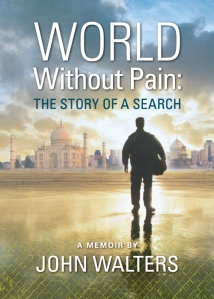
Some goals work, and some don’t.  A case in point:  I set a goal around the middle of January concerning how many stories I would like to write, as a minimum, during 2011.  The first story I finished, no problem, but the second has been a problem.  It’s not that the premise isn’t sound; the idea is dynamite.  The problem is that the story turned out to be much more complicated, and therefore longer, than I had thought it would be, and I don’t really have the time now to work on something long.  During the summer, maybe, but not now.  Too many things interrupt.  For example, I just got a note from an editor who is interested in one of my stories for an anthology; he requested a rewrite, and so I had to drop what I was doing and take care of that.  In addition, I am in the final stages of preparing the memoir of my time on the road for publication, and I have to work on that.  Then there are stories that have to be sent out due to deadlines in various markets.

It’s not that I don’t want to write; it’s just that I can’t get my mind on a long project right now.  So I am putting it aside.  I am not abandoning it.  I have often stopped stories half-finished and come back to them when the time is right, and they have turned out to be some of my best stories.  But if I continue to slog away half-heartedly at a story just to get the work count in, that story will be crap, and I don’t want to waste my time writing crap.  I want to write good stuff, spot-on stuff.

Sometimes, I have to admit, it’s hard to know the difference when you are in the midst of the fray.  I have persevered through some stories when I felt it wasn’t going well and when I came to the end I found out that they were just fine.

But other times, you have to pause, analyze the situation, and see if you are really following the right course of action, or if you should re-set goals and follow an even better path.  This is true not just in writing but in any worthwhile endeavor. 

That’s what I had to do recently:  reassess.

Postscript:

After writing the above, I did some of the business that had been pending:  I did the rewrite the editor had requested and sent it off, I wrote a blog post, I took care of some other things – and you know what?  I went back to that story I thought I would have to set aside renewed, and I was able to continue with it in joy and not with a sense of oppression.  The difference was attitude.  Before, I felt the burden of my self-imposed word count and the fact that I had so many other things to do and could not enjoy the task of the writing.  Afterwards, the burden was lifted and I realized that circumstances were not to blame – I was.  That story might get finished this month after all.

Posted in On Writing | Tagged | Leave a comment

My Five Favorite Fiction Books

Lists of favorite books are fun, aren’t they?  Sometimes they give me ideas on what to read next, and I am always on the lookout for good books, as I am always reading something.  Usually I alternate between fiction and nonfiction, because there is so much I want to read in each category.

At first I was going to list my ten favorite fiction books, but then I realized that there were a few that were more important than the others.  So I will list the top five here, and list five or six or seven runners-up in another post.

These books that I have chosen as my favorites are not necessarily what I would choose to read now, but at the time I read (and re-read) them they were tremendously influential for me personally in some way.  So here they are:

1.  “The Lord of the Rings” by J.R.R. Tolkien.  No contest.  The boxed trilogy was given to me by one of my grandmothers, my mother’s mother, when I was in my early or mid- teens.  At the time I had never heard of the book or the author.  But before the end of the first chapter I was deeply hooked, and by the time the dark riders were stalking the hobbits through the Shire I knew that I had stumbled upon a unique literary experience.  In the next few years after I read this for the first time I read it at least a dozen times more.  I remember once I read the whole trilogy, appendixes and all, three times in a row, nonstop, starting again as soon as I had finished.  In recent years I have read the trilogy a few times more, and each time it has been a wonderful experience.  No other work of fiction has influenced me so profoundly.

2.  “On the Road” by Jack Kerouac.  This is the only book on the list that I think is dated and I have little interest in reading now, though at the time I read and re-read and re-re-read it I was profoundly changed by the experience.  I discovered it in a book of descriptions of famous American novels and read it because it seemed an interesting story.  It was far more than that.  It made me long to be out on the road myself, and eventually I did hit the road.

3.  “Tropic of Cancer” by Henry Miller.  I can’t remember how I found out about Henry Miller, but I know that “Tropic of Cancer” was the first book of his I read.  Passionate, poetic, brazen, ribald, blatantly honest Henry Miller came along just at the right time.  He made writing seem a wondrous glory of an experience, and life itself a celebration that was richer when the art of prose was added to the mix.  After I read “Tropic of Cancer” I read as many of Miller’s other books I could get my hands on, but I came back to “Tropic of Cancer” again and again, and I think it’s his masterpiece, his breathtaking shattering of convention, a wonderful piece of wild exuberant prose, entertaining and moving and wacky and intense and precise all at the same time.

4.  “Stranger in a Strange Land” by Robert Heinlein.  That same grandmother who gave me “The Lord of the Rings” also gave me a boxed set of Heinlein novels one Christmas.  I don’t think this one was included, but because I enjoyed the others I found and read this, and it was far above and beyond anything else I had read by Heinlein, and most other writers as well.  It starts deceptively simply as a science fiction adventure but quickly becomes much more – a counter-cultural event that satirizes everything conventional in established social systems.  Coming as it did when the youth revolution hit its stride in the late sixties, it was quickly adopted as a sort of irreverent banner around which to rally, but for me it was a wonderful thoughtful piece of prose that caused me to question everything I had been taught of the right way to think and perform.

5.  “Her Smoke Rose Up Forever” by James Tiptree, Jr.  When you see the list of runners-up you will see that several short story collections are included.  I’m a great fan of short stories; I love to read them as well as write them, and James Tiptree, Jr., alias Alice Shelton, was one of the greatest short story writers of all.  It’s hard to pick out any favorites because so many of her stories are so brilliant, but some of my favorites are “The Girl Who Was Plugged In”, “The Women Men Don’t See”, “Houston, Houston, Do You Read?”, and “The Screwfly Solution”.
Stay tuned for the fiction book runners-up.  And if you have your own list I’d love to hear it; as I said, I’m always looking for a good read.

Posted in Book Reviews, Reading | Tagged , , , , , , , , , , , | Leave a comment

Savoring the Unsavory, or, the Metaphysics of the Mundane

I spent years on the road not worrying about anyone else’s schedule at all:  I slept when I wanted, woke up when I wanted, stayed in one place or moved on, and so on.  There were hardships, sure; you can never predict what will happen on the road.  I’d spend hours trying to hitch a ride in bad weather, or waiting at border crossings, or searching for a suitable little space whereon to spread out my sleeping bag.  But generally what I did and where I did it was my decision and mine alone.

There was a time for that.  However, since then I have made major life-changing decisions and no longer can afford to live in such a selfish, hedonistic manner.  For one thing, I got married.  As soon as you commit yourself to another person the whole equation changes.  And then, we started having kids.  It’s not possible to understand the total responsibility of children unless you are in the position yourself.  Your life is not your own, in a sense – though in another sense it still is, as you made the major decisions and commitments necessary to put yourself into that situation.

But what I wanted to bring out is that because of those commitments I can’t do whatever I want anymore.  Actually, in a strict sense, I can do very little of what I want, or what I would choose to do were I on my own.

For one thing, I would spend a lot more time writing, and studying about writing, and marketing my stories, and so on.  I would read more and watch more films.  I would definitely travel much more than I am able to do now.

However, I can’t.  So what do I do?  I used to live for the times when I could do the activities I enjoyed, and wished that the things I did as a matter of obligation would be over as soon as possible.

But…  I’m not getting any younger, and I have begun to realize that the times I spend doing things I would not choose to do, such as my teaching job, household chores, exercise, business obligations, and so on, is time that I can never get back.  And if my only attitude while doing these things is to get them over with as quickly as I can, then I get no benefit from the experience.

So I have begun to try to enjoy those things I previously derived no enjoyment from.  It reminds me of the old Stephen Stills song, “If You Can’t Be with the One You Love, Love the One You’re With”.  I’ve tried to do that with these sometimes unsavory tasks, and…  You know what?  It works.

It takes time, though.  You don’t make the decision and then instantly enjoy washing the dishes or taking out the trash or going to your job.  But once the attitude shift has been initiated, if you are faithful to keep reminding yourself, the change will come.

It’s so much more fun to enjoy everything you do instead of only your primary activity.

Don’t get me wrong.  I still love the writing first and I don’t think that will ever change.  But life is short, and I’m going to savor as much of it as I can while I have it.  Even the unsavory parts.

Posted in On Writing, Parenting | Tagged , , | Leave a comment

Staying Put

Since I just wrote a post about the importance of a writer getting out and seeing and experiencing life, I figured I had better balance it out with the imperative of a writer returning to the desk, planting butt in chair, and actually writing.  After a point has been reached experience is redundant if it does not get converted into prose. 

That’s one thing I didn’t grasp during my first forays out onto the road.  I carried notebooks with me but seldom used them.  What I should have done is use them every day.  I should have written down my impressions and observations and I would have had a gold mine to draw from.  As it is, when I finally opened those notebooks and read the few entries I had composed I was astonished.  When I had written the material I had thought I was just scribbling; but I had been doing it in exotic places such as a hillside in Katmandu Valley, a beach in Goa, and at the edge of the West overlooking the Pacific Ocean at Cape Mendocino.  I had not only written down what I saw, but also my dreams and ambitions and frustrations and references to literature that occurred to me and so on.  It was powerful stuff, stuff that no one else could have written:  mine, uniquely mine.

And this is the point:  if I had not sat down and written it, it would never have existed.

Later, much later, I found out that this theory translated well into fiction too.  I have a well of experience and emotion from which I can draw, and when I write a story it all comes out in some form or another.  But I have to sit my ass down and do it.

On the road, once I caught the value of taking the time to compose I did it at any chance I had.  I bought larger notebooks and filled one after the other.  Those notebooks are lost, but they served their purpose:  they got that fountain flowing.

For me it has always been harder to sit down and do the writing than gather material.  At first, my problem was that I felt I had nothing worth saying.  It was the dilemma of the shy inhibited loner not having the guts to speak up to a group.  Then, when I found my voice and had no problem expressing it, I was often too busy surviving to write it down.  Then, a lot of things happened and I stopped completely for a time.  And now, with a wife and five sons and a six-day-a-week fulltime job, I have no doubt about my calling or the need to get the work done but very little time in which to do it.

Sometimes I long for the freedom of those days when I had all the time I needed but didn’t use it wisely.  I don’t long for the days themselves or the experiences to repeat themselves – there is a time for everything, as Ecclesiastes tells us and the Byrds remind us – but just for the time in which to do what needs to be done.

So whatever ambition you pursue, whether it is writing or some other endeavor, use your time wisely.  You’ll be glad you did.

Posted in On Writing, Travel | Tagged , , | Leave a comment

Getting Out There

Writing about the brilliant novel “Matterhorn” a few days ago put me in mind of another book on war, this one nonfiction, “The Forever War” by Dexter Filkins.  I read it last year, I think in spring, but some of the visions he evoked stay with me still.  He presents scenes from the wars in Afghanistan and Iraq as a series of images, almost like photographs in words.  I remember vignettes of him accompanying a night patrol through a pitch-black city full of snipers, and meeting Iraqi soldiers while jogging in war-ravaged Baghdad, and witnessing an execution in Afghanistan – and being impressed with the courage of the man.  Nobody works that kind of a job for money.  He is on a mission; I say “is” because evidently he’s still out there in harm’s way.  His book is a life-changer, and I highly recommend it to anyone who is interested in what war is really like.

But I didn’t sit down to write a book review.  Another piece of writing that prompted this post was a recent guest blog by Elizabeth Bear on the Clarion website.  She wrote about the necessity of a writer getting up off the chair and going outside once in a while, to get some fresh air and exercise and observe people, that is, see what life is all about.  She pointed out that writers cannot always live only in their heads.

I went through this dilemma when I was a young writer just starting out.  I wanted to sit down and compose masterpieces out of the random stuff that had accumulated in my brain.  But it doesn’t work like that, at least for me.  Maybe others can do that, but I couldn’t – and can’t.  I had to take off and get out there on the road among people to figure out that I had something worth sharing.  There’s enough bullshit in the world, and I couldn’t see myself adding to the supply.  Sure, as fiction writers we “make stuff up” – but where does that store of made-up stuff come from?  If it doesn’t come from personal experience – and by this I don’t mean if you write about alien worlds you have to have visited them – I mean to say, if it doesn’t come from the gut and the heart every time, then it isn’t worth telling.  And to have that heart you have to spend some time out there in the real world.  Yeah, I know, the thought of it terrified me too when I first contemplated it.

But concerning the memoir of my journeys in the mid-70s I am currently finishing up for publication, there’s not an ice cube’s chance in hell I could have written about hitchhiking broke across Europe, the Mid-East, and India without having done it myself.  Getting out on the road and exposing myself to an infinitude of possibilities, and yes, even dangers, was necessary in my case to find my voice as a writer, to break open that fountain within.  Otherwise I would have stagnated, decayed, and died – at least as an artist.

Some things, of course, we cannot do in person; we have to make them up as we go.  We cannot enter a dragon’s keep, or travel to far Centauri, or enter past historical eras to do authentic research.  But we can get out and live and discover what it is to be human, to laugh and cry and play and love and all the things that people do, and then we can put that in any milieu in which we choose to write.  We should never hide ourselves away in closed rooms, except temporarily, to write it all down.

Now I know what some of you writers might say:  it is a writer’s job to hide away and write.  Yes, of course.  But it is also the job of a writer of integrity, even if he or she makes things up, to write the truth.  It’s a calling and a mission, not just an occupation.

And sometimes to get it right you just have to get out there.

Posted in On Writing, Travel | Tagged , , , , | Leave a comment

Book Review: Matterhorn: A Novel of the Vietnam War by Karl Marlantes

The Vietnam War was the defining war for my generation, just as the Mideast wars in Iraq and Afghanistan are for the present generation.  There are differences, of course.  Young people today do not feel as threatened by the current war, as it is fought by professional soldiers, and though the situation could change, at least right now there is no risk that they could be arbitrarily called up to serve.  In my time, though, the early 70s, the draft was in effect, and young men were wrenched out of whatever they were doing in the homeland, under threat of imprisonment, and sent off to fight and die in a war that they often either did not believe in or had no idea what it was about.

Personally, my initial, “W”, came up number 13 in the draft lottery and it looked like I’d be grabbed, but just a few weeks before I would have been called for enlistment the draft was abolished and the military became voluntary again.  I don’t know what would have happened if I’d gone, or if I would have survived, but I was glad I didn’t have to find out.

Because Vietnam was so important to me, and such a significant part of the era in which I lived, I have always sought out books, both fiction and nonfiction, that would help me understand it better.  Two of the best nonfiction books I have ever read on the Vietnam War are “The Best and the Brightest” by David Halberstam, and “A Bright Shining Lie: John Paul Vann and America in Vietnam” by Neil Sheehan.  It has been harder to find spot-on fiction.  I eagerly read “Tree of Smoke” by Denis Johnson a few years ago; it’s a great book, very well-written, but it deals mainly with intelligence agency subterfuge and not so much with the situation for the grunts on the ground.

Then along came “Matterhorn”.  I first heard of it through a major review in Time Magazine.  I did some further research online, read some more reviews, and then decided I had to read it and ordered it as soon as I could.  Does it live up to all the hype it has received?  Yes, and then some.  It is one of the best novels I have read in years.  It is the Vietnam novel I always looked for but never found.

It gets right down into the nitty-gritty of a Marine Corps company in the north near the borders of Laos and North Vietnam.  They are ordered to vacate a hill called Matterhorn, and then after a long march through the jungle to headquarters are ordered to re-take it.  The novel details not only the dirt and blood and horror the men on the ground experience, but also the insanity of the decision-making process on up the chain of command.  Oh, it’s a hell of a book all right, and it takes you, the reader, on a journey through hell.

The author served as a Marine in Vietnam.  It is said that it took him thirty years to write the book, but at no time was he a full-time writer; he had a family and a career and one can imagine the novel slowly taking shape in whatever time was available to him.  But what is obvious is that it is a labor of love, and an effort to tell what must be told, that is, what would eat up the guts if it were not told; equally obvious is the fact that Marlantes is a very talented novelist.

Dark though the subject matter is, while reading “Matterhorn” I didn’t want the experience to end; so it is with great art.  I highly recommend this book.

I’m a professional writer; I make my living by my words.  I’m happy to share these essays with you, but at the same time, financial support makes the words possible.  If you’d like to become a patron of the arts and support my work, buy a few of my available books or available stories.  Thanks!

Posted in Book Reviews | Tagged , , | 1 Comment

On Exercise

Since today is one of my exercise days, I thought I would say a few words on how I exercise and why.

I have to confess that until I was forty I never did any sort of sustained organized exercise.  I dabbled in it, played sports for fun (especially basketball), and walked a lot, but I have one of those metabolisms that allowed me to eat as much as I wanted of anything I wanted without it showing.  At forty, though, the spread did start to show.  I didn’t like it and decided to do something about it.

Since I worked nights, during the day I took care of whatever son was currently too young to go to school, so stroller before me I would head for a park, both for his well-being and mine.  While he was playing around on the outdoor toys, I would work out on the overhead bars – the kind that allow you to walk hand over hand from one end to the other.  I figured out all sorts of tricks to keep me going:  how many times I could go back and forth without stopping, using the outside bars instead of the inside, hopping along by moving both hands at the same time, and so on.  After a while, I noticed my shirts getting tighter as my shoulders got broader.  Alas, once I tried it without warming up at all, and tore a rotor cuff in my shoulder.  I had to go to the States to have it looked at, and that put an end to my playground exercise time.

But I didn’t give up.  After I recovered full use of my shoulder, I came across a book written by a Navy Seal outlining the Navy Seal exercise program of sit-ups, leg-lifts, pushups, pull-ups, etc., and decided to try it.  I got fanatical about it, doing it six days a week for an hour or more a day.  I was in great shape.  My older sons credit their own diligence at exercise from my example during this period.  Alas again, disaster struck.  I was so into it that I overdid, and I got a hernia.  Ouch.  I had it operated on here in Greece.  My health insurance put me low man on the totem pole at the public hospital, and instead of keyhole surgery which would have had me up and around in a day, they did the old fashioned slash-and-open style.  I was three days at the hospital (a horrific experience) and months recovering.  Sigh.  No more Navy Seal stuff for me.

After I was well enough to start getting back in shape, I asked one of my brothers who has studied sports medicine for a recommendation of what I should do.  He said I should try either Tai-Chi, or yoga.  I researched both.  Tai-Chi appealed to me, but I felt it was too complicated to do without a teacher.  So I got some yoga books from the library and worked out a routine for myself.  It evolved along the way to include some careful calisthenics like pushups, balancing practice during which I stand on one leg in various poses, an extended headstand, but most of it is what would be called power yoga.  I do it three times a week for about an hour and twenty minutes each time.  During this time, I practice power breathing as well; every breath is counted, even between poses.  I know that many enjoy music as they exercise, but as for me, I concentrate better in silence, so the only sound is the sound of my breathing.

As far as I am concerned, exercise is important for everyone, but it is essential for a writer.  It reminds me of something I read about Jack London early in his career.  He was spending so many hours in front of the typewriter that he felt himself getting flabby, and when his body got flabby, he felt his thoughts getting flabby as well.  So he bought some weights and forced himself to take time off to get himself back in shape, and his intellectual vigor returned as well.

For me, too, I write best if I am whole and healthy in body, mind, and spirit.

Posted in On Writing | Tagged , , , | Leave a comment

Book Review: The Best American Short Stories 2007, edited by Stephen King

My motivation for reading this book was the same one I had for reading the recent collection of best science fiction stories edited by Gardner Dozois:  I write and submit to the magazines, so I wanted to be familiar with what was considered the best in the field.  I have to admit that I write and publish a lot more of what is considered science fiction and fantasy (for those who must categorize such things)than what is referred to as mainstream fiction.  As yet I have sold but one story to a literary magazine.  But I submit to such mags and I was curious.  I chose the anthology edited by Stephen King because I trust the man’s judgment.  His book “On Writing” is one of the most brilliant on the craft that I have ever read.  I don’t agree with everything therein, but so what?  King is an expert and a success at what he does by anyone’s standards, and his advice is worth heeding.

In my review of the Dozois collection I said that overall I was disappointed in the quality of the stories.  I was not so disappointed in this collection, but I believe that part of the reason at least was that my expectation was not so high.  As in the other collection, there were some duds, some so-so stories, and some that shone.  But it seems to me that the three or four real duds were even worse than the mediocre science fiction stories because they had nothing to commend them, not even a sense of wonder; they were boring, flat, lifeless.  The so-so stories were okay to read but okay to not have read.  But the best stories in the collection, the ones that shone, the ones that left me with a WOW feeling – I have to say that these stories impressed me more than the best stories in the science fiction collection.  Perhaps it was because they spoke of real things happening to real people and there was more emotional resonance, but I don’t think that was it, at least not completely.  They were just brilliant stories.  In fact, there were a few fantasies in this collection, but to my mind they fell into the mediocre category.  No, the stories that touched me did so because they were great stories, and I wish that literature were not so boxed in according to genre – that literary magazines would accept more science fiction and fantasy, and that genre magazines would accept more stories that didn’t rely so much on quick-start action adventure but slow-paced character buildup.

Anyway, to give credit where it is due, these are the stories in the collection I enjoyed most:  “Toga Party” by John Barth; “Balto” by T. C. Boyle; “My Brother Eli” by Joseph Epstein; “L. DeBard and Aliette: A Love Story” by Lauren Groff; “Wake” by Beverly Jensen; “The Bris” by Eileen Pollack; and “Horseman” by Richard Russo.  That’s in alphabetical order, not order of quality.

Would I recommend this book?  Sure, why not?  Overall it was a good read, and even the so-so stories – even the duds for that matter – had their moments. 

As a bonus, at the end, there are brief paragraphs about the authors, and also author’s comments on each of the stories.  I gleaned a few gems from there too.  For example, the Groff story was pulled out of the slush pile of “The Atlantic Monthly” and it is one of her first published stories.  The Jensen story was published posthumously, the first of several sent out by friends after her death.  Little snippets of reality like these encourage struggling writers like me; they tell me that each and every published piece of work has a history and a human heart behind it, and that none are merely cogs in a great publishing machine.

Posted in Book Reviews | Tagged , , , , | Leave a comment

The Loneliness of the Long-Distance Writer

I had planned to write a completely different blog post today, but something that I read intervened.  It was a post by an editor detailing how he got started in editing and what it was like.  He described the collaborative effort by writer and editor to bring a book to publication, and said that no book, even by a master writer, remained unchanged by the process.

Though I have not yet published a novel, I have encountered this writer/editor collaboration when preparing short stories for publication in magazines and anthologies – though I have to admit that several of my stories were published as-is, and the others needed minimal correcting.  This may have something to do with the fact that I am a perfectionist, and proofread my stories quite a few times before I am willing to send them out.

I know there are many writers out there who can compose a story and get it off into the mail or publish it online in a single day, but that’s not how I work.  When I have finished a story I might read over it again, but then I always set it aside for a minimum of a week or two, and then carefully proofread it.  I realize that many writers would claim that I am sacrificing prolificacy for perfection, but I don’t see it that way.  My words will never be perfect; I realize that.  And there is a point when I just have to let them go.  But before I do, I want them the best they can be – for you, the reader.  These same writers who would deride me for my lengthy proofreading process extol the necessity of having a reader, or a number of readers, trusted advisors who can catch errors that the writer is too close to the material to see.  I do not have such readers.  I would like to have them, but there is no one in sight willing to do the job – or, let me qualify that – there is no one with the time to do the job.  So I have to perform all the various tasks myself, of writer, then editor, then copyeditor, and so on.  That’s why I distance myself from the project by time before I change hats:  I want to be sure I have the objectivity to go on to the next stage of the project.

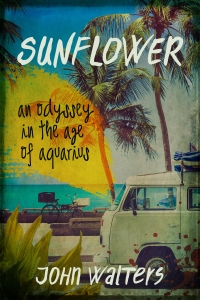
What caused me to take this so seriously was my current project:  preparing the memoir of my time on the road in the mid-seventies for publication.  I wrote the first draft about fifteen years ago, and since then I have been working on it – not constantly, of course, but in fits:  adding new material, proofreading, proofreading again, proofreading yet again, and so on.  I have finally decided to stop tinkering with it and get it into print.  When it arrives (in a month or two I hope) it will not be perfect; there will still be mistakes – but they will be my mistakes, no one else’s.  You’re going to get the raw, naked truth.  After all, what is perfect in this world anyway?  The main thing is the story.

To be honest, I catch errors in almost every book I read, even by the most well-regarded writer, even by the most esteemed publishing company.  Who cares?  To paraphrase Shakespeare (apologies in advance, Will):  “The story’s the thing, wherein we’ll catch the conscience of the king.”

Posted in On Writing | Tagged , | Leave a comment

Bullying as Alien Encounter

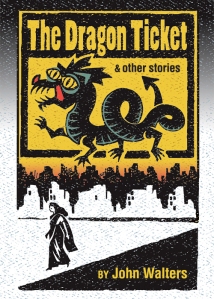
With the launch of my new book, “The Dragon Ticket and Other Stories”, I have been thinking a lot about the subject of alien contact.  And because my youngest son has been daily coming out of the school gate in tears due to incessant bullying, I have been giving that a lot of thought too.

What is the reason my son has been getting harassed?  We live in Greece, but he is half American.  It is the same old story that happens around the world all the time:  persecution of the different, the unknown, the alien, we might say.

All my sons got it, of course.  It didn’t matter how amiable they were, how good at their subjects, how hard they tried to please.  It didn’t matter whether the teachers saw it or not either, as in many cases the teachers supported the bullies.  After all, where did the bullies’ attitudes come from?  Parents and other authority figures, of course.  The teachers regarded my sons with suspicion as well, and sometimes bullied them after their own fashion, such as blaming them for fights they didn’t start.  They only managed to break out of the cycle of endless conflict as they grew older and bigger.  My oldest son studied three or four or five hours a day, won a scholarship to an elite private high school where they had a more reasonable concept of discipline, and then got accepted to Princeton University and moved to the States.  In addition, he worked out and became strong and fit so that anyone would think twice before messing with him.  My second son devoted hours and hours to physical training, weights and Ty Kwon Do, until he had the physique of a superhero; he, too, eventually moved to the States, sensing a lack of future for himself here.

But I must interject that the problem they faced, the problem of otherness, of alienness, is universal.  It happens in every country; only the victims change.

I received a lot of bullying when I was young too.  My crime?  I was smaller and younger than everyone else.  I had had a somewhat strained relationship with my teacher in third grade, and so the school authorities and my parents thought that the solution was for me to skip the fourth grade (where she would be teaching again) and move on to the fifth.  Intellectually that was no problem for me, but the social situation was another thing.  I was ripped from my peers and placed with a group of larger, stronger strangers.  How long did it take me to adjust?  To be honest I never really did.  Perhaps it had something to do with my personality; I was quiet, bookish, shy.  But entering fifth grade as an alien, as a stranger among strangers, certainly didn’t help me break out of my introversion.

I still occasionally daydream of an alternate universe in which I had been stronger and had beaten the crap out of my tormentors.

In the long run, the bullying didn’t harm my older sons; if anything, it might have taught them empathy for the underdogs of the world.  But still, it breaks my heart every day when I see my youngest son’s tears.  And his crime?  He is half American, a condition over which he has no control.  It makes me consider alienness around the world, in other societies and under other conditions, and wish that all those prejudices would go away and we could learn to get along.  It seems, however, that even as adults many of us don’t learn our lessons, and international politics is just an extension of the same principle:  just one incident of bullying after another.  You’d think we would learn.  But we don’t.

Such considerations gave rise to many of the ideas in my book on encounters between humans and aliens.

First Postscript:

The above I wrote a few weeks ago but haven’t had a chance to post yet, and circumstances necessitate adding a postscript.  I was called in to school again today to deal with an incident of anti-American behavior, this time with a twist:  my son didn’t put up with it and lashed back.  Some idiotic kid (high school level) made a ridiculous comment that the victims of the Twin Towers got what they deserved.  As I mentioned in my “Postwar” book review, such attitudes are not uncommon throughout Europe, including here in Greece.  My son smoldered until the bell rang, then sprang at the kid and began pummeling him.  It took four students and the teacher to get him off him.  Of course he was wrong to assault the kid right there in the classroom, but at the same time I can sympathize with why he did.  One can only take so much.  I might have done the same.  Of course I had to go down and work things out with the principal, and in the end there was a stern warning and nothing more.

But damn, I wish so much that there were not such attitudes in this world of ours.

Second Postscript:

A further postscript, on the brighter side.  When the principal of my youngest son’s school found out about the bullying, he called together the teachers and parents and let them know he would not put up with it at his school and there had better be a change.  Things indeed did change, and my son is back to his bright cheerful self again when he leaves the school gates.

So if we can conquer our apathy, evil can be overcome.  Sometimes, at least.

Posted in Parenting | Tagged , , | Leave a comment