On Reading The Lord of the Rings for the Fourteenth Time, Part Two: The Two Towers

I’m in a martial arts studio in New Jersey watching my oldest son train.  A peculiar situation, you might say, in which to write a review of a fantasy story.  But not so.
“The Lord of the Rings” has to do with the struggle of good versus evil.  The difference, in the novel at least, is stark.  In real life often it is not.  Absolutes exist, to be sure, but we do not always see them in the floods of shades of gray.  Martial arts training is one way to deal with the modern wave of violence in the streets.  Not that if you have it you kick the shit out of anyone who threatens you.  It is more for personal confidence and peace of mind.  And of course for physical fitness.

“The Lord of the Rings”, setting out as it does the good and the bad so obviously, always causes in me a slight feeling of envy.  Would that our world could be so simple.  Instead it is vague, uncertain, nebulous, hazy.  Often I don’t know what is the right thing to do.

Be that as it may, “The Two Towers”, as the interim volume, has always been more difficult to read than the other two.  If there is any slow spot in the books, I think it is in the description of the capture of Merry and Pippin by the orcs, and their flight towards Isengard.  I always read it in toto, but I often wish it were more brief.  After that,
though, the story picks up, as the riders of Rohan and King Theoden are introduced and the battle of Helm’s Deep and the storming of Isengard are described.  In Peter Jackson’s movie version there are deviations from the book in this section, but I will not nitpick into every detail.

The main deviations with which I disagree in “The Two Towers”, as in “The Fellowship of the Ring”, have to do with characterization.  Firstly, there is the character of Faramir.  In the book he is marvelously developed, a princely man indeed, who does not love war for its own sake, who craves peace and art and poetry, who possesses great wisdom and discernment.  In the movie, to be honest, he is presented as a bit of a wimp.  Not only that, but in the book he expresses his deep-felt conviction that he would never touch the ring though it were laying on the ground in front of him, while in the movie he craves it for his father, to reconcile himself to him.  This is not right.

Another area in which the movie errs is in the character of Samwise.  The choices he is confronted with at the end of this book are profound and greatly illuminate his
character.  The movie brushes over this depth, and in the film Frodo sending Sam away, overcome as he is by the deception of Gollum, is completely out of left field.  Frodo never doubts Sam in the book, and Gollum is never able to overwhelm him with his delusions.

As I have mentioned before, in the review of “The Fellowship of the Rings”, I greatly enjoy the films, but the books are far superior.

The martial arts class goes on, as does the struggle of good against evil.  In this world, our
world, there is real good, and there is real evil, and we all must make choices daily to walk the paths of honor and responsibility and courage.  Destiny does not imply lack of choice,
because only through right choices can destiny be discovered.  In “The Two Towers” the Fellowship is sundered and each of the members are scattered in different directions and
must make choices according to their circumstances, and it is only when they decide on the noble and unselfish options that they are able to clearly see their next step.

Lately I have been going through changes in my own life through which I must discern my right path.  It isn’t easy.  Important decisions seldom are.  But a book like “The Lord of the Rings” is ennobling, and encourages me to find the right way, the honorable way, which is usually not the easy way.  Actually, in the confusion of the last few months it has been difficult for me to read anything at all.  I chose “The Lord of the Rings” because it always gives me a boost in the spirit, as it has this time as well.  “The Two Towers” concludes in darkness and despair.  But it is not the end.

I’m a professional writer; I make my living by my words.  I’m happy to share these essays with you, but at the same time, financial support makes the words possible.  If you’d like to become a patron of the arts and support my work, buy a few of my available books or available stories.  Thanks!

Posted in Book Reviews | Tagged , , , | 1 Comment

The Beach House: End of an Era

About fifty years ago my parents bought some beachfront property in Puget Sound near Hood Canal Bridge.  It cost them ten thousand dollars; they had to put one thousand dollars down.  It was overgrown and the house was more in the nature of a shack, but it had a wide lawn in front and a spectacular view across Hood Canal to the evergreen-covered Olympic Peninsula and the Olympic Mountains.

The area was little-populated and little-traveled in those days.  The small town of Port Gamble, a mile away, had a thriving lumber mill, and logging companies were running riot
over the nearby forests of old growth fir and cedar.  In addition, isolated farms were scattered here and there.

My father, always the handyman, got busy right away mowing the lawn, clearing a safe trail to the beach, repairing the house, installing enough furniture for a family of six (and counting).

We kids, of course, commenced exploring.  We soon found out that the sea water was
arctic cold, and indeed it did flow down in swift currents from northern regions.  Swimming was impossible; even a swift leap in and screaming and shuddering bound out was only for the brave even on the hottest days.  But there was plenty else to do.  We could search for rocks and shells.  We could climb over the abundant driftwood.  We could fish with worms for tiny bullheads, keep them in a bucket for a while, and then toss them
back into the water.  When the tide was out we could dig for geoducks and clams.  In addition to all this we could also, of course, play games with balls, Frisbees, sticks for swords, and so on.  On the grass of the bank leading to the beach we would often catch
garter snakes, which was a great thrill.  Once I even managed to capture a chipmunk, which I meant to keep for a pet until our dog got too curious and knocked the cover off its cage.

The great adventure was when four or five of us kids would obtain a few pennies each and walk along the highway to Port Gamble and buy candy.  We also had a small power boat
and would go out into deep waters to fish for cod or salmon.

Those were good days, simple days.

As I got older, I was often reluctant to go out there from Seattle for the summer.  I wanted to stay in town so I could hang out with my friends.  For years I had this tussle with my parents over where I would spend the summer.  In the end I had to yield; I wasn’t old enough to insist.  My mother also had a struggle sometimes getting me out of the cabin into the fresh air; I was a consummate bookworm and would curl up on the couch and read even in the best of weather until I was pried off and shoved out.

Later still, on my own, I would take girls out to the beach house, or go out there with my buddies to drink and party.  My parents weren’t too thrilled when they found out about those escapades.

Things happened and my parents divorced.  My father moved out there, and would commute into town every day to his dental office.  When he retired he continued to live at the beach house, and I would visit now and again when I was in town during respites from my wanderings.  After we had our first three kids my wife and I once visited from Greece for a week or so.

All this to say that there is a lot of history tied up in that place.

Yesterday I visited it for what will probably be the last time.  My father is moving to a
retirement home and has sold it.  I went down to the beach and sat there alone on the rocks reminiscing.  All those happy times came back to me.  I hadn’t always appreciated the place or the activities.  Things often seem to acquire a golden glow in retrospect.  It came to me that good things happen to all of us throughout our lives, but for various
reasons we don’t always appreciate them when we have them.  In hindsight they appear glorious; when we live through them there is often something to tarnish or lessen the experience.  If only we could learn something from this, but it is not just a childish phenomenon; it seems to continue on into adulthood.  Great things happen but we
don’t always see them as great things.  And as we progress onward through the journey of life opportunities abound constantly to make the most of it, but we shuffle along, heads down, senses dulled, wishing this or that bit of inconvenience would go away, our eyes on the trivialities and not the glory.

The truth is, it’s all glorious, every bit of it.  Enjoy it while you have it.

But if you lose one bit of it, don’t despair.  There are greater things ahead.

Posted in Memoir | Tagged , , , | 1 Comment

Jet Lag and the Juxtaposition of Cultures

I arrived in San Diego after about twenty-eight hours of travel time.   Leaving Thessaloniki,
Greece, early Thursday morning I flew to Athens, then boarded a plane for an eleven-hour flight to Newark, New Jersey, my port of entry to the United States.  It was fortunate I had a three-hour stopover there, because I needed almost all of it to go through security:  passport check and customs.

First of all, the huge hall in which document checks were carried out could only be described as a circus or a madhouse.  The two lines, one for US citizens and one for foreigners, were equally long.  They twisted back and forth through paths marked with restraining ropes, hundreds of people with their carry-on bags slung over their shoulders or trailing behind them on wheels.  A number of flights had arrived around the same time and all the passengers had converged on the hall.  That line was the only way through, no special treatment or exceptions.  I wondered if I would have enough time to catch my connecting flight.  I don’t question the necessity of checking everyone’s documents, but it was exasperating, frustrating, and exhausting.  Because there was nothing I could do about it, however, it was also a good exercise in patience and serenity.  The line would proceed at its own pace and anything I would try to do to hasten it along would only result in more delay, or worse.  So I relaxed and observed the people around me.

Though I am an American citizen, I live in Greece.  Due to finances and busy schedules I don’t have the opportunity to visit the States often – only once every several years.  Every time I do, in the beginning I experience profound culture shock.  Americans and Greeks are very different from each other, and their countries and cultures have evolved in profoundly different ways.

Anyway, I finally got through passport control, then got into the line for customs, where my bags, belt, shoes, items from pockets, and so on all had to go through the x-ray machines.  I must have appeared innocent, as I escaped the full-body scans and searches to which others were being subjected.  Upon finally completing all the red tape and rigmarole, I proceeded to the gate at which my ongoing flight was scheduled to depart.  Another flight was listed but the attendant assured me that as soon as that flight left my flight would board by that gate.  After I had sat around, dazed by weariness, until it was almost my boarding time, the attendant made an announcement that my flight had been changed to another gate all the way on the other side of the terminal.  Throwing my two bags over my shoulders, I set out at top speed.  It turned out the plane that was supposed to have been ours had got stuck in Chicago and they had had to substitute another plane.  Not to worry, they said, the delay would be minimal.  And indeed, after a short time we boarded the plane.  That is, however, where things got more dicey.  We were informed that our flight was subject to indefinite delay.  The pilot would announce a possible takeoff time, and then when the time approached would revise his estimate and suggest a new time.  Finally he announced that due to a weather front moving across the central States all flights were on hold and he didn’t know when we’d be able to move.  In the end I arrived two and a half hours late in San Diego.  My son who was supposed to meet me had left the airport in frustration, as no reliable information had been available, and was waiting for my call, necessitating a further delay, though a short one, as he returned to the airport.

So now, I sit alone in the early morning, when I should be resting and recovering from the ordeal of the trip.  Jet lag will not allow me to sleep.  If you’ve ever experienced it, you know that it plays havoc with your system, wakes you up at crazy times and exhausts you at other times when everyone else is fully alert.

I mentioned differences between the United States and Greece.  One thing I have noticed since I have come is how overweight many Americans are.  There are fat Greeks too, of course, but I was unpleasantly surprised at the large proportion of overweight people in the US.  It goes all across the board too:  old folks, the middle-aged, young men and
women.  This is a recent phenomenon.  It did not used to be so.  There is a reason the Beach Boys sang about “California Girls” back in the 60s.  Americans then, for the most part, were slim, lithe, and attractive.  What happened?  Why did you let yourself go, Americans?  Was it just a matter of having too much of everything?

Another thing struck me as soon as I exited the airport in San Diego.  While waiting for my son on the sidewalk I noticed a designated smoking area, a very small patch of concrete no more than a few paces wide.  In Greece, though it is prohibited to smoke in most public buildings, the streets and sidewalks are still fair game.  I talked to a lone woman puffing on a cigarette while carefully standing on safe ground, and she informed me that not only were such designated areas getting smaller and smaller and in more and more inconvenient areas, but it is even forbidden to smoke in your own car while on certain roads.  I’m not a smoker and I don’t necessarily approve of smoking, but this seems to be a case of Big Brother government going a little too far in its legislation of righteousness.

I had another little jolt of culture shock when my twenty-three-year-old son was buying some liquor and was asked for identification.  Now, liquor can be dangerous and I am certainly not in favor of drunkenness or alcoholism, but in Greece my nine-year-old can walk into most any shop and buy alcoholic drinks.  Many children do run errands for
their parents in this way – but there is no higher proportion of alcoholics in Greece that I am aware of, nor do young people overuse alcohol any more than they do in the States, despite the much easier availability.

Different cultures, different lifestyles.  It’s not my intention here to go into all the reasons for these differences, merely to point them out.  Remember, I am speaking, at the moment, from the perspective of jet lag and culture shock.  If I wrote this tomorrow it would doubtlessly be put into other words, but the differences in cultures would remain the same.

Posted in Travel | Tagged , , , | Leave a comment

On Reading The Lord of the Rings for the Fourteenth Time, Part One: The Fellowship of the Ring

Every time I read “The Lord of the Rings” it is a profound literary experience.  I’m not
sure I have read it fourteen times; it could be thirteen or fifteen, but I think fourteen is a good guess.  Most of those times were when I was much younger, in my teens and early twenties, but I have read it several times recently too.

I received my first copy of “The Lord of the Rings”, a boxed set of the Ballantine paperback edition, as a Christmas present from my maternal grandmother, bless her heart and rest her soul.  I was in my mid-teens.  At the time I had never heard of the book, voracious reader though I was.  We had a large three-storey house and I had a room alone in the basement, and I still vividly remember reading “The Fellowship of the Ring” for the first
time.  I was in awe as the black riders stalked Frodo, Sam, and Pippin through the Shire.  It was a totally engrossing experience, as if the words had placed a spell over me and I could not pull my mind from the pages.  Everything around me disappeared and during the time that I read the story I lived in Middle Earth.  I was noble as the characters were
noble.  I was courageous, adventurous, chivalrous, kind to the good and ruthless to the evil.  I set out on the road as they did, not knowing where it would take me.

Those books changed me.  Eventually I did hit the road to seek my fortune.  There were other influences, sure, but “The Lord of the Rings” was a big one.

In the meantime, though, before I was ready for the road, when I was still a mess of insecure, uncertain, fearful teenage angst, “The Lord of the Rings” set me an example of an ideal – a fantasy ideal, of course, but an ideal nonetheless – of goodness, nobility, courage,
and so on, when I really needed something to cling to.

To the present:  what does it mean to me now?  I am still in the midst of the great adventure that is life.  I finally got out and hit the road and I am still on the road.  I have a family, a wife and five sons, but that is part of the great adventure.  As I read this book now I find it as uplifting and inspiring as ever, but I no longer need to live vicariously
through the characters.  Adventure can be found in many places and in many forms.

One thing that we have now that I did not used to have is the trilogy of films by Peter Jackson.  I love those films, and I have watched them over and over.  But if I had to choose between the books and the films I would take the books any day.  They are deeper, more profound, more detailed.  Jackson had to sacrifice a lot, to pare it down to the basics, even to fit into the extended versions.  To my mind he made a lot of mistakes in the screenplays; he cut things he shouldn’t have, added other things he shouldn’t have, and took far too much liberty with the story to suit his supposed cinematic needs.  Okay, it was his party
and overall he came out with a great product in the end, but some things need be said.

One of the greatest errors, and one which I can find no reason for at all, was the debasement of the character of Aragorn.  In the book Aragorn is portrayed as a noble
heir to Elendil, true and faithful always, never doubting his destiny.  He must wait a long time before claiming his crown – indeed, there is doubt as to whether he will ever triumph – but he travels the wilderness, ever a foe of the enemy and a protector of the innocent and ignorant.  The years of journeying weigh heavily upon him until he is no longer fair to look upon, but his heart is always steadfast.  Jackson presents him as one who has forsaken his calling – a deserter, in fact; one might almost say a coward – but why?  It demeans the
character and does nothing to enrich the plot.  No, this should not have been done.

Another error was to cast Gimli as the comic relief.  Gimli in the book has a great, profound heart and is anything but silly.  He stays true to the fellowship through much adversity and sorrow.  He represents the race of dwarves, as Legolas does the elves, and they are not a ridiculous people (though there is some humor in Tolkien’s descriptions of them) but a proud race with a noble history.

There are other mistakes of lesser importance that distract a reader of the books in the films, and some of them I may touch on in my essays about the next two books.  One
problem is Jackson’s crass disregard of time and distance in presenting his plotline.  The blonde elf, Haldir I think, is first encountered in the film in Lothlorien, but then he appears in “The Two Towers” supposedly sent by Elrond, who would have been
hundreds of miles away in Rivendell, at Helm’s Deep.  How would they have known of the danger at Helm’s Deep from such a distance, when the only available communication was
messenger, and how would they have marched so far so fast?  Okay, okay, I’ll stop nit-picking.  I enjoyed the scene when the elves showed up to help with the battle too.  But it
makes no sense.

Anyway, I’m getting ahead of myself.  It is “The Fellowship of the Rings” that we are concerned with here, and it is wonderful to read it and enjoy all the parts that are left out of the film:  the last walk through the Shire, the old forest, Tom Bombadil, the barrow-wights, Barliman Butterbur, the extended council of Elrond at which many stories are told, the description of Moria (which gave me great joy and dread the first time I read it), and an account of the time they spent at Lothlorien, with many more details than the movies were able to provide.

If you check out the book reviews on my blog, you’ll see that I read a lot, and I read a lot of different kinds of books.  I usually alternate between fiction and non-fiction, but otherwise it’s wide open.  I’m interested in a lot of different subjects and want to learn about them all.  But I have been going through some personal crises lately – I experienced a sort of burnout due to a work overload and became very weak and disoriented, and I chose to re-read “The Lord of the Rings” because for me, no matter how many times I read it, it is always positive and uplifting.  So it is proving to be during this time as well.  I recommend it to all, for any reason or for no reason.  It is a great experience.

I’m a professional writer; I make my living by my words.  I’m happy to share these essays with you, but at the same time, financial support makes the words possible.  If you’d like to become a patron of the arts and support my work, buy a few of my available books or available stories.  Thanks!

Posted in Book Reviews | Tagged , , | 1 Comment

More Favorite Short Stories

Yes, I do love those short stories.  In my last post on my favorite short stories I wrote about five of the all-time greats.   They were:

1.  “I Have No Mouth and I Must Scream” by Harlan Ellison.

2.  “Sundance” by Robert Silverberg.

3.  “The Women Men Don’t See” by James Tiptree, Jr.

4.  “The Apostate” by Jack London.

5.  “The Aleph” by Jorge Luis Borges.

Now it’s time to forge onward and list more.  Here they are:

6.  “Alpha Ralpha Boulevard” by Cordwainer Smith.  Cordwainer Smith, which is a pseudonym of course, didn’t write much:  a few short stories, a few novellas, a novel.  But what he wrote was superlative.  Most of his stories are set in a common universe in which a governing body called The Instrumentality rules the affairs of men scattered in many worlds across the galaxy.  His writing is innovative, full of wild speculations and totally original ideas.  “Alpha Ralpha Boulevard” is set on a far future Earth.  Its citizens have just been set free to make their own decisions.  Everything had been determined for them and they had been kept healthy and productive whether they wanted it or not.  Now they rejoice in the re-introduction of plague and smallpox and other diseases, multiple
languages, and other long-lost idiosyncrasies of the human race.  Smith’s writing is original, I tell you.  A small group of people take a stroll along the Boulevard and encounter bizarre remnants of the ancient past along the way.  The story is an absolutely elegant piece of work.

7.  “The Big Flash” by Norman Spinrad.  This is one story I haven’t read in a long,
long time.  It isn’t that easy to find.  But it left such an impression on me that even now, about forty years after I first read and re-read it, certain parts remain vividly etched in my
memory.  I have been searching for a copy of an anthology with this story within, and I have just ordered a used copy of “The Best From Orbit” mainly so I can re-read this one story.  Briefly, it tells of a media advertising plot to make the atomic bomb popular.  A
really weird hard rock group sings of the glories of the A-bomb.  Nowadays it hardly even seems strange, considering what one can find in the lyrics of popular songs, but back then,
during the cold war, it was a devastating piece of work, starkly drawn and incisive and topical.  The countdown at the end is nerve-shattering.

8.  “A Rose for Ecclesiastes” by Roger Zelazny.  It’s extremely difficult to choose a favorite Zelazny story.   I was tempted to write about “The Doors of His Face, the Lamps of
His Mouth”, which is every bit as good as this one.  Why did I finally select “A Rose for
Ecclesiastes”?  It’s an earlier piece, and it’s Zelazny’s flamboyant stepping out as a writer.  It’s poetic and intriguing and intelligent.  Never mind that it’s set on a Mars that never was – just take it as fantasy and enjoy it.  The elegance of the prose has, word for word,
seldom been equaled in the science fiction genre.  I can’t help thinking as I read it that the
main character is closely modeled on Zelazny himself, but who cares?  It’s a wonderful literary ride all the way to its stunning conclusion.

9.  “The Devil and Daniel Webster” by Stephen St. Vincent Benet.  There are many deal-with-the-Devil stories in fantasy literature, but this one is by far my favorite.  It works so well because of its amazing portrait of Daniel Webster himself, fictionalized and exaggerated and blown up to mythical status.  A fellow New Hampshire man is indebted to the Devil and about to lose his soul, and Webster intercedes in one of the strangest, most unique courtroom scenes in literature.  I’ve read this story many times through the years and each time is just as good as the first.

10. “Time Considered as a Helix of Semi-Precious Stones” by Samuel R. Delaney.  The title is a mouthful, one of the longer titles in science fiction literary history; the story itself is just the right length.  It’s a picaresque adventure of a sophisticated thief with connections throughout the solar system.  The helix of semi-precious stones is a
network of code words used by the underworld to identify insiders.  But that’s just giving a few bare bones of an intricately fleshed-out story.  Delaney is a master of language; he always has exactly the right word in the right place.  His descriptions are so precise
they burn the scenes into your brain.

Posted in Book Reviews, Reading | Tagged , , , , , , , , , , | Leave a comment

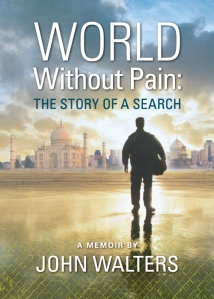
World Without Pain: The Story of a Search by John Walters – Now Available!


My new memoir, “World Without Pain: The Story of a Search” has just been published and is now available at Amazon, Smashwords, and other outlets.

 Here is the description from the back cover:

 “In the 1970s, after the Altamont Rock Festival, the Manson Family cult murders, and the fiasco of the Vietnam War many young people, disillusioned by the hippy movement, began to leave their homelands and travel to the far places of the world.  Hoping to find drugs, sex, freedom and excitement, they more often were confronted with destitution, despair, disease, loneliness, and culture shock.

As a young writer wishing to break out of the familiar rut in which he was stagnating, Walters hit the road during this time, first toEurope, then onward to the Indian Subcontinent.  He sampled Buddhism and radical Christianity; he wandered alone in the Himalayas; he listened to strange gurus spouting stranger doctrines; he watched the people around him deteriorating and dying in the lands of the East.  As he traveled onward he became fascinated with the road itself, and determined to discover its secrets. He wondered what it was that gave the road its alluring power, and he forsook everything else to find out.

His story will appeal to those who lived through the turmoil of the 60s and 70s, to those who are hungering after spiritual fulfillment, to writers and other artists in search of their voice and their inspiration, and to anyone who loves a true story of adventure and excitement in strange lands.”

 You can find the print copy at Amazon here:  http://www.amazon.com/World-Without-Pain-Story-Search/dp/1461177723/ref=sr_1_1?ie=UTF8&s=books&qid=1305968410&sr=1-1

 There is also a Kindle edition available at Amazon.

 Smashwords has it in other electronic formats here:  http://www.smashwords.com/books/view/59806

Posted in Uncategorized | Tagged , , , , , | Leave a comment

Book Review: The Books in my Life by Henry Miller

Henry Miller at his best is a virtuoso writer.  He can write about anything and it is entertaining.  He is with words like Jerry Garcia was with guitar:  you didn’t really give a damn whether he was actually playing a song or not; he could go on jamming for hour after hour and have the audience completely enthralled.

There are sections like that in “The Books in my Life”, but unfortunately to get to them you have to read through a lot that is not Miller’s best.  Don’t get me wrong:  even Miller’s mediocre work is better than almost anybody else’s.  But it’s not Miller’s best, and that’s the point.  When Miller gets going, nothing can stop him.  He hops, skips, dances, jumps through hoops, spreads wings and soars, dives down into the sewer and comes up smelling like roses.  For me, his best work is in the “Tropics”:  “Tropic of Cancer” especially, and to a lesser extent “Tropic of Capricorn” and “Black Spring”.  After those, there are “The Rosy Crucifixion”, “The Colossus of Maroussi”, and “Big Sur and the Oranges of Hieronymus Bosch”.  This book, “The Books in my Life” does not quite make it into such esteemed company, although certain sections do.

In one of the most entertaining sections Miller compares Walt Whitman with Dostoyevsky.  Now there’s an odd couple!  But he does it with wit and insight and erudition.  The sections on Blaise Cendrars, Rider Haggard, and Jean Giono are also interesting – not for their literary insight but because of the way that Miller launches off and writes of that which he knows best:  himself.  As he points out in the introduction, this volume is part of his autobiography, the story of his life which he has been telling in every book he has written.  It was supposed to be the first of several volumes on the books he’s read, but to my knowledge this, the first, is the only one that saw print, perhaps the only one he wrote.

What it reads like, actually, is a blog post, and as I read it I had the feeling that Miller would have made a great blogger.  Apart from his books he loved to write voluminous letters, and I think he would have embraced the opportunity to present them to the world on the Web.  He never was one to hold back.

One of the final sections is titled “Reading in the Toilet”.  At last, I thought:  a kindred spirit – for I myself find the toilet one of the best places in the world in which to sequester myself and absorb good literature.  Imagine my shock and disappointment to find out in his essay that he is against the practice.  He believes that the voiding of the bowels should be a single-minded pursuit, unaccompanied by reading material.  Reading this was one of the few times I have ever been disappointed in Miller.  How could he fail to see the singular pleasure of killing two birds with one stone by accompanying the mundane task of the daily throne-sitting with the pleasure of a great read?  Ah, well.  What can one say?  No one sees eye-to-eye about everything.

Another thing that struck me was that despite the fact that Henry Miller has been such an important influence on me as a writer, we have such dissimilar tastes in literature.  At the back of the book there is a list of one hundred books that influenced Miller most.  Not one of my own favorites, a list of fourteen of which I recently posted, is included therein.  Not that it matters.  Miller wrote this book in 1950, and I made my list in 2011; that’s a gap of 61 years.  Much of what is available to me he would never have heard of.

Would I recommend this book?  Well yes, but with a qualification.  It is not a good introduction to Miller, because as I said, he is not at his best.  If you’ve never read Miller before, start with “Tropic of Cancer”.  That will really plaster your face in it.  That’s where he burst out into the world newly born as a writer for the first time, still dripping with blood and amniotic fluids but dancing and singing and shouting for all he is worth.  And he’s worth a lot, good old Henry Miller.

I’m a professional writer; I make my living by my words.  I’m happy to share these essays with you, but at the same time, financial support makes the words possible.  If you’d like to become a patron of the arts and support my work, buy a few of my available books or available stories.  Thanks!

Posted in Book Reviews, Reading | Tagged , , , | Leave a comment

My Favorite Short Stories: Part One

One of my favorite literary forms is the short story.  Another is memoir.  So here is a perfect combination:  memories of some of my favorite stories.  I have not put a number in the title because I don’t know how many I will write about eventually, in this and future posts.  No matter.  And I will not herein deal with all of my favorite stories; I will choose one each from my favorite writers.  If there are several I would call my favorites by one writer, I plan in the future to center on one author or another and highlight a list of stories by that particular person.  For now, though, here is a smattering of the best of the best.  I have read thousands of stories in my time, hundreds of which I would call great.  A list like this is of course by its nature idiosyncratic and incomplete, and I am basing my decisions not only on literary merit but impact on me personally.  But if, like me, you are always on the lookout for good reading material, it will have served its purpose if I have managed to turn you on to some of these great reads.

So here are the top five:

1.  “I Have No Mouth, and I Must Scream” by Harlan Ellison.  There is no doubt in my mind that for me this story merits first place.  It changed my life.  The reading of it was one of the most significant events of my life, for by the end I had made the decision that there was nothing else for me but to become a writer.  Never had I read something so compact but at the same time so devastating.  It knocked me for a loop; it floored me.  It has one of the greatest endings in literary history, even though the ending is predicted in the title.  At the time Ellison was becoming a great shining light in what was known as the “new wave” in science fiction, a fact of which I was completely unaware.  I was unaware of most things in those days.  I had gone to university without a motivation, without a clue as to why I was there.  I floundered in loneliness and inertia, and drugs exacerbated the problem.  I chose my subjects at random from term to term, having no clue as to what I would do with my education in the future, and in second term, I think it was, I happened upon a course in science fiction literature, using as a text an anthology of stories edited by Robert Silverberg.  As I remember all the stories in that book were enjoyable, but two stood out for me so much that I remember them even now, more than forty years later.  One was “The Game of Rat and Dragon” by Cordwainer Smith, and the other was “I Have No Mouth and I Must Scream”.  As I said, mere enjoyment does not express my appreciation of this story.  It affected me so profoundly that it altered the course of my life.  After I read it I had a goal, a purpose, a direction.  In that regard it lifted me out of the sludge – the slough of despond, you might say – and even though it took me years to break out of my depression, coming to a realization of my destiny was the first step.  As for the story itself, it is a chronicle of an endless journey through hell, full of startling, shocking imagery which, as I mentioned, comes to a devastating conclusion.  It made me seek out other books by Harlan Ellison; for a long time he was my favorite author.  It even led me, eventually, a few years later, to study under Harlan Ellison himself at the Clarion West Science Fiction Writers Workshop.  And the rest, as they say, is history.

2.  “Sundance” by Robert Silverberg.  This is another “new wave” story, deliberately experimental, told alternately in first, second, and third person present and past tense.  That alone would not give it distinction, however.  Experiment for its own sake is a vain exercise.  What sets “Sundance” apart is the fact that its experimental style is perfectly blended with the subject matter of the story itself:  the psychology and background of the protagonist, and the situation in which he finds himself.  There are not many great science fiction stories about Native Americans, but this is definitely one of them.  It was on the final ballot for the Nebula Award along with another Silverberg story, “Passengers”.  Silverberg withdrew “Sundance” in favor of “Passengers”, feeling that as “Passengers” was more conventional it had a better chance of winning.  He was probably right (“Passengers” did win the award), but my personal opinion is that “Sundance” was not only more deserving of the award that year but is one of the greatest short stories of all time.

3.  “The Women Men Don’t See” by James Tiptree, Jr.  Choosing a Tiptree story for this list is a difficult undertaking.  So many of her short stories are brilliant beyond words that it is impossible to single out one which is better than the others.  I could have chosen, for example, “Houston, Houston, Can You Read?” or “The Girl Who Was Plugged In” or “The Milk of Paradise” or “On the Last Afternoon” or one of several other possibilities.  “The Women Men Don’t See”, however, has a unique quality; it begins in the normal world, the world of men and women and their chance encounters and interactions, and slowly, slowly, in the midst of descriptions of scenery and storm, slips into a deep pit of the surreal from which there is no escape.  The conclusion at the end is so unusual, and so profound, that at the time there was nothing like it in all of literature.  I am opposed to those who say that fantasy or science fiction or speculation or blatant action must begin at the first page or they will throw aside the story.  I prefer a slow start and a gradual buildup, somewhat in the nature of foreplay before the inevitable climax.  That’s what this story gives us.  But don’t get me wrong – it is never boring, not a single word of it.  It is fascinating through and through.  Tiptree was a master of sparse, trimmed-down language in which every word had devastating effect, and nowhere is her word-mastery more evident than in this story.

4.  “The Apostate” by Jack London.  It is difficult for me to choose a single London story as well.  I am a great fan of his Klondike stories such as “The White Silence” and “In a Far Country” and I was tempted to choose one of those.  I also came near to choosing his terrific novelette “The Red One”.  But I selected this for several reasons.  First of all, it is one of his lesser-known works, but one of his best.  In addition, unlike the other above-mentioned works, this one is surfeited with realism – too much realism for some, I would say.  It is autobiographical, but London uses the sordid details from his past to great effect in telling this story of the crushing, grinding physical and psychological burden of child labor.  It describes a life of endless pre-dawn wakeups, the drudgery of working many hours under terrible conditions in factories, the never-ending exhaustion.  If that were all that was told, however, it would not be the wonderful work of literature that it is.  No, there is more.  It is the liberation at the end that makes it great, that lifts it above other works that describe similar conditions but leave the reader, as well as the characters, in degradation and despair.  Not this one.  At the end, after the suffocating hell, there is the breath of freedom.  That is the beauty of it.

5.  “The Aleph” by Jorge Luis Borges.  Borges is a master of the short story of intellectual intricacies and conundrums.  I like many of his stories of fantasies, dreams, mazes, puzzles.  What sets this one apart is that the characters are drawn in great detail, and the fantasy, which at first is, as usual for Borges, a puzzle, by the climax makes great sense.  I love his lists of page after page of intricately described details, especially when the narrator glimpses the Aleph for himself; impossible as it is to truly describe it he, as had the poet who discovered it before him, makes an attempt to do so, and it is a glorious attempt.  It is an exuberant spattering of language like paint upon a canvas, but at the same time it is meticulous, precise, and evocative.  Every time I read this story it is as if it is a fresh discovery.

I’m a professional writer; I make my living by my words.  I’m happy to share these essays with you, but at the same time, financial support makes the words possible.  If you’d like to become a patron of the arts and support my work, buy a few of my available books or available stories.  Thanks!

Posted in Book Reviews | Tagged , , , , , , , , , , | Leave a comment

Driving in Greece

This morning I played around with an article I had written some time ago called “Greek Rules of the Road”.  It was meant to be a humorous piece, flippant even; in it I postulated what the laws would sound like were they composed to reflect the way Greeks actually drive.  When I was done I asked my wife to have a look at it; as one driver to another, I thought she’d get a kick out of it.  Instead, she didn’t like it.  It was exaggerated, she said.  She insisted that things were improving, that it wasn’t that bad anymore.

I didn’t understand her reaction, and I pondered it for a long time.  I respect her too much to simply dismiss her opinion, so I wondered how I could have so misjudged what it would be.

The answer, I think, is in the comparison.  She is comparing what it was like to drive in Greece a decade or so ago, and what it is like now.  I am comparing what it is like to drive in Greece with what it is like to drive in the United States.

Here it is common for drivers to go twenty, thirty, or forty kilometers per hour over the speed limit and think nothing of it.  Nobody else around will think anything of it either.  Sometimes when I am hugging the speed limit cars or motorcycles pass me as if I am standing still.  I have never seen the police give chase in such an instance; were they to do so that is all they would have time to do, at least until people got the point.  Here it is common, not everywhere but at certain less-traveled intersections, to run through red lights if one can see that no one is coming from any other direction, or to not bother to slow down at stop signs if the way seems to be clear.  In the village where we used to live there are some one-way streets that drivers routinely ignore and drive up the opposite way; if you honk at them they will either ignore you, think you daft, or gesture at you obscenely.  It is a common tactic on the highways for speeding vehicles to signal their intent to pass and desire for you to pull over by coming up behind as if they intend to ram you, wildly blinking their lights; this they will do even if you yourself are already going the speed limit or beyond.  Another common tendency is that many drivers, if you with a turn signal indicate your intention to move into the left lane to pass the slow-moving car in front of you, will step on the accelerator and speed up so that they can get ahead of you first before you make your move.

These habits, which are so second nature here that people don’t even give them a thought, would be appalling to US drivers.  It wouldn’t be long before the perpetrators of such deeds lost their licenses and faced huge fines.  But here, there is no basis for comparison.  Yes, I might admit that things have gotten slightly better than they were ten or fifteen years ago, but then again, things go in cycles.  I remember several years back, for a week or so, police were stopping motorcycle riders everywhere for not having helmets – and fining them too, I heard.  Now they drive with or without helmets with impunity, according to taste.  True, a few more might wear helmets than used to do so in the past, but then again, many do not, and they are not called to task for it.  I have heard of the odd occasion when the police stopped drivers for infractions and fined them; but, as I say, it was the exception – so unusual as to become a topic of conversation.  Usually when police set up checkpoints they are looking for illegal immigrants, or for vehicles without proper papers.  A year or two ago signs appeared everywhere on the highways warning that speeds were being checked by radar; I have yet to hear of anyone brought to task for an infraction, or to see anyone slow down because of the signs.

Having said all this, however, I must add that it is not too difficult to navigate Greek roads.  One adjusts; one goes with the flow, gets used to doing what the other drivers are doing.  By this I don’t mean flagrantly breaking the law as the worst of the offenders do; no, I mean carrying on about one’s business and avoiding the frequent nut-cases on the roads.

This also brings to mind what I have noticed as both good and bad points of Greek character.  Greeks can be friendly, magnanimous, helpful, willing to bend rules for friends, neighbors, relatives, and other acquaintances, loving freedom more than rules and restrictions; however, they can also be stubborn, irascible, feisty, and bull-headed.  Both their good and bad traits manifest themselves on the road.

Americans though, for all their love of freedom, are much quicker to obey rules, to stand in a straight line and wait their turn, to accept whatever correction authority might deem proper to give.

I believe that part of this tendency among Greeks to take rules lightly stems from the fact that many, at least here in Thessaloniki, just in the last generation, have moved here from villages.  In the villages it is standard practice to bend rules; after all, everyone knows everyone and can predict what they will do and when they will do it.  If you see your friend by the roadside you stop your car, double- or triple-parked if need be, or even right out in the middle of the road, and have a chat.  If other vehicles come along and want to pass, you leisurely conclude your conversation and then get out of the way.  I have seen this in the villages in which we live, even up to the present, with a fair amount of frequency.  It works fine when you are only dealing with a few thousand inhabitants.  But when such an attitude is transferred to a city of a million people, it doesn’t work so well anymore.  Adjustments need to be made.  And they will be, eventually.  In the meantime, one copes as best one can.

Posted in Greece: A Memoir, Travel | Tagged , , | Leave a comment

Book Review: Selected Short Stories by Rabindranath Tagore

If you don’t know who Rabindranath Tagore is, you should.  He was a Bengali writer, the first non-European to win the Nobel Prize for literature.  It was awarded primarily for his book “Gitanjali”, a collection of poetry.  Besides poetry, though, he wrote plays, novels, songs, non-fiction ranging from travelogues to history to essays, and, of course, short stories.

When he began to write his short stories in the late 1800s there was little literary precedence in Bengali; he claims he had to invent language for the form as he composed.  At the time he had gone off into the countryside to manage some estates for his family.  He lived on a houseboat on the Padma River, and daily was in contact with the common folk who comprise the characters in his tales.  His affinity with and love for them is evident in the empathy he displays for them all:  he writes of families torn asunder by contention and jealousy, of arranged marriages, of child brides, of wandering mendicants, of devotees of Hindu gods, of the rich destroyed by their riches and the poor by their poverty, of teachers and their students, of servants and their masters, of parents and their children; he even writes a few about ghosts and haunted palaces.  All of them are set in the milieu of the time:  the Hindu- and Bengali-speaking northeast of India during the British Raj.  The British, however, are mentioned only peripherally; the stories are about Indians and India.  Though the customs and beliefs are very different from what we are used to in the modern West, Tagore’s talent is great enough to get us into the minds of his characters so that they become familiar to us and we can see them as beset with humanity as we ourselves are.

Tagore is an artist.  Apart from the believable characters there are beautiful descriptions of the Bengali countryside:  sunshine and storms, droughts and floods, plains and rivers, trees and flowers, as well as the scents and sounds and feel of the country villages.

This book is of particular interest to me because I lived for several years in Bangladesh and in West Bengal, India.  I studied elementary Bengali at Dhaka University.  I lived for a few months in Santiniketan, where Tagore lived and founded an ashram.  I can still read Bengali, but alas, I have forgotten most of the vocabulary.  I would like to read Tagore in the original.  Someday, perhaps.

In the meantime, this is an excellent translation.  Sometimes when I have read translated works, for instance of Shusaku Endo’s “Deep River”, I have been disappointed; while the quality of the original cannot help but shine through, it is evident that something has been lost in the transition from the author’s language to English.  I can’t say that this is the case here.  The translation (by William Radice) is very smooth, very elegant.

Would I recommend this book?  Unequivocally.  Anyone who loves short stories should read this book, or you are missing out on a master of the craft.  Some of the stories are stronger than others, it’s true, but that is true of any short story collection.  Some of my particular favorites are:  “Taraprasanna’s Fame”, “Wealth Surrendered”, “Kabuliwallah”, “A Problem Solved”, “Thakurda”, “The Hungry Stones”, and “The Gift of Sight”.  The stories are all quite short and can be read in a sitting, which is good because many of them are best appreciated as whole entities.

I’m a professional writer; I make my living by my words.  I’m happy to share these essays with you, but at the same time, financial support makes the words possible.  If you’d like to become a patron of the arts and support my work, buy a few of my available books or available stories.  Thanks!

Posted in Book Reviews | Tagged , , , , , , , , | 5 Comments