Adventures

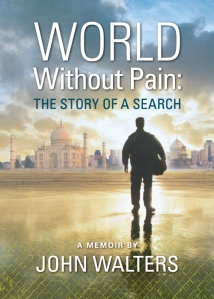
I am reminded of when I stood at the freeway entrance, my thumb out, ready to hitchhike off into the unknown, at the start of my first great journey.  I wrote about this experience in my memoir, “World Without Pain: The Story of a Search”.  You would argue, perhaps, that life itself is a journey, and in a sense you would be right, but I am speaking of physical journeys, of events that take you out of life’s comfort zones into the wildness of challenge and uncertainty.

Of course, all adventures need not be travel adventures, journeys from one place to another.  Many of them are.  In “The Hobbit” and “The Lord of the Rings”  Both Bilbo and Frodo Baggins were common ordinary Hobbits until they hit the road.  In their cases they did not voluntarily embark on their quests but had to be pushed out; however, the decision was theirs.  They could have stayed in their comfortable holes but they chose not to.  But another story comes to mind, that of the couple at the beginning of “Up”, the wonderful animated film by Pixar.  When they were young they both craved travel to faraway places, but it never happened.  They lived a quiet life together until the woman died, but nevertheless she referred to the time they spent together as a great adventure.  Yes.  This too can be true.  A committed relationship can be a marvelous adventure, as can having children, as can working at a career that stimulates and fulfils you, as can many other things.  For me personally, especially when I was young and just starting to wonder what life was all about, discovering certain key books like “The Lord of the Rings”, “On the Road”, “Tropic of Cancer”, “Walden”, and “Stranger in a Strange Land” were terrific experiences.

So adventure can be different things to different people, depending on their backgrounds and talents and proclivities and resources.  But there is a common denominator.

We all have a tendency to be somewhat like hermit crabs.  We keep a shell around ourselves and crawl from place to place with it intact, thinking to shield ourselves from danger.  The shell is composed of familiar things:  the location we grew up in, family and friends and acquaintances with whom we are comfortable, job or school or other fixed routine.  Some people spend their whole lives within one shell, never venturing outside, never putting themselves at risk.  But to grow, even a hermit crab needs to leave the familiar comfort of the shell to find a larger shell.  And for us to grow as human beings we need to leave the safety of the familiar and try something new, something different.  Once we venture forth we do not always stay out in the wild; sometimes we wander for a time and then construct another shell around ourselves.  The shell in itself is not bad.  It is a survival tool, a defense mechanism.  The world is, in many ways, a nasty place full of real dangers, and we need to be concerned about our safety.  But not to the exclusion of everything else.

I was very timid, very frightened when I was young.  Books provided an escape but there is a danger in books or films:  they are meant to be a stimulus, a catalyst, but they are not the real thing.  I knew I had to get out and experience what life was all about, especially when I knew I had to be a writer, but I was afraid.  It was that simple.  I was afraid.  I stewed in my juices for years, unwilling to take the first step.  That’s why, when I finally did take the step, that first moment at the freeway entrance was such a transcendental experience.  I was going off into the unknown with only my duffle bag and the clothes on my back.  I had no idea what I would do, where I would end up.  But it didn’t matter.  I had broken free.  I could go wherever the winds of destiny carried me.

This all came up because I am, at almost sixty years of age, contemplating another major change in my life about which I cannot at this time speak.  But it is the same situation whatever your age.  Adventures might call at any time, in any place.  I’m not talking about forsaking your responsibilities, deserting your post.  I am talking about life-changes carefully thought out, open doors through which you can walk if you dare, opportunities that will bring growth to all and pain to none.  But adventures always involve risk.  Often, though, the perceived risk is a phantom, a nonentity, a puff of air that may appear to be a dragon but will blow away as soon as you take the first step.

When you know what you need to do, you just have to do it.  That’s all.  If you don’t do it you are doomed to oblivion.  If you do it you are destined for greatness.

Posted in Memoir, On Writing, Travel | Tagged , , , | Leave a comment

Book Review: Think Like a Publisher by Dean Wesley Smith

I stumbled upon Dean Wesley Smith’s blog about a year and a half ago, and it changed my life as a writer.  At the time he was writing the series “Killing the Sacred Cows of Publishing”, which is still available on his blog, and sometime along the way he began the new series, “Think Like a Publisher”, to help writers novice and experienced, young and old, navigate their way through all the changes taking place in publishing.

I had been publishing short stories in science fiction and literary magazines for a decade, but I was discouraged.  It was such a slow process.  Stories might make the rounds of the magazines for years before being accepted, and sometimes stories which I knew were good would be unable to find a publishing home at all.  The problem was, the markets were dwindling, as was the pay, but at the same time more and more writers competed for the few slots available.  It was discouraging, to say the least, to one who had a dream of eventually becoming a fulltime writer.

But DWS opened my eyes to a new phenomenon I had known nothing about:  the new independent (or indie) publishing movement, fueled by the rise in popularity of e-books and new online distributors such as Amazon and Smashwords.  These distributors allow writers to upload properly formatted manuscripts to their online sales sites for no charge, taking a small percentage of any sales.  In addition, Amazon had launched another service, CreateSpace, which allowed the creation of Print-On-Demand (or POD) physical paperback books.

Right away I was struck by the possibilities.  I began to read everything I found on DWS’s blog, and also on that of his wife, Kristine Kathryn Rusch, who was doing a series called “The Freelancer’s Survival Guide”, about which I have already written.

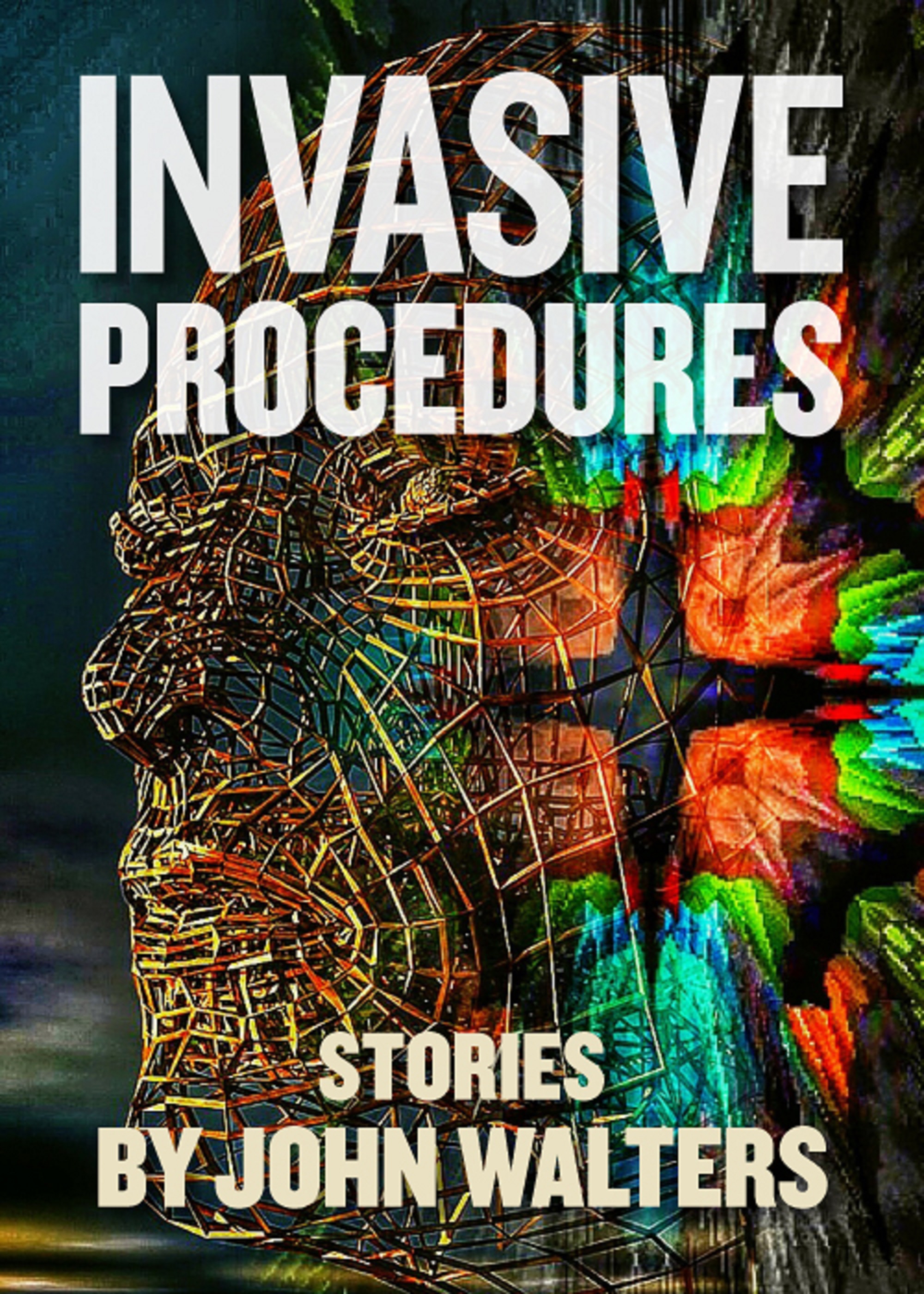
To make a long story short, I studied formatting and cover creation and all the other details and began to publish my own stories, starting with those that had appeared in recent years in magazines.  Then I got more audacious and created a story collection in both print and e-book.  It was great fun and I didn’t want to stop.  To date, I have published a couple of dozen individual stories and four books:  “The Dragon Ticket and Other Stories”, “World Without Pain: The Story of a Search” (a memoir of my hippy travel days), “Painsharing and Other Stories”, and “Love Children: A Novel”.

I have no intention of stopping.  My publishing schedule calls for at least four new books this year, which are all completed or almost completed, not to mention creation of new material.

The income has been slow to start flowing, as DWS warned.  You have to be in it for the long haul, and build up an inventory that readers can find.  I have been averaging about twenty or thirty sales a month, but I expect that to increase, and I have already received the first few small payments from Amazon and Smashwords.  I believe these sites are a wonderful opportunity for writers to step out and create as their muse dictates, unencumbered by the restrictions and limitations of big publishing.

As for the book itself, “Think Like a Publisher”, it’s a compilation of the first dozen or so blog posts of the same name.  I wish, actually, he would have held off publishing them, as he has since done a lot more posts and I would have appreciated having them all together in print.  But the book is advice for writers, and as such would be of interest mostly to writers.  If you are one, I highly recommend it – and then go check out DWS’s blog for further studies.

Posted in Book Reviews, On Writing | Tagged , , , | Leave a comment

Book Review: 11/22/63 by Stephen King

This is an awesome book.  No superlatives can do it justice.  It’s one of the best novels I have read in years.

I haven’t read many of Stephen King’s books – in fact, only one other:  “On Writing”, which I have read and reread and consider one of the best books on writing ever.  But as far as his novels are concerned, I have been content to watch the films.  The subject matter has not always been my cup of tea as far as reading is concerned, and as for the stories that really caught my attention, “The Stand” and “Firestarter” for example, I figured that the gist was adequately captured in the movie version and have had no desire to check out the original.  For one thing, King’s books are generally quite long, the type of length I prefer to tackle in the summer when I have more time to read.

But this one was different.  The plot intrigued me.  Having grown up in the 60s and 70s, I am always eager to read anything decent set in that era.  But even more, the assassination of John F. Kennedy was a seminal moment in history.  I vividly remember when and where I first heard he had been shot.  I was ten years old and in the classroom of the Catholic elementary school I attended.  The Mother Superior came into the room – I will never forget her sober expression – and informed us that the president had just been shot.  I only recall bits and pieces of that part of my life, but that particular bit stuck with me.  What was Kennedy to me at the time?  Not much; I was just a kid.  But the legend grew over the years.

Stephen King postulates a sort of portal through which the protagonist, Jake Epping, can venture back to 1958.  Every time he goes through he always arrives at the same time and the same place and history has rebooted itself.  The man who discovered the portal, who is dying of cancer, persuades Epping to go back in time, wait around until 1963, and somehow prevent Kennedy’s assassination.  King tells the story of the man’s long journey from 1958 to 1963 with nostalgic detail.  There is a romance as well; as Epping bides his time in Texas waiting for an opportunity to stop Lee Oswald he falls in love with a small town librarian, who gets caught up in his quest.

I don’t want to give too much away because it is a joy to discover all the surprises as the plot unfolds.  King takes it step by step but each step of the way throws another curveball, unveils another enigma.  I used to think, without having read him, that Stephen King must be some kind of hack writer with rudimentary prose – I was so wrong.  He is a stylist of the first order, and even waxes downright poetic at times.

As I said, this is one of the best novels I have read in years.  It is well worth the time it takes to get through it.  My edition, the British edition, was about 750 pages; as I understand, the American edition is about 100 pages more – probably because the page size is smaller.  Be that as it may, every page is fascinating, and at no time is the reading of such a long work a drudgery.  As a matter of fact, when it was over I was disappointed that the end of the experience had arrived.  Check it out.  You won’t regret it.

Posted in Book Reviews | Tagged , , , | Leave a comment

Step by Step

I felt overwhelmed today.  There are work issues, family issues, and urgent business that needs to be taken care of.  Our finances, as of those of most people in Greece, are in a tailspin.  To top it all off, it’s mid-January and freezing, bitter cold; the cold makes me ache, especially my fingers and toes, and it seems impossible to ever get warm unless standing right in front of a radiator.

But the worst thing, as usual, concerns the writing.  Just last week I pledged I would write a paltry 250 words a day five days a week.  It’s a pittance, really.  Though I have had little time even to do that I have tried to keep it up, but in my opinion those few hundred words I have managed to squeeze out suck.  They are crap.  I could be wrong, of course, and I often am.  I sometimes go back to stories I had set aside after writing convinced they had no value and realized they were just fine and I had simply got too close to the material.

Anyway, all these things put together were like a crushing weight upon my mind and spirit, until I decided to just slow down, relax, take one step at a time, and make each step a creative step.  That’s the key, really, the creativity.  Life can seem monotonous, a drudgery, something you’re stuck in like a prisoner and don’t know how to escape from – but the thing is, that can happen anywhere under any circumstances.  We all, I think, desire something better for ourselves, and have the delusion that if we had that thing everything would be easier.  For some it might be a lover, a boyfriend or girlfriend, a husband or wife.  For a lot of us it’s money:  if I just had more cash, if I could just pay my bills, buy what I wanted, do what I wanted, life would be easy street.  I often fall for that one, though by this time I should know better.  For some it’s a dream job; for some it’s no job, a life of lethargic torpor watching TV or playing video games or whatever.  We all have fantasies of what would make life better.

But you know what?  It’s all bullshit.  It’s all an illusion.  Life is now, not later or earlier.  Oh, we can plan for the future to a certain extent, but suddenly something can happen that throws us a double-whammy, knocks us for a loop – often, in fact.  Sure, we can plan, we can dream, we can wish.  But life is now.

What do I do then?  collapse under the weight of the load?  Give in to the feeling of despair and start drinking or doing drugs or fly off the handle and take off for parts unknown?  The truth is, sometimes a change is what is needed.  But many of us are not able to instantly change our physical circumstances.  We can work towards that goal, sure, but usually all we can change instantly is what goes on inside.

Let’s change that, then.  Maybe we can’t change the world.  I know that I sure as hell can’t change the disastrous train wreck of the Greek economy.  I can’t take off and hit the road, hitchhike around the world like I did once upon a time.  But I can change my attitude, and when I do the whole world changes.  I can apply my creativity to every facet of my being, even the leaks in the roof and our diminishing pocketbooks and disagreements with progeny.  And when you look at something creatively you are an artist.

This may all sound too schmaltzy or simplistic to you, and if so you are welcome to emotional convolutions and complexities, but things around me are so complex I need a simple approach to cope with it all, and I will apply whatever works.

Postscript:  The last couple of days this was all put to the test.  It was grueling in terms of what had to be done.  Shortly after I wrote the above I was off to my first afternoon lesson, teaching English Proficiency to a teen who has been spoiled by one of the many inefficient, indeed inept, language schools around here.  He had been studying advanced English for a year and a half and learned practically nothing, hiding in the back of the fairly large class, and no one had bothered to catch him up on it.  I was recommended by a former student and hired to get him back on track, but it isn’t easy.  He’s way behind and has to work really hard to catch up, and a lot of my work is motivating him to want to after so long a period of turpitude.  In addition, we have the class in his room at his desk, and the room smells of stale athletic socks.  Whew.  Not easy.  But I got through that, went on to one of the schools where I teach and made it through two more classes.  The next morning I had to go to a government tax office to do paperwork – something, at least here in Greece, sure to strike terror, or at least extreme reluctance, into the heart of any foreigner who has a tough time with the language.  But I got through that miraculously easily too.  Then work around the house, then more classes, and on and on.  Now here I am exhausted but I made it.  And I made it step by step without that feeling of despair.

Now if I could only summon up the energy to write.  That’s the ongoing rub.  But sometimes I just need to bide my time, and be ready when the opportunity presents itself.  In the meantime I regard it all, every bit of it, as a work in progress…

Posted in Memoir, On Writing | Tagged , , | Leave a comment

The Tortoise Manifesto

Recently I have been reading a lot of resolutions from other exuberant writers with amazingly optimistic daily word counts for 2012:  two thousand, five thousand, even ten thousand words a day.  Quantity is the only way to go, it would seem, and we “lesser achievers” are somewhere far down the totem pole from the blessed prolific.  Now, don’t get me wrong.  I am not denigrating those who can make such radical word counts, that is, those with the free time to work long enough hours to make it happen.  If I could I would do the same.  As a matter of fact, on the first of January I decided on a daily word count resolution that was, though humble compared to most, a great challenge for me.

But I couldn’t do it.  Not even for one day.

The word count in question?  A mere five hundred words a day.  Why couldn’t I do it, at least on an ongoing basis?  Ah, therein lies the tale.

There are two main reasons for this seeming slowness, and neither has anything to do with literary pomposity, the feeling that to compose great works one must work slowly and meticulously.

First of all, usually I have little time to write, sometimes no time.  I must carve out time when I can, and even that carved out time is often snapped up by some emergency or other.  So if I manage fifteen or twenty minutes a day I am necessarily limited in how much I can compose.  That’s one thing.

The other has nothing to do with time but rather how I approach the material.  I love short stories.  I love stories of all lengths, but I am particularly enamored of short stories.  Each story is a new birth, a new entity that must be begun from scratch.  And I generally approach a new story slowly, feeling my way as I go, with many false starts along the way.  The first page and a half are the hardest.  I must choose tense, past or present.  I must choose person, first or second or third.  Or a combination of all these things.  Sometimes there is one viewpoint, sometimes two, sometimes more.  The story dictates these things, but if I proceed too quickly I do not hear it speak clearly and I have to erase it all and start again.  Sometimes I begin in the wrong place – for example, before the beginning, and it’s boring and unnecessary and irrelevant.  All this takes time to sort out.  Sometimes I just can’t do it and after a page or two I set the story aside in frustration; after several months I look at it with fresh eyes and can often continue.  Some of my best stories have happened this way.  Other times after wrestling with the first page or two the rest just flows out as fast as I can type.  Each story, each creation is different, and you never know what will happen until you tackle the matter at hand.  You might pin it in victory straightaway, or you might be in for a helluva fight.

That’s why I had to reduce my daily word count.  I love the creative process, and I don’t want to turn it into a drudgery.  I need to feel the luxury of going slow.  Most of the time it won’t be necessary and I’ll be able to hum happily along, but I need to grant myself the option.  On the other hand, I want some sort of quota, however small, to force me to the keyboard daily to let whatever will happen, happen.

Therefore I have reduced my quota by half, to 250 words a day.  Sometimes it will be a struggle to reach even that.  Other times the writing will go well and I will write five hundred or a thousand or two thousand words.  Having begun as a tortoise I will evolve over the course of the writing into a fleet-footed hare.

Every writer is different, thank God.  Every writer has to adapt to circumstance, environment, particular talents and proclivities.  If I am ever in a position to write full time you can bet that my goals will change.  But for now, here they are, and I expect to accomplish a lot this year.  Stay tuned.

Posted in On Writing | Tagged , , | Leave a comment

Book Review: Maximum City: Bombay Lost and Found by Suketu Mehta; Part Two

In the first part of this review I shared some of the memories of my own time in Bombay that the reading of this book evoked.  It’s a long book, and whether you have lived in Bombay or not, it causes you to plunge into the city, to experience it’s immensity and complexity vicariously.  Mehta tells the story of Bombay as the journalist he is:  he profiles in depth various people, and in the details of their lives the city itself is exposed.

Something to keep in mind is that though Suketu Mehta was born and raised in India he is a New Yorker.  He moved back to Bombay with his family for a few years in order to rediscover the city he grew up in, but his perspective is as an outsider.  What shocks us shocks him as well.  This distance is valuable in objectively discovering the city; on the one hand he can see it as a foreigner, from the outside looking in, on the other hand as an Indian he can become intimate with those who would never open up to one they would consider not one of their own.  In the beginning he describes arriving in Bombay, renting a flat, acquiring utilities and amenities, becoming used to the day-to-day habits and cultural peculiarities in which every little detail, every little task, has its designated official or unofficial overseer.

He studies politicians and criminals, often the same people.  Gangs are rampant in Bombay, and their affiliations often are delineated by religion or politics, although just as often individual criminals are wooed by the highest bidder.  As in other cities around the world, extortion, drugs, prostitution, and assassinations are rife, gangs are continually fighting for spheres of influence, and police have limited ability to do anything significant to eliminate the threat.  In many areas gang leaders have more power than politicians to effect change, and the common people go to them with their problems.  Mehta also profiles an anomaly:  an incorruptible policeman.  This man has been fighting the gangs his entire professional life, has received many death threats to himself and his family, is constantly surrounded by bodyguards, but nonetheless continues his seemingly unwinnable war.

Then Mehta delves into the Bombay sex industry by focusing mainly on two individuals who dance in the Bombay “beer bars” – establishments where fully-clad women dance to Hindi movie tunes as men throw their money at them.  One, with the pseudonym of Monalisa, is a gorgeous woman, lovely as a film star, wooed by gangsters, businessmen, Arabs, and so on, and the other a cross-dresser with the stage name of Honey, who was one of the most popular dancers in Bombay until jealous fellow-dancers revealed that she was a man.  Mehta reveals how the beer bars become an outlet for the sexual adventurous in the otherwise conservative Indian culture.

Mehtu also goes into the Bombay film industry, which rivals, indeed surpasses, Hollywood in output.  But Hindi films are very idiosyncratic.  They all must follow a formula, with a certain number of song and dance numbers no matter what type of film it is.  Filmmakers must cater to their audience, which is largely rural India in search of escapism and idealism.  If a film does not meet its expectations, if it has some sort of strange or overly complex plot, the audience is likely to riot, tear out the seats in the cinema, and possibly even burn down the theater.  One peculiarity which I have observed firsthand is the fact that as soon as Indian audiences sense that a film is near ending, even if crucial plot points have not yet been resolved, they will get up and walk out of the cinema.  I have had to watch the closing scenes of films standing up because all those around were already vacating the theater.  Indian filmmakers compensate for this by resolving Hindi films long before the end, and including a final song and dance routine just before the closing credits, or some sort of anticlimax which it is not necessary to see in order to grasp the film’s overall storyline.  Filmmakers, of course, have problems with financing, with red tape, and so on, but to an exaggerated degree which would stymie a western filmmaker.

One of the most fascinating profiles is that of a young poet from Bihar who left his home, traveled to Bombay, and lived on the streets in order to gather material for his poetry.  This spoke to me because I did something similar when I left my hometown and my home country and traveled the world, including India, often broke and sleeping anywhere I could lay my sleeping bag for the sake of finding myself as a writer.  This young man, still a teenager, slept on the sidewalks, endured poverty in one of the poorest, most crowded cities in the world, and yet considered it a glorious creative experience.  His father, however, began to search for him from city to city in despair; the young man finally wrote to his family and his father came to get him.  This was a touching reminder of the close family ties on the subcontinent, where many consider family more valuable than worldly fortune.

Then Mehta writes about a rich Jain family, diamond merchants, planning to renounce their riches, separate into male and female groups, and wander the countryside as mendicants, in hopes that this will earn them salvation.  They travel to Gujarat for an elaborate ceremony where they give away their worldly possessions and commence their wanderings.  There are all sorts of laws of behavior that must be observed; for example, they are not allowed to step into puddles, or use electricity, or brush their teeth for fear of killing bacteria, or bathe more often than once a month.  They cannot shave or cut their hair, so every six months it is pulled out by the roots.  They must accept whatever vegetarian food that is offered to them, but they are not allowed to complement the cook or enjoy the meal.  And they are forbidden from returning to Bombay, which is considered the epitome of evil.  Supposedly this is the extreme of non-violent behavior required of anyone who hopes for salvation, but to me it smacked of incredible self-righteousness.  In their craving for cessation of desire they forget what it is to be human, to be children of God.  I was reminded of The Swede’s daughter Merry in Phillip Roth’s “American Pastoral”, who embraces an extreme form of Jainism after the guilt for the bombing she has helped perpetrate has consumed her.  She lives in appalling filth and has all but lost her mind.  I won’t go so far as to say that there are not many possible paths to salvation, but it was very difficult for me to see any merit in this family’s choice.  The children, in fact, seemed to have been influenced in their decisions by their parents.  What if they wake up and want to live normally again?  What will they do?  What recourses will they have?  This is a facet of the Indian mind that it is very difficult for a westerner to comprehend.
Overall, the reading of this book is a great experience.  For someone who has never been to India it is a visit to a place so bizarrely different from the West that it is like entering a fantasy world, although not a fairy-tale land.  There is the glitter too, if you know where to look, but mostly there are crowds and crowds of people living amongst filth and pollution and corruption and decay who nevertheless consider the strange, enigmatic city of Bombay to be the land of their dreams.

Posted in Book Reviews, Travel | Tagged , , , , , , , | Leave a comment

Resolutions

I hate resolutions, not just New Year’s resolutions but resolutions in general.  They are often made with the best of intentions, but collapse in the face of reality, which is often random and relentless and abrupt and all-encompassing.  Reality doesn’t give a damn what you promised:  accidents happen, emergencies erupt, loved ones need solace, exhaustion makes relaxation mandatory.  And all those well-intentioned resolutions, confronted with all this, are nothing but stress and guilt inducers.

Nevertheless, people must make plans, set goals, work towards a vision.  Without a vision there is only apathy.  So how do we resolve the idealism of setting goals with the goal-shattering, seemingly insurmountable wall of reality?

You’re expecting some answers here, perhaps.  Ha.  I’m not sure I have any.  One of the main goals I set from time to time involves my writing.  When I feel sufficiently guilty that I am not getting enough work done, I impose daily word counts on myself.  One summer it actually worked.  I already had the bare bones of the plot outline of a novel on paper, I had already done some research, and so I determined to write at least 1000 words a day five days a week until I finished the book.  Usually I managed around 1500, and it was complete by the end of the summer.

That was an exception, however.  Tales of failure are far more common.  Several times I have set a goal of a story a week, but I could not sustain it for long.  Too many emergencies screamed for my attention.  Often the day after I set a goal something came up and it was already in the dust before it was even fully born.

The key, I think, is to be realistic about your capabilities:  your talent, your time, your environment, your obligations.  What are you really capable of?  How much time do you have on a regular basis, taking emergency time-drains into account, to accomplish it?  What might come up to prevent the goal’s fulfillment?  (Believe me, whatever can come up, will.)  What have you already committed yourself to in terms of job, family, and so on?

This all erupted because the new year is drawing nigh, and I started wondering what I could set as a doable but challenging writing goal for 2012.  I’d like to publish a minimum of three more books.  That I can do – that is doable – because I already have that much material ready or nearly ready.  But the big question is:  what about new material?  How much can I write of first draft original material in 2012, without neglecting the other writing-related things I need to do, like proofreading, marketing, formatting, searching for cover pictures and designing covers, maintaining my blog/website, updating data as needed – and the list goes on.  Not to mention all the other things in my life that are not writing-related.

Yes, it’s a dilemma.  Does one commit to a resolution?  Or is it a waste of time?

Well, let’s put it this way:  a resolution is a means to an end, but it is not the end.  And the moment the resolution becomes more of a hindrance than a help it should be scrapped.  Resolutions serve you; you are not meant to serve resolutions.  They are a tool to help you get the job done, and not the job itself.  The minute they outlive their usefulness they should be abandoned.  The ambiguity comes in when you are not sure whether the resolution is really out of reach or you are just being lethargic and irresolute.

So, though I hate resolutions I hate lethargy more, so I will continue to set goals for myself, continually changing and revamping as environment, circumstances, people, and greater worldly trends change around me.  The key is to not be afraid to adjust those goals if need warrants.

Three books published in 2012:  Definite goal.  More if possible.

Stories marketed to traditional publishing:  Definite goal.  But whether or not those stories are published is not in my hands, therefore the publication of them cannot be a goal.

As far as minimum word count of original material, I am not sure.  So many factors are involved it is hard to make a call on this.  We need money so badly these days I have to take on any private English teaching lessons I am offered, in addition to the teaching hours I have at my regular jobs at two private schools.  These teaching hours sap my strength and creativity, but they are vital for the well-being of my family.  No, the word count may have to vary from time to time, according to circumstance.  But I will do what I can – of that I am resolved.  I will focus intently on my writing, whether short stories, novelettes, novellas, novels, memoirs, blog posts, or whatever else might come my way.  From time to time I may impose word counts on myself if I am involved in a long project, if it is possible and expedient to do so.  I may decide to write a story a week for as long as I can.  Writing defines me.  I can’t not write.  Even when circumstances take me away from the keyboard I write in my head, jot notes, and so on, until I can get back to the typing.

But life is too short to impose strictures upon myself that will only cause misery and guilt.  I want to enjoy the time I have left, come what may.

Posted in On Writing | Tagged , | Leave a comment

Book Review: Maximum City: Bombay Lost and Found by Suketu Mehta; Part One: Perspectives

I’m only about a third of the way through this long book, but it has brought up so many impressions and memories that I feel I must write them down.  So this is not so much a review of the book itself but a prelude to the review.

I lived in Bombay (or Mumbai in modern terminology) for almost six months back in the late seventies.  With five other young people I shared an apartment in the Colaba area, which is right at the tip of the peninsula.  I say peninsula, but Bombay is actually a group of islands with the gaps between filled in.  This apartment was miniscule, with just one small bedroom, bathroom, and living room, and a cubbyhole of a kitchen.  The bedroom we left for couples who wanted to – you know, do it – and so most of us slept on the living room floor.  The place was old and musty, and when the monsoons came we had to wade through waist-deep filth-laden water to get to the front door.  The rats normally residing in tunnels underground would climb up the outside walls and invade – enormous rodents who would crawl over our sleeping bags or blankets in the night, scaring the shit out of us.  Colaba was a very crowded area.  The Taj Mahal Hotel was nearby, on the waterfront near the Gateway to India, and behind it were tiny streets full of thieves and peddlers and beggars and drug dealers and families sleeping on the streets.  Bombay was an overwhelming experience back then, as it must still be now.

The author describes a Bombay that in the early 2000s was still squalid, destitute, corrupt, full of pandemonium and confusion and crime and disparity of rich and poor.  Having experienced it almost three decades earlier, I can believe it.  Something that broken just doesn’t easily get fixed.

As I read Mehta’s description of the slums and the crowded makeshift shacks, tiny rooms full of whole families, it brought back other memories.  After that first residency in Bombay I came and went from time to time, never living there for any extended period, but I recall one time staying with an Indian friend and some of his friends and cousins in what was probably considered a lower middle class area.  In the apartment in Colaba we had been all foreigners, but here all were Indians but me, and we all slept side by side on the porch of my friend’s parents’ ground-floor apartment.  It was surrounded for protection by thick wire mesh, and we slept crammed in side by side on the bare concrete floor, at the mercy of all kinds of strange creatures crawling over us and buzzing around.  And back then, it did not seem strange.  I had been traveling for years and was used to all sorts of oddities.

Nowadays, however, I look back and marvel at what I went through on my long journeys here and there.  I have a wife and kids and home and job, and I go through different types of adventures.  Sometimes I get tired and fed up with the teaching job and the housework and long to be back on the road – but not really.  I am responsible for the lives of others; I have chosen to be.  It is my destiny, for now.  Things may change in the future, but at present I would not have it any other way.

Reading about the squalidness and crowdedness of the homes of millions of families in Bombay made me appreciate what we have here.  It might sound trite or cliché, but it’s true.  For example, it was only after we bought this house near Thessaloniki, Greece that we realized that the crooked contractor had installed a septic tank a third of the size stipulated in the contract – one which has to be emptied about every five weeks.  This has forced us to keep buckets for wash water waste in the bathrooms and to periodically dump those buckets out into the street.  Guess who ends up doing most of the water hauling?  But then I read about families in Bombay who have no running water and no toilets, who must stand in line for hours to fill buckets at the one community tap, and wait in long lines too for a chance to use the disgustingly filthy community toilets.  It makes me carry my own buckets with joy, I tell you.  We have it good here.

More on Bombay soon, as I read onward.

Posted in Book Reviews, Travel | Tagged , , , , , , | Leave a comment

Book Review: Deathbird Stories by Harlan Ellison, Part Two: More Ellison Reminiscences, and The Stories Themselves

So then, after having reread “Deathbird Stories” I realize that at least part of the motivation was to pay homage to one of the great literary influences of my life.  Harlan Ellison’s stories are vivid and emotional, and I have tried to absorb those good qualities and use them in my own writing.

To finish the history begun in part one of this review:  By the time I was ready to strike out on my own, as a writer and as a man, I had accumulated a sizeable collection of Ellison’s books, including first editions that sell for decent amounts of money online these days.  But I had to hit the road, and to do so I had to forsake my possessions; I could not hitchhike around the world dragging a library.  So I took the whole mess of books down to a used bookstore and took the first price I was offered:  thirty dollars, I think it was.  The owner of the shop certainly profited by my haste.  What could I do?  If I had not left everything behind I would never have left.  I had to go out fresh, clean, new, empty, willing to be filled with whatever was my destiny.

Once I visited Harlan Ellison’s home in the hills of Sherman Oaks.  It was about a year after Clarion West 1973, and I was invited and accompanied by a fellow Clarion attendee, one who at the time was Ellison’s friend and had even stayed there from time to time.  The door was unlocked and we walked right in, which my friend informed me was standard procedure.  He led me to the small desk area where all the awards were laid out on shelves:  the Nebulas, the Hugos, the Writers Guild Awards, and so on.  Then Harlan Ellison himself made an appearance, explained that he was sick with a cold and that it wasn’t a good time for a visit, and that was the end of the matter.  I never met him personally again.  Though I had gone to Los Angeles to try my hand at screenwriting nothing had come of it, for the reasons I mentioned in part one of this review:  that I first needed to experience life, before I could write about life.  So I got rid of my books, my television, and anything else I owned that couldn’t be fit into my duffel bag, and hit the road.

Now on to the book itself, and the stories.

As I read it this time, I wasn’t disappointed.  I expected some stories to impress me and some not, and that’s what happened.  Overall, for me it was too much sameness of theme to suit my tastes, too much of the same story told over and over in different ways.  However:

This collection contains what I consider one of the greatest short stories ever written:  “Pretty Maggie Moneyeyes”.  It is Ellison at his finest.  All his skills of vivid imagery, stark emotion, and so on come together to great effect and tell a tale of tragic love and loss.  Some of the other stories are first-rate as well, among them “The Whimper of Whipped Dogs”, “Delusion for a Dragon Slayer”, “Paingod”, and “Adrift Just Off the Islets of Langerhans”.  Others don’t work so well, don’t rise up to the level of art of the very best, and yet others are – I would hesitate to call them mediocre, but they are not extraordinary.  If put by themselves in an anthology of other writers’ stories with which they had no similarity they would be fine, but placed alongside some of the superlative stories in “Deathbird Stories” they pale in comparison.

Is it Ellison’s best collection?  Many seem to think so.  But in a short story collection personally I prefer more diversity in the fare.  For me as I read story after story there was, as I said, too much sameness.  So for me I would probably choose “The Essential Ellison” as a superior collection, with its mainstream stories, essays, and even a teleplay, as well as science fiction and fantasy.

That said, I have to add that when Ellison is at his best he is a unique literary experience, unsurpassed and unequaled, and I am grateful for his influence in my own journey as a writer.

I’m a professional writer; I make my living by my words.  I’m happy to share these essays with you, but at the same time, financial support makes the words possible.  If you’d like to become a patron of the arts and support my work, buy a few of my available books or available stories.  Thanks!

Posted in Book Reviews, On Writing | Tagged , , , , | Leave a comment

Book Review: Deathbird Stories by Harlan Ellison; Part One: Clarion West 1973 Revisited

I honestly don’t know exactly what made me read “Deathbird Stories” again after all this time.  I usually alternate between fiction and nonfiction books in my reading program.  I was just finishing a nonfiction book and considering that I wouldn’t mind reading a book of short stories, but I didn’t have anything on hand and nothing came to mind that was at the local library and it was too late to order something online even if I could afford it, which at the moment I can’t.  Then I thought of “Deathbird Stories”.  I knew the library had a copy.  I thought, why not?

That’s part of it.

I had not read much of Harlan Ellison for a long time, though back in the early seventies he was my favorite writer and my mentor – though I’m sure I made so little impression he would have no recollection of me at all.  More on that in a minute.  A few years ago I bought a copy of the mammoth tome “The Essential Ellison” because I wanted to have some of Harlan Ellison on my shelf.  I read some of the science fiction and fantasy stories for old time’s sake, but what really fascinated me in that collection were the essays, many of which I had never read before, and one mainstream story which I had read long, long ago:  “Punky and the Yale Men”.  That’s one hell of a story.  Anyway, when I struck out on the road in my world-wandering days I sort of left science fiction behind, being more enthralled with the works of Jack London, Jack Kerouac, and the incomparable Henry Miller.

But back in the early 70s I read almost nothing but science fiction, and I got turned on to it after reading a story of Ellison’s, “I Have No Mouth and I Must Scream” in a university textbook anthology.  At that same time I determined that I had to be a writer and learn to compose such brilliant stories.

After I messed up my year at university and moved back to Seattle, I somehow heard that Harlan Ellison was in town and attended a reading/lecture at the University of Washington, where Clarion West was being held.  The next year, 1973, at twenty years of age, I attended Clarion West myself, and Harlan Ellison was once again one of the teachers.  I did not distinguish myself.  I wrote what must be the worst story I have ever written the week he was there.  As I mentioned, I doubt he would remember me.  I wouldn’t remember myself either, had I been him.  Unless it was because my prose hit new heights of mediocrity.

I was heavily into drinking at the time; that was one problem.  Russell Bates, Paul Bond, some of the other attendees and myself would, whenever we could, head off to one of the numerous taverns I knew of that didn’t ask for ID and quaff pitcher after pitcher of beer when we probably should have been back at the dorm pounding on the typewriter.  But it wasn’t just that.  I was immature, naive, clueless about the realities of life.  I wasn’t ready to produce anything meaningful.  I was too frightened to step out on my own and live, and without living you can’t really write about life.  You might be able to come up with some sort of half-assed approximation, but it won’t be the real thing.

So from a writing standpoint Clarion didn’t do me much good, but it was not the fault of the teachers or the workshop itself; it was my fault.  I wasn’t ready.

To get back, though, to “Deathbird Stories” and Harlan Ellison.  At the time he was in the midst of composing the stories that would constitute the collection, and he would talk to us about the inspiration and theme and so on.  But also, and above all, during his reading/lecture at the end of the workshops, one of which I attended in 1972 and the other in 1973 after the one I attended, he would read the stories themselves.  Back then he was at his energetic peak.  He was winning award after award.  “Dangerous Visions” and “Again Dangerous Visions” had been published, and he was being acclaimed as an editor as well as a writer.  He was then, in 1973, seeking stories for the third and last volume of “Dangerous Visions”, and it was the dream of every Clarion attendee to sell him a story for what was then the most prestigious speculative fiction anthology series in the world.  As I said, I never came close.  But all this is to explain what a phenomenon Ellison was at the time, and he was hard at work on this cycle of stories that he considered his magnum opus.  The first of the stories I heard him read, back in ’72, was “The Whimper of Whipped Dogs”.  He had all the lights in the auditorium extinguished except a tiny reading lamp at the podium, and stunned all of us with this powerful, image-laden, horrific story.  As I remember he got a standing ovation, and it was well-deserved.  Now, my memory may not be spot-on about which story he read when, but I think that afterwards, as an encore, he read “Bleeding Stones”.  Then, in 1973, he read the first part of what was then a work-in-progress, “Adrift Just Off the Islets of Langerhans”.  So I have heard him read live two and a half of the stories from “Deathbird Stories”.

This book and I have a history.

To be continued.  In the next installment I will give my impression of the book itself based upon this current reading.

I’m a professional writer; I make my living by my words.  I’m happy to share these essays with you, but at the same time, financial support makes the words possible.  If you’d like to become a patron of the arts and support my work, buy a few of my available books or available stories.  Thanks!

Posted in Book Reviews, Memoir, On Writing | Tagged , , , , , , , | 2 Comments