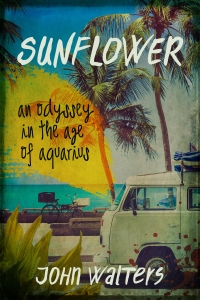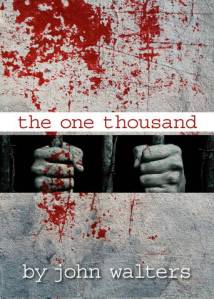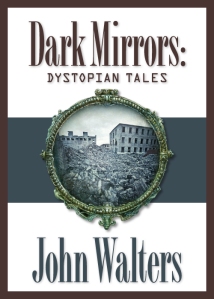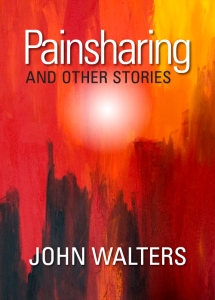
Faux Book Review: Reviews and Reflections on Books, Literature, and Writing by John Walters

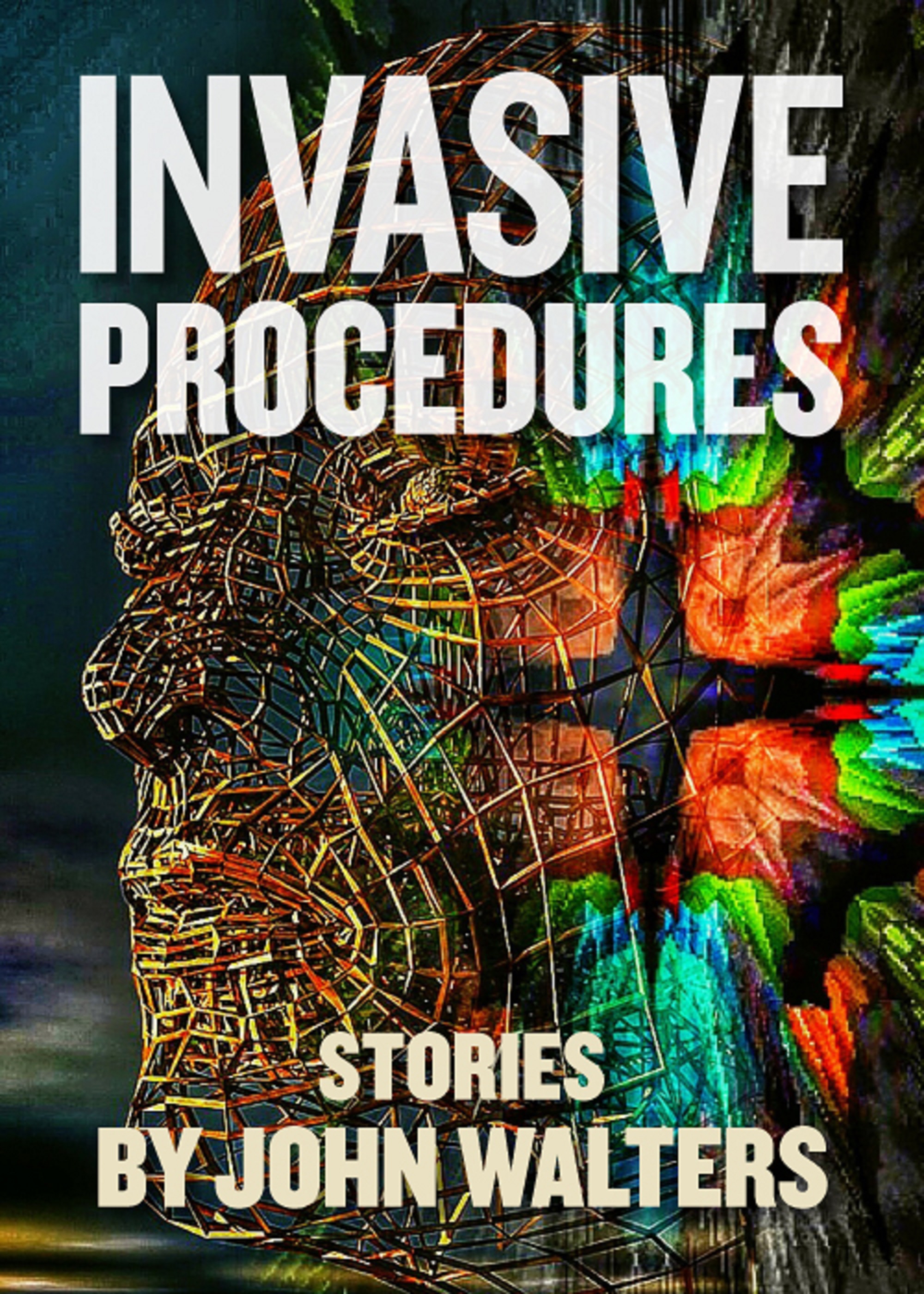
4-14-JohnBookReviews_WebBigWhy is this a faux, or fake, book review?  Because it’s a review of my own book.  My plan earlier in the week had been to use this week’s blog post to merely announce the publication of this book, and perhaps to reprint one of the book’s two introductions, “Why Reading Gets Me Off” or “Why I Write Book Reviews” – but these are already available on this website, and I only need to provide links to them.  I could just show you the cover of the book and include the back cover copy – but again, I felt something was missing.  Then I came up with the idea of pseudo-reviewing it as a way to explain why I like this book and why I consider it valuable, why I would buy it and avidly read it if it were written by someone else.

This book is a compilation of book reviews and essays on literature and writing.  The first thing you notice when you open it is the extended table of contents.  It is eight pages long, and lists all the books and topics covered in the reviews.  This gives you the advantage of skipping ahead to any titles that particularly catch your interest.  Walters does not try to give any comprehensive overview of any particular aspect of literature here.  It is a hodgepodge of titles based upon his own reading experience.  It is fairly evenly divided between fiction and nonfiction books, as the author explains that in his reading he usually alternates between them.  Though most of the titles are books he has read in the last few years, there are also some lists of his all-time favorite books and short stories, and why these were particularly important to him.

All in all, the titles Walters writes about are an eclectic blend of all sorts of genres of fiction and nonfiction.  In the fiction section, he not only discusses the works of some of his favorite American authors such as Henry Miller, Jack London, Jhumpa Lahiri, Harlan Ellison, and Roger Zelazny, but also writes about a number of international authors such as Jorge Luis Borges from Argentina, Shusaku Endo from Japan, J.R.R. Tolkien from England, and Rabindranath Tagore from India.  Though most of the writers discussed are well-known and traditionally published, Walters also includes comments on some new and indie-published writers as well.

As explained in the introductions, this book is not only about the books and authors covered in the reviews, but about the writer of the book himself.  Walters has led an unusual life, as he recounts in his various memoirs.  As he tells in “World Without Pain: The Story of a Search“, in the 1970s he hitchhiked across the United States, around Europe, across the Middle East, and through India in search of experience and his voice as a writer.  He lived for thirty-five years abroad in a variety of countries.  Many of the reviews diverge into essays on his own personal experiences.  For example, in the review of “Deathbird Stories” by Harlan Ellison, he recalls his time at the Clarion West science fiction writing workshop, during which Harlan Ellison was one of the teachers.  In the review of the nonfiction work “The Seventies” by Bruce J. Schulman, he writes about the confusion he went through in the San Francisco Bay area in the early seventies, surrounded by the “detritus of the sixties” and the deteriorating hippy culture of drugs and free sex.  In the first essay on “The Lowland” by Jhumpa Lahiri, he recalls the time he studied the Bengali language at Dhaka University in Bangladesh and lived in the crowded confusion of the city of Calcutta.  These and other personal reminiscences infuse this book with exuberance and depth.

This is the type of book on literature I like to read – one shot through with exciting and interesting side trips and divergences.  One of the essays in the section on nonfiction books is called “On Abandoning the Reading of The United States: Essays 1952-1992 by Gore Vidal”.  Walters explains that once he starts a book he almost never puts it down until he finishes it, even if the reading becomes tedious.  However, in the case of Vidal’s essays, they were too pompous, highbrow, and just plain boring to waste time reading.  Walters’ book is not like that.  The essays are succinct, surprising, full of fascinating roadside attractions on the literary journey of life.  Personally I am always on the lookout for books like this.  I love to hear other writers’ takes on books, literature, and writing, but there are too few of such books out there.

All right – I am switching back to John Walters the writer, from John Walters the self-reviewer.  Honestly, I really do enjoy reading books about reading and writing such as Henry Miller’s “The Books in My Life”, but there really are too few of them available.  That is one of the main things that prompted me to write this book: because as a reader, I would want to discover and read a book like this.

“Reviews and Reflections on Books, Literature, and Writing” is available in print and for Kindle here, and at Smashwords in various electronic formats here.

Posted in Book Reviews, On Writing, Reading | Tagged , , , , | Leave a comment

On the Breaking of Rules in Writing

As I was finalizing my thirteenth book, a compilation of book reviews and essays called “Reviews and Reflections on Books, Literature, and Writing”, I found myself with a curious dilemma. Look carefully at the preceding sentence. Note that the title of the book is within quotation marks, and the comma follows after. I’ve been doing that for a long time now, and recently I was corrected for it by an editor checking some of the Internet articles I write to help pay the bills. But is it right or not? At first I thought that I didn’t give a damn; it seemed reasonable usage to me and who cares what anyone else thinks? Then I thought, well, if it really is wrong I should do something about it. So I did some research.

I already knew from my article-writing jobs that rules on style are not always consistent. For one company, I studied the AP Style Guide. There are a lot of nit-picking rules on every aspect of sentence structure, grammar, punctuation, and so on. In my own writing I do not always follow all the same rules, so I had to memorize it all, or at least memorize where I could look up the details, so I didn’t slip up while writing the articles. Then came another batch of article assignments in which the client insisted on the guidelines of the Chicago Manuel of Style, in which are key differences. I had enough work, and I refused these assignments, as the man-hours necessary to learn a whole new style guide and then constantly look up discrepancies until I got used to the differences was too much trouble. So I am aware that rules, guidelines, and styles do not always mesh. It gets even more confusing and complicated when you consider American, British, and Australian English, and regional variations within these broad categories. What is a writer to do?

But back to the comma/title dilemma. I was willing to go through the lengthy manuscript and change it all if I had indeed made a genuine error, so I did some research. What I found out was that only in America is it accepted form to put the comma within the quotation marks when you are listing titles; in Great Britain and the rest of the world, you always put nothing except the title within the quotation marks, and all other punctuation outside. Hmm. So I thought about it a while, and I decided to leave things as they were – and are. After all, I lived overseas for thirty-five years; that’s probably why I picked up the habit. Why be ashamed of my internationalism? Why not flout it? And again, as I said before, who really gives a damn? Communication is the main thing, not nitpicking. Then you might say that I should be consistent and use all the rules and spelling of British English. And I would answer, why should I if it does not please me to do so?

I’m not saying a writer should lapse into total language anarchy, although some, even some of the most revered, have done so. I believe basic rules of grammar, syntax, punctuation, story structure, tense, point of view, and so on should generally be followed, but there are always exceptions. Consider, for example, what I consider one of the greatest short stories of all time, “Sundance” by Robert Silverberg. He breaks all the rules of tense and person in that story. He switches around from present to past tense and from first, second, and third person. But it works. It’s brilliant. If he told the story in the conventional way, sticking entirely to first or third person and past tense, the story would be okay but not extraordinary. As it is, it is a work of genius. Many other departures have been made by poets, novelists, and short story writers. Some variegations have worked and some have not, but a reader has to give the writer the benefit of the doubt, and the leeway to experiment with all the tools in the toolbox in any way necessary.

So in my latest book, I left the titles pure within the quotation marks. If you don’t agree, in your next book or essay or review or whatever, you can do it a different way. I’d do it a different way too if an editor who was paying me good money for a piece asked me to, and I don’t think I’d be compromising my artistic integrity to make the change. In this case, since I was self-publishing the book, the decision was entirely up to me. So if you are reading the book, be assured that the peculiar (to you) punctuation is not a mistake due to the fact that I do not know the rules. It is a deliberate choice based upon my international background. Please don’t get hung up on it or allow it to diminish your enjoyment of the book. And if you, as a writer, feel the need to make adjustments to particular rules of grammar or spelling or punctuation for the sake of your art, I will extend the same consideration to you.

Posted in On Writing | Tagged , , , , , | 1 Comment

Book Review: Outliers: The Story of Success by Malcolm Gladwell

It was through the best-selling self-published writer Hugh Howey that I learned about this book. He posted a review of it on his site that got me sufficiently interested to seek it out. Howey, from his frequent online essays and comments, seems an amiable kind of guy, and is more than a little befuddled by his overwhelming success. He insists that his talent is no greater than many other less successful indie writers, and he has launched into the analysis of various books and statistical studies to find out what, in fact, are key factors that make someone successful in their field of endeavor.

Gladwell, in this book, posits that not only is talent not the overriding consideration, it is not even one of the main determinants in who succeeds and who doesn’t. In one section on IQ he points out that studies show that after a certain cutoff point of about 120 or so, IQ is no longer an important criterion of success. Other considerations take over. To succeed in the wide world, you have to have not only general intelligence, but practical intelligence and a good deal of luck.

To illustrate his theory, Gladwell starts with the star players of the Canadian hockey league, and asks the question: what makes them hyper-achievers when the country is full of young people who potentially have the same degree of innate talent? The answer is surprising, because it is not genetics or inherent ability. The fact is, the best players were born right after January 1st, the cutoff age for age-classes in hockey in Canada. This slight age difference makes them a little bigger and stronger than their peers, which attracts the interest of minor league teams, which gives them further training, and so on. A series of coincidences drives their success. And the statistical evidence for it is overwhelming.

For his next section he pulls out the big guns as examples: the Beatles, one of the most successful rock groups ever, and Bill Gates, the founder of Microsoft. Gladwell calls the secret of their success the 10,000 hour rule. He says that if you want to make it big in any endeavor, you don’t have to be better than everyone else, you just have to work harder and practice more. Before Bill Gates dropped out of Harvard and started up Microsoft, he logged in way over 10,000 programming hours. Before the Beatles became a musical sensation, they were invited to Hamburg, Germany, where they performed onstage at strip joints and clubs for eight hours a day, seven days a week. They were not overnight wonders. Before they became famous they paid their dues. Other examples abound in this chapter: Mozart, Steve Jobs, Bill Joy. Everyone put in their time before they made it big. Then he brings forth another interesting statistic: all of the big tech billionaires were born within a few years of each other, so that they could put in their 10,000 hours of training and be ready to jump on the first tech train when it rolled by. They were not more brilliant than anyone else; they just put in their hours and were in the right place at the right time.

This is something of great relevance to writers. Dean Wesley Smith says something similar, but puts it in the form of volume of work rather than time. He says that the first million words a writer writes is crap. Either way, 10,000 hours or 1,000,000 words, there is a significant apprenticeship before attainment. If you expect instant gratification in the writing game, or in most other endeavors in life, you’re living, as they say, in la-la land.

Of course, figuring out how much time you have spent writing or exactly how many words you have written, unless you are the hyper-disciplined sort of individual who keeps a log, is a guesstimate at best. The best solution, then, is to never stop practicing until they pry the keyboard out of your cold dead fingers. That way, presumably, you would at some point pass the threshold and be into some serious stuff.

In one of the later chapters, Gladwell comes to a similar conclusion about the school system. When speculating about the success of Asians in learning mathematics, he compares school instruction with rice farming. To plant and grow rice successfully, you have to get up before dawn and put in a long day of planting and tending all year long. If you don’t put in the hours, you don’t have a good harvest. Asian children excel at math not only because their language predisposes them to work with numbers more easily, but also because they put in many more hours studying it than most westerners do. Gladwell describes an experimental school program amongst some of the nation’s poorest kids in the Bronx in New York in which students have to put in study days of twelve hours or more, come in half days on Saturdays, and attend classes for part of the summer as well. These kids, formerly given up as hopeless cases, excel at mathematics, and almost all of them go on to attend college. Why? Because they put in the hours. They work at it.

I’m not sure I agree with everything Gladwell posits in his book, but I think most of it has enough veracity to be immeasurably inspirational. How many of us are tempted to give up because we think we’re not good enough? In reality, though, the only way to fail is to give up. Success is a mixture of hard work and luck, but I like what Kevin Anderson says about it (although I am quoting from memory and may not have it exactly right): “The harder I work, the luckier I get.” You can’t do anything about when you were born or the historical era in which you find yourself, but one thing you can do is work hard and put in your 10,000 and then 20,000 and then 100,000 hours. That’s all any of us can do. Sure, jump through the door of opportunity if it suddenly opens in front of you, but in the meantime, keep at it.

The book has other interesting sections as well, such as what causes some nationalities of airline pilots to be more accident prone, what made the Cumberland Hill area of Kentucky more conducive to feuding, what accounts for the success of the top law firms in New York, why some people tested with IQs high in the genius range make it in real life and others don’t, and, in a touching true tale at the end, how the author’s Jamaican ancestors overcame slavery and achieved success in society.

This book is entertaining, inspiring, eye-opening, and well-written. As I said, you don’t have to believe everything the author proposes, but at least in putting forth his ideas, he gets you to think outside the box, to challenge your assumptions, to see the world and human society in a new way, and that’s always a good thing.

Posted in Book Reviews, On Writing | Tagged , , , , , , | Leave a comment

Book Review: Collected Fictions by Jorge Luis Borges

Usually in my reading I alternate between fiction and nonfiction, and it was almost time for some fiction. I had a few novels at hand that I had acquired but I hadn’t read, but I was in the mood for something special. Then it occurred to me that it had been a while since I had read Borges. I have read through his collected short stories a few times already, and I like some more than others but generally his short fiction thrills me through and through. He has a unique imagination and in an absorbing blend of reality and fantasy delves into preoccupations such as labyrinths, mazes, mirrors, mysteries, tigers, puzzles and anomalies. I found a like-new used copy of his complete works of fiction on Amazon, ordered it, and anxiously awaited its arrival.

But then, after it came and I dove into the stories, something strange happened. They didn’t thrill me like they used to.

What was wrong? I couldn’t figure it out. It was not the fault of Borges; Borges is still Borges, as enigmatic and brilliant as ever.

Therefore it came to me that the trouble had to do with either me or the translation.

It’s true that I have been going through some hard times recently, and have been preoccupied with survival. I have just weathered one of the worst winters of my life that decimated me both physically and mentally. I am exhausted, spent, and breathing a psychic sigh of relief that the weather has warmed somewhat, that spring has begun. It could be that the problem is with me, and that I was not prepared for the marvelous feast that is the fiction of Borges.

But in a way that doesn’t make sense. Usually good fiction lifts me up, inspires me, helps me straighten my back and muddle my way through.

Then I thought that perhaps the last time I read the book the translation had been different, so I found the library catalog of Anatolia College in Thessaloniki, Greece, where I had last borrowed the book. I fully expected that I had read a different translation. But no. It was the same.

So it is me. Hmm. I think my preoccupation with my ongoing struggle to pay the rent and put food on the table had something to do with my lack of concentration. Many stories shone through my daze and struck me, as always, as brilliant. The mysteries and fantasies are among the best anywhere, in any language. This time around I particularly appreciated the very short stories, what is currently referred to as flash fiction. But the numerous stories of the honor of knife fights in old Argentina I did get fed up with. I see only idiocy in facing another man with a knife for no other reason than a casual insult. It is a ridiculous reason either to die or to kill. I understand, however, that he is chronicling an era and a type of person and culture that used to inhabit Argentina and does not necessarily condone the practice of knife fighting.

This volume, “Collected Fictions”, compiles all the fiction from the several books of the short stories of Borges. Inevitably in such a collection, it is a mixed bag as far as quality is concerned. Much of the early work, and even much of the later, is more in the nature of experimental fragments than complete stories. However, the finest of his stories such as “The Aleph,” “The Library of Babel,” and others, are represented here too and are brilliant fantasy tales.

Borges was a very influential writer. His unique prose and idiosyncratic style influenced many writers who are more familiar to the modern reader. And despite the fact that my own intellectual lassitude, or perhaps just the fact that I had read the book too recently, prevented me from fully enjoying it this time, I heartily recommend the fiction of Jorge Luis Borges to the uninitiated. He is one of the modern masters of the short story genre, and some of his best short stories rank among the finest ever written.

 *     *     *

 I feel I need to add an addendum to clarify something here. I try to be honest in my book reviews. In that spirit of honesty, in the past I have told you when I didn’t like a book even though it was acclaimed by the literati. But at first, when it came to Borges, I baulked. I don’t really know why. I know that many writers I admire, admire Borges. Perhaps I was concerned that these people, if they read my review, might think less of me for ill-connecting with Borges this time. But then, when I pondered the matter after writing this essay, I thought, What the hell? Why should I care what anybody thinks about my opinions? Sure, Borges has accumulated an impressive following of readers, so what? I make it clear in the essay that I admire his work. And whether I do or not, why should what anyone else thinks influence my own opinion or how I express it? No, it’s too late in the game for that. To hold back the truth about what I think would be a compromise. In the spirit, therefore, of disclosure, I hereby, of my own free will, offer my opinions about a few other literary giants. I find the work of James Joyce, for the most part, incredibly boring. I like a few of his short stories, but that’s about it. “Ulysses” I could never get into, though I tried several times. The same with Charles Dickens. Too slow, too much detail. I pity the poor high school students for whom reading Dickens is obligatory. I also tried reading “Moby Dick” by Herman Melville several times and could never get into it. There’s too much exposition slowing down the story. Parts are interesting. What he should have done is pared out all the minutia about whaling and stuck to the story. “Moby Dick” should have been a novella about the length of “The Old Man and the Sea,” one of my all-time favorite works of fiction. Can you imagine how that work would have bogged down if Hemingway had included chapter-length essays on line, bait, and God knows what else? As it is, it is concise and to the point and deeply touching. Not so with “Moby Dick.” The story is buried in the midst of trivia. There, I’ve done it. I have become an iconoclast. I have shattered some sacred cows of literature. Hope it’s not too heart-rending for you and you get over it and continue to stay tuned.

Posted in Book Reviews | Tagged , , , , , | 1 Comment

The Word Fountain

I just had to start writing again. It was driving me crazy. I write all day long, but it’s not the same thing. The writing I do for money consists of Internet articles that are bullshit, masticating and spitting out information that is easily available anyway to satisfy the cravings of commercial websites for content. These articles have nothing to do with my own work. But because we need money so badly I have been putting in many hours writing these worthless piles of word-turds and neglecting my own material. About a week ago I read an article about drive by another writer and knew that I had to somehow get back to my own stuff. It was building up inside me like puss in a boil and deeply depressing me. The only thing to do was incise it and let it drain.

I laid my life on the line decades ago to forsake everything else and find my own voice as a writer. And find it I did. As I recount in “World Without Pain: The Story of a Search“, in the beginning it manifested itself as something I could literally feel bubbling up from inside. I purchased notebooks and started writing the words down and they came so thick and so fast I couldn’t keep up with the flow.

Well, time has passed, and sometimes I have written and sometimes I have not, but now I realize I am not getting any younger, and if I do not use my talent, my one and only talent while I can, I will die with work unfinished. One would think that with a dozen published books and many more stories and essays that that would be enough, but it isn’t – because I am not over. As long as I am still here I need to do what I need to do.

But then the dilemma remains that I am a single parent with the responsibility to take care of not just myself but the sons that live with me, and my novels and stories and memoirs and so on don’t bring in enough to pay the bills. To make even a fraction of our expenses I work from around eight in the morning to eight or later at night, with short breaks to do household chores and take a brief nap.

Nevertheless, I knew I had to start writing again, so I contemplated my options. There were three.

I could get up an hour early and put in an hour writing my own material. A few months ago I tried that for three weeks. I got up at five instead of six to write, so that I wouldn’t sacrifice the rest of the day. I got three excellent short stories out of it too, but at the end of the three weeks, about midday on Friday, I collapsed both mentally and physically. It took me days to recover, and I realized that that was not a viable option for me. It was too exhausting. I want to live to write for many years to come, but I saw that getting up early like that would prematurely consume me.

The second option was to stop taking a nap. I have been taking a short nap after lunch more or less regularly since living in Bangladesh – so that’s almost three decades now. Because I sleep only a few hours at night and get up so early, the nap invigorates me to get through the rest of the day. It charges my batteries so I am fresh enough to put in more hours of work in the afternoon and evening. On days when I don’t nap I run out of steam by early afternoon. I am certainly no good for mental work the rest of the day. Okay, forsaking the nap was out, then. It was not an efficient use of my time.

The last option was to try to write at the end of the day, after everything else was done and my son who goes to middle school was in bed. That meant starting to write around eleven and continuing until around midnight. I figured I might as well try it. After all, I have been suffering from insomnia brought on by the stress of our financial situation and other personal matters. I might as well do something worthwhile if I can’t sleep. So I tried it last week and I not only got some good prose out of it, but I slept better afterwards too. Part of it was simply staying up until I was more weary, but part of it was putting my mind at ease by letting that word fountain flow. I realized that part of the reason for the insomnia was worry that I wasn’t getting my writing done. By satisfying that itch I was able to relax and rest.

I don’t know if my present solution will last long-term, but I know one thing: I have to write. I can’t stop, no matter what. Somehow or other I have to find a way. Ideally, my dream is to spend the optimum morning hours working on my own material and making enough at it so that I don’t have to do this Internet hack work. But it isn’t happening yet, and until it does I need some sort of interim solution. This is what I have come up with, at least for the present. The details may change again. The main thing, though, is to nurture that fountain and not bottle it up or let it dry out. I don’t want it to turn septic again. I want those sweet fresh waters to cleanse and purify my spirit. It reminds me of what Henry Miller said once, that he loved all things that flowed. I too feel the need to keep that flow going. Next time I get stymied I hope I come to my senses and figure out a solution more quickly, before the despair sets in.

Posted in Memoir, On Writing | Tagged , , , | 3 Comments

Afterword to the Short Story “Portals”

PortalsStoryCoverBigI have begun to write and assemble story afterwords (ubiquitous additions to my volumes of short stories) for my next short story collection. These notes are on “Portals”, a story that has already been published electronically and is available at Amazon here and Smashwords here. Since there are no real spoilers in the essay, I present it to you here for your edification and enjoyment.

I envisioned the opening scene first. I pictured it at a riverside park in Burlington, New Jersey, near where my son used to teach high school math and physics. The woman, Ellie, steps out of the portal and confronts the multitudes. It is always from her point of view, and that is the point of it all. It doesn’t matter where the portals come from or who made them. Ellie has had a metanoia, a complete change of mind and heart, and has returned naked and without fear, to share the news with those she left behind.

Is it any wonder that she is disbelieved, feared, ostracized? She represents something so profoundly different that acceptance of what she is saying involves acquiescence followed by departure from the entire gamut of the contrived and constructed systems of the known world. She and many others had taken a leap into the unknown, and now she has come back saying not to be afraid, that she has been to a good place, and that they can go there too if they want. They need to choose soon, though, because soon the portals will be irrevocably gone.

What would you do? Would you abandon everything you have known all your life for a chance at paradise?

Paranoia has gripped the governments of the world, fear of the unknown. It might be paradise, but then again, it might be the opposite. So the typical reaction is to legislate righteousness by force, to take away people’s power to choose. The machinations of the system serve the system, and the system protects its own.

A line from a Bob Dylan song comes to me. What happens when you got nothing?

And I also consider the end of the story by Ursula LeGuin, “The Ones Who Walk Away From Omelas”. Why do those who walk away get up and leave? Because of the imperfection at the heart of the city.

And why did the people pass through the portals in my story when they first appeared? Some, perhaps, out of simple curiosity. Others, though, must have felt that though they had no idea where they were going, they knew that where they had been was fundamentally flawed.

This is the same principle as when you step out on the road. You have a choice either to conform to what you have seen around you all your life, to somehow cram yourself into a mold that doesn’t seem to fit, or you can go forth not knowing where you are going. It makes me think of when I really took off on the road for the first time. I started at a freeway entrance in Seattle and hitchhiked a ways down the highway towards Oregon. I don’t remember exactly where it was, but it was that same first day, and the sun was shining, and the realization of what I had done fell upon me, and it was like a vibrant thrill, a wash of internal sunshine. I had done it. I was out on the road. I was like a butterfly bursting out of a cocoon. I had tried to make it in the world I had just left, but somehow things never worked out, never fell into synch. And there I was, the world before me and the past behind. I could do anything, go anywhere. I too had stepped through a portal into a wider world, and I never looked back.

Posted in Memoir, On Writing, Travel | Tagged , , , , , | Leave a comment

My Favorite Books on Writing

I don’t think you can learn writing from a book.  If it can be taught, it is more through osmosis, through absorbing everything around you, including books, personal experience, and insight from other writers.  I hesitate to add writing classes, because I am not so sure writing classes help at all.  Perhaps they do some good if they are taught by a genuine writer and not a frustrated academic.

My own journey as a writer was ignited by a flash of revelation.  I read the short story “I Have No Mouth, and I Must Scream” by Harlan Ellison while attending a science fiction literature class, and realized that I wanted to create stories that stirred people as much as that story stirred me. That was over four decades ago, and I am as convinced of my destiny as a writer now as I was back then – even more so, in fact, with the weight of experience and, I hope, some hard-earned wisdom to back me up.

I read books on writing more for inspirational value than learning the nuts and bolts of the business.  Writing can be a discouraging, frustrating, lonely occupation, and reading of the struggles, tragedies, and triumphs of others encourages me to keep going.  One thing to keep in mind, though, if you are reading this as one fascinated by the wonderful, incomparable journey of a writer’s life, and perhaps having already tremulously set out on it yourself:  no matter how famous these other writers are, no matter how so-called successful, no matter how much their words thrill you through and through, the advice they give on the craft of writing and how to go about living the life of a writer may or may not be for you.  Every writer is different.  Read what they have to say, be inspired by the inspiring parts, but only appropriate suggestions and ideas relevant to your situation and your vision as a writer.  Discard the rest without qualm.  You don’t want to be those other writers – you want to be yourself.  It is only your uniqueness that makes you amount to anything in the world of literature.  If you don’t agree with any rules another writer has set down, then break those rules with gusto and enthusiasm.  You have carte blanche to do whatever the hell you want, and the more you exploit that freedom, the more you will grow as a writer.

I could go on and on, but without further preamble, here are some books on writing I have enjoyed, in no particular order.

1.  “Henry Miller on Writing”.  This is not an original work but a compilation of thoughts on writing from Miller’s books and essays.  Put all together in one volume, though, they are a compressed, powerful collage of ideas and impressions on a writer’s life, art, and odyssey.  It starts with sections on Miller’s genesis as a writer and finding his own voice from “Tropic of Cancer”, “Tropic of Capricorn”, “Sexus”, and “Plexus”, and then moves on to his theories on writing and the personal liberation of the act of writing.  The last section is a series of essays and letters on obscenity and censorship of literature, as Miller’s books were banned in the United States for many years due to their sporadic blatant sexuality.  My favorite passage in the book is Henry Miller’s essay called “Reflections on Writing” from his book “Wisdom of the Heart”, whose first paragraph contains one of my favorite sentences on writing:  “Writing, like life itself, is a voyage of discovery.”  So it has ever been for me.  It has not always been easy, and I do not yet see my way clear to the end, but I set forth on the journey many years ago with a clear sky and a fair wind and, despite any foul weather I may encounter, it is far, far too late to turn back now.

2.  “On Writing: A Memoir of the Craft” by Stephen King.  I respect Stephen King as a writer, but for the most part I have been content to watch the film versions of whatever works of his interested me.  Horror is not so much my cup of tea, and I don’t read much in the genre.  But this book interested me.  It got a lot of rave reviews and became a bestseller, as all of Stephen King’s books seem to inevitably do.  It turns out that only about half the book is about the craft of writing, and the rest is personal memoir.  At the beginning of the book he tells about his early years as a writer, his struggles with alcoholism and heavy drug use, his family’s intervention, and his struggle back to sobriety.  At the end of the book he tells about the accident in which he was almost killed by a drunk driver while he was walking on the side of a road in Maine, his hospitalization, and the part his writing played in his recovery.  For me these are the best parts of the book.  I don’t like all of his technical advice.  He fervently preaches against the use of adverbs, for example, whereas I feel that though they should be used sparingly, a writer should never arbitrarily cast anything out of his toolbox.  But his core advice is simple and sound:  read a lot, and write a lot.  A writer can’t give better advice than that.

3.  “Creating Short Fiction” by Damon Knight.  This book is more technical than the others here listed; it goes into the nuts and bolts of short story writing.  There are sections on ideas, structure, plot, characterization, viewpoint, style, and so on.  At the end Knight also discusses how to approach editors, and what a writer’s life is like.  This book is over two decades old, and some of the advice about the world of publishing is dated, as it was written long before the Internet had become a dynamic force in publishing, but its explanations of the technical aspects of short story writing are timeless.  If you are just starting out in the writing game and want some guidelines about what goes into the making of a short story, there is no book available that explains it better.  Even if you plan to break all the rules later, which is of course your right, you should first know what they are.

4.  “A Sense of Place: Great Travel Writers Talk About Their Craft, Lives, and Inspiration” by Michael Shapiro.  I first came across mention of this book when I was reading the curriculum of a writing class at some university.  It is a collection of lengthy interviews with famous travel writers.  Some are more interesting than others, but on the whole the book is a fascinating glimpse into the world of writing.  What makes a great travel writer is personal experience.  They conduct research, yes, but to really write credibly about a place they have to set forth on a journey; they have to go there and dive into the milieu, absorb the culture, compromise their comfort and safety in search of their material.  When I set out on my journey that resulted in my memoir “World Without Pain: The Story of a Search” I did something similar, so I can empathize with these writers as they speak of plunging into danger and excitement.  I also got some great ideas for travel books to read as I went through this volume, such as Bill Bryson’s comedic account of his trek over the Appalachian Trail, “A Walk in the Woods”, Paul Theroux’s thrilling memoir of his dangerous journey north to south through Africa, “Dark Star Safari”, and Peter Matthiessen’s elegant journal of his adventure in the Himalayas, “The Snow Leopard”.

5.  “The Writing Life” by Annie Dillard.  This is a very short book, and not all the essays in it are directly about writing.  When I first received it after ordering it, it angered me that the publisher had charged so much money for it when it was so short, the margins were wide, and there were many blank pages.  I felt these few essays should have been included in one of her other collections so the reader would have more value for the price.  The reason the publisher could get away with it, of course, was because it is by Annie Dillard, and once you have begun to read her work you are hopelessly hooked.  The first book I read by her was her Pulitzer Prize-winning “Pilgrim at Tinker Creek”.  I wouldn’t say, as others have, that it is a modern-day “Walden”, but it does use incursions into nature to approach metaphysical themes.  I read several of her books after that, some of which I liked more than others.  Knowing what a great writer she was, I couldn’t resist a book of hers about writing, and the pieces that do discuss writing, though few and brief, are worth the price of the book.  She writes about where and how she composed “Pilgrim at Tinker Creek”, what she was going through at the time, and what writing means to her.

Posted in Book Reviews, Memoir, On Writing, Travel | Tagged , , , , , , , , | Leave a comment

Book Review: The Rise of Theodore Roosevelt by Edmund Morris

I have known of this book for some time, and it has been relegated to that long list of books that I hope to read someday.  Recently, however, one of my sons sent me the following quote ascribed to Theodore Roosevelt:

“It is not the critic that counts, not the man who points out how the strong man stumbles, or where the doer of deeds could have done them better.  The credit belongs to the man who is in the arena, whose face is marred with dust and sweat and blood; who strives valiantly; who errs, who comes short again and again because there is no effort without error and shortcoming, but who does actually strive to do the deeds; who knows great enthusiasms, the great devotions; who spends himself in a worthy cause; who at the best knows in the end the triumph of high achievement and who at the worst, if he fails, at least fails while daring greatly, so that his place shall never be with those cold and timid souls who know neither victory nor defeat.”

These words touched me deeply, and as soon as I had read them I determined to learn more about the man who had written them.  So it was that at first opportunity I ordered a copy of this book.  It is a huge volume of almost one thousand pages, including notes and index.  It begins at the birth of Theodore Roosevelt and ends just as he is about to ascend from vice president to president when McKinley is assassinated.  On the way it goes into great detail on Roosevelt’s childhood, youth, schooling, early political ambitions, years as a rancher in the Badlands of Dakota, military career in the Spanish/American war with the Rough Riders, election to the governorship of New York, and eventual nomination to join McKinley on the Republican ticket for the presidential election. During this flamboyant rise to political prominence Roosevelt penned fifteen volumes of history and other popular nonfiction, and served as a New York State assemblyman, a sheriff in cattle country, a commissioner of the United States civil service, president of the New York City Police Board, and Assistant Secretary of the United States Navy.

The book reads like a novel.  At no time does it lag, and at no time is it boring despite its length.  It is well-paced and extremely well-written.  When it first appeared it won both the Pulitzer Prize and the National Book Award, well-deserved honors for a superlative piece of research and writing.

And now on to an analysis of the man himself.  He was possibly the most enigmatic and flamboyant man ever to serve as a president of the United States.  If he had one defining attribute, it was courage.  He would fly into whatever fray presented itself to him, whether the battle of San Juan Hill in Cuba, during which comrades were getting shot and dropping all around him, or political battles against corrupt and powerful adversaries.  He loved a scrap; he loved to show his mettle. It seemed, in fact, that he was more comfortable in the midst of adversity than taking his ease at home, though he did believe strongly in late nineteenth century family values and was fastidiously faithful to his first wife, who died very young, and to his second, who stood by him through his tumultuous life and bore all but the first of his numerous children.

So far so good.  His courage and morals were unquestionable.  And yet…  Men of force, as they say, are men of faults, and Roosevelt was no exception.  For example, though he had an undoubtedly sincere love of animals and nature, the way he showed it, especially as a youth and also later in life, was in hunting down, killing and stuffing birds and mammals until he had amassed the equivalent of an extensive private museum-full of horns, skins, and stuffed animals which he displayed in his home.  In one particular instance the book describes in detail that, aware that the plains bison was fast disappearing from the prairies, instead of trying to save the remaining beasts, Roosevelt sets off on a frantic days-long hunt to kill one before they are all gone.  In addition, Roosevelt was raised a member of the aristocracy and was rich all his life, and not only was a spendthrift and dreadful in managing his money, but he often displayed the self-righteous hypocritical superiority of attitude that went with the aristocratic turf.  But more than anything his greatest virtue, his courage, also had its dark side.  Sometimes he craved a battle when diplomacy would have served the purpose so much better.  A classic example is the onset of the Spanish/American war.  McKinley wanted to go slow, to negotiate and try to arrive at a diplomatic settlement.  Roosevelt, on the other hand, who had pushed aside the Secretary of the Navy and was calling the shots in his stead, was all gung-ho for war, not only because he felt it was in the nation’s best interests, but because he was so keen to enlist and see battle firsthand for himself.  His attitude was often to literally punch someone out and ask questions later.  Several examples of this tendency in his early years, if attempted nowadays, would undoubtedly land him in jail for assault.

So yes, Roosevelt was a complex, forceful man.  The book ends just as Roosevelt is about to be informed that McKinley has died from his wounds several months into his second term as president.  Roosevelt, by a twist of historic fate, served his first term without having been elected president, but he was reelected in a landslide four years later.  This is the first volume in a trilogy.  The second book describes Roosevelt’s presidential years, and the third book the years after his presidency until his death in 1919.  Someday I will probably read these other volumes, though not right away, because I have many other items on my reading agenda.  For now it was enough to read this, the story of the early years of the dynamic Theodore Roosevelt, for not only a glimpse of the man, but of the era in which he lived.

Posted in Book Reviews | Tagged , , , , | Leave a comment

How I Began Self-Publishing; Part Three: The Short Stories

LeilaniFixedCoverOne of the great joys of electronic publishing is that you are not bound by length.  You can make the story as long or as short as it demands to be.  You can write novels of forty or fifty thousand words, as writers used to do in the golden age of original mass-market paperbacks, or you can make them several-hundred-thousand-word doorstoppers.

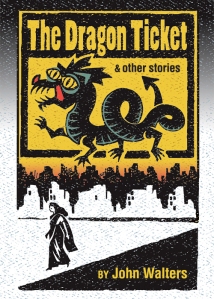
You can also, if you like, publish independent short stories.  These I liken to individual songs from albums released by themselves as singles.  Even way back when I was young it was common to buy records of single hit songs and then later buy the whole album.  So around the same time I published my first book, “The Dragon Ticket and Other Stories,” I worked on uploading all the stories as individual mini-books.

I didn’t want to trouble my graphic artist relatives to prepare covers for every short story I published, so I determined to learn how to create covers myself.  There is a learning curve involved here, and a number of my early attempts, some of which I have replaced and others of which I have yet to get around to, are – being kind to myself – mediocre.  Others might call them dreadful, and I wouldn’t argue.  Dean Wesley Smith explained on his blog how to create covers on PowerPoint, and I have used this tool ever since.  Of course it took me a while to get the hang of it, but as long as you are not too demanding concerning complexity, you can manage quite well.  In the beginning, I had no idea about branding or the desirability of my covers having some sort of basic similarity one to another.  Later I decided on a simple pattern of black background, gold lettering, and an image in the middle between the title and author credit.  But with those first attempts I experimented with font size, font color, picture placement and so on.

For the cover images, at first I perused photos in the public domain and chose from among those.  Wikipedia has an extensive list of links to public domain image sites.  The main problem with using these was that it would take me so long to find suitable images.  I would spend hours searching and often settle for a sort of general generic image which meant something in the context of the story but would do nothing to attract a reader.  For example, for the story “The Golden Ones Who Work Miracles” I found an image of Colaba Beach in Bombay, on which crucial scenes in the story take place, but the picture itself is rather dark and has nothing to hint that its location is in India; very few people would identify the place or realize its significance.  For the story “At the Edge” I chose the picture of a path in the forest similar to one that appears in the story; however, the cover gives no hint of the bizarre nature of the story itself.  Shortly before I adopted a common story cover theme, for one cover of a story in my second collection, “Painsharing and Other Stories” I did hit it right.  It was for the post-apocalyptic story “Leilani.”  I can’t remember how I found the image, but it was by a professional photographer, and I wrote for and received permission to use it.  The photo shows a palm tree in the sun all but obscured by smoke; it had been taken during a wave of summer forest fires in southern California.  It perfectly captures the feel of the post-apocalyptic tale.  Though it does not match the template I have set for most of my short story covers, I am loathe to change it, because “Leilani” has proved to be my best-selling short story by far, and I am sure that the cover has something to do with it.

When I say best-selling I mean it in a relative sense.  None of my stories have sold many copies, and some have sold none.  But “Leilani” has continued to sell several copies a month since I published it back in 2011.

Eventually, to save time, I started to buy low-cost images from Dreamstime.  They only cost a few bucks, and the website’s search engine enables me to find excellent cover images in a few minutes rather than hours.

Which brings me to the issue of pricing.  This is a controversial topic among self-published writers.  Some feel that a low price point is the only advantage self-publishers have over traditional publishing venues.  Others feel that setting low prices is like tossing your books into the bargain bins.  I don’t believe in pricing my full-length books at $.99 like some writers do, but on the other hand I have kept most of my individual stories priced at $.99.  When a story reaches novelette or novella length I raise it up to $2.99, but I feel that for just one story $.99 is fair.  It’s like that single song that you download.  I want to make my stories accessible to as many readers as possible, and thinking like a reader, I know I would not pay more than $.99 for a single story, no matter how dynamic, classic, and award-winning it might be.  Right now, I’m just too damn poor, and that informs my pricing decisions as a writer.  I can’t afford new high-priced books from traditional publishers.  I scour bargain bins at bookstores, spend hours searching through used book stores, and buy used rather than new copies of books from Amazon.  I admit it.  I have to read and it’s all I can afford right now to satisfy my hunger and that of my book-hungry progeny.  I want all readers to be able to afford my works.  I do not want to be elitist.  I have spent most of my life poor.  When I was traveling the world in my formative years as a writer I needed reading material.  When I consider pricing I think of myself as a wandering hippy or as a cash-strapped, struggling single parent.

Occasionally, when I feel the stories are too short to stand alone or have similar themes, I have packaged two stories for the price of one.

One final point I would like to make about my short stories.  I seldom write them directly for self-publishing.  Once they have made the rounds of traditional publishers I upload them for sale quicker than I used to, but I always send them around to the magazines and anthologies first.  I like seeing my work in these publications, and when my stories are accepted for publication there are two benefits:  they pay me, and at the same time my work is publicized.  This delays the self-publication process sometimes by a year or two, as magazine and anthology editors, with a few exceptions, are notoriously slow in replying to writers, but I think the delay is worth it so I build it into my system.  When the stories are complete I send them around, and when there are no more places I want to send them I upload them.  Competition is stiff in the professional magazines.  Editors might accept only a half-dozen pieces out of one thousand submissions.  I have the added disadvantage, being all but unknown, of having to write better than the established pros, as any editor, when confronted with two stories of similar competence, will choose the story from the writer with name recognition, as it helps to sell copies.  That’s what it’s all about.  Often, by the time I get around to uploading my stories, they have received a multitude of kind words from editors.  “I loved this story but…”  “We received so many top-notch submissions that we couldn’t…”  And so on.  Still, I feel that the benefits of traditional magazine or anthology publication outweighs the delay while the stories make the rounds.

I love writing short stories, and I would turn them out much faster if I had the time.  As it is, they seem to erupt in bursts from within, whenever a block of time presents itself.  They are wonderfully suited to this new age of self-publishing, and the opportunity to self-publish presents many great stories to readers that might otherwise be regrettably buried.  A self-published story has even made the final Hugo Award ballot this year.  This unique phenomenon will probably happen more and more as this new era of artistic freedom continues.

Posted in On Writing | Tagged , , , , , | Leave a comment

Book Review: A Visit From the Goon Squad by Jennifer Egan

If it were not for the sickly green cover, this book would be near perfect.  Why do big New York publishers dress brilliance like this in such mediocrity?  I remember expressing something similar about an inferior cover while reviewing Jhumpa Lahiri’s novel “The Lowland.” Egan’s book’s cover should have color and complexity, like the stories inside.

The book itself is one of those rare literary discoveries that catch me completely unprepared.

I thought it would be an okay read.  After all, it won the Pulitzer Prize for fiction as well as the National Critics Circle Award, the Los Angeles Times Book Prize, and other literary honors. Those awards, however, have little relevance to the true greatness of a book. Plenty of books that have won such accolades have left little impression on me.

I don’t know whether to call it a novel or a collection of interrelated stories with common characters.  Who cares?  It is what it is.  The styles mix from first person to third person to second person, present and past tense – there is even one story told entirely in PowerPoint slides. It slips and slides back and forth in time like a drug-crazed time traveler, but at no point is there a diminution of the quality of the prose or of the subject matter.  Every word is relevant.  Every story, at the end, grips the heart with its inevitability and insight into character.

The photo of the author on the inside cover flap is a giveaway.  She has a wry smile, as if she is privy to some secret of which the rest of us are ignorant.  And she is, in a sense.  She knows how to put words together better than most writers on the planet.  And it appears to be effortless, something she tossed off as if a musician at a jam session, though there is not a melody, not a single note out of place.
I could get into the various plotlines, I suppose, but it would be very convoluted and spoil the fun when you read it for yourself.  And you should, you know.  If you enjoy hip, relevant, intelligent, character-rich, dynamic, utterly absorbing fiction, you should give this book a try.

 *     *     *

When I wrote the above section I had one more chapter or story in the book left to read.  Now I have completed it, and the ending is perfect, a fitting resolution.  I said “chapter or story” because some reviewers refer to the book as a novel, and some as a collection of short stories.  I guess you could say it is both.  Each story hold up well on its own; in fact, a number were published in prestigious magazines before they appeared in the book.  It doesn’t really matter what you call it, as long as you call it a singular work of art, but I would probably call it a novel.  The various interconnected stories all hold together beautifully as one entity.  Since, as I said, I don’t want to give away anything by synopsizing the plot, I will just reiterate what I said earlier.  Read the book, and you are in for a profound, uplifting literary experience.

Posted in Book Reviews | Tagged , , , | Leave a comment