How I Began Self-Publishing; Part Two: My First Book

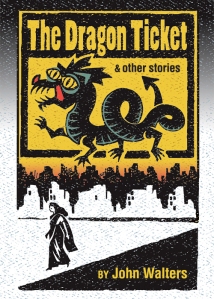
DragonTicketWEBOnce I made the decision to self-publish some of my material, I was still cautious about diving in all the way.  I decided to start by compiling a collection of some of my stories that had already appeared in magazines and anthologies.  I would do the collection in print and electronic editions, and also publish the stories electronically as individual entities.  I had other stories, original stories, that I felt were good work that had made the rounds and not sold, but though it didn’t take me long to decide to do so, I wasn’t quite ready yet to self-publish new material.

Most of the stories were set in India or thereabouts, so I decided that would be the theme of the collection.  In the end, I added a few unrelated stories, and even one original story to bring it up to the word count I wanted, but most of the stories were previously published and had that Indian theme and flavor.  They were some of my first-written and first-published works, and my mind had been full of my experiences in the East when I wrote them.

At first I called the collection “Ceasefire and Other Stories,” as the story “Ceasefire” was very important to me, and I rather liked the connotations.  But after a period of rumination, I changed the title to “The Dragon Ticket and Other Stories.”  Not only did the title have more zing and offer more cover possibilities, but I wanted to open the collection with the title story, as “The Dragon Ticket” has a bit of a faster start to draw readers in at the beginning of the book.

I wanted to write introductions to each story, but then I realized that to deal thoroughly with any thoughts I had about the material would inevitably lead to spoilers, and I did not want to ruin the experience of surprise for those who were reading the stories in the collection for the first time.  So instead I decided to add an afterword to the book in which I would include essays on each individual story.  The reader could read or not read this last section, but whatever notes a writer shares about stories for me personally is as inspiring to read as the stories themselves.  I wrote about the genesis of the story, what initially inspired it, any parallels to my own life, and any thoughts the subject or theme of the story inspired in me.  I intended the afterword to link the short story collection to my larger body of work, especially my memoir-in-progress which was not yet published.  Fiction is as much a personal expression by a writer as the retelling of an actual life event.

The cover for the book was done by relatives who are professional graphic artists.  They spent a lot of time on it, coming up with a beautiful original illustration that succinctly captures the theme of the collection.  Their digital and print covers for the book greatly enhance its appearance.

I did the formatting for both the digital and print books myself.  To do so, from the Smashwords website I downloaded Mark Coker’s e-book “Smashwords Style Guide.”  I printed it out and studied every word of it, and as I formatted my book I went over it again and again.  I knew nothing about formatting, so there was a lot to learn.  Not only did I have to learn how to redo the entire text so it would read well when published electronically, but I also learned how to create a hyperlinked table of contents, so that readers could jump to any story they wanted and then jump back to the table of contents.  The electronic version, though, was the easy part.  The print formatting took much longer to learn.  I did it all in Microsoft Word.  Day after day I would pore over help pages on the Internet, working out bugs in the print formatting.  One of the toughest things I had to deal with was creating page numbers.  Not because it really is difficult, but because I had never done it before.  One little thing would go wrong and it would sometimes take me hours to track down the problem and set it right.  Often it was the tiniest of tweaks, but if I didn’t know how to do it, the result was endless frustration.  Finally, though, I got the file finished.  I sent it to my graphic artist relatives for their perusal; they sent it back with suggestions.  After several such exchanges I had a satisfactory PDF copy of the print text.

Next, when everything else was ready, was the uploading.  I uploaded the book to three sites: Amazon Kindle electronic publishing, Amazon CreateSpace print publishing, and Smashwords, which handles electronic distribution to book vendors such as Barnes and Noble, Apple, Kobo, Sony, and others.  I did not then have the option to upload directly to Barnes and Noble because I was still living in Greece, and Barnes and Nobles only accepted uploads from the United States.

One other detail I had to attend to was opening a bank account in the United States, which one of my sons helped me to do, wherein the vendors could direct deposit hypothetical royalties.

Once I had the cover files, the book files, and the bank account, the rest was fairly easy and straightforward.  You create accounts on these websites, fill in your personal and financial data and details on the book, including a blurb, or brief compelling description.  It was thrilling to see the book for sale in the electronic bookstores, but it was much more thrilling when I finally received my print proof copy from CreateSpace.  Nothing can describe the thrill of seeing the culmination of your work in physical form and holding it in your hands.  It was my newborn baby.  I gazed at the cover, read the cover copy, opened it slowly and pored over the first few pages as if someone else had written it.  I skimmed through and paused at each story title, read the first few paragraphs, and imagined how a reader would feel.

I was (and am) proud of that first book, and I sent copies to my father and brother and sisters.  I also sent a copy to Kristine Rusch and Dean Smith with my sincere thanks for sharing the lessons that had led to its creation.

I didn’t expect “The Dragon Ticket and Other Stories” to jump right onto the bestseller lists, and it didn’t, but it is good work, and I realize more clearly now than I did back then that it was right for me to do it when I did.  Yes, the publishing world had changed.  The so-called gatekeepers were being too prohibitive, too exclusive.  Self-publishing was like a wonderful burst of fresh air in an industry that had become inhibited, stuffy, exclusive and creativity-strangling.  Too much of great beauty had been moldering in trunks because the powers-that-be refused to touch it – or worse yet, had so many guards at the gates that they never even got a look at it.  Hopefully, those days are gone forever.  Writers can now take their work directly to readers and let them decide.

Posted in On Writing | Tagged , , , , , , | Leave a comment

How I Began Self-Publishing; Prelude: Greek Summers

Before I explain how I got started in self-publishing I need to explain about my summers in Greece.  However, I have a confession to make.  I will likely go into more detail than I need to because thinking about sunshine and warm seas helps assuage the pain of the cold winter I am enduring right now.

When I worked as an English teacher in Greece I followed the standard school year. I would work eight months of the year and have four months off.  The way the system worked was that the schools hired and fired year by year, and during the four slack months teachers would collect unemployment insurance from the government.  It was inefficient and further taxed an already overburdened system, but that’s the way everyone did it.  Sometimes I considered getting another job during that time, but when I did the math I realized that it was not lucrative to do so unless I found work with astoundingly good pay, none of which was available even then before the huge Greek economic nose-dive.  So I had four months when I didn’t teach.  I was still busy because my wife worked full time, so I shopped, cooked, cleaned, took care of the boys and so on, but it was a much less strenuous time than during the school year when I did all those things and also taught from afternoon late into the night on weekdays and also Saturday mornings and had the burden of class planning and correcting essays and exams besides.

So in summer I would write more, especially Monday through Friday when I would stay at home while my wife was working.  On weekends on those clear hot Greek summer days we would head for the beach. Only twenty minutes from our house there was an excellent sandy beach with clear clean sea water and a cluster of rocks offshore that was perfect for snorkeling.  The only problem with that spot was because it was closer to the city, it got very crowded on Saturdays and Sundays.  If we got just a little more ambitious and drove forty minutes away, we came to a village where there was a superlative beach.  Here it was uncrowded, the water was clear and warm, and the beaches were clean and commodious.  Usually my wife and I and our youngest son would go, as the older ones preferred to stay at home and play computer games.  We would set up our beach umbrella, drop our towels and spend a few hours there, as much time as we felt safe before getting sunburned.  My son and I would spend a lot of time in the bathwater-warm water.  Sometimes I would swim underwater for a time, finally break the surface, revel in the sun and sea and feel so peaceful that I wished I could retain that sensation and carry it with me always.  There are not many such moments in life, in which you feel no stress and perfect calm and peace and a wonderful wash of well-being.  And of course, those moments do not last and you cannot carry them with you.  If you could I would cocoon myself in the blissful memory of the Greek sea instead of shivering in the Yakima cold.  So it goes.

Anyway, those summer weekends were intensely therapeutic, and the weekdays allowed me to do a lot of writing work I had no time for during the school year.

It was during one of those summers that I first found out about the changes that were happening in the world of publishing, particularly concerning the new opportunities for writers to self-publish their work.

I don’t remember how I discovered it, but the first thing that ignited my interest was Dean Wesley Smith’s series of blogs on “Killing the Sacred Cows of Publishing.”  From there it was a quick jump to his wife Kristine Kathryn Rusch’s blog “The Freelancer’s Survival Guide.”  Once I discovered these treasures, I not only read the current postings but all the available back material and readers’ comments.  When I was caught up, I looked forward each week to new posts from each of them.  It took me a while to come around, entrenched as I was in old, traditional ways of thinking.  I was hesitant about taking a leap into the unknown.  Not that I was averse to it – I just wanted to be sure it was the right move before I made it.  So I read; I studied; I searched for corroborating evidence on other websites.

And I came to some conclusions.  I had started to sell stories to traditional magazines and anthologies years before, but this path was excruciatingly slow.  I had a book finished that I was trying to peddle to agents and editors but was getting no nibbles – in fact, most of the time I was getting ignored; they had not even the courtesy to reply.  The more I investigated, and the more I analyzed my situation, the more I realized that I had nothing to lose and potentially a lot to gain by taking the leap and getting involved in what seemed an exciting new trend in publishing.

I’m a professional writer; I make my living by my words.  I’m happy to share these essays with you, but at the same time, financial support makes the words possible.  If you’d like to become a patron of the arts and support my work, buy a few of my available books or available stories.  Thanks!

Posted in Memoir, On Writing | Tagged , , , , | Leave a comment

Book Review: Jack London: An American Life by Earle Labor

If I had to name the three writers most influential on my own career as a writer, they would be Jack London, Harlan Ellison, and Henry Miller.  I would snap up a biography of Harlan Ellison in a moment, but none have yet been written.  I haven’t found a definitive biography of Henry Miller either, but then again, he tells his own story better than anyone else.  Of Jack London, however, there have been a number of biographies, and I have read a few in the past.  A copy of Irving Stone’s “Jack London: Sailor on Horseback” first set me on the London literary trail.  This one, written by a man who has been a Jack London scholar his entire academic life, is purportedly the definitive biography.  That remains to be seen, as I am only one hundred pages in.  But already it has stirred up memories and emotions from the time my ambitions turned to becoming a writer.

 *     *     *

We have a time gap here.  I just finished the book.  The first few hundred pages I felt the author was sort of skimming over the material, and I wished that he had been a little more thorough.  The second half of the book slows down as it traces London’s physical deterioration and mental depression in the face of a myriad pressures, many of which he brought on himself.  I think the book is definitive not in that it is comprehensive, but that the author combed meticulously through available records, including journals and diaries of those involved, and tried to dispel various myths and rumors concerning Jack London’s life and death.

And more and more as I read on, I realized that I don’t admire the life of Jack London as much as I used to.  He did some exciting things, sure, in the Klondike and the South Pacific, and I would have enjoyed adventures like that, but for the most part he lived a hard life, beset with financial and personal problems, never able to catch up and relax.  Though he was the highest paid writer in the world, he always mishandled his money and spent ahead so that he was continually in debt.  He was addicted to instant gratification.  And though he put on a show of being tough and strong, in reality his constitution was rather weak, and choices he made concerning overindulging in alcohol and following a very unhealthy diet contributed to his wasting away of disease and dying at the age of forty.  He became so stressed and overextended that after a certain point his writing brought him no joy and he did it only for the money.  I can’t imagine reaching that point.  I want the money too, but I can’t imagine not being fascinated with writing and literature and thrilling to putting words in order in just the right way.

Yes, Jack London, as so many celebrity writers before and after him, was not able to keep a handle on his life.  It reminds me of the immensely talented actor who just died, Philip Seymour Hoffman.  The man was one of the greatest actors of his generation, with money and awards and no end of offers of high quality work.  So what happens?  He overdoses on heroin and dies at the age of 46.  And think of Jimi Hendrix, and Janis Joplin.  They attained to what just about everyone thinks they want, and they couldn’t handle it and it killed them.  They couldn’t cope.

As far as Jack London and his adventures, hell, I’ve done things as wild or wilder.  I hitchhiked around the world broke.  I begged on the streets of Tehran.  I hiked through the Himalayas without a map, a guidebook, food, water, or supplies.  I circled the world twice, once in one direction and once in the other.  It’s not the exploits in themselves that are important.  Jack London was like many young celebrities today – he became famous before he had the maturity to handle it, and he paid the price.  Perhaps he never would have been able; I don’t know.  I know that if I had become famous and rich when I first started writing I most likely would not have survived; I would not have been able to handle it.  I could easily have died of a drug overdose or pickled with alcohol.  As it is, I think that if it happened to me now I could handle it better.  I have the maturity, the wisdom, and the life experience to be able to ride the wave.  But then again, who knows?  You never know for sure until it happens.

But one more thing, a very important thing, needs to be said.  Jack London was an artist.  He took his life experiences, many of them sordid, many of them dysfunctional, many of them reprobate, and turned them into great literature.  Not all of what he wrote is great, but some of his short stories are among the greatest I have ever read anywhere in any genre, stories like “The White Silence,” “In a Far Country,” “Love of Life,” “To Build a Fire,” “The Apostate,” “The Red One” – I could go on and on, and if I had a bibliography available I would doubtlessly add to the list.  Not to forget some of the longer works too, like “The Call of the Wild,” “White Fang,” “The Sea Wolf,” and “Martin Eden.”  Despite whatever turmoil he went through in his life, Jack London was a greatly gifted writer, and despite his bluff and bravado his works reveal that he had a deep, sensitive soul.  That’s what will be remembered in the end, not his dysfunctional life but his writing.

In conclusion I would have to say that this is the best biography of Jack London I have read.  Irving Stone’s book “Jack London: Sailor on Horseback” was very important to me, but as far as biography there was too much mix of fact and fancy.  This is a good book and well worth reading, and that it contributed to shattering an idealistic image I held of the man is a regrettable but necessary process I had to go through.

Posted in Book Reviews, Memoir, On Writing | Tagged , , , , , | Leave a comment

Self-Evaluation

I have reached a sort of limbo in my writing career.  It has happened before; in fact, it used to happen every school term in Greece, especially around exam time. No matter what resolve I might muster up, no matter what goals I might set, I could not come up with the time to work on my original creative writing.  Right now, the obstacle is a struggle for survival.  Determined to stop the downward slide towards poverty and debt, my main goal as I appraised the new year was to at least break even financially.  To do this, however, I have to put all else aside and concentrate on that which brings in immediate money, rather than that which is an investment for the future.  I make money nowadays writing articles for Internet content mills.  If I stop writing, I don’t get paid.  If I take time off, I don’t get paid.  It’s a piecework arrangement.  They like my work, but that doesn’t prevent them from paying no more than I would earn flipping burgers at a fast food joint, and it’s not enough to live on.  Besides this income, royalties trickle in from my self-published work, but far too little to even consider doing it fulltime.

Because I am familiar with this involuntary cessation of creative work, because it has happened so often in the past, I know that it is a temporary thing and that eventually I will find a way to break out of it.  Recently I tried getting up an hour earlier, five in the morning instead of six, and using the extra hour to write fiction.  That lasted a few weeks and I got three good stories out of it, but at the end I collapsed physically and mentally.  I don’t have the endurance for that kind of self-sacrifice; I am already burning myself out at my limit.  No, I just have to be patient and wait for an opening.  I am like a hunter in a blind.  My time will come again.  I have some ideas formulating.  I am appraising my situation and contemplating how to proceed.  As part of that appraisal I consider current statistics.

On the traditional publishing front, I have published 16 stories in magazines and anthologies, most of them in the United States but a few in Australia.  My first two story sales, in fact, were to Australian publications, including a professional sale that eventually got me membership in Science Fiction Writers of America, something that had been a dream of mind since I was a young would-be writer back in the 1970s.  My last traditional print publication, though, was in 2011.  After that there has been a dry spell.  Recently sales have picked up again, and I have three stories sold and contracted to magazines.  Unfortunately, they all pay on publication and they haven’t been published yet.  One of these is to a magazine that has been around a long time, and I’m fairly confident the story will eventually appear in print.  The other two are new magazines and their future is uncertain.  I also have three more stories that have passed the first round of evaluation and are being closely considered by editors.  Too early to tell what will happen to those. And finally, I have 15 stories out for first looks at magazines and anthologies.  Some have been circulating for quite some time.  But that’s what you do.  You send them out, they come back, and then you send them out again.  If I told you the statistics of the percentage of stories that get sold compared to stories I send out, it might scare you away from the writing game forever.  Perhaps that might be best, if you don’t have an amazingly thick skin and are not willing to endure a hell of a lot of failure on the road to success.  Be that as it may.

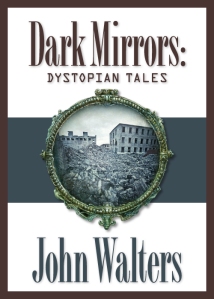
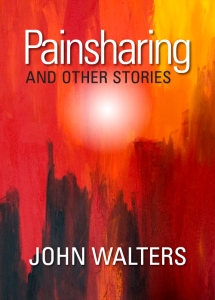
On the self-publishing front, I have 12 books published in both print and electronic editions:  three novels, two novellas, four short story collections, and three memoirs.  Besides these, in electronic-only form I have published 40 short stories and novelettes as individual editions.  Actually, in total story count you need to add four more because in some editions I include two stories.  I have also published seven electronic-only editions of memoirs and essays.  You can find details of all these publications in the bibliography on my website here.

I don’t even know if I should include it or not, because I consider it hack work of the basest sort, but in the last year and a half or so since I returned to the United States, I have also researched, written, and sold well over 1,000 articles on just about any subject you can imagine for the blogs and websites of others.

If you are a writer, you write, and the content eventually adds up.  It’s not a matter of being prolific; it’s just what you do. It reminds me of the example Harlan Ellison has used in the past of a plumber:  “Oh, you must be a very prolific plumber; you have repaired so many pipes.”  Yeah, right.  Repairing pipes is a plumber’s job.  I know that my output is far less than that of others.  My dream – no, dream sounds too remote and unreachable; let’s say my goal – is to begin to generate enough income so that I can devote my full time to writing what I want to write – what I need to write.  I see this as something difficult to achieve but not impossible.  My progress is thwarted right now by lack of time.  That’s why I am currently evaluating my situation to see what I can do about it.  In the process of evaluation I mean to go over some of the details of my recent writing past, and I may publish these ruminations here in the coming weeks.  I’ll tell you one thing though that is a certainty:  as long as I live and breathe, I will keep working towards my goal.

I’m a professional writer; I make my living by my words.  I’m happy to share these essays with you, but at the same time, financial support makes the words possible.  If you’d like to become a patron of the arts and support my work, buy a few of my available books or available stories.  Thanks!

Posted in Memoir, On Writing | Tagged , , , , , | Leave a comment

The Dark Night of a Writer’s Soul

Second prelude:  Outside my window the apartment parking lot and cars are dusted with snow.  I was going to sit down and write an essay about my current state of mind, and was going to refer to the stunningly poetic ambiance in Jack London’s brilliant story “The White Silence”; however, mundane household business intruded, took my time, and broke my train of thought.  Interestingly enough, I have been reading a new biography of Jack London, about which I will write soon, and early this morning when I first woke up I was reading about the dark night of the soul.  I realized that what I was going to write now would be almost identical to the essay below which I wrote many months ago.

 *     *     *

First prelude:  I wrote this in San Diego before my sons and I moved up north to Yakima.  I did not publish it then because I felt it was too negative.  It is, however, realistic.  In it I refer to the expression “the dark night of the soul” which I think originated with the Christian mystic Saint John of the Cross.  He makes it clear that this dark time is necessary to hone the soul; it is a part of the journey towards the ultimate light.  Anyone who is sincere in his calling, no matter what that calling is, has to go through it.

I also refer to the hack work of writing Internet articles.  I am still doing that, still hanging on by my fingernails.  But the reason I am publishing this now is that though I have my ups and downs, I do not feel I am in that dark valley anymore.  We are getting by; we are surviving, and I realize more and more that millions of others in this vast American landscape are going through similar experiences, barely hanging on and wondering what the hell happened and how they arrived at such an impasse.  Reading “The Unwinding: An Inner History of the New America” by George Packer helped me see that. Things are tough, there’s no doubt about it.  Perseverance is the name of the game.  There are no easy answers, easy solutions.  So I keep doing what I can do, day by day.

 *     *     *

I am reminded of the story of Jack London from “Jack London: Sailor on Horseback”.  I was drawn to it again and again in my first exhilarating, terrifying fever of enthusiasm as a young writer.  When he returned from the Klondike he had the responsibility of a household and mounting debts, but the burden of his calling as a writer burned in his heart.  He longed to express himself, to use his talent; however, he soon found out that no one was lining up to publish his work, that it was a seemingly impossible mountain to climb.  He dove into the task, wrote stories, sent them out, but the money evaporated, the pantry emptied, he pawned everything of value he owned, and there was still no glimmer of victory in sight.  Then he received a letter from the post office, an offer of steady employment.  If he took the job he could adequately provide for those dependent upon him, he could wear new clothes, he could eat well, he could buy the magazines and books he devoured.  But he would have no time to write.  He would have to give up on his dream.  He would, in fact, have to admit defeat.  His mother stood by him and told him to persevere no matter how long it took.  He tackled the writing with new energy, and soon his fortunes took a turn for the better.

Recently I applied at a well-known delivery company for a part-time job at minimum wage.  After agonizing depression and soul-searching I decided to turn down the job, and furthermore, to start growing the beard again that I had shaved off before I went to the interview.  I thought it would be a turning point, that from that moment things would look up.  I started writing two thousand words or more daily.  I updated and streamlined my website.  I worked on books that were in various stages of pre-publication.  I have kept it all up day seven days a week, stopping only to exercise, to go shopping, to cook, to clean the house.  I thought that my resolve would be enough to keep me in a buoyant mood, to keep my momentum going.

I was wrong.

Every day I am beset with doubts.  Every day I have to remind myself who I am and what I should be doing.  Every day I wonder if I am delusional, if I am in fact a failure who is no good for anything but a minimum wage job.

Yes, every day.

It reminds me of what I have heard many times, that courage is not the absence of fear, but persevering in doing the right thing in spite of fear.

It also reminds me of what I have read of the great monks and mystics of the past, that all of them, at some stage of their search for God, went through what is known as the dark night of the soul, a time when they felt abandoned, alone, without answers, without solace, without hope.  Even Jesus had to wander in the desert before he began his ministry.

But I am speaking of writers, not of religion.  This time, the time I am going through now, is exacerbated by the fact that so many people depend on me, and I want more than anything to help them.  Yet I know that if I take that minimum wage job, if I accept the dregs that society is offering me, that it will not be the best either for them or for me.  I want to give them more.

Several nights ago I got together with some other writers from the San Diego area to sip some wine and talk about writing, and the subject came up of why writers do it.  I am speaking here of writers who consider what they do a calling, not just a way to make money; I am not speaking of hacks.  Hacks have their place, to be sure, and some people considered hacks are in fact artists.  But writers are no better human beings than anyone else; if you read a few biographies you will find they usually have more than their share of problems both internal and external.  What writers have is an undeniable, indefatigable urge to express themselves with words, whether it is in science fiction stories or literary novels or memoirs or essays or whatever.  A writer must write.  That is his or her purpose, and if that purpose is not fulfilled the unrequited writer will end up as less than complete, dissatisfied in a profound way with a dissatisfaction for which there is no cure but the expression itself.

The problem is, writers also have to eat and drink and live someplace and often support others.  Many accomplish this by taking jobs with ample income to pursue their writing in their free time.  I myself have done that for many years.  But now I find  myself unable to find any decent work, and I am in a quandary.  When do I make my stand?  Who is to say anything will come of it if I apply myself all day seven days a week to my writing?  What if I fail?  If I do I will have failed not only myself but my loved ones.

This is what I wrestle with daily.

I search for freelance jobs in the meantime, like ones I had before writing blog articles.  This, I feel, is a reasonable compromise.  But even these are few and far between, and the listings are replete with scams and starvation wages.

I will continue to struggle, continue to write through my despair.  But I am tired of discouragement, tired of rejection, tired of despair.  I could sure use some good news.

In the meantime, tomorrow I will be at it again, working on that story, hope or no hope on the horizon.  The only way a writer truly fails is to stop writing.

Posted in On Writing | Tagged , , , , , , | 1 Comment

Book Review: World’s Best Science Fiction 1967 Edited by Donald A Wollheim and Terry Carr

I found this old paperback volume on a wire discount rack at Half-Price Books and bought it for a dollar.  It seemed that there were several classics by well-known science fiction writers within, and my plan was to compare what was written back in 1967 with what is written nowadays.  I was in the midst of reading “The Unwinding: An Inner History of the New America” by George Packer, and it was my intention to compare the sociological and economic changes that have taken place in the last several decades with the literary changes during the same period, using the science fiction “best of” volumes I had been recently reading as a point of reference.  Alas, it did not work out.  I had expected the 1967 stories to be superior to the 2012 stories, but they were not.  They were different, yes, but not better.

Part of it may have to do with the selections of the editors.  I remember more dynamic stories from back in the late sixties that were not included in this book.  But then again, I may have been merely looking at the past through rose-colored glasses.

So as I launch into some observations of the volume at hand, I must confess that I will just take it as it comes, story by story, and not try to link it to some grand overall historical trend.

The first story in the book is “We Can Remember It For You Wholesale” by Philip K. Dick, and this is, of course, the story on which the “Total Recall” movies are based. If you have seen the films, especially the superior first one with Arnold Schwarzenegger, you realize as you read the story that it is rather slight in comparison.  It contains the germ of the memory implantation idea, nothing more.  It is clever but undistinguished as far as style is concerned.  Philip K. Dick was an idea man first, and his works seldom display more than rudimentary competence as far as their prose is concerned.

Next comes “Light of Other Days” by Bob Shaw, which is a real science fiction classic.  Though only a few thousand words long, it introduces a new technological concept, creates deep mood and atmosphere, and offers profound characterization that fits the tale perfectly.  This is short science fiction at its best.

“Nine Hundred Grandmothers” by R. A. Lafferty is another true classic of science fiction.  Lafferty was a singular phenomenon back in the sixties and seventies in science fiction and fantasy.  His works were dark, funny, abrasive, and totally unique.  No one wrote quite like Lafferty and no one has ever since.  Though he did win some awards back then, he has never received the recognition he deserved.  Many modern readers might not even remember who he was or how important he was to the field, but back in the day he was a favorite of a number of writers who went on to much more renown than Lafferty himself received.

“Behold the Man” by Michael Moorcock is the longest story in the book.  It won the Nebula Award for best novella that year, and it was met with great acclaim and controversy.  At the time it was a radical concept.  A time traveler journeys back to the time of Christ.  He finds the historical Jesus, but instead of being a dynamic prophet, Jesus is a sniveling imbecile who can do nothing on his own.  The time traveler takes his place and ends up fulfilling his ministry and dying on the cross.  Though back then the story was somewhat shocking to the science fiction readership, I remember when I read it I was somewhat less than impressed.  Reading it now after all that time, I find it to be not much more than a fairly well-told gimmick story.  A time traveler goes back and takes the place of a famous historical figure.  Yeah, okay.  The comment by the editors in the story introduction annoyed me; they stated that this story had more respect and compassion for the subject than a multitude of Biblical epics.  No, I don’t think so.  The writer obviously has no respect for a Christian’s interpretation of events, though I must say Moorcock does fairly well at delving, in flashbacks, into the psychology of a man who would allow himself to be brutally tortured for the sake of fulfilling someone else’s historical destiny.

And now I will skip over some of the other stories.  Some were clever, some undistinguished, and one was so poorly written that I wondered how it ever got into a best of the year volume.  For one thing, it was novelette length but its story could have been told in a few thousand words.  For another, it was repetitious and boring and not at all clear.

I have saved the best for last.  The book has two novelettes by Roger Zelazny, one of the greatest stylists science fiction has ever produced.  They are not, in my opinion, his best work.  My Zelazny favorites are the novelettes “A Rose for Ecclesiastes” and “The Doors of His Face, the Lamps of His Mouth”, and the novels “This Immortal” and “Lord of Light”.  But they are nevertheless Zelazny in the fertile, productive period when he was bursting out into the limelight and dazzling the science fiction community with his brilliance.  Both stories are set in the far future.  “The Keys to December” concerns humans that have been turned into catlike creatures terraforming a new world to accommodate their unique physiological needs.  They are forced to confront the moral aspects of their work when less advanced forms of life become affected by the changes they are making.  But the best story in the book is the closing one, the second Zelazny offering called “For a Breath I Tarry”.  Despite the fact that humankind has died out, the robots they created continue to maintain the Earth.  The robot called Frost who controls and monitors the northern hemisphere sets out to discover what it means to be human.  Into this basic tale Zelazny weaves mythology and theology.  In the dialog between a satellite circling the planet and another powerful mechanical being far underground there are echoes of the bargain between God and Satan in the book of Job.  If Frost fails in his quest, he will lose his position of power and be relegated to a place underground where he will serve the overlord machine there.  How Frost sets about reading the library of humanity, studying human artifacts, constructing a human prototype and uploading his consciousness into it is told with superb style, heartfelt emotion, deep knowledge of mythological archetypes and consummate skill.  Zelazny truly was one of the shining lights of science fiction and fantasy literature.

In closing, I have to say that this volume disappointed me more than most anthologies I have recently read.  I think it is because my expectations were so high.  Part of it, I think, is that I read differently now than I read back then.  Back in the early seventies I read science fiction with the thrill of first discovery, and I didn’t really realize or care that some of it was not so well written.  Now, with four more decades of reading and writing behind me, I am much more discerning and discriminating in my tastes.  If a story that is obviously mediocre makes it into an anthology that is supposed to represent the best work of the year, I am more apt to call foul.  I have learned a thing or two in the meantime and am more easily able to tell when a story works and when it doesn’t.  It turns out that in every era there are poor, mediocre, and great works of art, and much more of the first two than the last.  That’s just the way it is.

Posted in Book Reviews | Tagged , , , , , , , , , , , , , , | Leave a comment

Book Review: The Unwinding: An Inner History of the New America by George Packer; Part Two: The Frog in the Pot

Coming to the end of a great book is an exhilarating experience tempered only by the fact that the ride is over.  This book, though it is a work of nonfiction, concludes like a novel, with a buildup in a number of themes and stories to…  Not exactly a resolution, because there is no resolution.  The unwinding is still happening.  More and more threads are being exposed all the time like raw nerve endings.

The climax centers around the Occupy Wall Street movement.  Throughout the narrative, as it documents the stories of various Americans from the late seventies to 2012, sociological, political, and economic threads are woven together to emphasize the unwinding.  All the angst and frustration and confusion and rebellion came together as desperate Americans, in the chill weather of late fall 2011, began camping out in Zuccotti Park in New York near the site of the rebuilding of the twin towers.  The book chronicles the heady thrill of those moments, but also the uncertainty, and the uncertainty of the Wall Street protesters mirrors the uncertainty of those who are witnessing the unwinding of America.  In the end, what were they doing it for and what did it accomplish?  It received publicity, yes.  Celebrities and the media put in their appearances, expressed sympathies and affirmed solidarity.  But the protestors refused to meet with or negotiate with government officials, refused to make statements, refused to submit demands.  What was it all for?  We might also ask a similar question about a book such as this.  What good does it do to realize that the system is unraveling before our eyes, that it is geared towards keeping the elite on top and providing them with more wealth while at the same time sucking the life juices out of the poor and middle class?  One of the most chilling, sinister closing scenes, in fact, shows the super-rich meeting together in mansions in Silicon Valley to discuss funding and research for programs in cryogenics, longevity, and immortality.  It is a stark contrast to the despair and struggle to survive and feed themselves many individuals experience throughout the rest of the narrative.  It reminded me of a movie I saw recently called “Elysium”, in which the wealthy live isolated on an orbiting space station hoarding state-of-the-art medical technology while most people live dirt-poor on the rubbish-strewn, polluted, heavily-policed surface of the Earth.

Will a book such as this change anything in a practical sense socially and economically?

That I don’t know and I can’t answer.  All I can do is express what it did for me personally.  It helped bring me out of confusion.  It helped me to realize that I am not alone, that what I am experiencing is shared by millions of others across the vast landscape of America.  You see, I came here a year and a half ago after spending thirty-five years abroad in such diverse places as India, Bangladesh, Thailand, Italy, and Greece.  The United States that I left is the United States of the seventies.  That is the social and economic landscape at the beginning of this book, as everything starts to unravel.  As things gradually, slowly fell apart I was elsewhere.  You know what they say about frogs.  If you put a frog in a pot of water and gradually warm it up, it will contentedly let itself be boiled to death without ever realizing that anything is wrong.  That’s what has been happening to most Americans my age.  As the unwinding has proceeded, as the country has gone to hell right before their eyes, they have sat blissfully and ignorantly by, because the change has been so gradual that they have not noticed that anything was amiss.  Many are waking up now when it is too late and realizing they have been boiled alive.  As for me, however – I jumped into the pot when the water was already scalding hot and I got burned.  It knocked me for a loop, I tell you, as I chronicled in my memoir, “America Redux: Impressions of the United States After Thirty-Five Years Abroad”.  I experienced far greater culture shock than I ever thought I would.  And the culture shock did not diminish but went on and on.  I could not reconcile the America I left and the one I returned to.  I had changed, of course, but the country had changed far more.  Its values, such as they were, had been crumbling in my absence.  Not that they had been so shiny and bright before – that’s one reason I had left, because I was not satisfied with things as they were and I wanted international perspective.

So that’s what this book has done for me:  it has helped me put everything in place, to understand what has gone down here in the land of my birth since I left.  Now I understand why I couldn’t adapt.  Nobody can adapt to being tossed into a pot of boiling water.  The only difference is, because I have come in from the outside, I feel the pain more starkly.  I have not yet got anesthetized by proximity to it all.  Come to think of it, I hope that doesn’t happen.  If something is wrong, I would rather be aware of it, even if it hurts, than become inured to it so that I become used to it and no longer notice it.

This is one of those unique books for which there is no parallel, no similarity, no category.  It could have been an incoherent hodgepodge of unrelated detail so easily, but the great lucidity and clean style of the writer prevents that from happening.  At the same time that it illuminates, it entertains.  No higher praise can be given to a work of nonfiction.  It deserves all the awards that have been bestowed upon it.  It truly is a unique, groundbreaking, important work.  I hope it opens up the eyes of the other frogs in the pot so that they wake up, look around, realize the predicament in which they find themselves, and turn down the heat a little.  I wish there was a way we could adjust the temperature to that of a nice, comfortable swimming pool.

And by the way, concerning that international perspective I mentioned earlier:  what I found out is that the rest of the world is not better or worse, only different.  The world is an intricate, complex place, and its diversity, overall, is an asset.  But remember that I returned to the United States because it was better for my sons that I do so.  Despite the unraveling, despite the deep heat of corruption, despite the dissolution and decay, I have hopes that the unwinding will not reveal an empty soullessness but a solid core of the integrity that the country was founded upon that will help us build anew.

Posted in Book Reviews, Memoir | Tagged , , , , , , | Leave a comment

Book Review: The Unwinding: An Inner History of the New America by George Packer; Part One: My New Year’s Resolutions

You might be wondering what this book and my new year’s resolutions have in common.  Never fear, all will be made clear in due time.  I am a little more than halfway through the book, and it is one of those books that has a profound effect on a thoughtful reader.  Last night in the dark and cold I was walking towards a supermarket, an empty backpack on my back, to pick up a few necessities, pondering as I walked my goals and ambitions for the new year, and it occurred to me to mesh the reading of this award-winning, iconic book with my own situation.

You see, I am caught, in a sense, in the unwinding of America.  As are you.

The book uses several key characters and situations to move through the decades from the 1970s to the present.  It tells a bit of each story, leaves it at some sort of cliffhanger, and moves on to the next.  Interspersed through these primary narratives are thumbnail sketches of famous people as diverse as Colin Powell and Jay-Z, and also stories of key areas of the country such as Silicon Valley near San Francisco and Tampa, Florida.  As the various narratives move along, you see the American dream erode before your eyes.  These are all true tales of those who have invested their lives in dreams and ambitions, believing that they are in the land of plenty where anything good can happen.  Instead, they are hit with the reality of greed, corruption, indifference, crime, betrayal, deception.  In Tampa the bloated housing boom brings in a horde of vulture-like realtors and pseudo-lawyers who feed on investors in real estate.  In Youngstown, Ohio, the steel industry implodes, sending whole communities into unemployment and poverty.  In Washington D.C. those who arrive with sincerity quickly fall prey to indifference, turpitude, self-interest, and greed.  And so it goes.  The American dream becomes the American nightmare.  People are not just spinning their wheels but sliding backward.

And that’s where my new year’s resolution comes in.  It’s hard to call it a resolution, though, if by resolution I mean a definite goal.  Dreams are visions we keep in our minds of that which ideally we would like to see happen.  Goals are definite steps we take towards realizing dreams.  To set dreams as resolutions makes no sense.  For example,  a realistic resolution is not that I would like to sell a dozen stories to magazines this year.  That’s a dream, because it’s out of my control.  It involves the conscious decisions of editors, and I have no control over their mental processes.  However, I can set as a goal to write and market a dozen stories this year.  That’s something I can do myself, without any outside intervention or hindrance.
Anyway, there is no way around the fact that my sons and I are struggling financially to get by.  As I thought about it recently, I see myself trying to push a great weight to the top of a hill.  The weight represents the responsibility I feel, but also day-to-day survival.  The only thing is, the hill is steep and muddy, the weight is too great, and struggle as I might, I find myself sliding backward.  For many months now we have not broken even but have been digging into our scant savings to eat and pay our rent and bills.  We have been losing ground, sliding down the hill in the storm.  What I want to do is to somehow arrest the slide, become self-sufficient, and slowly, slowly, begin to climb again, to gain ground.  Our aim is not to stay here in Yakima but to move on.  To do that we have to stop hemorrhaging money and start saving it.  That’s my resolution this year:  to turn this situation around.
But I don’t know how to do it.  Minimum wage jobs will never do the trick.  They are rigged against the worker.  Even if workers want to work more hours, even if they are needed, the employers will not schedule those hours, knowing that if they do they might have to increase salaries or pay overtime or benefits.  The American economy is in a horrible trap right now, a trap that puts a lid on low-income workers, that keeps them in the pit.  I have been making about the same minimum wage writing content for Internet websites that my sons make at the supermarket where they work.  Obviously that is not going to save us either.  I can try to put in more hours, but I already work seven days a week, and I also have a household to maintain and a son in middle school who needs help with his homework almost every night.  If I were alone I would work twelve-hour days, but at this time it is not possible.

And then there are my novels, stories, and memoirs which bring in very little but are actually the key to getting out of this mess.  In the long term, this work has the possibility of getting me off the treadmill, but it is hard to find any time for it now.  Remember, I am struggling up a steep muddy hill in the pouring rain, pushing a huge weight like a rock in front of me, trying to make progress instead of sliding back down.  This is the nature of my dilemma.  Somehow I must set a goal of getting this long-term work done too.  I have not yet figured out what that specific goal will be.  Usually I set something definite as far as word count or number of stories, it works for a while, and then I need to adjust it as circumstances change and time goes on.

Honestly, I don’t know what to do.  But because the new year is upon us, I have taken the milestone of the changing over to 2014 as a time for intense rumination.  The bewilderment I feel is similar to that experienced by the people whose lives are chronicled in “The Unwinding”.  The feeling of gradually losing control through no fault of your own.

And what exactly is unwinding in America?  I think a lot of it is an erosion of confidence.  People are finally realizing that the systems don’t work as well as they thought or hoped they would.  Seeing American attitudes from the perspective of having lived so long in Europe, Americans seem to me to think like adolescents with all their wonders and quirks.  Adolescents can be marvelous, intelligent, creative, witty, courageous, energetic, and resourceful, but they can also be petulant, petty, self-righteous, unreasonable, self-centered, vain, and blind to whatever does not concern themselves personally.  When I see what obsesses Americans in the popular media, and I see what sort of ridiculous scandals and anti-role models receive attention, I realize that there is a wisdom lacking here that only comes with age and experience.  It makes me long for Europe, where despite the problems that wisdom exists, the wisdom of the centuries.  Millennia have rolled over the Old World, and its peoples and cultures endure.

But it is not my destiny to live in Europe at this time.  I lived there for decades, and it does have its own difficulties and drawbacks.  No, I came here for the sake of my sons and their futures, and it is here, now, where we must make our stand.  The United States is a vast, complex, frustrating, and difficult place to live, but at the same time it has opportunities that do not exist anywhere else.  Sometimes in the past, when I was living in Europe or Asia, I would dream I was back in the States, and in the dream I would realize I was not supposed to be there and wonder how I would get back to wherever I was supposed to be.  Then I would wake up and realize it was a dream and breathe a sigh of relief.  But we are here, now, and somehow need to make progress.  It’s an ongoing uphill battle.

I’m a professional writer; I make my living by my words.  I’m happy to share these essays with you, but at the same time, financial support makes the words possible.  If you’d like to become a patron of the arts and support my work, buy a few of my available books or available stories.  Thanks!

Posted in Book Reviews, Memoir | Tagged , , , , , , | Leave a comment

Book Review: Year’s Best SF 17 Edited by David G. Hartwell and Kathryn Cramer; or, What Constitutes a Good Story

Amazing how circumstance has a part in our lives sometimes.  My current poverty necessitates my getting most of my reading material from the local library, rather than used from the Internet as I prefer.  In my most recent foray there I picked up a book of short stories and a nonfiction book, and as an afterthought grabbed this book too so I wouldn’t run out of books too quickly.  You see, the library is a couple of miles from our apartment; we don’t have a car; the Yakima city bus service is unreliable and sparsely scheduled.  Today, for example, I will have to walk to the library and back to return the books, as there is no bus service on Sunday.  Be that as it may, the other book of short stories only took me a couple of days to read.  I started the nonfiction book and it was boring and depressing and I decided not to read it.  So I picked up this book.

And thus we come to the subject of what I look for in a short story.  To be honest, after reading a few stories in this volume I almost tossed it aside as I did the nonfiction book.  I found the first few stories mediocre.  Nothing wrong with them, but they didn’t turn my key.  I hadn’t read best of the year collections by these two particular editors before, and their selections were not to my taste.  Stories in best of the year collections are not really the objective best; they are only the best in the opinion of the two people who read and select them.  And there are other criteria they consider too.

It’s not that I demand slam-bang action from the start.  I don’t mind if a story starts slowly.  Consider, for example, Jack London’s “All Gold Canyon”.  The first few pages are nothing but description of scenery.  There’s a reason for it though; it builds slowly but relentlessly to the violence to follow.  It’s impossible to define what makes a good short story.  Though many have made the attempt, notably Damon Knight in “Creating Short Fiction”, it is really impossible to codify a formula.  Many of the greatest stories break all the rules.  A story simply has it or it hasn’t.  And in the beginning it seemed to me that too many stories in this book didn’t have it, and so that’s why I almost abandoned it.

I persisted, however, and eventually found some first rate stories within.  My favorite is “The War Artist” by Tony Ballantyne.  For me it had everything a really good story needs:  strong characterization, interesting premise, solid execution.  It concerns a man who accompanies a team of soldiers into battle to paint images of the war for propaganda purposes.  Photographs are too starkly real, but the war artist shades the picture to reflect emotions and ambiance.  The way the writer brings out the complexity of the situation is by having the artist befriend a pretty female soldier who joined the army to get a regular salary and feed her family.  At the end, as she dies of her wounds, you really get a good feel for what the military and wars in general are all about.  The science fictional element is that data corruption through sabotage has caused the world to descend into chaos, but that’s almost peripheral to the human element of the story.  Another story, “Thick Water” by Karen Heuler, has a rather wild, unlikely premise of some spacecraft crewmembers stranded together on a very strange world, but the ending leaves a truly bizarre, surrealistic mental snapshot in the reader’s mind.  The last story, the longest in the book, “The Ice Owl” by Carolyn Ives Gilman, is a complex, satisfying story about a young woman, her tutor, her mother, and her mother’s many transient lovers, that succeeds not because of the intricate complexity of the world itself but because the human element is emphasized and accentuated at the end.  Other stories I found worthy as well, and yet others I had to slog through because once I decide to read the book to the end I don’t want to skip over anything.  Overall, I would say that of the various science fiction and fantasy best of the year volumes I have read in the last few years, this one is the weakest.  Too many of the stories were mediocre.  I guess this editorial team and I don’t share the same tastes.  That’s okay.  If I want to read another collection of best of the year stories, I’ll just choose one selected by someone else.

We come back, in the end, to what constitutes a good story.  I wish I knew.  If I did, I would be sure that all my stories have what it takes.  Every time I sit down to write I try to do the best work of which I am capable.  I have found out recently that’s not only true with my stories, novels and memoirs, but also the nonfiction articles I write to help pay the bills.  I get paid such pitifully poor wages for those things, and yet I still try to pour the best of which I am capable into each and every one.  I think, why not?  It’s not like talent is a finite quantity of something.  I figure, rather, that doing the best of which I am capable at whatever piece of writing I attempt is a good habit to form.  It’s a state of mind, a focus, a light, a spirit.  It’s something that brings me joy.  Should I perform mediocre work on purpose?  What would be the point?  Giving my best is strengthening, not weakening.  I’m sure that the writers in the collection I just read, even the ones whose works I didn’t care for, put their best into their work.  It’s a matter of taste sometimes whether readers appreciate it or not.  That’s why I like the new world of publishing nowadays that allows a writer to upload completed work whether an editor likes it or not.  There are billions of potential readers in the world, and an editor is only one person.  Or perhaps a dozen or two dozen people at the most, if you send your stories around to all possible markets.  Those dozen or two people have their own peculiar tastes and proclivities, just as you do and I do.  In the wonderful world of the Internet it makes no sense that they be the only gatekeepers or censors.  Thank God for options.

Posted in Book Reviews, On Writing | Tagged , , , , , | Leave a comment

The Lepers of Literature

I was prepared to launch a tirade, but I see now that it is unnecessary.  That which prompted this essay is not a threat.  Rather, it is a sad, anachronistic, misguided assessment of what is happening in the world of letters today.  I read it on a well-trafficked blog that re-publishes items and links to items on the general theme of writing and self-publishing.  The author is the head of a publishing company, and according to him, self-publishing is a Biblical plague on the body of the legitimate publishing industry.  This writer would like to see all self-published writers relegated to a separate section of the Amazon and Barnes and Noble websites.  No, says he: Better yet, such audacious writers should be banished from these booksellers’ websites completely, and corralled in their own website to protect the innocent reader from harm.  This publisher admits that readers don’t care who publishes the books they read, and therefore they might be tainted and defiled by inadvertently picking up a book by a (shocked hush) self-published writer.  The only way to protect the reader from this catastrophic event is to ostracize the ne’er-do-wells, that is, the writers who would presume to inflict their unsanitary works upon the unwitting public.

This reminded me of the attitude towards lepers in ancient times.  You’ve all seen it in the movies:  the skinny, rag-clad figure with a begging bowl in one hand and a bell in the other, ringing the bell as a warning as he walks down the street crying, “Unclean!  Unclean!”  That’s what this publisher wants self-published writers to do.  In the Pentateuch, the five books of Moses, the first five books in the Old Testament of the Bible, there is chapter after chapter on how to deal with lepers.  They were banished from the community and forced to live without the camp.  If their homes and possessions were found to contain a trace of the disease they were burned.  If a leper were cured, the only way he could be re-admitted to the tribe was to undergo a minute inspection of his flesh by a priest.  If the priest determined that yes, he was whole again, he would wash, change his clothes, and become once again a bona fide member of the group.

So it has been in most cultures of the world throughout history.  To be a leper was to be stigmatized and ostracized, remanded to isolation in shame and disgrace.  Though leprosy is treatable nowadays, leper colonies still exist in various parts of the world.  When I traveled in India back in the 70s, I frequently encountered lepers begging in the streets or on the trains.  Some had lost fingers, toes, hands, and feet.  Some had gone blind.  Others had gaping open sores that they would scratch to exacerbate the infection, so the sore would appear brighter and bloodier and they would make more money in alms.  One of the most horrifying experiences of my life was when a blind leprous beggar  covered with huge crimson sores came staggering down the aisle of a train, waving his arms wildly and groaning like the Frankenstein monster.

That’s what this publisher thinks of writers who self-publish.  They are weird, sickening monsters who attack and infect unwary readers.  We must be protected from them, says he.

And now we must determine who we must banish from the midst of the traditional literati.  For you see, there are many degrees of self-publishing.  Some begin with self-publishing and do nothing else.  Others, who have been termed hybrid authors, avail themselves of both traditional and self-publishing, depending on the material and the circumstances.  That’s what I do:  I traditionally publish some of my stories in magazines and anthologies, and self-publish other material.  Yet others are primarily traditionally published writers who have decided to self-publish their dormant backlists.

When we think of it though, the only way to truly purify the ranks is to make a clean sweep.  Away with all of those who have self-published even a little.  That prevents the poor readers from acquiring even a hint of contagion.  Now I’m going to mix past and present a bit for the sake of the argument here, but if we are going to cast all self-published writers into a separate, controlled website so that readers will be safe from them, we must pull a Joe McCarthy and get rid of all of them, purge history’s roster clean.  Therefore the denizens of the self-published leper colony would include William Blake, Willa Cather, T.S. Eliot, John Grisham, James Joyce, Stephen King, Edgar Allen Poe, Marcel Proust, George Bernard Shaw, Henry David Thoreau, Mark Twain, and Walt Whitman.  Oops, wait a moment.  There are Nobel Prize winners in that list.  Never mind, away with them!  And while we’re at it, we will have to toss J.K. Rowling in too, for having the audacity to set up her own website to sell the electronic versions of the Harry Potter books.

Come to think of it, there’s going to be some good company in that leper colony.  It might not be such a bad place after all.  In fact, it might be a lot more lively, innovative, expressive, creative, and dynamic than the original site from which it was banished.  Wait a minute.  It already is the big, dynamic, creative site, because this thing is happening and more and more writers from around the world are getting behind it.

Do you know how lepers lose their limbs?  Contrary to popular belief, they do not fall off.  Leprosy numbs the nerves so they don’t feel anything.  Their tissues become injured as a result, and the flesh decays and atrophies from secondary infections.  This publisher would be part of the high priesthood who would have the power to approve or ban books before readers have a chance to see them.  It is his site that would become stagnant and decaying.  Too much power in the hands of too few stifles freedom.

As a reader, I do not want others telling me what I can and can’t read.  Readers are smart people; that’s why they read.  They can decide for themselves what they want to buy and read.  They don’t need gatekeepers at the doors of the literary temple deciding for them who may and may not enter.

I guess this did come out as a bit of a tirade after all.  But this article upset me.  It hurt, and this is my reaction.  I have paid my dues as a writer, and I have the right to publish whatever words I deem necessary to publish.  I am very thankful for venues such as Amazon, Barnes and Noble, and others that give me the opportunity to do so.  If you don’t want to buy my books or the books of some other author, continue to browse until you find a book you do want to buy.  Freedom, yeah!  Readers can decide for themselves.  Let them.

Posted in On Writing | Tagged , , , | 1 Comment