My Favorite Books on Writing

I don’t think you can learn writing from a book.  If it can be taught, it is more through osmosis, through absorbing everything around you, including books, personal experience, and insight from other writers.  I hesitate to add writing classes, because I am not so sure writing classes help at all.  Perhaps they do some good if they are taught by a genuine writer and not a frustrated academic.

My own journey as a writer was ignited by a flash of revelation.  I read the short story “I Have No Mouth, and I Must Scream” by Harlan Ellison while attending a science fiction literature class, and realized that I wanted to create stories that stirred people as much as that story stirred me. That was over four decades ago, and I am as convinced of my destiny as a writer now as I was back then – even more so, in fact, with the weight of experience and, I hope, some hard-earned wisdom to back me up.

I read books on writing more for inspirational value than learning the nuts and bolts of the business.  Writing can be a discouraging, frustrating, lonely occupation, and reading of the struggles, tragedies, and triumphs of others encourages me to keep going.  One thing to keep in mind, though, if you are reading this as one fascinated by the wonderful, incomparable journey of a writer’s life, and perhaps having already tremulously set out on it yourself:  no matter how famous these other writers are, no matter how so-called successful, no matter how much their words thrill you through and through, the advice they give on the craft of writing and how to go about living the life of a writer may or may not be for you.  Every writer is different.  Read what they have to say, be inspired by the inspiring parts, but only appropriate suggestions and ideas relevant to your situation and your vision as a writer.  Discard the rest without qualm.  You don’t want to be those other writers – you want to be yourself.  It is only your uniqueness that makes you amount to anything in the world of literature.  If you don’t agree with any rules another writer has set down, then break those rules with gusto and enthusiasm.  You have carte blanche to do whatever the hell you want, and the more you exploit that freedom, the more you will grow as a writer.

I could go on and on, but without further preamble, here are some books on writing I have enjoyed, in no particular order.

1.  “Henry Miller on Writing”.  This is not an original work but a compilation of thoughts on writing from Miller’s books and essays.  Put all together in one volume, though, they are a compressed, powerful collage of ideas and impressions on a writer’s life, art, and odyssey.  It starts with sections on Miller’s genesis as a writer and finding his own voice from “Tropic of Cancer”, “Tropic of Capricorn”, “Sexus”, and “Plexus”, and then moves on to his theories on writing and the personal liberation of the act of writing.  The last section is a series of essays and letters on obscenity and censorship of literature, as Miller’s books were banned in the United States for many years due to their sporadic blatant sexuality.  My favorite passage in the book is Henry Miller’s essay called “Reflections on Writing” from his book “Wisdom of the Heart”, whose first paragraph contains one of my favorite sentences on writing:  “Writing, like life itself, is a voyage of discovery.”  So it has ever been for me.  It has not always been easy, and I do not yet see my way clear to the end, but I set forth on the journey many years ago with a clear sky and a fair wind and, despite any foul weather I may encounter, it is far, far too late to turn back now.

2.  “On Writing: A Memoir of the Craft” by Stephen King.  I respect Stephen King as a writer, but for the most part I have been content to watch the film versions of whatever works of his interested me.  Horror is not so much my cup of tea, and I don’t read much in the genre.  But this book interested me.  It got a lot of rave reviews and became a bestseller, as all of Stephen King’s books seem to inevitably do.  It turns out that only about half the book is about the craft of writing, and the rest is personal memoir.  At the beginning of the book he tells about his early years as a writer, his struggles with alcoholism and heavy drug use, his family’s intervention, and his struggle back to sobriety.  At the end of the book he tells about the accident in which he was almost killed by a drunk driver while he was walking on the side of a road in Maine, his hospitalization, and the part his writing played in his recovery.  For me these are the best parts of the book.  I don’t like all of his technical advice.  He fervently preaches against the use of adverbs, for example, whereas I feel that though they should be used sparingly, a writer should never arbitrarily cast anything out of his toolbox.  But his core advice is simple and sound:  read a lot, and write a lot.  A writer can’t give better advice than that.

3.  “Creating Short Fiction” by Damon Knight.  This book is more technical than the others here listed; it goes into the nuts and bolts of short story writing.  There are sections on ideas, structure, plot, characterization, viewpoint, style, and so on.  At the end Knight also discusses how to approach editors, and what a writer’s life is like.  This book is over two decades old, and some of the advice about the world of publishing is dated, as it was written long before the Internet had become a dynamic force in publishing, but its explanations of the technical aspects of short story writing are timeless.  If you are just starting out in the writing game and want some guidelines about what goes into the making of a short story, there is no book available that explains it better.  Even if you plan to break all the rules later, which is of course your right, you should first know what they are.

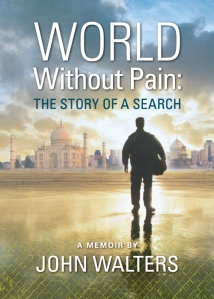
4.  “A Sense of Place: Great Travel Writers Talk About Their Craft, Lives, and Inspiration” by Michael Shapiro.  I first came across mention of this book when I was reading the curriculum of a writing class at some university.  It is a collection of lengthy interviews with famous travel writers.  Some are more interesting than others, but on the whole the book is a fascinating glimpse into the world of writing.  What makes a great travel writer is personal experience.  They conduct research, yes, but to really write credibly about a place they have to set forth on a journey; they have to go there and dive into the milieu, absorb the culture, compromise their comfort and safety in search of their material.  When I set out on my journey that resulted in my memoir “World Without Pain: The Story of a Search” I did something similar, so I can empathize with these writers as they speak of plunging into danger and excitement.  I also got some great ideas for travel books to read as I went through this volume, such as Bill Bryson’s comedic account of his trek over the Appalachian Trail, “A Walk in the Woods”, Paul Theroux’s thrilling memoir of his dangerous journey north to south through Africa, “Dark Star Safari”, and Peter Matthiessen’s elegant journal of his adventure in the Himalayas, “The Snow Leopard”.

5.  “The Writing Life” by Annie Dillard.  This is a very short book, and not all the essays in it are directly about writing.  When I first received it after ordering it, it angered me that the publisher had charged so much money for it when it was so short, the margins were wide, and there were many blank pages.  I felt these few essays should have been included in one of her other collections so the reader would have more value for the price.  The reason the publisher could get away with it, of course, was because it is by Annie Dillard, and once you have begun to read her work you are hopelessly hooked.  The first book I read by her was her Pulitzer Prize-winning “Pilgrim at Tinker Creek”.  I wouldn’t say, as others have, that it is a modern-day “Walden”, but it does use incursions into nature to approach metaphysical themes.  I read several of her books after that, some of which I liked more than others.  Knowing what a great writer she was, I couldn’t resist a book of hers about writing, and the pieces that do discuss writing, though few and brief, are worth the price of the book.  She writes about where and how she composed “Pilgrim at Tinker Creek”, what she was going through at the time, and what writing means to her.
Posted in Book Reviews, Memoir, On Writing, Travel | Tagged , , , , , , , , | Leave a comment

Book Review: The Rise of Theodore Roosevelt by Edmund Morris

I have known of this book for some time, and it has been relegated to that long list of books that I hope to read someday.  Recently, however, one of my sons sent me the following quote ascribed to Theodore Roosevelt:

“It is not the critic that counts, not the man who points out how the strong man stumbles, or where the doer of deeds could have done them better.  The credit belongs to the man who is in the arena, whose face is marred with dust and sweat and blood; who strives valiantly; who errs, who comes short again and again because there is no effort without error and shortcoming, but who does actually strive to do the deeds; who knows great enthusiasms, the great devotions; who spends himself in a worthy cause; who at the best knows in the end the triumph of high achievement and who at the worst, if he fails, at least fails while daring greatly, so that his place shall never be with those cold and timid souls who know neither victory nor defeat.”

These words touched me deeply, and as soon as I had read them I determined to learn more about the man who had written them.  So it was that at first opportunity I ordered a copy of this book.  It is a huge volume of almost one thousand pages, including notes and index.  It begins at the birth of Theodore Roosevelt and ends just as he is about to ascend from vice president to president when McKinley is assassinated.  On the way it goes into great detail on Roosevelt’s childhood, youth, schooling, early political ambitions, years as a rancher in the Badlands of Dakota, military career in the Spanish/American war with the Rough Riders, election to the governorship of New York, and eventual nomination to join McKinley on the Republican ticket for the presidential election. During this flamboyant rise to political prominence Roosevelt penned fifteen volumes of history and other popular nonfiction, and served as a New York State assemblyman, a sheriff in cattle country, a commissioner of the United States civil service, president of the New York City Police Board, and Assistant Secretary of the United States Navy.

The book reads like a novel.  At no time does it lag, and at no time is it boring despite its length.  It is well-paced and extremely well-written.  When it first appeared it won both the Pulitzer Prize and the National Book Award, well-deserved honors for a superlative piece of research and writing.

And now on to an analysis of the man himself.  He was possibly the most enigmatic and flamboyant man ever to serve as a president of the United States.  If he had one defining attribute, it was courage.  He would fly into whatever fray presented itself to him, whether the battle of San Juan Hill in Cuba, during which comrades were getting shot and dropping all around him, or political battles against corrupt and powerful adversaries.  He loved a scrap; he loved to show his mettle. It seemed, in fact, that he was more comfortable in the midst of adversity than taking his ease at home, though he did believe strongly in late nineteenth century family values and was fastidiously faithful to his first wife, who died very young, and to his second, who stood by him through his tumultuous life and bore all but the first of his numerous children.

So far so good.  His courage and morals were unquestionable.  And yet…  Men of force, as they say, are men of faults, and Roosevelt was no exception.  For example, though he had an undoubtedly sincere love of animals and nature, the way he showed it, especially as a youth and also later in life, was in hunting down, killing and stuffing birds and mammals until he had amassed the equivalent of an extensive private museum-full of horns, skins, and stuffed animals which he displayed in his home.  In one particular instance the book describes in detail that, aware that the plains bison was fast disappearing from the prairies, instead of trying to save the remaining beasts, Roosevelt sets off on a frantic days-long hunt to kill one before they are all gone.  In addition, Roosevelt was raised a member of the aristocracy and was rich all his life, and not only was a spendthrift and dreadful in managing his money, but he often displayed the self-righteous hypocritical superiority of attitude that went with the aristocratic turf.  But more than anything his greatest virtue, his courage, also had its dark side.  Sometimes he craved a battle when diplomacy would have served the purpose so much better.  A classic example is the onset of the Spanish/American war.  McKinley wanted to go slow, to negotiate and try to arrive at a diplomatic settlement.  Roosevelt, on the other hand, who had pushed aside the Secretary of the Navy and was calling the shots in his stead, was all gung-ho for war, not only because he felt it was in the nation’s best interests, but because he was so keen to enlist and see battle firsthand for himself.  His attitude was often to literally punch someone out and ask questions later.  Several examples of this tendency in his early years, if attempted nowadays, would undoubtedly land him in jail for assault.

So yes, Roosevelt was a complex, forceful man.  The book ends just as Roosevelt is about to be informed that McKinley has died from his wounds several months into his second term as president.  Roosevelt, by a twist of historic fate, served his first term without having been elected president, but he was reelected in a landslide four years later.  This is the first volume in a trilogy.  The second book describes Roosevelt’s presidential years, and the third book the years after his presidency until his death in 1919.  Someday I will probably read these other volumes, though not right away, because I have many other items on my reading agenda.  For now it was enough to read this, the story of the early years of the dynamic Theodore Roosevelt, for not only a glimpse of the man, but of the era in which he lived.

Posted in Book Reviews | Tagged , , , , | Leave a comment

How I Began Self-Publishing; Part Three: The Short Stories

LeilaniFixedCoverOne of the great joys of electronic publishing is that you are not bound by length.  You can make the story as long or as short as it demands to be.  You can write novels of forty or fifty thousand words, as writers used to do in the golden age of original mass-market paperbacks, or you can make them several-hundred-thousand-word doorstoppers.

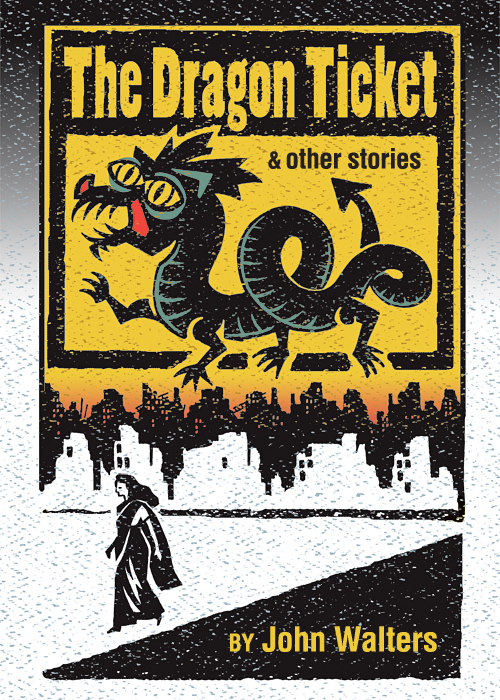
You can also, if you like, publish independent short stories.  These I liken to individual songs from albums released by themselves as singles.  Even way back when I was young it was common to buy records of single hit songs and then later buy the whole album.  So around the same time I published my first book, “The Dragon Ticket and Other Stories,” I worked on uploading all the stories as individual mini-books.

I didn’t want to trouble my graphic artist relatives to prepare covers for every short story I published, so I determined to learn how to create covers myself.  There is a learning curve involved here, and a number of my early attempts, some of which I have replaced and others of which I have yet to get around to, are – being kind to myself – mediocre.  Others might call them dreadful, and I wouldn’t argue.  Dean Wesley Smith explained on his blog how to create covers on PowerPoint, and I have used this tool ever since.  Of course it took me a while to get the hang of it, but as long as you are not too demanding concerning complexity, you can manage quite well.  In the beginning, I had no idea about branding or the desirability of my covers having some sort of basic similarity one to another.  Later I decided on a simple pattern of black background, gold lettering, and an image in the middle between the title and author credit.  But with those first attempts I experimented with font size, font color, picture placement and so on.
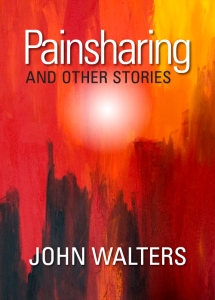
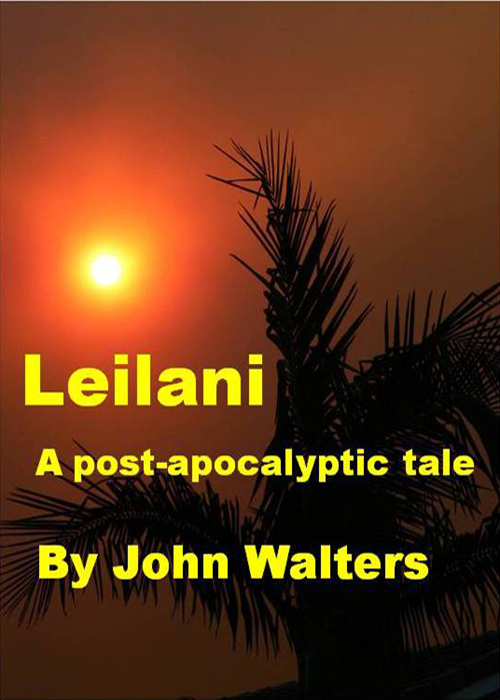
For the cover images, at first I perused photos in the public domain and chose from among those.  Wikipedia has an extensive list of links to public domain image sites.  The main problem with using these was that it would take me so long to find suitable images.  I would spend hours searching and often settle for a sort of general generic image which meant something in the context of the story but would do nothing to attract a reader.  For example, for the story “The Golden Ones Who Work Miracles” I found an image of Colaba Beach in Bombay, on which crucial scenes in the story take place, but the picture itself is rather dark and has nothing to hint that its location is in India; very few people would identify the place or realize its significance.  For the story “At the Edge” I chose the picture of a path in the forest similar to one that appears in the story; however, the cover gives no hint of the bizarre nature of the story itself.  Shortly before I adopted a common story cover theme, for one cover of a story in my second collection, “Painsharing and Other Stories” I did hit it right.  It was for the post-apocalyptic story “Leilani.”  I can’t remember how I found the image, but it was by a professional photographer, and I wrote for and received permission to use it.  The photo shows a palm tree in the sun all but obscured by smoke; it had been taken during a wave of summer forest fires in southern California.  It perfectly captures the feel of the post-apocalyptic tale.  Though it does not match the template I have set for most of my short story covers, I am loathe to change it, because “Leilani” has proved to be my best-selling short story by far, and I am sure that the cover has something to do with it.
When I say best-selling I mean it in a relative sense.  None of my stories have sold many copies, and some have sold none.  But “Leilani” has continued to sell several copies a month since I published it back in 2011.

Eventually, to save time, I started to buy low-cost images from Dreamstime.  They only cost a few bucks, and the website’s search engine enables me to find excellent cover images in a few minutes rather than hours.

Which brings me to the issue of pricing.  This is a controversial topic among self-published writers.  Some feel that a low price point is the only advantage self-publishers have over traditional publishing venues.  Others feel that setting low prices is like tossing your books into the bargain bins.  I don’t believe in pricing my full-length books at $.99 like some writers do, but on the other hand I have kept most of my individual stories priced at $.99.  When a story reaches novelette or novella length I raise it up to $2.99, but I feel that for just one story $.99 is fair.  It’s like that single song that you download.  I want to make my stories accessible to as many readers as possible, and thinking like a reader, I know I would not pay more than $.99 for a single story, no matter how dynamic, classic, and award-winning it might be.  Right now, I’m just too damn poor, and that informs my pricing decisions as a writer.  I can’t afford new high-priced books from traditional publishers.  I scour bargain bins at bookstores, spend hours searching through used book stores, and buy used rather than new copies of books from Amazon.  I admit it.  I have to read and it’s all I can afford right now to satisfy my hunger and that of my book-hungry progeny.  I want all readers to be able to afford my works.  I do not want to be elitist.  I have spent most of my life poor.  When I was traveling the world in my formative years as a writer I needed reading material.  When I consider pricing I think of myself as a wandering hippy or as a cash-strapped, struggling single parent.

Occasionally, when I feel the stories are too short to stand alone or have similar themes, I have packaged two stories for the price of one.

One final point I would like to make about my short stories.  I seldom write them directly for self-publishing.  Once they have made the rounds of traditional publishers I upload them for sale quicker than I used to, but I always send them around to the magazines and anthologies first.  I like seeing my work in these publications, and when my stories are accepted for publication there are two benefits:  they pay me, and at the same time my work is publicized.  This delays the self-publication process sometimes by a year or two, as magazine and anthology editors, with a few exceptions, are notoriously slow in replying to writers, but I think the delay is worth it so I build it into my system.  When the stories are complete I send them around, and when there are no more places I want to send them I upload them.  Competition is stiff in the professional magazines.  Editors might accept only a half-dozen pieces out of one thousand submissions.  I have the added disadvantage, being all but unknown, of having to write better than the established pros, as any editor, when confronted with two stories of similar competence, will choose the story from the writer with name recognition, as it helps to sell copies.  That’s what it’s all about.  Often, by the time I get around to uploading my stories, they have received a multitude of kind words from editors.  “I loved this story but…”  “We received so many top-notch submissions that we couldn’t…”  And so on.  Still, I feel that the benefits of traditional magazine or anthology publication outweighs the delay while the stories make the rounds.

I love writing short stories, and I would turn them out much faster if I had the time.  As it is, they seem to erupt in bursts from within, whenever a block of time presents itself.  They are wonderfully suited to this new age of self-publishing, and the opportunity to self-publish presents many great stories to readers that might otherwise be regrettably buried.  A self-published story has even made the final Hugo Award ballot this year.  This unique phenomenon will probably happen more and more as this new era of artistic freedom continues.

Posted in On Writing | Tagged , , , , , | Leave a comment

Book Review: A Visit From the Goon Squad by Jennifer Egan

If it were not for the sickly green cover, this book would be near perfect.  Why do big New York publishers dress brilliance like this in such mediocrity?  I remember expressing something similar about an inferior cover while reviewing Jhumpa Lahiri’s novel “The Lowland.” Egan’s book’s cover should have color and complexity, like the stories inside.

The book itself is one of those rare literary discoveries that catch me completely unprepared.

I thought it would be an okay read.  After all, it won the Pulitzer Prize for fiction as well as the National Critics Circle Award, the Los Angeles Times Book Prize, and other literary honors. Those awards, however, have little relevance to the true greatness of a book. Plenty of books that have won such accolades have left little impression on me.

I don’t know whether to call it a novel or a collection of interrelated stories with common characters.  Who cares?  It is what it is.  The styles mix from first person to third person to second person, present and past tense – there is even one story told entirely in PowerPoint slides. It slips and slides back and forth in time like a drug-crazed time traveler, but at no point is there a diminution of the quality of the prose or of the subject matter.  Every word is relevant.  Every story, at the end, grips the heart with its inevitability and insight into character.

The photo of the author on the inside cover flap is a giveaway.  She has a wry smile, as if she is privy to some secret of which the rest of us are ignorant.  And she is, in a sense.  She knows how to put words together better than most writers on the planet.  And it appears to be effortless, something she tossed off as if a musician at a jam session, though there is not a melody, not a single note out of place.

I could get into the various plotlines, I suppose, but it would be very convoluted and spoil the fun when you read it for yourself.  And you should, you know.  If you enjoy hip, relevant, intelligent, character-rich, dynamic, utterly absorbing fiction, you should give this book a try.

 *     *     *

When I wrote the above section I had one more chapter or story in the book left to read.  Now I have completed it, and the ending is perfect, a fitting resolution.  I said “chapter or story” because some reviewers refer to the book as a novel, and some as a collection of short stories.  I guess you could say it is both.  Each story hold up well on its own; in fact, a number were published in prestigious magazines before they appeared in the book.  It doesn’t really matter what you call it, as long as you call it a singular work of art, but I would probably call it a novel.  The various interconnected stories all hold together beautifully as one entity.  Since, as I said, I don’t want to give away anything by synopsizing the plot, I will just reiterate what I said earlier.  Read the book, and you are in for a profound, uplifting literary experience.

Posted in Book Reviews | Tagged , , , | Leave a comment

How I Began Self-Publishing; Part Two: My First Book

DragonTicketWEBOnce I made the decision to self-publish some of my material, I was still cautious about diving in all the way.  I decided to start by compiling a collection of some of my stories that had already appeared in magazines and anthologies.  I would do the collection in print and electronic editions, and also publish the stories electronically as individual entities.  I had other stories, original stories, that I felt were good work that had made the rounds and not sold, but though it didn’t take me long to decide to do so, I wasn’t quite ready yet to self-publish new material.

Most of the stories were set in India or thereabouts, so I decided that would be the theme of the collection.  In the end, I added a few unrelated stories, and even one original story to bring it up to the word count I wanted, but most of the stories were previously published and had that Indian theme and flavor.  They were some of my first-written and first-published works, and my mind had been full of my experiences in the East when I wrote them.

At first I called the collection “Ceasefire and Other Stories,” as the story “Ceasefire” was very important to me, and I rather liked the connotations.  But after a period of rumination, I changed the title to “The Dragon Ticket and Other Stories.”  Not only did the title have more zing and offer more cover possibilities, but I wanted to open the collection with the title story, as “The Dragon Ticket” has a bit of a faster start to draw readers in at the beginning of the book.

I wanted to write introductions to each story, but then I realized that to deal thoroughly with any thoughts I had about the material would inevitably lead to spoilers, and I did not want to ruin the experience of surprise for those who were reading the stories in the collection for the first time.  So instead I decided to add an afterword to the book in which I would include essays on each individual story.  The reader could read or not read this last section, but whatever notes a writer shares about stories for me personally is as inspiring to read as the stories themselves.  I wrote about the genesis of the story, what initially inspired it, any parallels to my own life, and any thoughts the subject or theme of the story inspired in me.  I intended the afterword to link the short story collection to my larger body of work, especially my memoir-in-progress which was not yet published.  Fiction is as much a personal expression by a writer as the retelling of an actual life event.

The cover for the book was done by relatives who are professional graphic artists.  They spent a lot of time on it, coming up with a beautiful original illustration that succinctly captures the theme of the collection.  Their digital and print covers for the book greatly enhance its appearance.

I did the formatting for both the digital and print books myself.  To do so, from the Smashwords website I downloaded Mark Coker’s e-book “Smashwords Style Guide.”  I printed it out and studied every word of it, and as I formatted my book I went over it again and again.  I knew nothing about formatting, so there was a lot to learn.  Not only did I have to learn how to redo the entire text so it would read well when published electronically, but I also learned how to create a hyperlinked table of contents, so that readers could jump to any story they wanted and then jump back to the table of contents.  The electronic version, though, was the easy part.  The print formatting took much longer to learn.  I did it all in Microsoft Word.  Day after day I would pore over help pages on the Internet, working out bugs in the print formatting.  One of the toughest things I had to deal with was creating page numbers.  Not because it really is difficult, but because I had never done it before.  One little thing would go wrong and it would sometimes take me hours to track down the problem and set it right.  Often it was the tiniest of tweaks, but if I didn’t know how to do it, the result was endless frustration.  Finally, though, I got the file finished.  I sent it to my graphic artist relatives for their perusal; they sent it back with suggestions.  After several such exchanges I had a satisfactory PDF copy of the print text.

Next, when everything else was ready, was the uploading.  I uploaded the book to three sites: Amazon Kindle electronic publishing, Amazon CreateSpace print publishing, and Smashwords, which handles electronic distribution to book vendors such as Barnes and Noble, Apple, Kobo, Sony, and others.  I did not then have the option to upload directly to Barnes and Noble because I was still living in Greece, and Barnes and Nobles only accepted uploads from the United States.

One other detail I had to attend to was opening a bank account in the United States, which one of my sons helped me to do, wherein the vendors could direct deposit hypothetical royalties.

Once I had the cover files, the book files, and the bank account, the rest was fairly easy and straightforward.  You create accounts on these websites, fill in your personal and financial data and details on the book, including a blurb, or brief compelling description.  It was thrilling to see the book for sale in the electronic bookstores, but it was much more thrilling when I finally received my print proof copy from CreateSpace.  Nothing can describe the thrill of seeing the culmination of your work in physical form and holding it in your hands.  It was my newborn baby.  I gazed at the cover, read the cover copy, opened it slowly and pored over the first few pages as if someone else had written it.  I skimmed through and paused at each story title, read the first few paragraphs, and imagined how a reader would feel.

I was (and am) proud of that first book, and I sent copies to my father and brother and sisters.  I also sent a copy to Kristine Rusch and Dean Smith with my sincere thanks for sharing the lessons that had led to its creation.

I didn’t expect “The Dragon Ticket and Other Stories” to jump right onto the bestseller lists, and it didn’t, but it is good work, and I realize more clearly now than I did back then that it was right for me to do it when I did.  Yes, the publishing world had changed.  The so-called gatekeepers were being too prohibitive, too exclusive.  Self-publishing was like a wonderful burst of fresh air in an industry that had become inhibited, stuffy, exclusive and creativity-strangling.  Too much of great beauty had been moldering in trunks because the powers-that-be refused to touch it – or worse yet, had so many guards at the gates that they never even got a look at it.  Hopefully, those days are gone forever.  Writers can now take their work directly to readers and let them decide.

Posted in On Writing | Tagged , , , , , , | Leave a comment

How I Began Self-Publishing; Prelude: Greek Summers

Before I explain how I got started in self-publishing I need to explain about my summers in Greece.  However, I have a confession to make.  I will likely go into more detail than I need to because thinking about sunshine and warm seas helps assuage the pain of the cold winter I am enduring right now.

When I worked as an English teacher in Greece I followed the standard school year. I would work eight months of the year and have four months off.  The way the system worked was that the schools hired and fired year by year, and during the four slack months teachers would collect unemployment insurance from the government.  It was inefficient and further taxed an already overburdened system, but that’s the way everyone did it.  Sometimes I considered getting another job during that time, but when I did the math I realized that it was not lucrative to do so unless I found work with astoundingly good pay, none of which was available even then before the huge Greek economic nose-dive.  So I had four months when I didn’t teach.  I was still busy because my wife worked full time, so I shopped, cooked, cleaned, took care of the boys and so on, but it was a much less strenuous time than during the school year when I did all those things and also taught from afternoon late into the night on weekdays and also Saturday mornings and had the burden of class planning and correcting essays and exams besides.

So in summer I would write more, especially Monday through Friday when I would stay at home while my wife was working.  On weekends on those clear hot Greek summer days we would head for the beach. Only twenty minutes from our house there was an excellent sandy beach with clear clean sea water and a cluster of rocks offshore that was perfect for snorkeling.  The only problem with that spot was because it was closer to the city, it got very crowded on Saturdays and Sundays.  If we got just a little more ambitious and drove forty minutes away, we came to a village where there was a superlative beach.  Here it was uncrowded, the water was clear and warm, and the beaches were clean and commodious.  Usually my wife and I and our youngest son would go, as the older ones preferred to stay at home and play computer games.  We would set up our beach umbrella, drop our towels and spend a few hours there, as much time as we felt safe before getting sunburned.  My son and I would spend a lot of time in the bathwater-warm water.  Sometimes I would swim underwater for a time, finally break the surface, revel in the sun and sea and feel so peaceful that I wished I could retain that sensation and carry it with me always.  There are not many such moments in life, in which you feel no stress and perfect calm and peace and a wonderful wash of well-being.  And of course, those moments do not last and you cannot carry them with you.  If you could I would cocoon myself in the blissful memory of the Greek sea instead of shivering in the Yakima cold.  So it goes.

Anyway, those summer weekends were intensely therapeutic, and the weekdays allowed me to do a lot of writing work I had no time for during the school year.

It was during one of those summers that I first found out about the changes that were happening in the world of publishing, particularly concerning the new opportunities for writers to self-publish their work.

I don’t remember how I discovered it, but the first thing that ignited my interest was Dean Wesley Smith’s series of blogs on “Killing the Sacred Cows of Publishing.”  From there it was a quick jump to his wife Kristine Kathryn Rusch’s blog “The Freelancer’s Survival Guide.”  Once I discovered these treasures, I not only read the current postings but all the available back material and readers’ comments.  When I was caught up, I looked forward each week to new posts from each of them.  It took me a while to come around, entrenched as I was in old, traditional ways of thinking.  I was hesitant about taking a leap into the unknown.  Not that I was averse to it – I just wanted to be sure it was the right move before I made it.  So I read; I studied; I searched for corroborating evidence on other websites.

And I came to some conclusions.  I had started to sell stories to traditional magazines and anthologies years before, but this path was excruciatingly slow.  I had a book finished that I was trying to peddle to agents and editors but was getting no nibbles – in fact, most of the time I was getting ignored; they had not even the courtesy to reply.  The more I investigated, and the more I analyzed my situation, the more I realized that I had nothing to lose and potentially a lot to gain by taking the leap and getting involved in what seemed an exciting new trend in publishing.

I’m a professional writer; I make my living by my words.  I’m happy to share these essays with you, but at the same time, financial support makes the words possible.  If you’d like to become a patron of the arts and support my work, buy a few of my available books or available stories.  Thanks!

Posted in Memoir, On Writing | Tagged , , , , | Leave a comment

Book Review: Jack London: An American Life by Earle Labor

If I had to name the three writers most influential on my own career as a writer, they would be Jack London, Harlan Ellison, and Henry Miller.  I would snap up a biography of Harlan Ellison in a moment, but none have yet been written.  I haven’t found a definitive biography of Henry Miller either, but then again, he tells his own story better than anyone else.  Of Jack London, however, there have been a number of biographies, and I have read a few in the past.  A copy of Irving Stone’s “Jack London: Sailor on Horseback” first set me on the London literary trail.  This one, written by a man who has been a Jack London scholar his entire academic life, is purportedly the definitive biography.  That remains to be seen, as I am only one hundred pages in.  But already it has stirred up memories and emotions from the time my ambitions turned to becoming a writer.

 *     *     *

We have a time gap here.  I just finished the book.  The first few hundred pages I felt the author was sort of skimming over the material, and I wished that he had been a little more thorough.  The second half of the book slows down as it traces London’s physical deterioration and mental depression in the face of a myriad pressures, many of which he brought on himself.  I think the book is definitive not in that it is comprehensive, but that the author combed meticulously through available records, including journals and diaries of those involved, and tried to dispel various myths and rumors concerning Jack London’s life and death.

And more and more as I read on, I realized that I don’t admire the life of Jack London as much as I used to.  He did some exciting things, sure, in the Klondike and the South Pacific, and I would have enjoyed adventures like that, but for the most part he lived a hard life, beset with financial and personal problems, never able to catch up and relax.  Though he was the highest paid writer in the world, he always mishandled his money and spent ahead so that he was continually in debt.  He was addicted to instant gratification.  And though he put on a show of being tough and strong, in reality his constitution was rather weak, and choices he made concerning overindulging in alcohol and following a very unhealthy diet contributed to his wasting away of disease and dying at the age of forty.  He became so stressed and overextended that after a certain point his writing brought him no joy and he did it only for the money.  I can’t imagine reaching that point.  I want the money too, but I can’t imagine not being fascinated with writing and literature and thrilling to putting words in order in just the right way.

Yes, Jack London, as so many celebrity writers before and after him, was not able to keep a handle on his life.  It reminds me of the immensely talented actor who just died, Philip Seymour Hoffman.  The man was one of the greatest actors of his generation, with money and awards and no end of offers of high quality work.  So what happens?  He overdoses on heroin and dies at the age of 46.  And think of Jimi Hendrix, and Janis Joplin.  They attained to what just about everyone thinks they want, and they couldn’t handle it and it killed them.  They couldn’t cope.

As far as Jack London and his adventures, hell, I’ve done things as wild or wilder.  I hitchhiked around the world broke.  I begged on the streets of Tehran.  I hiked through the Himalayas without a map, a guidebook, food, water, or supplies.  I circled the world twice, once in one direction and once in the other.  It’s not the exploits in themselves that are important.  Jack London was like many young celebrities today – he became famous before he had the maturity to handle it, and he paid the price.  Perhaps he never would have been able; I don’t know.  I know that if I had become famous and rich when I first started writing I most likely would not have survived; I would not have been able to handle it.  I could easily have died of a drug overdose or pickled with alcohol.  As it is, I think that if it happened to me now I could handle it better.  I have the maturity, the wisdom, and the life experience to be able to ride the wave.  But then again, who knows?  You never know for sure until it happens.

But one more thing, a very important thing, needs to be said.  Jack London was an artist.  He took his life experiences, many of them sordid, many of them dysfunctional, many of them reprobate, and turned them into great literature.  Not all of what he wrote is great, but some of his short stories are among the greatest I have ever read anywhere in any genre, stories like “The White Silence,” “In a Far Country,” “Love of Life,” “To Build a Fire,” “The Apostate,” “The Red One” – I could go on and on, and if I had a bibliography available I would doubtlessly add to the list.  Not to forget some of the longer works too, like “The Call of the Wild,” “White Fang,” “The Sea Wolf,” and “Martin Eden.”  Despite whatever turmoil he went through in his life, Jack London was a greatly gifted writer, and despite his bluff and bravado his works reveal that he had a deep, sensitive soul.  That’s what will be remembered in the end, not his dysfunctional life but his writing.

In conclusion I would have to say that this is the best biography of Jack London I have read.  Irving Stone’s book “Jack London: Sailor on Horseback” was very important to me, but as far as biography there was too much mix of fact and fancy.  This is a good book and well worth reading, and that it contributed to shattering an idealistic image I held of the man is a regrettable but necessary process I had to go through.

Posted in Book Reviews, Memoir, On Writing | Tagged , , , , , | Leave a comment

Self-Evaluation

I have reached a sort of limbo in my writing career.  It has happened before; in fact, it used to happen every school term in Greece, especially around exam time. No matter what resolve I might muster up, no matter what goals I might set, I could not come up with the time to work on my original creative writing.  Right now, the obstacle is a struggle for survival.  Determined to stop the downward slide towards poverty and debt, my main goal as I appraised the new year was to at least break even financially.  To do this, however, I have to put all else aside and concentrate on that which brings in immediate money, rather than that which is an investment for the future.  I make money nowadays writing articles for Internet content mills.  If I stop writing, I don’t get paid.  If I take time off, I don’t get paid.  It’s a piecework arrangement.  They like my work, but that doesn’t prevent them from paying no more than I would earn flipping burgers at a fast food joint, and it’s not enough to live on.  Besides this income, royalties trickle in from my self-published work, but far too little to even consider doing it fulltime.

Because I am familiar with this involuntary cessation of creative work, because it has happened so often in the past, I know that it is a temporary thing and that eventually I will find a way to break out of it.  Recently I tried getting up an hour earlier, five in the morning instead of six, and using the extra hour to write fiction.  That lasted a few weeks and I got three good stories out of it, but at the end I collapsed physically and mentally.  I don’t have the endurance for that kind of self-sacrifice; I am already burning myself out at my limit.  No, I just have to be patient and wait for an opening.  I am like a hunter in a blind.  My time will come again.  I have some ideas formulating.  I am appraising my situation and contemplating how to proceed.  As part of that appraisal I consider current statistics.

On the traditional publishing front, I have published 16 stories in magazines and anthologies, most of them in the United States but a few in Australia.  My first two story sales, in fact, were to Australian publications, including a professional sale that eventually got me membership in Science Fiction Writers of America, something that had been a dream of mind since I was a young would-be writer back in the 1970s.  My last traditional print publication, though, was in 2011.  After that there has been a dry spell.  Recently sales have picked up again, and I have three stories sold and contracted to magazines.  Unfortunately, they all pay on publication and they haven’t been published yet.  One of these is to a magazine that has been around a long time, and I’m fairly confident the story will eventually appear in print.  The other two are new magazines and their future is uncertain.  I also have three more stories that have passed the first round of evaluation and are being closely considered by editors.  Too early to tell what will happen to those. And finally, I have 15 stories out for first looks at magazines and anthologies.  Some have been circulating for quite some time.  But that’s what you do.  You send them out, they come back, and then you send them out again.  If I told you the statistics of the percentage of stories that get sold compared to stories I send out, it might scare you away from the writing game forever.  Perhaps that might be best, if you don’t have an amazingly thick skin and are not willing to endure a hell of a lot of failure on the road to success.  Be that as it may.

On the self-publishing front, I have 12 books published in both print and electronic editions:  three novels, two novellas, four short story collections, and three memoirs.  Besides these, in electronic-only form I have published 40 short stories and novelettes as individual editions.  Actually, in total story count you need to add four more because in some editions I include two stories.  I have also published seven electronic-only editions of memoirs and essays.  You can find details of all these publications in the bibliography on my website here.

I don’t even know if I should include it or not, because I consider it hack work of the basest sort, but in the last year and a half or so since I returned to the United States, I have also researched, written, and sold well over 1,000 articles on just about any subject you can imagine for the blogs and websites of others.

If you are a writer, you write, and the content eventually adds up.  It’s not a matter of being prolific; it’s just what you do. It reminds me of the example Harlan Ellison has used in the past of a plumber:  “Oh, you must be a very prolific plumber; you have repaired so many pipes.”  Yeah, right.  Repairing pipes is a plumber’s job.  I know that my output is far less than that of others.  My dream – no, dream sounds too remote and unreachable; let’s say my goal – is to begin to generate enough income so that I can devote my full time to writing what I want to write – what I need to write.  I see this as something difficult to achieve but not impossible.  My progress is thwarted right now by lack of time.  That’s why I am currently evaluating my situation to see what I can do about it.  In the process of evaluation I mean to go over some of the details of my recent writing past, and I may publish these ruminations here in the coming weeks.  I’ll tell you one thing though that is a certainty:  as long as I live and breathe, I will keep working towards my goal.

I’m a professional writer; I make my living by my words.  I’m happy to share these essays with you, but at the same time, financial support makes the words possible.  If you’d like to become a patron of the arts and support my work, buy a few of my available books or available stories.  Thanks!

Posted in Memoir, On Writing | Tagged , , , , , | Leave a comment

The Dark Night of a Writer’s Soul

Second prelude:  Outside my window the apartment parking lot and cars are dusted with snow.  I was going to sit down and write an essay about my current state of mind, and was going to refer to the stunningly poetic ambiance in Jack London’s brilliant story “The White Silence”; however, mundane household business intruded, took my time, and broke my train of thought.  Interestingly enough, I have been reading a new biography of Jack London, about which I will write soon, and early this morning when I first woke up I was reading about the dark night of the soul.  I realized that what I was going to write now would be almost identical to the essay below which I wrote many months ago.

 *     *     *

First prelude:  I wrote this in San Diego before my sons and I moved up north to Yakima.  I did not publish it then because I felt it was too negative.  It is, however, realistic.  In it I refer to the expression “the dark night of the soul” which I think originated with the Christian mystic Saint John of the Cross.  He makes it clear that this dark time is necessary to hone the soul; it is a part of the journey towards the ultimate light.  Anyone who is sincere in his calling, no matter what that calling is, has to go through it.

I also refer to the hack work of writing Internet articles.  I am still doing that, still hanging on by my fingernails.  But the reason I am publishing this now is that though I have my ups and downs, I do not feel I am in that dark valley anymore.  We are getting by; we are surviving, and I realize more and more that millions of others in this vast American landscape are going through similar experiences, barely hanging on and wondering what the hell happened and how they arrived at such an impasse.  Reading “The Unwinding: An Inner History of the New America” by George Packer helped me see that. Things are tough, there’s no doubt about it.  Perseverance is the name of the game.  There are no easy answers, easy solutions.  So I keep doing what I can do, day by day.

 *     *     *

I am reminded of the story of Jack London from “Jack London: Sailor on Horseback”.  I was drawn to it again and again in my first exhilarating, terrifying fever of enthusiasm as a young writer.  When he returned from the Klondike he had the responsibility of a household and mounting debts, but the burden of his calling as a writer burned in his heart.  He longed to express himself, to use his talent; however, he soon found out that no one was lining up to publish his work, that it was a seemingly impossible mountain to climb.  He dove into the task, wrote stories, sent them out, but the money evaporated, the pantry emptied, he pawned everything of value he owned, and there was still no glimmer of victory in sight.  Then he received a letter from the post office, an offer of steady employment.  If he took the job he could adequately provide for those dependent upon him, he could wear new clothes, he could eat well, he could buy the magazines and books he devoured.  But he would have no time to write.  He would have to give up on his dream.  He would, in fact, have to admit defeat.  His mother stood by him and told him to persevere no matter how long it took.  He tackled the writing with new energy, and soon his fortunes took a turn for the better.

Recently I applied at a well-known delivery company for a part-time job at minimum wage.  After agonizing depression and soul-searching I decided to turn down the job, and furthermore, to start growing the beard again that I had shaved off before I went to the interview.  I thought it would be a turning point, that from that moment things would look up.  I started writing two thousand words or more daily.  I updated and streamlined my website.  I worked on books that were in various stages of pre-publication.  I have kept it all up day seven days a week, stopping only to exercise, to go shopping, to cook, to clean the house.  I thought that my resolve would be enough to keep me in a buoyant mood, to keep my momentum going.

I was wrong.

Every day I am beset with doubts.  Every day I have to remind myself who I am and what I should be doing.  Every day I wonder if I am delusional, if I am in fact a failure who is no good for anything but a minimum wage job.

Yes, every day.

It reminds me of what I have heard many times, that courage is not the absence of fear, but persevering in doing the right thing in spite of fear.

It also reminds me of what I have read of the great monks and mystics of the past, that all of them, at some stage of their search for God, went through what is known as the dark night of the soul, a time when they felt abandoned, alone, without answers, without solace, without hope.  Even Jesus had to wander in the desert before he began his ministry.

But I am speaking of writers, not of religion.  This time, the time I am going through now, is exacerbated by the fact that so many people depend on me, and I want more than anything to help them.  Yet I know that if I take that minimum wage job, if I accept the dregs that society is offering me, that it will not be the best either for them or for me.  I want to give them more.

Several nights ago I got together with some other writers from the San Diego area to sip some wine and talk about writing, and the subject came up of why writers do it.  I am speaking here of writers who consider what they do a calling, not just a way to make money; I am not speaking of hacks.  Hacks have their place, to be sure, and some people considered hacks are in fact artists.  But writers are no better human beings than anyone else; if you read a few biographies you will find they usually have more than their share of problems both internal and external.  What writers have is an undeniable, indefatigable urge to express themselves with words, whether it is in science fiction stories or literary novels or memoirs or essays or whatever.  A writer must write.  That is his or her purpose, and if that purpose is not fulfilled the unrequited writer will end up as less than complete, dissatisfied in a profound way with a dissatisfaction for which there is no cure but the expression itself.

The problem is, writers also have to eat and drink and live someplace and often support others.  Many accomplish this by taking jobs with ample income to pursue their writing in their free time.  I myself have done that for many years.  But now I find  myself unable to find any decent work, and I am in a quandary.  When do I make my stand?  Who is to say anything will come of it if I apply myself all day seven days a week to my writing?  What if I fail?  If I do I will have failed not only myself but my loved ones.

This is what I wrestle with daily.

I search for freelance jobs in the meantime, like ones I had before writing blog articles.  This, I feel, is a reasonable compromise.  But even these are few and far between, and the listings are replete with scams and starvation wages.

I will continue to struggle, continue to write through my despair.  But I am tired of discouragement, tired of rejection, tired of despair.  I could sure use some good news.

In the meantime, tomorrow I will be at it again, working on that story, hope or no hope on the horizon.  The only way a writer truly fails is to stop writing.

Posted in On Writing | Tagged , , , , , , | 1 Comment

Book Review: World’s Best Science Fiction 1967 Edited by Donald A Wollheim and Terry Carr

I found this old paperback volume on a wire discount rack at Half-Price Books and bought it for a dollar.  It seemed that there were several classics by well-known science fiction writers within, and my plan was to compare what was written back in 1967 with what is written nowadays.  I was in the midst of reading “The Unwinding: An Inner History of the New America” by George Packer, and it was my intention to compare the sociological and economic changes that have taken place in the last several decades with the literary changes during the same period, using the science fiction “best of” volumes I had been recently reading as a point of reference.  Alas, it did not work out.  I had expected the 1967 stories to be superior to the 2012 stories, but they were not.  They were different, yes, but not better.

Part of it may have to do with the selections of the editors.  I remember more dynamic stories from back in the late sixties that were not included in this book.  But then again, I may have been merely looking at the past through rose-colored glasses.

So as I launch into some observations of the volume at hand, I must confess that I will just take it as it comes, story by story, and not try to link it to some grand overall historical trend.

The first story in the book is “We Can Remember It For You Wholesale” by Philip K. Dick, and this is, of course, the story on which the “Total Recall” movies are based. If you have seen the films, especially the superior first one with Arnold Schwarzenegger, you realize as you read the story that it is rather slight in comparison.  It contains the germ of the memory implantation idea, nothing more.  It is clever but undistinguished as far as style is concerned.  Philip K. Dick was an idea man first, and his works seldom display more than rudimentary competence as far as their prose is concerned.

Next comes “Light of Other Days” by Bob Shaw, which is a real science fiction classic.  Though only a few thousand words long, it introduces a new technological concept, creates deep mood and atmosphere, and offers profound characterization that fits the tale perfectly.  This is short science fiction at its best.

“Nine Hundred Grandmothers” by R. A. Lafferty is another true classic of science fiction.  Lafferty was a singular phenomenon back in the sixties and seventies in science fiction and fantasy.  His works were dark, funny, abrasive, and totally unique.  No one wrote quite like Lafferty and no one has ever since.  Though he did win some awards back then, he has never received the recognition he deserved.  Many modern readers might not even remember who he was or how important he was to the field, but back in the day he was a favorite of a number of writers who went on to much more renown than Lafferty himself received.

“Behold the Man” by Michael Moorcock is the longest story in the book.  It won the Nebula Award for best novella that year, and it was met with great acclaim and controversy.  At the time it was a radical concept.  A time traveler journeys back to the time of Christ.  He finds the historical Jesus, but instead of being a dynamic prophet, Jesus is a sniveling imbecile who can do nothing on his own.  The time traveler takes his place and ends up fulfilling his ministry and dying on the cross.  Though back then the story was somewhat shocking to the science fiction readership, I remember when I read it I was somewhat less than impressed.  Reading it now after all that time, I find it to be not much more than a fairly well-told gimmick story.  A time traveler goes back and takes the place of a famous historical figure.  Yeah, okay.  The comment by the editors in the story introduction annoyed me; they stated that this story had more respect and compassion for the subject than a multitude of Biblical epics.  No, I don’t think so.  The writer obviously has no respect for a Christian’s interpretation of events, though I must say Moorcock does fairly well at delving, in flashbacks, into the psychology of a man who would allow himself to be brutally tortured for the sake of fulfilling someone else’s historical destiny.

And now I will skip over some of the other stories.  Some were clever, some undistinguished, and one was so poorly written that I wondered how it ever got into a best of the year volume.  For one thing, it was novelette length but its story could have been told in a few thousand words.  For another, it was repetitious and boring and not at all clear.

I have saved the best for last.  The book has two novelettes by Roger Zelazny, one of the greatest stylists science fiction has ever produced.  They are not, in my opinion, his best work.  My Zelazny favorites are the novelettes “A Rose for Ecclesiastes” and “The Doors of His Face, the Lamps of His Mouth”, and the novels “This Immortal” and “Lord of Light”.  But they are nevertheless Zelazny in the fertile, productive period when he was bursting out into the limelight and dazzling the science fiction community with his brilliance.  Both stories are set in the far future.  “The Keys to December” concerns humans that have been turned into catlike creatures terraforming a new world to accommodate their unique physiological needs.  They are forced to confront the moral aspects of their work when less advanced forms of life become affected by the changes they are making.  But the best story in the book is the closing one, the second Zelazny offering called “For a Breath I Tarry”.  Despite the fact that humankind has died out, the robots they created continue to maintain the Earth.  The robot called Frost who controls and monitors the northern hemisphere sets out to discover what it means to be human.  Into this basic tale Zelazny weaves mythology and theology.  In the dialog between a satellite circling the planet and another powerful mechanical being far underground there are echoes of the bargain between God and Satan in the book of Job.  If Frost fails in his quest, he will lose his position of power and be relegated to a place underground where he will serve the overlord machine there.  How Frost sets about reading the library of humanity, studying human artifacts, constructing a human prototype and uploading his consciousness into it is told with superb style, heartfelt emotion, deep knowledge of mythological archetypes and consummate skill.  Zelazny truly was one of the shining lights of science fiction and fantasy literature.

In closing, I have to say that this volume disappointed me more than most anthologies I have recently read.  I think it is because my expectations were so high.  Part of it, I think, is that I read differently now than I read back then.  Back in the early seventies I read science fiction with the thrill of first discovery, and I didn’t really realize or care that some of it was not so well written.  Now, with four more decades of reading and writing behind me, I am much more discerning and discriminating in my tastes.  If a story that is obviously mediocre makes it into an anthology that is supposed to represent the best work of the year, I am more apt to call foul.  I have learned a thing or two in the meantime and am more easily able to tell when a story works and when it doesn’t.  It turns out that in every era there are poor, mediocre, and great works of art, and much more of the first two than the last.  That’s just the way it is.

Posted in Book Reviews | Tagged , , , , , , , , , , , , , , | Leave a comment