Hope and Grief: The Pacific Northwest Asian Experience

I first visited the Wing Luke Museum in Seattle’s Chinatown when I was invited to the opening of a temporary exhibit highlighting Asian science fiction and fantasy writers. The exhibit was on the main floor; it was so absorbing, and so many interesting people were there (I had a long conversation with the renowned author Ted Chiang) that I didn’t have much opportunity to explore the rest of the museum. This time, with the science fiction and fantasy section gone, I was able to focus on the museum’s core message.

On its three floors, the museum celebrates the history and art of the Pacific Northwest’s Asian American, Native Hawaiian, and Pacific Islander (AANHPI) community. The native son Bruce Lee is prominent, of course, in several exhibits, but there is so much more. Various rooms are dedicated to the historical experiences of South Asians, Cambodians, Vietnamese, Japanese, Chinese, and others as they immigrated to the United States and attempted to adapt to their new homeland. Fleeing for their lives and to make a better future for their children, they were often met with racism, denigration, oppression, stereotyping, and denial of access to good jobs and housing. Despite these obstacles, the new arrivals were determined to make it in this new land and opened businesses, often restaurants and laundries, raised their families, and even served in the United States armed forces.

As I perused the exhibits, it was easy for me to sense the hope that gave these people the impetus to keep struggling, despite the obstacles, to build their new lives. However, it was also easy to feel the all-but-overwhelming grief of being treated as members of a lower-class, relegated to poorer housing and infrastructure, and regarded with suspicion. For a long time the laws of the land forbade Asian immigrants from obtaining citizenship. During World War II, many Pacific Northwest Japanese Americans were interred in concentration camps. Even nowadays, Asian Americans are sometimes harassed on the streets and denied opportunities. Despite the animosity, though, the AANHPI community has persevered and even prospered.

When I first arrived at the museum, shortly after it opened, I was alone. I was able to explore the upper levels in peace and silence, for which I was thankful, but at the same time I wished that more people would become aware of and visit this amazing place. After all, apart from Native Americans, we here in the United States are all immigrants. Our parents or grandparents or great grandparents all came from other countries with similar dreams: to find a new land where they could build lives and raise their children in peace and prosperity. It is to our shame that we relegate any groups of our fellow immigrants to lower-class status; it is to their honor that they managed to succeed in spite of the irrational bad attitudes of many. Visiting Wing Luke Museum is a cultural experience, but it is also a moral and spiritual experience. It helps us realize the inestimable value of the AANHPI community to the totality of what comprises the USA.

I’m a professional writer; I make my living by my words.  I’m happy to share these essays with you, but at the same time, financial support makes the words possible.  If you’d like to become a patron of the arts and support my work, buy a few of my available books or available stories, or support me on Patreon.  Heads Up: I haven’t been keeping up with my Patreon posts recently – I have been posting here instead. If you head over there it should be for purely philanthropic motives.) Thanks!
Posted in Memoir | Tagged , , , , | 1 Comment

Book Review:  Trust Me, I’m Lying: Confessions of a Media Manipulator by Ryan Holiday

I came across this book while searching for practical guidebooks on how to improve my website/blog. This is not that sort of book. It is, however, a fascinating look at the mindsets of people such as politicians and advertisers who seek to exploit the internet’s countless vulnerabilities to their own advantage. Holiday claims that for a long time he was as corrupt as anyone, an eager media manipulator out to make as much money as possible.

According to Holiday, there are very few people you can trust online. Almost everyone is out for themselves. News blogs are primarily after page views and clicks, and their writers care very little whether the sensational stories they upload are true or not. Better, they think, to go ahead and publish them and then – maybe – post an update if the so-called facts turn out to be untruths. The pattern is to post something, have it picked up by other news sources, and then use those sources that republish your story for verification that your story checks out. A wild sort of loop that feeds on itself. This all sounds too insane to be real, and yet Holiday, who has been deep in the trenches himself, gives multiple examples for every point he makes.

If we go by the title of the book, of course, we might conclude that we can’t trust anything Holiday says, and in fact that’s a valid argument. However, the book has intense verisimilitude. Anyone who spends any amount of time online can attest to what he writes. He claims to have written this book when he came to realize that the things he had been doing – and also witnessed many others doing – were too sordid for him to stomach. He wrote the book as an expose, and it is a much needed one.

He emphasizes that more than anything, news blog writers want their pieces to spread. That’s how they get paid. Hopelessness, despair, pity, and empathy are unhelpful in this context. What drives spreading are emotions such as “anger, fear, excitement, laughter, and outrage.” Provocation is the key, and it comes at the price of a blatant disregard for truth. This attitude not only drives sensational pseudo-news, but it also adds fuel to the present social and political polarities.

In the first half of the book, Holiday confesses his deep complicity in all this evil. The second half, he claims, which is more in the nature of a condemnation of it all, was written because his conscience bothered him too much. In a lengthy appendix added to this edition of the book, there are interviews with various other successful media manipulators. Although Holiday claims he wrote Trust Me, I’m Lying as an expose, several of the high-profile interviewees attest that they came up with some of their best and most successful ideas after reading the first edition of his book. Weird. It’s like a criminal’s confession leading to a whole swarm of copycat criminals.

As for me, the book has the opposite effect. I have no desire to emulate any of Holiday’s unscrupulous tactics. To the opposite: reading this has inspired me to be even more honest in my own essays and blogs, even if I never go viral and have only a few sincere, discerning readers. It reminds me of what Henry Miller once said, that he writes for “one true reader.” I looked up the extended quote and it goes like this: “The great work must inevitably be obscure, except to the very few, to those who like the author himself are initiated into the mysteries. Communication then is secondary: it is perpetuation which is important. For this only one good reader is necessary.”

I think that the greatest flaw in Trust Me, I’m Lying is that Holiday implies that everyone is dishonest, everyone is out for the money and for themselves, and there is no real truth to be found online. In this I think he is mistaken, and as you read, you should be on guard against this cynicism and despair. Yes, the internet is like a Wild West of mudslinging half-truths and downright lies, and it’s hard to find the gold amidst all the flung dung. But there are honest people out there sharing the truth as best they can. To find them you need discernment, wisdom, and persistence, but the search is well worth it.

Posted in Book Reviews | Tagged , , , | Leave a comment

A Visit to the Greek Festival

Most of the people visiting the annual Greek Festival at St. Demetrius Church in Seattle come for a brief sampling of another culture. For me, however, the event provoked nostalgia. After all, I lived in Greece for over fifteen years. My ex-wife and I raised our family there; we bought a house there; our kids went to the public schools; in summer we frequented the incomparably beautiful beaches. During the course of several conversations with people staffing the booths, I discovered that I’d spent more time in Greece than most of them. No matter. Besides the desire to stir up pleasant memories from some of the best years of my life, I was hoping to pick up some tasty Greek specialties that are all but impossible to find most times of the year.

I arrived when it opened at ten on a Saturday morning near the end of September 2024. That meant that I’d miss the music and dancing that was scheduled for later, but I’d also miss the heavy crowds, so the people running the booths had more time to chat. When they learned that I’d lived in Greece, we’d compare the locations I lived in with where their relatives were from.

The first place I wandered into was the gift shop, which sold jewelry, clothing, candles, paintings, sculpture, icons, books, and other items. I looked for Greek-language books for children but there were few, and then I realized that it didn’t make sense to buy anything for my grandson from there: at that very moment he was on vacation in Greece with his parents, and it would be much easier to find appropriate Greek-language educational products at the source. Plus, to be honest, most items were beyond my budget.

From there I wandered through the food venues. There was a room devoted to the sale of alcoholic beverages by the glass, including a wine-tasting booth. A taverna set up under a vast tent out back sold Greek cuisine such as lamb, roast chicken, moussaka, pastitsio, tiropita, spanakopita, kalamari, souvlaki, gyro, and other dishes. It was in the deli, though, where I made most of my purchases to take home and consume at my leisure. Just before Greek Easter, which occurred in May this year, I’d made a futile search for tsoureki, the special sweet Easter bread; here at the deli they had it in abundance, so I bought a loaf. I also bought some halva with almonds, some traditional holiday sweets called melomakarona and kourampiedes, some Halkidiki olives, and some feta cheese.

Later, after I had got home and broke out the goods, I was displeased with some of my purchases. The sweets and the olives were superb. However, the tsoureki bread was too dry; it crumbled when I tried to cut it. The tsoureki we’d bought in Greece when I lived there and that my ex-wife sent or my sons brought back to the States after visits was soft and easy to cut, and it pulled apart reluctantly. And the feta cheese from the festival was a bit rubbery instead of moist and crumbly. I didn’t expect the food to taste the same as the food we used to eat in Greece. Too many variables stand in the way of replicating the totality of the experience. Even so, I had supposed that the various tastes would help me recall good times thriving in Greece when my kids were young. In a video call with my ex I voiced my complaints, suggesting the possibility that they had sold me stale tsoureki. Not so, she emphasized. Tsoureki was made in two fashions, one dry and one softer and moister. It just happened that they served the dry style at the festival. As for the feta, it was made in diverse ways as well, and some people preferred the firmer version. This somewhat mitigated my irritation, but it also made me realize that to get the Greek food I remembered eating when we raised our family there, I’d probably have to pay a visit to get back to the source.

Posted in Greece: A Memoir, Memoir | Tagged , , , , | Leave a comment

Book Review:  Red Team Blues by Cory Doctorow

Not long ago I attended an author reading at which Cory Doctorow was promoting his new novel The Bezzle. It features Martin Hench, a forensic accountant with the acumen to uncover the money trails of super-rich criminals. He functions as an unusual type of private detective, recovering funds for various wealthy individuals and organizations and in return receiving a hefty percentage of the take as his reward. The Bezzle is a sequel to Red Team Blues in that Red Team Blues was published first; however, Red Team Blues is a sequel to The Bezzle in that the events in The Bezzle begin in 2006, when Hench is actively pursuing his unique freelance work, but Red Team Blues takes place in modern times, when Hench, now sixty-seven years old, is ostensibly retired and wandering California in a bus-sized RV that formerly belonged to a rock star.

Like The Bezzle, Red Team Blues is told in first person by Hench himself. He has an engaging, intelligent, dynamic voice, much like Doctorow. It’s hard to escape the feeling that the Martin Hench series is a wish fulfillment for Doctorow: if he were not a fulltime writer this is what he might be doing. Also like The Bezzle, Red Team Blues is not exactly science fiction because it does not speculate about anything that is not already happening, but it has the feeling of science fiction because it deals with cutting edge technology with which most of us are unfamiliar.

As I read, I was struck by how much Martin Hench reminded me of an elderly James Bond. He helps out an old tech friend, rescuing him from a theft that might have cost billions or even trillions of dollars. He is paid hundreds of millions for his services, and thereafter, as he eludes the criminals who want to torture and kill him, he has unlimited financial resources. So like Bond, he has cool vehicles at his disposal, he can check into the fanciest hotels and eat at the fanciest restaurants, and you get the impression that he is never really in any danger, even after he has discovered the bodies of a group of young people who have been cruelly tortured and murdered for the information that he possesses. Despite his age, he seems to have limitless strength and energy and can go all day and into the night without undue weariness. I’m seventy-one and in very good health for my age; I can tell you from experience that someone who is sixty-seven is not in his prime. At the least he would have to pace himself. Oh, and one other thing: through the course of the story he meets several wealthy, elegant, attractive women, all of whom are at least a decade younger than him; all of them are infatuated with him and he easily seduces them – or they seduce him. I share these observations not to put you off, but to explain that the novel, while blatantly unrealistic, is nevertheless highly entertaining – just as James Bond films are, if you go for those sorts of things.

One thing that I greatly enjoyed was Hench’s wandering lifestyle. He is a fulltime van dweller, and he often parks his RV overnight at Walmart parking lots, at least until he comes into his sizeable fortune and begins booking remote private campgrounds. (Walmart is renowned for allowing van dwellers to use their lots and public bathrooms.) I also liked the part in which, to avoid high-tech scrutiny, Hench is forced to go underground for days by joining the homeless on the San Francisco streets. He shuts down his electronics, pulls his meager belongings around in a “bundle buggy,” and sleeps in abandoned buildings or outside in empty lots.

All in all, Red Team Blues is an extraordinary book, Martin Hench is an engaging if unlikely hero, and Cory Doctorow is one of my new favorite authors.

I’m a professional writer; I make my living by my words.  I’m happy to share these essays with you, but at the same time, financial support makes the words possible.  If you’d like to become a patron of the arts and support my work, buy a few of my available books or available stories, or support me on Patreon.  Heads Up: I haven’t been keeping up with my Patreon posts recently – I have been posting here instead. If you head over there it should be for purely philanthropic motives.) Thanks!

Posted in Book Reviews | Tagged , , | 1 Comment

Book Review:  Quit: The Power of Knowing When to Walk Away by Annie Duke

We all know the old adage that “winners never quit, and quitters never win.” In this fascinating book, Duke sets out to disprove it, and for the most part she succeeds. In fact, persistence can take us so far, but if it turns out that the goal we are pursuing becomes unobtainable, we are only going to win if we quit that path and take another.

To back up her premise, Duke shares examples of sports figures, business executives, entertainers, mountaineers, and others. She also draws extensively on her own past. Poor health caused her to have to abandon her ambitions in higher education. As an alternative, she took up professional poker playing. In poker, she had to fine tune her awareness of when to quit and when to proceed – large amounts were at stake when she made these decisions.

All of this caused me to look back and see how these principles have applied to my life. And of course I could come up with numerous examples. I completed a year of college and then realized that higher education wasn’t for me; the experience and skills I needed to become a writer I could attain more efficiently by living life and reading books. I also spent several months living in Los Angeles and learning to become a screenwriter. I even had a friend who was already a successful screenwriter and was guiding me in the craft. However, I eventually decided that this was not the type of writing I wanted to do, and from there I took off on my world travels, to obtain exciting experiences and to write about my adventures. On one occasion, when I was down and out in Nepal, I took a walk into the Himalayas along an unmarked mountain trail – to see what I could see. I got up close to the snow line, but I eventually had to turn around and come back down (quit) because I was unprepared and it would have been too dangerous to go farther. At various points along my path, I’ve opted out of relationships, jobs, and other situations when I realized that they would not be beneficial in the long term. I’m sure that all of you have had similar experiences.

So I found Duke’s advice to be thought-provoking and helpful. I like it best when she focuses on personal situations; I have to admit that the book becomes slightly less interesting along some stretches in the middle when she tells prolonged stories of businesses and business leaders – something I cannot not really relate to. However, overall the lessons she imparts are sound. Sometimes in certain situations quitting is the best thing you can do. Many people don’t tend to see this, however, at least not at first, and Duke explains why. For instance, they fall for the sunk-cost effect, which makes people reluctant to abandon a project in which they have already invested considerable time and money. Or they accomplish the easy parts of a project first only to realize that the cost of accomplishing the rest of it is far too high. Or they set goals and then become myopic about seeing them through, refusing to pay heed to the warning signs all around them. Or they fall for the cult of identity, refusing to deviate from the image they have built up of themselves. Whereas if they would accept the limitations of their talents and situations, they could accomplish much more.

In closing, this is a well-researched and well-written book, and it is a worthwhile read for anyone (everyone) who has to make important decisions as they proceed upon life’s path.

Posted in Book Reviews | Tagged , , | Leave a comment

Book Review:  Autocracy, Inc: The Dictators Who Want to Run the World by Anne Applebaum

Anne Applebaum is the author of weighty historical tomes such as Gulag: A History and Iron Curtain: The Crushing of Eastern Europe, 1944-1956, both of which I have read and deeply appreciated. Gulag, the winner of the Pulitzer Prize for nonfiction in 2004, tells of conditions in the Soviet prison camps during the Cold War. In my review of it I wondered why someone would write about such traumas and why I was reading about them; the answers, of course, have to do with remembering and honoring the survivors and hopefully learning from the ordeals they went through. Iron Curtain deals with a different type of trauma dispensed by the Soviet Union: the subjugation and crushing of the peoples of Eastern Europe after World War II. The Cold War polarized the world into opposing camps. In Autocracy, Inc., Applebaum explains that the world is once again becoming increasingly polarized, but this time into democracies and autocracies, which she also refers to as kleptocracies. Those running autocratic governments are intent on holding onto their power and obtaining riches at any cost, and they use the authority of their positions coupled with the propaganda potential of social media to make this possible.

Applebaum is well qualified to offer this profound and well-researched warning. She has been studying the history of communism and worldwide politics for decades. She speaks several languages, including English, Polish, and Russian, and she resides in Poland, from which she often conducts research and interviews in the field.

Compared to some of her earlier tomes, Autocracy, Inc. is a small, fairly short book, an overview of present political realities and the historical circumstances that have led up to them. In short, it argues that the autocratic governments of the world such as Russia, China, Iran, North Korea, and others work together to destabilize the world’s democracies via propaganda and economic intrusion, and she explains in detail how this is accomplished through news networks, social media misinformation, surveillance technologies, corrupt corporations, and other means. Part of the danger, according to Applebaum, is indifference and lassitude in democratic countries, so that incursions by autocracies go unobserved and unchecked. In the end, she offers several possible means of combating global kleptocracy, but to be effective these involve the cooperation of democracies on a major scale. They include, for instance, complete transparency of international real estate transactions, the dismantling of large-scale money laundering operations, increased regulation of social media platforms, the reevaluation of global trade relationships, and a unified emphasis on freedom and the rule of law.

It is easy to become paranoid while reading this book, because it seems that those ruthlessly intent on exploiting the peoples, systems, and wealth of the world, due to their immorality and willingness to resort to any extremes to get their way, have the upper hand. Even in the United States there are powerful individuals and organizations intent upon imposing autocracy on the rest of us. However, there are solutions, as Applebaum points out, if only we care enough to implement them.

Posted in Book Reviews | Tagged , , | Leave a comment

Book Review:  Zorba the Greek by Nikos Kazantzakis

I haven’t read Zorba the Greek since I was a young man in the late 1960s. It wasn’t as influential for my intellectual journey as Tropic of Cancer by Henry Miller, On the Road by Jack Kerouac, or Walden by Henry David Thoreau, but it was one of the works that helped give me a kick in the pants to get out and do something with my life. The occasion for this second look at Alexis Zorba is a fairly new translation of the Greek classic by Peter Bien. According to the translator’s introduction, this version is raunchier and more precise than the one that appeared decades ago: he has retained various expletives that the original translator left out, and in addition, he has worked from the original Greek, unlike the previous translation which was done from a French rendering, not from Greek. This has allowed Bien, as he explains, to go over problematic words and more precisely turn them into English.

Even though it was adapted from French rather than Greek, the original translation of Zorba the Greek became a worldwide phenomenon when it appeared in the early 1950s and was made even more famous by the 1964 Oscar-winning film starring Anthony Quinn. In the film, Alan Bates, an Englishman, plays the book’s narrator, but in the book the narrator is from the island of Crete, where most of the story takes place, and Zorba is from Macedonia, in northern Greece. The narrator’s voice in the book, in fact, very much reminds me of Kazantzakis himself, whose memoir Report to Greco I read a few years ago.

In short, the narrator is a writer who intellectualizes life, while Zorba is a laborer and a womanizer who revels in every moment of his flamboyant existence. When they meet in Piraeus, the port of Athens, the narrator, seemingly on a whim, decides to take Zorba along to southern Crete to help him open a lignite mine. They become good friends, and the narrator absorbs much of Zorba’s freewheeling philosophy as they eat, drink, meet women, and interact with the local villagers.

Kazantzakis is a very talented writer; his descriptions often become poetic as he, through the narrator, comments on the simple beauties and joys of life. Zorba’s moods, on the other hand, shift from pensive to bombastic from one moment to the next. The narrator is obviously envious of Zorba’s childlike, constantly amazed outlook on life, but at the same time he is unwilling to completely forsake his books and writings to adopt this lifestyle for himself. By modern standards, many of Zorba’s outbursts concerning women are blatantly misogynistic; however, I think it is important to take the story in its historical and geographical context. The culture and societal structures of Crete (and of Greece in general) shortly after the end of World War I, when the story takes place, were vastly different than that of the modern era, and readers need to keep this in mind. It reminds me of the boxed set of Looney Tunes cartoons that one of my sons recently gave me. In some of the discs, Whoopi Goldberg comes on to explain that some of the portraitures in Looney Tunes depict racial minorities in ways that today are considered wrong, but to censure or erase these cartoons would be the same as saying that these wrong viewpoints never existed. So: content warning. It’s the same with Zorba the Greek. Some of the things Zorba says are wrong by any standards, but that’s how some people thought and spoke back then, and thus it is portrayed by Kazantzakis in the book.

Would I recommend the book? It depends on whether you can handle the raunchiness and violence. It didn’t affect me personally now as hard as it did when I was a young man who had not yet stepped out and really lived life to the full. However, it does have its touching moments. As I mentioned above: Kazantzakis is a superb writer with a gift for poetic description. This alone is a good reason to give the book a try.

Posted in Book Reviews | Tagged , , | Leave a comment

Book Review:  Bittersweet: How Sorrow and Longing Make Us Whole by Susan Cain

Susan Cain is the author of one of the most profound and personally significant books I’ve read in recent years: Quiet: The Power of Introverts in a World That Can’t Stop Talking. In this volume she inverts another popular trope, namely that melancholia is inherently destructive, demonstrating through various examples as well as personal testimony the efficacy of bittersweet moods in the creative process and in the navigation of life in general. According to Cain, she obtained inspiration for the book as she pondered the conundrum of why sad, poignant music is often so inspirational. She attributes it to a yearning for a “perfect and beautiful world,” or, as she quotes the mythologist Joseph Campbell, our desire to “participate joyfully in the sorrows of the world.”

The primary definition of poignant in the online Merriam-Webster dictionary is “painfully affecting the feeling: piercing; deeply affecting: touching.” I feel this way often when something in a book or film brings back memories of when my kids were young. We were so busy raising them, and yet those were the most fulfilling years of my life. Tears stream down my cheeks as I realize how much I miss those days. Plato expressed it as “a yearning desire for something wonderful we can’t have.” C.S. Lewis called it an “inconsolable longing for we know not what.” Sufi Ibn Arabi referred to “the pain of separation as a spiritual opening.” Saint Teresa of Avila put it like this: “God wounds the soul but the soul longs to die of this beautiful wound.” Cain offers these examples and many more in her analysis of what makes the bittersweet so important.

In response to Leonard Cohen’s touching lyrics Cain says, “Whatever pain you can’t get rid of, make it your creative offering.” She points out studies showing that sadness drives creativity. “It’s not that pain equals art. It’s that creativity has the power to look pain in the eye, and to decide to turn it into something better.” She emphasizes that a teacher (or by extension a writer or other artist) needs to understand suffering.

In one section of the book, Cain dissects the American myth of positivity, success, and disdain for so-called losers. This is a cover-up and weakness, of course, because Americans experience as much sadness, despair, and loss, if not more, than people in the rest of the world, and the duplicity of the pseudo-success cover-up makes it more difficult for Americans to heal through honestly accessing their emotions.

I relate to some parts of the book more than others. For instance, Cain expends considerable effort detailing elite seminars she attends that only the wealthy would be able to afford. I also found it difficult to get into her description of a bizarre cult of “immortalists,” also known as radical life extension advocates or super-longevity enthusiasts – people who believe they can live forever and expend considerable effort to make that happen. Unfortunately, this causes them to eschew the bittersweet in their desire for eternal life. Cain counterbalances this extreme viewpoint by extolling the value of grief and impermanence in the following chapter. She points out that you can’t necessarily move on from profound grief; you carry it with you and it becomes part of you.

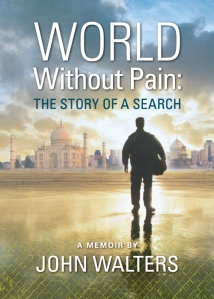
In the end, Cain raises the question: “What are you longing for?” She challenges readers to write the word “home” at the top of a piece of paper and imagine what they would write next. I thought about this for a long time. I don’t really consider the apartment where I currently live to be home, at least not more than an interim home. The house where I grew up as a child was a real home, and the houses where my wife and I raised our kids in Greece were true homes. Now? I couldn’t really pin down a particular place that I would call home. When I roamed the world as a young man I had a different concept of home. As I wrote in my memoir World Without Pain: “And home? I couldn’t go home again. Home was an abstraction from which one commenced a particular stage of the journey, not an absolute.”

A conundrum, to be sure. But that’s the value of this book. It makes you think, but even more: it makes you feel. And it helps you to realize that your feelings, both joyous and bittersweet, are essential elements in your journey through life.

Posted in Book Reviews | Tagged , , , | Leave a comment

Book Review:  The Great Divide: A Novel by Cristina Henriquez

The Great Divide deals with the monumental historical event of the digging of the Panama Canal and the ramifications for Panamanians and others pulled into the epic drama of its building. However, it presents its themes in microcosm, through intimate looks into the lives of people affected by the overwhelming reality of the building of the canal. The machinations of governments remain mostly in the background; it is the effect of decisions in high places upon real people that is brought to the fore.

The title refers not just to the huge literal ditch that is dividing one continent from another; it also refers to the divisions between individuals as they confront the changing of their lives. For instance, a fisherman refuses to speak to his son when he takes a job as a digger in the Canal Zone; a sixteen-year-old girl, the child of a white plantation owner and a Black servant, leaves her family in Barbados to seek employment in Panama to pay for medical treatment when her sister becomes ill; when an American scientist researching a means to eliminate malaria moves to Panama, his wife becomes deathly sick.

It took me a while to become absorbed in this story because of the manner in which each subplot is introduced and then left hanging while another thread is added. Once all the major characters have made their appearances, though, their lives begin to intersect and blend in holistic patterns that afford a view of how the inevitable upheaval of the canal building impacts the people involved in it.

The strength of this novel is in its presentation of its characters with all their backgrounds and intricacies. They are depicted in fascinating detail, through flashbacks and even flash-forwards of what happens to them in years to come. This context adds to the appreciation of who they are and why they do what they do.

I don’t often read historical novels; usually if I am interested in a particular time I prefer its depiction in pure nonfictional history. This novel, though, while emotionally written, manages to avoid the melodrama that plagues so much historical fiction. I became invested in the characters without feeling that I had descended into an antiquated soap opera. This is one of the book’s strengths. Another is the way that it thoughtfully deals with so many pertinent issues: the audacity and racism of the Americans as they barge into another country, rip it apart, and then put it back together in their own image; the disruption of the lives of common Panamanians; discord between generations when confronted with inevitable change; attempting to eradicate deadly diseases that claim multitudes of lives; and the disparate toxic effects of colonization on both the oppressed and the oppressors.

Henriquez at no time yields to preachiness; she always confines her commentaries within the bounds of the metaphorical lives of her characters. This strengthens the book’s relevance and gives universality to its themes. It’s not just about the great divide that split the country of Panama in the early twentieth century; it is also concerned with the great divides that isolate humans one from another – and it poses the question of whether it is possible for us to breach these gaps.

Posted in Book Reviews | Tagged , , | Leave a comment

Book Review:  Joy Hunter by Alexis Jones

I picked this book up from the library because it seemed, at first glance, to be about a rejuvenating road trip in an RV, and I like travel stories. Then, when I read the author blurb on the inside back cover, I almost gave up on it before I started. It says that “Alexis Jones is an internationally recognized speaker, media personality, activist, and author.” It goes on to delineate the awards she has received, the famous people lists she’s been on, the appearances she’s made (including at the White House, United Nations, Harvard, Stanford, West Point, and on and on), her world travels, and her stint as a contestant on the TV show Survivor. I usually avoid books by celebrities. They offer advice from a position of power and wealth, and thus have little to say of practical value to us common folk. Still, I decided to try ten or twenty pages of Joy Hunter before I cast it aside, and I ended up reading the whole thing.

Jones is writing from a position of power and relative wealth, and I couldn’t help but be aware of that as I read her story. Merely to rent an RV, take off for a month and then more, and stay in fully-equipped RV camps, is something I dream of but cannot afford. And there’s the fact that Jones seems to have close friends everywhere; it seems that just about every town they travel through she’s visiting another intimate associate. I couldn’t relate to that at all. Most of the closest friends I have known have died, and sometimes I feel quite alone in the world. When I think about it, though, when I was hitchhiking around the world back in the 1970s I did meet a lot of people, and eventually I was able to stop here and there along the way for fellowship and refreshment. Still… Jones’s position of privilege has to be taken for granted as you read, almost as if this were a fantasy tale of a noble princess.

As for the road trip, it takes up a fairly small portion of the book at the end. What Jones mainly writes about are the personal traumas that led her to embark upon the road trip, including a miscarriage after she and her husband had tried so hard to have a child, and the discovery that the man who had raised her and she had always considered her dad was not her flesh father. The road trip is a last-ditch attempt to improve her emotional well-being, and this proves to be a resounding success.

What rescues this book from becoming a maudlin soap opera is Jones’s writing skill. She really is a very good writer, and she weaves together the multitudinous flashbacks and reminiscences that lead up to the road trip with skill and acumen. And the lessons she imparts on self-love and joy-seeking really are relevant to everyone, even those of us who do not have vast networks of friends and associates and cannot afford to rent RVs or take weeks off work. After all, even if we are not all princesses and princes, we enjoy stories about fantasy lands and long to live happily ever after.

In conclusion, I recommend this book. Even if most readers may not be able to relate to the privilege and power of the author, it tugs on the emotional heartstrings, and there are lessons to be learned from it.

Posted in Book Reviews | Tagged , , , | Leave a comment