“Sink or Swim” Is Now Available!

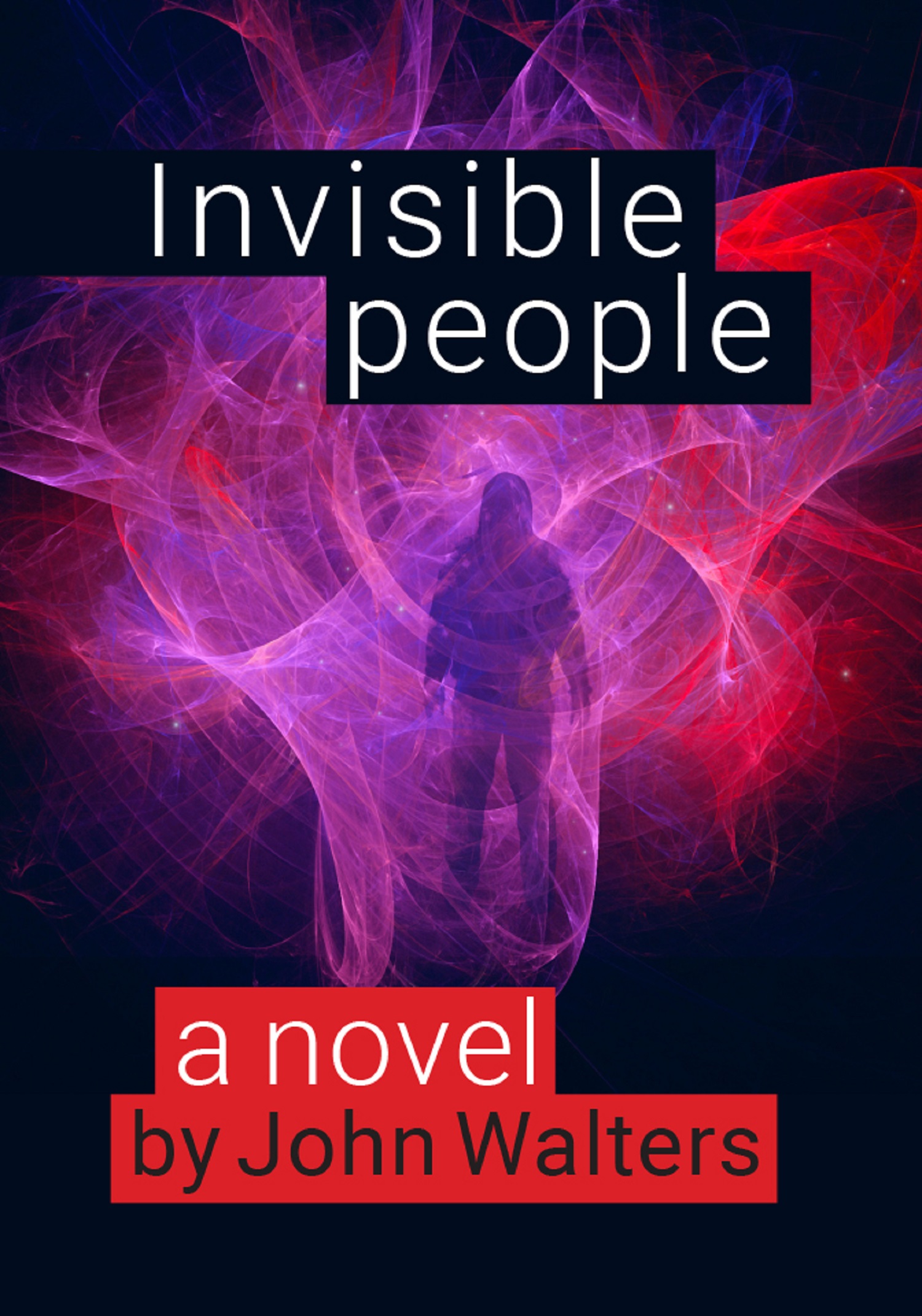
My novelette “Sink or Swim: A Near-Future Tale” is available as an e-book from various online bookstores or in print as part of my short story collection Road Signs: Tales of the Surreal and Fantastic. It is especially prescient in the light of contemporary political realities.

In the aftermath of the official cancellation of Medicare, Social Security, and other government welfare programs, a destitute senior is relegated to an internment camp for old folks. There he discovers that all is not as it seems, and the recalcitrant elders have some tricks up their sleeves that they can use to deal with the pitiless system that has banished them from its midst.

Available at these and other bookstores:

Trade Paperback

Amazon Kindle

Barnes and Noble

Kobo

Smashwords

Apple

Posted in Uncategorized | Tagged , , | Leave a comment

Book Review:  The Message by Ta-Nehisi Coates

In the introduction, Ta-Nehisi Coates clarifies that he is addressing his latest book The Message specifically to his students and more generally to “young writers everywhere whose task is nothing less than doing their part to save the world.” I’m far from being a young writer, but Coates’s words resonate with me. He writes thoughtfully, precisely, and honestly, with courage and a commitment to truth, and he inspires me to want to do the same.

Ostensibly, the book is an account of his travels to three different locations: Senegal, South Carolina, and Palestine. However, it is far from being a travelogue. Instead, Coates uses the fresh perspective he obtains from journeying to these places to offer incisive commentary on the horrors of slavery, the lingering perils of white supremacy, colonialism, inequalities in modern American society, the importance of teaching, the power of language, the value of writing, and other topics.

His trip to Senegal is his first journey to Africa, and he writes of the inversion of awareness caused by being on the opposite side of the Atlantic Ocean. His description of the visit is moody and contemplative, and he draws conclusions that are difficult to summarize and must be read directly. He presents his thoughts with such precision that a summary cannot do them justice. Throughout his narrative he takes pains to clarify to his readers, the writers he is addressing, that it is their responsibility to do the same, that is, to write with honesty and integrity.

Part two opens with a long treatise on teaching and on the importance of “safe spaces” where students can feel secure as they conduct their investigations into the nature of truth. This security is jeopardized when politicians pass laws to ban books that would threaten the status quo and cause white students to feel guilty or remorseful about their ancestors’ cruel treatment of their fellow humans. This introduction leads into the reason that Coates went to South Carolina. A teacher named Mary Wood had been using his book Between the World and Me in her advanced placement lessons, and the school board was trying to get the book banned because it might make some students “feel uncomfortable” and “ashamed of being Caucasian.” This was a result of the executive branch of the government at that time coming out against “critical race theory.” The school board argued that Coates’s appraisal of “systemic racism” in the book was illegal. Coates got in touch with Woods and offered to join her at the school board meeting on this subject. When word got out about the meeting, a multitude of people turned up to support Woods. In fact, everyone who spoke there was against banning the book. Coates clarifies that “this is not about me or any writer of the moment. It is about writers to come – the boundaries of their imagination, the angle of their thinking, the depth of their questions.” Inquiring minds need the freedom to explore fresh and unique ideas in books. He offers a personal example: “I was saved by the books in my house, by the implicit message that learning does not belong exclusively in schools.” The rewriting of history and the banning of books, according to Coates, can kill the future.

In the third and longest section of The Message, Coates writes of his journey to Palestine. It begins with an account of his visit to Yad Vashem, the World Holocaust Remembrance Center, which he actually made on the last day of his trip. From this he launches into a description of the impressions he formed during his visit, when he was alternately led from place to place by Jewish and Palestinian guides. He explains that in his essay “The Case for Reparations” he had used Germany’s reparations to Israel as a model, but the more he explored the land and got to know its people and its history, he realized that comparison might have been a mistake. He writes: “I was there for ten days, ten days in this Holy Land of barbed wire, settlers, and outrageous guns. And every day I was there, I had a moment of profound despair.” But his mandate as a writer – to seek the truth – caused him to keep going.

As with Coates’s account of his trip to Senegal, his observations are complex, layer upon layer of arguments, and it is difficult to summarize them. Read the book. He concludes the book by emphasizing the importance of writing, which “is transformed into a ‘spiritual advantage,’ putting in the hands of the oppressed ‘the conditions of a classical art,’ which is to say the power to haunt people, to move people, and expand the brackets of humanity.” He points out the lack of work published by Palestinian writers, and adds that “if Palestinians are to be truly seen, it will be through stories woven by their own hands.” This applies, of course, to any person or group who needs to have their voices heard.

All in all, as with other books by Coates I have read such as Between the World and Me and We Were Eight Years in Power, The Message is thoughtful, well-written, and important. Highly recommended.

Posted in Book Reviews | Tagged , , , , , | Leave a comment

Getting to Know SAM

Poverty has its advantages, among them the ability to snag a free ticket to the Seattle Art Museum through the national Museums for All program. So it was that I ventured forth into the chill morning fog to take a bus and then a light rail downtown.

I arrived without any preconceptions. After all, I have never formally studied art – at least not the art composed with paints, inks, clay, rocks, ceramics, wood, and so on. I have devoted my life to creating art with words. In a way writing is a more malleable, diverse, and elegant art form than these others, because if you are not pleased with your first result, you can try again by erasing, recreating, and rearranging your words, while if you create a painting or sculpture and you blow it, you generally have to start from scratch. Be that as it may, I was not there to criticize but to learn what I could from what I saw. In many cases, observing what could be done with other materials inspired me with what might be able to be done with words.

Regardless of the mediums they use, artists are attempting to transmit a message. How precisely they are able to render their messages, whether specific or abstract, is the measure of the success of the piece. Observing the beauty and heart-stirring quality of some abstract works, in fact, caused me to wonder why more such work is not being done in the literary world. There is some, of course; for example, when I first read Henry Miller’s Tropic of Cancer I was in awe of the frequent surrealistic passages, some of which would go on for several pages. But there is not much abstraction in literature, at least not much that’s done well. The most obvious excuse is that many readers would not put up with extended passages that they might initially perceive as nonsense. Still, when it is done right, abstract writing is very effective.

Several rooms at SAM are devoted to indigenous artwork or artwork from particular nations. This caused me to muse on an artist’s background and roots as sources of inspiration. In this, artists from cultures with deep ancestral mythologies have an advantage over others, such as many Americans, who might be confused about their genealogical pasts. Of course, that confusion can itself be a source of inspiration. Ultimately, it doesn’t matter where an artist comes from; what matters is how effectively that artist is able to use whatever tools he chooses to depict his inner visions.

The majority of the art at SAM is amazing, but there were also some pieces that gave me real what the hell moments. For instance, a so-called artist took a photo of a shopping receipt from a local market; that photo, enclosed in a wide plain border, is framed and placed in a gallery with other real works of art. What the hell? There are other paintings that are simple one color – nothing else – in a frame. What the hell? And these people somehow manage to get paid a lot of money and even receive adulation for this stuff. Sigh.

In contrast, there is a room full of Rembrandt etchings. Most of them are very small; I had to take off my glasses and lean in so I was inches away to be able to discern the fine details. But oh my God what details! I was astonished that anyone could compose with such complex loveliness in so small a space. Nearby were other traditional oil paintings that astounded me with their beauty.

All in all, the few hours I spent wandering around SAM were well rewarded with sublime inspiration. And I fully concede, as my old mentor Harlan Ellison put it, that “one man’s nightmare is another man’s wet dream.” I can’t really envision anyone getting inspired by an old shopping receipt, but I suppose there are people who might find a single vast field of color elegant. Who knows? In the meantime, there was plenty to please me and even encourage a return visit sometime in the future.

Posted in Uncategorized | Tagged , , , , , | 1 Comment

Book Review:  The Years by Annie Ernaux

Before I came across a description of The Years in a library listing, I had never heard of Annie Ernaux, or that she had won the Nobel Prize for Literature in 2022. I suppose I should keep closer track of these things. What drew me to the book, though, was not the critical acclaim accorded to its author, but rather the unusual nature of the work itself. And it did not disappoint.

The Years is ostensibly a memoir – at least it is classified as one. However, it is not a memoir in the traditional style, but rather in the sense that Henry Miller’s works might be labeled memoirs. They are about the writer and even use the writer’s real name as the main character, but in fact their intention goes far beyond merely giving an account of the author’s life. In these works there is an ill-defined border between memoir, novel, and something wholly different, wholly unique.

In The Years, Ernaux tells the story of her life from around 1941 to 2006, but in the telling, she does not use the first person. Instead, she sometimes uses the collective “we,” as if she is speaking for her entire generation, and sometimes uses the third person “she,” as if she is taking the perspective of another character observed from outside. In this way, she detaches herself from the events and causes them to become much larger and more profound than they would be if they only concerned one life. Time becomes a river that flows forward, inexorably, through generations. First she is a child, then a teen discovering her sexuality, then a young mother, then a middle-aged woman, an empty-nester whose children have gone off to live lives of their own, and so on.

Throughout the personal history, Ernaux also reflects upon national history and world history and how major events impact her life and the lives of those around her. I have to admit that many of the references, especially those having to do with French politicians, writers, and entertainers, were unfamiliar to me. Most of the larger outside events, though, I understood and have even lived through myself: the Cold War; the wars in Vietnam and in Algeria; the influx of undocumented immigrant refugees; the overwhelming influence of the Beatles and other musical groups; the rise in popularity of various types of technology such as black and white TVs, color TVs, transistor radios, computers, and cell phones; the devastation and resultant paranoia of the 9/11 destruction of the Twin Towers and other terrorist attacks.

As the decades-long story progresses, Ernaux sometimes refers to the book she hopes to someday write about her life (or the life of the third-person character who represents her) – but then emphasizes that she is not yet ready. In other words, she references the point when the book, The Years, begins to grow as an idea, and then brings it to mind again through the course of the narrative. All in all, this is that incredibly rare thing in literature: a truly original work of art. It does not fit into any genre or category except its own, and as such, it must be taken on its own terms. It devastated me with its brilliance in its English translation; how wonderful it must be in the original French! Highly recommended.

Posted in Book Reviews | Tagged , , , | 1 Comment

Write Better Stories

In a recent Facebook post, a well-known author posed the question, “What is the best writing advice you have ever received?” There were many excellent answers, most having to do with not listening to criticism, persevering in the face of rejection, staying true to your own vision, and so on. By the time I got to it, most of the straightforward advice had already been given, so I shared a quote from my old mentor Harlan Ellison, intending it as a bit of humor: “If they are not buying your stories, write better stories.” I didn’t actually hear this directly from Harlan; instead, I read it in a blog post by Dean Wesley Smith, and he presented it as a Harlan quote. However, it sounds like something like HE would say and so I feel comfortable attributing it to him. Anyway, it got a few likes and I thought that would be the end of it.

But it was not the end. That quote came back to haunt me – in a good sort of way. You see, I have been going through some difficult times emotionally now that I am an empty-nester, sometimes feeling isolated and forgotten, and sometimes even questioning whether my best days as a writer might be behind me. Not feeling up to writing fiction, I have been focusing mainly on essays and book reviews. Once in a while a story would burst through, and that would be a cause for rejoicing, but for the most part a personal trauma I went through a few years ago has limited the fiction output. I was content with that, as long as I was able to keep writing at least something. (If I stop writing completely, you’d better check my pulse.)

The quote kept coming back to me again and again, especially the last few words. Write better stories! Write better stories! It was like a challenge that lifted my mood and got my creative juices flowing again. Don’t get me wrong: I love writing memoirs and essays and book reviews and other works. But the core of my output as a writer has always been my fiction, especially my short stories. Over thirty have appeared in magazines and anthologies, and well over a hundred have been published in my collections. Yes, I thought. I can continue to publish my essays and reviews, but my primary focus should be on creating the best short stories I’ve ever written. As soon as I set my sights on this goal, my mood lifted. It was as if I was giving myself permission to prioritize fiction writing again. I became so enamored of the idea that I composed and printed out a large sign: “WRITE BETTER STORIES” and I taped it to one of my kitchen cabinets where it will always be clearly visible. This has lifted a great burden from my heart. I don’t have to mope around anymore. Instead, I can get off my ass and write better stories. And instead of exploring Seattle’s museums and historical sites for their own sakes and merely to go out and do something different, as I have recently been doing, I can peruse them more intently – and mine them for the gold of story ideas. It is a matter of perspective, of course, and of reaching for the highest goals possible.

Posted in On Writing | Tagged , , , | Leave a comment

Book Review:  Icebound: Shipwrecked at the Edge of the World by Andrea Pitzer

Not long ago I read and reviewed Empire of Ice and Stone: The Disastrous and Heroic Voyage of the Karluk by Buddy Levy. It takes place in the early 1900s and tells of a ship caught in polar ice off the north coast of Alaska and the crew’s efforts to survive when the ship breaks up near Siberia. It is a harrowing story of survival, but as I read Icebound, I reflected upon all the advantages that the crew of the Karluk had that William Barents’s crew in Icebound lacked. In the 1900s most of the world had been explored and mapped, so polar travelers at least knew where they were going; they had rifles that reliably fired; they had better methods of preserving food; they knew what scurvy was and how to prevent it. Barents and his men, on the other hand, had none of these advantages.

Icebound takes place in the late sixteenth century. It tells of the three polar voyages of William Barents, after whom the Barents Sea in the Arctic is named, focusing especially on the third voyage, when Barents and his men became trapped at the northern end of the island of Nova Zembla, north of Russia, and had to spend the winter. They managed to build a cabin, but they were cold, filthy, malnourished, sick with scurvy, and under frequent attack by marauding polar bears. Their ship became hopelessly frozen into the ice, so the survivors finally, in spring when the ice broke up and they found open water, had to make their way down the island’s coast in two small open boats.

The expedition’s purpose was to find a trade route to China by sailing north and east from the Netherlands. It was believed that beyond the icebound northern latitudes was a warm open sea. However, even in summer, the way was impassable due to the proliferation of icebergs and sheet ice.

The sailors must have been miserable indeed as they lay sick in their small cabin, struggling to stay warm, while outside polar bears stalked them and storms raged, sometimes completely covering their shelter in snow. Pitzer compares this expedition with others that were trapped in the Arctic and points out that the harmony and cooperation the castaways displayed throughout their ordeal was extraordinary. No matter how difficult conditions became, they never ceased to look out for each other and to tend to the needs of the weakest among them. Their unity was one of the key factors in the eventual survival of many of the crewmembers, although Barents himself died during the homeward journey.

In a coda, the author describes her voyage from the Russian port of Murmansk to visit the site of Barents’s cabin in an Arctic reserve on Nova Zembla. Nowadays the sea is open and the passage is fairly easy. She explains that there is even the possibility that a tourist cruise might open to the cabin and other nearby locations. The difference between the icebound sea in Barents’s day and the open waters in the present is a stark reminder that the world indeed has been warming up.

This is a gripping adventure story set in the time when, in European eyes, much of the world was still unknown and swathed in mystery. The motivation to finance expeditions to discover new lands and new routes to them was mainly commercial, but this allowed visionary explorers such as Barents to, as Captain Kirk would say, “boldly go where no one has gone before.” In this case the expedition failed, but the men displayed much courage and cooperation in their struggle to survive.

Posted in Book Reviews | Tagged , , , | Leave a comment

Book Review:  Solo Passage: 13 Quests, 13 Questions by Glenda Goodrich

This memoir is Glenda Goodrich’s first book, and it is a powerful one. At the age of fifty the author began a series of wilderness quests, sometimes yearly and sometimes with gaps of several years. They would begin in a base camp with other participants and a guide or guides, but then she would go off on her own to a solo campsite, where she would fast for four days, drink lots of water, and seek answers to various questions about her life’s journey. Away from the usual accoutrements of her day to day existence, she hiked, prayed, danced, drummed, observed nature, and listened to what it had to say. On one quest she remained naked for most of the duration; on another, she deliberately broke the guidelines and brought along wine and chocolate so she could confront her feelings of guilt and fear. On yet another she ingested a tea brewed from the psychedelic plant ayahuasca; she envisioned stepping into a river of grief: hers, humankind’s, and the Earth’s. She concluded: “The answer was to let grief lead me into what is most alive in me: my art. I needed to take my broken heart and turn it into art. I needed to transform my grief into beauty and keep offering a way for others to do the same.” Each time she went out alone she would ask different questions, confront traumas from her past, and come back with new answers.

On one of the quests she asked, “Why had I waited so long to pursue what really mattered in my life?” What really mattered, in fact, was her fulfillment as an artist. Her writing is descriptive and profound, and she is also a very talented painter. In fact, the book contains an impressive color inset with several pages of her work.

Her accounts of her adventures alone in the wild leave the rest of us with no excuses. After all, as she became a grandmother and even a great grandmother, she continued to go on her spiritual journeys. What’s our excuse? I’m not saying that wilderness quests are for everyone; however, it is essential that everyone have the courage to in some way step out and confront their fears and traumas so that they can find inner peace.

As I read Solo Passage, I was reminded of times when I too made journeys into remote places in the pursuit of life-changing answers. For instance, once when I was on my first journey to South Asia, I found myself near broke in Pokhara, Nepal, unsure of what I should do next. On what I supposed was a whim I started walking alone into the Himalayas without map, sign posts, or guide. I found a tiny village where I spent the night, and the next day I continued upward until I found a remote hillock that I climbed and sat upon and contemplated my existence. I realized that I was running away from human society and all its complexities and perplexities and that I had to go back down and learn to live in harmony with my fellow beings. On my second trip to South Asia I was hitchhiking from Mumbai to Calangute in Goa but I wasn’t sure what I was supposed to do when I reached my destination. I turned aside so I could spend a few days ruminating at a tiny, sparsely populated enclave on a more remote beach. On the way down to the shore, I left my belongings and even my shoes with a friendly villager and continued barefoot and without possessions. I found an abandoned grass shack at the edge of the water and spent three days there, meditating and pacing along the shoreline where the gentle waves met the sand. And once when I was staying in a cottage outside Kathmandu, Nepal, another traveler and I dropped acid at dawn; we then hiked into the foothills surrounding the city. As we were peaking on the psychedelic, we sat down on a hillside where we could see countless snow-capped peaks. For a time I even took off my contact lenses so I could explore my inner landscape.

These significant quests don’t happen often, but when they do, they can be life-changing. Even if you don’t feel that you would be up to spending days fasting in the wilderness, I recommend that you read this book. Its sincerity and commitment to truth will give you inspiration for your own life’s journey.

Posted in Book Reviews | Tagged , , | Leave a comment

Road Signs Is Now Available!

I’m pleased to announce that Road Signs: Tales of the Surreal and Fantastic, my thirteenth short story collection and thirty-seventh book, has just been published and is available at numerous online venues. Links to some of the major booksellers are below. Here’s what it’s about:

When a hitchhiker returning from an extended trip abroad in the early 1970s crosses the United States, he plunges into a dark, surrealistic, frightening landscape from which there seems to be no escape.

After a worldwide plague has decimated their city, four children searching for sustenance enter a seemingly deserted mansion, only to find out that its owner, a madman seeking the alchemical secret to immortality, has modeled it after an elaborate ancient torture chamber.

In the aftermath of the official cancellation of Medicare, Social Security, and other government welfare programs, a destitute senior is relegated to an internment camp for old folks. There he discovers that all is not as it seems, and the recalcitrant elders have some tricks up their sleeves that they can use to deal with the pitiless system that has banished them from its midst.

In these and other provocative, mind-bending tales you’ll find alternative realities, future battlefields, enraged poltergeists, mythological mischief-makers, and freedom fighters on a far planet.

You can find it at these and other booksellers:

Trade Paperback

Amazon Kindle

Barnes and Noble

Smashwords

Kobo

Apple iBooks

Posted in Uncategorized | Tagged , , , , , , , | 2 Comments

Hitting the Pause Button Does Not End the Game

This afternoon during the time when I usually compose creative prose I instead took a walk. My ostensible purpose was a trip to the library, but in truth I wanted to clear my head and perhaps come up with an idea for my next writing project. As soon as I exited out of the apartment building into the clean cool fresh outside air I realized I had made the right decision. Even the heavy rainfall I encountered on my way home, sans umbrella, didn’t dampen my enthusiasm.

I have just completed a volume of memoirs and essays called Thoughts from the Aerie, the aerie being the fourth floor apartment in which I am at present ensconced. It has a magnificent view of the changing weather, and on a clear day through the trees I can even glimpse Mount Rainier in its snow-covered majesty far to the south. Sometimes, though, as I labor at my writings within my compact but comfortable domicile, I feel as if I have come to an end, that I will wander the world no more, that I have come to this place to grow old and die. When I get into this frame of mind I become depressed. After all, I have been wandering the world much of my life. When I set out on my travels in the 1970s one of the main purposes was to find my voice as a writer. If I stagnate in one place, wouldn’t the well dry up? So I muse in my darker moments. But as I walked under the overcast sky this afternoon, I realized that such was not my fate. I am a nomad. Even if the vagaries of destiny have cast me temporarily upon this shore, I remain a nomad in my heart. I don’t know where specifically I will go next, but that is beside the point. I have paused before in my meanderings, sometimes for long periods of time, but always eventually I have got up again and resumed my journey. It is not the temporary location that is at fault; it is the sedentary mindset that is my enemy. I often daydream of traveling. In fact, I wrote two novels in which I gave substance to those dreams: The Senescent Nomad Hits the Road and The Senescent Nomad Seeks a Home. (Spoiler: in the second book, as soon as the senescent nomad thinks he has found a permanent place to live, something clicks in him that causes him to want to set out on the road again.) I’ve also written memoirs about my world wanderings, and I have used my experiences living in other countries amidst other cultures to provide backgrounds and depth to my novels and short stories. It is the thought of solidification, of petrifaction in one location that thwarts and stymies and perplexes and befuddles me. For my creativity to remain fluid and dynamic I have to remember that regardless of my earthly locale I am a stranger in a strange land. We are all of us pilgrims and only temporary residents of the planet Earth, but it is imperative, for the sake of my art, that I do not forget this.

I’m a professional writer; I make my living by my words.  I’m happy to share these essays with you, but at the same time, financial support makes the words possible.  If you’d like to become a patron of the arts and support my work, buy a few of my available books or available stories, or support me on Patreon.  Heads Up: I haven’t been keeping up with my Patreon posts recently – I have been posting here instead. If you head over there it should be for purely philanthropic motives.) Thanks!
Posted in Memoir | Tagged , , | Leave a comment

Book Review:  America Fantastica by Tim O’Brien

Tim O’Brien is best known for his dynamic 1990 collection of linked short stories The Things They Carried, which concerns the members of a platoon of soldiers during the Vietnam War. In it, O’Brien draws from his experiences in the war; it is a devastatingly dark but deeply human look at a group of individuals attempting to cope with a hellish conflict that they do not understand. As I wrote in my review of the collection: Generally, O’Brien writes in an autobiographical tone, even using his own name when he refers to himself as a first-person character. It’s hard to know what’s fiction and what’s fact in the collection, and O’Brien alludes to that, intimating that it doesn’t matter.

In contrast, America Fantastica is obviously all made up. It’s a tall tale about a chronic liar who may or may not be named Boyd Halverson, a hero of the fake news networks who abruptly snaps, robs a bank, and kidnaps the petite teller. She turns out to be amenable to the abduction; in fact, she continually tries to seduce him and become engaged to him. In the meantime, they are pursued by her psychotic murderous ex-boyfriend, a psychotic torturer hired by Halverson’s ex-wife’s husband, and other unsavory characters. It is initially difficult to make sense of all the strange goings-on and satirical plot twists, but eventually, about two hundred pages in, everything falls into place and the book becomes very difficult to put down. At times it seems to be infectious nonsense, a comic book without pictures. In fact, it is one of the most entertaining and insightful novels I have read in a long time.

The underlying theme running through the book is America’s obsession with falsehood, a national malady that O’Brien calls mythomania, the lying disease, which at the time of the story, just before COVID shuts down the country, has reached epidemic proportions. It is promulgated in the novel by the current POTUS and by a nationwide grid of falsifiers who try to outdo each other by spreading more and more outlandish stories; it is epitomized by Halverson, who is so used to lying about everything that it becomes second nature to him. He hardly realizes what the truth is anymore.

Recently I read a book called Trust Me, I’m Lying: Confessions of a Media Manipulator by Ryan Holiday, and it was perfect preparation for America Fantastica. The thing is, Trust Me, I’m Lying is nonfiction; it is an expose of a horrific malady flooding and overwhelming the internet of unscrupulous so-called reporters who generate clickbait stories out of their imaginations without bothering to research and find out whether they are true. O’Brien’s vision about a country inundated with falsehood, its citizens gobbling it eagerly and begging for more, is hardly even an exaggeration. This bodes ill for those who crave honesty and forthrightness as national and international standards.

Near the end of the novel, COVID strikes and the world goes into lockdown. However, this does nothing to contain the spreading and escalating of the plague of mythomania. Like COVID, it infects the vulnerable, leaving them helpless to its ravages. Some of the wild news stories that O’Brien’s fake news writers throw into the mix seem hopelessly far-fetched until I glance at current internet news feeds. I then realize that truth in the media is already in danger of extinction. O’Brien’s satirical spotlight is timely and essential. Highly recommended.

Posted in Book Reviews | Tagged , , , | Leave a comment