The Tortoise Manifesto

Recently I have been reading a lot of resolutions from other exuberant writers with amazingly optimistic daily word counts for 2012:  two thousand, five thousand, even ten thousand words a day.  Quantity is the only way to go, it would seem, and we “lesser achievers” are somewhere far down the totem pole from the blessed prolific.  Now, don’t get me wrong.  I am not denigrating those who can make such radical word counts, that is, those with the free time to work long enough hours to make it happen.  If I could I would do the same.  As a matter of fact, on the first of January I decided on a daily word count resolution that was, though humble compared to most, a great challenge for me.

But I couldn’t do it.  Not even for one day.

The word count in question?  A mere five hundred words a day.  Why couldn’t I do it, at least on an ongoing basis?  Ah, therein lies the tale.

There are two main reasons for this seeming slowness, and neither has anything to do with literary pomposity, the feeling that to compose great works one must work slowly and meticulously.

First of all, usually I have little time to write, sometimes no time.  I must carve out time when I can, and even that carved out time is often snapped up by some emergency or other.  So if I manage fifteen or twenty minutes a day I am necessarily limited in how much I can compose.  That’s one thing.

The other has nothing to do with time but rather how I approach the material.  I love short stories.  I love stories of all lengths, but I am particularly enamored of short stories.  Each story is a new birth, a new entity that must be begun from scratch.  And I generally approach a new story slowly, feeling my way as I go, with many false starts along the way.  The first page and a half are the hardest.  I must choose tense, past or present.  I must choose person, first or second or third.  Or a combination of all these things.  Sometimes there is one viewpoint, sometimes two, sometimes more.  The story dictates these things, but if I proceed too quickly I do not hear it speak clearly and I have to erase it all and start again.  Sometimes I begin in the wrong place – for example, before the beginning, and it’s boring and unnecessary and irrelevant.  All this takes time to sort out.  Sometimes I just can’t do it and after a page or two I set the story aside in frustration; after several months I look at it with fresh eyes and can often continue.  Some of my best stories have happened this way.  Other times after wrestling with the first page or two the rest just flows out as fast as I can type.  Each story, each creation is different, and you never know what will happen until you tackle the matter at hand.  You might pin it in victory straightaway, or you might be in for a helluva fight.

That’s why I had to reduce my daily word count.  I love the creative process, and I don’t want to turn it into a drudgery.  I need to feel the luxury of going slow.  Most of the time it won’t be necessary and I’ll be able to hum happily along, but I need to grant myself the option.  On the other hand, I want some sort of quota, however small, to force me to the keyboard daily to let whatever will happen, happen.

Therefore I have reduced my quota by half, to 250 words a day.  Sometimes it will be a struggle to reach even that.  Other times the writing will go well and I will write five hundred or a thousand or two thousand words.  Having begun as a tortoise I will evolve over the course of the writing into a fleet-footed hare.

Every writer is different, thank God.  Every writer has to adapt to circumstance, environment, particular talents and proclivities.  If I am ever in a position to write full time you can bet that my goals will change.  But for now, here they are, and I expect to accomplish a lot this year.  Stay tuned.

Posted in On Writing | Tagged , , | Leave a comment

Book Review: Maximum City: Bombay Lost and Found by Suketu Mehta; Part Two

In the first part of this review I shared some of the memories of my own time in Bombay that the reading of this book evoked.  It’s a long book, and whether you have lived in Bombay or not, it causes you to plunge into the city, to experience it’s immensity and complexity vicariously.  Mehta tells the story of Bombay as the journalist he is:  he profiles in depth various people, and in the details of their lives the city itself is exposed.

Something to keep in mind is that though Suketu Mehta was born and raised in India he is a New Yorker.  He moved back to Bombay with his family for a few years in order to rediscover the city he grew up in, but his perspective is as an outsider.  What shocks us shocks him as well.  This distance is valuable in objectively discovering the city; on the one hand he can see it as a foreigner, from the outside looking in, on the other hand as an Indian he can become intimate with those who would never open up to one they would consider not one of their own.  In the beginning he describes arriving in Bombay, renting a flat, acquiring utilities and amenities, becoming used to the day-to-day habits and cultural peculiarities in which every little detail, every little task, has its designated official or unofficial overseer.

He studies politicians and criminals, often the same people.  Gangs are rampant in Bombay, and their affiliations often are delineated by religion or politics, although just as often individual criminals are wooed by the highest bidder.  As in other cities around the world, extortion, drugs, prostitution, and assassinations are rife, gangs are continually fighting for spheres of influence, and police have limited ability to do anything significant to eliminate the threat.  In many areas gang leaders have more power than politicians to effect change, and the common people go to them with their problems.  Mehta also profiles an anomaly:  an incorruptible policeman.  This man has been fighting the gangs his entire professional life, has received many death threats to himself and his family, is constantly surrounded by bodyguards, but nonetheless continues his seemingly unwinnable war.

Then Mehta delves into the Bombay sex industry by focusing mainly on two individuals who dance in the Bombay “beer bars” – establishments where fully-clad women dance to Hindi movie tunes as men throw their money at them.  One, with the pseudonym of Monalisa, is a gorgeous woman, lovely as a film star, wooed by gangsters, businessmen, Arabs, and so on, and the other a cross-dresser with the stage name of Honey, who was one of the most popular dancers in Bombay until jealous fellow-dancers revealed that she was a man.  Mehta reveals how the beer bars become an outlet for the sexual adventurous in the otherwise conservative Indian culture.

Mehtu also goes into the Bombay film industry, which rivals, indeed surpasses, Hollywood in output.  But Hindi films are very idiosyncratic.  They all must follow a formula, with a certain number of song and dance numbers no matter what type of film it is.  Filmmakers must cater to their audience, which is largely rural India in search of escapism and idealism.  If a film does not meet its expectations, if it has some sort of strange or overly complex plot, the audience is likely to riot, tear out the seats in the cinema, and possibly even burn down the theater.  One peculiarity which I have observed firsthand is the fact that as soon as Indian audiences sense that a film is near ending, even if crucial plot points have not yet been resolved, they will get up and walk out of the cinema.  I have had to watch the closing scenes of films standing up because all those around were already vacating the theater.  Indian filmmakers compensate for this by resolving Hindi films long before the end, and including a final song and dance routine just before the closing credits, or some sort of anticlimax which it is not necessary to see in order to grasp the film’s overall storyline.  Filmmakers, of course, have problems with financing, with red tape, and so on, but to an exaggerated degree which would stymie a western filmmaker.

One of the most fascinating profiles is that of a young poet from Bihar who left his home, traveled to Bombay, and lived on the streets in order to gather material for his poetry.  This spoke to me because I did something similar when I left my hometown and my home country and traveled the world, including India, often broke and sleeping anywhere I could lay my sleeping bag for the sake of finding myself as a writer.  This young man, still a teenager, slept on the sidewalks, endured poverty in one of the poorest, most crowded cities in the world, and yet considered it a glorious creative experience.  His father, however, began to search for him from city to city in despair; the young man finally wrote to his family and his father came to get him.  This was a touching reminder of the close family ties on the subcontinent, where many consider family more valuable than worldly fortune.

Then Mehta writes about a rich Jain family, diamond merchants, planning to renounce their riches, separate into male and female groups, and wander the countryside as mendicants, in hopes that this will earn them salvation.  They travel to Gujarat for an elaborate ceremony where they give away their worldly possessions and commence their wanderings.  There are all sorts of laws of behavior that must be observed; for example, they are not allowed to step into puddles, or use electricity, or brush their teeth for fear of killing bacteria, or bathe more often than once a month.  They cannot shave or cut their hair, so every six months it is pulled out by the roots.  They must accept whatever vegetarian food that is offered to them, but they are not allowed to complement the cook or enjoy the meal.  And they are forbidden from returning to Bombay, which is considered the epitome of evil.  Supposedly this is the extreme of non-violent behavior required of anyone who hopes for salvation, but to me it smacked of incredible self-righteousness.  In their craving for cessation of desire they forget what it is to be human, to be children of God.  I was reminded of The Swede’s daughter Merry in Phillip Roth’s “American Pastoral”, who embraces an extreme form of Jainism after the guilt for the bombing she has helped perpetrate has consumed her.  She lives in appalling filth and has all but lost her mind.  I won’t go so far as to say that there are not many possible paths to salvation, but it was very difficult for me to see any merit in this family’s choice.  The children, in fact, seemed to have been influenced in their decisions by their parents.  What if they wake up and want to live normally again?  What will they do?  What recourses will they have?  This is a facet of the Indian mind that it is very difficult for a westerner to comprehend.

Overall, the reading of this book is a great experience.  For someone who has never been to India it is a visit to a place so bizarrely different from the West that it is like entering a fantasy world, although not a fairy-tale land.  There is the glitter too, if you know where to look, but mostly there are crowds and crowds of people living amongst filth and pollution and corruption and decay who nevertheless consider the strange, enigmatic city of Bombay to be the land of their dreams.

Posted in Book Reviews, Travel | Tagged , , , , , , , | Leave a comment

Resolutions

I hate resolutions, not just New Year’s resolutions but resolutions in general.  They are often made with the best of intentions, but collapse in the face of reality, which is often random and relentless and abrupt and all-encompassing.  Reality doesn’t give a damn what you promised:  accidents happen, emergencies erupt, loved ones need solace, exhaustion makes relaxation mandatory.  And all those well-intentioned resolutions, confronted with all this, are nothing but stress and guilt inducers.

Nevertheless, people must make plans, set goals, work towards a vision.  Without a vision there is only apathy.  So how do we resolve the idealism of setting goals with the goal-shattering, seemingly insurmountable wall of reality?

You’re expecting some answers here, perhaps.  Ha.  I’m not sure I have any.  One of the main goals I set from time to time involves my writing.  When I feel sufficiently guilty that I am not getting enough work done, I impose daily word counts on myself.  One summer it actually worked.  I already had the bare bones of the plot outline of a novel on paper, I had already done some research, and so I determined to write at least 1000 words a day five days a week until I finished the book.  Usually I managed around 1500, and it was complete by the end of the summer.

That was an exception, however.  Tales of failure are far more common.  Several times I have set a goal of a story a week, but I could not sustain it for long.  Too many emergencies screamed for my attention.  Often the day after I set a goal something came up and it was already in the dust before it was even fully born.

The key, I think, is to be realistic about your capabilities:  your talent, your time, your environment, your obligations.  What are you really capable of?  How much time do you have on a regular basis, taking emergency time-drains into account, to accomplish it?  What might come up to prevent the goal’s fulfillment?  (Believe me, whatever can come up, will.)  What have you already committed yourself to in terms of job, family, and so on?

This all erupted because the new year is drawing nigh, and I started wondering what I could set as a doable but challenging writing goal for 2012.  I’d like to publish a minimum of three more books.  That I can do – that is doable – because I already have that much material ready or nearly ready.  But the big question is:  what about new material?  How much can I write of first draft original material in 2012, without neglecting the other writing-related things I need to do, like proofreading, marketing, formatting, searching for cover pictures and designing covers, maintaining my blog/website, updating data as needed – and the list goes on.  Not to mention all the other things in my life that are not writing-related.

Yes, it’s a dilemma.  Does one commit to a resolution?  Or is it a waste of time?

Well, let’s put it this way:  a resolution is a means to an end, but it is not the end.  And the moment the resolution becomes more of a hindrance than a help it should be scrapped.  Resolutions serve you; you are not meant to serve resolutions.  They are a tool to help you get the job done, and not the job itself.  The minute they outlive their usefulness they should be abandoned.  The ambiguity comes in when you are not sure whether the resolution is really out of reach or you are just being lethargic and irresolute.

So, though I hate resolutions I hate lethargy more, so I will continue to set goals for myself, continually changing and revamping as environment, circumstances, people, and greater worldly trends change around me.  The key is to not be afraid to adjust those goals if need warrants.

Three books published in 2012:  Definite goal.  More if possible.

Stories marketed to traditional publishing:  Definite goal.  But whether or not those stories are published is not in my hands, therefore the publication of them cannot be a goal.

As far as minimum word count of original material, I am not sure.  So many factors are involved it is hard to make a call on this.  We need money so badly these days I have to take on any private English teaching lessons I am offered, in addition to the teaching hours I have at my regular jobs at two private schools.  These teaching hours sap my strength and creativity, but they are vital for the well-being of my family.  No, the word count may have to vary from time to time, according to circumstance.  But I will do what I can – of that I am resolved.  I will focus intently on my writing, whether short stories, novelettes, novellas, novels, memoirs, blog posts, or whatever else might come my way.  From time to time I may impose word counts on myself if I am involved in a long project, if it is possible and expedient to do so.  I may decide to write a story a week for as long as I can.  Writing defines me.  I can’t not write.  Even when circumstances take me away from the keyboard I write in my head, jot notes, and so on, until I can get back to the typing.

But life is too short to impose strictures upon myself that will only cause misery and guilt.  I want to enjoy the time I have left, come what may.

Posted in On Writing | Tagged , | Leave a comment

Book Review: Maximum City: Bombay Lost and Found by Suketu Mehta; Part One: Perspectives

I’m only about a third of the way through this long book, but it has brought up so many impressions and memories that I feel I must write them down.  So this is not so much a review of the book itself but a prelude to the review.

I lived in Bombay (or Mumbai in modern terminology) for almost six months back in the late seventies.  With five other young people I shared an apartment in the Colaba area, which is right at the tip of the peninsula.  I say peninsula, but Bombay is actually a group of islands with the gaps between filled in.  This apartment was miniscule, with just one small bedroom, bathroom, and living room, and a cubbyhole of a kitchen.  The bedroom we left for couples who wanted to – you know, do it – and so most of us slept on the living room floor.  The place was old and musty, and when the monsoons came we had to wade through waist-deep filth-laden water to get to the front door.  The rats normally residing in tunnels underground would climb up the outside walls and invade – enormous rodents who would crawl over our sleeping bags or blankets in the night, scaring the shit out of us.  Colaba was a very crowded area.  The Taj Mahal Hotel was nearby, on the waterfront near the Gateway to India, and behind it were tiny streets full of thieves and peddlers and beggars and drug dealers and families sleeping on the streets.  Bombay was an overwhelming experience back then, as it must still be now.

The author describes a Bombay that in the early 2000s was still squalid, destitute, corrupt, full of pandemonium and confusion and crime and disparity of rich and poor.  Having experienced it almost three decades earlier, I can believe it.  Something that broken just doesn’t easily get fixed.

As I read Mehta’s description of the slums and the crowded makeshift shacks, tiny rooms full of whole families, it brought back other memories.  After that first residency in Bombay I came and went from time to time, never living there for any extended period, but I recall one time staying with an Indian friend and some of his friends and cousins in what was probably considered a lower middle class area.  In the apartment in Colaba we had been all foreigners, but here all were Indians but me, and we all slept side by side on the porch of my friend’s parents’ ground-floor apartment.  It was surrounded for protection by thick wire mesh, and we slept crammed in side by side on the bare concrete floor, at the mercy of all kinds of strange creatures crawling over us and buzzing around.  And back then, it did not seem strange.  I had been traveling for years and was used to all sorts of oddities.

Nowadays, however, I look back and marvel at what I went through on my long journeys here and there.  I have a wife and kids and home and job, and I go through different types of adventures.  Sometimes I get tired and fed up with the teaching job and the housework and long to be back on the road – but not really.  I am responsible for the lives of others; I have chosen to be.  It is my destiny, for now.  Things may change in the future, but at present I would not have it any other way.
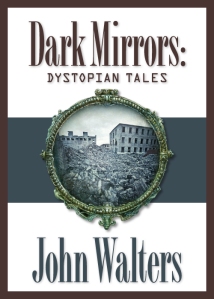
Reading about the squalidness and crowdedness of the homes of millions of families in Bombay made me appreciate what we have here.  It might sound trite or cliché, but it’s true.  For example, it was only after we bought this house near Thessaloniki, Greece that we realized that the crooked contractor had installed a septic tank a third of the size stipulated in the contract – one which has to be emptied about every five weeks.  This has forced us to keep buckets for wash water waste in the bathrooms and to periodically dump those buckets out into the street.  Guess who ends up doing most of the water hauling?  But then I read about families in Bombay who have no running water and no toilets, who must stand in line for hours to fill buckets at the one community tap, and wait in long lines too for a chance to use the disgustingly filthy community toilets.  It makes me carry my own buckets with joy, I tell you.  We have it good here.

More on Bombay soon, as I read onward.

Posted in Book Reviews, Travel | Tagged , , , , , , | Leave a comment

Book Review: Deathbird Stories by Harlan Ellison, Part Two: More Ellison Reminiscences, and The Stories Themselves

So then, after having reread “Deathbird Stories” I realize that at least part of the motivation was to pay homage to one of the great literary influences of my life.  Harlan Ellison’s stories are vivid and emotional, and I have tried to absorb those good qualities and use them in my own writing.

To finish the history begun in part one of this review:  By the time I was ready to strike out on my own, as a writer and as a man, I had accumulated a sizeable collection of Ellison’s books, including first editions that sell for decent amounts of money online these days.  But I had to hit the road, and to do so I had to forsake my possessions; I could not hitchhike around the world dragging a library.  So I took the whole mess of books down to a used bookstore and took the first price I was offered:  thirty dollars, I think it was.  The owner of the shop certainly profited by my haste.  What could I do?  If I had not left everything behind I would never have left.  I had to go out fresh, clean, new, empty, willing to be filled with whatever was my destiny.

Once I visited Harlan Ellison’s home in the hills of Sherman Oaks.  It was about a year after Clarion West 1973, and I was invited and accompanied by a fellow Clarion attendee, one who at the time was Ellison’s friend and had even stayed there from time to time.  The door was unlocked and we walked right in, which my friend informed me was standard procedure.  He led me to the small desk area where all the awards were laid out on shelves:  the Nebulas, the Hugos, the Writers Guild Awards, and so on.  Then Harlan Ellison himself made an appearance, explained that he was sick with a cold and that it wasn’t a good time for a visit, and that was the end of the matter.  I never met him personally again.  Though I had gone to Los Angeles to try my hand at screenwriting nothing had come of it, for the reasons I mentioned in part one of this review:  that I first needed to experience life, before I could write about life.  So I got rid of my books, my television, and anything else I owned that couldn’t be fit into my duffel bag, and hit the road.

Now on to the book itself, and the stories.

As I read it this time, I wasn’t disappointed.  I expected some stories to impress me and some not, and that’s what happened.  Overall, for me it was too much sameness of theme to suit my tastes, too much of the same story told over and over in different ways.  However:

This collection contains what I consider one of the greatest short stories ever written:  “Pretty Maggie Moneyeyes”.  It is Ellison at his finest.  All his skills of vivid imagery, stark emotion, and so on come together to great effect and tell a tale of tragic love and loss.  Some of the other stories are first-rate as well, among them “The Whimper of Whipped Dogs”, “Delusion for a Dragon Slayer”, “Paingod”, and “Adrift Just Off the Islets of Langerhans”.  Others don’t work so well, don’t rise up to the level of art of the very best, and yet others are – I would hesitate to call them mediocre, but they are not extraordinary.  If put by themselves in an anthology of other writers’ stories with which they had no similarity they would be fine, but placed alongside some of the superlative stories in “Deathbird Stories” they pale in comparison.

Is it Ellison’s best collection?  Many seem to think so.  But in a short story collection personally I prefer more diversity in the fare.  For me as I read story after story there was, as I said, too much sameness.  So for me I would probably choose “The Essential Ellison” as a superior collection, with its mainstream stories, essays, and even a teleplay, as well as science fiction and fantasy.

That said, I have to add that when Ellison is at his best he is a unique literary experience, unsurpassed and unequaled, and I am grateful for his influence in my own journey as a writer.

I’m a professional writer; I make my living by my words.  I’m happy to share these essays with you, but at the same time, financial support makes the words possible.  If you’d like to become a patron of the arts and support my work, buy a few of my available books or available stories.  Thanks!

Posted in Book Reviews, On Writing | Tagged , , , , | Leave a comment

Book Review: Deathbird Stories by Harlan Ellison; Part One: Clarion West 1973 Revisited

I honestly don’t know exactly what made me read “Deathbird Stories” again after all this time.  I usually alternate between fiction and nonfiction books in my reading program.  I was just finishing a nonfiction book and considering that I wouldn’t mind reading a book of short stories, but I didn’t have anything on hand and nothing came to mind that was at the local library and it was too late to order something online even if I could afford it, which at the moment I can’t.  Then I thought of “Deathbird Stories”.  I knew the library had a copy.  I thought, why not?

That’s part of it.

I had not read much of Harlan Ellison for a long time, though back in the early seventies he was my favorite writer and my mentor – though I’m sure I made so little impression he would have no recollection of me at all.  More on that in a minute.  A few years ago I bought a copy of the mammoth tome “The Essential Ellison” because I wanted to have some of Harlan Ellison on my shelf.  I read some of the science fiction and fantasy stories for old time’s sake, but what really fascinated me in that collection were the essays, many of which I had never read before, and one mainstream story which I had read long, long ago:  “Punky and the Yale Men”.  That’s one hell of a story.  Anyway, when I struck out on the road in my world-wandering days I sort of left science fiction behind, being more enthralled with the works of Jack London, Jack Kerouac, and the incomparable Henry Miller.

But back in the early 70s I read almost nothing but science fiction, and I got turned on to it after reading a story of Ellison’s, “I Have No Mouth and I Must Scream” in a university textbook anthology.  At that same time I determined that I had to be a writer and learn to compose such brilliant stories.

After I messed up my year at university and moved back to Seattle, I somehow heard that Harlan Ellison was in town and attended a reading/lecture at the University of Washington, where Clarion West was being held.  The next year, 1973, at twenty years of age, I attended Clarion West myself, and Harlan Ellison was once again one of the teachers.  I did not distinguish myself.  I wrote what must be the worst story I have ever written the week he was there.  As I mentioned, I doubt he would remember me.  I wouldn’t remember myself either, had I been him.  Unless it was because my prose hit new heights of mediocrity.

I was heavily into drinking at the time; that was one problem.  Russell Bates, Paul Bond, some of the other attendees and myself would, whenever we could, head off to one of the numerous taverns I knew of that didn’t ask for ID and quaff pitcher after pitcher of beer when we probably should have been back at the dorm pounding on the typewriter.  But it wasn’t just that.  I was immature, naive, clueless about the realities of life.  I wasn’t ready to produce anything meaningful.  I was too frightened to step out on my own and live, and without living you can’t really write about life.  You might be able to come up with some sort of half-assed approximation, but it won’t be the real thing.

So from a writing standpoint Clarion didn’t do me much good, but it was not the fault of the teachers or the workshop itself; it was my fault.  I wasn’t ready.

To get back, though, to “Deathbird Stories” and Harlan Ellison.  At the time he was in the midst of composing the stories that would constitute the collection, and he would talk to us about the inspiration and theme and so on.  But also, and above all, during his reading/lecture at the end of the workshops, one of which I attended in 1972 and the other in 1973 after the one I attended, he would read the stories themselves.  Back then he was at his energetic peak.  He was winning award after award.  “Dangerous Visions” and “Again Dangerous Visions” had been published, and he was being acclaimed as an editor as well as a writer.  He was then, in 1973, seeking stories for the third and last volume of “Dangerous Visions”, and it was the dream of every Clarion attendee to sell him a story for what was then the most prestigious speculative fiction anthology series in the world.  As I said, I never came close.  But all this is to explain what a phenomenon Ellison was at the time, and he was hard at work on this cycle of stories that he considered his magnum opus.  The first of the stories I heard him read, back in ’72, was “The Whimper of Whipped Dogs”.  He had all the lights in the auditorium extinguished except a tiny reading lamp at the podium, and stunned all of us with this powerful, image-laden, horrific story.  As I remember he got a standing ovation, and it was well-deserved.  Now, my memory may not be spot-on about which story he read when, but I think that afterwards, as an encore, he read “Bleeding Stones”.  Then, in 1973, he read the first part of what was then a work-in-progress, “Adrift Just Off the Islets of Langerhans”.  So I have heard him read live two and a half of the stories from “Deathbird Stories”.

This book and I have a history.

To be continued.  In the next installment I will give my impression of the book itself based upon this current reading.

I’m a professional writer; I make my living by my words.  I’m happy to share these essays with you, but at the same time, financial support makes the words possible.  If you’d like to become a patron of the arts and support my work, buy a few of my available books or available stories.  Thanks!

Posted in Book Reviews, Memoir, On Writing | Tagged , , , , , , , | 2 Comments

Book Review: Life by Keith Richards

When I was growing up I listened to the Rolling Stones sometimes on popular radio stations, and I liked some of their songs but was never particularly attracted to the group itself as a fan.  I was more into the Beatles, later Creedence Clearwater Revival and, in my psychedelic drug days, the Grateful Dead.  The Stones, though doubtlessly talented musicians, came across as too dark and raunchy for my tastes.  Later, as I saw them continue touring in middle age and then as gray-haired old men, I wondered what was up with them, how they had managed to keep it together for so long.

This book tells what was up.

It’s a very entertaining read.  Keith Richards is intelligent and erudite beyond all expectation.  He had a ghost writer, or at least an assistant, true, but his personality shines through clearly.  It’s a complex yet affable personality, wild, unorthodox, rebellious, prone to outbursts of violence, faithful to friends and family.  Yet one thing comes across more than anything else:  his sincere and heartfelt love of music.  It is this that gives the book its quality and depth more than anything else.

Yes, it goes into all the sordid details:  the parties replete with booze and drugs, the loose sex with groupies and other girlfriends, the animosity between Keith and Mick, the squalid desperate decrepit years as a heroin junkie.  As I read about all these crazy debaucheries I was reminded of the band of outlaws in “Blood Meridian” By Cormac McCarthy:  they hunted Indian scalps through Mexico and the southwestern US; they were savage and violent and went through incredible hardships; yet when they finally got a hold of a little money they would blow it all on a drunken spree, go absolutely nuts and get in fights and break things until they would be driven out of or turn on the very towns that had rewarded them.  So it was with the Stones, especially in the 70s.  They had achieved fame and riches but on their tours would indulge in heaps of drugs and damage hotels until they were blacklisted from the best ones; in addition, narcotics agents were continually on their trail.  Keith Richards went from one drug bust and trial to another, each time escaping by the skin of his teeth with the aid of high-positioned friends and the best lawyers money could buy.

But all of this would be nothing more than an extended People Magazine article, sensational tabloid rubbish, except for one thing:  Keith Richards sincerely loves his music.  When he writes about music, whether it is discovering new chords or new techniques of playing, or meeting and jamming with other musicians he admires, or writing songs and putting together albums – then this book rises above the tabloid and becomes a great literary experience.  It is clear that KR loves his music as much as I love my writing, and that is saying a lot.  It defines him as a person; it defines his life.  It is all about the music, in the end.  That’s what I found myself admiring about him, despite his sordid past.  He is an artist, and gives first place to his art.  He must have music; there is no alternative.

Don’t get me wrong.  The rest of the book is a worthwhile read too.  As I said, Richards is highly intelligent and it is much better written than a tabloid magazine article.  In fact, it is fascinating.  He holds nothing back; he gets down and dirty with the details.  But when all is said and done it is his art that has made him what he is.  That’s why the Stones continue to tour when most folks have retired – in fact, when most rock musicians are already dead and gone.  They love the music, and can’t think of a life without it.  He says he’ll keep playing and writing songs until he croaks; he can’t imagine doing anything else.  Having read this I will listen to the Stones with greater interest and appreciation.

Another aspect of the book that I appreciate is how it defines an era.  It’s a big book, and most of it describes the period during the 60s and 70s when the Stones evolved their own style and achieved a meteoric rise to success which was only surpassed by the Beatles.  I am fascinated by the 60s and 70s and read any good books I can get my hands on of that period of modern history.  I became caught up in a good part of it myself, becoming involved in psychedelic drugs and hippydom first during my abortive year at Santa Clara University and later during my travels up and down the West Coast.

In conclusion, I highly recommend this book, whether you are into the Rolling Stones or not, as great entertainment, engrossing modern history, and the fascinating story of one of the greatest rock and roll guitarists of all time.

Posted in Book Reviews | Tagged , , , , , | 1 Comment

Paper Dragons

Sometimes the systems of this world just kind of fall into place.  They are the results of a lot of decisions by a lot of people and gradually evolve over the years, usually as the result of reactions to crises.  Political systems, economic systems, social systems, all the same.  Circumstances vary, details vary, but usually the base instinct is survival.  Rarely does love enter into play, or at least rarely is it a deciding factor, whether it is love of God, or humanity, or country, or art.  The deciding factors are usually far more base:  power, fear, profit.

Ah, you damned cynic, you say, I am far more idealistic than you.  I believe in people’s innate goodness.  Everyone comes round to it in time.  Yeah, sure.

Anyway, today we are speaking of art and artists, if you will permit me to use such grandiose terms.  And this train of thought all came about when I was musing on the state of publishing today.  Even the most myopic observer would say that it is in a state of flux, of transition, with the rising star of e-publishing and the demise of many print bookstores, with the wide open possibility of self-publishing, or so-called indie publishing, and the besieged citadel state of traditional publishers.  Yes, things are changing, and systems which have remained in place for decades, petrified in the attitude of “this is the way it is done because this is the way it has always been done and there’s no other way” are suddenly confronted with the fact that there are other ways.  The reaction of many is to plunge their heads as deeply as possible in the sand and hope that it all goes away.

It’s not going to go away.

For a long time only one road has existed.  Now there are others, and it does no good to exclaim in chagrin and self-aggrandizement that “it’s my way or no way”.  Considering the evidence it would be ludicrous to do so, when the other paths to take are so plain to see.

An artist creates.  A painter paints, a musician plays music, a writer writes.  When the creation has been accomplished, the artist wishes to share it.  Whatever is expedient and available is the proper means to do so.

But then bigshots in offices, that is, executives, accountants, publicists, and so on, many of whom have had no training in art at all, say, “No, wait a minute.  The only way to present your art is through us.  We will be the filters, we will be the judges; we will decide if your work is fit to be seen by the public.”  And on what do they base their decisions?  Invariably it is the company’s bottom line.

The artist, meanwhile, just wants to create and then present the work.  In publishing, until recently, there was no alternative to going through the bastion of traditional publishing.  Now, alternatives exist.  And traditional publishers are calling foul.  Surprised?  Not at all.  Their exclusivity is threatened.  Well, let’s put that into perspective.  It was threatened.  By now it is long-gone, never to return.  It’s not that they don’t still have their place, their function – but they are no longer the only game in town.  That’s something to which they have to adjust.

I find it ludicrous that publishers, agents, editors, even writers themselves, rush frantically about trying to prop up the collapsing house of cards of the exclusivity of traditional publishing.  Note that I did not say traditional publishing itself, but only its exclusivity.  Traditional publishing will survive, but it must accept the fact that it will never again be the only source of creative prose output.  To continue with the self-imposed blinders in the face of reality would be laughable at best and tragic at worst.  It reminds me of the scene in the Mel Brooks movie “Blazing Saddles” where the cowboys in the desert are confronted with a toll booth and they all dutifully line up and pay, whereas all around them are endless spaces of open country through which they could easily and freely ride.

Some speak of quality control.  But is some suit in an office in New York who has never been and never will be a writer a better judge of my work just because he has a rich and powerful organization to back him up?  I think not.  I can’t speak for any other writer in the history of the world, but I have paid my dues, and I have the right to create and publish and promote my work just as much as he has the right to publish and promote whatever works he deems appropriate.

It’s a matter of expediency.  I am not against traditional publishing; I have published short stories in traditional markets and will do so again.  What I am against is the self-righteous, condescending attitude that says, “My way or the highway,” that says, “If you don’t go through me your work is worthless.”  The hell with that.  I’m willing to concede you your place in the grand scheme of things if you will concede me mine, whatever I choose to make it.  But my career is mine, not yours.

Posted in On Writing | Tagged , , | Leave a comment

Book Review: The Dead Hand: The Untold Story of the Cold War Arms Race and Its Dangerous Legacy by David E. Hoffman

The “Dead Hand” of the title refers to a proposed Soviet doomsday machine that would provide devastating retaliation in the event of an American nuclear first strike.
Lacking the technology to make the device completely automatic, the Soviets instead devised a semi-automatic program in which personnel hidden deep in concrete bunkers would launch the missiles.  In a broader sense, the dead hand refers to the overwhelmingly huge stockpile of nuclear, chemical, and biological weapons left over after the breakup of the Soviet Union and their ongoing potential for destruction.

The book follows two main threads:  the quest for nuclear nonproliferation and disarmament, mainly pursued by US president Ronald Reagan and Soviet Premier
Mikhail Gorbachev, and the Soviet program for developing biological weapons for
military use, which went on long after the USSR signed treaties banning such activity.

Both Reagan and Gorbachev sought to completely eliminate nuclear weapons, realizing that no war using them could be won.  The book shows the stagnation and decay of the pre-Gorbachev years under Brezhnev and Andropov, the relentless military buildup which consumed all the national resources and more, and strangled and starved the common people.  The contrast puts Gorbachev’s achievements in perspective and makes what he was able to accomplish seem all the more amazing.  That he and Reagan were able to get together and discuss scaling down the arms race was a tremendous feat.  Both faced great opposition at home:  Reagan from right-wingers suspicious of Soviet intentions, and Gorbachev from generals who were determined to preserve the powerful  military/industrial complex.  In the end, the two leaders did not meet their ultimate goal, which was total elimination of nuclear weapons, but they made great strides in that direction.

In the meantime, though, the Soviet program to develop and prepare for use as weapons such biological agents as anthrax, plague, and smallpox went on unabated.  Though strict
treaties were signed, the Soviets, and later after the breakup of the Soviet Union the Russians, continued research and production of both biological and chemical weapons on a massive scale.

History intervened.  Gorbachev allowed the Berlin Wall to fall and one East Bloc country
after another to declare independence.  This left nuclear, biological, and chemical weapons scattered all across the Soviet Union in hundreds of locations, for the most part ill-guarded, neglected, without funding, staffed by scientists who received little or no pay.  The last part of the book documents the gradual realization by the Western governments that this network of weapons existed, and their efforts to do something to reduce the risk before terrorists and rogue states moved in and got to them first.  It’s a story of real-life espionage and intrigue, of investigation and heroism.

The story does not end well.  Many of those weapons are still out there, still available to wreak havoc and destruction.  They have not all been dismantled or neutralized or placed in secure locations.  They are dormant for the moment but still exist as a “Dead Hand”, a doomsday device of potential annihilation.

This is a terrifying book.  At the same time, it is brilliantly written, a terrific read, as
compelling and as hard to put down as a novel.  It won the Pulitzer Prize for nonfiction in 2010, and that prize was well-deserved.  It’s an invaluable study of an important aspect of modern history – all the more so because that history is ongoing.

Posted in Book Reviews | Tagged , , , , , , , | Leave a comment

Book Review: Silence by Shusaku Endo

The first novel by Shusaku Endo I read was “Scandal”, which he wrote late in his career.  It’s set in Tokyo, and is a surreal story of an aging writer discovering the underworld of extreme sex and at the same time the darker, hidden side of his own psyche.  It was quite a radical introduction to one who is usually identified with the Christian aspects of his novels.  Afterwards, while searching a library here in Thessaloniki for “Silence”, which they didn’t have, I came across “Deep River”, a novel about a group of Japanese tourists on a tour to Varanasi, the sacred city beside the Ganges in India.  I greatly enjoyed this one; Endo explores the backgrounds of each of the characters so that when they are brought together in Varanasi their reactions and interplay and destinies are inevitable.

But the story I had most wanted to read was “Silence”.  Many consider it to be his masterpiece.  Martin Scorcese has for years been planning to film an adaptation of the novel; rumor has it he has signed Daniel Day-Lewis and Benicio del Toro, which would make it a major project indeed.  Finally during my last visit to the States I bought a used copy at Strand Bookstore in New York and decided to give it a try.

It starts slowly, if truth be told.  Endo is not an action writer; he carries on his tales at an even, thoughtful, well-crafted pace, with poetic description so that the reader is immersed in the landscapes and the experience.

It’s set in the 1600s, and is based upon real events and people.  The main character is a priest named Sebastian Rodrigues, usually referred to simply as “the priest”.  Hearing that a former mentor of his who is now a missionary in Japan has apostatized, that is, renounced his faith under torture, he is unable to believe it.  With two other companions he determines to journey to Japan to find out the truth.  After a voyage of many months, with stopovers in Goa, India, and Macau, China, two of the priests (one succumbs to illness and is left behind in Macau) arrive in Japan and are smuggled into the country, where they find small villages of Christians being hunted down and executed for their faith.  As Rodrigues sees these simple souls being tortured and killed he wonders at the silence of God through it all, and why God does not intervene more directly.  Finally he is himself captured.  He is not tortured, but he is unable to bear the pitiful cries of Japanese peasants being tortured in his stead, and apostatizes to save them.  As a symbol of his apostasy he is asked to step, or “trample” on an image of Christ, and as he, in tears, hesitates, he finally hears the voice of God, telling him to go ahead and trample, that it was to share humanity’s pain that he endured the cross.

Shusaku Endo was raised a Catholic in Buddhist Japan, and many of his works reflect the experience of being one of a minority, an outsider, an outcast.  In his prose he explores the contrast between East and West, and the difficulty, even near-impossibility, of the two cultures existing harmoniously.  Both as a Christian in Japan and as a Japanese in Europe he was despised, bullied, rejected, alienated, misunderstood.  His works show a deep appreciation of the underdogs, the persecuted, the castoffs.

Though I do not wish to delve much into the theology of the situation, a few thoughts that occurred to me as I read must be mentioned.  First of all, as one Japanese magistrate in the novel pointed out, the various Christian denominations that arrived in early Japan to set up missions were like a bunch of squabbling concubines each vying for the attention of their master.  Though the Christian religion professes love and unity, each of the four
countries claimed a different, and better, brand of Christianity, and ridiculed  and tried to turn their hosts against the others.  What were the Japanese to think of such a situation?
As for the priest and his Catholic religion, it was imported as-is; the Japanese were expected to conform to the customs and rituals from the West without any concession at all to the uniqueness of their own culture and traditions.  These factors of warring
denominations and all-or-nothing demands to absorb starkly alien ways made it much more difficult for the proud Japanese to accept or at least tolerate the strange foreign religious presence.  If the Christians had been more flexible, more malleable, and especially motivated not so much by politics and trade and self-righteous pomposity but by a sincere desire to offer the illumination of Christianity to Japan in a spirit of unity,
they might have done much better and avoided the persecution and expulsion of
Christians.

Be that as it may, in the end Endo’s goal is not to criticize the missionary effort but to present a Jesus whose love encompasses the beggars, the lepers, the criminals, the outcasts, and yes, even the apostates.

Regardless of the Christian theme, which may appeal to some and be unappealing to others, this novel is a worthwhile read for the excellence of the writing, for its depiction of the juxtaposition and clash of cultures, and for the intense and brilliant portrayal of its characters.

I’m a professional writer; I make my living by my words.  I’m happy to share these essays with you, but at the same time, financial support makes the words possible.  If you’d like to become a patron of the arts and support my work, buy a few of my available books or available stories.  Thanks!

Posted in Book Reviews | Tagged , , , , , | 2 Comments