The Pursuit of Elusive Literary Fame and Fortune

The quality of a literary work often has nothing to do with how often it is rejected by editors or how many copies it sells.  This thought consoles me in my own pursuit of fame and fortune, especially fortune in these days of troubled finances.  But for a writer one follows the other.  Or vice versa.  To illustrate my point I offer you four examples from the annals of recent and remote literary history.

John Kennedy Toole began working on a novel while in military service.  After he was discharged he finished it at his parents’ home, and eventually sent it to the publishing house of Simon and Shuster.  The novel made it all the way to the desk of the senior editor, but he expressed misgivings due to various flaws that he pointed out to Toole in a letter requesting revision.  Negotiations followed but the differences could not be resolved.  Toole put the novel aside, discouraged and despondent.  This rejection helped tip him over the edge into depression which eventually led to his suicide.  He stuck one end of a garden hose into the exhaust pipe of his car and the other end into the car window and died through inhaling the fumes.  Two years later his mother found the manuscript of his novel in his room and began to send it around to publishers, feeling that if the novel were successful it would vindicate her son.  It was rejected by one publisher after another.  Finally she sent it to the acclaimed National Book Award winning novelist Walker Percy, who read it and loved it.  After three more years he managed to get it published by a small university press.  The next year, in 1981, the novel “A Confederacy of Dunces” won the Pulitzer Prize for fiction.  It has now sold well over a million copies and is considered a comic literary masterpiece.

Herman Melville achieved early fame for his first three novels, though the income was not enough to support himself and his family.  He moved to a farm in Massachusetts where he divided his time between managing the farm and writing what would later be considered his masterpiece, “Moby Dick”.  This and his other later works were not well received, however.  His finances waned, and he suffered from family problems, alcoholism, and depression.  By the time he died at age 72 he was almost unknown as a writer.  The initial 3,000 copies of “Moby Dick” did not even sell out in his lifetime.  Now he is celebrated as one of the greatest American writers, and “Moby Dick” is thought of by many as one of the greatest novels ever written.

From the past we move ahead into the present.  The Pulitzer Prizes for 2013 were recently announced, and the winner in the history category is a work called “Embers of War: The Fall of an Empire and the Making of America’s Vietnam” by Fredrik Logevall.  It is just the sort of history book I love: I haven’t read it yet but it looks to be a fascinating study of the buildup to American involvement in the Vietnam War, beginning in 1919 at the Versailles Peace Conference and concluding in 1959 with the deaths of the first American soldiers killed in the conflict.  I recently read an article on another site that listed the sales of the Pulitzer Prize winners before the awards were announced.  You know how many copies this book sold before it won the award?  Forty (40) copies total.

And we conclude with a story that many people now know, but it is a marvelous tale of obscurity to success that deserves retelling.  I can identify with it because I am living now as a single parent responsible for three of my sons, carving out time to write whenever I can.  This single mother, considering herself a failure, deeply depressed, living on welfare, nevertheless persevered in working on her first novel wherever she could, often in cafes, until it was finished.  Then she sent it out and it was rejected by a dozen publishers before being accepted for an insignificant advance.  Even after the book was accepted she was urged to get a day job, being told that she would never be able to make a living solely as a writer.  This woman was J. K. Rowling, and that book was “Harry Potter and the Philosopher’s Stone”.  The Harry Potter books have now sold over 400 million copies, and Rowling is one of the richest women in England.  And she continues to write.

I think of stories like this whenever I check my sales figures and see no progress, or whenever I wonder if I am the only one on this earth that thinks my books have any merit.  I don’t really want to be a celebrity, but in order for my books to sell well a certain notoriety goes with the turf.  I long for my fortunes to change and for the money to flood in, so that I don’t have to balance my children’s every request with a perusal of the available finances.  But I know in my heart that my literary output is the best work I can do.  I have no control over whether anyone else ever agrees or not.  Such is life in the creative arts.

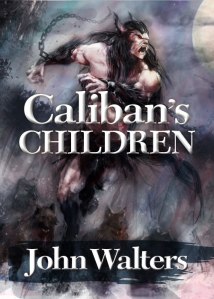
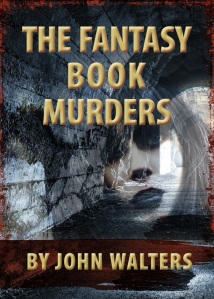
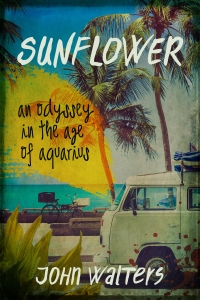
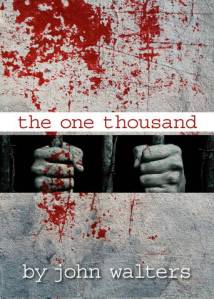
I’m a professional writer; I make my living by my words.  I’m happy to share these essays with you, but at the same time, financial support makes the words possible.  If you’d like to become a patron of the arts and support my work, buy a few of my available books or available stories.  Thanks!

Posted in On Writing | Tagged , , , , , , , | Leave a comment

Book Review: Bones of the Earth by Michael Swanwick

I have great respect for Michael Swanwick’s writing.  His short story collection “Tales of Old Earth” is one of my favorite collections, and stories in it such as “Scherzo With Tyrannosaur”, “Wild Minds”, and “Radiant Doors” are among the best science fiction stories ever written.

Though I have read many of his short stories, this is the first novel of his I have attempted.  It happened by chance; I found it at a bargain bin outside a bookstore.  My first thought was “Michael Swanwick?  In a bargain bin?  Time travel?  Dinosaurs?  How can I say no?”

The truth is, when Swanwick writes a short story there is so much packed into it you feel he could have made it into a novel.  That it is bristling with ideas makes its impact at short length so much the stronger.  I don’t know what I expected at novel length – much the same only more of it I suppose – but for me this book didn’t really get going until it was about 150 pages in.  From there until the end I found it an absorbing read.  The beginning I found a bit slow and rambling, setting up characters but never really coming together.  Part of the problem was that one of the plot elements, that as a reaction to time travel proving evolution a cult of Christian fundamentalists would arise to commit reactionary violent mayhem, I found a bit silly.  I just couldn’t buy that.  Fiction always involves a willing suspension of disbelief.  The best fiction makes you suspend your disbelief without even realizing you are doing it, but with this premise I had to consciously make a decision to let it pass because I wanted to read on, hoping for better things.  Fortunately, after those first 150 pages that plot point is left in the dust, so to speak, and the novel gets into some genuine excitement and interest as an expedition is lost in the Mesozoic era surrounded by huge dangerous beasts.  Swanwick plays a lot of games with time travel paradox too, and that’s fun, though he has done it more effectively in his shorter works.

In the end he takes us into the far future and introduces us to the beings that invented and introduced time travel to the human race.  The conclusion left me vaguely dissatisfied, the same way I felt dissatisfied with the conclusion of the “Matrix” trilogy.  It just wasn’t the way I wanted to see things go, not the way I would have done it.  It would have been cool if the humans could have somehow fought the inevitable, somehow prevailed against all odds.  That’s how I would have wanted to do it anyway.  I should have known better.  Even in his short fiction Swanwick is often deeply pessimistic, and I can’t fault him for that.  I have found the same to be true with my own work.  Often against my early predilections, a story cries out for a tragic ending because…well, just because the story takes over and that’s the way it ends.

I have read both “Jurassic Park” and “The Lost World” by Michael Crichton recently and feel the temptation to compare them with “Bones of the Earth”, but I am going to resist the urge.  They are very different works.  One thing is sure, though:  “Bones of the Earth” would be much more difficult to film, with its large cast of characters and more complex plot.

In my criticism of various aspects of the novel I do not mean to suggest that it is not entertaining.  It is a good book, a fun read.  The fact that I expected more does not diminish from its obvious virtues.  Once it gets moving it is a fast-paced enjoyable novel.  Time travel?  Dinosaurs?  Multi-award winning author?  How can you go wrong?

I’m a professional writer; I make my living by my words.  I’m happy to share these essays with you, but at the same time, financial support makes the words possible.  If you’d like to become a patron of the arts and support my work, buy a few of my available books or available stories.  Thanks!

Posted in Book Reviews | Tagged , , , , , , , , , , | Leave a comment

The New Hack Writers

In bygone days pulp writers would churn out stories and articles by the bundle for magazines that would pay a fraction of a cent per word.  The only alternative to starvation was to write fast and furiously and pay more attention to quantity than quality.  Still, some excellent writers emerged from that era, and some truly great work was done.  After all, it is a myth that speed and quality are anathema to each other.  Consider “On the Road” by Jack Kerouac, which was written in a tremendous burst of spontaneous prose as fast as he could type on a large roll of teletype paper.  Of course, the germination process was lengthy – he had to live it and mull over his experiences first; and the editing process was doubtlessly equally lengthy.  This is not what I am speaking of when I talk about hack work.  Hack work is done for no other motivation than money; if it were not for the money the work would not be done.  Literary work, no matter how speedily written, is a calling, a vocation, a necessity.  The two analogies I come up with for literary work are greatly diverse from one another but give an impression of the urgency involved:  a good bowel movement, and a mother giving birth.  A writer must write.

Hack work is when a writer uses his talent to produce something saleable, but the compulsion to create is lacking.  When I moved back to the States after thirty-five years abroad I had thought to get a regular job with a salary, but as I searched and searched I realized the proposition was much tougher than I had supposed.  In desperation I began to look for online writing jobs to bring in a few bucks.  This article is not an extensive analysis of the online writing scene, but a recounting of my own experiences.  I found a number of opportunities to make money writing online, some of which were outright scams and some of which offered a trickle of income.  Few paid anything other than poverty-level wages.

I’m writing here about purely freelance work.  I came very close to snagging a few regular salaried content provider jobs with fairly large online companies.  They liked me; they liked my work; we made it as far as second interviews.  Inevitably, though, they got down to the random, ridiculous criterion of the missing piece of paper:  I lack a college degree.

To search for online freelance writing work I looked on a number of sites.  It was meticulous and exhausting, as many advertisements turned out to be absurd timewasters.  Many expected quality writing for no pay but intern experience or exposure – deceptive terms to mask the fact that they wanted to profit from your work but did not want to allow you to do so.

The first promising web content job I found turned out to be little better than a scam, but I didn’t realize it at the time.  It was advertised on a job site.  The article site was attractive, and on the home page there were testimonies of writers who supposedly made hundreds of dollars a month in royalties.  They wanted writers to deliver good quality articles, and promised a share of ad revenue calculated on the number of times people clicked on your article.  I became all enthused about it and wrote articles on travel, parenting, teaching, writing, and other subjects with which I was familiar.  I proofread them to be sure they were perfect and uploaded them into the site’s template under a pseudonym.  I was proud of those articles; they were good quality work.  Then I went about logging into the financial system that would make it possible to get paid, and I found out it wasn’t so easy.  You had to have a certain number of articles published, and those articles had to get a certain number of visits.  For weeks I struggled to get locked in to the payment system, only to receive e-mail messages saying that I was not yet approved.  Finally – I think it was actually a few months after I had first applied – my application was approved.  Eagerly I awaited the outpouring of income; after all, I had begun to receive positive reviews, followers, and so on.  However, with over two dozen articles online my top income has yet to reach a dollar a month.  Payment is not made until a minimum of fifty dollars is reached.  Do the math.  I had better not hold my breath.

While waiting for the proverbial shower of income I sent out dozens of queries to folks requesting experienced help writing articles.  One day I received an answer from someone who proposed to start a website on a popular travel topic in Southern California and wanted help writing articles.  He offered me $250 for the first article, and promptly sent me an advance of $100.  I worked for days researching, writing, and honing the lengthy article, and in the end my employer praised the quality of my work and sent the balance of $150 right on time.  The problem was, such work was a needle in a haystack.  He never wrote back with more assignments, as he had promised.  I don’t know whether his website never got off the ground, or whether he decided to save money by writing the balance of articles himself, but I never heard from him again.  There’s the crux of the problem:  a freelancer cannot ever rely on steady work.  You never know when you might be cut off.

Next I snagged the best and steadiest job of my freelance writing career to date.  I had sent an application and some samples to a company who wanted some articles slanted at seniors.  They liked my work so much they offered me a year’s contract to provide them with at least five articles a day, six days a week, at a very good price per article.  Their main office is here in San Diego, so I went in one day to meet my supervisor, discuss what they wanted, and sign a contract.  Thereafter I got into intensive work.  To write so many articles I had to be constantly researching, constantly writing.  Usually I worked from about 7:30 in the morning until about 9:00 at night.  I stayed at it because it was good money and we really needed it, but I also got a lot of appreciation and rave reviews from my overseer.  Then from somewhere a company efficiency expert came into town and decided that their website was not growing enough regular viewers fast enough, and he canceled my contract.  Just like that I was left out in the cold.  Anyone with a modicum of knowledge about the web would have told him that it takes time to grow an audience, but he was having none of it.  His first thought to save money was to cancel the content provider.  Me.  So that was the end of that gig.  A pity.  It had been a good one.  But so it goes.  You can never, ever count on anything in the online freelance business.  My contract had a provision that either side could cancel, and they exploited the fine print and disposed of my ass.

I was knocked for a loop for months; I couldn’t find any other work.  The money I had saved dwindled.  Depression and stress set in as I couldn’t find a regular job and I couldn’t find writing work.  I didn’t sit around eating chocolates and watching TV – I don’t like chocolates anyway.  It never occurred to me to take a break.  I worked full time on a number of short stories and novelettes and sent them off to magazines and anthologies.  Such work, however, is a long-term proposition as far as income is concerned.  Even if they all got accepted it could be years before I would see the money.  Income from my already-published memoirs, novels, and short stories trickled in so slowly it could never pay even a fraction of the bills.  I had to find something else.

The next writing gig I found was for a company that solicited work from businesses that had online presences, and hired writers and editors to do the work.  Payment was made through Amazon, with a system called Amazon Mechanical Turk.  I was invited to take a writing test; I was given a topic and wrote a researched article on it.  In short order I received the reply that I had passed the test and I should set up the payment system.  So I did.  Amazon Mechanical Turk is used by many companies to pay freelance employees, and while I waited to receive writing assignments I did other work for which I was qualified, mainly taking online surveys for research companies.  If there’s any online work that pays worse than writing it’s survey taking; I found on the best days, when I worked at it morning until night, I could make about ten bucks.  I did it anyway while I waited for final approval, to try to at least slow down the hemorrhage of savings from my account.  Weeks I waited and wondered why the writing assignments did not come.  Finally I called the company and found out the problem had been the misreading of one digit in my long worker ID number.

So I started work.  About five articles a day again, six days a week, morning to night.  This job paid about a third less than the job writing articles for seniors, but steady money began to come in and I began to slowly recoup my financial losses.  For a month and a half or so all went well, and it looked like I had found a gig through which I could make enough to at least survive.  Then out of the blue the company announced they were going to cut off the writing assignments for two weeks to catch up on editing.  The two weeks became three, then four.  In the meantime I passed a test to qualify as an editor, but could not get enough assignments to make a decent amount of money.  Those savings are going down again.  Such is the life of the freelancer.  Definitely not for those with thin skins and temperaments that react poorly to stress.

One final word I want to say about these articles freelancers write by the tens of thousands per day for companies that want them for their blogs or websites.  Where do you think the writers do their research?  Online, of course.  I used to buy used books and get stacks of books from the library for the articles for seniors I wrote, but very few writers go to such trouble.  Most articles are a regurgitation of what is already published on the Internet, often with only slight rewording.  Some writers use programs that remix information and lay it out in a new way.  Almost none do original work.  It’s the beast feeding upon itself, a humungous chaotic confusion of information that serves no purpose other than that of a predator putting out scents or lures to try to coax prey (customers) into its lair.  Yes, the Internet has an amazing wealth of information available out there.  But there’s a lot of crap.  A whole hell of a lot of crap.  The new hack writers, of whom I admit I am one, write this crap.  I would like nothing better than to cut loose from this hack writing scene and work solely on my own material.  I hold fast to the hope that someday I will.  In the meantime I struggle onward, day by day, task by task.

“Perseverance…keeps honor bright; to have done, is to hang quite out of fashion, like a rusty mail in monumental mockery.”  – William Shakespeare, “The History of Troilus and Cressida”

In other words:  Never give up.

I’m a professional writer; I make my living by my words.  I’m happy to share these essays with you, but at the same time, financial support makes the words possible.  If you’d like to become a patron of the arts and support my work, buy a few of my available books or available stories.  Thanks!

Posted in Memoir, On Writing | Tagged , , , , | Leave a comment

Book Review: What Language Is (And What It Isn’t and What It Could Be) by John McWhorter

At the science fiction convention ConDor 2013 I attended a panel on linguistics by David Peterson, who created four languages for the TV miniseries “Game of Thrones”.  His presentation fascinated me, and I kept interrupting to ask questions.  At the end I asked him if he could recommend some books on linguistics so I could get an idea of the basics.  This is one of the books he and his wife, who is also a linguist, recommended.

One thing I notice about linguists:  they can be passionate about their field, every bit as passionate as I am about writing.  I say this not only through meeting David, whom I met again and had a chat with later on at the con.  I have another friend who has a Masters Degree in linguistics, and there’s nothing she enjoys more than diving into linguistics research.

To each his (or her) own.  I find linguistics, even the very simple and basic variety presented in this book, to be as difficult as physics (for me personally very difficult indeed).  One might think it strange, as language is the tool with which I sculpt my stories, memoirs, essays, novels, and so on.  But then again, not all artists are familiar with the chemical composition of the colors they work with; not all guitarists can construct a guitar from scratch; not all drivers can repair their cars.  It is not necessary to have a knowledge of linguistics to be a writer.

Be that as it may, in this book the writer attempts to introduce a few concepts in language.  For an outline he uses the acronym IDIOM.  Language is ingrown, disheveled, intricate, oral, and mixed.  Each section of the book explains one of these concepts, and the author uses various languages, both obscure and well-known, to reinforce his ideas.  Language is ingrown when it does not receive much input from outside, and so mainly is passed on from one generation to another; it develops idiosyncrasies and complex grammar as a result; the writer uses Pashto, spoken in Pakistan and Afghanistan, and other obscure languages, as examples.  Language is disheveled when it becomes unimaginably complicated; he uses the Navajo tongue, which has more exceptions than rules, as an example.  Language can be intricate even though the grammar at first glance appears to be simple; the writer uses languages from West Africa, Southeast Asia, and Black English from the United States to illustrate this.  In explaining that languages are primarily oral, the writer points out that of the several thousand languages in the world, only a few hundred possess written form.  Writing is, in fact, only an approximate form of the basic spoken language.  In the last section, about how languages mix, the primary examples are the various languages of Sri Lanka.  I have to confess that I got lost in a few of the explanations here.  Perhaps it was my state of mind at the time; a lot is going on in my life.  But for me, the explanations are not easy to follow.

Overall, I found the book interesting but not easy reading.  Well, that’s okay.  Not all books need to be bubble gum or junk food.  But it wasn’t exactly what I was looking for when I picked it up.  I wanted a general overview of the field of linguistics, and that’s not what this book is.  This book is a popularization of some of the basic concepts, presented in simple, light, witty prose.  If you are interested in getting a little background concerning the languages the world’s peoples speak and write, it’s a worthwhile read.

Posted in Book Reviews | Tagged , , , , | Leave a comment

Book Review: The Best American Short Stories 2010 edited by Richard Russo

I’m going to let you in on a little secret of how I choose what I am going to read.  I knew I wanted to read a recent volume of “The Best American Short Stories”, just to get an idea of what others thought were best.  I have my own opinions and they are not really influenced by those of others, but I am a short story writer and like to keep my finger on the pulse of the national game.  So how did I choose which volume to buy?  Two considerations.  First, I checked out the editors.  That way I narrowed it down to two choices.  Then, I considered price.  This one was on special.  Nothing more complicated than that.

As I have found with most anthologies, whether they specialize in literary fiction like this one does, or whether they specialize in science fiction and fantasy, usually I like a few stories very much, I like some a little, some are so-so, and some I wonder how the hell the editor decided they were worthy of a volume that presumes to represent the best of the year.  Of course they are not the best of the year; they are best of the year in the opinion of the two editors of this volume.

One thing that bothered me was how exclusive the editors are.  They consider stories from literary journals, no matter how obscure, but do not give the same respect to genre journals, magazines, and anthologies, many of whose stories are far more interesting and well told than some of the stories herein.  This is an old story and an old problem, and one not likely to be remedied soon.  Interestingly enough though, two of the best stories in this volume, including the one I think is the very best, “The Netherlands Lives with Water” by Jim Shepard, are science fiction stories.  This story and “Raw Water” by Wells Tower, were both commissioned by McSweeney’s Magazine for a special edition with stories based in the year 2025.  Both, oddly enough, deal with global warming and rising sea levels, though the focus is on characterization, which should be true for any decent short story.  If these stories had appeared in science fiction magazines exactly as they are, they would not even be considered for this anthology, let alone chosen.  Yes, there is much unfairness in the world of literature, but this problem is not likely to be soon resolved.

Other good stories in this volume include, “Delicate Edible Birds” by Lauren Groff, a gripping tale set during World War II; “Donkey Greedy, Donkey Gets Punched” by Steve Almond, about a gambling addict who meets his match; and “The Laugh” by Tea Obreht, a chilling story of some people in a safari lodge being stalked by hyenas.  The very best stories, I noticed, at least those that appeal to me, are those which have a plot, a beginning, middle, and end, and do not just ramble on in some sort of obscure “character study” with no point, which some stories are guilty of doing.  I don’t mind if the writer experiments with style or person or point of view; I don’t mind Conradian story frames or flashbacks or flash-forwards; what I require is a story somewhere there in the mix.  Some of these delivered, and some did not.

As I said, I don’t expect all the stories in an anthology to be good.  Enough of these were, though, to recommend the anthology.  Who knows?  You might like completely different stories than I did.  Perhaps the ones I thought were the best you might find the most deficient.  You are entitled to your opinion.  But I speak from a writer’s perspective as well as a reader’s, and this is how it seemed to me.

Posted in Book Reviews | Tagged , , , | Leave a comment

Getting Old: A Journal; Part Two: Good Stuff

I hadn’t intended to write more about getting old, at least not soon, after I had finished the first part of this journal.  Down the road a bit, yes, but not soon.  However, while contemplating it during a walk under dark cloudy skies in rain-threatened San Diego, I realized I could not let it stand alone.  I wrote it to express my very real inner fear, but that is not all there is to the subject.  In fact, there is more positive than negative in growing old.  Many of the things I alluded to in my previous article are surface manifestations: deteriorating body and appearance, and so on.  But there is much more to aging than that.  With this epiphany, let us turn to some of the great benefits of aging.

First of all, I can see my progeny grow up to maturity.  Those who don’t have kids can’t really relate to this, I suppose, but perhaps at least vicariously you can.  Even if you don’t have your own offspring you probably have seen nephews or nieces, cousins, younger brothers or sisters, or children of friends blossom from babyhood to adolescence and beyond.  My ex-wife and I loved those years when the kids were young and we had to dive in and give our all full time, working to support them, cleaning, cooking, educating, salving their hurts both physical and psychological, entertaining, awakening them to the wonders of the universe.  Sometimes it exhausted us, but always it fulfilled us.  But now – now we can see the fruits of our labors.  Now we see them growing up into fine, strong, intelligent men, each with his own unique personalities and goals and perspectives.  We are astonished at what we have wrought.  We didn’t create them, of course, any more than the gardener creates that which grew forth from the seed planted, but we invested everything we had:  our health, our time, our finances, our own hopes and dreams.  We put everything else aside, forsook everything but what was best for the kids – we continue to do so in fact, but it was even more blatant back then when they were young.  And now, as we are aging, we see the payoff, which is magnificent far beyond anything we could have hoped.

It’s even better than all that, though.  Not only are my sons growing up and going off, strong and confident, on their own, but they have turned around and helped me when I have needed it, with their finances, physical strength, and moral support.  They are my greatest fans, most intimate confidantes, and closest friends.

Another great benefit of growing old is that I am a much better writer than when I was young.  In my youth I had the crazy desire that set me off on adventure road, but I did not have the knowledge to make use of the raw material I harvested along the way.  Now I make use of that which constitutes my life, the past, present, and speculation about the future, in stories, novels, essays, memoirs, and so on in ways that I never could in the past.  True, I am not well-known and I don’t make a lot of money at it; nevertheless, it is good work and I have hopes that it will someday be recognized as such.  In the meantime I have confidence that I can continue to produce more good work, and I will do so.

You’ve heard about the wisdom of the aged?  Well, there is some truth to that.  Don’t get me wrong; not all old people are wise.  If you never look for something it’s doubtful you are going to find it.  But I have sought wisdom all my life.  I am not only a voracious reader, but I am very careful and selective in what I read.  I try to choose books, whether fiction or nonfiction, that will not only entertain me but enrich me in some way.  Books are like food for the mind, heart, and spirit.  I crave that which will feed me, nourish me, strengthen me.  Not everything I have read in the past has had that effect, but I have the accumulation of a lifetime of reading stored up, as well as an ever-inquiring mind that seeks to turn raw knowledge into wisdom.  Mine is not a flawless mental machine, but it has been running a long time and has had a chance, in all those years, to formulate at least a modicum of insight.

I have a lot of experience under my belt.  Experience is like raw knowledge; it doesn’t translate into positive wisdom and insight unless the right connections are made.  Nevertheless, without experience you are like a vehicle without fuel; you won’t be going anywhere.  I have gone a lot of places.  I have traveled extensively on four continents.  Besides the United States, where I was born and raised, I have lived in India, Nepal, Bangladesh, Thailand, Italy, and Greece.  I lived abroad for thirty-five years, and have the perspective of all those cultures.  I have loved many women, and many women have loved me.  I alluded to this in the previous essay, and have written of it in my memoirs.  One thing I would not want back again is the feeling of insecurity I felt around women when I was young.  Due to my responsibilities I may not often have opportunities to strike up liaisons with potential partners, but it is not due to timidity or uncertainty.

Which brings up another internal strength that has increased with age:  confidence.  I’m not saying I don’t quake a bit inside when confronted with a job interview or a woman I would like to approach, but it is not the same as before.  I have confidence in who I am, in my inherent talents.  If they don’t like it they can go…  Okay, we won’t complete that thought.  Not to say things always go well.  This world is a minefield of disasters waiting to happen, and very often things do not go my way.  When I was young, disappointments would shatter me.  Now, they might depress me, discourage me, slow me down, but I have the confidence to realize it is not always my fault.  It is what it is, and even exemplary, spot-on, first class square pegs still don’t fit into round holes.

I have more courage now than when I was young.  Granted, it took a hell of a lot of courage to take off on the road and travel around the world as I did so long ago, but I speak now of a different kind of courage.  It is a courage born of a knowledge of what is right and what is not, of a realization that many in authority don’t deserve to be there, of a sense of destiny and mortality.  I will not live forever, and it makes no sense to turn myself into a pathetic, whining, cringing wimp in an effort to prolong my days.  It makes much more sense to live each day to the full as long as they last.  Any day might be a good day to die.

I have power that I didn’t have when I was young, but it is a power born of pain.  Unless you are willing to go through the pain you have no idea what I am talking about.  I have felt great pain, both physical and psychological, and it has knocked me for a loop sometimes, but inevitably in the end it has made me stronger.  Everyone makes mistakes, everyone fails, everyone falls down and thinks that this is the time they can’t get up again.  But if you set your sights on doing not what is convenient but what is right, you will recover from your injuries and become a stronger, wiser person.

Yes, reader, I did you a disservice before in expressing the negative first.  But perhaps it had to come out.  It was like a boil that had to burst before the wound could heal.  When all the puss was cleared out I was able to focus on all the wonderful, life-affirming, strengthening, positive aspects of aging.  I’m going to close again with the quote from Thoreau’s “Walden” that I used at the end of my memoir “America Redux” – a memoir, I might add, that was born out of much pain and uncertainty but that nevertheless is triumphant in its conclusion:  “There is more day to dawn.  The sun is but a morning star.”

I’m a professional writer; I make my living by my words.  I’m happy to share these essays with you, but at the same time, financial support makes the words possible.  If you’d like to become a patron of the arts and support my work, buy a few of my available books or available stories.  Thanks!

Posted in Memoir, On Writing, Parenting, Reading, Travel | Tagged , , , , , , , , , | Leave a comment

Getting Old: A Journal; Part One: Scary Stuff

When I was young I took a girl to a party.  I can’t precisely remember my age at the time; my guess is that I was a little over twenty-one.  There was a lot of drinking going on at the party but that’s no indicator; I had been drinking at parties since I was fifteen or sixteen.  In the course of the inebriated reveling I met a girlfriend of the girl I was with, and I got her phone number and arranged to meet her at a park the next day.  Not very chivalrous of me you might say, and looking back I might agree with you.  Be that as it may, I met this girl at the edge of the woods on a fresh sparkling sunny day.  It might have been spring or early autumn; the sun had that perfect clarity it loses a bit in the summer.  I remembered the meeting, but I had been so drunk at the party I couldn’t clearly remember what the girl looked like.  I supposed, though, that due to the isolated nature of the place at which we had planned to meet no one else would be around so I wouldn’t miss her.  She showed up right on time, and I wasn’t either disappointed or elated.  It was a casual liaison, nothing more.  But what with the beauty of the sunshine and the forest and the fact that I had a girl to meet up with on such a stellar day, something metaphysical blossomed within me.  My awareness expanded and I saw far ahead in time.  Somewhere in that far-distant future I would grow old, I suddenly realized.  But it was so far away I could not conceive of arriving at that point in my life.  I had so many years ahead of me it was as if that time would never come.

And yet it has.  It must be built-in for young people to ignore their mortality.  It’s a strength, I think.  It wouldn’t do for young people to be worrying all the time about what will happen in the far future.  It is sufficient to step out and live in the present, to take risks, to explore, to invent, to create.  Yet somehow along the way it catches up with you.

I am almost sixty years old.  In the past few months I have come to the realization that I have started to age.  All right, I have been aging all along.  As yet I have very few gray hairs.  The physiological change manifests in internal things that you don’t see at first glance.  My body aches more.  I especially have a problem with one of my hips, which has been paining me for months now.  Have it looked at, you might say.  But there’s no money to do so.  My reasoning goes like this:  whatever I spend on medical expenses is less I can spend on my sons, three of whom I am solely responsible for now.  In Greece I had medical insurance; here I do not.  Just to go in for a doctor’s visit will cost me more than I can afford.  He would probably recommend tests, which would cost more.  And treatment after the tests discovered whatever was wrong?  Forget it.  It’s out of the question.  So I endure the pain for now, hoping things will improve financially in the future so I can have it looked at.  But that’s not all.  I am prone to muscle cramps, especially when I sleep.  I awaken with my muscles, especially the calve muscles, all knotted up and tight, and the pain is excruciating.  I used to be able to walk all day long.  Recently I took a walk of just a couple of miles and not only had painful cramps afterwards, but I felt like my hip was going to rip free of the rest of me.  And I do dynamic yoga stretches regularly, three times a week, along with calisthenics and balancing exercises.  My body is just starting to break down.  It is inevitable.

I’m not telling you all this because I want you to listen to my woes and sympathize.  There is a point.  And the point is:  it creeps up on you unawares.  I have always been active.  I’ve traveled much of my life.  With my wife and sons I have moved from country to country, city to city.  This limitation of ability is something new.  It frustrates me, discourages me, annoys me.  I have plans and dreams enough to last for several more lifetimes.  What will become of them?

Another scary thing in my life is the state of my finances.  As I mentioned, I have been traveling the world.  We settled in Greece for many years, but then I felt compelled to return to the States for the sake of my sons’ futures.  Here I have had to start from scratch without a home, furniture, a car, medical insurance, social security, unemployment insurance.  I had to leave that all behind.  Not that the odds were good that the government entitlements would have lasted; the Greek economy is in such a horrendous state that even guaranteed payments are getting slashed and eliminated.  But right now I’m struggling from week to week to feed my family.  I read articles about the hundreds of thousands if not millions of dollars retirees should have saved up by the time they are my age, and I cannot muster up much more than a bitter chuckle.  It’s like fairytale land to me; those folks ready to kick back in the rocking chair with their bundle in the bank live in an alternate universe as far as I am concerned.  I always hoped that my writing would generate enough income to support me by this time.  So far it hasn’t happened.  And so I find myself out on the extreme edge financially, with banana peels all around just waiting for me to slip on.

Another thing that happens when you age is you start to lose your looks.  I have held on to mine longer than most.  Most people guess I am forty-something.  Just a matter of months ago my twenty-five-year-old son and I were out together and someone mistook us for brothers.  That felt good, let me tell you.  But when I look closely I see the wrinkles and lines inexorably increasing.  I always knew abstractly that it happens.  And now it is happening to me.  Related to that is the fact that I am alone now and I worry, as time passes and I continue to deteriorate, that I will always be.  I long for a woman just as much as when I was young, and I’ve learned enough over the years so that I know how to pleasure one better than back then when I was still learning how, so to speak.  Will I have opportunity again?  Who can say?  But people don’t take kindly to older folks with sexual appetites; they scorn them, ridicule them, make jokes about them, demean them.  Is it their appearance that is subject to censure?  Or is it the fact that they are supposed to be dignified, and dignity is associated with celibacy?  Or is it the same as any other bigoted, prejudiced, low-minded, shallow, crowd-following, moronic pre-judgment of a person without getting to know them first?  I have noticed many negative things about American culture since I have returned, but one that is more annoying than most is the hypocritical attitude towards sex.  Many advertisements use sex as bait to sell products, and that is perfectly acceptable; it is, in fact, the American way.  But should an actress accidently show a boob at a football game – my God, it’s a national scandal.  It goes viral; it inspires debate; it creates opposing armies of opinionated fanatics.  Politicians hit the news more for sexual indiscretions than for fighting for the freedom of the nation and its people.  At the same time most everyone is out there trying to get some, if you know what I mean.

My self-worth takes a pummeling from time to time because I have not accomplished what I had hoped to in my life.  I have not fulfilled my dreams.  I see time catching up with me and I start to wonder if there is enough of it left to see me through, or if I will collapse before the finish line, my life’s work incomplete.  Yes, I have published eleven books.  Many of my forty or fifty published stories have appeared in magazines and anthologies, and I have several upcoming.  But who reads them?  I am for the most part unknown, undiscovered.  I write for readers, and my audience is miniscule.  Henry Miller said an audience of one good reader is enough.  Theoretically I can agree with him, but practically I long for recognition, not to mention the income recognition would bring.  I am told by the mentors I study in books and on the internet to be patient.  That’s good advice for the young, but questionable for those whose time is running out.  I don’t want to be one of those writers who start getting read after they are dead and gone; I want to see my success.  I feel I deserve it; I have paid my dues.

And what is the legacy I can pass on to my sons?  They regard me as a good father, thank God.  I have done what I could given the circumstances, and I continue to do it every day.  But I can’t help them with their university tuition, at least not now.  And when I die, I have nothing to bequeath them.  Nothing but the life I lived, and some published stories and books that might someday earn them a little cash.

Again I emphasize that I am not writing this to sing the poor-me blues.  I am pouring this out to give you an idea of what it feels like to grow old.  The stories of others will vary from mine.  Some people have an abundance of money and things but their kids are estranged from them.  I’d rather have the kids than the money any day.  But my point is that growing old involves a process of questioning, wondering, soul-searching.  Our time here is finite.  It’s not a process of continually getting halfway there and never arriving.  One day we will all cross the finish line of death.  Growing old makes you more and more conscious, in a multitude of ways, of its approach.  Perhaps that’s what it is meant to do.

And don’t worry.  I do not plan this series of essays to be all lamentations.  I am acutely aware that there is much to rejoice about in maturity.  I am sure that in time all this will find its way out onto the page as well.

I’m a professional writer; I make my living by my words.  I’m happy to share these essays with you, but at the same time, financial support makes the words possible.  If you’d like to become a patron of the arts and support my work, buy a few of my available books or available stories.  Thanks!

Posted in Memoir, On Writing | Tagged , , , | Leave a comment

Book Review: The World is Flat: A Brief History of the Twenty-First Century by Thomas L. Friedman

Before I talk about this book I want to explain to you how I’ve been making money lately.  Unfortunately, my novels, short stories, and memoirs do not yet pay a sufficient amount of the bills.  In addition, nobody is falling all over themselves to hire someone who just arrived back in the States after living in Asia and Europe for the past thirty-five years, is almost sixty years old, and has no university degree.  I thought I would be able to teach English as a second language.  There is a constant call for English teachers here in San Diego.  Yet despite the fact that I have sixteen years of experience teaching teens and adults to prepare for just about every English language test in existence, despite my impressive references, door after door was slammed shut in my face.  They liked my experience and references, yes, but they weren’t willing to consider anyone without a Bachelor’s Degree, period.  It might be a Bachelor’s Degree in shit-shoveling from Podunk University and the person might not know a damn thing about English teaching, but that person would get the job before me.  Why?  The lack of a piece of paper.  Absolutely nothing to do with ability.  It pisses me off, can you tell?  Reminds me of what someone named Jesus once said about “straining at a gnat and swallowing a camel”.  Well.  Don’t get me started.

Anyway, I have been working at a website on which writing jobs are posted.  There are all sorts of jobs writing articles and taking surveys for which the pay is a miserable few cents to a few bucks.  To access the higher-paying jobs you have to pass a writing test.  I passed the test in short order but had to wait a few weeks for my approval to come through.  In the meantime I took surveys and so on, but you can’t survive on work that pays that low.  Once I could choose the higher-paying jobs I started writing four to six articles a day on diverse subjects for internet blogs.  It’s still for low pay, but I can buy groceries and take care of bills.  I mention this because I was able to apply for this job, take the test, and access the work all on the internet without even leaving my home.  Anyone can do it:  stay-at-home moms or dads, the physically challenged, or bright old folks like me who nobody seems to want to hire anymore.

The book in question, “The World is Flat”, is about globalization and how it has affected our world.  It was written back in 2005 and it is a bit dated in parts.  It can still be insightful, though, if it is taken as a fascinating piece of history, an analysis of how we got where we are.

The best part of the book is the beginning, in which Friedman lists and explains what he calls “the ten forces that flattened the world”.  Briefly, these are:  the fall of the Berlin Wall and the opening up of the communist world, and the birth of the Windows operating system (this all happening concurrently); Netscape going public and the overinvestment in fiber-optic cable; the appearance of work-flow software that could connect applications; open-sourcing collaboration for projects such as Apache web server and Wikipedia; the ability to  outsource work to countries such as India, Russia, and China; the ability to offshore physical work to countries where it could be done more cheaply and easily; international supply-chaining for large companies; in-sourcing, or turning over internal work to companies who could run it for you and do it better; easily available information due to Google, Yahoo, and other web-searching programs; and personal gadgets such as laptop computers, cell phones, and other devices which bring all this technology within everyone’s reach.  Friedman’s explanations of all these phenomena are fascinating, and I found myself over and over tracing what happened a decade or more ago up to what is currently going on in the online world.  The world is flat, says Friedman, because all of these things have opened the peoples of the world up to each other, and have given them the ability to collaborate and innovate as never before.

In the second part of the book Friedman traces how these flattening influences have affected the United States, the developing world, international business, and geopolitics.  Alas, the book slows down here, and this is where it becomes somewhat dated.  Some of the author’s analyses are spot-on and insightful, others are – well, opinionated – that is, not so much based on historical trends as the first part, but instead one man’s ideas of how it will all play out.  A lot of shit has hit the fan and water has flowed under the bridge since 2005.  Because of these flattening influences Friedman describes the world continues to evolve.  At the end, the author divides the world into two camps:  those countries in which the flattening of the world has spurred development and opportunity; and those countries which have rejected innovation and turned inward and conservative and reactionary.  This trend of opposing camps continues to the present date.

I end by recommending the book, but with reservations.  The first part, about the forces that flattened the world, I would recommend as-is as a fascinating history of how the flat world came about.  In the second part, however, some sections are still relevant and some are not.  Because the book contains a lot of useful insight I would say that a second edition is necessary; redundant parts could be cut, and new sections could be added.  Then again, if I were Friedman I wouldn’t bother; I’d just write another book.  Perhaps that’s what he has in mind as well.

I’m a professional writer; I make my living by my words.  I’m happy to share these essays with you, but at the same time, financial support makes the words possible.  If you’d like to become a patron of the arts and support my work, buy a few of my available books or available stories.  Thanks!

Posted in Book Reviews, Memoir | Tagged , , , , | Leave a comment

On Attending ConDor 2013, San Diego’s Yearly Science Fiction and Fantasy Convention: Part Three: Saturday at the Con

Having made the decision to go back to ConDor on Saturday I prepared better.  Knowing that I would go straight through the day and that there were no decent affordable places nearby to have a sandwich for lunch, I fortified myself with eggs, bacon, and toast.  Then I was off to the Con.  I had already acclimatized myself on Friday.  I knew what to expect.  I was not going in blind.  I had had a good sleep.  I arrived with vigor and confidence.

The first panel I attended was on linguistics.  It was presented by David Peterson, a linguist who had created four languages for the “Game of Thrones” TV series.  He explained how he went about building languages from scratch, and his motivations for choosing the grammar, syntax, pronunciation, and so on.  It was fascinating.  I loved it.  I kept asking question after question, and rather than the speaker becoming annoyed the questions seemed to fuel him to further animation and expostulation.  It was clear that this was not just a job for him; it was his passion, his calling, his life’s work.  He was into languages as much as I was into writing.  This panel alone would have been worth the price of the day and the time spent traveling to the Con, but there was much more to come.

Next was the guest of honor speech by Connie Willis, whose writing has won more Hugo and Nebula awards than any other writer’s in the history of science fiction literature.  It was to be in the same room, so I just sat tight in my seat near the front.  She started off by saying that she didn’t have a speech prepared; instead, she planned to let the audience ask her questions on any subject they wanted.  Guess who asked the first question?  I was on a roll.  No wallflower status for me that day, no sitting in the back cringing and afraid that someone might talk to me.  Bold as a lion.  Here was a successful, award-winning writer, and there was something on my heart that had been bothering me for weeks, for months, for my entire writing career.  I asked, “In the early part of your career did you ever despair that you would ever make it as a writer?”  She spent fifteen or twenty minutes of the allotted hour answering that first question of mine.  She had indeed despaired, she said, and she still despairs every day.  Doubts continually assail her.  In the beginning you think you will never get published, but once you are published, once you start winning awards, you continually wonder whether you have lost it, whether you are washed up, whether you will ever create anything worthwhile again.  She told a story of a time before she got published when she received a slip in the mail for a package, except when she went to the post office instead of a package it was a dozen rejected stories all sent back at the same time.  She said she almost quit then and there, but since she already had stamps and envelopes ready she decided to send them out again, and one of them sold.  She said that self-doubt, discouragement, and despair were things you just had to put up with if you wanted to be a writer, and if you couldn’t handle it you should get into an easier business.  It was exactly what I needed to hear.

The next panel was on world building; specifically it was on creating biological beings, sentient races to put into fiction.  There were some worthy panelists, but the discussion for some reason never got off the ground and into intellectually stimulating territory.  Ah, well.  You win some…

Anyway, by that time I was ready for a break, and as there were no other panels in the next hour I was frantic to attend I headed up to the Con suite for coffee and a snack.  It turned out that in honor of Connie Willis’s award-winning book “Blackout/All Clear” they had a World War II London survival theme going on, and were passing out ration booklets with coupons you could redeem for sandwiches and other goodies.  So I grabbed some coffee and sandwiches and looked around for a place to sit.  There was a seat free next to a fellow who looked about the same age as me on a couch, so I sat myself down.  We got into a conversation right away, he and I.  It turned out he had lived in Europe too.  He was intensely interested in my decision to move back to the States, my sons, my life in Europe and Asia.  He reiterated several times that my life in so many cultures must make great opportunities for story background, and I assured him that it had.  I had no idea who he was until someone came up with books and asked him to sign them.  It turned out he was Todd McCaffrey, the son of Anne McCaffrey; he had collaborated with his mother on the famous Pern dragon series and after her death had taken over the franchise.  Not that I am one, at least not any more, to be intimidated by famous people.  But it surprised me when I found out who I was sitting next to and chatting with.  Then, lo and behold, the linguist from the morning panel showed up, sat down, and began to chat.  Apart from the panels themselves, this is what I had come for:  to meet interesting people and have intellectually stimulating conversations.

The next panel I attended was on how to prepare if you were going on a time traveling expedition into the past or future.  It was on the light side, but it was entertaining.

Next was a panel on out-of-body experiences.  I thought that this would be a fascinating speculation on how such things could be used in fantasy, but it was not so.  Whoever had programmed this panel had made the mistake of pairing two writers who were open-minded and intelligent with two oafish skeptics.  I’m not saying all skeptics of paranormal phenomena are oafish, but whenever one of the writers would say something intriguing or tell an interesting story, one of the two crusading skeptics felt it was their duty to ridicule the idea.  These skeptics were way out of their league.  It was as if they could perceive only two dimensions and the two writers were aware of a dozen.  The skeptics were hopelessly outclassed, but they kept rudely intruding and monopolizing the time, trying to throw wet blankets on any possible flare-ups of sense of wonder.  I tried to interject some commentary a few times, at one point mentioning that emotional context seemed to be important in so-called ESP, but the skeptics continued to attempt to throttle speculations about any phenomena that could not be explained and displayed and proven in a cold stark laboratory setting.  Anyway, one of the writers, Bruce McAllister, managed to tell some fascinating stories of people he’d interviewed, who during the trauma of war managed to communicate with each other across continents and oceans through some sort of extrasensory perception.  And the other writer, Matthew Pallamary, talked a bit about his experiences experimenting with hallucinogenic plants in the jungles of the Amazon.  I would have liked to have heard more from those two.  In fact, later I ordered Pallamary’s book about his Amazon journeys.

The last panel I attended was on writing short fiction.  Though I love writing short stories and have written a lot of them, I sat back and listened in this one, content to hear what the professional writers on the panel had to say about the short story writing craft.

And that was the end of it.  I had held up much better on Saturday than Friday because I was better rested, better nourished, and somewhat familiar with the venue and what was going on.

All in all, ConDor was not what I expected.  I had thought that it would be more crowded and crazy.  It was more crowded Saturday than Friday, as would be expected, and there were more people wandering around in bizarre alien costumes.  But overall it was low-key, sedate, controlled.  Maybe the parties started in the evenings, after I left; I don’t know, and it doesn’t matter.  I haven’t been much into the party scene in recent decades anyway.  I came for intellectual stimulation, not rah-rah wild carousing, and in that I was not disappointed.

I’m a professional writer; I make my living by my words.  I’m happy to share these essays with you, but at the same time, financial support makes the words possible.  If you’d like to become a patron of the arts and support my work, buy a few of my available books or available stories.  Thanks!

Posted in Memoir, On Writing | Tagged , , , , , , , , | Leave a comment

On Attending ConDor 2013, San Diego’s Yearly Science Fiction and Fantasy Convention: Part Two: Friday at the Con

Having never attended anything similar before, I approached ConDor with trepidation.  Though the website explained all the activities to be found therein, at the same time I was going in blind, without knowing anyone, and realizing that many of the attendees had been doing this a good part of their lives and were well-acquainted.  Going over the online list of panels (discussions by three to five writers or experts in the field) I decided to go on Friday and Saturday and give Sunday a pass.  Monday began a new week of school and work, and I knew that I’d have to do some damage control if I exited the house over the weekend.

I write this not so much for Con attendees as for those who may have never experienced such a phenomenon before.  The program was divided into panels and workshops, static events such as the Dealers Room and Art Display, and extra activities such as dances and games and parties.  These last I had decided to give a miss; I was most interested in the panels, which might be of use in my writing career, and doing a bit of mixing and mingling (something I am really not much good at).

Registration was simple enough.  You could buy a full membership or do it on a day-by-day basis.  I got a badge with my name on it and attendee status (“Friday”).  Then I was off to explore.

The Dealers Room was still setting up, so I wandered about and found the room for the first panel I would be attending, which was on comedy in science fiction.  When it began, one of the panelists asked for an audience show of hands as to who were there because they were writers, and who was there for a good laugh.  Unfortunately most people were there just for the laugh, but the panelists did focus mostly on how humor could be best used by writers in fantastic literature.

A word about the panelists:  It is considered prestigious by regular Con attendees to be chosen to participate in panels, and the panelists varied from well-known writers, educators and experts, to local fans who somehow had enough clout to make the cut.  Inevitably some panelists talked more than others, but generally I was pleasantly surprised to see that the panels were well-moderated, and the panelists deferred to each other and gave each other ample opportunity to express their opinions.  In addition, questions were always asked of the audience to give them a chance to participate.

All in all, the panels were well done.  After the comedy panel I attended one on “The Hero’s Journey in Science Fiction and Fantasy”.  This followed the tropes and patterns that exist in literature and film.  It was enlivened by the late arrival of David Brin, an award-winning science fiction writer and academic, who was the life of the party, flamboyant, gregarious, and verbose.  From there I went on to a panel on time travel and its power to change history.

Sometime between panels I checked out the Dealers Room, which was by then set up.  Basically it consists of tables rented by those who wish to sell or promote something during the Con.  I wandered around checking things out, hoping the sellers wouldn’t be annoyed by someone with pockets as empty as mine who had no resources to buy anything even if something particularly struck my fancy.  The local San Diego science fiction book store was represented, of course.  There were a number of craftspeople hawking their jewelry, clothes, leather goods, wreaths, and other trinkets.  Various organizations in the genre were promoting their clubs, societies, or causes.  And there were a number of independent self-published authors promoting their books.  I stopped to talk to them, as they seemed lonely.  They had all spent a lot of money, thousands of dollars, on covers and editing and so on, and were convinced that promoting their wares by any means possible was the only way to get good sales.  I felt for them.  I have published stories traditionally in magazines and anthologies and I have self-published books too, but I have never had to spend much on their production and I have done no promotion at all.  Maybe I’d sell a few more copies if I did, but I’d rather spend my time working on the next book.  Anyway, one author was a teen who’d completed the first volume of a fantasy trilogy, and I wanted to get to know him and find out how he’d done it, but he’d prepared a speech on the book’s plot and there was nothing I could do to get him to cut that off and just chat a while.

Anyway, next to the Dealers Room was the Art Room, and I perused what was on display.  Most of the work had bidding sheets underneath, with minimum prices, prices to buy on the spot, and prices for after the Con if nobody had yet bought it.  Some of the work was so-so, some didn’t suit my particular tastes, and some was quite good.  One thing that struck me was that most of the artists were vastly underselling their work; some of the best paintings were going for only twenty bucks or so.

After several panels I was getting faint.  I hadn’t eaten since a very light breakfast at six in the morning, and it was now four in the afternoon.  I decided to seek out the Con suite for some coffee.  It was run by the management of the Con, and had complementary coffee and tea and light snacks for the attendees.  I grabbed some coffee and a chair and watched people come and go, chatting occasionally.

To be honest, after the first day of the Con I was unsure whether or not I would go back.  I had enjoyed it well enough once I got used to it, but it was exhausting physically, as I am used to getting up very early and then taking a short nap in the early afternoon, but the Con and the panels went straight through the day without stop.  In addition, I had been hoping to meet some interesting people and have some good conversations, but I had kept pretty much to myself.  It’s not easy for me to meet new people under the best of circumstances, and in this environment I felt, as I said, intimidated.

In the end, though, I decided to give it one more try, and I’m glad I did.  It was on Saturday that the experience became all that I had hoped for.

Next:  Saturday at the Con

I’m a professional writer; I make my living by my words.  I’m happy to share these essays with you, but at the same time, financial support makes the words possible.  If you’d like to become a patron of the arts and support my work, buy a few of my available books or available stories.  Thanks!

Posted in Memoir, On Writing | Tagged , , , | Leave a comment