Getting Old: A Journal; Part Two: Good Stuff

I hadn’t intended to write more about getting old, at least not soon, after I had finished the first part of this journal.  Down the road a bit, yes, but not soon.  However, while contemplating it during a walk under dark cloudy skies in rain-threatened San Diego, I realized I could not let it stand alone.  I wrote it to express my very real inner fear, but that is not all there is to the subject.  In fact, there is more positive than negative in growing old.  Many of the things I alluded to in my previous article are surface manifestations: deteriorating body and appearance, and so on.  But there is much more to aging than that.  With this epiphany, let us turn to some of the great benefits of aging.

First of all, I can see my progeny grow up to maturity.  Those who don’t have kids can’t really relate to this, I suppose, but perhaps at least vicariously you can.  Even if you don’t have your own offspring you probably have seen nephews or nieces, cousins, younger brothers or sisters, or children of friends blossom from babyhood to adolescence and beyond.  My ex-wife and I loved those years when the kids were young and we had to dive in and give our all full time, working to support them, cleaning, cooking, educating, salving their hurts both physical and psychological, entertaining, awakening them to the wonders of the universe.  Sometimes it exhausted us, but always it fulfilled us.  But now – now we can see the fruits of our labors.  Now we see them growing up into fine, strong, intelligent men, each with his own unique personalities and goals and perspectives.  We are astonished at what we have wrought.  We didn’t create them, of course, any more than the gardener creates that which grew forth from the seed planted, but we invested everything we had:  our health, our time, our finances, our own hopes and dreams.  We put everything else aside, forsook everything but what was best for the kids – we continue to do so in fact, but it was even more blatant back then when they were young.  And now, as we are aging, we see the payoff, which is magnificent far beyond anything we could have hoped.

It’s even better than all that, though.  Not only are my sons growing up and going off, strong and confident, on their own, but they have turned around and helped me when I have needed it, with their finances, physical strength, and moral support.  They are my greatest fans, most intimate confidantes, and closest friends.

Another great benefit of growing old is that I am a much better writer than when I was young.  In my youth I had the crazy desire that set me off on adventure road, but I did not have the knowledge to make use of the raw material I harvested along the way.  Now I make use of that which constitutes my life, the past, present, and speculation about the future, in stories, novels, essays, memoirs, and so on in ways that I never could in the past.  True, I am not well-known and I don’t make a lot of money at it; nevertheless, it is good work and I have hopes that it will someday be recognized as such.  In the meantime I have confidence that I can continue to produce more good work, and I will do so.

You’ve heard about the wisdom of the aged?  Well, there is some truth to that.  Don’t get me wrong; not all old people are wise.  If you never look for something it’s doubtful you are going to find it.  But I have sought wisdom all my life.  I am not only a voracious reader, but I am very careful and selective in what I read.  I try to choose books, whether fiction or nonfiction, that will not only entertain me but enrich me in some way.  Books are like food for the mind, heart, and spirit.  I crave that which will feed me, nourish me, strengthen me.  Not everything I have read in the past has had that effect, but I have the accumulation of a lifetime of reading stored up, as well as an ever-inquiring mind that seeks to turn raw knowledge into wisdom.  Mine is not a flawless mental machine, but it has been running a long time and has had a chance, in all those years, to formulate at least a modicum of insight.

I have a lot of experience under my belt.  Experience is like raw knowledge; it doesn’t translate into positive wisdom and insight unless the right connections are made.  Nevertheless, without experience you are like a vehicle without fuel; you won’t be going anywhere.  I have gone a lot of places.  I have traveled extensively on four continents.  Besides the United States, where I was born and raised, I have lived in India, Nepal, Bangladesh, Thailand, Italy, and Greece.  I lived abroad for thirty-five years, and have the perspective of all those cultures.  I have loved many women, and many women have loved me.  I alluded to this in the previous essay, and have written of it in my memoirs.  One thing I would not want back again is the feeling of insecurity I felt around women when I was young.  Due to my responsibilities I may not often have opportunities to strike up liaisons with potential partners, but it is not due to timidity or uncertainty.

Which brings up another internal strength that has increased with age:  confidence.  I’m not saying I don’t quake a bit inside when confronted with a job interview or a woman I would like to approach, but it is not the same as before.  I have confidence in who I am, in my inherent talents.  If they don’t like it they can go…  Okay, we won’t complete that thought.  Not to say things always go well.  This world is a minefield of disasters waiting to happen, and very often things do not go my way.  When I was young, disappointments would shatter me.  Now, they might depress me, discourage me, slow me down, but I have the confidence to realize it is not always my fault.  It is what it is, and even exemplary, spot-on, first class square pegs still don’t fit into round holes.

I have more courage now than when I was young.  Granted, it took a hell of a lot of courage to take off on the road and travel around the world as I did so long ago, but I speak now of a different kind of courage.  It is a courage born of a knowledge of what is right and what is not, of a realization that many in authority don’t deserve to be there, of a sense of destiny and mortality.  I will not live forever, and it makes no sense to turn myself into a pathetic, whining, cringing wimp in an effort to prolong my days.  It makes much more sense to live each day to the full as long as they last.  Any day might be a good day to die.

I have power that I didn’t have when I was young, but it is a power born of pain.  Unless you are willing to go through the pain you have no idea what I am talking about.  I have felt great pain, both physical and psychological, and it has knocked me for a loop sometimes, but inevitably in the end it has made me stronger.  Everyone makes mistakes, everyone fails, everyone falls down and thinks that this is the time they can’t get up again.  But if you set your sights on doing not what is convenient but what is right, you will recover from your injuries and become a stronger, wiser person.

Yes, reader, I did you a disservice before in expressing the negative first.  But perhaps it had to come out.  It was like a boil that had to burst before the wound could heal.  When all the puss was cleared out I was able to focus on all the wonderful, life-affirming, strengthening, positive aspects of aging.  I’m going to close again with the quote from Thoreau’s “Walden” that I used at the end of my memoir “America Redux” – a memoir, I might add, that was born out of much pain and uncertainty but that nevertheless is triumphant in its conclusion:  “There is more day to dawn.  The sun is but a morning star.”

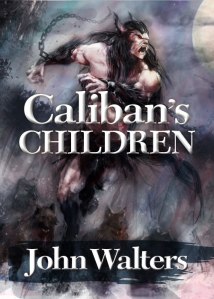
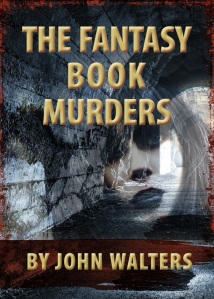
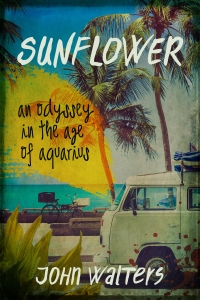
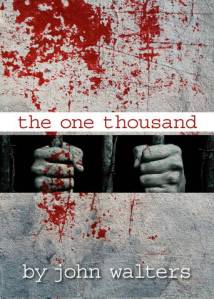
I’m a professional writer; I make my living by my words.  I’m happy to share these essays with you, but at the same time, financial support makes the words possible.  If you’d like to become a patron of the arts and support my work, buy a few of my available books or available stories.  Thanks!

Posted in Memoir, On Writing, Parenting, Reading, Travel | Tagged , , , , , , , , , | Leave a comment

Getting Old: A Journal; Part One: Scary Stuff

When I was young I took a girl to a party.  I can’t precisely remember my age at the time; my guess is that I was a little over twenty-one.  There was a lot of drinking going on at the party but that’s no indicator; I had been drinking at parties since I was fifteen or sixteen.  In the course of the inebriated reveling I met a girlfriend of the girl I was with, and I got her phone number and arranged to meet her at a park the next day.  Not very chivalrous of me you might say, and looking back I might agree with you.  Be that as it may, I met this girl at the edge of the woods on a fresh sparkling sunny day.  It might have been spring or early autumn; the sun had that perfect clarity it loses a bit in the summer.  I remembered the meeting, but I had been so drunk at the party I couldn’t clearly remember what the girl looked like.  I supposed, though, that due to the isolated nature of the place at which we had planned to meet no one else would be around so I wouldn’t miss her.  She showed up right on time, and I wasn’t either disappointed or elated.  It was a casual liaison, nothing more.  But what with the beauty of the sunshine and the forest and the fact that I had a girl to meet up with on such a stellar day, something metaphysical blossomed within me.  My awareness expanded and I saw far ahead in time.  Somewhere in that far-distant future I would grow old, I suddenly realized.  But it was so far away I could not conceive of arriving at that point in my life.  I had so many years ahead of me it was as if that time would never come.

And yet it has.  It must be built-in for young people to ignore their mortality.  It’s a strength, I think.  It wouldn’t do for young people to be worrying all the time about what will happen in the far future.  It is sufficient to step out and live in the present, to take risks, to explore, to invent, to create.  Yet somehow along the way it catches up with you.

I am almost sixty years old.  In the past few months I have come to the realization that I have started to age.  All right, I have been aging all along.  As yet I have very few gray hairs.  The physiological change manifests in internal things that you don’t see at first glance.  My body aches more.  I especially have a problem with one of my hips, which has been paining me for months now.  Have it looked at, you might say.  But there’s no money to do so.  My reasoning goes like this:  whatever I spend on medical expenses is less I can spend on my sons, three of whom I am solely responsible for now.  In Greece I had medical insurance; here I do not.  Just to go in for a doctor’s visit will cost me more than I can afford.  He would probably recommend tests, which would cost more.  And treatment after the tests discovered whatever was wrong?  Forget it.  It’s out of the question.  So I endure the pain for now, hoping things will improve financially in the future so I can have it looked at.  But that’s not all.  I am prone to muscle cramps, especially when I sleep.  I awaken with my muscles, especially the calve muscles, all knotted up and tight, and the pain is excruciating.  I used to be able to walk all day long.  Recently I took a walk of just a couple of miles and not only had painful cramps afterwards, but I felt like my hip was going to rip free of the rest of me.  And I do dynamic yoga stretches regularly, three times a week, along with calisthenics and balancing exercises.  My body is just starting to break down.  It is inevitable.

I’m not telling you all this because I want you to listen to my woes and sympathize.  There is a point.  And the point is:  it creeps up on you unawares.  I have always been active.  I’ve traveled much of my life.  With my wife and sons I have moved from country to country, city to city.  This limitation of ability is something new.  It frustrates me, discourages me, annoys me.  I have plans and dreams enough to last for several more lifetimes.  What will become of them?

Another scary thing in my life is the state of my finances.  As I mentioned, I have been traveling the world.  We settled in Greece for many years, but then I felt compelled to return to the States for the sake of my sons’ futures.  Here I have had to start from scratch without a home, furniture, a car, medical insurance, social security, unemployment insurance.  I had to leave that all behind.  Not that the odds were good that the government entitlements would have lasted; the Greek economy is in such a horrendous state that even guaranteed payments are getting slashed and eliminated.  But right now I’m struggling from week to week to feed my family.  I read articles about the hundreds of thousands if not millions of dollars retirees should have saved up by the time they are my age, and I cannot muster up much more than a bitter chuckle.  It’s like fairytale land to me; those folks ready to kick back in the rocking chair with their bundle in the bank live in an alternate universe as far as I am concerned.  I always hoped that my writing would generate enough income to support me by this time.  So far it hasn’t happened.  And so I find myself out on the extreme edge financially, with banana peels all around just waiting for me to slip on.

Another thing that happens when you age is you start to lose your looks.  I have held on to mine longer than most.  Most people guess I am forty-something.  Just a matter of months ago my twenty-five-year-old son and I were out together and someone mistook us for brothers.  That felt good, let me tell you.  But when I look closely I see the wrinkles and lines inexorably increasing.  I always knew abstractly that it happens.  And now it is happening to me.  Related to that is the fact that I am alone now and I worry, as time passes and I continue to deteriorate, that I will always be.  I long for a woman just as much as when I was young, and I’ve learned enough over the years so that I know how to pleasure one better than back then when I was still learning how, so to speak.  Will I have opportunity again?  Who can say?  But people don’t take kindly to older folks with sexual appetites; they scorn them, ridicule them, make jokes about them, demean them.  Is it their appearance that is subject to censure?  Or is it the fact that they are supposed to be dignified, and dignity is associated with celibacy?  Or is it the same as any other bigoted, prejudiced, low-minded, shallow, crowd-following, moronic pre-judgment of a person without getting to know them first?  I have noticed many negative things about American culture since I have returned, but one that is more annoying than most is the hypocritical attitude towards sex.  Many advertisements use sex as bait to sell products, and that is perfectly acceptable; it is, in fact, the American way.  But should an actress accidently show a boob at a football game – my God, it’s a national scandal.  It goes viral; it inspires debate; it creates opposing armies of opinionated fanatics.  Politicians hit the news more for sexual indiscretions than for fighting for the freedom of the nation and its people.  At the same time most everyone is out there trying to get some, if you know what I mean.

My self-worth takes a pummeling from time to time because I have not accomplished what I had hoped to in my life.  I have not fulfilled my dreams.  I see time catching up with me and I start to wonder if there is enough of it left to see me through, or if I will collapse before the finish line, my life’s work incomplete.  Yes, I have published eleven books.  Many of my forty or fifty published stories have appeared in magazines and anthologies, and I have several upcoming.  But who reads them?  I am for the most part unknown, undiscovered.  I write for readers, and my audience is miniscule.  Henry Miller said an audience of one good reader is enough.  Theoretically I can agree with him, but practically I long for recognition, not to mention the income recognition would bring.  I am told by the mentors I study in books and on the internet to be patient.  That’s good advice for the young, but questionable for those whose time is running out.  I don’t want to be one of those writers who start getting read after they are dead and gone; I want to see my success.  I feel I deserve it; I have paid my dues.

And what is the legacy I can pass on to my sons?  They regard me as a good father, thank God.  I have done what I could given the circumstances, and I continue to do it every day.  But I can’t help them with their university tuition, at least not now.  And when I die, I have nothing to bequeath them.  Nothing but the life I lived, and some published stories and books that might someday earn them a little cash.

Again I emphasize that I am not writing this to sing the poor-me blues.  I am pouring this out to give you an idea of what it feels like to grow old.  The stories of others will vary from mine.  Some people have an abundance of money and things but their kids are estranged from them.  I’d rather have the kids than the money any day.  But my point is that growing old involves a process of questioning, wondering, soul-searching.  Our time here is finite.  It’s not a process of continually getting halfway there and never arriving.  One day we will all cross the finish line of death.  Growing old makes you more and more conscious, in a multitude of ways, of its approach.  Perhaps that’s what it is meant to do.

And don’t worry.  I do not plan this series of essays to be all lamentations.  I am acutely aware that there is much to rejoice about in maturity.  I am sure that in time all this will find its way out onto the page as well.

I’m a professional writer; I make my living by my words.  I’m happy to share these essays with you, but at the same time, financial support makes the words possible.  If you’d like to become a patron of the arts and support my work, buy a few of my available books or available stories.  Thanks!

Posted in Memoir, On Writing | Tagged , , , | Leave a comment

Book Review: The World is Flat: A Brief History of the Twenty-First Century by Thomas L. Friedman

Before I talk about this book I want to explain to you how I’ve been making money lately.  Unfortunately, my novels, short stories, and memoirs do not yet pay a sufficient amount of the bills.  In addition, nobody is falling all over themselves to hire someone who just arrived back in the States after living in Asia and Europe for the past thirty-five years, is almost sixty years old, and has no university degree.  I thought I would be able to teach English as a second language.  There is a constant call for English teachers here in San Diego.  Yet despite the fact that I have sixteen years of experience teaching teens and adults to prepare for just about every English language test in existence, despite my impressive references, door after door was slammed shut in my face.  They liked my experience and references, yes, but they weren’t willing to consider anyone without a Bachelor’s Degree, period.  It might be a Bachelor’s Degree in shit-shoveling from Podunk University and the person might not know a damn thing about English teaching, but that person would get the job before me.  Why?  The lack of a piece of paper.  Absolutely nothing to do with ability.  It pisses me off, can you tell?  Reminds me of what someone named Jesus once said about “straining at a gnat and swallowing a camel”.  Well.  Don’t get me started.

Anyway, I have been working at a website on which writing jobs are posted.  There are all sorts of jobs writing articles and taking surveys for which the pay is a miserable few cents to a few bucks.  To access the higher-paying jobs you have to pass a writing test.  I passed the test in short order but had to wait a few weeks for my approval to come through.  In the meantime I took surveys and so on, but you can’t survive on work that pays that low.  Once I could choose the higher-paying jobs I started writing four to six articles a day on diverse subjects for internet blogs.  It’s still for low pay, but I can buy groceries and take care of bills.  I mention this because I was able to apply for this job, take the test, and access the work all on the internet without even leaving my home.  Anyone can do it:  stay-at-home moms or dads, the physically challenged, or bright old folks like me who nobody seems to want to hire anymore.

The book in question, “The World is Flat”, is about globalization and how it has affected our world.  It was written back in 2005 and it is a bit dated in parts.  It can still be insightful, though, if it is taken as a fascinating piece of history, an analysis of how we got where we are.

The best part of the book is the beginning, in which Friedman lists and explains what he calls “the ten forces that flattened the world”.  Briefly, these are:  the fall of the Berlin Wall and the opening up of the communist world, and the birth of the Windows operating system (this all happening concurrently); Netscape going public and the overinvestment in fiber-optic cable; the appearance of work-flow software that could connect applications; open-sourcing collaboration for projects such as Apache web server and Wikipedia; the ability to  outsource work to countries such as India, Russia, and China; the ability to offshore physical work to countries where it could be done more cheaply and easily; international supply-chaining for large companies; in-sourcing, or turning over internal work to companies who could run it for you and do it better; easily available information due to Google, Yahoo, and other web-searching programs; and personal gadgets such as laptop computers, cell phones, and other devices which bring all this technology within everyone’s reach.  Friedman’s explanations of all these phenomena are fascinating, and I found myself over and over tracing what happened a decade or more ago up to what is currently going on in the online world.  The world is flat, says Friedman, because all of these things have opened the peoples of the world up to each other, and have given them the ability to collaborate and innovate as never before.

In the second part of the book Friedman traces how these flattening influences have affected the United States, the developing world, international business, and geopolitics.  Alas, the book slows down here, and this is where it becomes somewhat dated.  Some of the author’s analyses are spot-on and insightful, others are – well, opinionated – that is, not so much based on historical trends as the first part, but instead one man’s ideas of how it will all play out.  A lot of shit has hit the fan and water has flowed under the bridge since 2005.  Because of these flattening influences Friedman describes the world continues to evolve.  At the end, the author divides the world into two camps:  those countries in which the flattening of the world has spurred development and opportunity; and those countries which have rejected innovation and turned inward and conservative and reactionary.  This trend of opposing camps continues to the present date.

I end by recommending the book, but with reservations.  The first part, about the forces that flattened the world, I would recommend as-is as a fascinating history of how the flat world came about.  In the second part, however, some sections are still relevant and some are not.  Because the book contains a lot of useful insight I would say that a second edition is necessary; redundant parts could be cut, and new sections could be added.  Then again, if I were Friedman I wouldn’t bother; I’d just write another book.  Perhaps that’s what he has in mind as well.

I’m a professional writer; I make my living by my words.  I’m happy to share these essays with you, but at the same time, financial support makes the words possible.  If you’d like to become a patron of the arts and support my work, buy a few of my available books or available stories.  Thanks!
Posted in Book Reviews, Memoir | Tagged , , , , | Leave a comment

On Attending ConDor 2013, San Diego’s Yearly Science Fiction and Fantasy Convention: Part Three: Saturday at the Con

Having made the decision to go back to ConDor on Saturday I prepared better.  Knowing that I would go straight through the day and that there were no decent affordable places nearby to have a sandwich for lunch, I fortified myself with eggs, bacon, and toast.  Then I was off to the Con.  I had already acclimatized myself on Friday.  I knew what to expect.  I was not going in blind.  I had had a good sleep.  I arrived with vigor and confidence.

The first panel I attended was on linguistics.  It was presented by David Peterson, a linguist who had created four languages for the “Game of Thrones” TV series.  He explained how he went about building languages from scratch, and his motivations for choosing the grammar, syntax, pronunciation, and so on.  It was fascinating.  I loved it.  I kept asking question after question, and rather than the speaker becoming annoyed the questions seemed to fuel him to further animation and expostulation.  It was clear that this was not just a job for him; it was his passion, his calling, his life’s work.  He was into languages as much as I was into writing.  This panel alone would have been worth the price of the day and the time spent traveling to the Con, but there was much more to come.

Next was the guest of honor speech by Connie Willis, whose writing has won more Hugo and Nebula awards than any other writer’s in the history of science fiction literature.  It was to be in the same room, so I just sat tight in my seat near the front.  She started off by saying that she didn’t have a speech prepared; instead, she planned to let the audience ask her questions on any subject they wanted.  Guess who asked the first question?  I was on a roll.  No wallflower status for me that day, no sitting in the back cringing and afraid that someone might talk to me.  Bold as a lion.  Here was a successful, award-winning writer, and there was something on my heart that had been bothering me for weeks, for months, for my entire writing career.  I asked, “In the early part of your career did you ever despair that you would ever make it as a writer?”  She spent fifteen or twenty minutes of the allotted hour answering that first question of mine.  She had indeed despaired, she said, and she still despairs every day.  Doubts continually assail her.  In the beginning you think you will never get published, but once you are published, once you start winning awards, you continually wonder whether you have lost it, whether you are washed up, whether you will ever create anything worthwhile again.  She told a story of a time before she got published when she received a slip in the mail for a package, except when she went to the post office instead of a package it was a dozen rejected stories all sent back at the same time.  She said she almost quit then and there, but since she already had stamps and envelopes ready she decided to send them out again, and one of them sold.  She said that self-doubt, discouragement, and despair were things you just had to put up with if you wanted to be a writer, and if you couldn’t handle it you should get into an easier business.  It was exactly what I needed to hear.

The next panel was on world building; specifically it was on creating biological beings, sentient races to put into fiction.  There were some worthy panelists, but the discussion for some reason never got off the ground and into intellectually stimulating territory.  Ah, well.  You win some…

Anyway, by that time I was ready for a break, and as there were no other panels in the next hour I was frantic to attend I headed up to the Con suite for coffee and a snack.  It turned out that in honor of Connie Willis’s award-winning book “Blackout/All Clear” they had a World War II London survival theme going on, and were passing out ration booklets with coupons you could redeem for sandwiches and other goodies.  So I grabbed some coffee and sandwiches and looked around for a place to sit.  There was a seat free next to a fellow who looked about the same age as me on a couch, so I sat myself down.  We got into a conversation right away, he and I.  It turned out he had lived in Europe too.  He was intensely interested in my decision to move back to the States, my sons, my life in Europe and Asia.  He reiterated several times that my life in so many cultures must make great opportunities for story background, and I assured him that it had.  I had no idea who he was until someone came up with books and asked him to sign them.  It turned out he was Todd McCaffrey, the son of Anne McCaffrey; he had collaborated with his mother on the famous Pern dragon series and after her death had taken over the franchise.  Not that I am one, at least not any more, to be intimidated by famous people.  But it surprised me when I found out who I was sitting next to and chatting with.  Then, lo and behold, the linguist from the morning panel showed up, sat down, and began to chat.  Apart from the panels themselves, this is what I had come for:  to meet interesting people and have intellectually stimulating conversations.

The next panel I attended was on how to prepare if you were going on a time traveling expedition into the past or future.  It was on the light side, but it was entertaining.

Next was a panel on out-of-body experiences.  I thought that this would be a fascinating speculation on how such things could be used in fantasy, but it was not so.  Whoever had programmed this panel had made the mistake of pairing two writers who were open-minded and intelligent with two oafish skeptics.  I’m not saying all skeptics of paranormal phenomena are oafish, but whenever one of the writers would say something intriguing or tell an interesting story, one of the two crusading skeptics felt it was their duty to ridicule the idea.  These skeptics were way out of their league.  It was as if they could perceive only two dimensions and the two writers were aware of a dozen.  The skeptics were hopelessly outclassed, but they kept rudely intruding and monopolizing the time, trying to throw wet blankets on any possible flare-ups of sense of wonder.  I tried to interject some commentary a few times, at one point mentioning that emotional context seemed to be important in so-called ESP, but the skeptics continued to attempt to throttle speculations about any phenomena that could not be explained and displayed and proven in a cold stark laboratory setting.  Anyway, one of the writers, Bruce McAllister, managed to tell some fascinating stories of people he’d interviewed, who during the trauma of war managed to communicate with each other across continents and oceans through some sort of extrasensory perception.  And the other writer, Matthew Pallamary, talked a bit about his experiences experimenting with hallucinogenic plants in the jungles of the Amazon.  I would have liked to have heard more from those two.  In fact, later I ordered Pallamary’s book about his Amazon journeys.

The last panel I attended was on writing short fiction.  Though I love writing short stories and have written a lot of them, I sat back and listened in this one, content to hear what the professional writers on the panel had to say about the short story writing craft.

And that was the end of it.  I had held up much better on Saturday than Friday because I was better rested, better nourished, and somewhat familiar with the venue and what was going on.

All in all, ConDor was not what I expected.  I had thought that it would be more crowded and crazy.  It was more crowded Saturday than Friday, as would be expected, and there were more people wandering around in bizarre alien costumes.  But overall it was low-key, sedate, controlled.  Maybe the parties started in the evenings, after I left; I don’t know, and it doesn’t matter.  I haven’t been much into the party scene in recent decades anyway.  I came for intellectual stimulation, not rah-rah wild carousing, and in that I was not disappointed.

I’m a professional writer; I make my living by my words.  I’m happy to share these essays with you, but at the same time, financial support makes the words possible.  If you’d like to become a patron of the arts and support my work, buy a few of my available books or available stories.  Thanks!

Posted in Memoir, On Writing | Tagged , , , , , , , , | Leave a comment

On Attending ConDor 2013, San Diego’s Yearly Science Fiction and Fantasy Convention: Part Two: Friday at the Con

Having never attended anything similar before, I approached ConDor with trepidation.  Though the website explained all the activities to be found therein, at the same time I was going in blind, without knowing anyone, and realizing that many of the attendees had been doing this a good part of their lives and were well-acquainted.  Going over the online list of panels (discussions by three to five writers or experts in the field) I decided to go on Friday and Saturday and give Sunday a pass.  Monday began a new week of school and work, and I knew that I’d have to do some damage control if I exited the house over the weekend.

I write this not so much for Con attendees as for those who may have never experienced such a phenomenon before.  The program was divided into panels and workshops, static events such as the Dealers Room and Art Display, and extra activities such as dances and games and parties.  These last I had decided to give a miss; I was most interested in the panels, which might be of use in my writing career, and doing a bit of mixing and mingling (something I am really not much good at).

Registration was simple enough.  You could buy a full membership or do it on a day-by-day basis.  I got a badge with my name on it and attendee status (“Friday”).  Then I was off to explore.

The Dealers Room was still setting up, so I wandered about and found the room for the first panel I would be attending, which was on comedy in science fiction.  When it began, one of the panelists asked for an audience show of hands as to who were there because they were writers, and who was there for a good laugh.  Unfortunately most people were there just for the laugh, but the panelists did focus mostly on how humor could be best used by writers in fantastic literature.

A word about the panelists:  It is considered prestigious by regular Con attendees to be chosen to participate in panels, and the panelists varied from well-known writers, educators and experts, to local fans who somehow had enough clout to make the cut.  Inevitably some panelists talked more than others, but generally I was pleasantly surprised to see that the panels were well-moderated, and the panelists deferred to each other and gave each other ample opportunity to express their opinions.  In addition, questions were always asked of the audience to give them a chance to participate.

All in all, the panels were well done.  After the comedy panel I attended one on “The Hero’s Journey in Science Fiction and Fantasy”.  This followed the tropes and patterns that exist in literature and film.  It was enlivened by the late arrival of David Brin, an award-winning science fiction writer and academic, who was the life of the party, flamboyant, gregarious, and verbose.  From there I went on to a panel on time travel and its power to change history.

Sometime between panels I checked out the Dealers Room, which was by then set up.  Basically it consists of tables rented by those who wish to sell or promote something during the Con.  I wandered around checking things out, hoping the sellers wouldn’t be annoyed by someone with pockets as empty as mine who had no resources to buy anything even if something particularly struck my fancy.  The local San Diego science fiction book store was represented, of course.  There were a number of craftspeople hawking their jewelry, clothes, leather goods, wreaths, and other trinkets.  Various organizations in the genre were promoting their clubs, societies, or causes.  And there were a number of independent self-published authors promoting their books.  I stopped to talk to them, as they seemed lonely.  They had all spent a lot of money, thousands of dollars, on covers and editing and so on, and were convinced that promoting their wares by any means possible was the only way to get good sales.  I felt for them.  I have published stories traditionally in magazines and anthologies and I have self-published books too, but I have never had to spend much on their production and I have done no promotion at all.  Maybe I’d sell a few more copies if I did, but I’d rather spend my time working on the next book.  Anyway, one author was a teen who’d completed the first volume of a fantasy trilogy, and I wanted to get to know him and find out how he’d done it, but he’d prepared a speech on the book’s plot and there was nothing I could do to get him to cut that off and just chat a while.

Anyway, next to the Dealers Room was the Art Room, and I perused what was on display.  Most of the work had bidding sheets underneath, with minimum prices, prices to buy on the spot, and prices for after the Con if nobody had yet bought it.  Some of the work was so-so, some didn’t suit my particular tastes, and some was quite good.  One thing that struck me was that most of the artists were vastly underselling their work; some of the best paintings were going for only twenty bucks or so.

After several panels I was getting faint.  I hadn’t eaten since a very light breakfast at six in the morning, and it was now four in the afternoon.  I decided to seek out the Con suite for some coffee.  It was run by the management of the Con, and had complementary coffee and tea and light snacks for the attendees.  I grabbed some coffee and a chair and watched people come and go, chatting occasionally.

To be honest, after the first day of the Con I was unsure whether or not I would go back.  I had enjoyed it well enough once I got used to it, but it was exhausting physically, as I am used to getting up very early and then taking a short nap in the early afternoon, but the Con and the panels went straight through the day without stop.  In addition, I had been hoping to meet some interesting people and have some good conversations, but I had kept pretty much to myself.  It’s not easy for me to meet new people under the best of circumstances, and in this environment I felt, as I said, intimidated.

In the end, though, I decided to give it one more try, and I’m glad I did.  It was on Saturday that the experience became all that I had hoped for.

Next:  Saturday at the Con

I’m a professional writer; I make my living by my words.  I’m happy to share these essays with you, but at the same time, financial support makes the words possible.  If you’d like to become a patron of the arts and support my work, buy a few of my available books or available stories.  Thanks!

Posted in Memoir, On Writing | Tagged , , , | Leave a comment

On Attending ConDor 2013, San Diego’s Yearly Science Fiction and Fantasy Convention: Part One: Background

I did not come to science fiction as a fan first.  I read some science fiction before I realized I was a writer, but once I received the revelation that writing was my destiny, science fiction as a form of literature and my own writing were inexorably linked.

In my early life, my maternal grandmother gifted me with a boxed set of Heinlein novels, and later a boxed set of “The Lord of the Rings” trilogy.  I enjoyed both immensely, but that was about it, with possible odd exceptions, until that fateful time at Santa Clara University when on a whim I took a class in science fiction literature.  The text was an anthology edited by Robert Silverberg, and within was the short story “I Have No Mouth and I Must Scream” by Harlan Ellison.  It was in the midst of the reading of that story that I realized I had to be a writer.

At that point science fiction and fantasy seemed a natural medium for me.  I was into the psychedelic scene in the Bay Area, with Filmore West and the Grateful Dead and hallucinogens and other drugs, and science fiction fit right in.

Unfortunately, university didn’t, and after that one year I returned to Seattle to try something else.  At the public library I discovered the Nebula Awards volumes and started to read a lot of science fiction.  The so-called New Wave was erupting at the time, when writers were trying not only to write speculative fiction with crazy new ideas but with literary value as well.  Finding out that Harlan Ellison was doing a reading at the University of Washington or thereabouts caused me to find out about the Clarion West Science Fiction Writing Workshop, and I signed up for the following year.  I didn’t write much of value at the workshop or immediately afterwards; I wasn’t ready.  But I formed friendships, met some top writers (including Harlan Ellison himself) and became more determined than ever to become a writer or die trying.

Due to a contact I made at Clarion I moved down to Los Angeles, found an apartment in the San Fernando Valley, and tried my hand at screenwriting.  Nothing much came of it, although it might have had I been more persistent.

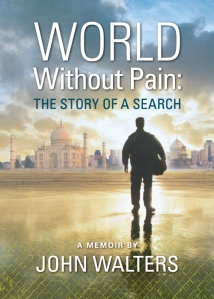
But by that time I had begun to drift away from science fiction.  I had become fascinated by the works of Jack London, Jack Kerouac, and Henry Miller and the call of the open road.  I decided that to become the writer I wanted to be, to really discover my own voice, I had to get out and live life, not just hide in an apartment and write about that which I had not really experienced firsthand.  So I cut loose and hitchhiked across the country, my duffle bag slung over my shoulder, took a cheap flight to Europe, hitched around Europe for the summer, and then hitchhiked across the Middle East to India.  This whole story is told elsewhere, primarily in my memoir “World Without Pain: The Story of a Search”.

Suffice it to say that on that trip I found my voice as a writer, but then I became involved in other things including the raising of a family and abandoned writing for a couple of decades.  When I got back to it, in the mid-90s, I started turning out some short stories and then a novel, then memoirs, more stories, another novel, and most of the fiction used science fiction or fantasy elements as literary devices, which had always been my approach to science fiction from the beginning.

I spent thirty-five years away from the States in Asia and Europe, and even if I had wanted to I would have had no opportunity to attend a science fiction convention.  Sometimes, as I perused photos of such events on the Internet, I wondered what they must be like.  I wondered if I had missed a profound piece of my life.  But then again, what could I have done?  My destiny had led in a different direction.  Howver, though the curiosity was definitely there I had no opportunity to scratch that particular itch until recently, when I moved back to the States with some of my sons and learned that San Diego’s yearly science fiction convention, ConDor, was upcoming in April.  I decided to attend, primarily to see what I had been missing.

Next:  The Convention Itself

I’m a professional writer; I make my living by my words.  I’m happy to share these essays with you, but at the same time, financial support makes the words possible.  If you’d like to become a patron of the arts and support my work, buy a few of my available books or available stories.  Thanks!

Posted in Memoir, On Writing, Travel | Tagged , , , , , , | Leave a comment

On Abandoning the Reading of United States: Essays 1952-1992 by Gore Vidal

I always like to be reading a book.  I usually alternate between fiction and nonfiction, and I usually plan my reading at least one or two books ahead so I always have something on hand.  But having finished a novel, and finding myself caught short without a nonfiction book to follow it, I traipsed on down to the public library to see what I could find.  Since the library had not yet opened, I perused the shelves of the library excess book sale set out in the bright mid-winter San Diego sunshine.  I came across this book by Gore Vidal, recognized it as a National Book Award winner and something that I had had on my reading list for some time.  Four decades of essays on the arts and literature, politics, film, and various other subjects.  What’s not to like?  It’s a massive unabridged-New-York-phone-book brick of a book 1300 pages long.  So what?  I have never shied away from big books.  I decided to give it a try.

So I read the first forty or so pages.  Then I skimmed through.  Then I skipped ahead again and read a few essays out of order, on topics I thought I would be particularly interested in.

And I’m not going to read any more.

I’m glad I only paid a buck twenty-five for the book, because it is one of those rare books that, once begun, I will not finish reading until the end.  I didn’t see it coming.

I read Vidal’s take on Faulkner, and Hemingway, and Norman Mailer, and Henry Miller, and John Barth, and Thomas Pynchon, and various other writers.  And Vidal had scarcely a good word to say about any of them.  Oh, he complemented one or the other here or there for this or that – but the problem is, he does not write from the viewpoint of an ordinary person, but from the top of some tall tower of academia.  He writes in a language that is pompous, highbrow, cynical, condescending, and elitist.  That’s the trouble with being a critic.  A critic criticizes.  I had to stop reading because I didn’t want that voice in my head telling me that nothing is first rate, nothing is innovative, nothing is praiseworthy.  This writer has this flaw; the other writer has that flaw.  That one, though acclaimed, is a hack, or a fraud, or insincere, or overrated.  All right, I admit that no writer is perfect.  No human being is perfect for that matter.  But such a negative view of – well, everything – leeches the fun, the excitement, the exuberance out of life.

This hit me particularly hard in light of the current furor in the publishing field between traditional and self-publishing.  To me Vidal and his pedantic essays represent the epitome of the traditional.  I realize he was not so in his personal life, nor was he in his own fiction.  He was bold, innovative, outspoken.  His writing ran the gamut of essays and nonfiction, novels, plays, and screenplays.  He was admired for his essays by the literati, whoever they are, and that’s just fine.  I feel, though, there is a place for the writer who has no place in academia, who grew up on the streets or on the road, who speaks uncommon things with a common voice, who puts on no pretences in pursuit of truth, though it be truth seen through the lens of fiction.  Perhaps Vidal believed the same, but if so it doesn’t come through in the essays I read.  Give me someone simple, straightforward, powerful, emotional, willing to speak from the guts and the heart without the need of a dictionary and a thesaurus and a classical library.

Therefore this book has found its way onto the very short list of the books I started and did not finish.  If you enjoyed it and you think I’m dead wrong, so what?  I can live with that, and I’d even be happy to hear your opinion on the matter.  In the meantime, I’m going to move on to something else.  C’est la vie!

*     *     *

While continuing to think about this essay this week, in contemplation of its upcoming publication, a few further thoughts came to me.

One was a word, actually.  Irrelevant.  That’s what this book is to me; it’s irrelevant.  It has nothing to do with me or my experience as a writer or as a human being.  That’s why I put it down.  If it relates to you, go ahead and enjoy it.

The other thing that came to mind, something I hadn’t thought of for many years, is from the wonderful novel “Jurgen” by James Branch Cabell.  If you’ve never read it I encourage the experience.  It’s a fantasy parable about a man who goes searching in the underworld for his wife and finds many marvelous and peculiar beings.  Anyway, Jurgen, who prides himself on his cleverness, meets a young man who reminds him of himself when he was younger.  The young man asks Jurgen something like, “But is not cleverness the main thing?”  And Jurgen sadly realizes that though he may have thought so once he now realizes that life is much more complex than that.  Resonating through the essays in “United States” is the underlying tone of the writer:  “Aren’t I clever?” and “Is not cleverness the main thing?”  I have to answer, at least for myself and in my own experience:  No, it isn’t.

Posted in Book Reviews, On Writing | Tagged , , , , | Leave a comment

Book Review: Barney’s Version by Mordecai Richler

This book was recommended to me by a friend.  Let  me somewhat amend that:  it was not exactly recommended, but she mentioned that she had started reading it.  Curious, I looked it up, perused reviews; I had heard of the movie version but not the book so, as I usually do, I wanted to know something about the book before I invested time in it.  The overview seemed interesting enough, so I decided to give it a try.

It was hard to get into at first.  Richler has a dense, detail-ridden style that can be confusing.  In addition, the book is not told chronologically.  Ostensibly it is, as there are three sections, each dealing with one of Barney Panofsky’s wives.  But it is a first-person pseudo-memoir of a man who is in the early stages of Alzheimer’s, and it is full of flashbacks, digressions, memory lapses, side stories.  Once you get used to it it’s not so hard to navigate, but you have to get your sea legs under you before you can really follow.  The three sections correspond to each of Panofsky’s three wives:  Clara, the Second Mrs. Panofsky (she is never named), and Miriam.  Clara he meets in Paris during his wild days with a gang of writers and artists; he marries her thinking she is pregnant with his child, though it turns out Clara has been sleeping around with an assortment of friends and strangers and the child is actually a black artist’s.  Soon after its stillborn nativity Clara commits suicide.  The Second Mrs. Panofsky is a mistake from the start, a Jewess from a staid, conservative family with whom Barney has little in common, and the highlight of their wedding is that Barney meets Miriam, the love of his life.  He chases Miriam out of the reception and eventually marries her.  They have three children and share a few decades of marital bliss.  Thrown into the equation is the fact that Barney may or may not have shot his best friend.

Barney is a foulmouthed alcoholic who smokes foul-smelling stogies and has few endearing qualities.  One wonders what any of his wives see in him.  In its defense the book is very well-written and laugh-out-loud funny in spots.  Once you get used to the wild, fluctuating, back-and-forth style it is manageable as well, and it’s possible to get quite connected with the story.  The main problem is this:  the book is cynical and depressing.  I mean really depressing.  It goes from bad to worse to still worse.  In the end (sorry about the spoiler) Barney is reduced to vegetable state, and on the way down his personal life is one disaster after another, all of which he brings upon himself.  This book affected me in a bad way.  Sometimes tragedy can be cathartic, but in this case, for me at least, it was just a downer.  To provide disclosure, this hasn’t been the best time in my personal life anyway, what with tearing up roots, moving to another country, leaving half my family behind, having to start fresh, being unemployed and unable to find work, keenly feeling the edge of poverty.  This book didn’t help my mood any.

It made me think of another book which was also a tragedy, “American Pastoral” by Philip Roth.  I wondered what makes me consider “American Pastoral”, despite its terribly negative ending, a masterpiece, and “Barney’s Version” not.  I think the difference is that “American Pastoral” rises above the characters it uses to make its point into a critique and exposition of an entire class of society and the way its members see themselves, whereas “Barney’s Version” is just about Barney and his slow descent into hell.

All right, I admit that my own situation and state of mind affects my interpretation and appreciation of the book.  But that’s the way it is, isn’t it?  None of us are ever completely objective.  All that said, I cannot recommend “Barney’s Version”.  It’s just too damned depressing.  If I had known how much it would bring me down I never would have read it.  As it is, what’s done is done.  Today I went to my son’s school because he had to get an inoculation and a parent’s presence was mandatory.  Perhaps reading “Barney’s Version” was in the nature of an inoculation for me.  I’ve been singing plenty of blues myself lately; reading this book helped me force myself to snap out of it.

I’m a professional writer; I make my living by my words.  I’m happy to share these essays with you, but at the same time, financial support makes the words possible.  If you’d like to become a patron of the arts and support my work, buy a few of my available books or available stories.  Thanks!

Posted in Book Reviews | Tagged , , , , | Leave a comment

Book Review: The Nebula Awards Showcase 2011 edited by Kevin J. Anderson

Being in the mood to get back into writing short fiction at the beginning of the year, I decided to read some to get in the mood.  Perusing my trusty book-buying website I came across this volume at a special price and decided to give it a try.  Though I write a lot of science fiction and fantasy I don’t really keep up with the field, but once in a while I enjoy taking a peek and seeing what’s going on.

I very much like the new format of the Nebula Awards volumes.  First all the short story nominees are presented, along with the winner, then the novelette nominees and winner, and finally the winning novella.  In addition, there are bonus stories from the Author Emeritus and new Grand Master.  All in all, it’s a good full selection of reading material.

So I started at the beginning, with the short stories.  I love well-written short stories, but I have to admit that as I read the first several I was disappointed.  They were decent enough stories, nothing wrong with them, but I expect award-nominated stories to be not only decent but exceptional, thrilling, the kind that at the end make you think, “Yeah, that’s why I read science fiction.”  Perhaps I’m spoiled because I read my first Nebula Awards volumes way back in the late sixties and early seventies, and the stories in those books were in-your-face out-and-out classics.  There were some ho-hums in that bunch too, but there were also amazing pieces by the likes of Harlan Ellison, Roger Zelazny, Jack Vance, Samuel Delaney, Robert Silverberg, and other luminaries of the field.  Perhaps I set my sights too high, but I was looking to be blown away.  The only short story that met my expectations was “Bridesicle” by Will McIntosh.  Though hampered by an inappropriate title that suggests slapstick humor, the story is in fact an unusual, heartfelt, and entertaining look at love enduring through the centuries, even beyond apparent death, due to cryogenics.

It was in the novelette section, however, where things got really interesting.  It starts off with Paolo Bacigalupi’s terrific story “The Gambler”, and moves on to first-rate stories by Michael Bishop, Richard Bowes, Ted Kosmatka, Rachel Swirsky, and Eugie Foster.  Three or four out of the six I would consider Nebula Award quality, and it must have been a tough choice for the voters.

Finally, Kage Baker’s award-winning novella “The Women of Nell Gwynne’s” is presented.  It’s a fine, absorbing look at a group of hookers in Victorian England who not only ply their trade but find out information and go on missions for a secret society.

All in all, the reading of this anthology was a very positive experience.  As I mentioned, the format is exemplary; the fact that all the nominees in the shorter categories are included is a big plus and would encourage me to seek out further volumes.  I don’t expect every story in any sort of anthology to turn me on, so I was not surprised or unduly disappointed that the short story nominees were rather weak; the superlative quality of the novelette nominees and the winning novella more than made up for it.

Apart from a boxed set of Heinlein novels and another boxed set of “The Lord of the Rings” trilogy which my maternal grandmother gave me at diverse Christmases, my introduction to the field of science fiction and fantasy was the shelf of Nebula Awards volumes at our local library.  Some had stronger stories than others, but they were all guarantees of a great reading experience.  It’s good to see that the tradition is ongoing.

Posted in Book Reviews | Tagged , , , | Leave a comment

Reflections on The Who’s Performance of Quadrophenia in San Diego, February 5th, 2013

If truth be told, I didn’t even know that The Who were coming to San Diego, and even if I had known I would not have considered going, the primary reason being that tickets to rock concerts, starting as they are at fifty dollars or so and going up into the hundreds, are way out of my price range.  However, someone affiliated with the show came to the naval base where one of my sons is stationed and passed on a number of tickets to my son’s superior officer, and so it was that my son, one of his buddies and I headed, along with about ten thousand other rock fans, to the sports arena in which the event was to be held.

The concert is part of the Quadropheia + More tour, during which The Who play the entire rock opera Quadrophenia (which came out as a double album back in 1973), along with an encore of some of their greatest hits.  Of the original members of The Who only Roger Daltrey and Pete Townshend are left, Keith Moon (the original drummer) and John Entwistle (the original bassist) having died.  The rest of the group is made up of musicians who have since been added, most of whom have played together off and on for years.

I used to listen to The Who back in the sixties; their singles played frequently on local rock radio stations, and we owned their first rock opera, “Tommy”.  I watched them in the splendid documentary of the original Woodstock Music and Arts Festival.  I didn’t really follow their musical progress, though, after the early 70s.  Especially when I got involved in my own struggles as a writer, moving to Los Angeles to attempt screenwriting, and afterwards hitchhiking around the world, I lost touch with what was happening in the contemporary music scene, with the exception of whatever I might hear by chance on public radio stations in Europe, the Middle East, and the Indian Subcontinent.  As a result, I had never heard of Quadrophenia before last night, and I knew nothing about the story behind the rock opera.  This became a problem when The Who began to play, because though the instruments were sharp and clear the vocals were indecipherable; it was impossible to understand any of the lyrics.  I suppose most of the attendees were long-time fans and knew the lyrics by heart, and so for them it was no problem, but for me it was like watching an opera in Italian or German; I could enjoy the music and instrumentals, but I could not follow the story.

Don’t get me wrong – the music was superb, and it was well worth the time (The Who played for more than two hours) to appreciate the music alone.  But reading about Quadrophenia afterwards I was struck by the depth and the nuances in the story, and I wished I could have known it before I experienced the performance.

No matter.  It was what it was, and I’m thankful I had a chance to see it.  Both Roger Daltrey and Pete Townshend, though they are almost seventy years old, can still rock.  Townshend especially is still a wizard with a guitar.  He didn’t break one on stage, though, this time, as he used to, which is probably just as well.

Now I want to say a word about these two near-septuagenarians, something that struck me even before I attended the concert.  I’ve thought of it in the past when I would hear that The Rolling Stones or Paul McCartney or another of the old rock superstars was on tour.  Some might wonder why the old farts don’t retire, but such an attitude never occurs to me.  If they retired, what would they do?  Curl up and die?  Music is their life, their talent, their calling, just as writing is mine.  I could no more conceive of not writing than they could conceive of not playing music.  It’s a part of who they are; it’s their destiny.  And it’s clear that the fans agree, as evidenced by the near-sellout crowd last night who were giving The Who one standing ovation after another.  If you have found your calling you don’t stop what you are doing ever.  It makes no difference, in fact, whether you are famous and successful or not.  You are what you are; you do what you do.  Entertainers may try to retire but it seldom works out.  It’s like what I’ve heard of the difference between an author and a writer: an author is someone who has written something; a writer is someone who writes.  Present tense, not past tense.  That’s what drives these rock stars.  That’s what drives actors and actresses who take on TV and movie gigs late in life.  It’s true not only of the entertainment industry, but applies to other facets of life as well.  Parents, for example, don’t stop being parents when their kids grow up and move away; most are still concerned from afar.

Anyway, it was a great experience to go see The Who perform.  I wish them well, and also any other artists who want to keep working until they drop.  That’s what I plan to do too.  When I’m on my deathbed, just make sure there’s a keyboard close at hand…

I’m a professional writer; I make my living by my words.  I’m happy to share these essays with you, but at the same time, financial support makes the words possible.  If you’d like to become a patron of the arts and support my work, buy a few of my available books or available stories.  Thanks!
Posted in On Writing | Tagged , , , , , | Leave a comment