On Rereading Martin Eden by Jack London; Part Three: The Finale

“Martin Eden” is not Jack London’s best book.  In fact, it’s not even one of his better books.  His best works are his short stories.  Not all of them, because he wrote many, but the ones in which he threw all of his vigor, passion, emotion, and intelligence.  I wrote an essay once about Jack London’s best short stories:  “The White Silence”, “In a Far Country”, “The Apostate”, The Love of Life”, “The Red One” and so on.  Also, “The Call of the Wild” is rightly considered a masterpiece.  There is writing in that novella that is so good it sends shivers up the spine and tears to the eyes.  “Martin Eden” is good, but flawed.  It’s well worth reading, though,  for what London poured of himself and his own life’s experience into it.

Before I go on, however, I must point out a flaw in the edition I ordered.  The academic or literary or whatever-they-call-it introduction at the beginning of the book is pure unmitigated bullshit.  No wonder young people don’t read books.  If they tried to read that introduction before the novel, they’d never make it.  I ventured into only two or three pages of the fifteen or twenty total and gave up in disgust.  Who chooses these guys who write the introductions, anyway?  It was so bad it was laughable.  I almost always read everything in a book I tackle.  First I read the front cover and the inside flaps, then I read the acknowledgements, the copyright page, the dedication – I tell you, I devour it all.  But not this time.  This time I scraped that introduction off the plate as if a bird had dropped it there.  Anyway, onward.

One of the major flaws in the book is the point-of-view lapses.  Whenever he feels the urge, London slips out of Martin Eden’s head and into someone else’s.  That wouldn’t be so bad, although it’s a stylistic weakness, except when he plunges into Ruth, Martin Eden’s lover.  He romanticizes her thoughts so much you wonder if he ever really understood anything that goes through a woman’s head.  It is so unrealistic it is comical.  And I’m a fan of Jack London’s.  I don’t like to laugh.  I realize that the character of Ruth is based on one of London’s early loves, Mabel Applegarth, and it is not so much that Ruth is not presented as a realistic part of her social milieu.  It is just that London should not have tried to get into her head.  He should have stuck with Martin Eden.  In the tough, strong, intelligent sailor who educates himself and struggles to become a writer, London is right at home.

Another part of “Martin Eden” that is a bit much to take is its overall depressing spirit.  True, Jack London struggled as much as Martin Eden does in the book.  But he experienced and enjoyed the triumphs as well as the tragedies.  For Martin Eden it’s just one big old tragic mess.  By the time he tastes victory it is ashes between his teeth.  That’s a shame, because it is so obvious that “Martin Eden” is deeply autobiographical, and yet London brushes over the glorious parts of his travels and his rise to fame, and instead concentrates on the defeats and depression.  Maybe by the time he wrote “Martin Eden” he himself was already too jaded to see the good stuff.  He did burn himself out and die at the age of forty.  Imagine if he had hung on, overcome his weaknesses, matured, and got a second wind.  What literary wonders he might have written.  Ah, well.  Too late for that now.  It is all hindsight.  Perhaps that’s why when I used to visit the ruins of Wolf House, the mansion he almost finished building before it burned down, I would gaze at it for hours, fascinated, and experience such a profound sense of melancholy.  I would stare and stare at the ruins of Jack London’s dreams.

I wrote a fantasy story once called “Wolf in a Cage”.  You can find it in my collection “Fear or Be Feared”.  I fictionalize one of my visits to the ruins of Wolf House at Glen Ellen, and imagine that the spirit of Jack London himself is caught in the ruins, pacing back and forth in futility like a wolf in a cage in a zoo.  Perhaps that’s how he felt in the last years, including when he wrote “Martin Eden”.  The joy of fame and success had gotten away from him and he didn’t know how to cope with it.  Though he was the most well-paid and popular writer in the world, it wasn’t enough.  It didn’t satisfy.  It was ashes between his teeth, just like with Martin Eden.  For decades it was thought that Jack London committed suicide.  That theory is largely discredited.  But what he did do is burn himself out.  He couldn’t handle the pace.  He overloaded himself physically and mentally and had a breakdown from which he never recovered.  “Martin Eden”, perhaps, was a premonition of that which was to come.

*     *     *

And so we come to the end of the book.  Martin Eden achieves his fame all of a sudden.  One of his books takes off and all the others follow.  Suddenly he is a celebrity.  Editors and publishers want his work.  People around him, even those who wanted to have nothing to do with him when he was poor, those who derided him and told him to get a job, seek his company and ask him to dinner.  Even Ruth shows up and wants a second chance.  London brilliantly exposes the hypocrisy of them all.  Eden keeps asking where they were when he needed them.  He was still the same person then, after all.  The stories, essays and books everyone is clamoring for are the same ones everyone previously rejected.  The same Martin Eden who was starving to death then is the one getting all the dinner invitations now.  He can’t figure it out, but is magnanimous and tolerant through it all.

Then the book sort of falls apart.  I just can’t buy that someone as full of life and spunk and intellectual and emotional pizzazz as Eden would suddenly fall apart after he achieved what he fought for.  Okay, people all around are acting like hypocrites, so what?  Get over it already.  You get dumped by a girl; okay, you mourn a while, maybe tie one on and move on.  There’s an inner core that always wants to fight on through to victory.  Martin Eden would be a much stronger book if he had somehow overcome.  Here we get back to author’s prerogative.  Who knows why Jack London gave the book that sort of ending?  Tragedy is, after all, a valid art form.  Many of my stories do not end happily, and might cause folks to wonder why not.  That’s just the way it is sometimes, the way it comes out.  When he wrote Martin Eden, Jack London was going through a rough patch.  Obviously it rubbed off in the book.

*     *     *

Even after I finished this essay and moved on to another reading project, the question of why London ended “Martin Eden” so negatively continued to haunt me.  I would ponder it as I walked outdoors.  After all, Jack London himself never really gave up.  He got tired, yes, and his health bothered him.  He was harassed by creditors, but that was his own fault because no matter how much he earned – and it was a lot according to the currency of the times – he always lived beyond his means.  But he had a faithful wife and a huge ranch and money and fame and was doing the work he loved to do.  So why throw such a fit of depression into poor Martin Eden?  Then something Stephen King said came to me.  I can’t remember the exact quote, but it’s something like this:  “I write about what frightens me.”  I might be wrong; maybe someone else said it.  But you get the idea.  Part of what a writer does is purge out the inner demons.  And maybe that’s what Jack London was doing when he wrote the end of “Martin Eden”:  exposing one of his greatest fears, namely, that he would lose his great love of life, his vitality, his exuberance.  Letting it happen to a fictional character instead of himself is a form of catharsis – a purging and purifying.

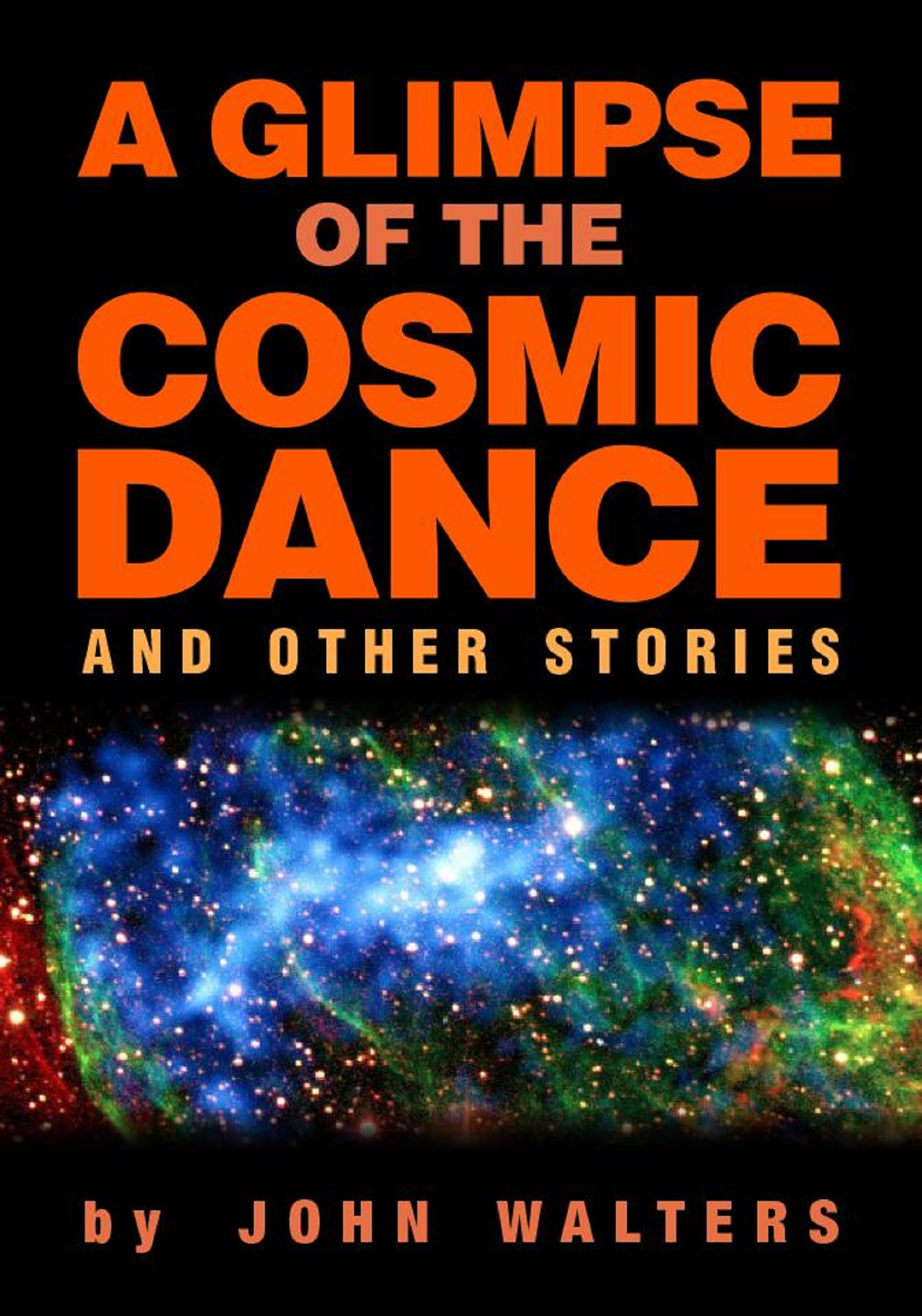
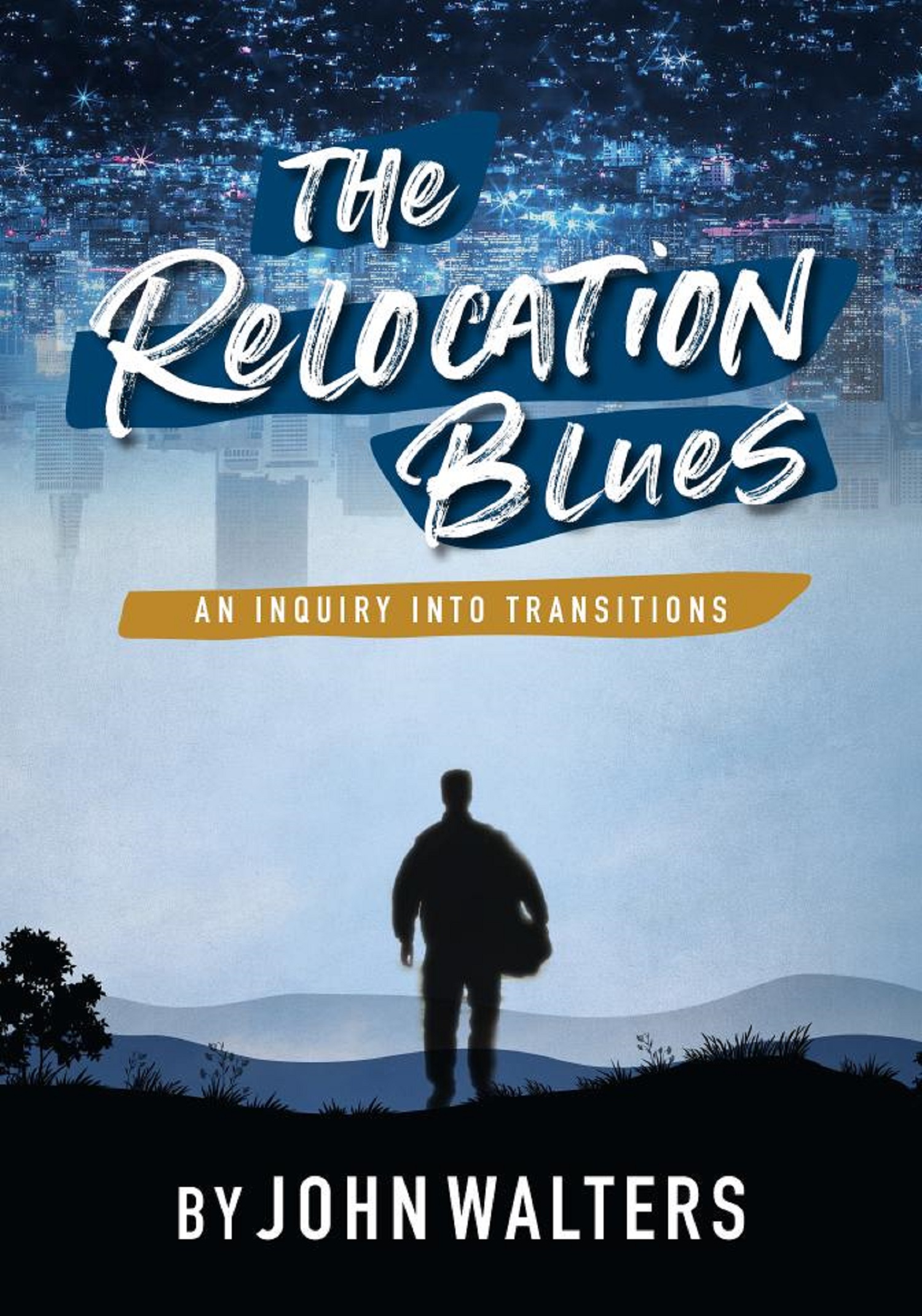
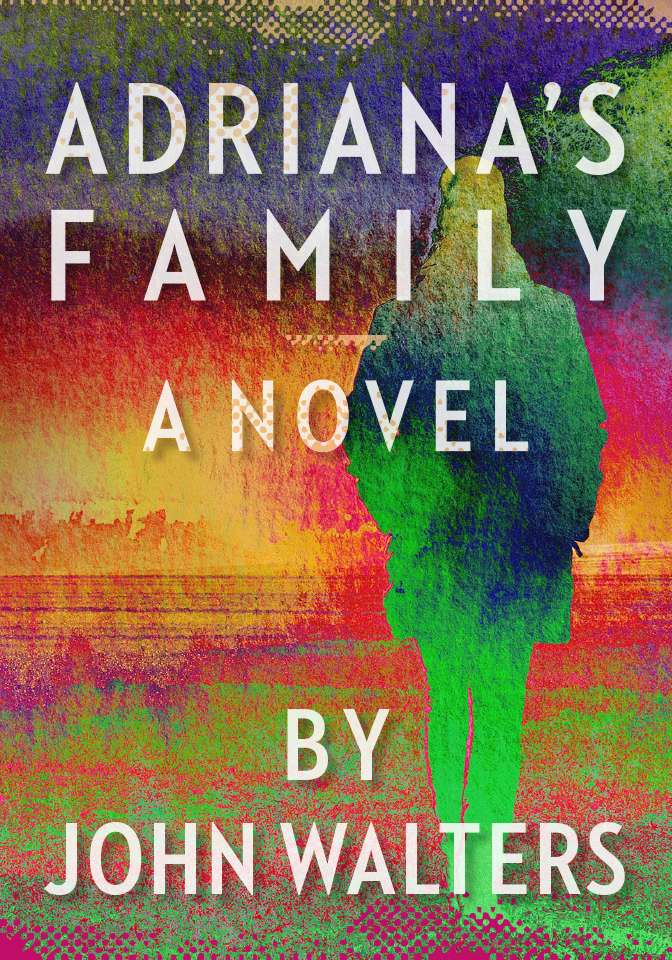
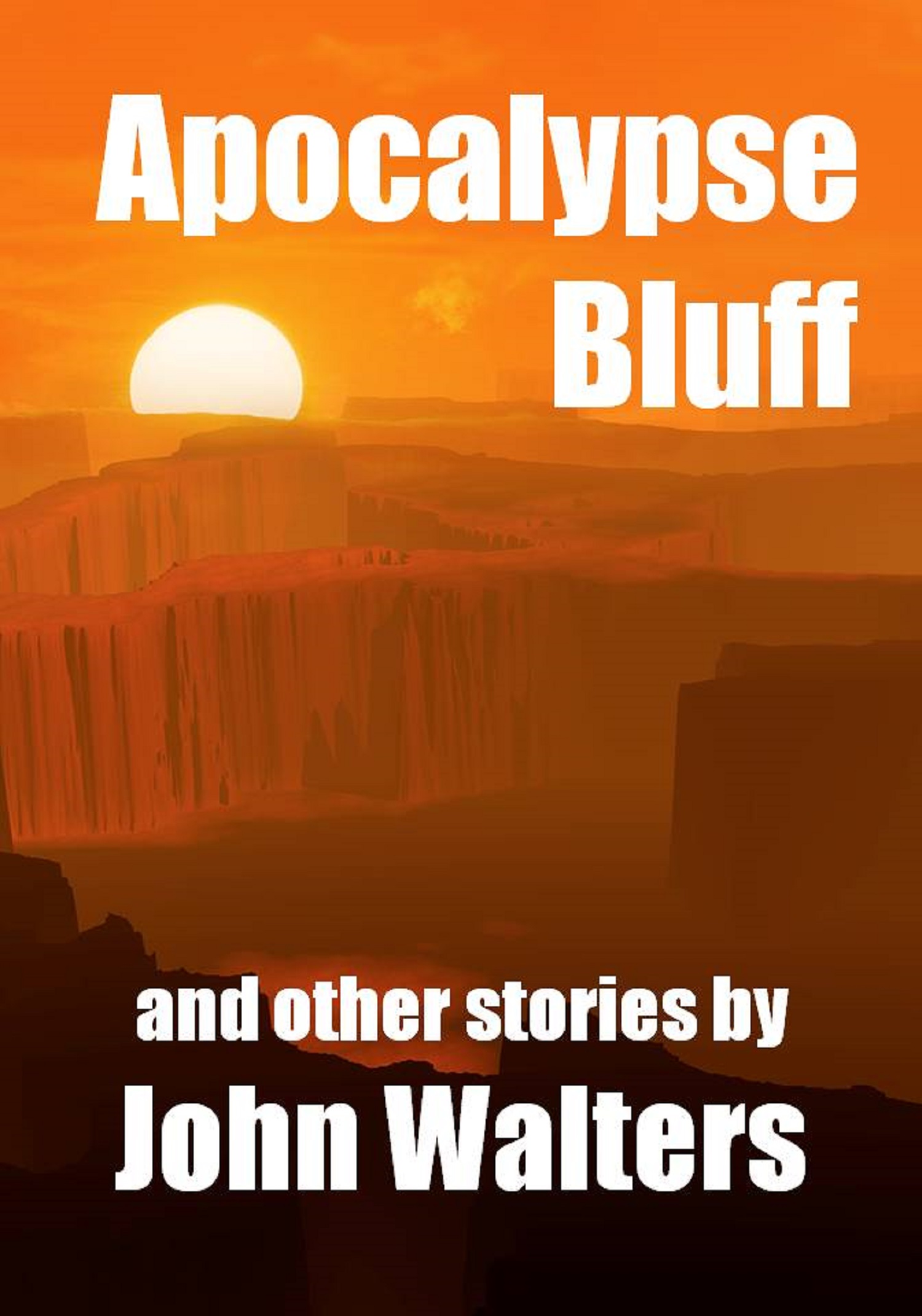
I’m a professional writer; I make my living by my words.  I’m happy to share these essays with you, but at the same time, financial support makes the words possible.  If you’d like to become a patron of the arts and support my work, buy a few of my available books or available stories.  Thanks!

Posted in Book Reviews, On Writing | Tagged , , , , | 5 Comments

On Rereading Martin Eden by Jack London; Part Two: What It Means to Be a Writer

This books hits almost too close to home.  It’s uncanny how reading it now more than four decades after I first read it, I still have many of the same emotions.  Martin Eden decides to become a writer.  He works like hell to make it happen.  He devours books like a starving wolf in the wilderness.  He writes stories, essays, and articles.  He sends them out like an invading army to the fortified citadel of publishing only to have them come back in defeat, one after another, marked with the impersonal discouraging flags of form rejection slips.  I know the feeling well, and so did Jack London.  That’s why he wrote about it.

As I have mentioned elsewhere, Irving Stone used much material from “Martin Eden” in his biography “Jack London: Sailor on Horseback” – one of the most significant books for me personally ever.  Whether it was a correct, scholarly thing to do is open for debate in academic circles, I suppose, though it doesn’t really matter to me.  I’m sure he corroborated the passages elsewhere.  He used them for effect, to get at Jack London’s heart.  And they work.  For a writer to pour his heart and soul into a manuscript and read nothing but a mass-produced rejection slips in return is devastating, humiliating, no matter how writers cover it up by saying that at least accumulating a ton of rejections means you made the attempt.  Okay, so what?  You make the attempt.  You try.  If you don’t succeed in the end, if all the trying is in vain…

In one part of the novel Martin Eden lays his head down in exhaustion on his writing table and envisions a scene from his past.  A bully named Cheese-face tormented him from his youth, from when he was six, beating him up over and over again.  Eden never gave up trying to even the score but always got the worst of it.  Eleven years later, when he was seventeen, Eden met Cheese-face again and they had a final showdown.  Nobody can write a fight scene like Jack London.  The bare-fisted battle went on and on until Eden broke his right arm; it looked like defeat but he kept fighting with his left arm until finally in a bloody haze he subdued Cheese-face.  Eden awakens from his daze back on the writing table and realizes that that fight is like his writing.  Though he has a pile of rejected manuscripts sitting in the room and he can’t send them out because he has no money for postage, he can never, ever give up.  He is in the fight to the end.  That’s how I feel about my writing too.

So next Martin Eden has to tough it out and go and look for work.  He finds a job at a hotel laundry where he works morning to night without letup for pitiful wages.  Gone is the energy to study or write or do anything but get up the next morning and work some more.  I go in cycles like that too.  I do drudge work for money because you just have to have money in this world, but I long to spend those hours writing my stories, novels, essays, memoirs, and so on rather than ridiculous articles for somebody else’s website for which they pay me a pittance.

It resonates.  God, how it resonates.  It shows me the measure of things.  It takes me back to my roots.  It reminds me of my core values as a writer, and of my unfulfilled hopes and dreams.  Yet I read on, fascinated.  I can picture, I can feel, I can sense Jack London as he wrote it, pulling details and emotions out of the stored memories of the past, out of the churning mass of experience and knowledge and tragedies and triumphs that are the sum of his life.  I do the same thing when I am deep in the throes of writing.  I pull what I need up out of my gut, or call it forth out of my head, or wring it out of my heart.  I use what is me, all of me, my heart and soul and spirit.  I pour it forth on the page.  That is why there is so much agony and ecstasy involved in failure or success.

Posted in Book Reviews, On Writing | Tagged , , | Leave a comment

On Rereading Martin Eden by Jack London; Part One: Futurama, Self-Publishing, and Jack London’s Rapacity

Last night I couldn’t sleep.  Sometimes I get insomnia for a simple reason like sleeping too long during my afternoon nap, but such was not the case this time.  Three seemingly unrelated bits of input created deep despondency in me, and I couldn’t shake the sense of failure, of futility, of worthlessness.

The first was the episode of “Futurama” in which Fry discovers his petrified dog in a museum of an ancient pizzeria.  The professor says he can create a clone of the dog from its DNA, and Fry gets all excited about it until the professor tells him that the dog lived to be fifteen years old.  Fry went into the future when the dog was three, and Fry is afraid that because the dog lived twelve years after that, he wouldn’t remember Fry anymore.  Fry decides in tears not to clone the dog.  Then the last scene shows the dog waiting outside the pizzeria for the rest of his life, through all the seasons, as he gets older and older and finally closes his eyes in death.  In other words, he waited all those years for the love that never returned.  I’ve seen that episode numerous times and it always chokes me up.

The next thing that set me off shouldn’t have done so, but it did.  It was a nice article by Hugh Howey, ostensibly written to be an encouragement to self-published writers.  Hugh Howey is a self-published writer whose stories took off and became best-sellers, which culminated in him getting a lucrative deal with much better-than-average contract terms from a big publisher.  There was nothing wrong with the article.  It was written to encourage self-published authors and disparage those who criticize them for no other reason than that they have no comprehension of the phenomenon.  It rightly brings out that most self-published writers do not make it big, do not make a lot of money, do not become popular, but this is no reason to deride them for writing and publishing.  The problem is, in my mind at least, in an indirect way it belittled most self-published writing as little more than a hobby.  Howey points out that being a best-selling author is not so important to him, and describes times in his life during which he felt more fulfilled and happy.  He never expected much from his writing; he does it because he enjoys it.  Fine.  Good for him.
The third trigger to my despondency was “Martin Eden”.  Recently I was looking for a quote from “Martin Eden” to tack on to some other piece of writing.  I looked up some passages online and a hunger grew in me to read the novel again.  I ordered a used copy and waited for a gap in my self-imposed reading schedule.  I have now just begun; I’m not more than about a half dozen chapters in.  Martin Eden, the sailor, saves a young man of the upper class from a beating and gets invited to his home for dinner.  While there he meets his sister Ruth, falls in love with her delicate frail beauty, her demeanor, and her education, and resolves to win her by becoming educated himself and thus attaining an equal status.  That’s as far as I’ve got so far.  But I know what happens next, as I read it many years ago when Jack London was one of my literary idols and I was reading whatever I could find by him.  Martin Eden resolves to become a writer, and pours his prodigious mental and physical energy into educating himself, teaching himself to write, and navigating the stormy waters of the publishing world.  He is rejected again and again but finally, when he attains to victory and becomes rich and famous, it is too late.  Something has been lost.  Not only does he lose the girl, but he loses the sense of fulfillment that should have been his for his publishing triumphs.  His largess to his relatives and friends brings him no peace of mind.  And finally, in the end, in despair, he slips off a cruise ship in the South Pacific and drowns.
Ah, I suppose now that I’ve told you the end you won’t read the rest of these posts on the novel, eh?  But the purpose of rereading a work like this is not to find out what happens next, but rather to follow the author from point to point and see what he was really getting at, what was going through his mind, what was really at stake as he wrote.  London was always in debt his whole life.  He wrote at a frantic pace to try to keep up with his bills.  But there’s no writer in the history of the world that could have written a novel like “Martin Eden” solely for the money.

Anyway, we’ll get back to “Martin Eden” in more detail in the weeks to come.  But what was churning through my head when I couldn’t sleep last night was the feeling that I wasn’t anything like the author Hugh Howey describes.  He encourages writers not to worry about success or failure at all, but rather instead to thrill to the act of writing itself.  It sounds fine, as far as it goes, but it doesn’t work for me.  All my life the only thing I ever wanted to be was a writer.  And I have never wanted to do it only for myself.  I want readers, and I want readers to appreciate what I write enough to pay for it so that I can support myself by my writing.  It’s my talent, my calling; it’s who I am.  And last night I felt so far from my vision of success in my life’s calling I fell into despair.  I have few readers.  I make next to nothing in royalties.  I have to support myself and my sons by doing hack work, writing nonfiction articles for Internet websites on a piecework basis.  There’s no future in it, no promotions, no benefits, no retirement funds.  I live day by day, week by week on the edge of poverty.

So I can’t agree with Hugh Howey.  I can’t be content just to have written.  I need my writing to hit the gong, to explode into space, to ignite readers and change them.  I am more like Jack London, hungry as a wolf for success, struggling valiantly in the midst of poverty, trying to impress a publishing world that couldn’t give a rat’s ass.  Try as I might, I can’t be very stoic about my work.  I care too much.  It means too much to me.  It affects me if I feel I am failing.  I can’t help it.  I’m not failing in the writing; don’t get me wrong.  I am confident that the writing is good writing.  Someday, I hope the people who need to read it will find it.  I hope, though, that that day is not so far in the future that like Fry’s poor dog, I wait wistfully on the curb until I finally close my eyes and die, only to be appreciated many years later when it’s too late.  I want it now, and I’m not getting any younger.

Well, having said all that, I have to tack on the epilog.  The next day I was fine again, resolved to do the best I can in the circumstances in which I find myself.  I can’t make people read what I have written.  All I can do is write the best work of which I am capable.  And I will continue to do so until I drop, whether my dreams of success come true or not.

I’m searching in my mind for a happy ending to all this.  Believe it or not, I am okay this evening.  It was a reasonably decent day.  I got my work done without undue fuss.  I fed myself and my boys.  Their work and school is going okay.  There was a storm last night and the weather cooled down, which is a relief.  Last night it was oppressively hot, which contributed to my malaise.  Yes, I’m okay today.  Last night was just one of those times when the bottom drops out.  It happens to everyone.  And then we carry on.

I’m a professional writer; I make my living by my words.  I’m happy to share these essays with you, but at the same time, financial support makes the words possible.  If you’d like to become a patron of the arts and support my work, buy a few of my available books or available stories.  Thanks!

Posted in Book Reviews, On Writing | Tagged , , , , , , | Leave a comment

Book Review: Arctic Dreams: Imagination and Desire in a Northern Landscape by Barry Lopez

You couldn’t have an environment more in contrast with the landscapes that are the subject matter of this book.  I was walking along in baking hot Brooklyn, New York, on this or that errand.  The heat wave was stifling.  There was little greenery anywhere, and what there was had a coating of greasy smog and exhaust on it.  Odd smells emanated from the garbage cans.  I was covered with a film of sweat and grit.  On the sidewalk in front of a small shop next to the post office I saw a small table with a sign advertising used books, two for a dollar.  A book lover never passes up a situation like that unless he is in the midst of a life-or-death emergency.  And right there on the top sat this book, “Arctic Dreams”, which I had been meaning to read for years.  I had read about it; I had heard it had won the National Book Award; I knew it was my cup of tea.  Try as I might, I couldn’t find another book on the table or in the boxes underneath to pair with this one, so I walked inside and convinced the guy to give me the one book for fifty cents.  It was a good paperback copy.  I would have paid the whole buck for it; hell, I would have paid five bucks for it.  But the finagling was part of the fun, and the shopkeeper and I parted amicably.

This book is a description of the author’s travels in the arctic, but it is far more than just a travelogue.  It does not merely describe the landscapes, the animals, and the peoples he encounters.  It explores what the arctic does to the mind and heart, what it awakens in the hopes and dreams and desires of those who live in or travel through the land.

The author is a poet as well as an adventurer.  He describes in depth the life cycles of such animals as the musk ox, the polar bear, and the narwhal.  He traces the legends of the unicorn that grew from appearances in Europe of the narwhal’s long straight tusk.  He details the migrations of animals like arctic birds and the caribou.  He describes the long journey of the peoples who became Eskimos from Asia, of their struggles to adapt to the land, of the way that they became part of the environment around them and as a result managed to survive and thrive in a place others find uninhabitable, of how modern technology has affected their way of life, both for better and for worse.  He writes of the long cycles of light and darkness in the arctic that wreak havoc on psyches unaccustomed to them, of the different concepts of day and night, of mirages and other tricks the light plays on the horizon, of the glimmering aurora borealis.  He describes the harsh landscapes of the tundra and the iceberg-strewn seas and the polar ice sheets.

He mainly focuses on the portion of the arctic from the Bering Sea to Greenland, especially the islands of the Canadian archipelago.  Most of the land north of the Arctic Circle consists of the Canadian islands and Greenland.  It is here where early explorers searched for the northwest passage.  A long section of the book details the various expeditions that sought for that elusive route through the northern islands to the trade lands of Asia.  Many lives were lost in a futile attempt to find that trade route.  The men were unprepared for the vagaries of the land, unwilling to accept the help or adopt the ways of those who had already learned to live in the environment.

I can’t say I have an overwhelming urge to see the arctic for myself.  I don’t do well in the cold.  I’m one of the first in the house to start bundling up when fall starts turning into winter.  I’d probably visit Alaska if I had the opportunity, and even head up into the far north if I were sure I could rest in a warm bed at night and have hot drinks and hot food.  But this is one of those books that you can dive into and experience the thrill of being there without being there, through the words.  The author has made the trip for me.  He has walked the land, done the research, and has sat down and written about it so I can enjoy the experience vicariously.  I’m grateful for that.  That’s one thing that books are for.  I can’t go to Middle Earth, either, and yet Tolkien takes me there.  In some ways the arctic is as distant for me as Middle Earth, but Lopez has made the journey and in this book invites me to accompany him.  I am glad to acquiesce.  This is a great book, well-written and informative and fascinating.

Posted in Book Reviews | Tagged , , , , | Leave a comment

Where You’re Meant to Be

No sooner had I begun to get used to Yakima than I was jerked away.

But already I am getting ahead of my story. It begins…  No, there is no beginning; it only continues…

We take up our story in San Diego.  Necessity dictated a move.  We could no longer afford to live there.  I wanted to move up north, to the Seattle area, closer to relatives, but Seattle seemed as expensive as San Diego. To solve this conundrum someone suggested we move to Yakima, a small city just over the mountains from Seattle. By car Seattle to Yakima takes about three hours.  Rents are less than half here than what they are in Seattle, as is public transportation and many other expenses.

I spent a lot of time considering possibilities.  I looked into somehow staying in San Diego but moving to a cheaper neighborhood. I considered living in smaller places along the California coast. I considered Portland and Vancouver, Washington. I long studied the situation in various neighborhoods of Seattle and the environs around. I came to the conclusion that though we might be able to survive there, it might also entail undue hardship, a continual struggle to raise enough money with which to pay our bills and put food on the table.

So I contemplated Yakima.  Others who knew the place better than me investigated the housing market and located a few possibilities.  And I came to the conclusion that Yakima might be the best choice for us after all.  I discussed it with the sons with whom I live, and we agreed.

The decision made, we launched into departure mode and attacked the multitude of things that needed to be done to pack up, dispose of some possessions, ship others ahead, and so on.  The two-day train journey north and odyssey from Seattle to Yakima with a U-haul truck full of furniture and household goods donated by relatives and friends and neighbors of relatives I will leave for another essay.  Suffice it to say that we arrived in Yakima at our new apartment complex, unloaded, and set about learning how to live here.

It was disconcerting at first, as adjusting to any new place is.  There was nowhere near the level of trauma, though, as that I experienced when I moved from Greece to the United States and commenced lived in the States after thirty-five years abroad.  In fact, apart from the distances from one thing to another and the puzzle of how to keep ourselves supplied with enough groceries to feed my very big and ever-growing sons without a car, the transition to Yakima was pleasant, peaceful, and easy.  I make most of my money writing articles for the Internet, and that I can do anywhere.  My two older sons, as soon as we arrived, took off together seeking employment, and found jobs within a week.  I discovered that a middle school for my youngest son was only a five minute walk away.  Yes, things were looking up.

Then circumstances threw a monkey wrench into our nicely-settling domestic situation.  My oldest son, who lived in New York and worked as a high school physics and math teacher, had a serious accident, dislocating his knee and tearing three ligaments.  He was in the county hospital; he needed surgery; he needed time to convalesce; he couldn’t move around on his own.  Leaving my two sons who had found jobs here to look after themselves, I took off across the country with my 11-year-old to tend to my fallen son.  We ended up spending most of the summer there in his apartment in Brooklyn.  In contrast to the wide-open spaces of Yakima, the Big Apple, especially during a blistering summer heat wave, is oppressive, dirty, smelly, claustrophobic.  Well, we hadn’t come there to sight-see but to take care of my son, so we were all right with our surroundings.

But when we came back to Yakima after a month and a half in New York, I had a chance to re-enter it almost as a newcomer again.  I began to appreciate the place more deeply, and to come to grips with it on its own terms.  I like the fact that all the buildings are low, so that the sky is big and bounteous.  I like the ever-changing nature of the sky, that it has so many patterns and colors depending on the time of day, whether it is clear or cloudy, and the consistency and size of the clouds.  I appreciate its uncluttered ambiance, how there seems to be room for everything.  I like the sere brown and tan hills in the distance, and the abundance of tall trees, grass, flowers, and other greenery in the city itself.  I very much like the clean, well-organized middle school I found for my son.

I haven’t met many of the local residents, but so far I like the people.  An anecdote will illustrate what I mean.   As I mentioned, we don’t have a car, and obtaining groceries and other supplies is problematic, a problem compounded by the infrequency of the local buses.  One day three of us walked about a mile to Walmart to pick up needed items.  We were on our way back, toting our bags, when a car pulled over ahead of us.  The woman had seen us carrying our bags and stopped to see if we needed a ride.  Just like that.  She saw the need and reacted.  Nothing similar had happened to me in years; I had long ago thought that aiding strangers was a lost art.

True, most of the time we carry our bags home from the supermarkets while cars pass by indifferently on the roads.  That’s not really the point.  What matters is a sense of place.  And it doesn’t matter whether you think you’re going to spend the rest of your life there or only the next five minutes.  I have got wary of considering any place a permanent home; I have been disappointed too many times before.  But I can call a place home if I feel that at least at that moment I am meant to be there.  It’s a state of mind, an absence of apprehension.  A feeling that you are centered in the universe.  That’s how I feel about Yakima at the moment.  I still have places I want to go.  I have no illusion of settling for good.  But for now, at least, I am where I need to be.  Circumstances brought us here – to be specific, the circumstance of being too poor to afford to either stay in San Diego or relocate to Seattle.  Those would have been my first choices.  But I am at peace with how we arrived here.  I am confident that hidden treasures of experience and insight lie in wait to be discovered.  Sometimes lack of finances can be a great boon in giving depth to life; I pity those who glide upon easy street for the entire ride.  Such a life for me would be shallow, petty, and pointless.

I close with some lines from the concluding chapter of “Walden” by Henry David Thoreau, a man who lived in poverty his entire life but is now considered one of the giants of American literature.

“I learned this, at least, by my experiment: that if one advances confidently in the direction of his dreams, and endeavors to live the life which he has imagined, he will meet with a success unexpected in common hours.”

“In proportion as he simplifies his life, the laws of the universe will appear less complex, and solitude will not be solitude, nor poverty poverty, nor weakness weakness.  If you have built castles in the air, your work need not be lost; that is where they should be.  Now put the foundations under them.”

I’m a professional writer; I make my living by my words.  I’m happy to share these essays with you, but at the same time, financial support makes the words possible.  If you’d like to become a patron of the arts and support my work, buy a few of my available books or available stories.  Thanks!

Posted in Memoir, Travel | Tagged , , , , , | Leave a comment

Why I Write Book Reviews

Writing book reviews grew out of my desire to create a blog.  I wanted a web presence to accompany the publication of my books.  In the beginning I wasn’t sure exactly what I would write about, though I had a general idea when I subtitled the blog “thoughts on writing, travel, and literature”.  Literature and reading is such an integral part of me that I could hardly ignore it.  I decided to post a review of every book I read.  It was partly a reaction to reading “The Books in My Life” by Henry Miller.  I don’t think that volume is one of his better works, but that’s not the point.  Reading was such a profoundly important part of his life that he decided to devote a series of books to it.  He never got past volume one; other things caught his attention and he moved on.  I wonder, though, what he would have done had he had the option of starting a blog.  He had said once he would be content with one true reader.  He might have avidly taken to blogging as a free means of expression.  Be that as it may, my own blog evolved from being merely an accompaniment to the publication of my books to a means of expression in its own right.  It reflects me and what I am going through.  It is not always current, as sometimes I have the posts prepared a few weeks ahead of time, but it is a general indicator of my psychic temperature.  And because I cannot imagine a life without books, book reviews are an essential part of radiating who and what I am.

Since I am always reading books, I am always on the lookout for good reading material.  I find my books in many ways.  I follow up on recommendations of people whose opinions I trust; I peruse awards lists; I write down titles when I come across references in odd places.  I do not go by popularity; I am not interested in bestseller lists.  I have my own ideas of what turns me on, and I don’t give a damn whether it interests anyone else or not.  But another good source of ideas for books are books about books.  Once when I was a young teen I came across a book called “One Hundred Great American Novels”, which was a compilation of synopses of books which, in the author’s opinion, constituted the germinal works of American literature.  It was a fascinating read, and from it I gleaned ideas for reading matter for many months to follow.  Among the books I heard about for the first time were “On the Road” by Jack Kerouac, and “Jurgen” by James Branch Cabell, both of which became some of my favorites.  So though my primary purpose in writing book reviews is self expression, I hope that through these reviews you find your path to new worlds of reading adventure.

Reading, after all, is a voyage of discovery.  And though a true reader wants the freedom to discover new worlds without restriction, a map with a few landmarks is a useful tool to help save time.  All I can do is point out paths I have followed and what those paths meant to me.  They may not mean the same to you.  Some books I found crucial to my growth you may find boring.  Some books I found tedious you may find wonderful.  That’s as it should be.  We grow in different ways and in different directions.

As with my other books, in my book reviews I write what I would like to read.  I appreciate a good book review, but I do not at all like tedious reviews written for academic audiences, reviews written in highfalutin prose for a select few.  They bore me, those pompous exercises in pseudo-literary pretention.  In contrast, my reviews are as much about me as they are about the books.  I often let you know how I came across the book, and any background that makes the book particularly relevant to me.  That’s part of the experience, as far as I am concerned.  There is no absolutely objective criteria by which to judge books.  The experience does not takes place in isolation.  There is a relationship involved between writer and reader.

The book reviews, in fact, are the most popular articles in my blog.  They get more hits than all the other articles put together.  Of course, many of those who access the reviews probably do so because they need something to paraphrase for a school composition project.  That’s all right with me.  Although I wish those lazy bums would read the books instead.  I don’t mind them drawing from my ideas, but I do object to using them as a substitute for the wonderful activity of reading itself.  Nothing I can do about that, so I might as well not waste time lamenting over the possibility.

Really, though, I write these reviews to inspire you to read, not to keep you from having to do so.  If you don’t read it’s your loss.  You are closing your mind to an integral facet of existence, an entire dimension of experience.  Who would be content to close their eyes, plug their nose, jamb their fingers in their ears?  Open up, folks.  Allow yourselves to encounter the minds of those who have devoted themselves to communicating with you.  Not all reading material is worthwhile.  There’s a lot of crap out there.  But reviews are one way to fine-tune your discernment, to ensure that your reading experience is time well spent.

Having said that, I have to reiterate that these reviews really are more about me than they are about the books.  I come to the books from my perspective.  Every book I assimilate becomes a part of the totality that is me, John Walters, the writer, reader, traveler, seeker of truth.  By the time I have absorbed the book and the words come back out in the form of a review, they are hopelessly colored by everything that I have been and am.  This is what you must understand and allow as you read the reviews.  If you read the books themselves they will not affect you the same way they affected me.  We may agree on certain points, but the relationship you have with the author is not the same as mine.  This is a good thing.  We are each microcosms in the great vastness of the overall universe, and writing and reading is one way we have of closing the gap.

I’m a professional writer; I make my living by my words.  I’m happy to share these essays with you, but at the same time, financial support makes the words possible.  If you’d like to become a patron of the arts and support my work, buy a few of my available books or available stories.  Thanks!

Posted in Book Reviews, Reading | Tagged , , , , , | Leave a comment

Book Review: The Best of Connie Willis: Award-Winning Stories

Connie Willis didn’t appear on the science fiction scene until the early eighties, long after I had stopped reading much in the genre.  I didn’t read any of her work, therefore, until a couple of decades later.  Right away, soon after she appeared in print, she began amassing awards, until now she is the most decorated writer in science fiction and fantasy, with seven Nebula Awards and eleven Hugo Awards won.  She’s also been named a Grand Master by the Science Fiction and Fantasy Writers of America.  The first book I read of hers was “Doomsday Book”, the story of a woman who travels back in time to the Dark Ages and gets caught in the plague years.  The narrative switches back and forth between her adventures in the past and another epidemic in the future during the time she came from.  Next I read “Passage”, which is a long novel of life after death.  In this story the characters are mainly hospital personnel; one of them is murdered and the story alternates between what happens to her after she dies, and the people left behind in the hospital.  Both of these novels are long and complex, with multiple characters and many plot threads.  However, Willis is also known for her short fiction, which has won many of her awards.  All of her award-winning short fiction is presented in this volume, ten stories in all, ranging from short stories to novellas.  As I had read only two of them before, I looked forward to reading the others and was curious as to why Willis’s fiction continues to win so many awards.

As I read through this volume I noticed some patterns.  Almost all of these stories are written in the first person, either from a male or female viewpoint.  They predominantly have multiple characters and a lot of dialog.  The interaction between the characters appears to be mundane, almost trivial at first, until near the end when it all comes together and makes sense.

I found that the stories I enjoyed most were “Even the Queen” and “The Winds of Marble Arch”, which were the two I had read before.  And yesterday, as I finished rereading “The Winds of Marble Arch” and marveled at how wonderfully it all wraps up in the conclusion, I realized why these stories stood out to me.  Willis’s stories at first read seem almost incomprehensible in their simplicity.  You read them and you wonder what’s going on and why these people are doing and saying these things.  The fact is, though on the surface the dialog and activity seem random, underneath it is all held together by brilliant internal logic.  It builds and builds and builds until by the time you have reached the conclusion you have fallen securely into the rabbit hole and there is no hope of escape.  I will have to read these stories again, and I am fully confident that I will enjoy them even more the second time than I did the first.  Thus it is with great fiction.

I met Connie Willis recently at ConDor, San Diego’s yearly science fiction convention.  During her guest of honor speech I sat up near the front to see what sort of pearls of wisdom I could glean from a much more successful writer than myself.  She is a very friendly, simple person.  She sat down facing everyone, apologized that she had a cold and was sneezing and wiping her nose and so on, and said that instead of a prepared speech she had decided to answer questions from the audience, anything anyone cared to ask.  I was (and am) going through a crisis of confidence, so I raised my hand and asked her the first question of the session.  I inquired whether she had ever felt despair that she would ever make it as a writer.  She said yes she did, every day, even now.  She said that every day she wakes up frightened, wondering if she can still deliver, that she has no more confidence despite all the awards than she did when she was first starting out.  She recounted a story that once long ago she received a notice of a package at the post office.  Thinking it would be a nice surprise, she was devastated to instead receive back the dozen or so stories she had sent out to various magazines, all with rejections.  She almost despaired and quit the writing game right there, but instead she turned them around and sent them out again, and one of them sold.  She emphasized that writers have to have thick skins; they have to be willing to get up countless times after falling and press onward.  Success is never a guarantee of peace of mind and certitude of vision, but many would-be writers fall for the myth that it is.

In closing, let me emphasize that this is a fine collection of first-rate fiction by a master of the science fiction field who is a first-rate person as well.

This is not the best single-author collection I have ever read.  I think I would reserve that honor for “Her Smoke Rose Up Forever” by James Tiptree, Jr., followed by runners-up “The Rediscovery of Man” by Cordwainer Smith and “Phases of the Moon” by Robert Silverberg.  But it is a good, solid collection of stories, well worth reading and rereading.

Posted in Book Reviews, On Writing | Tagged , , , , | Leave a comment

Why Reading Gets Me Off

My youngest son has recently caught on to the joy of reading.  It happened abruptly, and when it did it snowballed or avalanched into an all-consuming passion.  The catalyst was a book that sparked his interest – nothing more.  But I had to insist he read that book.  It turned out I only had to insist he begin.  After that he caught fire and continued on his own.  Before this event, when living in Greece, he was, if anything, anti-reading, proclaiming it boring, preferring movies and video games.  Which makes the turnaround all the more remarkable.  Now I have to be sure his book hunger is regularly fed.  It is like throwing coal into a roaring furnace:  the more you feed it the greater the fire and the more fuel you need.  I have to take him to bookstores, order books on line, visit the library.  He consumes books as fast as I can gather them.

He reminds me of myself when I was that age.

I can’t remember when I first became interested in books.  I seem to have been born with the addiction.  Was there ever a time I was not intent on devouring reading material?  At a certain time in my life I forsook television.  It was a deliberate act; I sold my TV and just didn’t bother anymore.  But forsake books?  Never.  Even when I hitchhiked around the world carrying nothing but a duffle bag I always carried a book along.  One book was the limit, for the sake of the weight, but I always had that one book.  I chose long books, because I was not always able to find them so easily.  I read Henry Miller’s “The Rosy Crucifixion” at that time, if I remember correctly.  And in Greece I picked up a paperback copy of “Shogun”, by James Clavell, just before I headed across the Middle East; that one lasted me a while.

The point is, the books have always been there.  They have added nuance, depth, and richness to my life.  I still always have a book on hand that I am reading.  Nowadays I alternate between fiction and nonfiction.  I plan ahead so that I have a book ready for when I finish the current one.  If somehow I misjudge and I finish a book before I have acquired the next one in line I’m thrown into a tailspin; I’ve got to find something to read quickly.  I’m like a smoker running out of cigarettes or an alcoholic running out of drink.  I might pick up a magazine or reread a section of something I have read before, but I am ill at ease until the next reading project is underway.

That’s just how it is.  And when I speak of reading I am not talking about an expediency but a glorious adventure.  When politicians and educators talk about literacy programs, they refer to kids learning the type of reading you do when you have to:  making sense of words as a means of communication of facts or data.  That is one type of reading, and it is, of course, essential.  But the reading to which I refer is different.  It is like a drug rush.  It is an experience, a sensation, a phenomenon.  Many people never feel it precisely because educators try to inculcate it in them with the wrong kind of books, the so-called classics which turn out to be beyond their comprehension, over-long and boring.  It’s like trying to turn someone on to gourmet cooking by serving them a huge bland bowl of porridge.  It might fill the stomach and satisfy the hunger if you are starving, but it will not hone the taste buds and give you an appetite for more.  Many of the books I was forced to read as part of the curriculum in high school I have forgotten, and so bland was the experience I never had any interest in going back to them later and rereading them.  Maybe some of them are good books; I don’t know and I don’t care.  The problem is that many people develop a distaste for reading that goes back to those poor selections; they never get past the mediocre experience of being force-fed literature for which they were not ready or that simply was not their cup of tea.

My great reading experiences were all my ideas.  Wait.  Let me qualify that.  There was once when a high school assigned text caught my interest and led me to further reading.  The book was “The Pearl” by John Steinbeck.  The story so enthralled me that I sought out more works by Steinbeck, and ended up reading almost everything he ever wrote.  He was, in fact, one of my first literary loves.  I liked his simple, straightforward style, his depiction of fascinating, idiosyncratic common folks, his California settings.  My favorite was “Sweet Thursday”, the comedy-romance between Suzy the hooker and Doc the marine biologist.

But this was the singular exception, as far as I can recall, of assigned texts ever being interesting or leading to further reading.  It’s a fine line that teachers walk.  On the one hand you want your students to develop their individual tastes, but on the other you want to have a common text to be able to study and analyze.  But therein too lies a part of the problem:  the studying and analyzing takes the fun out of it.  Reading a book is different for each individual, and you cannot dictate terms under which it is relevant for anyone but yourself.

You might say that one reason you don’t read much is that reading doesn’t engage the senses as much as watching films or playing video games does.  In fact, just the opposite is true.  Reading is a much more total experience than either.  In films and video games the creators take you by the hand and do everything for you.  You have to use much less of your intellect, much less of your concentration.  With books, on the other hand, in order to achieve the fullness of the experience you must draw yourself into it; in a sense you create the experience as you go along:  the sights, sounds, smells, touches, and tastes.  The author’s words ignite your psyche and create an internal multidimensional, multisensory experience which can be totally fulfilling, totally absorbing.

That is why I need a quiet place, free from distractions, when I read.  Outside stimuli destroy the illusion, the suspension from reality.  As a young teen, after my father had built me my own small room in the basement of our house I would hole up in there, lay on my bed and read for hour after hour.  That is where I first encountered “The Lord of the Rings”.  I had heard nothing about it, and as Frodo, Sam, and Pippin hiked across the Shire with the dark riders close behind, I was more in Middle Earth than I was in Seattle, Washington, U.S.A.  If someone inadvertently left the basement door open and the sounds from upstairs broke the spell I was under and brought me back to the real world, I would have to pause and march up the stairs and close the door again, cocoon myself in silence, so I could re-enter the fantasy world that had become so real to me.

(To be continued)

I’m a professional writer; I make my living by my words.  I’m happy to share these essays with you, but at the same time, financial support makes the words possible.  If you’d like to become a patron of the arts and support my work, buy a few of my available books or available stories.  Thanks!

Posted in Reading | Tagged , , , | Leave a comment

Do You Fear Death?

I suppose that many people would say that when you reach the age of sixty it is natural to think about death sometimes.  You are closer to the end of your journey; thoughts naturally turn to your destination and what awaits you there.  I find myself contemplating death off and on – not every day, I would say, but often enough so that it is a semi-regular part of my thought processes.  I would not say that it is an unhealthy thing to do so.  I know that some shy away from such ruminations in dread, as if not thinking about it will cause it not to happen.  Are they not aware that the mortality rate for humanity is one hundred percent?  We all die; it is as much a part of life as being born.  To fear such an inevitability as death is ludicrous, when you put it like that.  It’s going to happen; there is no doubt about it.  Your fear only spoils the ride.

I don’t fear death.  I don’t fear oblivion; I don’t fear leaving behind whatever material trinkets I have accumulated; I don’t fear worms eating my rotten corpse and falling into dust and decay and all that.  Those things are destined to be and there is nothing I can do about it.  Death is part of the marvelous adventure we call life.  Most of us agree that life, with all its ups and downs, tragedies and triumphs, pleasures of the flesh and of the spirit, is an amazing journey.  Death is the culmination, an integral part of the equation.  No, I do not fear death.  When the time comes I’ll be ready to say:  Bring it on.  However, there are two things that I do fear, or at least that I am concerned about, that are associated with the inevitability of death.

One thing I fear, and this is by far the more urgent of the two, is an unfinished life.  At this time my life has boiled down to the simplicity of two major endeavors:  writing whatever I have in me to write, and taking care of my sons.  I have heard and read from other writers that writing must take precedence above everything, even the needs of loved ones.  I disagree with this; I will abandon my writing (temporarily at least) to see to a son in need.  I will always get back to it, but I will not put it first.  That said, writing is my calling, my talent, my vocation, the purpose for which I am here.  When I was young and answerable to no one but myself, when I had no other responsibilities, I circled the world and threw myself into danger’s face for the sake of my writing.  I gave it up once for reasons I will not go into here, but I will never do so again.  I will leave the keyboard to help a loved one, but I will always return to it when I am free to do so.  I have written over a dozen books, and I have plans for a dozen more.  I want to write and publish all the books I have within me before I die.  I don’t want to die with projects unfinished, with things unsaid.

In addition, I want to live to see readers discover my work.  Right now my books sell sparsely.  I want to live to see them flood out into the market, to reach readers who will be turned on to what I have to say.  I know that they are good books, because they are the type of books I searched for as a reader but never found.  Because these books did not exist I created them myself.  If someone else had written my books and I discovered them as a young reader, I would have quickly devoured them all.  I know that there are kindred spirits out there who will love my books; I hope they find them before I die.

And yes, I live to serve my sons.  Some are grown and gone, successful in the careers they have chosen.  But even these need help from time to time.  The oldest recently had a serious accident and I flew across the country to stay with him while he recovered.  I say this not because I crave congratulations or praise but because that’s what fathers do.  I have two other sons who have not yet chosen their life paths, and one who is still a child.  These are the three I live with at present.  I want to see them all on their way to whatever destiny has for them.  I want to help them however I can.  I would not want to die before they are well on their way.

Apart from an unfinished life, the other thing I fear is pain, both physical and psychic.  I’m not afraid to die, but I would not want to die a slow, lingering, painful death.  It is not so much the pain itself; I have felt great pain in the past, but it was always temporary, and after it had gone I felt a greater appreciation for the pleasurable sensations I experience most of the time.  One of the greatest physical pains I ever felt was when I stepped on a poisonous fish in shallow sea water on the east coast of Italy.  My foot turned beet red and purple and swelled up to twice its normal size, and if even a fly landed on it the pain was excruciating.  But even that passed.  I fear the pain that does not pass, that lingers until death, that drives away all pleasant memories in its urgency.  I may die suddenly or I may die slowly, but if I die slowly I want to reflect upon all the joys of my life, all the loves I have know, all the people who have been important to me.

Worse though by far than physical pain would be dying in psychic pain.  By this I mean dying alone, in poverty, on the streets perhaps, unmourned, abandoned by all those I have known and loved, a failure in my own eyes.  I don’t think this is to be my destiny, because I do have those who know and love me, and even if I were to expire in some far corner of the world, they would be with me in spirit.

As far as pain goes, there’s nothing I can do about it one way or the other.  If it happens it happens, and therefore – why fear it?  This is not something over which I have any control.

As for the writing, I do what I can day after day.  I have a feeling that no matter how long I live I will always come up with new projects; there is always more to write about.  For myself as a writer, retirement is not an option.  As far as people reading my work, this is another thing over which I have no control.  The hell with it.  Why worry about it?

Therefore I have just logically knocked off the list the two things I thought I feared.  Would that the world were ruled by logic.  Alas, it is not.  Emotion is a strong ingredient in the mix, and in fact that which gives it spice and flavor.  So these things will continue to concern me, as I struggle onwards the best I can towards that inevitability at the end of the road.

I’m a professional writer; I make my living by my words.  I’m happy to share these essays with you, but at the same time, financial support makes the words possible.  If you’d like to become a patron of the arts and support my work, buy a few of my available books or available stories.  Thanks!

Posted in Memoir, On Writing | Tagged , , | Leave a comment

Book Review: The Swerve: How the World Became Modern by Stephen Greenblatt

This book has won all sorts of awards, including the Pulitzer Prize and the National Book Award.  Personally I sort of steered around it because it’s not the sort of thing I am usually interested it, but I was delayed on my recent trip to New York helping my son after his accident and I ran out of reading material.  I took the subway to the local Barnes and Noble and looked around.  That’s another story:  how poor the selection of books was at Barnes and Noble, and how expensive they were compared to online bookstores.  But anyway, I found this one, remembered that I had been mildly interested when I initially heard about it, cruised around some more and came back to it, and finally decided to give it a try.

To be honest, the subtitle is deceptive.  The book does not at all explain how the world became modern, unless by modern you mean atheistic.  What the book is, is a history book that aspires to be something more.  As its core it takes the discovery in 1417 in an obscure monastery in Germany by book hunter Poggio Bracciolini of a manuscript of the lost text of Lucretius’ “On the Nature of Things”, and stresses the importance of this discovery to the evolution of western thought.

The book begins with an image of Bracciolini, the book hunter, on horseback, riding through German forests on the way to the monastery.  From there it zooms back to give the reader a picture of the historical era in which the story takes place.  Bracciolini was an apostolic secretary in the service of the pope, and it describes the corrupt papal court, the personality of the pope he worked for, the state of Christianity in Italy and the rest of Europe, monastic life and how it developed, the censorship of books and how monasteries became the last bastions of manuscript protection, Bracciolini’s personal life and rise to prominence, the circle of humanists of which he was a part.  It pans back even further and tells us of classical Rome and its writers, the ancient city and library of Alexandria, the background of Lucretius and Epicurus and their radical ideas of atomism and atheism, and how these ideas were suppressed in the Middle Ages.  One chapter is a summary of the key points of “On the Nature of Things”.

The background history described in this book is fascinating, well-researched and well-written.  As it zooms back and back and back, centuries into the past, we understand clearly who Bracciolini was, where he came from, and why he was searching for books.  We understand who Lucretius was and why his poem was radical for the time.  We understand the poem itself and what it means.

In “On the Nature of Things” Lucretius espouses the Epicurean concept of atomism, that is, that the universe is made up of a specific number of atoms, and that these tiny particles shape everything in the universe.  These particles are eternal and in constant motion.  Instead of falling through the void in a straight line, which would mean that nothing would ever exist, they deflect from their courses and collide; these deflections are called swerves, and the collisions create whatever exists in the universe.  From this basic premise Epicurus and his student Lucretius conclude that there is no creator, that humans are not the center of the universe, that humans are engaged in a fundamental battle for survival, that there are other worlds and other beings, that when the body dies the soul dies, that there is no afterlife, that all religions are superstitious and cruel, and that humanity’s highest goal is the pursuit of pleasure and the reduction of pain.

In later chapters of the book Greenblatt explains how these ideas conflicted with the established church and how the church tried to suppress the ideas by banning the book and torturing and killing its adherents.

As history, “The Swerve” is a great piece of work.  Where it fails is in its exaggeration of the importance of Lucretius and his book.  Life goes on, with or without Lucretius, and Greenblatt did not at all convince me that Lucretius was germinal in the shaping of modern thought.  It was inevitable that as all other facets of human existence evolved, certain concepts that drive our thought processes would evolve as well, and a good portion of the modern church has adjusted to this change.  Dwelling as it does on the Christianity of the Middle Ages, which in fact was much more political than it was theological, “The Swerve” turns a blind eye to many factors involved in the shaping of modern thought and society.  I would say that whether or not Lucretius had ever existed, and whether or not Bracciolini had ever discovered the manuscript of “On the Nature of Things” in that far-off monastic library, the world would nevertheless be pretty much what it is now anyway.  So for me, the subtitle “How the World Became Modern” is an irritation.  However, as a book that takes an isolated bit of history and uses it as a focal point to present a fascinating panorama of the past, the book succeeds admirably.  All in all, it is an interesting read, and for the sake of the unique historical insight it provides, I am willing to agree to disagree with the author on some of his conclusions.

I’m a professional writer; I make my living by my words.  I’m happy to share these essays with you, but at the same time, financial support makes the words possible.  If you’d like to become a patron of the arts and support my work, buy a few of my available books or available stories.  Thanks!

Posted in Book Reviews | Tagged , , , , , , , | Leave a comment