Book Review: The Unwinding: An Inner History of the New America by George Packer; Part Two: The Frog in the Pot

Coming to the end of a great book is an exhilarating experience tempered only by the fact that the ride is over.  This book, though it is a work of nonfiction, concludes like a novel, with a buildup in a number of themes and stories to…  Not exactly a resolution, because there is no resolution.  The unwinding is still happening.  More and more threads are being exposed all the time like raw nerve endings.

The climax centers around the Occupy Wall Street movement.  Throughout the narrative, as it documents the stories of various Americans from the late seventies to 2012, sociological, political, and economic threads are woven together to emphasize the unwinding.  All the angst and frustration and confusion and rebellion came together as desperate Americans, in the chill weather of late fall 2011, began camping out in Zuccotti Park in New York near the site of the rebuilding of the twin towers.  The book chronicles the heady thrill of those moments, but also the uncertainty, and the uncertainty of the Wall Street protesters mirrors the uncertainty of those who are witnessing the unwinding of America.  In the end, what were they doing it for and what did it accomplish?  It received publicity, yes.  Celebrities and the media put in their appearances, expressed sympathies and affirmed solidarity.  But the protestors refused to meet with or negotiate with government officials, refused to make statements, refused to submit demands.  What was it all for?  We might also ask a similar question about a book such as this.  What good does it do to realize that the system is unraveling before our eyes, that it is geared towards keeping the elite on top and providing them with more wealth while at the same time sucking the life juices out of the poor and middle class?  One of the most chilling, sinister closing scenes, in fact, shows the super-rich meeting together in mansions in Silicon Valley to discuss funding and research for programs in cryogenics, longevity, and immortality.  It is a stark contrast to the despair and struggle to survive and feed themselves many individuals experience throughout the rest of the narrative.  It reminded me of a movie I saw recently called “Elysium”, in which the wealthy live isolated on an orbiting space station hoarding state-of-the-art medical technology while most people live dirt-poor on the rubbish-strewn, polluted, heavily-policed surface of the Earth.

Will a book such as this change anything in a practical sense socially and economically?

That I don’t know and I can’t answer.  All I can do is express what it did for me personally.  It helped bring me out of confusion.  It helped me to realize that I am not alone, that what I am experiencing is shared by millions of others across the vast landscape of America.  You see, I came here a year and a half ago after spending thirty-five years abroad in such diverse places as India, Bangladesh, Thailand, Italy, and Greece.  The United States that I left is the United States of the seventies.  That is the social and economic landscape at the beginning of this book, as everything starts to unravel.  As things gradually, slowly fell apart I was elsewhere.  You know what they say about frogs.  If you put a frog in a pot of water and gradually warm it up, it will contentedly let itself be boiled to death without ever realizing that anything is wrong.  That’s what has been happening to most Americans my age.  As the unwinding has proceeded, as the country has gone to hell right before their eyes, they have sat blissfully and ignorantly by, because the change has been so gradual that they have not noticed that anything was amiss.  Many are waking up now when it is too late and realizing they have been boiled alive.  As for me, however – I jumped into the pot when the water was already scalding hot and I got burned.  It knocked me for a loop, I tell you, as I chronicled in my memoir, “America Redux: Impressions of the United States After Thirty-Five Years Abroad”.  I experienced far greater culture shock than I ever thought I would.  And the culture shock did not diminish but went on and on.  I could not reconcile the America I left and the one I returned to.  I had changed, of course, but the country had changed far more.  Its values, such as they were, had been crumbling in my absence.  Not that they had been so shiny and bright before – that’s one reason I had left, because I was not satisfied with things as they were and I wanted international perspective.

So that’s what this book has done for me:  it has helped me put everything in place, to understand what has gone down here in the land of my birth since I left.  Now I understand why I couldn’t adapt.  Nobody can adapt to being tossed into a pot of boiling water.  The only difference is, because I have come in from the outside, I feel the pain more starkly.  I have not yet got anesthetized by proximity to it all.  Come to think of it, I hope that doesn’t happen.  If something is wrong, I would rather be aware of it, even if it hurts, than become inured to it so that I become used to it and no longer notice it.

This is one of those unique books for which there is no parallel, no similarity, no category.  It could have been an incoherent hodgepodge of unrelated detail so easily, but the great lucidity and clean style of the writer prevents that from happening.  At the same time that it illuminates, it entertains.  No higher praise can be given to a work of nonfiction.  It deserves all the awards that have been bestowed upon it.  It truly is a unique, groundbreaking, important work.  I hope it opens up the eyes of the other frogs in the pot so that they wake up, look around, realize the predicament in which they find themselves, and turn down the heat a little.  I wish there was a way we could adjust the temperature to that of a nice, comfortable swimming pool.

And by the way, concerning that international perspective I mentioned earlier:  what I found out is that the rest of the world is not better or worse, only different.  The world is an intricate, complex place, and its diversity, overall, is an asset.  But remember that I returned to the United States because it was better for my sons that I do so.  Despite the unraveling, despite the deep heat of corruption, despite the dissolution and decay, I have hopes that the unwinding will not reveal an empty soullessness but a solid core of the integrity that the country was founded upon that will help us build anew.
Posted in Book Reviews, Memoir | Tagged , , , , , , | Leave a comment

Book Review: The Unwinding: An Inner History of the New America by George Packer; Part One: My New Year’s Resolutions

You might be wondering what this book and my new year’s resolutions have in common.  Never fear, all will be made clear in due time.  I am a little more than halfway through the book, and it is one of those books that has a profound effect on a thoughtful reader.  Last night in the dark and cold I was walking towards a supermarket, an empty backpack on my back, to pick up a few necessities, pondering as I walked my goals and ambitions for the new year, and it occurred to me to mesh the reading of this award-winning, iconic book with my own situation.

You see, I am caught, in a sense, in the unwinding of America.  As are you.

The book uses several key characters and situations to move through the decades from the 1970s to the present.  It tells a bit of each story, leaves it at some sort of cliffhanger, and moves on to the next.  Interspersed through these primary narratives are thumbnail sketches of famous people as diverse as Colin Powell and Jay-Z, and also stories of key areas of the country such as Silicon Valley near San Francisco and Tampa, Florida.  As the various narratives move along, you see the American dream erode before your eyes.  These are all true tales of those who have invested their lives in dreams and ambitions, believing that they are in the land of plenty where anything good can happen.  Instead, they are hit with the reality of greed, corruption, indifference, crime, betrayal, deception.  In Tampa the bloated housing boom brings in a horde of vulture-like realtors and pseudo-lawyers who feed on investors in real estate.  In Youngstown, Ohio, the steel industry implodes, sending whole communities into unemployment and poverty.  In Washington D.C. those who arrive with sincerity quickly fall prey to indifference, turpitude, self-interest, and greed.  And so it goes.  The American dream becomes the American nightmare.  People are not just spinning their wheels but sliding backward.

And that’s where my new year’s resolution comes in.  It’s hard to call it a resolution, though, if by resolution I mean a definite goal.  Dreams are visions we keep in our minds of that which ideally we would like to see happen.  Goals are definite steps we take towards realizing dreams.  To set dreams as resolutions makes no sense.  For example,  a realistic resolution is not that I would like to sell a dozen stories to magazines this year.  That’s a dream, because it’s out of my control.  It involves the conscious decisions of editors, and I have no control over their mental processes.  However, I can set as a goal to write and market a dozen stories this year.  That’s something I can do myself, without any outside intervention or hindrance.

Anyway, there is no way around the fact that my sons and I are struggling financially to get by.  As I thought about it recently, I see myself trying to push a great weight to the top of a hill.  The weight represents the responsibility I feel, but also day-to-day survival.  The only thing is, the hill is steep and muddy, the weight is too great, and struggle as I might, I find myself sliding backward.  For many months now we have not broken even but have been digging into our scant savings to eat and pay our rent and bills.  We have been losing ground, sliding down the hill in the storm.  What I want to do is to somehow arrest the slide, become self-sufficient, and slowly, slowly, begin to climb again, to gain ground.  Our aim is not to stay here in Yakima but to move on.  To do that we have to stop hemorrhaging money and start saving it.  That’s my resolution this year:  to turn this situation around.

But I don’t know how to do it.  Minimum wage jobs will never do the trick.  They are rigged against the worker.  Even if workers want to work more hours, even if they are needed, the employers will not schedule those hours, knowing that if they do they might have to increase salaries or pay overtime or benefits.  The American economy is in a horrible trap right now, a trap that puts a lid on low-income workers, that keeps them in the pit.  I have been making about the same minimum wage writing content for Internet websites that my sons make at the supermarket where they work.  Obviously that is not going to save us either.  I can try to put in more hours, but I already work seven days a week, and I also have a household to maintain and a son in middle school who needs help with his homework almost every night.  If I were alone I would work twelve-hour days, but at this time it is not possible.

And then there are my novels, stories, and memoirs which bring in very little but are actually the key to getting out of this mess.  In the long term, this work has the possibility of getting me off the treadmill, but it is hard to find any time for it now.  Remember, I am struggling up a steep muddy hill in the pouring rain, pushing a huge weight like a rock in front of me, trying to make progress instead of sliding back down.  This is the nature of my dilemma.  Somehow I must set a goal of getting this long-term work done too.  I have not yet figured out what that specific goal will be.  Usually I set something definite as far as word count or number of stories, it works for a while, and then I need to adjust it as circumstances change and time goes on.

Honestly, I don’t know what to do.  But because the new year is upon us, I have taken the milestone of the changing over to 2014 as a time for intense rumination.  The bewilderment I feel is similar to that experienced by the people whose lives are chronicled in “The Unwinding”.  The feeling of gradually losing control through no fault of your own.

And what exactly is unwinding in America?  I think a lot of it is an erosion of confidence.  People are finally realizing that the systems don’t work as well as they thought or hoped they would.  Seeing American attitudes from the perspective of having lived so long in Europe, Americans seem to me to think like adolescents with all their wonders and quirks.  Adolescents can be marvelous, intelligent, creative, witty, courageous, energetic, and resourceful, but they can also be petulant, petty, self-righteous, unreasonable, self-centered, vain, and blind to whatever does not concern themselves personally.  When I see what obsesses Americans in the popular media, and I see what sort of ridiculous scandals and anti-role models receive attention, I realize that there is a wisdom lacking here that only comes with age and experience.  It makes me long for Europe, where despite the problems that wisdom exists, the wisdom of the centuries.  Millennia have rolled over the Old World, and its peoples and cultures endure.

But it is not my destiny to live in Europe at this time.  I lived there for decades, and it does have its own difficulties and drawbacks.  No, I came here for the sake of my sons and their futures, and it is here, now, where we must make our stand.  The United States is a vast, complex, frustrating, and difficult place to live, but at the same time it has opportunities that do not exist anywhere else.  Sometimes in the past, when I was living in Europe or Asia, I would dream I was back in the States, and in the dream I would realize I was not supposed to be there and wonder how I would get back to wherever I was supposed to be.  Then I would wake up and realize it was a dream and breathe a sigh of relief.  But we are here, now, and somehow need to make progress.  It’s an ongoing uphill battle.

I’m a professional writer; I make my living by my words.  I’m happy to share these essays with you, but at the same time, financial support makes the words possible.  If you’d like to become a patron of the arts and support my work, buy a few of my available books or available stories.  Thanks!

Posted in Book Reviews, Memoir | Tagged , , , , , , | Leave a comment

Book Review: Year’s Best SF 17 Edited by David G. Hartwell and Kathryn Cramer; or, What Constitutes a Good Story

Amazing how circumstance has a part in our lives sometimes.  My current poverty necessitates my getting most of my reading material from the local library, rather than used from the Internet as I prefer.  In my most recent foray there I picked up a book of short stories and a nonfiction book, and as an afterthought grabbed this book too so I wouldn’t run out of books too quickly.  You see, the library is a couple of miles from our apartment; we don’t have a car; the Yakima city bus service is unreliable and sparsely scheduled.  Today, for example, I will have to walk to the library and back to return the books, as there is no bus service on Sunday.  Be that as it may, the other book of short stories only took me a couple of days to read.  I started the nonfiction book and it was boring and depressing and I decided not to read it.  So I picked up this book.

And thus we come to the subject of what I look for in a short story.  To be honest, after reading a few stories in this volume I almost tossed it aside as I did the nonfiction book.  I found the first few stories mediocre.  Nothing wrong with them, but they didn’t turn my key.  I hadn’t read best of the year collections by these two particular editors before, and their selections were not to my taste.  Stories in best of the year collections are not really the objective best; they are only the best in the opinion of the two people who read and select them.  And there are other criteria they consider too.

It’s not that I demand slam-bang action from the start.  I don’t mind if a story starts slowly.  Consider, for example, Jack London’s “All Gold Canyon”.  The first few pages are nothing but description of scenery.  There’s a reason for it though; it builds slowly but relentlessly to the violence to follow.  It’s impossible to define what makes a good short story.  Though many have made the attempt, notably Damon Knight in “Creating Short Fiction”, it is really impossible to codify a formula.  Many of the greatest stories break all the rules.  A story simply has it or it hasn’t.  And in the beginning it seemed to me that too many stories in this book didn’t have it, and so that’s why I almost abandoned it.

I persisted, however, and eventually found some first rate stories within.  My favorite is “The War Artist” by Tony Ballantyne.  For me it had everything a really good story needs:  strong characterization, interesting premise, solid execution.  It concerns a man who accompanies a team of soldiers into battle to paint images of the war for propaganda purposes.  Photographs are too starkly real, but the war artist shades the picture to reflect emotions and ambiance.  The way the writer brings out the complexity of the situation is by having the artist befriend a pretty female soldier who joined the army to get a regular salary and feed her family.  At the end, as she dies of her wounds, you really get a good feel for what the military and wars in general are all about.  The science fictional element is that data corruption through sabotage has caused the world to descend into chaos, but that’s almost peripheral to the human element of the story.  Another story, “Thick Water” by Karen Heuler, has a rather wild, unlikely premise of some spacecraft crewmembers stranded together on a very strange world, but the ending leaves a truly bizarre, surrealistic mental snapshot in the reader’s mind.  The last story, the longest in the book, “The Ice Owl” by Carolyn Ives Gilman, is a complex, satisfying story about a young woman, her tutor, her mother, and her mother’s many transient lovers, that succeeds not because of the intricate complexity of the world itself but because the human element is emphasized and accentuated at the end.  Other stories I found worthy as well, and yet others I had to slog through because once I decide to read the book to the end I don’t want to skip over anything.  Overall, I would say that of the various science fiction and fantasy best of the year volumes I have read in the last few years, this one is the weakest.  Too many of the stories were mediocre.  I guess this editorial team and I don’t share the same tastes.  That’s okay.  If I want to read another collection of best of the year stories, I’ll just choose one selected by someone else.

We come back, in the end, to what constitutes a good story.  I wish I knew.  If I did, I would be sure that all my stories have what it takes.  Every time I sit down to write I try to do the best work of which I am capable.  I have found out recently that’s not only true with my stories, novels and memoirs, but also the nonfiction articles I write to help pay the bills.  I get paid such pitifully poor wages for those things, and yet I still try to pour the best of which I am capable into each and every one.  I think, why not?  It’s not like talent is a finite quantity of something.  I figure, rather, that doing the best of which I am capable at whatever piece of writing I attempt is a good habit to form.  It’s a state of mind, a focus, a light, a spirit.  It’s something that brings me joy.  Should I perform mediocre work on purpose?  What would be the point?  Giving my best is strengthening, not weakening.  I’m sure that the writers in the collection I just read, even the ones whose works I didn’t care for, put their best into their work.  It’s a matter of taste sometimes whether readers appreciate it or not.  That’s why I like the new world of publishing nowadays that allows a writer to upload completed work whether an editor likes it or not.  There are billions of potential readers in the world, and an editor is only one person.  Or perhaps a dozen or two dozen people at the most, if you send your stories around to all possible markets.  Those dozen or two people have their own peculiar tastes and proclivities, just as you do and I do.  In the wonderful world of the Internet it makes no sense that they be the only gatekeepers or censors.  Thank God for options.
Posted in Book Reviews, On Writing | Tagged , , , , , | Leave a comment

The Lepers of Literature

I was prepared to launch a tirade, but I see now that it is unnecessary.  That which prompted this essay is not a threat.  Rather, it is a sad, anachronistic, misguided assessment of what is happening in the world of letters today.  I read it on a well-trafficked blog that re-publishes items and links to items on the general theme of writing and self-publishing.  The author is the head of a publishing company, and according to him, self-publishing is a Biblical plague on the body of the legitimate publishing industry.  This writer would like to see all self-published writers relegated to a separate section of the Amazon and Barnes and Noble websites.  No, says he: Better yet, such audacious writers should be banished from these booksellers’ websites completely, and corralled in their own website to protect the innocent reader from harm.  This publisher admits that readers don’t care who publishes the books they read, and therefore they might be tainted and defiled by inadvertently picking up a book by a (shocked hush) self-published writer.  The only way to protect the reader from this catastrophic event is to ostracize the ne’er-do-wells, that is, the writers who would presume to inflict their unsanitary works upon the unwitting public.

This reminded me of the attitude towards lepers in ancient times.  You’ve all seen it in the movies:  the skinny, rag-clad figure with a begging bowl in one hand and a bell in the other, ringing the bell as a warning as he walks down the street crying, “Unclean!  Unclean!”  That’s what this publisher wants self-published writers to do.  In the Pentateuch, the five books of Moses, the first five books in the Old Testament of the Bible, there is chapter after chapter on how to deal with lepers.  They were banished from the community and forced to live without the camp.  If their homes and possessions were found to contain a trace of the disease they were burned.  If a leper were cured, the only way he could be re-admitted to the tribe was to undergo a minute inspection of his flesh by a priest.  If the priest determined that yes, he was whole again, he would wash, change his clothes, and become once again a bona fide member of the group.

So it has been in most cultures of the world throughout history.  To be a leper was to be stigmatized and ostracized, remanded to isolation in shame and disgrace.  Though leprosy is treatable nowadays, leper colonies still exist in various parts of the world.  When I traveled in India back in the 70s, I frequently encountered lepers begging in the streets or on the trains.  Some had lost fingers, toes, hands, and feet.  Some had gone blind.  Others had gaping open sores that they would scratch to exacerbate the infection, so the sore would appear brighter and bloodier and they would make more money in alms.  One of the most horrifying experiences of my life was when a blind leprous beggar  covered with huge crimson sores came staggering down the aisle of a train, waving his arms wildly and groaning like the Frankenstein monster.

That’s what this publisher thinks of writers who self-publish.  They are weird, sickening monsters who attack and infect unwary readers.  We must be protected from them, says he.

And now we must determine who we must banish from the midst of the traditional literati.  For you see, there are many degrees of self-publishing.  Some begin with self-publishing and do nothing else.  Others, who have been termed hybrid authors, avail themselves of both traditional and self-publishing, depending on the material and the circumstances.  That’s what I do:  I traditionally publish some of my stories in magazines and anthologies, and self-publish other material.  Yet others are primarily traditionally published writers who have decided to self-publish their dormant backlists.

When we think of it though, the only way to truly purify the ranks is to make a clean sweep.  Away with all of those who have self-published even a little.  That prevents the poor readers from acquiring even a hint of contagion.  Now I’m going to mix past and present a bit for the sake of the argument here, but if we are going to cast all self-published writers into a separate, controlled website so that readers will be safe from them, we must pull a Joe McCarthy and get rid of all of them, purge history’s roster clean.  Therefore the denizens of the self-published leper colony would include William Blake, Willa Cather, T.S. Eliot, John Grisham, James Joyce, Stephen King, Edgar Allen Poe, Marcel Proust, George Bernard Shaw, Henry David Thoreau, Mark Twain, and Walt Whitman.  Oops, wait a moment.  There are Nobel Prize winners in that list.  Never mind, away with them!  And while we’re at it, we will have to toss J.K. Rowling in too, for having the audacity to set up her own website to sell the electronic versions of the Harry Potter books.

Come to think of it, there’s going to be some good company in that leper colony.  It might not be such a bad place after all.  In fact, it might be a lot more lively, innovative, expressive, creative, and dynamic than the original site from which it was banished.  Wait a minute.  It already is the big, dynamic, creative site, because this thing is happening and more and more writers from around the world are getting behind it.

Do you know how lepers lose their limbs?  Contrary to popular belief, they do not fall off.  Leprosy numbs the nerves so they don’t feel anything.  Their tissues become injured as a result, and the flesh decays and atrophies from secondary infections.  This publisher would be part of the high priesthood who would have the power to approve or ban books before readers have a chance to see them.  It is his site that would become stagnant and decaying.  Too much power in the hands of too few stifles freedom.

As a reader, I do not want others telling me what I can and can’t read.  Readers are smart people; that’s why they read.  They can decide for themselves what they want to buy and read.  They don’t need gatekeepers at the doors of the literary temple deciding for them who may and may not enter.

I guess this did come out as a bit of a tirade after all.  But this article upset me.  It hurt, and this is my reaction.  I have paid my dues as a writer, and I have the right to publish whatever words I deem necessary to publish.  I am very thankful for venues such as Amazon, Barnes and Noble, and others that give me the opportunity to do so.  If you don’t want to buy my books or the books of some other author, continue to browse until you find a book you do want to buy.  Freedom, yeah!  Readers can decide for themselves.  Let them.

Posted in On Writing | Tagged , , , | 1 Comment

Book Review: Tenth of December: Stories by George Saunders

I peruse the yearly shortlists of the major awards in search of good reading material. I don’t read it all, or even most of it – only what catches my eye. But because I am always reading something and can’t stand finishing one book and not having the next one ready, that eye is always watching. Recently the winners of the National Book Awards were announced, so I skimmed the fiction and nonfiction lists and studied up a bit on the winners and nominees. Under fiction “The Lowland” by Jhumpa Lahiri was listed; that one I had ordered and read as soon as it came out. When it came time to make a trip to the local library (book buying being temporarily beyond my means) I went through the fiction list again in conjunction with the library catalog to see what the library had that I could inspect at close hand. Our humble local library is not large and does not have all the National Book Award nominees, and even those they have were almost all checked out. But this one was there: “Tenth of December”. I had never heard of George Saunders, but I figured any writer who could get a short story collection onto the National Book Award shortlist must be worth reading. (By the way, for your information, alas, it is not always so.)

Anyway, when I found the book the first thing that struck me was that it was very light and slim compared to most hardcover tomes these days. It’s a small book of only slightly over 200 pages. In fact, it took me just a few days to read it. The next thing that struck me were the blurbs on the back cover and first few pages. Such literary luminaries as Thomas Pynchon, Jonathan Franzen, Jennifer Egan, Dave Eggers and others were full of praise for the stories of this guy of whom I had never heard. Okay, might as well give those stories a try.

To be honest, as I began to read, my first reaction was: What’s all the fuss? Okay, the guy can write, the stories are decent, but I’ve read better. As I read on I became more impressed as I encountered stories that turned my particular keys. It is the same as with any collection: some stories shine more than others. Interestingly enough, the best stories in the book are science fiction. My favorite, “The Semplica Girl Diaries”, concerns a middle class family dissatisfied with their lot, a little behind their neighbors in prestige, who when they get a windfall of cash through a lottery decide to install third world women as mannequins on their lawn. It is the latest rage, it seems, to bring attractive young ladies from poor households, dress them up, thread microwire through their skulls, and use them as lawn ornaments. It’s a dark, nasty story that satirizes middle class American ambition and the ease with which some people dehumanize others when society turns a blind eye to their pain. Another story, “Escape From Spiderhead”, concerns a man, seemingly a convicted felon, being forced to ingest experimental drugs to devastating consequences.

After I had read the first few stories, the writer that sprung to mind was Flannery O’Conner, because she too had an extraordinary writing style, and her stories consist of really evil people and events intruding into common, mundane, humdrum circumstances. But when I got to the science fiction and fantasy I realized that the analogy didn’t fit. Rather, George Saunders ranks among some of the better science fiction writers I have read. The only difference is that he somehow became ensconced among the literati instead of relegated to genre purgatory. He does have range, I’ll give him that. His style is all over the place. And when he is good, he is very, very good.

George Saunders has had awards heaped upon him since the beginning of his writing career, including a half a million dollar MacArthur Fellowship. He’s one of those writers who, to the critics at least, can seemingly do no wrong. It makes me a bit curious to read some more of his work. But it also saddens me about the nature of the literary game. There are writers who have surpassed Saunders in brilliance who are not awarded all the accolades because they have been relegated to the aforementioned genre purgatory. Once in, it is hard to break out. There should not be such barriers and prejudices.

Curious to find out more about this writer I had somehow missed in the mix, I read the Wikipedia page on him, and then followed a link to a recent major article and interview with him from The New Yorker magazine, which incidentally is where most of his stories are published first before they appear in book form. It seems he and his wife had some extraordinarily hard times before he became a literary darling. I mean really tough times. And that resonated with me. Anyone who has survived abject poverty and come out the other side must have learned a few lessons. I can sympathize because I am extraordinarily poor myself right now. When you are in this state it grinds you down every day. It is an oppression, a weight. You feel like you don’t measure up somehow. You look around and feel that you missed the boat, that when favors were being granted you were off somewhere doing something else. This is brought out as a malady of middle class culture in the story I mentioned earlier, “The Semplica Girl Diaries”, and it is the insight into this phenomenon that gives strength and depth to the story. The protagonist desperately wants to prove himself better in the eyes of his neighbors, to the point that he is willing to follow their foul examples and string other human beings up in his front yard. This interview enabled me to catch a glimpse of the real George Saunders. It’s not the awards. It’s not the fame. It’s not all the other hotshot writers saying you’re one of the best. No, it’s the living of life in all its vagaries, all its turbulences, all its pain and loss and confusion and uncertainty. It makes me appreciate George Saunders more to realize he was not always at the top of the world. He spent his time down in the pit of poverty just like me, and though now he has a nice estate in New York and a special office separate from the house and everyone considers him a master, he began in the pit in which I now sit, at the keyboard typing away, not knowing if anyone would ever give a damn but doing it anyway because that was what he was made for.

In a way I have to get past all that awards bullshit to get at the heart of a writer. It’s all superfluous when it comes to the words. It gets in the way, in fact. Some of the greatest writers the world has ever known have not won awards. Then again, some of them have. It is something separate, something apart from the act of writing itself. It’s nice if it comes, because it will increase your readership and your profits (and profits help you produce more by keeping you in health and comfort) but it is far from the heart of the matter. The real deal is when you sit all alone and call up from the depths the truest words of which you are capable.

I’m a professional writer; I make my living by my words.  I’m happy to share these essays with you, but at the same time, financial support makes the words possible.  If you’d like to become a patron of the arts and support my work, buy a few of my available books or available stories.  Thanks!

Posted in Book Reviews, On Writing | Tagged , , , , | 1 Comment

The Cold

The main life event I am experiencing right now is the excruciating cold here in Yakima, Washington.  As I write this at the desk in my bedroom, the window is frozen shut and icicles hang along the inside of the sill.  It doesn’t affect my sons the same way it affects me. They get cold, yes, but not nearly as cold as I do, and they can handle it better.  As for me, it sometimes dominates my awareness to the exclusion of everything else.  It distracts me and keeps me from enjoying daily activities I would normally relish.  It causes me to dread going outdoors, taking a shower, getting up in the morning.  The puny heaters in the apartment give out a meager few inches of an aura of warmth around themselves and do nothing to expel the overall cold.  I have no idea how I will make it through the winter like this, though I realize it involves just toughing it out a minute, an hour, a day at a time, and putting on as many layers of clothing as possible.  The ever-present discomfort caused me to think back about other times in my life I found myself in severe weather conditions and pervasive cold.

When I was very young, still in elementary school, it got so cold one winter in Seattle that older neighbor kids iced down the street on the steep hill near our house.  They barricaded off the top and bottom of the street, filled garbage cans with water, hauled them up to the top of the hill, and poured them down.  The water froze along the way, so eventually the street was covered with a solid coat of ice which all the kids around slid down in sleds, plastic tubs, cardboard boxes, or whatever else they could find.  As I recall, that was the year our next-door neighbor, a teenager who had assisted in the water hauling, tried to show off by sliding down a much steeper ice-covered hill nearby nicknamed Devil’s Dip, went under a car, and broke his leg.

Then there was the winter that Seattle languished under a thick sheath of snow and ice for two weeks.  The city almost came to a standstill, as very few vehicles could handle the hazardous road conditions.  I had moved out of my parents’ house by that time and had rented the upstairs of a duplex near the Fremont district with a friend, but the friend had taken off for Europe so I was on my own.  There was no central heating and all I had was a little portable electric heater.  I used the heater in my bedroom to keep myself warm and abandoned the rest of the two-bedroom apartment to the relentless frost; it quickly became as cold as a refrigerator.  I remember making the long walk from my parents’ house, to which I would foray when I felt the need for a decent meal, back to my apartment, foundering through the deep snow for over a mile.

During my hitchhiking days I often traveled in bitter cold weather.  Through eastern Turkey and the high pass near Mount Ararat to the Turkey/Iran border the temperature was well below freezing; multitudes of vehicles that had slid on the slippery ice lined both sides of the road up the pass.  Afterwards, northeastern Iran was dry and frigid.  That’s where another traveler told me that if I followed a hot shower with a cold one to close up the pores I would be able to manage the outside cold better.  I tried it, and it worked.  But then later in Kabul, Afghanistan, there was no escape from the cold again.  In the hotel at which I stayed, though I was freezing, for the Afghanis it was not yet cold enough to turn on the heat.  Another time I remember feeling extreme cold on that trip was when I slept outside beside a lake up in the Himalayas near Pokhara, Nepal; at that time some German hippies who were sleeping in a tent nearby gave me some pot to smoke, which dispelled the cold.  But then on the way back across the Middle East so much snow had fallen that the pass over Ararat was closed, and I had to take an alternate route through frozen wasteland around the mountain to the north, where the bus passed within a few miles of the Russian border.

On another hitchhiking journey in mid-winter I crossed the United States, Europe, and the Middle East to India and often found myself standing in icy winds or deep snow drifts while waiting for a ride.

On yet another journey I spent six months through the winter in Katmandu, Nepal, and though it never snowed it was impossible to get warm at night no matter how many blankets I piled on.  Even when I found a girlfriend and we tried to share body heat, still we shivered through the nights.  I spent a winter in the Western Ghat mountains in Tamil Nadu in southern India once too, and I remember the agony of stripping down in the small bathroom and trying to take a weekly shower with a bucket of water heated on the wood stove.

When I was living near Rome with my young family, I spent some time traveling through the hills and mountains of central Italy in a camper during the winter.  I would wake up with ice crusting on the windows inside. Before I knew to put additive into the diesel fuel, the engine almost stopped working because the diesel began to freeze.  I remember watching the famous nativity play on a clear Christmas eve night brilliant with stars in the village of Rivisondoli, as the actor who played Joseph struggled through deep snow pulling the rope of the donkey on which Mary sat.

Another chilling experience in my life was when our family moved into the new house we’d bought in Trilofos, a village in the hills east of Thessaloniki, Greece.  The central heating had not yet been connected, and water barrels the construction crew had left were frozen solid outside.  We had no heat at all for almost a week, and suffered through daily activities as our breath misted into vapor and ice coated the windows.

So yes, I have been cold many times before.  It’s just something that you can’t do anything about if you find yourself in a disagreeable clime.  So what I do, to purge myself of the discomfort of such circumstances, is write about them.  I can’t help it.  It’s one way I have of coping.

PS:  I have discovered one partial solution that works tolerably well, at least indoors:  more and yet more layers.  I finally feel at the edge of not dramatically uncomfortable.  I have put on a sleeveless tee-shirt, then a white tee-shirt, then a long-sleeve pajama top, then a fleece jacket, then my heavy robe.  And I am almost okay.  Oh, a couple of shots of whiskey didn’t hurt either.

Posted in Memoir, Travel | Tagged , , , , , , , , | Leave a comment

Book Review: Embers of War: The Fall of an Empire and the Making of America’s Vietnam by Fredrik Logevall

Even more than the Korean War, the Vietnam War defined the political, cultural, sociological, and diplomatic landscape of America in the second half of the twentieth century. I grew up in its shadow, as anti-war protests enflamed college campuses and reactions to the war infused popular songs, television, and films. Being drafted and sent off to fester in the jungles and rice paddies of a nation halfway around the world that nobody really comprehended was an ever-present dark specter that hung over me and my contemporaries. The bleakness, moral turpitude, and paranoia of the war years suffused every aspect of life in the United States. This was brought out brilliantly in the musical-turned-into-film “Hair”, in which the seemingly-innocent group of supposedly-carefree hippies cannot escape the ever-prevalent indirect and direct effects of the war.

This book is an origin story. It begins all the way back in 1919 at the Versailles Peace Conference after World War I, where young Ho Chi Minh tried to approach U.S. president Woodrow Wilson to plead for help for his country. From there it moves forward to 1940, and it documents the struggle France faced during and after the Second World War to hold on to Indochina. By the close of the war, the trend was the liberation of former colonies, as exemplified by the granting of full independence to the Philippines by the United States and by Great Britain’s withdrawal from India. But France determined to hold onto Vietnam and sought America’s help to do so. The leaders of Vietnam thought that the U.S. would aid them against the colonial power, but for reasons that had nothing to do with Vietnam itself, chiefly the importance of French cooperation in the establishment of security in postwar Europe, America chose to side with France. There was, too, of course, the fact that the most powerful faction in Vietnam was the communists, but in the beginning the Viet Ming were willing to work with other nationalist parties in the country to achieve independence. Later, under president Dwight Eisenhower and secretary of state John Foster Dulles, the so-called “domino theory” was created to justify U.S. policy in Southeast Asia and an increase of aid to France in the ongoing bloody battle against the Vietnamese insurgents.

From the beginning the French were in a hopeless position. They were fighting far from home against a nationalist movement. They could not hope to emulate their opponents’ patriotic zeal. True, the Viet Ming accepted help in arms and training from the Soviets and the Chinese, but it was far less than that provided to the French by the Americans. Inexorably, though, the French lost ground. Their last great battle in the highlands of northwest Vietnam as the world convened to discuss the fate of the country at the Geneva Conferences in 1954 reads like a novel in this account, switching back and forth as it does between the monsoon-drenched, exhausted, starving, besieged French garrison and the concurrent political haggling. In the end, the French were forced to leave the country in ignominious disgrace, but not before they had passed the baton to the Americans. By this time, in the American psyche, the Vietnam debacle had been blown up into a battle of the West against the forces of world communism, and the U.S. took over the struggle as if it were a holy war. The nations at the Geneva Conference decided to temporarily divide the country of Vietnam into two political entities at the 17th parallel, and the United States quickly stepped into the void the departure of France left, supplying support for the oppressive South Vietnamese government, arms, and a horde of advisors that increased rapidly in number as time went on.

And the rest, as they say, is history. American was drawn relentlessly into a conflict that consumed its finances, destroyed politicians, tore its populace into pro- and anti-war camps, and killed almost 60,000 U.S. soldiers.

This book stops short of documenting direct American military involvement in the war. It focuses mainly on the war between the French and the Vietnamese, which was, in fact, the struggle of a national populace against an occupying power. It does, though, clearly bring out the inexorable way that the United States became caught in the quagmire. In hindsight, we can clearly see the shortsightedness and bad decisions that led to the nightmare of America’s involvement in the Vietnam War, but at the time, considering the country’s political climate, it seems improbable that anyone, no matter how clear-thinking and prescient, could have extricated America from the dark, slippery slide into the quicksand.

If the war, in the end, was inevitable, then what is the value of a book such as this? America’s recent forays into Iraq and Afghanistan certainly do not give any indication that lessons have been learned from past mistakes. Still, when a nation is in the midst of conflict, a clear-eyed appraisal of the background, motivations, and consequences is often well-nigh impossible. It is only in retrospect, in the perusal of hitherto unavailable documents, as in this book, that it is possible to discern what really happened and why. So it has been throughout the history of humankind. Someday, someday, I hope we figure it all out and learn the right lessons.

This is a brilliant book. It is an exemplary work of scholarship and eminently readable as well. I highly recommend it.

Posted in Book Reviews | Tagged , , , , , , , | Leave a comment

On the Publishing of Independent Short Stories

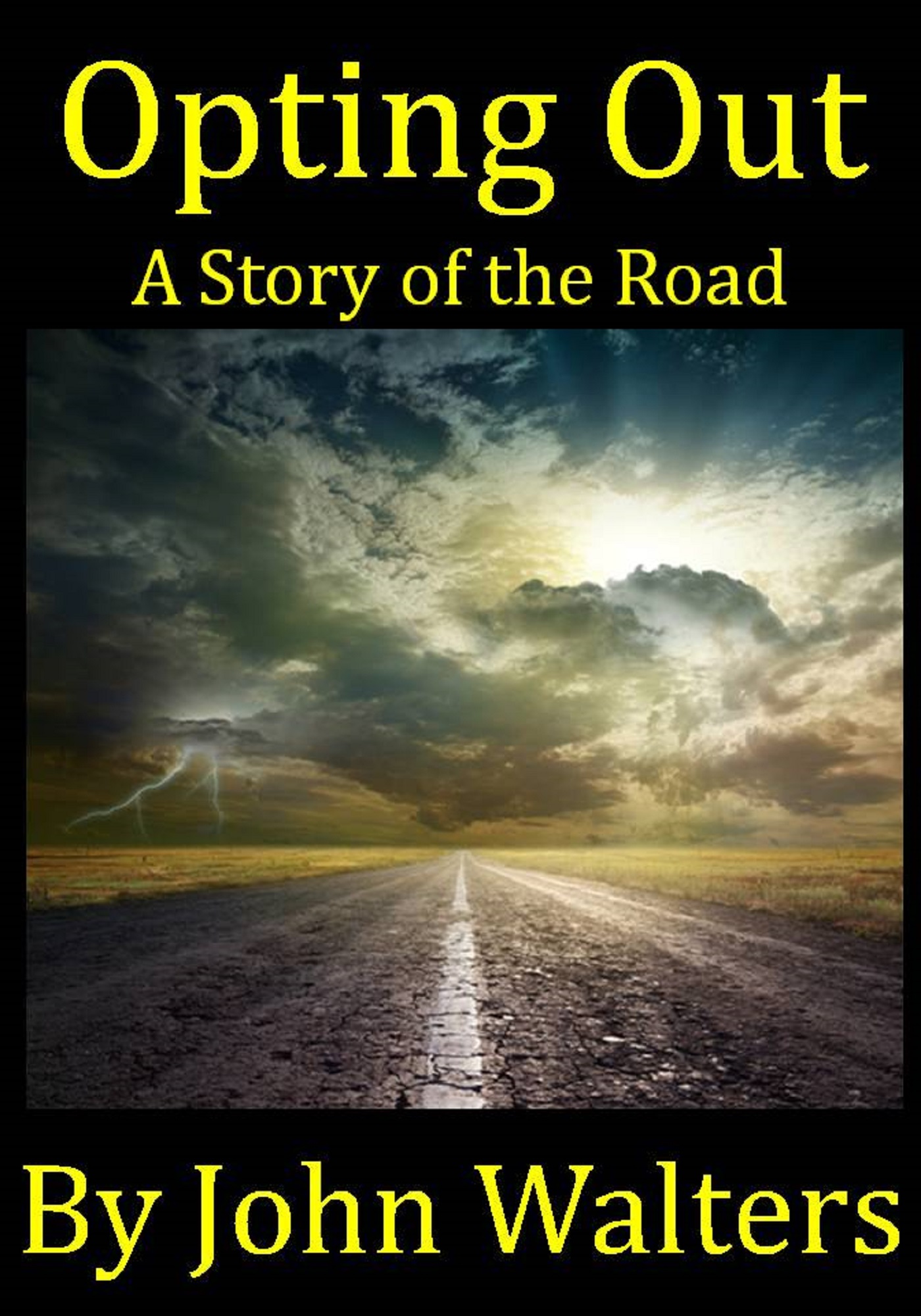
OptingOutStoryCoverBigUsually I do not make a special announcement when one of my short stories gets published digitally as an individual entity.  I wait until I collect the stories together in both print and digital form, and then I let you know about it.  But this time I’m going to make an exception.

My novelette “Opting Out” has just become available for download on electronic reading devices from Amazon.  It should arrive soon at Barnes and Noble, Kobo, Apple, and other e-bookstores through Smashwords digital distributors.

Often my new stories are my favorites, but this one is particularly special to me.  It’s a character study set in the near future.  An old man who has been living for decades in his Volkswagen camper-van is given an ultimatum to move out of it into government housing because all fossil-fuel driven vehicles are becoming illegal.  But this is not just his vehicle; it is his home, so rather than comply he leaves where he was parked in Seattle, Washington, and moves south, hoping that in other states the vehicle laws will be more liberal.  In a remote area of the California coast he comes across a refuge for homeless people that an eccentric dot-com billionaire has set up.  He moves in and is content for a time, and then decides to go out and help other homeless individuals find the shelter he has found.  How this quest fares is the crux of the story.

I sent this story out to a few magazines and it got nice comments, but because of its odd length (a little over 10,000 words) and the fact that it did not fit comfortably into a commercial niche, being both literary and genre, I quickly ran out of possibilities and decided to go ahead and get it published for direct sale.

Individual short stories for sale is a fairly recent phenomenon, but in this digital age when material can be downloaded so easily on devices like laptops, tablets, and mobile phones it makes a lot of sense.  Maybe you’re waiting in line somewhere or commuting on a bus or train and you’ve got a half hour or an hour to spare.  You can easily load an inexpensive short story onto your device and read.  I liken it to the music industry’s singles records issued in bygone years, which you could buy individually or listen to on the radio but would afterwards be included as part of an album collection.

I’ve published over forty stories individually over the past few years.  A few are packaged as doubles but most are singles.  Most are priced at $.99, but a few of the longer ones, like “Opting Out”, cost a little more.  If you like reading books on paper, they eventually come out as collections in book form.  I’ve published four print short story collections so far; the latest, “Fear or Be Feared: Fantasies” is a compilation of fifteen fantasy stories.  I am considering “Opting Out” as the title piece of my next collection, as a matter of fact.  In the meantime, if you have an e-reader you can access it now.

A listing of all my individual stories available for electronic sale is on my website.  Right now it’s just a mass of covers, but in the next few weeks I am planning to upgrade that page to include descriptions of each story, so it will be a more satisfying and comprehensive browsing experience.  I am also upgrading some of the covers.  Professional graphic artists design the covers of my full-length print/digital books, but I do the covers of the individual stories myself.  It’s obvious to see the difference between my beginning baby steps and my more recent efforts.  While this renovation is underway, if you go to my Amazon or Smashwords author’s pages, you can easily access the story descriptions when you click on the individual stories.  Have a good read.

Posted in On Writing, Reading | Tagged , , , , | Leave a comment

Sunflower: A Novel by John Walters – Now Available!

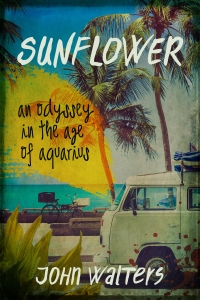
Sunflower_WebBig“Sunflower”, my third novel, is now available on Amazon in a print edition here, and in an electronic edition here. This is what the back cover copy says:

“In early 1970 a new era, the Age of Aquarius, is dawning. Penny, who adopted the name of Sunflower on the way to the Woodstock Music and Arts Festival, attends another rock concert touted as Woodstock West, at Altamont Speedway near San Francisco. Seeking to enhance the transcendent experience, she instead comes away covered in the blood of a man brutally stabbed to death in front of the stage.

“Has the new youth experience descended from idealism to anarchy? Confused and disillusioned, Sunflower embarks upon an odyssey across an America torn by violent anti-Vietnam War protests, racial tension, and gangs of hard drug dealers. From a search for a shared social experience it becomes a personal quest for fulfillment that leads her on a journey across continents.”

I wanted to write some sort of sequel to my novel “The Misadventures of Mama Kitchen”, to carry the story forward from the late 60s into 1970. However, instead of using the same main character of that previous novel, I took one of the minor characters from “Mama Kitchen”, Sunflower, who joins the bus on the trip across the States from San Francisco to Woodstock, and focused on post-Woodstock events in her life. From the light, carefree, almost surrealistic backgrounds in “Mama Kitchen” of a wilderness commune, Haight/Ashbury, and the Woodstock music festival, this novel becomes more grim as it deals with the disillusionment and dark times that followed the tragic Altamont concert. The dedication reads:

 For the lost ones of the seventies

You know who you are

I have to confess that I myself was one of those lost ones, searching for truth and fulfillment in what appeared to be a brief illumination in the spiritual landscape followed by an extended period of profound darkness. Though I did not experience firsthand some of the events Sunflower goes through in the novel, such as the Kent State killings and the civil rights turmoil in the deep South, nevertheless as background I have drawn on much of my own experiences and inner turmoil during the early 70s in the writing of this book. I hope that I have been able to pass on something of what was of value of that era. Though some of the specific political and social problems that troubled the nation and the world have been resolved, others no less perplexing and devastating have arisen to take their place. And sometimes I feel as I look about me, relative newcomer to the American milieu that I am after having spent about thirty-five years abroad, that something is missing. I hope that it is not an irrevocable loss. I don’t know if I can put what was lost into words: an innocence, a profundity. We didn’t know any better then than we do now, but we deeply desired to know.  That’s what I feel is missing:  that deep, deep desire for truth, honesty, enlightenment, direction.  I hope that I am wrong.  I am sure that there are pockets of it hidden here and there in the shattered, hyper-technological postmodern landscape, but I would like to see it burst forth in manifestation and give direction to these directionless times. This novel, then, is my own attempt to put forth a cry in the wilderness, a light in the darkness.

Posted in Memoir, On Writing | Tagged , , , , , , | Leave a comment

Book Review: The Lowland by Jhumpa Lahiri; Part Two: The Book Itself

Before I delve into an appraisal of the novel, I need to mention something that struck me before I even read the first page.  The cover (of the first edition hardcover) is not worthy of the book.  It is bland, as if the publisher figured that the book would sell anyway, so why bother to invest in a decent cover?  I suppose such a publishing decision, from a pecuniary point of view, would make sense.  Jhumpa Lahiri is a popular, award-winning author and the book was a success in advanced purchases before it was even available for sale.  Still, one dresses suitably for the right occasions.

This is nit-picking, of course.  What we come for is the words, and in this Lahiri does not disappoint.  In the previous post I mentioned that I felt her first novel was somehow flawed, and that I enjoyed the movie better.  This novel, though, is a work of art.  It is beautifully rendered.

Briefly, the story concerns two brothers, close in every way, who diverge in life outlooks and paths as they grow older.  One brother gets caught up in social politics in India in the late 60s, which leads to violent rebellion and eventually to his death.  The other brother goes to the United States, to Rhode Island, for his education, and builds a career and life for himself there.  He is more quiet, contemplative, thoughtful, and responsible.  When his brother is killed by the police, he marries his brother’s pregnant wife and takes her with him back to the States.  How he and the woman and the child and his parents cope with the tragedy and move on with their lives is the main subject of the book.  The telling of it moves through several decades.  It is a poignant, moving tale.  Lahiri, as in all her works, manages to get deep inside her characters.  You cannot help but feel for them.  In vignette after vignette she moves the story along inevitably.  She has a talent for getting the reader all caught up in what is happening so that it is hard to put the book down, even though the action concerns quiet, everyday things that only take on great significance when they are put all together as a whole.

Again and again I felt myself drawn into the narrative or a particular character so that I was thinking, My God that’s just like me.  But it is not so much because I am familiar with Bengali culture, though I lived for seven years in East and West Bengal.  It is because this story goes beyond the boundaries of a particular culture into universality.  I would say that, though it is partly set in India, it is the least Indian of Lahiri’s stories so far, because it addresses such universal themes.  It could have taken place entirely in the United States, and the politically active brother could have been active in the 60s protest movements that turned violent here, and it still would have resonated as deeply as it does.  The Indian element, though, adds a pleasingly intricate pattern to the tapestry; and, of course, Lahiri’s background comes out naturally as she as a writer pours out her words onto the pages.  I take back what I said in my previous comments about Lahiri’s other work, that perhaps she does better in shorter forms.  This novel proves that she is fully capable of sustaining excellence in a long story as well.

So, yes, I recommend this novel.  It’s a beautiful piece of art.  I recommend all of Jhumpa Lahiri’s work, in fact, if you have never had the immense pleasure of discovering it.  She is one of the great writers of our era.

Posted in Book Reviews | Tagged , , , , | Leave a comment