Book Review: Gulag: A History by Anne Applebaum

I have had this book in my radar for years, and when I saw it on the shelf in the West Valley Community Library in Yakima and perused it I decided to give it a try.  It’s a big, heavy book in hardcover whose text runs almost six hundred pages and is followed by over a hundred pages more of notes, bibliography, index, and so on.

I started reading, and after about one or two hundred pages or so I wondered what the hell I was doing reading it.  It’s so morbid, so damn depressing.  Hell has nothing on the Russian Gulag, and I’m convinced that Stalin must have been possessed by one of Satan’s top minions, if not by the old boy himself.  Seriously, I thought, why put myself through this?  Things are tough enough for me now as it is, without filling my mind with all these images of incarceration and torture and starvation.  However, rather than stop reading, I started thinking deeply.  Why would I read such a thing and why would the author write it?  Coincidentally, when I was in the middle of the book I finally had a chance to see the new Oscar-winning movie “Twelve Years a Slave”.  The same question could be put about that film and the book it is based on.

The answer, of course, is obvious.  The victims do not want us to forget.  Otherwise, why would they write memoirs about their experiences?  It boils down to why we have reading and writing at all.  If it doesn’t assuage the grief and take away the pain, the communication of the experience at least takes away the isolation of it.  Shared pain somehow fundamentally alters the experience, makes of it something significant, something profound.  That’s not to say you want to go through what the prisoners of the Gulag went through just to experience profundity, but it means that if you must experience pain, the sharing of the experience turns it into something else, something that touches on the core of the human condition.

As for the book itself, as I said, it is a tough read.  It is told in three parts.  The first and third sections are historical, while the second is a long interlude going into the various facets that made up life in the camps.

The Gulag was the brainchild of Stalin, the monstrous paranoid dictator who conceived of the idea of jumpstarting the Soviet economy through slave labor.  To get it, he opened up prison camps all over the remote parts of the Soviet Union, from the gold mines in the far northeast to the coal mines in the far northern wastes of Siberia to the stands of timber in the northern forests.  To fill the camps he had the secret police start arresting people:  criminals, political opponents, foreigners, Jews, gypsies, peasants, former prisoners of war, and anyone who criticized him or his regime in the slightest way.  These poor people were spirited away from their homes, or sometimes off the streets, loaded on packed cattle cars and sent on weeks-long train trips into the wilderness during which many of them died.  When they arrived at their destinations, they had only two choices:  submit to grueling, back-breaking hard labor with little food and insufficient clothing or die.  Sometimes the guards tortured and murdered them anyway, for fun.  And sometimes the criminals in the camps did so too. Often denied letters, packages, or any other contact with the outside world, it was as if they ceased to exist.  Many died, many went mad, but many also endured and lived through it in spite of it all.

As I read the book, I wondered if I could have endured such conditions, not only now as I age and feel my strength beginning to fade, but even when I was in my twenties and thirties and in my prime.  The physical hardships would of course have been very difficult, but far worse would have been the psychological torment of realizing that this was to be the condition of my life for as many years as I lasted until death.  Nothing to live for, nothing to look forward to.  Many people received sentences of ten, fifteen, twenty-five years for trivial reasons or no reason at all.  And if somehow they managed to finish their sentences and were released, more often than not, the authorities turned around and arrested them again right away.  Husbands were torn away from their wives; mothers were torn away from their infant children, never to see them again, knowing that they would more than likely die of starvation or disease in a freezing cold, understaffed orphanage where no one gave a damn about them one way or the other.

Could I have lived through it?  Probably.  Many committed suicide, but I am not one prone to choose that route.  For most, suicide was unnecessary, as the balance of life and death was so fragile anyway.  But certainly not many of those arrested went into the experience with confidence.  From the moment of arrest, it was a horrifying struggle for survival.  But I have found in difficult moments of my own life – and yes, there have been some tough times, like when I was flat broke in Tehran and had to beg on the streets for enough money to buy food to survive – I have found, I say, that when one must survive, one does.  You just do it when the time comes; figure out what it takes; make the best of it even when there is really nothing good about it at all.

And I have to admit, in the midst of the horror stories in this book there are few bright spots.  Sometimes prisoners helped each other, but more often they were reduced to such an abject state that they just tried to keep themselves alive.

But as I read on and on, I found myself admiring them nonetheless.  They endured.  They survived.  And most of those that survived kept their humanity as they would hoard the tiny scraps of bread that kept them alive.  Yes, I honor them.  Reading this book and opening my mind to what they went through is a way of honoring them.  They were not super-men or super-women.  They were not heroes, at least not many of them.  But they were humans who went through something that no human should ever have to go through, and this book, written – masterfully I might add – based on the memoirs that they wrote, is a means of communicating and sharing their torment.  I found myself, as I read, wishing that I could mentally travel backward in time and halfway around the world and telepathically link with them, if only to let them know that they were not alone, that they would get through it, that there would be an end to it.

To those who died of starvation, disease, or exhaustion and were buried in mass graves in the frozen wastes:  Requiescat in pace.
Posted in Book Reviews | Tagged , , , , , , , | 2 Comments

The Next New Wave

I just deleted what I wrote a few hours ago.  I had gotten all fired up about an idea and was burning to write it down.  I started the first few paragraphs but then I had to scribble some notes with the intention of finishing it later, as I had to attend an event at my youngest son’s school.  By the time I got back to the keyboard, the thrill, as they say, was gone.  I eked out a couple of hundred words and realized I couldn’t do it anymore.  Sometimes you have to sit down in the white heat of inspiration or it is gone forever.

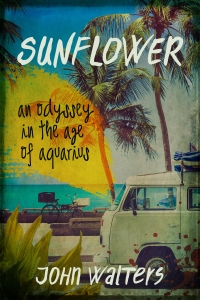
Let me see if I can recreate the gist of it.  There was an article I reacted to that spoke of the paucity of major female characters in fiction, especially road fiction.  My first impulse was to mention my own two recent novels, “The Misadventure of Mama Kitchen” and Sunflower“, both of which are road stories with female lead characters.  But then I started thinking of past examples of strong female leads in speculative fiction, and wondering why she had never heard of or didn’t mention them.  I actually wrote a list of such works in a short Facebook reaction to the article.  I remember in particular mentioning the warrior/poet of Asian background in Samuel Delaney’s “Babel 17”.  But that’s not the point.  We are not trying to engage in the nitpicking of past literature.  The writer of the article, besides obviously exaggerating to tout her own book, which is road fiction with a female lead character, was speaking of the present, and how now at this very time in the history of literature, there is a paucity of books with heroes who are women or people of color.  What happened in the past doesn’t matter.  What matters is what is happening now and in times to come.

She is speaking, of course, from the very limited perspective of traditional publishing, as the article first appeared in The Atlantic, a bastion of the traditional.  Even from that perspective I think she is erroneous.  I think she wrote with blinders on, as I can find examples of many dynamic modern woman authors and fine female characters.

But as I thought about it more and more I realized that in this new world of publishing there was no reason that she or anyone else of any gender or color should feel any constraint on what they write or who they write about.  Any writer can use the tools of self-publishing easily available and create their own book from start to finish.  If you do all the layout and design work yourself, which takes a learning curve but is possible, it doesn’t cost anything either, even to produce POD paper copies. This option, therefore, is open even to the financially challenged like myself. Anyone can write anything and publish it.  You don’t have to be dependent on the suits in their multi-million dollar office rentals in New York to tell you what you can and can’t say.  Say what you want.  Have your main character be anyone you want.

In the so-called New Wave of science fiction and fantasy that erupted back in the 1960s and 1970s, writers struggled to break free of conservative white middle class literary conventions.  And many succeeded in doing so.  Think how much more we are free to do it now.

I notice that many self-publishing writers go for the cheap shot, the easy money, the formula stories in hopes of making a few bucks.  Nothing wrong with making a few bucks, say I.  Even the writers who formed the core of the New Wave back then did hack work in their formative years to pay the bills.  But there comes a time when you have to stand up and be counted as a writer.  What do you really have to say?  What is the book burning inside you that you have always wanted to write?  What are the triumphs and tragedies at the core of your being?

Self-publishing is making great strides, but I think it is still cringing in timidity.  I think many of us do not realize the powerful force we have at our disposal.  We can write anything.  Let’s burn the bridges.  Let’s smash the idols.  While we’re at it, let’s burn the rulebooks too.  I want to see good stories, sure, but I also want to see great works of art.  I know they are out there, and I think that if a few of those doing hackwork right now wake up and realized what freedom they really have, what they can really do, that we will see another new wave not just in science fiction and fantasy but in all of literature.  I think it was C.S. Lewis who made the analogy of the ghetto kid who keeps playing with mud pies after getting invited to the beach because he cannot imagine such a place as a beach.  We are free, fellow writers, truly free.  We can write whatever we want.  Reach way down inside there and pull out the best you have from your heart and your guts and spill it all out for us.  In this era, it’s the readers who decide.  Not the suits.  And not, I hope, conventions and restrictions and rules implanted within us by English teachers and books on writing and past misguided editors.

Posted in On Writing | Tagged , , , , | Leave a comment

The Rules for Alternative Realities

I have been giving a lot of thought lately to mistakes I might have made in the past.  Let’s not say mistakes; let’s rather say that if I had to make certain choices over again that I made long decades ago, I would have made them differently. And then I wonder what might have happened if I had done this instead of that.

For such speculation, you first have to establish a few ground rules.  It’s all theoretical anyway, so I can’t worry that if I had made different choices my five awesome sons would never have existed.  When I have thought such thoughts before, that realization was always a brick wall that I slammed into.  But we have to understand what we are doing here.  Nothing is really going to change.  It is an exercise in hypotheses, in alternative realities.  Because let’s face it:  I definitely would do things differently if I had to do them all over.  I would make different choices based upon the decades of experiences I have had, the knowledge I have absorbed, the wisdom (hopefully) I have developed.  My life would be radically changed by just one or two deviations in the past, and then that choice would have necessitated another, and another, and so on, until what I would have become…  Well, there’s an interesting speculation.  Would I be basically the same man I am now with only different outward trappings, or would I be a whole new person?

Apart from decisions concerning my children, which are always deal-breakers, my thoughts boil down to two important realities:  my writing, and my need for companionship – in that order.  Writing always figures in the equation, no matter what.  In the past I left some good women behind in the pursuit of my calling as a writer.  Now I realize that I might have compromised and somehow brought one of them along with me; but who knew?

I could have approached my writing in a different way, too.  I felt I had to get out there, live life to the full, to have something worth writing about.  To make that happen, I first hitchhiked to Central America and back.  That wasn’t good enough.  So I hitchhiked across the United States and around Europe.  That still didn’t do the trick.  Finally I headed across the Middle East to India.  Still not enough.  So I did it again.  I didn’t know when to stop.  I had started to pour out words, and I was afraid that if I slowed down, if I came in off the road, that maybe the flow of words would dry up.  I wrote a piece once called “Hitching Up the Alaskan Highway in the Dead of Winter” – it was the epitome of the death-defying road trip.  I never really made that one, but I thought about it a lot.  I imagined that the stranger, the more death-defying, the more off-beat the experience, the more it was worth writing about.

Now I realize that I can write about anything.  Now I realize that you don’t even need to leave your back yard to soar to distant galaxies in the realm of the imagination.  Back then I didn’t get it.  It was like a phase I was passing through.  That’s one of the specific things I have been thinking about lately.  Maybe I should have come in out of the cold.  Maybe I should have gotten off the road earlier.  I had plenty of opportunities.  I mean, I know that life is one great road journey, in a sense, but if I had settled (relatively at least) somewhere along the way, perhaps I would have established myself professionally as a writer earlier.  Perhaps things would have been easier and I wouldn’t have found myself struggling so much so late in the game.

But then I come to the second rule of alternative realities:  if I had made different choices, things might have gone differently and I might be in a different situation now, but that doesn’t mean that things would be better.  I am still a flawed human being, after all, as are you, and as whoever I might have settled down with would have been as well.  Things might have turned out worse – possibly much worse, who knows?

In the end, this is the reality that I am stuck with, for better or for worse.  All I can do is use the wisdom I have accumulated to make better choices now.  As for the past…  Well, believe it or not, it gave me peace of mind to think that if I had the choices to make again I would make better ones.  It shows me that I have developed, I have grown, I have learned a few things.  And it gives me more confidence to make better choices up the road.  Longing for the past is a fool’s game, because it’s not going to happen.  Factoring lessons from the past into future decision-making is different.  That is using the past as a strength instead of a weakness.

So I allow myself these daydreams now and again, these speculations about what might have been.  After all, profound past experiences are worth recollecting.  It’s like an energy bar that never gets consumed, that peps up your spirit continually.  Our pasts are like gold mines of experiences.  Why not enjoy the riches?  I can tell you, setting out on the road with a wad of cash in your pocket is much better than setting out empty.  What’s past is past, sure, but it’s also what fuels and directs you into the future.

Posted in Memoir, On Writing, Travel | Tagged , , , | Leave a comment

Book Review: The Moon and the Sun by Vonda N. McIntyre

The subject of this novel is that which would normally be least likely to appeal to me: a fantasy-romance set in Louis XIV’s court at Versailles.  However, it turned out to be one of the most enjoyable and well-written novels I have read in a long time.

I came across it by accident, while perusing the wire discount towers at Half-Price Books in Seattle.  It was a mass market paperback copy in good condition for only a dollar.  I knew it had won the Nebula Award, so I bought it and relegated it to my stack of someday-to-read books that usually stands half-a-dozen or so volumes high.  I really do intend to read those books sometime.  If I don’t plan to devour new purchases soon, I put them on the general bookshelves for my boys, all of whom are avid readers when the mood strikes them, to discover and enjoy.

I met Vonda McIntyre a few times, long ago.  She was helping to coordinate and manage the Clarion West science fiction writing workshop I attended in 1973, but I don’t remember meeting her there.  I do, however, distinctly remember meeting her shortly afterwards on Bubbles Broxon’s houseboat on the shore of Lake Union in Seattle, where we held follow-up writer’s workshops for a while.  If I recall correctly, she had just won the Nebula Award for her novelette, “Of Mist, and Grass, and Sand”.  During the workshop, another attendee told me a story about how he had helped her come up with the title.  I doubt she would remember me; I wrote nothing worth remembering back then, and I didn’t have much of a flamboyant personality in public either.  Both my writings and myself were eminently forgettable.  I attended several sessions of the Lake Union workshop before I took off on the road in pursuit of adventure, to seek my fortune, and to find my voice as a writer.  I managed the first and the third, at least, if not the second.

I enjoyed the novel-length expanded version of “Of Mist, and Grass, and Sand”, “Dreamsnake”, that won both the Nebula and Hugo Awards, but in my opinion, “The Moon and the Sun” is a much more mature and nuanced work.  I have to confess that I struggled a bit with the first chapter, in which so many characters with foreign-sounding names are introduced that it is hard to keep them apart without constantly referring to the cast of characters at the front of the book, but from the start of chapter two I was hooked, and afterwards it was hard to put the book down.  I have a tight schedule; I’m a single parent with a household to run and I work long hours besides, and when it’s time to stop reading and get back to work I have to do it no matter how difficult it is to wrench myself away – but with this book I was constantly telling myself, “just one more page,” or “just one more section” – and that’s one of the greatest complements you can pay any writer of fiction, that you couldn’t put the story down.

The novel has got splendid characterization, a tightly-woven plot, and a fascinating story.  It’s also obviously meticulously researched, and full of intricate details about the historical era in which it takes place.  Versailles in the late seventeenth century comes across as bizarre and otherworldly as an alien culture in a science fiction story set on another planet, but despite the intricacy of detail, at no time does the story lag due to the wealth of accumulated historical information.  It is all woven into the fabric of the story like the threads of a fine tapestry.  The fantasy element, the capture of the sea woman and the revelation of the culture of the sea people, is so much an elemental part of the plot that it never seems contrived or inserted as a genre-labeling afterthought, as so often happens in inferior tales.
In an afterword, McIntyre writes that she first wrote “The Moon and the Sun” at a screenplay workshop sponsored by Amblin Entertainment and Universal Studios, and that she wrote a screenplay of the story first.  She subsequently wrote the novel because she had had to trim out a lot of detail to conform to screenplay parameters.  That was back in 1994, and it seems that soon, finally, “The Moon and the Sun” is going to filmed as a major motion picture starring Pierce Brosnan as King Louis XIV.  The first thing I checked was whether they were using McIntyre’s script, or at least whether she shared writing credits, and it seems that she is not involved in the writing of the film.  I hope that the film manages to maintain the core integrity of the book, and doesn’t take major liberties to conform to Hollywood’s supposed audience expectations, as Peter Jackson unnecessarily did in some of the changes he made to “The Lord of the Rings”.  That remains to be seen.

In the meantime, read the book.  It is a marvelous, fascinating, uplifting experience.  You won’t be disappointed.
Posted in Book Reviews | Tagged , , , , , | Leave a comment

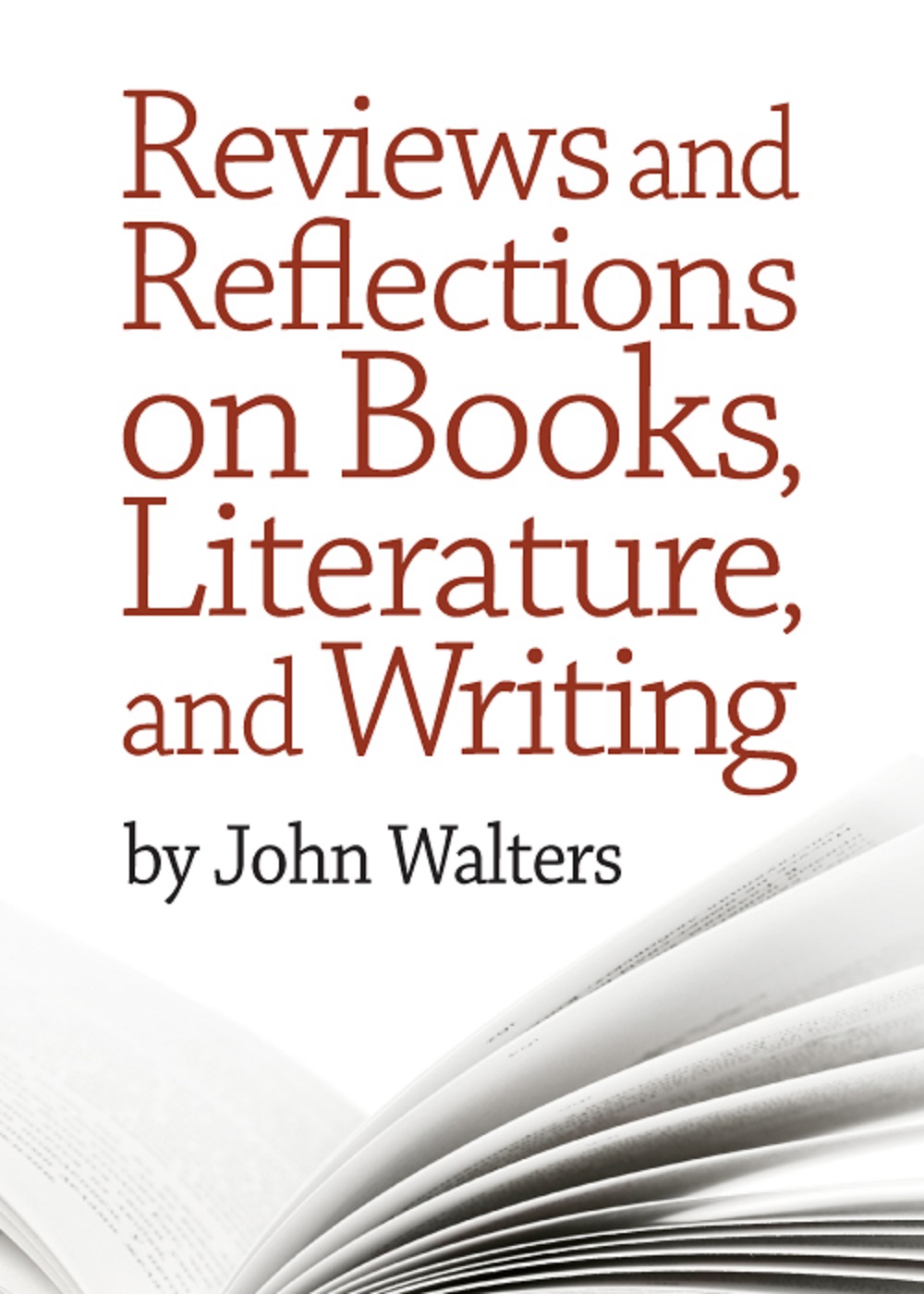
Faux Book Review: Reviews and Reflections on Books, Literature, and Writing by John Walters

4-14-JohnBookReviews_WebBigWhy is this a faux, or fake, book review?  Because it’s a review of my own book.  My plan earlier in the week had been to use this week’s blog post to merely announce the publication of this book, and perhaps to reprint one of the book’s two introductions, “Why Reading Gets Me Off” or “Why I Write Book Reviews” – but these are already available on this website, and I only need to provide links to them.  I could just show you the cover of the book and include the back cover copy – but again, I felt something was missing.  Then I came up with the idea of pseudo-reviewing it as a way to explain why I like this book and why I consider it valuable, why I would buy it and avidly read it if it were written by someone else.

This book is a compilation of book reviews and essays on literature and writing.  The first thing you notice when you open it is the extended table of contents.  It is eight pages long, and lists all the books and topics covered in the reviews.  This gives you the advantage of skipping ahead to any titles that particularly catch your interest.  Walters does not try to give any comprehensive overview of any particular aspect of literature here.  It is a hodgepodge of titles based upon his own reading experience.  It is fairly evenly divided between fiction and nonfiction books, as the author explains that in his reading he usually alternates between them.  Though most of the titles are books he has read in the last few years, there are also some lists of his all-time favorite books and short stories, and why these were particularly important to him.

All in all, the titles Walters writes about are an eclectic blend of all sorts of genres of fiction and nonfiction.  In the fiction section, he not only discusses the works of some of his favorite American authors such as Henry Miller, Jack London, Jhumpa Lahiri, Harlan Ellison, and Roger Zelazny, but also writes about a number of international authors such as Jorge Luis Borges from Argentina, Shusaku Endo from Japan, J.R.R. Tolkien from England, and Rabindranath Tagore from India.  Though most of the writers discussed are well-known and traditionally published, Walters also includes comments on some new and indie-published writers as well.

As explained in the introductions, this book is not only about the books and authors covered in the reviews, but about the writer of the book himself.  Walters has led an unusual life, as he recounts in his various memoirs.  As he tells in “World Without Pain: The Story of a Search“, in the 1970s he hitchhiked across the United States, around Europe, across the Middle East, and through India in search of experience and his voice as a writer.  He lived for thirty-five years abroad in a variety of countries.  Many of the reviews diverge into essays on his own personal experiences.  For example, in the review of “Deathbird Stories” by Harlan Ellison, he recalls his time at the Clarion West science fiction writing workshop, during which Harlan Ellison was one of the teachers.  In the review of the nonfiction work “The Seventies” by Bruce J. Schulman, he writes about the confusion he went through in the San Francisco Bay area in the early seventies, surrounded by the “detritus of the sixties” and the deteriorating hippy culture of drugs and free sex.  In the first essay on “The Lowland” by Jhumpa Lahiri, he recalls the time he studied the Bengali language at Dhaka University in Bangladesh and lived in the crowded confusion of the city of Calcutta.  These and other personal reminiscences infuse this book with exuberance and depth.

This is the type of book on literature I like to read – one shot through with exciting and interesting side trips and divergences.  One of the essays in the section on nonfiction books is called “On Abandoning the Reading of The United States: Essays 1952-1992 by Gore Vidal”.  Walters explains that once he starts a book he almost never puts it down until he finishes it, even if the reading becomes tedious.  However, in the case of Vidal’s essays, they were too pompous, highbrow, and just plain boring to waste time reading.  Walters’ book is not like that.  The essays are succinct, surprising, full of fascinating roadside attractions on the literary journey of life.  Personally I am always on the lookout for books like this.  I love to hear other writers’ takes on books, literature, and writing, but there are too few of such books out there.

All right – I am switching back to John Walters the writer, from John Walters the self-reviewer.  Honestly, I really do enjoy reading books about reading and writing such as Henry Miller’s “The Books in My Life”, but there really are too few of them available.  That is one of the main things that prompted me to write this book: because as a reader, I would want to discover and read a book like this.

“Reviews and Reflections on Books, Literature, and Writing” is available in print and for Kindle here, and at Smashwords in various electronic formats here.

Posted in Book Reviews, On Writing, Reading | Tagged , , , , | Leave a comment

On the Breaking of Rules in Writing

As I was finalizing my thirteenth book, a compilation of book reviews and essays called “Reviews and Reflections on Books, Literature, and Writing”, I found myself with a curious dilemma. Look carefully at the preceding sentence. Note that the title of the book is within quotation marks, and the comma follows after. I’ve been doing that for a long time now, and recently I was corrected for it by an editor checking some of the Internet articles I write to help pay the bills. But is it right or not? At first I thought that I didn’t give a damn; it seemed reasonable usage to me and who cares what anyone else thinks? Then I thought, well, if it really is wrong I should do something about it. So I did some research.

I already knew from my article-writing jobs that rules on style are not always consistent. For one company, I studied the AP Style Guide. There are a lot of nit-picking rules on every aspect of sentence structure, grammar, punctuation, and so on. In my own writing I do not always follow all the same rules, so I had to memorize it all, or at least memorize where I could look up the details, so I didn’t slip up while writing the articles. Then came another batch of article assignments in which the client insisted on the guidelines of the Chicago Manuel of Style, in which are key differences. I had enough work, and I refused these assignments, as the man-hours necessary to learn a whole new style guide and then constantly look up discrepancies until I got used to the differences was too much trouble. So I am aware that rules, guidelines, and styles do not always mesh. It gets even more confusing and complicated when you consider American, British, and Australian English, and regional variations within these broad categories. What is a writer to do?

But back to the comma/title dilemma. I was willing to go through the lengthy manuscript and change it all if I had indeed made a genuine error, so I did some research. What I found out was that only in America is it accepted form to put the comma within the quotation marks when you are listing titles; in Great Britain and the rest of the world, you always put nothing except the title within the quotation marks, and all other punctuation outside. Hmm. So I thought about it a while, and I decided to leave things as they were – and are. After all, I lived overseas for thirty-five years; that’s probably why I picked up the habit. Why be ashamed of my internationalism? Why not flout it? And again, as I said before, who really gives a damn? Communication is the main thing, not nitpicking. Then you might say that I should be consistent and use all the rules and spelling of British English. And I would answer, why should I if it does not please me to do so?

I’m not saying a writer should lapse into total language anarchy, although some, even some of the most revered, have done so. I believe basic rules of grammar, syntax, punctuation, story structure, tense, point of view, and so on should generally be followed, but there are always exceptions. Consider, for example, what I consider one of the greatest short stories of all time, “Sundance” by Robert Silverberg. He breaks all the rules of tense and person in that story. He switches around from present to past tense and from first, second, and third person. But it works. It’s brilliant. If he told the story in the conventional way, sticking entirely to first or third person and past tense, the story would be okay but not extraordinary. As it is, it is a work of genius. Many other departures have been made by poets, novelists, and short story writers. Some variegations have worked and some have not, but a reader has to give the writer the benefit of the doubt, and the leeway to experiment with all the tools in the toolbox in any way necessary.

So in my latest book, I left the titles pure within the quotation marks. If you don’t agree, in your next book or essay or review or whatever, you can do it a different way. I’d do it a different way too if an editor who was paying me good money for a piece asked me to, and I don’t think I’d be compromising my artistic integrity to make the change. In this case, since I was self-publishing the book, the decision was entirely up to me. So if you are reading the book, be assured that the peculiar (to you) punctuation is not a mistake due to the fact that I do not know the rules. It is a deliberate choice based upon my international background. Please don’t get hung up on it or allow it to diminish your enjoyment of the book. And if you, as a writer, feel the need to make adjustments to particular rules of grammar or spelling or punctuation for the sake of your art, I will extend the same consideration to you.

Posted in On Writing | Tagged , , , , , | 1 Comment

Book Review: Outliers: The Story of Success by Malcolm Gladwell

It was through the best-selling self-published writer Hugh Howey that I learned about this book. He posted a review of it on his site that got me sufficiently interested to seek it out. Howey, from his frequent online essays and comments, seems an amiable kind of guy, and is more than a little befuddled by his overwhelming success. He insists that his talent is no greater than many other less successful indie writers, and he has launched into the analysis of various books and statistical studies to find out what, in fact, are key factors that make someone successful in their field of endeavor.

Gladwell, in this book, posits that not only is talent not the overriding consideration, it is not even one of the main determinants in who succeeds and who doesn’t. In one section on IQ he points out that studies show that after a certain cutoff point of about 120 or so, IQ is no longer an important criterion of success. Other considerations take over. To succeed in the wide world, you have to have not only general intelligence, but practical intelligence and a good deal of luck.

To illustrate his theory, Gladwell starts with the star players of the Canadian hockey league, and asks the question: what makes them hyper-achievers when the country is full of young people who potentially have the same degree of innate talent? The answer is surprising, because it is not genetics or inherent ability. The fact is, the best players were born right after January 1st, the cutoff age for age-classes in hockey in Canada. This slight age difference makes them a little bigger and stronger than their peers, which attracts the interest of minor league teams, which gives them further training, and so on. A series of coincidences drives their success. And the statistical evidence for it is overwhelming.

For his next section he pulls out the big guns as examples: the Beatles, one of the most successful rock groups ever, and Bill Gates, the founder of Microsoft. Gladwell calls the secret of their success the 10,000 hour rule. He says that if you want to make it big in any endeavor, you don’t have to be better than everyone else, you just have to work harder and practice more. Before Bill Gates dropped out of Harvard and started up Microsoft, he logged in way over 10,000 programming hours. Before the Beatles became a musical sensation, they were invited to Hamburg, Germany, where they performed onstage at strip joints and clubs for eight hours a day, seven days a week. They were not overnight wonders. Before they became famous they paid their dues. Other examples abound in this chapter: Mozart, Steve Jobs, Bill Joy. Everyone put in their time before they made it big. Then he brings forth another interesting statistic: all of the big tech billionaires were born within a few years of each other, so that they could put in their 10,000 hours of training and be ready to jump on the first tech train when it rolled by. They were not more brilliant than anyone else; they just put in their hours and were in the right place at the right time.

This is something of great relevance to writers. Dean Wesley Smith says something similar, but puts it in the form of volume of work rather than time. He says that the first million words a writer writes is crap. Either way, 10,000 hours or 1,000,000 words, there is a significant apprenticeship before attainment. If you expect instant gratification in the writing game, or in most other endeavors in life, you’re living, as they say, in la-la land.

Of course, figuring out how much time you have spent writing or exactly how many words you have written, unless you are the hyper-disciplined sort of individual who keeps a log, is a guesstimate at best. The best solution, then, is to never stop practicing until they pry the keyboard out of your cold dead fingers. That way, presumably, you would at some point pass the threshold and be into some serious stuff.

In one of the later chapters, Gladwell comes to a similar conclusion about the school system. When speculating about the success of Asians in learning mathematics, he compares school instruction with rice farming. To plant and grow rice successfully, you have to get up before dawn and put in a long day of planting and tending all year long. If you don’t put in the hours, you don’t have a good harvest. Asian children excel at math not only because their language predisposes them to work with numbers more easily, but also because they put in many more hours studying it than most westerners do. Gladwell describes an experimental school program amongst some of the nation’s poorest kids in the Bronx in New York in which students have to put in study days of twelve hours or more, come in half days on Saturdays, and attend classes for part of the summer as well. These kids, formerly given up as hopeless cases, excel at mathematics, and almost all of them go on to attend college. Why? Because they put in the hours. They work at it.

I’m not sure I agree with everything Gladwell posits in his book, but I think most of it has enough veracity to be immeasurably inspirational. How many of us are tempted to give up because we think we’re not good enough? In reality, though, the only way to fail is to give up. Success is a mixture of hard work and luck, but I like what Kevin Anderson says about it (although I am quoting from memory and may not have it exactly right): “The harder I work, the luckier I get.” You can’t do anything about when you were born or the historical era in which you find yourself, but one thing you can do is work hard and put in your 10,000 and then 20,000 and then 100,000 hours. That’s all any of us can do. Sure, jump through the door of opportunity if it suddenly opens in front of you, but in the meantime, keep at it.

The book has other interesting sections as well, such as what causes some nationalities of airline pilots to be more accident prone, what made the Cumberland Hill area of Kentucky more conducive to feuding, what accounts for the success of the top law firms in New York, why some people tested with IQs high in the genius range make it in real life and others don’t, and, in a touching true tale at the end, how the author’s Jamaican ancestors overcame slavery and achieved success in society.

This book is entertaining, inspiring, eye-opening, and well-written. As I said, you don’t have to believe everything the author proposes, but at least in putting forth his ideas, he gets you to think outside the box, to challenge your assumptions, to see the world and human society in a new way, and that’s always a good thing.

Posted in Book Reviews, On Writing | Tagged , , , , , , | Leave a comment

Book Review: Collected Fictions by Jorge Luis Borges

Usually in my reading I alternate between fiction and nonfiction, and it was almost time for some fiction. I had a few novels at hand that I had acquired but I hadn’t read, but I was in the mood for something special. Then it occurred to me that it had been a while since I had read Borges. I have read through his collected short stories a few times already, and I like some more than others but generally his short fiction thrills me through and through. He has a unique imagination and in an absorbing blend of reality and fantasy delves into preoccupations such as labyrinths, mazes, mirrors, mysteries, tigers, puzzles and anomalies. I found a like-new used copy of his complete works of fiction on Amazon, ordered it, and anxiously awaited its arrival.

But then, after it came and I dove into the stories, something strange happened. They didn’t thrill me like they used to.

What was wrong? I couldn’t figure it out. It was not the fault of Borges; Borges is still Borges, as enigmatic and brilliant as ever.

Therefore it came to me that the trouble had to do with either me or the translation.

It’s true that I have been going through some hard times recently, and have been preoccupied with survival. I have just weathered one of the worst winters of my life that decimated me both physically and mentally. I am exhausted, spent, and breathing a psychic sigh of relief that the weather has warmed somewhat, that spring has begun. It could be that the problem is with me, and that I was not prepared for the marvelous feast that is the fiction of Borges.

But in a way that doesn’t make sense. Usually good fiction lifts me up, inspires me, helps me straighten my back and muddle my way through.

Then I thought that perhaps the last time I read the book the translation had been different, so I found the library catalog of Anatolia College in Thessaloniki, Greece, where I had last borrowed the book. I fully expected that I had read a different translation. But no. It was the same.

So it is me. Hmm. I think my preoccupation with my ongoing struggle to pay the rent and put food on the table had something to do with my lack of concentration. Many stories shone through my daze and struck me, as always, as brilliant. The mysteries and fantasies are among the best anywhere, in any language. This time around I particularly appreciated the very short stories, what is currently referred to as flash fiction. But the numerous stories of the honor of knife fights in old Argentina I did get fed up with. I see only idiocy in facing another man with a knife for no other reason than a casual insult. It is a ridiculous reason either to die or to kill. I understand, however, that he is chronicling an era and a type of person and culture that used to inhabit Argentina and does not necessarily condone the practice of knife fighting.

This volume, “Collected Fictions”, compiles all the fiction from the several books of the short stories of Borges. Inevitably in such a collection, it is a mixed bag as far as quality is concerned. Much of the early work, and even much of the later, is more in the nature of experimental fragments than complete stories. However, the finest of his stories such as “The Aleph,” “The Library of Babel,” and others, are represented here too and are brilliant fantasy tales.

Borges was a very influential writer. His unique prose and idiosyncratic style influenced many writers who are more familiar to the modern reader. And despite the fact that my own intellectual lassitude, or perhaps just the fact that I had read the book too recently, prevented me from fully enjoying it this time, I heartily recommend the fiction of Jorge Luis Borges to the uninitiated. He is one of the modern masters of the short story genre, and some of his best short stories rank among the finest ever written.

 *     *     *

 I feel I need to add an addendum to clarify something here. I try to be honest in my book reviews. In that spirit of honesty, in the past I have told you when I didn’t like a book even though it was acclaimed by the literati. But at first, when it came to Borges, I baulked. I don’t really know why. I know that many writers I admire, admire Borges. Perhaps I was concerned that these people, if they read my review, might think less of me for ill-connecting with Borges this time. But then, when I pondered the matter after writing this essay, I thought, What the hell? Why should I care what anybody thinks about my opinions? Sure, Borges has accumulated an impressive following of readers, so what? I make it clear in the essay that I admire his work. And whether I do or not, why should what anyone else thinks influence my own opinion or how I express it? No, it’s too late in the game for that. To hold back the truth about what I think would be a compromise. In the spirit, therefore, of disclosure, I hereby, of my own free will, offer my opinions about a few other literary giants. I find the work of James Joyce, for the most part, incredibly boring. I like a few of his short stories, but that’s about it. “Ulysses” I could never get into, though I tried several times. The same with Charles Dickens. Too slow, too much detail. I pity the poor high school students for whom reading Dickens is obligatory. I also tried reading “Moby Dick” by Herman Melville several times and could never get into it. There’s too much exposition slowing down the story. Parts are interesting. What he should have done is pared out all the minutia about whaling and stuck to the story. “Moby Dick” should have been a novella about the length of “The Old Man and the Sea,” one of my all-time favorite works of fiction. Can you imagine how that work would have bogged down if Hemingway had included chapter-length essays on line, bait, and God knows what else? As it is, it is concise and to the point and deeply touching. Not so with “Moby Dick.” The story is buried in the midst of trivia. There, I’ve done it. I have become an iconoclast. I have shattered some sacred cows of literature. Hope it’s not too heart-rending for you and you get over it and continue to stay tuned.

Posted in Book Reviews | Tagged , , , , , | 1 Comment

The Word Fountain

I just had to start writing again. It was driving me crazy. I write all day long, but it’s not the same thing. The writing I do for money consists of Internet articles that are bullshit, masticating and spitting out information that is easily available anyway to satisfy the cravings of commercial websites for content. These articles have nothing to do with my own work. But because we need money so badly I have been putting in many hours writing these worthless piles of word-turds and neglecting my own material. About a week ago I read an article about drive by another writer and knew that I had to somehow get back to my own stuff. It was building up inside me like puss in a boil and deeply depressing me. The only thing to do was incise it and let it drain.

I laid my life on the line decades ago to forsake everything else and find my own voice as a writer. And find it I did. As I recount in “World Without Pain: The Story of a Search“, in the beginning it manifested itself as something I could literally feel bubbling up from inside. I purchased notebooks and started writing the words down and they came so thick and so fast I couldn’t keep up with the flow.

Well, time has passed, and sometimes I have written and sometimes I have not, but now I realize I am not getting any younger, and if I do not use my talent, my one and only talent while I can, I will die with work unfinished. One would think that with a dozen published books and many more stories and essays that that would be enough, but it isn’t – because I am not over. As long as I am still here I need to do what I need to do.

But then the dilemma remains that I am a single parent with the responsibility to take care of not just myself but the sons that live with me, and my novels and stories and memoirs and so on don’t bring in enough to pay the bills. To make even a fraction of our expenses I work from around eight in the morning to eight or later at night, with short breaks to do household chores and take a brief nap.

Nevertheless, I knew I had to start writing again, so I contemplated my options. There were three.

I could get up an hour early and put in an hour writing my own material. A few months ago I tried that for three weeks. I got up at five instead of six to write, so that I wouldn’t sacrifice the rest of the day. I got three excellent short stories out of it too, but at the end of the three weeks, about midday on Friday, I collapsed both mentally and physically. It took me days to recover, and I realized that that was not a viable option for me. It was too exhausting. I want to live to write for many years to come, but I saw that getting up early like that would prematurely consume me.

The second option was to stop taking a nap. I have been taking a short nap after lunch more or less regularly since living in Bangladesh – so that’s almost three decades now. Because I sleep only a few hours at night and get up so early, the nap invigorates me to get through the rest of the day. It charges my batteries so I am fresh enough to put in more hours of work in the afternoon and evening. On days when I don’t nap I run out of steam by early afternoon. I am certainly no good for mental work the rest of the day. Okay, forsaking the nap was out, then. It was not an efficient use of my time.

The last option was to try to write at the end of the day, after everything else was done and my son who goes to middle school was in bed. That meant starting to write around eleven and continuing until around midnight. I figured I might as well try it. After all, I have been suffering from insomnia brought on by the stress of our financial situation and other personal matters. I might as well do something worthwhile if I can’t sleep. So I tried it last week and I not only got some good prose out of it, but I slept better afterwards too. Part of it was simply staying up until I was more weary, but part of it was putting my mind at ease by letting that word fountain flow. I realized that part of the reason for the insomnia was worry that I wasn’t getting my writing done. By satisfying that itch I was able to relax and rest.

I don’t know if my present solution will last long-term, but I know one thing: I have to write. I can’t stop, no matter what. Somehow or other I have to find a way. Ideally, my dream is to spend the optimum morning hours working on my own material and making enough at it so that I don’t have to do this Internet hack work. But it isn’t happening yet, and until it does I need some sort of interim solution. This is what I have come up with, at least for the present. The details may change again. The main thing, though, is to nurture that fountain and not bottle it up or let it dry out. I don’t want it to turn septic again. I want those sweet fresh waters to cleanse and purify my spirit. It reminds me of what Henry Miller said once, that he loved all things that flowed. I too feel the need to keep that flow going. Next time I get stymied I hope I come to my senses and figure out a solution more quickly, before the despair sets in.

Posted in Memoir, On Writing | Tagged , , , | 3 Comments

Afterword to the Short Story “Portals”

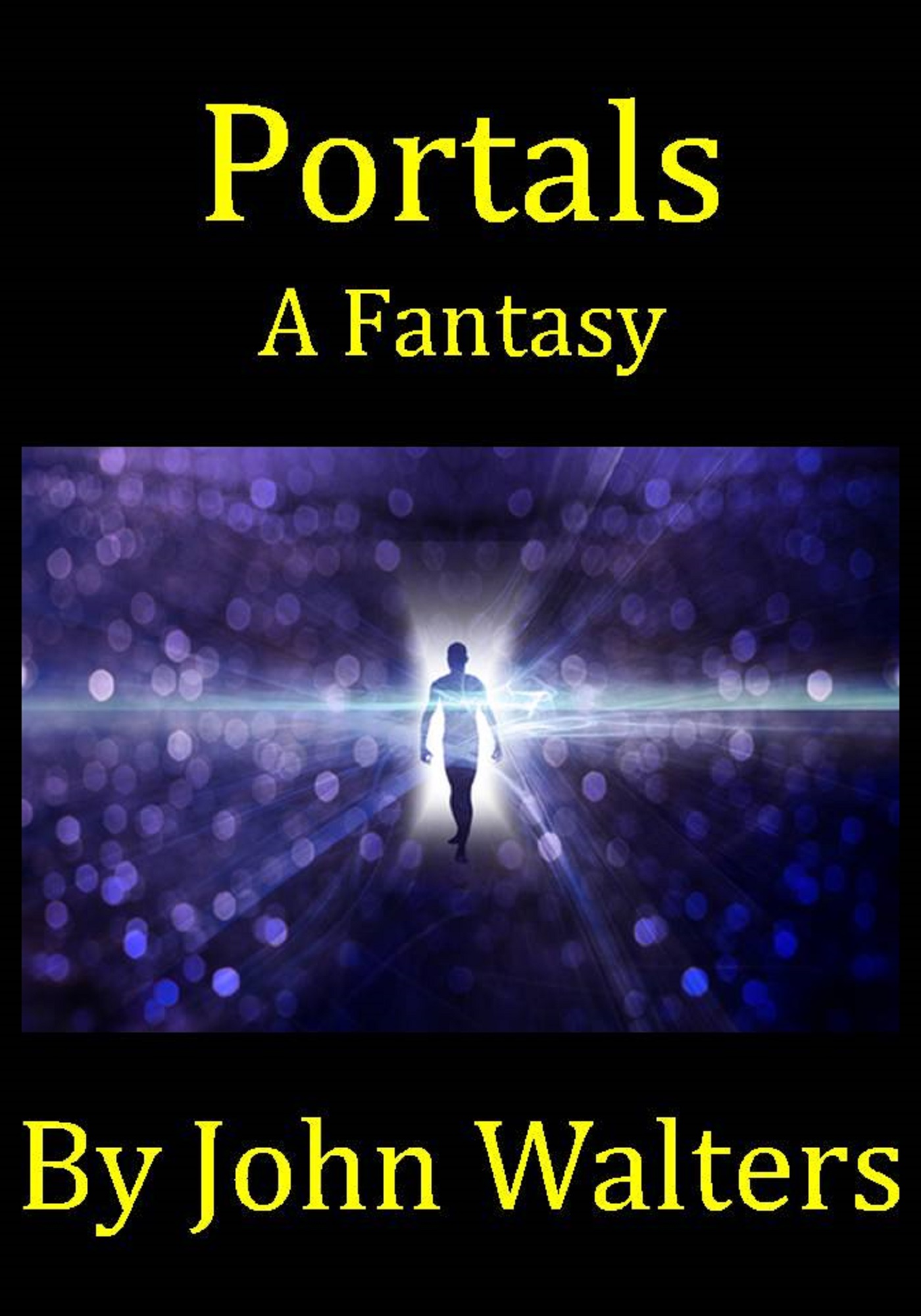
PortalsStoryCoverBigI have begun to write and assemble story afterwords (ubiquitous additions to my volumes of short stories) for my next short story collection. These notes are on “Portals”, a story that has already been published electronically and is available at Amazon here and Smashwords here. Since there are no real spoilers in the essay, I present it to you here for your edification and enjoyment.

I envisioned the opening scene first. I pictured it at a riverside park in Burlington, New Jersey, near where my son used to teach high school math and physics. The woman, Ellie, steps out of the portal and confronts the multitudes. It is always from her point of view, and that is the point of it all. It doesn’t matter where the portals come from or who made them. Ellie has had a metanoia, a complete change of mind and heart, and has returned naked and without fear, to share the news with those she left behind.

Is it any wonder that she is disbelieved, feared, ostracized? She represents something so profoundly different that acceptance of what she is saying involves acquiescence followed by departure from the entire gamut of the contrived and constructed systems of the known world. She and many others had taken a leap into the unknown, and now she has come back saying not to be afraid, that she has been to a good place, and that they can go there too if they want. They need to choose soon, though, because soon the portals will be irrevocably gone.

What would you do? Would you abandon everything you have known all your life for a chance at paradise?

Paranoia has gripped the governments of the world, fear of the unknown. It might be paradise, but then again, it might be the opposite. So the typical reaction is to legislate righteousness by force, to take away people’s power to choose. The machinations of the system serve the system, and the system protects its own.

A line from a Bob Dylan song comes to me. What happens when you got nothing?

And I also consider the end of the story by Ursula LeGuin, “The Ones Who Walk Away From Omelas”. Why do those who walk away get up and leave? Because of the imperfection at the heart of the city.

And why did the people pass through the portals in my story when they first appeared? Some, perhaps, out of simple curiosity. Others, though, must have felt that though they had no idea where they were going, they knew that where they had been was fundamentally flawed.

This is the same principle as when you step out on the road. You have a choice either to conform to what you have seen around you all your life, to somehow cram yourself into a mold that doesn’t seem to fit, or you can go forth not knowing where you are going. It makes me think of when I really took off on the road for the first time. I started at a freeway entrance in Seattle and hitchhiked a ways down the highway towards Oregon. I don’t remember exactly where it was, but it was that same first day, and the sun was shining, and the realization of what I had done fell upon me, and it was like a vibrant thrill, a wash of internal sunshine. I had done it. I was out on the road. I was like a butterfly bursting out of a cocoon. I had tried to make it in the world I had just left, but somehow things never worked out, never fell into synch. And there I was, the world before me and the past behind. I could do anything, go anywhere. I too had stepped through a portal into a wider world, and I never looked back.

Posted in Memoir, On Writing, Travel | Tagged , , , , , | Leave a comment