Book Review: Smarter Than You Think: How Technology Is Changing Our Lives for the Better by Clive Thompson

I got hold of this book fairly quickly from my trusty public library soon after reading Nicholas Carr’s book “The Shallows”.  I didn’t like the Carr book.  It was negative and reactionary about ubiquitous technology that is here to stay.  It proposed historical examples that made no sense in light of its premise.  Yes, it had some good ideas, but it was unnecessarily backward-thinking instead of forward-thinking.  So I was looking to the Thompson book “Smarter Than You Think” for some sort of perspective.  I mean, look at the subtitle.  Overall, the book is interesting, much more so than the starkly negative “The Shallows” – but it is not as entertaining and informative as I thought it would be.

To explain, I have to let you in on where most of my money comes from these days.  I have mentioned it before in these essays.  Basically, I write short articles for other people’s blog posts.  They are published under other people’s bylines on websites that use compiled information to solicit hits and links and so on.  I have written so many of these types of articles, in fact, that I often come across my own articles while doing research for writing new articles.  You’d be amazed at how much content repeats itself online.  I write for a few different content mills, as they are called, each of which have different rules about style and sources, but each of which do require specific styles and types of sources.  So what I do, once I have the basic subject, is go to a search engine and call up a half dozen or so different sites I can use for source material, read through the gist of what they say, write the article as a compilation of information, and then cite the sources.

In a way, that’s the way this book came across to me.  It is written in an informal, conversational tone which is all very well, but it seemed a compilation of information I have heard before with very little in the way of new ideas.  Don’t get me wrong.  It was interesting, and the information was very well-compiled and professionally handled.  It’s just that I had heard it all before.

The book devotes a chapter to each of a number of different modern technological realities, including the melding of humans and machines in such fields as chess-play, the use of artificial memory in the augmentation of human intellect, blogging not only as a form of idea exchange but as a stimulus for reading and writing education, new online literacies of sharing videos and photos, search engines as knowledge augmentation, video games and other programs as collaborative exercises, interactive platforms such as Khan Academy as aids to education, social networking as a means of creating ambient awareness, and the Internet as a means of bringing about political and societal change.  Some of these sections are fascinating, but none bring up much in the way of new ideas.

One subject that Thompson did not discuss that I was waiting and hoping for as I read was the impact of self-publishing platforms in the evolution of the publishing industry.  The rise of e-books and print-on-demand technology is an integral facet of the way knowledge is presented and dispersed online, and yet he does not give this, which is one of the most controversial and cutting-edge topics online nowadays, even a passing mention.

In conclusion, I don’t know whether I would recommend this book or not.  It started dragging for me a bit, as I read on and began to realize it was not what I had expected and hoped for.  It’s okay, and might be informative for someone unfamiliar with what is happening in technology nowadays, but to anyone who keeps up with technological trends it offers little in the way of new ideas.  I don’t even have to agree with everything I read to find a book stimulating and exciting, as in the case of “Outliers” by Malcolm Gladwell.  That book dealt with a lot of controversial ideas, but it is interesting for its succinct and arresting way of presenting those ideas.  It opens new horizons of thought.  This book rehashes ideas that admittedly are interesting, but ultimately it does not live up to its promise.
Posted in Book Reviews | Tagged , , , , | Leave a comment

Book Review: The Shallows: What the Internet Is Doing to Our Brains by Nicholas Carr

I didn’t like this book.  There was too much in it I didn’t agree with.  I thought I would like it, and I wanted to like it.  It’s on a subject I am very interested in, the use of the Internet and its effect on the human psyche.  It was even a finalist for the Pulitzer Prize, which whetted my interest further.  In retrospect now, all that did was take away some of my respect for whatever committee makes those Pulitzer decisions.

My discontent started almost right away, when near the beginning of the book Carr states that due to his use of the Internet, he can no longer focus on deep reading of full-length books, and that he has noticed this phenomenon in many others.  In my experience, this is far from the truth.  I have to use the Internet many hours a day, skimming web pages for research as I write articles.  But that in no way diminishes my capacity to focus on or my enjoyment of the books I am always in the process of reading.  I have been using the Internet for years, and I have been reading for far longer than that.  My keen pleasure in plunging deep into a five hundred, eight hundred, or thousand page book is in no way diminished.  The work I do on the Internet, as well as the communication and occasional entertainment, is one facet of my life, and the reading and writing of books is another.  Fine, I understand that if Carr himself personally has trouble focusing on reading after whatever he is doing online, something is wrong and he should look into it.  But to make broad, sweeping statements as he does just because he and some people he knows has a problem with concentrating is a huge logical leap in the dark.  He tries to back up his claims by going into historical and technological minutia, but it just doesn’t wash.

And I am not speaking in isolation either.  I am in touch with various online communities of writers and readers who are committed to the reading and writing of literature, and I have never received a hint that the use of the Internet in any way diminishes their ability to focus either on reading or writing.  They might complain that they fritter away too much time playing with social media instead of writing, but they are fully capable of getting down to work when necessary.

Carr himself shares a story in his book that gives light to the situation.  He writes of Plato’s dialog “Phaedrus”, in which Plato (or his counterpart in the story) and Socrates talk together about many things, and the subject turns to the alphabet and writing.  Socrates is against this new technology because he feels that it will subvert memory and oration; Plato, on the other hand, is a writer and recognizes the advantages of the written word.  Socrates, as far as it goes, may have been right.  Perhaps writing did contribute to the diminution of the power of oration, but that was not the point.  The advantages of writing so far overwhelmed the disadvantages that it was inevitable that it would supplant humankind’s reliance on rote memory.

In “The Shallows”, Nicholas Carr is arguing, like Socrates, of the evils of an inevitable technology.  And his arguments, though pseudo-logical, in the end make little sense.  He is as Socrates trying to stem the flood of the written word through logic of argument.  It’s not going to happen.
One thing I did agree with the author about.  Near the end of the book, in a chapter on the rise and motivation behind Google, Carr argues that the human mind is far more complex than a collection of computer algorithms.  In this he is correct.  But what I can’t understand is why he can’t take the next leap of logic and realize that the Internet, like any other technology, is made to be a tool of humankind.  True, as a tool it becomes an extension of us while we are using it, but we are in control of what we do with it.  Contrary to what Carr seems to believe, the Internet is not some sort of Godzilla that has gotten loose and is running rampant through the downtown Tokyo of our psyches.  No.  It is a tool – a very valuable tool.  True, it should not be misused, just as many other things in this life should not be misused.  That does not negate its effectiveness or value.

If Carr has issues with the Internet, if he feels that he cannot handle it on a regular basis, then he should of course curb his use of it.  But the problem with this book is that it presents Carr like an Old Testament prophet.  “Forty days and Nineveh shall be destroyed,” screamed Jonah as he strode through the city.  But guess what?  In the end, Nineveh was not destroyed.  The people repented and learned to be more responsible.  The answer is not to rail against a technology that is supposedly getting out of hand.  You can’t stop the use of the Internet any more than Socrates could stop the use of the alphabet and writing.  The answer is to posit some practical suggestions to make the Internet more of a positive influence on humankind, to help turn it in the direction it needs to go.  All Carr does in this book is string together a whole series of arguments whose central theme is “Internet: bad!”  I can’t get behind that.  The Internet for me has been a technology of far more good than bad.  It has advanced my writing career immeasurably.  It has enabled me to more easily communicate with my loved ones.  It has put a vast network of knowledge at my disposal for research purposes.  So no, to lambast such a terrific technological tool out of unfounded paranoia is wrong, and I cannot recommend this book.
Posted in Book Reviews | Tagged , , , , , | Leave a comment

The Advantage of Invisibility

I am an invisible man.  Though you might see me when we transact business or exchange pleasantries, in the deepest core of my existence I am invisible.  This struck me as I walked miles around town today in one hundred degree weather to go from one bank to another.  The public transportation in this town is execrable, and I can’t afford a car.  Why not?  Because I am invisible.  Professionally invisible, that is.  Though I have published fifteen books, readers have not discovered them.  Recently on the Passive Guy website there was a long thread of testimonies of success by independent authors, story after story of paying bills and quitting day jobs and even making it possible for spouses to quit day jobs.  And I am very happy for all of these people, but at the same time I experience a deep envy.  Somehow they have avoided the curse of invisibility.

As I walked and ruminated, it came to me that only two solutions to this problem are possible.  Either I need to find a way to become visible, or I need to embrace the invisibility by finding something positive about it.

I know I am not alone, by the way.  There are many people out there who feel it is their calling to be a writer but have not found readership or achieved commercial success.  It is to you that I dedicate this essay.  You are not alone.  Success does not usually come easily or quickly.  Perhaps some of the greatest writers, artists, and musicians in the history of the human race never achieved conventional success at all, but despair lies down that path, so we will not go there.

How does an invisible person become visible?  It’s not a matter of mere paint or magic markers.  It reminds me of one of my favorite films, “Flashback”, with Dennis Hopper and Kiefer Sutherland, in which the aging hippie has to simulate his own death in order to help his memoir, the only achievement of his poor wasted life, become a best seller.

Let’s hope it doesn’t come to that.

There’s all sorts of help and advice on the web about it.  After a brief comment I wrote on the Passive Guy site, a few writers even wrote me back personally and suggested various promotional things I might try to increase my exposure.  I considered all of the ideas and even attempted some of them.  Yet I remain invisible.  The last straw was when I finally broke down and decided to invest in some advertising.  I applied to Book Bub, one of the largest and most successful online book advertisers, with several of my books, and was turned down.  I researched some of the other advertising sites, and discovered that they only accept books with a multitude of high ratings on sites such as Amazon.  In other words, they will only help you become visible if you are already visible.  Finally I found an advertiser whose fee was modest that accepted new books that did not yet have abundant ratings, applied, was accepted, and scheduled for a discount promotion on their subscriber’s book list.  You know how many books I sold as a result?  None.  Not one.  You see what I mean about being invisible?

There is an alternate theory, of course: that my books suck and are unworthy of readership.  But I know that is not true.  I have been at this more than four decades.  I have traveled the world and put my life on the line for the sake of my writing.  I have written the books that I, as a reader, continually search for and hope to discover.

No, the problem is invisibility, not lack of worth.

But I have strayed far from my theme.  The fact is, invisibility happens, no matter how talented you are.  And all you can do is keep working and keep hoping.  The one thing you cannot do is quit.  Unless you want to remain invisible forever.

Because I have worked so hard and tried so long to become visible, and because I know through experience that I cannot force it, cannot make it happen, I realized today on my walk that to continue to justify my invisible existence, to continue fighting the good fight, I had to come up with an advantage to being invisible.  And I did.  But before I share it let me say that for me personally, at least, I have endured invisibility long enough.  I would much rather other people could see me.

Having emphasized that point, the advantage of invisibility can be summed up in one word:  freedom.

When you are invisible, you can do anything you want.  Nobody can see you.  You are free to run naked through the streets, expose your deepest and darkest secrets, dance and sing and turn cartwheels for the sheer joy of the experience.  This is imperative to a writer finding his or her own voice.  Write what you love, the saying goes, and it is true.  As I thought on this, it rang true both in my own experience and in my literary past.  The example that occurred to me was that of Henry Miller, abandoned in abject poverty to roam the seedy streets of Paris.  Out of the experience burst the literary light of his first book, “Tropic of Cancer” – which was privately financed and published at the time, made him little or no money until much later, and did not get him off the streets.  Yet now it appears on prestigious lists of the greatest novels of all time.  I know the book is controversial; it always has been.  But despite the poverty of the author, despite the fact that for all practical purposes he disappeared off the face of the Earth to all who knew him, his literary efforts became a song and a celebration to him.  He says at the beginning of the book, “I have no money, no resources, no hopes.  I am the happiest man alive.”  He says, “I will sing for you, a little off key perhaps, but I will sing.”  Henry Miller was invisible in Paris, but through the words he wrote out in longhand one after the other, he sang for us.  Most readers would not hear his voice for many years.  His books were banned for decades in the United States.  It wasn’t until he was an old man that he managed to accumulate enough royalties to pay off his many debts to his friends and buy a house to live out the last years of his life.

I know that for some of you Henry Miller might not be the best example, as his writings still ignite controversy after so long.  But his works, especially “Tropic of Cancer”, were formative for me as a writer.  I too left my homeland in search of experience with which to fill my writings, and I stayed gone even longer than he did, about thirty-five years.  Now I have returned, and I am invisible, and it irks me.  Yet I will continue to perform, albeit on an empty stage.  The great thing about this new era of writing for all us invisible people, though, is that all that I write stays there on the virtual shelves.  Despite my invisibility I continue to increase the number of volumes that lie hidden on my shelves, so that someday when I begin to appear before you all, first with a slight glimmer, perhaps, and then a shimmer, a flash, and I burst into view, my vast array of publications, like an army of progeny, will be ready there with me to go forth and conquer.

Posted in On Writing | Tagged , , , , , , | Leave a comment

On Rereading “Jurgen: A Comedy of Justice” by James Branch Cabell

It’s not my fault that I reread “Jurgen” at this time; it is the fault of one of my characters.  I was typing away on the new novel I am working on, and one of my characters made a reference to “Jurgen”, completely unexpectedly, and that led me to check the exact wording.  It’s easy to find an electronic copy of “Jurgen” online, as it was first published as “Jurgen: A Comedy of Justice” in 1919 and so is in the public domain.  I looked up what I needed to, and read a little more, and a little more, and was enchanted as I was back when I was a teen and first came across this amazing fantasy novel.

I first heard about the book when I went with my family on vacation one year.  We were on our way to California from Seattle, and I think we had stopped somewhere in Oregon.  I had unaccountably left without something to read, or I had finished the book I had brought during the day’s drive, and so my father took me out for a night walk to see if I could find a book.  On a wire rack in some sort of supermarket or drug store I came across a book called “One Hundred Great American Novels”.  It consisted of synopses of books which the author esteemed as the cream of American literature.  Two of the books I discovered for the first time therein were “On the Road” and “Jurgen”.

Some time afterwards I came across a copy of “Jurgen”, and it quickly became my second-favorite fantasy book, the first being “The Lord of the Rings”.  I read it over and over again.  The language is intoxicating, and the story is enchanting.  Once, during my dark year at university, I took a class in writing, and I discovered that the teacher was a very old, very slow professor who bored the hell out of me.  I had a short attention span in those days, partly brought about by drug use, and rather than take the trouble to attend the class, I decided to prove to the teacher I deserved an “A” by writing a short story.  The story was not anything like “Jurgen” in subject matter, but Cabell’s lyrical, poetic style was a heavy influence on it.  I skipped the whole term of classes and showed up on the last day, turned in the story, and told the teacher that it proved I deserved an “A”.  Looking back, it was a rather arrogant, pompous gesture on my part.  If I had been patient, I might have learned something from the teacher, who knows?  But he did give me an “A” – well, an “A-” actually, perhaps shaving off that bit because of my truancy.

Anyway, “Jurgen” is about a middle-aged pawnbroker who, meeting a monk who has stubbed his toe and is cursing the devil for placing the rock in the road, urges him not to speak so unkindly about the devil, not because he is a Satan-worshiper but because he is enthralled with his own cleverness.  He thereafter meets a dark gentleman who thanks him for his kind words and offers to do Jurgen a good deed.  Jurgen tells him his wife does not understand him, and when he gets home, his wife has mysteriously vanished.  He is content at first until the neighbors and his wife’s relatives, after seeing his wife out haunting the countryside, urge Jurgen to do something about it.  Jurgen reluctantly enters a mysterious cave in search of his missing spouse, and embarks upon a fantastic adventure that lasts a year.  During this time he tricks a goddess into giving him back his youthful body and engages in amorous relationships with many of the great beauties of history and fantasy. Relying on his wits, as a self-proclaimed “monstrous clever fellow”, he journeys from one fantasy kingdom to the next, including hell and heaven, having affairs with Helen of Troy, Guinevere, the Lady of the Lake, a hamadryad, a vampire, Satan’s wife, and many other women.  Everywhere he goes he seeks justice and some sort of contentment, but cannot find it anywhere.  In the end, he confronts Koshchei the Deathless, who made things as they are, and Koshchei offers Jurgen any sort of life he wants with any of the women he has met, and urges Jurgen to choose.

I do not think I should give away the ending, but instead urge you to read the book.  It’s a wonderful, absorbing read, one of those rare books whose story and language are equally captivating.  Be careful, though, of the edition you select, if you want to read it in print.  I ordered a British Dover edition with elaborate illustrations that seems to be unabridged, but as the work is in the public domain, there are inferior copies with poor layout, obviously slipshod productions hastily assembled.  You can tell the difference quickly on Amazon if you try the “look inside” app.  It’s probably safer to buy a used older edition, and in retrospect that’s what I think I would do if I were to do it over.

“Jurgen” was immensely popular when it first appeared, but it was as infamous as it was famous.  Many wanted to ban it for its content, which at the time was considered ribald.  It is considered a landmark of fantasy, and has influenced such writers as Terry Prachett and Robert Heinlein, the latter especially in his famous novels “Stranger in a Strange Land” and “Job: A Comedy of Justice”.

Posted in Book Reviews | Tagged , , , , , | 2 Comments

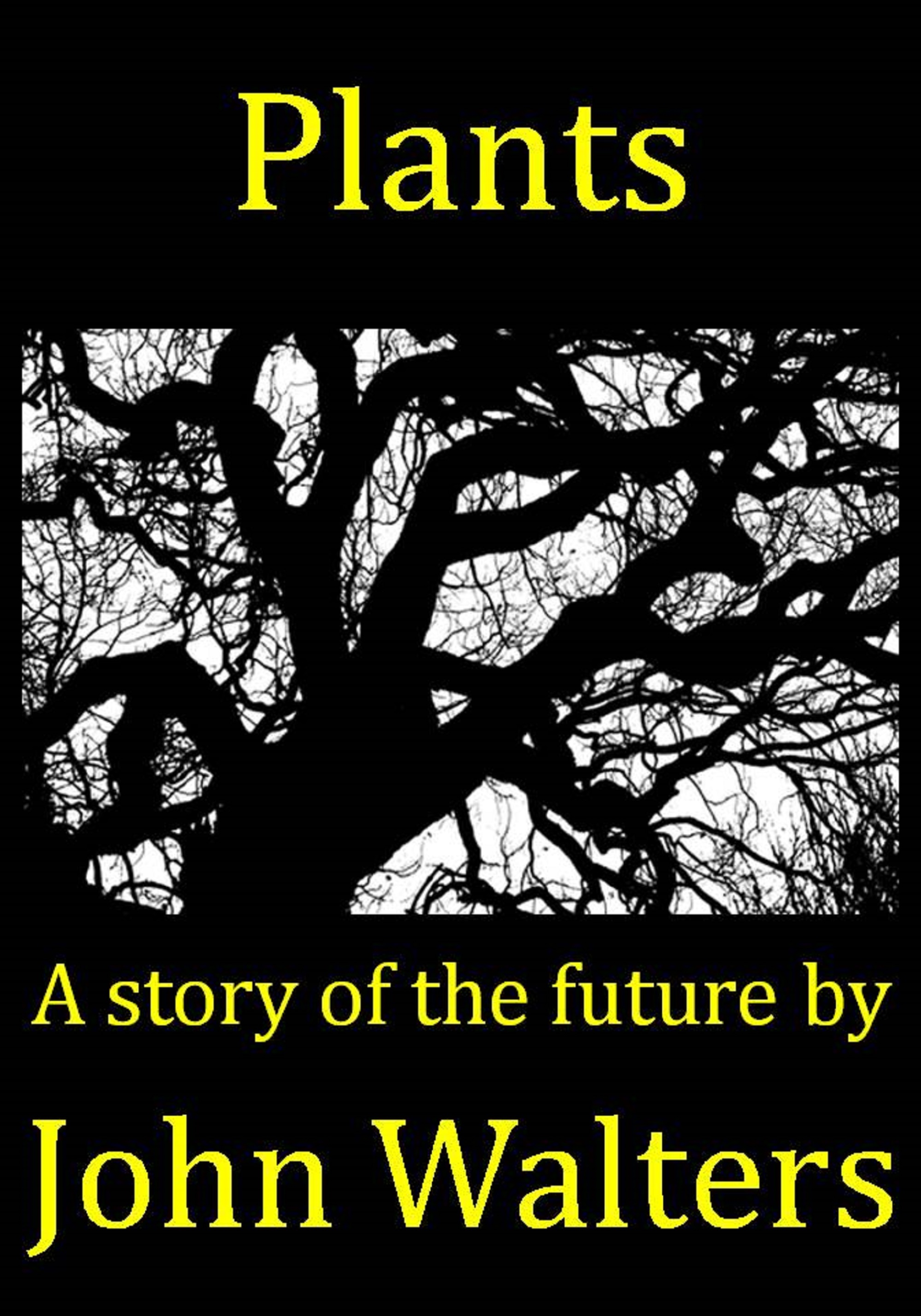
“Plants” – Free Short Story Offer

PlantsStoryCoverBigFor five days, from Friday July 4th to Tuesday July 8th, my short story “Plants” will be available for free download at Amazon.com here. Stop in and pick up a copy. Here’s what it’s about:

A planet overrun by a single enormous connected plant is being evacuated, and refugee colonists must undergo purging to rid themselves of the plant’s procreative spores. But one group of colonists refuses to leave, and a negotiator is sent down to find out why.


OptingOut_Web_FinalBigIt’s part of my short story collection “Opting Out and Other Departures” which is newly available on Amazon here.  Here’s a description of the collection:

A homeless man fleeing confiscation of the van he lives in stumbles upon a seemingly paradisiacal haven. A housewife enters a mysterious portal to another world. A coma victim, wide awake in a world of the mind, finds that the struggle between light and shadow in his dream is a life and death battle for the real world he left behind. A man who feels redundant and forsaken is offered a one-way ticket for a fresh start on an alien planet.

Those who embark upon a hero’s journey are often not heroes when they begin. The choices they make and the deeds they do make them heroes as they encounter obstacles and dangers. These stories concern misfits, outliers, wanderers, loners – those who have stepped beyond the norm or who have never fitted into it. Each is confronted with the call of the open road. For some it is physical and for others metaphorical, but all must choose to either cower in mediocrity or set forth on the path of adventure and destiny.

While you’re there, stop in at my Amazon author’s page and peruse my other works.


Posted in Uncategorized | Leave a comment

“Lady Linguist” – Free Short Story Offer

LadyLinguistStoryCoverBigFor five days, from Sunday June 29th to Thursday July 3rd, my short story “Lady Linguist” will be available for free download on Amazon.com here. Stop in and pick up a copy. Here’s what it’s about:

After a near break-in at her apartment, a young Greek woman reassesses her life. Attempting to break out of the tradition within which she is bound, she starts a blog under the alter-ego of Lady Linguist. As she ventures forth into the new and strange cyber-world, she finds herself confronted with the real-life decision of either huddling within the safe strictures of her culture, or stepping out into the unknown.

OptingOut_Web_FinalBigIt’s part of my short story collection “Opting Out and Other Departures” which is newly available on Amazon here.  Here’s a description of the collection:

A homeless man fleeing confiscation of the van he lives in stumbles upon a seemingly paradisiacal haven. A housewife enters a mysterious portal to another world. A coma victim, wide awake in a world of the mind, finds that the struggle between light and shadow in his dream is a life and death battle for the real world he left behind. A man who feels redundant and forsaken is offered a one-way ticket for a fresh start on an alien planet.

Those who embark upon a hero’s journey are often not heroes when they begin. The choices they make and the deeds they do make them heroes as they encounter obstacles and dangers. These stories concern misfits, outliers, wanderers, loners – those who have stepped beyond the norm or who have never fitted into it. Each is confronted with the call of the open road. For some it is physical and for others metaphorical, but all must choose to either cower in mediocrity or set forth on the path of adventure and destiny.

While you’re there, stop in at my Amazon author’s page and peruse my other works.


Posted in Reading | Tagged , , , , , , , | Leave a comment

“Weapons” – Free Short Story Offer

WeaponsStoryCoverBigFor five days, from Tuesday June 24th to Saturday June 28th, my short story “Weapons” will be available for free download on Amazon.com here. Stop in and pick up a copy.  Here’s what it’s about:

With the wars over, the physical remnants of veterans who used to be cyborgs melded with weapons systems roam the streets in IAUs, or Individual Ambulatory Units, homeless and unwanted. Two veterans who used to be man and woman begin a relationship to assuage their loneliness, until one’s life is threatened and the other must make a most unusual sacrifice in order to save it.

OptingOut_Web_FinalBigIt’s part of my short story collection “Opting Out and Other Departures” which is newly available on Amazon here.  Here’s a description of the collection:

A homeless man fleeing confiscation of the van he lives in stumbles upon a seemingly paradisiacal haven. A housewife enters a mysterious portal to another world. A coma victim, wide awake in a world of the mind, finds that the struggle between light and shadow in his dream is a life and death battle for the real world he left behind. A man who feels redundant and forsaken is offered a one-way ticket for a fresh start on an alien planet.

Those who embark upon a hero’s journey are often not heroes when they begin. The choices they make and the deeds they do make them heroes as they encounter obstacles and dangers. These stories concern misfits, outliers, wanderers, loners – those who have stepped beyond the norm or who have never fitted into it. Each is confronted with the call of the open road. For some it is physical and for others metaphorical, but all must choose to either cower in mediocrity or set forth on the path of adventure and destiny.

While you’re there, stop in at my Amazon author’s page and peruse my other works.

Posted in Uncategorized | Leave a comment

“Opting In” – Free Short Story Offer

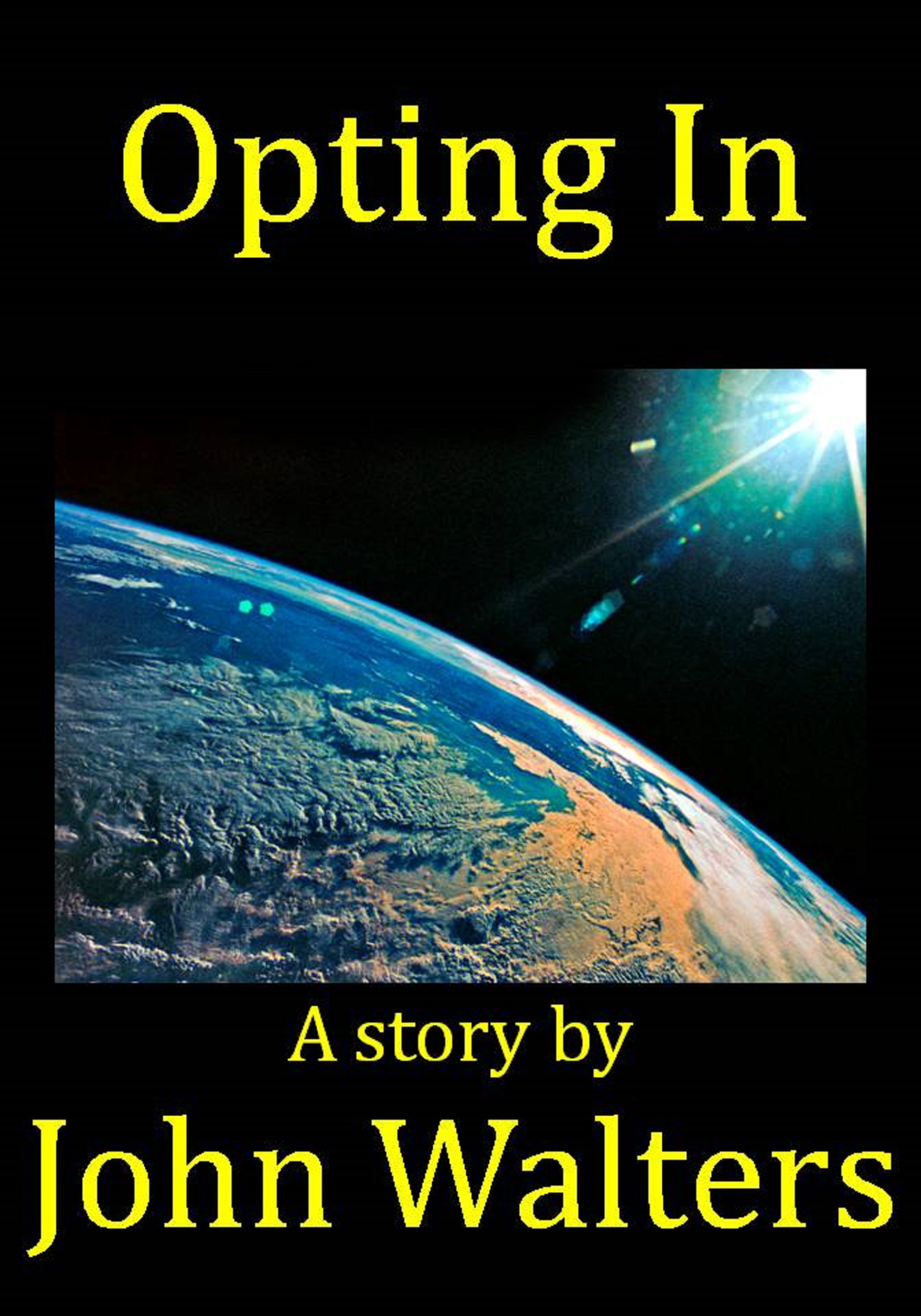
OptingInStoryCoverBigFor five days, from Thursday June 19th to Monday June 23rd, my short story “Opting In” will be available for free download on Amazon.com here.  Stop in and pick yourself up a copy.  Here’s what it’s about:

An old man, feeling useless, leaves his daughter’s home to go live in a homeless shelter. Following up on a tip from a fellow vagrant, he finds an alien being preparing to leave Earth who invites him on a journey from which he can never return.


OptingOut_Web_FinalBig

It’s part of my short story collection “Opting Out and Other Departures” which is newly available on Amazon here.  Here’s a description of the collection:

A homeless man fleeing confiscation of the van he lives in stumbles upon a seemingly paradisiacal haven. A housewife enters a mysterious portal to another world. A coma victim, wide awake in a world of the mind, finds that the struggle between light and shadow in his dream is a life and death battle for the real world he left behind. A man who feels redundant and forsaken is offered a one-way ticket for a fresh start on an alien planet.

Those who embark upon a hero’s journey are often not heroes when they begin. The choices they make and the deeds they do make them heroes as they encounter obstacles and dangers. These stories concern misfits, outliers, wanderers, loners – those who have stepped beyond the norm or who have never fitted into it. Each is confronted with the call of the open road. For some it is physical and for others metaphorical, but all must choose to either cower in mediocrity or set forth on the path of adventure and destiny.

While you’re there, stop in at my Amazon author’s page and peruse my other works.

Posted in Reading | Tagged , , | Leave a comment

Book Review: The Terminal Experiment by Robert J. Sawyer

When I first heard about the premise of this Nebula Award-winning novel, that a scientist had found proof of the existence of the human soul, I was immediately intrigued.  However, the book had gone out of print, and I could not even find a used copy anywhere. Recently I discovered a new reprint addition in my search for award-winning science fiction and fantasy novels that I hadn’t yet read, and I ordered it right away.

The book is by Canadian science fiction writer Robert J. Sawyer.  He’s won a lot of awards, and also has one of the largest writing sites on the web, having got in on the ground floor almost twenty years ago and having been continually adding material ever since.

I want to emphasize from the start that “The Terminal Experiment” is an excellent novel.  It is fast paced, well plotted, and exciting.  And it left me profoundly disappointed.  Don’t get me wrong though.  I was not disappointed in the sense that I regretted having read it or felt that I had wasted my time.  No, not at all.  It’s a good book, an excellent book, for what it is, and that is a standard action-adventure murder mystery using a science fictional gadget as a plot device.  But I came into it expecting so much more.

The story concerns a doctor named Hobson who invents a device to monitor brain waves that is so subtle that it catches the signature of souls escaping bodies at the moment of death.  Naturally this has profound implications when it is made public.  Hobson is so intrigued by the concept of life after death that he gets a friend to scan his brain waves and creates three duplicates of himself:  one has no knowledge of death or aging, which supposedly simulates immortality, another has no knowledge of bodily processes and physical existence, which simulates life after death, and another is a control model with no modifications.  Okay, so far so good.  But then, rather than launch off into the deep and take a wild ride exploring all the metaphysical possibilities inherent in these fascinating premises, Sawyer opts for a very conventional murder mystery which uses the science fictional aspects of the plot but never goes very far with them.  The characters are all very rich, intelligent, upper class individuals; there is no hint of how such discoveries and experiments would affect the mass of humanity except in little news bits scattered throughout the book, seemingly thrown in, as it were, from the author’s notes as an afterthought.

As I say, I have no objection to the book.  It’s a good book, better than most.  My disappointment is that it could have been so much more.  It should have been much longer and encompassed so many more of the possibilities inherent in such an amazing discovery.  I found myself comparing this novel with Robert Heinlein’s classic “Stranger in a Strange Land”.  They both start with radical concepts or discoveries.  In “Stranger in a Strange Land”, a human is discovered on Mars, having been raised by Martians.  It turns out that as a result of his alien education he is possessed of certain extraordinary powers.  At first the government keeps him under wraps in a secure facility, but then a nurse helps him escape.  The beginning scenes are all fairly standard science fiction adventure plotting, as they escape and seek shelter with an eccentric writer.  But then, Heinlein goes wild with his subject matter and slings satirical lampoons right and left at politics, law, metaphysics, literature, theology, sexual mores, and so on.  It could have been a standard action-adventure, but Heinlein took full advantage of the material and went way beyond that.  This, I feel, is what Sawyer fails to do.

Of course I fully realize that Sawyer is not Heinlein.  Robert Heinlein is truly one of a kind.  I also realize that many people fault “Stranger in a Strange Land” for the very same reasons I am praising it.  So be it.  That’s the way it is.  “Stranger in a Strange Land” is one of my favorite novels ever and its discovery was a profound experience in my life at the time.  You can’t expect every novel to be like that.  A lot of books are just good books, entertaining and nothing more.  That’s what “The Terminal Experiment” is.  I recommend it as a very good, entertaining, fast-paced read.  I rue the fact that the material could theoretically have developed into much, much more than that.

Posted in Book Reviews | Tagged , , , , , | 1 Comment

Microfinance and Indie Writers

I pay my bills by ghostwriting Internet articles. This morning while my youngest son prepared for school I was doing some preliminary research for my first article of the day. It concerned the microcredit revolution begun in Bangladesh by Muhammad Yunus and Grameen Bank, and how microcredit is now being implemented in America to help low-income entrepreneurs start or continue their businesses.

I read a few articles, and then I took a break to walk my son partway to school.  I don’t really have to do it; the school is close and he is well able to go the distance alone, but we enjoy the walk together in the morning.  It was beautiful outside.  The air still held a hint of coolness but the sun was warming things up.  Birds were singing and the colors of the early summer grass, trees, and flowers were sharp and clear.  My son turned off towards his school and I turned off another direction to do a bit of shopping, and I was walking along and it suddenly hit me with the force of a revelation how similar microfinance for small businesses and self-publishing were.

To explain, let me give you a little background.  Muhammad Yunus started off by giving miniscule loans out of his own pocket to village women to help them buy materials to make and sell their products.  He secured bank backing and later founded his own bank on the principle of financial inclusion of the poor.  Even tiny amounts of money helped the poor get something started.  In developing countries as little as one hundred dollars can get a business going and lift a household from abject poverty. Previously, since the big banks wouldn’t consider helping them, the only way the poor could get financing was to go to money lenders that would charge exorbitant rates of interest.  This, of course, kept the poor in destitution.

The situation is little different in the United States, which accounts for the success of Grameen America, the U.S. version of Yunus’s microcredit bank, in helping low-income entrepreneurs in the United States get started in business.  The institution accepts anyone with a business plan.  No collateral is needed, nor does a prospective borrower need to be a legal resident.  In other words, it gives hope to anyone, even those who previously had no hope.  It offers a chance to secure a loan even to someone with a low or nonexistent credit score.

What does microfinance have to do with indie publishing?  Simply this – just as Muhammad Yunus created an economic model that makes it possible for previously ostracized low income entrepreneurs to get a start in business, so have programs such as Kindle self-publishing, Smashwords, CreateSpace and so on created opportunities whereby previously ostracized artists can display their work to potential readers in a viable marketplace.  The big publishers are like the big bankers, shutting out all but a tiny percentage of writers, the supposed elite.  These self-publishing platforms, on the other hand, have opened the gates wide to all artists who are willing to craft their work and package it to the proper specifications.  And unlike the vanity presses, which are like the criminally rapacious moneylenders who suck the lifeblood of the poor, these legitimate self-publishing platforms enable artists to display their work for free, and only ask a small percentage of profits in return.

Self-publishing is as profound a revolution in the literary arts as microfinance was in economics.  No longer are artists at the mercy of and subject to the whims of the big publishing houses or the bloodsucking vanity presses.  There are alternatives through which artists can work.

How can anyone fault those who had the foresight to create such outlets for artists – artists who were previously smothered by the artificial constraints placed upon the market by big business?  To criticize self-publishing efforts is tantamount to criticizing a fruit vendor standing by the side of the road in a developing country for not selling her produce in a supermarket.  The supermarket won’t accept her goods anyway, and take that roadside privilege away and her family starves to death.

Sometimes the amounts are as small as those in developing countries as well, but that does not negate their value.  Amazon pays writers at the end of the month, regardless of the amount accumulated.  I have received deposits into my account of less than a dollar for a digital short story bought in Germany or Mexico or Japan.  That is significant for me.  That means that a reader somewhere far away cared enough to buy and read my words.  You have to start somewhere.

For his efforts, Muhammad Yunus received the Nobel Peace Prize in 2006.  And in 2010, the United States Congress awarded him a Congressional Gold Medal.  As far as I am concerned, people like Jeff Bezos, the CEO of Amazon, and Mark Coker, the founder of Smashwords, should receive comparable awards for their contributions to the literary arts in creating free publishing platforms and a means of potential profit for artists around the world.  So far, self-publishing has largely focused on popular genre literature, but I believe that as more and more writers see self-publishing as the open platform that it is for the free expression of literary effort, it will give rise to great masterpieces of literature the like of which the world has never seen.

Posted in On Writing | Tagged , , , , , , , , , , , | 4 Comments