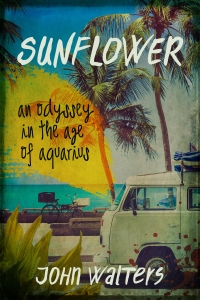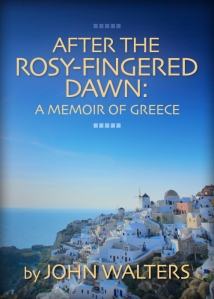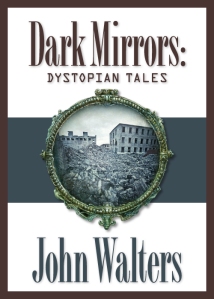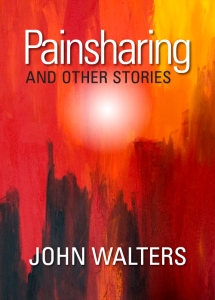
What’s Gone Down and What’s Coming Up

I am starting to realize the uniqueness of every writer’s, indeed every person’s, walk in life.  No two literary careers are the same, thank God.  Otherwise you might as well simply be programmed virtually at birth and remain alive artificially while you go through the motions – like watching a film in which you are a participant but have no control over the plot.  Each life is unique, and there are endless choices daily, large and small, that determine our destinies.

This year has been a long, strange trip.  Two years ago I was in San Diego, having made the leap from Greece after spending thirty-five years abroad.  At the beginning of the summer of 2013 we had moved to Yakima, Washington for two primary reasons:  the rent and cost of living was cheaper and we were closer to relatives.  Little did we know that though on a map the distance was short, in reality a mountain range separated us from relatives in Seattle, and we hardly ever saw them.  We were iced and snowed in with bone-chilling winter weather.  But before that, right after we had arrived, I got word that my son living and teaching in New York had had a dreadful accident and torn three ligaments in his knee.  So my younger son and myself got plane tickets and went to him as fast as we could – he was still in the hospital awaiting emergency surgery – and spent most of the summer in his apartment in Brooklyn taking care of him and helping him convalesce.  From thence, it was back to Yakima, school for my youngest, writing work for me, other labors for the other two sons who were living with me.  And that winter – that god-awful cold, cold winter.  The isolation, too.  That was hard to take.  But we made it.  We survived.

Which brings us to 2014.  The year began in the midst of the deep snow of Yakima, icicles hanging from the eaves.  I was never warm there – never, for months on end.  But even worse was the sense of loneliness.  Several weeks ago I saw the movie “Interstellar” and I found myself sympathizing with the astronauts who had gone through a wormhole and were off in a far galaxy, hopelessly distant from loved ones.  There was nothing to do there – no writers’ organizations, no organized science fiction fans.  Don’t get me wrong – the people were friendly, at least in our experience, but there was no support whatsoever for my literary endeavors – no sympathetic souls.  Not that I wander around seeking sympathetic company.  A writer is, through the vicissitudes of his profession, alone most of the time.  But even a writer occasionally needs some sort of reinforcement.  There was nothing to keep us there.  Nothing.

So when I came into a couple of thousand dollars at the start of the year, I determined to hang onto it and make the move to Seattle, one way or the other, even if it was tough, even if rents were higher, which they inevitably were, even if we had to continue to struggle in our present situation.

Compounding the difficulty was the fact that I could not afford to make the trip to Seattle to house-hunt.  I couldn’t afford to stop working long enough, and I couldn’t afford the transportation costs.  So I had to do all the house hunting online and by phone from a distance.  I searched rental sites, e-mailed managers, made phone calls.  Fortunately, as I mentioned earlier, I did have relatives there.  One of my sisters mentioned an apartment complex she had passed that appeared nice.  I looked it up.  It was right in the city, in a nice neighborhood, and the rent was reasonable by Seattle standards.  I e-mailed the manager; she was congenial and explained that she got hundreds of queries a month for apartments in the complex, and that if I wanted one I had to be persistent.  She encouraged me to keep in touch and gave me her private e-mail address.  I wrote her every day – note that: every day – and called her at least once a week.  This went on for months.  Every day she wrote back and apologized that nothing had come up.  And then one day she told me a two-bedroom apartment had become available; it seemed that some of the previous tenants had lit out and the remaining one couldn’t cover the rent.  I accepted it sight unseen, paid a deposit and money for background security checks.

In the middle of summer we made the move from Yakima to Seattle.  We rented a truck and loaded up all the furniture that had been donated to us by relatives and friends of relatives.  One of my brothers came to help us make the move.

It was a shot in the dark, but it turned out that the Seattle apartment, though rudimentary and in an old building, was adequate for our needs.

It was a relief to arrive in Seattle.  Although the rent, utilities, food, and miscellaneous expenses are all higher here, I have more peace that we can get by.  There are relatives around.  There is a literary community.  There are science fiction conventions, something I have never regularly attended but always wanted to and longed for from afar while in Greece.

So we spent the rest of the summer in Seattle and in the fall my twelve-year-old son enrolled in middle school.  And things have generally been going well.  I have been writing Internet articles to pay the bills.  It’s not the freelancing I want to do; I want to support myself and my family with my novels and stories and memoirs.  But it’s freelancing of a sort and that’s better than nothing.

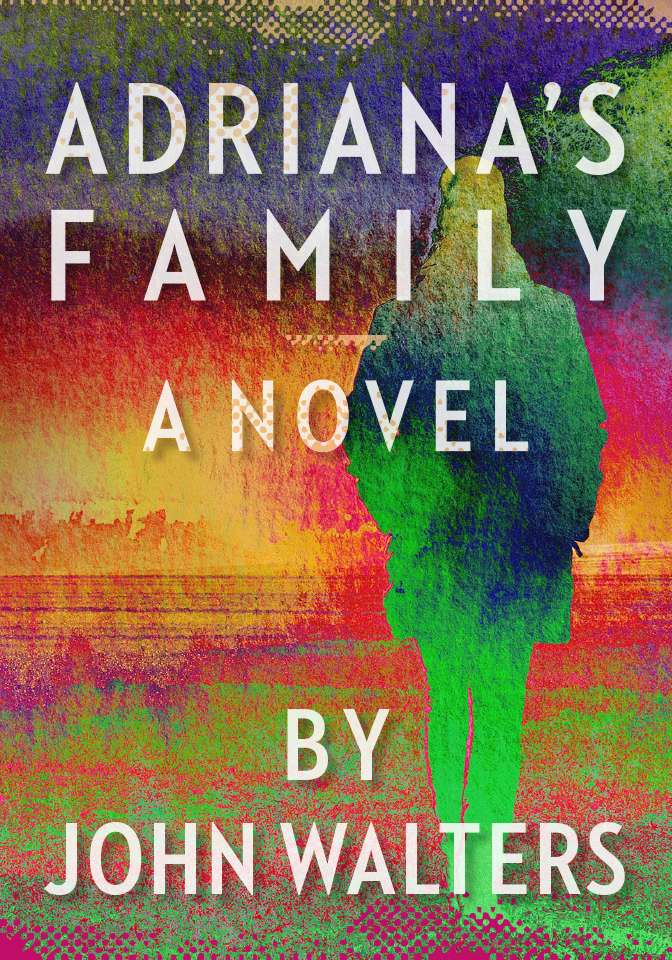
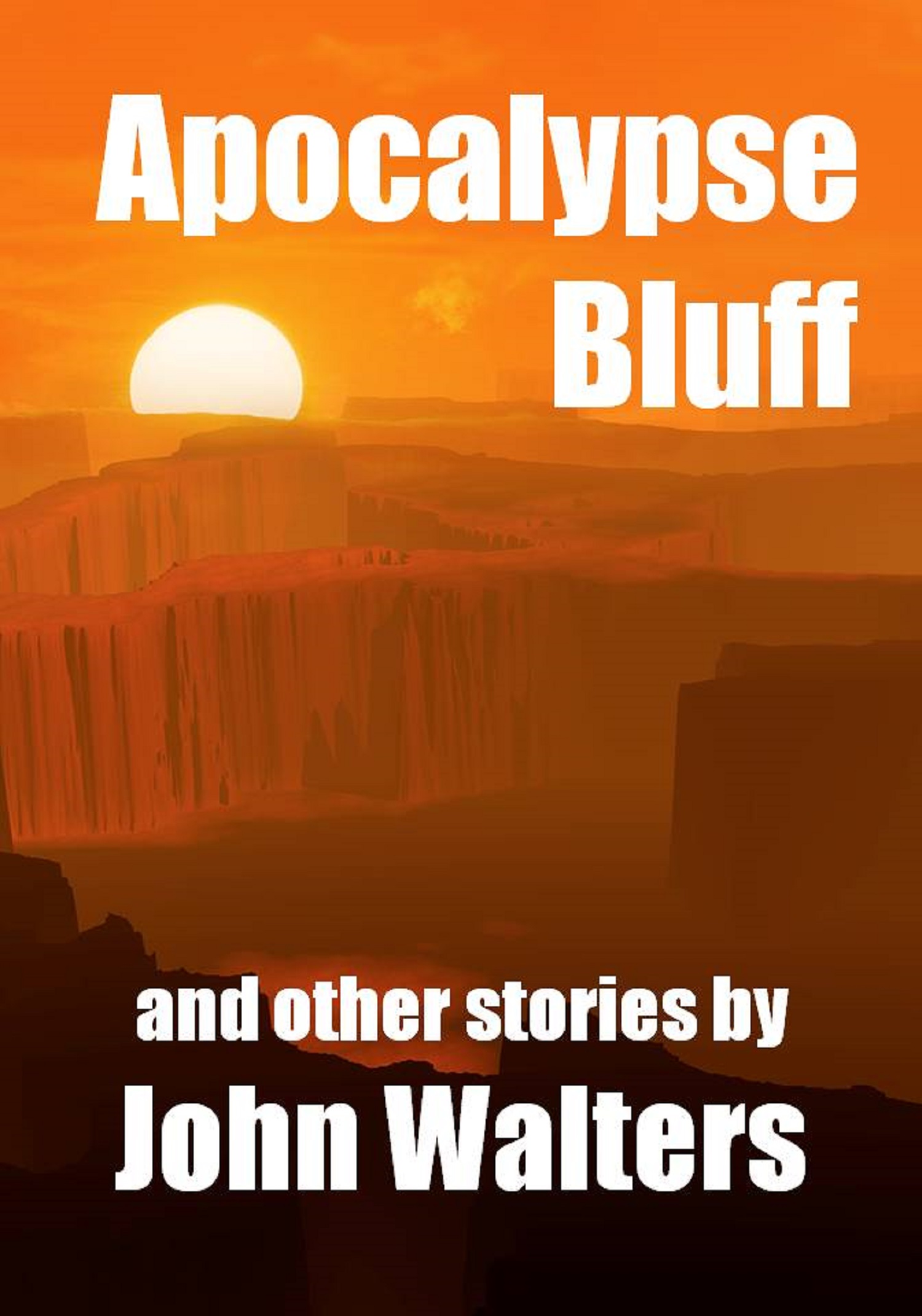
In the midst of all this turmoil I have managed to stay productive.  Recently rather than forsake my own writing completely, in lieu of lying in bed with the insomnia with which I am frequently afflicted, I have stayed up and produced fiction with a minimum nightly word count.  This way in the last few months I have produced a novel, a novella, and a novelette.  My published works for 2014 are as follows:  one short story in an international anthology, four independently published short stories, one collection of dark fantasy short-shorts, two short collections of memoirs and essays, a novel, a full-length short story collection, and a collection of literary essays.  Somehow, in spite of everything, work got done.

And for the coming year of 2015?  I’ll keep working, keep producing.  As far as I know, we will continue to abide in Seattle.  A few interesting science fiction conventions are coming up that I plan to attend.  I am rethinking some of my sales strategies as far as my novels and short stories are concerned.  I am confident it will be a growth year.  As Dean Wesley Smith wisely points out on his blog, it is important to set goals that are within your power, not dependent on the decisions of others.  I can determine to produce work regularly at a certain number of words per day – unless something radically wrong like writer’s block or a family crisis ensues; but I cannot determine to sell a certain number of stories, because that is up to the decisions of others.  So I will persevere.  I will keep working.  I am hoping for a turnaround, a surge of sales that will give me more independence and allow me to focus more on the writing I want and need to do.  I have been too long in the game to expect overnight miracles, but I hope for progress.  At least that.  There’s no discharge in this war, as they say.  There’s only one ultimate culmination to the struggle.  May my hands be near a keyboard when I perish.

Posted in Memoir, On Writing, Travel | Tagged , , , , , , | Leave a comment

Book Review: The Powers That Be by David Halberstam; Part Two: Journalism During the Vietnam War

A large section of “The Powers That Be” is taken up with describing journalistic coverage of the Vietnam War, and the contrast between how the war was perceived by the correspondents there on the field and how it was presented to the American public by the administration in power.  No one is better able to write on such a topic than Halberstam.  He was one of the first full-time reporters in Saigon, reporting for the New York Times.  He knew the situation firsthand from the early days of American involvement.  He was closer to the action than the generals who were calling the shots.  He was certainly closer to it and knew more about it than the presidents who were authorizing the escalation.

Reading Halberstam’s books on modern history, some of my favorites on the seemingly simple but ultimately confusing and complex era of the 1950s and 1960s, I often wish he had written a personal memoir.  He lapses briefly into first person as he tells of his early days in Saigon, and it immediately evokes intensity and emotional depth in an otherwise objective narrative.  Not that it would always be seen as objective.  Halberstam gives his own take on the subject, and it is the viewpoint of a journalist who had to fight great bureaucratic and political obstinacy in his effort to impart the facts as he saw them, the facts of bloody body counts mounting up and America sinking deeper and deeper into a quagmire that for a long time no official voice would admit existed.

For the fact is that during the Kennedy and most of the Johnson administration, as the war and American involvement in the war intensified, the highest echelons of both print and TV journalism were playing along with the presidential line, regardless of the conflicting reports and footage coming to them from their men in the field.  As Halberstam brings out, Kennedy was a master at manipulating the new medium of television, not only in his political campaign for the presidency but during his term in office when presenting foreign and domestic affairs to the public.  He was always acutely aware of the cameras and communicated with and courted those behind them.  The men who worked for him presented national reporters with what they wanted them to report.  They would assure the American public that the situation in Vietnam was proceeding according to plan and that is what the public would read or see.  The reporters in the field, meanwhile, would grow increasingly frustrated with the difference between the copy they were sending in and what saw print.

When Johnson assumed the presidency after Kennedy’s assassination, the situation worsened.  Pushing the Gulf of Tonkin Resolution past Congress,  a move that gave the president vast authority to escalate the war on his own initiative, involved circumventing not only the reports from field journalists but from the military itself.  Johnson assured those who helped him push the measure through that he would not use the added authority to put combat troops on the ground, yet within a year he was landing the first Marines, and not long afterwards there were hundreds of thousands of American troops deployed in an unwinnable war.  For years the administration persuaded a significant portion of the American public to support the war by feeding the press optimistic reports of soon-coming American victory through press offices in Washington, while on the field the situation steadily worsened.

As Halberstam explains, a journalist arriving in Vietnam would go through several stages.  He might arrive in a state of ebullient optimism, shored up by official assurances of America having the situation well in hand, critical of his colleagues in the field who tried to set him right about the true situation.  As the months passed, his doubts and cynicism would grow, and as the inevitable truth dawned on him, a nagging despair would set in.  Some of the best journalists of the era went to Vietnam, because it was the action place to be, but eventually they would become angry and frustrated with their superiors who insisted on towing the official line.  The president himself and his cabinet and most trusted advisors, after all, would assure them that all was well and victory was in sight.  Who were they to believe: their underlings or the highest authorities in the land?

Finally, though, the tables began to turn, and a few media events hastened the change. The Life Magazine issue that featured photos of all the hundreds of Americans killed during a week of fighting was one.  The Fulbright senate hearings on the war was another.  A key event was Walter Cronkite’s visit to Vietnam during the Tet Offensive.  At the time, Cronkite was the most trusted name and face in broadcasting; not only the public but also the president himself trusted him to be fair and impartial and, as far as the president was concerned, to uphold the administration’s stand.  For the first time, however, Cronkite saw the war in all its blood and brutality; moreover, he realized the extent that the administration was trying to cover up what was really happening.  When he had arrived, he had been briefed by General Westmoreland and other top brass that the Tet Offensive was over and the Americans had achieved victory; but when he went out into the field, he saw that the Viet Cong were still in the midst of the offensive, that the Americans and their South Vietnamese allies were hard pressed, and that there was a major cover-up, a diminution and alteration of the facts, going on.  Cronkite began to cover the war more objectively, which inevitably led to his being more pessimistic about its outcome.  One of the factors in Johnson’s decision not to run for another term as president was his certainty that if Cronkite no longer supported him, neither did the American public.

That’s the power of media.  Halberstam writes about print and television journalism, but how much more influential is the instant news, or much more often non-news, of the Internet?

Posted in Book Reviews | Tagged , , , , , | Leave a comment

Book Review: The Powers That Be by David Halberstam; Part One

“The Powers That Be” is the story of how media became an important shaper of events in the mid-twentieth century.  It was first published in 1975, when it was contemporary.  Now, of course, it is history.  It deals with newspapers, magazines, radio, and television.  The Internet was nonexistent at the time.  When I first considered reading it, despite the fact that Halberstam is one of my favorite modern history writers, I wondered if the book would remain relevant, considering the radical changes in modern media.  But then I realized that it would be as relevant as any other history, and perhaps more relevant than most.  We don’t use horses for transport nowadays, but that doesn’t prevent us from studying eras in which they did.  I wish Halberstam had said some words about the Internet era.  He could have, I suppose, as he didn’t die until 2007, and when he did he was working on another book, but the era he focused on was usually the twentieth century.

“The Powers That Be’ is, in fact, relevant to our present predicaments, not so much in the particulars but in the undercurrents.  For instance, Halberstam writes at length of Kennedy as being the first presidential candidate to take full advantage of television.  It was a new medium of expression at the time, and all the other candidates distrusted it and regarded it with suspicion.  Adlai Stevenson would have nothing to do with it.  Nixon hated it, and Halberstam points out that the televised Nixon/Kennedy debates were a key factor in Kennedy’s victory in the presidential election.  The lesson we can take from that is not to shove your head in the sand when new trends in technology are manifest, but rather see how they can be used to greatest advantage.

To tell his story, Halberstam focuses on the stories behind the CBS network, Time Incorporated, the Washington Post, the Los Angeles Times, and to a lesser extent, the New York Times.  He switches from highlighting one media empire to the next as his story moves forward through the century.  As usual, he doesn’t only skim the surface but delves deeply into the men and women whose stories he tells, including not only their backgrounds but often also the backgrounds of their parents, grandparents, and so on as long as they are relevant.  This does not detract from the narrative but rather gives it additional insight and depth.  The book begins with Franklin Delano Roosevelt and his ability to manipulate radio audiences. It chronicles the stories of Ed Murrow, Walter Cronkite, and other key figures in the genesis and evolution into legitimacy of radio and television news.  It describes the importance of the patronage of the Los Angeles Times in the early stages of Richard Nixon’s career.  It discusses the fall of Joseph McCarthy, the notorious anti-Communist witch hunter that even presidents were afraid to touch, at the hands of Ed Murrow and CBS.  It is history told from the standpoint of media, and an insider’s account of how media shapes history and how those who recognize the importance of the media are able to utilize its tools to great effectiveness.

A few words need to be said about the book’s style, which is disconcerting at first.  To be honest, it could have benefited from some editing, especially in the early sections.  Halberstam uses commas to connect thoughts one after another in long run-on sentences that would have benefited from some corrections in grammar and punctuation.  It is jarring and hard to get used to.  I wouldn’t have stopped reading as a result; the material was too fascinating.  But I would have enjoyed the reading experience more if the text had been better ordered.  It becomes more coherent after the first one hundred pages or so, as if Halberstam blurted the first sections out in a torrent of haste, and then slowed down and used more cadence and nuance for the long haul.  I don’t recall the other books of his I’ve read having this run-on tendency, at least not to this extent.  Regardless of its defects, however, the book is well worth reading, and I look forward to plunging into the second half.

Posted in Book Reviews | Tagged , , , , , , , , , , , | Leave a comment

Book Review: Science Fiction Hall of Fame: Volume I Edited by Robert Silverberg

Once upon a time, back in the last century in 1965, the Science Fiction Writers of America launched the Nebula Awards.  A few years later they thought:  Why not have a vote on the greatest science fiction stories of all time published before the Nebula Awards began, and honor them by compiling them into a book?  This is the result.  Volume I is a collection of short stories, and volumes II and III are collections of novellas.  Fair enough.  I read this book many years ago, in fact, but I found it recently again in a boxed set with volumes II and III at the Seattle Public Library book sale.  Interesting aside:  At the book sale I paid three dollars for the whole boxed set in excellent condition.  I was on Amazon looking for something else today, and I found two copies of this particular boxed set.  They were each selling for $2,000.  Now, Amazon marketplace sellers have the freedom to set their own prices, but even if the set cost a fraction of what they were charging for it, one would say I got a good deal.

Anyway, the earliest stories in this book are from 1934.  That’s eighty years ago as of the writing of this essay, and you expect, of course, that the science and some of the storytelling will be dated.  So it is.  Some stories hold up well, and others not so much.  Some stories are mediocre, to be honest, and have been far eclipsed by more recent efforts on similar themes.  But these stories were chosen for their historical and cultural context within the genre, and not only for their inherent value.

I probably wouldn’t have chosen these same stories, at least not all of them.  But I suppose they are fairly representative of the field as it was back then.  Only a few genuinely dragged, and I will not mention which ones they were because despite their ragged, aged technique they served a purpose in the development of what speculative fiction is today.  Instead, I will mention a few of the stories that struck me as genuine timeless works of literature on this reading of them.  And I am not referring here to the science.  “A Rose for Ecclesiastes” by Roger Zelazny, for example, posits a fantasy world that due to modern scientific discoveries could never be mistaken for Mars, but it is a beautiful, fully-realized story that brings tears to my eyes every time I read it.  Other stories have their characters use old-fashioned phones and televisions and all sorts of odd devices that bring a smile and a shake of the head today, but none of that matters.  As a reader, I am willing to suspend disbelief for the sake of the tale.

Anyway, some of the stories that particularly struck me this time around:  “Microcosmic God” by Theodore Sturgeon, about a scientist on a remote island who creates a race of mini-beings advancing in evolution at a speeded-up rate so he can benefit from the discoveries they come up with.  “Mimsy Were the Borogoves” by Lewis Padgett, about two young siblings, a brother and a sister, who stumble upon some futuristic toys in a time machine and use them to construct a gateway to an alternate reality.  “Arena” by Fredric Brown, the story that inspired the famous Star Trek episode in which Captain Kirk and the alien face off for the fate of humanity.  Brown’s story, by the way, is much more intense and gutsy.  “Surface Tension” by James Blish, in which microscopic colonists living in a tiny pool on a far planet build a two-inch “space ship” to traverse the void of atmosphere to a new world in another nearby pool.  “The Cold Equations” by Tom Godwin, in which a shuttle captain discovers a teen girl has stowed away aboard his spacecraft, and he must eject her into the void or he will not have enough fuel to deliver needed medication to save many lives.  “Flowers for Algernon” by Daniel Keyes, the now-famous story that became a film for which Cliff Robertson won an Oscar, about a man with an IQ of 68 who has an operation that makes him a genius, and then realizes the change is temporary and slowly deteriorates back into the person he was.

Yes, there are some good stories in this book, and some of them brought up a lot of memories of past reading of pulp magazines, anthologies and novels.  As I said, there are some glaring omissions.  The editor explained in the introduction that he was limited to one story per author.  I would have chosen, for instance, more stories by Cordwainer Smith, and the one that made it into the book would not have been my choice if I could only choose one.  I would have included “Alpha Ralpha Boulevard”, my all-time favorite Cordwainer Smith tale, or perhaps “The Game of Rat and Dragon” or “The Lady Who Sailed the Soul”.  But I didn’t have a vote in the matter.  I was just a kid when this book came out.  I didn’t even know SFWA existed, although I soon found out.

Posted in Book Reviews | Tagged , , , , , | Leave a comment

Habits

Today I did a lot of deep thinking about my habit of taking a nap after lunch.  With necessary exceptions, I have done it for decades.  In the last year or two, though, I have had trouble with insomnia, and I have begun to wonder if the nap is at least partly responsible.  For a long time I thought the problem was mainly stress.  After all, ostensibly I have a lot to feel stressed about.  I am poor financially.  I have not attained my life goals as far as my writing is concerned.  I am a single parent.  But I have to face the facts:  Unless it is some deep buried subconscious bullshit, I am not really that stressed.  To be honest, recently I feel pretty good.  I’m making enough money to at least pay the bills and eat decently, and we have gotten out of the isolated small city I really did feel depressed in.  Okay, I am far from my life’s goals, but I am working towards those goals and making progress.  When a physical or psychic glitch comes up I lie awake and think about it, but normally I go to bed with a relative sense of satisfaction that I have done what I could that day.

So is the nap responsible?  A few months ago I figured maybe I simply didn’t need so much sleep, and I started staying up later, working on the novels and stories I didn’t have time to do during the day.  That worked for a while.  I would go to bed at twelve instead of eleven and I’d be tired enough to sleep.  I also had the satisfaction that I was producing the work I loved.  But lately, going to bed at twelve doesn’t do it anymore.  I still lie awake a long while before I drift off.  Perhaps I should keep working until one.

For me, the nap has been a habit since at least the late seventies.  It is rooted in practical considerations.  I lived for ten years in Southeast Asia, in India and Bangladesh, and in that part of the world, the early afternoon is too hot to function in, and everything grinds to a halt.  So what do people do?  They nap.  As did I.  In Greece, where I taught English language at private language schools for fifteen years, I always worked from afternoon until late evening; sometimes I didn’t stop work until eleven.  Additionally, I always got up at least by six in the morning to get the kids up and see them off to school.  I had to take a nap or I wouldn’t be sharp enough to teach my students.

And now, as a freelance writer, the habit continues.  I still have to get up and see a son off to school.  I attack the writing, that is, the Internet articles that pay the bills, by seven in the morning.  After lunch I’m wiped out and sleep for half an hour or so, and then spend a little time reading before I get up and work some more.

So today I was wrestling with the dilemma:  Am I doing it wrong?  Sure, I can make it straight through the day if I have to.  Maybe I should adjust my schedule and power through the day without a nap; thereafter I may be able to go to bed earlier.  I am not a prisoner of habit after all; habit is an expediency that functions as a tool of schedule.  Habits make it possible to bypass some decisions and focus on others.  But if they outlive their usefulness it is necessary to change them.

In the end, the most important consideration is the writing, both the nonfiction articles that bring in money and the more important literature that is my personal justification for existence.  Today I wrestled with the dilemma of whether or not to forsake my daily naps until after lunch when I sat down to try to skip the nap and get some work done.  And I decided to hell with it.  I was too damned tired to focus on putting words together into coherent sentences, paragraphs, and whole entities such as articles and stories.  I had to have that nap if I hoped to get any more work done today.  So I slept.  And then got more work done.

Sometimes the most obvious solutions are also the most practical.  When you’re tired, you rest.  I don’t know what I’ll do about the insomnia.  Maybe I’ll work later; I don’t mind.  Or I’ll use the time to think up new story ideas.  I’d better get a notebook and pen for the bedside table.

Posted in On Writing | Tagged , , , , | Leave a comment

Life and Death

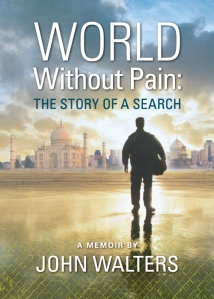
One night my friend Rolf and I, staggeringly drunk, walked out to a freeway entrance leading to I-5 South, having decided to hitchhike somewhere, although we had no particular destination in mind.  We got there and Rolf changed his mind.  He said, “I’ve already been on the road.  Now it’s your turn.”  With that, he stumbled off into the darkness.  I stood at that entrance for a long time before I went home.  I wasn’t ready to leave then, but I did leave eventually, and didn’t return for over thirty-five years, apart from short visits.  I recounted this story in my memoir of the road, “World Without Pain: The Story of a Search“.

But Rolf was right.  He had already been on the road.  He had been to Europe, and I always envied him the experience.  Even then, though I was too timid to do anything about it, the fires of road-longing burned strongly within me.

Rolf and I started hanging out together when were in high school.  We weren’t very similar in personality.  Maybe it was a case of diverse personalities melding, or maybe we just both needed friends.  Concurrently, I started to drink heavily when I was about sixteen years old.  He and I would get drunk together; we’d go out and shoot pool; we’d hang around and watch movies.  At some point drugs were added to the mix and we’d smoke dope when it was available.  After my year of university in California when I experimented with a diversity of psychedelics, we dropped acid once in a while too.  We roomed together twice.  Once we rented a two-bedroom apartment that was the upper floor of a duplex in the Wallingford District of Seattle for $100 a month.  Another time we rented a three-bedroom house in the University District for $200 a month.  You won’t find prices like that nowadays; you’ll pay ten times that or more for comparable accommodation.  But Seattle was a backwater back then and we liked it that way.  We’d hold down jobs, make at least enough money to pay the rent and bills and keep ourselves in food and drink and drugs, and we’d party as much as we could.  We’d have girls over; often we’d date girls who were friends with each other.  Perhaps date is too grandiose a term for what we did though.  The girls usually joined us in our standard nefarious activities, and then we’d pair off and hit the bedrooms when we got home.

I’m skimming over all of this really quickly.  There are hundreds of vignettes scattered through the years.  But all that to say that we were close.  We were buddies.  We confided in each other and knew we could rely on each other.

As I became absorbed in traveling and writing, Rolf found a passion that thoroughly consumed his interest: psychology.  He attacked it with a zeal that surprised me, as I was used to his casual don’t-give-a-damn-about-anything demeanor.  He buckled down and started to study.  He managed to get admitted to the University of Southern California in Los Angeles to study psychology.  Passing through the area during my wanderings, I rented a room on top of a nuthouse near his apartment and hung around a short time.  This, too, is recounted in “World Without Pain”.  But he had changed.  He wasn’t interested in partying anymore.  He was committed to his studies.  While I took off for another foray around the world, he hung on and earned himself a doctorate in psychology and became a university professor.

We wrote a few times to each other while I was living in India, but then we lost touch.  He met a woman, married, and had a son.  I met a woman, married, and had five sons.  We still traveled a lot, my wife and I and our progeny, but then we finally settled near Thessaloniki, Greece.  I did a web search to try to get back in touch with Rolf, wrote to him, and he responded.  We wrote back and forth every few months.

Then he wrote me and said he was attending a psychology conference in Germany and asked if he could come visit us afterwards.  He spent five days or so in the midst of a beautiful warm Greek summer.  We took him swimming at an idyllic Greek beach and showed him around Thessaloniki.  One night during a sudden unexpected rainstorm we sat under a shelter beside the pool at his hotel sipping ouzo, and we caught up in more detail on what had been happening in our lives.  His wife had been from another country.  In the midst of a midlife crisis she decided to leave him and their son and go back to settle alone in her homeland.  His son stayed with him off and on, as I remember, but was pretty much grown and gone.  His finances took a nosedive in the divorce.  He had just got a new job at a university in Alabama that he had high hopes for.

That was it, more or less.  We corresponded once or twice after he left but then lost touch again.  Some time ago I tried to find a new e-mail address and I wrote to him but he didn’t reply.

A few nights ago I was talking with one of my sisters about him and decided to try again to contact him.  One of the first things that came up on a web search was a notice from his university that he had died a year ago, in September of 2013.  I tried to find out more and came across an obituary in the Seattle Times that gave few details.

A kind of slow shock set in.  In the last few days I have been thinking a lot about all the life Rolf and I shared together.  And then he just up and died.  Death is so close, an inevitability to all of us.

The articles I accessed online did not say how he died, only that he died at home.  He may have been alone.  He may have been in pain.  I wish I could have been there to sit with him at the end.

Requiescat in pace, my friend.

Posted in Memoir | Tagged , , , , | Leave a comment

Sweet Soft Rain

I don’t know if I’m ready to write about Seattle yet.  I just got back a few months ago.  I was born and raised here, but I’ve been gone for thirty-seven years.  Being gone for so long puts things in a different perspective.  I’m still coming to grips with my feelings about the city I find around me as opposed to the city I grew up in.  But the rain I experienced today ignited a desire to compose a few words, so here they are.

I work almost all the time just to stay afloat.  I start at seven in the morning and work until midnight, with breaks for a short nap, meals, meal prep, and necessary outings like shopping.  I’m a single parent with two sons living with me, so I have to have plenty of food on hand.  Lately I have been researching and writing articles during the day and in the early evening, and writing my novels and stories late at night.  The research and writing of the articles is exhausting because it is an effort.  I don’t want to do it.  I would rather be writing my stories all day, but the articles pay the bills.  Barely.

Today I had done a couple of articles and I couldn’t take it anymore.  I got up from the chair at which I work and I was dizzy and deeply weary.  I had to get out of the house for a while so I decided to take a walk to the drugstore about eight or ten blocks away.  Glancing outside, it seemed that wind had driven away the clouds and there were hints of sunlight, so I decided to leave the umbrella at home.

It’s autumn.  Wind was whipping leaves all over the place.  I stayed off the main road and took neighborhood sidewalks past wooden houses, towering evergreens, and lush bushes and grass.  Seattle is rife with greenery.  It was a wonder and a pleasure to breathe in the fresh air, walk briskly, and get all the kinks out of my joints.

So I went into the drugstore, bought a few things, and when I came out a few minutes later, it was raining heavily.  There was nothing to do but walk home in the rain.  And it was glorious.  The rain was soft, and sweet, and beneficent.  It was like a benediction.  So unlike the harsh, punishing rain in Yakima where I spent last winter.  It was blessed, this rain.  It was comforting.  It was exhilarating.  I felt caressed by the environment.  I felt at home.

In some ways I feel I am home, but in other ways I don’t.  Thomas Wolfe said you can’t go home again.  I never read the book so I don’t know his take on the subject, but I am certainly not the same person I was when I lived here almost four decades ago.  I’ve lived in starkly different cultures and learned new perspectives.  I can’t look at things the same way people view them who have spent their entire lives here and nowhere else.  In some ways I feel at home, but in other ways I feel like a stranger in a strange land, and I can’t wait until circumstances open up to take me off on my next adventure.  In my memoir “World Without Pain: The Story of a Search” I write:

Perhaps the journey itself, the search, was the point of it all.  But if it was then there was no end, no goal, no destination.  One could not arrive; one could not rest, except intermittently.

And home?  I couldn’t go home again.  Home was an abstraction from which one commenced a particular phase of the journey, not an absolute.

And Seattle has changed.  It’s not the backwater city, quaint and inexpensive, that it used to be when I last lived here.  The dotcoms moved in and wreaked havoc with property values.  Everything is expensive and chic now.  Where the hell is the simple life?

It’s too soon to say how long I will be here.  I have no plans to move on at the moment.  Then again, you never know until it happens.  But I have a son in school and for such things one needs a modicum of stability.

Anyway, although I get weary sitting here hour after hour writing the words, I find the sound of the pouring rain outside comforting.  It reminds me that I’m back in Seattle, and that I’m meant to be here, at least for now. I have come for a purpose that will slowly become apparent as the days, weeks, and months progress.  And if the work gets too overwhelming, I’ll take another walk in the sweet soft rain.

PS for those who follow this blog regularly as it appears:  I don’t always publish the blogs on the days I write them.  At the moment Seattle has been experiencing several days of very chilly but very clear weather.  I wrote this about a week ago, when it was raining heavily every day.

Posted in Memoir | Tagged , , , , | Leave a comment

What Is It About Romance? …and Tragedy

I wrote my recent review of Neil Simon’s memoir “Rewrites” when I still had about twenty pages left to read.  It turns out the last twenty pages are about Simon’s first wife’s battle with cancer and how he reacts to it.  It puts the book on a whole different level.  Those twenty pages, though not much about writing, which is why I originally was drawn to the book, are worth the price of the book, because they are about stark, raw humanity.  They are touching, and beautifully written.

Simon’s wife Joan had her thigh hit during a tennis match and it didn’t heal.  Weeks later she went in to have it looked at and she was diagnosed with advanced, incurable cancer.  It’s clear through the whole book how much Simon loved her, so that when the doctor tells him that his wife has only a year to a year and a half to live, the reader understands how devastated he is.  Simon did something that I wouldn’t have done, on the recommendation of his doctor, and that is make light of the diagnosis and not tell his wife how seriously she was ill.  I believe people need to know such things – and they have a right to know.  But apart from that, he set about making the last year of her life as memorable as possible.  He bought her a house in the countryside next to a lake where they spent a lot of time.  What comes across is the agony of being so deeply in love and knowing it’s going to end soon.  Wondering how to tell the children.  Wondering how to survive without her.  I’m very sensitive to these things.  Tears frequently filled my eyes as I read.

And I contemplated, as I read, what makes love so important, so worthwhile, when it brings on so much pain.  Such a vital, integral, honest experience.

It reminded me of Richard Attenborough’s movie “Shadowlands” with Anthony Hopkins and Deborah Winger, based on the true love story of C. S. Lewis with an American woman who he first finds annoying and then realizes he cannot live without.  She is diagnosed with incurable bone cancer, and they marry in the hospital with her on the bed, unable to rise.  She gets temporarily better, so that they enjoy a few short months together, but in the end Lewis is left to mourn along with the woman’s son.

Why do so many of us look so hard for romance?  It hurts so damn much.  It’s a sort of pleasure/pain thing.  You know the deeper you get into it the harder it is to extricate yourself, but you take the dive anyway.  We all enjoy a good love story, as long as it’s not a load of cotton candy bullshit, and sometimes it seems we fall for those too.  I was reminded of my favorite John Steinbeck novel, “Sweet Thursday”.  It’s the story of the proverbial hooker with a heart of gold who meets the lonely aging recluse and they hit it off, but it is told with such verve and depth of character that it punches me in the heart every time.

I’ve fallen in love several times, and most of the women I sincerely fell in love with I still love, even though the relationship in some cases only lasted a few days or a few weeks.  Take, for example, the women I describe in my memoir “World Without Pain: The Story of a Search“, Carlie and Catherine.  I still deeply love them both and would love to hear from them and know how they’re doing.

I ramble, I suppose.  But all that to say that I’m a sucker for a love story, even one touched with tragedy.  Because love is at the core of the human experience.  Sometimes we have it, and we are enmeshed in the relationships it creates.  Other times we are alone and we long for it.  Either way it’s there, so close, so intimate, so approachable with the heart and spirit that we can feel what someone like Neil Simon goes through as he writes about it.  There is something about love in its purest form that is the same for everyone.  That’s what creates empathy, ethics, all that is best in humanity.  Words like those I read today bring such feelings into conscious remembrance.

Posted in Memoir, Reading | Tagged , , , , , | Leave a comment

Book Review: Rewrites: A Memoir by Neil Simon

This is another book I found at the yearly Seattle Public Library book sale.  Before finding it in the rows, stacks, and piles of books scattered on the long tables, I never even knew it existed.  Neil Simon is a well-known playwright and screenwriter, though, and I am always eager to read memoirs and biographies of other writers.

Perhaps I under-described Simon’s fame in the paragraph above by merely stating he is well-known.  As of 2014, he has won a Pulitzer Prize, a Golden Globe Award, a Writer’s Guild of America award, and two Emmy Awards; he received seventeen Tony nominations and won three; and he has also been nominated for four Academy Awards.  Many of his plays and films are easily recognizable, such as “Barefoot in the Park”, “The Odd Couple”, “The Sunshine Boys”, “California Suite”, “Lost in Yonkers”, and “The Goodbye Girl”.

In the memoir, Simon briefly touches on his childhood, but most of it concerns his play writing – how he got started in the business and his trials and tribulations getting various plays from paper to stage.  I read with great fascination the stories of each play’s inspiration,  first draft, rewrites, pitches to directors and actors, rehearsals, more rewrites, first performances, and yet more rewrites.  Whether Simon was creating a play or a film, he was hands-on from beginning to end, there for conferences, tryouts, rehearsals every step of the way.  He would be constantly improving his work even as it was being performed.

This is a fascinating glimpse into the world of Broadway plays, and features anecdotes about some of the great directors and actors such as Mike Nichols, Robert Redford, Maureen Stapleton, Peter Sellers, George C. Scott and others.  But the great gift Simon gives his readers is the intimacy that is also prevalent in his plays, some of which are obviously autobiographical.  He brings you into his personal life; he chats with you as if you were an intimate acquaintance.  He makes you laugh and stress and weep with him as he sees his brainchildren through from conception to completion.

I don’t think I have been so edified and entertained with a celebrity’s memoir since I read Charlie Chaplin’s autobiography.  All right, Keith Richard’s memoir was also a great read, but that’s a horse of a vastly different color.  Simon’s prose is erudite, informative, yet accessible.  The one thing that annoyed me, especially at the beginning, was his penchant for throwing one-liners into the descriptions as if he were writing one of his plays.  There seems to be a preponderance of these zingers in the first few chapters, and after that Simon gets on with the business of telling his story, which is a relief.  If I want to watch a stand-up comedian I will do so, but in a memoir I am after a different experience.  I think part of it is simply that Simon has it in him; he is a very funny person.  He has the ability to mix comedy and tragedy both in this account of his life and in his performance art.

All in all, this is a great read, and I highly recommend it.  For one thing, it is deeply touching.  Simon has his finger on the pulse of humanity in his plays and films, and he manages to turn it effectively on himself.  For another, it gives great insight into the creative process, more than anything showing that every artist works differently, but it is the zeal, integrity, and whole-heartedness brought to the process that determines the outcome.  For yet another, it is a fascinating glimpse behind the scenes of the New York Broadway theater era of the 1960s and 70s from someone who was intimately involved.

One other insight the book gave me, or rather reinforcement of an insight I already had, is that each writer – and I mean every writer who has ever put pen to paper – is different.  The title of this book is a giveaway about Simon’s viewpoint on rewriting.  For him it is a constant process.  Some of it has to do with the state of theater in that era, but it also has to do with his inability to be satisfied with anything short of perfection.  It is obvious that he has a sixth sense, so to speak, of what works and what doesn’t, but he has to put the boat into motion before the rudder of his rewrites goes into effect.  I have read writing advice by others warning against rewriting (except to editorial orders) and I understand that argument as well, but it all boils down to the individual artist and what brings about the desired effect at the moment.  Personally, I have done both.  Many of my works have been written and published with only minor changes to correct occasional misspellings and grammatical errors.  Once in a while, though, I reread something I have written and realize something is fundamentally wrong with either the entire work or a piece of it.  If I am convinced that the piece of writing will benefit and that it is of sufficient importance to justify the expenditure of time, I will go ahead and rework it.  Otherwise I simply set it aside and move on to the next project.  Not only is every writer different, but every project that every writer works on is different.  That’s just how it is.

Posted in Book Reviews, On Writing | Tagged , , , , | Leave a comment

Book Review: The John Varley Reader

I hadn’t intended to review this book at all.  I bought it at the Seattle Public Library book sale for a dollar because I noticed that it had “The Persistence of Vision” in it, a story I have been wanting to read for years.  I was planning to read just the one story.  But then a few things tipped the scales, and I realized I had to say a few words.

By the way, I picked up a big pile of books at that sale.  From a writer’s viewpoint, I am sorry I cannot help the writers make their living by buying their new books, but on the other hand, I am just too damn poor now to be able to afford new books.  And I have to have my reading fix one way or the other.

Anyway, as I said, I bought the book for just the one story, but I recognized a few other award winners in the mix, so I thought maybe I’d read a half dozen stories or so and leave it at that.  The first things that hooked me, though, were not stories at all – they were the introductions to the stories.  In them Varley doesn’t really talk much about the stories.  He talks more about his life, and his trials and tribulations as a young writer.  And a lot of it clicked with me, especially when he shares anecdotes of his time as a hippy.  He lived in Haight/Ashbury; he attended Woodstock, albeit by accident.  I can relate to that.  I got involved in the hip scene myself in the Bay Area in the early seventies, right around the time I realized I wanted to be a writer and began to compose stories.  I wasn’t successful by any means, as Varley was almost right away, but still there was that common immersion in the scene and fascination with science fiction and writing.  I was so impressed by our similar backgrounds that I thought I’d write him a line and say so.  However, the mail link on his website didn’t work, at least not for me, and he wasn’t listed in the SFWA members directory.  Ah, well.  I had to let that one go.

Anyway, “The Persistence of Vision” is a very good story, although not what I expected.  It tells of a commune established out in the wilderness of New Mexico by deaf and blind people, and how they cope, how their social structure evolves, and how their handicaps become a gateway to something greater.  Another award-winning story, “Press Enter”, I have read before.  It’s a very creepy story with very well-drawn characters about a murderously nasty computer network.  A good read.  The third award-winning story, “The Pusher”, I had never read, but when I did I was somewhat disappointed.  It’s okay, but mainly a fairly light gimmick story.

Having read all the stories I had intended to read, I went through and read the rest of the introductions until I came to the last story in the book.  This was the story, says the introduction, that Harlan Ellison requested when soliciting stories for “The Last Dangerous Visions”.  If you haven’t heard of that, you don’t know much about the history of the science fiction field.  “Dangerous Visions” and “Again, Dangerous Visions” were important anthologies in the New Wave era of the late sixties and early seventies.  Full of award-winning original fiction, they pushed the boundaries of the genre.  It was Ellison’s intention to publish stories that no one else would touch at the time, on themes radical and even taboo.  When I attended Clarion West in 1973, “Again, Dangerous Visions” had just come out.  Everyone was aware that Ellison was seeking stories for the next volume and had already bought a good number from Clarion students.  It was the highest dream of all of us to sell a story to “The Last Dangerous Visions”.  I didn’t even come close.  I didn’t write any really good stories until decades later.

But then, something happened with that last volume.  It got delayed, and then delayed some more.  Ellison hung on to the stories, obviously intending to get the work done, but now four decades have passed and “The Last Dangerous Visions” has yet to be published.  Even knowing about the delay, back then I think I would have sold Ellison a story if he was willing to buy it because I respected his opinion so much.  But anyway, as the years passed, some writers hung on with Ellison, while others pulled their stories from the anthology and published them elsewhere.  Varley describes how he respectfully approached Ellison to withdraw the story as it had been so long, and finally Varley published it for the first time in “The John Varley Reader”.  It’s the only original, never-before-published story in the anthology.

This piqued my interest.  I decided to read “The Bellman” to find out what made it so dangerous.  Some of the stories in “Dangerous Visions” are no longer as controversial as they used to be, and I wondered how Varley’s had fared.

Well, I have to say that Varley really knocked it out of the park with this one.  It’s a great story, though intense and gruesome, and it would still be considered extreme today.  It concerns a pregnant woman police officer investigating some very unusual murders in a moon colony, but…  I will say no more.  This story is worth the price of the book.  It’s that good.  I don’t want to spoil it for you by giving too much away.

So, “The John Varley Reader” has some great stories and some so-so stories, but that’s true with almost all anthologies.  It’s partly a matter of reader’s taste, and partly the fact that almost no author gets it spot-on every time out.  Still, the good stories in this one are very, very good.

Posted in Book Reviews | Tagged , , , , , , , , | Leave a comment