Creative Hunger and the Magnanimity of Artists

Rereading Bob Dylan’s collection of autobiographical essays “Chronicles” made me reflect on how we as artists react toward other artists.  The book begins in New York where Dylan is a lean, dedicated folk singer sleeping on other people’s couches and playing and singing anywhere he’s allowed to.  It skips a decade or so and presents him still young but jaded after his meteoric success, hounded relentlessly by fans and unable to find peace. It skips another decade or decade and a half and describes the process of cutting one of his records song by song in New Orleans, and then it goes full circle back to New York in the early sixties, and backtracks even further to the time before New York when as a kid he was hungry to learn folk songs in Minnesota, accepting any invitation to listen to records to discover new singers and improve his repertoire.

And somehow from reading about Bob Dylan I started thinking about the modern indie writing scene.  To get this you have to think of Dylan as a nobody, a poverty-stricken unknown even more hungry for musical knowledge and improvement than for recognition.  He lived and breathed music; he thought of little else.  He didn’t care what he ate or where he slept as long as he could play.  Before he learned how to compose songs he played the songs of others and that was all right too.  He was absorbed, enthralled, enchanted by folk music.  He went to hear other musicians play; he listened to records; he practiced alone and with others.  He didn’t know how to relate to those who didn’t think as he did.  Music was his life.

As I read about Dylan’s dedication when he was a nobody, I thought of the stage on which the indie writer plays.  Amazon and other distributors opened up the opportunity to sing for an audience, so to speak, at least a potential audience.  For some of us, a very few who achieve early success, it’s immediately like a stage in a stadium full of fans, but for others it’s like one of those smoky coffeehouses where you play for a few diehard drunks, or perhaps sometimes for no one at all.  But you’re there all the same, plying your trade, putting your stories out there.  It takes guts and dedication and a crazy kind of mindset to step out and place your art before the world to get either kicked or caressed.

I read a lot on blogs in indie forums about the importance of editing and covers and so on, the outer trappings of the essential work, and these things are important, of course, in a peripheral kind of way.  But they should not distract us from appreciating the author’s intent and courage in putting it out there.  Let’s not get elitist on the hungry up and coming performers who might have a lot of talent and integrity.  Let’s not condemn them for less than stellar covers if that’s all they can afford, but rather encourage them for doing the best they can in the face of overwhelming odds.  Talent will eventually make room for itself, but in the meantime let’s be there with our support and encouragement rather than wait by the sidelines holding a hammer and some coffin nails.

A simple true story succinctly illustrates what I mean.  I had made a comment on The Passive Voice, a popular indie writer blog, expressing mystification that my books were not selling, though I was convinced that they were good work.  A professional artist wrote back that she had perused the covers of my books and thought that some could be improved on.  She gave me some general tips on cover art, and then offered to create a cover for one of my books, completely free, to show me what she had in mind.  It blows my mind to think about such generosity even now.  That’s called paying it forward, folks.

I also have a relative who is a professional graphic designer who does most of my other book covers.  You can blame the stark, simple short story covers on me.

The fact is, I am a single parent living on the edge of poverty, and when I read comments by some writers that their covers cost “only” $200 or $500 or $1,000 to me it’s like hearing voices from lah-lah land.  I respect what they are saying and even agree in an abstract sort of way, but harsh realities are harsh realities.  For me, $200 buys a certain number of meals or a certain amount of clothes or shoes for my sons.  That’s how I have to look at it.  But I can’t let that keep me from putting my work before readers in the best way I can given the circumstances.

So whenever I am tempted to condemn a fellow writer for a presentation that’s lacking, all I have to do is think of lean, hungry Bob Dylan carrying his guitar from nightclub to coffeehouse to bar and playing for whoever was willing to listen.  You gotta start somewhere.  Let’s express our magnanimity rather than our censure to our fellow artists.  If they don’t have what it takes, they’ll drift away and be gone sooner or later anyway.  We don’t have to knock them off the tracks.

Posted in On Writing | Tagged , , , , | 2 Comments

Book Review: The Best of Robert Silverberg

This is a 1976 publication I found in a used book store.  I picked it up because I hadn’t read any Silverberg for a long time, and he’s one of the best science fiction short story writers ever. His collection “Phases of the Moon,” published in 2004, which I read several years ago, is much more comprehensive, as it adds many of his wonderful post-1976 stories, but this book gave me a decent Silverberg fix nonetheless.

Silverberg’s progress as a short story writer is clearly seen in this anthology.  The stories are chronologically presented, and they move forward from the first, which is merely so-so, to the next few which are pretty good, to the next few which are very good, to the timeless classic award winners at the end.  He went on afterwards to win many more awards.

The book begins to pick up serious momentum with the novella “Hawksbill Station,” one of the few stories in the collection I hadn’t read before.  It concerns political prisoners, all men, thrown back in time to the bleak, featureless Paleozoic era and their slow degradation and descent into insanity, isolated as they are from the rest of humanity by billions of years.  Unbeknownst to them, the latest prisoner sent back is a spy analyzing their condition with a view to returning them to the future for therapy and rehabilitation.  After that is the dark, nasty award-winning short story “Passengers,” about incorporeal aliens who possess humans and use their bodies for pleasure.

“Nightwings” is a hauntingly beautiful tale of a far future Earth in danger of alien invasion, another award-winner, atmospheric and poetic.  “Good News From the Vatican,” the last story in the book, is a light, funny account of the election of the first robot pope of the Catholic church.

The story before the last, though, “Sundance,” I have always considered one of my all-time favorite stories.  It’s about a man of Native American background on a far planet who appears to be a part of a team exterminating the native life forms to prepare the way for human colonization.  He discovers that the creatures are sentient and begins to identify with them because his Sioux ancestors were also exterminated far back in American history.  But then his colleagues inform him that they were never exterminating the indigenous creatures, that it was all a delusion of his, and that he was undergoing therapy and psychic reconstruction for his anger and resentment about the past.  All this is evocative enough, but in the midst of this gripping story, Silverberg experiments with technique to great effect.  He switches between present and past tense; he shifts from second to third to first person and back again.  In the hands of a lesser writer it all could have been a dazzling distraction, but the amazing thing about this story is that it works flawlessly; it adds depth and nuance and cadence to the prose.

It was great fun revisiting Silverberg.  He started off as a hack writer of mediocre stories to the pulp magazines.  Amazingly prolific, he turned out so many stories so fast that some magazines had multiple efforts of his under various pseudonyms.  Very few of those stories were ever reprinted, however, and as Silverberg’s career progressed, he went through various stages of growth, sometimes backing off from fiction and concentrating on non-fiction, then returning to the field for another prolific surge, each time with deeper and more powerful works.  Finally, by the late sixties and on into the seventies, he became one of the best in the field.

I have read and enjoyed some of his novels, particularly “Dying Inside,” a devastating, tragic, moody, thoughtful story of a telepath slowly losing his powers, but I was always more drawn to his short fiction.  He has a gift of language that lends itself well to the short form.  Anyone interested in the science fiction field would do well to seek out some of his works.

Posted in Book Reviews | Tagged , , , , , | Leave a comment

Reflections on Norwescon 38

To fully explain what attending the science fiction and fantasy convention Norwescon 38 meant to me I have to go all the way back almost three years to when I was living in Greece.  In Europe I was isolated from anything like science fiction conventions.  As a writer I was lonely, as there were no writer’s groups I could join, not so much to critique each other’s work, but more to hang out with like-minded people.  Although not even half of what I write is science fiction, I write a fair amount of it, and my roots as a writer are in science fiction and fantasy.  I got my first inspiration to become a writer while reading Harlan Ellison’s nightmarish science fiction story “I Have No Mouth, and I Must Scream,” and I attended the Clarion West science fiction writing workshop in 1973.

Back to the point:  In Greece I dreamed of attending conventions but thought that it would never happen.  Then when I suddenly found myself in the position of uprooting and moving back to the States, I sought to rectify the situation.  Life is short, after all.  So I attended Condor convention in San Diego.  From San Diego my sons and I moved up to Yakima, Washington, but though I heard about Norwescon 37 in nearby Seattle and longed to attend, the membership fee and journey over the mountains was too expensive.  Norwescon was in spring, and by mid-summer we had managed to make the move to Seattle, and by late fall I had booked memberships and a room at the hotel for one night for Norwescon 38 in the following spring, determined not to miss out on it this time.

For those of you unfamiliar with what goes down at science fiction conventions like Norwescon, there are panels discussing various aspects of the field, some focusing on writing, some on films, some on gaming, and so on.  There is an art show, a dealers room where all sorts of genre trinkets are sold, readings by writers, autographing sessions, film showings, a masquerade, parties, gaming rooms.  A large percentage of the attendees walk around dressed in outlandish costumes, some of them so intricate and professional-looking that they must have been working on them all year.  It’s a crazy atmosphere in which you can let loose your inner geek, nerd, whatever you consider yourself.  Although not all the attendees are geeks, nerds, and so on.  Many, like myself, are professional writers, editors, publishers, and artists getting together to exchange ideas in a congenial environment.

I had two main goals:  to attend as many writer’s panels I was interested in as I could, and to show my thirteen-year-old son a crazy good time.  In both of these I succeeded.
The con started on Thursday, but looking over the schedule, I saw that the events began in the afternoon shortly before I would have had to start heading home, so I decided to wait and go on Friday.  As soon as my son went to school Friday morning, I was off.  I spent the next couple of hours on bus and light rail train until I arrived at the hotel, which was out near SeaTac airport.  Throughout the morning and early afternoon I attended one writer’s panel after another.  They were on subjects such as short story writing, marketing self-published fiction, and diversity in science fiction literature.

I also attended a packed-out question and answer session with George R.R. Martin, a superlative writer of science fiction and fantasy short stories, but most recently famous for “Game of Thrones.”  Every event of which he was a part, including the autograph session I went to the next day with my son, was mobbed, with lines forming at the door and winding through hallways and outside.  I didn’t envy him that sort of fame at all.  I was glad I was incognito, able to roam freely wherever I wanted without everyone I passed getting all bent out of shape.

Because I focused so much on writing on Friday, when I returned with my son for Saturday and Sunday I was able to focus more on events and subjects that interested him.  The exception was early Saturday morning.  We had to get up before daylight to make the long trip to the con so I could make the Science Fiction Writers of America meeting which was scheduled before events began.  It was my first SFWA meeting; I had been looking forward to it and it didn’t disappoint.  What I wanted to do more than anything was to meet other local writers and get to know my peers.  Everyone who attended was very congenial, and they were magnanimous about letting my thirteen-year-old sit in and help himself to the donuts.

After the meeting we strolled around the art show and dealers room, and then we spent over an hour milling about and then waiting in line to get George R.R. Martin’s autograph.  I would have given it a pass, but for my son it was the high point of the con.  They were giving out a limited number of tickets for the autograph session and had all sorts of crazy rules for when we approached the man.  One book each.  No personal notes.  No banter.  I thought it was ridiculous.  It took all the fun out of it and made what should have been a congenial event, a chance for a writer to interact with his fans, into a rigid, formal, stilted ceremony.  Not Martin’s fault, of course.  An unfortunate necessity brought about by circumstance.  Anyway…  Once we got our tickets we were herded through the line and in and out of the signing room within a few minutes.

Afterwards we attended an entertaining panel of horror writers and publishers on horror influences – more specifically, what horror films or books inspired the panelists to focus on horror in their careers.  Then my son and I booked into our hotel room, ate lunch, and got off our feet for a few hours.  We revived in time to attend another panel on horror and then to check out the lazer tag games.  They turned out to be a bit of a dud, as all the safety rules took the guts out of the game, so we soon left to wander around.  Later at night we briefly attended a party hosted by a space exploration society.  And so it goes…

Sunday morning I attended one last panel called “Worth the Dues?” about the value of writers organizations while my son played complementary arcade games in a nearby hallway.  And that was about it.  My son thought it was the best vacation ever, and I had a great time myself.  Life is short.  As far as I can see, I’m going to attend more cons up the road to make up for lost time.

Posted in Memoir | Tagged , , , , , , | Leave a comment

Book Review: The Unfinished Odyssey of Robert Kennedy by David Halberstam

I’ve been wanting to read this book for years, but I’ve never been able to find it at a price I could afford.  It’s the only Halberstam book I know of that’s out of print.  I’m not really sure why.  It’s a very good book, albeit a short one.  It’s far shorter than any other Halberstam book, most of which are doorstoppers.  I found a used copy on Amazon for a reasonable price and snapped it up.  It turned out to be a small Bantam paperback originally priced at 95 cents, the first paper edition.

Normally Halberstam, in his classic works of modern history, goes to the roots of things by giving complex backgrounds of every major character and situation.  He does not do so in this book.  “The Unfinished Odyssey of Robert Kennedy” starts in 1967 when Kennedy is contemplating whether or not to run for the presidency in 1968.  He had originally planned to wait until 1972, but circumstances forced his hand.  The book follows his entry into the primary race against Eugene McCarthy and against first Johnson and afterwards then-vice president Hubert Humphrey when Johnson, his political career shattered by the ongoing war in Vietnam, withdrew.

Uncharacteristically, Halberstam minimizes the background in this book.  Instead, he gives just enough explanation to make the situation comprehensible as Kennedy moves from Indiana to Nebraska to Oregon to California on the primary trail.  He does, however, work in Kennedy’s evolution as a politician and a moral man from being campaign manager in the 1960 presidential race and then Attorney General for his brother John, his reaction to John Kennedy’s assassination, his running for and gaining a senate seat in New York, and his decision that due to the quagmire in Vietnam and the deterioration and chaos in American cities he could not put off his presidential run until 1972.  He jumped into the race late but quickly picked up momentum.  He was astonishingly popular among the blacks and the Mexican immigrants but had mixed success among liberals in his own party.  He had a setback in Oregon and a solid victory in California that put him back into a strong position.

On the eve of victory in California, though, Robert Kennedy was assassinated in a hotel kitchen by a Palestinian named Sirhan Sirhan.  Interestingly, although Halberstam alludes to the assassination in his narrative, he stops the book just short of describing it, just as Kennedy was going downstairs to celebrate his victory in the primary.  The book is cut short so abruptly, the reader fully aware of what is about to happen, that it is more shocking than if Halberstam had gone on to describe Kennedy’s death in gory detail.  The impression is that Kennedy was just coming into his own as a moral force, with a very good chance of assuming the presidency and setting the nation in a different direction, and suddenly that time line was snuffed out, forever eliminated by the bullets of a madman.  The ending brings the title into stark relief.  Kennedy’s odyssey was truly unfinished.  One can only wonder what would have happened if he had lived, had been elected president with his strong commitment to the poor of the nation and to ending the war in Vietnam.  As it is, the country got Richard Nixon, law and order, heavy bombing of North Vietnam, and further extension of the war into Cambodia and Laos.

Typically Halberstam remains aloof from his material, but in this book he frequently alludes to himself in the first person, as he accompanied Kennedy as a reporter for much of the campaign.  It renewed my wish, alas to remain forever unrequited, that Halberstam had written an autobiography.  He was one of the most well-traveled, knowledgeable, and erudite reporters in recent American history, and his story would have made fascinating reading.

Reading books such as this helps me see my own place in history more clearly.  I remember hearing about Robert Kennedy’s assassination, although I don’t remember the exact moment the way I remember hearing about when his brother President John F. Kennedy got killed.  I remember sitting in a classroom and the school principal came in and told us that the president had been shot.  It was a shocking revelation even though I was too young to appreciate its real significance.  Anyway, young as I was, naive as I was when Robert Kennedy was killed, I felt the storms of history swirling around me.  I didn’t understand all the forces that were at work, but they shaped me, they shaped my decisions, they inevitably influenced the formation of my thoughts and opinions.  So now, as I seek out and read worthy books like this one on the history of the 1960s and 1970s, the Vietnam War, race relations, riots in the ghettos, the hippy era and the antiwar movement, I assemble pieces of what influenced my growth and the growth of the nation and the world around me.  It’s part of the lifelong voyage of self-discovery.  It’s an illuminative process that is never-ending, that attains nuance and depth as it progresses.

I recommend this book.  It’s a great little classic of modern history and God knows why it has gone out of print.  It’s one of Halberstam’s early works.  Sometimes these things are tied up in ridiculous contract fine print that once signed and agreed to cannot be undone. If you can find a copy at a reasonable price, go ahead and pick it up.  It’s a worthwhile read.

Posted in Book Reviews | Tagged , , , , | Leave a comment

Dangerous Visions and Again Dangerous Visions Edited by Harlan Ellison: A Perspective

Out of the blue, “Dangerous Visions” and “Again Dangerous Visions” returned to me.  I had wanted to get my youngest son out of the house for a while on a Saturday, seeing that I spend so much time working at a keyboard and he spends so much time at a PlayStation, and so I suggested we take a bus to a used book store and peruse the merchandise.  Fine by him, especially because this particular store also has used games and DVDs.  In the science fiction section I found excellent copies of the old Signet $1.95 editions of “Dangerous Visions” and “Again, Dangerous Visions: Part 1” on sale for half price.  They must have just arrived on the shelf; I knew they wouldn’t remain there for long.  You can’t go wrong for a buck apiece.

I had been thinking about “Dangerous Visions” just recently when I attended the small Clarion West connected science fiction convention known as Potlatch.  Instead of guests of honor, it is a Potlatch tradition to have books of honor, and at the closing meeting the organizers normally ask attendees for suggestions about the next honored book.  I had a few ideas, and one of them I came up with was to reread “Dangerous Visions” and discuss whether it was still dangerous.  Back in 1967 when it was first published it was groundbreaking, but how would it hold up now?  Alas, I was unable to offer my suggestion, as the Potlatch organizers said they were tired of administrating the convention year after year and there might not be a Potlatch the following year.

But “Dangerous Visions” would not remain obscure.  It asserted itself at the used bookstore.  So I took the two books, brought them home, and I have been reading some of the introductions and stories.  Not all of them, for they are large volumes and there is so much to read.  The introductions alone, if you took out the stories, would practically be a book in themselves.  This was Harlan Ellison’s brainchild, and an obvious labor of love.  He invested far more time and money in these anthologies than an editor normally would, because instead of merely bringing another book into the world, he wanted to start a revolution.  Back in the late sixties, the book accomplished its task.  It was radical, cutting edge, controversial.  It won special awards as an anthology and numerous awards for the individual stories inside.

As far as the quality of the stories themselves, I would say they are on par with the selection of any original anthology of the era.  There are good stories, so-so stories, and some stories that do not hold up well at all.  The power of “Dangerous Visions” was not so much in the literary quality of the stories but in their content.  Ellison specifically sought stories with edgy subject matter, stories that for the most part were unpublishable in the science fiction magazines of the era.  As such, most of the stories focus on various aspects of sex, theology, and politically unpopular mores.

Some stories that were radical then are blasé now.  Others continue to hold their sharp, biting flavor no matter how many times they are reread.  Some are and will always be classics, such as “Aye, and Gomorrah…” by Samuel R. Delaney, “Gonna Roll the Bones” by Fritz Leiber, “The Word for World is Forest” by Ursula K. Le Guin, “When It Changed” by Joanna Russ, and “The Milk of Paradise” by James Tiptree, Jr.

The “Dangerous Visions” volumes had added significance for those attending the Clarion and Clarion West science fiction writing workshops in the late sixties and early seventies.  The workshops were six weeks in duration, with different guest writer or editor teachers each week.  The attendees relished their time with all the pros, but when Ellison arrived it was different.  He was at his zenith as an influence in the genre and was winning awards right and left.  He was always entertaining, energetic, vitriolic, and erudite, and he put on the best show at the closing lecture and presentation that each visiting writer gave.  But in addition to all that, Harlan Ellison was actively seeking stories for the next “Dangerous Visions” volume, and everyone wanted to be a part of it.  Personally, I didn’t come even remotely close, but others would save up their best stories for Ellison’s week, hoping that he would look favorably on them.  Never one to mince words, if Ellison thought the story was crap he would trash it soundly, but sometimes, not often, he would express interest, possibly request a rewrite, and then buy it.  That’s what we all longed for.

The “Dangerous Visions” era, also known as the New Wave, is long gone.  Many of the freedoms writers fought for back then are readily available.  Consider, for example, the publication of “Spar” by Kij Johnson in a mainstream online magazine.  That story would have been good “Dangerous Visions” material.  The point is, though, that “Dangerous Visions” did it first.  Although it may not be as radical now as it was then, its value to the field is inestimable.  It accomplished its iconoclastic goal of shattering then-prevalent taboos and opened up the field to diversity of expression.  It was an important, risky, but ultimately worthwhile first step.

Posted in Book Reviews | Tagged , , , , , | Leave a comment

Book Review: Happiest Man Alive: A Biography of Henry Miller by Mary V. Dearborn

Although Henry Miller is notorious for the explicit sex in his novels, I was drawn to his work because of his literary exuberance, the celebration of his life despite his poverty and hard circumstances, and his use of his own life experiences in his writings.  I had started my own literary apprenticeship in science fiction and fantasy, but upon my discovery of Jack Kerouac, Jack London, and Henry Miller I became drawn more towards living raw life as a path to literary art.  I headed out on the road to break the stalemate stifling me as a writer, and as a result found my literary voice somewhere along the way.

My first Miller discovery was “Tropic of Cancer,” although I can’t remember how I came across it.  I remember that the vitality of the writing hit me like a thunderbolt, and over the next several years, I read most of Miller’s other work.  His writings do not bind the story of his life together, though.  They are like isolated snapshots that do not give the overall picture, so I have always been on the lookout for a good Miller biography.  In The Strand bookstore in New York I came across a memoir of Miller by the Hungarian photographer Brassai, who was an acquaintance of Miller’s in Paris in the 1930s, but Brassai’s book is not so much a biography as a series of personal reminiscences.  So when I recently came across “Happiest Man Alive” in a used bookstore in Seattle, I decided to give it a try.

Although this book did manage to give me a coherent picture of the chronological details of Henry Miller’s life, it is not the comprehensive biography I am looking for.

The first problem, before one even opens the book, is the abysmally poor cover.  The title is from the beginning of the book “Tropic of Cancer,” in which Miller exclaims, “I have no money, no resources, no hopes.  I am the happiest man alive.”  It was written in the spirit of literary exaggeration, as Miller was then going through an exceedingly dismal period of his life, but it referred to his awakening as a writer, the finding of his voice, the thrill of creativity.  It’s really a fine title to a book on Miller as a literary artist whose realistic and surrealistic autobiographical works shattered literary conventions of the era.  The drab cover, however, has a black and white picture of an aging Henry Miller in a white tee-shirt, with a slight paunch and a bemused or even sour expression.  It’s a portrait of anything but a happy man.  And the cover copy promises that the book is “studded with juicy tidbits” from Miller’s life.  Not a good sign at all.

I gave it a try anyway, and there are good sections in it, especially near the end, where the author describes Miller’s last years in Big Sur and Pacific Palisades, after he found in old age the recognition he had sought for so long.  Miller’s book on Big Sur does not supply the story of the entire time he was there, and by the time he lived in Pacific Palisades, finally relatively wealthy after the decades-long ban of his most important works in the United States, he had stopped writing significant works.

Before I mention specific problems with this biography, I want to make a general observation.  As I read along, the main problem, as I saw it, was that the writer did not really understand Miller’s writing, what it meant to him and what it did for him.  The writing is what ultimately freed him and gave him resurrection after his “Rosy Crucifixion.”  As for particulars, Miller generally had an unpleasant boyhood in New York, but rather than point out, as Miller himself does in his reminiscences of the era, how his boyhood in the streets shaped his later writings, the author indulges in sexual innuendo and her personal opinion on how his youthful experiences shaped his sexual attitudes.

Another huge gap in the biography is the almost total disregard the author has for the time Miller spent in Greece after he left France and before he returned to the States.  I expected a chapter at least, but the author dispenses with it in two pages.  She states that in her opinion the time in Greece was insignificant, although Miller claimed that it was one of the most important times of his life, that it brought him closure over certain aspects of his past, that it brought him a spiritual awakening and a sense of peace.  The book that came out of his Greek experience, “The Colossus of Maroussi,” is one of Miller’s most important works, and a book that many readers consider their favorite of all Miller’s books.

In the early stages of reading this book I wrote some notes about it.  I almost stopped reading and tossed it in the recycle bag, and in a way the notes kept me going and gave me an excuse and some material to write about later.  Here was a book portraying the so-called happiest man alive, and it was more akin to a dentist’s drill chewing into a raw nerve.  Instead of providing an invigorating experience, which Miller’s work always does, it was like an endless heap of misery.  It misses the point of why someone would want to read a biography of Henry Miller.  There are many memoirs and biographies of those who spent sordid times in this or that desolate city around the world.  The point is that the writing enabled him to rise above that.  A biographer should not just dish out raw facts – and especially not raw facts combined with random personal opinions – but rather seek to give a sense of the soul of the person behind those facts.  A person’s life is not just a string of statistics and occurrences; those are just the shell that masks the spirit, and it is the spirit, the real Henry Miller, the Miller one can discover in the finest passages of his prose – which, by the way, are usually not the overtly sexual ones – that readers of a Miller biography seek.

While reading this biography of Henry Miller I happened to have a chance to see the recent Oscar-winning movie “Birdman,” and the film gave me the perfect metaphor to illustrate what I wanted to say about this book.  In the film, an actor portrayed by Michael Keaton attempts to revive his career and do some serious artistic work by writing, directing, and acting in a Broadway play.  However, he is haunted by the spirit of the Birdman superhero character he portrayed in several films and became famous for.  There are surrealistic sequences in which the Birdman spirit speaks to him, he uses telekinesis to move objects, and he flies like a bird over the streets of New York.  In the end, and I’m sorry for the spoiler for those who haven’t seen the film but it’s imperative to my point, the actor is in a hospital room several floors above the street, he opens a window, the camera moves away to the door as his daughter enters the room.  She looks out the open window and down, as it appears that he has leapt to his death, but then she gazes upward, and smiles.  The implication is that he is really flying.

That’s what the author of this biography of Henry Miller fails to grasp.  Without his writing he was just another street urchin turned vagabond and beggar.  With his writing, he learned to fly.

Posted in Book Reviews | Tagged , , , , , , | Leave a comment

What My Blog Means To Me

I started a blog without a clear idea of what I was doing other than establishing a web presence, which I read that I should do as a writer.  Early on I established it as a mix of essays on writing and book reviews, because that’s what I wanted it to be.  I was advised that I should blog at least twice a week to establish an audience, but I soon found out I didn’t have time to write an essay so frequently in addition to all my other writing work, so I trimmed it back to once a week on weekends.  At first I was arbitrary about posting on Saturdays or Sundays, but I got into the habit of posting on Sundays, a habit I have kept for the last couple of years.

I find that my inner schedule-keeper prepares me for having an essay ready by the time Sunday comes.  If I have nothing ready by Saturday I can always come up with something by Sunday morning.

If I finish a book, I try to write the review the same day.  I want to react to what I have read while it is still fresh in my mind, before the reading of the next volume obscures my reaction to the one before.  And there always is a next volume, begun right after finishing the last one.  For me reading a book is as significant and profound an experience as taking a journey.  I would probably write of a journey, and so I find it very unusual not to write about the experience of reading or rereading a book.

It soon became apparent to me that my blog was much more than an advertisement for my novels, memoirs, and short stories, or a place filler so that someone who searched for information about me as a writer could find something.  The blog is another opportunity to speak out as a writer, another venue through which my words can be expressed, as valid a venue as Amazon or Barnes and Noble or Apple or Kobo or any of the other bookstores through which my works can be found.

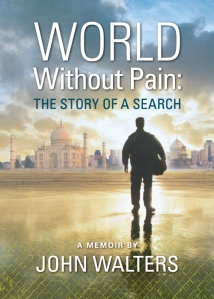
Material from several of my books first found print on my blog.  “The Lost Poem” is a section from my memoir “World Without Pain: The Story of a Search.”  Many, though not all, of the essays in “America Redux: Impressions of the United States After Thirty-Five Years Abroad” were first published on my blog.  My collection of essays on literature “Reviews and Reflections on Books, Literature, and Writing” is a compilation of essays that I first published on my blog.  I see no discrepancy with this.  You can read them here on my blog if you like for free, or you can have them all thematically compiled in my books for easy reading.  The “Reviews and Reflections” book, in fact, took a lot of work to assemble.  Not only did I compile the dozens of essays, sort them, proofread them again in order for clarity, coherence, and balance, but I also created an elaborate table of contents to accompany them so a reader could easily find particular subjects and stories.  In the print version the contents run to several pages, with each essay clearly delineated by subject and page number, and in the electronic version each listing in the contents section is hyperlinked to the matching article.

I can track daily how many people come to the blog and what pages they access.  When I first started my blog, I did not have many readers.  Days would pass when nobody would approach it.  Then, as I wrote more and more essays and posted them, the readership gradually increased.  It is still not what one would consider a popular blog.  In fact, it does not have any significant amount of steady readers.  Still I continue to put out my weekly entries.  Why?

For one thing, my persistence in continuing the blog comes from the same motivation that drives me to keep publishing books and stories when I have as yet not achieved any significant popular success.  Writing is my life’s work, my calling, my talent, that which I was put on this Earth to do.  As I have said before, they’ll have to pry the keyboard out of my cold dead hands.  The blog posts are ends in themselves, but I will also use many of them when I compile future books.  It’s all part of my ongoing legacy as a writer.

There have also been significant special moments, times when recognition of my efforts burst on me unexpectedly.  For instance, a few years ago after I wrote an appreciation of some of the great science fiction master writer Cordwainer Smith’s short stories, his daughter wrote to me saying how much she appreciated the essay.  On another occasion, after I had written reviews of a few of Henry Miller’s lesser-known books, someone who managed the website of the Henry Miller Memorial Library at Big Sur wrote to me and asked me to contribute a few short articles for the website.  I was honored to do so.

I know that some people handle their blogs flippantly and give the content no more consideration than the countless messages they text to their friends, but it has never been so with me.  As I said, I consider the blog a part of my legacy as a writer, and I give the blog posts the same care I give any other piece of work, whether a novel or short story or memoir or whatever.  I think the Internet is a wonderful tool for a writer.  I might post an essay here and nobody might read it.  But it is here, posted, for anyone to discover, on an ongoing basis.  I may not have much of a following now, but in the future when and if I do, whoever is interested in my work can come back and discover an entire library of material.  I wish I had had a blog and had been able to post to it back in my early travel days on the road in the mid-1970s, the days I write about in “World Without Pain: The Story of a Search.”  I would have been able to record all the fascinating details of every experience instead of being forced to put it all together in hindsight.

Posted in On Writing | Tagged , , , | Leave a comment

Book Review: Stranger in a Strange Land: The Original Uncut Version by Robert A. Heinlein

“Stranger in a Strange Land” is among those books that were life-changing and profound literary experiences when I was growing up.  It was a tremendously significant tradition-shattering revelation when I first read it, and coincided smoothly with the loose, iconoclastic hippy culture in which I soon afterwards became enmeshed.

I came upon the book almost by accident.  My maternal grandmother gave me a boxed set of Heinlein novels one Christmas.  I don’t think “Stranger in a Strange Land” was among them, but I was so impressed with Heinlein’s other works that I sought out more.  That’s when I came across this amazing and unique novel.  I remember then thinking that the novel fell more or less into two sections, one a rousing adventure and the other a more contemplative, albeit tongue-in-cheek look at contemporary inhibitions and morality.  I didn’t mind the radical nature of the social, psychological, and theological theories presented therein, because I was looking more and more at countercultural ideals and less at traditional society myself.  “Stranger in a Strange Land” became wildly popular in the sixties, influencing pop culture and even pop crime – most infamously in the case of Charles Manson and his murdering cronies.  It wasn’t the book’s fault, though.

Anyway, I have read the book several times since, but I think this is the first time I have read the uncut version.  I had no idea, in fact, that such a version existed.  I recently got it into my head that I’d like to read the book again – I can’t quite recall what brought it to my mind – and in perusing for a copy I came across this heavy, thick, uncut version at a big discount.  Why not? thought I.  More bang for the buck.  If the shorter version of the novel is great, then more of it must be even greater, right?

Well, not exactly.  As I said, in my early readings, the novel seemed to be divided into a first more adventurous half and a slower second half.  The thing is, the first half had always been my favorite, and I felt the novel bogged down in the late going.  This new version has 60,000 extra words, and it seems to me that most of them are in that first half, and they dilute the adventure, bog it down, take out the leanness of the narrative, give it a middle-aged spread.  Most of the extra wordage is Jubal Harshaw sitting down and expostulating with someone in a one-sided pseudo-conversation.  It just isn’t necessary.  It violates the old writer’s adage of show don’t tell.  Hell, I don’t care much about that rule myself.  I think it’s fine for characters to take off and expostulate and soliloquize and otherwise pontificate, and Jubal Harshaw is a great character, custom-made for delivering classic Heinlein viewpoint.  The problem is, there’s just too much of it.  The monolog goes on and on and the story suffers as a result.  I think, in fact, that the shorter version of “Stranger in a Strange Land” is better.

Don’t get me wrong.  This book is still great in its bloated form – in quality far beyond most other science fiction novels.  It remains a singular, unique, original piece of work even now, fifty-five years after it was first published.  And I would gladly read this version again if it was the only one around.

The book has its comedic aspect, and Heinlein obviously set out to shock.  The free sex and communal living was more radical when the book first saw print than it is now.  The cannibalism that Heinlein exaggerated from Christian ritual is wildly off-the-wall, and the book’s lengthy attempts to justify it are, in my mind at least, parts of the novel that miss the mark.  Still, although Heinlein wrote plenty of other first rate fiction, I think that this novel is probably his masterpiece, and a germinal piece of sixties literature.  Somehow it captured a bursting out, a freeing of the human spirit that would become evident by mid-decade.  I think part of the reason I come back to the novel is that it reminds me of what I sought in the sixties:  an alternative, a creative exuberance, a sense of liberation, an ideal of brotherhood for humankind.  Heinlein falls flat in some places:  his depiction of women as inferiors, the way some of his characters casually insult women, long sections of stilted dialog – but he captures the ambiance of an era, and for this readers are willing to forgive him his faults.

Posted in Uncategorized | Tagged , , , , | 1 Comment

The Lost Notebooks: The Birth of a Voice

When I set out on the road back in the mid 1970s it was a sprint for freedom but it was also born in the realization, or perhaps I should say the delusion, that until that point of my life I had nothing worthwhile to say as a writer.  That isn’t true, of course.  A writer can write anywhere, anytime, regardless of background or previous experience.  As Thoreau says, and I quote in “World Without Pain: The Story of a Search“:  “It is not worth the while to go round the world to count the cats in Zanzibar.  Yet do this even till you can do better, and you may perhaps find some ‘Symmes’ Hole’ by which to get to the inside at last.”  That’s what I was searching for, the inside.  I was looking for a way to draw out all that was pent up inside.  I was a surgeon needing to lance a boil so all the pus would come out – except I was confident that when it finally burst, the result would be rainbows and not corpulence.

I traveled light, of course.  In my duffle bag I kept a sleeping bag, a toiletry kit with a few essential implements such as toothbrush, toothpaste, razor and so on, a few alternate items of clothing.  Eventually I stopped wearing underwear under my jeans; one less thing, thought I.  On hot days I packed my leather Navy flight jacket in the bag as well.  Besides these necessary things, I had others I considered no less essential:  a book to read, a notebook, and a pen.

The notebook I took on my first journey to Europe and then to the East was a lined notebook with a black and white patterned cardboard cover.  For week, months even, it remained buried in my bag unopened.  In fact, I can remember initiating entries when I was sitting on a beach in Goa, India.  I clearly remember that occasion.  I was probably sitting on the sand.  The sun was bright.  I wrote no more than a few paragraphs and then put the notebook aside again.  On another occasion I sat on a hillside outside Kathmandu, Nepal, and recounted some of what I had been observing in that singular city.  On yet another instance I wrote while far up in the Himalayas somewhere northwest of Pokhara, Nepal.  I had gone up there all alone, my duffle bag on my shoulder, without a guide, without a map, following unmarked trails upward.

It was not until long afterwards, while back on the road again on the west coast of the United States, that I realized what a treasure I had in that notebook.  Or perhaps notebooks.  There may have been two by then.  I realized, with a flash of revelation, that I had found my voice as a writer back there on that journey to the East, that I had written honest words wrung out of my stark experiences, that, in fact, the words did not get more pure than those I had ready within those pages.

After I realized that, I bought more notebooks – larger ones.  I began to write every chance I got.  I was still on the road, still on the cutting edge of life, so to speak, with experiences leaping out at me one after the other.  In my travels I would stop wherever I had somewhere comfortable enough to sit and start writing.  I would write as fast as I could get the pen to move.  I would pour out whatever I was going through in words, one after the other, and when I was done I would close the notebook and move on.  Jazz prose, I called it.  I was like a musician composing a melody, but I was doing it with words instead of music.  I discovered that the fountain I had been seeking, my own personal fountain of youth, the fountain I had equated with puss from a boil, was not corpulent at all; it was not diseased, not evil, not degenerate, not weak.  In fact, it was pure, vital, strong, and erupted from the essence of the creative force within humankind, the same urge that caused some to draw on walls and others, once there was alphabet to codify speech, to record their experiences.

During this time, as I said, I was on the road, and I experienced periods of intense euphoria, but also periods of intense loneliness.  And my duffle bag grew heavier as I filled one notebook after the other.

During an interlude in Seattle while staying at my mother’s house, I transcribed some of the material from the notebooks.  The writings fit neatly into sections of autobiographical prose poetry, some of which I sent off to literary magazines.  The notebooks and all the manuscript carbon copies I stored in a box in the basement of my mother’s house.

Those notebooks are lost.  I would love to have them again.  I would love to re-transcribe them with prologues and epilogues and bind the material into books.  A writer’s wealth is in words, and I lost a fortune when I lost those notebooks.  They served the purpose, however, of releasing my voice.  I don’t know if a writer could sit down and write, “Blah, blah, blah…” until something meaningful came and truth would suddenly emerge.  As for me, I deliberately flung myself into stark, dangerous, unique experiences to prod the eruption of words, so to speak.  I don’t think the kind of danger I went through is even a prerequisite, though.  Life is fraught with danger, turmoil, conflict, opposition, whether one deliberately seeks it or no.  If a writer is honest with himself or herself and others, the truth will out, as they say.  And even in fiction, whether as writers or readers, that’s what we seek for: truth.  Whether the writer speaks from gut or heart or head, whether the goal is sheer entertainment or the passing on of core, essential reality, we want to feel that sincerity.  We want the writer to take us along on the journey, to see and feel whatever is present in the writer’s inner landscape, to be transported to the alternate universe the writer has envisioned.

For even the journey I recount in “World Without Pain” is not the same journey I recounted in my lost notebooks.  They are distinct alternate universes, born out of different times and places.  The writer I was back in the 1970s writing the notebooks is not the same writer I was much later while living in Greece and writing “World Without Pain” in retrospect.  In one instance I was living through the experience, in the other I was recalling whatever I could of it.

The point?  Both experiences are valid, and I wish I had the words from both.  But whatever a writer writes, it comes from the writer’s current reality and cannot be the same words that would have been written by an alternate self decades in the past.  All a writer has is the present in which to put out whatever words he wishes to present to the world.  Each word that comes forth is an accumulation of all the education and experience a writer has acquired until that moment.  A voice is a voice.  It speaks.

Posted in Memoir, On Writing, Travel | Tagged , , , , | Leave a comment

On Book Addiction, Time Magazine, and The Illustrated Encyclopedia of Science Fiction

I am addicted to books the way some people are addicted to cigarettes.  As soon as I finish one, I start the next – like lighting up a new cigarette off the smoldering butt of the last one.  To be able to accomplish this, I plan ahead.  Generally, I alternate between fiction and nonfiction.  I love both so much I don’t want to neglect one for the other.  So when I near the end of a nonfiction book, I scout around for a fiction book to replace it.

So it was recently when I was reading the final pages of “Prime Green: Remembering the Sixties” by Robert Stone.  I have a pile of unread books on a shelf next to my bed and I targeted a novel to read next.  But then…  I finished the nonfiction and laid it on my desk to review it, picked up the novel, and headed for one of my prime reading locations.

Now here I have to confess a major disagreement with Henry Miller.  I love his writing; he is a joy to read.  But in “The Books in My Life” he goes on page after page in a diatribe about why one should never read while sitting on the toilet.  That’s one of my favorite places to read.  It’s relaxing, which promotes the business at hand, and anyway, what the hell else am I going to do sitting there?  I get a significant amount of my reading done in the throne room.

Anyway, I read the back copy and the inside blurbs as I always do when I start on a fresh book.  I devour a book, every bit, leaving no scraps.  And I realized that this novel, a science fiction novel, had a plot with an element or two that bore some slight resemblance to a plot point or two of the very, very strange novel I am working on right now.  I’m not going to give you any details, because I never discuss details about works in progress, but suffice it to say that for now I decided to put this book aside, as I didn’t want it influencing the course I was taking in my own work.  I have no doubt the two novels are substantially different; I just didn’t want to be at all affected by the themes or ideas of others as I took the journey of discovery of writing my own book.

But then – gasp – this left a void.  I wasn’t sure what to read next.  I had other books, sure, but I always put a lot of thought into what I read; I don’t just grab something off the shelf.

In the meantime, I can’t just sit there doing nothing, so I grabbed the latest copy of Time Magazine.  Several months back the middle school my son attends was having a fund raising magazine subscription sale, so as a show of support I bought a subscription to Time.  I used to read it in Greece once in a while to keep up on certain news events after the fact, and I thought I might enjoy browsing through the issues once in a while.  Several of the cover stories seemed to be on interesting topics.  I read about the early history of Time Magazine recently in the brilliant “The Powers That Be” by David Halberstam, which deals with the era when the magazine was a shaping force in American politics and history.  Not any more, sad to say.  I found the articles boring and the magazine itself stale, redundant, anachronistic.

So I had to cast about quick for other reading material.

And I grabbed “Science Fiction: The Illustrated Encyclopedia” by John Clute.  It’s a 1995 edition, a huge coffee table book loaded with pictures and text.  I came across it while attending the local Potlatch science fiction convention a few weekends ago.  It was a write-in auction item, and the opening bid was five dollars.  It’s worth a hell of a lot more than that, thought I, and wrote down my auction number.  Lo and behold, no one else bid on the item and it became mine.  A great bargain.  It’s chock full of the history of the field, and it focuses mainly on books and writers, which suits me just fine.  It’s not really the type of book that’s meant to be read cover to cover, but I spent a pleasant few days going through it, reading highlights, re-familiarizing myself with the history of the genre.

In the meantime, I ordered a book I wanted to read from Amazon.  One of my sons has an Amazon Prime membership which he can pass on to several family members, so I received the book posthaste with two-day shipping.  Just as I was finished perusing the encyclopedia, my next reading project arrived.  Crisis averted.

This reading addiction is something I have had for as long as I can remember, and something from which I have no desire to be cured.  Apart from possibly having a hand in my near-sightedness, it has done me well.  I have traveled far and wide in the world of books.  It reminds me of what the wonderful, beneficent father says in the film version of Jhumpa Lahiri’s “The Namesake” – I can’t remember the quote exactly, but it was something to the effect that books allow you to travel the world without ever going out of your door.  Great movie, by the way.

Posted in Book Reviews, Memoir, Reading | Tagged , , , , , | Leave a comment