Book Review: The Things They Carried by Tim O’Brien

I had forgotten the joys of perusing books in libraries, but my present inability to afford to buy books has brought it back.  I’ve found a number of quality books I would have never thought of reading, among them this classic short story collection.  The cover touts it as a twentieth anniversary edition, although the book was first published in 1990, which would make it twenty-five years old now.  I picked up a crisp, clean hardcover copy, newly acquired by the library and possibly never read before.  Nice.

Anyway, Tim O’Brien is an award-winning author known for his books on Vietnam, and I haven’t read too many of his works before.  I know that I read the short story “The Things They Carried” in some anthology years ago, but that’s about it.

This is a very good short story collection.  Some of the stories are superb and rank among the best short stories I have ever read.  I’ll get to those in a moment.  Generally, O’Brien writes in an autobiographical tone, even using his own name when he refers to himself as a first-person character.  It’s hard to know what’s fiction and what’s fact in the collection, and O’Brien alludes to that, intimating that it doesn’t matter.  He alternates between referring to himself as a middle-aged writer in the States looking back on the war, and himself as a foot soldier in the war along with his platoon buddies who supply the material for the stories.

Evidently O’Brien went to the war begrudgingly, having been drafted, and the fear and proximity to death and hellish things he saw and experienced changed him, of course, and writing about it got it out of his system.  Sort of.  It came to me that Vietnam was to O’Brien what the Klondike was to Jack London – a treasure trove of story – but the analogy is flawed.  London went to Klondike seeking adventure and story material.  O’Brien was dragged to Vietnam by the U.S. government.

The book brings out the insanity of the war, all right, from the perspective of those on the ground.  It’s a series of grotesque images and descriptions of how the GIs coped with their terror.  They were just young kids, after all, some of them still teens, when they were pulled away from their families and schools and girl friends and so on and thrust into combat.  Most of them were clueless as to why they were there.  The situation wasn’t as clear-cut as it was, say, during World War Two, when people were fighting for world freedom.  This was a civil war that sprang from a colonial war of liberation of the Vietnamese from the French, and the kids on the front lines had only the vaguest idea of the politics involved.

The stories themselves are dark, every one of them.  Considering their subject matter, there is really no alternative.  The Vietnam War was a dark period in the American consciousness.  Even in the movie “Good Morning Vietnam,” which has its moments of comedy, the darkness bleeds through.

“The Things They Carry” is the most celebrated and famous story in the collection.  It’s perhaps the most accomplished from a literary point of view, but I would not say it’s the best.  Two stories absolutely floored me with their brilliance, and another came close.  One was a first-person emotional piece called “On the Rainy River” in which a young man, purportedly O’Brien himself, about to be drafted, snaps, gets in his car, and drives for the Canadian border.  His conscience cannot allow him to participate in the war, so he has decided to flee.  Along the river that separates Canada from the United States he pulls into a fishing camp.  It’s off-season and the place is empty except for the owner, an old man over eighty years old.  The fleeing youth spends several days with the old man, who never attempts to confide in or argue with him, but his reassuring presence stabilizes the youth, who finally decides to go back and accept being drafted and sent off to war.  O’Brien makes it clear that he considers it the less honorable and more cowardly solution, but the protagonist does it mainly out of embarrassment.  He could never face his family and all those he knew if he didn’t go through with it.

The strongest story in the book for me, though, and what I consider an example of a perfectly executed short story, if there is such a thing, is “Sweetheart of the Song Tra Bong.”  It’s dark as hell itself.  It gave me the shivers.  I couldn’t put it down.  A platoon is stationed on a remote outpost on a hill surrounded by jungle along with a few other troops and a group of Green Berets, who the other military personnel call “Greenies.”  The platoon members are talking about the women they left behind, and one of them says he’ll invite his girlfriend for a visit.  Lo and behold, weeks later, the seventeen-year-old girl shows up on a supply helicopter, young and cute and innocent.  At first it all seems idyllic, and the soldier and his sweetheart share a bunker, renew their relationship, and even get engaged.  The girl enjoys herself by swimming in the nearby river, taking short walks, and learning to shoot.  Gradually, though, the spirit of the war grips her and she begins to change.  She loses her innocence.  She goes out on patrol with the Greenies for days and weeks at a time.  She leaves her boyfriend and stays with the Greenies in their compound, where she takes to burning incense, chanting strange songs, and wearing a copper necklace laced with human tongues around her neck.  When her boyfriend tries to take her back, claiming that she doesn’t belong there, she tells him that he’s the one who doesn’t belong, that she has grown enamored of the land and loves the ecstasy and terror of patrolling through the Vietnamese countryside.  In the end, she disappears into the jungle and never returns, although those remaining at the outpost claim that they can sense her presence in the darkness when they go on patrol.  This story is amazingly effective in its descent into darkness.  It reminds me of Jack London stories such as “In a Far Country” and “The Red One,” both of which describe intruders succumbing to dark, haunting alien lands.  It also reminds me of the Creedence Clearwater Revival song “Run Through the Jungle,” which has a similar dark tone.

All in all, this is an excellent collection and O’Brien is a great writer.  It’s short, but it works at this length.  And O’Brien is spare with his words; for the most part, the prose is straightforward and free of embellishment, which is as it should be.  Recommended.

Posted in Book Reviews | Tagged , , , , , | 1 Comment

Love the One You’re With

I’m a writer.  I’ve made that statement in plenty of blog posts and told lots of people whenever the subject comes up of what I do.  A writer writes.  That’s a truism, of course, but plenty of writers have had to emphasize that point when people point out their supposed prolificacy.  As Harlan Ellison has said, you don’t call a plumber prolific for fixing lots of pipes, and neither should you call a writer prolific for writing lots of words.  If you do it every day as a full time job, the words add up.

Recently I have managed to snap out of a depression having to do with my source of income that I’ve been in for quite some time.  I’m dirt poor, there’s no mistake about that, but somehow my sons and I get by, live in a decent, albeit small, apartment, eat decent food, stay clean and productive.  My depression had not so much to do with our poverty, but rather the fact that instead of spending most of my time writing what I want to, which is to say my novels and short stories and memoirs and so on, I am forced by economic expediency to devote my prime writing hours to low-paying non-fiction piecework that barely keeps us paying the bills and earns me no ongoing royalties.  It’s a constant treadmill that gets me nowhere.  So I would do the work I have to do but begrudge the time I had to devote to it.  Talk about your downward spiral.  I’d wake up every morning ruing the fact that I couldn’t do what I wanted.  Sure, I was thankful for the work.  It kept us alive, after all, and was a damned sight better than having no work and scrabbling for it, a process I describe in my memoir “America Redux: Impressions of the United States After Thirty-Five Years Abroad.”  That first year or two back in the States looking for work was hellish compared to the situation I am in now of being an independent contractor supplying work for an Internet content mill.  Could be worse.  Much worse.  But knowing that things could be, and had been, much worse didn’t alleviate the feeling that I was missing out, that I was pissing away my talent, wasting my time doing work that was getting me nowhere.

As you could see, I was in a dead end rut.  Circumstances being what they were, it was tough to snap out of it, because improving my state of mind seemed to be tied up with improving my career, which was something not in my hands alone but also caught up in the choices that editors and readers make.  I am making progress with my own work, the work I love to do, but it’s slow progress.  I can’t really force things to happen more quickly.  I already work most days from about seven in the morning until almost midnight, taking breaks only to shop, prepare meals, clean up, and take a necessary afternoon nap.  No, there’s not too much slack time to play with.

So what to do about it?  I saw no way out.  Hence my despair.  Well, the hell with that.  Depression sucks.  So what finally happened?  I realized that as a writer, the talent comes from within.  It’s not something that runs out.  It’s like a fountain that doesn’t run dry.  So it costs me nothing extra to throw all of my talent into whatever piece of work I am doing, whether novel or short story or memoir or blog post or Internet article some company is paying me a crappy piecemeal set wage for.  I’d love to spend all my writing time mining my own gold, sure.  But if I can’t, at least I’m writing and not doing something else, and I can have fun making that piece of writing, whatever it is, the best it can possibly be.  It’s like that song Stephen Stills used to sing.  If you can’t be with the one you love, love the one you’re with.  I did a quick analysis in my head and figure that I make about ninety percent of my income writing non-fiction articles and ten percent through book royalties and short story sales.  So I pretty damn well better learn to enjoy writing non-fiction articles or I’m going to be miserable ninety percent of the time.

I may be poor, but at least I’m writing fulltime.  I may not always get to write what I want, but at least I’m writing fulltime.  There’s not a job in the whole wide world I’d rather be doing.  It was this realization that snapped me out of my depression.  Just last night I was reading a thread on a writer’s forum about how much money most writers earn.  It’s not much.  Sure, there are those who make much, much more.  And self-publishing has opened the gates to make it possible for many more people to make a decent wage writing.  But it’s not easy.  There are no guarantees.  One year it may all come your way, and the next year things might change and the royalties drop and it’s a constant struggle.  Writing is not an occupation for those who want to live on easy street.  As the Grateful Dead sing in “Uncle John’s Band,” life on easy street isn’t as safe as it appears anyway.

The same principle applies for blog posts too.  I put in as much effort with blog posts as I do with my fiction, even though I don’t have many regular readers.  I do get notes from time to time about how much someone appreciates a post.  That’s a good payback.  I knew that the collection of book reviews I put together about a year ago wouldn’t have as much chance of selling as fiction, but I did it anyway because it’s the type of book I look for sometimes, and such books are hard to find.

In closing, I have learned to enjoy life more not so much by accepting my circumstances, as I still struggle to produce fiction and hope that someday it will support my sons and I, as in giving my all to whatever I have to do.  Some – actually all – of my sons are into exercising and keeping fit.  It would be ludicrous of them to go down to the gym and pump iron with fifty percent of their energy, thinking that they don’t really like to do it as much as their martial arts workout so why put in the effort.  No, you have to give one hundred percent in whatever you are doing.  Giving my all in the articles I write for cash makes me a better writer in the things I like to do.  Why hold back?  The talent replenishes itself faster than I can use it up, and the more I invest in it, the stronger and deeper it gets.

Posted in On Writing | Tagged , , | 1 Comment

Book Review: The Innovators: How a Group of Hackers, Geniuses, and Geeks Created the Digital Revolution by Walter Isaacson

This is one of those rarities among books:  fascinating, well-written, and just the right length for what it sets out to do.  It tells the story of the creation of computers, programming, the transistor, the microchip, video games, the Internet, software, and the worldwide web from the time that Ada, Countess of Lovelace, daughter of the famous British poet Lord Byron, first conceived the idea of a computer until the present tech-saturated era.  On the way it tells the personal stories of Alan Turing, Vannevar Bush, Bill Gates, Steve Jobs, Larry Page and many other scientists, engineers, and innovators.  It even links the hippy movement and its search for community in the 1960s, exemplified by Ken Kesey and Steward Brand, with the rise of the personal computer.

You’ve probably heard a good deal of this before in bits and pieces, as I have, but the value of this book is in weaving it all together into a coherent and easy-to-follow narrative that is nevertheless detailed enough to give an overall picture of how our present ubiquitous use of personal computers, smart phones, and so on evolved.

It’s very modern history.  As I read I was able to picture where I was and what sort of technology I had in the various stages of its development.  My family acquired our first computer, a 386 that ran on DOS, back in the 1980s in Athens.  By the time we left Athens to move to Thessaloniki, we had graduated to a 486, a color monitor, and rudimentary Windows.  We first obtained a modem and Internet connection soon afterwards, with the help of a computer teacher at the school where I taught English.  One of the first websites I ever looked up was the Science Fiction Writers of America website, from which I was able to obtain links to market lists of places I could send the stories I was writing.  The first game my boys played was a slow, clunky DOS version of Colonization.  Compared to games nowadays it was profoundly simple, but they loved it, taking ten minute alternating turns as often as we would allow them.

Many of you growing up in the latter half of the twentieth century have similar stories to tell of your early encounters with computers and related technology, and that’s one of the great appeals of this book.  It’s history that touches you personally.  You lived through it, and this book fills you in on all the behind-the-scenes details that you never knew.  Or maybe you knew some of it, but this book puts it all together into a cohesive whole, one part linked with another to tell the entire story.

Nowadays, as a freelance writer, I use a computer all day long almost every day.  I can’t imagine what I would do without one, but when I was young there were no such things as personal computers.  Computers were huge, bulky entities that filled entire rooms, accessible only to scientists and privileged academics.  That the technology has come so far, so fast is astonishing, and this book tells the story of how it all came about.  I highly recommend this book to anyone, which is virtually everyone, who uses modern computer technology.  It reminds you not to take the miracles of the modern age for granted, but to understand the labor and collaborative effort that was necessary to create the technology we all enjoy and depend on.

Posted in Book Reviews | Tagged , , , , | Leave a comment

Failure and Success

Recently I was writing an article about people who experienced adversity in life and went on to become famous and successful.  I’m sure you would recognize all of the names.  A number of things struck me as I pondered the resource material the publisher gave me and wrote the article.

First of all, the people recognized as examples in the lists I perused represent a minute fraction of humankind, and yet they are touted as the best of the best, at least in the estimation of many admirers.  Why?  Many people bravely face and struggle against the adversities these few overcame and never get credit for it.  Indeed, many fail and sink into poverty, depression, illness, isolation, obscurity, and death.  I consider for example parents, who if they take their responsibilities seriously are some of the greatest of heroes.  Or great writers of the past whose works never reached the printed page.  Or soldiers who fought valiantly and yet lost the battle.  So many people with good hearts, true motives, kind dispositions never show up on lists such as the ones I was researching because those with the capability to publicize them never even know they existed.

And we have these few on a numbered list who some writer thought to honor as exemplary role models.  One person, someone in the tech industry near the top of the list, I have been reading about recently, and I know for a fact that he is not someone fit to emulate but rather a ruthless industrial cutthroat who slammed doors in other people’s faces so that he could get ahead.  I did not include him in the article I had been commissioned to write.  I wondered how many other people there are who are just as talented as the people on this list whose morals didn’t allow them to do what this person has done to get ahead, and as a result are not as rich or famous.  Sometimes it’s hard to talk about integrity when you’re dirt poor, but there are many, many people that no one will ever hear of who made the right decisions – decisions that may have cost them some obvious rewards but allowed them to retain clean consciences.

When I write of these things I’m not riding some sort of moral high horse.  Hell, I want to be rich and famous.  If I could only take one I’d take the riches and leave the fame, as I tend to be the shy sort, but the two sort of go together in the writing game.  I’m tired of scraping and struggling.  I want to do some more traveling and see some of the wondrous sights I saw when I used to hitchhike from place to place.  Back then if I wanted to go somewhere, even halfway around the world, I’d just get up and go, money or no money.  It’s a little more complicated now, as a parent.  I can’t just take off and leave the kids behind, and I can’t take them with me without financial resources.

I have often contemplated what constitutes success as a writer.  Is it the number of readers you have?  The amount of money you make?  Or is it the words you produce?  As far as amounts of readers and income, compared to many other writers, I am pretty much a failure.  If you judge by the works I have produced, I am a success.  Five novels, five short story collections, three novellas in a series, three memoirs, a collection of essays.  They are good books.  Each time I do the best work of which I am capable.  As a writer, I can’t do more.  As a publicist, perhaps, but not as a writer.

Back to our strange celebrity culture that idolizes characters who are often reprehensible.  Popular news outlets report on their wardrobe changes, sexual proclivities, and misdeeds as if it is all important news, and the readership lets out a collective gasp when they hear of all the oddities, but who really gives a damn anyway?

Yes, some of these people in the spotlight did overcome great odds to get where they are.  But you know what?  Many more people around the world overcome great odds every day just to survive and keep their children alive.  I was writing another article recently about the World Food Program that the United Nations implements to help starving people in crisis situations.  Most of these people receiving beans and rice and vegetables to keep themselves and their children alive will never “overcome adversity” and become famous billionaires.  Yet hopefully they will live and thrive in their own ways when their crises are averted.

Sometimes I read these bullshit articles about celebrities too, when I am browsing the Internet at the end of a long day.  Sometimes I wish I had the kind of money they earn, but I never envy them or wish I was in their place.  And I certainly don’t look to them as role models.  Our consumer society rewards some people more than others because they sell more movie tickets or other products, but true heroes are all around you, in your midst.  They may never make the media top ten lists, but that doesn’t in the least diminish their worth.

Posted in On Writing | Tagged , , , , | 2 Comments

Book Review: Lovely, Dark, Deep: Stories by Joyce Carol Oates

All of the stories in this book are dark; some are deep; only a few are lovely.  At first I thought the title was an original fabrication referring to the stories themselves, but in fact it is culled from the line in the Robert Frost poem “Stopping in the Woods on a Snowy Evening” that says “The woods are lovely, dark and deep…”  One of the stories, in fact, concerns a fictitious interview with Robert Frost, in which the poet is presented as an egocentric scoundrel.  I almost never made it to that one, though.

It started like this…  I like to alternate reading fiction and nonfiction, and I was coming to the end of a lengthy biography and cast about for a piece of fiction to read.  It had to be something I could obtain at the library, as I am in straitened financial times.  I decided to peruse recent awards lists, and found this book, a finalist for the most recent Pulitzer Prize.  Okay, why not?  The last collection of short stories by Oates I had read, “Wild Nights,” had been entertaining.

The book is divided into four sections, with a few stories in each section, and the fourth composed of a single long novella.  I started reading, and found the first several stories to be mediocre.  Worse, they were depressing.  Not just depressing; they screamed out angst and despair, one after the other.  I thought, what the hell?  To be honest, I couldn’t understand how stories of that quality could be nominated for a prestigious prize like the Pulitzer.  Well, don’t get me started on the politicking that goes on with awards nominations of all sorts; I don’t want to get into or have anything to do with it.  But it did lower the Pulitzer several notches in my estimation.  I have been going through a lot of rough times myself recently:  lonely, poor, frustrated professionally.  I didn’t need to read literature that would only bum me out further.  I could sometimes hear Neil Young playing “Don’t Let It Bring You Down” in my head.
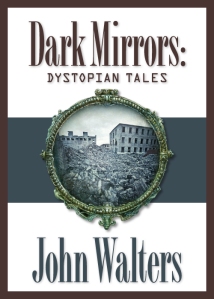
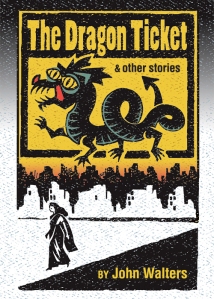
Anyway, loathe as I am to abandon a book in the middle, I almost tossed this one at the end of part two.  One reason is that I had borrowed a very interesting-looking nonfiction book from the library that I was anxious to start.

Something gave me pause, and I am glad I continued – because the last two sections of the book are by far the best.  In the third section Oates indulges in some fantasies, ghost stories.  The writing is more tight and controlled, and my interest level rose.  She seemed to be going somewhere, saying something, and although the themes were still dark, at least she was not just screaming in frustration.

The gem of the collection, though, is the last novella, “Patricide.”  It is the story of a Nobel Prize winning author, told from the viewpoint of his doting middle-aged daughter.  He’s a brilliant writer but also a frantic womanizer.  He has married and divorced four wives, and as the story begins has just met a woman young enough to be his granddaughter who becomes his newest fiancé.  Oates brilliantly depicts the complex relationships between the author, his new young love, and his protective daughter, and weaves in fascinating background about the author’s literary career and past wives.

In my opinion, this book would have been much stronger if only the stories in the last two sections were included.  If that had been the case, I would have given it high praise.  As it is, I acknowledge that in virtually every short story collection some stories are stronger than others.  But it was a grave editing error to put so many inferior and frustratingly negative stories in the front of the book and the finest stories in the back.  Perhaps if the stories had been more skillfully arranged, interspersing the fantasies with the tragedies, I would have been able to handle the bitter, despairing ones better.

Posted in Book Reviews | Tagged , , , | Leave a comment

Roadside Stands

While I was preparing to upload some short stories to Kindle for publication, somewhat ruing the fact that I could afford only the most rudimentary covers for them – a few bucks for an illustration from Dreamstime, simple formatting and fonts in PowerPoint – I abruptly remembered the summer roadside fruit stands we used to frequent in Greece.

We would be on our way to one of those splendid sandy beaches fronting the bathwater warm ocean on Halkidiki – that’s what they call the three peninsulas that stick out into the Aegean Sea like fingers east of Thessaloniki.  On the weekends the side roads off the main highway would be packed with cars full of people hitting the beaches, and along the side roads were numerous makeshift fruit and vegetable stands.  They were set up by local farmers and the goods came right off the fields behind the stands.  All the fresh produce would be seasonal.  There would be tomatoes, cucumbers, eggplant, zucchini, grapes, honey melons, watermelons.  People from the city would stop along the side of the road and fill their trunks with bags and crates of produce, because not only were the goods cheaper than they could find in the city supermarkets, but the quality was much higher as well.

The thing about these wildly successful entrepreneurial endeavors, though, is that they were entirely makeshift.  The shops would consist of rough tables or stands, a piece of canvas slung overhead on poles for protection from the sun, the produce displayed in wooden crates.  Sometimes there was a handwritten sign, black marker on cardboard, and sometimes there was no sign at all.  The farmers did the best they could with what they had, and folks from the city, recognizing quality goods, came regardless of the less-than-polished conditions.

Sometimes smaller farms sold only one or two products at these roadside stands.  You might see an old man or woman at the side of the road with one crate of lemons or watermelons propped up on a stool.  In the city, around the outskirts of the larger weekly street markets, there were always old people selling small quantities of goods, sometimes only a dozen or so bundles of herbs out of a cardboard box.  The security personnel policing the markets making sure the larger dealers gave receipts so they’d have to pay taxes left these smaller dealers on the backstreets alone, realizing that selling those bundles of herbs might make the difference of a widow or widower having enough cash to buy food for the week.

What I like about Greece is that there is room for all these vendors, and that they are not criticized or ostracized for the size or quality of their displays.  The United States could learn a lot about tolerance from European countries whose people have had to put up with each other in much narrower confines – not always successfully of course – for many more hundreds of years.

Back now to my short story covers, which I realize are not as professional as they would be if I had hundreds of dollars to spend on them instead of practically nothing.  I suppose I’m like one of those road side vendors.  Most of you might pass by without realizing I have quality goods to sell because my display doesn’t have the glitter and neon of the big chain supermarkets, but I’m going to do the best I can and put them out there anyway because I have to – I want to – I feel compelled to.  Maybe someday I’ll have the finances to upgrade them.  Until then, be assured that these covers package quality goods.  One of the stories I’m uploading now was even accepted and published in an international science fiction anthology.

I’m reminded of the covers of Hugh Howey’s “Wool” series when the stories first appeared as individual novellas – rudimentary at best, he’s told us on his blog.  And yet people bought them anyway.  Like that wonderful fresh produce we bought by the side of the road on the way to Greece.  We didn’t care that it came in wooden crates.  It was inexpensive and fresh and delicious; that was enough for us.  I’m very thankful for the self-publishing venues available nowadays on which writers can display their goods for sale.  Some spend hundreds of dollars on breathtaking covers; they’re like the brand shops in the malls with their garish, eye-grabbing displays.  Others, like the larger roadside produce stands at Halkidiki, rely on simple signs and word-of-mouth to make their sales.  Yet others put up literature with unadorned covers that approximate those poor widows’ cardboard boxes.  There is room for all.

Posted in Memoir, On Writing | Tagged , , , , | Leave a comment

Book Review: Theodore Rex by Edmund Morris

This is the second volume of a trilogy on the life of Theodore Roosevelt, one of the most dynamic of U.S. presidents.  The first volume, “The Rise of Theodore Roosevelt” deals with his youth, education, early years as a rancher in the Badlands of South Dakota, and eventual rise in politics to the vice presidency under McKinley.  McKinley’s assassination at the end of the first book propels Roosevelt into the presidency.

The second volume begins as Roosevelt, who at the time that the president is shot is far off in the Maine wilderness, makes a long journey to Washington D.C., not knowing if the president will live or die, but with a premonition that he is traveling to his destiny.  As Morris recounts details of the journey, he brings the reader up to date on the political situation in the United States.  By the time Roosevelt reaches his destination, McKinley is dead, and Roosevelt must immediately take the reins of the government.

This volume describes Roosevelt’s two terms in office as president, although at least two-thirds of the book is devoted to his first term, during which he consolidated power and achieved milestones such as the treaty that initiated the building of the Panama Canal, the settling of rebel insurgency in the Philippines, the strengthening of the U.S. Navy, and an attack on and legislation against monopolistic trusts seeking to control large sectors of the U.S. economy.  The description of his second term is almost anticlimactic in comparison.

For most of its long length, the biography held my attention better than most novels.  Morris is a better writer than most novelists.  His research is exhaustive, but he melds the wealth of material together in a tight stream of narrative.

Morris certainly has a charismatic main character in Theodore Roosevelt.  Regardless of what one thinks of his personal opinions or political inclinations, the man was dynamic, forceful, persuasive, and intelligent.  As long as he held the presidency he kept strict control of governmental power.  It is fascinating to read how he reacts to one crisis after another, although it is difficult to fathom his need to assert his manhood by going out into the wilderness and slaughtering animals.

Contradictorily, though, his love for nature and the wild led to one of his greatest achievements:  the establishment of a network of national parks, forests, and monuments to preserve the country’s natural resources for future generations.  Without his relentless devotion to protecting the natural beauty of the United States, it would long ago have been decimated by amoral entrepreneurs.

The book’s pace slows a bit in the last sections.  Perhaps, as I said, it reflects the fact that Roosevelt’s first term was far more dynamic than his second.  By the time his second term came to an end he was exhausted, and refused to run for a third term, although his popularity ensured that he would almost certainly have won the Republican nomination and the subsequent election.

This is an excellent book, although in a way it lacks the scope of the first book, being necessarily confined to Roosevelt’s actions in the White House as chief executive.  In “The Rise of Theodore Roosevelt,” he had to struggle against innumerable odds, and the force of the book is in how he overcomes one adversity after another.  In “Theodore Rex” he has arrived, so to speak, and despite his having to contend with often recalcitrant Congressional personages and foreign governments, one does not sense the same sort of peril or odds against him as he struggles.  Still, the book is worth reading not only as the portrait of a singular individual but as a reflection of the era in which he lived.

Posted in Book Reviews | Tagged , , , , | Leave a comment

Book Review: Blackout by Connie Willis

I approach this review with trepidation.  I admire Connie Willis and her writing.  I have read several of her books and a lot of her short stories.  She has won more major awards in the speculative fiction genre than any other writer.  This novel and its conclusion “All Clear” won more awards for her.  I have to admit, however, that despite moments of brilliance in “Blackout,” I found the novel dissatisfying.

For one thing, it’s only half a novel.  The publisher for some reason – well, it’s not hard to guess the reason – decided to snap the novel in half and publish it in two pieces.  I am going through a bout of severe poverty and so am trying to use the library as much as possible rather than buy books.  And my local library has a copy of “Blackout” but not of “All Clear.”  Frustrating.

I recently read a thread in an online forum by writers about writing discussing a recent phenomenon of publishers ripping whole novels in half or thirds, often leaving them at cliffhanging moments, and selling them in sections to increase profit.  Overall, opinions were largely negative of this practice, the general consensus being that a reader paying for a book wants a complete reading experience.

Be that as it may, as I read my way through this first volume, I was struck by several things.  It has fascinating characters.  Willis has done her homework and brings Great Britain during World War II to life with great effect.  She has a talent for showing not telling, for using the actions of her characters and the dialog to advance the plot.

However.  I thought the novel was way too long.  Some of the story threads could have been eliminated to focus on the most interesting ones.  Sometime Willis has characters running around looking for something or someone first here and then there and then another place, and in the end they don’t find what they are looking for and that’s another chapter.  I feel the two-part novel could have been trimmed down to one reasonably long novel and it would have been greatly improved in the process.  I felt myself drawn into the characters and their situations, the time travelers caught in the midst of a deadly conflict, but it took too long for things to happen.  I felt myself tempted to skim – and I hate skimming when I’m reading a book.  Any book worth reading is worth reading in total.

Another problem I had with the characters was their endless ruminations.  Always wondering what if, what if…  All right, it’s natural to be disconcerted if you find yourself trapped in another era, a very dangerous era in time.  But I kept thinking that the time travel elite back there in the future would have chosen level-headed, stable people for these forays into dangerous pasts.  I especially became very frustrated with one character who goes on page after page worrying if he has altered history.  He should have very quickly come to the logical conclusion that he has no way of knowing one way or the other, and it is a waste of time and energy to bother speculating about what might have been changed.  This should have been in time travel 101 when he was recruited in the first place.  The point should have been survival, not negative metaphysical meanderings.

As I mentioned, though, the book has its brilliant moments too.  It deals with characters caught in the London Blitz, the evacuation of Dunkirk, survival in the London undergrounds while bombs burst overhead.  It’s a fascinating look at how people coped under the constant bombing and imminent threat of invasion.  I just wish the book had been shorter and tighter and all in one piece, that all of the extraneous and unnecessary meanderings both physical and mental could have been cut out and Willis had concentrated on the story.  I really want to go on to read “All Clear,” when I can get hold of a copy, to find out what happens to all the characters, but at the same time I dread digging through all the superfluous bits to get to the heart of the matter.

Despite its flaws, though, in “Blackout” Willis has taken a profoundly important part of history and imbued it with life and renewed significance.

Posted in Book Reviews | Tagged , , , , , | Leave a comment

A Brief Glimpse of the Goal

A mini-crisis happened this week which might have passed like the proverbial water under the bridge except for my reaction to it.

As I have mentioned before, I pay the bills by writing short nonfiction articles, usually from five to seven a day.  I work hard at it.  It pays little, and I have to write and submit constantly to generate enough income to keep afloat.  Sometimes the constant pressure of the work exhausts me, but I keep at it day after day, knowing that I work not for myself alone but for my sons.

It wasn’t always like this.  During the ten years or so in Greece before I left, I had a good, high-paying, well-respected job teaching English as a second language.  But when I came to the States with my sons to escape the sinking ship of the Greek economy, I had to start from scratch.

Every day I dream of and work towards the goal of writing my own work, my fiction and memoirs, full time.  Instead of waking early, grabbing my coffee, and researching and writing myself into a frazzle for the benefit of an Internet content mill, I long to get up early, grab my coffee, and write what’s really in my head and heart screaming to come out.  Eighteen published books and a lot of short stories and there’s still a lot I haven’t had time yet to say.  That’s my dream; that’s my goal.

So I had written several articles in the morning, took my customary brief nap, got up, grabbed my coffee and sat down to write more articles, but I could not access the articles on the website that posts the assignments.  I went away, did the dishes, did some general cleanup, came back expecting the problem to have been solved, and this time the website was blank.  No assignments at all.

I should have been mortified.  This was my bread and butter, after all.  But I wasn’t.  I breathed a psychic sigh of relief.  It has been stressful keeping up with all that crappy hack writing.  Oh, I do my best and get accolades on the quality of my work from the corporate end of things, but nevertheless the pay is poor and I have to work very hard to keep up.

So I was relieved.  In the back of my mind I knew the assignments would return, at the most in a day or so, but for a brief period I basked in the freedom of no work.  The next morning I allowed myself the luxury of working on my novel-in-progress at the beginning of the day rather than staying up to do it after all the other work is done between eleven and midnight.

Ah, sweet liberty.  At least I had a brief whiff of its clear, clean fragrance.  For by midmorning I had discovered that the corporation had changed sites (without, by the way, informing its writers) and now offered the assignments elsewhere.  I switched over without difficulty and am back at work.

But those brief moments when I had pseudo-reached my goal, when I tasted the freedom of putting my own work first…

In the past there were times when I was able to focus on writing in the fresh bright hours of the morning.  In Greece, for instance, I had the summers between school sessions, and during those times I would turn out a novel, or a memoir, or a series of short stories.  When I went to Brooklyn to spend the summer being a caregiver for one of my sons who had had a nasty accident and was temporarily disabled, I managed to wake up early and write 1,500 words or so a day and finish a novel.

Now, though, at this particular stage of the journey, I have to put the hack articles first or I can’t churn out enough to get by.  I have to keep reminding myself that it is temporary.

Recently, when assignments have been slim and I am too exhausted to continue with the junk articles, little bits of income have popped in at fortuitous moments from my own work: royalties from Amazon and Smashwords, payment for an article posted on the Science Fiction Writers of America website, other payments for short stories appearing in magazines and anthologies.  It gives me hope that the tables will turn for good, that momentum will build sufficiently for me to make a living at the work I love.

Posted in On Writing | Tagged , , | Leave a comment

Getting Rid of Things

Yesterday I did two things I almost never do.  I stopped reading a book I had started, and I threw another book in the trash.  The book I stopped reading I had picked up at the library, so I could hardly throw it away.  I wouldn’t have anyway; it was boring but innocuous.  The other book, though, a very famous book, a Pulitzer Prize winner in fact, I skimmed through because I was looking for something new to read after abandoning the other one, found some passages that were genuinely abhorrent to me, and threw it in the trash because I knew I would never read it and didn’t want my sons to read it either.
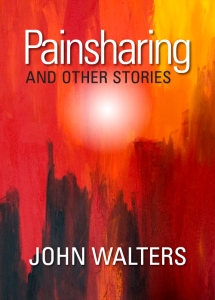
This isn’t like me.  I usually hang on to things, especially books.  And I almost never stop reading a book after starting it.

Times change; habits change.  Life is short.  Maybe not for you, but it’s getting shorter for me.  And I am coming to the realization that I don’t want to waste my time or clutter up my space with things I don’t need.  Several weeks ago I actually purged some books off my shelves and took them to the local used book store to sell, admittedly for credit to buy more.  I don’t own many clothes, but some of those in my closet I have never worn since I brought them with me from Greece three years ago.  I won’t miss them at all if I donate them to charity.  They may be of use to someone else.

When ruminating about wastage, I realized that the same principle holds for things that take up our time such as events, parties, customs, traditions.  Very few things we do in life are obligatory.  Most we impose upon ourselves.  We need to choose that which benefits us and eschew that which bogs us down or wastes our time.

As a writer, I find myself sometimes slashing off hunks of prose that serve no purpose.  Sometimes a story that has come to a grinding halt needs the last few paragraphs lopped off so it can go off in another direction.

I love accumulating books, which have been an important part of my life since my age was in single digits.  I have inevitably had to dispose of my collections in the past, though, when I picked up and moved from place to place.  For instance, in Los Angeles before the beginning of my epic hitchhiking journey across the State, Europe, the Middle East, and India, I had a valuable collection of science fiction and fantasy first editions, some of which would be worth good money now.  I couldn’t take all that weight with me, so I sold it all for whatever I could get, hard currency being much more valuable to me during my travels.  When I left Greece to move back to the States with my sons, I had a sizeable library accumulated in Thessaloniki.  Again, I couldn’t take it with me and couldn’t afford to have it shipped.  When my sons and I moved from San Diego up north to Yakima, we already had so much to take with us that I had to donate most of my books to Goodwill.

I’m beginning to get the message.  Books are great; I love to be surrounded by shelves of books.  But change is great too, and travel is great.  Life throws variegations of routines into your path, and sometimes you have to leave it all behind and start over.  It has happened to me several times.

Some of my writer colleagues would suggest switching over to electronic books.  Alas, I like the feel of paper books.  I have grown up with them.  Someday, perhaps, and yet…

In the meantime, I have gotten wise to the fact that I never seem to stay in one place very long, and I am looking to keep my belongings trimmed down.  That includes books.  I no longer crave to own every book in existence.  In Greece, it was harder to obtain books and I had to plan my reading ahead, whether I got books from the library, ordered them on the Internet, or browsed for them in bookstores.  I have got lazy here in the States, in this land of abundance, and have accumulated books I will never read.  I need to trim down the clutter.  I need to reestablish my priorities.  I need to realize the transient nature of existence and remain light and trim.

As I mentioned above, this applies not only to books, but all facets of life.  When you begin to realize time is limited, it becomes immeasurably more precious.  Every day, every hour, every minute is valuable.  That’s probably why I can’t help getting depressed when I am so busy surviving I can’t get any of my own writing done.  I have to fit it in somehow, a few hundred words a day at least.  If I don’t say it now it may never get said.  That alternative is unacceptable.  Presently most of what I write is hack work, done only to pay the bills.  I plan and work for a time when I can devote myself wholly to my own work, my novels, stories, memoirs, essays.  In the meantime, I need to remain lean and ready, doing whatever I can to increase my efficiency, including purging whatever gets in the way of productivity.

Don’t get me wrong; I’m not an ascetic.  Entertainment is as crucial as work.  Each in its place.  But even entertainment must be carefully selected.  There is so little time for it after all.

Posted in On Writing, Reading | Tagged , , , , | Leave a comment