Book Review:  Miracle Country: A Memoir by Kendra Atleework

The discovery of a wonderful new book and writer is always cause for rejoicing. This book I came across by accident. I was looking for another volume in the same section of the library; the title caught my attention, I briefly browsed the blurbs, and I grabbed it. These days I have become pickier in my reading; I am more likely to begin a book and toss it aside if it doesn’t draw me in. For this reason, for every book I read I bring two or three home from the library. I peruse them carefully when I get home, and try to feast on only the best.

This book, as I said, was a revelation. It celebrates California, but not all of California. It focuses on the particular area where the author was born and raised, which is Owen Valley on the east side of the Sierra Nevada mountain range, a desert land with extremes of hot and cold, magnificent mountains on either side, and a proclivity for natural disasters such as drought, flooding, and wildfires. Owen Valley used to be verdant and productive, but as Atleework relates, William Mulholland, the hero of Los Angeles, decided that the valley’s abundant water could better serve “the greatest good for the greatest number” by being diverted via pipelines to feed the growing city of Los Angeles. As a result, Los Angeles became the well-watered city of the stars and Owen Valley became a wasteland where only certain peculiar types of people, as well as the Native Americans who were there before anyone else, preferred to live.

Atleework chronicles the horrendous theft of the valley’s water by the greedy Los Angeles municipality and describes how harsh the land became because of the subsequent aridity. However, that is not the main point of the book. To her Owen Valley, and in particular the towns of Swall Meadows and Bishop, is home. To her it is not a barren wasteland but a marvelous landscape with incredible depth and beauty, a place to which she is drawn despite her wanderings for education and work to L.A., San Diego, and Minnesota. She is emotionally attached to the land, and when she writes of it, the narrative takes on the nature of a love story: love of family and home.

She tells the tale of Owen Valley through her own stories and those of her father, mother, sister, and brother. Her father and mother both fell in love with the land before falling in love with each other. They raised their children with the same reverence, taking them on outdoor activities such as hiking, swimming, fishing, dirt biking, and so on. Her mother died young, but Atleework honors her spirit in these pages. Her brother was adopted. Her parents did not know his background at first, but he turned out to be descended from the local Paiute Indians, and as he grew up, he began to spend more and more time on the nearby reservation. He frequently got into trouble and was relegated to juvenile detention centers and to prison. While telling of her brother, Atleework describes the horrific way that the First People in the area were treated, but also how their love of the land caused them to stay where they were despite their abuse by authorities and the desiccation of the landscape.

All of these threads of descriptions of the landscape, the history of the area, the gruesome treatment of Native Americans, the traumas and triumphs her family went through, and the author’s journeys that always led back home are woven together into a complex yet compelling narrative. Atleework is one hell of a writer; her style is poetic but accessible, meandering but focused, and intensely personal but at the same time universal. She is an excellent writer who has written an excellent book. I can only hope that there will be more.


Posted in Book Reviews | Tagged , , , | Leave a comment

Another Look at Bedlam Battle: An Omnibus of the One Thousand Series

Four science fiction thrillers in one volume

This omnibus includes:

The One Thousand:  Book 1

It is the late 1960s…

What better place than prison to recruit psychopathic killers?  So thinks Benny, possessed by a thousand alien entities which he intends to share around with the other inmates before unleashing hell on Earth in the form of a murderous rampage.  Only William Stafford, a Vietnam War veteran unjustly convicted of killing a girlfriend, can stop him.  But to do so he has to break back into the prison he has just escaped from…

The One Thousand:  Book 2:  Team of Seven

A team composed of countercultural humans and benevolent aliens based out of Haight/Ashbury hunt for murderous, alien-possessed convicts with enhanced powers who have escaped from prison.  They discover that this fellowship of psychopaths is preparing an elaborate party for hippies and other street people in a remote mansion built to simulate a Medieval castle, and that they are planning to slaughter everyone who attends.  Now the seven are faced with the task of locating the mansion and stopping the killers…

The One Thousand:  Book 3:  Black Magic Bus

To escape pursuit, the fellowship of psychopaths has fled to Europe.  In the mountains of Italy they customize a psychedelically-colored tour bus, intending not only to pick up and murder unwary young travelers, but deliver a cargo of lethal pathogens to a major city in the East.  Only the Team of Seven composed of enhanced humans and benevolent aliens can find and stop them…

The One Thousand: Book 4: Deconstructing the Nightmare

Their hunt for a group of alien-possessed psychopaths intent on igniting a rampage of mass murder leads the Team of Seven to a prison in Turkey, war-ravaged Vietnam, a luxurious nuclear fallout shelter, and finally to direct confrontation with their enemies.

Click to buy from these distributors:

Hardcover Edition

Trade Paperback

Amazon Kindle

Barnes & Noble

Apple iBooks

Kobo

Posted in Uncategorized | Leave a comment

Book Review: Haven: A Novel by Emma Donoghue

Haven is a unique and extraordinary book. It is in the nature of a quest, a hero’s journey undertaken by three monks in the seventh century in Ireland. A man named Artt, a renowned visitor to a monastery on the mainland, claims to have had a dream in which he and two followers embark upon a journey in a small boat down the river to the sea and there discover an isolated island they can dedicate to the Lord. He chooses Cormac, an old monk with abundant practical skills, and a young monk named Trian to aid him in his search. With few belongings they travel southwest along the river and out into the open Atlantic Ocean, where they find Great Skellig, a rocky island full of crags and cliffs.

Donoghue has based her novel on historical and geographical facts. Great Skellig, also known as Skellig Michael, is a real place, and the remains of an ancient monastery rest on a plateau high above the sea. If you’re a science fiction fan, you’ve probably seen it, because scenes of Luke Skywalker’s exile in Star Wars: The Force Awakens and Star Wars: The Last Jedi were filmed there. The movies offer a good view of the grandeur and isolation of the steep, forbidding island.

In Haven, Donoghue posits that the three monks in her story are the first to reach the island. They climb the steep hillsides and cliffs without the benefit of stairs and sleep out in the open air until they have constructed a stone shelter. To survive, they plant a garden in the meager soil, go fishing, and hunt for seabirds and their eggs. Whatever they need they have to find on the almost bare rock.

The conflict in the tale comes from Artt’s arrogance, pomposity, and self-righteousness. The other two men have sworn obedience to him, but he cares little about their trust and devotion. Instead of seeing to the needs of his miniscule flock, which is struggling to survive in a harsh environment, he cares more about sculpting stone crosses, building a chapel, and copying passages of scripture. He refuses to allow the monks to make trips back to the mainland to trade for food, fuel, and other needs, instead claiming that God will provide while their supplies dwindle and disappear. For a time they are able to improvise, using driftwood for fuel and then the bodies of oil-rich birds, but when the weather begins to turn chill and most of the birds leave, they are left without sufficient sustenance or the means to cook whatever they manage to find. Through it all, Artt remains haughty and indifferent, claiming that the hardships his monks endure are good for their souls and doing nothing to alleviate their suffering. In the end… Well, I won’t give away the ending because it is dynamic, unforeseen, and inevitable.

This book succeeds well on two levels. First of all, it is a fascinating tale of an adventurous quest and survival in a forbidding environment. In addition, it vividly portrays the conflict between legalism and grace, and between self-righteousness and mercy, as opposing ways to look at religious issues. All in all, it is a powerful, well-written book and I recommend it.

Posted in Book Reviews | Tagged , , , , | Leave a comment

Book Review: Small Game by Blair Braverman

This novel is fairly short, fast-paced, and very entertaining. It concerns a woman named Mara who teaches survival skills at a facility called Primal Instinct. She is approached by a casting team of a new reality show, Civilization. Together with four other contestants, she is flown deep into the northern woods. Clad in lightweight uniforms, they are each given one tool, no food, and told they have to somehow live off the land for six weeks. If they manage it, they each win one hundred thousand dollars, which Mara sees as sufficient funds to escape from an unfulfilling relationship. One of the five leaves almost immediately, but the others stick it out. At first their only food consists of a few wild plants that Mara finds, while they lose weight and strength, and then they manage to catch a few fish. Then, inexplicably, the producer and photographers leave and don’t return, and Mara and her three teammates have to fend for themselves in a hostile environment.

Small Game is unpretentious from a literary standpoint; the prose is straightforward and without refinements, but the lean style suits the story. The characters too are pared down to essentials; they have to learn to get along and work together to be able to cope with the hostile, or rather indifferent, environment into which the show’s producer has cast them. Since the crew abruptly vanishes without warning, they are left to speculate about what might have happened and whether they should stay where they are or attempt to hike out.

Braverman is uniquely qualified to pen this tale; she is writing about what she knows. She is a dogsled racer and adventurer who has written extensively about survival in harsh environments. As a result, the novel has a strong sense of verisimilitude. It is easy to become immersed in the landscape and the struggle for survival in which the characters find themselves. It reminded me of the escapist stories of Jack London, to whom Braverman has been compared by Publisher’s Weekly. (The specific term the periodical used was “a 21st-century feminist reincarnation of Jack London.)

London attributed the popularity of his tales to “death appeal.” In other words, readers craved the sensation of facing death in harsh situations without really being in harm’s way. That’s one of the strengths of this novel: the “what if?” factor. What if this happened to you? What if you were invited to participate in a television show with supposed security and safety protocols, but then all the safety nets disappeared and you were really fighting for your life?

As I read this novel, I kept thinking what an anomaly it is. There are a lot of mysteries, thrillers, and fantasies on the market, but very few books that offer adventurous, realistic escapism of this type. It’s a lot of fun to take off for the north woods with these characters and empathize with their efforts to build a shelter, find food, get along, and ultimately fight to stay alive when their TV pseudo survival struggles turn into real ones.

Posted in Book Reviews | Tagged , , , , | Leave a comment

Book Review: A Pilgrimage to Eternity: From Canterbury to Rome in Search of a Faith by Timothy Egan

I decided to read this book not because of its religious content but because I enjoy good travel memoirs. Egan has sound secular credentials: he writes for The New York Times, has won a Pulitzer Prize, and has published several other books on a variety of topics. In A Pilgrimage to Eternity, he decides to take the pilgrim’s trail known as the Via Francigena from Canterbury, England, to Rome, Italy. He stipulates that he will not fly on any leg of the journey; instead, he walks whenever possible, but also drives, takes trains, and crosses the English Channel by boat.

Egan’s background is Catholic; his ostensible purpose for the journey is a renewal of his faith. He explains that he has come to question his faith over the years. A large part of the reason is the abuse his brother and his brother’s friends suffered in the past at the hands of a predatory priest. He is seeking God now because his wife’s sister, still young, is dying a painful death by cancer. At every point along the way, Egan offers desperate prayers for her healing and recovery, all the while doubting whether his entreaties to the divine will do any good.

A major source of his skepticism is the history of the places he visits along the way. Christian persecutions and wars have shaped and guided the history of Europe, and at every important point on the Via Francigena, Egan finds horror stories of murders, tortures, and mutilations of Christians by Christians. Entire populations were wiped out over mere issues of doctrine. Egan does not spare the reader from these grim realities, but instead describes them in detail. He goes over the sordid stories of Catholic clergy preying on children, and in particular delves into what happened to his brother and the others – how a priest came into their parish under the guise of gentleness and assistance, all the while intending to prey upon underage boys. Egan also explores the issue of sexuality in the Catholic Church, delving into topics such as celibacy, extramarital sex, homosexuality, the place of women in the church hierarchy, and the intimate relationship Jesus might have had with Mary Magdalene.

Egan stops at all sorts of churches and other shrines along the way, and at each place he tells the story of the saint who is honored there or the battles, riots, or mass murders that occurred in those locations. The history of Europe is the history of the Catholic Church and its various spinoffs. Even in the modern era, for instance, the Lateran Treaty, which ceded the Vatican to the papacy as a sovereign state, was signed by Mussolini and Pope Pius XI with the understanding that the church would remain silent as Mussolini and Hitler united in aggression and mass genocide.

Egan concludes his travels in an audience with Pope Francis. It is a group audience so he doesn’t have an opportunity to ask the questions he has formulated along the way. He remains ambivalent about his faith. He is sure that the journey has changed him, but he is not sure about the details of the transformation.

The power of this book is in its depiction of church history in the shaping of Europe: the savagery and confusion offset by examples of selflessness and honor. Egan is a fine writer and has done his research well. He wisely tells his story without forcing any personal opinions or conclusions upon his readers. This is a worthwhile and important book, and I recommend it.

Posted in Book Reviews, Travel | Tagged , , , | Leave a comment

Book Review:  Inventor of the Future: The Visionary Life of Buckminster Fuller by Alec Nevala-Lee

Reading this book is a natural progression after recently reading Whole Earth: The Many Lives of Stewart Brand by John Markoff. Brand was one of Fuller’s many admirers, so much so that pages three and four of Brand’s The Last Whole Earth Catalog are devoted to quotes and poems by Fuller and plugs for his books. To verify this, I pulled out my own worn frayed copy of the catalog, which I had purchased when I was conducting research for my novel set in the late 1960s The Misadventures of Mama Kitchen. At the beginning of page three Brand writes: “The insights of Buckminster Fuller initiated this catalog.” Shortly after he writes: “Fuller’s lectures have a raga quality of rich nonlinear endless improvisation full of convergent surprises.” Indeed, in the 1960s and 1970s, Fuller was one of the most influential architects, futurists, and lecturers in the world. He was particularly popular with the counterculture, who used his geodesic dome ideas in their construction of housing in high-profile communes, but he was equally in vogue with many world leaders and well-known artists. The book opens with an anecdote about someone bringing Fuller to Apple headquarters unannounced, and when Steve Jobs heard he was there, he dropped whatever he was doing and insisted on leading Fuller around for a private tour, just the two of them.

In this fascinating biography, Nevala-Lee delves into Fuller’s life story, personality, and intellect, and also into people’s reactions to him. Fuller was a constant volcano of ideas, which he spent his life promoting. Many of the ideas were ultimately impractical, but they were so audacious and revolutionary that they changed the world nonetheless, albeit in the hands of others. Although Fuller’s brilliance is brought out obviously in the course of the narrative, the author is also unsparing in exposing Fuller’s faults. For instance, he always insisted on complete control and decision-making authority on any project he was involved with; and not only that, but he had a tendency to appropriate the ideas of others and claim them as his own, insisting that since it was his project, he deserved all the credit. He was also shameless in using his admirers and acolytes as sources of free labor. Since he often couldn’t afford to fund the research and development to bring his ideas to practical fruition, he would use the students from university classes he taught as an alternative to paid assistance. Although he was constantly on the move, teaching, lecturing, and advising around the world, he burned through the money he earned faster than it came in and almost always experienced financial difficulties.

I have to confess that though the book kept my interest throughout, sometimes I found the details hard to follow. There were too many projects, too many people associated with them, too many colleges at which he taught, and too many world tours to keep track of them all. I suppose it is important in a comprehensive biography to be thorough, but the price of this thoroughness is occasional density in the narrative.

Still, it is an important book about an important life. Fuller was regarded as a genius by many of his contemporaries, and he gave us (or popularized) concepts such as the geodesic dome, Dymaxion cars and houses and maps, the World Game approach to the solving of Earth’s problems, the study of systems known as Synergetics, and the concept of Earth as a spaceship through his book Operating Manuel for Spaceship Earth.

Nevala-Lee, who also wrote the important history called Astounding: John W. Campbell, Isaac Asimov, Robert A. Heinlein, L. Ron Hubbard, and the Golden Age of Science Fiction, does an excellent job telling a complex story about an exceedingly complex man. It is difficult to comprehend the confusing era of the sixties and seventies without understanding Fuller’s place in it. This book helps to put his life in proper perspective.

Posted in Book Reviews | Tagged , , , , , | 1 Comment

Book Review: The Martian by Andy Weir

I’ve seen the movie The Martian at least half a dozen times, and every time I find it uplifting, enervating, and inspiring. I’ve even written a blog post (called “Staying Alive: or, The Martian as an Allegory of the Human Condition“) in reaction to the movie; however, I’ve never read the book until now. I might not have sought it out, but I came across it at one of the little free libraries in the neighborhood. Sure glad I did.

The book follows the same basic plot as the film. Astronaut Mark Watney gets left behind on the red planet when his crewmates, thinking he has died in a sandstorm, have to abort their mission and leave. Lo and behold, Watney is not dead, and spends the rest of the book trying to stay alive. Once NASA becomes apprised of his survival, the entire world watches as top scientists do everything they can to rescue him.

Watney’s voice in the book is clever, erudite, and full of dark humor. He not only fights hard to keep from dying, but he keeps his spirits up as well. In fact, the book is so well-composed that entire passages seem to have made it into the screenplay almost intact.

The pattern that Weir follows (which is also evident in his other books Artemis and Project Hail Mary) is that he throws one crisis after another on Watney, who must use science, strength, and his wits to overcome them. Just when you think that Watney has solved it all and it will be smooth sailing, another catastrophe hits. This constant state of emergency is really not that much of an exaggeration. After all, Mars has an airless, freezing, inhospitable environment that is totally unsuited to human habitation.

All this makes for great thrills and adventure. Weir somehow manages to even make the hard science comprehensible and exciting. As I said, the film follows the book fairly closely, but there are a few more crises in the book, which I presume the screenwriter had to cut to keep the film within manageable length. The film also has one little bit that the book does not touch on: the brief scenes at the end in which we find out what happens to the various crew members of the Hermes. I like these scenes; I’m glad they added them.

As for the book, even if you have watched the movie and know how everything will turn out, it is still a great read. It carries you along as if you’re on a surfboard riding a wave or on skis on a downhill slope. It’s a tense, thrilling, satisfying ride, and I highly recommend that you take it.

Posted in Book Reviews | Tagged , , | 1 Comment

2022: A Personal Overview

The year 2022 was strange. For me, it was a year of solitude. Until recently I always had one or more of my sons living with me, but that is no longer the case. My youngest son spends most of his time away at college; he stayed with me only for a couple of months during the summer. Other than that, I have been on my own. Combine that with COVID precautions and the fact that I work from home, and it leads to a very solitary existence. I tried to step out; I really did. I went to a few get-togethers of a group of people interested in international traveling. I loved the conversations and the opportunity to meet new people. But guess what? At one of those meet-ups near the end of the year, I finally got COVID. It was unpleasant although not completely debilitating, but it showed me the danger of letting down my guard. I’m sure it’s a dilemma many of us are faced with, especially those of us who are in one of the high-risk categories: the need to get out and socialize versus the need to avoid life-threatening diseases.

This year I also faced an unusually stressful struggle for financial survival. My income is down, and it has been difficult to come up with the rent and other bills at the end of each month. This caused me to put aside my usual reading and writing schedule for a few months in the spring and focus on studying marketing techniques, setting up social media sites, and creating book trailers. I haven’t yet seen too much improvement in sales as a result, but at least I have built up the infrastructure and I will continue to persevere on that front.

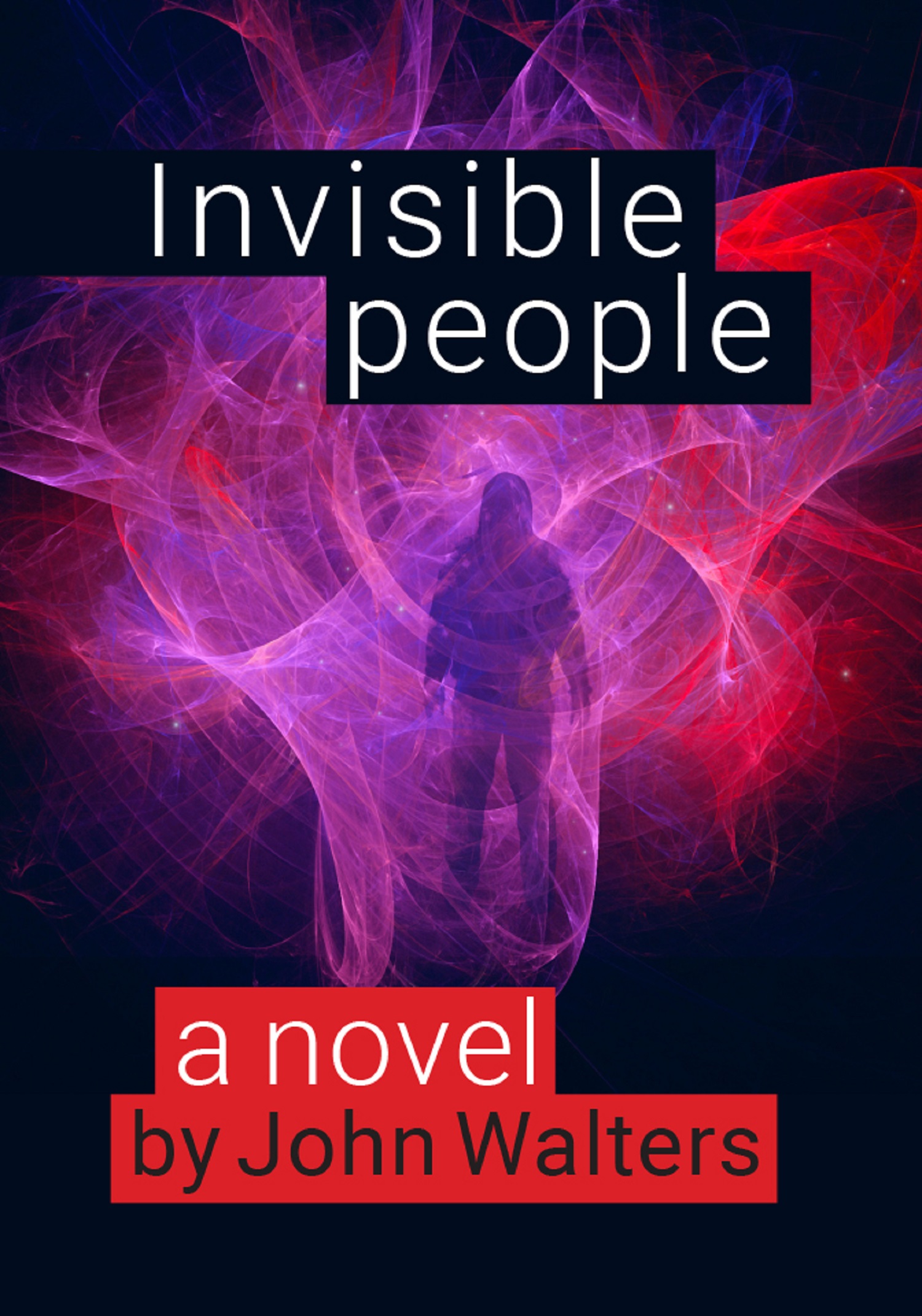
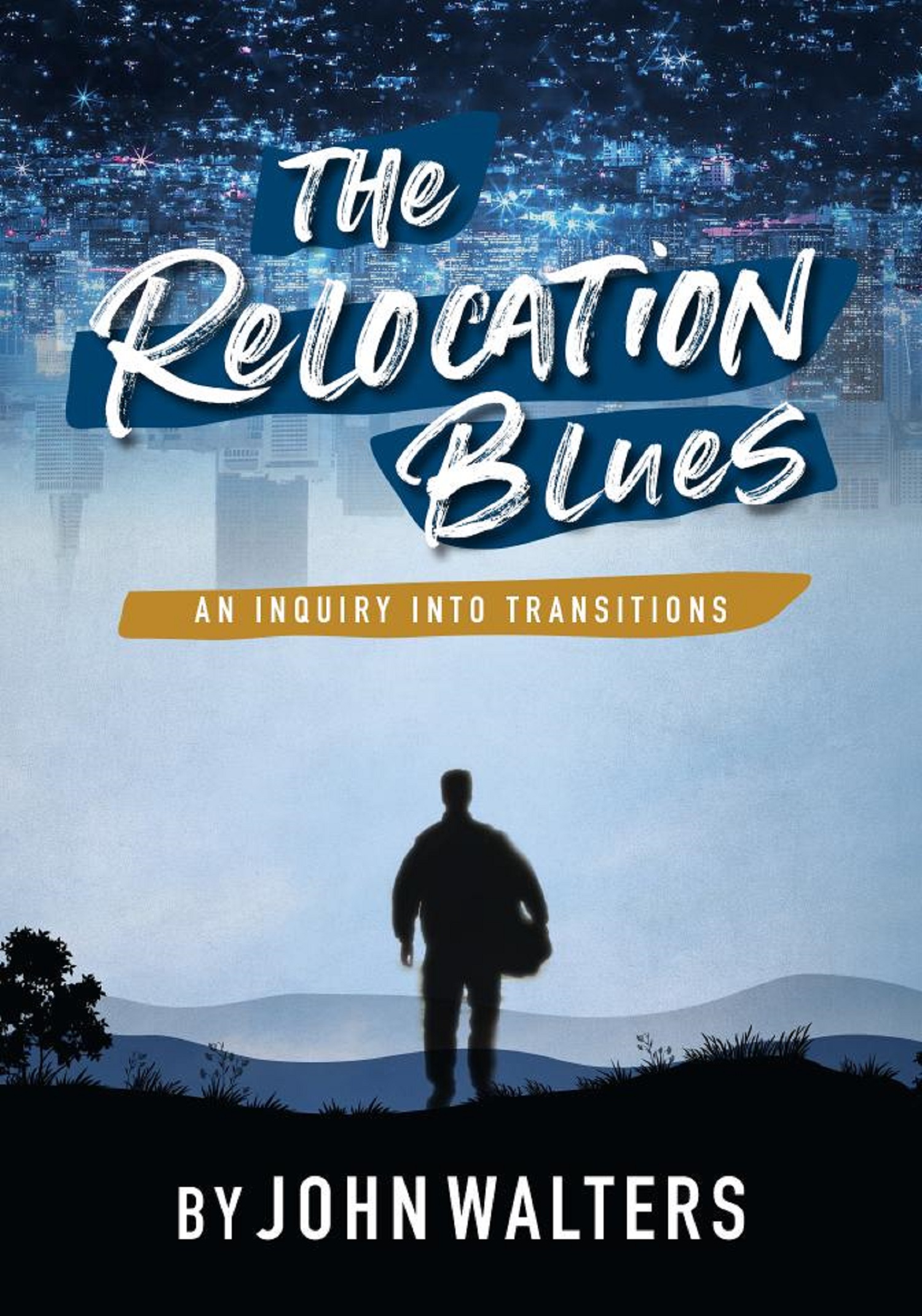
Because of the COVID intrusion, the emphasis on marketing, and the time I took to proofread two upcoming books, my overall creative word count is down: 138,365 words compared to 176,939 last year. (This is not counting the hundred thousand words or more of articles and essays I ghostwrote to help pay the bills.) However, I still managed to publish two new books: The Relocation Blues: An Inquiry into Transitions (a memoir), and Invisible People (a novel). This year I have also had several stories published in magazines and anthologies.

The publications are good news, of course, but I have kept the best news for last. This year I became a grandfather. My grandson Charlie was born in the spring. He is healthy and bright and almost always happy, and he already loves books. My oldest son and his wife are doing a great job of parenting, even though it was a bit stressful in the beginning. Because they live several states away, I have not had a chance to meet Charlie yet in person, but I video-chat with Charlie and his folks almost every day, and I am hopeful I will be able to meet him face to face soon.

As for the future, well, I have no specific plans other than to keep doing what I’m doing. I love writing, and I plan to write many more novels, memoirs, stories, and so on. I’ll continue the marketing too, of course, and keep hoping for good results. I’ll visit my grandson one way or the other. And whether things are going ill or well, I will rejoice and be thankful for the great gift of life.

Posted in Memoir | Tagged , , | Leave a comment

A Christmas Gift for My Blog Followers

As a Christmas gift to readers, I have enrolled electronic editions of some of my books and stories in the Smashwords End of Year Sale, which runs through January 1st. Complete books are half price, marked down from $3.99 to $1.99. Short stories and mini-collections of essays and memoirs are available to download for free. Take advantage of this sale to stock up on some great reading material.

Smashwords was the digital distributor I used when I first became involved in electronic publishing, and when I later switched to another distributor, I left numerous editions of my early works in the Smashwords catalog. You can find a complete listing at my author’s profile here.

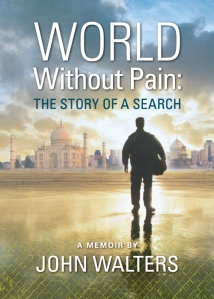
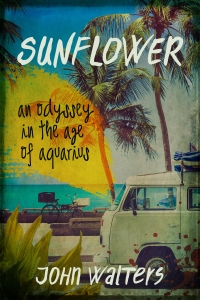
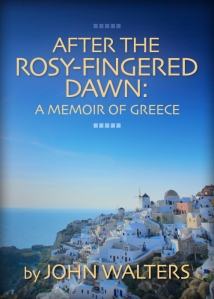
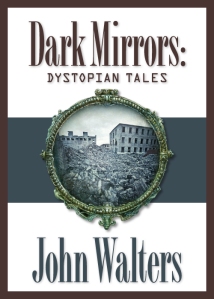
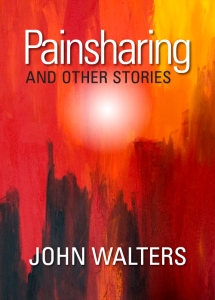
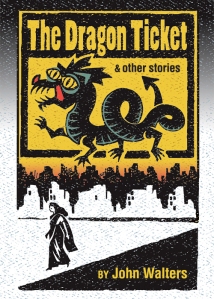
Among the books available at a half-price discount are my memoirs World Without Pain: The Story of a Search, After the Rosy-Fingered Dawn: A Memoir of Greece, and America Redux: Impressions of the United States After Thirty-Five Years Abroad; the novels Love Children, The Misadventures of Mama Kitchen, and Sunflower; the collections The Dragon Ticket and Other Stories, Painsharing and Other Stories, Dark Mirrors: Dystopian Tales, and Opting Out and Other Departures; and the essay collection Reviews and Reflections on Books, Literature, and Writing.

The stories available for free include some of my personal favorites such as “Dark Mirrors,” “The Customs Shed,” “Life After Walden,” and “Noah and the Fireflood.”

So head on over to Smashwords and pick up some thrilling and thoughtful novels, short stories, memoirs, and essays at deep discounts and even free. Merry Christmas!

Posted in Uncategorized | Tagged , , , , , | Leave a comment

The World Is Changing

The world is changing…

If you are familiar with The Lord of the Rings you have come across this quote. In the first film, The Fellowship of the Rings, the elven ring bearer Galadriel says it in the very beginning. In the books, Treebeard the Ent says it in the chapter called “Many Partings” in the third volume, The Return of the King.

Indeed, the world is always changing. That is in its nature. But as I woke up this morning, on Christmas Eve 2022, in Seattle, Washington, with rain falling outside and melting down the snow and ice that has clung to the ground the past few days, certain comparisons came into focus in my mind’s eye.

In the 1970s, I hitchhiked across the United States and around Europe. Many other young people were doing the same. But I didn’t stop there. I then hitchhiked across the Middle East, through Turkey and Iran and Afghanistan and Pakistan and India. Could people do that now? I don’t think so. To be fair, on my second trip (I did it twice) Iran was already in the process of closing up and Pakistan was extremely dangerous. Now, though, I don’t think anyone would even attempt the journey. Do people still hitchhike now? Maybe some do, but it certainly isn’t the accepted travel phenomenon that it was back then.

I also thought of mobile living situations: camper and trailer and van dwelling. I have never lived fulltime on the road in a vehicle in the United States, but I traveled all over Italy and Greece in various types of vans and campers, and eventually I purchased a Mercedes Benz camper van, which our family of five, me, wife, and three sons lived in fulltime for months before we settled in Greece. Just a few years ago, fulltime mobile living was celebrated in the book and film Nomadland. However, this lifestyle is changing too, becoming precarious and dangerous as more and more towns and cities declare legal warfare on the homeless (or as van dwellers prefer to say: houseless) and attempt to drive them away from their communities.

I also thought of COVID-19. It’s hard not to think of it these days, isn’t it? This plague has disrupted and changed lives all over the world and is still far from contained. And I thought of the vaccine certificates that everyone had to carry back in the 1970s and 1980s when I was traveling fulltime. They were bright yellow documents that were stamped when you got vaccinated against deadly diseases such as smallpox. Nobody thought anything of it. I just tucked it safely somewhere along with my passport and showed it whenever I crossed borders. No big deal. Nowadays, though, many people are terrified of vaccinations. They would rather die, wheezing for breath as their lungs fail, than be vaccinated against COVID, and vaccine certificates have become political hot topics, increasing the polarization already rampant in the United States.

I do not intend to get political. I have tried to avoid that in this blog, choosing to focus instead on more universal themes. However, regardless of personal beliefs, the COVID pandemic has changed the world, and the ensuing isolation has brought on not only fear but also analysis and introspection. We can only hope that these thoughtful attitudes can eventually lead to some solutions. I don’t have any – other than a general feeling that somehow, despite our differences, we have to tear down the walls dividing us. They are composed of lies and distortions and insinuations and hatreds and irrationalities so complex that it sometimes seems impossible to untangle them. In our hearts, though, we are all human people with the same needs, longings, and aspirations. I wish we could all somehow remember that.

Posted in Memoir | Tagged , , , , , , , | Leave a comment