2023: A Personal Overview

What can I say about 2023? It started out with a bang with a great event: I finally got a chance to meet my grandson Charlie. I flew down from Seattle to Los Angeles to spend a couple of weeks in late January and early February with the lad and his parents. The timing was fortuitous; my son was about to start a new remote job, and I was able to get to know my grandson and also free his father to focus on work. Charlie was a few months short of a year old. He and I would sit together and play in his spacious playpen, watch his favorite animated shows, and take long walks with him leading the way in his stroller.

Back at home in Seattle, besides taking on all sorts of remote writing jobs to pay the bills, I continued my literary career. In January, my short story “Exorcism and Other Requests” appeared in the horror anthology Tales of Fear, Superstition, and Doom, and during the summer my story “Dark Mirrors” appeared in the anthology Dragon Gems Summer 2023. “Dark Mirrors,” in fact, is my most oft-reprinted story; it had appeared in several other compilations prior to this one. I was supposed to have had one other original anthology appearance in December. Unfortunately, though, at the last minute the publishers canceled the book and reverted rights to the authors due to financial difficulties. Such are the vagaries of the publishing world.

On the book publishing front, early in the year saw the appearance of Silent Interviews and Other Tales of the Telepathic Guild. The blurb offers a succinct summary: Long have the clandestine members of the Telepathic Guild assisted individuals, corporations, and governments by means of their unique skills. Guild Home functions as a headquarters and a refuge, and its strict regulations foster unity and discipline. In this linked series of stories, a guild member falls in love with an outsider and is faced with a life-changing decision; a group of young people rebel against the guild’s stringent rules; a famous sports star discovers he is telepathic and must choose between his wealth and celebrity status and a chance to change the world; a renegade telepath establishes affinity with a wolf pack in the arctic wastes; a talented telepathic detective attempts to solve a brutal murder at a chaotic science fiction convention. These and other tales explore the fascinating, enigmatic, and often dangerous lives of those who have sacrificed everything to join the guild and use their extraordinary abilities for the betterment of humankind.

During 2023 I also published another compilation of book reviews: Reviews and Reflections on Books, Literature, and Writing: Volume 3. This quote from the introduction sums up the contents: A popular topic in science fiction these days is the multiverse, the concept of an infinite number of parallel worlds. Remember, though, that the multiverse is not as far away as you suppose. Each book that you read takes you into a new universe. When you enter a bookstore or a library you are in the midst of thousands of portals to other worlds. To enter all you have to do is follow the words that the authors have set down to guide you. If they have done their jobs effectively, you find yourself in strange lands and alternate timelines with all sorts of different types of characters. The best part is that you can do it anywhere and anytime. Just open up the door, namely the cover of the book, and dive in. I compile these collections of book reviews to serve as maps leading to wondrous worlds. I wish you joy, amazement, prosperity, fun, and adventure in your explorations.

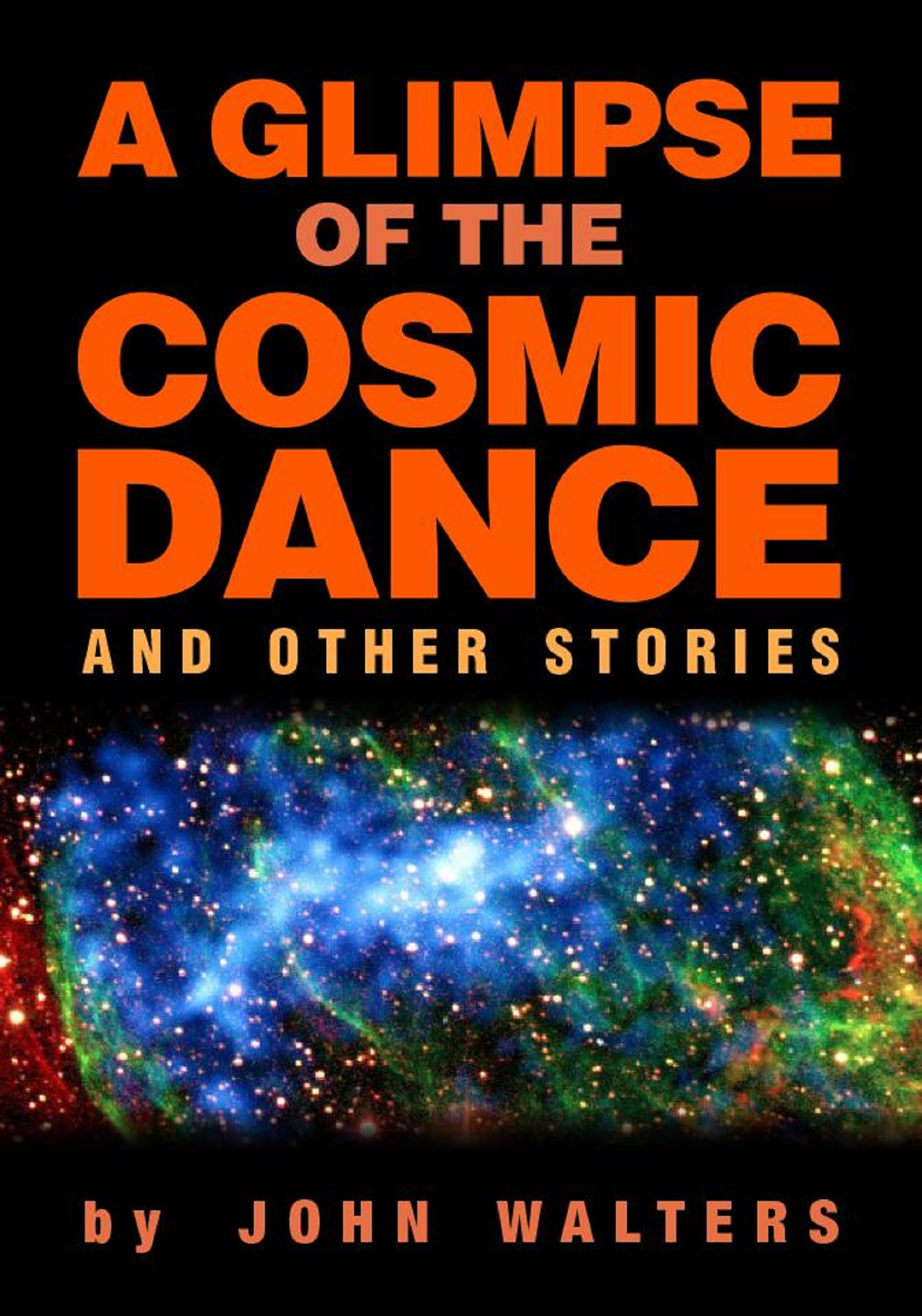
My final book publication of the year was the collection A Glimpse of the Cosmic Dance and Other Stories. In a world whose inhabitants routinely visit famous historical events, two jaded road-weary tourists take a holiday in an isolated retrograde enclave where time travel is forbidden. Humankind is plunged into chaos as the recently deceased reappear and take up residency in their former homes. As the result of an expensive technique that restores their youthful vigor, wealthy old people gallivant from place to place adventure-seeking and partying. However, their newfound energy comes at a terrible cost. In these and other tales you’ll find heart-pounding excitement, deadly perils, baffling perplexities, complex conundrums, dread mysteries, deceptive hallucinations, fantasy landscapes, far planets, distant futures, evil menaces, and unlikely heroes.

As for 2024, I plan to continue writing the best novels, short stories, memoirs, essays, and other works of which I am capable. I would also, if possible, like to do some traveling. I would definitely like to see my grandson Charlie again, and visit my sons, who have all gone off to far-flung places. I would also like to take a trip to Greece. I lived there for almost two decades, but I haven’t been back since I left eleven years ago. Next year around this time, readers, I’ll let you know what has become of these ambitions. For the moment: Happy New Year! Hang in there. Remember that we all go through tough times, but it is how we react to our circumstances that defines our characters. Take it one step at a time and you’ll get through.

Posted in Uncategorized | Tagged , , , | Leave a comment

The Septuagenarian as an Aspiring Artist

I suppose the first item on this essay’s agenda is to explain why I call myself an “aspiring artist” when I have numerous traditional publishing credits and have self-published thirty-five books. Perhaps at least part of the explanation lies in the subtitle I considered but ultimately didn’t use: Why am I not rich and famous? Admittedly the “rich” part of the question is rendered tongue-in-cheek. The majority of writers, even well-known ones, are not rich. Early on, though, in my infatuation with writing, I envisioned myself eventually being able to live in some sort of writer’s mansion such as Jack London’s Wolf House. (Of course even for London this didn’t end well; Wolf House was all but completely built when a fire broke out and burned it down to its stone foundations – a disaster that London never really recovered from.) A more realistic vision of wealth for a writer is found in Inside Michael Swanwick, a book I recently read and reviewed. Swanwick says, “I went into this business with my eyes pretty wide open. Part of my plan was poverty.” And: “Once you decide that you’re not going to live as well as a certified public accountant that makes a lot of things possible! One of the things it makes possible is that you get to write whatever you want. I chose freedom over money.” I choose freedom too, any day. Forget the writer’s mansion. I would be satisfied just to make enough through my writing to eke out a lean living. Even that seems beyond my reach. And as for fame, I’m not talking about world renown, although that would be sweet, but I would appreciate it if at least a modicum of readers were familiar with my work.

So what is behind my profound obscurity? Here are some reasons I have mulled over in my darker moments.

I have no talent. I don’t really take this one seriously. After all, a lot of editors have selected my work to appear in magazines and anthologies and have paid me for it – sometimes just a small amount, and sometimes much more. One story has been reprinted in anthologies several times. Writing of the anthology where it made its first appearance, one reviewer stated that my story alone was worth the price of the book. A filmmaker came across another of my stories and was so impressed he bought short film rights and optioned feature length rights. I know the language and I have the necessary sincerity; when I was young I was so desirous of writing true words that I left everything familiar and set off on the road to discover what life was really all about – so I could write about it.

Editors are undiscerning. I don’t believe this one either. In fact, I respect most of the editors to whom I have submitted work. I have even met several of them at conventions and other events. However, I think sometimes they (or their first readers) are inundated by stories and that good work must sometimes slip under their radars, but that’s not their fault.

Readers are undiscerning. Well, many readers are undiscerning. This is obvious when you consider the quality of a lot of items that make bestseller lists. But in my case, I am not good at self-promotion, and they can’t purchase what they have never heard of.

I took a hiatus that lasted too long. This could be part of the problem. I started writing seriously in the early seventies when I was in my late teens. While I was living overseas, I stopped for a couple of decades. These were the years when my contemporaries were steadily producing and making names for themselves. By the time I resumed and started selling stories, I was almost fifty.

I had no chance to network. My wife and I were raising our family in Greece when I once again took up the writing torch. I knew no other writers in southeastern Europe, let alone Greece. It was even difficult to send my stories to market in the days before electronic submissions. I didn’t attend my first science fiction convention until I moved back to the States when I was almost sixty.

I relied too much on self-publishing for my novels. This is possible. However, as I mentioned above, my isolation in Greece made it initially difficult to submit material to agents and publishers. When we finally got internet and I learned about the phenomenon of self-publishing, it seemed to be a good option for me. My main problem with this, I think, is my aversion to self-promotion.

The publishing universe is capricious and unpredictable. Now we’re getting somewhere. In the ever-changing world of publishing, trends come and go; additionally, magazines and anthologies have limited numbers of openings and many good stories are turned down for lack of space. I’ve had sales, but I’ve also had near misses when editors did not buy stories but told me how much they liked them.

Every person’s path is different and this precise spot is where my destiny has led me. I have met a lot of other writers who produce excellent work but, like me, remain largely unrecognized. These things happen. Who knows why? But that’s the reason that in my seventies I am still an aspiring writer. I am continually writing and sending out stories and publishing books. I have occasional victories and frequent setbacks. You have to have thick skin in the writing game; you have to be able to persevere in the face of rejection. And it hurts, let me tell you. Every time. I suppose there is no culmination, really, this side of death. I can’t imagine retirement from something I love so much. So I keep going, hoping for more, hoping for better, hoping to break through to a wider audience. Onward!

I’m a professional writer; I make my living by my words.  I’m happy to share these essays with you, but at the same time, financial support makes the words possible.  If you’d like to become a patron of the arts and support my work, buy a few of my available books or available stories, or support me on Patreon.  Heads Up: I haven’t been keeping up with my Patreon posts recently – if you head over there it should be for purely philanthropic motives.) Thanks!

Posted in On Writing | Tagged , , , | Leave a comment

Book Review:  Going Infinite: The Rise and Fall of a New Tycoon by Michael Lewis

The trial of Sam Bankman-Fried has been a hot topic in the news recently. He is the founder of the cryptocurrency exchange FTX and in 2022 made Forbes’s list as one of the richest Americans. All that changed in late 2022 when FTX abruptly became bankrupt and Bankman-Fried was arrested on multiple charges including money laundering, violations of campaign finance laws, and securities, commodities, and wire fraud. At a trail in late 2023 he was convicted on all counts and now awaits sentencing.

Going Infinite follows Bankman-Fried’s early life, the founding of FTX, its rise as a cryptocurrency power, and the collapse and fall of the company and its employees. It ends with Sam’s arrest and the initiation of bankruptcy proceedings against FTX. As I finished reading it, I wished that Lewis had held off publishing it for another year and a half or so; he could have included details about Sam’s trial. Anyway, it is what it is: a fascinating look at an idiosyncratic character working in the bizarre, quirky, otherworldly realm of cryptocurrency.

I picked up the book because I was interested in learning something about the phenomenon of cryptocurrency and its iterations such as Bitcoin. However, Lewis makes it clear early on that cryptocurrency is a complex topic and he does not intend to delve into a detailed explanation of it. By that time, though, I was already hooked on the story of Sam and the rise and fall of FTX.

From the beginning, Lewis presents Sam as an incredibly rude, self-centered, and antisocial person who played video games while on important calls and ignored scheduled meetings and appearances at whim. Everywhere he went, even to business events and introductions to celebrities, he wore the same outfit of rumpled tee-shirt, cargo pants, and baggy socks. His professed attitudes towards art and literature displayed a very shallow, immature mindset. Although he was in his late twenties when he founded FTX, he considered people with adult perspectives to be “grown-ups,” and did not trust them. As Lewis writes: “The truth was that grown-ups bored him. All they did was slow him down.”

Early in his financial career, Sam became interested in Peter Singer and effective altruism, which involves following a career path that will enable the maximum benefit to others. This often means pursuing the accumulation of significant wealth that can then be given away to good causes. However, Lewis clarifies that in Sam’s circle at least, the calculation of which effective altruistic causes to support became a sort of “gonzo science fiction.” As Lewis explains, “One day some historian of effective altruism will marvel at how easily it transformed itself. It turned its back on living people without bloodshed or even, really, much shouting.” He continues: “What mattered was the math. Effective altruism never got its emotional charge from the places that charged ordinary philanthropy. It was always fueled by a cool lust for the most logical way to lead a good life.” Effective altruists, in other words, ignored, say, the plight of starving children to focus on ephemeral existential threats such as pandemics, nuclear warfare, and artificial intelligence.

Sam handled his philanthropy, political donations, and decisions concerning the running of FTX the same way he handled every aspect of his life: as a sort of elaborate video game. No one questioned his high IQ, but his employees described him as remote, uncommunicative, and unemotional. In fact, early on, when he realized that sometimes it was important that he should make a good impression, he had to consciously train his facial muscles to emote – otherwise he maintained a perplexingly blank expression at all times.

What is amazing is not that people like Sam exist, but rather that a sociopath like Sam should somehow accumulate such a vast fortune and that so many intelligent people could be persuaded to work for him at a dysfunctional company such as FTX. The entire unlikely story is like a wild rollercoaster ride, as its characters first climb the steep slope to wealth and popularity and then plunge down into the abyss of bankruptcy and censure. It’s a fascinating true tale. This book is well-written and I recommend it.

Posted in Book Reviews | Tagged , , , , | Leave a comment

Triumphs in the Creative Life

Recently I wrote an essay called “Setbacks in the Creative Life.” It was a reaction to a publisher deciding to cancel an upcoming anthology to which I’d sold a story. It focused on the necessity of putting aside the many disappointments common to writers and other creators and continuing to move forward with resolve, persistence, and courage. I think it only apt, then, to balance that tough-love essay with one that emphasizes the exhilaration of triumph rather than the disappointment of rejection.

I was living in Greece when after a hiatus of decades I began to write and send out stories to science fiction and fantasy markets. It was all done via paper mailings in those days, so every story had to be printed out and sealed in a manila envelope. Since I couldn’t get stamps to affix to the self-addressed return envelopes, I had to find and insert international reply coupons; not every post office had them, so I had to scour the city of Thessaloniki. Sometimes in the beginning I despaired of ever getting published as rejection slip after rejection slip poured in. This is where persistence helps. You’re starting from a position of being absolutely unknown, and you have to keep sending out stories until an editor takes the bait. During this period I longed for a sale – any sale – and finally it came.

My initial sales were to two Australian science fiction magazines. The first, “Clear Shining After Rain,” was to Altair, which paid well for the standards of the times; in fact, it qualified as a professional sale so that I was later able to use it as a credit to join Science Fiction Writers of America. What a thrill when I received that acceptance and check! I had five sons by then, and I celebrated by going out and buying an abundance of ice cream for everyone. My second sale was a fantasy called “War Horse” to Harbinger: Australian Magazine of Speculative Fiction. What made this sale especially thrilling is that the editor called out of the blue, from Australia to Greece, to let me know he was buying the story. It was also wonderful, of course, to receive my author’s copies of the magazines.

Other sales followed, along with many, many rejections. My advice is that you put the rejections out of your mind as quickly as possible; just accept them as part of the cost of doing business. Focus on the good stuff. It will come if you are patient and persistent. Trust me. And pay attention when editors write personal notes. Once, for instance, I sent out what I considered one of my best stories, “Dark Mirrors,” to an anthology called Warrior Wisewoman, which featured strong female protagonists. The editor liked the story but said she didn’t have room to include it, and she asked me to resubmit it during her next call for stories. I did, and she bought it, and it appeared in Warrior Wisewoman 3. After that, two other important hardcover anthologies picked it up as well.

Another amazing out-of-the-blue event occurred when I was still living in Greece. By this time I had begun self-publishing some of my books and stories. A filmmaker in Los Angeles emailed me and said he had really liked one of my stories and he was interested in making it into a short film. Various personal concerns caused him to delay the project, but about a decade or so later, after I had moved back to the States, he sent me a contract, purchased short film rights, and also optioned rights for feature length.

These are just a few of the success stories I could tell you to offset the setback stories in the previous essay. One thing I would like to emphasize is this: the only way you are going to sell your stories or novels or nonfiction pieces is to put them out there. Often it has happened that I struggled to sell the stories I had thought were my best, while some of the stories I weren’t so sure about sold faster. It doesn’t always come down to what stories you subjectively like, but rather which stories suit the editor’s needs or fit an anthology’s theme.

I still struggle to sell my stories, sure, as do most of you other writers out there. Expressing ourselves through the act of creation offers its own rewards, of course, but there’s nothing quite like that sweet thrill of triumph when you make a sale.

Posted in On Writing | Tagged , , , , | 1 Comment

A Christmas Gift for My Blog Followers

As a Christmas gift to readers, I have enrolled electronic editions of some of my books and stories in the Smashwords End of Year Sale, which runs through January 1st. Complete books are half price, marked down from $3.99 to $1.99. Short stories and mini-collections of essays and memoirs are available to download for free. Take advantage of this sale to stock up on some great reading material.

If the discount price does not appear on my profile page, click on the link to the specific book you are interested in and you’ll see the deal.

Smashwords was the digital distributor I used when I first became involved in electronic publishing, and when I later switched to another distributor, I left numerous editions of my early works in the Smashwords catalog. You can find a complete listing at my author’s profile here.

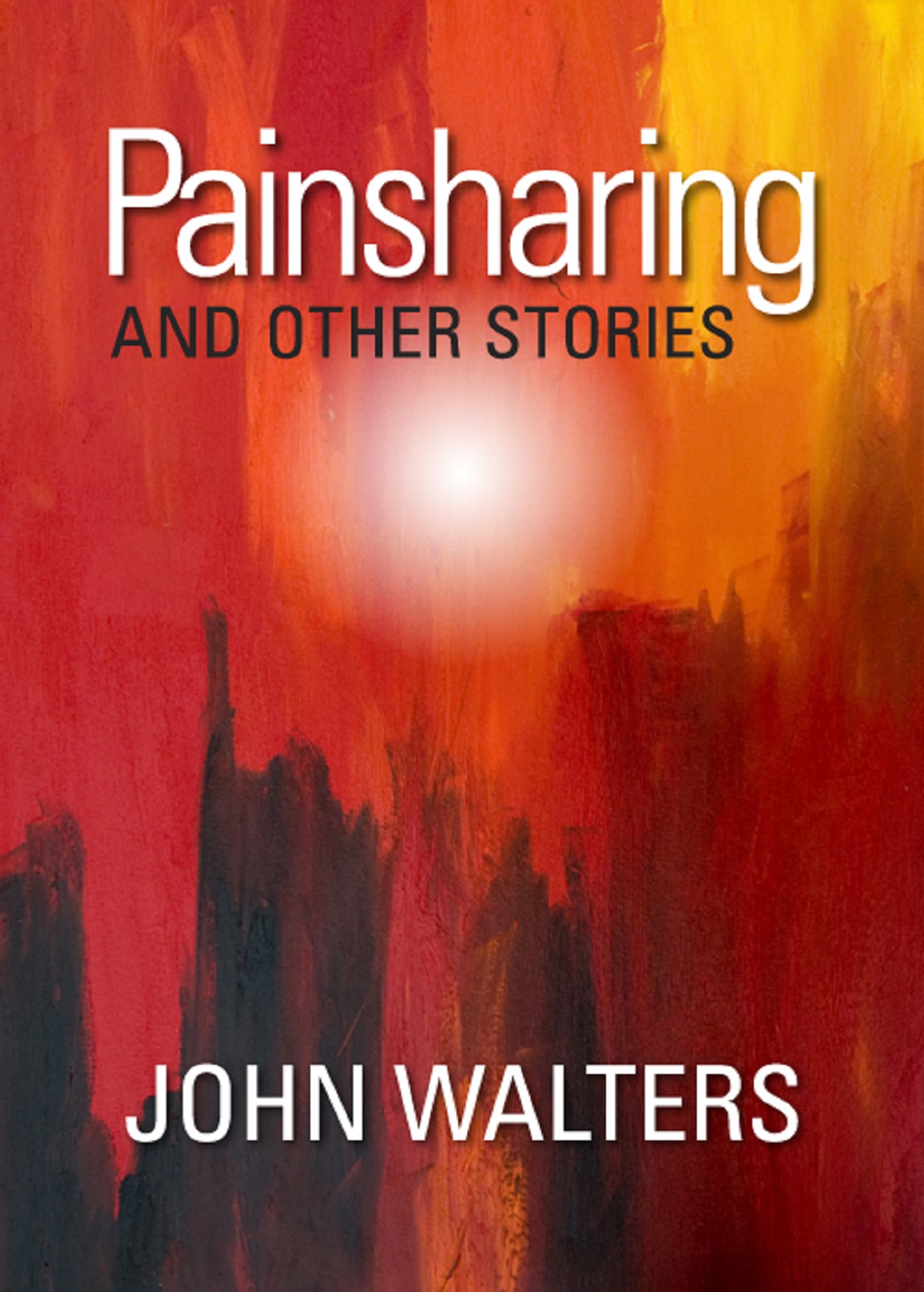
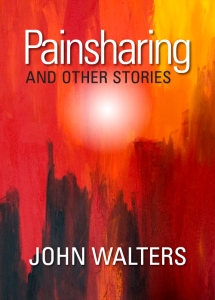
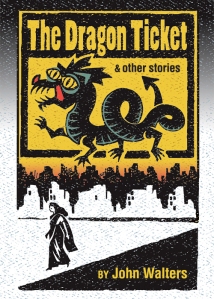
Among the books available at a half-price discount are my memoirs World Without Pain: The Story of a Search, After the Rosy-Fingered Dawn: A Memoir of Greece, and America Redux: Impressions of the United States After Thirty-Five Years Abroad; the novels Love Children, The Misadventures of Mama Kitchen, and Sunflower; the collections The Dragon Ticket and Other Stories, Painsharing and Other Stories, Dark Mirrors: Dystopian Tales, and Opting Out and Other Departures; and the essay collection Reviews and Reflections on Books, Literature, and Writing.

The stories available for free include some of my personal favorites such as “Dark Mirrors,” “The Customs Shed,” “Life After Walden,” and “Noah and the Fireflood.”

So head on over to Smashwords and pick up some thrilling and thoughtful novels, short stories, memoirs, and essays at deep discounts and even free. Merry Christmas!

Posted in Uncategorized | Tagged , , , , , , , | Leave a comment

Setbacks in the Creative Life

For almost a year I have been looking forward to the December publication of an anthology with one of my stories in it. Some stories I write just for fun, but this one was particularly important to me. It fit the theme of the anthology so well that I had a strong premonition it would be accepted before I received the thumbs-up from the editor. Besides that, times are lean and I anticipated the extra income. Today, just a week or two before the book was supposed to be published, I got an email from the editor saying that due to insufficient financing the anthology was cancelled. An apology was proffered, of course, but… I really wanted this one. Still, what could I do? Well, what I did was immediately search for another possible market and send the story out right away again. But it hurt.

This is not the first time I have been disappointed by a futile acceptance. About four or five years ago I sold a dark murder mystery to a mystery magazine. It was an anomaly for me because I usually write science fiction and fantasy. The editor explained with the acceptance that he was purchasing stories for issues far into the future and I’d have to be patient. Over two years passed. I would query the editor from time to time and he was always polite but vague as to when the story might appear. Finally he scheduled it for a specific issue. However, one month before that magazine was supposed to come out, he unexpectedly died. The editor that succeeded him decided not to use the story and returned the rights to me.

And that’s not all. At least two or three other times I have sold stories to magazines only to see the magazines get discontinued before my stories appeared in print.

These occasions are particularly painful because what looks like sure victory becomes agonizing defeat. It’s far worse than standard rejections. Hell, almost every writer compiles a stack of rejections on their way to breaking into print. Before the days of ubiquitous digital submissions, I accumulated multiple manila envelopes-full of paper rejections. When you add them all up, paper and digital, I have received thousands of rejections. Sometimes editors take the time to write nice encouraging notes, but most of the time they are form rejections. Like the boxer in the Simon and Garfunkel song, I bear a mark on my psyche for every one of them, but I have no choice but to fight on. Quitting is not even in the realm of possibility. This is my life. This is who I am. I’d rather go down wounded and bloody, struggling to the last for every inch of progress, than give up.

After all, where would quitting get me? I am once again reminded of one of the classic examples of literary despair, the case of John Kennedy Toole and his novel A Confederacy of Dunces. In the face of rejection after rejection, Toole took his own life at the age of 31. Years later, his mother managed to get the unpublished manuscript into the hands of the novelist Walker Percy, who helped in getting the book published. It went on to win the Pulitzer Prize for fiction in 1981. If Toole had only held on a little longer…

That’s the message of this essay if you are a writer or any other sort of creative person: hang on. Don’t give up. Never surrender. Keep fighting. Yes, you are going to feel the pain of rejection – probably not just occasionally but a lot. You have to accept it as part of the lifestyle. When you get figuratively punched in the face, spit out the blood, smile through the tears, and persevere. The alternative is intolerable.

And here’s the best part: if you keep at it you won’t always suffer defeat; you’ll have victories too. Let me tell you, those triumphs after hard-fought battles are sweet. They really do make it all worthwhile. But even if they are few and far between, maintaining your integrity and your vision is a victory in itself. As Walt Whitman proclaimed in “Song of the Open Road”:

Whoever denies me it shall not trouble me,

Whoever accepts me he or she shall be blessed and shall bless me.

Carry on knowing that you are doing what you are destined to do. How people react to what you have created is their business. Yours is to continue to share your voice with those who will listen.

I’m a professional writer; I make my living by my words.  I’m happy to share these essays with you, but at the same time, financial support makes the words possible.  If you’d like to become a patron of the arts and support my work, buy a few of my available books or available stories, or support me on Patreon.  Heads Up: I haven’t been keeping up with my Patreon posts recently – if you head over there it should be for purely philanthropic motives.) Thanks!

Posted in On Writing | Tagged , , , | 1 Comment

Book Review: The Best Science Fiction of the Year: Volume 7 Edited by Neil Clarke

The first thing that appealed to me about this substantial six hundred page collection of science fiction stories is that it is ensconced in a well-bound book with an easy to read font. Much as I enjoyed the late Gardner Dozois’s best of the year volumes, they were often difficult to read because of the miniscule print. Speaking of Dozois, Clarke follows his practice of offering in the introduction a helpful synopsis of the year in science fiction publishing.

This volume includes Clarke’s picks of the best stories published in 2021. This was in the midst of the pandemic, of course, and some of the stories deal with this theme. Several others focus on artificial intelligence, another hot topic in recent years.

One of my favorite stories is “Vaccine Season” by Hannu Rajaniemi, in which a young man travels to a remote island to try to convince his traditional grandfather to get vaccinated against the current deadly plagues. It is a story focused on character but also on its near-future predictions, and its overall excellence served as a reminder of why I delve into anthologies like this: to find such brilliant gems. Another excellent story is “Hanai” by Gregory Norman Bossert; Hawaii has become an independent nation, and the last member of an all-but-extinct alien race goes there to perform his dying dance. “A Rocket for Demetrios” by Ray Nayler proposes a fascinating alternate history in which the United States discovered an alien spacecraft just before World War II and used its technology to achieve global dominance. And “Bots of the Lost Ark” by Suzanne Palmer is a light-hearted tale of sentient robots aboard an intergalactic spacecraft that thwart evil and save the resident humans.

As I said, several of the stories deal with AI. In fact, the first three stories in the book, “Muallim” by Ray Nayler, “Dark Waters Still Flow” by Alice Towey, and “Proof by Induction” by Jose Pablo Iriarte all consider this subject in interesting ways. One of the book’s strengths is its inclusion of stories by international authors, including some translated from Chinese by well-know authors from China.

When I approach a book like this, I realize that Clarke’s tastes in fiction will not precisely match my own and that I will undoubtedly appreciate some stories more than others – and so it has come to pass. Overall, though, it is a strong selection; there were only a few tales that I couldn’t get into and didn’t finish. That’s a good percentage for a lengthy collection like this. Besides, your tastes may not match mine. Who knows? The ones I couldn’t wrap my mind around might turn out to be among your favorites. Overall the stories are absorbing and strong, and there’s enough variety so that you’re bound to find some that will hit you just right and will cause you to exclaim: “Yes, that’s it. This is why I read science fiction.”

Posted in Book Reviews | Tagged , , , | Leave a comment

Books Make Great Gifts!

After Thanksgiving has come and gone, people commence a search for holiday gifts for family members, relatives, friends, acquaintances, in-laws, outlaws, colleagues, and sometimes total strangers. If you’re looking for fun, sophisticated, lively, intense, flamboyant, and otherwise variegated literary fare, I’ve thus far published thirty-five volumes in a range of genres through Astaria Books. Here are some examples of choice gifts you can bestow upon your loved ones. If you click on the titles, the links are to Amazon, but for lists of links to other marketplaces, head for my website’s Available Books page.

Science Fiction:

After the Fireflood: A Novel – During the Fourth World War, the entire Earth is engulfed in a torrent of fire, transforming the landscape and obliterating all life.  Using terraforming, time travel, and other expediencies, human survivors from Moonbase and the outer colonies attempt to cope with their devastating loss, reconstruct the Earth’s surface, and reorganize Earth sociologically to ensure lasting peace, while others plot to claim the pristine reconstituted planet for their own purposes.

Bedlam Battle: An Omnibus of the One Thousand Series – In the late 1960s, humans and sympathetic aliens based out of Haight/Ashbury struggle to stop alien-possessed psychopaths intent on a murderous rampage. Four science fiction thrillers in one volume.

Love Children: A Novel – It is the mid-1970s.  The Summer of Love and the Woodstock Music Festival have come and gone.  Into the atmosphere of cynicism and doubt following the wild optimism of the youth revolution the Love Children, raised from birth by benevolent aliens, come home to Earth.  Sexually free, telepathic, and honest to the extreme, they are appalled to find that the planet they left behind is full of darkness and deceit. As they set about using their extraordinary powers to bring light and unity back to their world, they run up against a sinister alien force intending to keep it in darkness.

Dark Mirrors: Dystopian Tales – These tales offer terrifying glimpses of Earth’s future gone wrong. From the author’s afterword:  “When I postulate dark futures it is not to get you to despair.  When I hold up dark mirrors before your eyes it is not so that you will see the worst in yourself and do yourself in.  Far from it.  Some of our greatest illuminations come from deep dark prose.  Dark literature is not meant to overwhelm us.  It is meant to purge us, to provide catharsis.  It is a cleansing and purifying process.  We must be aware of the evil within before we can clean it out.”

Fantasy:

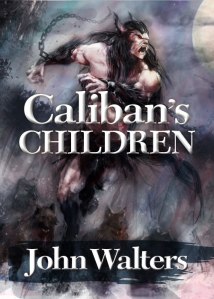
Caliban’s Children – Content is being siphoned from libraries and replaced with half-truths and lies.  Weather, time, and distances are distorting like images in a funhouse mirror.  People are discovering the ability to morph into animals.  At first it all seems idyllic and magical until a dark power begins to manifest itself, assert control, and demand obedience.

Ethan is a university student caught in the midst of a kaleidoscopic confusion he cannot understand.  After journeying into the wilderness seeking answers, he realizes he has to ally himself with the beasts of the Earth and venture into a bizarre, mutating, peril-filled city to rescue his lover and attack the source of the evil.

Fear or Be Feared: Fantasies – In these fourteen weird, surreal, frightening, and fantastic tales, unwary people discover that the world is very different from what they imagined.

Thriller:

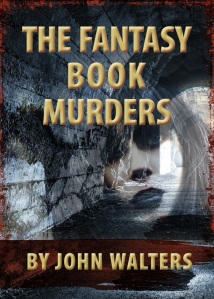
The Fantasy Book Murders – After a famous fantasy writer is murdered in his castle-like mansion, two unlikely investigators discover a pattern of similar murders suggesting a serial killer. They begin to research the killings, starting with the most recent and working backwards into the past. Danger mounts as they uncover the backgrounds of the victims and the truth begins to resemble the fantasy writer’s most bizarre and horrific fiction.

Novels of the Counterculture:

The Misadventures of Mama Kitchen – Sarah Tabitha Jones, a twenty-year-old fascinated by the youth culture of the late 1960s, leaves her middle-class home and wanders to a wilderness commune and then to the Haight/Ashbury in search of truth. On the way she encounters many strange characters: bikers, draft dodgers, Vietnam War veterans, peyote worshippers, heroin dealers, Jesus people, feminists, violent anarchists, Black Panthers, and science fiction fans. She experiments with drugs and sex, but at the same time helps out those she can; though often disillusioned, she believes that hippies should unite to create a better world. In the midst of all this she finds herself pregnant. Eight and a half months later, undaunted, belly bulging, she travels to Woodstock for one last attempt at finding the love and unity she seeks. The Misadventures of Mama Kitchen will appeal not only to those who lived through the disconcerting era of the 60s and 70s but to those younger who are curious about what took place back then. It will also resonate with anyone who is idealistic and in search of personal fulfillment, as well as those who simply enjoy a wild tale: sometimes comic, sometimes tragic, sometimes violent, sometimes sexy, always extreme.

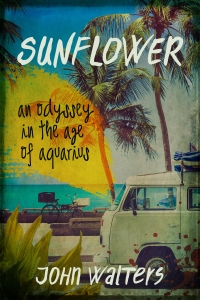
Sunflower: A Novel – In early 1970 a new era, the Age of Aquarius, is dawning. Penny, who adopted the name of Sunflower on the way to the Woodstock Music and Arts Festival, attends another rock concert touted as Woodstock West, at Altamont Speedway near San Francisco. Seeking to enhance the transcendent experience, she instead comes away covered in the blood of a man brutally stabbed to death in front of the stage. Has the new youth experience descended from idealism to anarchy? Confused and disillusioned, Sunflower embarks upon an odyssey across an America torn by violent anti-Vietnam War protests, racial tension, and gangs of hard drug dealers. From a search for a shared social experience it becomes a personal quest for fulfillment that leads her on a journey across continents.

Memoirs:

World Without Pain: The Story of a Search – In the 1970s, after the Altamont Rock Festival, the Manson Family cult murders, and the fiasco of the Vietnam War many young people, disillusioned by the hippy movement, began to leave their homelands and travel to the far places of the world.  Hoping to find drugs, sex, freedom, and excitement, they more often were confronted with destitution, despair, disease, loneliness, and culture shock. As a young writer wishing to break out of the familiar rut in which he was stagnating, Walters hit the road during this time, first to Europe, then onward to the Indian Subcontinent.  He sampled Buddhism and radical Christianity; he wandered alone in the Himalayas; he listened to strange gurus spouting stranger doctrines; he watched the people around him deteriorating and dying in the lands of the East.  As he traveled onward he became fascinated with the road itself, and determined to discover its secrets. He wondered what it was that gave the road its alluring power, and he forsook everything else to find out. His story will appeal to those who lived through the turmoil of the 60s and 70s, to those who are hungering after spiritual fulfillment, to writers and other artists in search of their voice and their inspiration, and to anyone who loves a true story of adventure and excitement in strange lands.

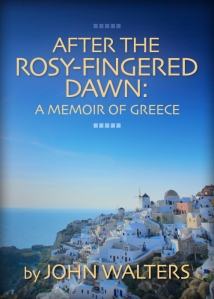
After the Rosy-Fingered Dawn: A Memoir of Greece – Greece has always been regarded as the birthplace of western civilization and a Mediterranean paradise.  In The Iliad and The Odyssey Homer uses the magical epithet rosy-fingered dawn to describe the sunrise over a land of myth, fascination, and mystery.  But when preconceptions and illusions are swept aside, what is Greece really like? John Walters has lived in Greece for over fifteen years.  He has hitchhiked over many of its roads; traveled by camper; journeyed by plane, boat, bus, car, taxi, motorcycle, and on foot.  He has lived and worked and raised a family among Greeks.  He offers insight from an intimate perspective on aspects of Greek society and culture of which tourists are unaware. Many have visited Greece and afterwards acknowledged that the country has profoundly changed them.  This memoir is for those who feel something special when they think of Greece and Greeks, those for whom Greece holds a special thrall, those who have visited and have their own memories of the place, and those who would like to visit someday and know that when they do they will obtain new insight, new clarity, and will never be the same again.

America Redux: Impressions of the United States After Thirty-Five Years Abroad – In 1976 John Walters left the United States in search of adventure and literary inspiration.  He lived for many years in India, Bangladesh, Italy, and Greece.  He married and had five sons.  Finally, faced with the economic catastrophe in Greece and the lack of opportunities for his sons, he returned to the land of his birth.  Without home, without job, without resources, he confronted his own country as if for the first time. This is a memoir of someone who, late in life, was forced to leave everything behind and start fresh in what for him had become a new land.  It will appeal to those who are confronted with major life changes in these troubled economic times; to those who, though they may desire rest and retirement, must continue toiling to make ends meet; for those who desire insight into the vast, multifaceted culture of the United States from a fresh perspective, unencumbered by familiarity.

Writing as a Metaphysical Experience – From the author’s introduction: “For me, writing is metaphysical because it is inseparable from who I am and my conception of the universe and my place in it.  My interpretation of writing goes far beyond the definitions of hobby, job, or career – it is rather in the nature of a calling.  It is something that blossomed from within me and, though invisible to instrumentation, has been as integrally a part of me as my flesh, bones, and internal organs.  How this transpired and how it manifests itself is the subject of this book. This is not a how-to book on writing, although in its course I offer many practical tips and suggestions.  It’s more like a travelogue, a story of the life’s journey on which my writing has led me.” This journey has led Walters on a decades-long quest from the United States to Europe to the Indian Subcontinent and back in the pursuit of voice, inspiration, and literary excellence.  On the way, he has written and published novels, short story collections, essay collections, memoirs, and numerous individual novellas, novelettes, short stories, and essays.

Posted in Reading | Tagged , , , , , , , | Leave a comment

Book Review:  Being Michael Swanwick by Alvaro Zinos-Amaro

Although Zinos-Amaro is listed as the author of this book, it is in fact a collaborative effort. It consists of a series of interviews between prolific science fiction and fantasy writer Michael Swanwick and Zinos-Amaro. These interviews cover Swanwick’s stand-alone short stories and novels, flash fiction and series fiction, and collaborations with other authors. Zinos-Amaro brings up one work at a time and asks leading questions, and Swanwick responds by delving into inspirations, research, process, themes, and other fascinating details that take the stories from wisps of ideas to publication. In short, this is one of the best books on writing I’ve ever read. It’s not even necessary for you to be familiar with the stories that are discussed to benefit from the many tips on fiction writing from an acknowledged master.

I left the United States back in the early 1970s because I wanted to live life to the full and find my own unique voice as a writer. At that time the new wave in science fiction included writers such as Samuel Delaney, Roger Zelazny, Ursula K. Le Guin, Harlan Ellison, and others, but Swanwick was as yet unknown. He didn’t publish his first stories until the 1980s, and by then I had lost touch with the field. While my wife and I were raising a family in Greece, though, the internet eventually came to our household; this was in the late 1990s and early 2000s. I began to read stories posted online for awards consideration, and many of these were by Swanwick. During this period he was on a roll, with numerous nominated stories, many of which won top prizes such as the Nebula, the Hugo, and the World Fantasy Award. I became aware then that Swanwick was one of the top writers in science fiction and fantasy and one of the best short story writers ever. Later, after I moved back to the States, I met Swanwick at a Clarion West event and we talked for a long time; our conversation then was similar to the tone of this book: intellectually stimulating, frequently surprising, and lots of fun.

One thing that stands out throughout this book is that Swanwick is in love with writing. The text is full of gems like these: “I went into this business with my eyes pretty wide open. Part of my plan was poverty.” “Once you decide that you’re not going to live as well as a Certified Public Accountant that makes a lot of things possible! One of the things it makes possible is that you get to write whatever you want. I chose freedom over money.”

Here’s another great quote: “I believe in the beauty of short fiction, in the purity of it, and the fact that it can do things that long fiction simply cannot.” Swanwick has certainly proven this over the years.

And here’s a glimpse of some of the practical advice he liberally shares: “My first drafts always suck. You know, writing bad prose isn’t fun, but it’s a necessary first step to writing good prose.” Personally I was working through a tough first draft when I read this, and it helped me to persevere.

Swanwick’s descriptions of how much time and effort go into each story amaze me. He does extensive research to get details right; even if readers wouldn’t know whether certain facts were true or not, this painstaking care creates a sense of verisimilitude that is evident when you read his tales. If he begins a story and it doesn’t take off, he sets it aside, sometimes for months, until it comes to life, and then he finishes it. However, he balances this intense dedication with a sense of joy. “I was never afraid to write a small, funny, not-very-important story.” “I’ve always just written the best thing I could write at that particular moment.”

I found it interesting that though Swanwick frequently appears in leading magazines and anthologies, he and his wife Marianne Porter also publish some of his works in chapbooks via their own press. His cornucopia of stories overflows into many channels.

In conclusion, I recommend Being Michael Swanwick as an invaluable tool for writers and as an absorbing look for all readers of what lies behind the creative process. It is an intimate visit with a very talented writer, and it is likely that, like me, when you come to the last page you will be immensely satisfied but at the same time wish there was more.

Posted in Book Reviews, On Writing | Tagged , , , , | 1 Comment

Book Review:  Roman Stories by Jhumpa Lahiri; Part Two

Like the stories in Lahiri’s earlier collections Interpreter of Maladies and Unaccustomed Earth, several of the tales in Roman Stories deal with cultural clashes: affluent foreigners who have chosen for various reasons to relocate to Rome, or laborers and domestic workers from poorer countries who have come to Rome to make a living and escape situations in their homelands.

Understanding the intricacies of these situations is difficult sometimes because Lahiri, in these stories, chooses to withhold details about her characters. For instance, none of the characters are given names. At best, a few are given one initial only by which we can identify them, but most are represented as types: the wife, the husband, the friend, the other friend, the widow, the mother, the expat, the brother, and so on. In the stories with first person narrators, the narrators do not have names either. And when people are identified as foreigners, their countries of origin are not specified; it is left to readers to guess. This lack of focus causes the stories to more easily function as parables or allegories, perhaps, but it also causes occasional confusion in figuring out what exactly is going on.

Lahiri has a gift for imbuing importance into seemingly ordinary people and situations. She often describes commonplace events, but we come to understand, as the stories progress, that just one critical thing is damaged or out of place. For example, “The Boundary” is narrated by a teenager living outside the city whose father rents an adjoining cottage to foreigners on vacation; her family’s lifestyle has been profoundly impacted by an earlier attack on her father by xenophobic locals. In “P’s Parties,” a marriage is irrevocably changed by a single indiscretion the husband commits while socializing with affluent friends. In “The Procession,” the death of their child, which happened decades ago, haunts a couple on vacation.

Lahiri’s writing style has lost little of its elegance; maybe that’s because even though these stories were originally written in Italian, she has self-translated most of them. (A few have been translated by Todd Portnowitz; these have been specified in an afterword.) For a writer to display this much expertise while working in a language acquired as an adult is extraordinary to say the least. I would say that these stories do not quite reach the level of excellence displayed in Lahiri’s Bengali-American tales. At the same time, though, Roman Stories is a very good short story collection – certainly better than most. It is entertaining and insightful and at times deeply emotional. I was an expat in various foreign countries for many years, and I can empathize with the difficulties and conundrums Lahiri’s characters face as strangers in a strange land. As she wrote these stories, Lahiri herself was adjusting to living in her adopted country of Italy, and as I was reading of certain situations her characters go through I couldn’t help but think that the author was drawing from her own experiences.

In conclusion, then, I recommend this book. It is erudite, absorbing, perceptive, and empathetic.

Posted in Book Reviews | Tagged , , , , | Leave a comment