Life in a Storage Unit; or, How to Declutter Without Losing Your Sanity

This all began with my desire to do a deep cleaning of the apartment. As I contemplated the task, I began to realize how difficult it was due to the overwhelming presence of – stuff. All kinds of stuff that had accumulated over the years since I moved from Greece back to the United States.

It began with the best of intentions. I needed to create a home for my sons on a severely limited budget. Relatives came to the rescue, first with a vanload of items to help clothe us and furnish our unfurnished house in San Diego, and again with more donated items when we moved from San Diego to Yakima, Washington. We sorely needed the assistance and made use of almost everything we were given. Later, when we finally made the leap to Seattle, my sons came and went as their destinies called them, but when they left they usually left some of their stuff behind. I personally too, as a result of relentless poverty, had a tendency to hang onto things long after their usefulness had passed. After the last son moved out, I downsized from a two-bedroom to a one-bedroom apartment, but due to a lack of time, I had to bring most of the accumulated things with me and somehow cram them into the smaller space. It was a complex jigsaw puzzle of a task, and I supposed that when I had finished I had done the best I could.

But I hadn’t. What I should have done was get rid of as much as I could. Instead, the clutter seemed to grow. Until recently, as I said, when I realized I’d had enough. By this time I had three desks and two dressers, and I only used one of each. I also had six bookshelves bursting with books, DVDs, and games. I had to do something.
I started with the books, and over the course of a few days I gathered three large bags full of volumes I knew I’d never read or refer to again. I managed to sell most of these to a used bookstore, and the others I distributed in the neighborhood little free libraries.

To inspire me, I began reading a copy of The Life-Changing Magic of Tidying Up: The Japanese Art of Decluttering and Organizing by Marie Kondo that one of the boys had left behind on a shelf. I don’t agree with everything the author proposes; for instance, she anthropomorphizes her belongings, takes the perspective of the affluent, and goes to extremes about what should be kept or tossed. Still, I agreed with her that purging and organizing belongings is good for the spirit, and I realized that I would feel better if I attacked the mountainous clutter threatening to overwhelm my small apartment. After the books will come the papers, the clothes, the broken or outdated electronics, and the odds and ends. I’ve even arranged with one of my sons to rent a U-Haul while he’s here for Christmas and get rid of the unneeded furniture. (It turned out that weeks before Christmas one of my brothers came by with his pickup and helped me get rid of the excess furniture.)

What is the goal of all this? For one thing, it will make cleaning the apartment much, much easier. For another, as I clear my living and working spaces, I am confident (or at least hopeful) that my thoughts will become clearer as well.

I’ve never owned much. Even now I own much less than most of my contemporaries. After decades of traveling and living abroad, and also moving from one place to the other in the States, I realize that it is not the quantity of possessions that is important. Some people need or crave more than others. That’s fine by me. The important thing I need to attend to, though, is whether I personally have exceeded my limit. If I have, these extra things will only weigh me down and make me miserable. And so: out with them! I’ve made mistakes, sure; only today I threw out something I afterwards deeply regretted discarding – but I couldn’t get it back. To put it in perspective, though, we’re talking about things. Just stuff. Nothing that can’t be replaced. Or abandoned. Or forgotten.

Posted in Memoir | Tagged , , , , | Leave a comment

On Rereading Jurgen by James Branch Cabell (again)

Due to my ongoing need for literary comfort food, I turn once again to the brilliantly written fantasy Jurgen (subtitled in the original, though not in the edition I own, A Comedy of Justice). I think I was still a teen when I first encountered Jurgen, and I have read it several times since. Shortly after its publication in 1919 the author and publisher were prosecuted for obscenity, although no sexual activity is described explicitly. Instead, Cabell makes inferences and liberally uses double entendres to make his points.

The story follows Jurgen on a journey through various fantasy lands to recover his lost wife, who has been abducted by Koshchei the Deathless “who made things as they are.” As he travels, he meets, woos, and sometimes marries a variety of beautiful women, including Guinevere, Helen of Troy, a tree nymph, a vampire in hell, and others. Proclaiming himself “a monstrous clever fellow,” he promotes himself to be a duke, a prince, an emperor, and even a pope as he ascends for a brief time to heaven to meet the God of his grandmother. As he sojourns in each land he conforms to its customs and has many strange and unique adventures. However, despite his heroics and his numerous affairs, he doesn’t find peace, and eventually he recovers his middle-aged wife and goes back to his life as a respectable pawnbroker. During much of the book, a spell has given him his lost youth, yet in the end he relinquishes even this, as he realizes that his youthful body does not match his more mature mind.

When I first read Jurgen, so many years ago, I identified with his youthful incarnation who reveled in new adventures and experiences. As I read it now, though, as an older man, I find myself in sympathy with the middle-aged person who can not quite reconcile his audacity and profligacy with the “respectable” life he has settled into with his wife. He has grown comfortable in his marriage and comes to appreciate his wife’s faithfulness and companionship.

It’s all in great fun, of course; Cabell is not particularly attempting to moralize, but rather to tell a tall tale with a multitude of unexpected twists and turns. The language he uses is a feast for the inner ear, and the outlandish places Jurgen’s destiny takes him are described in intricate and outrageous detail.

If you are looking for deep lessons and social and political relevance, you might have to look elsewhere, but if you want to enjoy a magnificent and humorous fantasy told in exquisite prose, you couldn’t do better than to read Jurgen. For a time, especially after the obscenity trial, Cabell was internationally famous and well-regarded by his literary contemporaries. He is less known now, although still revered by connoisseurs of fine fantasy. Among Cabell’s admirers were writers such as Mark Twain, Sinclair Lewis, Robert Heinlein, Neil Gaiman, and many others. If you’re a fan of humorous fantastic adventures and adroit wordplay, give Jurgen a try. You won’t be disappointed.

Posted in Book Reviews | Tagged , , | Leave a comment

Living Alone: An Anti-Primer

Let’s clarify this from the outset: I like being alone, but I dislike living alone. It’s an ideal situation for me when I can close myself up in a room and do my work, but when I open the door again I want people there to hang out with, to eat with, to watch TV and movies with, to go shopping with, to go on excursions with. After once living in a household of seven, my wife and my five kids and me, the long periods of isolation are excruciatingly difficult. I thought perhaps I could get used to it, but so far I have not been able to feel serenity about the situation – except for brief intervals when I manage to “look on the bright side” so to speak, and contemplate the positive aspects of my existence. It is almost a form of self-hypnosis that I engage in. And I know that I am not the only one to feel this. Loneliness, especially with older people living alone, is a national epidemic, it seems.

For me, however, this gut-wrenching sensation of loneliness is not directly related to age. I have always hated living alone. Traveling alone, even for long periods of time, is different, because the constantly changing environments and transient companions are distracting. I’m talking about prolonged sessions of being alone in one location. I rented my first apartment in the University District of Seattle, a scant couple of miles from the home of my parents and my eight brothers and sisters, just so I could get away from everybody, become independent, and make my own decisions. It was a fiasco. I was totally unprepared for a solitary lifestyle, and it didn’t last long. Other solo apartment adventures were scant improvements. In another apartment in the University District, when I was older, I had a string of girlfriends coming and going, but there were still times when it was only me and that was one of the things that ultimately drove me out on the road. When I rented an apartment in Los Angeles it was with the motivation of breaking into screenplay writing, yet still there were times when the solitude was overwhelming. I remember once when I was feeling really down I looked out the window and thought I saw the moon. “At least,” thought I, “the moon is rising; eternal beauties continue.” As I continued to watch it, though, it seemed to never move. Finally I went outside to check and discovered that I had been staring at a street lamp.

I attempted to mitigate my loneliness by renting houses or duplexes with friends. This was better, although it seemed that me and my roommates could rarely decide who should do the dishes. But roommates come and go. Once I rented a two-bedroom duplex with my best friend, and then he took off for Europe and left me on my own. My feelings in this situation were epitomized when Seattle was hit with a brutally cold winter. Outside, snow was deep on the ground, and inside, I couldn’t afford to keep the whole place heated so I had to spend all my time in my bedroom where I had a space heater.

As I thought back, these examples reminded me that what I am experiencing now is not an anomaly. This is how I always react to loneliness. To clarify, hitchhiking alone across the United States, Europe, and the Middle East or hiking alone in the Himalayan Mountains, all of which I have done, do not provoke the same gut-wrenching negative emotions. Those were glorious adventures, and I was fully aware that I might not have ever had them if I had waited around for someone willing to go with me. No doubt there are times when one needs to step out on one’s own. What I feel now alone in my apartment after my last child has grown and gone away is different.

Often when I write essays like this I conclude with a lesson. I give my thoughts a twist so that they come out positive in the end. This time I’m not so sure I can do that. I suppose all I can suggest, if you are in a similar situation, is to hang in there. I have been rereading James Branch Cabell’s masterpiece, the fantasy novel Jurgen. When the hero meets people who have difficulties or defects that cannot be helped, he says, “God speed to you, for many others are in your plight.” This is the only solace he can offer, and it doesn’t really cure the difficulty at all. That’s all I can say now too. In our modern era loneliness is epidemic. Would that there were a vaccine for it.

Posted in Memoir | Tagged , , , | 1 Comment

Book Review:  Lion (original title A Long Way Home) by Saroo Brierly

In my view, this book has two strikes against it before I even initiate the reading, which makes it unusual that I would have picked it up at a used bookstore and read it all the way through. First of all, it is a movie tie-in edition. Instead of having the author on the cover, as in the original, it has a photo of the actor who plays the author in the film. This, to me, is a diminishment of the author’s accomplishments. I would much rather see a photo of the man who underwent all of these amazing experiences than the thespian who had pretended to do so. I also objected to the changing of the book’s name. A Long Way Home is a precise summarization of what the author went through, while Lion makes no sense in the context of the story, until we learn near the end of the book that the author’s given name of Sheru (which he had remembered as Saroo after he had got lost as a child) means Lion in Hindi.

The second strike I discovered while researching details of the book on Wikipedia: it is ghostwritten. The actual author is an Australian writer named Larry Buttrose. I have read and enjoyed ghostwritten memoirs in the past (Life by Keith Richards, for instance) but normally I avoid them. If someone feels that their life (or an aspect of their life) is important enough to write a memoir about it, I would prefer the account to be in the participant’s own words.

For A Long Way Home, though, I am willing to waive my objections to these defects – because the fact is that it tells a truly unique, absorbing, exciting, and awesome true story.

Saroo is raised in a poor neighborhood of a town in central India along with his two brothers and sister by his mother, who has been abandoned for a new wife by her Muslim husband. The family, living in abject poverty, barely manages to survive; nevertheless, the various adversities they endure keep them close as a unit. One night when five-year-old Saroo is visiting a nearby train station with his brother, he boards a train, gets locked into an empty carriage, and makes the long journey alone to Kolkata (at the time known as Calcutta). He somehow survives on the streets until he is taken in by an orphanage. Through an adoption program he is matched with new parents from Tasmania in Australia.

It takes him time to adapt to a new language and culture, of course, but Saroo manages to prosper while growing up as an Australian. When he is an adult, he initiates a search for his hometown and family through the Google Earth program. For three years he virtually follows rail lines from Calcutta’s Howrah Station westward into India’s interior until he miraculously manages to locate his former home. He travels to India, finds his birth family, and reunites with them.

It is an extraordinary story that drew much international attention when it was first made known. The movie, too, was popular and acclaimed, earning six Oscar nominations. I have traveled extensively in India and have visited Calcutta and Howrah Station on numerous occasions, and I can testify that Saroo’s story is nothing short of astonishing. For every orphaned or abandoned Indian child who finds a home either in India or abroad, there are countless others who remain lost. Despite the drawbacks I delineated at the beginning of this essay, I recommend this book. It is rare to find a true tale with such excitement and depth.

Posted in Book Reviews | Tagged , , , | Leave a comment

Unintended but Vivid Flashbacks

Recently my sister gave me an envelope full of memorabilia saved by my mother, who died decades ago while I was living in South Asia. Evidently she was quite a hoarder. As I perused the material, I came across class pictures from elementary school (I recognized all the faces and was surprised how many names I could remember), report cards from kindergarten through eighth grade (the one that struck me most was the sixth grade report – the teacher had given me almost straight A’s and a 1st honors ribbon, but in the box asking whether I had put forth sufficient effort she wrote “no” for every term), and certificates of accomplishment for high school debate, sophomore high school football, and junior varsity basketball. The items that impressed me most, though, were letters I wrote home after I had moved out of the homestead into the wide world.

Several letters, for instance, were from the University of Santa Clara, where I went for one year of college and got thoroughly messed up by using too much cannabis and hallucinogens. My tone to my parents, however, was always upbeat and informative. I told them about my Shakespeare class (fun), New Testament class (boring), and math class (difficult – I eventually dropped it). I have no idea why I took that class on the New Testament – by that time I had become fed up with organized religion. I remember that for the final paper I wrote an anti-war political treatise instead of the theological paper the priest teaching the class had requested; he still passed me, but with a low grade. My ultimate academic audacity, though, was perpetrated in an English composition class; after a couple of sessions I stopped going because the teacher, in my opinion, was so mind-numbingly uninteresting. Instead, I wrote a fantasy story roughly in the tone of The Lord of the Rings, turned it in to the teacher at the end of term, and told him I deserved an A because I already knew how to write. He probably should have been outraged, but he wasn’t; he gave me an A minus and said my skipping class was “no great matter.”

In one letter I describe an outing with some friends. We “went up into the hills and hiked around. We found an old shack with a fireplace in it. Nobody lived there so we decided to spend the night, since it was a hard hike out of the valley where we were. So we stayed and it rained Thursday night and the roof leaked and it was really cold. We had to keep the fire going all the time, so we could only sleep for an hour or so at a time. Thrills.” What I neglected to mention was that throughout this experience we were all blasted out of our heads on acid.

The best thing that came out of my University of Santa Clara experience was the realization, while taking a course in science fiction as literature, that I wanted to be a writer. To this end, I attended the Clarion West writing workshop in Seattle, but since I was still struggling to come up with ideas, I decided to get out on the road and find out what life was all about. My first trip was from Seattle to Los Angeles and from there to Mexico and Guatemala and back. I was pleased to find in this envelope from my mother several postcards I’d written from Mexico and Guatemala. These included details that I’d long since forgotten, such as, for example, that I saw Pele play in Guadalajara stadium and that the route back from Guatemala took me through Belize (one more country to add to the total I’ve visited).

After my trip to Central America I decided to move down to Los Angeles and, with the help of some friends from Clarion West, try my hand at scriptwriting. I was pleased to find in the envelope a long letter I wrote from my apartment in the San Fernando Valley. Again there were details I had forgotten, such as watching my Clarion West mentor Harlan Ellison composing a story in the storefront window of the Change of Hobbit bookstore, or attending a meeting of the Los Angeles Science Fantasy Society with my Clarion West buddy Paul Bond, or attending a party at another bookstore where the guest of honor was Ray Bradbury, or studying a pile of scripts that my Clarion West buddy Russell Bates gave me, or getting a late night visit from a woman who drove me from Seattle to L.A. on her way to Arizona. She drove all the way back from Arizona to visit me; I am surprised that I have no recollection of her.

Anyway, all this to say that this particular trip down memory lane was profoundly satisfying and worthwhile. It made me wonder what other important snippets of life get erased by time as we journey through life. I suppose that’s the value of memorabilia: to serve as mnemonic devices to bring back details of times forgotten.

Posted in Memoir | Tagged , , , , , , , | Leave a comment

Book Review:  Being Gardner Dozois: An Interview with Michael Swanwick

Not long ago I read and reviewed a recently published book called Being Michael Swanwick by Alvaro Zinos-Amaro. It consists of a series of interviews of author Swanwick that delve into the creative process of how he came to write his published short fiction. This book was inspired by an earlier book, Being Gardner Dozois, in which Swanwick interviews Dozois about his short fiction. The late Gardner Dozois was a powerful presence in the science fiction field, not only as a writer but even more as an editor, and so I was eager to read the earlier volume as well.

I received Being Gardner Dozois as a Christmas present and set about reading it almost at once. Something mystified me, though, about the publication date. The ReAnimus Press edition marks the copyright and publication dates as 2018, but the last story that Dozois and Swanwick discuss was published in 1999. Could it be that Swanwick was unable to find a publisher for it for two decades? That didn’t seem likely. A modicum of research, mainly on Wikipedia but also on publisher websites, revealed that the book was first published in 2001 by Old Earth Books. At that time it was a finalist for the Hugo Award and won the Locus Award for non-fiction. The Old Earth Books website has not been updated since 2012, so we can presume it is defunct. According to its website, one of the aims of ReAnimus Press is to help authors to “get their out-of-print books and short works back into readers’ hands.” To accomplish this, it uses ebooks and Amazon’s print on demand services.

Being Gardner Dozois covers all of Dozois’s published stories beginning with those he wrote as a teenager through, as I mentioned, 1999. Besides being a writer, from 1986 to 2004 Dozois was also editor of Asimov’s Science Fiction magazine, and he won the Hugo award fifteen times as an editor. I would have liked Swanwick’s interviews to delve into Dozois’s editorial process, but he focuses only on Dozois as a writer. And Dozois was an excellent writer. Two of his short stories won Nebula Awards, and many more were nominated. Dozois had a singular style that might be described as literary, and not many of his stories appeared in the genre digest magazines. Instead, he sold his stories to top-class cutting-edge anthologies such as Damon Knight’s Orbit series and Robert Silverberg’s New Dimensions series. Later he also sold numerous stories to slick magazines such as Omni, Playboy, and Penthouse.

Since I have read both Being Michael Swanwick and Being Gardner Dozois fairly recently, it is interesting to compare the interview styles and the voices of the authors. Being Michael Swanwick is a bit more formally presented, whereas Being Gardner Dozois is presented more as a lark, as a fun project involving two close friends. Near the end, Dozois jokingly mentions: “You realize that you have just pulled off one of those completely useless but impressive accomplishments, like making a replica of the Titanic out of marzipan, or building the Eiffel Tower life-sized out of old used Q-tips. I figure there’s about five people in the world who are going to want to read this book. Maybe that’s overestimating it.” Dozois turned out to be wrong in this instance, as evidenced by the awards the book received, and I’m sure he knew he was wrong when he said it or he wouldn’t have spent so much time with Swanwick compiling the book. It’s true that a book like this could become tedious if the interview subject was a mediocre writer, but that’s certainly not true of Dozois or of his interviewer Swanwick. They are both among the finest writers the science fiction and fantasy field has ever produced, and this book is of great value to both aspiring and veteran writers – and, for that matter, anyone interested in how superlative literature comes into existence.

Posted in Book Reviews, On Writing | Tagged , , , , | Leave a comment

How to Tread Water When You Think You’re Drowning

The last few years have been difficult, haven’t they? They have been for me too. COVID knocked us all for a loop. More than anything the pandemic clarified for us just how vulnerable we all are. Seemingly out of nowhere a deadly disease swept the globe in an incredibly short amount of time. No one was prepared. Our shared incredulity made it possible for the pandemic to kill many people before anyone could formulate any sort of effective response. And once countermeasures were introduced, as barriers were erected to save lives, a vast horde of naysayers (one thinks of them as the monkeys proclaiming “see no evil, hear no evil, speak no evil” with their hands over their eyes, ears, and mouth) refuses to comply, claiming that guidelines to protect people from dying of COVID infringe upon their personal freedoms.

Yes, difficult years indeed. Isolation was difficult; wearing masks was difficult; getting vaccines was not difficult, but it was inconvenient and controversial. And the pandemic is still ongoing; COVID is still mutating into different forms.

COVID is a recent example of a phenomenon that has been ongoing since the dawn of humankind: the universe is out to get us. When we are born, it is up to others to protect us; when we become old enough, we have to fend for ourselves. There’s always something, though: bacteria, viruses, bugs, larger beasts, extreme heat or cold, perilous landscapes, and of course the greatest threat of all: the animosity of selfish or downright evil fellow humans. Face it: your spirit is encased in a disposable vessel; sooner or later your body is going to call it quits. What is annoying, and sometimes frightening, is how often the universe seems to be conspiring to hasten the process. Thus it has been since long before recorded history.

The motivation for this paranoid rant is not directly related to COVID, but to less dangerous but annoying intrusions into my living space of unwanted pests. In the past months two different types of insects have invaded my apartment despite all my efforts at cleanliness and containment. Some went after my food, and some went after me. I won’t go into details; my objective is not a how-to primer on pest control. My point is that these intrusions one after another seem to be getting more and more pervasive. Some experts say they are related to climate change. They are probably not going to stop; they’re probably going to increase. Dealing successfully with one threat does not imply permanent victory and a state of perpetual relaxation; on the contrary, it only means a temporary respite until the next attack.

So how does one cope in the midst of a seemingly malevolent universe? You cling to floats that can keep you from drowning. These floats can be personal: for instance, artistic expressions may allow you to share your thoughts and feelings with others, or actively assisting others may cause you to forget your own grief and tribulations. Alternatively, you may cling to relationships with loved ones to keep you buoyant. Often a combination of both helps the ledger remain more positive than negative.

Regardless of your situation, know this: the others you see around you, even the so-called one percent, the well-known, the glamorous, the wealthy, the ones whose autographs people crave, the ones who can purchase a mansion or a yacht on a whim, the ones who consider themselves qualified to tell others what to do, even the ones who offer counsel and guidance to others: all of these people, every one of them, has their own paranoid delusions and secret sorrows. None are exempt, for such is the human condition.

My conclusion? Well, in part I have written this to expunge my own doubts and fears. I struggle to stay positive at least as much as you do. My conclusion, though, is to reassure you that you are not alone. We are all imperfect. We all have our ups and downs. We all have to struggle to survive. Hang in there. Keep up the fight. If I can manage to keep putting one foot in front of the other, then so can you.

Posted in Uncategorized | Tagged , , | Leave a comment

2023: A Personal Overview; Part Two: Some Stats

I recently finished compiling the statistics of how many original words I wrote in 2023. Every year I keep a small journal with important appointments and so on, and every day in that journal I write down my word count for that day. My personal goal is to write at least five hundred words a day six days a week. (I excuse myself on Friday because of the transition into the weekend. On Monday through Thursday I do other paying freelance work in the mornings and afternoons and then do my creative work in the evenings. On Friday, though, I still do my quick-pay work but then I watch a movie in the evening. On Saturdays and Sundays, when there is less online work to grab, I allow myself the luxury of writing my creative words first thing in the morning. My ultimate goal is to get in a financial position that makes it possible for me to do that every morning. Sigh.

I’m not always able to focus on my five hundred fresh words, though; sometimes other bits of business intrude. For instance, there may be a finished story I need to give a final proof to and then send off. I also published three substantial books in 2023, and I needed to spend some of those evenings finalizing them. This year I also took two weeks off to visit and help take care of my grandson; during this time I did almost no writing work.

I knew, therefore, that my total word count would be lower than in past years, and I was pleased that it came to just over a hundred thousand words: 104,191 to be exact. To put this in perspective, my word total in 2022 was 138,365; in 2021 it was 176,939; and in 2020 it was 158,897. I tend to write more words when I am working on longer works such as novels and novellas; when I am writing short stories I often have gaps of a few days when I finish one and I am coming up with ideas of what to write next.

The point is that the urge to write is always there, and I am never so happy as when the words are flowing and I can maintain production day after day. I have never been able to understand authors who in interviews or essays proclaim that writing is so arduous and difficult. I love writing. I can’t imagine an existence in which I am not a writer. And it’s not like exercising; often I like having exercised – in other words the feeling I get afterwards – but the act of exercising itself is an ordeal. Writing is never like that. I love every aspect of the process: first drafts, revisions, and final proofing.

I have been reading a biography of Tolstoy by A. N. Wilson, and at one point, referring to the early 1850s when Tolstoy had begun composing fiction regularly, Wilson observes: “From now onwards, Tolstoy was a writer: that is, a man whose life is defined by what he is or is not writing.” What was true for Tolstoy back then is true for me now and for everyone else who is dedicated to the art of writing. It doesn’t always bring on a feeling of ecstasy, although sometimes it does, but it is always fulfilling. It is our purpose in life apart from mere existence. As Harlan Ellison put it: “In real life, we are what we do. I’m a writer. That’s what I do. Everything I do in a day is in some way connected to it.”

When you think of it in these terms, a year in which I produce only one hundred thousand original words is a slow year. Still, it is what it is. A lot got accomplished. And my goal for next year? To accomplish much more.

Posted in Memoir, On Writing | Tagged , , , | 1 Comment

Book Review:  Harlan Ellison’s Watching by Harlan Ellison

I have been going through some tough times lately and enduring situations that have left me stressed and depressed. In search of reading material to lift my spirits, I picked up this volume that I’d found recently in a used book store. How could a book of reviews of long-gone movies and TV shows from the sixties through the eighties cheer me up? It’s not the specific content; it’s the voice. Let me explain.

Of writers who have influenced me most, Ellison ranks near the top of the list. I’ve told this story before, but it bears repeating in the context of this review.

I first encountered Ellison while taking a course in science fiction literature at the University of Santa Clara. I was having my ups and downs that year, and admittedly all the drugs I was taking contributed to fogging up my thinking. I had no idea what I needed or how to get it. And then in the anthology that was the class text I came to Ellison’s award-winning short story “I Have No Mouth and I Must Scream.” In the parlance of the Bay Area hipsters with whom I hung out, it blew my mind. I had never read anything like it. The dark premise, the visceral intensity, and the gut-punch of an ending illuminated my awareness of what writing could be. In fact, by the time I had finished the tale, I realized, with the shocking blast of a revelation, that I had to become a writer. No other occupation on Earth would do.

Cut to Seattle the following summer. I was getting over being dazed and confused by all the pot and psychedelics I had imbibed at college and wondering what to do next. In the midst of my inner confusion, I read a notice in the paper that Harlan Ellison himself was going to do a reading at a University of Washington auditorium. He started his presentation with a talk; he was a great showman, adlibbing banter and answering questions from the audience. He then had all the lights turned down low except the light on the lectern, and he read his new story “The Whimper of Whipped Dogs,” which was soon to be published in a major anthology. Wow. What an experience.

But that’s not all. I found out that Ellison was there as one of the teachers at the six-week Clarion West Workshop. I enrolled for the following summer, and sure enough, Ellison returned for a week-long stint as a teacher. My desire was to wow him, but I have to admit I didn’t leave much of an impression. After all, I had just turned twenty; I was immature and naive. All I had was a burning desire to write.

I met Harlan one more time after that (all of his students called him Harlan – he appreciated the intimacy). For a short time, before I got out on the road in pursuit of my own unique voice as a writer, left the country, and stayed gone for thirty-five years, I moved to the San Fernando Valley and tried to make it as a scriptwriter. Another Clarion grad who I roomed with for awhile knew Harlan better than I did; in fact, he had stayed with him as a guest. So we went up to Sherman Oaks to the domicile that became known as Ellison Wonderland to meet our former teacher.

I continued to read Harlan’s books from time to time when I could find them. He was amazingly prolific, and though some of his work rises to loftier heights than others, he is always entertaining.

And now we return to Harlan Ellison’s Watching. Most of the material is a compilation of a series of columns on science fiction films and television that he wrote for The Magazine of Fantasy and Science Fiction for several years in the 1980s and, as I mentioned above, there are also pieces from other magazines going back to the mid-sixties. He was a very opinionated man. When he blasts what he considers an inferior piece of filmmaking, you can feel the heat and smell the smoke, and when he admires a film or show he tells you exactly why. He was knowledgeable and erudite and unreservedly honest.

I found that I often do not agree with what he is saying. He’s got his take on things and I have mine. But that doesn’t matter, and it certainly isn’t the point. What’s important is that he’s so damned entertaining that I don’t care what approach he takes. I got a genuine kick out of hearing his voice after so long. Whether you agree with his conclusions or not is irrelevant; he gets you to think, and as a bonus he tells all sorts of fascinating insider stories about the TV and movie business. This is a great book for anyone who aspires to filmmaking or who wants a fresh take on the industry.

Posted in Book Reviews, Movie Reviews | Tagged , , , , | Leave a comment

2023: A Personal Overview

What can I say about 2023? It started out with a bang with a great event: I finally got a chance to meet my grandson Charlie. I flew down from Seattle to Los Angeles to spend a couple of weeks in late January and early February with the lad and his parents. The timing was fortuitous; my son was about to start a new remote job, and I was able to get to know my grandson and also free his father to focus on work. Charlie was a few months short of a year old. He and I would sit together and play in his spacious playpen, watch his favorite animated shows, and take long walks with him leading the way in his stroller.

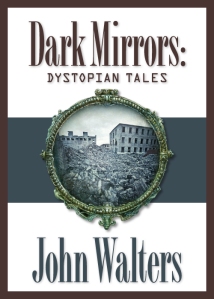
Back at home in Seattle, besides taking on all sorts of remote writing jobs to pay the bills, I continued my literary career. In January, my short story “Exorcism and Other Requests” appeared in the horror anthology Tales of Fear, Superstition, and Doom, and during the summer my story “Dark Mirrors” appeared in the anthology Dragon Gems Summer 2023. “Dark Mirrors,” in fact, is my most oft-reprinted story; it had appeared in several other compilations prior to this one. I was supposed to have had one other original anthology appearance in December. Unfortunately, though, at the last minute the publishers canceled the book and reverted rights to the authors due to financial difficulties. Such are the vagaries of the publishing world.

On the book publishing front, early in the year saw the appearance of Silent Interviews and Other Tales of the Telepathic Guild. The blurb offers a succinct summary: Long have the clandestine members of the Telepathic Guild assisted individuals, corporations, and governments by means of their unique skills. Guild Home functions as a headquarters and a refuge, and its strict regulations foster unity and discipline. In this linked series of stories, a guild member falls in love with an outsider and is faced with a life-changing decision; a group of young people rebel against the guild’s stringent rules; a famous sports star discovers he is telepathic and must choose between his wealth and celebrity status and a chance to change the world; a renegade telepath establishes affinity with a wolf pack in the arctic wastes; a talented telepathic detective attempts to solve a brutal murder at a chaotic science fiction convention. These and other tales explore the fascinating, enigmatic, and often dangerous lives of those who have sacrificed everything to join the guild and use their extraordinary abilities for the betterment of humankind.

During 2023 I also published another compilation of book reviews: Reviews and Reflections on Books, Literature, and Writing: Volume 3. This quote from the introduction sums up the contents: A popular topic in science fiction these days is the multiverse, the concept of an infinite number of parallel worlds. Remember, though, that the multiverse is not as far away as you suppose. Each book that you read takes you into a new universe. When you enter a bookstore or a library you are in the midst of thousands of portals to other worlds. To enter all you have to do is follow the words that the authors have set down to guide you. If they have done their jobs effectively, you find yourself in strange lands and alternate timelines with all sorts of different types of characters. The best part is that you can do it anywhere and anytime. Just open up the door, namely the cover of the book, and dive in. I compile these collections of book reviews to serve as maps leading to wondrous worlds. I wish you joy, amazement, prosperity, fun, and adventure in your explorations.

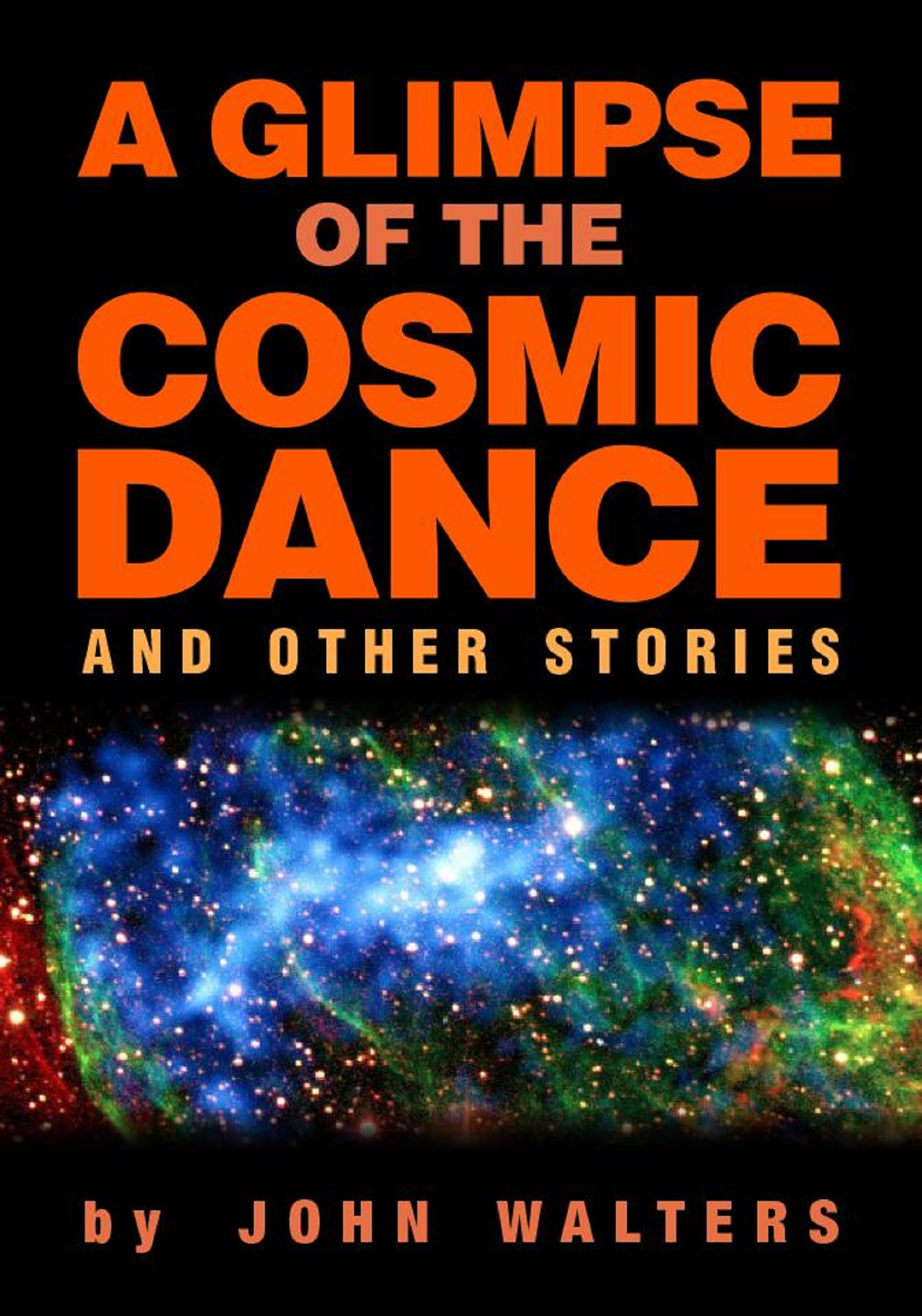
My final book publication of the year was the collection A Glimpse of the Cosmic Dance and Other Stories. In a world whose inhabitants routinely visit famous historical events, two jaded road-weary tourists take a holiday in an isolated retrograde enclave where time travel is forbidden. Humankind is plunged into chaos as the recently deceased reappear and take up residency in their former homes. As the result of an expensive technique that restores their youthful vigor, wealthy old people gallivant from place to place adventure-seeking and partying. However, their newfound energy comes at a terrible cost. In these and other tales you’ll find heart-pounding excitement, deadly perils, baffling perplexities, complex conundrums, dread mysteries, deceptive hallucinations, fantasy landscapes, far planets, distant futures, evil menaces, and unlikely heroes.

As for 2024, I plan to continue writing the best novels, short stories, memoirs, essays, and other works of which I am capable. I would also, if possible, like to do some traveling. I would definitely like to see my grandson Charlie again, and visit my sons, who have all gone off to far-flung places. I would also like to take a trip to Greece. I lived there for almost two decades, but I haven’t been back since I left eleven years ago. Next year around this time, readers, I’ll let you know what has become of these ambitions. For the moment: Happy New Year! Hang in there. Remember that we all go through tough times, but it is how we react to our circumstances that defines our characters. Take it one step at a time and you’ll get through.

Posted in Uncategorized | Tagged , , , | Leave a comment