Books Make Great Gifts!

After Thanksgiving has come and gone, people commence a search for holiday gifts for family members, relatives, friends, acquaintances, in-laws, outlaws, colleagues, and sometimes total strangers. If you’re looking for fun, sophisticated, lively, intense, flamboyant, and otherwise variegated literary fare, I’ve thus far published thirty-five volumes in a range of genres through Astaria Books. Here are some examples of choice gifts you can bestow upon your loved ones. If you click on the titles, the links are to Amazon, but for lists of links to other marketplaces, head for my website’s Available Books page.

Science Fiction:

After the Fireflood: A Novel – During the Fourth World War, the entire Earth is engulfed in a torrent of fire, transforming the landscape and obliterating all life.  Using terraforming, time travel, and other expediencies, human survivors from Moonbase and the outer colonies attempt to cope with their devastating loss, reconstruct the Earth’s surface, and reorganize Earth sociologically to ensure lasting peace, while others plot to claim the pristine reconstituted planet for their own purposes.

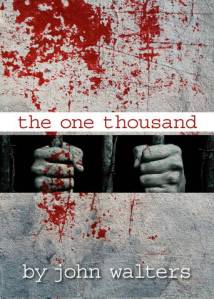
Bedlam Battle: An Omnibus of the One Thousand Series – In the late 1960s, humans and sympathetic aliens based out of Haight/Ashbury struggle to stop alien-possessed psychopaths intent on a murderous rampage. Four science fiction thrillers in one volume.

Love Children: A Novel – It is the mid-1970s.  The Summer of Love and the Woodstock Music Festival have come and gone.  Into the atmosphere of cynicism and doubt following the wild optimism of the youth revolution the Love Children, raised from birth by benevolent aliens, come home to Earth.  Sexually free, telepathic, and honest to the extreme, they are appalled to find that the planet they left behind is full of darkness and deceit. As they set about using their extraordinary powers to bring light and unity back to their world, they run up against a sinister alien force intending to keep it in darkness.

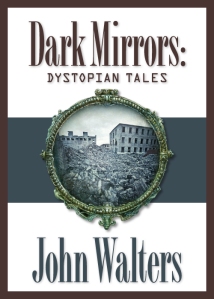
Dark Mirrors: Dystopian Tales – These tales offer terrifying glimpses of Earth’s future gone wrong. From the author’s afterword:  “When I postulate dark futures it is not to get you to despair.  When I hold up dark mirrors before your eyes it is not so that you will see the worst in yourself and do yourself in.  Far from it.  Some of our greatest illuminations come from deep dark prose.  Dark literature is not meant to overwhelm us.  It is meant to purge us, to provide catharsis.  It is a cleansing and purifying process.  We must be aware of the evil within before we can clean it out.”

Fantasy:

Caliban’s Children – Content is being siphoned from libraries and replaced with half-truths and lies.  Weather, time, and distances are distorting like images in a funhouse mirror.  People are discovering the ability to morph into animals.  At first it all seems idyllic and magical until a dark power begins to manifest itself, assert control, and demand obedience.

Ethan is a university student caught in the midst of a kaleidoscopic confusion he cannot understand.  After journeying into the wilderness seeking answers, he realizes he has to ally himself with the beasts of the Earth and venture into a bizarre, mutating, peril-filled city to rescue his lover and attack the source of the evil.

Fear or Be Feared: Fantasies – In these fourteen weird, surreal, frightening, and fantastic tales, unwary people discover that the world is very different from what they imagined.

Thriller:

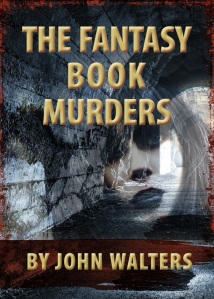
The Fantasy Book Murders – After a famous fantasy writer is murdered in his castle-like mansion, two unlikely investigators discover a pattern of similar murders suggesting a serial killer. They begin to research the killings, starting with the most recent and working backwards into the past. Danger mounts as they uncover the backgrounds of the victims and the truth begins to resemble the fantasy writer’s most bizarre and horrific fiction.

Novels of the Counterculture:

The Misadventures of Mama Kitchen – Sarah Tabitha Jones, a twenty-year-old fascinated by the youth culture of the late 1960s, leaves her middle-class home and wanders to a wilderness commune and then to the Haight/Ashbury in search of truth. On the way she encounters many strange characters: bikers, draft dodgers, Vietnam War veterans, peyote worshippers, heroin dealers, Jesus people, feminists, violent anarchists, Black Panthers, and science fiction fans. She experiments with drugs and sex, but at the same time helps out those she can; though often disillusioned, she believes that hippies should unite to create a better world. In the midst of all this she finds herself pregnant. Eight and a half months later, undaunted, belly bulging, she travels to Woodstock for one last attempt at finding the love and unity she seeks. The Misadventures of Mama Kitchen will appeal not only to those who lived through the disconcerting era of the 60s and 70s but to those younger who are curious about what took place back then. It will also resonate with anyone who is idealistic and in search of personal fulfillment, as well as those who simply enjoy a wild tale: sometimes comic, sometimes tragic, sometimes violent, sometimes sexy, always extreme.

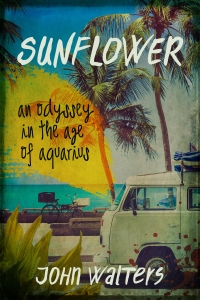
Sunflower: A Novel – In early 1970 a new era, the Age of Aquarius, is dawning. Penny, who adopted the name of Sunflower on the way to the Woodstock Music and Arts Festival, attends another rock concert touted as Woodstock West, at Altamont Speedway near San Francisco. Seeking to enhance the transcendent experience, she instead comes away covered in the blood of a man brutally stabbed to death in front of the stage. Has the new youth experience descended from idealism to anarchy? Confused and disillusioned, Sunflower embarks upon an odyssey across an America torn by violent anti-Vietnam War protests, racial tension, and gangs of hard drug dealers. From a search for a shared social experience it becomes a personal quest for fulfillment that leads her on a journey across continents.

Memoirs:

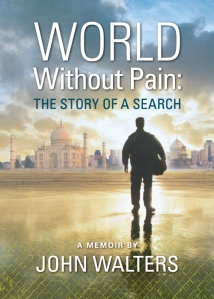
World Without Pain: The Story of a Search – In the 1970s, after the Altamont Rock Festival, the Manson Family cult murders, and the fiasco of the Vietnam War many young people, disillusioned by the hippy movement, began to leave their homelands and travel to the far places of the world.  Hoping to find drugs, sex, freedom, and excitement, they more often were confronted with destitution, despair, disease, loneliness, and culture shock. As a young writer wishing to break out of the familiar rut in which he was stagnating, Walters hit the road during this time, first to Europe, then onward to the Indian Subcontinent.  He sampled Buddhism and radical Christianity; he wandered alone in the Himalayas; he listened to strange gurus spouting stranger doctrines; he watched the people around him deteriorating and dying in the lands of the East.  As he traveled onward he became fascinated with the road itself, and determined to discover its secrets. He wondered what it was that gave the road its alluring power, and he forsook everything else to find out. His story will appeal to those who lived through the turmoil of the 60s and 70s, to those who are hungering after spiritual fulfillment, to writers and other artists in search of their voice and their inspiration, and to anyone who loves a true story of adventure and excitement in strange lands.

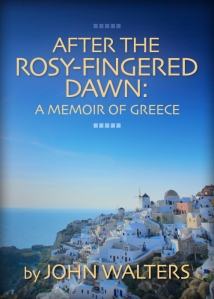
After the Rosy-Fingered Dawn: A Memoir of Greece – Greece has always been regarded as the birthplace of western civilization and a Mediterranean paradise.  In The Iliad and The Odyssey Homer uses the magical epithet rosy-fingered dawn to describe the sunrise over a land of myth, fascination, and mystery.  But when preconceptions and illusions are swept aside, what is Greece really like? John Walters has lived in Greece for over fifteen years.  He has hitchhiked over many of its roads; traveled by camper; journeyed by plane, boat, bus, car, taxi, motorcycle, and on foot.  He has lived and worked and raised a family among Greeks.  He offers insight from an intimate perspective on aspects of Greek society and culture of which tourists are unaware. Many have visited Greece and afterwards acknowledged that the country has profoundly changed them.  This memoir is for those who feel something special when they think of Greece and Greeks, those for whom Greece holds a special thrall, those who have visited and have their own memories of the place, and those who would like to visit someday and know that when they do they will obtain new insight, new clarity, and will never be the same again.

America Redux: Impressions of the United States After Thirty-Five Years Abroad – In 1976 John Walters left the United States in search of adventure and literary inspiration.  He lived for many years in India, Bangladesh, Italy, and Greece.  He married and had five sons.  Finally, faced with the economic catastrophe in Greece and the lack of opportunities for his sons, he returned to the land of his birth.  Without home, without job, without resources, he confronted his own country as if for the first time. This is a memoir of someone who, late in life, was forced to leave everything behind and start fresh in what for him had become a new land.  It will appeal to those who are confronted with major life changes in these troubled economic times; to those who, though they may desire rest and retirement, must continue toiling to make ends meet; for those who desire insight into the vast, multifaceted culture of the United States from a fresh perspective, unencumbered by familiarity.

Writing as a Metaphysical Experience – From the author’s introduction: “For me, writing is metaphysical because it is inseparable from who I am and my conception of the universe and my place in it.  My interpretation of writing goes far beyond the definitions of hobby, job, or career – it is rather in the nature of a calling.  It is something that blossomed from within me and, though invisible to instrumentation, has been as integrally a part of me as my flesh, bones, and internal organs.  How this transpired and how it manifests itself is the subject of this book. This is not a how-to book on writing, although in its course I offer many practical tips and suggestions.  It’s more like a travelogue, a story of the life’s journey on which my writing has led me.” This journey has led Walters on a decades-long quest from the United States to Europe to the Indian Subcontinent and back in the pursuit of voice, inspiration, and literary excellence.  On the way, he has written and published novels, short story collections, essay collections, memoirs, and numerous individual novellas, novelettes, short stories, and essays.

Posted in Reading | Tagged , , , , , , , | Leave a comment

Book Review:  Being Michael Swanwick by Alvaro Zinos-Amaro

Although Zinos-Amaro is listed as the author of this book, it is in fact a collaborative effort. It consists of a series of interviews between prolific science fiction and fantasy writer Michael Swanwick and Zinos-Amaro. These interviews cover Swanwick’s stand-alone short stories and novels, flash fiction and series fiction, and collaborations with other authors. Zinos-Amaro brings up one work at a time and asks leading questions, and Swanwick responds by delving into inspirations, research, process, themes, and other fascinating details that take the stories from wisps of ideas to publication. In short, this is one of the best books on writing I’ve ever read. It’s not even necessary for you to be familiar with the stories that are discussed to benefit from the many tips on fiction writing from an acknowledged master.

I left the United States back in the early 1970s because I wanted to live life to the full and find my own unique voice as a writer. At that time the new wave in science fiction included writers such as Samuel Delaney, Roger Zelazny, Ursula K. Le Guin, Harlan Ellison, and others, but Swanwick was as yet unknown. He didn’t publish his first stories until the 1980s, and by then I had lost touch with the field. While my wife and I were raising a family in Greece, though, the internet eventually came to our household; this was in the late 1990s and early 2000s. I began to read stories posted online for awards consideration, and many of these were by Swanwick. During this period he was on a roll, with numerous nominated stories, many of which won top prizes such as the Nebula, the Hugo, and the World Fantasy Award. I became aware then that Swanwick was one of the top writers in science fiction and fantasy and one of the best short story writers ever. Later, after I moved back to the States, I met Swanwick at a Clarion West event and we talked for a long time; our conversation then was similar to the tone of this book: intellectually stimulating, frequently surprising, and lots of fun.

One thing that stands out throughout this book is that Swanwick is in love with writing. The text is full of gems like these: “I went into this business with my eyes pretty wide open. Part of my plan was poverty.” “Once you decide that you’re not going to live as well as a Certified Public Accountant that makes a lot of things possible! One of the things it makes possible is that you get to write whatever you want. I chose freedom over money.”

Here’s another great quote: “I believe in the beauty of short fiction, in the purity of it, and the fact that it can do things that long fiction simply cannot.” Swanwick has certainly proven this over the years.

And here’s a glimpse of some of the practical advice he liberally shares: “My first drafts always suck. You know, writing bad prose isn’t fun, but it’s a necessary first step to writing good prose.” Personally I was working through a tough first draft when I read this, and it helped me to persevere.

Swanwick’s descriptions of how much time and effort go into each story amaze me. He does extensive research to get details right; even if readers wouldn’t know whether certain facts were true or not, this painstaking care creates a sense of verisimilitude that is evident when you read his tales. If he begins a story and it doesn’t take off, he sets it aside, sometimes for months, until it comes to life, and then he finishes it. However, he balances this intense dedication with a sense of joy. “I was never afraid to write a small, funny, not-very-important story.” “I’ve always just written the best thing I could write at that particular moment.”

I found it interesting that though Swanwick frequently appears in leading magazines and anthologies, he and his wife Marianne Porter also publish some of his works in chapbooks via their own press. His cornucopia of stories overflows into many channels.

In conclusion, I recommend Being Michael Swanwick as an invaluable tool for writers and as an absorbing look for all readers of what lies behind the creative process. It is an intimate visit with a very talented writer, and it is likely that, like me, when you come to the last page you will be immensely satisfied but at the same time wish there was more.

Posted in Book Reviews, On Writing | Tagged , , , , | 1 Comment

Book Review:  Roman Stories by Jhumpa Lahiri; Part Two

Like the stories in Lahiri’s earlier collections Interpreter of Maladies and Unaccustomed Earth, several of the tales in Roman Stories deal with cultural clashes: affluent foreigners who have chosen for various reasons to relocate to Rome, or laborers and domestic workers from poorer countries who have come to Rome to make a living and escape situations in their homelands.

Understanding the intricacies of these situations is difficult sometimes because Lahiri, in these stories, chooses to withhold details about her characters. For instance, none of the characters are given names. At best, a few are given one initial only by which we can identify them, but most are represented as types: the wife, the husband, the friend, the other friend, the widow, the mother, the expat, the brother, and so on. In the stories with first person narrators, the narrators do not have names either. And when people are identified as foreigners, their countries of origin are not specified; it is left to readers to guess. This lack of focus causes the stories to more easily function as parables or allegories, perhaps, but it also causes occasional confusion in figuring out what exactly is going on.

Lahiri has a gift for imbuing importance into seemingly ordinary people and situations. She often describes commonplace events, but we come to understand, as the stories progress, that just one critical thing is damaged or out of place. For example, “The Boundary” is narrated by a teenager living outside the city whose father rents an adjoining cottage to foreigners on vacation; her family’s lifestyle has been profoundly impacted by an earlier attack on her father by xenophobic locals. In “P’s Parties,” a marriage is irrevocably changed by a single indiscretion the husband commits while socializing with affluent friends. In “The Procession,” the death of their child, which happened decades ago, haunts a couple on vacation.

Lahiri’s writing style has lost little of its elegance; maybe that’s because even though these stories were originally written in Italian, she has self-translated most of them. (A few have been translated by Todd Portnowitz; these have been specified in an afterword.) For a writer to display this much expertise while working in a language acquired as an adult is extraordinary to say the least. I would say that these stories do not quite reach the level of excellence displayed in Lahiri’s Bengali-American tales. At the same time, though, Roman Stories is a very good short story collection – certainly better than most. It is entertaining and insightful and at times deeply emotional. I was an expat in various foreign countries for many years, and I can empathize with the difficulties and conundrums Lahiri’s characters face as strangers in a strange land. As she wrote these stories, Lahiri herself was adjusting to living in her adopted country of Italy, and as I was reading of certain situations her characters go through I couldn’t help but think that the author was drawing from her own experiences.

In conclusion, then, I recommend this book. It is erudite, absorbing, perceptive, and empathetic.

Posted in Book Reviews | Tagged , , , , | Leave a comment

Book Review:  Roman Stories by Jhumpa Lahiri; Part One: Background

I have long appreciated Jhumpa Lahiri’s writing. I first came across it by accident. I was living in Greece, where my then-wife and I were raising our family; I often browsed for books at the library of the elite high school where my oldest son had obtained a scholarship. One of the librarians approached me, put a volume in my hands, and said, “You’re going to like this.” It was Lahiri’s Pulitzer-prize winning first collection of stories Interpreter of Maladies. And indeed I did like it very much. Later my oldest son got a scholarship to Princeton, and while I was visiting him there we went to see the movie The Namesake, which is adapted from Lahiri’s first novel of the same name; it remains one of my all-time favorite movies. I read the novel when I got back to Greece, and after that I eagerly obtained Lahiri’s books as soon as they were published: the story collection Unaccustomed Earth and the novel The Lowlands.

Lahiri is a brilliant writer, but her works resonated with me on another level too. I lived in Bangladesh for six years; I got married there, and our first two sons were born there. I also spent extensive time in West Bengal at Kolkata and at Santiniketan, the site of Rabindranath Tagore’s ashram and experimental school. For a short time I even studied the Bengali language (on a very basic level) at Dhaka University. Lahiri’s first several books deal with the juxtaposition of Bengali and American cultures, of American Bengalis in India or of immigrant Bengalis in America. Lahiri brilliantly captures the conflicts of cultural adaptation, and she does this by tracing seemingly ordinary events in the lives of individuals and families who are in the midst of difficult periods of change.

As I mentioned above, for me the publication of a new book by Lahiri has always been a cause for celebration. This happens infrequently, though, because Lahiri is not a prolific writer. This was further complicated when she moved to Rome in 2012 and in 2015 she ceased writing in English and began writing only in Italian. At first I couldn’t understand why such an accomplished storyteller would switch from English, a language in which she had obtained a rare level of mastery, to Italian, a language in which she had to start from scratch. In fact, she first wrote Roman Stories and other recent works in Italian and then afterwards translated them into English. I even wondered why, if she wanted to write in another language, she didn’t choose Bengali, which would befit her background. But then again, I am all for freedom of expression, and these are her decisions to make, so I am fine with evaluating her works within the parameters of her decisions.

I can also understand her attraction to Italy and to the region around Rome. I lived for several years in Italy; one of my sons was born there as well. I have traveled throughout much of the country. I learned to speak Italian too, although I haven’t practiced it for decades. It is a vibrant, emotional, expressive language, and Italy is a beautiful, complex country with obvious evidence of its deep historical roots everywhere you go. As for Rome, the setting for the stories in this new collection, it is a fascinating, intricate, sophisticated, and enigmatic city that would richly reward a lifetime of exploration.

(To be continued.)

Posted in Book Reviews | Tagged , , , , | Leave a comment

Book Review:  Borges and Me: An Encounter by Jay Parini

This book appears to be and reads like a memoir, and in most ways it is; however, Parini explains in an afterword that the events, though true, took place fifty years ago, and though he had “a handful of notes, with scraps of conversation” from his journal of that year, he was relying mostly on his memory when he wrote it. Therefore, he says, it probably fits better into the category of autobiographical fiction rather than memoir, because he had to reconstruct dialog he only vaguely recalls.

No matter. It is the spirit and tone that is important, not the details. And in fact, this book is a delight, an uplift, and a blast of intellectual acuity, as if Jorge Luis Borges himself, the Argentine master of magic realism who won numerous awards and influenced countless other writers, entered the room and began to speak in his inimitable, eclectic manner.

It is set in the early seventies. Partially to evade being drafted and sent off to Vietnam and partially to escape his bland Middle American family, Parini decides to pursue graduate studies in literature at the University of St. Andrews in Scotland. Borges doesn’t appear until about page eighty. Be patient. Parini needs to set up some necessary background for the road trip to follow. Once Borges does make his entrance, as a houseguest of Parini’s mentor Alistair Reid (who is translating some of Borges’s works) the narrative bursts into life.

Borges is old and blind, and yet his intellect is undimmed. His observations are rife with the metaphysical complexities that are liberally strewn throughout his works. When they meet, Parini, an aspiring writer, has never heard of Borges or read any of his stories, and Borges baffles him, with his constant references to mythology, quotes from poetry, and cosmic metaphors. Reid and his son need to go to London, so Reid asks Parini to stay with elderly blind Borges for several days until he gets back. Almost as soon as Parini arrives at Reid’s cottage, though, Borges insists that they go on a road trip through Scotland together.

Adventures ensue. During a storm, Borges falls down a roadside slope, hurts his head, and has to be taken to a hospital. While rowing on Loch Ness, Borges stands up in the boat and tips it over, and Parini has to save him from drowning in the frigid water. Borges gets lost in a maze near a castle until Parini finds and rescues him. Throughout these misadventures, Borges regales Parini with wit, insight, and guidance; at first Parini wonders what he’s gotten himself into, but as their trip progresses, he respects and appreciates Borges more and more. Their conversations are glorious: full of creative ideas and literary allusions. At times, as I read, I laughed out loud or clapped with glee. As Parini explains: “One felt somehow more intelligent, more learned and witty, in his presence. The universe itself felt more pliable and yielding, and so available.”

In the end, Parini’s relationships with a friend in Vietnam he corresponds with, a Scottish woman he feels drawn to, his mentor Reid, and Borges are all resolved in a very touching way. And it makes no difference whether you want to call the book autobiographical fiction or memoir; it is excellent, and I highly recommend it.

Posted in Book Reviews | Tagged , , , , , | Leave a comment

Book Review:  The Rings of Saturn by W. G. Sebald

This work is presented as a novel, but it is not really a novel in the conventional sense. The plot is very thin. The narrator takes a walking tour of Suffolk, a county in eastern England. He describes what he observes on the way and also tells about historical events called to mind by his observations. In The New York Times in 1998, Roberta Silman called it “a hybrid of a book – fiction, travel, biography, myth, and memoir.” Others would refer to it as autofiction, or autobiographical fiction, that is, the telling of true life events combined with scenarios culled from the imagination. As I read The Rings of Saturn I was reminded of the so-called novels of Henry Miller such as Tropic of Cancer and Tropic of Capricorn; Miller, too, often takes off from his immediate narrative and delves into detailed descriptions of the lives of his characters and into surrealistic meanderings – although it must be emphasized that Miller is sexually raunchy to the extreme, while Sebald avoids any mention of overt sexuality.

Sebald’s book is unusual in other ways as well. For instance, illustrations in the form of photographs, maps, and hand-written letters and notes are scattered throughout; in my edition, at least, these are of very poor quality. Some of his sentences are very long – up to half a page or even more, and his paragraphs are immense. The paragraphs often go on for numerous pages as Sebald deftly leaps from one thought to another without pause. Some chapters of fifteen to twenty pages only have two or three paragraphs in them. Miller often included long, long paragraphs in his autobiographical novels too, but the difference is that he would break them up by interspersing shorter paragraphs and lines of dialog. When Sebald uses dialog, though, he uses no quotation marks and embeds it within the lengthy paragraphs in his narrative, which can get quite confusing sometimes.

Yes, this is an unusual book. In a publishing industry that is heavily caught up in strictly labeling books according to narrative forms, genres, and so on, it is an anomaly. It is unorthodox and unconventional; it breaks the rules. I like this. Its existence demonstrates that writers can do whatever they damn well please as long as they do it well.

As for the story, such as it is, the unnamed narrator wanders along the coast of Suffolk, taking little-used footpaths and staying at inns and hotels. The overall mood is that of deterioration and desolation. He lingers at various run-down manors along the way and tells the (usually tragic) stories of their owners. He also diverges into lengthy narratives about the 17th century English writer Thomas Browne and his witnessing the dissection of a human corpse, the physiology and life cycles of herrings, the life story of the writer Joseph Conrad, the British assault on China in the 19th century, the reign of the oppressive Chinese Dowager Empress in the late 19th and early 20th centuries, and other seemingly unrelated subjects that spring like luxuriant plants from his ruminations as he meanders about the countryside.

As I said, if you are looking for a conventional novel, then you’ve come to the wrong place. However, if you enjoy deviations from the usual literary norms, if you are content to wander hither and thither following the thoughts of an idiosyncratic author, and if you value artistically composed albeit loosely structured prose, then this might be a good book for you.

Posted in Book Reviews | Tagged , , , | Leave a comment

Book Review:  The Fatal Shore: The Epic of Australia’s Founding by Robert Hughes – Part Two

“The horror… The horror…” we hear Marlon Brando as Kurtz say at the end of the film Apocalypse Now. Such a somber chant would suit the mood of much of The Fatal Shore. It is almost unbelievable that humans could purposefully inflict so much suffering upon their fellows, but of course the founding of Australia is by no means an isolated instance of man’s inhumanity to man; history is full of examples.

As I read on, I came across exciting stories of convicts attempting to escape. Some hijacked ships and sailed away, and others fled into the bush and tried to live off the land. These sometimes became legends to those left behind, but most of them were captured and either killed or horrifically punished.

The inherent problem with the system was the motivations of the authorities in England who had instituted the program of transportation of criminals to Australia. First of all, their ideas of who constituted felons worthy of transportation were seriously flawed. Up to half of those sentenced to remote exile were guilty of nothing worse than petty theft. Many were teens, women, or old people. But worse than the choice of convicts was the motivation for sending them in the first place. They had no desire to reform the prisoners. They wanted the people of Great Britain to fear being transported to Australia, so they gave orders to make the penal colonies as terrifying as possible. To accomplish this, they sent harsh sadistic governors and other officers who were only too eager to humiliate and torture the prisoners in their care.

In some parts of the book, the author Hughes seems to be trying to find excuses for the authorities behaving as badly as they did, but really there are no excuses for such violent, murderous, inhuman behavior. As I read, I kept thinking that the politicians and judges in England and the overseers in Australia should have been forced to live for a few days as a convict so they could see for themselves what they were perpetrating. But really, no one should ever have to go through what the convicts went through. And as if their standard treatment was not bad enough, the authorities set up special detention centers in places such as Norfolk Island and Macquarie Harbor that were designed as places of torment and punishment. These powerful men were like mad scientists intent on inventing methods of inflicting greater pain. If any governors or commandants, such as Alexander Maconochie, sincerely wanted to help and reform prisoners, they were ridiculed by free settlers and relieved from their posts by the British authorities.

Hughes points out that as a deterrent to crime in England, the program of the transportation of convicts to Australia was a flat failure. Despite the efforts of authorities to create an image of Australia as a place of dread, too many people living in poverty in England saw it as a place where they could escape their hardships and make a new start. The final straw to the transportation system was the discovery of vast quantities of gold in the early 1850s, which further established Australia in the public mind as a land of opportunity.

The author explains that for a long time convict ancestry was a cause for shame in Australia. I found this saddening, as it was the convicts who pioneered the land, albeit unwillingly, and whose hard labor laid the foundation for what it became.

In conclusion, I would say that this book is probably not for everyone. It is long and complex and full of examples of humankind at its worst. Still, I was unaware of much of this history. It is fascinating, if frightening, to read of the origins of this vast island nation. I recommend it if you can handle the harshness and you enjoy well-told histories.

Posted in Book Reviews | Tagged , , , | Leave a comment

Book Review:  The Fatal Shore: The Epic of Australia’s Founding by Robert Hughes – Part One

This is a massive, complex history about how the transportation of convicts from England to Australia gave birth to a new nation. It is also a devastatingly horrific story, so much so that I almost gave up reading it after about a hundred pages. The overwhelming human misery is hard to take. I persisted probably for reasons similar to why people continue to watch well-made horror movies even after the bad stuff starts. On one hand your sensibilities can’t take it, but on the other hand it’s hard to look away. I found that after a couple of hundred pages the mood became nuanced, but still, it’s a tough read.

One reason it’s slow going at first is that Hughes is so thorough. For instance, before he gets into describing the first voyage that brought convicts to New South Wales, he provides background information such as the state of the penal system in England in the late eighteenth century, the plight of the poor, the overcrowded and horrendous conditions of the jails, the early exploration of the Pacific leading to the discovery of Australia, and the history and situation of the indigenous population.

He then offers a comprehensive look at the early transportation voyages. That’s when the horror stories truly begin. On the first ship out, all of the prisoners had been convicted as felons, but none had committed violent crimes. In fact, many of the misdeeds for which they were condemned to transportation were petty thefts: the taking of a few articles of clothing, or a packet of snuff, or a handful of potatoes. The condemned convicts ranged in age from a ten-year-old child to a woman eighty-two years old. They wore heavy chains and rags for clothes; they remained in dark, vermin-infested ship’s holds for most of the journeys, which lasted for many months; they were fed starvation rations and were flogged for miniscule offenses. At sea the ship captains were often cruel and sadistic, and on shore in Australia and on notorious Norfolk Island, their overseers were often no less sadistic, meting out harsh physical punishments for any hint of insubordination and sometimes for no reason at all. Convicts would often be flogged until blood and flesh flew and bones were laid bare.

The stories of the early transports to Australia reminded me of some of Solzhenitsyn’s descriptions of the Soviet Gulag. I became convinced as I read that the real criminals were the British authorities who set up this gruesome system. Before Australia, the British used North America for the transportation of their convicts. If the Americans were treated anywhere near as badly as those sent to Australia, no wonder the colonists rebelled! In fact, the American Revolution is one of the main reasons the British had to turn their attention to Australia as a dumping ground for convicts. American authorities afterwards committed their own atrocities with the slave trade and the treatment of the indigenous population, but that’s another tale.

In attempting to explain why England continued the dread transportation system for so long, Hughes only succeeds in emphasizing the perversity of the society that allowed it in the first place. The real fault lies in that society, which labeled the poor a “criminal class” and treated them with contempt. The author writes that “transportation did not stop crime in England or even slow it down. The ‘criminal class’ was not eliminated by transportation, and could not be, because transportation did not deal with the causes of crime.” He emphasizes this point: “The worst offense against property was to have none.” In other words, the poor, merely by being poor, were despised, ostracized, and targeted.

It was not only poverty-stricken petty thieves that were relegated to the Australian dumping ground, though. The authorities also banished British political dissidents and rebellious Irish. The usual periods of exile were seven years, fourteen years, or life. Occasionally families were allowed to travel with the convicts, but much more often they were ripped apart. Sometimes when those the convicts had stolen from realized the heavy punishment the thieves received, they pleaded for mercy for the perpetrators, but their pleas did no more good than did the pleas of the convicts’ families. Regardless of the severity of their crimes, the government wanted to make examples of these people. Mercy was seldom, if ever, shown.

(To be continued.)

Posted in Book Reviews | Tagged , , , , | Leave a comment

Used Bookstores Then and Now

I take long walks in my neighborhood in northeast Seattle every day. Recently, however, I had the urge to attempt an excursion beyond the borders of the familiar, so I took a bus to a used bookstore in the University District near the University of Washington campus. I have to admit that it was not without trepidation that I assayed to enter the area, because the last time I had been there the main avenue was filthy and full of drug-addled, panhandling homeless people. I have nothing against homeless people, having been one myself when I was younger, but these groups on the Ave seemed particularly aggressive and menacing. I was pleasantly surprised to find that the Ave had been cleaned up; a few quiet individuals sat with their belongings here and there, but the rowdy miscreants had moved elsewhere.

Some people enjoy shopping for clothes, and some for accessories, but the only things I go out of my way to look for are books. I have to purchase shoes from time to time when the soles wear out from those extended walks, but most of the clothes I wear are gifts or hand-me-downs. Books, though: those are the true treasures. My searches for books in Seattle go back to decades ago, when my ex-wife and I were raising our family in Thessaloniki, Greece. When I’d journey to the States for some reason or another, exploring used bookstores would invariably be part of my plan. I would accumulate a long list of books I desired to read and would search for them, and I would also of course peruse the displays for random titles.

On one occasion I was staying at the home of one of my brothers, and it was walking distance from the University District. This was the golden age of used bookstores; I found half a dozen of them in the University District alone. I worked out a route so that I could most efficiently cover them all with the least amount of effort. I brought back an impressive haul of books on that trip.

Later, when I moved to the States with my sons and eventually ended up back in Seattle, one of our favorite activities was to head to Half Price Books in the University District and browse for an hour or so. On our limited budgets, Half Price Books was also our go-to place when we were looking for birthday or Christmas presents for each other. Alas, all the Half Price Book outlets have moved out of the city, and the majority of used bookstores in town have closed.

A few months ago, one of my sons and I drove to Anacortes on our way to Whidbey Island. In Anacortes we found a beautiful used bookstore, spacious and well-stocked. We’d come mainly to explore the state parks on Whidbey Island so we didn’t have much time, but we spent about twenty minutes browsing the shelves and purchasing a few titles. The experience reawakened in me the joy of searching for treasures in used bookstores.

When I got back to Seattle, I decided to seek out more used bookstores within public transportation range (I don’t own a car) and that’s when I discovered the paucity of possibilities. I suppose it has something to do with the ease of finding books online at the ubiquitous retail giant that we shall not name. Still, it left me with a profound sense of loss.

I did find two bookstores within my range, one in Fremont and one in the University District. The Fremont one I visited a few weeks ago. It was a cute cubbyhole with three floors: the top level was devoted to books for children and young people, the middle to classic literature, and the basement, which was reached via a narrow spiral staircase, contained science fiction, fantasies, and mysteries. The bookstore in the University District had only one floor, but it was more spacious and not as cramped. Its selection of titles was excellent. I had brought a short list of items I was looking for, and I found and purchased every one of them.

And so I have already exhausted the used bookstores within my immediate range. I can go back to them, of course, with new lists, and search corners I neglected during my previous visits. I can also look for books at estate sales and thrift stores. It’s not that I want to compile an enormous collection; I don’t have space for it. When I last changed apartments I purged my book stash and gave away many volumes through nearby little free libraries. The joy is in the search and in the occasional discovery of priceless literary gems.

Posted in Reading | Tagged , | Leave a comment

Book Review:  Damnation Alley by Roger Zelazny

I’ve been reading a number of weighty nonfiction tomes lately, and I thought I’d take a break and read one of the older science fiction books that have been accumulating on my shelves due to visits to used bookstores and little free libraries. Damnation Alley was first published in 1969. It is not one of Zelazny’s better novels. My favorites of his works remain This Immortal, Lord of Light, and the novelettes “A Rose for Ecclesiastes” and “The Doors of His Face, the Lamps of His Mouth.” However, it must be understood that Zelazny was one of the master stylists of science fiction’s New Wave of the sixties and seventies, and even so-so Zelazny is better than the best work of many lesser writers.

Damnation Alley is a dystopian adventure with an antihero protagonist. Hell Tanner, the last living member of a biker gang, is offered a pardon from prison if he will “volunteer” to drive a shipment of plague vaccine from the nation of California to the nation of Boston. After warfare wreaked havoc and radiation on most of the world, leaving it a wasteland, atmospheric storms are so ferocious that flying is impossible and there is no long range communication. A driver somehow made it from Boston to California to plead for the vaccine, and now Tanner has to return with it driving an armored car through Damnation Alley, the bomb-decimated middle of the country, which is rife with volcanoes and craters full of radiation, and populated with vicious gangs and gigantic snakes, spiders, and Gila monsters. Some of the action reminds me of the Mad Max film series, but Damnation Alley is the original, predating the first of those movies by a decade.

I think one of the main reasons that this novel doesn’t rise to Zelazny’s best work is that it is straight adventure; there are no metaphysical undertones, none of the references to mythology and religion that suffuse his masterpieces. This Immortal, for instance, is based on Greek mythology, and Lord of Light leans heavily into Buddhism and Hinduism. “A Rose for Ecclesiastes” uses its namesake book of the Bible to underscore its meaning, and “The Doors of His Face, the Lamps of His Mouth” is based on the description of the leviathan in the Bible’s Book of Job. On the other hand, Damnation Alley offers nothing but its straight adventure without undertones. Additionally, although it is short, it is somewhat padded in parts. It seems that originally it was a novella, and in order for it to qualify as a stand-alone novel it needed more words, which Zelazny obliged the publisher in supplying. It is easy to see where the extra verbiage is placed, mainly in occasional snippets of life in Boston while Tanner is on his way with the medicine, and the book would have been stronger without these additions. Even Zelazny himself said that he liked the novella more than the novel. Keep in mind what I said above, though: Zelazny at his worst is far better than most writers at their best. Damnation Alley is a fun short read to help you while away a long plane flight or an afternoon relaxing at the beach.

Posted in Book Reviews | Tagged , , , | Leave a comment