
I was invited to promote my novel The Misadventures of Mama Kitchen and suggest some of my favorite related books on a new recommendation site. Follow this link to check out The Best Books Celebrating the Psychedelic Sixties!
I was invited to promote my novel The Misadventures of Mama Kitchen and suggest some of my favorite related books on a new recommendation site. Follow this link to check out The Best Books Celebrating the Psychedelic Sixties!
The God Equation is Michio Kaku’s term for the ultimate theory, “the holy grail of physics, a single formula from which, in principle, one could derive all other equations, starting from the Big Bang and moving to the end of the universe.” In this book, Kaku traces the history of the search for this equation, beginning with Isaac Newton’s discovery of the laws of motion and gravity, and moving onward through Einstein’s theory of relativity, Michael Faraday and James Maxwell’s explanation of electricity and magnetism, and the contributions of Schrodinger, Heisenberg, Planck, Hawking, and others to the development of quantum theory and string theory. Kaku’s own area of expertise is string theory, one of the latest iterations in the quest for the ultimate explanation.
According to Kaku, an essential aspect of the God equation is symmetry. “To a physicist, beauty is symmetry. Equations are beautiful because they have a symmetry – that is, if you rearrange or reshuffle the components, the equation remains the same.” Through the development of the theory of gravitation, the theory of relativity, quantum theory, and string theory, physicists have always sought symmetry in their answers to the mysteries of the universe. You don’t have to worry, though, if, like me, you have not studied much advanced mathematics or physics. There are very few equations presented in the body of the text, but if you are interested you can find a few in the notes. Kaku is intent upon providing a general overview of the research in this area for those who have not had much training in it. Even so, I have to confess that I did not understand everything in The God Equation. Kaku is summarizing a vast amount of research history in just a few hundred pages, and sometimes he lost me as he jumped from one topic to the next.
The value I derive from this book is in its clarification of the logical leaps from Newton to Einstein to quantum theory, string theory, and beyond. It is also fascinating as Kaku delves into brief explanations of black holes, wormholes, dark matter, time travel, the creation of the universe, and the blackness of the night sky. I had never considered this last topic before. As Kaku writes, “If we start with a universe that is infinite and uniform, then everywhere we look into space our gaze will eventually hit a star. But since there are an infinite number of stars, there must be an infinite amount of light entering our eyes from all directions. The night sky should be white, not black.” The answer was finally provided by Edgar Allen Poe, of all people, who besides writing mystery and horror stories was also an amateur astronomer. He posited that “the night sky is black because the universe has a finite age.” Kaku adds that “telescopes peering at the farthest stars will eventually reach the blackness of the Big Bang itself.”
The book ends in uncertainty. Unfortunately, the God equation has not yet been discovered and experimentally proved. In fact, as Kaku explains it, the closer physicists seem to get to the answer, the more they uncover amazing new truths that add to the complexity of the conundrum. Who knows? Maybe the universe (or the multiverse) is set up as a never-ending puzzle, an entertaining and amusing diversion that will fascinate physicists for millennia to come. For those of you who are interested in assessing the current level of progress, this book is highly recommended.
As a summer gift to readers, I have enrolled electronic editions of some of my books and stories in the Smashwords Summer Sale, which runs through the month of July. Complete books are half price, marked down from $3.99 to $1.99. Short stories and mini-collections of essays and memoirs are available to download for free. Take advantage of this sale to stock up on some great reading material.
If the discount price does not appear on my profile page, click on the link to the specific book you are interested in and you’ll see the deal.
Smashwords was the digital distributor I used when I first became involved in electronic publishing, and when I later switched to another distributor, I left numerous editions of my early works in the Smashwords catalog. You can find a complete listing at my author’s profile here.
Among the books available at a half-price discount are my memoirs World Without Pain: The Story of a Search, After the Rosy-Fingered Dawn: A Memoir of Greece, and America Redux: Impressions of the United States After Thirty-Five Years Abroad; the novels Love Children, The Misadventures of Mama Kitchen, and Sunflower; the collections The Dragon Ticket and Other Stories, Painsharing and Other Stories, Dark Mirrors: Dystopian Tales, and Opting Out and Other Departures; and the essay collection Reviews and Reflections on Books, Literature, and Writing.
The stories available for free include some of my personal favorites such as “Dark Mirrors,” “The Customs Shed,” “Life After Walden,” and “Noah and the Fireflood.”
So head on over to Smashwords and pick up some thrilling and thoughtful novels, short stories, memoirs, and essays at deep discounts and even free.

My latest book, Thoughts from the Aerie: Memoirs and Essays, has just been published by Astaria Books and is available from numerous online outlets, including the venues listed below. Here’s a summary from the back cover:
After living abroad for thirty-five years in India, Bangladesh, Italy, Greece, and other countries, John Walters returned to his home country, the United States, with his sons. When the youngest moved out, he found himself alone in a fourth floor apartment with a spectacular view. He dubbed his new home the aerie.
For some people solitude can be devastating, but for others it can provide a unique opportunity to maximize the creative experience. These scintillating and captivating essays trace the roots of artistic destiny, follow the intricate patterns of past relationships, and offer fascinating observations about writing, travel, literature, perseverance amidst adversity, optimism during a pandemic, and other topics.
Most of the memoirs and essays I include were composed after I moved into the fourth-floor apartment that I call my aerie. I not only have an excellent physical view from my balcony, but in my solitude I have a sweeping perspective of past, present and future.
By the way, I have received my physical author’s copies of the book and they are beautiful. Many thanks to Two Pollard Design for the radiant cover.
Elizabeth Rush is the author of Rising: Dispatches from the New American Shore, a study of the effects of global warming and rising sea levels on vulnerable places and communities. In The Quickening she continues her studies of the impact on the environment of a warming world. In 2019, she joined the first scientific expedition to ever visit the massive Thwaites Glacier in Antarctica. During a brief window when the area around the glacier was not completely ice-bound, the crew and scientists aboard the Nathaniel B. Palmer grappled with inclement weather, dodging icebergs and sometimes having to break through surface ice to reach their destination. Once there, Rush assisted the various teams, conducted interviews, and recorded her experiences. She clarifies that in the past the exploration of Antarctica was very much the realm of affluent white males; there was a distinct lack of women and minorities on early research teams. In the modern era, however, the situation is being somewhat rectified.
The emphasis on exploration, discovery, and scientific achievement with a view to mitigating disasters wrought by climate change is only one of the major threads in this intense, multifaceted book. Early on Rush makes it clear that she deeply desired to have a child, but she was concerned that her yearning for motherhood conflicted with the need to minimize humankind’s global carbon footprint with a view to saving the planet. However, it is not as simple as mathematical calculations. She writes that “having children can be an act of radical faith that life will continue, despite all that assails it.” And: “I can celebrate the idea that to have a child means having faith that the world will change, and more importantly, committing to being a part of the change yourself.” Her longing to be a mother suffuses the narrative and adds a personal dimension to it. Even if we succeed in making radical societal and personal adjustments to combat climate change, it will take time to turn things around. Our children and grandchildren and many generations to come will reap the rewards of our sacrifices, and for their sakes everything we can do to make a difference is worthwhile.
As the story of the voyage continues, Rush alternates accounts of the activities aboard ship amidst snow flurries and icebergs with an account of her life afterwards. She does indeed become pregnant, and as the child grows in her womb, she continues to study literature on personal and societal responsibility for Earth’s changing environment. She discovers, for instance, that it was a major oil company that spent hundreds of millions of dollars in advertising to popularize the concept of the personal carbon footprint. She writes: “The narrative that individuals are responsible for both the climate crisis and slowing its acceleration via different consumer choices was crafted and drilled into us by one of the highest-emitting companies in the world.” She expresses rage “for the time I lost feeling ashamed for wanting to become a mother” and the determination to make “central to one’s position in the world, the possibility of that world’s continuation.”
Late in Rush’s pregnancy COVID-19 forces the world into isolation. Now that things have somewhat opened up again, it’s easy to forget how tense things were back then when the hospitals were filling up with patients and hundreds of thousands and then millions were dying. I remember doing the weekly grocery shopping in the early hours of a weekday morning when fewer people were around, how the supermarket shelves emptied of certain needed items, how most people wore masks in enclosed areas, and how all communal activities were canceled. During the pandemic, Rush is hyper-cautious for the sake of the new life within her as she continues to write about the urgency of valuing our planet enough to safeguard it from disaster.
At the bottom of the copyright page of The Quickening is a statement from the publisher that it “is committed to ecological stewardship” and that the book is printed “on acid-free 100% postconsumer-waste paper.” This is a specific example of a step that environmentally-conscious companies can take to mitigate climate change. The message of this book, then, is both cautionary and hopeful. Yes, climate change is happening and the world is warming; however, instead of despairing we need to commit to doing what we can to make the planet a better place for future generations.

I am pleased to announce that my short story “The Hospice” has just been published in Illustrated Worlds Magazine: Volume 6, Summer 2024. It is a meticulously rendered slick magazine with innovative and attractive layout and interior artwork to illustrate each story.
In my story: A nurse in a hospice near a battlefield of the future refuses evacuation to remain behind and receive a drone bearing one last soldier, who turns out to be a severely wounded teenage girl. As the enemy approaches, nurse and patient enter a virtual world together, where they confront their individual traumas and seek healing.
Here’s the website description of the contents: Graced with mystical artwork by the incomparable Ruben Aldenhoven of the Netherlands on the cover, this issue contains illustrations by Nick Stevens, Phil Longmeier, Reggie Thomas, Kirsty Greenwood, Aidonas, Steve Bentley and J. Cox. There are stories of mechanical reptiles to enjoy, along with enduring love, deities fallen on hard times, the ravages of war and … well, bedbugs. Read imaginative tales told by master storytellers Stetson Ray, L. Chan, Christopher Bond, Johnathon Heart, Anthony Regolino, John Walters and more. It’s the perfect summer reading companion. You can order print or digital copies from the publisher’s website
A few months ago I attended an author event featuring Neal Stephenson and Cory Doctorow, ostensibly to promote Doctorow’s new book The Bezzle. However, they spoke little about The Bezzle, instead launching into a fascinating discussion of the internet, Big Tech, and the enshitification (degradation and decay) of major online platforms. This caused me to pick up a copy of Doctorow’s 2023 book The Internet Con, which exposes the strategy of Big Tech (and other major industries) to circumvent current laws and establish monopolies. The Bezzle, although a novel, because of its verisimilitude is equally paranoia-inducing.
The Bezzle is the second in a series about the recurring character Martin Hench, a forensic accountant who, for large fees, goes after decrepit rich people stealing large amounts of money from their investors, their partners, or the public. The book opens on Catalina Island, playground of the wealthy, where Hench (whose nickname is Marty) has gone with his millionaire friend Scott for some R&R. “There’s no crime on Catalina” becomes an ironic catchphrase, because they uncover a scheme by some of the ultra-rich denizens to deprive the Catalina locals of their hard-earned wages and plunge them deeply into debt. Compared to other things these amoral fiends are involved in it’s not even that lucrative; it is more played like some sort of sadistic game. About a third of the way into the book we learn what bezzle means. It comes from the word “embezzlement,” of course, and refers to “the weeks, months, or years that elapse between the commission of a crime and its discovery. This is the period, incidentally, when the embezzler has his gain and the man who is embezzled feels no loss.”
Marty and Scott manage to thwart the scheme on Catalina, outraging some powerful people in the process, but later they stumble upon a far larger crime that victimizes multitudes more people: nothing less than the embezzlement of the California prison system. Scott is sent to prison on a drug charge, which causes he and Marty to discover what is happening. I shouldn’t really tell you too much about how they react and deal with the situation because that would be a major spoiler; you should have the pleasure of discovering these things for yourself. This novel is fun, exciting, and eye-opening. I like its unusual premise, and I especially enjoy the economic, political, and technological details that Doctorow shares, all of which, as I said, have the air of verisimilitude. It makes you wonder if there is any honesty at all to be found in the higher echelons of wealth, government, and high tech. It certainly emphasizes that there are predators out there in high places who desire nothing more than to suck everyone else’s money into their own coffers.
All that aside, it’s a rousing tale with an unusual hero, and it makes me look forward to reading more stories with further adventures of the intrepid Martin Hench. The Bezzle is volume two in the series, by the way, but it is self-contained; you don’t have to have read the first book, Red Team Blues, to appreciate it. However, if you enjoy The Bezzle as much as I did, you’ll probably be seeking it out.

It is the mid-1970s. The Summer of Love and the Woodstock Music Festival have come and gone. Into the atmosphere of cynicism and doubt following the wild optimism of the youth revolution the Love Children, raised from birth by benevolent aliens, come home to Earth. Sexually free, telepathic, and honest to the extreme, they are appalled to find that the world they left behind is full of darkness and deceit. As they set about using their extraordinary powers to bring light and unity back to their world, they run up against a sinister alien force intending to keep it in darkness.
This is my first novel, a science fiction tale that contrasts the telepathically advanced and pacifistic alien culture that the human orphans are brought up in with the selfish and violent societies on Earth to which they return to search for their parents. It’s a fast-paced science fiction adventure set in exotic locales such as Nepal, India, Pakistan, Afghanistan, Thailand, Greece, the San Francisco Bay area, and a spacecraft orbiting Earth.
Click to buy from these distributors:
It was serendipitous that Slow Productivity came to my attention when it did. I have been in the midst of finalizing my latest book, a collection of memoirs and essays, but at the same time have been juggling numerous other creative and income-sustaining projects. I came to the realization that I was trying to do too much, too fast, and that as a result the book’s overall quality might suffer. I decided to pare down my tasks, to put some of them on the back burner, so that I could take the time to make the book the best it could possibly be. When I began to read Slow Productivity, I acquired reinforcement and justification.
As Newport explains, the title places modern day hyper-fast productivity in the context of the slow revolution, which was initiated by the concept of Slow Food. The arrival of a McDonald’s fast food restaurant at the Piazza di Spagna near the Spanish Steps in Rome prompted a journalist named Carlo Petrini to launch the Slow Food movement as a rebellion against fast food and a celebration of quality cooking and longer, more communal meals. This gave rise to other movements such as Slow Cities, Slow Medicine, Slow Schooling, Slow Media, and Slow Cinema. Newport applies slow principles to productivity, particularly that of knowledge workers, a category that includes businesspeople, tech workers, writers, artists, teachers, and others.
Newport breaks down his philosophy of slow productivity into three principles: do fewer things, work at a natural pace, and obsess over quality. He states that “this philosophy rejects busyness, seeing overload as an obstacle to producing results that matter,” and that the new standard should be “accomplishment without burnout.” He is committed to “rethinking the very notion of productivity itself.” This mindset is particularly valuable for workers who are able to organize their own time.
Once Newport has defined his philosophy, he plunges into each of the three principles in depth, with examples of people who have successfully implemented them and practical suggestions of how to make them work. Not all of the suggestions are for everyone, of course; you have to fit the principles to your own situation and see how they apply. Some advice is better fitted for those who work in organized businesses and companies, while other advice better suits freelancers. The point is that everyone can benefit from switching to slow productivity instead of maintaining the frenetic pseudo-accomplishment of always appearing to be busy but actually getting very little work of real significance done.
One stark example I appreciated was that of the Beatles. They were at the height of their fame when they got fed up with touring and decided to stop. Instead, they holed up in a studio for over four months – far longer than they had ever spent on an album before – and emerged with the masterpiece Sgt. Pepper’s Lonely Hearts Club Band, which drastically altered the modern music scene. Newport cautions, though, about the fine line between progress and perfectionism. It is important to keep moving forward and not to get bogged down in an effort to make everything perfect.
Some of the practical advice in Slow Productivity I can take or leave, but in its definitions of general principles of artistic behavior, the book couldn’t have come at a better time. And it is important to point out that slow productivity does not mean less productivity. In fact, if you focus on key projects instead of scattering your attention all over the place, take the time to think and plan and work at a pace that is natural for you, and strive for quality in whatever you do, you will most likely accomplish far more than you used to when you might have appeared busy but in fact were futilely spinning your wheels.
As I mentioned earlier, I had already set out on a similar path when I came across this book, but it served as terrific positive reinforcement in my resolve to improve my schedule and in turn my work. Highly recommended.
At the heart of this account of a compelling tragic adventure in the far north is a comparison of two very different styles of leadership: one single-mindedly selfish, and the other heroically self-sacrificial. Empire of Ice and Stone tells the true story of the Karluk, the flagship of the Canadian Arctic Expedition, which left Nome, Alaska, in July of 1913 enroute to Herschel Island off the north coast of Alaska. It never reached its destination. Instead, it became helplessly trapped in polar ice and commenced drifting westward, encased in a large floe, until it was north of the Siberian coast.
The captain of the Karluk, Robert Bartlett, managed to oversee the evacuation of the ship and most of its supplies before the floe crushed the ship and it sank. He then supervised an odyssey of the survivors over dangerous pack ice to nearby Wrangel Island, a barren, storm-swept wasteland in the East Siberian Sea. The pitiful encampments of survivors included crewmembers, scientists, two Eskimo hunters, and the wife and two young daughters of one of the hunters. Under terrible conditions they lived off the ship’s stores and whatever seals, foxes, polar bears, and birds they could find. Sometimes they were reduced to eating nothing but sealskins and blubber. Realizing their desperate plight, Captain Bartlett and one of the hunters undertook a hazardous winter journey over the sea ice to the mainland and then seven hundred miles overland across the northern Siberian coast to find a ship that would take them back to Alaska, inform the authorities about the survivors, and mount a rescue mission. Bartlett’s thoughts were always on the lives entrusted to him and how he could save them.
In contrast, the leader of the Canadian Arctic Expedition, Vilhjalmer Stefansson, was obsessed with the expedition as a means to further his own career. Under his orders, the Karluk packed quickly and haphazardly and left Nome with insufficient winter clothing for all of its members. He initially sailed aboard the Karluk, but as soon as it became trapped in the ice, Stefansson jumped ship, ostensibly for a hunting expedition, and was not aboard when the floe in which it was trapped broke loose and began drifting to the west. Historians still debate whether Stefansson left because he knew the ship was in danger or because he was sincerely hunting caribou, as he said, but in fact at that time it was well known that there were very few caribou left in that part of Alaska. His main failure came afterwards: instead of reporting the Karluk‘s peril and doing everything in his power to rescue the people trapped on the ice floe, he dismissed the fate of the ship, put it out of his mind, and carried on with the expedition he hoped would make him rich and famous. In effect he abandoned those whose lives had been entrusted to him.
Most of this gripping narrative, though, focuses on the survival efforts of those trapped on Wrangel Island and on Captain Bartlett and his companion’s heroic efforts to rescue them. It is a well-told true adventure that I highly recommend.


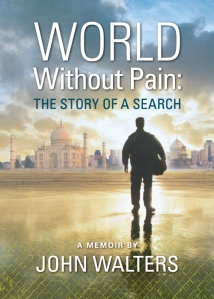
Memoir of my hippy travel days in the mid-70s.


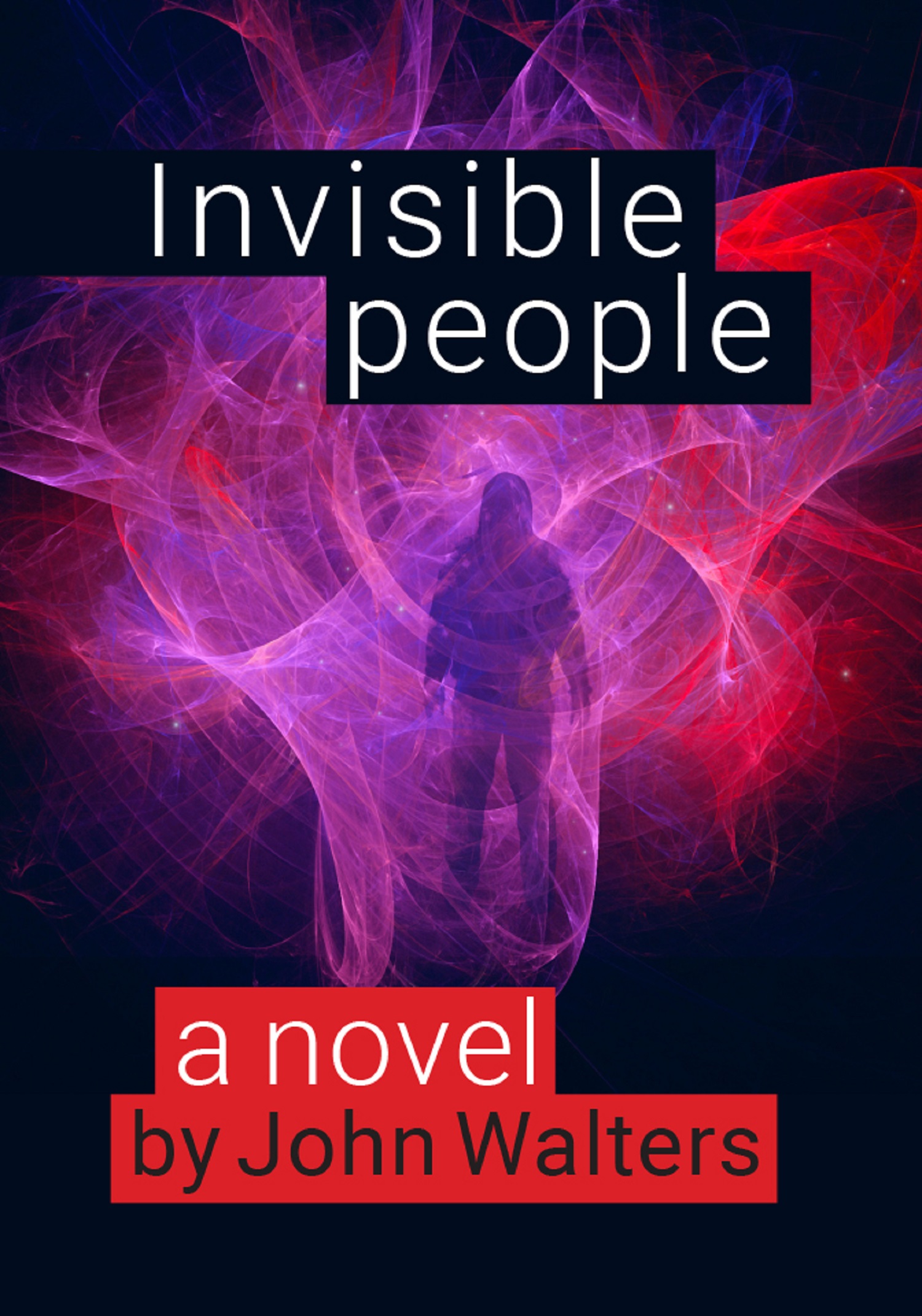
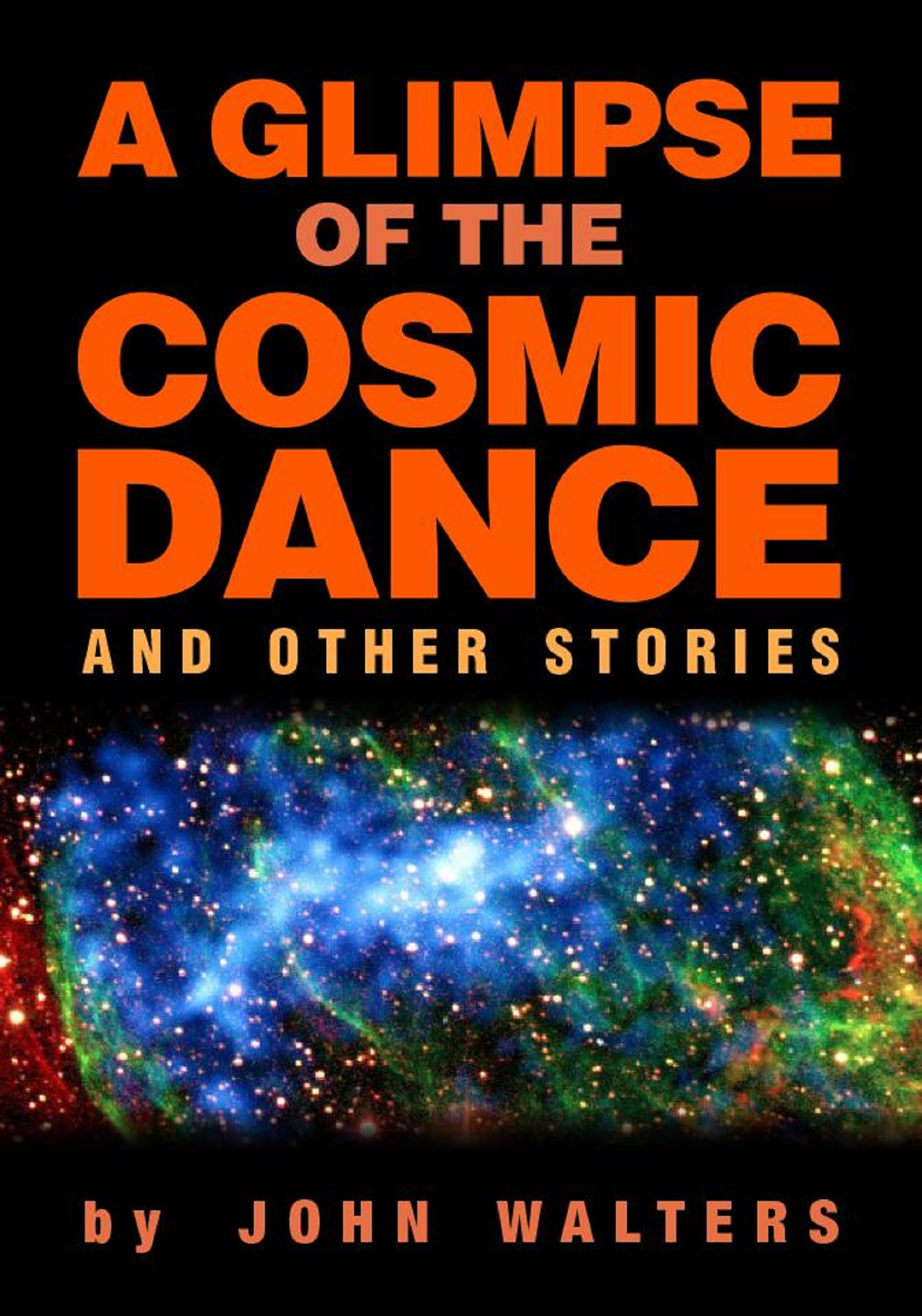

A novel about alien contact.

A collection of science fiction and fantasy stories.
A collection of science fiction and fantasy stories

An aging science fiction writer abandons his apartment and hits the road full time.
A collection of science fiction stories.

A collection of science fiction and fantasy stories

A compilation of four novellas comprising the One Thousand series. Hippies and benevolent aliens pursue psychotic killers.

After the Earth's surface is obliterated in an apocalyptic firestorm, human survivors from the moon and outer colonies attempt to rebuild.
Humans must ally themselves with true beasts to overcome a dark power that morphs humans into animals and binds them to its will.
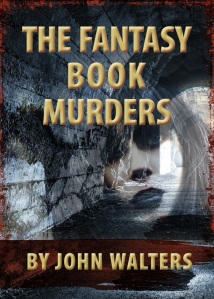
Surreal and deadly hunt for a serial killer.

A collection of fantasy and science fiction short stories about wanderers and unlikely heroes.
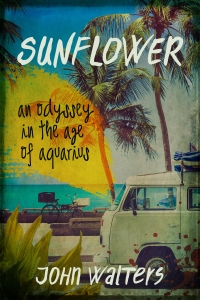
A woman's odyssey, first through America and then across continents, in the dark, post-Altamont days of the early 70s.

Memoir of my return to the States after thirty-five years overseas.

A collection of fantasy short stories.

Essays on a life-long quest for voice, inspiration and excellence in writing.

A collection of book reviews and essays on books, literature, and writing.

Science fiction thriller. A man possessed by alien entities recruits convicts for a murderous rampage.

Sequel to The One Thousand. A fellowship of alien-possessed psychopaths throw a party at which they plan to slaughter all the guests.

Sequel to The One Thousand Books One and Two. In southern Europe, the Team of Seven hunt a busload of alien-possessed psychopaths intent on unleashing a deadly pathogen in a major city.

Fourth novella in The One Thousand Series. The Team of Seven finally confront the alien-possessed psychopaths they have been hunting.
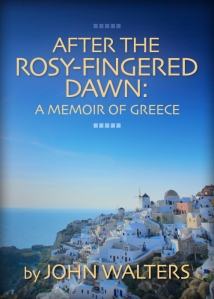
A memoir of my life in Greece.

A hippy girl's adventures in a wilderness commune, Haight/Ashbury, and Woodstock.
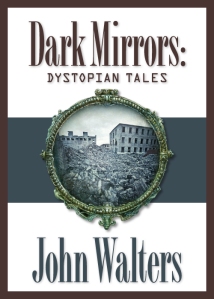
A collection of dark science fiction stories.

Young people raised by aliens return to Earth to seek their parents.
A collection of science fiction stories.
A collection of science fiction stories mostly set in India.
 John Walters