Book Review: The Radicalism of the American Revolution by Gordon S. Wood

I like history books that read like novels:  full of anecdotes, details, fast-paced narration, fascinating characters.  This book is not like that.  It does not read like a novel at all; it reads more like a university lecture.  You have to get past that in order to get into it.  You can’t sink into it and ride along with the protagonists.  Because it takes effort to stay tuned in, it is rough going at first.  But when you get used to the author’s style and realize what he is trying to say it’s worth the trip.

The book is divided into three parts.  The first explains what life was like in the American colonies before the revolution which created the United States.  It was a political, economic, and social system based on monarchy and aristocracy, in which a few favored gentry lorded it over the many commoners, who were expected to pay them homage and offer them respect on the presumption that they were superior as human beings based upon their parentage, education, and wealth.  This system was imported, at first without question, from the mother country of Britain, and it was similar to that which existed in virtually every country in Europe at the time.  Then the second part deals with the Republican ideals of the founding fathers.  The author studies in depth the peculiarities of the American experience that led Americans away from the monarchical model, into Republicanism, and ultimately into the wild, radical, novel, unique concept of Democracy.  The founding fathers embraced Republicanism as an alternative to the aristocratic gentility of the past, hoping that Republican ideals would provide moral and ethical stability to the fledgling nation.  But once the genie was out of the bottle there was no stopping it.  The concepts Americans embraced, that all men were created equal, that labor, rather than denoting a demeaning station, was actually honorable, that self-made men could aspire to business and commerce and improve their lot in life, was so different, so unusual, so bizarre, that Europeans would shake their heads in astonishment.

American culture did not evolve; it exploded in a chaotic celebration of egalitarianism and enthusiasm.  It was undisciplined and robust and utterly unprecedented.  Gordon Wood presents and supports his arguments with logic and precision.  As first, as I said, it is slow going, but when you begin to see where he is headed with it all, as you begin to comprehend the big picture, it becomes more and more engrossing.  Whether he is spot-on in all his assessments or not I don’t know.  I haven’t studied enough early American history to verify or refute his arguments.  I wouldn’t take anyone’s word for anything without double and triple checking, without analyzing and cross-referencing.  But it certainly rings true, and it is certainly compelling food for thought.  It makes me understand and appreciate the unique character and culture of the American people, and comprehend from whence it came.

I would recommend this book, but not for entertainment.  However, if you want to know how the United States has become what it is, this book helps to explain some of the early steps.

Posted in Book Reviews | Tagged , , | Leave a comment

Book Update

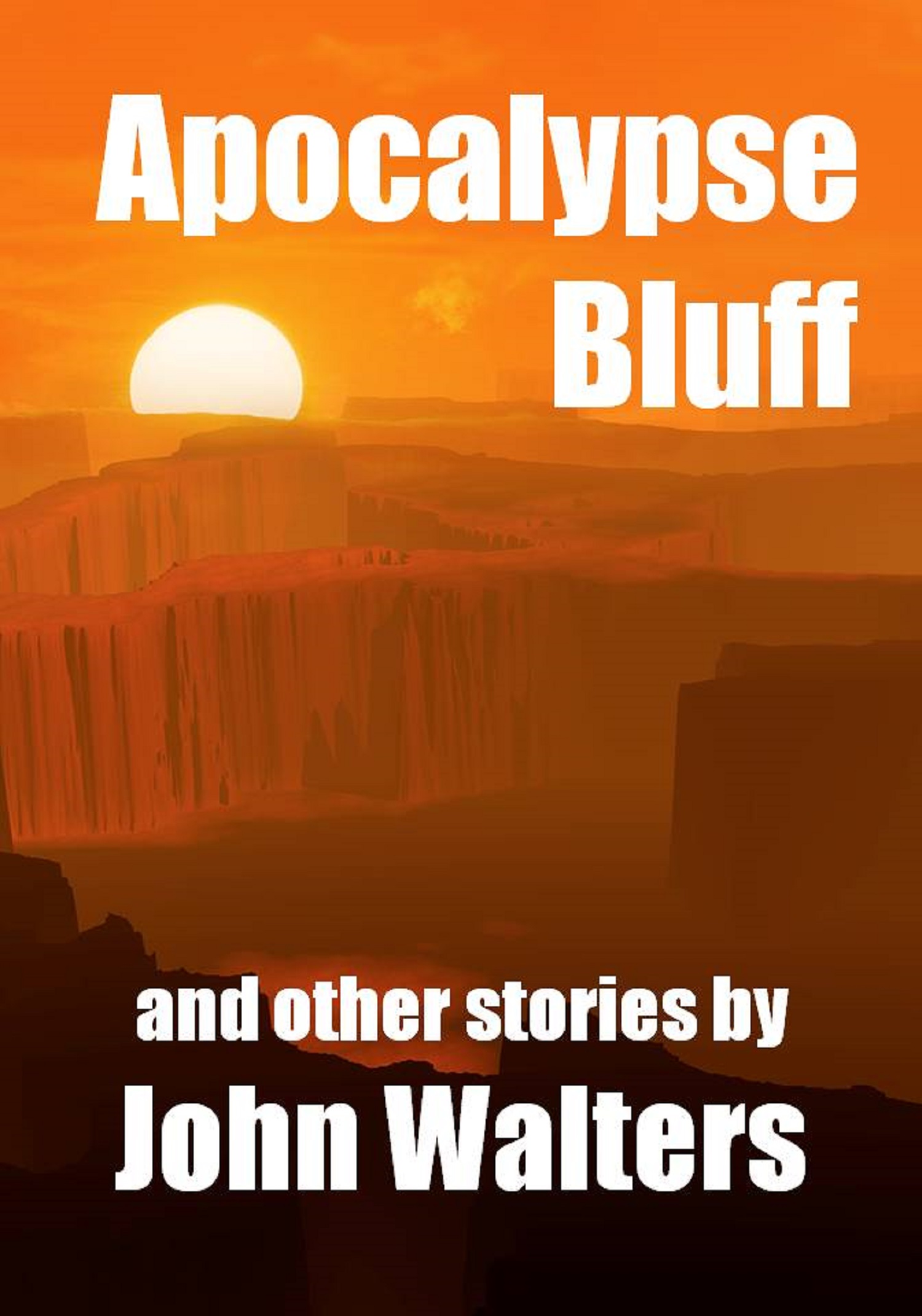
Generally I confine my blog to essays, book reviews, and so on, but occasionally a bit of self promotion is not amiss.  As I prepared to make my grand departure from Greece for the United States, knowing I would be intensely busy in transition I put a big push on publishing a number of books.  All of my full-length published books are listed below, in reverse order of publication.  Be a patron of the arts:  buy a few books and help a poor struggling writer.


“The Misadventures of Mama Kitchen” is my mainstream novel about a hippy girl who leaves home and wanders first to a wilderness commune, then to Haight/Ashbury in San Francisco, and finally to Woodstock.  It is available now electronically for Kindle here, and in a few days will be available in paperback.


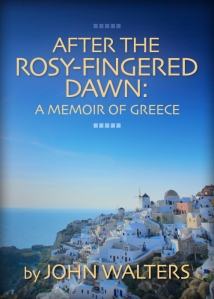
“After the Rosy-Fingered Dawn: A Memoir” recounts my years in Greece and my observations on Greek life and culture.  It’s available in paperback here, and electronically for Kindle here.


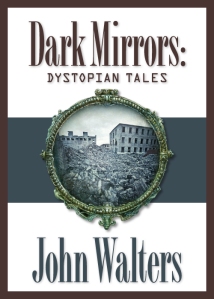
“Dark Mirrors: Dystopian Tales” is a collection of science fiction short stories about dark futures.  It’s available in paperback here, and electronically for Kindle here.


“Love Children” is my first novel.  It’s a science fiction tale about a group of young people raised by aliens who return to Earth to search for their parents.  It’s available in paperback here, and electronically for Kindle here, and in other formats at Smashwords here.


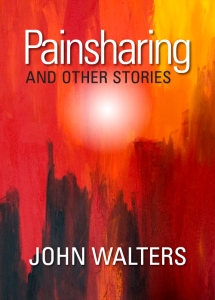
“Painsharing and Other Stories” is my second short story collection.  These stories are set on Earth and other worlds in the near and far future.  It’s available in paperback here, and electronically for Kindle here, and in other formats at Smashwords here.


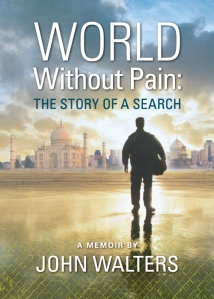
“World Without Pain: The Story of a Search” is a memoir of my hippy travel days in the mid-seventies, when I hitchhiked and took local transport, often flat broke, through the United States, Central America, Europe, the Middle East, and India.  It’s available in paperback here, and electronically for Kindle here, and in other formats at Smashwords here.


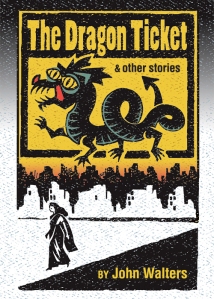
“The Dragon Ticket and Other Stories” is my first book and first short story collection.  It has mainly science fiction stories set in India.  It’s available in paperback here, and electronically for Kindle here, and in other formats at Smashwords here.

Posted in Memoir, On Writing, Travel | Tagged , , , , , , , | Leave a comment

Paranoia Revisited

When contemplating my upcoming return to the United States after thirty-five years abroad I realized that the prospect terrified me.  Analyzing a fear is one method of banishing it, so I decided to consider why my native land held such terror for me.

Back when I was a young man the overriding reality that cast a psychic shadow over the land was the Vietnam war.  Whether you understood it or not, whether you believed that it was being fought for a just cause or not, you never knew when you might get the notice to saddle up and head off across the seas and fight the “commie gooks”, as many referred to the Vietnamese people.  I personally had nothing against the Vietnamese.  I was having enough trouble trying to figure out who I was and what I was supposed to do with my life to worry about a civil war halfway around the world.  There were options to the draft, but none of them were very desirable.  I could file as a conscientious objector, but such appeals were for the most part not taken seriously.  I could refuse to fight, but then I would be tossed into a prison for many years – another of my ongoing fears about which I will presently speak.  I could flee to another country such as Canada or Sweden and live in exile; not only did I not want to live my life as a fugitive, but these countries, as I saw them, were cold and remote and unappealing.  What, then, was I to do?

Eventually the political system solved that problem for me.  The Vietnam War wound down and the draft was suspended just before I was to be called up.

But prison – there was another real fear.  Apart from the draft issue, I indulged in certain mind-expanding drugs at the time that were not on the approved recreational substances list.  I have gone into details about this elsewhere, notably in my memoir “World Without Pain: The Story of a Search”.  Suffice it to say I was in the class of person Crosby, Stills, Nash and Young wrote about in the song “Almost Cut My Hair”, the ones who went all paranoid when they looked into the rear-view mirror and spotted police lights, who glanced furtively in all directions before lighting up a doobie, who gauged their friends by who could be trusted not to go to the narcs in a pinch.  I haven’t touched any sort of illegal drugs for more than thirty years; I am not afraid of a drug bust.  But old paranoia dies hard.  The US prison system is one of the largest in the world, and the country ranks very high on the list of the percentage of the populace behind bars.

In addition, I have always abhorred violence, and compared to the countries in which I have made my homes in the past three and a half decades, the US is an extremely violent nation.  Unlike most countries in Europe – indeed most countries of the world – citizens of the United States are allowed to own and carry around guns and other weapons.  You never know when some idiot on the street might go off his nut and pull out a gun and start blowing everyone away.  I read in the news that it seems to be happening with more and more frequency – not only in the streets but in high schools and universities as well.  The violence around me was one of the things that caused me to leave my native land in the first place, the violence epitomized by the film “Taxi Driver”.  I also write about my reaction to “Taxi Driver” in “World Without Pain”; it horrified me to the point that it became the catalyst that hastened my departure.

And now I am coming back, coming home.  There are many good reasons for doing so, the primary being that due to the economic chaos here Greece is not a fit place for my sons, who are growing up and looking to their futures.  Basically it is for their sakes I am returning, but I am excited about the change.  It is time to come home, time to face my fears and overcome them.  After all, the whole world, not just the US, is a fearful but wonderful place.  And if we are in the place we are meant to be, the place where we need to take a stand, there is no better place anywhere.  Disadvantages can be found to any location.  One thing is sure, though:  if you are not in the place you need to be, the place destiny has put you, the place your conscience and sense of honor compel you to be, you might be safer but you will have entered the roles of the living dead, the zombified, the stupified, the redundant, the castoffs, the derelict, the miscreant, the useless.  Are we to be ostriches, burying our heads in the sand and exposing our asses to the winds of chance?  Better to go where we need to go, no matter where, than to hide on the fringes drained of vitality and a sense of conscience.

And there is much to recommend the USA.  There is honor to be found there.  Fear alone did not compel me to leave; the main reason was that as a writer I wanted to get a different perspective on life, I wanted to see life through other eyes, other cultures.  I feel I have sufficiently accomplished that mission.  I think I have paid my dues in foreign lands.  I have faced stark contrasts, adventure, otherness.  I have lived in India, Bangladesh, Thailand, Indonesia, Italy, and Greece.  Enough, now.  It’s time to go home, at least for the present.  As for the future, who can say?

One other consideration is that I am returning as broke as when I left, but that does not worry me.  I have never had much money, and I have never let the lack of it dictate my decisions.  If I had waited until I had amassed a sufficient amount of funds before I embarked upon my grand hitchhiking tour of the world, if I had worked and saved until I had enough to get me through my travels, I never would have left – and I certainly would not have gained whatever insight, wisdom, whatever you want to call it, that I picked up along the way, or found my voice as a writer.  No, sometimes you have to just cut loose and go.

Of course I have responsibilities now that I didn’t have back then when I took off by myself, my pack over my shoulder.  In particular, I have my sons.  Nevertheless, even for their sakes it is sometimes necessary to rip loose from the comfortable, the seemingly-secure, and strike out for the unknown.

So, the unknown it is.  The land of my birth is like a foreign country to me.  I have made visits now and then, but I always knew I was going to leave again.  Now I need to rediscover what it means to live in the USA, to cope with the particular stresses and dangers, to overcome my fears, and to thrive.

Stay tuned for upcoming reports from the new world.

Posted in Memoir, On Writing, Travel | Tagged , , , | Leave a comment

Book Review: The Air-Conditioned Nightmare by Henry Miller

By way of introduction let me emphasize that Henry Miller is one of my favorite writers.  His writings changed my life, changed my attitude towards writing and towards literature.  “Tropic of Cancer” is one of my favorite books of all time – there is scarcely a word misplaced in it; every word, every phrase is a thing of beauty and awesomeness.  I had been looking for this book, “The Air-Conditioned Nightmare” for some time when I came across it at a used book store in Pike Place Market on the waterfront in Seattle.  Even so, it took me years to get around to reading it.  I’m not sure why.  I think I was waiting for just the right mood, the right life-circumstance in which to savor it.

Having just finished it, I have to say that it was the weakest of all the books by Henry Miller that I have read up to this time, and I have read many of them.  If you want to read Miller – and I heartily recommend that you do – do not begin with this one.  I expected a grand tour of the United States told in the witty, acerbic, verbose, artistic style to which I had become accustomed when I picked up a Miller tome.  Instead, well, I almost stopped reading a few chapters in, for two reasons.  First of all, in one of the first chapters in the midst of a description he launches into one of the surrealist passages that I admire so much in “Tropic of Cancer” and “Tropic of Capricorn”.  In those books they serve a definite purpose, but in this book, ostensibly a travelogue/memoir, they do not.  It is distracting and disconcerting; it is like a red herring in the midst of a natural landscape.  Secondly, after the surreal episode, he devotes a whole chapter to reminiscences of Paris.  I love his reminiscences of Paris – in his books on France.  Here it was out of place, and it is at this point that I almost stopped reading, and I very rarely stop reading a book once I have begun.

I persevered, however, and I’m glad I did.  Some chapters have great appeal and are told with wit and humor.  Miller concentrates on several interesting characters, mainly painters but also others, whom he met on his auto journey through the deep south to California.  But it’s a mixed bag – some anecdotes are of more interest than others.  I was hoping for a more focused narrative such as can be found in “Big Sur and the Oranges of Hieronymus Bosch” which he wrote a decade or so later.

Another thing about this book that must be taken into account is that it was written around 1941, when Miller returned to the United States after having been forced out of Europe due to the spread of the Second World War.  The US had not yet become actively involved in the war, though Miller predicted rightly that they soon would be, but some of his observations on life in the US are very much of the times, and thus somewhat dated today.  On the other hand, some of his other musings on the deterioration of American society are dead-on and could have been written yesterday.

Overall what would I say about this book?  Perhaps it had been built up in my mind for too long.  Perhaps I expected too much.  It is entertaining, most of it, and worth the read.  But if you are going to start reading Henry Miller don’t begin with this book.  Start with “Tropic of Cancer”, his masterpiece.  Then move on to “Tropic of Capricorn”.  Then “The Rosy Crucifixion”, a trilogy which includes “Sexus”, “Plexus”, and “Nexus”.  Then a few more.  And then, after having exhausted all the major Miller volumes, read this book too.  One thing is certainly true:  Miller is a writer worth reading, and worth reading extensively, especially by writers seeking freedom of expression and their own voice.

Posted in Book Reviews | Tagged , , | Leave a comment

Transitions

For over fifteen years I have stood fast here in Thessaloniki, raising a family and working at private language schools teaching English.  The family never ends this side of the grave, though responsibilities diminish as the kids grow, but a job is a job and eventually becomes redundant.  That’s the way I look at it anyway.  The only job I ever held which I feel I will never forsake is my writing, and that has never supported me.  In addition, it is much more than a job.  It is a vocation, a calling, such an integral part of me that if it were ripped away I would be incomplete, a mangled mess devoid of purpose.  Writing is not just something I do, it is something I am.  But a job – well, that is something I do for money.  I have enjoyed teaching English, and I have had some wonderful students, but in the end if it were not for the steady pay I wouldn’t bother.  Not so with the writing.  With the writing I persevere, day after day, week after week, month after month, year after year, decade after decade, and so on.  It consumes much more of my thoughts, dreams, and plans than I will ever see financial remuneration for.  Even if tomorrow I began to earn thousands a day through the writing it would never compensate for the blood, sweat, tears, fears, trauma, agony and ecstasy I have invested.  No matter.  I would do it again in a heartbeat.  I cannot imagine a being such as myself, John Walters, in reference to anything except writing, and with that I am content.

But I mean to talk to you about transitions.  From writing itself there is no transition, as I say, though I may shift styles, lengths, genres, and so on.  But from other life-events there are always transitions, at least for me.  I am aware that for some people – for most people I might say – there are a modicum of transitions as one grows up – from childhood to teen-hood to adulthood (although many never seem to make this last leap), from elementary school to junior high to senior high to university (although, again, many don’t make this last leap either) – and then they hunker down into one job, one situation, one marriage, one house, one neighborhood, one town, one state, one country, and remain there for the rest of their lives.  Things happen, sure.  They have kids, they raise them; they bury parents and other loved ones; they might even commit such a radical act as change political parties or religious affiliations.  But deep down they have buried themselves in a hole, scraped the dirt over themselves, and placed the premature tombstone:  R.I.P.

Not for me, thank you.  I have lived many lives, so to speak.  I was a slow starter, didn’t know what to do with myself for many years, even after I had made the decision that I had to be a writer, but once I got out on the road, first through the States, then to Central America, then to Europe and finally to Asia, the world opened up and I realized the vastness of it, the scope, the variety, the immensity.  And I came to the conclusion that to fall asleep too close to where one got in was a grave error.  When so much possibility existed, why settle for the mundane, the mediocre, the commonplace?  Why not be uncommon, different, malleable, iconoclastic?  Why settle for a one-act play when you can have an epic?

On the other hand, there is a time to hunker down and remain faithful in that which you are doing.  Otherwise you can become a tumbleweed, blown about with every wind and never achieving anything of consequence.  There is a balance to be found, and it takes wisdom to know when to stand fast and when to move on.  I have stood fast for the past fifteen years or more because my kids were young and growing and we needed a stable environment in which to aid their growth.  They needed to go to school; they needed plenty of food and other necessities.  For years we raised them on the road, but finally we felt the need to establish a base.  And so we did.

But now…  But now…  How do you know when it is time to stand fast and when it is time to take off again?  As I said, it takes wisdom.  Such decisions should not be made flippantly, especially when you are responsible not just for yourself but for others as well.  And as usual, for me, the overriding factor was the welfare of my sons.  As for me personally, I have the tendency to just rock along.  I will take it easy, adapt to whatever situation I find myself in, as long as I have the means and the time in which to write.  I could have kept going with the status quo in this situation as well, were it only my own welfare at stake.

But Greece, at this point in its history, is in a terrible state.  There is so much I love about the country, but I can no longer sustain my family here.  For many years we have had a good life, but I see no opportunities in the foreseeable future for my sons.  Unemployment for young people is around fifty percent, and for those who do not have family connections in business, relatives or family friends who can offer a hand up, the rate is much higher.  In addition, though the price of everything continues to rise, salaries are being steadily whittled away, benefits reduced or eliminated, people getting sacked right and left.  All around us are families with children, both parents of which have lost their jobs and are near destitution.  The European Union continues to squeeze and squeeze, trying to wring water out of a rock, seemingly oblivious to the death rattle of the economy.  The country is being squeezed so harshly there is no chance that the economy will be able to recover and come to life again.  It’s like trying to pray a dead horse back to life while at the same time pummeling it with clubs and breaking every bone in its body.

I sympathize, I empathize deeply with the Greek people, but not enough to go down with the ship.  Were it myself only, as I mentioned, I might, but the welfare of my sons is at stake.  Therefore I have made the decision to pull up stakes and head off to America, where though the economy is not thriving at least there is some modicum of an economy left, and where my sons will have at least a fighting chance for a future.  I do not take this decision lightly.  I contemplated the prospect for a long time before I shared it with anyone else.  I myself feel ambivalent about the move.  I enjoy living in Europe; I appreciate the international perspective.  I have not lived in the States for thirty-five years; it is a big change for me.  It is as great a transition as when I left my comfort zone and took off on the road back in the seventies.

Regardless of my trepidation, it must be done.  When you realize a transition period has arrived, it can be a terrifying time.  You feel you are at the edge of a void.  The fog of uncertainty can obscure your vision.  You have to take a leap into the unknown.  You don’t know for sure that when you land it will be in a better place.  You hope so, but you don’t know for sure.  The thing is, though, if you don’t make the change things will only get worse.  You will have condemned yourself and your loved ones to decay and death.  That chance has to be taken, that change has to be made.  There really is no choice at all, if you want to continue to grow.  The only choice after you have made the decision to turn your back on that which has stultified, petrified, turned putrid, that which can no longer sustain you, is your attitude towards the transition.  Are you going to take it like a wimp, cowering and whining and paranoid of every shadow and every hint of obstacle or difficulty?  Or are you going to sally forth in the spirit of adventure, defying the unknown, ready to do battle?  I picture an explorer on a great sailing ship, hand on the helm, wind in his face, joy in his heart, defying the elements, defying his fears, oblivious to the whimpering of others who say it can’t be done, sailing off the map into the great blank uncharted void – to his destiny.

Posted in Memoir, On Writing, Travel | Tagged , , | Leave a comment

Book Review: Wild Nights!: Stories About the Last Days of Poe, Dickenson, Twain, James, and Hemingway by Joyce Carol Oates

This is a wildly original collection of long short stories, or novelettes, on the last days of famous writers.  I had never heard of it before, but I picked it up at the library on a whim, intrigued by the subject matter.

There are five stories, each a speculative look at the period leading up to the death of a famous writer, told in an imitation of the writer’s style.  The Poe story posits the author in an isolated lighthouse off the coast of Chile, slowly going mad.  The Dickenson story is set in the future; a couple purchases a robotic model of the poetess which turns out to be far more lifelike than they would have imagined.  Mark Twain is an old man obsessed with adolescent girl admirers.  Henry James volunteers to visit and give comfort to severely wounded soldiers at a filthy overcrowded hospital during World War I.  Hemingway, broken in body and spirit, contemplates suicide in the remote hills of Idaho.

I enjoyed the first three stories the most.  The Poe story was a classic horror/fantasy, and the Dickenson story intriguing science fiction.  The final two, on James and Hemingway, were well-written but also very depressing, and that dampened my appreciation of them.

Generally the book was very entertaining.  Oates is a talented writer, and reading this made me want to read more of her recent story collections in which she ventures into the realms of fantasy and horror.  She belies the widely-held belief that prolificacy in writers leads to a diminishment of quality.  For her, at least, the opposite is true, and I would venture to say that it is probably true for most writers as well:  the more one practices one’s craft, the better one gets.

One thing I appreciate about Oates is that she is a genre smasher.  She wanders freely from mainstream fiction to science fiction to fantasy to horror and back again, and manages through it all to get published in top literary magazines.  She is an exception, though.  Most writers cannot so easily make the transition from one genre to another; many feel the need to change names, to adopt pseudonyms when genre-hopping, fearful that the reading audience would not understand.  Magazines are the same, shunning unknown writers who submit works outside of the magazine’s comfort zone.  I have never understood this mindset.  If I appreciate an author I am interested in all of his or her work, and I think an author who ventures into nonfiction as well as various genres of fiction is to be admired for his or her versatility, courage, and imagination.  One other that comes to mind is Harlan Ellison.  Due to his prodigious output he has written under pseudonyms, yes, but under his own name he has shown enormous range, with fiction of all types and all lengths, screenplays and teleplays, film and book reviews, memoirs, and other types of work too numerous to mention.

As far as “Wild Nights!” is concerned, I would recommend the book.  It is a fascinating literary exercise and a well-written collection of entertaining tales.  And as I said, after the reading of this book, I intend to seek out and read more from Joyce Carol Oates.

Posted in Book Reviews | Tagged , , , , , , , , | Leave a comment

Book Review: Rabindranath Tagore: The Myriad-Minded Man by Krishna Dutta and Andrew Robinson

This is a fairly comprehensive biography on Tagore, starting with a chapter on his grandfather and culminating in his death.  After he won the Nobel prize for literature in 1913 he was an international celebrity, considered one of the two most influential Indians of the time, along with Mahatma Gandhi.  The prize was for his slim volume of poetry, “Gitanjali”, which he had taken with him on a trip to England in 1912, translated from Bengali to English by himself.  It took the British, and then international literary world by storm; it was an instant success.  W.B. Yeats, the British poet, in particular went to bat for it and drew it to the attention of other famous individuals.

The fact is, Tagore was not a one-shot wonder.  Besides “Gitanjali” he wrote many volumes of poetry, as well as songs, plays, short stories, and novels.  In his later years he turned to the visual arts as well and completed over 2000 paintings which were widely acclaimed.  Besides his prolificacy in the arts he was also an educator, founding first a school and then a university a few hours’ train journey northwest of Calcutta in a place called Shantiniketan, or “Abode of Peace”.

Promoting and raising funds for Shantiniketan occupied most of his adult life, causing him to tour the world again and again.  Wherever he went he was received as a VIP, and he met many of the world’s most famous people, including literati, politicians, artists, and scientists, including Albert Einstein, who became his friend and who collaborated in some fascinating published discussions, an excerpt of which is included in this book.

I studied Bengali once, at Dhaka University, and I could read, write, and speak it after a fashion, though it has been many years since I practiced and only bits and pieces of the language remain in my memory.  I lived for a brief time in Shantiniketan as well, in a small cottage where my friends and I would burn dried cow dung for fuel, though at the time I didn’t understand the significance of the place or know anything about Tagore himself.  I would take bicycle rides in the afternoons along the bright red dirt roads, letting the paths take me whithersoever they would.  It was a brilliant contrast of colors:  the brick-red road, the foliage on either side so green it seemed to glow, and the deep blue sky above.  A particular spot caught my interest, the ruins of a many-roomed house that the forest had reclaimed.  I would return to it again and again and wander about the outside of it, never having courage to enter, perhaps for fear of snakes, and wonder who had lived there, what they had done, and how they had come to abandon the place and leave it to the forest and the elements.  For some reason that is my most vivid memory of Shantiniketan – that old ruin.  In all the time I was there I never went to check out the university, or the house where Tagore used to live.  In hindsight I wish I had, but isn’t it often true of life’s experiences, that we don’t appreciate the significance until it is too late?  One of my dreams is to return to Shantiniketan someday, knowing what I now know, with an ability to appreciate it in all of its subtleties, and even study Bengali there so I would be able to read Tagore’s poems in the original Bengali.

Tagore was also involved in politics off and on; though he never enjoyed it he realized the necessity.  It was a volatile period in India’s history.  He grew up in the British Raj and died during World War Two, shortly before independence.  Gandhi stayed at Shantiniketan from time to time, and though they became friends and Gandhi even called Tagore “The Great Sentinel” he and Tagore didn’t always see eye to eye about how to go about creating the nation of India.  For a long time Tagore opposed Gandhi’s most extreme tactics and his renunciation of anything western, and worked for a meeting and union of east and west, a union that never came to fruition in his lifetime.  He died before partition and the violence between Hindu and Muslim that accompanied it, but he was aware of the complexity of the situation and the impossibility of a simple, peaceful, all-encompassing solution.  In the end he was bitterly opposed to the continuance of the British Raj and he and Gandhi were much closer than they had been, Gandhi even agreeing to support Shantiniketan after Tagore’s death.  Tagore died in 1941 in Calcutta, where he had gone for medical treatment, and the immense crowd at his funeral rivaled that at Gandhi’s.

The book explains that Tagore’s literary reputation has declined, at least in the west.  In India itself his songs are still sung, his prose is still read.  Recently I read a volume of his short stories, which I reviewed elsewhere.  Generally I found them of very high quality, fascinating and well-written.  I have not read so much of his poetry, but the samples reprinted in English translation in this book are for the most part superlative.  “Gitanjali” I have tried to read in the past, and I found it ostentatious, but some of his other poetry is simple and elegant, with sharp-edged imagery and subtle yet profound metaphysics.

The first few chapters of this book I found slow-going; I was not so much interested in all the details of Tagore’s ancestry but in the man himself.  Once Tagore arrives on the scene, however, the book is fascinating, a study not only of the life of an enigmatic literary figure but of the history of India and much of the rest of the world at the time as well.  It is valuable, I think, to not set one’s eyes too much on the land and culture in which one has been brought up, but to look abroad, to consider other viewpoints and perspectives.  That is one of the values of this book for those of the west.

I’m a professional writer; I make my living by my words.  I’m happy to share these essays with you, but at the same time, financial support makes the words possible.  If you’d like to become a patron of the arts and support my work, buy a few of my available books or available stories.  Thanks!

Posted in Book Reviews | Tagged , , , , , , | 1 Comment

After the Rosy-Fingered Dawn: A Memoir of Greece – Now Available!

My new memoir “After the Rosy-Fingered Dawn: A Memoir of Greece is now available in an electronic Kindle edition here.  It will soon be available in a print edition as well.  Here’s the text of the back cover blurb:

“Greece has always been regarded as the birthplace of western civilization and a Mediterranean paradise.  In The Iliad and The Odyssey Homer uses the magical epithet rosy-fingered dawn to describe the sunrise over a land of myth, fascination, and mystery.  But when preconceptions and illusions are swept aside, what is Greece really like?

John Walters has lived in Greece for over fifteen years.  He has hitchhiked over many of its roads; traveled by camper; journeyed by plane, boat, bus, car, taxi, motorcycle, and on foot.  He has lived and worked and raised a family among Greeks.  He offers insight from an intimate perspective on aspects of Greek society and culture of which tourists are unaware.

Many have visited Greece and afterwards acknowledged that the country has profoundly changed them.  This memoir is for those who feel something special when they think of Greece and Greeks, those for whom Greece holds a special thrall, those who have visited and have their own memories of the place, and those who would like to visit someday and know that when they do they will obtain new insight, new clarity, and will never be the same again.”

My new story collection “Dark Mirrors: Dystopian Tales” which I recently announced available for Kindle is now in print too.  You can find it here.


Posted in Greece: A Memoir, Memoir, Travel | Tagged , , | Leave a comment

Book Review: The Sense of an Ending by Julian Barnes

I ordered this book as soon as I could after I learned that it had won the 2011 Man Booker Prize and had read some reviews.  The subject matter fascinated me.  I too am aging and am confronted with a sense of my own mortality, and I was anxious to see how a gifted writer would approach the many facets and ramifications of such a state of existence.

When the book arrived the first thing that surprised me was its length.  It is a very small, slim volume, little more than a novella.  No matter.  One of my favorite books is a novella, Ernest Hemingway’s classic “The Old Man and the Sea” – a story that approaches the theme of age from a very different perspective indeed.

So I began to read, and shortly I became aware that, despite its brevity, for me at least it was slow going.  I have encountered this problem before with British writers and their novels, in particular with Kazuo Ishiguro’s novel “Never Let Me Go”.  The background goes on and on and I have to hang on hoping that the pace will eventually pick up.  In Ishiguro’s novel’s case it was over 100 pages in before the novel got really absorbing.  In the case of “The Sense of an Ending” it was faster – 100 pages would have almost finished the book.  It is told in two parts:  first the protagonist/narrator’s school days with his buddies and his relationship with a certain girlfriend, and then about forty years later as he looks back on it all and re-establishes contact with the woman.  I don’t want to give away the ending, because it does build up to a wicked denouement.  There is just so much beforehand that leaves the reader baffled.  That’s the main trouble I had with this novel.  Don’t get me wrong – I don’t mind being left in the dark by a writer who is preparing for a mind-blasting ending.  But there has to be something of fascination along the way, and I didn’t feel there was enough of that.

Okay, I admit that maybe this novel just wasn’t my cup of tea.  It was certainly well-written, I have no hesitation in acknowledging that.  I was hoping though, for something fuller, richer, something that delved deeply into what the main character felt as age ravaged his body, negated all that he had accomplished in a mediocre life, sapped him of his vitality and his memories.  Obviously that’s not what Barnes had in mind.  Maybe I’ll have to write that one myself.  To me the protagonist was too much of a milquetoast, too passive; it seems to me he should have had something better to do than – nothing, other than pursue the fascination for digging up the past that is at the heart of the plot.

Anyway, it is well-written, as I said, and it has received a lot of acclaim, and I enjoyed the reading experience.  Just not as much as I thought I would.

Posted in Book Reviews | Tagged , , , | 2 Comments

Self-consciousness in Greek Society

Today I experienced one of the great tragedies in a writer’s life:  I irretrievably lost a piece of work.  In the midst of a busy morning I sat down to write a blog post – this same post, in fact – and it flowed out as if dictated by the whisper of a departed poetic soul.  I read it over afterwards and it was just the way I wanted it.  I saved it, I thought, and even backed it up on another drive.  A few minutes later I wanted to add a word or two, but when I clicked on the file it came up empty.  I ran a “restore previous versions” search unsuccessfully.  Gone.  It was gone for good.  I had a sinking, empty feeling in the pit of my stomach and wondered if I would ever be able to recreate it.  I wondered why it had happened for a long time.

This is my second attempt to deal with the subject, and I must emphasize that the above story has nothing directly to do with the subject itself – but then again, you never know.  Life, and especially what life means, the reason for it all, is ephemeral at best.  Who knows why things happen?

To business, then.  I have been acutely aware as I finish up my Greek memoir and prepare it for publication that much has been left out:  much that I observed, much that I experienced.  There is no possibility of being comprehensive.  Even a lifetime spent here would not suffice.  Even a small part of a life spent anywhere has so many offshoots, side stories, influences, variegations, each of which have their own subplots and motivations and so on – there is no end to it.  But I want to touch on this one more facet of Greek culture because it is below the surface, perhaps not noticeable at all by the casual visitor, but it strikes to the core of the Greek psyche and spirit, and for a native Greek is a powerful influence on all of life’s decisions, both major and minor.

The Greeks are a very self-conscious people.  By this I mean that they are intensely aware of others watching them, and also intently watch others.  The big cities have grown exponentially in recent decades; more than half of the population of the city of Thessaloniki, for example, came from a village either in this generation or the previous one.  It’s a village attitude, really.  Everyone knows what everyone else is doing.  Everyone knows that everyone knows what everyone else is doing.  Therefore in every decision that is made you have to take this into account.  You would think that the vastness of a big city would negate or dilute this attitude, that in a big city the sheer size of the population would enable people to disappear into the crowd, to become nonentities, but it is not so.  The high-rises that have sprouted up everywhere have become microcosms of village life.  Everyone watches everyone else.  There is no getting away from it.  The attitude is all-pervasive.

This was brought home to me as I conversed with my colleagues at the language school, highly intelligent women with dreams and hopes and desires who are nevertheless shackled by fear of what others will think and say.  Many young men and women nowadays leave home and live on their own, but they are nevertheless not free.  They long to be free; they moved out of their parents’ homes to be free, but they are bound by this peeping-tom spirit, the feeling that they are accountable to their neighbors and other casual acquaintances.

The same situation applies on a national scale.  It is true that everywhere in the world celebrities and politicians and other well-known figures are subject to public scrutiny, invasive paparazzi, creative ridicule.  But here it is the village spirit again, as if all of Greece were one huge village and the celebrities the town fools.  Should a public figure say the wrong word, or go out with the wrong person, or slip on a banana peel and fall flat on his or her face, the media instantly picks up on it and it is all over the nation.  It is on morning, afternoon, and evening talk shows, as well as prime time news programs.  It is shown in slow motion, fast motion, intercut with cartoons and old movie clips and outlandish sound effects.  The person is ruthlessly pilloried, scorned, judged, upbraided, psychically tarred-and-feathered.  There is no mercy and no end to it until the next scandal catches the public and media eye and replaces the current one.

That is what people fear, albeit on a smaller scale.  They fear the censure; they fear becoming anathema.  And this has a very real inhibiting effect on young people.  It causes them to become timid and traditional instead of bold and innovative.  And if the young people are afraid to step out and effect change, the country will stagnate, nay, even decay.  That is what has been happening for so long that people are not even aware any longer that it is so, but the young languish, as does the country and culture.  There is a vital need for people, young or old but with young minds and hearts, to rise up and think free thoughts and give those thoughts expression in word and deed.  But there is so much to overcome, so much weight of centuries.  Many Greek young people I have met are brilliant, and if their brilliance were allowed to shine it would have a dynamic positive effect on the society, government, and culture.  My fervent hope is that somehow in some way this brilliance will shine forth like the blazing sun rising on a summer morning, signaling a new dawn.

Posted in Greece: A Memoir, Memoir, Travel | Tagged , | Leave a comment