On the Publishing of Independent Short Stories

OptingOutStoryCoverBigUsually I do not make a special announcement when one of my short stories gets published digitally as an individual entity.  I wait until I collect the stories together in both print and digital form, and then I let you know about it.  But this time I’m going to make an exception.

My novelette “Opting Out” has just become available for download on electronic reading devices from Amazon.  It should arrive soon at Barnes and Noble, Kobo, Apple, and other e-bookstores through Smashwords digital distributors.

Often my new stories are my favorites, but this one is particularly special to me.  It’s a character study set in the near future.  An old man who has been living for decades in his Volkswagen camper-van is given an ultimatum to move out of it into government housing because all fossil-fuel driven vehicles are becoming illegal.  But this is not just his vehicle; it is his home, so rather than comply he leaves where he was parked in Seattle, Washington, and moves south, hoping that in other states the vehicle laws will be more liberal.  In a remote area of the California coast he comes across a refuge for homeless people that an eccentric dot-com billionaire has set up.  He moves in and is content for a time, and then decides to go out and help other homeless individuals find the shelter he has found.  How this quest fares is the crux of the story.

I sent this story out to a few magazines and it got nice comments, but because of its odd length (a little over 10,000 words) and the fact that it did not fit comfortably into a commercial niche, being both literary and genre, I quickly ran out of possibilities and decided to go ahead and get it published for direct sale.

Individual short stories for sale is a fairly recent phenomenon, but in this digital age when material can be downloaded so easily on devices like laptops, tablets, and mobile phones it makes a lot of sense.  Maybe you’re waiting in line somewhere or commuting on a bus or train and you’ve got a half hour or an hour to spare.  You can easily load an inexpensive short story onto your device and read.  I liken it to the music industry’s singles records issued in bygone years, which you could buy individually or listen to on the radio but would afterwards be included as part of an album collection.

I’ve published over forty stories individually over the past few years.  A few are packaged as doubles but most are singles.  Most are priced at $.99, but a few of the longer ones, like “Opting Out”, cost a little more.  If you like reading books on paper, they eventually come out as collections in book form.  I’ve published four print short story collections so far; the latest, “Fear or Be Feared: Fantasies” is a compilation of fifteen fantasy stories.  I am considering “Opting Out” as the title piece of my next collection, as a matter of fact.  In the meantime, if you have an e-reader you can access it now.

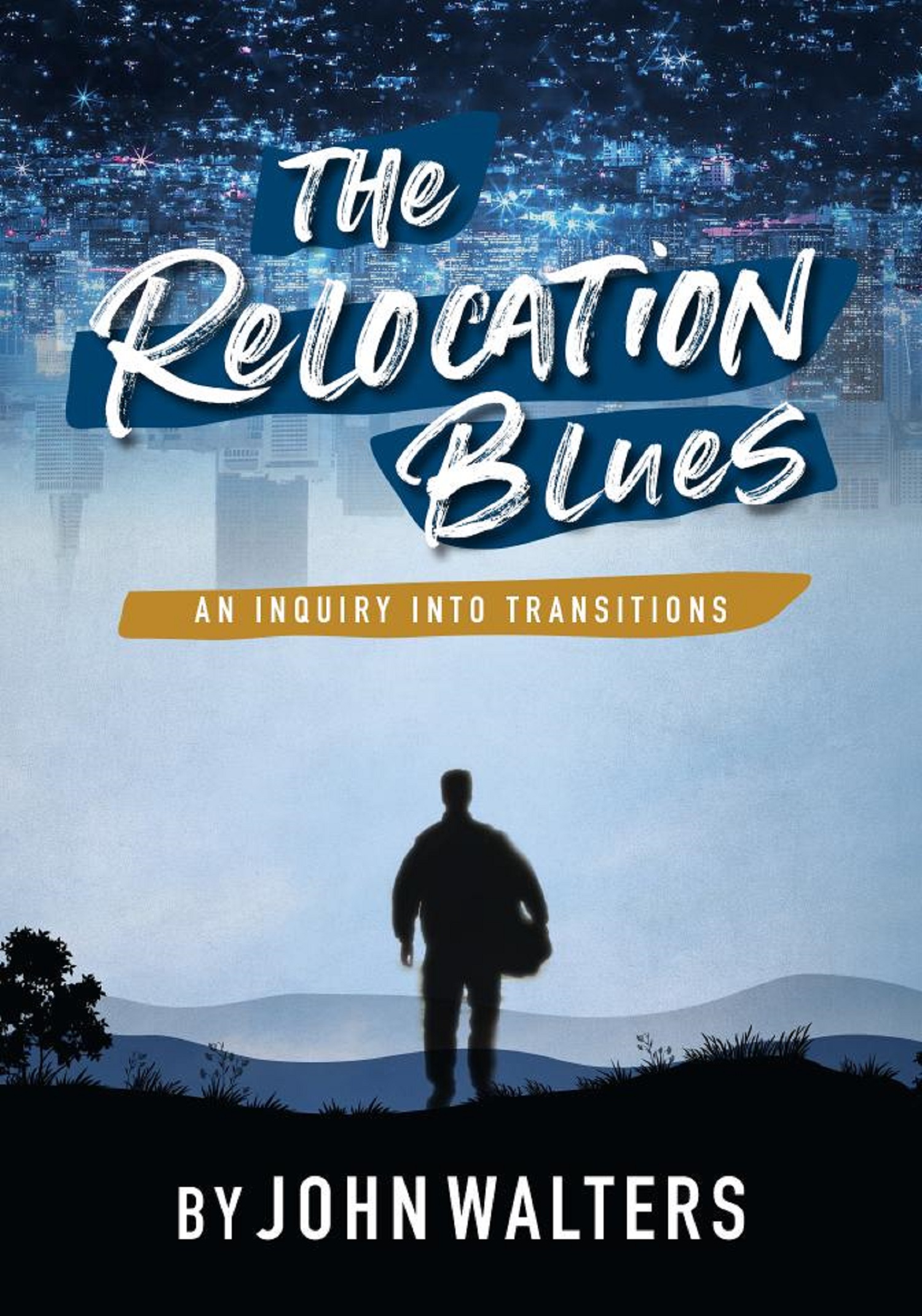
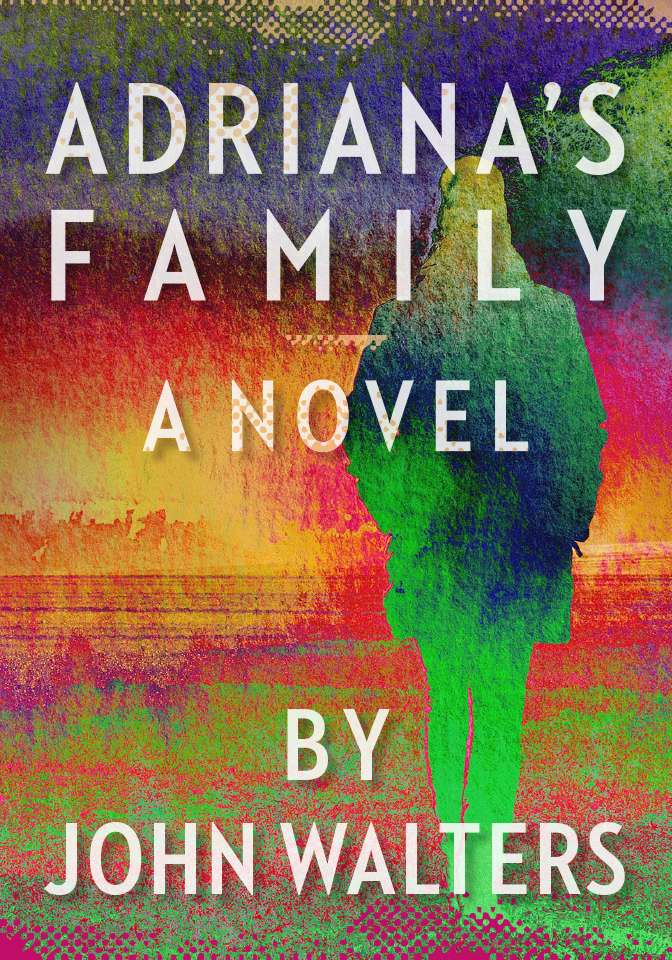
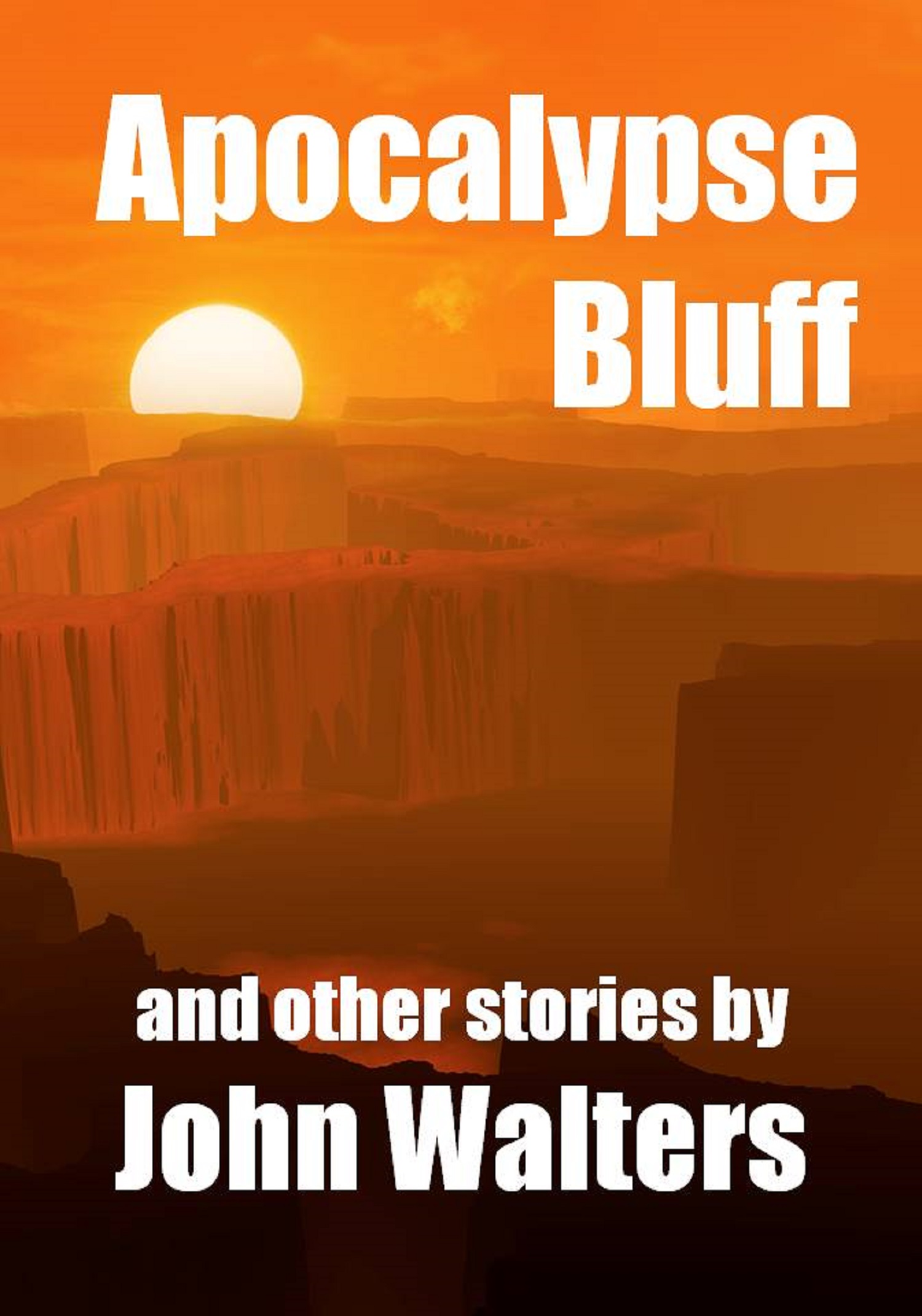
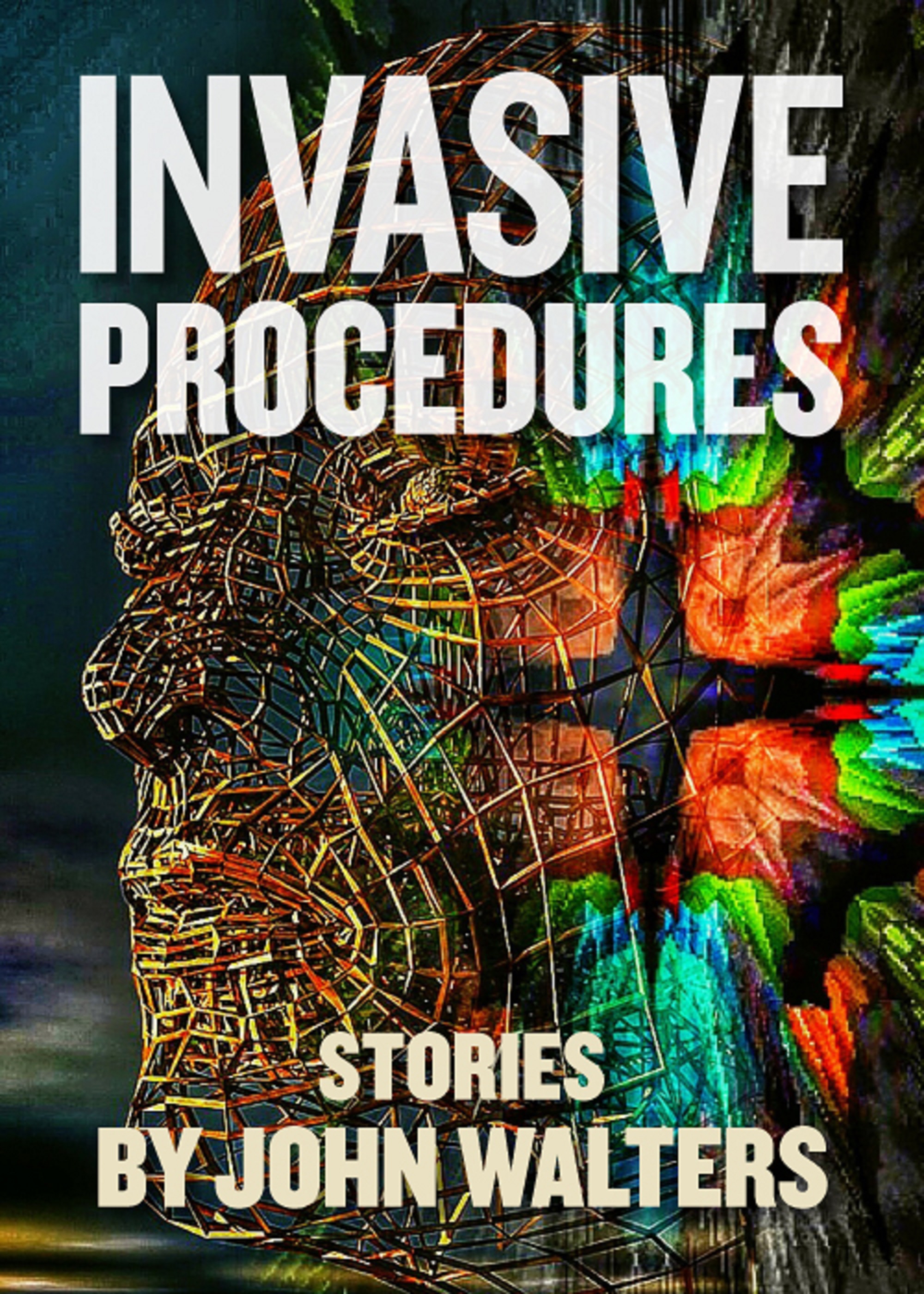
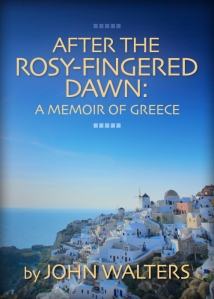
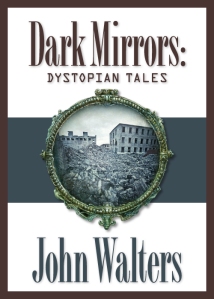
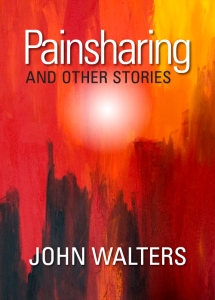
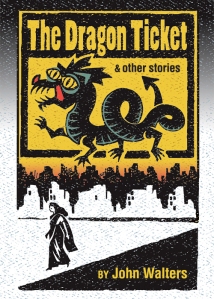
A listing of all my individual stories available for electronic sale is on my website.  Right now it’s just a mass of covers, but in the next few weeks I am planning to upgrade that page to include descriptions of each story, so it will be a more satisfying and comprehensive browsing experience.  I am also upgrading some of the covers.  Professional graphic artists design the covers of my full-length print/digital books, but I do the covers of the individual stories myself.  It’s obvious to see the difference between my beginning baby steps and my more recent efforts.  While this renovation is underway, if you go to my Amazon or Smashwords author’s pages, you can easily access the story descriptions when you click on the individual stories.  Have a good read.

Posted in On Writing, Reading | Tagged , , , , | Leave a comment

Sunflower: A Novel by John Walters – Now Available!

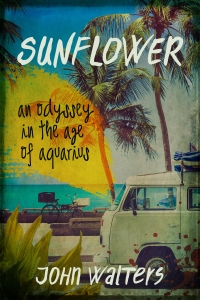
Sunflower_WebBig“Sunflower”, my third novel, is now available on Amazon in a print edition here, and in an electronic edition here. This is what the back cover copy says:

“In early 1970 a new era, the Age of Aquarius, is dawning. Penny, who adopted the name of Sunflower on the way to the Woodstock Music and Arts Festival, attends another rock concert touted as Woodstock West, at Altamont Speedway near San Francisco. Seeking to enhance the transcendent experience, she instead comes away covered in the blood of a man brutally stabbed to death in front of the stage.

“Has the new youth experience descended from idealism to anarchy? Confused and disillusioned, Sunflower embarks upon an odyssey across an America torn by violent anti-Vietnam War protests, racial tension, and gangs of hard drug dealers. From a search for a shared social experience it becomes a personal quest for fulfillment that leads her on a journey across continents.”

I wanted to write some sort of sequel to my novel “The Misadventures of Mama Kitchen”, to carry the story forward from the late 60s into 1970. However, instead of using the same main character of that previous novel, I took one of the minor characters from “Mama Kitchen”, Sunflower, who joins the bus on the trip across the States from San Francisco to Woodstock, and focused on post-Woodstock events in her life. From the light, carefree, almost surrealistic backgrounds in “Mama Kitchen” of a wilderness commune, Haight/Ashbury, and the Woodstock music festival, this novel becomes more grim as it deals with the disillusionment and dark times that followed the tragic Altamont concert. The dedication reads:

 For the lost ones of the seventies

You know who you are

I have to confess that I myself was one of those lost ones, searching for truth and fulfillment in what appeared to be a brief illumination in the spiritual landscape followed by an extended period of profound darkness. Though I did not experience firsthand some of the events Sunflower goes through in the novel, such as the Kent State killings and the civil rights turmoil in the deep South, nevertheless as background I have drawn on much of my own experiences and inner turmoil during the early 70s in the writing of this book. I hope that I have been able to pass on something of what was of value of that era. Though some of the specific political and social problems that troubled the nation and the world have been resolved, others no less perplexing and devastating have arisen to take their place. And sometimes I feel as I look about me, relative newcomer to the American milieu that I am after having spent about thirty-five years abroad, that something is missing. I hope that it is not an irrevocable loss. I don’t know if I can put what was lost into words: an innocence, a profundity. We didn’t know any better then than we do now, but we deeply desired to know.  That’s what I feel is missing:  that deep, deep desire for truth, honesty, enlightenment, direction.  I hope that I am wrong.  I am sure that there are pockets of it hidden here and there in the shattered, hyper-technological postmodern landscape, but I would like to see it burst forth in manifestation and give direction to these directionless times. This novel, then, is my own attempt to put forth a cry in the wilderness, a light in the darkness.

Posted in Memoir, On Writing | Tagged , , , , , , | Leave a comment

Book Review: The Lowland by Jhumpa Lahiri; Part Two: The Book Itself

Before I delve into an appraisal of the novel, I need to mention something that struck me before I even read the first page.  The cover (of the first edition hardcover) is not worthy of the book.  It is bland, as if the publisher figured that the book would sell anyway, so why bother to invest in a decent cover?  I suppose such a publishing decision, from a pecuniary point of view, would make sense.  Jhumpa Lahiri is a popular, award-winning author and the book was a success in advanced purchases before it was even available for sale.  Still, one dresses suitably for the right occasions.

This is nit-picking, of course.  What we come for is the words, and in this Lahiri does not disappoint.  In the previous post I mentioned that I felt her first novel was somehow flawed, and that I enjoyed the movie better.  This novel, though, is a work of art.  It is beautifully rendered.

Briefly, the story concerns two brothers, close in every way, who diverge in life outlooks and paths as they grow older.  One brother gets caught up in social politics in India in the late 60s, which leads to violent rebellion and eventually to his death.  The other brother goes to the United States, to Rhode Island, for his education, and builds a career and life for himself there.  He is more quiet, contemplative, thoughtful, and responsible.  When his brother is killed by the police, he marries his brother’s pregnant wife and takes her with him back to the States.  How he and the woman and the child and his parents cope with the tragedy and move on with their lives is the main subject of the book.  The telling of it moves through several decades.  It is a poignant, moving tale.  Lahiri, as in all her works, manages to get deep inside her characters.  You cannot help but feel for them.  In vignette after vignette she moves the story along inevitably.  She has a talent for getting the reader all caught up in what is happening so that it is hard to put the book down, even though the action concerns quiet, everyday things that only take on great significance when they are put all together as a whole.

Again and again I felt myself drawn into the narrative or a particular character so that I was thinking, My God that’s just like me.  But it is not so much because I am familiar with Bengali culture, though I lived for seven years in East and West Bengal.  It is because this story goes beyond the boundaries of a particular culture into universality.  I would say that, though it is partly set in India, it is the least Indian of Lahiri’s stories so far, because it addresses such universal themes.  It could have taken place entirely in the United States, and the politically active brother could have been active in the 60s protest movements that turned violent here, and it still would have resonated as deeply as it does.  The Indian element, though, adds a pleasingly intricate pattern to the tapestry; and, of course, Lahiri’s background comes out naturally as she as a writer pours out her words onto the pages.  I take back what I said in my previous comments about Lahiri’s other work, that perhaps she does better in shorter forms.  This novel proves that she is fully capable of sustaining excellence in a long story as well.

So, yes, I recommend this novel.  It’s a beautiful piece of art.  I recommend all of Jhumpa Lahiri’s work, in fact, if you have never had the immense pleasure of discovering it.  She is one of the great writers of our era.

Posted in Book Reviews | Tagged , , , , | Leave a comment

Book Review: The Lowland by Jhumpa Lahiri; Part One: Background

I’m only about halfway through this latest novel by Jhumpa Lahiri now, but reading it stirs up so many memories I can’t help but write about it.  Lahiri is one of the few writers now working for whose books I cannot wait for the paperback; I have to order them as soon as they come out.  I relate to her writings in a deeper way than most people other than Bengali/Americans because I lived in East and West Bengal for so many years.  I lived in Dhaka and Chittagong in Bangladesh, in Calcutta itself, and in Santiniketan, the village a few hours north of Calcutta by train where Rabindranath Tagore, the Bengali winner of the Nobel Prize for literature, established his ashram and university.

In Bangladesh, I studied Bengali language at Dhaka University.  I never got proficient, but back then I could hold a decent conversation and read street signs and advertising slogans.  Several years ago when I saw the film version of Lahiri’s first novel, “The Namesake”, I remembered enough of the language so I could anticipate what the subtitles would say, and read well enough so that I realized that the Bengali credits at the beginning were not really Bengali translations but just the phonetic equivalent of what was appearing in English on the screen.

In Santiniketan, what I remember best are the bicycle rides I would take through the countryside in the afternoon.  It’s just a village, after all, and in no time I was on dirt roads surrounded by rice fields, huts, water buffalos, various rural people going about their business.  I used to visit an isolated grove of trees in which was the ruins of a mansion.  I would lay down the bicycle and walk through the undergrowth and get as close as I could to the crumbling walls, and I would wonder who lived there and what it must have been like when it was still inhabited.

In Calcutta, I was continually amazed by the amount of people everywhere.  Throngs and throngs of people on the streets, in the shops, crammed into the electric trolleys until they hung out the doors twenty-strong, riding on the back bumpers and roofs of the buses.  The streets were always packed with trucks, cars, taxis, buses, motor-rickshaws, cycle-rickshaws, hand-pulled rickshaws, ox carts, pedestrians, cows, chickens, and all sorts of other living creatures.  One public park in the middle of the city was riddled with large tunnels through which multitudes of huge rats crawled, and people came to feed them and worship them.

But even back then, Bengal wasn’t just a novelty to me.  It was clear in spite of all the dust, noise, and crowds that there was a rich culture behind it all, and that Bengalis were a justifiably proud people.

It was many years later when I first heard of Jhumpa Lahiri.  I was living in Thessaloniki, Greece, at the time.  To get my book fix I often visited an English-language library at Anatolia High School, which one of my sons used to attend.  The librarians, in fact, called me their best customer, because I took out and read books so frequently.  One day I was perusing the shelves and one of the librarians came up to me and offered me Jhumpa Lahiri’s first book, the Pulitzer Prize winning collection of short stories “Interpreter of Maladies”.  “I thought you might like this,” she said.  And she was right.  It immediately skyrocketed up the charts to make a place on the list of my ten favorite fiction books of all time.  The stories were so elegant, so poignant, that they left me breathless.  They are all on the theme of Bengalis adjusting to American culture, or Bengalis who have integrated into American culture coming to grips with their Indian roots. Lahiri perfectly captures the human side of the alienation of being transplanted from one culture to another.  I was stunned.  It was one of those profound times when you discover an important new writer, a writer so significant as to be life-changing.

My next encounter with Lahiri’s work was when I was visiting one of my sons at Princeton University.  We went to see the film version of her first novel, “The Namesake”.  Again, a profound experience.  Beautiful, touching.  It’s the story of a Bengali couple who emigrate to the United States, and how the disparity of the two cultures affects them and their children.  For me the film is near perfect.  The Indian actor and actress who play the parents delivered Oscar-worthy performances. I have seen it over and over since then, and each time it is a deeply moving experience.  I think the film even surpasses the book, as when I read the book I found it well-written but overlong in certain passages.

Then Jhumpa Lahiri’s second collection of stories, “Unaccustomed Earth”, came out.  It is a beautifully-written group of stories, some of them interlinked.  It made me consider whether Lahiri is one of those writers who shines brighter in shorter form, when she can more keenly focus her concentration.  Still, it did not prevent me from ordering the novel “The Lowlands” the same day it became available.

To be continued…

Posted in Book Reviews, Memoir, Travel | Tagged , , , , , , , , | Leave a comment

Walters Walk, or, What It’s Like to Self-Publish

Long ago, even before we had the beach house which is also long gone, our family spent our summer vacations for a few years at Lake Crescent on the Olympic Peninsula.  It’s a beautiful place surrounded by evergreen forest at the foot of the Olympic Mountains.  I think it was just our parents and my sister and I; the other seven siblings hadn’t arrived yet.  We would stay at Lake Crescent Lodge, and I remember having our meals there in the spacious dining room at wooden tables with elegant place settings.  Nearby were trails on which my father would lead us on hikes through the forest, past towering trees and clumps of ferns and rushing streams and waterfalls.  The lake water was far too cold to swim in even on the hottest days, so my sister and I would put on our swim suits and play on the shore.  During the course of our activities, we conceived of the idea of using the lakeshore rocks to build a walkway across the lake, from one side to the other.  Never mind that it was about a half mile across and over a thousand feet deep; we got right to work.  The shore was composed of round and oblong rocks of various sizes, so we had no shortage of material.  We worked for hours, day after day.  We dubbed our effort Walters Walk.  The next year, when we came back, we searched for the remnant of our construction efforts, and when we supposed we had found it we got right back to work.  It never occurred to us that we would never finish.  It didn’t, in fact, matter.  I pictured at least that we would get it out far enough to be some sort of pier from which people could fish.  Alas, we did not continue to holiday at Lake Crescent Lodge for long; we soon moved on to other vacation locales.  And Walters Walk never was more than a scarcely visible pile of rocks at the water’s edge.

Why do I write of this now?  Honestly, I haven’t thought of Walters Walk for many decades.  But as I was pondering the uncertainties and vagaries of independent publishing, or self-publishing, or being an author/publisher, or whatever you want to call it, the other day, the picture of Walters Walk came back to me.

The publishing world is changing.  Traditional publishers are pinching the pennies, and where they take it out first is not from the rent on their grandiose, extravagant, pointlessly enormous office digs, or from the salaries of the bloated ranks of their office staff, or from absurd, archaic practices like the returns system.  No, the ones they bleed first are the writers, the creative core of the operation.  Advances are down, contracts are being rewritten to screw the writers out of e-rights and any other rights publishers can finagle out of them.  In response, many writers, both established and new, have decided to bypass the decrepit, decaying, dysfunctional traditional publishing system and publish their work on their own.  Those who have not followed publishing news would be amazed how widespread the phenomenon is, how many writers have either abandoned traditional publishing completely or have gone hybrid, that is, continued to use traditional publishers while at the same time self-publish some of their own material.

For a writer with an established fan base, self-publishing has many advantages.  The writer gets full control of the entire publishing package, including cover and front and back copy.  Instead of five to ten percent royalties, the writer gets to keep sixty to seventy percent of every sale.  The writer, in short, is in much greater control of his or her works and career.

For a new writer, however, self-publishing is no guarantee of any kind of success.  You’re competing with hundreds of thousands of other writers who are all trying to do the same thing.  Your work gets lost in the enormous volume of books out there.

In short, publishing book after book on a platform like Amazon is like trying to build Walters Walk across Lake Crescent.  It’s a seemingly hopeless task.

And that’s not to say your work is bad.  It might be brilliant.  I am convinced that among the self-published books out in the vast lake of self-published prose are brilliant masterpieces that the traditional publishers wouldn’t touch because they were too different, too daring, and didn’t fit into some sort of neat advertising niche.  Sure, there’s a lot of crap out there too, but traditional publishers also put out mostly crap.  Sturgeon’s Law, which says that ninety percent of everything is crap, is no more true than in publishing of whatever type.

Does this mean, because I compare self-publishing to Walters Walk, that you fledgling writers should give up in despair?  Maybe.  It depends on you.  If you can give up, you should.  If there are other things you can do that will make you happier, you should do them.

The road of a writer is a tough road, a lonely road.  And a true writer feels compelled to walk that road.  It doesn’t matter what happens along the way.  I would love to find places of lodging, family and friends, comfort and conveniences, beautiful sights and sounds.  But I don’t walk the road for those things.  I walk it because I must.  I walk it because it is my calling, my talent, my destiny.  In short, I continue to build Walters Walk because it is something I must do, no matter if no one joins me and I labor on while the world crumbles.  Consider this story told by Henry David Thoreau in the last chapter of “Walden”:

“There was an artist in the city of Kouroo who was disposed to strive after perfection.  One day it came into his mind to make a staff.  Having considered that in an imperfect work time is an ingredient, but into a perfect work time does not enter, he said to himself, It shall be perfect in all respects, though I should do nothing else in my life.  He proceeded instantly to the forest for wood, being resolved that it should not be made of unsuitable material; and as he searched for and rejected stick after stick, his friends gradually deserted him, for they grew old in their works and died, but he grew not older by a moment.  His singleness of purpose and resolution, and his elevated piety, endowed him, without his knowledge, with perennial youth.  As he made no compromise with Time, Time kept out of his way, and only sighed at a distance because he could not overcome him.  Before he had found a stick in all respects suitable the city of Kouroo was a hoary ruin, and he sat on one of its mounds to peel the stick.  Before he had given it the proper shape the dynasty of the Candahars was at an end, and with the point of the stick he wrote the name of the last of that race in the sand, and then resumed his work.  By the time he had smoothed and polished the staff Kalpa was no longer the pole star; and ere he had put on the ferule and the head adorned with precious stones, Brahma had awoke and slumbered many times.  But why do I stay to mention these things?  When the finishing stroke was put to his work, it suddenly expanded before the eyes of the astonished artist into the fairest of all the creations of Brahma.  He had made a new system in making a staff, a world with full and fair proportions; in which, though the old cities and dynasties had passed away, fairer and more glorious ones had taken their places.  And now he saw by the heap of shavings still fresh at his feet, that, for him and his work, the former lapse of time had been an illusion, and that no more time had elapsed than is required for a single scintillation from the brain of Brahma to fall on and inflame the tinder of a mortal mind.  The material was pure, and his art was pure; how could the result be other than wonderful?”

That’s what it is like to be a writer.  And as a postscript, Thoreau also self-published much of his work, lived in poverty, and died largely unrecognized.

I’m a professional writer; I make my living by my words.  I’m happy to share these essays with you, but at the same time, financial support makes the words possible.  If you’d like to become a patron of the arts and support my work, buy a few of my available books or available stories.  Thanks!

Posted in Memoir, On Writing | Tagged , , , , , , , | Leave a comment

Book Review: Reflections and Refractions: Thoughts on Science Fiction, Science and Other Matters by Robert Silverberg

Back in the early 1970s when I was intensely interested in reading a lot of science fiction, one of my favorite writers was Robert Silverberg.  His short story “Sundance” is one of my favorite short stories of all time, but he also wrote amazing short stories and novellas like “Passengers”, “Nightwings”, Born With the Dead”, “To See the Invisible Man”, and “Good News From the Vatican”.  Back then one of my all-time favorite novels was “Dying Inside”, a tragic, introspective story about a telepath who was slowly losing his powers.  Silverberg, along with other writers of that era, inspired me with the experimental quality of his work.  He would shift from first, second, and third person points of view, and from past tense to present tense and back.  It was not random, though; there was always a literary reason of it.  That’s what I appreciated:  the thoughtfulness of his prose, the fact that he elevated science fiction to an art form as relevant as any other literary endeavor.

I eventually drifted away from science fiction, both in my reading and my writing, as Silverberg himself, who has publicly retired from writing more than once, also did, and I didn’t come back to it for decades.  I actually stopped writing for a long time – one of the great errors of my life – all that time wasted – but when I came back to it I was drawn again to science fiction and fantasy as a valid technique to focus on concepts that could not be expressed in any other way.

And when I did, there was Robert Silverberg, still writing in spite of his many announced retirements from the game.  You can’t keep a good writer down.  From the mid-70s to the mid-90s, besides his fiction he had been writing regular columns in various science fiction magazines like Amazing Stories and Asimov’s on subjects like science fiction fandom, writing, other writers, science, and diverse other topics.  As far as I know he is still at it, but the book I am reviewing right now was published in 1997, so that’s the extent of his essays I can comment on.

The first section of the book deals with science fiction fandom, and is fascinating as early history of that phenomenon.  It’s not comprehensive by any means, but just Silverberg’s own main impressions.  Like many science fiction writers, he was a fan first and a writer second.  His love for science fiction stories led him to want to write them.  He turned out to have an amazing knack for it, and by the time he was a senior at university was one of the most prolific writers in the field.  His anecdotes of science fiction conventions in the 50s, 60s, and 70s make for some fun reading.  Personally, I bucked the trend as I was a writer first, and got into science fiction as a form of literary expression.  In fact, I attended my first science fiction convention this year in San Diego at the age of 59.  If I had not been living abroad for thirty-five years, though, I am sure I would have attended more conventions.

Next is a section on science, and though I read through it because I hate to skip parts of a book and because I enjoy Silverberg’s style, this section is the least relevant in the book.  The science is obviously long dated, most of the pieces having been written about three decades ago.

The next section, though, on the profession of writing, is timeless.  If anyone knows anything about writing as a profession, it is Silverberg.  He has published hundreds of books, won shelf-loads of awards, and weathered many personal crises and changes in publishing and still continues to produce.  This section is worth the price of the book.  Most of the book’s essays are short, as they were originally composed for magazines with strict word limits, but the first essay on writing is one of the best in the book, a forty-page comprehensive biographical piece called “The Making of a Science Fiction Writer” in which Silverberg delves into his early love for reading which led to writing, his frustrations and rejections when first starting out, his desperate study of writing technique, and his tips for other fledgling writers.  Further essays deal with other relevant aspects of a writer’s craft.

In his career, Silverberg has met almost all of the big names in the science fiction field, and in the next section of essays he shares impressions and stories about science fiction megastars like Isaac Asimov, Robert Heinlein, Jack Vance, Lester Del Rey, Harlan Ellison, Roger Zelazny, Theodore Sturgeon, and Philip K. Dick.  This part is just for fun, as he recounts how he met these various literary giants, how their relationships proceeded, and his appraisal of them as individuals and of their work.  And it is indeed great fun.

There follows a section of odds and ends.  Some essays on linguist phenomena are interesting; other essays are dated.  And at the end of the book, Silverberg has some essays about his own life and work, concluding with an analysis of the short story “Sundance”.  As this story is so significant for me, I read this essay with great interest, only to discover at the end that someone had neatly sliced the last page out of the book with a razor.  That’s what I get for ordering used books from Amazon:  as Forest Gump said about life being a box of chocolates, you never know what you are going to get.  I do expect at least a book with the requisite number of pages even if I order it used, but by the time I discovered the error it was too late to complain.  Ah, well.  Things happen.

Anyway, for anyone with an interest in the science fiction field, this book is of interest for its insight into writing, writers, and fandom.  If you don’t want to go through the dated essays on science that are now more curiosities than anything else, read those three sections.

Posted in Book Reviews, On Writing | Tagged , , , , , | Leave a comment

A Tale of Three Jackets

In order to help you understand this completely I need to tell you an anecdote about my father.  He had a great sense of humor back in the days when most of us lived together under one roof, before we all scattered and went our own ways.

At the time of this tale, I had decided to follow my literary progenitors and hit the road.  I was going forth in the spirit of Jack London and Jack Kerouac and Henry Miller.  I was planning to get out on the freeway and stick out my thumb and take off I knew not where.  I was doing it for the sake of literature, because I wanted to be a writer but I had not yet sufficiently tasted of life.  Only one thing I lacked, thought I to myself:  an image.  I had in mind the famous picture of Jack London sitting and writing outdoors with windswept hair, wearing a leather jacket.  The leather jacket was the key.  That’s what I needed, or at least wanted.  I was past the point of decision; I would have gone on the road with or without it, but I wanted it to make the illusion complete.

And I knew where to get one.  My dad had a leather Navy flight jacket from back in the time he was in the service.  He hadn’t been a pilot; he’d been a dentist, but somehow he’d gotten hold of the jacket, and I wanted it.  I had a feeling, too, that if I asked he’d give it to me.  So I did.  I asked, and he said he’d think about it.

My birthday was coming up.  I didn’t live in the family house at the time; I was the first to move out.  But I showed up on my birthday.  I remember I was sitting in the kitchen and my dad said he had a present for me.  He came back with a big bulky jacket-sized bundle wrapped in brown paper, and I thought, wow, he’s wrapped up the jacket for me; that’s sweet of him.  Before I opened it I was 100 percent sure that it contained the jacket.  But it didn’t.  It was an old torn-up work jacket he wore around outside on handyman projects, a really ugly piece of rag.  He said something like, “Well, you wanted a jacket, didn’t you?”  I tell you, I wish they had taken a picture of my face during that moment, because it would have been the definitive image of crestfallen.  He didn’t let me suffer long, though.  He had a good laugh as he brought out the Navy flight jacket and handed it to me.

I wore that jacket on my journeys around the world.  First down south along the west coast of the United States, into Mexico and all the way to Guatemala and back.  Then to Los Angeles and the San Fernando Valley where I tried my hand at scriptwriting.  Then across the U.S., all around Europe, across the Middle East, through Iran and Afghanistan and Pakistan and India and Sri Lanka and Nepal and many other places besides.  It went with me for many, many miles until…  I don’t remember exactly where I abandoned it but by the time I did it had completely fallen apart.  It was my writer’s jacket, my adventurer’s jacket.  It made me think of myself not so much as more than I was but as what I was aspiring to be.  It defined me, in a sense.  I needed it at the time.  I know a lot of people define themselves by their wardrobes.  To be honest, most of the time I don’t give a damn what I wear.  I think that’s the only time in my life where a piece of clothing was so important to me.

Why am I telling you all this?  Because in the last few days that moment came back to me.  I recalled that time when my father substituted the crappy fake for the real thing as a joke.  I wonder, sometimes, what has become of my life.  I’m not nearly as rich and famous as I had planned to be when I set out on the road wearing that leather jacket.  A lot of things have happened, a lot of water under the bridge.  And lately I have been tempted to think that destiny has dealt me the crappy brown handyman jacket instead of the cool badass leather one.  And then…

I had to think back on my life and remember from whence I have come.  I did set off on the road back then, with next to no money and nothing but a desire to fill my time with the sort of life I could write about.  And I have done it.  I hitchhiked broke through countries most people would never think of visiting even with a pile of money in their pockets.  I begged on the streets of Tehran.  I hiked through the Himalayas alone without a map or a guidebook.  I’ve completely circled the world twice, once in one direction and once in the other.  I’ve met good women and good men and had all sorts of adventures.  I’ve written about it too.  I’ve published four novels and novellas, four collections of stories, and three memoirs.  It’s just that I am not doing all that adventurous stuff right now, or let’s rather say that the adventures are of a different sort.  I am standing by my sons and trying to raise them the right way.

And I looked at myself lately and wondered if I missed the right road back there somewhere and was left with nothing but second best.  I had an idea then that by the time I am the age I am now I would be comfortably ensconced in my writer’s mansion, that editors would be begging me for my words and throwing crazy amounts of money at me.  Instead, I struggle on alone, as many of you do, just to get by day by day the best I can.  I continue to write, though, as much as I am able.  And that’s what scared me:  the image of that crappy jacket given to me as a joke, and wondering if that’s what I would be wearing the rest of my life.

So what did I do about it?  I came to the realization that it was all an illusion.  The real leather jacket is long gone, but what it symbolizes lives on.  My life is anything but decided.  New choices and decisions confront me every day.  I am not like those around me who have stayed in one place all their lives and have security and safety and a steady income.  In spirit I have cast off the crappy handyman rag and thrown it into the psychic incinerator and donned the garment I need to wear in order to realize who I am.  It’s not exactly that old leather jacket, though.  As I said, that one fell apart long ago.  It’s another jacket, a stronger jacket. It protects me from the winds of adversity in ways that old jacket, as solid and significant as it was, could never do.  This new jacket is woven with the fabric of wisdom and experience and the empathy for others drawn from my many mistakes.  The young writer who wore that old leather jacket would not have been able to wear this one.  He looked danger in the face, yes, but he ran from responsibility for others.  He was badass but he was selfish.  I had a lot of lessons to learn that only time and the school of hard knocks could teach me.  The curious thing about this new jacket, the one I wear now, is that I don’t know exactly what it looks like.  It’s badass in a different kind of way.  It’s more personal, more idiosyncratic.  Only I can wear it, no one else.

I’m a professional writer; I make my living by my words.  I’m happy to share these essays with you, but at the same time, financial support makes the words possible.  If you’d like to become a patron of the arts and support my work, buy a few of my available books or available stories.  Thanks!

Posted in Memoir, On Writing, Travel | Tagged , , , , , , | 1 Comment

On Rereading Martin Eden by Jack London; Part Three: The Finale

“Martin Eden” is not Jack London’s best book.  In fact, it’s not even one of his better books.  His best works are his short stories.  Not all of them, because he wrote many, but the ones in which he threw all of his vigor, passion, emotion, and intelligence.  I wrote an essay once about Jack London’s best short stories:  “The White Silence”, “In a Far Country”, “The Apostate”, The Love of Life”, “The Red One” and so on.  Also, “The Call of the Wild” is rightly considered a masterpiece.  There is writing in that novella that is so good it sends shivers up the spine and tears to the eyes.  “Martin Eden” is good, but flawed.  It’s well worth reading, though,  for what London poured of himself and his own life’s experience into it.

Before I go on, however, I must point out a flaw in the edition I ordered.  The academic or literary or whatever-they-call-it introduction at the beginning of the book is pure unmitigated bullshit.  No wonder young people don’t read books.  If they tried to read that introduction before the novel, they’d never make it.  I ventured into only two or three pages of the fifteen or twenty total and gave up in disgust.  Who chooses these guys who write the introductions, anyway?  It was so bad it was laughable.  I almost always read everything in a book I tackle.  First I read the front cover and the inside flaps, then I read the acknowledgements, the copyright page, the dedication – I tell you, I devour it all.  But not this time.  This time I scraped that introduction off the plate as if a bird had dropped it there.  Anyway, onward.

One of the major flaws in the book is the point-of-view lapses.  Whenever he feels the urge, London slips out of Martin Eden’s head and into someone else’s.  That wouldn’t be so bad, although it’s a stylistic weakness, except when he plunges into Ruth, Martin Eden’s lover.  He romanticizes her thoughts so much you wonder if he ever really understood anything that goes through a woman’s head.  It is so unrealistic it is comical.  And I’m a fan of Jack London’s.  I don’t like to laugh.  I realize that the character of Ruth is based on one of London’s early loves, Mabel Applegarth, and it is not so much that Ruth is not presented as a realistic part of her social milieu.  It is just that London should not have tried to get into her head.  He should have stuck with Martin Eden.  In the tough, strong, intelligent sailor who educates himself and struggles to become a writer, London is right at home.

Another part of “Martin Eden” that is a bit much to take is its overall depressing spirit.  True, Jack London struggled as much as Martin Eden does in the book.  But he experienced and enjoyed the triumphs as well as the tragedies.  For Martin Eden it’s just one big old tragic mess.  By the time he tastes victory it is ashes between his teeth.  That’s a shame, because it is so obvious that “Martin Eden” is deeply autobiographical, and yet London brushes over the glorious parts of his travels and his rise to fame, and instead concentrates on the defeats and depression.  Maybe by the time he wrote “Martin Eden” he himself was already too jaded to see the good stuff.  He did burn himself out and die at the age of forty.  Imagine if he had hung on, overcome his weaknesses, matured, and got a second wind.  What literary wonders he might have written.  Ah, well.  Too late for that now.  It is all hindsight.  Perhaps that’s why when I used to visit the ruins of Wolf House, the mansion he almost finished building before it burned down, I would gaze at it for hours, fascinated, and experience such a profound sense of melancholy.  I would stare and stare at the ruins of Jack London’s dreams.

I wrote a fantasy story once called “Wolf in a Cage”.  You can find it in my collection “Fear or Be Feared”.  I fictionalize one of my visits to the ruins of Wolf House at Glen Ellen, and imagine that the spirit of Jack London himself is caught in the ruins, pacing back and forth in futility like a wolf in a cage in a zoo.  Perhaps that’s how he felt in the last years, including when he wrote “Martin Eden”.  The joy of fame and success had gotten away from him and he didn’t know how to cope with it.  Though he was the most well-paid and popular writer in the world, it wasn’t enough.  It didn’t satisfy.  It was ashes between his teeth, just like with Martin Eden.  For decades it was thought that Jack London committed suicide.  That theory is largely discredited.  But what he did do is burn himself out.  He couldn’t handle the pace.  He overloaded himself physically and mentally and had a breakdown from which he never recovered.  “Martin Eden”, perhaps, was a premonition of that which was to come.

*     *     *

And so we come to the end of the book.  Martin Eden achieves his fame all of a sudden.  One of his books takes off and all the others follow.  Suddenly he is a celebrity.  Editors and publishers want his work.  People around him, even those who wanted to have nothing to do with him when he was poor, those who derided him and told him to get a job, seek his company and ask him to dinner.  Even Ruth shows up and wants a second chance.  London brilliantly exposes the hypocrisy of them all.  Eden keeps asking where they were when he needed them.  He was still the same person then, after all.  The stories, essays and books everyone is clamoring for are the same ones everyone previously rejected.  The same Martin Eden who was starving to death then is the one getting all the dinner invitations now.  He can’t figure it out, but is magnanimous and tolerant through it all.

Then the book sort of falls apart.  I just can’t buy that someone as full of life and spunk and intellectual and emotional pizzazz as Eden would suddenly fall apart after he achieved what he fought for.  Okay, people all around are acting like hypocrites, so what?  Get over it already.  You get dumped by a girl; okay, you mourn a while, maybe tie one on and move on.  There’s an inner core that always wants to fight on through to victory.  Martin Eden would be a much stronger book if he had somehow overcome.  Here we get back to author’s prerogative.  Who knows why Jack London gave the book that sort of ending?  Tragedy is, after all, a valid art form.  Many of my stories do not end happily, and might cause folks to wonder why not.  That’s just the way it is sometimes, the way it comes out.  When he wrote Martin Eden, Jack London was going through a rough patch.  Obviously it rubbed off in the book.

*     *     *

Even after I finished this essay and moved on to another reading project, the question of why London ended “Martin Eden” so negatively continued to haunt me.  I would ponder it as I walked outdoors.  After all, Jack London himself never really gave up.  He got tired, yes, and his health bothered him.  He was harassed by creditors, but that was his own fault because no matter how much he earned – and it was a lot according to the currency of the times – he always lived beyond his means.  But he had a faithful wife and a huge ranch and money and fame and was doing the work he loved to do.  So why throw such a fit of depression into poor Martin Eden?  Then something Stephen King said came to me.  I can’t remember the exact quote, but it’s something like this:  “I write about what frightens me.”  I might be wrong; maybe someone else said it.  But you get the idea.  Part of what a writer does is purge out the inner demons.  And maybe that’s what Jack London was doing when he wrote the end of “Martin Eden”:  exposing one of his greatest fears, namely, that he would lose his great love of life, his vitality, his exuberance.  Letting it happen to a fictional character instead of himself is a form of catharsis – a purging and purifying.

I’m a professional writer; I make my living by my words.  I’m happy to share these essays with you, but at the same time, financial support makes the words possible.  If you’d like to become a patron of the arts and support my work, buy a few of my available books or available stories.  Thanks!

Posted in Book Reviews, On Writing | Tagged , , , , | 5 Comments

On Rereading Martin Eden by Jack London; Part Two: What It Means to Be a Writer

This books hits almost too close to home.  It’s uncanny how reading it now more than four decades after I first read it, I still have many of the same emotions.  Martin Eden decides to become a writer.  He works like hell to make it happen.  He devours books like a starving wolf in the wilderness.  He writes stories, essays, and articles.  He sends them out like an invading army to the fortified citadel of publishing only to have them come back in defeat, one after another, marked with the impersonal discouraging flags of form rejection slips.  I know the feeling well, and so did Jack London.  That’s why he wrote about it.

As I have mentioned elsewhere, Irving Stone used much material from “Martin Eden” in his biography “Jack London: Sailor on Horseback” – one of the most significant books for me personally ever.  Whether it was a correct, scholarly thing to do is open for debate in academic circles, I suppose, though it doesn’t really matter to me.  I’m sure he corroborated the passages elsewhere.  He used them for effect, to get at Jack London’s heart.  And they work.  For a writer to pour his heart and soul into a manuscript and read nothing but a mass-produced rejection slips in return is devastating, humiliating, no matter how writers cover it up by saying that at least accumulating a ton of rejections means you made the attempt.  Okay, so what?  You make the attempt.  You try.  If you don’t succeed in the end, if all the trying is in vain…

In one part of the novel Martin Eden lays his head down in exhaustion on his writing table and envisions a scene from his past.  A bully named Cheese-face tormented him from his youth, from when he was six, beating him up over and over again.  Eden never gave up trying to even the score but always got the worst of it.  Eleven years later, when he was seventeen, Eden met Cheese-face again and they had a final showdown.  Nobody can write a fight scene like Jack London.  The bare-fisted battle went on and on until Eden broke his right arm; it looked like defeat but he kept fighting with his left arm until finally in a bloody haze he subdued Cheese-face.  Eden awakens from his daze back on the writing table and realizes that that fight is like his writing.  Though he has a pile of rejected manuscripts sitting in the room and he can’t send them out because he has no money for postage, he can never, ever give up.  He is in the fight to the end.  That’s how I feel about my writing too.

So next Martin Eden has to tough it out and go and look for work.  He finds a job at a hotel laundry where he works morning to night without letup for pitiful wages.  Gone is the energy to study or write or do anything but get up the next morning and work some more.  I go in cycles like that too.  I do drudge work for money because you just have to have money in this world, but I long to spend those hours writing my stories, novels, essays, memoirs, and so on rather than ridiculous articles for somebody else’s website for which they pay me a pittance.

It resonates.  God, how it resonates.  It shows me the measure of things.  It takes me back to my roots.  It reminds me of my core values as a writer, and of my unfulfilled hopes and dreams.  Yet I read on, fascinated.  I can picture, I can feel, I can sense Jack London as he wrote it, pulling details and emotions out of the stored memories of the past, out of the churning mass of experience and knowledge and tragedies and triumphs that are the sum of his life.  I do the same thing when I am deep in the throes of writing.  I pull what I need up out of my gut, or call it forth out of my head, or wring it out of my heart.  I use what is me, all of me, my heart and soul and spirit.  I pour it forth on the page.  That is why there is so much agony and ecstasy involved in failure or success.

Posted in Book Reviews, On Writing | Tagged , , | Leave a comment

On Rereading Martin Eden by Jack London; Part One: Futurama, Self-Publishing, and Jack London’s Rapacity

Last night I couldn’t sleep.  Sometimes I get insomnia for a simple reason like sleeping too long during my afternoon nap, but such was not the case this time.  Three seemingly unrelated bits of input created deep despondency in me, and I couldn’t shake the sense of failure, of futility, of worthlessness.

The first was the episode of “Futurama” in which Fry discovers his petrified dog in a museum of an ancient pizzeria.  The professor says he can create a clone of the dog from its DNA, and Fry gets all excited about it until the professor tells him that the dog lived to be fifteen years old.  Fry went into the future when the dog was three, and Fry is afraid that because the dog lived twelve years after that, he wouldn’t remember Fry anymore.  Fry decides in tears not to clone the dog.  Then the last scene shows the dog waiting outside the pizzeria for the rest of his life, through all the seasons, as he gets older and older and finally closes his eyes in death.  In other words, he waited all those years for the love that never returned.  I’ve seen that episode numerous times and it always chokes me up.

The next thing that set me off shouldn’t have done so, but it did.  It was a nice article by Hugh Howey, ostensibly written to be an encouragement to self-published writers.  Hugh Howey is a self-published writer whose stories took off and became best-sellers, which culminated in him getting a lucrative deal with much better-than-average contract terms from a big publisher.  There was nothing wrong with the article.  It was written to encourage self-published authors and disparage those who criticize them for no other reason than that they have no comprehension of the phenomenon.  It rightly brings out that most self-published writers do not make it big, do not make a lot of money, do not become popular, but this is no reason to deride them for writing and publishing.  The problem is, in my mind at least, in an indirect way it belittled most self-published writing as little more than a hobby.  Howey points out that being a best-selling author is not so important to him, and describes times in his life during which he felt more fulfilled and happy.  He never expected much from his writing; he does it because he enjoys it.  Fine.  Good for him.

The third trigger to my despondency was “Martin Eden”.  Recently I was looking for a quote from “Martin Eden” to tack on to some other piece of writing.  I looked up some passages online and a hunger grew in me to read the novel again.  I ordered a used copy and waited for a gap in my self-imposed reading schedule.  I have now just begun; I’m not more than about a half dozen chapters in.  Martin Eden, the sailor, saves a young man of the upper class from a beating and gets invited to his home for dinner.  While there he meets his sister Ruth, falls in love with her delicate frail beauty, her demeanor, and her education, and resolves to win her by becoming educated himself and thus attaining an equal status.  That’s as far as I’ve got so far.  But I know what happens next, as I read it many years ago when Jack London was one of my literary idols and I was reading whatever I could find by him.  Martin Eden resolves to become a writer, and pours his prodigious mental and physical energy into educating himself, teaching himself to write, and navigating the stormy waters of the publishing world.  He is rejected again and again but finally, when he attains to victory and becomes rich and famous, it is too late.  Something has been lost.  Not only does he lose the girl, but he loses the sense of fulfillment that should have been his for his publishing triumphs.  His largess to his relatives and friends brings him no peace of mind.  And finally, in the end, in despair, he slips off a cruise ship in the South Pacific and drowns.

Ah, I suppose now that I’ve told you the end you won’t read the rest of these posts on the novel, eh?  But the purpose of rereading a work like this is not to find out what happens next, but rather to follow the author from point to point and see what he was really getting at, what was going through his mind, what was really at stake as he wrote.  London was always in debt his whole life.  He wrote at a frantic pace to try to keep up with his bills.  But there’s no writer in the history of the world that could have written a novel like “Martin Eden” solely for the money.

Anyway, we’ll get back to “Martin Eden” in more detail in the weeks to come.  But what was churning through my head when I couldn’t sleep last night was the feeling that I wasn’t anything like the author Hugh Howey describes.  He encourages writers not to worry about success or failure at all, but rather instead to thrill to the act of writing itself.  It sounds fine, as far as it goes, but it doesn’t work for me.  All my life the only thing I ever wanted to be was a writer.  And I have never wanted to do it only for myself.  I want readers, and I want readers to appreciate what I write enough to pay for it so that I can support myself by my writing.  It’s my talent, my calling; it’s who I am.  And last night I felt so far from my vision of success in my life’s calling I fell into despair.  I have few readers.  I make next to nothing in royalties.  I have to support myself and my sons by doing hack work, writing nonfiction articles for Internet websites on a piecework basis.  There’s no future in it, no promotions, no benefits, no retirement funds.  I live day by day, week by week on the edge of poverty.

So I can’t agree with Hugh Howey.  I can’t be content just to have written.  I need my writing to hit the gong, to explode into space, to ignite readers and change them.  I am more like Jack London, hungry as a wolf for success, struggling valiantly in the midst of poverty, trying to impress a publishing world that couldn’t give a rat’s ass.  Try as I might, I can’t be very stoic about my work.  I care too much.  It means too much to me.  It affects me if I feel I am failing.  I can’t help it.  I’m not failing in the writing; don’t get me wrong.  I am confident that the writing is good writing.  Someday, I hope the people who need to read it will find it.  I hope, though, that that day is not so far in the future that like Fry’s poor dog, I wait wistfully on the curb until I finally close my eyes and die, only to be appreciated many years later when it’s too late.  I want it now, and I’m not getting any younger.

Well, having said all that, I have to tack on the epilog.  The next day I was fine again, resolved to do the best I can in the circumstances in which I find myself.  I can’t make people read what I have written.  All I can do is write the best work of which I am capable.  And I will continue to do so until I drop, whether my dreams of success come true or not.

I’m searching in my mind for a happy ending to all this.  Believe it or not, I am okay this evening.  It was a reasonably decent day.  I got my work done without undue fuss.  I fed myself and my boys.  Their work and school is going okay.  There was a storm last night and the weather cooled down, which is a relief.  Last night it was oppressively hot, which contributed to my malaise.  Yes, I’m okay today.  Last night was just one of those times when the bottom drops out.  It happens to everyone.  And then we carry on.

I’m a professional writer; I make my living by my words.  I’m happy to share these essays with you, but at the same time, financial support makes the words possible.  If you’d like to become a patron of the arts and support my work, buy a few of my available books or available stories.  Thanks!

Posted in Book Reviews, On Writing | Tagged , , , , , , | Leave a comment