On the Hippie Trail

Usually I post book reviews on this website/blog, but because of its focus on travel, for the past two weeks I have posted a two-part review of On the Hippie Trail: Istanbul to Kathmandu and the Making of a Travel Writer by Rick Steves in my newsletter The Perennial Nomad: For Those Who Wander with Intent. Here’s an excerpt:

I began to travel in earnest in the mid-1970s. When I did, it was not as a tourist who goes for a pre-designated amount of time and then returns home, or as a “there and back again” adventure such as Bilbo Baggins undertook in The Hobbit. I left with an open mind and with a view to discover my destiny, which I knew would include writing, but other than that I had no idea what to expect. I didn’t know if I would ever return to the land of my birth, and that was fine with me.

My first journey took me to Mexico and Central America. On my next trip I flew to Europe and hitchhiked around; however, as winter approached I caught rumors that dedicated young travelers were taking the Overland Trail, also known as the Hippie Trail, across the Middle East to the Indian Subcontinent. That appealed to me. It was exciting and dangerous, a true leap from a relatively safe place into a void of uncertainty. When I made the decision to go east I was in Greece, so I hitched back north to a friend’s village in Holland, worked in factories for a couple of weeks to get a little pocket money, and then traveled through Germany, Austria, Yugoslavia, and Bulgaria to the Turkish border. From there I began hitchhiking rides on long-haul trucks, accosting European drivers stopped at borders and persuading them to let me ride shotgun. In this way I managed to make it all the way to Kandahar in Afghanistan before switching to cheap local transportation. I crossed Pakistan into India, spent Christmas on the idyllic beaches of Goa, continued south to Sri Lanka and then north to Nepal, where I hiked alone into the Himalayas on unmarked trails. I ran out of money and almost starved to death in Delhi until my father rescued me with one hundred dollars wired to the United States embassy. With that I managed to get back to Europe.

On my second journey on the Hippie Trail, I was penniless and returning to India for metaphysical reasons. I hitchhiked with private cars all the way through Turkey and Iran to the Pakistan border; I had to circle south of Afghanistan because I didn’t have seven dollars for a visa. Hitching through Pakistan to India was damned dangerous and I had several close calls. Once I managed to get to India, I continued hitchhiking with the friendly local truckers until I made it back to my destination: Calangute Beach in Goa.

All that to say that I am familiar with the Hippie Trail and have memories of many adventures while traversing west to east, east to west, and west to east again on it. So when I heard about Rick Steves’ new book about the Hippie Trail, I was very excited to obtain a copy as soon as possible.

Click on this link to read the rest.

Posted in Book Reviews, Travel | Tagged , , , , , , | Leave a comment

Book Review:  Aflame: Learning from Silence by Pico Iyer

Aflame is a celebration of Iyer’s decades-long infatuation with a Benedictine retreat in an isolated spot in the hills above the ocean at Big Sur. In his recent book The Half-Known Life: In Search of Paradise, Iyer searches the world for locations with unique spiritual significance, but in Aflame, he offers readers a glimpse of his own special place, the place he prefers to escape to when he is in need of spiritual renewal. Although the retreat is run by a Catholic order of brothers, all who seek stillness and silence are welcome. Iyer emphasizes that he does not believe in God but approaches the spirituality he finds there from a secular perspective. His observations, which are presented in short, succinct sections, remind me of the insights offered by Erling Kagge in his meditative book Silence: In the Age of Noise.

Iyer has a very busy, globetrotting life conducting research for his books and the magazines he writes for, and alternating his time between his home with his wife in Japan and his mother’s home in California. As he tells it, sometimes it all becomes too much, and when he needs to slow down he invariably opts for the small hermitage at Big Sur. His thoughts caused me to remember times in my life during which I had been rushing to get from place to place and felt the need to pause, step back, take a few quiet breaths, and get refilled with inner peace and fortitude. For instance, on my first trip from Europe across the Middle East on the Hippie Trail, when I finally arrived in India, the first thing I did was to retire to a Buddhist ashram north of Bombay where I spent a couple of weeks learning to meditate. Later, while in Nepal, when I was unsure of my next step amidst my travels, I found an isolated spot on an unmarked trail high in the Himalayas where I could stop and ponder my life’s path. On my next trip to India, I’d been traveling hard to make it to a certain location in Goa, India, but just before I arrived I paused, found a tiny beachside village, and rested for a few days in silence and stillness. We all need this from time to time, only many of us do not recognize the need and allow the stress to build up to the breaking point.

It is not as if you will necessarily have a special revelation if you embrace the silence of which Iyer writes. He emphasizes that “the world isn’t erased here; only returned to its proper proportions. It’s not a matter of finding or acquiring anything, only of letting everything extraneous fall away.” And it’s not as if everything Iyer writes is a gem of wisdom. Sometimes his observations are sort of hit and miss, or perhaps it’s that certain parts of the book may speak to some individuals more than others.

The difficult part, according to Iyer, is to carry the peaceful attitude brought on by silence and contemplation back out into the world. In my case, as I read this I wondered how I could reconcile watching Futurama or Family Guy while eating a meal with the need I have for profound silence and deliberate life choices. The answer is moderation. Balance. It is important to enjoy oneself while at the same time maintaining an attitude of waiting and listening. Going to overzealous extremes can easily lead to self-righteousness and snobbery. One thing that Iyer appreciates about the Benedictine brothers at his Big Sur hideaway is their open-mindedness and tolerance. They receive anyone who seeks peace.

The title, Aflame, is mainly metaphysical but also literal, as Iyer explains that one time he was driven to spend time at the monastery after his home burned down in a California wildfire. In fact, the hermitage is frequently in danger of the forest fires that sometimes rage in coastal California and sometimes has to be evacuated during fire season. Iyer writes: “Fire is nature’s agent of rebirth. It replenishes wild places much as I replenish myself by sitting in silence.” The stoical attitude that the monks take toward the occasional fires is drawn from their overall attitude toward existence. Life is a transitory phenomenon.

Near the end of the book, COVID strikes and the world locks down. Iyer takes it as an opportunity to seek whatever beauty he can find where he is. He says, “In a curious way, in the heart of a trembling world, we’re living a little as we might in the silence of the monastery.” And that’s really the message of this book. Not everyone can take off to a retreat as Iyer can. He acknowledges this when he writes: “I’m lucky indeed to have the time and money to go on retreat, I know, a luxury that most might envy.” The point, though, of Iyer’s book, and of Kagge’s book about silence too, is that we must take time to pause and reflect regardless of our situation and location. You can turn any quiet spot into a monastery, a place of rest and renewal.

Posted in Book Reviews | Tagged , , , , , | Leave a comment

Where Am I?

This week’s newsletter in The Perennial Nomad: For Those Who Wander with Intent celebrates the irresistible urge to roam.

Sometimes it takes me awhile to remember where I am in the world. No, that’s not right. Let me rephrase it. I know where I am physically, but sometimes I forget where I am in the context of my life’s journey. Physically I am at this moment in Seattle, Washington, United States, on the planet Earth. That much is certain. However, my relationship with Seattle is not the same as it was when I was raised here in the 1950s and 1960s. Back then, Seattle was the world. I couldn’t imagine anywhere else being home. As I gradually made forays, first short and then longer, to other places, I began to realize that though Seattle had great relevance to my own personal background, it was only an interim destination – just as every place I have ever visited or stayed in for any length of time. In intervals during my decades of travel Mumbai was home, as was Kolkata and Chennai and Kathmandu and Bangkok and Auckland and Viterbo and Napoli and Termini Imerese and Athens and Thessaloniki and San Diego and Yakima. These, by the way, are places where I’ve actually lived, not just visited. At intervals I would return to Seattle to visit my parents, siblings, and friends, but during these layovers from one exotic locale to another I knew that I was not staying; I was only passing through.

Click on this link to read the rest.

Posted in Travel | Tagged , , , | Leave a comment

Book Review:  Memorial Days: A Memoir by Geraldine Brooks

On May 27, 2019, Memorial Day, Australian writer Geraldine Brooks received a phone call telling her that her sixty-year-old husband, Tony Horwitz, who was away on a book tour, suddenly collapsed on a sidewalk in Chevy Chase, Maryland, and died. Years later, in early 2023, she journeyed alone to a remote shack on Flinders Island, between Tasmania and mainland Australia, so that in isolation she could finally deal with her grief.

This slim but profound, emotional, beautiful, and illuminating memoir alternates between her account of dealing with the immediate tragedy and the multitudes of details that inevitably followed, and her time on the island when she had the time to contemplate their marriage and the life they shared. It is a thoughtful, cadenced narrative brimming with insights about death which, despite our awareness of its inevitability, still comes as a shock when it happens. She brings out its universality in sharing brief summaries about how death is reacted to around the world in various cultures and religions, but her main focus is on the singular death that she has to somehow come to grips with.

Her story reminds us that death can come to anyone at any time. Shortly before Horwitz died, he was diagnosed with high cholesterol and hypertension, two factors that contributed to his heart failing. It inevitably struck me that not long ago I was diagnosed with these maladies as well, and now they are held in check through lifestyle changes and medications. I think it’s human nature that we shove death out of our conscious thoughts as something that befalls other people but not us – until something happens that provides us with a stark reminder. For me, reading this memoir was in the nature of a wakeup call. After all, I’m over a decade older than Horwitz was when he died. During the period I was reading this book, I stumbled and fell on the steps of my apartment building while heading out for a walk; although I managed to catch myself and the only injury was a skinned knee, it got me in a somber mood as I strolled through the neighborhood. If there is any inevitability in all of our lives, it is death.

At the same time, Brooks avoids taking a despairing, maudlin approach to her subject matter. Memorial Days is not a depressing read. To the opposite, it is empowering. Of course Brooks mourns the loss of her husband and had a very difficult time in the weeks following his death, but at the same time she celebrates the wonderful life they shared. In fact, it was a kind of fairy tale, larger-than-life existence. After all, they were both highly acclaimed, award-winning, world-traveling writers. Their income was substantial. They had a home on Martha’s Vineyard, an elite, affluent island off the coast of Massachusetts, and a multitude of high-profile friends and acquaintances. After her husband died, and Brooks dealt with things at Martha’s Vineyard, she flew to Australia and lived in Sydney for awhile, and then flew to France and lived in Paris for awhile before returning to the States at the outbreak of COVID. It is not a reality that most people would be able to relate to. I became somewhat envious of her ability to cut loose from all her obligations and take extended time off in a remote location; I would love to be able to do that. This is not to diminish or minimize at all the loss she suffered, though; one thing that this book brings out is that not only death comes to all, but the grief that follows death is also ubiquitous. Grief is grief, no matter who it happens to, and we all have to acknowledge it and handle it in our own ways.

This is a slim book, as I mentioned, and for some reason the publisher decided to leave a space between each paragraph. At first this annoyed me, as it felt like extra padding. But as I got used to it, I came to appreciate that it created a slower, more contemplative reading rhythm. All in all, it is a wonderful, thoughtful book on a subject that, like it or not, is relevant to all of us. Highly recommended.

Posted in Book Reviews, Memoir | Tagged , , , , , | Leave a comment

Time Traveling for Nomads

This week in my newsletter The Perennial Nomad: For Those Who Wander with Intent I discuss the value of visiting historical sites while traveling.

The concept of time travel has intrigued humankind for centuries. H.G. Wells popularized a device that could travel through time in his classic novella The Time Machine, and since then storytellers have come up with all sorts of permutations of the idea. Recently Marvel Studios has even gotten into the act with a number of films drawing on the multiverse theory of quantum physics. However, that’s not the type of time travel I’m referring to here. For a perennial nomad, time travel is a much simpler but no less intriguing process. It involves journeying to and becoming absorbed in museums and monuments and suchlike places. A sign I encountered at the Burke Museum in Seattle explains it thusly: “Objects speak to us and for us. We often think of them as living beings – their lives shape our own. With the help of objects, we can imagine the lives of people who lived before us. And, if we listen closely, our relationships with objects tell us something about ourselves.” Many museums highlight objects and artifacts from the past, and some even foretell the future, such as the exhibit called “Space: Exploring the New Frontier” at the Museum of Flight in south Seattle.

Click on this link to read the rest.

Posted in Travel | Tagged , , , , | Leave a comment

Book Review:  Three Wild Dogs (and the truth): A Memoir by Markus Zusak

When I saw this book on the library’s Peak Picks shelf (comprised of new books that are in such demand that you can take them out only for two weeks with no renewals) and perused its introductory material, I immediately thought of one of my sons. Not long ago, he decided to get a dog. He had worked with large dogs before as part of a veteran’s program at Stanford University, and when he went to the rescue facility he didn’t go for a sweet, well-mannered lap dog; instead, he chose an adolescent Malinois shepherd. This breed is similar to the German shepherd; they are often used as police dogs, guard dogs, and search and rescue dogs. My son’s dog has behavior issues and needs extensive training, but at the same time, he is handsome (jet-black with a white patch on the stomach), affectionate, and a lot of fun.

Three Wild Dogs tells the stories of three different rescue dogs. Like my son, Zusak’s family has a penchant for adopting large, rowdy dogs with big personalities. He declares that “someone has to take the mongrels, the rejected, the unloved…none of that makes us special; we just can’t seem to help ourselves.” As explanation he says: “After all, what do you get a dog for if not for the chaos itself – to ask anarchy straight to your door? We all seem to covet control of our lives, but we unravel it with reckless abandon.” And: “They were a mirror, I suspect, to my own hidden turmoils – my wilderness within.”

Regardless of their initial motivations, though, the author and his family did not take in these dogs merely out of a sense of obligation; they loved them fiercely and were loved in return. This book is full of funny, touching, and often shocking stories of rambunctious beasts and their often befuddled owners. But what comes through more than anything is a sense of the deep love and affection between dogs and their owners. Often on my twice-daily walks around the suburban neighborhood where I live I see people walking their dogs, which vary from tiny little poodles to a massive Great Dane that makes his owner appear diminutive. At this point in my life, having recently become an empty-nester after raising kids for decades, I’m thankful that I don’t have the responsibility, not to mention the mess, of a pet, and I’ve sometimes wondered how my neighbors manage to put up with taking their walks at their dogs’ pace instead of their own, not to mention the disgusting task of picking up their poops. However, this memoir offers insight into the mindset of pet owners (Zusak also writes of the family’s two cats); as the story progressed, I found myself empathizing more and more with owners who develop profound bonds with their pets. It also made me consider Jack London’s fondness for dogs; his two most famous books, The Call of the Wild and White Fang, are both about relationships between traumatized dogs and the humans who take them in and love and care for them.

The relationships are often complex and perplexing. Zusak writes: “We take these animals in, often grudgingly, and all they do is love us (and, you know, all that other terrible stuff, like destroying book deliveries, attacking people, killing other animals, threatening your friends) – but that’s also why they get under our skin.” He adds that “a pet is totally ours. They stay. Only we knew them best. Only we really understood them. Only we could forgive them.”

I’m still not sure I would want to undertake the responsibility of owning a large rescue dog (especially in my present situation, living in a small apartment), but after reading Three Wild Dogs, I understand the mindset and fully sympathize with those that do. If you have pets, you’ll recognize a kindred spirit in the author; if you don’t, you’ll be more tolerant the next time you hear the seemingly endless barking and bickering coming from your neighbor’s house.

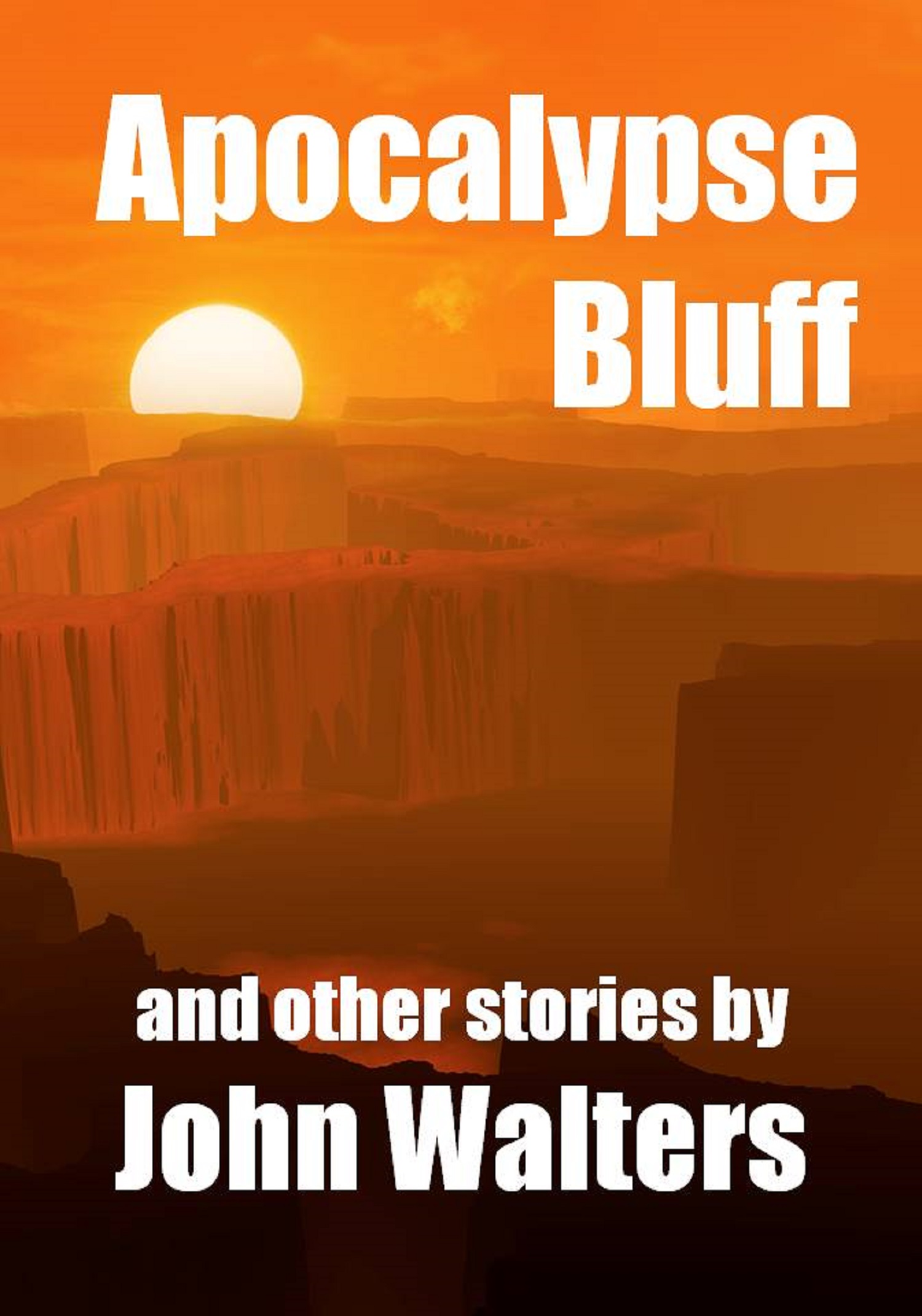
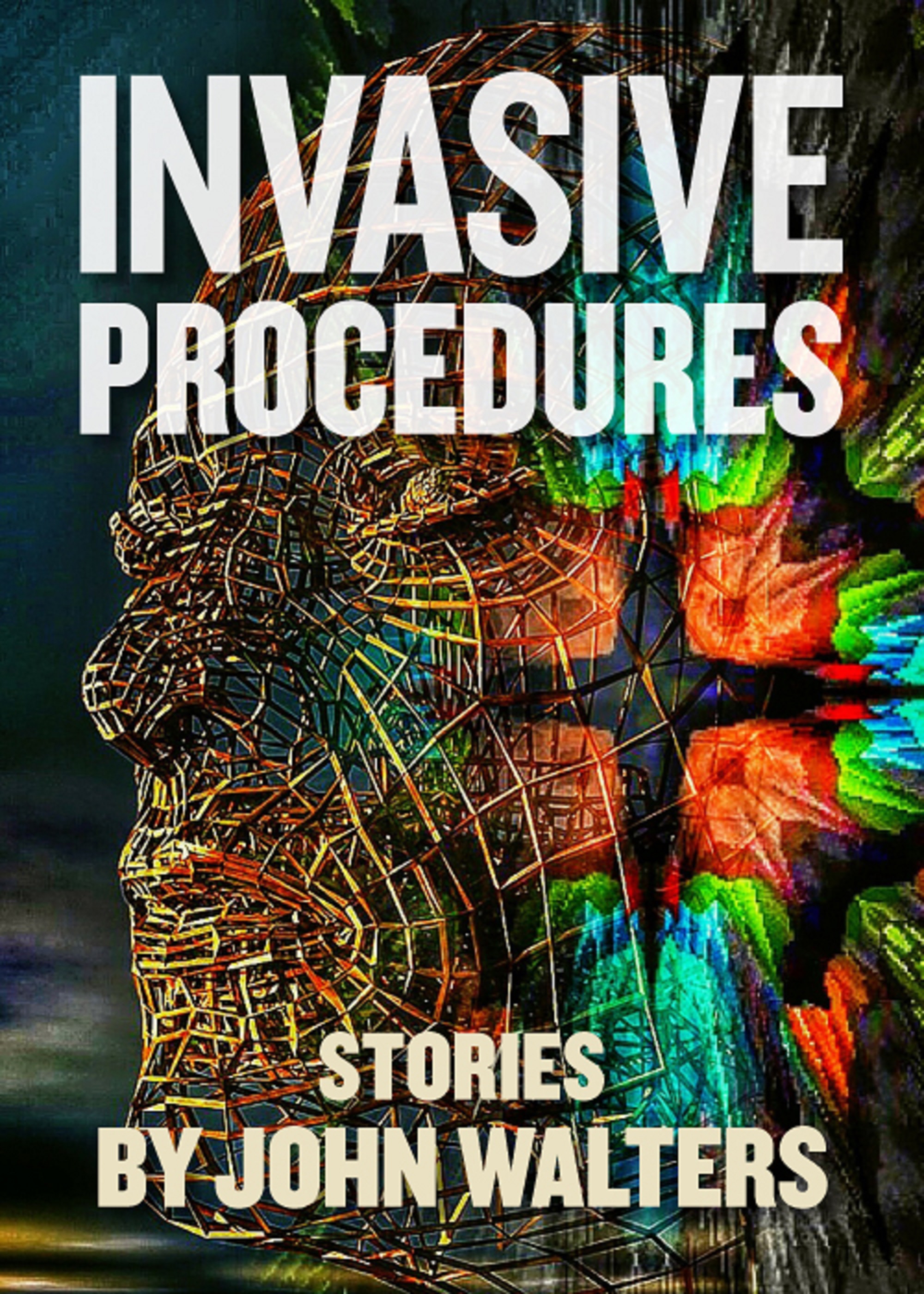
I’m a professional writer; I make my living by my words.  I’m happy to share these essays with you, but at the same time, financial support makes the words possible.  If you’d like to become a patron of the arts and support my work, buy a few of my available books or available stories. To send a one-time or recurring donation, click here. You can also donate via my Patreon account. Thanks!

Posted in Uncategorized | Leave a comment

Travel Communities

This week in my column The Perennial Nomad: For Those Who Wander with Intent I discuss travel communities.

I made my second trip across the United States, Europe, and the Middle East to the Indian Subcontinent in the middle of winter. My first journey had been more relaxed, and although I was on a lean budget I was better supplied with funding. It was the mid-1970s, and I flew from New York to Luxemburg on Icelandic Airlines; it cost one hundred dollars for a round trip ticket. As a result, the plane was filled with young people intending to hitchhike around Europe or take the Hippie Trail to India and Nepal. I made a lot of friends that year, and I filled a small notebook with their contact information. The second time around, I was more broke and more desperate. I had metaphysical reasons for returning to India, and I wanted to get there as soon as possible; as a result, I didn’t stop to work here and there as often as I had in the past. Fortunately, most of the people I had met on the road were happy to put me up as I passed through.

Click on this link to read the rest.

Posted in Travel | Tagged , , , , | Leave a comment

Book Review:  Orbital by Samantha Harvey

The first I heard about the novel Orbital was when I read that it had won the Booker Prize for 2024. It seems I wasn’t the only one whose radar it passed under. The Seattle Public Library, usually top-of-the-line in its acquisitions, didn’t have a copy, or at least they had so few that the sudden demand ensured that it would be a long time before it was available. Even Amazon had run out. I could order it in advance, but the delivery date would be months in the future. In fact, the book appeared to be completely out of print, and after it unexpectedly won a major award, its publisher was scrambling to catch up.
I think that at least part of the sudden interest in it is that a book that appears to be science fiction so seldom wins a major literary award like the Booker. It isn’t really science fiction, but it comes close. It concerns a twenty-four hour period in the lives of six astronauts, four men and two women from five different countries, on the International Space Station. It’s a short novel, not much longer than a novella, and it has very little plot. It is more in the nature of a prose poem. It drifts from the viewpoint of one astronaut to the next, and there are extended passages describing the appearance of Earth as the space station revolves around it. In a twenty-four hour period, the station makes sixteen orbits, and the chapters are divided according to each orbit.

Harvey goes into the backgrounds of the characters, but ultimately what it amounts to is this: “Whatever they were before they came here, whatever their differences in training or background, in motive or character, whatever country they hail from and however their nations clash, they are equalized here by the delicate might of their spaceship.” The author also emphasizes that from their vantage point the politics of Earth have little significance. From space no national boundaries can be discerned; instead, the astronauts perceive the Earth as home to all, a home that needs protection. “Before long, for all of them, a desire takes hold. It’s the desire – no, the need (fueled by fervor) – to protect this huge but tiny Earth.” And: “Can humans not find peace with one another? With the Earth? It’s not a fond wish but a fretful demand.” As if the microcosm of the space station and its denizens from various lands working in harmony signifies what humankind in general could and should be like.

At heart this is a very personal novel. If you want to learn about the real intricacies of living on the space station, read the fascinating memoir Endurance: A Year in Space, A Lifetime of Discovery by Scott Kelly, an American astronaut who spent a year there. However, often as I read Orbital I felt that just behind the musings of the characters was the author Harvey, watching the International Space Station’s live stream and using it as a springboard to ponder philosophical and existential matters. Plot appears irrelevant when confronted with such grand ideas. I liked the artistic freedom that the unusually simple structure represented. Sometimes educators and critics put literary works into stringent categories from which, they intimate, authors should not deviate, when in fact writers should feel free to approach their art in whatever damn way they please. On the other hand, I grew up reading the so-called new wave science fiction of Roger Zelazny, Samuel Delaney, Ursula Le Guin, and others, and sometimes Harvey’s prose, in comparison, strikes me as slow-moving and ponderous. Ultimately, though, I realize that every literary work is different and has to be taken on its own terms. In the case of Orbital, you should settle in for a slow, stately, elegantly-written prose poem that provides insight into the human condition from a cosmic perspective.

Posted in Book Reviews | Tagged , , , | Leave a comment

The Perennial Nomad

Introducing The Perennial Nomad, a weekly Substack newsletter.

I began writing with a focus on science fiction stories. Many of the books I read as a teen and young man were science fiction and fantasy, and it was a science fiction story that impressed me so much that I felt I had to become a writer. As a result, my early efforts were in that genre.

However, more and more I began to see writing as a metaphysical experience, as a method of observing and defining our place in the universe. I developed a deep desire to give everything I had to the art of writing, and I began to make life decisions that would hurtle me into the realities of life. I couldn’t accomplish my goals by remaining ensconced in the city of my birth. I had to get out and live, to discover what life was all about so that then I could write of it. I sought that “one true sentence” that Hemingway spoke of. Inspired by writers such as Jack London, Jack Kerouac, and Henry Miller, I left my hometown and set out on the road.

Hitchhiking was common in those days or I would never have been able to get as far as I did. I traveled back and forth across the United States, through Central America as far as Guatemala, around Europe, across the Middle East, around the Indian Subcontinent, and eventually to Southeast Asia and New Zealand. But this was not tourist travel; this was total immersion. I never had much money, and when I ran short I’d stop and get temporary work. Sometimes when I went broke I’d keep going and trust in the vicissitudes of the road to somehow supply my needs. When I settled down with my wife to raise our family of five sons, we did it in Greece, not in the States. All together, I lived overseas for thirty-five years, only returning to the States when the Greek economy crashed and there were no opportunities there for my sons.

Somehow now I have found myself alone in Seattle, my starting point, as an empty nester, but for me it is not the same place. I see people around me who were born and raised and have spent their whole lives here. For them it is home, but not for me. I have no home. In the course of my wanderings I have come to realize that I am a perennial nomad. For me, the journey is never-ending. The truth is that it’s the same for everyone, whether you venture out into the unknown or snuggle up close to where you first arrived. We are all, ultimately, strangers and pilgrims in this life. We are all in transit. None of us are here permanently.

This newsletter, The Perennial Nomad, celebrates our transitory existence. In it I will share accounts of my far-flung travels and also narratives of my efforts to rediscover Seattle. Many of the essays will be previews of works in progress, and I will also offer excerpts from my already-published works. If you too are a global citizen and have an affinity with all of humankind, I urge you to subscribe.

Thanks so much for your support and encouragement.

Here’s a link to The Perennial Nomad.

Posted in On Writing, Travel | Tagged , , , | Leave a comment

Book Review:  The Subtle Art of Not Giving a F*ck: A Counterintuitive Approach to Living a Good Life by Mark Manson

I hesitated before deciding to go ahead and write and post this review. After all, my intention is to attract readers, not repel them. But then again, the type of readers I am interested in reaching is not going to be offended by the F-word, which, by the way, is liberally sprinkled throughout this book. (And in the book’s interior, an asterisk is not used when spelling f*ck.) However, to each his or her own. If expletives offend you, that’s okay; simply skip to the next review and book and give this one a pass.

One of the reasons I decided to proceed with this review concerns one of my sons. A passage struck me as relevant to his situation, and so I read it to him while we were video-chatting. When I had finished, he told me that he was at that time into his third reading of The Subtle Art of Not Giving a F*ck via audio book. The coincidence was too unusual to be ignored. The main reason, however, is that though some of the advice Manson shares is tangential, much of it is sensible, relevant, and practical. As for the risk of offending bluenosed puritanical readers, I decided that I don’t give a f*ck.

Manson states that: “The key to living a good life is not giving a f*ck about more; it’s giving a f*ck about less, giving a f*ck about what is true and immediate and important.” He goes on to clarify that: “This book will help you think a bit more clearly about what you’re choosing to find important in life and what you’re choosing to find unimportant.” And: “If suffering is inevitable, if our problems in life are unavoidable, then the question we should be asking is not ‘How do I stop suffering?’ but ‘Why am I suffering – for what purpose?'” An important example in my own life concerns rejection. Everyone hates rejection and considers it something that should be avoided. And yet to attempt publication as a writer, rejection is inevitable, especially if you want to follow one of the traditional paths. For instance, I write a lot of short stories. I eventually compile them into volumes and publish them, but before I do that I try to sell them to magazines and anthologies. I have successfully sold dozens of them, but to do so, I have to send them out to editors. Every time I do, I risk rejection, and every rejection hurts. The only way to avoid that pain is to not send out the stories, but then I am waving the white flag of surrender before the battle even starts. Very few of my stories sell on the first try; I often have to send them out again and again before they find the right literary home. And every rejection hurts. Every damn one. But this is a pain I have chosen to accept because it aligns with my long-term vision. To take this analogy one step further: Recently I have endured what you might call failure’s perfect storm. I sold stories to several anthologies and was looking forward to seeing them appear in the completed books around now; at the last minute, though, the editors have informed me that they have cancelled the anthologies for various reasons – mainly having to do with finances. So in the publishing world, even after acceptance disaster can strike. Nevertheless, despite the inevitable wounds, this is a battle I have chosen to fight. Manson calls it: “The willingness to stare failure in the face and shove your middle finger back at it.”

For me, as a writer, one of the associated pains is the all-but-inevitable rejection. For you it might be something else. Regardless of your particular circumstances, Manson writes: “Everything worthwhile in life is won through surmounting the associated negative experience.” And: “It’s worth remembering that for any change to happen in your life, you must be wrong about something.” Ultimately, this book does not tell you to not care about anything, but to focus on what is most important to you, regardless of the associated pain. Since pain accompanies any endeavor, choose to endure the pain that will take you where you want to go. In my opinion, there is enough important practical advice herein to justify wading through the abundance of expletives to reach it. For this reason, I recommend this book.

Posted in Book Reviews | Tagged , , , , | Leave a comment