Book Review: Virtual Unreality: Just Because the Internet Told You, How Do You Know It’s True? by Charles Seife

This short, spare volume reads like an extended Internet article.  Indeed, all the information it contains is easily available online through a search for its topics.  The bibliography in the back, in fact, has very few listings of complete books, but is mainly composed of articles from magazines and websites.  For someone unfamiliar with the perils of the Internet, it offers some useful advice and warnings, but for most Internet users, who are constantly surfeited with online danger notices, it may seem like yesterday’s news.

In writing the above, I’m not putting the book down or saying it is not a worthwhile read.  It has its interesting moments.  The problem is that it dwells only on the negative.  It does not attempt to provide any sort of balance or any solutions to the problems it enumerates.  It’s a series of warnings, nothing more.  It would have been a great book if it had kept the material it has now and added to it an accounting of the many positive aspects of the Internet and some details on how Internet users can combat the evils that lurk in dark virtual alleys.

As a writer whose work appears in online magazines and is for sale at online venues, I was especially interested in what Seife has to say about online writing and publishing.  Unfortunately, his sensationalist dismissal of copyright law as irrelevant in its ability to deal with digital publishing is one of the weak points in the book.  It couldn’t be further from the truth.  Seife claims that copyright law loses its basis when digital copying is so easy and inexpensive. However, copyright law is as valid as it ever was and even more necessary in the digital age.  It is designed to protect the exclusive rights of creators to their intellectual properties.  This fosters an environment that stimulates further creative work.  Just because crime is easier to commit doesn’t make it any less criminal.  Copyright law gives a desperately needed recourse to writers and other artists when criminals steal their works, and copyright law has been upheld in many instances of online theft of intellectual properties.  In analogy, the ease of obtaining firearms doesn’t make murder any less of a criminal act or negate laws that are designed to protect victims from murderers.

Another weakness of the book is its quick dismissal of modern online self-publishing platforms.  The author shares a number of negative stories about self-publishing fiascoes, but does not seem to be aware that many, many talented writers, including those who used to work with traditional publishers, have turned to self-publishing channels as a valid way to distribute their work, and that many of these writers are making a better living doing so than if they had confined themselves to the limitations of the big New York publishers.  Big publishers have reacted to the rise in e-book popularity by revising their contracts so that the lions’ shares of profits go to themselves, while writers receive smaller advances and miniscule shares of royalties.  Self-publishing platforms, on the other hand, allow writers to keep most of the royalties from sales of their books.  Additionally, self-publishing platforms offer the freedom to publish original artistic endeavors that big publishing won’t touch because of its tendency to focus on what sells well in the current marketplace rather than on literary work that is fiscally untried.

I disagreed less with other sections of the book that expose obvious dangers such as the creation of false personas and corporations to facilitate scams.  I also found the author’s description of the pointless, money-wasting, and time-wasting games foisted on unwary Internet users on social media sites to be informative and accurate.

All in all, the book is an interesting, albeit brief and far from complete, summary of common drawbacks of the Internet.

Posted in Book Reviews, On Writing | Tagged , , , , | Leave a comment

Book Review: The Best American Short Stories 2015 Edited by T.C. Boyle and Heidi Pitlor; Part Two: Imbalance in Story Anthologies

Today is Sunday, and I do laundry for my son and myself on Sundays.  I make sure that I am in the laundry room with our two loads at eight o’clock in the morning, which is the earliest permissible time according to the rules of the apartment complex, so that I can get it started before other people start coming and commandeering the machines.  The washing machines are old and do not always work well.  If you overload them only a little, the cycle stops before the final spin, and when you open the door, you find a soggy mess of clothes that you either have to divide in half and wash again or run through two turns in the dryer.  The problem, say the instructions on the wall, is imbalance.  If you put too many clothes in or too many bulky items, the machine can’t spin properly because it is imbalanced.

Why am I digressing into this fascinating description of our Sunday laundry habits, besides the fact that I am even now typing this while waiting for our loads to finish?  Because I am just completing the reading of “The Best American Short Stories 2015” edited by T.C. Boyle and Heidi Pitlor, and one of the biggest problems of the anthology is its imbalance.  One of the editors made the decision that, instead of taking the trouble to balance the stories throughout the anthology according to subject matter, theme, style, length, and so on, that it would be easier to place them alphabetically according to the authors’ last names.  That may work sometimes, but it doesn’t work in this collection.  What they ended up with is a string of abstract, mediocre stories all in a row, then a number of decent ones.  It just doesn’t work that way.  The first part of the anthology is weak, and I began to wonder, as I read, if 2015 was a very bad year for short stories, or if perhaps the selection process this year was amiss.  As I read on, though, I realized that for the most part the stories in this anthology were not better or worse than the stories in other similar anthologies, but that they were just badly placed.  You have to get halfway through the book before you start to hit the truly superlative stories.

Although it’s been decades since I’ve read the book, I recall that in one of the extensive introductions to the stories in “Dangerous Visions,” Harlan Ellison explains that he puts the strongest stories in a collection at the beginning and the end: at the beginning to draw readers in, and at the end to close with a flourish and make the book unforgettable.  This is sound advice.  To leave the thematic balance of a collection of otherwise unrelated stories up to chance does not seem like a wise alternative.  You might hit it, but then again, you might not.  The editors might argue that it doesn’t matter because all the stories are equally brilliant, but that’s never so.  As I explained in the previous essay, best of the year collections, just like any other anthologies of short stories, are made up of subjective choices of only a few editors, unless they happen to be awards anthologies in which the stories are decided upon by the ballots of a large number of eligible voters.

There was another problem with a number of the stories in this collection.  Nothing happens.  There is no dynamism, no activity.  Although a focus on reality in a story is fine, that reality has to absorb and involve the reader in some way.  Several stories here fail to do that.  This is one reason I am more often drawn to speculative fiction rather than so-called mainstream fiction, because many mainstream writers seem to have no imagination.  Maybe what should happen is the dissolution of all genre distinctions.  Best of the year anthologies should contain the best stories written regardless of their subject matter.  Indeed, even in this anthology, one of the better stories is a near-future science fiction tale that somehow escaped “The Best Science Fiction and Fantasy 2015” and wound up here instead.  Recent best of the year anthologies in this series have typically contained several science fiction and fantasy stories, but now that the publishers have begun a series composed exclusively of science fiction and fantasy, I wonder if the mainstream best of the year collection will be weakened.  It certainly seems to have happened this time.  If the trend continues, I may look elsewhere for my dose of yearly mainstream short stories.

Posted in Book Reviews | Tagged , , , | Leave a comment

Book Review: The Best American Short Stories 2015 Edited by T.C. Boyle and Heidi Pitlor; Part One: Subjectivity in Short Story Appreciation

Reading the collection “The Best American Short Stories 2015” edited by T.C. Boyle had a curious effect on me.  Well, to clarify, I haven’t read it all yet.  I’m several stories in.  I’ve been reading modern short stories recently because I’ve been writing a good number of short stories recently.  I want to glean what I can from the work of others:  their triumphs, mistakes, nuances, styles, anything I can use to improve my own command of the short story writing craft.  So I ordered this collection from Amazon to find out what literary editors consider the best of the best that’s being written these days.

The conclusion I have come to is that once you get past the obvious mistakes in grammar and other rudiments of rank beginners, it’s amazing how subjective are the choices that editors make as to what appears in literary magazines and anthologies.  To be honest, I knew this already.  Every story collection I read, whether they are single author or mixed authors, has good stories and bad stories.  I don’t know why it hit me so forcefully now.  Perhaps it was because earlier today I was marketing some of my own stories, deciding which magazines or anthologies would be best to send them to, and balking about sending off some of the pieces because they are so strange or different.

I should know better.  Writers are rarely the best judges of their own work.  All they can do is complete their stories, check them for mistakes, and send them off.  Once I sat down to write a story, “The Disappearance of Juliana,” and I was simply fed up with rejections and worrying about the idiosyncrasies of the personal opinions of editors, and I decided to pull out all the stops and write the story however the hell I thought it should be written.  So I alternated sections with second person present tense and third person past tense, and in some places, especially at the climax, I changed font sizes and created word pictures to accompany the text.  The story was rejected a few times, but it sold faster than most, and I got paid more for it than any other story I had sold up to that time.  You never know.  You just never know.

Reading the stories in this recent anthology and noting the great differences in quality and style made me realize that every editor is just one person with an opinion.  And there are no master’s degrees or doctorates in editing.  A lot of people come to editing in roundabout ways.  Sometimes they are failed writers who didn’t manage to make a living with their prose.  Some are business majors looking out for the publishing company’s bottom line.  Some got their positions because they knew someone.  Admittedly some are very dedicated and have a genuine love of books, but even these people are humans with personal tastes that cause them to prefer one type of story over another even though the stories may be equally deserving of publication.

What does this mean for me personally?  It means that if I want my stories published in traditional venues, I should get them out there to as many editors as possible.  In the back of this best of the year anthology the magazines from which the stories are chosen are listed, and there are, says the editor of the volume, about two hundred seventy-seven entries.  Now, I would discount over half of them right off because I am a professional writer and some don’t pay except in copies, if that, but that still leaves many options.  Those many magazines all have idiosyncratic editors with different tastes, different preferences.  There is no story evaluation computer program that they run them through to definitively determine which ones are most worthy.  It’s all a matter of opinion.  The editors read them and decide which ones strike their psychic cords or touch their literary sensibilities.  Some editors have first readers to wade through the slush piles for them, and some first readers are students trying to earn a few bucks to make it through college or are failed writers themselves and have much less idea than the writers they summarily reject about what makes a good or bad story.

Anyway, so after I came to these conclusions, I sent off those strange or offbeat stories.  Why not?  The worst that can happen is that they do not suit the editors’ preferences.  If that happens, I turn them around again and send them somewhere else.  Or I upload them to self-publishing channels and make them available directly to readers.

All that to say:  Writers, write from your heart.  Don’t write to formula.  Do the best work of which you are capable, get it out there, and then start on the next story.  A piece you may have doubts about may end up in a best of the year anthology.  Who knows unless you try?

Posted in Book Reviews, On Writing | Tagged , , , , | Leave a comment

Book Review: Bird by Bird: Some Instructions on Writing and Life by Anne Lamott

I occasionally like to read books about writing, to see what other writers have to say about it.  I came across this book at a Seattle Friends of the Library book sale.  It was almost free so, since I had heard of it, I thought I’d give it a try.  It was first published in 1994, which makes it over twenty years old.  That’s not important, except that you should take what it says about publishing with a grain of salt, as this was before digital publishing and the self-publishing revolution.  No matter.  The book doesn’t go into publishing much, not even the rudiments.  It is taken from Lamott’s writing classes for beginning writers and deals with much more basic topics.

I can’t really call myself a beginning writer anymore by any stretch of the imagination, with about twenty books and many short stories published, but I still found some of her advice readable and enjoyable.

Before I go on, though, I need to give a bit of advice myself on the reading of books on writing.  Every writer’s journey is different.  If you read books about the writing process and rules of writing by other writers, always keep in mind that in the pursuit of your own voice and your own calling you should ignore any advice that you disagree with.  There are no absolutes in the writing game.  It is subjective.  It is a matter of ripping your heart open and communicating what you find there, and it is a different experience for everyone.

That said, I find some of Lamott’s advice to be useful, and some not so much.  She is opinionated and entertaining, though a bit too dogmatic sometimes.  I sometimes found her writing style, especially her flippancy, exaggeration, and self-denigration, annoying.  In one section she talks about writing shitty first drafts which you can then revise again and again until you whip them into shape.  That’s how some writers write, but not all.  I prefer to write good first drafts and, though I do go over my work several times afterwards, I generally make very few changes.  There are exceptions to be sure.

I am concerned about stories I send off to publishers, but I cannot overly fret about my creations that I send off to market as Lamott describes that she does; there are too many of them.  Right now, besides all the digital stories I have available for purchase at various online venues, I also have about twenty short stories and novelettes making the rounds of magazines and anthologies.  If I wasted time fretting over editors’ reactions I’d never get anything else done.  Instead, I send them off and start on the next ones.  If they come back rejected, I find another suitable market and send them out again.  If they get accepted, paid for, and published, well and good; otherwise I format them, create a cover, and self-publish them.  Life is too short for the anxiety of placing my well-being in an editor’s hands.  The best thing is to do the work, send it off or upload it, and move on.

As I said, the advice in this book is for beginning writers.  Some of it is sound, some of it not.  For the best advice on the nuts and bolts of short story writing, though, pick up a copy of “Creating Short Fiction” by Damon Knight.  So far I have not found a better guide to the practical aspects of short story composition.  It’s even older than Lamott’s book, but Knight’s advice is timeless.

I don’t know if I would recommend this book or not, as there are definitely better books about writing on the market.  One of my other favorites is “On Writing” by Stephen King.  I don’t agree with all of his advice either, but he sure is entertaining, and blends the writing advice with some fascinating memoirs.  I suppose “Bird by Bird” may be a good read for writers who are just starting out, as long as they realize that some of the advice is dated and that they should ignore anything that doesn’t apply to them and feel free to break any so-called rules they want to break.

Posted in Book Reviews, On Writing | Tagged , , , , | Leave a comment

Book Review: Everything’s Eventual: 14 Dark Tales by Stephen King

I hope it doesn’t sound like a contradiction when I say that I admire much of Stephen King’s work but have read little of it.  For the most part I have seen the films, and that has been good enough for me.  That includes “Firestarter,” “The Dead Zone,” “The Stand,” “The Green Mile,” and others.  The length of his novels has intimidated me from tackling them, and the fact that once I saw the films I didn’t see the need to delve into the books.  I made an exception for the novel “11/22/63” about a man who goes back in time to thwart the assassination of President John F. Kennedy.  The subject matter fascinated me so I bought the book and read it, even though, as I remember, it was over 1100 pages long.  Another King book that is one of my favorites is “On Writing,” which is mostly a memoir.  One thing I would pay good money for, in fact, is a full-length memoir by King.

This book, “Everything’s Eventual,” came into my hands via one of my sons, who brought it with him on a Christmas visit.  I didn’t think I had read a volume of King’s short stories before, so I thought I’d give it a try.

I came to the conclusion that Stephen King’s short stories have the same strengths and weaknesses as his longer fiction.  One of the weaknesses of King’s longer fiction is its length.  He has a tendency to ramble.  For instance, “11/22/63” is a great story, but it is twice as long as it needs to be.  It would have been a much greater story at half the length.  The same can be said for his shorter fiction.  A number of the stories are just too long for the subject matter and take too long to get going.  Trimmed to half the length, they would be twice as effective.  Some of the best stories in the collection are the tight, compact literary ones that have focus of character and go straight from one point to another.  Alas, not all the stories are like that.  Some of the weakest are stories of gangsters or zombies or undercover spies that take forever to get anywhere significant.

Another problem I had with some of the stories was their gratuitous violence.  I have no problem with violence in short stories if the violence is integral to the plot.  But King too often introduces interesting characters with real-life problems and then injects violence into the stories as if out of left field.  Which brings up a further problem with several of King’s stories, a tendency towards deus ex machina solutions or conclusions, in other words, closing the stories with neat endings that have no buildup in the main body of the story.  For instance, he tells an interesting story of the impending divorce of a married couple, and then out of nowhere has a deranged waiter attack the woman’s lawyer and split his head open.  Or he tells a fairly comedic story about how a couple’s pets are attracted to either the husband or the wife, and then throws in a bit at the end about a serial killer murdering someone’s wife.

Don’t get me wrong.  Most of the stories are entertaining.  But they are not as tight as short stories I am accustomed to reading by such masters as Zelazny, Delaney, Silverberg, James Tiptree, Jr., and others.  As I said, King rambles in his short stories, and most of them would be much more effective at half the length or less.  I couldn’t escape having the feeling, too, that if anyone else’s name had been attached to some of the tales, they never would have found publication in the first-class markets listed for these stories.

All in all, the book is an okay read, but you can do better picking up a collection by one of the masters of the craft that I listed above.  King is a fine writer, but as he says in “On Writing,” he likes to unwind his tales slowly and gradually, and that focus is not optimum for shorter works.  That’s what the stories in this collection lack:  power right out of the gate.  If you have the patience and stay the course, eventually the stories display some interesting facets, but stories that do not have famous names attached to them, if they are to succeed in retaining reader interest, have to punch you fast, punch you hard, and keep punching.

*     *     *

When I wrote the above, I still had a few stories in the collection left to read, and I offer this afterword because a couple of them are strong stories and I want to give credit where credit is due.  Their opening scenes are, perhaps, too long – but then again, perhaps not.  Overall, they are finely executed soft horror stories.

I saw the movie “1408” long ago when I was living in Greece, and it’s a rather poor film.  The story, however, works well.  This is an example of a Stephen King story far exceeding the film adaptation in quality.  Perhaps part of the problem with the film is that the story is rather slight.  It works as a short, but to increase it to feature film length took a lot of stuffing.

The other strong story is “Riding the Bullet,” about a hitchhiker who gets picked up by a dead man after a visit to a graveyard and then has to make an awful choice. As King points out in the introduction, there’s nothing original about the story.  Its strength lies in its characterization; King creates sufficient background for the protagonist so that you care about what happens to him and the choices he makes.  This story originated as an e-book, sold a lot of copies, and became a phenomenon, more for the pioneering abundance of its e-book sales than for the content of the story itself.  But it is a well-told tale.

Posted in Book Reviews | Tagged , , | Leave a comment

Writer’s Block

Near the end of last year I was on a roll.  I had been producing steadily throughout the year, with two novels and a long novella.  But the last few months of the year I turned my attention to short stories and began completing one after the other.  The amazing thing was that I would write nonfiction all day, starting before seven in the morning and often continuing until around eight in the evening.  After a break for dinner I would start my fiction writing.  I had gotten so depressed because I had no time for fiction that I determined to do something about it.  I decided to write five hundred words of original fiction every evening at least five evenings a week.  That was around November or December of 2014, and since then I have more or less stuck to it.  I allow myself to count the words I write for my blog, as I have no other time to write them, but otherwise it’s always been fiction.  It adds up if you keep at it steadily.

Obviously in a schedule like that it’s easier to write novels than short works, because it usually takes me as long to warm up for a short story as it does for a novel.  So once you get a novel going you can just keep tooling along on the momentum of the experience.  When you’re doing a string of short stories, however, you stop each time and have to start again from scratch.  The amazing thing about my streak in late 2015 was that I was writing substantial short stories, good ones too, one after the other, with only a day or two between the end of one and the beginning of the next.  As I said, I was on a roll.

Well, then life intruded.  The good life, to be sure.  It was Christmas season, and all my sons came into town, some stayed in our small apartment, and things got very, very busy.  I knew it would happen and I planned for it.  I took a couple weeks off fiction writing; it was all I could do.  There just wasn’t time.  But then…

But then began the horror story for all writers.  When it came time to get started again, to fire up the engine and let it roar back to life…  Nothing.  Blank.  I simply couldn’t think of a thing to say.  I wanted a character, a scene, a damn single sentence to get started with, and I couldn’t come up with a thing.  I was blocked good and proper.  I still am, in fact.  I am writing this in lieu of the fiction that I should be writing.  I have sat in front of a screen staring at a blank document night after night until necessity forced me to bed, knowing that I had to get up early and churn out the nonfiction to pay the bills regardless of how I felt.

And I found myself captive of my old dream, my recurring hope, that I could somehow bring in enough writing income to dispense with the nonfiction, to wake up every morning and give my entire mental and physical energy to the writing that I love.  Instead, I approach my beloved fiction in a state of exhaustion after a long day.  Whatever.  I can live with it.  I’ve broken blocks before.

The main reason I am writing this down tonight is that when I was thinking about what I could write I got a vision of a beach in Greece where I decided to resume my writing career.  I had started out as a young man with writing as my only goal in life.  I had attended the Clarion West science fiction writing workshop at the age of twenty.  I had set out on the road across the United States, around Europe, across the Middle East to the Indian Subcontinent to gain experience and find my voice as a writer.

And then somewhere along the way I stopped writing.  I got married, began to raise a large family.  We ended up in Greece and I taught English for a living, and we would spend our summers at my Greek wife’s parents’ beach house in a small town on Halkidiki near Thessaloniki.  It was there on a beautiful sunny afternoon while on a walk along the shore with two or three of my sons that I felt it was time I should start writing again.  And I did.  Slowly and steadily, writing short stories, sending them off to markets, getting scattered sales.

Since then, there’s been a lot of progress.  Six novels, five short story collections, several other books.  I have no intention of stopping, and I shouldn’t let a gap in production of a few weeks weigh heavily on my mind.  But it does.  It does.  I can’t help it.  I rue every day of wasted time.  Should I have worked through the Christmas holidays instead of taking a break?  Perhaps.  But perhaps not.  My sons are important to me, and some of them came from far away.  I had to give them the attention they deserved, the attention I wanted to give them.  No, I think the break was necessary.  I just have to get past it.  In the meantime, I sit in front of the screen, mentally constipated.  That’s sort of what it’s like.  You know, when you know you have to go and you won’t feel comfortable until you do but it just won’t come out and no amount of forcing does the trick.

It’s happened before.  I’ve had breaks; I’ve had gaps, and they always broke loose and the flood pours forth again.  Writer’s block is one of the most frustrating experiences ever, whether it lasts a day, a week, or a month.  You want to work; there’s nothing you want to do more.  You’d sacrifice a lot to get the flow going.  But you have to wait it out.  It’s not as simple as a physical blockage you can take a laxative for.  It involves the mind and heart – your very soul.  To use another analogy, it’s sort of like sex.  Sometimes you have to rest up between sessions, give it a little time before getting into the next round.  In the meantime, I offer this essay.  C’est la vie.

Posted in On Writing | Tagged , | Leave a comment

Book Review: Ragtime by E. L. Doctorow

A quote by Scott Joplin, a famous ragtime musician, at the beginning of this novel, affirming that ragtime can never be played fast, gives away the style and tone.  It starts very slowly, with descriptions of the main characters, where they live, and what they do.  There is no inkling of a plot or hint that the book will be anything more than disparate descriptive passages for several chapters.  When interconnections between the characters interspersed with their encounters with some of the famous historical personages of the age begin to appear, these are the first indications that it will evolve into the semblance of a novel.  Somewhere along the way, about halfway through, the storyteller injects a fictional tale of Coalhouse Walker, Jr., a black ragtime pianist who, after a personal affront by white bigots, stages a protest in J.P. Morgan’s personal museum.  It’s around there that the book begins to become interesting.

I realize that my comments here may be going against the grain, as many literary reviewers consider “Ragtime” a classic, and it has even won prestigious awards.  I can see why.  It is well-written, stylistically original, at least for the time in which it first appeared, and eventually, after hundreds of pages, develops into an interesting story.  But some of the literary pretensions are hard to get past.  The slow, slow start I already mentioned.  Then there are the long, long paragraphs that go on for pages, the lack of quotation marks to set apart the dialog, the lack of paragraph separations for different speakers, the abrupt switching of points of view in the middle of chapters and sometimes in the middle of paragraphs.  Granted, it’s the author’s prerogative what tools he wants to use to make his point, and I have even used most of these affectations myself in one story or another.  But that’s what they are:  affectations.  They do not make up for the glacially slow start to the story or the lack of coherence in the early chapters.

I had high hopes for this novel based on the cover descriptions and what I’d read about it previously.  I’ve been meaning to read some of Doctorow’s work for some time and have never gotten around to it until now.  Based on my perusing of other volumes of his that I haven’t yet read, the long paragraphs, lack of quotation marks, and so on seem to be a general style that he manifests in a number of his works.  I know he is very popular.  To each his own.  Now that I know the way he writes, I might even tackle another of his works in the future, but this time I will be prepared for a slow, slow ride at the beginning, like a roller coaster climbing an incline before a plunge, and a lack of stylistic norms that usually help readers along on their journeys through novels.

I don’t regret having read this novel.  It’s interesting enough if you accept it for what it is.  It’s kind of like sitting down with a venerable member of the family who first goes through an album of snapshots and describes each person in the pictures, and then after the album is finished tells you a long, rambling story about them interspersed with the history of the era.  In some ways this book reminded me of the movie “Forrest Gump,” in which the fictional character’s unlikely life circumstances intertwine with famous celebrities and famous moments in history.  It’s one way to recollect the past.

Posted in Book Reviews | Tagged , | Leave a comment

Book Review: Seattle City of Literature: Reflections From a Community of Writers, Edited by Ryan Boudinot

This book, though entertaining enough in its own way, disappointed me.  It’s my fault, really.  Too often my appreciation for things depends in a large part on my expectations.  I was on one of my forays to the Amazon physical book store in the University Village in Seattle, and as is becoming my habit – at least I’ve done it twice; the store hasn’t been there very long – I allowed myself a budget of one fiction book and one nonfiction book.  I knew I would probably be able to afford that much, as the prices of the books are linked to Amazon’s electronic website, and the physical bookstore offers the same generous discounts as the website does.  It would be nice to read something about Seattle, thought I, and sauntered over to a corner near the windows where a regional book section is set up.  Finding this book, I grabbed it without looking at it very closely, thinking that it would be intensely interesting to learn something about Seattle’s literary scene.

The book is interesting, but not in the way that I thought.  It doesn’t give much insight at all into the history or current status of the literary community in Seattle.  It’s more a collage such as you would find on a social media site:  brief snippets and anecdotes like photographs that capture moments in time but without depth.  Nothing wrong with that, but it wasn’t what I was looking for.  I wanted a history of the literary scene in Seattle – how it began, how it developed, an in-depth look at the major players.  Instead, this book is a collection of brief essays in which writers recall stories of their favorite teachers of literature, notable readings they attended, drinking times with writer buddies, and so on.  The proprietors and employees of bookstores, instead of giving the readers a glimpse at the history and notable events of the establishments, answer trivia questions about hypothetical plot scenarios.  As I said, it’s entertaining in a light sort of way, but not what I expected or hoped to find.

One thing that disappointed me was its lack of comprehensiveness in dealing with Seattle’s multifaceted literary scene.  Most of the volume is taken up with poetry writers and poetry readings.  Now, I love good poetry but there is so much more that Seattle has to offer.  For instance, there is only a passing mention of the rich, vibrant science fiction and fantasy literary community in Seattle.  Seattle hosts the Clarion West science fiction writing workshop, where so many stellar speculative fiction writers honed their craft going all the way back to 1970 when it was initiated.  I’m biased, I know, because I attended Clarion West way back in 1973 when I was a literary stripling of twenty, far too young to imbibe most of the lessons the pro instructors were trying to teach me, and after finally returning to Seattle after thirty-five years of living abroad, it is to the science fiction and fantasy community that I felt drawn.  Many top award-winning speculative fiction writers live in the Seattle area, and the community is thriving, welcoming, generous, and a hell of a lot of fun.  That aside, there is too little detail on the multitudes of other novelists and short story writers who inhabit this corner of the country.

Having said all this, I offer no discredit to the book.  I expected something else and didn’t find it, but that is not to say that the editor and community of writers within did not accomplish the task they set out to accomplish.  I can’t really say that it’s a bird’s eye view of the Seattle writing community, because so much is missing, but it’s more like a gathering of images that give brief flashes of insight, moments in time that illuminate fragments of the past.

*     *     *

The editor of this book did a unique, innovative, interesting thing when the volume was almost complete.  He sent a copy to Paul Constant, a former books editor at the Seattle alternate weekly the Stranger, and asked him to write a review that he would include in the book as an afterword.  Constant’s review is vaguely complementary, but rather like mine doesn’t really say much because there isn’t much of substance in the book.  After I wrote my review, I searched the Net to see what others were saying about the book, and I came across an article Constant wrote in the Seattle Review of Books some time after “Seattle:  City of Literature” was published.  In it, he points out his failure to catch the lack of diversity in the book’s essays.  He mentions a conversation with Nicola Griffith, an award-winning science fiction writer, about the vital importance of diversity in every collaborative work.  He also cites another article in the Seattle Review of Books by Donna Miscolta that stresses the lack of voices from writers of color from a city that is overflowing with multiracial and multicultural influences.  She gives a number of examples of overlooked literary luminaries, and suggests that the editor should not promote the book as comprehensive with such glaring oversights.  I admit that my assertion of lack of balance in the anthology was based more on missing literary genres rather than missing cultural diversity, but I find it interesting that I am not the only one who feels that the book does, indeed, lack balance.

Posted in Book Reviews | Tagged , , , , | Leave a comment

Mortality

Most of us, when we are young, give no heed to mortality.  Our sights are focused forward into the future, but the possibility of cessation of being doesn’t enter our awareness.  Instead, we strive to be older, more independent, more responsible. When we’re kids we can’t wait to go to school like our older siblings or acquaintances.  After a certain point, we can’t wait to get out of school and on with our lives.  We’re always looking ahead to the next step, the next goal.

This was epitomized for me in an instant one summer in the early 1970s.  I was casually seeing one girl, and we went to a party together.    While there, I met another girl and arranged to meet her at Ravenna Park in Seattle so we could get to know each other.  It was a beautiful day with blue sky and brilliant green foliage all around.  When she showed up the sunlight created a golden halo around the edges of her loosely curled hair.  We didn’t hit it off together, she and I, but that’s not the point.  When she showed up and we said hello to each other the moment of time surrounded by the greenery and the sunlight and so on created a snapshot of eternity.  I suddenly saw my life stretching decades into the future, year after year of life to be lived with no discernible end in sight.  It was a wonderful moment, a revelation of sorts.  As I said, it had little to do with the outward circumstances.  It was one of those infrequent instances when linear time ceases.  But in the midst of it my thoughts did not progress all the way to my inevitable and impending death.  Instead, it was a momentary glimpse of immortality.

The stark reality is, though, that no matter what we believe about life after death, this present life comes to an end.  And as I age, I become more and more aware of that.  I am not as strong as I used to be.  I don’t have the endurance I once did.  Parts of my body begin to deteriorate and break down.  In the last year or two, my thoughts have turned more and more to my mortality.  I don’t fear death, but I realize that as I progress through what remains of my life, however long or short it is, it will come to an end.

When confronted with such profound ruminations, I look naturally at priorities.  My overwhelming priority for several decades now has been the well-being of my sons.  However, they are growing up into strong, intelligent, confident young men.  Only the youngest, who is still a minor, remains dependent.  My other priority is my writing.  Not the nonfiction articles I write to help pay the bills, but my real writing, that which I consider my calling:  novels, short stories, memoirs.  I wish I was financially independent enough to devote my fulltime endeavors to these works, but alas, not yet.  In the meantime, I do what I can.  As my mortality confronts me, though, I realize that these works too will eventually come to an end.  I will write what I write, I will die, and other will read it or not.  Time tempers even fame and glory.  I wonder, in the presumed afterlife, if Shakespeare or other literary luminaries give a damn any more whether or not anyone reads the works they wrote while they were in their mortal shells.

These thoughts come into sharp focus at the end of 2015 and the beginning of 2016.  The new year is historically an arbitrary designation, but it’s a useful one for assessing progress and setting goals.  My primary talent and obsession is writing, and I will continue to do it as long as I can.  I have said elsewhere I will keep writing as long as I live – that they’ll have to pry the keyboard out of my cold dead fingers – and I hope that this is true.  A calling is a calling.  Retirement from writing for me is inconceivable.  Though mortality does not instill fear, it does instill a sense of urgency.  This is what I am here to do now.  In the rest of eternity that follows, who knows?

Posted in Memoir, On Writing | Tagged , , | Leave a comment

Hindsight – December 2015

I’ve gone beyond the point where I give much of a damn what other people think about what I should or should not write.  I will compose straightforwardly or I will experiment as it pleases me and as the piece of writing demands.  That’s a nice place to be in as a writer.  I’ve paid my dues.  I’ve been writing for about four and a half decades now and don’t need to be concerned that there are ethereal gatekeepers that possess absolute truth when it comes to English prose.  It is all a matter of opinion.  One man’s nightmare is another man’s wet dream, as the saying goes.  At least once you get past the rudiments.  Sure, I’ll rewrite a story for an editor who offers to buy it; that’s a simple business proposition.  Otherwise, the words I pour forth are as valid as anyone’s.  After all, by what criteria do we evaluate literature?  Awards?  Sales?  Critical analysis?  Academic nitpicking?  Longevity?  These are all subjective.

After that introduction that came out of left field (I am left-handed, after all) I get back to the purpose of this extended expostulation:  a look at what I accomplished as a writer during this past year.  My biggest frustration is that I am still tied to writing nonfiction articles for less than minimum wage because my fiction and memoirs do not sell enough to make a living.  So let’s start with that nonfiction.  The numbers are similar to last year.  I’ve written and sold roughly 300,000 words of nonfiction articles to Internet content mills in 2015.  Whenever I consider that statistic, I realize that those 300,000 words could have been significant prose instead of bullshit if I could only support myself writing fiction.  This is one of my greatest regrets:  that I have to churn out prose for money only instead of focusing on the writing work that I really want to do.

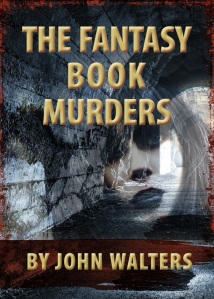
In fact, I have had to spend so many hours researching and writing the articles (and just barely managing to pay the bills anyway) that there was a period near the end of last year when I stopped writing fiction.  I just couldn’t find the time.  This deeply depressed me.  As a result, I developed insomnia, among other problems.  Well, I’ve found since then that the insomnia has other causes, but it got me to thinking that if I couldn’t sleep I might as well be writing.  So I set myself a goal that for at least five days a week, at the end of the day, I would write at least five hundred words of my own, usually fiction, before I went to bed.  And pretty much since then, with occasional exceptions, I have accomplished that.  The first result, published in December 2014, was the noir murder mystery novel “The Fantasy Book Murders.”  Since then in those late night hours I have written (and later published) two science fiction novels, a science fiction novella, and a number of short stories.

Lately I have been focusing on short story writing.  When you write a novel, it’s easier to keep forging ahead, as you have your basic characters and some sort of idea of how to proceed.  When you’re writing a string of short stories, on the other hand, the tough part is when you finish one and need to start from scratch and plunge ahead into the next one.  It usually takes me a day or two to get my bearings and initiate momentum on the next idea; nevertheless I have been able to leap from one to the next more consistently on this stretch than I have in the past.  I am currently taking several days off because so many relatives have come to town for the Christmas holidays, but I hope to jump back into the fray as soon as I resume a regular schedule.  I love short stories.  I love reading them and I love writing them, and lately I have had the undeniable urge to focus on them.  That could change in the coming year.  We shall see.  I will definitely be working on something again soon, whatever it will be.

This is a look back, though, not a projection forward.  In 2015, I managed to have several stories published in magazines and anthologies, which was gratifying.  Additionally, I published an article in the Science Fiction Writers of America cookbook, and an article on living and working overseas as a writer for the SFWA website blog.  All in all, it was a year of progress as far as traditional publishing is concerned, something that I hope will snowball now that I’m finishing all these stories and sending them off to magazine and anthology markets.  Once I write them and send them off, though, there’s really nothing I can do but hope – and in the meantime get to work on the next one.

Posted in On Writing | Tagged , | Leave a comment