Book Review:  We Do Not Part by Han Kang

Han Kang is a South Korean author who was awarded the 2024 Nobel Prize in Literature. This novel is my first exposure to her work, and I should clarify from the outset that We Do Not Part is well-written, atmospheric, poetic, and fantastic, but it is not an entertaining book. The effect, at least in me, is similar to how I feel while reading Aleksandr Solzhenitsyn writing about the horrors of the Soviet Gulag. I know that it is important and that people should be aware that these things happened, but at the same time it leaves me disheartened, uneasy, pessimistic, and somewhat depressed.

The story is told in first person by an author, Kyungha, who resembles Kang. She suffers from nightmares after completing a novel about human atrocities, as Kang did after writing her previous novel, Human Acts, which she has referred to as a pair with We Do Not Part. She receives a summons to a hospital from her friend Inseon, who has suffered a serious injury while working on backdrop materials for a film based on the author’s nightmares. Inseon pleads with Kyungha to go to her home on Jeju Island and give food and water to her budgie, a white bird, before it dies. Kyungha sets out in the midst of a snowstorm and after an arduous journey makes it to the isolated house. The budgie has died, and Kyungha buries it.

The power goes out, and as Kyungha waits out the storm alone in the lonely cottage, surrealistic events transpire. The dead budgie returns to life and flies around the sitting room. More significantly, her friend Inseon, who remains bedridden in the hospital far away, appears to Kyungha and tells the story of the massacres that took place on the island in 1948 and 1949, specifically as they related to members of her family. To corroborate her story, Inseon pulls out books, documents, and newspaper clippings that her mother compiled in the years after the massacre. By candlelight, as snow continues to fall outside, Kyungha is drawn deeper and deeper into the account of the terrible atrocities that befell Inseon’s relatives and many other islanders.

In truth, during the Jeju massacres it is estimated between fourteen thousand and thirty thousand people were killed, especially by government troops. Other accounts place the death toll much higher. Kang tells the tale in ominous, poetic prose that immerses readers in the snowstorm, the darkness, and the much deeper darkness of the senseless slaughter of whole families, of old people, young people, and mothers with their children and infants.

Kang’s resemblance to the narrator reminds me of the work of another recent Nobel Prize winner, Annie Ernaux, whose novel The Years I read not long ago. Ernaux also writes autobiographically of her experiences, making the novel read like a memoir. It is a literary device that if well done can be greatly effective, as it is here in We Do Not Part. We are drawn into the narrator’s sense of urgency as she travels to the remote location to save the bird, and when the spirits begin to manifest, we are deeply immersed in the protagonist’s perspective.

This is a sincere, heartfelt, well-written book, but it is not light reading. It is, however, important reading. Just be sure you are in a quiet, secure place so you can give it the full attention it deserves.

Posted in Book Reviews | Tagged , , , | Leave a comment

What Children Teach

This week in my newsletter The Perennial Nomad: For Those Who Wander with Intent I share a profound lesson I learned from a group of beggar children in India:

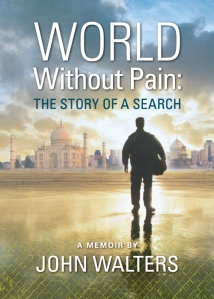
I have told this story before and I’m sure I will tell it again, because it involves one of the most profound and unexpected experiences of my life. You can read about it in greater depth in my memoir World Without Pain: The Story of a Search, but for now a more succinct version will suffice.

The motivation to retell it comes from a prompt I received: Write about a time a child taught you about, or reminded you of, something important in life. As a father of five wonderful, intelligent, and dynamic sons, I could fill volumes with lessons I have learned from being a parent, but this incident I’m about to relate involves strangers: children I had never met before and will never see again.

It happened on the epic journey I made from Seattle, Washington, U.S.A. to Goa, India.

Click on this link to read the rest.

Posted in Travel | Tagged , , , , | Leave a comment

Book Review:  Poor Things by Alasdair Gray

I realize that the film version of Poor Things is highly acclaimed, but I started watching it not long ago and I couldn’t get into it. I didn’t like the grainy black and white photography. It would be different if it was clear and sharp, but it wasn’t. I knew that after a certain point it was supposed to switch to color, but after about fifteen or twenty minutes I got fed up and stopped watching.

The novel, though, gripped me immediately. The story concerns a woman, Bella, who is almost nine months pregnant. She has a horrific home life, and after a particularly nasty incident, she jumps off a bridge into a river and drowns. A scientist named Godwin Baxter revives her by transferring to her the brain of her unborn baby. She then has to learn mobility and the ability to speak all over again.

The story is told through several viewpoints, each of which casts a different perspective on the events. The first section is by Archibald McCandless, a medical student and acquaintance of Baxter, who proposes to Bella soon after meeting her. She accepts, but before they can get married, she elopes with another man, Duncan Wedderburn; however, she refuses to marry him, claiming that she is already the fiancé of McCandless. This does not prevent her from having lots of sex with Wedderburn as she observes him succumbing to severe gambling addiction and effectively losing his fortune as they travel around Europe. The second perspective is Wedderburn’s, who blames Bella for his bad fortune; upon his return to Europe he is committed to a lunatic asylum. There is then a series of letters from Bella, which she sends to Baxter and McCandless as she travels around with Wedderburn; needless to say, her take on what happens is very different from Wedderburn’s. Along the way, she consorts with some English so-called gentlemen who attempt to educate her in the logic of empire and of the British class system.

When Bella returns to England, the husband she had run away from, a British admiral, shows up and attempts to claim her. During the course of his argument with Baxter and McCandless, Bella comes to realize, albeit abstractly, some details about her past. She eventually rejects the admiral, marries McCandless, and becomes one of very few woman doctors in England. McCandless finishes his narration, and this is followed by a letter Bella writes to her children and grandchildren after Baxter and McCandless have died in which she refutes much of the facts as McCandless has presented them. Finally, at the end, the author Alasdair Gray presents a series of “notes critical and historical” that add all sorts of interesting trivia (most of it fabricated) to the events in the book.

Besides the idiosyncratic text, Gray has illustrated it with sketches of some of the main characters and images of human body fragments from the famous reference work Gray’s Anatomy. Poor Things is altogether a brilliantly original novel full of insight into the foibles of the time, including the snobbish British sense of superiority that led to the conquering of poorer nations during the era of the British Empire, the distain the British aristocracy felt for commoners, and the subservient role of women in the society of the time. It is intense and intelligent and funny and highly entertaining. In fact, it is so good that I might go back and give the movie another chance, so I can compare it with this masterpiece of comedic satire.

Posted in Book Reviews | Tagged , , | Leave a comment

Book Review:  Zen Under Fire: How I Found Peace in the Midst of War by Marianne Elliot

After working for two years for a human rights organization in the Gaza Strip and six months for another organization in Kabul, New Zealander Elliott finds what she refers to as her dream job with the U.N. in Afghanistan. She is stationed in Herat, a city in the southeastern part of the country, and spends her time investigating rights abuses of women, children, prisoners, and other oppressed people. This book is an adaptation of the journals she wrote during the year she spent in Herat and in the nearby province of Ghor.  

At first she is unprepared for the atrocities and hardships she witnesses as she goes about her seemingly overwhelming daily tasks. For instance, there are accounts of women attempting self-immolation after being forced into abusive marriages and fathers murdering daughters who displease them. She has to live in a walled-in compound with armed guards, and she is only allowed to go outside, regardless of her destination’s distance, if she has an escort. However, Elliot also recognizes the flip-side: she meets many Afghanis of noble character who are willing to work hard and make sacrifices for the sake of the well-being of their people. A subplot concerns an American boyfriend with which Elliot has a complex on-again off-again relationship.

All of the above cause Elliott to frequently feel emotionally overwhelmed. To cope, she practices an early morning regimen of meditation and yoga. This helps to stabilize her in the midst of the chaos all around. When faced with so much injustice and tragedy, she has to be able to deal with intense feelings of inadequacy, frustration, and guilt about not being able to do more to help. Yoga helps her to accomplish this. She writes: “Ironically, my efforts to repress my own feelings have actually been keeping me from moving beyond them.” Through meditation and yoga she is able to give herself “permission to feel sad, guilty, or angry.” The yoga, she writes, “is transforming my ability to be in the midst of profound suffering without closing my heart or leaping too quickly into action.”

She soon discovers that there are no quick answers to the numerous difficulties facing Afghanistan and that the small amount of assistance she is able to provide sometimes seems utterly inconsequential. But she obtains great personal satisfaction from making the attempt, and in the end, when it is time for her to leave, she finds that she has developed great love for the country and its people.

I was partially drawn to this book because I have visited Afghanistan on two occasions in the mid-seventies, once traveling overland west to east, and once east to west. I found Afghanistan to be austere, formidable, and a little frightening. While I was there, I never felt entirely comfortable or safe. One of my sons, though, had an even more difficult time; he was a Navy Corpsman (medic) attached to a Marine Corps unit during a period of intense fighting in the southwestern part of the country not far from Herat.

Having been there and caught a glimpse of the difficulties that Elliott faced, I have great respect for her. What she encountered would have emotionally overwhelmed anyone, at least anyone like her with a wealth of vulnerability, empathy, morality, and compassion. She has a great story to tell, and she tells it well. Recommended.

Posted in Book Reviews | Tagged , , , , | Leave a comment

Sword Circle Pen: An Announcement

I’d like to give a shout-out to my son: author, veteran, mathematician, and adventurer Nestor Walters, who has recently opened a new website called Sword Circle Pen. As his website’s “about” page says, he was born in Bangladesh, raised in Greece, and spent ten years in the U.S. Navy. After his discharge, he earned an M.S. in applied science with a minor in creative writing at Stanford. He has researched tsunami wave effects on Antarctic glaciers; studied Russian, Chinese, and Spanish; and conducted science diving in Monterey Bay kelp forests.

One of the new website’s features is a look at his environmentally-themed fantasy novella An Earth Day Eulogy, which you can find more details about at this link.

Nestor also introduces and provides a link to a series of tutorials that he created with Next Step Inbound. Although these are specifically crafted for veterans who want to pursue higher education, the tips are useful for anyone who needs to write personal statements, supplemental essays, and resumes that will impress college admissions officers. As of this writing, eleven tutorial videos are available, and more are on the way.

So stop in at Sword Circle Pen, have a look around, and maybe order a copy of An Earth Day Eulogy. You won’t be disappointed.

Posted in Uncategorized | Tagged , , , | Leave a comment

Book Review:  Close to Home: The Wonders of Nature Just Outside Your Door by Thor Hanson

If this book had been a type of gardening guide or something similar I would not have been interested. However, Hanson goes beyond merely extolling the beauties of nature you can find close at hand; in fact, his writings have a sort of Thoreau vibe, albeit without the frequent allusions to classical literature. Even there, though, Hanson is not completely remiss. Throughout his discussions of the wonders hidden in tangled underbrush, towering treetops, verdant soil, and ponds and other waterways, he often sites examples from naturalists from past eras: Darwin, of course, but also numerous others.

It should be clarified that when it comes to appreciating the natural beauty we can find close to home, Hanson has an unfair advantage. He lives on a widespread farm in the San Juan Islands, an archipelago in the Pacific Northwest. When he goes out to contemplate wildlife he doesn’t just have a small garden but acres and acres at his disposal. Still, he puts his opulent acreage to good use as he studies the many facets of the local ecosystem.

Hanson’s objective is to open our eyes to the intricacies of the natural wonders around us, and he does this by focusing on the microcosms I mentioned earlier: treetops, shrubs, the rotting detritus of fallen trunks and branches, the dirt under our feet, and the bodies of water that surround us. Most of the details, including the names, of the plants and creatures he discovers go over my head, but that’s all right. I realize when I read a book like this that I will not remember many of the particulars. Anyway, that’s not what I’m after. I want to grasp the philosophy behind what he is explaining, and this is presented clearly and simply and directly. He wants us to comprehend that we are surrounded by and part of a vast, complex ecosystem that most of us normally don’t pay much attention to, but if we open our senses we will become more aware of the amazing realities all around us.

One thing that struck me as I read Close to Home is that what Hanson is attempting in this book is similar to a concept of travel I bring out in my series The Perennial Nomad. I lived and wandered overseas for thirty-five years, and the exoticism of my surroundings provided constant stimulation. However, when I got back to the States, and eventually to my hometown of Seattle, I felt a significant letdown. After all, this was familiar territory. I was born and raised here; I went through my teenage angst in these locales. I eventually realized, though, that my perspective of Seattle had changed. I was still a nomad, and this was another stopover on the path to eternity. If I did not have the means to move on immediately, I could instead explore this city as if I were encountering it for the first time. And in recent months, that’s what I have been attempting to do. Similar to the way Hanson zooms in on the infinitesimal but elaborate dramas taking place on his farm, I have been focusing on getting to know various aspects of the city of Seattle as if it were a wondrous new land.
*     *     *

The question inevitably arises: for a perennial nomad like me, the entire world is home, so how do Hanson’s principles apply? The answer is simple. If the entire world is your backyard, then it is essential to care for all of it. I have to admit that Hanson’s perspective made me realize that during my extended years-long travels overseas I should have paid much more attention to the natural world all around than I did. I think that part of the difficulty was that in places that were exotic, at least from my U.S. perspective, I often experienced sensory overload; I was surfeited with input. So when I came across, for instance, trees full of hanging fruit bats along a pedestrian street in Kathmandu, Nepal, or a large, venomous-looking snake whipping along the sidewalk in a suburb in Colombo, Sri Lanka, or an enormous iguana-like lizard running through a park in Southeast Asia, I was not as startled or as impressed as I would have been if these things had happened in my own homeland. Maybe now, after reading Hanson’s book, I might pause and take a closer look.

It certainly has caused me to pay more attention in my own neighborhood. On my daily walks I’ve come across squirrels, rabbits, raccoons, and a proliferation of melodic birds. In fact, I can observe an array of different bird species from the vantage point of my apartment balcony. I live on the fourth floor, and I have a great view of the complex’s profusion of trees, a mix of evergreens, alders, and others. From my aerie I’ve seen an abundance of bird life, including robins, bluebirds, sparrows, ravens, seagulls, hawks, hummingbirds, and many more that I am unable to identify. I’ve seen birds whose feathers are such bright crimson or emerald or ultramarine that they seem florescent.
Hanson’s book has also helped me appreciate the backyard sanctuaries some of my neighbors have cultivated. Although a number of these have signs that indicate they have been set up as sanctuaries, I never understood or appreciated the significance. At first glance they often appear unkempt, with unmown grass, tangled bushes, and overhanging trees, but in fact these pockets of fecundity assist in sustaining rapidly disappearing local ecosystems. In contrast, neatly cropped show-lawns, often patched together with rolled out turf brought in from elsewhere, tend to damage ecosystems by eliminating the variety and profusion of growth that the local wildlife depends upon for survival. Sure, some neighbors neglect their yards with no clear vision of sustainability in mind, but they are inadvertently creating, or at least allowing for, habitats in which indigenous creatures can thrive. After reading Hanson’s book, I notice that my perspective is shifting. I find myself admiring the yards and gardens with lush, overflowing foliage, and disparaging yards where meticulously cut lawns lie like ostentatious carpets upon which one is not allowed to walk.

In conclusion, Close to Home is not only illuminating, but it is also well-written and entertaining. Don’t worry if, like me, you don’t grasp all the scientific terminology; just come along for the ride and have fun.

Posted in Book Reviews | Tagged , , , | Leave a comment

Book Review:  The Silence by Don DeLillo

Several years ago I read Zero K, a science fiction novel by Don DeLillo. I recall being impressed by the elegance of the prose but feeling that the plot was too thin to justify the length. In The Silence, a much shorter work, the plot is so minimal as to be all but nonexistent.

You could say that it is speculative fiction because it deals with a hypothetical event, but it takes place in our present time when something happens that dramatically changes everything. In short, the five characters in the book are going about their lives when all of a sudden the power goes off. The TV goes dead and their phones don’t work. Two of the characters, a couple, are on their way home from Paris to New York and their plane crash lands. After a stopover at an emergency clinic, they head to the apartment where the others await them. It is Super Bowl Sunday and they were going to watch the game together, but that never happens. Instead, in the absence of anything else to do, they take turns giving weird surrealistic rambling soliloquies that have little to do with the situation at hand. The entire story takes place in less than a day, and in the end nothing gets resolved; the story simply leaves you hanging. DeLillo does not explain what has caused the blackout, although he hints at global catastrophe.

Despite the absence of storyline, the book has a strange power. When I finished it, I wondered what would happen if the power and technology really did abruptly stop working and everyone was left to attempt to survive as best they could. I suppose that chaos and mayhem would be the inevitable result. We have become so dependent on our devices, as well as on electricity, running water in the pipes, and the ability to find out what’s going on locally and around the world within seconds that we would undoubtedly have a horrendously difficult time trying to cope.

One thing that puzzles me about this book is why the publishers insist on calling it a novel. It is touted as a novel on the cover, on the inside front flap, and even amidst the blurbs on the back, but it is really not a novel at all. It’s too short. If truth be told, it’s not even a novella. An extended short story, maybe, or a medium-length novelette. There are a little over a hundred pages, but the margins are wide, the spaces between lines are generous, the font is big, and there are numerous blank pages between sections. Not many writers have the clout for publishers to package short works such as this in hardcover and charge almost as much for them as for full books. Stephen King is one. And DeLillo. And maybe there are a few more. If you pick it up expecting to dive deeply into a rich, intense, detailed work, that’s not going to happen. It really is a very quick read. Out of curiosity I looked up the book’s page on Wikipedia, and to my surprise, a producer has acquired movie rights. I couldn’t help but think that the screenwriter would basically have to start from scratch, because very little goes on in the book. Still, it kept my interest for the brief amount of time that it took to read it, and you might enjoy it too as long as you don’t set your expectations too high.

Posted in Book Reviews | Tagged , , | Leave a comment

Book Review: Quantum Supremacy: How the Quantum Computer Revolution Will Change Everything by Michio Kaku

I was greatly impressed by the last Michio Kaku book I read, The God Equation: The Quest for a Theory of Everything, because it evoked an overwhelming sense of wonder, delving into such fascinating subjects as the theory of gravitation, the theory of relativity, quantum theory, and string theory and then taking off from these ideas into a look at black holes, wormholes, dark matter, time travel, and the creation of the universe. In my review, I conclude that “the book ends in uncertainty. Unfortunately, the God equation has not yet been discovered and experimentally proved.” I did not mind the enigmatic conclusion, though, because I had such an entertainingly wild ride along the way. However, Quantum Supremacy I have mixed feelings about.

The book’s focus is the quantum computer and how it could possibly help solve some of the most pressing problems facing humankind, but the uncertainty factor is even more pronounced than in The God Equation. Perhaps this is because in this one Kaku intends to offer practical solutions to real world dilemmas, whereas in The God Equation the premise is more philosophical, or even metaphysical.

As in the previous book, I admit that I do not understand much of the detailed explanations, as I have never studied mathematics or physics or any other advanced science in depth. That’s not a deal-breaker, though, concerning my interest in and grasp of Kaku’s broader explanations. It is intriguing, for instance, that while he is giving a brief history of the basics of quantum physics he explains the background behind the concept of parallel universes and how they relate to the entanglement of particles that makes quantum computers possible. The ultimate takeaway, however, is that although intensive research is going on by governments and high-powered tech companies, quantum computers, which Kaku feels will eventually render digital computers obsolete, are still in the early stages of their growth.

The second part of the book delves into the possible uses to which fully functioning quantum computers, with their incredibly rapid calculating abilities, could be put. To accomplish this, Kaku delves in detail into the overwhelming difficulties facing researchers attempting, for instance, to create fertilizers capable of growing a sufficient amount of crops to feed the growing human population; find cures for baffling diseases such as cancer, AIDS, Covid-19, sickle cell anemia, cystic fibrosis, Alzheimer’s, Parkinson’s, ALS, and others; arrest and even reverse aging itself, leading to a drastic lengthening of the human lifespan and maybe even immortality; mitigate global warming; and harness fusion power. These are all complex dilemmas that have been baffling and frustrating researchers for decades, even centuries. Unfortunately, Kaku offers no possible solutions to any of them. After elaborate explanations about the present state of research, his only conclusion in each case is that quantum computers might be able to help solve this. His rationale is that the ability of quantum computers to calculate at presently-impossible speeds will make the tedious process of laboratory research redundant. This all sounds like an elegant solution to some of our age-old problems, but remember that the summary of every conclusion he comes to includes the words “maybe” or “might.”

At its heart, then, this book is mainly speculative. But it is important to keep in mind that the speculation is based on a solid background of quantum physics, at least as much as is known of it as of 2023 when the book came out. The fact is that much uncertainty remains in these cutting-edge frontiers of science, and I am thankful to Kaku for giving me an overview of what’s currently happening in these exciting endeavors.

Posted in Book Reviews | Tagged , , , | Leave a comment

The Ongoing Relevancy of Travel

This week in my newsletter The Perennial Nomad: For Those Who Wander with Intent I discuss the relevancy of travel in these dark times:

Among the many sad topics that have hit the news recently are accounts of distrust of international travelers, both of travelers entering the United States and Americans traveling abroad. Travel should be celebrated as the acceptance and blending and coming together of diverse cultures, not excoriated and misinterpreted as unwelcome invasion. It is as important as it ever has been to remind us that we are all members of the same family of humankind.

Click on this link to read the rest.

Posted in Travel | Tagged , , | Leave a comment

Book Review:  Trail of the Lost: The Relentless Search to Bring Home the Missing Hikers of the Pacific Crest Trail by Andrea Lankford

This book, written by a former member of the National Park Service’s law enforcement team, focuses on the years-long search for three through-hikers on the Pacific Crest Trail who disappeared without a trace, two in California and one in Washington. It reminded me, of course, of Cheryl Strayed’s memoir Wild, which Lankford says was responsible for a huge burst of popularity for the PCT, but also of Lost in the Valley of Death, an account of the search for a hiker lost in the Himalayas (my three-part review is here and here and here) and The Adventurer’s Son, about the search for a hiker lost in Costa Rica. The difference between these two books and Trail of the Lost is that the searchers eventually found evidence of what had happened to the hikers in the Himalayas and in Costa Rica, but in Trail of the Lost the cases remain unresolved. I suppose that’s a bit of a spoiler, but not really. As one of the searchers says, “The best final chapter would be these hikers being found, but I guess the reality that sometimes they aren’t found is equally important.” What is fascinating is the quest for answers, the commitment of the searchers, and the descriptions of the many dangers that face hikers on long-distance treks such as the PCT.

A hike from the trailhead near the Mexican border to the far side of the PCT near the Canadian border goes through some of the most gorgeous scenery in the world. It can be the experience of a lifetime, and most people manage to walk it without life-threatening mishaps. However, the dangers to be aware of include mountain lions, swarming bees, feral dogs, wanted criminals, farming cults that recruit new members along the PCT, and trigger-happy illegal marijuana growers. Lankford’s account of the dope farmers reminded me of a time long ago, back in the mid-1970s, when I was hitchhiking in the hills between Interstate 5 and the Lost Coast in Northern California and I was picked up by a pot farmer. I’d heard that there were numerous plantations in those hills but I’d never expected to come across any growers. In this instance, at least, the man who gave me the ride was a true gentleman and a paragon of hospitality. He put me up for the night at his mansion in the forest, fed me, and offered me some samples of his product. Times have changed, I guess, in the ensuing decades, and illegal growers now are more on the defensive.

Lankford’s description of the use of cell phones and social media in tracking down clues and support made me recall a hike I took into the mountains of Nepal near the town of Pokhara. This was also back in the mid-70s. Back then there were no cell phones. The only way my parents and friends had any idea of my whereabouts was when I would post an aerogram, a folded up bit of paper, every week or two. When I walked into the mountains of Nepal, I went alone on an unmarked trail and told no one where I was going. If I had got lost in those mountains there would have been no way anyone would have had the faintest clue where to look. When I think of some of the chances I took back then… It’s good that now hikers can carry their phones and tracking devices and so on in case they run into trouble. But as this book points out, the wild places of the world are still fraught with danger, and people disappear, and their loved ones grieve and try to find them. It is heartbreaking when they search for years and never find closure.

What shines through in this account is the self-sacrificial kindness of those who dedicate their time and strength to finding their own lost loved ones and the loved ones of others. Yes, there is great evil seeking to waylay the unwary; however, there is also great good. Many people are willing to undergo personal sacrifices to assist others. As the story progresses, the network of searchers Lankford becomes a part of grows and grows and expands its priorities to attempt to locate other lost people besides the missing ones they had originally focused on.

This book delves deep into the subculture of PCT hiking enthusiasts, their solidarity, and the dangers that face them from nature and from other humans. It’s a story of the detection and analysis of clues, of determination and perseverance, of loss, of disappointment, and of shared grief. Recommended.

I’m a professional writer; I make my living by my words.  I’m happy to share these essays with you, but at the same time, financial support makes the words possible.  If you’d like to become a patron of the arts and support my work, buy a few of my available books or available stories. To send a one-time or recurring donation, click here. You can also donate via my Patreon account. Thanks!

Posted in Book Reviews, Travel | Tagged , , , , , | Leave a comment