Book Review: The Very Best of Fantasy and Science Fiction: Sixtieth Anniversary Anthology Edited by Gordon Van Gelder

Normally as a prelude to or in the midst of a review of a short story anthology, I make it clear that in any collection of stories there are always a few superlative ones, some good ones, some mediocre ones, and some bad ones.  It’s a matter of taste, after all.  Editors have their subjective opinions just like anyone else.  But I have to admit that this is the first anthology I have read in a long, long time in which there are no bad or even mediocre stories.  There are a few that I wouldn’t have included in a best of the best collection, as well as a few glaring oversights.  Didn’t Robert Silverberg’s story “Sundance” first appear in an issue of Fantasy and Science Fiction?  I think so.  If it did, it certainly deserves a place here.  Or at least something by Silverberg does.  Perhaps “Born With the Dead,” which first appeared in a special F&SF Robert Silverberg issue.

But these are quibbles.  F&SF has published so many great stories over the years that it would have been impossible to honor them all in one volume.  What we have here, though, is a great collection of fiction, each story well worth reading.  It starts with Alfred Bester’s story “Of Time and Third Avenue,” first published in 1951, and ends with Ted Chiang’s story “The Merchant and the Alchemist’s Gate,” which was first published in 2007.  In between, it includes classics, as well as personal favorites of mine, such as “Flowers for Algernon” by Daniel Keyes, “This Moment of the Storm” by Roger Zelazny, and “The Women Men Don’t See” by James Tiptree, Jr.  This is a good story collection to dive into and get a good representative look at some of the best writing done in the genre of science fiction and fantasy.

A number of the stories I had read before, but a good number were new to me as well.  Two of the stories deeply touched me, perhaps because they resonate with what I am going through at this time.  One is “Buffalo” by John Kessel.  It’s a story about an imaginary meeting between the author’s father and the famous science fiction writer H.G. Wells, and it touched me because of the way that Kessel describes how the meeting affected them both.  Each in his own way is living in disappointment and self-doubt, but Kessel, through both examples, brings home the point of the value of art and of a life that may not have been a fulfillment of every dream but is still worthwhile.  I needed to hear that, and I read the last few paragraphs of this story over and over.

The other story that touched me personally is “Solitude” by Ursula K. Le Guin.  It’s a very deeply nuanced story about a mother and her two children who settle on a planet for several years to study a human culture that has evolved to be very different from the one to which they are accustomed.  The mother and the older brother cannot adapt to the change, but for the young daughter, the ways of the new world become irrevocably her own.  Adults on this world live lives in which they spend much of their time alone, but their solitude is enmeshed in a complex web of tradition, culture, and religion.  The story is told in the first person, and the narrator’s explanation near the end of the story of the value of solitude resonated with me.  I have my bouts with loneliness.  Once I wrote an essay on the difference between solitude and loneliness.  When you’re going through it the differences can be hard to discern sometimes.

All in all, this is an excellent collection and well worthy of a read both for those who are new to the field and those familiar with it who want to reread some of their old favorites.

Posted in Book Reviews | Tagged , , , , | Leave a comment

Book Review: The Best American Essays 2015 Edited by Ariel Levy

I haven’t read a book-length collection of essays by disparate authors before, at least not that I can remember.  I wasn’t sure I’d enjoy the experience.  I was out of reading material and I went to the library to browse.  This book caught my eye, but I put it back on the shelf at first and went home.  Then, realizing I still didn’t have anything to read, I went back to the library the next morning to check it out.  Before I did, though, I promised myself that I could skip ahead past any essays that bored me.  I usually devour books like scavengers devour a carcass: flesh, blood, bones, organs, everything.  I had to give myself an out if wasn’t enjoying the experience.

In the end, I only skipped past three essays that were so boring I couldn’t bear them.  There were a few more that I read through but in aftermath I wished I hadn’t.  Most of the essays were good, and a few were very good.  The best ones dealt with subjects of universal concern: family tragedy, sickness, race relations, old age.  The best styles were conversational; the ones that turned me off were those that affected pomposity, ostentation, self-conscious complications of language not for the sake of communication but as a means of showing off.  Most of the essays are short, which is as it should be: they make one point or address one theme, and then they end.  The ones that didn’t say anything or get anywhere are the ones I abandoned.

It came to me as I read that the essays were entertaining and competent enough, but really weren’t much different than well-written blog posts.  The only difference was that somehow the authors managed to get them into elite venues that paid a lot of money for them.  Some of the authors are staff writers of the magazines in which their essays appeared, which makes it easier to achieve publication and payment, of course.  I suppose that for writers without some sort of special “in” it’s probably about as difficult to get essays accepted in these elite venues as it is short stories, and that is very difficult indeed.  Literary magazines typically hold on to short stories under consideration for a year or more, and then if they don’t want them, they send form rejection notices.

And it got me thinking about personal blogs and, inevitably, about self-publishing.  Personal blogs are a freely offered form of self-expression.  Without a doubt some are more popular than others, but just about anyone can put a blog out there to be read by anyone who is interested.  I have read many blog posts that are every bit as erudite, well-written, and interesting as the best of the essays in this book.  The only differences are the form in which they are published and the compensation or lack of it the author receives.  I like the freedom of expression that the web allows, but it’s too bad that bloggers can’t somehow be compensated when they write worthwhile essays.  Some have found ways to make them pay through advertisements on their websites.  Others use the material on their blogs as loss leaders to point prospective readers to their books.  All well and good.  In conclusion, there’s really nothing in this book of essays that beats material you can find online for free, but it’s an okay read if you have nothing else at hand.
Posted in Book Reviews | Tagged , , | Leave a comment

My Passports: A History

Recently I was checking that one of my son’s passports was up to date, as he’s soon to take a trip.  I came across mine, opened it, and realized with a shock that it expired last year.  Such a revelation may be of no consequence to most of you, but having recently spent thirty-five years abroad, for me it was absolutely unacceptable.  My passport is my freedom to travel.  I have been living in the States for the past three years, true, for the sake of my sons, but I always entertain the notion of traveling again.  This makes it imperative for me to renew it as soon as possible, even if I cannot make use of it immediately, because its presence reassures me that I have the ability to resume my journey at any time.

The present crisis reminded me of how important my various passports have been to me over the years.  And yes, there have been several.  Just before I sat down to write this I undertook a search through my scant belongings and came up with three other expired passports besides the present one that I need to renew.  One is a passport I obtained in Athens, Greece, before this present one, and another I obtained in Rome, Italy, before that.  Neither of these has many stamps, because our family lived for long periods of time without moving within these two countries.

The third old passport I have is another story.  It’s from the late seventies and early eighties, and it is packed with entry and exit stamps from various countries.  There is even an addition of extra pages that pulls out like an accordion, and this too is loaded with stamps.  These stamps are plastered all over the pages, some sideways and upside-down, in black, blue, green, and red ink.  Though some have faded and smeared with time, I can still make out others.  There are stamps from the United States, Pakistan, Iran, India, Nepal, Singapore, Thailand, Malaysia, Sri Lanka, Indonesia, South Korea, Australia, and New Zealand.  Yes, that passport is a treasure trove of memories, all right.

But it’s not even the passport from my past that had the most stamps in it.  That honor goes to the one preceding it, the one that was stolen in Iran, forcing me to beg on the streets in Tehran for two weeks before I had enough money to replace it.  I had always thought that U.S. embassies would extend helping hands to travelers in distress, but when I showed up broke and without passport, although I had a police report proving the theft, I was summarily told “No money, no passport,” and shown the door.  My only other option would have been repatriation, for which they would have sent me a bill upon returning to the States; and the hell with that after I had already traveled so hard through difficult and dangerous circumstances to get where I was.  Anyway, that passport, if I remember correctly, had two accordion extensions, and represented my journey through Mexico and Guatemala, my hitchhiking circuit of Europe, my first trip across the Middle East to the Indian Subcontinent and back, and my second crossing of Europe and the Middle East.  Then it was in Kerman, a small town in southeastern Iran, where a Pakistani fellow traveler made off with that passport.

From the very beginning of my globetrotting I was aware of the value of my passport and the need to guard it carefully.  When I realized I was going to be doing some serious traveling overseas, before I left I had a passport pouch of thin, strong, stiff leather made.  It had a leather strap that fit over my neck so that my passport nestled under my armpit.  The passport, along with my international immunization certificate, fit into it so well that it took effort to push it in or pull it out.  Once I was jammed onto a commuter train in Bombay so tightly I couldn’t move, and when I got off the train I realized that my shirt and the passport pouch had been cut open with a razor by pickpockets, but the passport was still there.  Evidently it fit in too snugly to be extricated clandestinely.

All this to say that my passports and I have been through a lot together, and without a valid passport I feel naked and constrained.  In a sense I have become a citizen of the world, and I feel as at home in Greece, for instance, as I do in the United States.  To not have a valid passport is an intolerable situation.  Passport renewals take weeks to process, and I need to know I can take off on my next adventure whenever I have the urge and the opportunity.

Posted in Travel | Tagged , | Leave a comment

On Borges

My thoughts have recently turned to Jorge Luis Borges, one of the greatest fantasy short story writers that ever lived. I have read Collected Fictions, a comprehensive collection of his short stories, several times cover to cover. His story “The Aleph” is on my list of the greatest short stories of all time.  Two things brought Borges back to my attention.

First of all, I saw a notice online that interested persons can cast votes for Seattle’s EMP science fiction museum hall of fame, and one of the names on the list of nominees was Borges.  I was surprised and pleased to see his name among more ostensibly popular modern writers, as he is truly worthy of the honor.  In fact, I took the trouble to cast my vote just so I could vote for Borges.

Also, while browsing the books at the Friends of the Library book sale last weekend, I came across a volume called Jorge Luis Borges: A Literary Biography by Emir Rodriguez Monegal.  The author evidently had known Borges for decades and was a personal friend.

I had great hopes for this book.  As soon as I finished my previous reading project, I jumped on it.

Alas, it did not live up to expectations.  To put it bluntly, it’s boring.  The author spends too much time psychoanalyzing Borges’ intentions in writing and too little time simply telling the story of his life and how he came to write his books.  Every little detail about his past is punctuated with analyses of how, consciously or unconsciously, it eventually erupted in his prose.  The author goes way overboard with it.  Writers themselves generally don’t take things to such extremes.  It’s true for every writer I’ve ever read about or spoken to: we write what we write.  We want to tell a story, or evoke mystery, or create mood, or whatever.  But to nitpick it apart like this biographer does takes all the fun out of it – plus his explanations do not ring true.  For the most part, they smack of wild speculation.

Especially for a writer like Borges, to pick apart what he has written in such a manner does him a great disservice.  Although the writer was supposedly his friend, Borges did not approve the biography; it is not “official.”

The book got so boring, in fact, that I stopped reading it all and started skimming through for the good parts.  It is intermittently interesting, but you have to dredge through a lot to get to the gold.  The chapter discussing the period when he got a job at the public library to help provide for his household resonates with me.  Until he was forty, although he had published several books of poetry and essays, he lived with his parents and relied on his father’s pension for subsistence.  Here he was, writing brilliant, innovative prose, but he couldn’t make enough money at it to support himself.  So he was forced to seek employment, and ended up at a position in which he was profoundly dissatisfied.  That’s the way it is with me right now.  I’m forced to use most of my time writing Internet articles to keep myself and my household going so that I can also, in whatever snatches of time I can manage, write my stories and memoirs.

In the end, of course, Borges became renowned as a short story writer, won all kinds of honors, and got invited all over the world.  But he was already elderly and blind by the time that happened.

What a shame that this biography could not have been what it should have been.  This shining light of world literature who probably should have won the Nobel Prize deserves a definitive biography.  In the meantime, read Collected Fictions.  You won’t be disappointed.

Posted in Book Reviews | Tagged , , , | 1 Comment

Book Review: Future Crimes by Marc Goodman

This is a scary book.  It’s not light reading and it’s not entertaining.  It’s an important book, but I don’t think I would recommend it to everyone.  For some, it will be too damn depressing.  For chapter after chapter and hundreds of pages it goes on and on about how Internet companies, social media networks, cyber-criminals and hackers from rogue governments can screw you, and it offers very little hope of practical remedies to the catastrophic possibilities it delineates.

The author is very thorough in enumerating every possible way that you can get attacked on the Internet; it would be impossible for me to list every aspect of cybercrime and scamming that he goes into.  Briefly, though, he first details the methods that social media, search engines, and other Internet companies that offer supposedly free services use to troll for consumer data to sell to advertisers.  He makes a valid point, one that I had never realized before:  People who accept the terms of service that these companies proffer – usually without reading them – and make use of their services are not really customers but product; the real customers are advertisers who buy the data that the companies siphon from those who use their services.  The terms of service are meant to be long, complicated, and in small print so that consumers do not really understand that they are signing away their right to privacy when they agree to them.

But that’s just the beginning, folks.  There follows in great detail an explanation of how criminals have evolved their methods of operation in the cyber age, and how easy it is to hack into just about any computer in existence and steal identities, credit card numbers, and endless amounts of other data.  The author gives so much information on criminal activities on the Internet, including web addresses of online services that criminals use for their nefarious deeds, that the book is like a how-to primer for aspiring criminals on how to go about implementing a career in cyber crime.

In the book’s defense, most people really do have no idea what they are getting into when they surf the net and how easy it is to get cyber-mugged.  Read the book and you’ll sure as hell be on your guard.  In fact, when you finish the book you’ll probably be so terrified by the multitudinous threats that you’ll want to head off to a cabin in the woods and cut yourself off from any trace of cyber communication.  Alas, that is not the answer to the problem, says the author.  The Internet, along with other forms of rapidly advancing technology such as artificial intelligence, robots, biological engineering, nanotechnology and other new fields are ubiquitous and inevitable, or soon will be.

Unfortunately, the author, after screaming like an Old Testament prophet of doom for 450 pages, spends only a few pages at the end sketching out the most rudimentary of solutions to the many problems.  Most of his solutions involve spending billions on national and multinational task forces to combat cyber crime.  Getting government officials to realize the threat and cooperate together to efficiently avert it seems all but impossible.

Like I said, the author makes it all seem hopeless, helpless, and deeply depressing.  That’s why I said that this book may not be for everyone.  It makes you want to run screaming into the woods.  Instead, many people would benefit from a shorter, lighter, more instructional book on how to defend themselves the best they can from cyber-threats.

The threats are real, of course, there’s no doubt about it.  Landfills with heaping piles of garbage are real too, but most folks don’t need a meticulous detailing of every particle of rubbish in them to know that they pose a threat to the environment.  Parts of this book are tough to slog through, although they hold a sort of grim fascination, when the author goes on for page after page of nitty-gritty detail about various ways that evil people are trying to get you.  It’s often repetitive as well; tighter editing would have improved the coherency and flow.  Nevertheless, it is a chilling, effective warning for all those who use the Internet of the very real dangers that lie in wait out there in cyberspace for the unwary.

Posted in Book Reviews | Tagged , , , | Leave a comment

Reading and Quality of Life, or, Why I Took Time Out of My Busy Professional Schedule to Go Look for a Book

It all started this afternoon when I realized about thirty pages in that the book I had taken out of the new books section of the library on a whim was insipid, vacuous, and a total waste of time.  The subject was the impact of the Internet on our lives, specifically from the viewpoint of those old enough to have experienced a time in their adult lives before the Internet existed – an interesting topic, thought I, and yet its arguments were not well presented.  It rehashed old ideas in a rather boring manner.  I decided to put it aside unread, which is rather rare for me.  Once I start a book I usually see it through, as I tend to invest enough time in perusing possibilities so that when I actually start to read I know what I am getting myself into.

Be that as it may, the decision to abandon reading this book initiated a crisis.  I read every day.  I cannot imagine a day without a period of time devoted to reading.  Additionally, I prefer physical books rather than digital books, so I cannot simply download something new.  The usual places I look for books are the library, used book stores, and the Amazon online and physical bookstores.  Of these options, I have been cutting down on used book purchases, not only because used books tend to have yellowed pages and poor binding, but also because Amazon discounts new books so steeply that I can often buy new books on Amazon for almost the same price I can buy used books from various local bookstores.

As for my options today, I was already too late for the library, which is only about eight blocks away.  This would have been my first choice, but this is Sunday, a day of shorter hours, and it would have been closed by the time I got there.  Then I thought that perhaps I could make it to the Amazon physical book store in the University Village here in Seattle and find a book there.  The prices are linked to Amazon’s online discounts, so I could get a book right away for the same price as if I ordered it instead of having to wait a few days for delivery.  Unfortunately, the Amazon store closes early on Sunday too.  I would have to make it to the bus stop within a few minutes to give myself about a half hour of browsing time.  So I made a run for it.

I missed the bus.

I do not, however, regret the effort.  I could have told myself that I have a lot of work to do and that in my financial situation it made more sense to chain myself to the keyboard and get it done.  But that would have been the wrong approach.  My financial struggles are ongoing and they’re not going to disappear overnight.  As it is, I work on all seven days, altogether about fifty or sixty hours a week.  In the midst of such a hectic schedule, my daily reading is one of the few times of relaxation I allow myself.  If I keep the pedal to the floor constantly I am going to quickly run out of gas.  I need to pace myself.  Life is not lived in some future dream world in which I have plenty of time to get things done and abundant money to satisfy all my whims.  It is lived here and now under the present circumstances.  And under these conditions, it made sense to me to cut loose and run for the bus to try to make it to the bookstore.  After I missed the bus, I took a walk in the bright warm sunshine and did another necessary errand before coming back to the keyboard.  Now I feel relaxed enough to get back to work, and later this evening I will put my mind to solving the nothing to read problem.

Posted in Reading | Tagged , , | Leave a comment

Book Review: Nebula Awards 32 Edited by Jack Dann

This book highlights winners and runner-ups of the 1996 Nebula Awards.  I came across it while perusing used books in the dealer’s room of Norwescon 2016. I missed a lot of first-rate science fiction and fantasy while I was living overseas for thirty-five years from the late 1970s to 2012, so when I have an opportunity, I like to catch up.

I’ve always been a fan of the Nebula Awards volumes ever since I came across them at the Henry Branch of the Seattle Public Library on Capitol Hill.  I had just returned from my year at Santa Clara University, the greatest boon of which in my personal life was my discovery that I wanted to be a writer, and I was searching the shelves to feed my new-found hunger for science fiction.  What better than collections of the best in the genre as voted by the Science Fiction Writers of America?

Not all the Nebula volumes have been top-quality.  Inevitably some years have stronger stories than others.  This volume falls somewhere in the middle.  There are a few excellent stories, a few other good ones, and one or two that made me wonder why they were included.  The book also suffers from a preponderance of redundant non-story content.  There are multiple essays on the state of science fiction in 1995 and a long treatise on science fiction films of 1995.  All this material is dated and uninteresting, and it would have been much better if the editor had followed the current practice of including all the nominated short stories and novelettes and less opinion pieces.

The only story that I had read previously in this volume was the winning novella, Jack Dann’s alternate history of Leonardo da Vinci called “Da Vinci Rising.”  I must have come across it in a different best of the year anthology of bygone days, because I remembered it vividly.  It’s a strong, well-told piece of historical fiction with only slight science fiction overtones excerpted from a long novel about Da Vinci called The Memory Cathedral.  Otherwise, the best stories in the book, in my estimation, were not award winners but additionally included material.  For instance, Dann wisely decided that instead of including an excerpt of Nicola Griffith’s Nebula-winning novel Slow River, he would instead include a complete novella of hers, “Yaguara,” which was a previous finalist for the Nebula.  It’s a frightening horror story with strong characterization about the secrets of Mayan ruins hidden deep in a rain forest.  The other story that particularly moved me was a finalist in the novelette category, “The Chronology Protection Case” by Paul Levinson.  Somehow the author convinces the reader that the universe could turn into a murderer to protect itself from anomalies associated with time travel.

The other winning stories were also fine tales.  “A Birthday” by Esther M. Friesner tells of a chilling future punishment for women who have abortions – yet amazingly without taking a pro-life or pro-choice propaganda stand.  “Lifeboat on a Burning Sea” by Bruce Holland Rogers posits the creation of a form of artificial intelligence that mirrors its creator.

All in all, this volume has enough worthwhile stories to warrant reading, but the numerous accompanying essays are outdated and can be skipped.

Posted in Book Reviews | Tagged , , | Leave a comment

Mistakes

We all make them as we stumble through life.  Sometimes we think we do more wrong than right in our pursuit of excellence.  Many people, though, think that books are an exception, that they should be mistake-free.

As a reader, I have never yet read a mistake-free book.  I always find misspellings, misprints, errors in grammar.

As a writer, I am no exception.  The first story I sold, “Clear Shining After Rain,” was to an Australian magazine, Altair.  The second story I sold and the first that was published, “War Horse,” was to a different Australian magazine.  Yes, I got my traditional publishing start in the Land Down Under.  “War Horse” was a late addition to the magazine and perhaps was inserted hastily; it was full of mistakes that had not appeared in the original draft.  Disappointing, yes, but these things happen.  I’ve read various articles about the publishing history of The Lord of the Rings, and it seems that because of its complexity, its unique vocabulary, and its invented languages, each edition was rife with mistakes that Tolkien had to continuously correct.

Big publishing houses have various types of editors that go over manuscripts and supposedly catch mistakes; this helps, I’m sure, but as I said, I’ve never read a book without obvious bloopers.

Some self-published writers hire editors, while others have first readers who go over their work and offer suggestions.  I’ve never been able to afford to pay an editor, and as for first readers, I have tried to have others read my work but nothing has worked out on a regular basis.  Fortunately, I have edited professionally, and so what I generally do is put a manuscript aside for awhile, go on to something else, and then come back to it with my editor’s cap on.  I generally find most of what needs correcting, but I’m sure I don’t find it all.

These ruminations came about because I have been preparing a compilation of novellas for publication.  The first two were published in 2012, the third last year in 2015, and the fourth I have just finished and will release just ahead of the omnibus edition of the four individual yet connected works.  Besides formatting the omnibus, I decided to go back over the series and reread everything consecutively, both to catch any line-by-line mistakes and to ensure the continuity of the details of the story, which I wrote, amidst many other projects, over four years.  Needless to say, I found a number of small mistakes in the first novella, which I have just finished proofing.  I’m not surprised I found them; I expected to find some.  I was nonetheless disappointed for the sake of the readers of the single first edition who came across the errors, and I hoped that they were not too disconcerting or caused the readers to lose the flow.

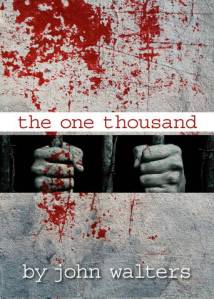
For the sake of full disclosure, I’m referring to the series I call The One Thousand, which are science fiction thrillers set in the late 1960s and early 1970s.  Soon the first four novellas will be available separately and also as a combined omnibus edition both digitally and in print.  As I mentioned, I am taking the time to correct as many errors I can in the omnibus edition, but apart from line editing, the content is the same.

I am tempted to castigate myself when I come across mistakes I have made in my self-published books – but then I have to remind myself that mistakes are ubiquitous in all of literature, correct them when I can, and then excuse myself for making them with the same generosity of spirit that I excuse the mistakes I find in the works of others.  It is far better to publish the books and make the mistakes than not to publish them at all.  So it is with many facets of life.  We can’t let timidity frighten us from fulfilling our destinies.  The romantic cliché states that it’s better to have loved and lost than never to have loved at all.  Recently jilted lovers might argue the point, and I don’t blame them; I’ve been there.  But as far as I’m concerned, it’s better to attempt great things and fall short of greatness than never to have made the effort.

And so my books venture forth on their publishing journeys, one after another, mistakes and all.  Look kindly upon a fellow traveler along the roads of this vast universe, forgive the errors you will inevitably find, and go straight for the gold of whatever insights and entertainment I am attempting to impart.

Posted in On Writing | Tagged , | Leave a comment

Book Review: Pacific: Silicon Chips and Surfboards, Coral Reefs and Atom Bombs, Brutal Dictators, Fading Empires, and the Coming Collision of the World’s Superpowers by Simon Winchester

This fascinating book with the unwieldy title goes into the modern history of some of the countries surrounding and within the Pacific Ocean area and various aspects of the geology, natural history, and meteorology of the ocean itself.  Although it touches on history in the deeper past, it officially begins with the first thermonuclear weapon testing on a Pacific atoll and moves forward from there.  Winchester isolates what he considers some of the key historic events since 1950 and builds his picture of the Pacific Ocean around them.  He admits that he made no attempt at comprehensiveness and aims rather for a pointillist approach, a scattering of stories that suggests a larger whole.

As I mentioned, he begins with the story of nuclear testing in the Pacific Ocean, a horror story of neglect of the peoples inhabiting the islands that various superpowers, notably the United States, decided to use to test their weapons, and the environmental degradation caused by radioactive residue.  Winchester next goes into the story of the Sony Corporation and its introduction of transistor radios and other technological innovations that are now ubiquitous.  The third section is a history of surfing, a peculiar and unique sport that got its start among the indigenous Polynesian peoples, particularly in Hawaii.

Each of these sections are carefully researched and written, but Winchester generally makes no effort to thematically link one topic with another, except that they all combine to form a collage of modern history geographically around the Pacific Ocean.

The next troubling section details the dividing of North and South Korea and the forming of the North Korean dictatorship, what Winchester calls a dangerous irritation in the far northwest corner of the Pacific Rim.  This is followed by a piece on the western colonialization of many nations in the Pacific and how the various colonies achieved independence. There is a chapter on Australia, on violent Pacific Ocean weather, on deep ocean thermal vents, and on pollution of the Pacific waters.  Winchester wraps it up with an analysis of American and Chinese naval power in the Pacific and a description of how each nation is vying for territorial supremacy.  An epilog relates how a modern Polynesian sailing crew is taking a traditional ship around the world without the benefit of modern navigational instruments, relying only on ancient skills in reading the stars, water, wind, and wildlife.

I have no complaints about this book.  It is light and entertaining.  It never claims to be more than it is.  It is not the book to read if you want a comprehensive picture of the region.  It rather gives you, as Winchester says it will in the introduction, a bird’s eye view of various aspects of the Pacific situation, aspects which do not really blend into an overall whole but are nevertheless interesting in their own right.  It’s not a scholarly volume.  It’s written as entertainment that incidentally provides interesting facts.  Because it is a relaxing and entertaining read, though, I may seek out more of Winchester’s books.

Posted in Book Reviews | Tagged , , | Leave a comment

What Norwescon Means to Me

Norwescon is a fairly large regional science fiction convention that takes place each spring near Seattle.  I attended my first Norwescon in 2015 with my youngest son.  The event took place from Thursday to Sunday in early April, and we rented a room at the hotel near SeaTac Airport where the con took place on Saturday night so we wouldn’t have to make the long journey to our apartment in north Seattle and back on public transportation.  I skipped Thursday’s activities, and went out and back on Friday while my son was in school to attend some writer’s panels on my own.

This year the con took place in late March – it traditionally coincides with Easter weekend – and I rented a room at the hotel for both Friday and Saturday night so we could spend more time there and better immerse ourselves in the experience.  I attended some of Thursday’s activities by myself.  My youngest son came again from Friday on, and by happy coincidence another son was flying in from the east coast for a visit, and he happened to arrive Friday evening, so he came straight to the hotel, bought a membership to the con, and attended with us.

Science fiction and fantasy conventions vary greatly in emphasis.  Some highlight games, some comics, some film and TV.  This one, as I mentioned, devotes itself mainly to books and literature, although there are also games, masquerades, an art show, a film workshop, and other activities.  Throughout each of the days there are a variety of panels from morning until fairly late in the evening.  Many of them are on writing themes: advice on how to write stories and novels, how to commence a writing career, how to market, how to self-publish, how to promote, how to create alien worlds and credible aliens.  These usually have panel members who are professional science fiction and fantasy writers.  Generally the panel members discuss the panel topic together and then receive questions from the audience.  I’ve found attending such panels to be edifying and informative, and I spend much of my time at the con sitting in on them.  Other panels are aimed more at fans than aspiring professionals.  These might discuss what influences writers and artists draw from, favorite books and films, upcoming projects, what it’s like to be a fan, how to behave at a convention, and many other subjects.  Panel members for these topics may include some professionals, but also may include members of the fan community who may or may not be knowledgeable about the particular topics under discussion.  I’m just giving you a glimpse here, a bird’s eye view.  In truth, there are so many events transpiring simultaneously at Norwescon that it’s seldom hard to find something to do but often difficult to choose from a number of desirable alternatives.

For me, Norwescon 2016 was a far different experience from Norwescon 2015.  In 2015, I had just recently moved back to Seattle after being gone for thirty-five years and I knew almost nobody.  In 2016, I had met many of the area’s professional and aspiring writers at gatherings of Clarion West writer’s workshop students and alumni as well as at other meet-ups, and I kept running into people that I knew.  That added an extra dimension to the experience.

My youngest son had called the 2015 Norwescon the best weekend of his life.  One of the reasons was that he got a chance to meet and get an autograph from George R.R. Martin, who was the writer guest of honor that year.  He enjoyed 2016 just as much.  Because he was a little older and more familiar with the locale and the situation, I was able to let him attend panels he chose on his own, which allowed us to split up at times to pursue our individual interests.  For my other son who flew in from the east, it was a new and unique experience.  He appreciated being surrounded by people who were loose and open and relaxed and devoted to having fun and being themselves.  He’s also an aspiring writer, and he attended panels on a variety of subjects that he said opened his eyes and gave him an abundance of ideas.

Many of the writers I talk to are rather jaded on science fiction conventions.  After all, they have been attending them for decades.  They go more to promote their books than for relaxation and enjoyment.  For me, however, cons are still fresh new experiences.  For many years, while I was living overseas, I longed to attend conventions, and now that I finally have a chance, I revel in the opportunities.  There may come a time when I too become jaded, and I attend more for marketing and promotion than for entertainment and edification, but I don’t think that time will come soon.  I had great fun in 2016, and already look forward to Norwescon 2017.

Posted in Memoir | Tagged , , | Leave a comment