Book Review:  Team Dog: How to Train Your Dog – the Navy SEAL Way by Mike Ritland

If you consider Team Dog a departure from the type of books I usually review, you’d be right. After all, I don’t even own a dog. However, there is a reason for this deviation. And in the interests of all the millions of dog owners around the world, all will be made clear as we proceed.

One of my sons earned a master’s degree in mathematical engineering at Stanford University and then had an internship at a financial institution in Pennsylvania. Although he was offered an ongoing position, he decided instead to pursue his doctorate at the University of Maine. As a prelude to his doctoral studies, he decided to take a road trip around the States and promote his recently published novella. As companion on his journey, he obtained a rescue dog. But he did not choose a standard cute, cuddly, and playful puppy. Instead, he walked out of the shelter with an adolescent Belgian Malinois that had been rejected and returned by several other people. The Belgian Malinois is a large breed similar to a German shepherd that is often used as a guard dog, guide dog, military or police dog, and in search and rescue.

My son bonded early with his rescue dog, which he named Rider in honor of his shotgun role on the road trip. The dog was strong, intelligent, and energetic; however, he was also a handful that obviously needed much training. My son studied dog training in books, took Rider to in-person trainers, and took classes online. Some sources were helpful, while others were expensive wastes of time. Wanting to assist him any way I could, I searched online for specialized books that might help. That’s when I came across Team Dog and thought that it might be an essential key to training Rider. After all, my son could relate to its background. Before attending Stanford he’d spent ten years in the Navy, including four years as a SEAL. And at Stanford, he’d volunteered at a dog program for veterans.

My son was already on the road, but I ordered a copy of the book to be sent to a place I knew he’d soon be. In short, he told me he read it from cover to cover, and it was of great assistance in helping him get a handle on how to train Rider. In fact, he said it was the greatest single source on dog training he’d come across. The videos my son afterwards shared online showed a very well-behaved, though still highly energetic dog. When he and Rider came to visit me at my small one-bedroom apartment in Seattle, I was very impressed at my son’s affection for but also control of his dog.

The occasion that prompted me to read Team Dog is an upcoming trip I’m taking to visit my son and his dog now that they are settled near the University of Maine. I want to be able to get along well with Rider and even be able to dog-sit in the future if necessary.

The book is thorough in its descriptions of various aspects of dog ownership, including how to select the right type of dog for your situation, building trust, training principles, maintaining health, proper nutrition, and how to reward good behavior. However, what makes this book extraordinarily useful are the chapters on subjects such as establishing yourself as the team leader in the human/dog relationship and understanding and working with the differences between dogs and humans. These principles help you take command and achieve control, and this is essential if you want to maintain a healthy relationship with your canine companion. As Ritland explains, “One of the key methods of my training is to put yourself in your dog’s position and try to see the world through his eyes.” He brings out the point that “dogs respect and seek (with a few exceptions) someone who will exert power and control over them.” And: “Mastering your voice and your body in interacting with dogs to project confidence, power, and authority is absolutely essential…” When Ritland writes about asserting control, though, he does not promulgate an attitude of harshness. The overriding attitude to instill in your dog is not one of fear but of respect, and “the responsibility for developing that ideal relationship is on your shoulders.” That’s the main message of this book. “If you can master yourself you will then be the kind of master your dog is looking for and provide him with everything he wants and needs in his life.”

I recommend this book, then, for anyone who owns a dog or is considering acquiring one. In fact, even if you have no intention of obtaining a dog, reading this will vastly increase your empathy for dog owners and their canine friends.

*     *     *

As a postscript, I would like to emphasize that after spending a week in Maine with my son and Rider, I realize even more the value of this book. Not only did its counsel and tips help me get along with and bond with Rider, but also when I suggested the book to a friend of my son’s who also has recently acquired a large rescue dog, he later expressed his appreciation for this valuable resource. Highly recommended for dog owners and also anyone else who wants to understand the human/dog relationship.

Posted in Book Reviews | Tagged , , | Leave a comment

Book Review:  The Demon of Unrest: A Saga of Hubris, Heartbreak, and Heroism at the Dawn of the Civil War by Erik Larson

I wouldn’t say I have a particular penchant for Civil War stories, but this book caught my attention due to its relevance to the modern era of political antagonism and uncertainty. The author researched and wrote the book during the COVID pandemic and writes in his acknowledgements notes at the end of the book that “political unrest had heightened the chaos of the pandemic, and for whatever reason I began wondering, Exactly how did the Civil War begin? What really happened at Fort Sumter?” That’s not to say that Larson considers the confusion of the last half-decade or so to be similar to the state of the Union when it was about to plunge into civil war, but rather that as he wrote this compelling book he was also witnessing our modern nation in turmoil. As a result, the prose and story structure carry an intensity and immediacy that serves as a warning: our nation’s government and people should remain together on the path of freedom and unity upon which the country was founded.

In The Demon of Unrest, Larson uses the buildup leading to the attack on Fort Sumter, a fortress on an artificial island at the mouth of Charleston Harbor, an attack that ignited the war between the northern and southern states, as the focal point of his story. In fact, South Carolina, where the city of Charleston is located, was the first state to secede from the Union. As tensions mounted, more states followed. The overwhelming issue, as Larson explains, was that of slavery. The wealthy members of the southern aristocracy were fully aware that their affluent lifestyles were dependent on their ability to enslave their fellow humans. Without the Black slaves that they depended on, they felt, they would be unable to sustain and profit from the vast cotton plantations that were the mainstay of the southern economy. And they deeply resented northern abolitionists who thought otherwise. As Larson puts it, “the thing that the South most resented was the inalterable fact that the North, like the rest of the modern world, condemned slavery as a fundamental evil. In so doing, abolitionists and their allies impugned the honor of the entire Southern white race, for if slavery was indeed evil, then the South itself was evil, and its echelons of gentlemen, the chivalry, were nothing more than moral felons.” In hindsight we can see the grievous error in this logic, as could the North and the rest of the world at the time, but the southern aristocracy were fully convinced of their righteousness and were willing to fight and die to preserve their top-heavy status quo.

Another important factor that raised the southerners’ ire was the election of Abraham Lincoln as president. Despite his initial reassurances, they were sure that he was going to join the abolitionists in abolishing slavery. At the same time that the situation at Fort Sumter became increasingly nerve-racking, Lincoln, while awaiting the formality of the final electoral count, was making the long journey from Illinois to Washington D.C. for his inauguration. As he did, rumors of assassination conspiracies abounded.

Larson masterfully cuts from the preparations of the small Union garrison at Fort Sumter to Lincoln’s journey to key players in the southern government and military, all the time leading up to the final spark that ignited the war, the actual southern attack on Fort Sumter. Once that happened, the war began in earnest.

This book is a vivid reminder that regardless of how much fiction we can conjure up, the truth of the past and present trumps it. Larson did extensive meticulous research to put together this story, including diving into old letters, journals, and diaries. As hard as some of it is to believe, it’s all true. It serves as a significant cautionary tale: no matter what our political differences are, we need to remain united and respectful of the rights and needs of all our compatriots and, for that matter, of all humankind. Highly recommended.

Posted in Book Reviews | Tagged , , , | Leave a comment

Journey to Maine

For the past two weeks in my newsletter The Perennial Nomad: For Those Who Wander with Intent I have been sharing insights acquired during my recent trip to Maine. These include observations on traveling with an open mind, changing time zones, airlines then and now, the indomitability of the nomadic spirit, the value of taking time to ponder alternatives, weather extremes, and Arcadia National Park.

It always gives me a unique rush to journey to a new location. I had never been to the state of Maine, so I was thrilled when one of my sons, who is studying for his doctoral degree at the University of Maine, invited me to visit.

Click on this link to read part one, and this link to read part two.

Posted in Travel | Tagged , , , | Leave a comment

Book Review:  The AI Con: How to Fight Big Tech’s Hype and Create the Future We Want by Emily M. Bender and Alex Hanna

The year 2023 saw the publication of The Internet Con by Cory Doctorow, which explains how big tech creates monopolies for their products so that consumers needing to access them have a dearth of options. This exclusivity allows tech companies to charge exorbitant prices for goods and services that should be widely available to all. Now, in 2025, comes The AI Con, which strips away the cover-ups and hype surrounding artificial intelligence, tech’s new darling and cash cow. AI is touted as the great hope of the future, a tool that will make calculations, creativity, scientific discovery, legal reasoning, and newsgathering available to all. As the authors point out, though, it is all illusion, smoke and mirrors, to enable billionaire techies to get even richer. As the authors of this fascinating book put it, “Artificial intelligence, if we’re being frank, is a con: a bill of goods you are being sold to line someone’s pockets.”

According to the authors, what they refer to as AI hype, which is the promotion of artificial intelligence as the hope of the future in virtually every commercial, social, engineering, and artistic field in existence, is merely a marketing tool. The insinuation that sophisticated algorithms can take over so many areas of endeavor is a diminution of what it means to be human. It impies that humans are merely organic machines. However, human complexity cannot be reduced to algorithms. The authors bring this out in a discussion of intelligence tests and how they are inherently racist. Despite all the claims of machine intelligence, “claims around consciousness and sentience are a tactic to sell you on AI.” Of course, AI large language model outputs are full of errors, but “for corporations and venture capitalists, the appeal of AI is not that it is sentient or technologically revolutionary, but that it promises to make the jobs of huge swaths of labor redundant and unnecessary.” Instead of hiring specialists that can turn out quality content for them, businesses can use so-called AI, despite its mistake-ridden output, and then hire gig workers at a fraction of the salaries of their former employees to fix the mistakes. The result, in comparison with human-created work, is trash, but corporations don’t care.

I have to confess that I have been forced to do this gig work myself, for terrible pay, on Amazon Mechanical Turk and other internet job platforms, because the writing work I used to do online has all but disappeared. For almost a decade I supplemented my income from short story sales and book royalties by ghostwriting online articles and blog posts on travel, business, education, literature, and all sorts of other topics. The pay wasn’t great but it was not bad. And then these markets all started to dry up as content purchasers switched over to AI-generated text. The results are easily detected for what they are: indescribably bad, not to mention vague, untrustworthy, and devoid of insight, but the purveyors and purchasers of this crap don’t seem to care. They’re after quantity, not quality; they merely want to attract consumers to their goods and services.

The situation becomes even more sinister when large language model output is used in deeply human endeavors such as social services, creative works, legal decisions, scientific research, and journalism. AI hype attempts to justify substituting the shallow extrusions of algorithmic machines for the thoughtful, finely crafted work of humans. In social services, for example, so-called AI demeans and marginalizes the elderly, the homeless, Black and Indigenous families, and others. As the authors put it: “These tools are positioned as commonsense efficiencies, but in practice they are cheap stopgaps that allow us to shirk our collective responsibility to repair the holes in the social safety net.”

In the realm of creative endeavors, large language models subvert copyright by siphoning, without permission, copyrighted works off the internet. I personally have searched comprehensive databases and found out that several of my books have been used for algorithmic training without my permission and without remuneration. Those creative works by me and others are behind pay walls, and when my books are accessed, I expect to be paid. In fact, there are numerous pending lawsuits against big tech for stealing copyrighted works without permission.

Other areas that AI has intruded into include legal practices and education. These intrusions are dumbing down these fields, and tech billionaires are well aware that AI cannot effectively replace human lawyers and teachers. The fakes are intended to be cheap stopgaps in lieu of proper funding for struggling populations. As the authors point out, the rich themselves would never resort to such measures. When they need legal assistance, they hire human lawyers, and when they need to educate their children, they send them to elite private schools with human instructors.

Journalism, too, is being inundated by tawdry AI knockoffs. The authors point out “how people and companies seeking profit by churning out suspect media are ruining journalism (and the web, more broadly) by flooding search results with AI-generated trash, by supplanting real journalism with fake authors, and by directing even more of the energy away from real journalism towards cheap SEO gimmicks to shore up declining advertising revenues for legacy publications.”

The authors point out that contrary to what tech hype would have you believe, further AI development is not inevitable. In fact, “these technologies serve as a means of centralizing power, amassing data, and generating profit, rather than providing technology that is socially beneficial.” The threat is not the doomsday scenario of AI taking over the world; it is rather “rampant financial speculation, the degradation of informational trust and environments, the normalization of data theft and exploitation, and the data harmonization systems that punish the people who have the least power in our society by tracking them through pervasive policing systems.” And that’s not all. The big tech companies have forsaken their climate pledges in favor of developing AI systems at any cost, and the cost to the environment of all the power needed to run all those data-processing machines is horrendous.

In the last chapter, the authors ask a number of pertinent questions that we all should be asking ourselves and each other about the dangers of AI. They also warn of the dangers of anthropomorphizing AI. Its algorithms are not human-like. Large language models are tools, nothing more, and should be treated as such. And regulation does not stifle innovation; instead, it “channels innovation towards what is broadly beneficial rather than just what makes the rich richer.” The authors emphasize that they are not anti-technology, but rather they want to see technology used for the good of all and not only for the good of a few mega-rich exploiters.

Although in my review I have provided numerous examples of the arguments of the authors, I have really only skimmed the surface of the riches of this book. It is a valuable, even vital read to help us all cut through the bullshit of so-called AI so that we can separate its true merit from the hype. Highly recommended.

Posted in Book Reviews | Tagged , , , , | 1 Comment

A Summer Treat for My Blog Followers

As a summer gift to readers, I have enrolled electronic editions of some of my books and stories in the Smashwords Summer Sale, which runs through the month of July. Complete books are half price, marked down from $3.99 to $1.99. Short stories and mini-collections of essays and memoirs are available to download for free. Take advantage of this sale to stock up on some great reading material.

If the discount price does not appear on my profile page, click on the link to the specific book you are interested in and you’ll see the deal.

Smashwords was the digital distributor I used when I first became involved in electronic publishing, and when I later switched to another distributor, I left numerous editions of my early works in the Smashwords catalog. You can find a complete listing at my author’s profile here.

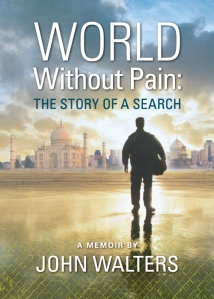
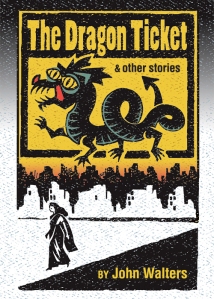
Among the books available at a half-price discount are my memoirs World Without Pain: The Story of a Search, After the Rosy-Fingered Dawn: A Memoir of Greece, and America Redux: Impressions of the United States After Thirty-Five Years Abroad; the novels Love Children, The Misadventures of Mama Kitchen, and Sunflower; the collections The Dragon Ticket and Other Stories, Painsharing and Other Stories, Dark Mirrors: Dystopian Tales, and Opting Out and Other Departures; and the essay collection Reviews and Reflections on Books, Literature, and Writing.

The stories available for free include some of my personal favorites such as “Dark Mirrors,” “The Customs Shed,” “Life After Walden,” and “Noah and the Fireflood.”

So head on over to Smashwords and pick up some thrilling and thoughtful novels, short stories, memoirs, and essays at deep discounts and even free.

Posted in Uncategorized | Tagged , , , | Leave a comment

Book Review:  The City and Its Uncertain Walls by Haruki Murakami

I have already read and appreciated several of Murakami’s books, including the novels Kafka on the Shore and Colorless Tsukuru Tazaki and His Years of Pilgrimage and short story collections Men Without Women and First Person Singular. I like his pleasant yet elegant writing style and his frequent plunges into surrealism. I was excited, therefore, when I heard that his new novel, The City and Its Uncertain Walls, had recently been published in English.

The novel is told in three parts. In the first part, the unnamed narrator begins by recounting a teenage love affair that he has with a mysterious girl who explains that she is, in fact, only a shadow and that her real persona lives in an enigmatic city inhabited by humans and unicorns, which is surrounded by an impenetrable wall. Years after the girl disappears, the narrator manages to reach the city and enter, but to be able to do so, his shadow has to be ripped away from him, as shadows are not allowed inside. His shadow, kept in a guard-post at the city gate, weakens day by day, and before it dies the narrator decides to help it escape.

Part two takes place in the world outside the city, where the narrator has resumed his life, but it is unclear, or at least never stated, whether it is the narrator himself or his shadow telling the story in this section. Part three returns to the city within the wall. I’m not really giving much away by sharing this bare-bones outline; there is plenty left to discover as you read, including the appearance of ghosts, the vital yet cryptic task of dream-reading, the shifting nature of the city’s surrounding walls, and the inexplicable disappearance of a young boy who can recall every word in every book he has ever read.

Murakami never clarifies the relationship between the so-called “real” world in which the narrator begins his tale and the walled city he is drawn to; he leaves it up to the reader to figure out. By way of explanation, near the end of part two the narrator has a conversation with a woman he is attracted to about magic realism, using Columbian writer Gabriel Garcia Marquez as an example. The woman says that “in his stories the real and the unreal, the living and the dead, are all mixed together in one, like that’s an ordinary, everyday thing.” She adds that “for Garcia Marquez himself it’s just ordinary realism. In the world he inhabits the real and the unreal coexist and he just describes those scenes the way he sees them.” I think that in this passage, Murakami is explaining the way he approaches his material, at least in this novel. The real and the imaginary mix and mingle so that they are difficult to differentiate.

I like Murakami’s voice. He has a gentle way of storytelling that is enchanting, and a deft method of inserting the unexpected in the midst of the mundane. He allows the story to unfold in a leisurely manner, which up to a point is acceptable. On the other hand, I feel that parts one and three are tightly written and compelling, while part two, which is by far the longest section in the book, does too much meandering. For whole chapters nothing really happens, and activities are repeated over and over. I think that if a couple hundred pages could have been edited out of the middle, the novel as a whole would have been stronger. Despite the slow pace, though, Murakami had already managed to hook me, and I hung on to find out what would happen in the end.

Would I recommend it? Sure, why not? As I said before, Murakami has an endearing style, and though sometimes I was frustrated that he didn’t just get on with the story, slow-paced Murakami is more entertaining than faster-paced most other writers.

I’m a professional writer; I make my living by my words.  I’m happy to share these essays with you, but at the same time, financial support makes the words possible.  If you’d like to become a patron of the arts and support my work, buy a few of my available books or available stories. To send a one-time or recurring donation, click here. You can also donate via my Patreon account. Thanks!

Posted in Book Reviews | Tagged , , , | Leave a comment

Book Review:  The Book of Alchemy: A Creative Practice for an Inspired Life by Suleika Jaouad

In a literary marketplace that is surfeited with imitations and imitations of imitations, The Book of Alchemy is a startlingly original book. It concerns the value of journaling, both as a therapeutic device and as an art form. However, it is not a mere explanation of how valuable journaling is to writers; instead, it takes a practical, hands-on approach. Besides writing an introduction to the overall book and to each of the ten sections, Jaouad has assembled one hundred authors, musicians, artists, and other fascinating contributors, each of whom not only provides an essay, but also a prompt to stimulate the imaginations of fellow journalists.

As Jaouad explains, she began keeping a journal when she was diagnosed with life-threatening leukemia at the age of twenty-two and told that she had only a thirty-five percent chance of survival. There followed years of torment as she suffered through multiple rounds of chemotherapy and a bone marrow transplant. As her hair fell out and her body became more and more emaciated, as she lost friends, her then boyfriend, and her previous dreams and ambitions, journaling was a creative outlet that helped her cling to her sanity and her hopes for the future.  She writes that “journaling through illness gave me a productive way to engage with my new reality. Rather than shutting down or surrendering to hopelessness, I could trace the contours of what I was thinking and feeling and gain a sense of agency over it.” It was a long and difficult path to healing, which she recounts in her awesome book Between Two Kingdoms: A Memoir of a Life Interrupted. And when she was deemed cured, she made a solo road trip around the country in a camper van to visit many of the people she had corresponded with during her illness.

Jaouad began the project that became The Book of Alchemy shortly after the COVID lockdown in 2020. She says: “I launched a project that combined all of the elements that had helped me: a daily journaling practice, done communally, with a short essay for inspiration and a prompt to get started. I reached out to the most remarkable people I knew, asking them to contribute an essay and an accompanying prompt.” Besides compiling material for the book, she also started a newsletter on Substack called the Isolation Journals.

Some of the contributors to The Book of Alchemy are celebrity authors such as Elizabeth Gilbert, George Saunders, and Pico Iyer, while others are cancer survivors, professional surfers, and even convicts. All have stories to tell, and they use these stories as springboards to prompt you, the readers, to become storytellers as well.

I would have been content to read and absorb and be inspired by the book without the prompts, but the prompts provide immeasurable added value. As I read through the book, I made notes on the prompts that I thought I could use for personal inspiration, and when I had time I made a paraphrased list. (In my penurious state, I got the book out of the library so once I returned it I would not have it to refer to later. Besides, I find that having the prompts in a list works well for me. If I am ready to begin a writing session and I need an inspirational nudge, I can skim the prompts until one leaps out at me, clings to my psyche, and won’t let go. From there I can take it anywhere my mind and heart lead.)

In short, I highly recommend this book, not only for writers who need story and essay ideas, but for anyone who wants to attempt journaling for fun and therapy.

As an afterword, I should share that Jaouad confides that while preparing The Book of Alchemy, she had a relapse and had to undergo another bone marrow transplant. The point is not that journaling in some magical way takes away the pain, but it enables you to make sense of it and convert whatever you are going through into art.

Posted in Book Reviews, On Writing | Tagged , , , , | 1 Comment

Minimalism

This week in my newsletter The Perennial Nomad: For Those Who Wander with Intent I discuss the importance of minimalism for someone with a nomadic mindset.

Since I became a perennial nomad, downsizing has become a frequent concern. I don’t want to own more belongings than necessary because I never know when I might decide to take off and leave everything behind.

Thus is the life of a perennial nomad. It is better to remain lean and ready than to have to undergo major purging when it is time to journey onward.

Click on this link to read the rest.

Posted in Uncategorized | Tagged , , | Leave a comment

The Rediscovery of America: Native Peoples and the Unmaking of U.S. History by Ned Blackhawk (Part Two)

This is a tragic story of greed and betrayal, certainly a black spot and cause for shame in the nation’s history. As I read it, I wondered whether humankind was capable of truly evolving. Sure, we can come up with more and more sophisticated methods of killing each other and of redistributing wealth into the hands of the most avaricious, but where is the ethical and moral progress to go along with the technical achievements? All the toys and gadgets mean nothing if we remain rapacious beasts at heart. Have we learned nothing during our centuries upon centuries of so-called civilization? These questions and others like them assailed me as I read this masterful work. It is slow-going and complex, yes, but the details of what really happened in our nation’s past are crucial if we are to avoid the mistakes of our forebears and create a better world for our progeny.

It’s fun to watch movies about cowboys and master spies and superheroes that stand up for the downtrodden and save the day, but at some point we need to ask ourselves what is really going on. Who are the true heroes and the true villains? To answer questions like this, we need to dissect the past with a view to mitigating the social maladies that have caused us to inherit a dysfunctional, violent, hate-filled world. Only then can we make the changes that will help us alleviate past disasters and avoid future ones. This is the value of The Rediscovery of America. It causes us to confront the truth so that we can use the insights we gain to change things for the better. Allow Blackhawk to guide you step by step through this revised version of American history not with a vision to merely condemn past deeds, but to use what you learn to make the world of today and tomorrow a better place.

*     *     *

The story Blackhawk tells of America’s indigenous population ends, in the book, inconclusively. There was a time during the Cold War when government policy favored so-called termination. That meant that Indians would be absorbed into the mainstream of American life and would cease to exist as separate nations and cultures. However, in the sixties and seventies an Indian rights movement, Red Power, arose concurrently with the Black Power movement. Activists were at least partially successful in clawing back concessions from the government that were guaranteed in centuries-old treaties. These concessions included hunting and fishing rights, gaming rights, schools, health centers, and language programs. Blackhawk writes that “by the end of the century, the dark days of termination had faded.” However, he adds that “language loss, continued ecological destruction, and innumerable legacies of colonialism endure, making the challenges of Native America among the most enduring.” It would have been nice for the author to be able to wrap up the narrative with a happy ending in which the government has learned its lesson and Native tribes are allowed to coexist with the rest of the American people in peace and dignity, but as proved by centuries of history, the reality is much more complicated than that. The impacts of outside events and shifting governmental priorities and attitudes seem to bring America’s indigenous peoples alternatively extreme trauma and then measures of relief in uneven cycles. Blackhawk concludes with these ominous words: “As the twenty-first century began, continued challenges to those sovereign gains reappeared as congressional law makers, court justices, and other concentrations of power again took aim at Indian lands, jurisdiction, and resources.”

Near the end of my reading of The Rediscovery of America, I made a visit to the Burke Museum on the University of Washington campus to peruse its display of arts and crafts from Northwest American indigenous tribes and other indigenous cultures around the Pacific Rim. I was impressed once again by the emphasis on the importance of attachment to land, community, and ancestry. These core values often go missing in our modern urban culture with its emphasis on the accumulation of money, property, fame, and individual accomplishment. Too often the results of such strivings are stress and alienation instead of serenity and camaraderie. And it is too easy to label Native American tribes and nations as primitive or anachronistic instead of appreciating their complex, multifaceted societies and cultures. Before European explorers “discovered” America, it was already populated with multiple nations that had their own lands, customs, and lifestyles. The violence by which the newcomers subdued the indigenous inhabitants of the land is certainly, as I mentioned above, a dark stain in American history. However, this stain should not be bleached out of our memories. One of the overriding values of a book like The Rediscovery of America is that it reminds us of the truth. Europeans were not the first ones here, and it is a moral imperative to manifest continuing respect for the original Americans that dwelled on the land before us.

*     *     *

I’m a professional writer; I make my living by my words.  I’m happy to share these essays with you, but at the same time, financial support makes the words possible.  If you’d like to become a patron of the arts and support my work, buy a few of my available books or available stories. To send a one-time or recurring donation, click here. You can also donate via my Patreon account. Thanks!

Posted in Book Reviews | Tagged , , , | Leave a comment

Book Review:  The Rediscovery of America: Native Peoples and the Unmaking of U.S. History by Ned Blackhawk (Part One)

One of the enduring friends I made when I attended the Clarion West science fiction writing workshop in 1973 was the late Russell Bates, a Kiowa Native American who’d already sold several indigenous-themed stories to magazines and anthologies and went on to win an Emmy for the Star Trek Animated Series for the episode he co-wrote with David Wise: “How Sharper Than a Serpent’s Tooth.” Russ and I spent some time in Los Angeles working on a TV script that in the end didn’t sell; when he got fed up with L.A. another Clarion graduate and I drove him home to the rez in Anadarko, Oklahoma, where Russ’s family treated us royally. Decades later, while raising my family in Greece, due to the newfound wonders of email I got back in touch with Russ. I knew that he was very fervent about his advocacy of Native American rights and traditions, and amidst our communications I asked him for a list of books he would recommend by and about indigenous people. He was strict in his appraisal of qualifying literary works, but I’m fairly sure that if it had been around then that The Rediscovery of America would have made the cut.

Ned Blackhawk is an indigenous Western Shoshone author who is also a professor of history and American studies at Yale University. Most histories of the United States tell the story from the perspective of Europeans, but this book focuses on the story from the viewpoint of Native Americans. I hesitated before I plunged into this thick, heavy, seemingly formidable tome, but once I started I found it fascinating, well-written, and startlingly original in its retelling of events that we think we know so well. As Blackhawk says: “To build a new theory of American history will require recognizing that Native peoples simultaneously determined colonial economies, settlements, and politics and were shaped by them.” His work asks “whether there is potential for building an alternate American story that is not trapped in the framework of European discovery and European ‘greatness.'”

The facts are the same in Blackhawk’s history, but it is the perspective that is all-important. In his accounts, Blackhawk moves from the Spanish borderlands in the south, to the northeastern conflicts between Native Americans and the British, to the Inland Sea area where the Iroquois dealt with the French, and to California, the Pacific Northwest, and the Midwest. He progresses through the American Revolution, the westward odyssey of settlers and how it disrupted indigenous life, how the Civil War affected the relationships between settlers and Native Americans in the Midwest and Far West, and how Union victory affected Federal attitudes and policies toward indigenous peoples.

From the beginning of outside contact with Europeans, indigenous populations suffered from diseases, violence, and forced servitude. The Puritans, for instance, in the name of religion, were savagely violent. As Blackhawk writes: “The lethal combination of disease and warfare remade the human geography of North America and defined an entire century of American history. By 1776 there would be fewer living souls on the continent than in 1492.”

*     *     *

American history as retold by Blackhawk becomes increasingly uncomfortable. He emphasizes that the struggle to build the new nation was predicated upon the concept of white male supremacy. After pointing out that “the generation after 1815 witnessed a growing commitment to excluding all non-whites from the American body politic,” he goes on to stress that “for African Americans, Indians, and other peoples of color, the claim that all men are created equal found immediate counter-assertions.” There were few national histories to counter this, and “nearly all the institutions of higher education were near the Atlantic.” This left much of the national mythology up to the imagination, and as a result “the violence and dispossession that structured American expansion became discounted and erased.” During the Civil War era, animosity toward Native Americans increased, and state militia, especially in the west, took to hunting down and slaughtering entire communities.

After the war, indigenous communities became squeezed onto smaller and smaller parcels of land as Congress shattered and reshaped treaty promises. “With new reservation land policies and a continental-wide system of schools, the United States entered the twentieth century committed to eradicating Native Americans. Officials targeted Indian lands and children in a campaign designed not to exterminate Native peoples but to eliminate their cultures.”

(To be continued)

Posted in Book Reviews | Tagged , , , , | Leave a comment