Book Review: Upheaval: Turning Points for Nations in Crisis by Jared Diamond

One of the most important nonfiction books of the late nineteenth century is Guns, Germs, and Steel: The Fates of Human Societies by Jared Diamond. In it, the author posits that environmental variables rather than inherent differences in ability were responsible for some nations rather than others becoming dominant in world history. Now, Diamond has come up with another amazing book that is no less important in Upheaval. In this new book, the author draws parallels between factors related to the outcomes of personal and national crises. He draws up a list of twelve of these factors and uses this list to analyze a number of nations that experienced historical or present crises.

Diamond does not use objective criteria to select the nations he chooses as examples. Instead, he uses the nations with which he is most familiar both through study and personal experience. These nations are Finland, Japan, Chile, Indonesia, Germany, Australia, and the United States. Finally, he touches on some major problems currently bringing on worldwide crisis.

The crisis in Finland that Diamond expounds upon is the Winter War that Finland fought with the Soviet Union during World War II and Finland’s subsequent diplomatic efforts to maintain itself as an independent country. Diamond writes two separate chapters about crisis in Japan. First is the visit of American Admiral Perry in 1853, which forced Japan out of its isolationism and caused it to embark upon a radical program of diplomacy and westernization. Later, Diamond writes about Japan in the present and its ongoing problems with its national debt, plunging birthrate, overall declining population size, aging population, and the social barriers to equality for women.

Chile’s crisis had to do with Allende’s socialist takeover of the government, Pinochet’s military coup and subsequent murderous rule, and the long road back to democracy. Indonesia, a new and diverse country with many languages and cultures, also suffered from a murderous military dictatorship.

Germany’s crisis was a shattering defeat at the end of World War II and the necessity of rebuilding itself and reunifying as a nation. Australia had to realign its national image after World War II, look less to Britain and more to other countries, and open its doors to immigration, particularly by its Asian neighbors.

As for the United States, Diamond first describes its advantages of geography, self-image, and government. However, it also has the great difficulties of political polarization, an immense disparity of income between the poor and the super-rich, the apathy of its citizens towards the right to vote compared to other countries, and the inability of its underprivileged citizens to advance in economic status.

In Diamond’s view, the most important problems that the world faces now include the ongoing threat of nuclear weaponry, climate change, global resource depletion, and global inequalities between rich and poor.

This is a well-organized, well-researched, well-thought-out, and well-written book. Within its parameters it is rigorous and insightful. It offers an intelligent perspective on the problems facing the United States and the world. It will most likely be widely read, and it should be.

Posted in Book Reviews | Tagged , , , | Leave a comment

On Rereading The Writing Life by Annie Dillard

I’ve read several of Annie Dillard’s books. I like her writing style, and I appreciate her philosophical observations mixed with comments on nature. I’ve read The Writing Life before too, but the last time was several years ago in Greece.

The Writing Life is a small book. It’s just over one hundred pages, has wide margins, and a lot of the pages are blank (each chapter has a full title page of its own with nothing on the reverse side). As I have mentioned before in another post, this book would have fit nicely and snugly within one of Dillard’s other more substantial essay collections. Be that as it may, the writing is artful and elegant, and some of her observations are astute. However, I realized as I reread it this time that I disagree with some of her main points.

In this book, Dillard says that she hates to write. She claims that the drudgery, to her, is no different than working in a factory all day, and she takes any excuse to go off and do something else. I couldn’t understand this. I love to write. In this statement I am referring to my fiction and memoirs. The articles I sometimes write to pay bills bore me sometimes, but still I’d rather be writing them than doing anything else I’d have to do purely for the money. The way that Dillard describes the ordeal of writing, I wonder how she kept up with it. She felt compelled to do it, of course; this I can understand. But for me writing is mystical and magical. It’s absorbing and thrilling and I feel honored to be able to partake of the practice.

Dillard also insists that it takes a long time to write a book, and you have to throw out much of what you write in the initial draft. Perhaps that’s true of her, but it’s not true of all authors. I typically write a novel in about three months. I proofread it a few times, sure, and change words that are repeated too often or misspelled, sometimes rearrange sentences or even paragraphs, but all in all, once I’ve written a novel – or a short story for that matter – afterwards it remains pretty much as it came out. I usually write in increments of five hundred to a thousand words, and when I begin the day’s work, I first go over what I did on the previous day. I’ll correct what needs correcting and then go on.

One interesting facet of The Writing Life involves Dillard’s descriptions of where she works. She prefers isolated places, of course: a cubicle in a library, an isolated cabin on a small island in Puget Sound, or another isolated cabin in the woods. That’s all fine if a writer has access to these places. As for me, I work in my bedroom in the apartment that I share with two of my sons. It’s the only possibility. It’s a small bedroom. My desk faces a blank wall, which is fine. In an ideal situation, I might have a separate study, although I would still like it to be adjoining my bedroom. My study would have windows that look out on natural beauty for those moments when I glance up from the page, and it would have a balcony or a porch on which I could step out for some fresh air from time to time.

In conclusion, this book is very well written and very opinionated. I like to read how other writers get their work done, and every writer is different. Just remember that what works for Annie Dillard may not work for you, and formulate your own schedule and work habits.

Posted in Book Reviews, On Writing | Tagged , , , , | Leave a comment

Book Review: The Pioneers: The Heroic Story of the Settlers Who Brought the American Ideal West by David McCullough

The Pioneers tells a compelling story. After the Revolutionary War, Great Britain ceded the vast Northwest Territory to the fledgling country of the United States. This included the area that would comprise the future states of Ohio, Indiana, Illinois, Wisconsin, and Michigan. This book focuses on the settling of a portion of southeastern Ohio, in particular the town of Marietta.

McCullough keeps the epic tale personal by zooming in on the lives of several of the major players. For instance, Manasseh Cutler, although he didn’t spend much time in the Northwest Territory, was instrumental in approaching the new U.S. government for permission for pioneers to appropriate land, build houses, plant crops, and raise families. His son Ephraim settled in the territory, though, as did Revolutionary War veteran Rufus Putnam, an architect and carpenter named Joseph Barker, and a physician named Samuel Hildreth. Through these men’s lives and the lives of their families, McCullough takes the reader through early settlement and near starvation, devastating floods, wars with Native Americans, early shipbuilding and river commerce, the conspiracy of Aaron Burr, and the politics of statehood.

It’s an intensely readable book. McCullough has a talent for immersing you into the experience so that you feel that you were part of the action – or that you long to be part of the action. Despite the cold winters, scarce nutrition, natural disasters, and ever-present threat of violent attack, it’s easy to long to partake of those days amidst the forests of immense trees and the lovely river highway. The scenery was spectacular, and for the most part neighbors helped one another.

When Manasseh Cutler lobbied for the Northwest Ordinance, which opened the land to settlers, he insisted that three area-wide conditions be embedded in the document: free education for all, freedom of religion, and an absolute prohibition of slavery. Later, as Ohio became a state, his son Ephraim fought for those same principles and saw that they continued to be a part of state legislation.

I wouldn’t say that The Pioneers reads like a novel, because it limits itself to facts gleaned from McCullough’s meticulous research and is interspersed with entries from letters, diaries, and other historical documents. However, I can say that it is more exciting and interesting than most novels. Once I started it, it was hard to put down, and when I had to, I looked forward to getting back to it with great anticipation. Some history books are excruciatingly boring; it takes an extremely talented writer to take the rough boulders of information contained in old records and chip away and shape and smooth until a wonderfully sculpted adventure remains. That’s what McCullough has done here. He has taken bare facts and created a work of art that stands apart from its source material as a unique creation. This is a wonderful book and I recommend it highly to anyone who is interesting in seeing history come to life in the screening rooms of their mind.

Posted in Book Reviews | Tagged , , , , | Leave a comment

Book Review: The Best of R.A. Lafferty

R.A. Lafferty is an anomaly not only in the world of speculative fiction, but also in literature in general. Although he has won major awards, he is all but unknown outside the genre world. He has an idiosyncratic style that makes his work easy to spot. It’s weird and funny and erudite and often extremely dark.

Sometimes in the past I’ve craved some Lafferty and sought some of his books. However, I was inevitably frustrated because either they were only available in special editions priced for the wealthy, or they were rare older volumes priced for the collector’s market. I was very happy to see British publisher Gollancz put out The Best of R.A. Lafferty as part of its SF Masterworks series. To my shock, though, by the time I sat down to order the book, just a few weeks after it first appeared on Amazon, it was out of print. I kept checking in, and eventually some reasonably-priced new copies appeared for sale on various bookseller sites.

This edition has a good selection of Lafferty’s best stories, and as an added bonus each story is introduced by famous authors such as Neil Gaiman, Connie Willis, Harlan Ellison, Michael Swanwick, Robert Silverberg, and Samuel R. Delany. All of these top-class writers are Lafferty enthusiasts.

For me, some Lafferty stories work and some don’t in this collection. The ones I enjoyed most are stories that have been my favorites of his work for decades. For instance, “Land of the Great Horses,” which originally appeared in the groundbreaking anthology Dangerous Visions, tells of gypsies from around the world who suddenly have the urge to go home; it seems aliens had stolen their country for examination and had just brought it back. And then there is the brilliant “Narrow Valley” about a Native American who hides the valley he inherited from his ancestors by working some magic to make it appear no bigger than a ditch. In “Nine-Hundred Grandmothers,” one of Lafferty’s most famous stories, a space explorer finds a world where everyone lives forever, but as they age they get smaller and smaller until they are the size of animate dolls. In the story “The World as Will and Wallpaper,” a man starts traveling westward around the world only to discover that the world’s neighborhoods almost but not quite repeat themselves after he has gone a certain distance; the ending of this one is as wacky as it is bleak.

There are other exemplary stories in this collection, but some of Lafferty’s work defies description. You just have to give it a try yourself. You’ll probably either love it or hate it. The trick is finding copies of it. I just did a quick search of the usual channels on which I search for books to see how available Lafferty is. The Seattle Public Library has only one Lafferty book, Okla Hannali, a critically-acclaimed historical novel about Chocktaw Native Americans. On Amazon, The Best of R.A. Lafferty is once again available, although they’ve hiked up the price (or maybe the copy I bought was discounted; I can’t remember). Other new editions of his novels and short story collections seem to be available as well. If it’s a new trend of making Lafferty’s work available at prices common folk can afford, then I’m all for it. Check out a book or two by the amazing R.A. Lafferty. Who knows? You might get hooked.

Posted in Book Reviews | Tagged , , | Leave a comment

Book Review: I, Asimov: A Memoir by Isaac Asimov

Isaac Asimov was an amazingly prolific writer. Although he is probably best known for his science fiction novels and stories – the Foundation series, for instance – he wrote and edited over five hundred books on a wide range of topics. When I skimmed the Wikipedia article on him, I discovered that his books cover nine out of the ten major categories of the Dewey Decimal System, the exception being philosophy and psychology. Besides his fiction, in which he specialized in science fiction and mysteries, he wrote books on general science, astronomy, geology, mathematics, physics, chemistry, biology, etymology, history, humor, the Bible, and annotations on other classic works of literature.

In this memoir, Asimov makes it clear that his prolificacy is due to the fact that he loved to write. Nothing made him happier than to hole up in his apartment with his typewriter all day long. He disliked traveling, especially traveling by plane, and also disliked any interruptions of his work routine at all except occasional get-togethers with congenial friends for meals. Reading about Asimov’s attitude towards writing, in fact, clarified my own. I don’t need to be writing all day long as he did, and I love to travel, but writing is both a necessity and a pleasure to me, and I loved reading Asimov’s unashamed take on the subject.

The entire book is a celebration of sorts, not just of writing but of the people, events, and subjects of importance that made up Asimov’s life. He writes in a very simple and unaffected style, almost as if in a letter to a friend. His tone, even when he is relating tragic circumstances, is always upbeat. I got the impression that Asimov would have been a fun person to know. Sadly, he died in 1992, when I was living overseas, long before I started to have occasion to meet other writers from the world of science fiction and fantasy.

This is the third volume of memoir that Asimov wrote. The first two are composed in a chronological manner, one following the other. This third volume came out long afterwards, and rather than continue chronologically, Asimov decided to write a retrospective that would be organized by topics instead of sequence of time. There are 166 chapters in total, and each of them are about the size of a typical blog post. This makes them easy to read and easy to follow. I got the impression, as I made my way through this book, that had blogging been a thing back in Asimov’s day, he would have been a formidable blogger. As it was, he contributed regular columns and articles to a range of magazines, many of which were later compiled into collections.

This is an extremely entertaining book. Even when Asimov writes about seemingly mundane subjects, he does it with verve and enthusiasm and makes them extraordinary. That’s why he was so much in demand to put out volume after volume on so many different topics. To him, his writing work was also intensely pleasurable, and this feeling of enjoyment is passed on to the reader. As a result, this book, in which he has a chance to expostulate over and over on the act of writing itself, must surely be one of his greatest achievements.

Asimov finished I, Asimov just two years before he died. Since its publication was delayed, he never saw the final book. It’s a fitting close, though, to the career of a man who loved the act of writing even more than the accompanying fame and finances.

Posted in Book Reviews | Tagged , , , | Leave a comment

The Literary Pilgrimage

Most people, when they take off on holiday, look for warm beaches with clear waters for swimming, or cool forests for picnics and hiking, or foreign cities with unique sights. Alternatively, they crave raucous amusement parks or luxury cruises or extreme sports. Not us. When my two youngest sons (ages seventeen and twenty-three) and I ventured forth for a break from our usual routines, we sought out sites significant for literature and writing. After all, we’re all writers. We also, of course, planned to have a lot of fun along the way.

Adventure on a shoestring, that’s what it was. We set out in my son’s two-door stick shift, an ancient Honda. Originally we had planned to spend at least a couple of nights sleeping in the car, but in the end, we sprang for inexpensive motel rooms. The car, though a great trooper, steady and reliable, was just a bit too small to accommodate all of us. Not to mention that the cacophony of snoring at such close range would have driven us all insane. The rest of the nights, while during the days we explored the San Francisco Bay area, we spent happily on the floor of the dorm room of another of my sons who is enrolled for a summer session at Stanford.

We set out one gloomy overcast morning from Seattle and headed straight down Interstate 5 as far as Grants Pass in southern Oregon. There we stopped over at the northernmost incursion of our favorite burger chain, In-and-Out Burgers, for a meal before veering southwest towards the northern California coast. Arriving in Crescent City late at night, we crashed out at a motel. The next morning we followed Highway 101 along the coast and then inland, marveling as we slowly drove along the shadowed Avenue of the Giants, with towering redwoods overhead, and marveling more as we climbed to a lookout point at which we could view the entrance to San Francisco Bay and the Golden Gate Bridge.

All of this so far is mundane tourism, you might say, and you’d be right. So far there was no hint of a connection with literary tendencies, except that we were all scribbling notes on current and future projects as we drove. All that was about to change.

We took a drive down Highway 1 along the edge of Big Sur: one of the most spectacularly beautiful coastlines in the world. Our ultimate destination was the Henry Miller Memorial Library. It’s actually more of a glorified bookstore, but it’s set in a pocket of pristine forest, and the walls are adorned with historic photos, posters, and paintings. There’s a great selection of books to choose from: not only most of Miller’s published works, but also books from writers he read and admired. Miller spent years living and writing in Big Sur. Unfortunately, as the facility curator explained to me, the house where he lived, which is about seven miles from the bookstore, being currently occupied, is unavailable for touring. I would have liked to have seen it.

On the following day, we went to the John Steinbeck Center in Salinas. Although it has a bookstore, the Steinbeck site is more in the nature of a proper museum, and it is very well planned and laid out. The various rooms have exhibits based upon Steinbeck’s books, and the climax at the end of the meandering self-tour is the camper dubbed Rocinante that Steinbeck took on his journey around America that he commemorated in the memoir Travels With Charley. Being on a road trip ourselves, we could appreciate the comfortable-looking vehicular home the writer had chosen for himself.

Once we bid farewell to my son at Stanford, we headed north to the Jack London Memorial State Park. It’s set in beautiful rolling hills adjoining the town of Glen Ellen in the wine country near Sonoma. London had called it his Beauty Ranch, and you can still see the cottage in which he and his wife Charmain lived, the House of Happy Walls that Charmain built after London’s death, and the impressive ruins of Wolf House, a massive mansion London had constructed on the property that burned down shortly before he and his wife were to move in.

After Glen Ellen, it was time for my sons and I to head back home, but we decided to return by way of Crescent City and then take Highway 101 north along the Oregon Coast. This not only allowed us to glimpse the breathtaking coastal scenery, but also to briefly stop at Lincoln City, the erstwhile home of writers Dean Wesley Smith and Kristine Kathryn Rusch, whose blog posts in their series The Freelancer’s Survival Guide and Think Like a Publisher helped me get started in self-publishing. Dean and Kristine have moved to another part of the country, but a shop that Dean started, Pop Culture Collectibles, is still in Lincoln City, and I was able to have a great chat with the new owner of the shop while my boys browsed for cool souvenirs.

So there you have it: a succinct summary of our literary odyssey. The trip was fun, invigorating, unusual, and intellectually stimulating. It is certain that insights gleaned from it will appear in some of my future work, and possibly that of my sons as well.

Posted in Memoir, On Writing, Travel | Tagged , , , , , , , , | 1 Comment

Book Review: Fault Lines: A History of the United States Since 1974 by Kevin M. Kruse and Julian E. Zelizer

As soon as I first picked up this volume of modern history, I knew it was going to be important to me. I put my name on the reserve list at the library (still poverty-stricken here, folks) and patiently waited until it became available. It was worth the wait.

The year 1974 was around the time that I left for overseas and then stayed gone for thirty-five years. During those decades, I followed the news as best I could, but it wasn’t always easy. Some countries I lived in had TV news only in the local languages, and English-language magazines and newspapers weren’t always available either. I picked up bits and pieces here and there; I always knew who the current president was and whether the United States was involved in “police action” in some global hot spot. I read books on current events, but because of publishing realities, books are always after-the-fact accounts. I really didn’t have a clear picture of the continuity of modern U.S. history. So Fault Lines was an eye-opener. It’s well written, comprehensive, and the authors have a knack for seeing the main points and patterns in historical events.

The fault lines that the title alludes to are rifts in American unity that have been widening, in the opinion of the authors, since the mid-seventies. These include the widening gap between rich and poor and dissolution of the middle class, ongoing racial divisions, gender inequalities, and the polarization between political parties. Additionally, the media has become fractured and divided along cultural lines so that news stories are for the most part heavily tainted with bias.

The authors begin with the Watergate scandal as the time when Americans began to deeply distrust the government. They move on through the eras of Gerald Ford, Jimmy Carter, Ronald Reagan, George H. W. Bush, Bill Clinton, George W. Bush, Barack Obama, and Donald Trump. As I read, I experienced one revelation after another as to why things are the way they are now. I’ve been of the opinion lately that the inmates have taken over the madhouse, but reading this account of the decades leading up to the present, I can see the logical, if tragic, progression of it all. I hadn’t realized how long this crazy conservative versus liberal thing had been going on. It’s uncanny, for instance, to see how closely Trump’s attitudes and policies mimic those of Reagan’s, and how the Congressional infighting from one administration to the next is so similar that the accounts all but blur into one another. It’s appalling, actually, that the three branches of the U.S. government keep making the same mistakes of partisan warfare over and over again, administration after administration, decade after decade, instead of somehow learning from past errors to better serve the people for whom it’s all supposed to be set up.

An overview like this is frightening, all right, because when you see it all in context, you realize that very little progress has been made. No sooner does one party and administration manage to accomplish something that is actually for the benefit of the people of the United States, than the balance goes the other way and the new party in power tries to tear it down and start again from scratch. There seems to be no end to it. To make matters worse, it’s hard to get an objective grasp on reality because of the way the media slants news this way or that. It’s difficult for common people to find their way through it all – if there are such things as common people anymore. Along with the politicians shaping government policies, individuals are becoming polarized as well, choosing to believe one version of reality rather than another.

Don’t get me wrong: I believe that there is such a thing as reality and honesty out there, and we can find it if we diligently search for it. I’m simply expressing my reaction to the all-but-overwhelming insights available in this book. The fault lines that the authors delineate are ripping the country apart culturally and politically, and it is imperative to somehow close the gaps before the rifts are beyond repair. How this can be accomplished I don’t know. Sometimes I feel like fleeing back to Europe where life is in some ways simpler, where people have learned over centuries of travail to reach some compromises with each other. Then again, life wasn’t and isn’t perfect there either. Sometimes the other side of the river or ocean or whatever separates you from somewhere else looks better until you live there awhile, and then you realize that certain problems are common to all humankind.

We struggle on year after year, generation after generation. I hope that someday, somehow, we learn from our mistakes.

Posted in Book Reviews | Tagged , , , | Leave a comment

Eulogy for My Father

I’m writing this as my father John Walters, Sr., now ninety years old, lies bedridden and uncommunicative. I will not publish it until after he has died. If you’re reading it, therefore, it means that he is no longer alive on this mortal plane of existence. (He died on June 11, 2019, a few days after I wrote this piece.) His spirit has departed to wherever spirits go, and his body has gone to medical researchers. There is no sorrow in this, unless we all want to mourn the fact that we don’t live forever. Ninety years is a pretty good run. He had nine children and multiple grandchildren; he traveled and had numerous interesting experiences.

I’m not going to go through a biographical account of his life; there’s no need for that. What I’d like to do instead is focus on three instances in which he helped me personally when I was in dire need. Parents are expected to assist their children when they are still dependent upon them, but these things happened when I was already off on my own and was in the midst of profound predicaments from which I could see no way out. I might have eventually come up with something, but before I had to find another way, my father stepped up and came through.

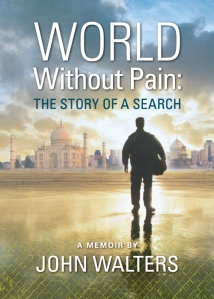
The first incident happened on my first trip to India. I had been hitchhiking around Europe all summer – the summer of 1975, I think it would have been, or perhaps 1976. As autumn approached and the weather cooled down, I wondered what I should do next. I heard stories from budget travelers who had journeyed as far as India and beyond, and the exoticism of the experience appealed to me. I went back to the Netherlands and worked a couple of weeks in factories to earn a few hundred dollars, and then began to hitchhike eastward. I managed to hitch as far as Kandahar in Afghanistan, and then I switched to local transport such as buses and trains. I traveled through Pakistan and India, spent some time in Goa, and then wandered on down south to Sri Lanka and back up to Madras. (For more fascinating and adventurous details, see my memoir World Without Pain: The Story of a Search.)

In Madras I was faced with a dilemma. I had only enough funds remaining to make it back to Europe overland if I left right away without further detours or delays. However, I had not yet been to Nepal, which had been a very important part of my itinerary. In the heedless disregard for danger inherent in youth, I headed north to Katmandu instead of west to Europe. I visited Katmandu and Pokhara and walked alone for days in the Himalayan Mountains. And yes, in Pokhara, which is west of Katmandu, I realized that I had almost run out of money. I managed to hitchhike a bus ride to the Indian border, take a train third class to Delhi, pay for a couple of nights in a hostel for derelicts in which I shared the floor with about two dozen other hippy travelers, and then… I was broke in a city with streets full of hundreds of thousands of destitute beggars.

That’s when my dad rescued me. I called him from the American Embassy, and he wired me enough money to make my way back to Europe and use my return ticket to the States just before it expired.

The second time something like this happened I was traveling east, not west. I had come to the conclusion that my destiny was elsewhere, and I was heading back to India. I hitchhiked across the United States in the dead of winter, but while standing in a deep snowdrift beside a road in New Jersey, I realized I couldn’t take the cold anymore and headed down south to Florida. I figured I’d get a job in a warmer climate and when I’d saved enough money, I’d move on. I stayed in a cheap hotel in Miami that was otherwise occupied solely by hookers and their pimps, or at least so it seemed to me. The problem was, I couldn’t find work. I was reduced to eating the foul fare at soup kitchens.

In desperation again, I called my dad to help extricate me from that situation, and he sent me enough money to fly to New York and then to London, from where I was able to make my way onward.

The third time my father helped me I was not in physical duress. It had to do with my career as a writer. By this time I had got married, we had started a family, and we were living in Thessaloniki, Greece. I had stopped writing for years but had begun again to compose short stories. The problem, in those pre-electronic submission days, was that I didn’t know how to submit the stories to markets in the United States. Once again, my father came to the rescue. I arranged to send my manuscripts to him along with a list of possible markets, and he sent them to the markets one by one until they sold or he finished the list. We kept this up for a year or so until I finally found a few post offices in Thessaloniki that had international reply coupons, and then I began to send them out myself.

I’m sure I could come up with other stories, such as how my dad brought me, my wife, and our three kids from Greece back to the States as a surprise wedding gift for one of my brothers, or how my dad and I used to go out in our small powerboat and fish for salmon on the open ocean, but these three are the ones that came first to mind, and they’ll do for the moment. They recall a man who was family-oriented but individualistic, a man who loved his cabin on the shore of Hood Canal but also enjoyed taking off on road trips aboard his motorcycle, a man who had a thriving dental practice in a Seattle suburb but also did volunteer dental work amidst the jungles and hills of Central America. He enjoyed restoring old furniture and the hard labor of collecting firewood in forest areas that had been cleared by logging companies. He was a writer and a musician and a driftwood sculptor. Rest in peace, Dad.

Posted in Memoir | Tagged , , , | 4 Comments

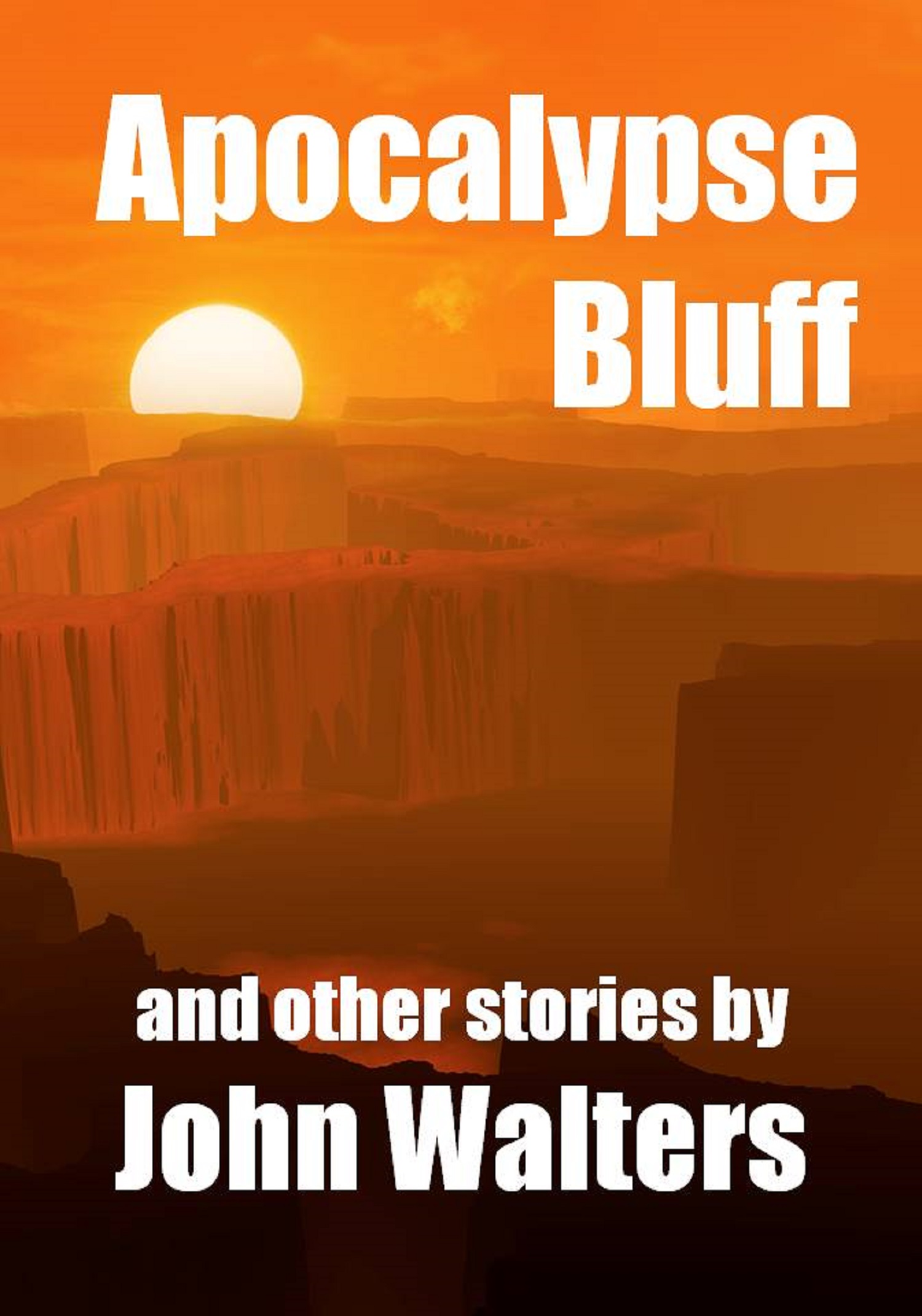
Apocalypse Bluff and Other Stories

Apocalypse Bluff cover big

Apocalypse Bluff and Other Stories, my eighth short story collection, was recently published. Pick up a copy at one of the links below.

As invading aliens unleash monsters resembling mutated carnivores to devour all of human life on Earth, an extended family gathers together in a mansion on an isolated bluff for a last stand. To survive, they must fight together against ravenous beasts attacking from land and sea.

A recently divorced woman joins a virtual community in search of social acceptance and companionship. After fashioning a new identity for herself, she sets off to explore the meticulously created landscapes of this new world, unaware that the beautiful environments are rife with human predators.

While searching for a lost love, an unemployed mercenary comes across a wealthy world in which there are no weapons, no poverty, no permanent social attachments, and everyone is free to pursue their own interests. There’s only one catch: these people have no means to defend themselves against a rapidly approaching alien army.

In these and other fascinating tales you’ll find apocalyptic landscapes, virtual worlds, far planets, alien invaders, monsters, heroes, villains, lovers, life, death, tragedy, and triumph.

Trade paperback

Amazon Kindle

Barnes and Noble

Kobo

Apple iBooks

Posted in Uncategorized | Tagged , , , , , | Leave a comment

Book Review: A Place of My Own: The Architecture of Daydreams by Michael Pollan

Michael Pollan burst into my awareness with his brilliant recent book How to Change Your Mind: What the New Science of Psychedelics Teaches Us About Consciousness, Dying, Addiction, Depression, and Transcendence. In reading about the author of this amazing study, I discovered that he had written an earlier book about the process of building a writer’s study in the backyard of his house in Connecticut. Although not as ambitious or important as How to Change Your Mind, this volume appealed to me as an example of a recurrent daydream of my own.

For the last six or seven years, since I moved back to the United States from Greece with some of my sons, I have been renting places to live and filling them with inexpensive furniture, mainly gifts from relatives or whatever we could pick up from Craigslist. We’ve been living in our current apartment in Seattle for about four years. I have no complains with it; it’s in a nice quiet neighborhood conducive to walks to clear the mind between bouts of writing, and there’s a good high school nearby for my son. But lately I find myself daydreaming from time to time about a place of my own. As I go through my daily paces, stretching my legs and gulping in fresh air, I envision what sort of house I would purchase if I had the money, what type of land it would sit on, and where geographically it would be located. Would I want a single-story spread-out layout or a multi-story edifice? How many bedrooms would it have? What sort of view? How would I furnish it?

Sometimes, though, I see my dream home in no fixed location. That’s because I sometimes also envision having a comfortable camper van to live in, a mobile dwelling in which I would be free to travel. Usually I come up with an ideal solution that is a blend of the two visions: a modest house with enough extra rooms so that my sons can feel free to visit, some property with plenty of greenery surrounding it, and a place to park the camper van so I can rest up between road adventures.

Yes, so I can get behind Pollan’s vision of the architecture of daydreams; that is, using construction materials to give fixed shape to the thoughts in my head. In Pollan’s case, he decided to construct a one-room shack up in the woods behind his house where he could work on his writing. A Place of My Own is a memoir of how he brought his idea from architect’s drawing to finished building. The construction of a tiny room such as Pollan had in mind is not much material with which to fill a three hundred page book; as you can expect, he deviates a lot into the history, theories, and philosophies of architecture. He also meticulously chronicles every detail of his building’s construction from the choosing of the right site to the selection of wood. To be honest, I think he goes a little overboard with the long detailed descriptions of obscure architectural ideas; my eyes glazed over sometimes and I wanted certain sections of the book to end. But it’s like if you are taking a long walk: some parts of the scenery are going to interest you more than others.

Pollan and the architect that he hired planned his building meticulously, but as a writer, as I read the description I questioned whether I would be happy working in a place similar to what Pollan had in mind. I have one strong objection. He did not plan a bathroom in his structure. I would find that intolerable. I try to hydrate as I write, and as a result I have to take pee breaks often. It would be terribly inconvenient to run down to the house every time I had to go. And the weather in winter is extreme in Connecticut, where Pollan built his humble edifice. In good weather, sure, I could take a short walk into the surrounding woods and water a tree – but what if there’s a foot of snow on the ground or it’s pouring rain? Or what if nature calls in a different way? No, if I were to go to all the trouble to build myself a writer’s studio apart from my living space, I would definitely include a toilet.

Other than that, Pollan’s place sounds cozy and inspiring and conducive to getting work done. I would love a space like that to write in – although I have to admit, for myself personally, I would be just as happy to have a writing room right in my house – I don’t really have the need to divorce it completely from my living quarters.

In closing, I would say that this book is absorbing and interesting, apart from those few sections of obscure detail that I mentioned earlier, and I would recommend it if, like me, you enjoy envisioning the possibilities of your dreams.

Posted in Book Reviews | Tagged , , , | 2 Comments