Once More unto the Breach: My Latest Move

Sometimes when I take my daily walks in this quiet, tree-lined neighborhood in north Seattle I find myself envying the owners of the houses I pass with their commodious interiors, spacious yards, and landscaped gardens bursting with flamboyant foliage. They possess their own property and can shape it to their will; they have a space that they can call their own. So it has not been for me, at least since I left Greece with my sons in 2012 and moved back to the United States. It has been one rented house or apartment after another, and every time I have managed to establish a routine, extenuating circumstances of one sort or another have forced another move.

And thus it has happened again. Until now, one or more of my sons has always been living with me, and so we have had to have appropriately-sized accommodations. Now, though, my youngest son is about to head off to college and I can downsize. If I could count on the rent staying the same in the place where we have been living I might have not bothered with the move and stayed there, but the landlord has assured me that as soon as COVID restrictions are lifted, the rent will be raised significantly. By shifting into a one-bedroom unit in the same compound, at least for a year I can lock in a slightly lower rent than I am paying now.

What’s the fuss? you might say. You’re only shifting from one unit to another in the same apartment complex. That should be easy. Not so. The unit I am moving into is at least a city block away from the one I have been living in, and in between is an obstacle course of other buildings, slopes, and steps. There is the matter of purging enough furniture and other items so that my belongings fit into the new place. And there is the packing, the lifting, and the carrying. The purging took weeks and is still ongoing even in the aftermath of the event, and the move itself took several full days. A move like this is traumatic. It involves uprooting and replanting, ripping out one phase of a life and patiently allowing a new phase to begin to grow. When I was in the midst of it I had to press forward resolutely even during periods of exhaustion and despair. A quote from Shakespeare’s Henry V came to me. I used it at the beginning of America Redux, my memoir about returning to the States after thirty-five years abroad, and it seems equally appropriate in this situation.

Once more unto the breach, my friends, once more…

In peace there’s nothing so becomes a man

As modest stillness and humility

But when the blast of war blows in our ears,

Then imitate the action of the tiger;

Stiffen the sinews, summon up the blood…

Now set the teeth and set the nostril wide,

Hold hard the breath and bend up every spirit

To his full height…

For there is none of you so mean and base,

That hath not noble luster in your eyes.

I see you stand like greyhounds in the slips,

Straining upon the start. The game’s afoot…

You might say: But Shakespeare was writing about war; you’re only talking about moving from one location to another. If you look at the activities literally, perhaps. But moving, uprooting your life and transplanting it somewhere else, is in fact a metaphorical battle, especially if you do it over and over with no end in sight. Once, in the days of my youth, drifting from place to place was fun, but I am weary of such moves. I truly have to summon up strength and resolve to go through it yet one more time.

As I mentioned above, for weeks before the move I sought to lighten the load by getting rid of things I didn’t need. That meant taking a trip to Goodwill in a borrowed car to get rid of household items I never used, and dropping books and DVDs off at little free libraries in the neighborhood while on my daily walks. Whenever I contemplated how many things I still had left in terms of having to move them from one place to another, I still felt burdened and stifled. As I began to pack everything into boxes and bags, the process seemed endless. The new apartment was in the process of being cleaned; the assistant manager had shown me a similar unit so I could get an idea of the size and layout, but as yet I had not even seen the apartment I had committed to. He said it was not policy to show units before they were ready. The reality was that this complex was inexpensive compared to normal rental prices in this part of the city, and units were generally claimed almost immediately after they became available and long before they were ready to show. That didn’t bother me so much; I had moved into my previous unit sight unseen; my sister had arranged it for me while I was still living in Yakima.

What caused me stress was the short window I had to accomplish the actual move. It was ironic that now, when I needed their physical assistance the most, all five of my sons were out of town. This was the first time in years that at least one or two of them wasn’t around. Desperately I sent out an email to relatives requesting assistance.

Meanwhile, I negotiated with the management office for a window in which to accomplish the move without having to pay overlapping rents. In the end, all they could offer me was one weekend. I would receive the keys late Friday morning, and the move had to be completely accomplished by late Monday morning.

I packed things into suitcases, boxes, and shopping bags. It was not only my stuff but that of my sons. One or another would stay for awhile, take off for somewhere else, but leave things for me to store for them. There seemed to be no end to it all. It was like the many-headed Hydra that Hercules battled: as soon as I filled up one container, more stuff sprouted up all around me.

And still I had no confirmed offers of assistance. If I only had more time! I daydreamed of the new unit being already empty and cleaned; I could carry over a few things a day at my leisure, and eventually I would have most of it shifted from one place to the other. Instead, as the scheduled weekend approached, I was attacked with intermittent paroxysms of uncertainty. Would someone come? How could I possibly do this?

Just a few days before the deadline, I received affirmations of rescue. One of my big strong younger brothers called and said he’d come on Sunday with his pickup to help me move the heavy furniture. A sister, her husband, and another brother showed up on Friday, Saturday, and Sunday to help me with the multitudinous lighter items. It was a frantic three days, no doubt, but it all got done. I was left, by Sunday night, with a mountainous heap of belongings crammed in disarray into the new place. I had to get my food from outside, but I managed in the midst of the jumble to carve out enough space to set up a bed frame and mattress so I could sleep.

In the film series Lethal Weapon, as maniacal bad guys shoot at them and his younger partner Mel Gibson cackles with glee, the aging police officer played by Danny Glover often exclaims in dismay, “I’m getting too old for this shit.” That quote occurred to me numerous times during this move. And yet… Life is all about transitions. The only time you really stop moving is when you die. By then, your spirit will be long gone, going through more changes, exploring new worlds. Until then, we get through the difficult parts as best we can. The good news? Despite all the heavy lifting over a period of days, my back and muscles suffered no ill effects, not even unusual aching. The often tedious-seeming routine of calisthenics and yoga that I have been doing for decades paid off after all.

Posted in Memoir | Tagged , , , , | 2 Comments

Book Review: Under the Tuscan Sun by Frances Mayes

I made the mistake of watching the movie before reading this book. That was not a good idea. As a general principle, always read the book first. I find the movie a lightly entertaining romantic comedy set in a lovely location, but all the romantic comedy elements have been added and are not part of the original book.

In the film, Frances Mayes, the author, becomes part of a group tour of Tuscany after a nasty divorce, comes across an old dilapidated villa with overgrown grounds near an ancient village called Cortona and decides to buy and restore it. She has all kinds of mishaps, misadventures, and romances, as do the minor characters such as the villagers and the workers who assist her, and in the end she meets an American writer and there is promise of a romance to follow.

All of this is made up specifically for the film except the part where Mayes buys a house near Cortona in Tuscany. The book has none of the romantic plot points. It is a straightforward and beautifully written account of Keyes and her partner (they are not married but they have a solid relationship) searching for years for a house and property to buy in Italy, settling on the villa near Cortona, going through the red tape of purchasing it, and then restoring the house and its extensive grounds. There are no emotional crises at all, and the only difficulties and tension are in the amount of work involved and the unreliability in the scheduling of the Italian and Polish workers who assist them.

It’s okay, though, that the movie and the book are so dissimilar. Personally, I much prefer the book, but that’s because I would much rather read a well-written travel book than watch a light romantic comedy. And this book is very well-written. In its best passages, when Mayes evokes the beauty of the landscape, the history, the culture, the people, and the cuisine of Tuscany, it renews in me an appreciation for the simple joys of life: travel in stunning landscapes, delicious local cuisine, and profound friendships. I too have journeyed in foreign lands and savored these pleasures.

This brings me to one of the irritants of the book, at least for me personally. The story is told from the viewpoint of the wealthy, and in telling its tale of dreams come true, it takes endless supplies of money for granted. Keyes and her partner Ed are both university professors based in the Bay Area with no dependent children. They have a commodious apartment in San Francisco and can still afford to purchase a large expensive property in Italy and pour seemingly limitless amounts of funds into their restoration project. They have their entire summers off, during which they fly every year to Italy, work on their house, take tours around Tuscany, purchase antiques and fine wines, and eat elaborate multi-course meals in restaurants whenever they want. This is not a reality that many people can relate to. It is more like a fairy tale or pipe dream, an unattainable fantasy. When I traveled the world, it was on a shoestring budget, or usually, in fact, on no budget at all. When I visited Tuscany it was in someone else’s camper, and I never would have been able to afford a multi-course meal in a restaurant, not even once. When I hitchhiked through Europe back in my hippy travel days, my compatriots and I would seek out the least expensive hole-in-the-wall restaurants and order the cheapest things on the menu.

I probably came closest to doing what Mayes and her partner did, albeit on a much humbler scale, when my Greek wife and I raised our family in Thessaloniki. Our first house (actually one section in a triplex) was in a beautiful village in the hills east of the city. When we bought it, it was unfinished, and the contractor gave us the pleasure of choosing paint colors and tiles for the floors, kitchen, and bathrooms. After we moved in, I would buy fresh fruit and vegetables at weekly street markets and our meat from local butchers, and my wife would cook delicious Greek dishes. Of course, our circumstances were vastly different; my wife and I both worked fulltime, we had five kids to raise, and so we were on an extremely tight budget. We saved up our money so that we could afford to go to a nice restaurant maybe once or twice a year.

It’s okay, though, that most people would be unable to do what Mayes and her partner did. When people read fairy tales, they don’t expect to really become kings, queens, princes, or princesses. You can enjoy armchair traveling even if you might never be able to visit these places yourself.

There’s only one place in which the book takes a resounding pratfall. Near the end, Mayes devotes a chapter to comparing the Catholic religion, customs, and shrines she sees all around her with the voodoo and superstitions she remembers from her childhood in Louisiana. This doesn’t really make much sense. Up until this point, she has professed her agnosticism but at the same time shown respect, appreciation, and even veneration for the churches and icons that are all around her in Cortona and the rest of Tuscany, while in this chapter she seems to deride them. Apart from this one deviance from her general tone, though, this book is a pleasant, sensual tour through a truly lovely part of the world.

Posted in Book Reviews, Travel | Tagged , , | Leave a comment

Book Review: Into the Wild by Jon Krakauer

For a long time I had avoided reading this book because of the tragic ending to the story of Chris McCandless. In brief, after he graduated from college, McCandless took off on the road and disappeared. He never contacted his parents again. His car was found abandoned in a desert wash. He roamed the U.S. West and Midwest, sometimes taking odd jobs and sometimes camping alone in the wilderness. In the spring of 1992 he left for Alaska on what he considered the ultimate adventure. He hitchhiked to the beginning of a rough path known as the Stampede Trail, which is just north of Denali National Park, hiked into the wilderness, forded a river, and came to an abandoned school bus, where he set up camp. The bus had been hauled there decades before by a construction company working on the trail to be used as accommodation for its crew; as a result, it was partially fitted out as a refuge. Month later, McCandless’s remains were found in the bus by hunters. He had become ill, had been unable to hike out, and had starved to death.

A popular movie was made of Into the Wild, but this movie was one of the reasons I never tackled the book. I didn’t like it. It depressed me. I couldn’t bring myself to revisit a story that begins so optimistically and ends in such disaster. Maybe I’ll try the movie again now that I have read the book. We’ll see. The point I want to make here, though, is that the book is completely unlike the movie. The movie necessarily dwells on the character of McCandless and recounts his odyssey more or less in chronological order. The book takes a different approach that allows Krakauer to delve much deeper into the situation. At the beginning, it presents McCandless’s death as a given, and then it focuses on Krakauer’s investigation into what exactly happened and why it happened. Half the book or less is taken up directly by McCandless’s story; the rest is comprised of the results of interviews with his family, friends, and people who met him and briefly knew him as he traveled around from place to place.

Ultimately, the book is as much about Krakauer as it is about McCandless. In fact, it devotes two entire chapters to describing a solitary journey that the author made into the Alaskan wilderness to climb a mountain when he was about the same age as McCandless. He also gives examples of other people with ideals similar to McCandless’s who went off to live in the wilderness. And herein is the strength of the book and why it made such a profound impression on me. The main question becomes not so much what exactly happened to McCandless but why he did what he did. Many people, Alaskans especially, derided McCandless, after his body was discovered, as a neophyte who had no business out there in the wild by himself. In telling his own story and that of other adventurers, Krakauer points out that the difference between McCandless and the others was that McCandless had the misfortune not to survive. If he had lived, walked out, and gone on about his life, he might have written about his experience in first person and been acclaimed as a hero. As it was, his tragic death ignited great controversy.

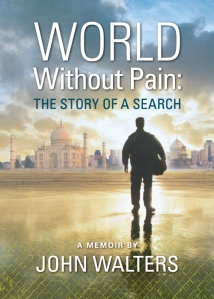
What Krakauer’s investigation into McCandless’s motives does is put the spotlight on what makes free spirits want to cut loose from society and seek alternative lifestyles. This makes McCandless’s journey triumphant instead of tragic. It also explains why I was able to get into the book so deeply and empathize so intensely with McCandless. I too forsook most of my possessions, threw a sleeping bag and a few other items into a duffle bag, and took off on the road with no certain destination in mind, as I recount in my memoir World Without Pain: The Story of a Search. My journey took me across the United States, through Europe, and across the Middle East to India. At various places along the way, I was tempted to go off into the wild on dangerous adventures. While hitchhiking through Afghanistan, I imagined walking alone through the Hindu Kush Mountains. While traveling by train through Pakistan, a Norwegian wanderer and I discussed obtaining a boat and taking it down the Indus River. Both of these ideas were impractical and intensely dangerous.

My McCandless-type adventure occurred when I journeyed to Nepal. While in Sri Lanka, I realized that I didn’t have enough money left to go all the way to Nepal and then travel overland back to Europe, as had been my original plan. I decided I had to go to Nepal anyway, even if I ran out of money; I had come too far to miss it. I took trains and buses to Katmandu, Nepal, stayed there for awhile, and then took a bus westward to Pokhara, a smaller city in a gorgeous setting surrounded by Himalayan peaks. After spending the night in my sleeping bag by the lakeside (because I couldn’t afford a room) I took a walk to the edge of the city. I hadn’t planned to go trekking, but as I gazed at those lovely mountains I realized I just had to explore them, so I threw my duffle bag over my shoulder and set out on the first path I found. The path had no signposts, and I was all alone with no map. I simply started walking upward, on and on through meadows and forests, across rope bridges, always upward, until just before dark I came to a small village, where I was able to get an all-I-could-eat meal of rice and yellow lentils and a bed in a dormitory for next to nothing. The next day, I continued on my trek up into the mountains.

At some point, though, I climbed a hillock near the trail, sat down, and meditated. I had almost reached the snowline. I understood that if I continued on into the snowy wastelands, I would die. There was nothing up there to keep me alive. I had reached this point because I had got fed up with civilization and all its foibles and confusion. Up here everything was so serene and peaceful, while down there… However, I realized that I had to go back down and learn to find serenity even when surrounded by others, and so I did.

Like Krakauer, I was one of the lucky ones who survived. I met other poor travelers, though, who seemed to have been overcome by the immensity of their quest. There was the Australian I met in Katmandu who imagined he had received a revelation that humans were supposed to eat only fruit and psychedelic mushrooms and was slowly starving to death. There was the emaciated German with long tangled hair and beard, also in Katmandu, who wore only a loincloth and who squatted down and intensely studied a wriggling worm on the path before carefully  picking it up and tying it onto his walking stick with a piece of thread.

Krakauer’s point is that there is risk involved when we venture forth to follow our dreams. You may survive, like he did, and I did, or you may die in the attempt, like McCandless did. Either way, if you have honesty, integrity, and courage, when the call comes, you cannot ignore it.

Posted in Book Reviews, Travel | Tagged , , , , | 2 Comments

Book Review: Homewaters: A Human and Natural History of Puget Sound by David B. Williams

I was born in a hospital in Seattle and raised in the Puget Sound area of the state of Washington. In my childhood and young manhood I have fished for salmon and rockfish, dug for clams and geoducks, and confronted a black bear in a forest on the Olympic Peninsula. Then I took off on the road to find my voice as a writer and returned to this enigmatic area after living overseas for thirty-five years. Much has changed. The hospital in which I drew my first breath no longer exists, and gone are the days when it was possible to go salmon fishing and come back, as my family did, with the back end of the station wagon weighed down with a heaping pile of fish. One expedition like that a year would supply us with many months’ worth of salmon for freezing, canning, and smoking.

Having visited dozens of countries and observed a number of places renowned for their visual splendor, I can tell you with certainty that the Puget Sound region is one of the most beautiful spots on the planet. Homewaters takes a close look at the area, its first human inhabitants, and its non-human denizens with appreciation and even reverence. As I read this history, I became nostalgic as scene after scene of decades-old memories played on my inner cinema screen, but even readers who were not raised here can enjoy a close look at a fascinating and enigmatic region of the world.

The book begins with an interesting analysis of how various places in the sound were named by indigenous peoples and by European explorers. This is followed by a geographical description of Puget Sound past and present and then an overview of the history of the first human inhabitants, the various tribes that inhabited (and still inhabit) the sound, and the invasion of the area by Europeans. There follows an analysis of warfare between various indigenous tribes and military efforts to fortify the area against foreign intrusion. Another interesting section tells of the evolution of transportation on the waterways of the sound, starting with the well-crafted canoes of Native Americans, then the locally owned “mosquito fleet” of small ships, and finally the elaborate network of the state ferry system.

Up until this point, the main emphasis of the book has been the human history of Puget Sound. Williams then devotes several chapters to the unique denizens of the waters of the sound, including the vast underwater kelp forests, the swarms of herring, the deep-dwelling rockfish, the shellfish (primarily clams, geoducks, and oysters), the salmon, and the massive awe-inspiring orcas. Each of these chapters on natural history provides a before and after look, comparing past abundance with current depletion. The author makes a strong case for strict regulations to curb pollution and limit consumption of the sound’s edible inhabitants so that the ecosystem can recover from the ignorant greed and decimation of the past.

This is an entertaining book about a singular and beautiful part of the world. If you’re from the Puget Sound area, you’ll enjoy reading about your home turf. If you’re from anywhere else, you’ll thrill to a vicarious journey to a land of towering evergreens, fecund waters, and fascinating wildlife.

Posted in Book Reviews | Tagged , , , , , | Leave a comment

Dealing with Imposter Syndrome

An interesting thing happened this morning while I was conducting a bit of research before beginning this essay. If you search online for articles on imposter syndrome, you will find no end of them, including from prestigious publications such as Scientific American, Healthline, and Psychology Today. It’s a real thing, and according to these articles a large percentage of high achievers have it. Here is what threw me, though. According to these articles, imposter syndrome afflicts high achievers, not ordinary folks. And all of a sudden I was stricken with the horrible realization that I’m not good enough to have imposter syndrome – I must simply be a genuine loser. That’s not true, of course, but you can see how insidious this psychological malady is.

So what is imposter syndrome? Basically it is a feeling that you are a professional fraud, that despite your accomplishments you don’t believe that you deserve the respect, attention, honors, or position that you have earned. The articles on this condition list various ways in which it manifests, but basically it comes down to a feeling of unworthiness and a fear that others around you will uncover you for the fake you are. Imposter syndrome can be debilitating; it can prevent you from continuing to take chances and take steps to further your career.

And I must have it really bad. Here I am telling myself: You can’t have imposter syndrome – you’re not good enough! I’d have a good laugh if it wasn’t so tragic. Let’s look at this objectively. Am I worthy of this affliction? I’ve published almost thirty books. I have enough professional credits to have been able to become a full member of Science Fiction Writers of America, which was a goal of mine ever since I decided that there was nothing in life for me but to become a writer almost fifty years ago. As a young writer, determined to find my own unique voice, I took off on the road, enduring countless hardships in my single-minded pursuit of writing excellence. Now, I write every day, seven days a week, no matter what else is going on in my life. There’s no doubt; if I look at my career objectively, I deserve to have imposter syndrome, damn it! My failures and shortcomings have nothing to do with the quality or quantity of the writing itself, but rather from what I perceive as low levels of success and wealth when I compare myself with my peers.

And there’s the danger inherent in imposter syndrome: comparing yourself with others. Recognizing this danger, though, also offers a solution. The key is to focus on your own goals and the path you take to achieving them. As a writer, the words, thoughts, emotions, and ideas that you want to communicate erupt from within. The only way you can really be an imposter is if you imitate or copy other writers, or even worse, hire ghost writers to compose the words for you and then claim them as your own. The way you become a real writer is by writing. All the rest are bells and whistles, including fame, money, awards, and so on. Remember: making a lot of money or winning an award does not make you a writer. You are a writer if you write. You are an imposter if you take credit for writing that you didn’t write. It’s as simple as that.

As for accomplishments, if you write a piece and keep it on the market until it eventually sells, you have earned that credit. If you sell enough words to qualify for membership in an organization for writers, you have earned the ability to associate with your peers. Look to your own art and your own career. It is yours and no one else’s. The comparisons are what kill you. Looking around and comparing yourself with others when you are striving to reach your goals is like losing concentration while walking a tightrope or climbing a mountain cliff. Instead, walk your walk until you get where you’re going. It is pointless to compare your location with that of others. Every person has their own path. As Whitman says in “Song of Myself” when he hooks his arm around the waist of his fellow traveler and points to the open road, “Not I, not anyone else can travel that road for you, you must travel it for yourself.” How can you possibly be an imposter on a path that is yours alone?

Posted in On Writing | Tagged , , | Leave a comment

Book Review: The Best American Science Fiction and Fantasy 2020 Edited by John Joseph Adams and Diana Gabaldon

The Best American series, which in recent years has come to include separate volumes of science fiction and fantasy stories, has a distinctive method of selecting its stories. The series editor, who stays the same year after year, reads as many stories published in the genre as he can manage and selects his favorites (in this case a total of eighty – forty science fiction stories and forty fantasy stories) for perusal by a yearly guest editor. The guest editor then selects ten each of science fiction and fantasy for inclusion in the book. Unfortunately the editor of this series has decided not to allow any self-published material to be included, even though self-published stories are beginning to appear on more and more genre awards lists. I suppose it is to cut down on what is already an onerous amount of reading material. Still…

Because of the way the stories are chosen, the Best in the title is a bit of a misnomer; Favorite would be more accurate, because, of course, even if numerous guest editors read the same batch of eighty stories, the table of contents would be different from one editor to the next. People simply don’t have the same tastes. That’s why there is seldom much overlap in the various best of the year volumes that come out in any given year – because the editors are choosing their personal favorites, and their tastes do not match. Be that as it may, bringing in different guest editors each year for this series gives each entry a distinct flavor. Unlike the series editor, most of the guest editors do not edit professionally, so we receive a unique look at the idiosyncratic reading preferences of a range of writers.

A few of the stories in this volume are repeats from Jonathan Strahan’s The Year’s Best Science Fiction, which I reviewed back in March, but not many. (If you want to find out more of the stories that were my personal favorites from 2020, read that review.) Most of the stories I read for the first time here. As almost always with story anthologies, there were some I liked a lot, some that to me seemed mediocre, and some that I found tedious and difficult to get through. Thus it almost always is with personal tastes.

One of my favorites is “Between the Dark and the Dark” by Deji Bryce Olukotun. Two hundred starships have been sent out from a dying Earth to colonize new worlds; the twist, however, is that the behavior of the crews is being monitored by designated stewards. These watchdogs of propriety have the power to send out a signal and obliterate all the would-be colonists if they detect inappropriate activities. A steward observes a video that appears to indicate cannibalism among the crew, and then a debate ensues about whether to terminate everyone onboard the ship. Another great story, less somber but more delightful, is “Thirty-Three Wicked Daughters” by Kelly Barnhill. It is a humorous fantasy romp with a lot of unexpected twists.

I also enjoyed “Sacrid’s Pod” by Adam-Troy Castro. This story begins with a locked box premise. A free-thinking young woman is imprisoned for life by straight-laced fundamentalist parents in a prison deep in space run by autonomous AI entities. Her dilemma is how to escape and get back to terrorize her parents and help them see the errors of their ways.
A story that is thematically relevant to the present day is “Thoughts and Prayers” by Ken Liu. A young woman is killed in a mass shooting, and her mother posts a sweet memorial online. However, the memorial and the young woman are attacked by trolls, who have become ubiquitous and unstoppable. The story calls into question the concepts of truth and of free speech in an era in which almost anything goes online.

In closing, we’ll recall a quote from the movie Forest Gump: “Life is a box of chocolates; you never know what you’re going to get.” So it is with short story anthologies. It is inevitable that readers will enjoy some stories more than others. We read them for those delicious goodies hidden among the mix.
Posted in Book Reviews | Tagged , , , , | Leave a comment

Book Review: War and Peace by Leo Tolstoy

I might never have attempted to read War and Peace if it had not been for the enthusiasm of one of my nephews. I know him to be intelligent and discerning, and he told me that War and Peace was his favorite novel. The subject came up now and then over the following few years until recently he sent me a copy of the novel for my birthday. This, of course, stifled all excuses.

There are several translations and numerous editions of this novel. The one I have is the Penguin Classics edition translated by Rosemary Edmonds. Although it is a paperback, it is the size and weight of a brick. The text of the novel comes out to 1,444 pages of small, barely readable print. It is so hefty it was often uncomfortable to read. I often read lying down with pillows propped up behind me, and I had to find a position in which I could support the weight of the book with my forearm.

With a book like this, you have to sort of draw a deep breath and plunge in, and that’s what I did. It took me several weeks to read the whole thing. In the beginning, it’s sort of discouraging when you see where your bookmark rests and realize how slow your progress and how much there is still to go, but that feeling soon goes away. In fact, once you start, it is no chore to keep going. Despite its length, most of the book is a real page turner.

Basically the novel covers the lives of the members of several aristocratic Russian families from the years 1805 to 1820. This was during the time that Napoleon invaded Austria and then moved on Russia; he made it all the way to Moscow, occupied it for a short time, left it in flames, and then retreated in ignominious defeat, losing massive amounts of personnel along the way.

I have watched a few filmed versions of War and Peace, specifically the movie with Audrey Hepburn and Henry Fonda, and also the recent BBC miniseries. However, these did not prepare me for the grandeur of the novel. Tolstoy, using third person omniscient point of view, plunges deeply into the minds of his characters. You get to know them intimately and really care what happens to them.

The story begins in Saint Petersburg at an aristocratic gathering, where it introduces some of the main characters, and then moves on to Moscow, where more characters are introduced. It first, at least to me, comes across as some sort of elaborate sophisticated soap opera similar to Downton Abbey, except that instead of following both the aristocrats and the servants, it focuses solely on the aristocrats. It does not really come into its own as a complex, nuanced work until the scene shifts to the war in Europe and the Battle of Austerlitz. After that point, Tolstoy alternates extended scenes in Moscow, Saint Petersburg, various country estates, and various battlefields as Napoleon advances.

Throughout the book, the story unfolds through the lives of certain main characters, specifically members of the Bezuhov, Bolkonsky, and Kuragin families and their friends, acquaintances, and enemies. Napoleon is a character, as is Alexander I, the tsar of Russia. Each of these people has a whole flock of attendants supporting them. One of my objections to Tolstoy’s approach in this novel is that the serfs, servants, and other lower-class personages are all treated like furniture in the background. They are always there, but very little attention is paid to them or their needs. They are taken for granted and are always loyal, as if they were appliances there for the convenience of their masters and mistresses. Like Downton Abbey, which I watched a few seasons of, you have to relegate this aspect of society to the historical background, so to speak; it grates modern sensibilities, but it’s an inevitable part of the story during that era. In the beginning (which in this novel means the first several hundred pages) almost all of the characters, even those who turn out to be sympathetic viewpoint characters, are so vain, self-centered, and oblivious to their selfishness, and commit so many devastating blunders, that it’s impossible not to feel that they deserve the horrendous travails and societal upheavals to come, and surely Tolstoy intended this.

Tolstoy’s story is magnificently epic, and when he sticks to what’s happening to his viewpoint characters, it is well told. He moves from Saint Petersburg to Moscow to battlegrounds and back, advancing the lives of the characters and at the same time building momentum for Napoleon’s advance into Russia, its impact on everyone Tolstoy has introduced, and the inevitable collapse and flight of Napoleon and his army. My biggest objection to the book is the ponderous treatises on history that Tolstoy throws into the mix. These pontifications really gum up the works. There are short essays on history and philosophy throughout the book, especially in the sections that have to do with battles, but part two of the epilogue, about forty pages in my version, is a pedantic lecture on Tolstoy’s opinions concerning the theories of how history occurs, and this last part can easily be skipped. In fact, the novel would be much stronger if these essays on history were eliminated. This would also make the book at least two hundred pages shorter.

I didn’t want to miss anything, though, so I plowed through the whole thing, boring pedantic essays and all. It is worth it for the gems you encounter when Tolstoy is telling of the lives of his main characters. There are some scenes that are so perfect that they bring tears to the eyes. One is when Prince Andrei is dying and turns his attention away from the concerns of life and onto eternal verities. Another is when Pierre is captured and forced to march out of Moscow with the retreating French army; he meets another prisoner, a simple soldier, whose philosophy of positivity and gratitude changes his life. Some characters suffer, some characters die, but Tolstoy eventually brings his story to a satisfying conclusion. I would recommend this book; however, if you are a slow reader like I am, get into it when you have several weeks of reading time to spare.

Posted in Book Reviews | Tagged , , , , | Leave a comment

Visiting Hours and Other Stories – Now Available!

My latest short story collection Visiting Hours and Other Stories is now available at numerous retailers. Pick up a copy by clicking on one of the links below.

An estranged married couple remains in virtual worlds compiled from past memories while they await new younger bodies. Their adult children must cope with tense surrealistic visits with each of their parents as well as protestors that resent the resources spent on keeping older people alive.

An official investigating a gruesome suicide journeys to a castle in a remote valley on a far planet where a sexually profligate cult ritually imbibes a fungus with hallucinogenic properties.

On a primitive world, a widow and an orphan child unite to combat a monster terrorizing a local trade route.

In the aftermath of devastating warfare that has reduced human society to confusion and poverty, benevolent alien visitors arrive to help restore unity to a decimated Earth.

In these and other tales of science fiction and fantasy, you’ll find adventure, intrigue, pathos, humor, love, terror, virtual worlds, far planets, mysterious castles, alien entities, monsters, ghosts, chaos, captivity, quests, and redemption.

Includes: “Visiting Hours,” “Lady Spider and the Flies,” “A Day in the Mine,” “Touchable,” “Highwayman,” “Interlude with Unfamiliar Cuisine,” “Evidence of Things Not Seen,” “Gladiators,” “The Motel at the Foot of the Mountain,” “Hitchhikers in the Hidden Cove,” “The Blood Test,” “The Old Man Who Came Down from His Mountain,” “The Screech of the Bolt, the Click of the Lock,” “Sithonia,” “Afterword.”

Hardcover edition

Trade paperback

Amazon Kindle

Barnes and Noble

Kobo

Apple iBooks

Posted in Uncategorized | Tagged , , , | Leave a comment

Acting As If You’re a Writer

The concept of acting as if posits that if you behave as if something you desire has already occurred, eventually your desire will catch up with you and become reality. In conducting some rudimentary research on the topic, it is not easy to pinpoint where the term and concept originated. I would imagine it has been around in one guise or other for millennia. In 1911, a German philosopher named Hans Vaihinger published a book called The Philosophy of ‘As If’: A System of the Theoretical, Practical and Religious Fictions of Mankind. The psychotherapist Alfred Adler developed the concept of acting as if as a therapeutic technique in the 1920s. If you conduct an Internet search nowadays, the first several pages of results are mainly self-help and New Age websites touting that if you act as if you have whatever you desire, it will only be a matter of time before you have it in fact. Some of these claims seem far-fetched, while others are thoughtful, nuanced, and genuinely helpful. Acting as if is used in psychological, medical, spiritual, and practical situations to assist people in getting beyond their inhibitions and phobias so that they can make progress toward achieving their goals.

I recently came across the acting as if concept in a book I was reading, and immediately considered how I could use it to assist me with one of the great dilemmas in my life: How can I have published almost thirty books and still feel that I have fallen so short of my career goals? When I look at this issue objectively, I realize that there is a simple answer, which is that some of the criteria by which I define success are not directly related to writing at all. How many editors purchase and publish my stories and how much money I make have nothing to do with the writing itself or even the quality of what I produce. Sometimes, maybe, but not always. My former Clarion West workshop instructor Harlan Ellison once said, “If they’re not buying your stories, write better stories.” That’s good advice up to a point; we should always strive for improvement. However, what if you’re writing the best stories of which you are capable but they’re still not buying them? Editors reject stories for all sorts of reasons, and not all of those reasons have to do with quality. More than once I have had editors of top magazines send me notes about particular stories telling me that they love the stories – even, in one instance, listing in detail all the things they particularly enjoyed – but then telling me that they still weren’t going to buy them. One of those stories dealt with a controversial topic, while the other may have been too stylistically experimental.

Money and fame do not make you a writer. Writing does. When editors and publishers accept your work and pay you for it, these are business transactions, and they have to do with decisions that others make, not you. If an editor has rejected your story, acting as if won’t cause the editor to reverse the decision, although it may give you the impetus to send it out to another market. Acting as if your writing has already made you rich and famous will simply turn you into a pompous ass.

Let’s assume that you are a person of integrity and that your primary goal is to become the best writer of which you are capable. This is a worthwhile goal. Remember that this goal has nothing to do with the talents of others. Your aim should not be to become as good a writer as so-and-so, because you are not so-and-so. You do not have their background, education, or genes. You are you; that’s the raw material you have to work with. You can absorb knowledge, you can learn techniques, you can avail yourself of mentors, but it all still come down to you and nobody else.

So what makes you a writer? You write. You don’t think about writing; you don’t daydream about how someday it would be so nice to sit down and write that novel or memoir you’ve been thinking about. You write. That’s what acting as if is all about. You want to be a writer? Write. I suggest a daily word count. You can adjust the quota depending upon circumstances. These days I write five hundred words a day, seven days a week. If I miss a day here or there, usually because I finish a piece of writing and I am deciding what to work on next, I don’t fret – but generally that’s the standard. In the past, I have sometimes gone up to one thousand words a day when I have the time and I’m in the middle of a lengthy novel. When I was full-time teaching I took it down to two hundred words a day because that was all I could manage. The point is that you write a certain amount of words every day. Some days, especially when I am beginning a new project, it takes me longer; other days, usually when I am in the middle of something, it’s like opening a spigot. The words pour out as fast as I can type them.

A few final thoughts. You are bound to get better the more you practice. You’ll never be perfect; you’ll keep practicing and improving for the rest of your life. At some point, editors will probably start buying your work; however, as I mentioned above, there are many reasons that editors reject writing and not all of them have to do with quality. If you are convinced that you are doing good work, nowadays there is always the option of self-publishing. The learning curve is fairly easy, and it is a viable way of getting your writing to potential readers.

Above all, always remember that acting as if you are a writer means that you write. That’s what writers do.

Posted in On Writing | Tagged , , , | 2 Comments

A Spray of Short Stories for Summer Stimulation

This article was originally written and posted in January of 2019. I have updated it to include my latest short story collections. Relax and enjoy the excitement of some great short stories while you bask in the summer sun.

I mean the word “spray” in the title both as a powerful expulsion of metaphorical liquid and as an attractive display of flamboyant flowers. I’ve written a blog post called “Books Make Great Gifts” about some of my available full-length works, so I thought why not highlight some short stories? So here they are, volume by volume, some of my personal favorites from among my own short stories. Note that there are links to entire collections or to individual stories.

From The Dragon Ticket and Other Stories:

The Dragon Ticket“: Presented with an extraordinary gift by an alien artifact high in the remote Himalayas, a young woman named Michelle must learn how to use her new power as nuclear war plunges the world into chaos.

From Painsharing and Other Stories:

Beyond Purgatory“: On a far planet the ultimate civil punishment is to be genetically deformed into a monstrous beast and forced to live in the forbidden compound called Purgatory as a slave of the State.  When authorities arrest and condemn the woman he loves, Justus determines to find and save her, even if he must search Purgatory itself. 

From Dark Mirrors: Dystopian Tales:

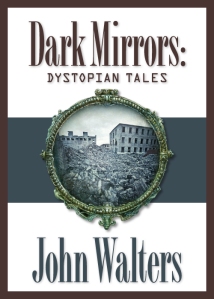
Dark Mirrors“: The people of Earth are losing a war with aliens that they themselves provoked.  Every able-bodied person is being called up to fight, even prisoners; those who refuse are threatened with dismemberment to provide spare parts for wounded soldiers.  A battle-hardened general enters a prison to recruit a woman who refuses to fight, but who may have a most unusual special ability that can turn the tide of the war.

From Fear or Be Feared: Fantasies:

Fear or Be Feared“: A teenage Greek girl climbs Mount Olympus with some of her friends.  Lost in a lightning storm, she discovers the spirit of an ancient Greek god which possesses her and uses her against her will as an instrument of vengeance.

The Customs Shed“: Those who wish to cross the river of death must first be purged in the customs shed; but within await the mysterious customs agents.  What will they require as the price of passage?

From Opting Out and Other Departures: Stories:

Opting Out“: It is the near future, and due to easier availability of alternative energy, fossil fuels are becoming outlawed.  Fleeing south along the coastal highway from a state government that threatens to confiscate the gasoline-fueled camper-van he lives in, a homeless man comes across a seemingly-idyllic communal refuge for homeless people set up by a philanthropic dot-com billionaire.

Opting In“: An old man, feeling useless, leaves his daughter’s home to go live in a homeless shelter. Following up on a tip from a fellow vagrant, he finds an alien being preparing to leave Earth who invites him on a journey from which he can never return.

From Heroes and Other Illusions: Stories:

Matchmaker“: From a future bereft of emotion, a time traveler journeys to Thessaloniki, Greece, in 1917 to find a legendary matchmaker and learn the lost secret of true marriage. Although aware that the city is about to become decimated by fire, he becomes betrothed to a local woman and must choose between remaining in the past or returning to the future with the desperately needed knowledge he has acquired.

Katabasis“: After traveling to India to take advantage of cutting-edge psychiatric technology, a jaded ailing old man embarks on a guided journey through his memories to locate and correct errant decisions that shaped his life.

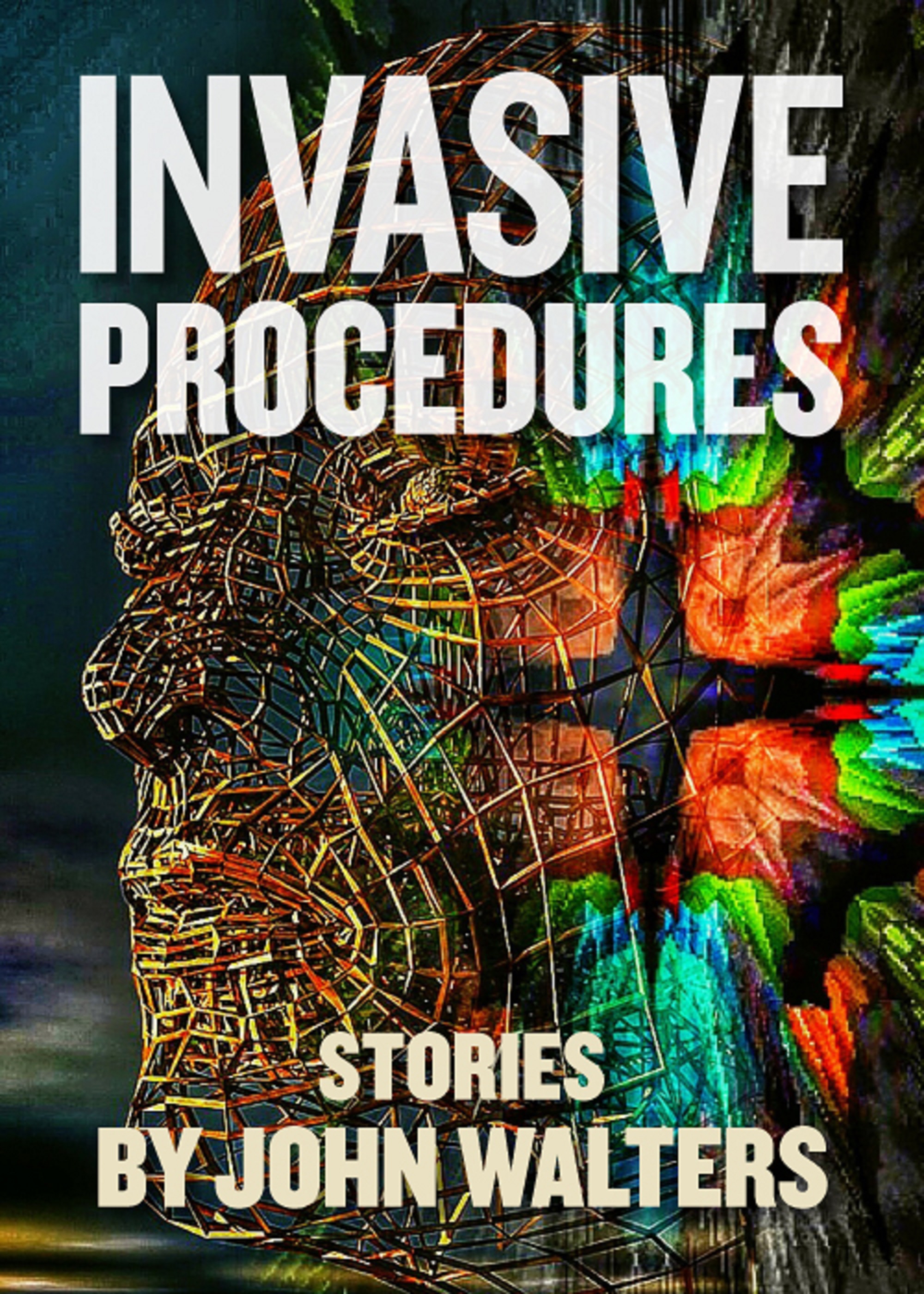
From Invasive Procedures: Stories:

The Beatification of Lady Poverty“: A government operative recruits a young woman with a very special power of self defense for a mission to help end a war in Europe. However, once she unleashes them, her mysterious abilities provoke changes beyond anything her handlers intended or imagined.

Camp College“: In the near future, as societies continue to erode and the gap between rich and poor widens, inexpensive college camps spring up around the country as an alternative form of higher education. At one such camp, a partially dysfunctional veteran and a woman alienated from her family meet and attempt to make sense out of the rapidly changing world.

From Apocalypse Bluff and Other Stories:

Connecting the Dots in Pointillist Paintings“: A recently divorced woman joins a virtual community in search of social acceptance and companionship. After fashioning a new identity for herself, she sets off to explore the meticulously created landscapes of this new world, unaware that the beautiful environments are rife with human predators.

Apocalypse Bluff“: As invading aliens unleash monsters resembling mutated Earth carnivores to devour humankind, an extended family gathers together in a mansion on an isolated bluff for a last stand. To survive, they must fight together against ravenous beasts attacking from land and sea.

From The Woman Who Fell Backwards and Other Stories:

The Woman Who Fell Backwards“: A woman agrees to take part in a research program that will propel her backwards in time on a one-way, never-ending journey. On one of her pauses during her tumble into the past, she meets someone who seems to know her, and they initiate an unusual and enigmatic romance.

The Magic Debit Card“: An elderly homeless man suddenly discovers that his debit card, which is usually almost empty, has been filled with thousands of dollars, and whenever he spends money, by the next morning it has somehow reappeared. He uses this inexplicable bounty to get off the streets, clean himself up, and attain a measure of personal security. The source of the magical largesse is something he never would have imagined.

Posted in Reading | Tagged , , , , | Leave a comment