A Christmas Gift for My Blog Followers

As a Christmas gift to readers, I have enrolled electronic editions of some of my books and stories in the Smashwords End of Year Sale, which runs through January 1st. Complete books are half price, marked down from $3.99 to $1.99. Short stories and mini-collections of essays and memoirs are available to download for free. Take advantage of this sale to stock up on some great reading material.

Smashwords was the digital distributor I used when I first became involved in electronic publishing, and when I later switched to another distributor, I left numerous editions of my early works in the Smashwords catalog. You can find a complete listing at my author’s profile here.

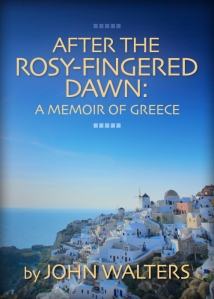
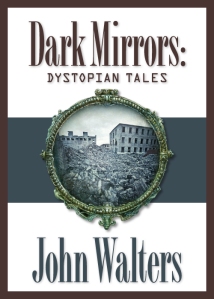
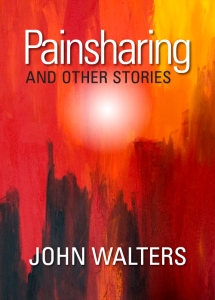
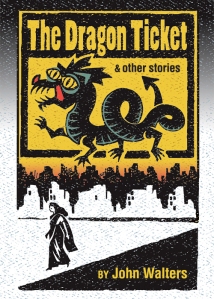
Among the books available at a half-price discount are my memoirs World Without Pain: The Story of a Search, After the Rosy-Fingered Dawn: A Memoir of Greece, and America Redux: Impressions of the United States After Thirty-Five Years Abroad; the novels Love Children, The Misadventures of Mama Kitchen, and Sunflower; the collections The Dragon Ticket and Other Stories, Painsharing and Other Stories, Dark Mirrors: Dystopian Tales, and Opting Out and Other Departures; and the essay collection Reviews and Reflections on Books, Literature, and Writing.

The stories available for free include some of my personal favorites such as “Dark Mirrors,” “The Customs Shed,” “Life After Walden,” and “Noah and the Fireflood.”

So head on over to Smashwords and pick up some thrilling and thoughtful novels, short stories, memoirs, and essays at deep discounts and even free. Merry Christmas!

Posted in Reading | Tagged , , | Leave a comment

Books Make Great Gifts

After Thanksgiving has come and gone, people commence a search for holiday gifts for family members, relatives, friends, acquaintances, in-laws, outlaws, colleagues, and sometimes total strangers. If you’re looking for fun, sophisticated, lively, intense, flamboyant, and otherwise variegated literary fare, I’ve thus far published thirty volumes in a range of genres through Astaria Books. Here are some examples of choice gifts you can bestow upon your loved ones. If you click on the titles, the links are to Amazon, but for lists of links to other marketplaces, head for my website’s Available Books page.

Science Fiction:

After the Fireflood: A Novel – During the Fourth World War, the entire Earth is engulfed in a torrent of fire, transforming the landscape and obliterating all life.  Using terraforming, time travel, and other expediencies, human survivors from Moonbase and the outer colonies attempt to cope with their devastating loss, reconstruct the Earth’s surface, and reorganize Earth sociologically to ensure lasting peace, while others plot to claim the pristine reconstituted planet for their own purposes.

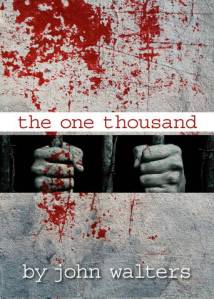
Bedlam Battle: An Omnibus of the One Thousand Series – In the late 1960s, humans and sympathetic aliens based out of Haight/Ashbury struggle to stop alien-possessed psychopaths intent on a murderous rampage. Four science fiction thrillers in one volume.

Love Children: A Novel – It is the mid-1970s.  The Summer of Love and the Woodstock Music Festival have come and gone.  Into the atmosphere of cynicism and doubt following the wild optimism of the youth revolution the Love Children, raised from birth by benevolent aliens, come home to Earth.  Sexually free, telepathic and honest to the extreme, they are appalled to find that the world they left behind is full of darkness and deceit. As they set about using their extraordinary powers to bring light and unity back to their world, they run up against a sinister alien force intending to keep it in darkness.

Dark Mirrors: Dystopian Tales – These tales offer terrifying glimpses of Earth’s future gone wrong. From the author’s afterword:  “When I postulate dark futures it is not to get you to despair.  When I hold up dark mirrors before your eyes it is not so that you will see the worst in yourself and do yourself in.  Far from it.  Some of our greatest illuminations come from deep dark prose.  Dark literature is not meant to overwhelm us.  It is meant to purge us, to provide catharsis.  It is a cleansing and purifying process.  We must be aware of the evil within before we can clean it out.”

Fantasy:

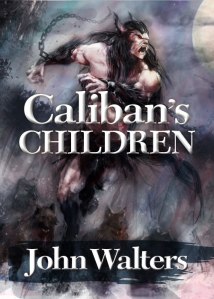
Caliban’s Children – Content is being siphoned from libraries and replaced with half-truths and lies.  Weather, time, and distances are distorting like images in a funhouse mirror.  People are discovering the ability to morph into animals.  At first it all seems idyllic and magical until a dark power begins to manifest itself, assert control, and demand obedience.

Ethan is a university student caught in the midst of a kaleidoscopic confusion he cannot understand.  After journeying into the wilderness seeking answers, he realizes he has to ally himself with the beasts of the Earth and venture into a bizarre, mutating, peril-filled city to rescue his lover and attack the source of the evil.

Fear or Be Feared: Fantasies – In these fourteen weird, surreal, frightening, and fantastic tales, unwary people discover that the world is very different from what they imagined.

Thriller:

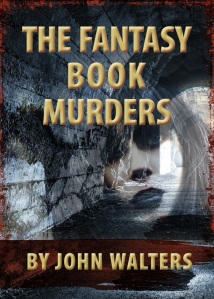
The Fantasy Book Murders – After a famous fantasy writer is murdered in his castle-like mansion, two unlikely investigators discover a pattern of similar murders suggesting a serial killer. They begin to research the killings, starting with the most recent and working backwards into the past. Danger mounts as they uncover the backgrounds of the victims and the truth begins to resemble the fantasy writer’s most bizarre and horrific fiction.

Novels of the Counterculture:

The Misadventures of Mama Kitchen – Sarah Tabitha Jones, a twenty-year-old fascinated by the youth culture of the late 1960s, leaves her middle-class home and wanders to a wilderness commune and then to the Haight/Ashbury in search of truth. On the way she encounters many strange characters: bikers, draft dodgers, Vietnam War veterans, peyote worshippers, heroin dealers, Jesus people, feminists, violent anarchists, Black Panthers, and science fiction fans. She experiments with drugs and sex, but at the same time helps out those she can; though often disillusioned, she believes that hippies should unite to create a better world. In the midst of all this she finds herself pregnant. Eight and a half months later, undaunted, belly bulging, she travels to Woodstock for one last attempt at finding the love and unity she seeks. The Misadventures of Mama Kitchen will appeal not only to those who lived through the disconcerting era of the 60s and 70s but to those younger who are curious about what took place back then. It will also resonate with anyone who is idealistic and in search of personal fulfillment, as well as those who simply enjoy a wild tale: sometimes comic, sometimes tragic, sometimes violent, sometimes sexy, always extreme.

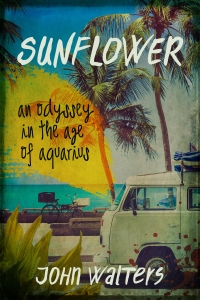
Sunflower: A Novel – In early 1970 a new era, the Age of Aquarius, is dawning. Penny, who adopted the name of Sunflower on the way to the Woodstock Music and Arts Festival, attends another rock concert touted as Woodstock West, at Altamont Speedway near San Francisco. Seeking to enhance the transcendent experience, she instead comes away covered in the blood of a man brutally stabbed to death in front of the stage. Has the new youth experience descended from idealism to anarchy? Confused and disillusioned, Sunflower embarks upon an odyssey across an America torn by violent anti-Vietnam War protests, racial tension, and gangs of hard drug dealers. From a search for a shared social experience it becomes a personal quest for fulfillment that leads her on a journey across continents.

Memoirs:

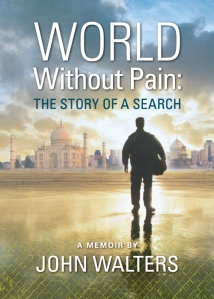
World Without Pain: The Story of a Search – In the 1970s, after the Altamont Rock Festival, the Manson Family cult murders, and the fiasco of the Vietnam War many young people, disillusioned by the hippy movement, began to leave their homelands and travel to the far places of the world.  Hoping to find drugs, sex, freedom, and excitement, they more often were confronted with destitution, despair, disease, loneliness, and culture shock. As a young writer wishing to break out of the familiar rut in which he was stagnating, Walters hit the road during this time, first to Europe, then onward to the Indian Subcontinent.  He sampled Buddhism and radical Christianity; he wandered alone in the Himalayas; he listened to strange gurus spouting stranger doctrines; he watched the people around him deteriorating and dying in the lands of the East.  As he traveled onward he became fascinated with the road itself, and determined to discover its secrets. He wondered what it was that gave the road its alluring power, and he forsook everything else to find out. His story will appeal to those who lived through the turmoil of the 60s and 70s, to those who are hungering after spiritual fulfillment, to writers and other artists in search of their voice and their inspiration, and to anyone who loves a true story of adventure and excitement in strange lands.
After the Rosy-Fingered Dawn: A Memoir of Greece – Greece has always been regarded as the birthplace of western civilization and a Mediterranean paradise.  In The Iliad and The Odyssey Homer uses the magical epithet rosy-fingered dawn to describe the sunrise over a land of myth, fascination, and mystery.  But when preconceptions and illusions are swept aside, what is Greece really like? John Walters has lived in Greece for over fifteen years.  He has hitchhiked over many of its roads; traveled by camper; journeyed by plane, boat, bus, car, taxi, motorcycle, and on foot.  He has lived and worked and raised a family among Greeks.  He offers insight from an intimate perspective on aspects of Greek society and culture of which tourists are unaware. Many have visited Greece and afterwards acknowledged that the country has profoundly changed them.  This memoir is for those who feel something special when they think of Greece and Greeks, those for whom Greece holds a special thrall, those who have visited and have their own memories of the place, and those who would like to visit someday and know that when they do they will obtain new insight, new clarity, and will never be the same again.

America Redux: Impressions of the United States After Thirty-Five Years Abroad – In 1976 John Walters left the United States in search of adventure and literary inspiration.  He lived for many years in India, Bangladesh, Italy, and Greece.  He married and had five sons.  Finally, faced with the economic catastrophe in Greece and the lack of opportunities for his sons, he returned to the land of his birth.  Without home, without job, without resources, he confronted his own country as if for the first time. This is a memoir of someone who, late in life, was forced to leave everything behind and start fresh in what for him had become a new land.  It will appeal to those who are confronted with major life changes in these troubled economic times; to those who, though they may desire rest and retirement, must continue toiling to make ends meet; for those who desire insight into the vast, multifaceted culture of the United States from a fresh perspective, unencumbered by familiarity.

Writing as a Metaphysical Experience – From the author’s introduction: “For me, writing is metaphysical because it is inseparable from who I am and my conception of the universe and my place in it.  My interpretation of writing goes far beyond the definitions of hobby, job, or career – it is rather in the nature of a calling.  It is something that blossomed from within me and, though invisible to instrumentation, has been as integrally a part of me as my flesh, bones, and internal organs.  How this transpired and how it manifests itself is the subject of this book. This is not a how-to book on writing, although in its course I offer many practical tips and suggestions.  It’s more like a travelogue, a story of the life’s journey on which my writing has led me.” This journey has led Walters on a decades-long quest from the United States to Europe to the Indian Subcontinent and back in the pursuit of voice, inspiration, and literary excellence.  On the way, he has written and published novels, short story collections, essay collections, memoirs, and numerous individual novellas, novelettes, short stories, and essays.

Posted in Reading | Tagged , , , , , | 1 Comment

The Days It Doesn’t Happen

Every writer has a different approach to the process of putting words on paper. Some who write long novels or major works of nonfiction prepare backgrounds or research for months or even years and then binge-write until the work is completed. Afterwards it may be many months before they put pen to paper or fingers to keyboard again. This doesn’t work for me; I enjoy writing too much. I don’t like to let a day pass without transcribing the thoughts in my head and the emotions in my heart. For this reason I prefer the methodical approach of a minimum daily word count, and I have kept to this system for decades.

During this period of my writing career, I adhere to a minimum count of five hundred words per day. I maintain this habit, with pleasure, seven days a week. Occasionally urgent life events intrude that make it impossible for me to sit down at a keyboard. When this happens, I don’t get all bent out of shape or force myself to double my word count the following day. I simply carry on when I am able with the five hundred words or more. However, what happens when I complete a piece of writing the day before and then I have to start fresh the following day? This comes up frequently because I write literary works of all lengths: novels, memoirs, novellas, novelettes, short stories, and flash fiction. Obviously it is easier to dive in and compose a minimum word count on a longer work that has already been initiated, but I am particularly fond of writing short stories. This means that I frequently need new ideas.

I try to plan for this by jotting down random ideas in a special file. When I encounter the need to begin a new project and I don’t have anything specific in mind, I peruse this list and see if anything ignites my curiosity and imagination. If nothing does, though, I have a few options. In a perfect world where money is not a problem, I might spend the day attempting various methods of jumpstarting my imagination, but in the real world, I have to go on to ghostwrite another one or two thousand more words of blog posts or articles for which I receive quick payment.

Sometimes I simply give myself a day or two to come up with a solid new idea. There’s almost always a moment of despair after I finish what I consider a good piece of writing when I wonder how I will ever come up with a new idea again. However, that feeling quickly passes when I realize that my imagination and creativity have never failed me yet, and they won’t this time either. Sometimes, depending on my schedule and circumstances, I might make another attempt at the five hundred words in the afternoon or evening. Sometimes this works, and sometimes it doesn’t. The main thing I have to keep in mind in these situations is that this is not writer’s block. I am simply finding first gear so I can once again get moving. That initial phrase or sentence can be the spark that ignites the conflagration of a whole new work.

Sometimes I will get a few thousand words into a new story and then be unable to proceed. That’s okay too. I put these incomplete stories aside and come back to them later. Sometimes I am able to continue and complete the story, while other times I realize that the fragment is a dead end. It doesn’t matter. More often than not I finish what I start and am pleased with my work. Maintaining a steady continual flow of words works well for me. If that flow is occasionally interrupted, I am disappointed, but I also accept the inevitability of these interruptions, cast about for what’s next, seize the next idea, and carry on.

Posted in On Writing | Tagged , , , , | Leave a comment

Book Review:  The Year’s Best Science Fiction: Volume 2 Edited by Jonathan Straham

This is the second year of Strahan’s new best of the year science fiction anthology series, one that he has deliberately modeled after the late Gardner Dozois’s classic decades-long series. (Strahan acknowledges Dozois in the introduction.) With all respect to Dozois, who was one of the greatest speculative fiction editors of all time, this series has some distinct advantages over the previous one, at least in format. Strahan has decided not to include novellas, but instead sticks to short stories and novelettes. I think this is a wise decision. It makes the book shorter (although this volume is still almost six hundred pages) and easier to physically manage; and most importantly, it is in a larger more readable font. Like Dozois’s, it includes a roundup of the year’s news in science fiction writing and publishing, which you can read or skip depending on whether keeping up with such things is important to you.

In this anthology you’ll find Strahan’s selection of what he considers the best science fiction stories that were published in the year 2020. Of course, any such selection of stories is a subjective appraisal of the field. I usually read two or three best of the year anthologies of science fiction and fantasy when they come out, and I am always struck by the fact that there are very few matches. Each editor has their own ideas about what constitutes the best writing in the field.

One distinction of this anthology is that I managed to get through every story from beginning to end. Usually when I am reading anthologies I find a few stories that I just can’t get into and skip over; not so in this one. That said, I have to add that though some stories are very good, none of them absolutely blast me away with their brilliance. Have I become jaded and spoiled by the standard by which I measure every story I read: the genre-shattering brilliant stories of New Wave writers of the late 1960s and 1970s? I don’t know.

In this anthology I was surprised at the number of stories of cute and clever robots, which except for a few modern embellishments might have been at home in Golden Age science fiction anthologies of the 1950s. At the other end of the spectrum, there are some cutting edge stories that showcase the recent emphasis on the writing and publishing of African American speculative fiction. For instance, “The Transition of OSOOSI” by Ozzie M. Gartrell is an excellent story of hackers that create new types of virtual superheroes to bring about social change. “How to Pay Reparations: A Documentary” by Tochi Onyebuchi is exactly what the title suggests: a description of a fictional documentary of the social and financial implications when one city votes to distribute reparations to its African American residents.

Although the robot stories provide light entertainment, the most profound stories are those that deal with human situations and emotions. A good example is “The Bahrain Underground Bazaar” by Nadia Afifi, which concerns an old woman obsessed with her imminent death who comes to realize that her obsession is hurting beloved family members. Another touching story is “An Important Failure” by Rebecca Campbell, which tells of a violin maker striving to find the right wood to create an instrument fit for a virtuoso in a world decimated by global warming. Rich Larsen is a writer who seldom disappoints; in “How Quini the Squid Misplaced His Klobucar” he gives us a gritty heist story whose characters have deep heartfelt motivations. “Sparklybits” by Nick Wolven is a wonderful observation on parenthood. Other fine stories that effectively combine deep human emotion with the wonder of provocative ideas include “Yellow and the Perception of Reality” by Maureen McHugh and “The Mermaid Astronaut” by Yoon Ha Lee.

In conclusion, this is an entertaining anthology; whether you like light humorous fare, incisive social commentary, tense action, or heartfelt emotion, you’ll find something to please you.

Posted in Book Reviews | Tagged , , , | 1 Comment

Book Review:  Harlem Shuffle by Colson Whitehead

The two books of Colson Whitehead’s that I have read previous to this one, The Underground Railroad and The Nickel Boys, have been exciting and original works of fiction, and both, incidentally, have won the Pulitzer Prize. Along with his newest novel, Harlem Shuffle, they are all set in some form of the historical past. The Underground Railroad takes place in an alternate history in which the railroad is an actual physical railroad instead of a series of hideaways and routes that would transport escaped slaves to freedom in the 19th century. The Nickel Boys, which takes place in the 1960s, is based on a real reformatory in Florida that was rife with abuse, torture, and death; after it closed the remains of many students were found on the grounds in unmarked graves. And now, with Harlem Shuffle, Whitehead gives us an inside look at Harlem as it was in the late 1950s and early 1960s.

The main character, a man named Ray Carney, manages to survive while balancing interactions in the honest and dishonest sides of Harlem’s milieu. Ostensibly he is an upstanding businessman with a thriving furniture store catering to black clientele. He keeps up with the latest designs and models and is always striving to introduce new product lines into his showroom. He is also, however, a fence of stolen goods. He’ll take in “gently used” televisions, appliances, and other items that have obviously been stolen; he also has contacts to dispose of jewelry, coins, and other more expensive items. His wife Elizabeth, who works at a travel agency specializing in helping African Americans find safe places to vacation, has no idea of the shadier side of Carney’s business. His cousin Freddie is a ne’er-do-well who invites trouble along wherever he goes. There is also an extensive cast of fascinating supporting characters.

The book is split into three parts. The first part takes place in 1959 and concerns a robbery Freddie is involved in that goes amiss; Carney attempts to get him out of trouble by fencing some jewels Freddie has stolen. The second part happens in 1961. A crooked banker swindles Carney out of some money, and Carney concocts an elaborate scheme of revenge. To pull it off, though, he needs to enlist the assistance of various members of the Harlem underworld. The third part also has to do with a jewel theft, and it takes place just after the Harlem riot of 1964.

Although there are exciting scenes and tense situations, these are secondary to Whitehead’s accomplishment of bringing the Harlem of the fifties and sixties alive through the viewpoints of his characters. Telling the story through three incidents taking place in different years creates a complex, multilayered effect that allows readers to grasp what life was like for black residents of Harlem back then – the opposition that they faced from the white community and what they had to go through to survive.

Colson Whitehead is an excellent writer. Pulitzer Prizes for one novel after the other make for a hard act to follow, but this book does not disappoint. It is exciting, fun, touching, tragic, intense, and profound.

Posted in Book Reviews | Tagged , , , | Leave a comment

Book Review:  Forever Young: A Memoir by Hayley Mills

Although I was significantly younger than either of them, my two biggest film star crushes when I was a child were Judy Garland and Hayley Mills. Judy Garland, of course, I knew as the vulnerable but determined young woman wandering through a fantasy land and longing to get back to her home in Kansas in The Wizard of Oz; this movie appeared as a special on TV almost every year when I was young. Hayley Mills was Disney’s most famous child star, first appearing in Pollyanna, and then in a string of other films. When my siblings and I were young, our parents would only let us go to films that were made by Disney; they figured that if the wholesome Disney Studios made them, they must be safe. So we had a lot of exposure to Hayley Mills, who also appeared in the original version of The Parent Trap, In Search of the Castaways, Summer Magic, The Moon-Spinners, and That Darn Cat, all for Disney. An interesting side note: after prolonged persuasion, our parents finally broke down and decided to allow the older kids to see the new James Bond film Thunderball. However, when my father drove us downtown, we found out that the box office line of people waiting to get into Thunderball was wrapped around an entire city block; we ended up having to make a substitute, so we went to see Hayley Mills in That Darn Cat instead.

In this memoir, Mills looks back on her early filmmaking years, especially when she was under contract to Disney, from the perspective of a woman now in her seventies. She writes in a sweet and lucid style, casual but detailed. When she was an adolescent and through her teen years, she was famous throughout the world; she even won a special Academy Award for her performance in Pollyanna. I was talking with one of my adult sons, though, and telling him about this memoir, and he admitted that he had never heard of Hayley Mills, and the only one of her movies he’d heard of was The Parent Trap – only he had not seen the original but the remake with Lindsay Lohan.

Hayley Mills is the daughter of the famous British actor John Mills, who won an Academy Award for his performance in Ryan’s Daughter. Hayley had no ambitions to be an actor, and her first appearance in films came about by accident. She was playing in the garden with her younger brother one day while her father was having a discussion with a producer/director about the need to cast an exceptional male child actor for an upcoming film. Watching Hayley, the producer decided on the spot to change the boy into a girl in the script and cast Hayley instead. This was an independent British film called Tiger Bay. When Walt Disney saw it, he became determined to cast Hayley in his new production of Pollyanna. He offered Hayley a studio contract for multiple pictures which her parents initially turned down. They only agreed to let Hayley sign on when Disney also guaranteed John Mills the leading role in Swiss Family Robinson.

The book emphasizes the difficulties that child stars undergo. Although Hayley readily took to acting and usually enjoyed it, she was subject to fits of insecurity and despondency. As she grew older, she also became self-conscious about her weight and for a time she was bulimic, binge eating and then throwing up. When she was twenty years old, she married a producer/director who was thirty-two years older than she was; the marriage only lasted a few years before divorce. Another tragedy that befell her around the same time was the loss of the trust fund that had been set up to hold her earnings until she turned twenty-one. After a years-long court battle, the British Treasury took almost everything, taxing the entire trust fund at over ninety percent and then adding on extra legal fees.

To accompany the reading of this book, I watched a couple of Hayley’s old movies on Disney Plus. The Moon-Spinners is a thriller about a jewel theft set in Crete; it’s the first Disney film in which Hayley has a romantic interest. However, it’s rather bland and unexciting by today’s standards. The original version of The Parent Trap, though, is well-acted, well-paced, and funny, even by modern standards. It made me wonder why they bothered with a remake.

This memoir may appeal mostly to Baby Boomers who remember Hayley Mills, but for people of all ages it provides a fascinating glimpse into Hollywood, the Disney Studios, and filmmaking in general in the 1950s and 1960s.

Posted in Book Reviews | Tagged , , , , , , , , | Leave a comment

“Alchemy” in The Martian Wave

My short story “Alchemy” has just been published in the October 2021 edition of The Martian Wave, a magazine that, according to its website, “presents original science fiction stories about the exploration and settlement of other worlds.” My story concerns two colonists who meet on Mars and marry. Because of the harsh environmental conditions on Mars, pregnancy is against regulations, so when the woman conceives, the couple is expelled from the colony and sent back to Earth to have the child. The writing of “Alchemy” involved much more research than is necessary for most of my stories, but the contrast in environments between Earth and Mars was so important that I wanted to get the details right.

Copies of the magazine are available on the publisher’s website here.

Posted in Uncategorized | Leave a comment

Book Review:  Never Say You Can’t Survive by Charlie Jane Anders

This is a slim volume consisting of a series of essays that first appeared on the Tor.com website. Its premise is that writing fiction, particularly science fiction and fantasy, can help you survive in the midst of the shit storm of the global pandemic. To remain sane despite the chaos, polarization, isolation, and death that COVID has brought to the world, you can create new worlds in your imagination. It’s a valid point, and Anders makes it well. Once this point is established, the rest of the book is a mix of writing advice and memoir.

Anders is an award-winning science fiction and fantasy writer, and she dispenses her advice in a light-hearted and fun style. She goes into the nuts-and-bolts of plot, theme, structure, word choice, and so on, and suggests various writing exercises for beginners, but for me the most interesting parts of the book deal with the more motivational aspects of writing. For instance, she emphasizes that there is not some sort of special initiation or rite of passage that makes you a writer. You are a writer if you write; that’s all there is to it. And she writes about the dread imposter syndrome, a malady that afflicts almost all writers; this is the feeling that you are unworthy of being a writer and nobody will ever care about what you have written. Even famous writers become oppressed by imposter syndrome; according to Anders, one thing that helps you get past it is finding a community of like-minded people so that you can reinforce each other.

Another extremely important point that Anders touches on is that there are no rules in writing. None. And nobody should ever try to restrict you by saying that there are. You should write whatever you like however you like, and to hell with the nay-sayers. It reminds me of a time a couple of decades ago when I got fed up with rejections and decided to forget what I thought editors might like and write whatever I wanted. I composed a story that alternated between second person present tense and third person past tense and near the end shifted from fixed sentences and paragraphs into pictures and patterns comprised of words. I sold that story almost as soon as I sent it out, and for more money than I had ever received for a story at that time.

Anders goes into her method of writing a novel, and this is what I meant when I mentioned that part of the book is memoir rather than practical advice, because I don’t think that I could ever finish a book using her techniques. (Remember what I wrote above about there being no rules. Use whatever works for you.) Anders likes to quickly write rough drafts, jigsaw puzzle them together, and then add and subtract scenes and nuances in revision after revision after revision. That’s not how I work. I would make a mess of such a method and lose interest long before I was done. Instead, I go through all these permutations, but in my mind and in rough notes before I begin to compose the first and often final draft. I write a certain number of words a day, and the following day I go over the previous day’s work, revising and re-familiarizing myself with what I have done. By the time I am finished, I may make a few changes as I go through a final revision, but the story is usually fully formed. In other words, write however you want to write. That’s part of the fun.

Another section of this book that I found absorbing and helpful deals with writing about the cultures and experiences of others. This has become quite a hot topic nowadays, and Anders points out that as with other controversial issues, there is a balance. It may not be appropriate for you to write about another culture as if you were part of it, but it is certainly desirable to be inclusive when you select characters that appear in your story. Anders suggests using sensitivity readers to be sure you are getting things right. In my own situation, not long ago I felt the need for a sensitivity reader for a story I had set in the Deep South in the 1950s. Through Science Fiction Writers of America, I managed to find a well-known African American writer who assured me that the story was inoffensive.

All in all, this is a light, fun book full of interesting anecdotes and advice. The premise that writing or some other form of creative endeavor can help you get through hard times is certainly valid. One of the most important points, though, is that there are no rules. As far as the practical advice is concerned, take what you need and ignore the rest.

Posted in Book Reviews, On Writing | Tagged , , | Leave a comment

Book Review:  Quiet: The Power of Introverts in a World That Can’t Stop Talking by Susan Cain

In a phone conversation one of my sisters and I were discussing which of our brothers, sisters, and progeny were extroverts and which were introverts when she brought up this book, Quiet, and recommended it. I had never heard of it, but upon conducting a bit of initial research I found out that it was quite famous and possibly would be an interesting read. I don’t go much for books of popular psychology offering self-help remedies that will supposedly cure personal and societal ills; however, this one is well researched and offers insight into the vital role of introverts in a world that applauds and sometimes worships extroversion.

I definitely fall onto the introverted side of the ledger. I love reading, writing, and other contemplative activities and have a difficult time, COVID aside, getting out to socialize, especially if I am going to be plunged into a roomful of people I don’t know. This hindered my maturation through elementary school, high school, and my one year of college. I found it all but impossible to be gregarious and outgoing; as a result, my friends were few. At my high school in particular, a large emphasis was put on the cult of the macho sportsman. To be popular, you had to be a football or basketball player, strut around in your letterman’s jacket, and talk boisterously in the hallways. Quiet guys like me never had a chance.

It wasn’t just at my high school, though; it remains a national phenomenon. Cain calls it the extrovert ideal, and more than other countries, the United States is obsessed with it. The most successful individuals are supposed to be assertive, dominant, forceful, brash, and outgoing. Although they are often reprehensible individuals, these are the leaders we supposedly should look up to. The quiet ones, although they may be more intelligent and have brilliant ideas, are relegated to second class citizenship, to the roles of followers, sycophants, and acolytes.

The first part of Quiet, in fact, is taken up with an analysis of the extrovert ideal. Cain then explores studies concerning the relationship of biology to introversion and extroversion. There is also a section on the role of introversion and extroversion in various cultures; in particular Cain compares the blatant extroversion inherent in U.S. culture with the quieter, more thoughtful, and more respectful cultures of Asia. And finally, Cain goes into suggestions on how introverts can not only survive but thrive in societies that favor extroversion.

As I was reading this book, I wondered how I, as an introvert, ever managed to break free of my torpor, leave my hometown and my native country, travel the world, and meet new friends and acquaintances from many diverse countries and cultures. Cain provides an answer to this seeming paradox in the so-called Free Trait Theory. According to this theory, we are born with certain personality traits such as introversion, but we can overcome these and act out of character, as extroverts in other words, in the pursuit of core personal projects. These are things that you consider so important that you are able, at least temporarily, to overcome your introversion. They may include loved ones, important work, or anything else you place great value upon. In my case, I wanted to be a writer more than anything else in the world, but I felt stifled and inexperienced at home; I felt that I had to go out and live life and have adventures so that I could have something worth writing about. This gave me the impetus to overcome my introversion and get out there. I was willing to overcome my timidity and leap into the void of the unknown in pursuit of my dream.

In closing, let me emphasize that this book is not only for introverts. Extroverts can benefit from the insights Cain offers as well. It will help them realize that it is delusional to think that extroverts form some sort of hierarchy. The important thing is to bridge the gap and create an understanding that will allow families, societies, and cultures to benefit from both personality types.

Posted in Book Reviews | Tagged , , , , , | 1 Comment

Reviews and Reflections on Books, Literature, and Writing: Volume Two – Now Available!

The second volume of Reviews and Reflections on Books, Literature, and Writing is now available at numerous retailers. Pick up a copy by clicking on one of the links below.

From the author’s introduction:

Preparing the second volume of Reviews and Reflections on Books, Literature, and Writing has caused me to think about the role not only of reading books but also of writing book reviews in my life. To write about the thoughts and impressions brought about by a book is as valid as writing about a physical journey that I take to another location. The author of the book serves as my traveling companion.

Because of the inevitably profound effect that books have on me, I have to be careful about what books I read. If you are what you eat, physically, then you are what you read, mentally. I try to select books that entertain me and also nourish and strengthen me mentally and emotionally.

Among the multitudes of books I have read in my lifetime, some of my particular favorites have been books about books. Why? Because they make the task of finding new reading material easier. I read them eagerly, pen and paper nearby, and make new lists of books I have not yet discovered, realms of thought I have not yet explored. That’s one of the delights of this present volume, part two of Reviews and Reflections. Consider it a guidebook to point the way on your own journeys of discovery.

Trade paperback

Amazon Kindle

Barnes and Noble

Kobo

Apple iBooks

Posted in Book Reviews, Reading | Tagged , , , | Leave a comment