This book was not what I expected. Going by the title alone, I supposed that it would be a travelogue in which the author describes his adventures on some of the world’s great hiking paths. There is some of that, but Moor also spends much time discussing the philosophy of trails. To accomplish this, it seems to me that he often veers widely away from the subject at hand. It starts with a bang in a long prologue in which the author tells of his through-hike on the Appalachian Trail. The walk from Georgia to Maine takes him several months, and he shares gems such as this: ” Some days, after many miles, I would slip into a state of near-perfect mental clarity – serene, crystalline, thought-free. I was, as the Zen sages say, just walking.” In fact, the book begins and ends with descriptions of the Appalachian Trail: the United States version in the prologue, and the International Appalachian Trail, a new concept under construction, in the chapter before the epilogue. For me, these were the most riveting sections of all.
After his fascinating account of hiking the Appalachian Trail, Moor dives deep, deep into the past with a study of the first blob-like prehistoric creatures to form pathways. From there he moves forward to trail-making ants and caterpillars. In the course of detailing the trail predilections of sheep, deer, and other animals, he devotes long sections to his immersive research into herding sheep on a Navaho reservation, stalking deer with a dedicated lifelong hunter, and visiting a rural Tennessee elephant sanctuary and a Six Flags safari zoo. One fascinating section deals with preserving indigenous culture by discovering and mapping old trails leading to significant places in personal or tribal memories. At first I was disappointed by most of these digressions, but then I realized that as a reader I had to take the author on his own terms. That’s Moor’s style: to start out on track and then take off down any side-paths that strike his fancy.
On Trails introduced me to the International Appalachian Trail, a concept I had never heard of before. In the 1990s it was first proposed to extend the U.S. trail into Canada. Later the trail was expanded even further to include remnants of the Central Pangean Mountains, of which the Appalachians formed a segment before the supercontinent Pangaea broke up and drifted apart. There are now chapters of the IAT in Greenland, Scotland, England, and continental Europe, culminating in Morocco. The author describes a guided hike through the Atlas Mountains in Morocco searching for the appropriate location for the IAT trail terminus.
On Trails is a mixed bag. As I explained above, there are some parts of it I enjoyed and savored more than others. It helps if you approach it not as a traditional travel book, but rather as a hodgepodge of philosophy, travel, history, paleontology, and nature study. Moor is a good writer, and part of the pleasure of the book is the frequent uncovering of gems of little-known esoterica. It is as if you are hiking along a trail and keep discovering all sorts of things that you’ve never heard of before.
This new piece of fiction by George Saunders is marketed as a novel, but it is shorter than most novels and it reads more like a novella – or a short story that got out of control. And that’s a good thing. Saunders is a master of the short story. I always look forward to his collections, of which I have read and enjoyed several, including Liberation Day: Stories, Pastoralia: Stories and a Novella, and Tenth of December: Stories, not to mention the brilliant master class on short Russian fiction A Swim in a Pond in the Rain.
Vigil takes place in a single night. A spirit named Jill Blaine, the narrator of the tale, is sent to Earth, to Dallas, Texas, to comfort a dying billionaire, K.J. Boone, who made his fortune in oil. Although the world is manifesting the extreme effects of global warming, Boone is unrepentant despite his aggressive business tactics contributing in a significant way to the current disasters. It is not Blaine’s purpose to castigate or punish Boone, but rather to make his transition to the next stage easier. In fact, she empathizes with his plight and is able to see things from his viewpoint. She says: “My charge had been born him. But had never chosen to be born him. That just happened to him.” And of his multifarious business misdeeds: “It did not seem strange to me but inevitable. An inevitable occurrence upon which it would be ludicrous to pass judgment.” But numerous spirits that seem trapped in a limbo-like state between life and death do appear and pass judgment. They arrive, sometimes one by one and sometimes in groups to confront Boone (who in his coma-like state can mentally communicate with them) with what they consider his grievous sins.
More than once, Blaine gets fed up with Boone’s recalcitrance and leaves; she even makes a trip to her hometown, several states away, where she died as a young woman of twenty-two. However, it seems injurious in a sense for spirits like her to delve too deeply into their pasts; it distracts her from her current assignment.
The main theme of Vigil is environmental degradation caused by corrupt business practices, but the sermonizing is expertly cloaked by the entertaining fantasy. The underworld of ghosts in various stages of the afterlife reminded me of Charles Dickens’s A Christmas Carol. Even more, though, it reminded me of the novella An Earth Day Eulogy by my son Nestor Walters, published in 2024, in which various spirits castigate the main character on Earth Day for his indifference to environmental issues.
At first I found Vigil a bit befuddling. You have to give it some time so that you become accustomed to the ground rules of the afterlife Saunders is presenting. But if you persevere past the initial confusion, you soon get into the flow of things and it becomes a lot of fun. Saunders, in this seemingly light fantasy replete with all sorts of idiosyncratic characters, cloaks a powerful message of the class differences in America and the obliviousness and callousness of the upper class to the damage they are causing to the rest of humankind. What could be better? You get a fun fantasy and a moral tale in a succinct, easy to absorb story. Highly recommended.
It all starts with mental comparisons of the present time with the late sixties and early seventies when I was growing into manhood. There was a war then: the Vietnam War, just as there is a war now. Until American troops were withdrawn in 1973, the conflict split the nation, just as the nation is split now.
It is a myth that politicians are among our finest people. Throughout human history this has almost never been so. Humankind has most often created its great religions, institutions, ideas, and works of art despite political situations, not because of them.
In the sixties, for instance, a renaissance of great music, literature, and social movements erupted in the midst of the chaos. The world’s greatest artistic masterpieces have often been born out of despair, trauma, warfare, persecution, poverty, oppression, injustice, discrimination, and intolerance.
I’m not making sense. At least not enough sense. Nevertheless I will continue, albeit senseless.
I’m not only talking about art, either; I’m talking about spirituality, about the awakening of consciousness. Why is it that insight often arises out of deep dark experiences?
It’s not that the world is more full of evil than it has been in the past; evil has always existed. The difference is that now, in this era, we have the ability to obliterate everyone and everything, to eliminate all life on Earth. And some folks would rather do that than share what they have, or what they crave, with others.
In the greatest darkness light shines clearer. I am watching for that light. From whence will it emerge?
We cannot control what happens in the higher echelons of government. They have their own agendas, which often do not align with the needs of the people they are supposed to be serving. But we have control of our own psyches, our own minds and hearts.
A perennial nomad travels in thought as well as on foot. The spirit roams freely even if restrictions are placed upon the body.
But that’s not all of it. The analogy that comes to me is of childbirth. “A woman when she is in travail has sorrow, because her hour is come; but as soon as she is delivered of the child, she remembers no more the anguish, for joy that a man is born into the world.” Is humankind in the throes of childbirth or on the verge of apocalyptic disaster? Or both?
As Yeats wrote in his poem “The Second Coming”: “The best lack all conviction, while the worst are full of passionate intensity.” So it often seems as “the worst,” with fervor and force, are hell-bent on leading us to inglorious destruction. But this cannot be the final word. What we wait for, then, is an awakening of truth, of righteousness, of gentleness, of peace, of prosperity for all and not just for those brandishing the most powerful weapons.
What prompted this rereading of Vineland was director/screenwriter Paul Thomas Anderson’s assertion that the Oscar-winning film One Battle After Another was based on Thomas Pynchon’s novel. I had read Vineland several years ago, and I couldn’t see the similarity. For one thing, in the book the character that Leonardo DiCaprio plays is very minor; he shows up for the first fifty or so pages (of an almost four hundred page book) and then is scarcely mentioned again until the end. He never embarks on a quest to find his daughter; that’s a Hollywood add-on. I’m not going to go into a point by point comparison of the book and the film; the differences are too vast and too numerous. Suffice it to say that Anderson took some of the hip, bizarre, flamboyant, outlandish, zany, and anachronistic elements from Pynchon’s novel and used these ingredients to create something with a more traditional, streamlined plot line. The names of people, locations, and groups are all different, and though Pynchon’s story alternates between the sixties and the eighties, the time period of Anderson’s tale is not as evident. In fact it is best, for me at least, to see the novel and the film as two separate entities that have a few things in common but ultimately are only vaguely related.
One Battle After Another has a clear, strong story line, while Pynchon’s appeal is not so much the story as all the intricate gags and wordplay he throws out along the way. And these are the bits that are ultimately not filmable. In my previous review of Vineland, I compared the novel to an extended Cheech and Chong skit, a Quentin Tarantino screenplay, a series of sketches from Monty Python’s Flying Circus or Saturday Night Live, and Doc Brown in Back to the Future throwing anything at all into his time machine, even garbage, to make it go. Pynchon’s style is all of that and more. And, as I wrote in my previous review: “In a way, the style of writing also reminds me of the works of Henry Miller. Especially in Tropic of Cancer and Tropic of Capricorn, Miller takes a description or a topic and makes an art form of adding details, one after the other, phrase after phrase, on and on, long after other writers would have given up and gone to the next plot point. That’s what Pynchon often does in Vineland: he’ll tell you what’s happening, and then add a detail, and then another, and that thought gives way to another, all in a very stream-of-consciousness sort of way. He does this with individual sentences, in paragraphs leading one into another, and sometimes with entire passages. A description of one character leads to their entire life story, and then the life story of another casually mentioned side character, and on and on it goes.”
This time around, even though I’d read the book before, I still sometimes got lost trying to keep track of Pynchon’s wildly eccentric characters. (It was obviously a good film decision to drastically trim these digressions.) I kept going in fascination, spellbound by Pynchon’s dazzling prose expertise, even though a lot of it didn’t seem to make sense. In some parts I can’t even say that it was a pleasure to read; it was more like being on an acid trip, enduring the exaggerated sights and sounds, helpless to break away until I came down.
The phrase pseudo-profundity came to me a few days ago while I was listening to a hit song from the seventies that seemed to have very deep and intricate lyrics. I eventually realized that the lyrics were bullshit; they didn’t make any sense at all. But they had verisimilitude; in other words, they gave the impression of depth and significance without imparting any kind of real worthwhile message. And then I realized that Vineland had a similar sort of pseudo-profundity. Much of it is a kind of literary slapstick, like early Charlie Chaplin before he burst out with masterpieces such as Modern Times.
Would I recommend Vineland? That depends. If you are into gags and wordplay and an idiosyncratic look at the sixties and eighties, maybe. Personally, I found some parts obscure and some parts easier to follow, and I have to confess that I enjoyed the most coherent parts best. I also have to say, though, that in my opinion, there are enough literary gems to make the mining of them worthwhile.
This is a fascinating and deeply absorbing travel book, but one with a most unusual theme. The author roams the world searching for pockets of natural darkness. Along the way, he makes a compelling argument for the inestimable value of the night. As he points out: “In ways we have long understood, in others we are just beginning to understand, night’s natural darkness has always been invaluable for our health and the health of the natural world, and every living creature suffers from its loss.” An overabundance of artificial lighting is driving away the beautiful mystery of night, and as it does, it also eliminates the overwhelming sense of wonder we derive from viewing uncountable stars in the firmament above us – because light pollution is blinding us to them.
It is only recently, with the advent of electricity, that over-lighting has become a threat. In the past, for most of human history, people witnessed the true dark. Vincent van Gogh’s classic painting The Starry Night epitomizes the wonder of the darkness with its extravagant pinwheels of light in the night sky. Bogard writes that “this is a painting of our world from before night had been pushed back to the forest and the seas, from back when sleepy towns slept without streetlights.” He does not claim that a modicum of lighting doesn’t deter crime, but he does present a compelling argument that the crass over-lighting that many modern populations centers indulge in not only has the opposite effect, but also costs us much beauty in the process.
At fault, of course, is our often irrational fear of darkness. I personally am not immune to this fear; I have always slept with a nightlight on after waking up in a pitch-dark room in India and sensing a ghost-like presence. But Bogard rightly asks: “What do we lose – men and women alike – when we are so afraid of darkness that we never experience its beauty or understand its value for our world, while allowing our lights to grow ever brighter?”
To understand what’s at stake, he journeys to locations such as Paris, the so-called City of Lights, to London, to Toronto, to the Canary Islands, to Walden Pond, to various remote astronomical observatories and U.S. national parks, and to many other locations. In the course of his interviews and research on these sites, he uncovers many fascinating facts. For instance, night shift workers such as doctors and nurses in emergency rooms are never able to fully adjust to their abnormal schedules. Even if they have been working these shifts for decades, the unusual hours continue to take their toll physically and psychologically. And over-lighting is detrimental to local ecologies as well, because the natural rhythm of animal behavior is closely linked to the patterns of light and darkness. As an example he looks at misunderstood and maligned bats, which are misrepresented as evil but in fact play vital roles in their ecosystems. He also emphasizes that cultural differences account for various attitudes toward night. Western cultures fear the darkness, while various indigenous cultures recognize the night as a completion of the day, as a chance for the earth to rest, as a time of wandering spirits, as well as an opportunity for our own spirits to grow by entering dream worlds.
Bogard writes: “I have often wondered how hard anyone should have to work to simply see a truly starry sky, to simply know a truly dark night.” He laments that “what was once a most common human experience has become so rare.” As he interviews active members of various dark sky societies, the common refrain is that what they are attempting to accomplish may be too little and too late. He is concerned that habitations of the future may be so saturated with bright lights that children to come may never even be aware of the wondrous beauty of the night sky. This book is a wake-up call. Take heed. We spend much of our lives attempting to fend off the darkness of night. Instead, why not embrace it as it is: the quiet, lovely, bejeweled alter-ego of the day?
There’s no better time than today to pick up a copy of the thrilling fantasy novella “An Earth Day Eulogy” by Nestor Walters. Here’s a quick teaser:
Jacob Wilder has nothing against Earth Day — he just has ‘real responsibilities’ and can’t be bothered by it. But on Earth Day Eve, the ghost of Wilder’s old platoon buddy, Eddie, announces that three spirits will visit — those of Earth’s past, present, and future — and he warns that one of two things will have to die: Earth, or our old way of life.
This pleasant, well-written book begins with the author’s admission that after he was diagnosed with epilepsy he was no longer allowed to drive. This caused him to rely on walking to take him from place to place. As a result, he became fascinated with paths and trails not only in his local area but around the world. Mixed with the depictions of the author’s own wanderings are descriptions of literary accounts of paths and walking as well as accounts of renowned walkers traversing some of the world’s longest hiking trails. He writes that “all of them say the same thing about it: you enter into an inner state that you have never been in before and from which, after awhile, you never wish to emerge.”
As he delves into the history of human migration, Ekelund shares that “emigration and immigration are not unnatural; rather, staying in one place is. And yet our culture can hardly tolerate the nomadic way of life.” Ekelund is Norwegian, and I’m reading an English translation, but by “our culture” he is referring to western culture in general. Somehow the wanderlust has been denigrated, but many of us feel that intense longing to roam freely.
Since his conversion from motor vehicles to walking, Ekelund figures he walks around fifteen hundred to two thousand miles a year. That’s roughly four to five and a half miles a day. Not all of these miles are merely to and from work, though; Ekelund offers fascinating accounts of extended hikes through the beautiful Norwegian countryside. These hikes are aided by the “freedom to roam,” which he describes as “a state-mandated right in Norway in which all citizens can travel freely through the wilderness regardless of property lines.” To make it even easier for walkers to enjoy the country’s abundant natural beauty, communities of volunteers work hard to clear the hiking trails and keep them open.
“The path is the perfect metaphor,” says Ekelund. “It can contain all of the emotions and longings in the world.” And: “The metaphorical implications of the path are obvious and easy to understand because, in a way, life is all about choosing the right way.”
It is refreshing to read about these things from a European perspective – to vicariously explore another part of the world – to realize that people everywhere are very similar. Whether you wander a city, countryside, or wilderness, walking frees you and allows your mind to break out from the strictures within which society and culture sometimes traps it. As Ekelund takes his walks, he allows his thoughts to meander to books he has read, memories, and so on, all of which add depth to his narrative. “Thoughts arise when you walk.” He emphasizes that whenever thoughts occur to him, he stops and writes them down because “if you don’t immediately take note of such thoughts, they will slip away into the great void and be gone forever.” I have found this to be true on my own walks. I always carry a small notebook and pen with me. You might argue that I could use my phone; however, getting the most out of a walk involves minimizing technology and maximizing awareness. I have seen some people walking from one place to another in my neighborhood and elsewhere who the entire time have their noses buried in their phones; they are completely oblivious to what is going on around them. I’ll take the occasional photo while on a walk, but most of the time my phone is safely ensconced in my pocket. Ekelund recounts one walk he took into a trackless forest with a friend; at the beginning they agreed to bury their phones and GPS devices in the bottom of their packs and not get them out for two days. They got lost, all right, but they also learned a lot about elementary orienteering. Sometimes you have to get back to the basics to really do it right.
I recommend In Praise of Paths to anyone who enjoys walking, or anyone who is contemplating becoming more ambulatory but perhaps needs a little extra nudge to make it out the door. Once you take those first steps, you’ll never look back.
We are all intent upon the pursuit of our goals, whether we are raising a family, advancing in a career, conducting research, pursuing a degree, or physically traveling from one place to another. However, sometimes so many details can crowd our minds that it becomes nearly impossible to see the path before us. In those situations, instead of forging blindly ahead, doing the best we can and hoping that somehow things work themselves out, it may be best to pause, assess what is happening, and take the time to sort out the factors causing the confusion and definitively determine what we need to do next.
I have come to such a crossroads, and as a result I have decided to take a day off for fasting and contemplation. I might have said fasting and prayer, but I am concerned that using the word “prayer” would exclude the more secular-minded. Whether you prefer to refer to it as fasting and prayer or fasting and contemplation, the point is that you cease forward motion. You come to a full stop. You allow the fog to lift and the dust to settle before you continue onward.
I do not do this lightheartedly or frivolously, but at certain times in the past I have felt an overwhelming need to pause. For instance, after my first trip to Europe and India, I returned to the United States uneasy and dissatisfied. I decided to go back to India, specifically to a commune I’d encountered in Goa, to find some answers. I set off hitchhiking across the United States, from west coast to east, in the middle of winter. After landing in Europe, I continued hitchhiking across the bitterly cold continent, and then through Turkey, Iran, and Pakistan. The journey took two months and along the way I faced numerous life-threatening dangers. I had just crossed into the state of Goa, India, riding in the open back of a truck, when I realized that I had to stop and calm down before I reached my destination. My thoughts were in survival mode, in a frantic state of continuing forward motion regardless of the obstacles. However, I was about to commence a significant chapter of my life and I did not want to rush into it. So instead of going all the way to Calangute Beach, which was my ultimate goal, I alighted from the truck near a small village at Anjuna Beach. Before hiking down to the shoreline, I stopped at a hut near the road, introduced myself to the friendly inhabitants, and left there all my possessions, including my duffle bag and even my shoes, continuing along the path to the beach with only the clothes I was wearing. It was off-season. I found an abandoned straw shack right on the beach and stayed there for three days and three nights, sleeping on the sandy floor of the shack and spending my days walking back and forth along the shore contemplating my life. I would have fasted, but on the first day I met the owner of a seasonally closed beachside restaurant who offered to feed me once a day for free. At the end of those three days of rest and meditation, refreshed and clear-headed, I retrieved my belongings and traveled onward to my destiny.
Another significant pause occurred during my first trip to India. I had almost run out of money; I had just enough left to make it on public transportation back across the Middle East to Europe and my flight home. However, I had not yet seen Nepal, so instead of taking the safe route, I headed north to the Himalayas. I spent some time in Kathmandu and then took a bus to Pokhara. I spent the first night there in my sleeping bag beside a lake near the town. The next morning I saw the splendid Himalayan peaks in the distance and decided to take a trek. I found an unmarked trail to the west of town and began to climb the foothills higher and higher, reveling in the landscape’s beauty and the clear clean air. After spending the night at a hostel in a tiny village, I continued onward and upward. Soon I would reach the snow line. And I thought: What am I doing? Where am I going? Those were the all-consuming questions. To attempt to come up with some sort of answer, I turned aside from the trail and climbed a grass-covered hillock from which I could see the gorgeous snowy peaks. I sat there for a long, long time contemplating my life’s journey until that point. I realized that in a sense, on my travels so far, I was fleeing from the confusion and uncertainty inherent in humankind. But to continue on into the mountains would only result in my death. Instead, I had to go back down, learn to live with inherently imperfect others, and find my destiny amidst it all.
These are rather flamboyant examples of contemplative interludes. I have occasionally paused my life for fasting and contemplation through the years since then – not often, but whenever I felt the need. Fasting food is not obligatory, but it helps you to remain single-minded, and you save time you would otherwise spend preparing food, eating, and cleaning up. The most important thing is the mental focus. You step back and look at your life, untangle the difficulties if you can, and find clear paths going forward.
On this particular occasion I am fasting food, the daily remote work I do only for money, and screen time (which includes TV, films, and social media feeds, although I am open to calls on phone or Messenger from loved ones). I’ve taken a long walk, which has allowed me to consider issues I am concerned with. I have been writing this essay, which is part of the contemplative experience. And I have initiated a document on which I record my thoughts on the pressing issues that prompted this pause from the usual habits and patterns of life. Already I have felt positive benefits. Already I have gained insight on how to approach certain perplexing problems. Already I see ways forward. Sometimes it’s tempting to feel that you can’t stop what you are doing or everything will fall apart. However, sometimes pausing is exactly what you need to do. The universe will go on, never fear, and you may find some crucial answers and directions.
I’m a professional writer; I make my living by my words. I’m happy to share these essays with you, but at the same time, financial support makes the words possible. If you’d like to become a patron of the arts and support my work, buy a few of my available books or available stories. To send a one-time or recurring donation, click here. You can also donate via my Patreon account. Thanks!
This book reminded me of Bill Bryson’s classic A Walk in the Woods in more ways than one. There is the title, of course, which is meant to be ironic, as Bryson’s was. The expression “a walk in the park” signifies something that is easy to accomplish, and that’s what Fedarko’s friend Pete McBride, who initially proposed this expedition, suggested that a hike through the entire length of the Grand Canyon would be. In truth, though, only a handful of people have ever managed this arduous trek, and Fedarko and McBride came near to expiring in the wilderness on the first leg of their journey.
For the first hundred pages or so I had a bit of trouble becoming absorbed in the story because I didn’t realize that Fedarko was deliberately adopting a tone of exaggeration for comedic effect – similar to what Bryson does in A Walk in the Woods. Fedarko even admits in a footnote: “I just like the story better when it’s told this way.” But in both narratives, what the teams of hikers attempt is no laughing matter. Bryson and his buddy set out to walk the Appalachian Trail from Georgia to Maine, while Fedarko and friend aim to hike from Lee’s Ferry, at the eastern end of Grand Canyon National Park, and finish at the Grand Wash Cliffs, at the far western end. This is a trek of over seven hundred fifty miles through all but impenetrable wilderness; it took over a year for Fedarko and McBride to accomplish it, not in one continuous push but in several disjointed sections.
Bryson and his companion skip over large parts of the Appalachian Trail, but Fedarko and McBride, in contrast, eventually manage the entire journey, with the exception of Fedarko deliberately skipping a few hundred yards. He did this, he says, as “a gesture of respect,” akin to a deliberate flaw, a loose thread known as a spirit line, that Navahos weave into their rugs. He writes that “the gap reaffirms my belief that there can be coherence and even beauty in stories, like this one, whose endings fail to tie off perfectly.” He also says that it would be “a kind of delusion” to have his name on the official list of through-hikers, considering what a mess he and McBride made of the hike for much of its distance. On the first leg they almost died. A group of more experienced canyon hikers mentored them and accompanied them for the next leg. Once on their own again, they came close to perishing a second time, and they eventually needed an experienced guide to reach the end. Their adventures make for absorbing reading, and along the way, Fedarko also tells of the history of the canyon, the boatmen on the Colorado River, the early pioneering hikers, and the Native Americans who dwelled in the canyon long before it was “discovered” by Europeans.
All in all, it’s a grand, well-told adventure that gets more and more absorbing as it goes along. Reading about Fedarko and McBride’s misadventures also caused me to recall times on my road journeys that I contemplated embarking on wild adventures from which common sense mercifully spared me. When I was crossing the Middle East on the Hippie Trail for the first time, for instance, in the mid-1970s, I heard that there was a path that went all the way through the remote Hindu Kush Mountains in Afghanistan, and I contemplated walking that trail; considering the prevalent attitude towards foreigners in the area, it would have been sure suicide. On that same trip, another traveler and I decided to find a boat in Multan, Pakistan, and float down the Indus River to Karachi – another sure recipe for disaster that never came to fruition. In Nepal I did eventually walk into the Himalayan Mountains without map or guide – but only for a few days. Still, adventure is adventure. Life is too short for all of us to go everywhere, and that’s why books like this are so valuable. We can vicariously travel through any landscape on the globe through the accounts of authors who have made the journeys before us. A Walk in the Park gives us this thrill. Recommended.
The title of this book is from a quote from Being You by Anil Seth: “I open my eyes and a world appears.” It is an inquiry into what human consciousness really is. Pollan starts from a perspective of ignorance and interviews expert after expert, each with their own perspective on the subject. It is not as easy reading, for me at least, as other Pollan books I have eagerly devoured, such as How to Change Your Mind, in which Pollan delves deeply into psychedelic experiences; This Is Your Mind on Plants, which in a way is a continuance of How to Change Your Mind; and A Place of My Own, which is a memoir about how Pollan built himself a writer’s retreat in his backyard. Part of the difficulty I had with A World Appears is that it deals with abstractions; there are no easy answers, and Pollan is trying to figure things out as he goes along. He explains that “there is no godlike vantage from which we can objectively regard consciousness, because all views, including neuroscience’s and philosophy’s, are themselves the products of consciousness.”
The book is broken up into various sections with chapter titles such as “Sentience,” “Feeling,” “Thought,” and “Self.” In each of these, Pollan explores ideas based on recent studies. In the chapter on sentience, he investigates the possibility of sentient plants. One problem about exploring topics such as this is that “scientists bring their particular human-scale perspective to other life-forms and, as a result, miss all sorts of other kinds of intelligence.” A philosopher named Evan Thompson explains that “we have lost our empathetic resonance with the larger universe.” He believes that indigenous cultures, with their more participatory approach, may hold the key. And Pollan emphasizes that “a new science of consciousness will likely be a hybrid enterprise,” which will include not only empiricism and experimentation, but also philosophy, imagination, the arts, spiritual traditions, personal experience, and altered states of consciousness such as those derived from psychedelics.
In the section on feelings, Pollan explores the issue of artificial intelligence and whether AI can truly be conscious (Pollan tends to think maybe not). He investigates the research of a team of scientists trying to construct a robot with feelings, but also delves into the ethical considerations of such an enterprise. He says: “We can only hope that the profit motive doesn’t outrun the public good, but if our experience with the last big digital innovation – social networks – is any guide, it probably will.” He points out the differences between brains and computers – which are vast – and that animal life forms such as humans (as opposed to AI) have the advantages of their bodies, which contribute greatly to feeling and consciousness. “The vulnerabilities of our mortal flesh” actually give us great advantages over “the consciousness they’re hoping to install in computers.”
The section on thought includes analyses of stream-of-consciousness attempts by famous novelists and also of the value of spontaneous thought, which leads to inspiration. In the section on self he emphasizes the importance of memory.
Pollan comes to no definitive conclusions. He writes: “Nearing the end of this journey, I find myself not at all sure what to believe, if anything.” In fact, in the last chapter he travels to a Buddhist retreat in the mountains near Santa Fe. The goal? The obliteration of self. It is a temporary fix, of course, because once he leaves the retreat, he is again confronted by the world he left behind.
As I mentioned earlier, parts of this book I found to be tough going. Navigating the many theories and possibilities that are presented can be confusing. One anchor to it all is Pollan’s skepticism. He doesn’t pretend to have the answers; he is content to take us on a journey to explore the possibilities. He functions as a tour guide, leading us from one researcher to the next, asking questions and presenting a range of speculations, inferences, and presumptions. I don’t know if I would recommend this book to everyone, but if you are interested in such heady topics, Pollan takes you on a pilgrimage of the mind that you won’t soon forget.
A collection of science fiction and fantasy short stories
Thoughts from the Aerie
Memoirs and essays on a range of topics
Silent Interviews
Stories about the mysterious Telepathic Guild
Invisible People
A thrilling novel of time travel, alien invasion, and mysterious portals
A collection of science fiction and fantasy stories
The Relocation Blues
A memoir of life's transitional experiences
Adriana’s Family
A novel about alien contact.
The Woman Who Fell Backwards and Other Stories
A collection of science fiction and fantasy stories.
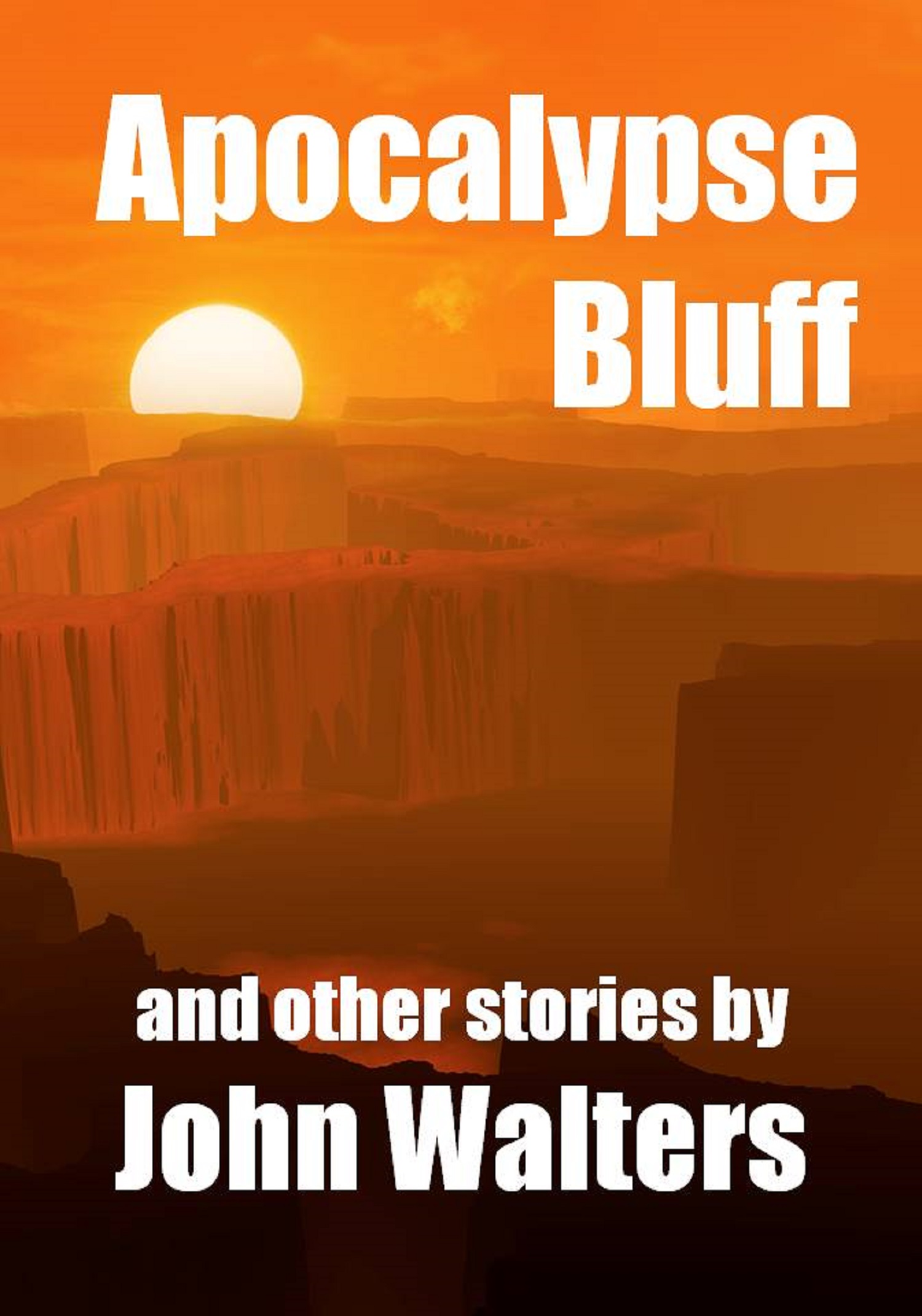
Apocalypse Bluff and Other Stories
A collection of science fiction and fantasy stories
The Senescent Nomad Hits the Road
An aging science fiction writer abandons his apartment and hits the road full time.
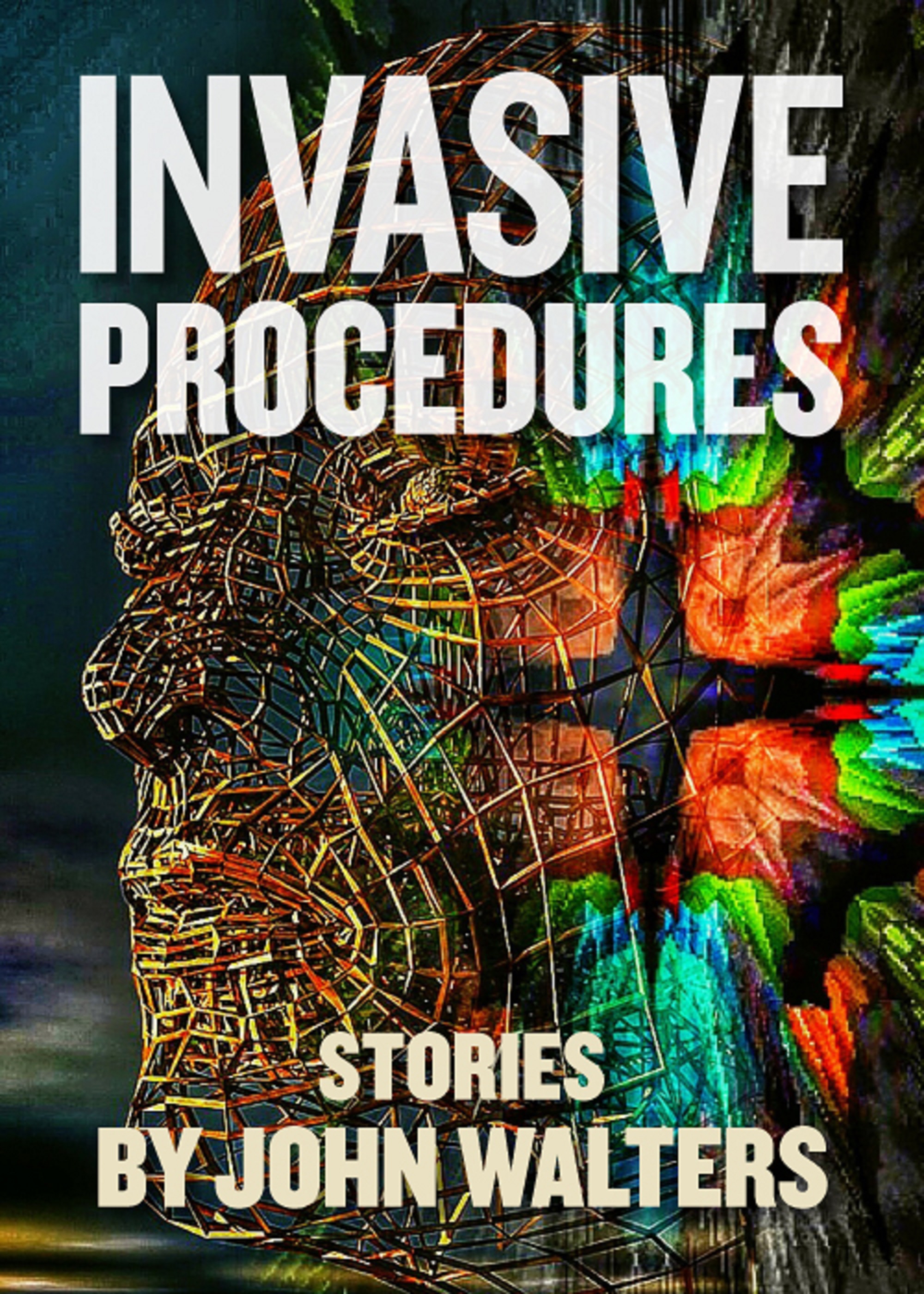
Invasive Procedures: Stories
A collection of science fiction stories.
Heroes and Other Illusions: Stories
A collection of science fiction and fantasy stories
Bedlam Battle: An Omnibus of the One Thousand Series
A compilation of four novellas comprising the One Thousand series. Hippies and benevolent aliens pursue psychotic killers.
After the Fireflood
After the Earth's surface is obliterated in an apocalyptic firestorm, human survivors from the moon and outer colonies attempt to rebuild.
Caliban’s Children
Humans must ally themselves with true beasts to overcome a dark power that morphs humans into animals and binds them to its will.
The Fantasy Book Murders
Surreal and deadly hunt for a serial killer.
Opting Out and Other Departures
A collection of fantasy and science fiction short stories about wanderers and unlikely heroes.
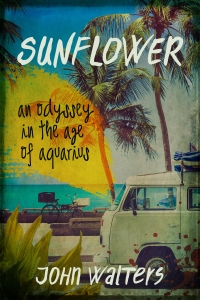
Sunflower: A Novel
A woman's odyssey, first through America and then across continents, in the dark, post-Altamont days of the early 70s.
America Redux: Impressions of the United States After Thirty-Five Years Abroad
Memoir of my return to the States after thirty-five years overseas.
Fear or Be Feared: Fantasies
A collection of fantasy short stories.
Writing as a Metaphysical Experience
Essays on a life-long quest for voice, inspiration and excellence in writing.
Reviews and Reflections on Books, Literature, and Writing
A collection of book reviews and essays on books, literature, and writing.
The One Thousand: A Novella
Science fiction thriller. A man possessed by alien entities recruits convicts for a murderous rampage.
The One Thousand: Book Two: Team of Seven
Sequel to The One Thousand. A fellowship of alien-possessed psychopaths throw a party at which they plan to slaughter all the guests.
The One Thousand: Book Three: Black Magic Bus
Sequel to The One Thousand Books One and Two. In southern Europe, the Team of Seven hunt a busload of alien-possessed psychopaths intent on unleashing a deadly pathogen in a major city.
The One Thousand: Book Four: Deconstructing the Nightmare
Fourth novella in The One Thousand Series. The Team of Seven finally confront the alien-possessed psychopaths they have been hunting.
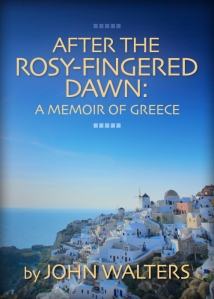
After the Rosy-Fingered Dawn: A Memoir of Greece
A memoir of my life in Greece.
The Misadventures of Mama Kitchen: A Novel
A hippy girl's adventures in a wilderness commune, Haight/Ashbury, and Woodstock.
Dark Mirrors: Dystopian Tales
A collection of dark science fiction stories.
Love Children: A Novel
Young people raised by aliens return to Earth to seek their parents.
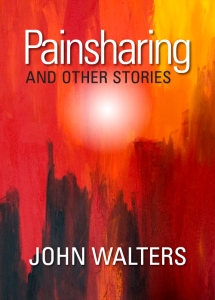
Painsharing and Other Stories
A collection of science fiction stories.
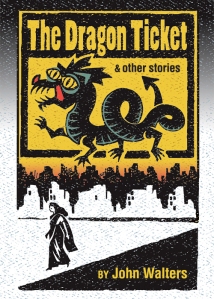
The Dragon Ticket and Other Stories
A collection of science fiction stories mostly set in India.