This week in my newsletter The Perennial Nomad: For Those Who Wander with Intent I explore the complications of crossing borders during international journeys.
Perennial nomads are citizens of the world and recognize that national borders come and go according to historical exigencies. However, no matter what country you are from, if you want to travel internationally you must navigate the systems of the world: political, social, cultural, and sometimes religious. One of the most vexing can be the political. This involves obtaining passports, visas, vaccinations, and so on. Sometimes accomplishing this takes a fair amount of determination.
This powerful expose is written by a former Facebook executive, a New Zealand national who for several years worked on government relations and global policy for the ubiquitous social network. The title comes from the novel The Great Gatsby by F. Scott Fitzgerald: “They were careless people, Tom and Daisy – they smashed up things and creatures and then retreated back into their money or their vast carelessness, or whatever it was that kept them together, and let other people clean up the mess they had made.” When this book came out, Facebook tried to suppress it, which in fact only increased its sales.
My family first began using Facebook, to a limited extent, while the kids were growing up in Greece; through it I was able to connect to my siblings overseas. It became more important when I moved to the States with some of my sons and then they began to scatter all over the country. We used Messenger to keep in touch by text and sometimes via video links. At the same time, the Facebook news feeds on my personal page rapidly deteriorated into advertisements and promotional material, until nowadays I get five to ten items of irrelevant crap for every update from friends or relatives. Still, if you can ignore the floodtide of bullshit, the network provides a valuable service in making it easier for loved ones to communicate with one another.
Wynn-Williams was working for the New Zealand government in Washington, D.C. when she became attracted to Facebook. She writes: “After years of looking for things that would change the world, I thought I’d found the biggest one going.” And: “What do you do when you see a revolution is coming? I decide I will stop at nothing to be part of it.” At the beginning she states that “the work feels important. Like Facebook is a force for good in the world.” Despite the seeming indifference of her overseers to anything other than growth and profit, for a long time she continues to feel this idealism. To spur corporate growth, she travels around the world trying to promote Facebook internationally. She goes, for instance, to Vietnam, Mexico, Argentina, Brazil, Columbia, Canada, Singapore, and has a particularly wild and somewhat dangerous journey to Burma.
Through it all, to keep Facebook growing, the company is faced with one moral compromise after another with foreign governments, all of which the top executives are willing to make as long as growth and profit are not impeded. In fact, top Facebook management figures seem to have no regard or respect for anyone else – even heads of state. Their selfishness and narcissism is well nigh unbelievable. For example, Zuckerberg himself is unwilling to wake up earlier than usual even for urgent meetings with leaders of countries. Growing users and ad revenues and maintaining Facebook’s monopoly is everything; anything else can be compromised – even politics.
A series of events disillusions the author enough so that she determines that she’ll have to leave. For example, the leadership is indifferent when an employee in another country ends up in jail due to company policy. After Wynn-Williams almost dies during a difficult childbirth, when she returns to work the atmosphere has become even more ominous. International political involvement has increased, but it mainly consists of enabling dangerous and incendiary politicians for profit, “to sign up more users.” In addition, she continues to be sexually harassed by her immediate superior. Eventually, when she tries to get away from him by transferring to another department, she is instead fired. In the end she writes: “Now I’m consumed by the worst of it. The grief and sorrow of it. How Facebook is helping some of the worst people in the world do terrible things.” Of her former employers she writes: “They could’ve tried to fix these things and still been insanely rich and powerful.”
This is a gripping memoir that tells some tragic truths about one of the world’s largest companies. One of the saddest parts, though, is that these horrific things are not even surprising. We expect such moral turpitude from major corporations these days. It’s just business, they claim, and we fall for this delusion.
I finished this book with a profound sense of satisfaction. It is not only a gripping travel adventure, but it also gives a clear picture of the all-pervasive misogyny during the era in which the story takes place. It’s hard to believe, when we consider what women have accomplished in modern times, that less than one hundred years ago the ubiquitous notion was that “a woman’s place was in the home” and that they were too delicate for anything but housewifely activities. When in 1938 botanists Elzada Clover and Lois Jotter proposed to undertake an expedition down the Colorado River to study its plant life, though, they faced intense opposition due to such pervasive attitudes. The six hundred-plus mile route through the Grand Canyon to Lake Mead was beset with perilous rapids, and only a few expeditions, composed solely of men, had successfully made it all the way through. Undaunted, the women undertook the forty-three-day journey with four male teammates in three boats, enduring numerous hardships as they collected plant specimens and took copious notes along the way. The trip became a media sensation; at each stopover point they were met by national news crews that would interview them, film them, and often ask them rude and demeaning questions.
Nowadays dams have subdued the worst of the white water, but back then the Colorado was largely untamed and considered by many the most dangerous river in the world. Besides the treacherous rapids, there were risks of heat stroke, hypothermia, exhaustion, storms, landslides, flash floods, rattlesnakes, and a multitude of other perils. If the travelers became stranded, they might starve to death, as in many places it was impossible to climb out of the canyon back to civilization. They all had to rely on each other, as well as on their courage, tenacity, skills, and sometimes sheer luck.
Clover and Jotter were true pioneers in establishing the place of women in scientific endeavors. However, as the author points out: “The same challenges that Clover and Jotter confronted decades ago remain barriers for women in the sciences today.” They receive, on average, significantly smaller salaries than men and are able to publish fewer papers than their male counterparts. It is an ongoing struggle. As for the Colorado, Sevigny states that “many questions remain for the river’s management.” The overriding considerations have to do with the balance between human usage and protection of its ecosystems.
While reading this exciting book, I couldn’t help but remember a river journey I almost made during my travels on the Indian Subcontinent. During my first trip east, after traversing the Khyber Pass between Afghanistan and Pakistan, on a train ride from Peshawar to Rawalpindi I met another traveler, a Norwegian, and we concocted a scheme to get hold of some sort of boat in Multan in central Pakistan and travel down the Indus River to Karachi. It was a ridiculous and foolhardy idea, which we realized as soon as we reached Multan. (We eventually continued onward by train.) But for a brief time we envisioned ourselves as river tramps.
Clover and Jotter, though, fulfilled their vision, became national heroes, and furthered the cause of science, and this exciting book tells their true story. Recommended.
I’m a professional writer; I make my living by my words. I’m happy to share these essays with you, but at the same time, financial support makes the words possible. If you’d like to become a patron of the arts and support my work, buy a few of my available books or available stories. To send a one-time or recurring donation, click here. You can also donate via my Patreon account. Thanks!
Right at the beginning of this enigmatic, sometimes funny, sometimes tragic, mystifying, and surreal book, the author states that it is at least partially based on fact, but “to keep the lawyers cooling their heels,” the “whole thing has been fitted with a fiction overcoat.” He emphasizes that if he is pressed on the issue, he would swear that he “made it all up. Even if it really happened.” This reminded me of another book that I read a few years ago called I Love You but I’ve Chosen Darkness, in which the autobiographical elements create verisimilitude for the more flamboyant, obviously fictional parts.
The narrator of People Like Us is a novelist who has recently won what he refers to as “The Big One,” the National Book Award, just as the real author, Jason Mott, won the 2021 National Book Award for his novel Hell of a Book. I have not read Hell of a Book, but after reading a short summary, I realize that People Like Us seems to be a sort of sequel to it, using the same structure and some of the same characters. Like its predecessor, People Like Us alternates its primary narration with third-person accounts of a character named Soot who is also an author and a doppelganger of the narrator. Soot’s story, though, is suffused with tragedy, full of school shootings and divorce and suicide, while the first-person narrator, although he is pursued by a psychotic surrealistic character named Rufus who is trying to kill him, and although he has become paranoid and carries a loaded gun wherever he goes, has a more light-hearted tone – or at least he adopts a light-hearted tone to cover the overwhelming angst he continually feels. After winning “The Big One,” the narrator is invited on a European book tour by a French billionaire. In his story, he blocks out the billionaire’s real name (for legal purposes, he claims) and calls him Frenchie. He also nicknames other major characters: Frenchie’s bodyguard becomes the Goon, and Frenchie’s secretary becomes the Kid.
Frenchie is so wealthy that money is completely irrelevant to him, and he offers to support the narrator in a lavish lifestyle, in other words with so much cash that he’d want for nothing, so that he can spend his full time writing without having to worry about his financial well-being. There’s only one catch: he can never return to the States. He must live in permanent exile. Considering the horror stories in the Soot sections of the story, this would seem to be a no-brainer; after all, the United States has become, for the narrator as well as for Soot, a hellhole full of traumatic memories. There is one scene in Paris in which famous Black expatriate writers, over drinks and snacks, extol on how great they feel after leaving the United States behind. In response to this, the Kid (who is an American expatriate) has a fit and runs off into the darkness screaming in perplexity, wondering why they don’t all instead return to the States and try to fix it.
Throughout both story threads are surrealistic elements. For instance, some memories are so graphic that they are referred to as time travel; in addition, the narrator has visions of things that may or may not really be there, and one of the characters, a woman named Kelly, can hear the narrator’s thoughts as if through telepathy. There is also the question of the title. Who does he mean when he refers to “people like us”? He comes back to this conundrum over and over in alternate renderings; besides “people like us” he points out “someone like me,” “people like you,” “not like you,” and so on. Each time the phrases are used, they seem to refer to different groups. For example: writers who have won major awards; writers in general; all creative people; Black people; famous Black people; Black writers; displaced people without homelands; everyone. The phrase continues to shape-shift all the way to the final paragraphs of the last page, and the plot (which, remember, may or may not be true) continues to twist until the end. All in all, People Like Us is an entertaining, albeit somewhat depressing, read; I’ll leave it to you to draw your own conclusions about its denouement.
I have been pondering how nomadic travel has changed over the decades since I first hit the road.
“The world is changing,” says Galadriel at the beginning of Peter Jackson’s trilogy of The Lord of the Rings. “I feel it in the water, I feel it in the earth, and I smell it in the air.” In the books, though, it is Treebeard who utters this iconic statement as the quest is ending and the hobbits are on their way home. Either way, the emphasis is on profound transformation of the way things have been into something new and different.
I stepped forth onto the open road in the early 1970s. At that time, hitchhiking was common practice amidst budget travelers. Not only in the States, but also in Europe it was common on major roads and highways to see people, especially young people, with their backpacks or duffle bags at their sides and their thumbs out expectantly. At the entrances to some popular European highways, hitchhikers were lined up, individually or in groups of two or three, for a hundred meters or so down the road, and though many drivers stopped to assist, there were always more folks waiting for lifts. One crossroads I recall, on the Peloponnese Peninsula in southern Greece, was a mob scene. When I climbed out of the vehicle I’d been traveling in, I was surrounded by forty or fifty travelers, all looking to hitchhike to Olympia, the site of the ancient games. The only people getting rides in that location, where the drivers were overwhelmingly Greek males, were teamed up with young women. I managed to attach myself to a small group composed of two men and a German woman and thus moved on, but it wasn’t easy. Usually, however, in that era, rides came easy – so much so that on one trip I hitchhiked clear across the Middle East and all the way to Goa on the west coast of India.
Alas, those days are long gone. You never see hitchhikers on the road these days. It isn’t safe. Drivers are more suspicious. As quoted above: the world has changed.
It also used to be common for people to take long road trips in their cars or camper vans. I used to love to drive Interstate 5 from Seattle to California and back. Later, when I was living in Europe in the eighties and nineties, I used to love to take trips in borrowed campers – until with a well-timed inheritance my young family and I managed to buy our own. In Italy and Greece it was easy to find a place to stop for the night. There were regular campgrounds, of course, which we could pay for if we happened to have the money, but it was also possible to pull over almost anywhere and bed down for the night: at rest areas, parking lots at parks and beaches, and even the parking lots of shops and restaurants, provided we requested permission first. As long as we asked first, we could stop almost anywhere.
More recently in the States, Nomadland by Jessica Bruder highlighted the trend of retired couples and individuals, instead of enduring the expense and inconvenience of traditional homes, hitting the road fulltime in RVs. The book told of where these people would stay, the temp jobs they would take, and the road culture that arose as the travelers met and mingled. This still goes on, I’m sure, but I am concerned for the safety and security of these committed nomads as the federal government and more and more state governments treat homeless, or rather houseless, people as criminal indigents.
Times change. Situations evolve. And not everyone has the physical stamina or finances to remain on the road permanently in their vehicles. That’s why I emphasize that being a perennial nomad is a state of mind. It is the awareness that regardless of our specific locations, we are all hurtling through space in a gargantuan RV called the planet Earth. None of us can claim permanency anywhere, because in the time it takes me to write this sentence, we have moved from one point in the universe to another with no possibility of ever returning to where we were. That’s why I encourage everyone, regardless of your circumstances, to think like a nomad. If you can’t travel far from your homeland, expand your horizons by reading books and explore your environs by visiting museums and other nearby treasure-hoards of learning. If you can physically travel, on foot or by car or bus or train or plane or ship, great! If you can’t – then feed your head. In an article a few years back in The Guardian, singer/songwriter Grace Slick clarifies what she meant by the phrase “feed your head” in the Jefferson Airplane song “White Rabbit.” She says, “The line in the song ‘feed your head’ is about both reading and psychedelics. I was talking about feeding your head by paying attention: read some books, pay attention.” The song was a big hit in the sixties with its powerful references to Alice in Wonderland and its allusions to psychedelics, but the point I want to make here has nothing to do with drugs; it concerns feeding your nomadic mind and heart with experiences such as traveling, exploring the locale in which you find yourself, and delving into the endless multiverse of literature. Stay curious. Stay attentive. Stay receptive. And stay on the move.
I’m a professional writer; I make my living by my words. I’m happy to share these essays with you, but at the same time, financial support makes the words possible. If you’d like to become a patron of the arts and support my work, buy a few of my available books or available stories. To send a one-time or recurring donation, click here. You can also donate via my Patreon account. Thanks!
It is in times like these that people react not only politically but spiritually.
While contemplating the horror story that comprises modern news, I abruptly realized that there are parallels to the state of the country during the era in which I grew up, in particular the late sixties and early seventies. The Vietnam War had become a deadly quagmire; kids were getting drafted and sent off to die in a civil war halfway around the world. At home there were protests and face-offs with police and troops. College students on their campuses were getting beaten and even shot. It was a time of uncertainty and paranoia, which eventually culminated in the resignation of a president under threat of impeachment. Dark days indeed. But in the midst of the upheaval, there was also a spiritual awakening. Many people, young people in particular, abandoned dysfunctional society and went back to the land, often living in communes in fellowship and solidarity. Some became nomadic and set out to see the world. Others remained where they were and fought for change, with emphasis on racial equality, women’s rights, individual freedoms, and other key issues. This internal awakening, which swept across the country and around the world, was like a bright shining light in the midst of the deep darkness of government-imposed violence. And this light inspired artistic representations in music, literature, film, and other mediums. It made the era special not only because of its crass horrific ignorance and violence, but also because of the awakening of the best in humankind, the brotherhood and sisterhood of all of us, the willingness to esteem others, regardless of their idiosyncratic characteristics, as beloved equals, and to assist those in need. Beneath the ubiquitous barbarity in the daily news ran an undercurrent of countercultural tranquility and harmony. I remember it well. It made the sixties and seventies special. It united those of good will. It made hitchhiking from place to place possible, and it inspired the creation of communes of like-minded people. As I traveled from continent to continent, I found that this spirit had preceded me and that I could find congenial companions wherever I went.
Why do I bring this up now? After all, the sixties and seventies are long gone. It came to me abruptly, though, that the world is once again in confusion. The police and military are once again turning on their own fellow citizens. The country and the rest of the world are in turmoil. And this awareness caused me to consider the fecundity of this present time. In the midst of chaos, spiritual awareness will arise to combat it. I don’t think what happened in the sixties and seventies was an anomaly; it was a reaction to the vicious circumstances of the era. It was the human spirit arising like a gorgeous flowering plant out of the fetid fertilizer of political and social realities. In the past, great good rose like an inevitable healing balm out of great pain. And it occurred to me that what has happened before will happen again. How it will happen and what form it will take I don’t know. But bullies, by their very nature, are bound to fail; in their ignorance, by their nefarious deeds they ignite nobility in humankind. I can’t wait to see it. Since this insight I have had my inner eyes open for the first glimmers of a radiant dawn.
I’m a professional writer; I make my living by my words. I’m happy to share these essays with you, but at the same time, financial support makes the words possible. If you’d like to become a patron of the arts and support my work, buy a few of my available books or available stories. To send a one-time or recurring donation, click here. You can also donate via my Patreon account. Thanks!
Another tried and proven book I brought upon the journey to Maine to reread is Tropic of Cancer by Henry Miller. To be honest, I found it somewhat disappointing, but in all fairness, Miller’s words have not changed, I have.
When I first read it as a young writer back in the early 1970s, it was just what I needed to break me out of the rut of bland tradition in which I was ensconced. It is exuberant, raunchy, joyful, and iconoclastic. It showed me that a writer could be defiant, bold, and wholly original. The occasional fits of surrealism dazzled me, and the plunges into vulgarity didn’t bother me in the slightest. It awakened in me the desire to find my own voice as a writer. After finishing Tropic of Cancer I sought out other works by Miller such as Tropic of Capricorn, Black Spring, The Rosy Crucifixion, The Colossus of Maroussi, and Big Sur and the Oranges of Hieronymus Bosch. I liked his mix of pseudo-autobiography and stream of consciousness.
When I say that I am disappointed after my recent rereading of Tropic of Cancer, I am not criticizing the value of Miller’s work. I still like the pseudo-autobiography, the surrealism, and the stream of consciousness. However, in this reading of the book, I find it harder to put aside the fact that Miller takes delight in presenting himself as somewhat of a selfish, freeloading, vain, woman-chasing asshole. I get it: exaggeration is the name of his game; it’s what makes the narrative work. And it is marketed as a novel, not as a straight autobiography. It’s just that, well, I’ve been as poor as Miller claims to have been in his book; I have lived in poverty in foreign lands, sometimes even begging to survive. But I have never seen the need to compromise my ethics or my feelings of empathy for the fellow humans with whom I became acquainted; it never occurred to me to describe them with the snide, cynical attitude that Miller assumes in Tropic of Cancer. Most often, they were my fellows in distress; when they assisted me in my need I was sincerely grateful.
To balance the appraisal, I have also read a few biographies of Henry Miller, and by all accounts he was not the self-centered, predatory scoundrel that he comes across as in print. In reality, he was kind, open-minded, and generous, although somewhat impractical in matters of money. He had loyal friends. And in 1964 no less an entity than the United States Supreme Court overruled obscenity rulings by multiple state courts and declared Tropic of Cancer to be a work of art.
I have no issue with the obscenity in the book. What I object to is not the protagonist’s sexual depravity, such as it is, but rather his extreme egocentricity and resultant callousness toward others. It is this trait that irritated me during this most recent reading. If you have never read it though, I would still recommend the book, if you can stomach the vulgarity and the narrator’s insulting attitude. He takes verbal aim at everyone, with no exceptions, and he does it with unparalleled eloquence. That’s what kept me reading this time despite everything: the eloquence. Miller is a literary master when it comes to esoteric vocabulary, unusual turns of phrase, originality of expression, and unexpected flights of surrealistic fantasy.
My latest collection of book reviews, Reviews and Reflections on Books, Literature, and Writing: Volume Four, is now available in paperback and as an ebook at various online outlets. Links to these are below.
As I wrote recently in my essay “Book Reviews as Autobiography”:
To write about the thoughts and impressions brought about by a book is as valid as writing about a physical journey that I take to another location. The author of the book serves as my traveling companion. To undertake the reading of a book is a fascinating experience in that as a reader I have voluntarily stripped myself of my senses, except the vision that allows me to see the words on the page, and I have put myself at the mercy of someone, most often a stranger, who constructs a mental and emotional world out of words, places me in it, introduces me to its inhabitants, and then draws me into a story based on all the assembled parts. This is true for nonfiction as well as fiction.
Every writer approaches their subject matter differently, and every book review says as much about the reviewer as about the book.
And this is from the introduction of the new volume:
Picture a book as a gateway to a new land and a book review as a tantalizing glimpse of it, a brief travel memoir of someone who has been there and come back. A large part of what makes life so thrilling is our appreciation of the interpretations of experiences that we find in books. So sit back in your favorite chair or couch or lie down on your bed or chaise lounge and dive in. Allow these reviews to assist you in your own literary explorations by guiding you to new worlds of imagination and adventure.
As I write this I’m in Orono, a town near Bangor, dog-sitting for my son while he embarks on a scientific expedition in Alaska with some researchers from the University of Maine. My thoughts have turned to Jack London for a few reasons. First of all, I decided to bring along books that are tried and true in my personal past, and one of these is Sailor on Horseback. I discovered this book at just the right time, as a young writer wondering how I could bring out in words what was boiling inside. The story of Jack London inspired me not only to focus wholeheartedly on my writing, but also to get out into the world, see things I’ve never seen, meet people from other cultures, take risks to fulfill my goals, and move forward in spite of whatever obstacles are in my way. This fast-paced “autobiographical novel” by Stone lifted my spirits almost immediately as soon as I started it this time – even though, or perhaps because, I had read it several times before. Familiar passages uplifted me as if I were interacting with an old friend.
Another boost to my spirit occurred when I discovered amidst my son’s books a copy of a large-sized volume full of old photos called Jack London Ranch Album. He said he picked it up during a visit to Jack London State Historic Park at Glen Ellen in northern California a few years ago. I’ve been to the park several times and have been enthralled at the various museums and at the ruins of Wolf House, the mansion London constructed on his ranch that burned down just before he and his wife were about to move in. The first few times were when I was on the road, a fulltime traveler, and as I wandered around the grounds and in particular as I contemplated the masses of stone walls that were all that was left of Wolf House, I fell into a meditative state about my life and my writing. I returned with two of my sons decades later and we strolled through the grounds together; our conversations turned naturally to literary themes.
A recent experience that caused me to remember Jack London was my discovery of a museum downtown: the Seattle unit of the Klondike Gold Rush National Historic Park. Seattle was the jumping-off point for many gold seekers, and this museum celebrates the phenomenon of the gold rush that helped make the city what it is today. The park has additional museums and historical buildings in Skagway, Alaska. Jack London traveled from San Francisco to Dawson via Skagway in search of gold, but didn’t find any. However, Stone states: “He arrived home without a penny in his pocket, yet he who had never mined an ounce of gold in Alaska was to make more money out of the gold rush than any sourdough who staked a claim on Bonanza Creek.” That’s because London turned his experiences into literary treasure. In the midst of poverty he struggled for a long time for recognition as a writer. His first-sold efforts were beautiful though often heartrending short stories of the far north such as “The White Silence,” “In a Far Country,” “The Law of Life,” “To Build a Fire,” and “An Odyssey of the North,” but his breakthrough came with his novella The Call of the Wild, which catapulted him to instant fame. This was followed not long after by another classic dog story: White Fang. Perusing the exhibits at the Klondike Museum inspire me to think of Jack London, who set forth to live an adventurous life so that he might afterwards write about it.
* * *
I’d written the above before I had finished the book, but a few more words need to be said. I mentioned that the story of young Jack London working hard to establish his literary reputation filled me with delight and inspiration, and that’s true. However, as I read on, I realized that his later life increasingly turns into tragedy, and his flaws seem to leap out of the pages. He considered women inferior to men; he thought of “the inevitable white man,” epitomized by himself, as superior to other races; he called himself a socialist and gave speeches on equality and solidarity but at the same time earned a fortune and purchased vast land holdings. To top it off, he was terrible at money management, constantly overspent whenever something he wanted caught his eye, and was always deeply in debt. He seemed to be incapable of making mature decisions, especially as he got older. To balance the equation, though, it is important to mention that Stone writes the story of London’s life with intense melodrama (hence the subtitle “an autobiographical novel”), and other biographies, several of which I have read, are more nuanced. And despite his faults, Jack London was an exceedingly talented writer. He even wrote a terrific science fiction story called “The Red One,” about which none other than Theodore Sturgeon said, “Lord, how that fellow could write!” We all have our flaws. To say that London was a product of his times is not an excuse for his errant views, but it might perhaps be a justification for reading his books, even if the man himself falls short from a modern moral standpoint.
This week in my newsletter The Perennial Nomad: For Those Who Wander with Intent I explore the amazing Museum of Flight in Seattle.
According to Wikipedia, the Museum of Flight is “the largest private air and space museum in the world.” It is magnificent. It is composed of numerous exhibition pavilions the size of warehouses; these structures are brimming with full-sized aircraft from the past and present along with a mind-boggling array of wall murals and other displays. These wonders ignite the imagination. They cause memories to stir of films, TV, books, and possibly personal experience. They feed your soul. A place like the Museum of Flight offers an opportunity to time travel and even to look forward into the future. Sometimes, as in the war exhibits, we experience the nightmares of the past, but other times, when we explore the possibilities of space flight, our imaginations soar to worlds beyond.
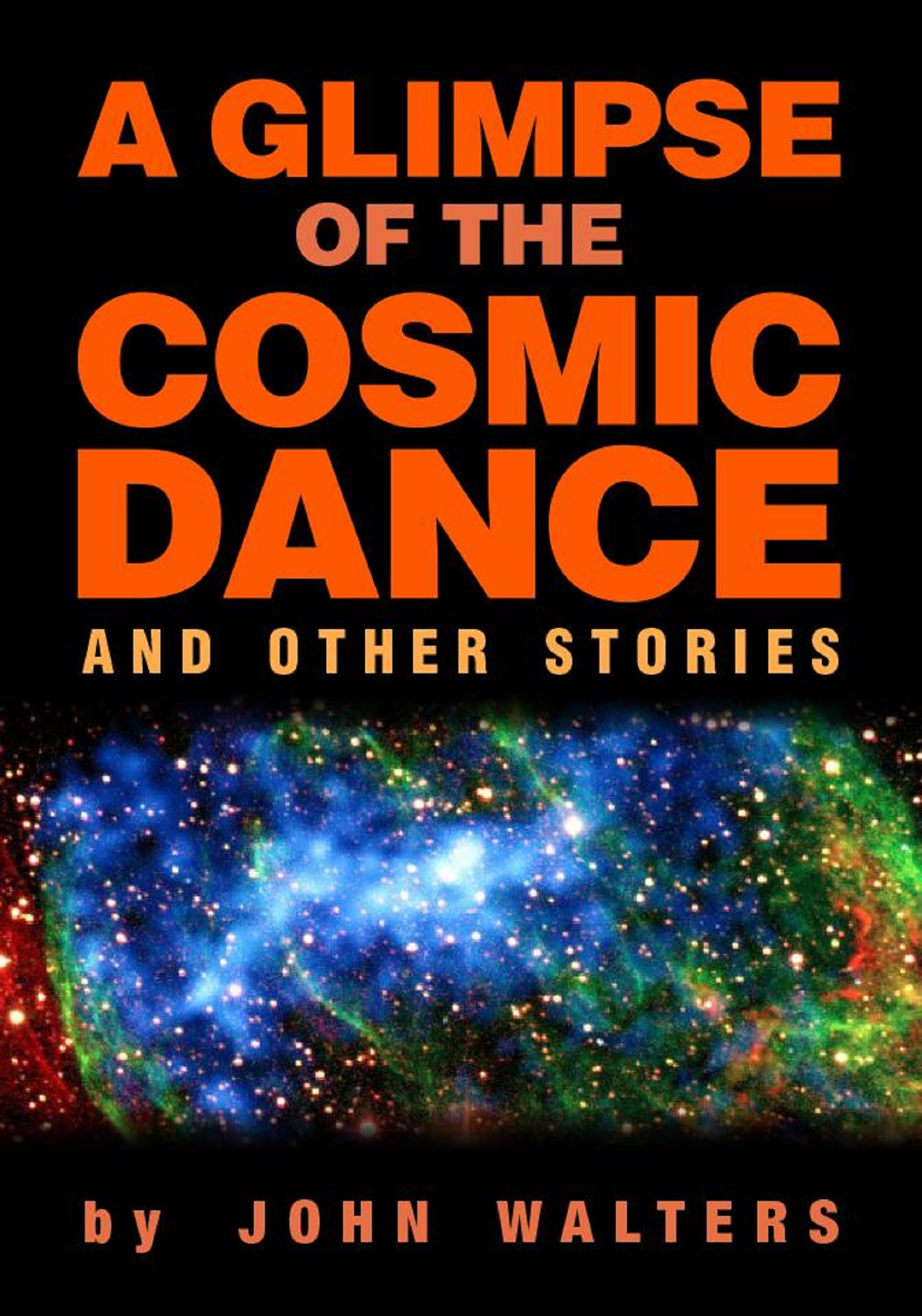
A collection of science fiction and fantasy short stories
Thoughts from the Aerie
Memoirs and essays on a range of topics
Silent Interviews
Stories about the mysterious Telepathic Guild
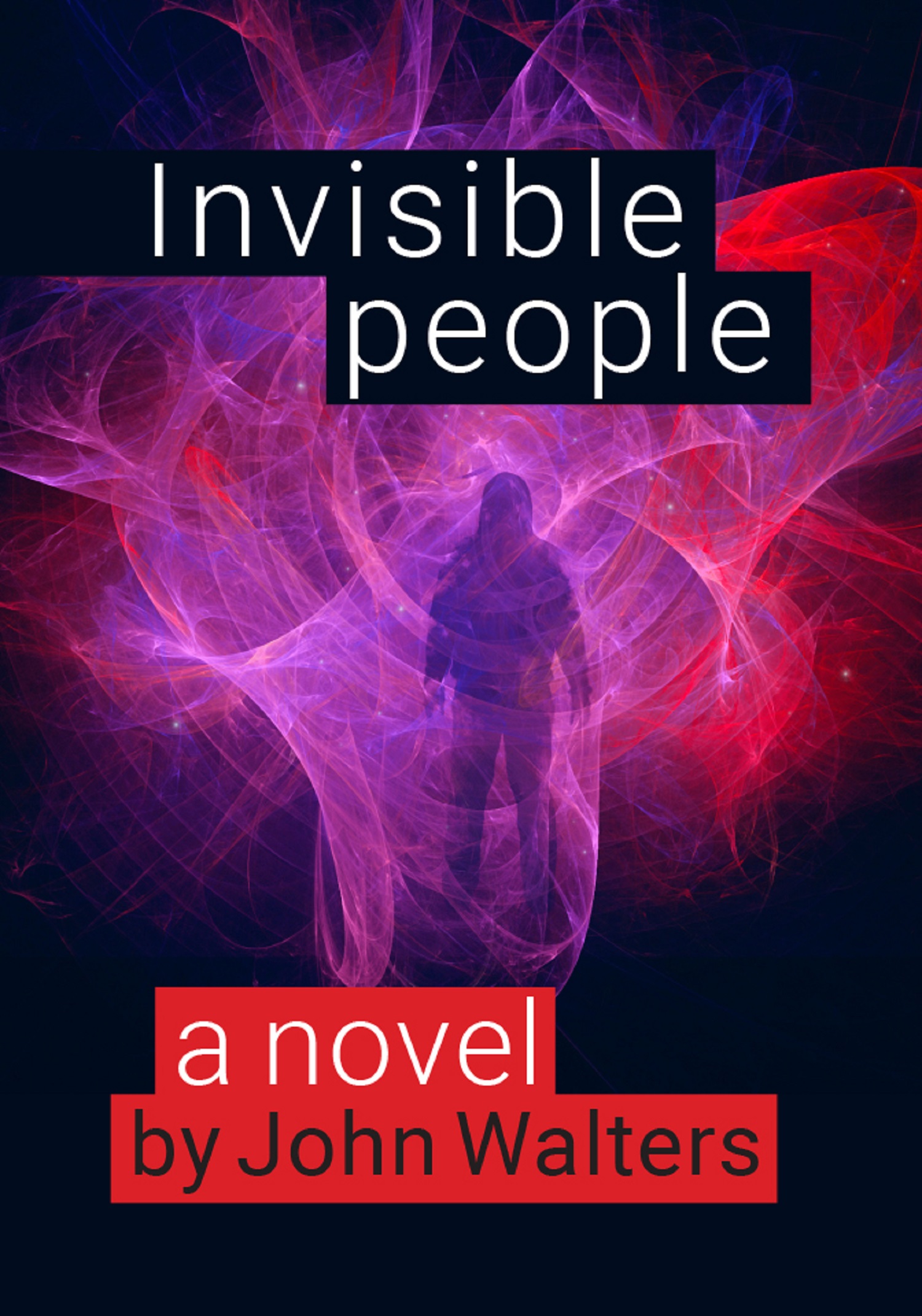
Invisible People
A thrilling novel of time travel, alien invasion, and mysterious portals
A collection of science fiction and fantasy stories
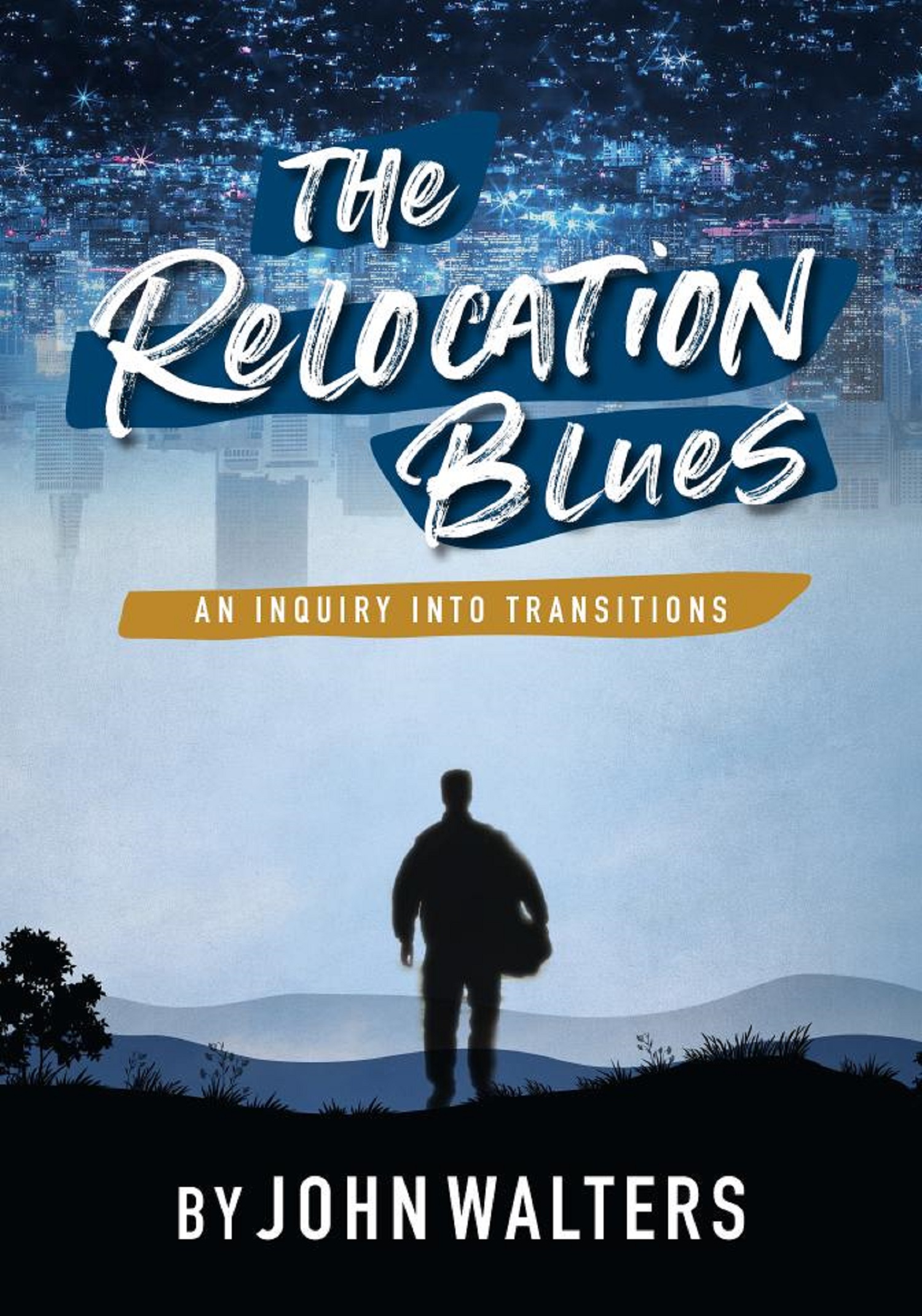
The Relocation Blues
A memoir of life's transitional experiences
Adriana’s Family
A novel about alien contact.
The Woman Who Fell Backwards and Other Stories
A collection of science fiction and fantasy stories.
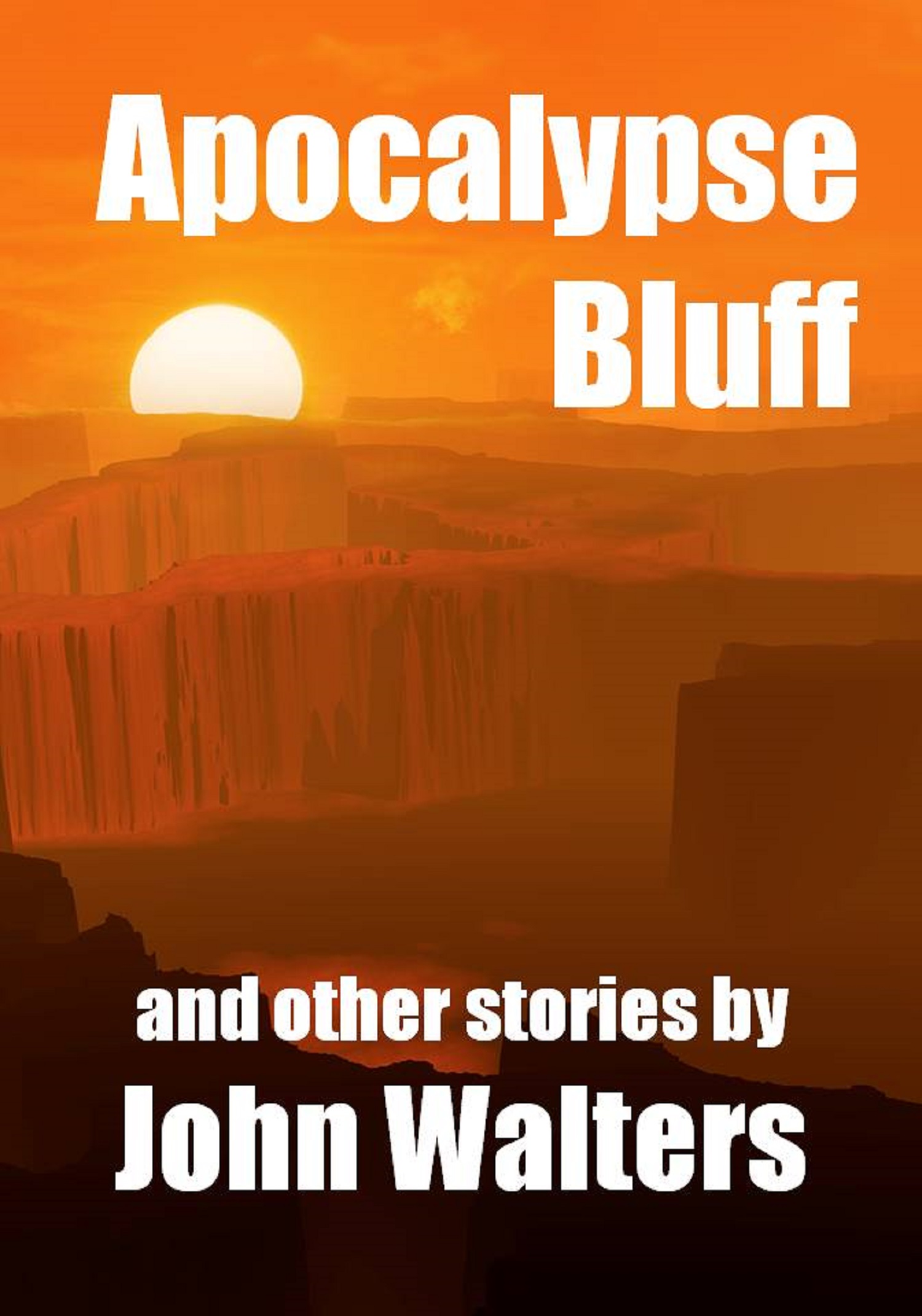
Apocalypse Bluff and Other Stories
A collection of science fiction and fantasy stories
The Senescent Nomad Hits the Road
An aging science fiction writer abandons his apartment and hits the road full time.
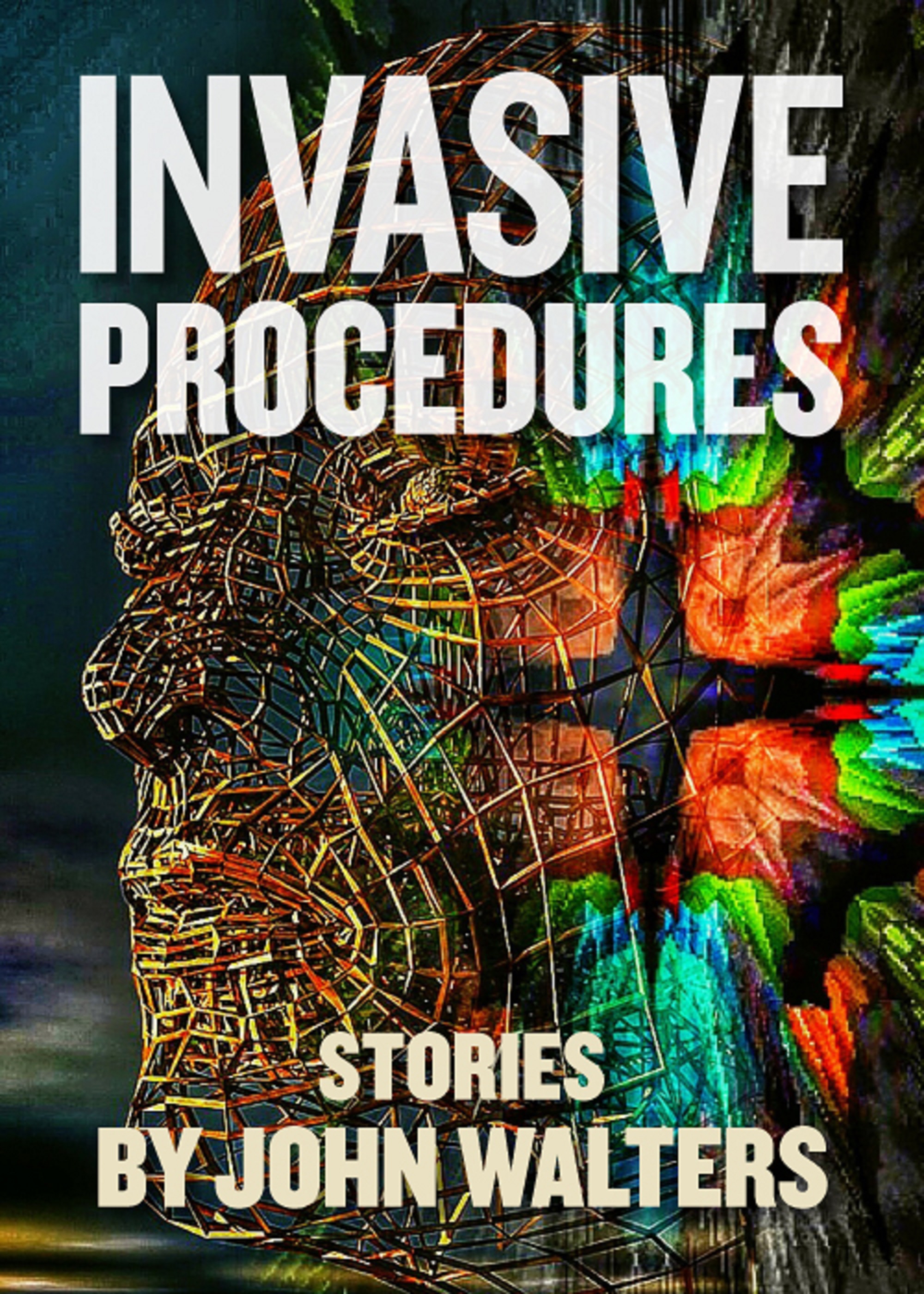
Invasive Procedures: Stories
A collection of science fiction stories.
Heroes and Other Illusions: Stories
A collection of science fiction and fantasy stories
Bedlam Battle: An Omnibus of the One Thousand Series
A compilation of four novellas comprising the One Thousand series. Hippies and benevolent aliens pursue psychotic killers.
After the Fireflood
After the Earth's surface is obliterated in an apocalyptic firestorm, human survivors from the moon and outer colonies attempt to rebuild.
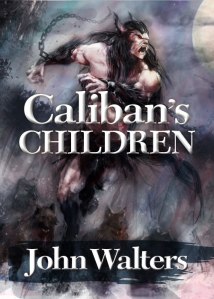
Caliban’s Children
Humans must ally themselves with true beasts to overcome a dark power that morphs humans into animals and binds them to its will.
The Fantasy Book Murders
Surreal and deadly hunt for a serial killer.
Opting Out and Other Departures
A collection of fantasy and science fiction short stories about wanderers and unlikely heroes.
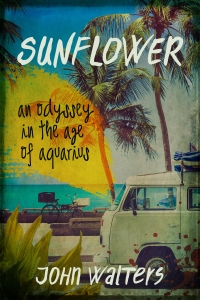
Sunflower: A Novel
A woman's odyssey, first through America and then across continents, in the dark, post-Altamont days of the early 70s.
America Redux: Impressions of the United States After Thirty-Five Years Abroad
Memoir of my return to the States after thirty-five years overseas.
Fear or Be Feared: Fantasies
A collection of fantasy short stories.
Writing as a Metaphysical Experience
Essays on a life-long quest for voice, inspiration and excellence in writing.
Reviews and Reflections on Books, Literature, and Writing
A collection of book reviews and essays on books, literature, and writing.
The One Thousand: A Novella
Science fiction thriller. A man possessed by alien entities recruits convicts for a murderous rampage.
The One Thousand: Book Two: Team of Seven
Sequel to The One Thousand. A fellowship of alien-possessed psychopaths throw a party at which they plan to slaughter all the guests.
The One Thousand: Book Three: Black Magic Bus
Sequel to The One Thousand Books One and Two. In southern Europe, the Team of Seven hunt a busload of alien-possessed psychopaths intent on unleashing a deadly pathogen in a major city.
The One Thousand: Book Four: Deconstructing the Nightmare
Fourth novella in The One Thousand Series. The Team of Seven finally confront the alien-possessed psychopaths they have been hunting.
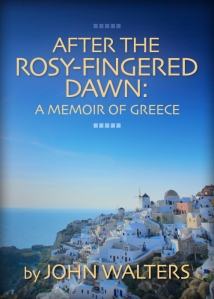
After the Rosy-Fingered Dawn: A Memoir of Greece
A memoir of my life in Greece.
The Misadventures of Mama Kitchen: A Novel
A hippy girl's adventures in a wilderness commune, Haight/Ashbury, and Woodstock.
Dark Mirrors: Dystopian Tales
A collection of dark science fiction stories.
Love Children: A Novel
Young people raised by aliens return to Earth to seek their parents.
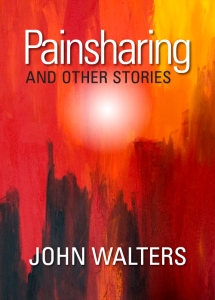
Painsharing and Other Stories
A collection of science fiction stories.
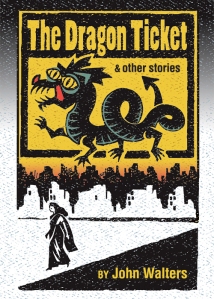
The Dragon Ticket and Other Stories
A collection of science fiction stories mostly set in India.






















 John Walters