A Spray of Short Stories for Summer Stimulation

This article was originally written and posted in January of 2019. I have updated it to include my latest short story collections. Relax and enjoy the excitement of some great short stories while you bask in the summer sun.

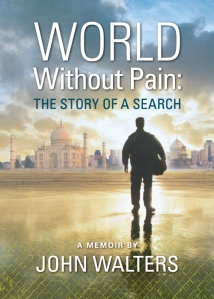
I mean the word “spray” in the title both as a powerful expulsion of metaphorical liquid and as an attractive display of flamboyant flowers. I’ve written a blog post called “Books Make Great Gifts” about some of my available full-length works, so I thought why not highlight some short stories? So here they are, volume by volume, some of my personal favorites from among my own short stories. Note that there are links to entire collections or to individual stories.

To check out some promotional videos of my short story collections, click on the Instagram icon on the upper right of this page.

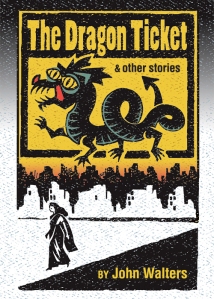
From The Dragon Ticket and Other Stories:

The Dragon Ticket“: Presented with an extraordinary gift by an alien artifact high in the remote Himalayas, a young woman named Michelle must learn how to use her new power as nuclear war plunges the world into chaos.

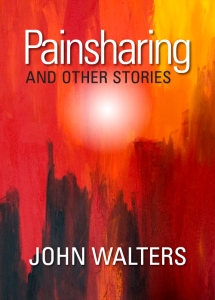
From Painsharing and Other Stories:

Beyond Purgatory“: On a far planet the ultimate civil punishment is to be genetically deformed into a monstrous beast and forced to live in the forbidden compound called Purgatory as a slave of the State.  When authorities arrest and condemn the woman he loves, Justus determines to find and save her, even if he must search Purgatory itself. 

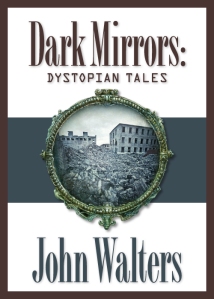
From Dark Mirrors: Dystopian Tales:

Dark Mirrors“: The people of Earth are losing a war with aliens that they themselves provoked.  Every able-bodied person is being called up to fight, even prisoners; those who refuse are threatened with dismemberment to provide spare parts for wounded soldiers.  A battle-hardened general enters a prison to recruit a woman who refuses to fight, but who may have a most unusual special ability that can turn the tide of the war.

From Fear or Be Feared: Fantasies:

Fear or Be Feared“: A teenage Greek girl climbs Mount Olympus with some of her friends.  Lost in a lightning storm, she discovers the spirit of an ancient Greek god which possesses her and uses her against her will as an instrument of vengeance.

The Customs Shed“: Those who wish to cross the river of death must first be purged in the customs shed; but within await the mysterious customs agents.  What will they require as the price of passage?

From Opting Out and Other Departures: Stories:

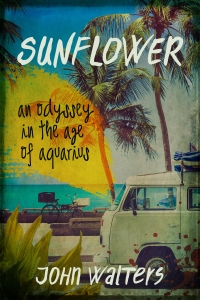
Opting Out“: It is the near future, and due to easier availability of alternative energy, fossil fuels are becoming outlawed.  Fleeing south along the coastal highway from a state government that threatens to confiscate the gasoline-fueled camper-van he lives in, a homeless man comes across a seemingly-idyllic communal refuge for homeless people set up by a philanthropic dot-com billionaire.

Opting In“: An old man, feeling useless, leaves his daughter’s home to go live in a homeless shelter. Following up on a tip from a fellow vagrant, he finds an alien being preparing to leave Earth who invites him on a journey from which he can never return.

From Heroes and Other Illusions: Stories:

Matchmaker“: From a future bereft of emotion, a time traveler journeys to Thessaloniki, Greece, in 1917 to find a legendary matchmaker and learn the lost secret of true marriage. Although aware that the city is about to become decimated by fire, he becomes betrothed to a local woman and must choose between remaining in the past or returning to the future with the desperately needed knowledge he has acquired.

Katabasis“: After traveling to India to take advantage of cutting-edge psychiatric technology, a jaded ailing old man embarks on a guided journey through his memories to locate and correct errant decisions that shaped his life.

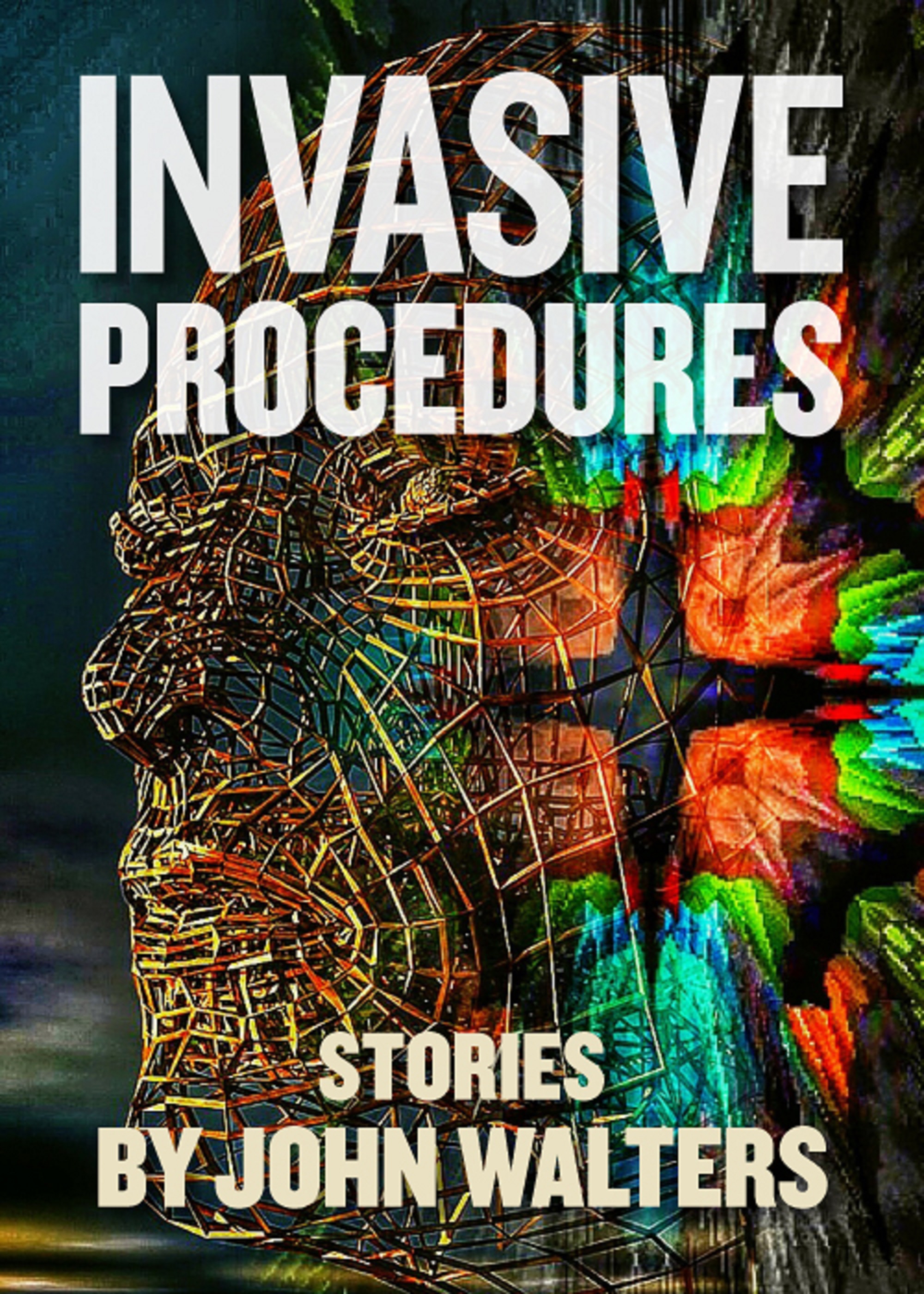
From Invasive Procedures: Stories:

The Beatification of Lady Poverty“: A government operative recruits a young woman with a very special power of self defense for a mission to help end a war in Europe. However, once she unleashes them, her mysterious abilities provoke changes beyond anything her handlers intended or imagined.

Camp College“: In the near future, as societies continue to erode and the gap between rich and poor widens, inexpensive college camps spring up around the country as an alternative form of higher education. At one such camp, a partially dysfunctional veteran and a woman alienated from her family meet and attempt to make sense out of the rapidly changing world.

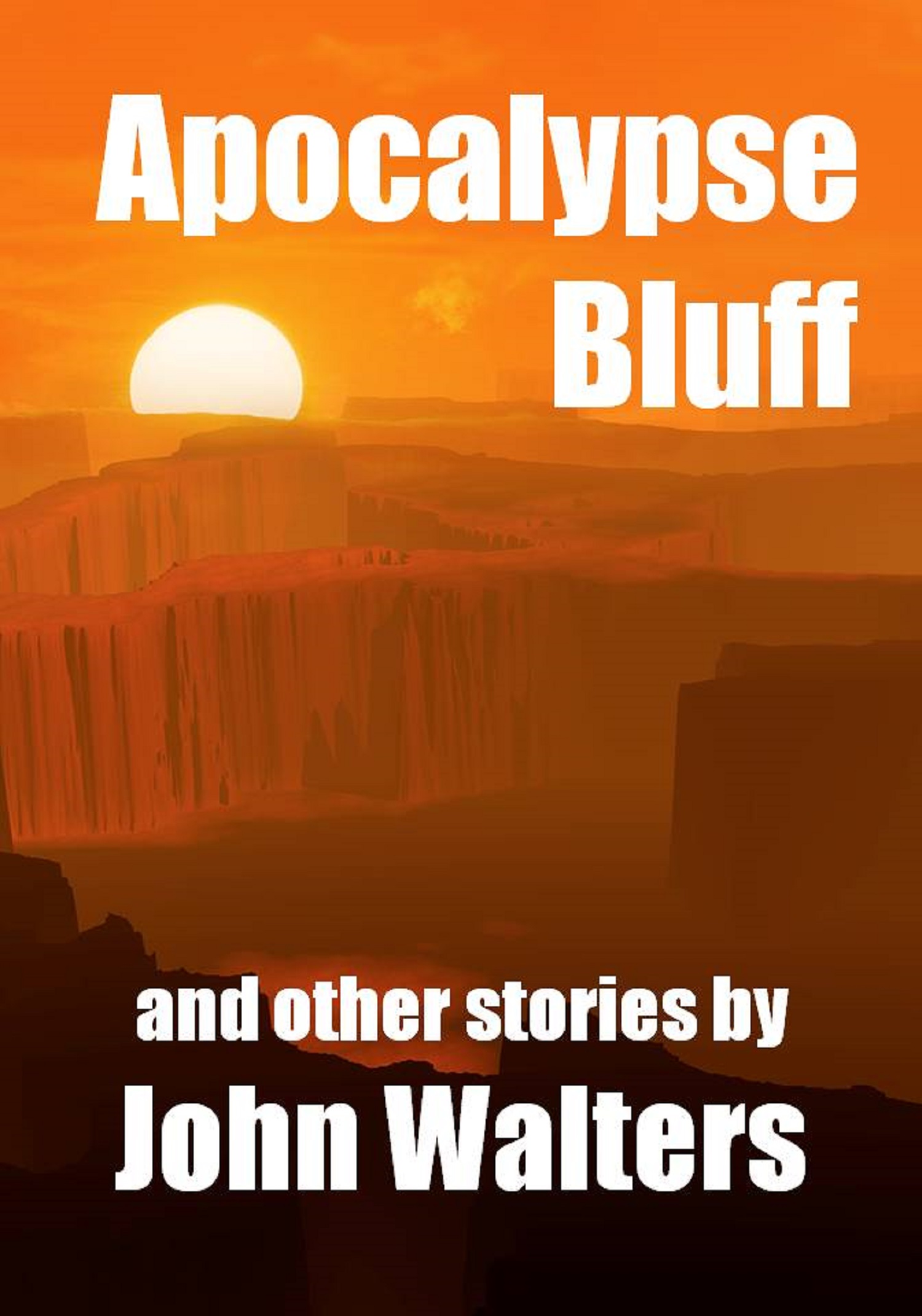
From Apocalypse Bluff and Other Stories:

Connecting the Dots in Pointillist Paintings“: A recently divorced woman joins a virtual community in search of social acceptance and companionship. After fashioning a new identity for herself, she sets off to explore the meticulously created landscapes of this new world, unaware that the beautiful environments are rife with human predators.

Apocalypse Bluff“: As invading aliens unleash monsters resembling mutated Earth carnivores to devour humankind, an extended family gathers together in a mansion on an isolated bluff for a last stand. To survive, they must fight together against ravenous beasts attacking from land and sea.

From The Woman Who Fell Backwards and Other Stories:

The Woman Who Fell Backwards“: A woman agrees to take part in a research program that will propel her backwards in time on a one-way, never-ending journey. On one of her pauses during her tumble into the past, she meets someone who seems to know her, and they initiate an unusual and enigmatic romance.

The Magic Debit Card“: An elderly homeless man suddenly discovers that his debit card, which is usually almost empty, has been filled with thousands of dollars, and whenever he spends money, by the next morning it has somehow reappeared. He uses this inexplicable bounty to get off the streets, clean himself up, and attain a measure of personal security. The source of the magical largesse is something he never would have imagined.

Posted in Reading | Tagged , , , , | Leave a comment

Book Review:  Forever Peace by Joe Haldeman

Joe Haldeman is best known for The Forever War, an award-winning novel about a military conflict with aliens that lasts for over a thousand years. Forever Peace was published two decades after The Forever War, but despite the similarity of titles, it is not a sequel to the earlier work. Forever Peace is also about futuristic warfare; however, its conflict takes place on Earth between opposing human factions.

It begins in a fairly conventional science fictional way: the Alliance, which includes the United States, is fighting a union of third world guerilla forces. The Alliance has the advantage of superior technology, including nanoforges that can construct anything as long as they are provided with materials, and surgically modified soldiers that can jack into a network system and operate combat robots called soldierboys by remote control. The story is mainly told in first person by a solderboy named Julian Class, but it occasionally switches to third person point of view. It begins by describing the violent and pointless conflict between the two factions, but it soon introduces other elements that add tension and intrigue. Julian’s lover Amelia Harding and her colleagues find out that a massive interplanetary physics project, if completed, could destroy the universe by creating a second big bang. The scientists that discover this want to warn the powers-that-be to end the project before the universe is destroyed, but a group of ultra-violent religious fanatics known as the Hammer of God want it to proceed and bring on the end of existence. At the same time, the creators of the jacking technology that makes it possible for people to share minds and for soldiers to power their robotic weapons find out that this technology, under certain circumstances, can “humanize” people, making it impossible for them to kill others; if this process were enabled universally, world peace would ensue.

All of this makes for an action-packed, if unlikely, tale of intrigue, warfare, politics, subterfuge, and fanatical religious assassins, as one side tries to bring about global peace and the other side tries to prevent it.

There is something profoundly wrong with the idea of achieving peace by forcing everyone to jack into a computer network. This in effect is what the protagonists are attempting to bring about. The pessimistic and cynical premise is that only forced mechanical reprogramming can bring peace to humankind. On the other hand, if we take a look at the current rabid, crazed, polarized state of the world, it seems increasingly unlikely that people will simply cease arguing, shake hands, and agree to live in peace. It might indeed take something spectacular to cure humankind’s inherent aggressiveness. So who knows? Right now, I think we all have to agree that whatever is being tried isn’t working. Despite the efforts of many, the world continues to become increasingly confused, chaotic, and divided.

Ultimately, Forever Peace works on two levels: it is an entertaining science fiction thriller, and it raises questions and introduces ideas on the importance of peace and how it can be achieved.

Posted in Uncategorized | Leave a comment

Why I Self-Publish

I shouldn’t really have to write a justification of self-publishing. If readers and writers were as open-minded and magnanimous as they should be, they would realize that there are as many artistic paths as there are artists. Unfortunately, however, there are always hecklers and naysayers who decry the outliers, the unusual, and those who deviate from established systems.

I don’t only self-publish. I have sold dozens of stories to magazines and anthologies owned and edited by others. However, I have also written dozens of books, including novels, short story collections (usually a mix of original and previously published tales), memoirs, essay collections, and other works, and these I have chosen to release under my own imprint. I am grateful to modern technology that has made possible the relatively easy publication and distribution of original works throughout the world. Some self-published works are low standard, it is true, but then, if we reference Sturgeon’s Law, 90 percent of everything is shit, even books put out by traditional publishing. Almost all publishers have always been much more concerned with their bottom lines and the prevailing winds of politics and public opinion rather than with pure quality. So it has been, and so it will likely continue to be.

I had a sudden realization that I was a writer when I was in my late teens, during my one year of college at the University of Santa Clara. I was as confused concerning my life’s path as a directionless young person could be until I took a class in science fiction literature and read Harlan Ellison’s dynamic short story “I Have No Mouth, and I Must Scream.” By the time I finished it, I knew that I had to be a writer. When I moved back to Seattle, I attended the Clarion West science fiction writing workshop in 1973, shortly after my twentieth birthday. In the mid-seventies, I set out on the road so I could gain experiences to write about and find my voice as a writer. Once I left the United States, I remained an expatriate for thirty-five years. After a long hiatus, I resumed writing and publishing in Greece, where my wife and I raised our children. It was there that I formulated the hybrid publishing model that works for me.

Every artist walks their own path, and no two paths are alike. I do the best that I can. I think most of us do.

Many well-known writers have chosen to self-publish at least some of their work. For instance, Harlan Ellison self-published several volumes, including collections of his early pulp work, through his own imprint Edgeworks Abbey and HarlanEllisonBooks.com; Andy Weir self-published The Martian; Hugh Howey self-published Wool; Christopher Paolini, or more specifically his parents, self-published Eregon. In other genres, Mark Twain self-published The Adventures of Huckleberry Finn; Jane Austin self-published Emma and Sense and Sensibility; Lisa Genova self-published Still Alice. These are just a few of many possible examples.

In the end, of course, it’s not the accolades or the awards that define you. As Henry Miller observed in his essay “Reflections on Writing”: “Writing, like life itself, is a voyage of discovery.” Consider the markings I have made, in whatever channel of publication, to be signposts along the path I have chosen to take through this baffling, magnificent, and infinitely fascinating universe.

Posted in On Writing | Tagged , , | 2 Comments

Book Review:  Rough Sleepers by Tracy Kidder

Rough Sleepers is a term used to refer to the portion of the homeless populace in Boston that sleeps outside on the streets instead of in shelters. This book tells of the Boston Healthcare for the Homeless program, and specifically of Doctor Jim O’Connell, the man who initiated it and gave most of his life to it. Originally, the chief of medicine at Massachusetts General Hospital asked O’Connell to participate in homeless outreach for a year when he finished his residency; that one year turned into two, and then into a lifetime of service. O’Connell developed real love and empathy for the patients he met on the streets and in the shelters, and devoted himself to their care. He was not always able to get them off the streets, and Kidder, who spent a considerable amount of time riding along in the program’s van and observing the level of care at its clinics, explains why. The problems of many of the program’s patients go back to their childhoods, to broken homes, dysfunctional parents, violence, sexual assault, and early drug and alcohol abuse. Still, despite these difficulties, O’Connell and his team always see them as precious people with their own sensitivities, vulnerabilities, talents, and stories.

There is no doubt that the United States is in the midst of a homeless epidemic. Often what we hear about in the news is precisely the wrong ways of addressing the problems: by ostracizing the homeless, arresting them, destroying their makeshift homes, outlawing sleeping on the streets – everything except providing the basic food, housing, and medical care that they need the most. The program in this book is a model for how to deal with homelessness in a positive way. Instead of criminalizing those who have become destitute, the program’s personnel treat their patients with respect and dignity. O’Connell likens his task to that of Sisyphus, the Greek king whose punishment in hell is to roll a heavy boulder up a hill only to have it roll back down so that he has to return to the bottom and roll it up again. Despite all the program’s efforts, the homeless problem seems endless and insurmountable. But that doesn’t mean they can just give up. Indeed, once the doctors and nurses in the program discern the depth and personalities of the patients they are nurturing, they often form long-term commitments to the program.

I have been homeless in the past, mainly when I spent time on the road traveling around the world in my youth. I was often broke and dependent on the hospitality of strangers. Once when I had run out of money and my passport was stolen in Iran, I begged on the streets of Tehran for two weeks before I could raise enough money for a new passport and move on. As a writer seeking experiences I could turn into stories, for me homelessness was a grand adventure. For most of the modern-day homeless the situation is different, though. They have no option but the streets – as well as shelters and clinics when they can find them. Try to imagine being thrown out of your house or apartment and being forced to abandon everything except the few belongings you can carry with you. Imagine further that when you try to pitch a makeshift tent to keep off the rain or snow the authorities come along, rip it down, and possibly cart you off to jail. Homelessness could happen to any of us under the wrong circumstances. If it does, we will be very fortunate if we can find sympathetic, compassionate people like Doctor O’Connell and his team to help us out.

This book needs to be read and appreciated by as many people as possible. Highly recommended.

Posted in Book Reviews | Tagged , , , | Leave a comment

On Rereading Nexus by Henry Miller

Acquiring and reading Nexus came about through a visit to a small used book store I hadn’t been to in years. It’s had the same owner for decades, and I used to frequent it and stock up on books when I would visit Seattle while living in Greece. I wanted to purchase something to show solidarity with his efforts to keep his shop open, and Nexus is what I came up with after a quick browse.

I haven’t read anything by Henry Miller in years; when I was young, though, and just starting to learn what a commitment to writing was really all about, I somehow stumbled upon Miller’s Tropic of Cancer. It had a profound effect on me. It’s the story of Miller’s early years in Paris, when he was dirt poor and often itinerant, a companion of all sorts of nefarious street people. It’s shot through with vivid imagery, surrealistic descriptions, and eroticism. It is a cry of freedom of expression, a hallelujah celebration of Miller finally finding his own unique voice. That’s what got to me most: that Miller found a voice that was his and his alone, and though it was frequently raunchy, iconoclastic, and even depraved, he shouted it out as loud as he could.

Tropic of Cancer was his first full-length autobiographical novel. He followed it up with Tropic of Capricorn and others. His magnum opus, though, was the three-volume Rosy Crucifixion, consisting of Sexus, Plexus, and Nexus, which tell of his years in New York struggling to get started as a writer before becoming an expatriate in France and later in Greece. In Nexus, he and his wife are seriously contemplating a trip to Paris; his wife and her girlfriend even go to Europe for a time but leave Miller behind. The book ends just as he and his wife are about to board the boat to France together. Before that, Miller exuberantly describes his misadventures and the idiosyncratic people he meets leading up to the voyage in his own inimitable style. For instance, while in the midst of a passage depicting an altercation between himself, his wife, and his wife’s female companion, he might suddenly launch into a prolonged exposition on Dostoyevsky; a visit to his Jewish neighbors might bring on all sorts of discourses on history, literature, and international cuisine. He deals in the absurd, and he delights in allowing his multitudinous idiosyncratic characters ramble on and delve into all sorts of subjects.

I approached this book with trepidation; I’ve kind of outgrown Henry Miller. If you read him long enough, you’re sure to find something to offend you. Sometimes he seems to be out to deliberately offend everyone and everything. He maligns everyone, especially himself, and often his antiquated slurs carry more offensive weight now than when he wrote them many decades ago. A quote from the beginning of his novel Tropic of Cancer helps put this all in perspective: “This then? This is not a book. This is libel, slander, defamation of character. This is not a book, in the ordinary sense of the word. No, this is a prolonged insult, a gob of spit in the face of Art, a kick in the pants to God, Man, Destiny, Time, Love, Beauty…what you will. I am going to sing for you, a little off key perhaps but I will sing.” That’s Henry Miller for you. If you can’t handle that passage, you’re better off reading some other less offensive writer.

As for me, as I said, I haven’t read much by Miller or even thought much about him lately. Reading this book for me was primarily an exercise in nostalgia. It reminded me of how important Miller once was for me in my development as a writer. He helped me realize that abandoning conventions and rules and the styles of other writers was essential in breaking free to discover my own voice. I would suggest, though, if you’d like to sample some of Henry Miller’s work (he really is a fine writer) without all the raunchy language and controversy, start with his excellent travel memoir on Greece, The Colossus of Maroussi

Posted in Book Reviews | Tagged , , , , | Leave a comment

Book Review:  The Wager: A Tale of Shipwreck, Mutiny, and Murder by David Grann

The title of this book confused me at first; I thought it referred to a bet. In fact, however, The Wager refers to the HMS Wager, a British man-of-war named after Admiral Sir Charles Wager, which left England in 1740 as part of a squadron of six warships commanded by Commodore George Anson. The squadron’s mission was to find and engage Spanish treasure ships. To accomplish this, they sailed southwest, pursued by Spanish warships, and amidst tumultuous seas and frequent storms rounded Cape Horn, the southernmost end of South America.

The extreme weather caused the ships to become separated. The Wager turned north prematurely, got too close to the coast, and wrecked on rocks in western Patagonia. The acting captain and some of the officers and crew made it to shore on a cold, remote, uninhabited island that became known as Wager Island.

The story is told in ruthlessly grim detail, beginning in England with descriptions of the deteriorating condition of the vessels before they set sail and the need to send out press gangs to kidnap able-bodied men to serve as sailors. Grann graphically depicts the brutal life onboard British ships, the filth, the vermin, the lack of decent food, and the horrific scourge of scurvy, a debilitating disease caused by a lack of vitamin C. Burials at sea were common, so much so that by the time the Wager rounded the cape many of the crew had died or were incapacitated and the ship was undermanned. On Wager Island, the lack of food and poor living conditions led to anarchy. Most of the surviving sailors mutinied against the captain and his loyal officers and on a makeshift vessel made their way back through the Strait of Magellan and up the east coast of Argentina. Some of them survived and eventually made it back to England. The captain and a few of the officers that had remained with him also finally got home, leading to a court-martial to find out what had really happened amidst conflicting reports.

This is an exciting true story, and Grann has researched and written it extremely well. It is easy to empathize with the difficult plight of the castaways. I wonder how I would have fared and the decisions I would have made if I had been an officer or a member of the crew on this ill-fated voyage. That any of the shipwrecked officers and crew survived and returned home is nothing short of miraculous. Naval vessels were so primitive and so prone to rot and breakages and infiltration by pests, navigation was so imprecise, and medical science was so rudimentary that it is a marvel that seafarers were able to accomplish what they did, including exploration of vast unknown oceans and circumnavigation of the globe.

This is the type of book that doesn’t come along very often: a thrilling, well-written true story of adventure, tragedy, and eventual triumph on the high seas. Highly recommended.

Posted in Book Reviews | Tagged , , , , | 2 Comments

Book Review:  The Mandala of Sherlock Holmes: The Adventures of the Great Detective in India and Tibet; also known as Sherlock Holmes: The Missing Years by Jamyang Norbu

Many novels and stories have been written by a variety of writers using the character of Sherlock Holmes. I have read none of these by other authors than the original until now. However, when I was young I read with delight almost all of Arthur Conan Doyle’s stories about the uniquely methodical and logical detective. I came across a passage about The Mandala of Sherlock Holmes in a book about novels from various countries around the world. It attracted my interest because it is set in South Asia, an area that has long fascinated me and where I lived for ten years. Because Norbu is a Tibetan writer, the novel carries a strong sense of verisimilitude.

If you are familiar with the Holmes saga, you are aware that Doyle, having decided that his “literary energies should not be directed too much into one channel” decided to kill off his heroic detective in “The Final Problem.” In this story, Holmes has a last confrontation with his archenemy Professor Moriarty and they both fall to their deaths at the Reichenbach Falls. Doyle’s readers were devastated and outraged. Tens of thousands of them cancelled their subscriptions to The Strand Magazine in protest. After a hiatus of just a few years, Doyle resumed writing stories about his idiosyncratic detective. To account for the years from the incident at the falls until Holmes resumes his career, there are only a few lines in a story called “The Empty House.” Holmes tells his biographer Dr. Watson: “I traveled for two years in Tibet, therefore, and amused myself by visiting Lhasa and spending some days with the head Lama.”

This novel, then, offers an account of what happened during those years when Holmes had disappeared from the British public’s eye. It is told from the viewpoint of the East’s equivalent of Watson, a Bengali by the name of Huree Chunder Mookerjee, who is in fact a character taken from Rudyard Kipling’s novel Kim. Mookerjee is involved in the espionage intrigue that Kipling, in his novel, refers to as “the great game,” and he becomes Holmes’s assistant as well as his biographer. It seems that deadly assassins loyal to Moriarty are still on Holmes’s trail and intend to do him in. Holmes, meanwhile, is determined to make his way, for reasons that become apparent as the novel progresses, to Tibet. Mookerjee meets up with Holmes in Bombay (now known as Mumbai), and together they travel to Simla, the summer capital of the British Raj, with Moriarty’s henchmen hot on their heels. Eventually, at the invitation of the Dalai Lama, they undertake a trek through the Himalayan Mountains to Tibet.

I don’t want to give too much away, because this is a rousing good adventure tale. The allusions to Doyle’s and Kipling’s writings are fun, and Norbu’s familiarity with Tibet and its culture add depth and nuance. The author has even added a fantasy element to the tale, which caused me to recall times of yore when I would become absorbed in amazing tales of lost civilizations by Jules Verne, H. Rider Haggard, and others. Escapism is what it is, with larger than life characters grappling with evil in exotic locales. It would make a fun movie along the lines of Indiana Jones. In the meantime, find a copy somewhere and give it a read. You won’t be disappointed.

Posted in Book Reviews | Tagged , , , , , | Leave a comment

Book Review:  Poverty, by America by Matthew Desmond

This new study on poverty in the United States and what to do about it is by the author of the brilliant study Evicted: Poverty and Profit in the American City. In Evicted, Desmond focuses on about a dozen Milwaukee residents who struggle to survive amidst deep poverty. In Poverty, By America, he gives a more general overview about the national problem of poverty and suggests solutions based upon a wealth of research. In fact, the notes delineating his research sources comprise about a third of the book. That’s not to say that the book is dry and overly academic – not at all. Desmond is intent on explaining poverty in a way that everyone can understand, and for the most part he succeeds. His author’s photo on the back flap is, to me, symbolic of his integrity. He is not draped in a suit and tie with a goofy grin pasted onto his face; instead, he wears an unpretentious black tee-shirt and has an intent and determined expression. Compared to most author photos we see these days, it radiates sincerity and resolve.

One thing that occurred to me as I read this book is that the people who need it most probably wouldn’t touch it. It made me ask myself whether it really does any good to bring these things to light when the audience of readers will be mostly sympathetic souls. Well, of course it is better to know these things rather than not know them, because we can all be part of the solution instead of the passive see-no-evil problem. I can’t really attempt a comprehensive summary of his ideas, but in a nutshell, he points out that middle class and rich Americans obtain far more government assistance than the poor. This is one of the glaring faults of the system that keeps the poor oppressed. For example, the well-off obtain many billions of dollars in mortgage assistance; this is out of reach of the poor because banks are reluctant to approve mortgages for smaller, more affordable homes. Additionally, poverty could be all but eliminated if the rich simply paid their fair share in taxes instead of utilizing all sorts of evasive loopholes. It reminds me of recent news stories of the IRS wanting to hire more investigators to close some of these loopholes, but a mob of corrupt politicians protested loudly that these investigators were an unnecessary expense. How can that be true when they could have added multi-billions of withheld and hidden taxes to the treasury?

Desmond emphasizes that the most powerful are responsible for the vast problem of American poverty. These include “political elites” who have ignored the plight of low-income Americans, “corporate bosses” who prioritize profit over the welfare of their workers, lobbyists for special interests, and property owners who have made housing unaffordable for the working class. To remedy this horrific situation, says Desmond, we have to invest in programs to mitigate poverty, empower the poor by providing them with decent wages and workers’ unions and good schools and decent housing and assistance in reproductive planning, and allow affordable housing to coexist with more affluent homes in nice neighborhoods. In his epilog, Desmond challenges readers to take action to end poverty in America, which is, in fact, an achievable goal if we go about it the right way and with the proper motivation and attitude. I’ve been poor much of my life; I know how it is to struggle for sufficient resources to survive, and also, in better times, how much more liberating it is to breathe a sigh of relief when basic needs are supplied. This book is a call to arms in the war on poverty, and we should all take heed.

Posted in Book Reviews | Tagged , , | Leave a comment

Book Review:  Liberation Day: Stories by George Saunders

I have been eagerly looking forward to reading the latest short story collection by George Saunders, but I had to be patient, as it is a much-sought-after item at our local library. Now that I have read it, I can’t help but compare it with another Saunders collection, Tenth of December. Both collections are fairly slim at just over two hundred pages, and both have a mix of mainstream and speculative fiction stories. As with Tenth of December, I liked some stories in Liberation Day more than others. Of course just about every reader of short story collections is going to have favorites. And in both collections, the science fiction tales are the strongest stories in the books.

A recurrent theme in the science fiction of George Saunders is the exploitation of the lower class as helpless pawns, puppets, and performers of the rich and influential. In Tenth of December, this is brought out in the story “The Semplica Girl Diaries,” in which live third world women are hung as decorative mannequins outside of the homes of the affluent. In Liberation Day, there are no less than three stories with similar themes. “Liberation Day,” the longest story in the book, tells of members of poor families being pinioned to the walls of special rooms in the homes of the rich, and after their memories are erased they serve as instruments of entertainment; their owners manipulate their limbs and their voices from special consoles. “Ghoul” is a weird, brutal dystopian story of the inhabitants of a closed underground system of tunnels and caverns who must endlessly rehearse their parts in a series of theme parks for visitors who never arrive. “Elliott Spencer” also tells of memory-erased individuals who are coerced into servitude.

Other stories such as “The Mom of Bold Action,” “A Thing at Work,” and “Sparrow” deal with more mundane situations, but Saunders uses multiple viewpoints, diverse styles, and events that sometimes resemble scenes out of sit-coms to bring them to life.

One of the things I appreciate most about this collection is the author’s willingness to experiment with styles and viewpoints. It brings to life one of my favorite pieces of writing advice ever, from Saunders’ book A Swim in a Pond in the Rain: In Which Four Russians Give a Master Class on Writing, Reading, and Life. After meticulously analyzing and drawing lessons from the short stories of some of the greatest of Russian writers, this is Saunders’ closing piece of advice: “The closest thing to a method I have to offer is this: go forth and do what you please.” In his short story collections, it is clear that Saunders follows his own counsel. He has fun with his words, his plots, his characters, and his themes. Sometimes some of the stories start a bit slow, but as he goes along, Saunders adds layer after layer of nuance until by the end he has taken readers in completely unexpected directions. And that’s what short story writing is all about.

Posted in Book Reviews | Tagged , , , | Leave a comment

Book Review:  When Breath Becomes Air by Paul Kalanithi

Paul Kalanithi, the author of When Breath Becomes Air, majored in literature in college and then decided to go into medicine. He chose to become a neurosurgeon and neuroscientist, which involves some of the most difficult academic and residency training possible. For him it was not about finding a lucrative career, but rather a calling to be able to serve humankind in the best way possible. When he was six years into his residency training, he was diagnosed with a lethal form of lung cancer. The doctor was forced to become a patient. He died just after finishing his residency at the age of thirty-six. He wrote this book in the last months of his life, when it was evident that he would be unable to go back to his work as a surgeon and the drugs and chemotherapy he was undergoing were proving ineffective.

Like another memoir I read not long ago, Between Two Kingdoms: A Memoir of a Life Interrupted by Suleika Jaouad, about a twenty-two-year-old diagnosed with leukemia and the trauma she underwent in the medical system in efforts to save her life, this would seem to be an agonizingly painful read. And Kalanithi’s book does have its difficult, intense passages, but overall it evokes a feeling of hope and triumph rather than despair. Remember that Kalanithi trained in literature before he trained in medicine and had at one point considered becoming a writer. His language throughout the book is intense, poetic, and insightful.

What elevates the author’s account of his medical training is his ethical focus. He was deeply concerned about the patients in his care. For their sakes he was willing to forego an easier lifestyle and put in grueling hours of work. Because he had the capacity to help, he felt the obligation to do so. As a neurosurgeon he looked forward to a lifetime of service to those in need, and as a neuroscientist he looked forward to discovering new and better methods of treating brain injuries and illnesses.

This all came to a crashing halt when he began to suffer unbearable pain and was diagnosed with stage IV metastatic lung cancer. Before he began treatment and would be unable, he and his wife decided to have a child. Their daughter was born eight months before he died. She brought him joy and a sense of completion before the end.

This book confronts the dilemma of facing unexpected death; but then, for most of us, regardless of our age or the state of our health, death is unexpected and unwelcome no matter when it arrives. It was one thing for Kalanithi to confront the reality of dying patients, but quite another when the roles were reversed and he was the one contemplating the realization of his own mortality. I think it is good to sometimes remind ourselves that one hundred percent of us will experience death at some point. There are no exceptions. There is no escape from this truth. We can try to prolong our time in these fleshly bodies, but sooner or later we will die one way or another. Knowing this can help us evaluate our lives and make decisions that can imbue the time we have with significance. It is a reminder we all need now and then.

Posted in Book Reviews | Tagged , , , | Leave a comment