Book Review:  Cold Victory: A Novel by Karl Marlantes

Not long ago I attended an author reading at Third Place Books in Bothell, a suburb of North Seattle. Since I spend my days ensconced in my apartment doing remote work at my computer, I have been searching for opportunities to get out. The thought of going alone to a movie or to a restaurant brings on feelings of loneliness, as I remember enjoying these activities with my sons when they were still living with or near me. Readings seemed the perfect answer, as they fed my appreciation for literature and were at core one-on-one relationships between authors and book readers. Searching through event calendars of bookshops and libraries, I came upon this one. It was not too difficult to get to on public transport, and I had fond memories of Marlantes from his novel Matterhorn, which in my opinion is one of the best books ever written on the Vietnam War.

Marlantes was at Third Place Books to promote his new novel, Cold Victory. He is not a prolific writer; this is only his third novel after Matterhorn and Deep River, which is about a family that flees Finland and relocates to a logging community in the Pacific Northwest. As a writer, Marlantes does not stray far from his roots. Matterhorn is based on his experiences as a Marine in the Vietnam War; Deep River draws on his Finnish ancestry and his childhood and youth in Seaside, a logging town in Oregon. Cold Victory he sets in Finland, the homeland of his ancestors, in the year 1947.

World War II is over, but Finland is trapped between the Western Powers and Stalin’s Russia. The story concerns an American couple, Arnie and Louise Koski, who have come to Helsinki for Arnie’s new posting as the American legation’s military attaché. Arnie is reunited with a Soviet officer he met during the war when they were allies, Mikhail Bobrov. In the course of an evening of heavy drinking, they challenge each other to a multi-day cross-country skiing race. They intend to keep the competition secret, as a matter of pride between two warriors, but when it becomes known, it turns into an affair of national and international honor between the United States and the Soviet Union. The novel cuts back and forth between the two racers and their wives, who are forced to deal with the devastating consequences of the publicity while their husbands toil across barren ice fields.

The book starts slowly; the tension only starts to build about fifty pages in when the men challenge each other to the race. After that, it steadily increases as the real stakes become apparent. Mikhail’s wife Natalya, used to living under the paranoia of the Soviet system, realizes the peril her family is in should her husband fail to win the race.

This book effectively exposes the gut-wrenching reality of the opposing forces at work during this suspicion-filled time at the beginning of the Cold War. It is epitomized by the untenable position of Finland: first in 1939 it was in a war for territory against the Soviet Union, then in 1941 it was an ally of Germany, then it was an enemy of Germany, and then it was a buffer zone between the Western and Soviet blocs, uncertain not only of its long-term but also its immediate future. Ultimately, though, the novel becomes the story of two couples who desire only friendship but become caught in the insane political machinations of the times. It is a compelling, entertaining, and deeply emotional story. Highly recommended.
Posted in Book Reviews | Tagged , , | Leave a comment

Book Review: The Internet Con: How to Seize the Means of Computation by Cory Doctorow

Recently I took a bus to a bookstore in North Seattle to attend a reading of a new book by Cory Doctorow. It turned out to be not so much a reading as a discussion between Doctorow and Neal Stephenson, author of Snow Crash, The Diamond Age, Cryptonomicon, and other works, on the current state of the internet and technology. Doctorow gave a brief summary of his new novel The Bezzle, in which his recurring character Martin Hench, a forensic accountant, investigates the California prison system. He and Stephenson then launched into an intellectual discourse that was as fascinating as it was informative. It concerned details about Big Tech that, as a user along with much of the rest of the world, I recognized but had been unable to put into words, and used compelling words such as enshitification and interoperability. Enshitification is the degradation or decay of large online platforms, and interoperability is the ability of internet users to plug new technologies into existing ones. Doctorow’s novel sounded interesting enough, but after the reading what I really wanted to learn more about was Doctorow’s ideas on technology.

The Internet Con is a recent book, published in 2023. It is mainly concerned with interoperability: why Big Tech doesn’t want it, how it works, and how we can get it. As Doctorow explains in the introduction: “Make it legal for new technologies to plug into existing ones – that is, make it legal to blast holes in every walled garden – and users (that’s us) get immediate, profound relief: relief from manipulation, high-handed moderation, surveillance, price-gouging, disgusting or misleading algorithmic suggestions…the whole panoply of technology’s sins.” Doctorow explains how and why Big Tech got where it is – basically, by using expensive lawyers to circumvent existing legislation and establish monopolies in their respective areas of endeavor. Computers have universality – that means they all operate the same – and interoperability is the natural condition of the internet. However, the strategy of tech companies (and others such as auto manufacturers) is to reduce interoperability as much as possible, making consumers dependent on only one source for their needs and making switching (to another source) prohibitively expensive. Doctorow explains that “providing an excellent experience is harder work than punishing disloyal users.” For instance, in a perfect internet world, if you wanted to switch from one social platform to another, you should be able to transfer your photos and other data with you; Big Tech prohibits this, though, so that even if you hate their platforms you have to keep using them because the cost of leaving is too high.

The answer, of course, is obvious. “If we want to make tech better, we have to make it smaller.” It is insane that Big Tech has been able to monopolize its products, locking consumers into using their services and no others. As an example, Doctorow explains how the major automobile companies use VIN-locking. VIN stands for Vehicle Identification Number – a serial number that is locked into a vehicle’s computer system at the manufacturer so that only authorized technicians can repair them – and charge exorbitant prices for doing so, of course. It is a horror story of American corporate thinking. Doctorow clarifies that contrary to popular opinion, the CEOs of Big Tech are not geniuses; they are simply ruthless people who are greedier and more amoral than most, and they are willing to screw you to make massive profits.

In one of the closing chapters, Doctorow offers solutions. Unfortunately, they are long shots that leave readers (or at least this reader) with a sense of frustration and futility. Are there really politicians concerned enough, ethical enough, and with enough grit to take on Big Tech? Maybe. Even if the situation seems dire and solutions seem scant, it is still worth reading this book to get a clear and honest picture of the current state of the internet and how it got this way.

Posted in Book Reviews | Tagged , , , , , | 3 Comments

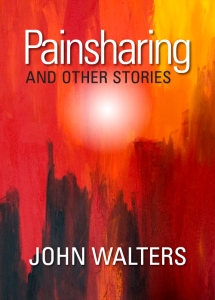
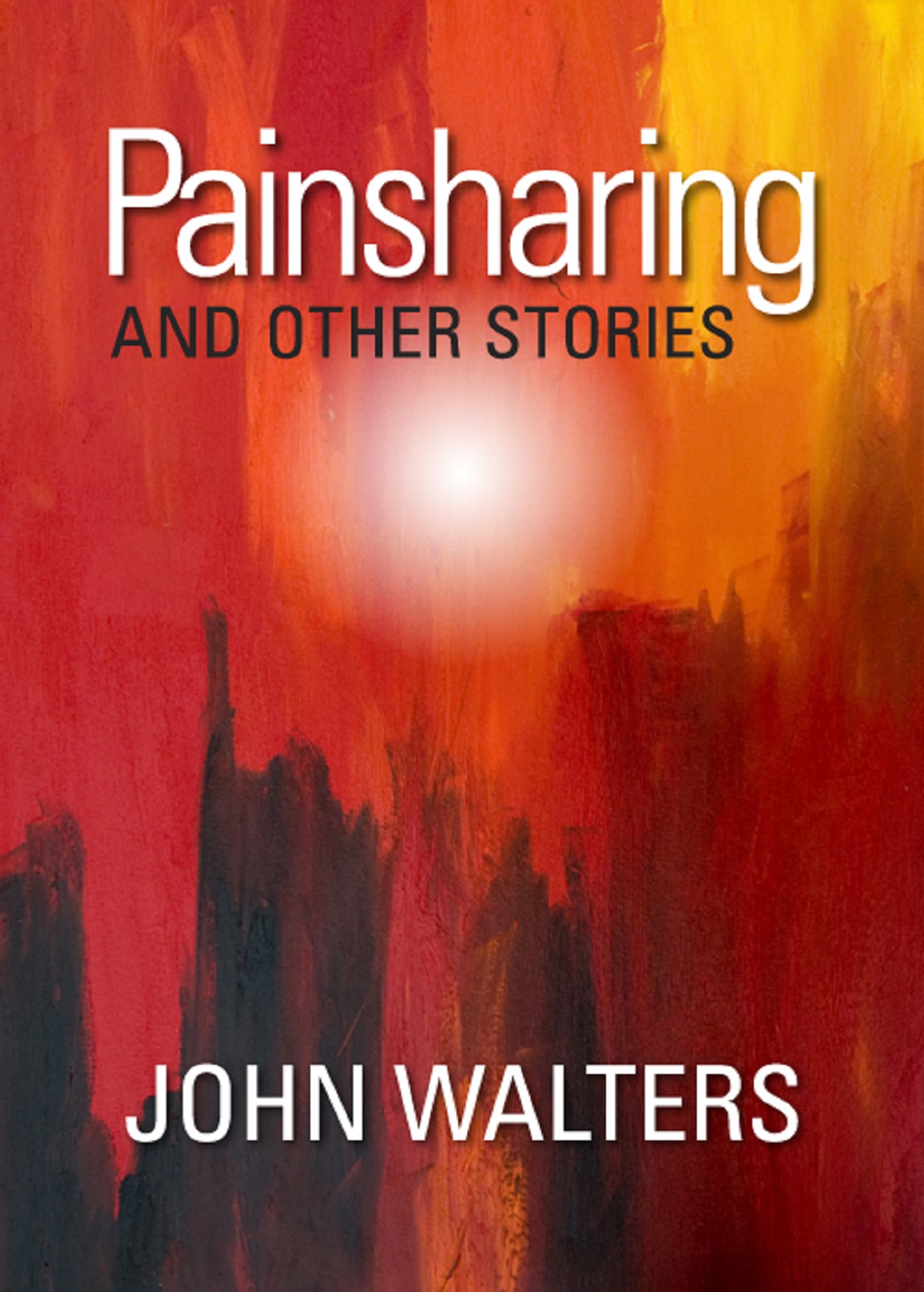
About Painsharing and Other Stories

I wrote the stories in the collection Painsharing and Other Stories while living in Greece. However, unlike the tales in my first collection, The Dragon Ticket and Other Stories, which are mainly set on Earth on the Indian Subcontinent, these stories range from future Earth to the solar system to far planets revolving around distant stars. In the title story, for example, the Earth has long been abandoned and is about to be consumed by the dying sun; a group of humans return for a final requiem for the planet that gave birth to their species. In “Fearful Symmetry,” a human colony on a far planet is being terrorized by intelligent white tigers. In “Beyond Purgatory,” the government of a remote colony punishes criminals by deforming them into monsters that become slaves of the state. As I write in the afterword, “these stories run through a broad gamut of settings, but that’s part of the fun of science fiction: the ability to use anywhere and any when for the sake of metaphor, parable, or just plain entertainment.”

Some of the stories previously appeared in magazines and anthologies, while others are original to this volume. I recall that I sent the story “State of Grace” to a publisher for consideration for a particular themed anthology. The editor wrote back that my story did not quite fit the theme of that one, but another editor was putting together an anthology with a different theme and would accept the story; not only that, but I would also receive first prize in a contest taking place for the anthology entries – and additional payment as well. Often things go wrong in the publishing world; I have had several instances selling stories to magazines or books only to have publication cancelled before my stories appeared. This is one case, though, where the circumstances worked out in my favor.
In “The Orpheus Equation,” two strangers must travel to Pluto together. It is an adventure, of course, but at its core it is a love story. It tells of two disparate individuals forced to coexist in a small space who, despite their differences, must learn to love one another not only for their survival but for the advancement of the human race. From the afterword: “Fate tosses many of us into situations where we must get along with others whether we like it or not. Soldiers and sailors inhabit bunkrooms with a multitude of their peers. Office workers sit at rows of desks side by side with colleagues. Students have no choice concerning which other students enter the classroom, and often cannot choose the seating arrangements either. In some countries arranged marriages are the norm, and spouses do not meet each other, or at least do not have a meaningful conversation until after they are married – if then. Then there are brothers and sisters: some get along and some don’t, but for the first decade and a half to two decades of most people’s lives they share a domicile with people they did not choose, and there is nothing they can do about it. Some folks handle situations like these better than others, but almost all of us at some time or another have been confronted with the dilemma of someone you have to be around but you can’t stand. But what if your ability or lack thereof to not only work with but appreciate this other person were not only a convenience but a matter of life-or-death for many? What would you do? Would you hang on to your stubborn idiosyncrasies, your pet peeves, your grudges, your bitterness, or would you let it all go and yield to the empathy inherent in all of us?

I am personally left-handed, and “The Left-Handed League” is a an exaggerated look at the discrimination that left-handed people face. As I explain in the afterword: “The amazing thing, when you think about it, is that there is any prejudice against anyone for any peculiarities of bodily appearance or function. The human race is composed of such infinite variety, it is such a rich stew of various ingredients, that to point the finger at one peculiarity or oddity is ludicrous. Plus it all has to do with one’s perspective. Put a white middle-class businessman into Europe and North America and he’d likely blend right in; but throw him into the midst of Ghana or Swaziland or China and then who’s in the minority? We have all these differences of gender, color, race, culture, religion, philosophy, size, shape, weight, intellectual or physical dexterity, hobbies and interests, and yes, even handedness, and for as long as humanity has existed we have fought over these things, but what is the point? In the end, we are all just people. All of us.”    

Posted in Uncategorized | Tagged , , , , , | Leave a comment

Thoughts on Tropic of Capricorn by Henry Miller

Recently I started to read a science fiction novel written back in the seventies. This was an acclaimed novel that had even won awards, and yet somehow I had never got around to it. I thought it would be a slam-dunk, a sure thing. Well, in short, it wasn’t. It started with a prolonged feud between two scientists that reminded me of the ongoing scuffle between the crotchety old guys Farnsworth and Wernstrom in the cartoon series Futurama; it made me want to watch episodes of Futurama instead. Then there was a multiple-chapter description of an alien culture that did nothing to advance the plot – at least in the fifty or so pages of it that I managed to plow through. Finally I gave up. Life is too short. To cleanse my literary palate, so to speak, I picked up Tropic of Capricorn off my shelf.

Discovering Henry Miller back in the 1970s was germinal in my growth as a writer. I first read Tropic of Cancer, followed soon by Tropic of Capricorn. Tropic of Cancer follows Miller’s adventures as a poverty-stricken writer soon after he moved to Paris as an expatriate in the 1930s, while Tropic of Capricorn is a flashback to his life in Brooklyn in the 1920s, before his Paris trip. Both Tropics are notorious for their sexual content; in fact, they were first published in France and were banned for obscenity in the States for decades. It wasn’t until the sixties that the U.S. Supreme Court declared Tropic of Cancer, and by inference Miller’s other works, to be literature.

Tropic of Cancer, Tropic of Capricorn, and the three-volume The Rosy Crucifixion (Sexus, Plexus, and Nexus) are all marketed as novels, while other works of Miller’s such as The Colossus of Maroussi are outright memoirs. The novels all have the same narrative voice, and the protagonist identifies as Henry Miller. Most of them are very blatant in their sexuality, and especially in the Tropics books the narrator frequently launches into extended surrealistic passages, elaborate daydreams and thought exercises that often go on for page after page in a single paragraph. These passages are part of the attraction of Miller’s work, though; when he gets going, few other writers can match him for sheer virtuosity and elegance of language.

It bothered me during this reading, though, that the narrator also occasionally lets loose with misogynistic and racism remarks, while the writer Henry Miller, in biographies, comes across as liberal, free-thinking, magnanimous, and tolerant. There are, I think, two main explanations for this. One is that these books were written back in the thirties and the sensibilities of what was allowed in language were different. The main reason, though, as I mentioned earlier, is that these works are novels. The narrator is a fictional character, not the actual Henry Miller; he is nastier, more foul-mouthed, more insensitive, more bombastic – to the extent of being blown up into a cartoon-like character, and much of the motivation for this is comedic intent. Miller uses the blatant obscenities, the exaggerated descriptions, the seeming disregard for the world and everyone in it, to help take away the pain. It is like a purgative. Spewing out all the filth is part of the process of self-cleansing that all sincere writers go through. In Miller’s case, there was more pain and so more rotten stuff comes out. Tropic of Cancer and Tropic of Capricorn were some of his earliest works, written in the white heat of the discovery of his powers as a writer; works such as The Colossus of Maroussi, which came later, are mellower and contain little or none of the obscenities and insults that mark his earlier books.

I will not recommend Henry Miller’s works to you. I don’t think they’re for everybody; he is an acquired taste. You have to delve in knowing that at some point you are sure to be insulted or have your sensibilities bruised. However, if you have the stomach for it, he is a powerful, poetic writer.

Posted in Book Reviews | Tagged , , , | Leave a comment

Book Review: Silence: In the Age of Noise by Erling Kagge

Erling Kagge is a Norwegian explorer, writer, and publisher who was the first person to complete the Three Poles Challenge, namely to hike to the North Pole, the South Pole, and the summit of Mount Everest. I read this book as part of my continuing study of the nature of solitude, but I was hoping it would contain lengthy passages about Kagge’s adventures in the lonely places on Earth. In fact, his solitary walk to the South Pole is briefly alluded to and the other expeditions are barely mentioned. Instead, this book is a meditation on the value of silence. The text is accompanied by an array of beautiful photographs. Unfortunately, I borrowed an ebook version because my local library has been closed for months for renovations; I should have waited and borrowed the physical version because I have a feeling that the photographs, which are tiny on my Kindle, would be magnificent if they were full-sized.

Be that as it may, the book extols the value of silence in our modern era of ubiquitous noise. There are numerous gems to be found in the prose passages. For example, of the South Pole journey Kagge writes: “The secret to walking to the South Pole is to put one foot in front of the other, and to do this enough times.” “The challenge lies in the desire.” “The next hardest challenge? To be at peace with yourself.” Kagge makes it clear that on all his walks, long and short, he eschews extraneous noises such as music or podcasts. Inner peace can only be accomplished with the type of silence that penetrates deep into the soul. This resonates with me. I too never listen to music or podcasts when I take my daily walks or when I exercise. Silence is far too fecund to spoil with noise, no matter how artistic and nuanced that noise might be. I get some of my best ideas and solve major artistic conundrums while walking or working out in silence. I always carry a notebook on my walks, and often I have to pause during my yoga practice at home to run in to my desk and jot down a few ideas.

As I read this book I recalled some of my own significant periods of silence. There was the time I trekked up into the Himalayan Mountains in Nepal without map or guide; there was the time I sequestered myself on a remote beach in Goa, India, when I wanted to ponder my life’s journey; there was the time I stayed alone in a cabin at Cape Mendocino, California, the edge of the west. And now, of course, I live alone in an apartment in Seattle, my kids grown and gone, writing my thoughts and attempting to put a positive spin on my involuntary isolation.

Kagge points out that it’s not necessary to go to the remote parts of the Earth to find the fulfillment that silence provides. He says: “You have to find your own South Pole.” It’s also not always possible to find the perfect external surroundings to experience silence. He states: “I no longer try to create absolute silence around me. The silence I am after is the silence within.” To say that silence is a state of mind may sound somewhat cliché, but it is a cliché with a ring of truth. The demands of our daily lives do not always allow us the luxury of taking off for the remote parts of the world – but we can find silence around us nonetheless, wherever we are, if we actively seek it out. That’s the message of this book, and it is certainly a worthwhile message. Take the time to read Kagge’s thoughts and you may find that you have set yourself on a path to inner peace. If possible, though, pick up a physical copy of the book, so you can enjoy to the full the gorgeous melding of text and photographs.

Posted in Book Reviews | Tagged , , , , , | 2 Comments

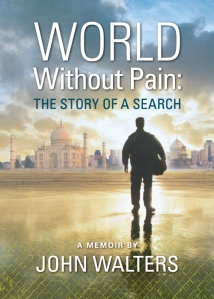
On the Writing of World Without Pain: The Story of a Search

Writers are divided on the issue of writing with keyboards or by hand. Some swear that for the first draft they require the immediacy of pen and paper, while others consider that method too slow – or they like to revise as they go, which is easier when all you have to do is delete and replace words. Personally I prefer to use a computer because it’s faster and I can quickly correct my mistakes, delete errant passages, and even rearrange whole blocks of text. When I was writing World Without Pain, though, I wrote by hand in a series of pocket-sized notebooks. This was necessary because at the time my family of wife and three small kids had just come off of a months-long fulltime road trip in a camper van. We’d traveled from Italy to Greece and then toured Greece until we settled in Athens. I spent a lot of time sitting in the driver’s seat waiting for them sometimes, and when I did, and I’d pull out my current notebook and compose. The first draft, therefore, came together in blocks of time I’d snatch during other activities. When I transferred it onto computer, I embellished it by adding more details.

World Without Pain is about my early days on the road when I hitchhiked and took public transportation to Central America, across the United States, around Europe, and across the Middle East to India. During that journey too I wrote my impressions in notebooks, but alas, those notebooks are long lost and I never had a chance to transcribe them. All I have left are my memories of sitting down in places like a beach in Goa, India, or a hillside outside Kathmandu, Nepal, and writing about my journey and what I was going through. As I put it in Chapter 6 of World Without Pain: “Sometime after I left Seattle subsequent to my trip to Europe and Asia I realized that I had found my voice, that is, my voice as a writer. I can’t point out the specific time and place; it was more like a revelation that slowly grew from within. I had carried some small notebooks with cardboard covers around with me from the States to Europe, to the East and back. Sporadically, at odd moments, whenever the urge hit me, I would write a few lines, sometimes a paragraph or two. I remember specifically sitting and composing under a palm tree on the beach at Goa, and on a hillside near the Monkey Temple in Nepal. I never thought much of it at the time, but later when I could see the words in a different perspective it came to me that these were moments of truth, and that what I had written was prose poetry. I had spent years before I set out on the road trying to write, studying the basics of it, and then I had set myself into forward motion, towards strange situations, towards adventure – so that when I poured out what was in my head it was uniquely me, uniquely mine and nobody else’s, not even the masters that I had studied for so long and had tried so hard to emulate. Once this became clear to me I bought more notebooks, similar to the others in design but larger and thicker, and had the confidence to write much more than I ever had before. The time I spent writing and the words I produced were my light in the midst of the ever-present darkness of physical hardship, adversity, and poverty I had to endure.

I want to point out that if you are a writer, precisely how you pour out your words doesn’t matter. The main thing to do is to write the words, however you accomplish it. Not long ago I bought a notebook similar to those I took on the road in the 1970s, thinking that perhaps I might find moments when I would want to write longhand – for instance, if I was sitting out on my apartment balcony and didn’t want to bother bringing out the computer and something to set it on. And I have used this notebook occasionally, but not often. After having it around for months only a few pages are filled. My computer, on the other hand, gets hours and hours of use every day.

To each his own. As for the notebooks in which I wrote the first draft of World Without Pain, due to the demands of day to day life I had to set them aside after I finished; it was months before I found the time to transcribe and add to them. That’s another advantage of writing directly onto the computer – you can skip the task of transcription. However I managed to accomplish it, I’m glad I wrote this memoir of my hippy travel days, and I hope you enjoy reading of my early adventures.

Click to buy from these distributors:

Hardcover Edition

Trade Paperback

Amazon Kindle

Barnes and Noble

Kobo

Posted in Memoir, On Writing, Travel | Tagged , , | Leave a comment

On Rereading Desert Solitaire: A Season in the Wilderness by Edward Abbey

Not long ago I did some research and wrote up a list of books on solitude. I thought that if I could absorb some of the viewpoints of other writers on the subject I might find some clues on how to turn my loneliness into a positive experience. Most of the books I listed, once I found them in the library and perused their contents, turned out to be not as interesting as I had originally hoped. Edward Abbey’s Desert Solitaire, though, is a classic. He does not have the literary or moral complexity of Thoreau in Walden; he is considerably rougher and more rugged, but in his own way he celebrates and elevates the condition of aloneness.

The essays in Desert Solitaire mainly concern a few seasons Abbey spent as a park ranger at Arches National Monument in Utah in the late 1960s shortly before it was redesignated as Arches National Park. When he arrives, he lives alone in a house trailer in a primitive location accessible only by dirt road. He writes: “I am twenty miles or more from the nearest fellow human, but instead of loneliness I feel loveliness. Loveliness and a quiet exultation.” But he sees government surveyors planning a paved road as harbingers of doom. He loves the barren desert, the canyonlands, and the as-yet only partially dammed Colorado River, and he wishes that developers would just stay away and keep it as it is. However, he realizes that the incursions of progress are inevitable, and he documents the stark beauties of the wilderness before they are irreparably trodden underfoot by tourists and industries.

In one long essay, he and a companion take a long, leisurely ride in rubber rafts down the Colorado River before it is forever changed by the Glen Canyon Dam and the creation of Lake Powell. He laments the soon-coming loss of the beautiful landscapes they encounter, which will soon be covered with mud and water.

Abbey has a deep abiding love for the environment in which he lives. To increase his sensitivity to it, when taking walks at night he uses his flashlight as seldom as possible so that he will not be limited by its circle of light, and he turns on the generator that furnishes electricity only when absolutely necessary because its noise disturbs the desert’s profound silence. He admits that he has occasional bouts of loneliness, but to combat it he moves out of the house trailer, instead constructing a cot and an open air tent nearby. When he sleeps under the stars, he feels more of a part of the universe around him and his loneliness dissipates.

He argues that the predators and vermin in the desert are as essential as any other life forms; he sees a symbiotic whole in the desert biome where many of us would discern only irritations and dangers. This is one of the values of his vision for me. When I read Abbey’s descriptions I realize that there is great beauty in unexpected places in the wide world and that I should not jump to conclusions before I understand in depth the realities of a place. And, in truth, it can take a lifetime to truly explore only a tiny fraction of our wonderful world. It reminds me of one of my favorite lines in the movie The Last Samurai. Ken Watanabe as the Warlord Katsumoto is speaking with Tom Cruise as Captain Nathan Algren in his garden; as he admires his blossoming trees he says, “A man could search all his life for the perfect blossom, and it would not be a wasted life.” At the end, of course, as he is dying, he looks up at a tree full of blossoms and says, “They are all perfect.” This is the message that Abbey gives about the desert land he loves: it is perfect just as it is, and he wishes that it could forever remain that way.

Posted in Book Reviews | Tagged , , , , | 4 Comments

On Rereading The Best of the Nebulas Edited by Ben Bova; Part Four

John Varley’s novella “The Persistence of Vision” is a deeply troubling story; at least it troubles me. The narrator is an unemployed middle-aged man who, in the late 1980s, decides to hit the road rather than endure poverty in the strife-ridden cities. He hitchhikes from Chicago to New Mexico and then begins to wander on foot from commune to commune, sampling the variegated lifestyles as he goes. He is walking through arid desert when he comes upon a most unusual walled-in commune where all of the adult residents are blind and deaf. Only their children can see and hear. Despite their apparent handicaps, they have created an alternative lifestyle that works for them. It is comprised of simple labor, living off the land, and communicating through touch. This communication works on multiple levels from simple signing to far subtler means of expression, including group sex. The lonely traveler stays with these people for several years and attempts to become a part of the community. Ultimately he decides he can never be one of them and leaves, only to eventually become suicidally desperate on the outside and make a decision to return. Most of this long story reads like a piece of sociological literary fiction; only in the last few pages is the science fiction/fantasy element revealed. I will not disclose that gem so that you can discover it for yourselves, but the story’s internal logic makes the speculative element inevitable. I mentioned that it troubled me for two reasons. One is that the story insinuates that the condition of being blind and deaf is in many ways superior to having access to all the senses. I don’t doubt that under the right circumstances blind and deaf people can lead rich, full lives; in fact, the commune is informally called Keller in honor of Helen Keller, who proved this. However, despite the intensity of sharing the members indulge in, which provides great satisfaction to them, they are vulnerable to human predators and cut off from a significant portion of the universe. I was also troubled by the main relationship in the story, which is also a sexual relationship, between the narrator and a teenage girl. When they meet and begin to be intimate, the narrator is forty-seven and the girl is only thirteen, a mere child. This story was published in the late seventies; I don’t know if this aspect of it would be so readily accepted nowadays. These matters aside, it is a very well-written and thought-provoking tale.

The next short story, “The Grotto of the Dancing Dear” by Clifford D. Simak, has two main characters: an archeologist named Boyd and a Basque laborer named Luis. After completing a study of prehistoric cave paintings, Boyd goes in for one last look and discovers a hidden grotto festooned with images of cavorting animals. An expert dates artifacts that Boyd finds in the grotto at twenty-two thousand years old, and a fingerprint in a pigment identifies Luis as the grotto’s painter. In other words, Luis has been alive for over twenty-two thousand years. When Boyd confronts him, Luis explains that he wanted Boyd to find the grotto so someone else would be aware that he exists, thus to a small degree at least mitigating his intense loneliness. I have read this excellent story several times before, but only this time did I realize that it bears a striking resemblance to some of Jorge Luis Borges’s tales. (And now, after writing this, I wonder if Simak gave his character the name Luis as a sort of homage.) “The Grotto of the Dancing Dear” is quiet, intense, and unforgettable.

The novelette “Sandkings” by George R.R. Martin is a very well-written horror story clad in science fictional garb. The amoral ultra-wealthy protagonist is fond of exotic and preferably alien pets. Searching for something truly unique, he comes across a shop that sells life forms known as sandkings, which are tiny carnivorous aliens with hive minds like those of ants. After having a habitat for sandkings installed in his living room, things go from bad to worse, and worse, and worse. One problem I have with this story is that there are no good guys. There are only the extremely evil protagonist, his victims, and the ravenous sandkings. It’s the same problem I have with TV shows such as Yellowstone, Succession, and similar others. Bad guys and their victims; nobody good or even likeable. Still, because Martin crafts his tale with care and surrounds it with a science fictional setting, and also because it is short, I find “Sandkings” an absorbing and entertaining albeit frightening story.

And so we come to the final entry in the book, the short story Jeffty Is Five” by Harlan Ellison. It is a deceptively simple tale about a boy who remains the same age while all his friends grow up. He seems suspended in time because not only does his appearance remain stagnant, but he can also somehow access the radio programs, comics, and toys of the era in which the aging narrator was also five years old. In his forward Ellison writes: “It is a story filled with love and pain and remembrance and the responsibility of being a true friend.” It’s a heartfelt journey into nostalgia in which the joys of the past are balanced by how much it hurts to look back.

I seldom go into such depth reviewing a collection of stories, but it should be obvious by now that these are no ordinary stories. They are special. They are wonderful. They are timeless. Unfortunately, copies of this collection are scarce, so if you come across one be sure to grab it. You won’t be disappointed.

Posted in Book Reviews | Tagged , , , , , , | Leave a comment

On Rereading The Best of the Nebulas Edited by Ben Bova; Part Three

The novelette “Slow Sculpture” by Theodore Sturgeon has two characters: a woman with breast cancer and a disillusioned genius. They meet in a field where the man is conducting an experiment, and when she informs him of her plight he offers to cure her. It turns out that he is wealthy because he invented a device that could help save the environment from the ravages of fossil fuels, but big business bought the device and buried it. Since then he invented not only a cure for cancer but also other marvelous devices, but humankind’s greed and cruelty prevent him from sharing them. He cures the woman’s cancer, and in turn she helps to cure his cynicism and despair. This is a very powerful, heartfelt, and deeply emotional story.

The novella “Houston, Houston, Do You Read?” by James Tiptree, Jr. is undeniably impressive. It is also cynical, devastating, bleak, and deeply depressing. A three-man team in a scientific probe gets hit with a solar flare while attempting to circumnavigate the sun. Historically, they are never heard from again, but in fact somehow the accident propels them hundreds of years into the future where a spacecraft from Earth with an all-female crew picks them up. The men learn that long ago a plague decimated the entire male population. Since reproduction in the usual way is impossible, the remaining women learned to create clones of themselves so that humankind could survive. Although there are only a few million humans left, all women, they have gradually developed interplanetary travel. There are no hierarchies, which Tiptree affirms is a male preoccupation; there are also no wars, and everyone gets along just fine. The denouement is that men are redundant and even downright dangerous; the women who rescued them kill the men rather than risk bringing them back to tarnish the surviving population. This is a simplistic summary of a complex story. Tiptree brilliantly characterizes the three men as condescending, domineering, and misogynistic in varying degrees, in contrast to the simple friendliness, helpfulness, and emotional intelligence displayed by the women. The conclusion, as presented within the parameters of the tale, seems all but inevitable, which makes it all the more tragic.

Fritz Leiber’s short story “Catch that Zeppelin!” is lighter fare. It posits an alternate reality in which World War I ended with the Allies marching on and crushing Berlin, and the League of Nations becoming a dominant international force to ensure world peace. As a result, Germany became a global superpower, and zeppelins and electric vehicles were developed, which mitigated the pollution of gas-burning vehicles. The narrator, while walking in New York, stumbles into this altered reality, and by the end of the story it disappears, leaving the narrator disconcerted and confused. The alternate vision he is caught up in, though, offers an interesting juxtaposition by which to perceive our present world.

“Of Mist, and Grass, and Sand” by Vonda N. McIntyre is an exceptional story in a book full of exceptional stories. For one thing, it is incredibly original in a field that deals with originalities. In the introduction to the story, Ben Bova says that he met McIntyre when she had just graduated from the University of Washington, and she was wildly excited about writing hard science fiction based on biology instead of the physical sciences. In “Of Mist, and Grass, and Sand,” she succeeded beyond anything that was thought possible at the time. The story concerns a woman named Snake, a healer who has come to a remote desert village to treat a boy with a deadly tumor. Her assistants are three snakes: a tiny snake that gives soothing dreams named Grass, a rattlesnake named Sand, and a cobra named Mist. To heal the boy, Snake administers a drug to a small desert creature, which the cobra then eats and then afterwards bites the sick boy, injecting venom that has turned into a healing potion by the drug. This is a startlingly original idea even in science fiction, a literature of ideas. What makes this story truly exceptional, though, is its depth of emotion and heartfelt characterization. As I read it this time after so long, tears filled my eyes as I remembered what a special person Vonda was. Her death from cancer in 2019 was a great loss to literature. I first met her in 1973 when I attended the Clarion West science fiction workshop, which she founded in Seattle with the assistance of Robin Scott Wilson. After the workshop, I met up with her and other Clarion West graduates on a houseboat on Lake Union, where we would get together to critique each other’s work. I took off for the far reaches of the world and lived overseas for thirty-five years before returning to the United States. I became reacquainted with Vonda at a science fiction convention called Potlatch in 2014. This turned out to be one of the last Potlatches, but I met her frequently at Clarion West parties and other events. She was always exceptionally kind, thoughtful, and generous with encouragement about my writing career. I bring up all of this background because it all indirectly relates to the story in question. Vonda was open, honest, kind, and generous in life, and these emotions bleed into her fiction as well. “Of Mist, and Grass, and Sand” is a beautiful and unforgettable story.

(To be continued.)

Posted in Book Reviews | Tagged , , , , , , | Leave a comment

On Rereading The Best of the Nebulas Edited by Ben Bova; Part Two

And now we come to the novelette “Gonna Roll the Bones” by Fritz Leiber, which first appeared in Harlan Ellison’s groundbreaking anthology Dangerous Visions. It is ostensibly a classic deal-with-the-devil fantasy, albeit unusually rich in descriptive detail and stylistic depth. However, Leiber takes the traditional form several steps further by setting the tale in a future world in which spaceships can be glimpsed in the heavens and the outer planets have been explored and colonized. This background exists on the periphery like an ornate picture frame. It adds a layer of nuance to the story of Joe Slattermill, who works underground in mines by day and at night escapes a slovenly domestic scene to go into the town of Ironmine and “roll the bones,” or gamble with dice. He comes across a joint called “The Boneyard,” which may or may not actually exist, and gets into a high stakes game with the Big Gambler, a skeleton in a black suit. The story is great fun and builds up to a terrific ending.

The longest story in the book by far is “Dragonrider” by Anne McCaffrey. It originally appeared in Analog magazine, and together with her novella “Weyr Search,” which won a Hugo Award, became Dragonflight, the first of the long and popular Dragonriders of Pern series. Despite the many volumes that followed, “Dragonrider” stands well on its own. This reading rekindled the fascination I felt when I first discovered the world of the Dragonriders through this novella. McCaffrey’s Pern, in which dragons and their riders, telepathically united, must face world-threatening alien spores called threads that descend when their planet is aligned with another nearby planet, is rich with complex characters and intricate world-building. It is dragon fire that destroys the alien menace, but Pern has been without a thread infestation for hundreds of years, causing landowners to doubt the value of maintaining the dragons on alert. When the threads arrive, the Dragonriders must move quickly to avert disaster. This novella is gripping, suspenseful, and well-written.

One of the strangest stories in a book full of strange stories is “Love Is the Plan the Plan Is Death” by James Tiptree, Jr. It is told from the perspective of a six-legged alien beast roaming a bizarrely different world. After its mother drives it away, it comes upon a tiny bright creature it takes as its mate, which it nurtures and protects until… I don’t want to give away the ending. What makes this story unique and unforgettable is the beast’s emotional, poetic monologue as it explores its world and tries to figure out what the ultimate plan of existence is.

Another highly stylized story told in first person is “Time Considered as a Helix of Semi-Precious Stones” by Samuel R. Delaney. The protagonist is a solar system-roaming thief who returns to Earth to sell some items he has acquired. With a detective from a special government department in pursuit, he attends a high society gathering at the top of an exclusive residential tower in New York, where four of the elite celebrities known as Singers are in attendance. The story’s title comes from a method used by nefarious characters throughout the solar system to communicate with each other: every month the name of a semi-precious stone becomes the new password of the underworld, but only if you know how to use it correctly. Like the previous tale, this story’s strength is in its idiosyncratic style; its main character is inherently complex and duplicitous, and this is reflected in the tone of the narration.

As I reread the novella “A Boy and His Dog” by Harlan Ellison, I felt that it had become somewhat dated. At the time that it first appeared it was cutting edge, but since its first publication in 1969 there have been many tawdry imitators in print and in video games. It is told in first person by the protagonist Vic, as he wanders with his dog Blood through a bleak post-apocalyptic landscape. Vic’s narration is loaded with expletives, and his primary aim in life, apart from survival, is to “get laid.” Since Blood is telepathic, he is able to assist Vic in finding women, although there is a paucity of them on the surface amidst the devastated landscape. Most of them live in underground shelters with “decent folks.” However, the men in these underground enclaves have become sterile, and so a young woman named Quilla June has been sent to the surface to lure a man down for breeding purposes. When I first read this story back in the early seventies I was deeply impressed. At that time no other science fiction writer had dared to be so blatantly explicit. It could not have been published in the science fiction digests of the sixties. The novella inspired a 1975 film of the same name, which won the 1976 Hugo Award for best dramatic presentation. Personally, though, I have always found the novella more succinct and powerful.

After the frantic activity and expletive-filled narration of “A Boy and His Dog,” the next two stories take a comparatively quiet, thoughtful, and subdued approach. The short story “The Day Before the Revolution” by Ursula K. Le Guin concerns an old woman who was a revolutionary in her youth and even spent fifteen years in prison for her beliefs. She is now an icon that the young look up to and adulate, but after a recent stroke she struggles with mere survival. Not much happens in this story; it is a character study. The anthology’s editor, Ben Bova, writes in the introduction that this is a prequel to Le Guin’s acclaimed novel The Dispossessed, which won a Nebula in the same year as “The Day Before the Revolution.” Without this back story, however, there is little to distinguish it from a contemporary literary story. By that I mean that there are no overt science fictional elements that make it recognizable as genre fiction. What it does have, of course, is Le Guin’s elegant prose and ability to give her characters depth and bring them to life. I personally could empathize with the portrait of old age and the feeling that most of life’s struggles are in the past instead of in the future.

(To be continued.)

Posted in Book Reviews | Tagged , , , , , , , | Leave a comment