About Love Children: A Novel

It is the mid-1970s.  The Summer of Love and the Woodstock Music Festival have come and gone.  Into the atmosphere of cynicism and doubt following the wild optimism of the youth revolution the Love Children, raised from birth by benevolent aliens, come home to Earth.  Sexually free, telepathic, and honest to the extreme, they are appalled to find that the world they left behind is full of darkness and deceit. As they set about using their extraordinary powers to bring light and unity back to their world, they run up against a sinister alien force intending to keep it in darkness.

This is my first novel, a science fiction tale that contrasts the telepathically advanced and pacifistic alien culture that the human orphans are brought up in with the selfish and violent societies on Earth to which they return to search for their parents. It’s a fast-paced science fiction adventure set in exotic locales such as Nepal, India, Pakistan, Afghanistan, Thailand, Greece, the San Francisco Bay area, and a spacecraft orbiting Earth.

Click to buy from these distributors:

Trade Paperback

Amazon Kindle

Barnes and Noble

Kobo

Posted in Uncategorized | Tagged , , , | Leave a comment

Book Review:  Slow Productivity: The Lost Art of Accomplishment Without Burnout by Cal Newport

It was serendipitous that Slow Productivity came to my attention when it did. I have been in the midst of finalizing my latest book, a collection of memoirs and essays, but at the same time have been juggling numerous other creative and income-sustaining projects. I came to the realization that I was trying to do too much, too fast, and that as a result the book’s overall quality might suffer. I decided to pare down my tasks, to put some of them on the back burner, so that I could take the time to make the book the best it could possibly be. When I began to read Slow Productivity, I acquired reinforcement and justification.

As Newport explains, the title places modern day hyper-fast productivity in the context of the slow revolution, which was initiated by the concept of Slow Food. The arrival of a McDonald’s fast food restaurant at the Piazza di Spagna near the Spanish Steps in Rome prompted a journalist named Carlo Petrini to launch the Slow Food movement as a rebellion against fast food and a celebration of quality cooking and longer, more communal meals. This gave rise to other movements such as Slow Cities, Slow Medicine, Slow Schooling, Slow Media, and Slow Cinema. Newport applies slow principles to productivity, particularly that of knowledge workers, a category that includes businesspeople, tech workers, writers, artists, teachers, and others.

Newport breaks down his philosophy of slow productivity into three principles: do fewer things, work at a natural pace, and obsess over quality. He states that “this philosophy rejects busyness, seeing overload as an obstacle to producing results that matter,” and that the new standard should be “accomplishment without burnout.” He is committed to “rethinking the very notion of productivity itself.” This mindset is particularly valuable for workers who are able to organize their own time.

Once Newport has defined his philosophy, he plunges into each of the three principles in depth, with examples of people who have successfully implemented them and practical suggestions of how to make them work. Not all of the suggestions are for everyone, of course; you have to fit the principles to your own situation and see how they apply. Some advice is better fitted for those who work in organized businesses and companies, while other advice better suits freelancers. The point is that everyone can benefit from switching to slow productivity instead of maintaining the frenetic pseudo-accomplishment of always appearing to be busy but actually getting very little work of real significance done.

One stark example I appreciated was that of the Beatles. They were at the height of their fame when they got fed up with touring and decided to stop. Instead, they holed up in a studio for over four months – far longer than they had ever spent on an album before – and emerged with the masterpiece Sgt. Pepper’s Lonely Hearts Club Band, which drastically altered the modern music scene. Newport cautions, though, about the fine line between progress and perfectionism. It is important to keep moving forward and not to get bogged down in an effort to make everything perfect.

Some of the practical advice in Slow Productivity I can take or leave, but in its definitions of general principles of artistic behavior, the book couldn’t have come at a better time. And it is important to point out that slow productivity does not mean less productivity. In fact, if you focus on key projects instead of scattering your attention all over the place, take the time to think and plan and work at a pace that is natural for you, and strive for quality in whatever you do, you will most likely accomplish far more than you used to when you might have appeared busy but in fact were futilely spinning your wheels.

As I mentioned earlier, I had already set out on a similar path when I came across this book, but it served as terrific positive reinforcement in my resolve to improve my schedule and in turn my work. Highly recommended.

Posted in Book Reviews | Tagged , , , , | 1 Comment

Book Review:  Empire of Ice and Stone: The Disastrous and Heroic Voyage of the Karluk by Buddy Levy

At the heart of this account of a compelling tragic adventure in the far north is a comparison of two very different styles of leadership: one single-mindedly selfish, and the other heroically self-sacrificial. Empire of Ice and Stone tells the true story of the Karluk, the flagship of the Canadian Arctic Expedition, which left Nome, Alaska, in July of 1913 enroute to Herschel Island off the north coast of Alaska. It never reached its destination. Instead, it became helplessly trapped in polar ice and commenced drifting westward, encased in a large floe, until it was north of the Siberian coast.

The captain of the Karluk, Robert Bartlett, managed to oversee the evacuation of the ship and most of its supplies before the floe crushed the ship and it sank. He then supervised an odyssey of the survivors over dangerous pack ice to nearby Wrangel Island, a barren, storm-swept wasteland in the East Siberian Sea. The pitiful encampments of survivors included crewmembers, scientists, two Eskimo hunters, and the wife and two young daughters of one of the hunters. Under terrible conditions they lived off the ship’s stores and whatever seals, foxes, polar bears, and birds they could find. Sometimes they were reduced to eating nothing but sealskins and blubber. Realizing their desperate plight, Captain Bartlett and one of the hunters undertook a hazardous winter journey over the sea ice to the mainland and then seven hundred miles overland across the northern Siberian coast to find a ship that would take them back to Alaska, inform the authorities about the survivors, and mount a rescue mission. Bartlett’s thoughts were always on the lives entrusted to him and how he could save them.

In contrast, the leader of the Canadian Arctic Expedition, Vilhjalmer Stefansson, was obsessed with the expedition as a means to further his own career. Under his orders, the Karluk packed quickly and haphazardly and left Nome with insufficient winter clothing for all of its members. He initially sailed aboard the Karluk, but as soon as it became trapped in the ice, Stefansson jumped ship, ostensibly for a hunting expedition, and was not aboard when the floe in which it was trapped broke loose and began drifting to the west. Historians still debate whether Stefansson left because he knew the ship was in danger or because he was sincerely hunting caribou, as he said, but in fact at that time it was well known that there were very few caribou left in that part of Alaska. His main failure came afterwards: instead of reporting the Karluk‘s peril and doing everything in his power to rescue the people trapped on the ice floe, he dismissed the fate of the ship, put it out of his mind, and carried on with the expedition he hoped would make him rich and famous. In effect he abandoned those whose lives had been entrusted to him.

Most of this gripping narrative, though, focuses on the survival efforts of those trapped on Wrangel Island and on Captain Bartlett and his companion’s heroic efforts to rescue them. It is a well-told true adventure that I highly recommend.

Posted in Book Reviews | Tagged , , , | 1 Comment

On Reading The Lord of the Rings for the Fifteenth Time; Part Three: The Return of the King and Appendices

The third volume of The Lord of the Rings, The Return of the King, is full of epic-scale heroic deeds: the passage of Aragorn, Legolas, Gimli, and the Dunedain through the paths of the dead; the ride of the Rohirrim to relieve the siege of Minas Tirith; the vanquishing of the dark captain of the Nazgul during the battle of the Pelennor Fields; the final march of the armies of the West to the Black Gate of Mordor; and, of course, Frodo and Sam’s trek through the wastelands of Mordor to cast the ring into the fiery chasm of Mount Doom. Numerous passages touch me deeply and move me to tears. Tolkien makes it starkly clear that strength of arms alone cannot defeat Sauron; the allies of the West must rely on courage, honor, friendship, loyalty, and self-sacrifice. In Frodo and Sam we come to realize that the smallest of people can become the greatest of heroes. Each of us must fulfill our destiny with sincerity and heroism.

Rereading the trilogy this time reminded me of why I was so drawn to the story when I was young. Back then it gave me an impression of noble intent and of the implacable contrast between good and evil. Having now lived much of my life, I realize that honorable virtues are often called for in the many decisions and deeds that impact each of our journeys. The Lord of the Rings is so popular because it reminds us of the need to claim our destinies amidst the ever-changing vagaries of existence.

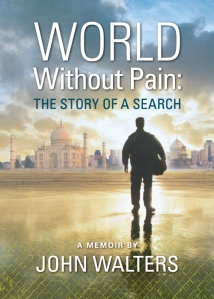
This reading, then, brought me a lot of joy and a touch of nostalgia. And it caused me to feel great empathy with Frodo as he completes his quest and returns to the Shire. I set out on my own quest long ago. I journeyed into far countries and even raised a family overseas. It was all in the nature of a grand adventure. When I came back to the States, and eventually back to Seattle, it wasn’t the same to me. My homeland had changed somewhat, but even more I had changed. I’m not the same person I was when I left, and even though I have returned and am once again living in the city where I was born, I feel somewhat ill at ease and out of place. I feel like a stranger in a strange land. Once again I am reminded of what I wrote near the end of my memoir World Without Pain: “Perhaps the journey itself, the search, was the point of it all. But if it was then there was no end, no goal, no destination. One could not arrive; one could not rest, except intermittently. And home? I couldn’t go home again. Home was an abstraction from which one commenced a particular phase of the journey, not an absolute.” After being gone for so many decades and living so much life it’s hard for me to settle in and be comfortable.

*     *     *

A few words should be said about the appendices at the end of The Return of the King. I’m sure that many people, when they come to the end of the primary narrative, ignore them. For several of my readings when I was young I was so disappointed when the tale came to a close that I read every word of the end matter. With this reading I have been a bit more selective, reading some of the history but passing by some of the lists of lineages and intricacies of the languages.

In my opinion, readers interested in the goings-on of Middle Earth should not ignore the appendices. Through them you get a glimpse of the background to the events in the trilogy, and you can also find out what happens to the heroes after the main story ends. Appendix A, “Annals of the Kings and Rulers,” offers tales of the Numenorean kings, of the realm of Gondor, of the Rohirrim, and of the Dwarves. It includes the touching story of Aragorn and Arwen, and tells of what happens to Arwen after Aragorn dies. Appendix B is called “The Tale of Years,” and it is a chronology of events in Middle Earth, but within the lists are hidden gems: brief accounts of deeds and adventures. In this appendix is the section “Later Events Concerning the Members of the Fellowship of the Ring.” Appendix C, “Family Trees,” is exactly what it says: family trees of some of the important lineages of the hobbits. In Appendix D, “Shire Calendar,” Tolkien explains the calendar system that the hobbits use in the book. Appendix E, “Writing and Spelling,” goes into the languages spoken in Middle Earth, especially the Westron or Common Speech. Tolkien describes the vowels, consonants, alphabet, stresses, and so on in intricate detail; I have known fans of the book to use the alphabets in this section to communicate with one another in a sort of pseudo-cryptic code. In Appendix F, “The Languages and Peoples of the Third Age,” Tolkien offers an overview of Elves, Men, Hobbits, Dwarves, Ents, and other races that inhabit Middle Earth.

Tolkien went to great effort to compile these details as he was writing The Lord of the Rings, and whether you skim them, study them, or ignore them, you can see the results of his research in the depth and details of the world he created for our amusement and edification.

Posted in Book Reviews | Tagged , , , , , | Leave a comment

On Reading the Lord of the Rings for the Fifteenth Time; Part Two: The Two Towers

As the middle portion of the trilogy The Lord of the Rings, The Two Towers has both strengths and weaknesses. I will touch on the weaknesses first, and before I do I want to emphasize that these stood out to me more with this reading than with previous ones; it is possible that I have reached the stage where enough is enough concerning certain passages of the book. I found this time that in each major section of the book, both the fortunes of the remaining members of the fellowship in the west and the journey of Frodo and Sam to Mordor, there were portions in which as I read I felt impatient, that the descriptions seemed overly detailed and I wished that Tolkien would get on with it. In book three, this was the part where Merry and Pippin are abducted by the Uruk-Hai orcs and carried away toward Isengard. In book four, it is where Frodo and Sam tame Smeagol and follow him through the hills and marshes to the Black Gate. It is not that I do not find these parts fascinating, but rather that I felt that in spots they are too long. I will repeat, though: I do not remember feeling this way during the first fourteen readings, so perhaps the fault is with me and not with Tolkien.

As for strengths in The Two Towers, there are many. I think that in this book one of the most important things that Tolkien does is highlight the nobility of some of the main characters. Aragorn is steadfast in the realization of his calling as an heir to the kingship; he carries the re-forged sword of Elendil with him as a symbol of his destiny. Gimli the dwarf is always strong, stalwart, tireless, courageous, and feisty. Legolas uses his elven talents to full advantage and never wavers from his new-found friendship with Gimli. Gandalf the Grey becomes Gandalf the White, affirming that he is Saruman as he should have been. Once Theoden the king of Rohan is freed from the oppression of Wormtongue his courage and sense of honor is unimpeachable, to the extent that he suggests riding out against the army of orcs at Helm’s Deep rather than cowering behind walls and gates. When Faramir the brother of Boromir encounters Frodo and Sam in Ithilien, he declares that he would not touch the ring or take it to Minas Tirith, and he aids Frodo regardless of the cost to himself. Frodo heavily feels the sense of destiny that has compelled him to carry the ring to Mordor and despite his terror is determined to finish the task. Sam stays always by Frodo’s side; the thought of desertion never enters his mind. The portrayal of these noble characters in The Two Towers brings great depth to this epic fantasy and helps to set up the amazing and satisfying denouement in the final book of the trilogy.

It is a bit confusing at times that Tolkien does not plot his tale chronologically. Instead, he chooses to follow one storyline at length and then break off from that to follow another; this, however, is within the prerogative of the writer, and he leaves hints throughout the narrative to indicate the position of the other characters within it.

Posted in Book Reviews | Tagged , , , , , | Leave a comment

On Reading The Lord of the Rings for the Fifteenth Time, Part One: The Fellowship of the Ring

The last time I read (and commented on) The Lord of the Rings was in 2011, and you can read those reviews of The Fellowship of the Rings, The Two Towers, and The Return of the King in my blog’s archives. I returned to it after so long because I felt in need of some literary comfort food. My past experiences of reading The Lord of the Rings were always overwhelmingly positive, and so it has been this time as well. I reiterate what I have said in the past: that despite the excellence of the films by Peter Jackson, which I have watched many times, this is an example of the books being far superior to the films. In my previous essays about the trilogy, I went into detail comparing the books to the films; however, this time around I would prefer to avoid that as much as possible and instead focus on the excellence of the reading experience on its own.

As I began to read, I was all but overwhelmed by a profound sense of wonder. As I did when I discovered the trilogy as a teen, I became deeply absorbed in the story and in the intricate, superbly imagined world of Middle Earth. The stakes are high and the heroes, even those that seem small and weak and seemingly helpless, must find their courage and do what they can to save the world from the dark, evil forces of Sauron. To do so, they must forsake their familiar and comfortable homes and venture forth into the unknown. When I was young, this story helped to call me out onto the open road for the first time, and even now, as I read about Bilbo Baggins leaving Bag End and exclaiming, “What fun! What fun to be off again, off on the road…” a great longing rose within me, a longing to dump all the things I’ve accumulated and take off again for destinations unknown. What good, thought I, is merely staying alive through government healthcare and other assistance – if one is not free?

That’s the feeling I was hoping for when I picked up the book. I realize that I can’t, as in times long past, simply walk out the door and leave everything behind, but even contemplating the possibility and experiencing that great rush of freedom and self-determination was a deep cleansing blast to my mind and heart.

Tolkien’s characters, most of them at least, despite their limitations and weaknesses, are single-minded, courageous, honorable, and resolute, even in the face of overwhelming odds. In the midst of a rising tide of dark shadows and evil, they seek to preserve the light of love and true righteousness, and even when sore beset by enemy forces, they do not flee and abandon their companions.

The films necessarily have to edit the tedium of the long journeys from place to place during the ring bearer’s quest, but through Tolkien’s descriptions we can sense the arduous nature of the peregrinations of the members of the fellowship, and also we can better appreciate all of the wonderful details with which Tolkien has filled his fantasy world. All in all, rereading The Fellowship of the Rings has been a terrific experience. No matter how many times I read these books, they always satisfy.

Posted in Book Reviews | Tagged , , , , , , | Leave a comment

Book Review: The Half Known Life: In Search of Paradise by Pico Iyer

This book is well-written and takes us to fascinating places, but it is suffused with irony. Iyer tours locations that for one reason or another have been considered forms of paradise, but most of them are fraught with violence, and some are among the most dangerous locales in the world. He writes: “A true paradise has meaning only after one has outgrown all notions of perfection and taken the measure of the fallen world.” Additionally, though he writes of a search for paradise, he makes it clear that he is approaching the subject from a secular viewpoint. He is not a religious person, and though his prose is beautifully wrought, he maintains a distance, a sort of remoteness from his material, as if he is reporting on situations that do not touch him personally. This is not necessarily a drawback, but it is clear that another writer, one who is searching for meaning and fulfillment, might approach the task with much more empathy and emotion. Iyer also indulges in privileged traveling, which I find hard to relate to – that is, a method of traveling that only the wealthy can afford: flying in a carefree manner from one spot to another halfway around the world, staying in luxury hotels, and hiring cars, drivers, and guides. Although I have traveled extensively too, I have always had to stick to budget transport and find my own way around as best I can.

The tour of holy places begins in Iran, where Iyer visits mosques and palaces and other historic and contemporary sites. Iran’s claim to fame as a repository of paradise, according to Iyer, is its spiritual poetry from many centuries ago. As he travels around modern-day Iran, it is clear that foreigners are restricted to certain areas, he has clearly defined boundaries, and he is not altogether safe. From Iran, Iyer takes us to, of all places, Pyongyang, North Korea. He justifies this stop because to the North Korean leadership the country is a “people’s paradise” – but his stay there is fraught with paranoia and tension. Paradise? No thanks.

Onward to Belfast, Ireland: another zone of incessant conflict. He alludes to a “History of Terror” tour, which takes participants “to the site of Bloody Friday – almost two dozen bombs exploding in barely an hour – and the homes of terrorists.” He later writes of the musician Van Morrison, a native of Belfast, who transformed a squalid world through his music. “He’d made of the unpromising landscape a world as magically illuminated as Avalon.” Next, he takes us to another global hotspot: Kashmir. He writes of the British attempting to create a sort of paradise by building houseboats on the lake; however, since partition this natural paradise has been the site of almost constant conflict – surrounded by opposing forces and barbed wire.

When Iyer moves on to a remote corner of the Australian outback, a coastal town called Broome, it seems like a pleasant interlude – until we read of tumultuous weather and the ongoing ill-treatment of the aboriginal population. From the Australian wastelands he cuts to Jerusalem, the site of many competing faiths and sects and of continual discord and violence. In all of these situations, he observes and reports but has no answers – he does not even attempt any. He merely describes – with eloquence – what he sees. Then there is Ladakh, a place of ongoing conflict between India, Pakistan, and China, and then Sri Lanka, where the decades-long battle is between Tamils and Singhalese. Both Ladakh and Sri Lanka are natural paradises that humankind has ripped apart with violence.

The final two places Iyer visits are not war zones, however. One is holy Mount Koyasan near Osaka, the site of numerous temples, and the other is Varanasi on the Ganges River in India. Of Koyasan he writes that “joy, for a monk, is never the same as pleasure, because it has nothing to do with changing circumstance.” This seems to be one of the themes of his book: that paradise continues to exist despite human conflicts around it.

At first I found Iyer’s choices of destinations to be jarring in a book that is supposed to be about his pilgrimage from one paradisiacal location to another. However, in reality, in our present era the entire world is full of conflict, and we have to look beyond the discord and mayhem for natural beauties and spiritual truths. This book, poetically written, brings home that point. Recommended.

Posted in Book Reviews, Travel | Tagged , , , , , , , , , , | Leave a comment

Handling Rejection

I have written about rejection in the past but I need to do so again. If I composed an essay every time one of my stories got rejected, I would have time to write nothing else. But this one stung. Several months ago I learned about an anthology whose theme was close to my heart. The guidelines stipulated that writers should first write a synopsis of their idea and send it to the editor for approval; I did that and the editor gave me the go-ahead to proceed. It took me about a week to write and proofread the story. After I sent it in, I waited far too anxiously during the many weeks that followed. The correct procedure is to write a story, send it out, and then forget about it and move on to the next one. I did move on to compose more stories, essays, and memoirs, but in errant moments I also fell into the cheap thrill of daydreaming and imagining that once the story got accepted it would obtain approval of readership and draw attention to my other works. A formula for disaster, I know, but I couldn’t help it. I badly needed a win. So when this particular rejection came, I felt as if I had been punched in the face – you know: that devastating punch that knocks you off your feet and onto the floor of the ring. It physically hurt, somewhere deep inside behind my solar plexus. I even let out a couple of involuntary sobs and came close to tears. Unable to cope with my grief, I got up from the chair where I’d been sitting in front of the computer and began to pace. I went outside on the balcony, watched dark clouds scud across the sky, and felt the cold, bracing wind. For a few minutes I despaired and wondered if it would make any difference to me or to anyone else if I never wrote another word.

The physical pain and despair didn’t last long. As I said, I have been rejected many times before. I began making a quick count of them from the story logs I have kept since the mid-1990s, but I gave up; I simply don’t have the time. As a rough estimation without any exaggeration, there are thousands. And I don’t say this to deter you from becoming a writer, if that’s what you feel compelled to be. Writing as a creative art form is vastly different from the business of somehow getting your completed works in the hands of readers. For me writing, at least most of the time, is pure pleasure. It’s the other part that’s difficult, whether you choose the traditional route of going through publishers or you self-publish or, like me, you choose a hybrid path and utilize both.

However you manage your career, the image of the boxer comes up again and again. The only way to win is to take the punches, to get up again when you are knocked down, and to keep fighting as long as there is breath in your body. Come to think of it, that’s how it is with many things that we strive to accomplish in life. A lucky few achieve success through nepotism, but most of us have to struggle to fulfill our dreams. The point? Don’t quit. If you get knocked down, get back up again. If your story gets rejected, don’t despair. Weep if you must, but then send it out to the next magazine or anthology on your list.

*     *     *

I feel compelled to add a postscript to this to illustrate the often strange machinations of the publishing world. Shortly after I wrote the above, I sent off a fairly new story to a well-paying anthology and then went off to have some dinner. By the time I returned a couple of hours later, the editor had already written back that he liked the story and was accepting it. Wow! You never know.

Posted in On Writing | Tagged , , , , | Leave a comment

Book Review:  Thunder Song: Essays by Sasha LaPointe

Not long ago I read Red Paint: The Ancestral Autobiography of a Coast Salish Punk By Sasha LaPointe. This essay collection is a continuation of the thoughts and emotions expressed in that volume, albeit arranged thematically instead of chronologically. It is just as powerful, or possibly even more so, as LaPointe’s talents as an artist continue to evolve and improve.

I learned of Thunder Songs as I was conducting a search for author events in the area that I might be able to attend. I discovered that Sasha LaPointe would soon be appearing with Maori poet Tayi Tibble at a local bookstore to promote their newly published books. It turned out that at the event Thunder Song wasn’t discussed much; the women mainly read some poems and spoke of how they met and discovered that the Coast Salish and Maori cultures had a lot in common, which was in itself fascinating.

In Thunder Song, LaPointe’s voice as a writer has become even stronger and more assured. She writes about her lighter skin tone and how it delayed her from understanding the way that white people recoil from indigenous people, about the dangers of going missing that native women face, and about a miscarriage that almost killed her due to a doctor that couldn’t be bothered to take the time for a proper medical diagnosis. However, as in Red Paint, she not only writes of the traumas but also the factors that contributed to her healing. When she was young, becoming involved in the punk music scene helped to liberate her spirit. Writing, of course, was a powerful purifying process. She also obtained assistance along the way through sincere relationships with loved ones. She returns again and again to the storytelling ability of her great grandmother. For instance, when her great grandmother learned that she had a passion for the Little Mermaid, she told Sasha the story of the Maiden of Deception Pass, who became involved with a sea spirit and left the land for the ocean, which brought about prosperity for her people.

In my favorite essay in the book, LaPointe writes of the struggles she faced as a vegan in the midst of her indigenous fish and meat-eating culture. She persevered for a long time, but the craving for salmon in particular, which as a ceremonial food is deeply enmeshed in her people’s past, became too much for her. When she compromised and ate some salmon after a long period of abstinence, she felt no guilt but instead a sense of release and freedom. She writes: “I guess I’m the kind of Indian who will never be vegan, who will never again teach herself to be hungry or quiet.” And: “I am the kind of Indian who will never hide who she is again and who will always eat the salmon.”

Another touching essay concerns the healing process she went through with her mother as they walked together along pathways in the evergreen forest. Her mother points out the licorice fern plant, which aids in respiratory conditions and once, it is said, helped a mute woman speak. LaPointe says that the licorice fern will aid them both and give “strength to finally use our voices.”

I was brought up in the Pacific Northwest, as LaPointe was. For many years our family had a beach cabin on the shore of Hood Canal in Puget Sound, and as LaPointe tells of her childhood amidst the evergreens and along the beaches, I recall my own youth in those magical places. My family’s attachment was surface-level at best, though, while hers goes many generations deep. It is good to see these things in their proper perspectives, and LaPointe effectively communicates the power and strength and resilience and value of the indigenous cultures that were here long before white colonists arrived.

Posted in Book Reviews | Tagged , , , , | Leave a comment

How Are the Mighty Fallen: Adventures on Airlines

I am not sure when I flew on an airplane for the first time, but it might have been when I went from Seattle, where I was born and raised, to San Francisco, California, to check out the University of Santa Clara as a possible site for my ongoing educational endeavors. Since then, I have taken many flights, long and short, on a variety of airlines. During my interminable wait for the initiation of my most recent journey I tried to remember them: Delta, United, Alaskan Airlines, Pan Am, Jet Blue, Singapore Airlines, Thai Airlines, Icelandic Airlines, Turkish Airlines, Indian Airlines, Aegean Airlines, Olympic Airlines… There must have been others. The longest direct flight I ever took was from San Francisco to Hong Kong; that one lasted seventeen hours. The shortest? I’m not sure. It might have been from Athens to Thessaloniki in Greece; there was hardly time for the plane to gain altitude before it started to descend. Or maybe it was the stretch from Jakarta, Indonesia, to Singapore. Regardless of which airlines I have flown on, though, or the distance of the journey, I have almost always, out of necessity, flown economy class.

And so we come to my latest aviation adventure: flying from Seattle to San Francisco aboard Delta Airlines so I could attend the book launch of the first novel written by one of my sons. I have always enjoyed flying on Delta in the past; indeed, I considered it one of my preferred airlines. I think that the trends I observed on this flight are ubiquitous across all airline companies. They are all struggling. They are all trying to save money. Their penuriousness, though, has become an obsession to the point where they ignore or denigrate the people that it’s all for: the passengers.

As I mentioned, I have almost always flown economy class, in contrast to first class, but this difference has invariably been relegated in my mind to the realm of who gives a damn anyway? There was a time that even in economy class a person could enjoy a modicum of comfort. Those times are long gone. I’m not just talking about leg room here; I’m talking about degradation and humiliation. On this flight there was not just first class and economy, no; there were six levels of seating. First class was primary, of course, and then came comfort plus, followed by three more levels whose names I forget, and finally, beneath the rest and last to board, was my level: economy basic. The “basic” is the verbal equivalent of a sneer, as if it carries a stigma, as in “don’t ask; you’re entitled to nothing.”

People in economy class have no rights – not even the right, as I have always had in times past, of seat selection. As soon as I got my reservation, I went to the Delta website so I could choose a seat, only to be informed that I couldn’t get a seat assignment until I checked in – because of my class. If I wanted to grab a specific seat before then, I had to pay a fee of thirty-five dollars. I cannot remember this happening before on Delta or any other airlines. I dutifully waited until twenty-four hours before the flight to check in online, and then went for my seat, only to be met with the same prospect of a thirty-five dollar fee and a notice that I had to be assigned my seat at the gate. Okay, then, damn it. I really wanted an aisle seat so the sardine-like stuffed-in feeling would be somewhat mitigated, so I got to the gate over two hours early; there I was told that economy basic passengers could only obtain seat numbers one hour before the flight. None of this is communicated in advance; I had to pass through numerous trick doorways to find it out.

They’d also way overbooked the flight, by the way, to the extent that they had to offer passengers gift cards if they would agree to take a later flight. They started by announcing four hundred dollar offers and raised these all the way to one thousand dollars before enough people volunteered to defer their trips until later. To top it off, the flight was delayed for over an hour due to ongoing construction in San Francisco. It made me wonder: if they knew about the construction, why could they not better plan for it?

And then there was the carry-on situation. At first, the gate attendant announced that overhead bin space was limited and requested passengers to voluntarily check their carry-on bags at no extra charge. However, when I boarded – as an economy basic passenger one of the last, of course – as I passed the attendant she snatched my bag out of my hands and said, “We’re checking this,” and before I could protest and explain that it could easily fit under the seat in front, she’d slapped a tag on it and set it aside. I had no option but to comply, even though it had things in it I’d intended to use during the flight – my Kindle Fire, for instance – but then, they were charging extra for the wifi too, so I probably wouldn’t have utilized it.

I had an aisle seat in the very back row of the plane, which didn’t bother me much because it gave me an opportunity to chat with the stewardess. I found out she was scheduled on four flights that day: Portland to Seattle, Seattle to San Francisco, San Francisco to Seattle, and Seattle to Portland. A brutal schedule, to be sure! And she had a similar schedule the next day. She seemed chipper enough, though, in spite of it. Ah, to be young again!

No meals were served on the flight, not even to those in first class. Instead, the stewardess moved down the aisle dispensing coffee, tea, soft drinks, potato chips, almonds, and similar items from a snack cart. You could request alcoholic beverages – for a steep fee. I remember a time when, even on these relatively short flights, complementary hot meals were served to all classes of passenger. Beer and wine were free on most flights too. On one of my longer trips, from Auckland, New Zealand, to Los Angeles – in economy class, mind you – I called the stewardess to request a wine refill a few times, and fed up, she finally brought a half-full bottle to me and said, “Here, just keep this.” Those were the days!

Finally, let’s close on a positive note, with an airline improvement. Yes, a few things at least have got better over the years. When I went to the bathroom, I noticed an ashtray, although there was also a no smoking sign. It caused me to remember the days when smoking was allowed on flights, and aircraft had smoking and non-smoking sections. That’s a thing of the past I definitely don’t miss. Can you imagine how dense the air was and how much it stank in the sealed-in container of the airplane? But that’s how it was back then. You could smoke almost anywhere: restaurants, offices, planes, trains, and so on. Just about anywhere except, of course, in church.

Posted in Memoir, Travel | Tagged , , | Leave a comment