
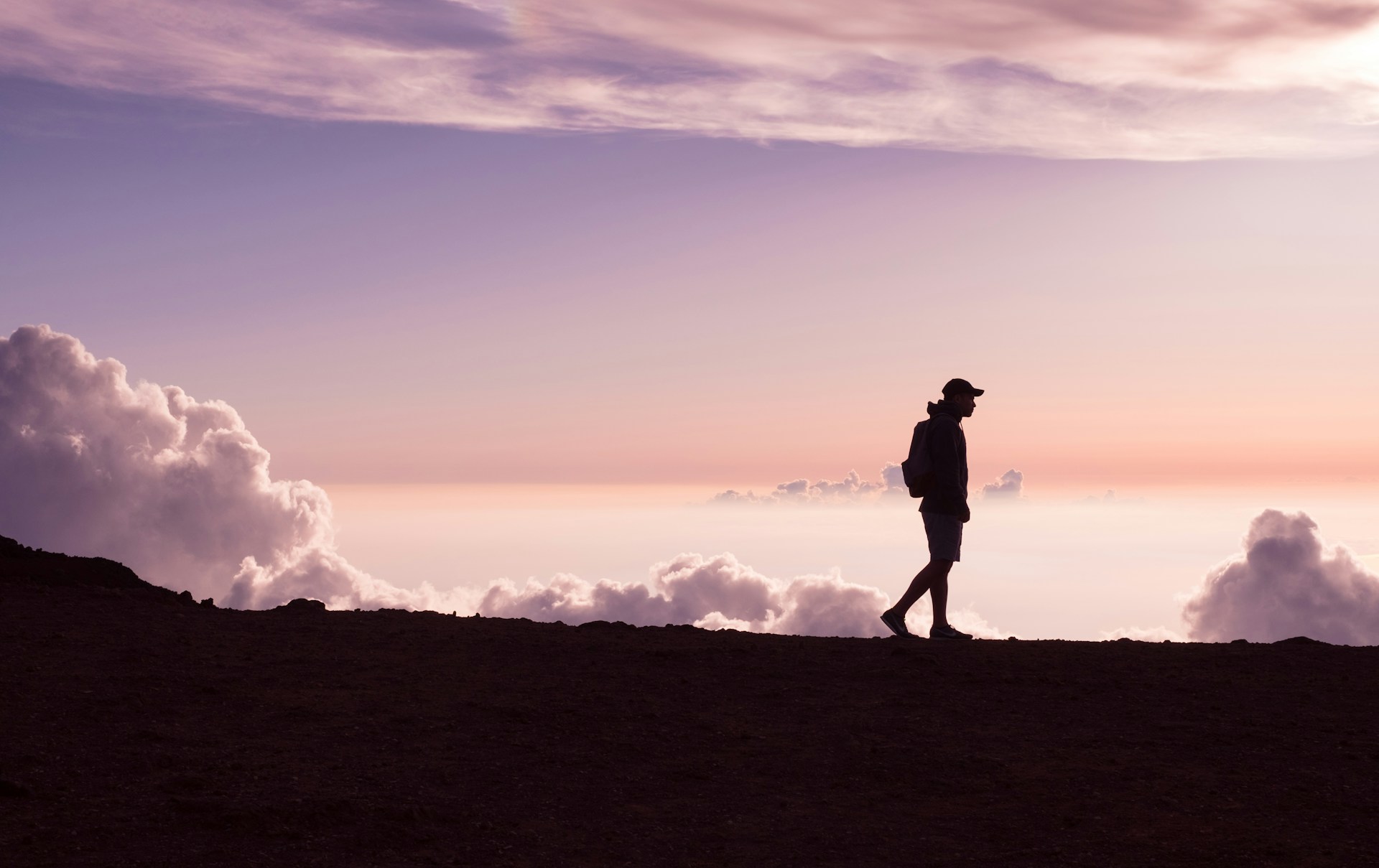
During and immediately after my recent cancer surgery and radiation therapy, I had to put my normal exercise routine (dumbbell weights and power yoga) on hiatus. My oncologist and radiologist emphasized, however, that as much as possible I should continue with my long daily walks and that they would be key to my rapid recovery. I was only too happy to oblige. I love walking; I’ve been doing it my whole life. During my far-flung travels the walks would often be in exotic locations such as the Himalayan Mountains, Greek islands, and primeval forests around the world, and in historic cities such as Rome, Athens, Tehran, Kabul, Kathmandu, Kolkata, Mumbai, Bangkok, Singapore, Jakarta, and others. Here at home, I often wander the environs of my neighborhood, but sometimes I take a bus to another part of the city of Seattle and roam the downtown area, the waterfront, and various parks.
Walking not only provides physical benefits but also, if you do it with the right mindset, mental and spiritual recalibration. To walk is to relieve stress and nurture tranquility and calm. All the crud clogging your brain dissipates and your mind can freely roam far beyond its normal programmed day to day patterns.
Henry David Thoreau is best known for his masterpiece Walden and for his influential essay “Civil Disobedience,” but he also wrote a fascinating essay called “Walking.” In it, he sets the bar high for a successful walk: “We should go forth on the shortest walk, perchance, in the spirit of undying adventure, never to return…” He goes on to relate that “if you have paid your debts, and made your will, and settled your affairs, and are a free man, then you are ready for a walk.” Freedom, he insists, is the first requisite for walking. The hyperbole in his words is to emphasize the importance of a clean, clear mind during your perambulations. In fact, in this essay, as soon as Thoreau establishes the importance of freedom during the walking experience, he launches forth into digressions on other topics that have little to do with his immediate surroundings or the walking process itself. In short, every walk is a call to adventure. If you leave yourself open to it, every walk can change your life.
Thoreau asks: “What is it that makes it so hard sometimes to determine whither we will walk?” I have encountered this conundrum myself; to help me solve it I have obtained several books from the library on Seattle city walks. I am hoping that they will provide me with ideas for many walks to come. During the week, when I am busy with my remote work, the quiet neighborhood sidewalks and streets suffice, but when the weekend comes, I am ready for something more elaborate, exotic, picturesque, and stimulating. As T.S. Elliot expresses in his poem “Little Gidding,” the goal of our explorations is to “arrive where we started and know the place for the first time.” That’s how I look at Seattle now. I was born and raised here, sure, but later I spent several decades abroad. The Seattle I used to know was a neglected backwater in a forgotten corner of the country; now it’s a thriving metropolis fueled by tech money. Still, there are wonderful bits of idiosyncratic history hiding in backstreets and alleyways beneath the flashy surface. It’s all out there waiting for me to discover it. And while I am discovering it, I can also allow my thoughts to grow and blossom and expand and roam whithersoever they will.
I’m a professional writer; I make my living by my words. I’m happy to share these essays with you, but at the same time, financial support makes the words possible. If you’d like to become a patron of the arts and support my work, buy a few of my available books or available stories. To send a one-time or recurring donation, click here. You can also donate via my Patreon account. Thanks!



























 John Walters