
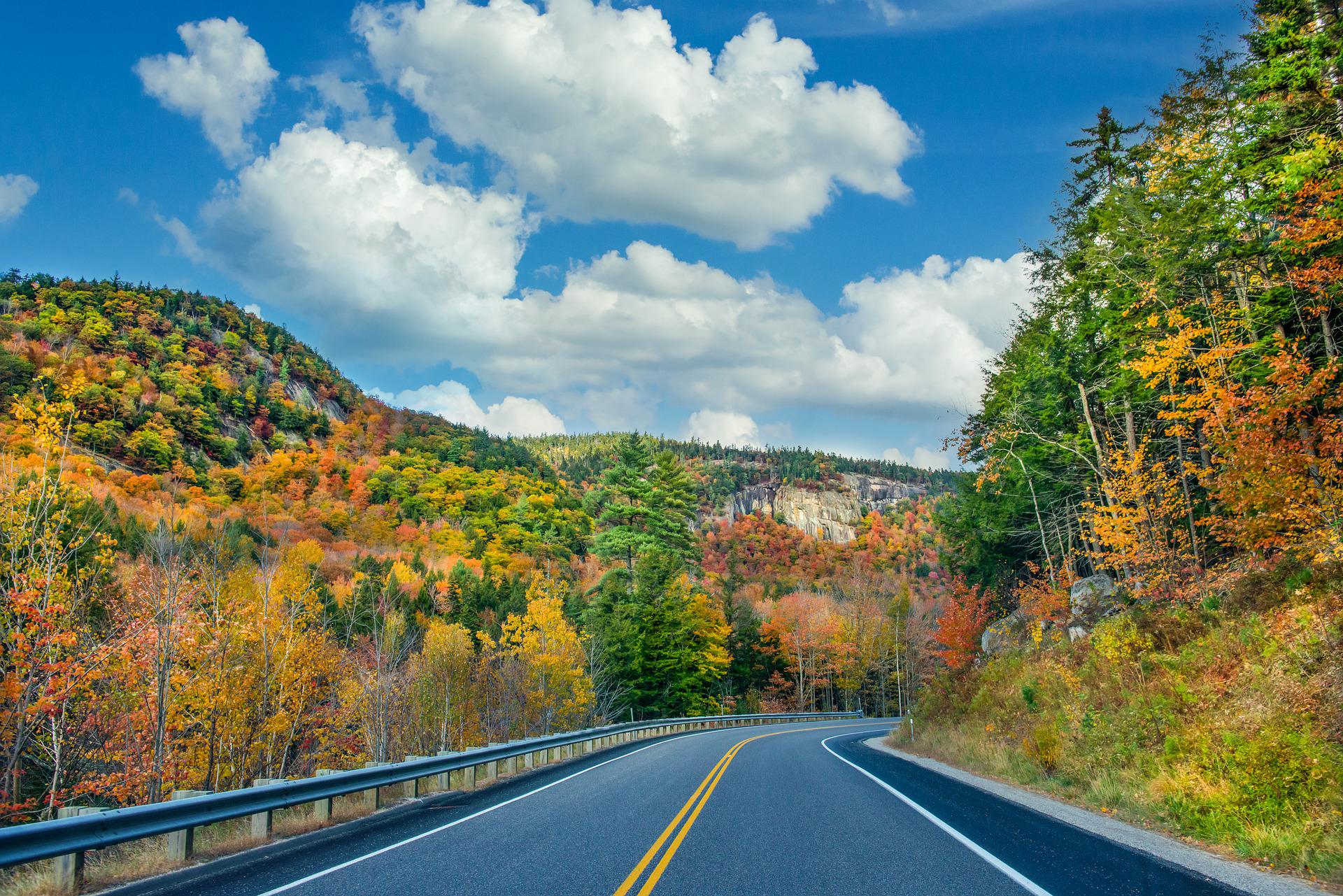
Larry McMurtry is best known for his award-winning novels and screenplays, but he also wrote several memoirs. Roads tells of a series of trips he made by car in 1999. By way of explanation he says: “I wanted to drive the American roads at the century’s end, to look at the country again, from border to border and beach to beach.” And: “Other than curiosity, there’s no particular reason for these travels – just the old desire to be on the move.” He writes that his “aim in recording these journeys is simple: to describe the roads as I find them and supplement current impressions with memories of earlier travels along some of the same routes.” And: “My method, to the extent that I have one, is modeled on rereading; I want to reread some of these roads as I might a book.”
McMurtry undertakes his journeys in an unusual way. When most people take a road trip by car, they use a vehicle that they own; McMurtry, however, flies to whatever point from which he wants to begin, rents a car, stays in high-quality hotels or motels en route, and either returns to his hometown or drives to whatever place he chooses to end his journey at and flies back from there. This is, of course, a method of travel that only the affluent would be able to afford, even accounting for the fact that airline flights, rental cars, gasoline, hotels, and so on were much cheaper back at the end of the 1900s.
In this way, McMurtry drives from Minnesota to Oklahoma, Florida to Louisiana, Maryland to Colorado, California to Texas, Washington D.C. to Texas, Washington State to Nebraska, and so on. Don’t think of this as a travelogue, though, in the conventional sense. He sometimes describes the landscapes he sees along the way, but that is not his main intention. Instead, he wants to “have a look at the literature that had come out of the states I passed through.” He was not only a writer, but also an antiquarian bookstore owner, and as he passes locales, he launches into stories of writers associated with those places or book-buying adventures he had there. It’s like taking a long drive with an exceptionally literate friend and listening to him reminisce along the way. But because of his bookselling background, he is aware of obscure local travel authors from all of these places, and he is able to draw upon this knowledge to provide fascinating glimpses into the literary scenes in various parts of the country.
Because McMurtry finds such genuine satisfaction and fulfillment in his journeys, he is able to pass on these emotions to his readers. Near the end he sums up his feelings thusly: “Being alone in a car is to be protected for a time from the pressures of day-to-day life; it’s like being in one’s own time machine, in which the mind can rove ahead to the future or scan the past.” For the perennial nomad who enjoys roaming the country, the world, and the entire cosmos through literature, this book is an excellent vehicle for enjoying a vicarious journey with an extremely knowledgeable and erudite companion.
























 John Walters
Fascinating. The concept reminds me of Steinbecks ‘Travels With Charlie’, though much different in method.